Vivo, a strong player in the smartphone industry, is gearing up to unveil new devices in the mid-range segment. We have spotted Vivo’s new “V series” smartphone lineup in our database.
Earlier this year, the company launched the V30 series. So, many people expected the next smartphones to bear the market names, V31 or V33. And yet Vivo’s decision turned out to be introducing the V40 Series. Vivo is set to introduce a brand-new smartphone lineup.
Vivo’s new midranger lineup to be launched: Vivo V40 series
The technical specs of the upcoming Vivo V40 series are still mystery. However we know that Vivo V40 series will consist of three smartphones: Vivo V40 Pro, Vivo V40, and Vivo V40e. We expect these phones to perform very well, as a recent interview with a Vivo executive hinted at the V40 series being an entirely different smartphone lineup. This actually kind of explains why Vivo opted for the “V40” naming for their upcoming smartphone series.
Vivo V40 Pro V2347Vivo V40 Pro
Vivo V40 Pro appears in our database with the model number V2347, while the previous model, Vivo V30 Pro, has the model number V2319. Although we don’t have much information about the device, we can keep our expectations high for this model and others in the series based on the statement made by the Vivo executive. While the Y series targets budget buyers Vivo’s V series fills the mid-range devices. The V40 series hints at a potential strong player in the Android mid-range market.
Vivo V40 V2348Vivo V40 V2403vivo V40 – vivo V40e
Let’s turn back to the vivo V40 series again. Vivo V40 appears in the database with the model number “V2348” and the Vivo V40e has V2403 model number. The previous model, Vivo V30, has the model number V2318, while the Vivo V30e is V2339.
The upcoming Vivo V40 series has generated a lot of excitement. We expect the upcoming phones to come with powerful chipsets, impressive camera sensors, and cutting-edge fast charging technology. Considering the V30 series launched earlier in 2024, a late-year release for the V40 series seems likely. We’ll keep you posted on any further developments.
Lenovo took the wraps off a whole new range of AI Yuanqi laptops across its Legion, YOGA, and Xiaoxin lines at a product launch event today. Here’s a quick rundown of the announced devices and their starting prices:
Legion Y9000X AI Yuanqi Edition: This high-performance gaming laptop boasts an Intel Core i9-14900HX processor, paired with either an RTX 4060 or RTX 4070 graphics card. Both configurations come with 32GB of RAM, 1TB of storage, and a 16-inch 3.2K high refresh rate display. Prices start at 14,499 yuan for the RTX 4060 model and 15,499 yuan for the RTX 4070 variant.
Lenovo has launched laptops for both creatives and gamers, offering fun and productivity
Xiaoxin Pro 16 AI Yuanqi Edition: This productivity-focused laptop features an AMDRyzen 7 8845H processor, 32GB of RAM, 1TB of storage, and a 2.5K 120Hz display. With a starting price of 5,999 yuan, it offers a compelling option for users seeking a powerful machine at a more affordable price point.
YOGA:
YOGA Air 14 AI Yuanqi Edition: This ultraportable laptop is equipped with an Intel Core Ultra 7-155H processor, 32GB of RAM, 1TB of storage, and a stunning 2.8K 120Hz OLED display with 100% DCI-P3 color gamut. Starting at 8,499 yuan, it caters to users who prioritize portability and a high-quality display.
YOGA Pro 16s AI Yuanqi Edition: This powerhouse laptop features an Intel Core Ultra 9-185H processor, RTX 4060 graphics, 32GB of RAM, 1TB of storage, and a versatile 3.2K 165Hz touchscreen with 100% P3+sRGB dual color gamut. Priced at 13,999 yuan, it’s ideal for creative professionals and gamers who demand exceptional performance and a responsive touch display.
YOGA Book 9i AI Yuanqi Edition: This unique dual-screen laptop boasts an Intel Core Ultra 7 processor, 32GB of RAM, 1TB of storage, and two stunning 2.8K OLED touchscreens with 100% DCI-P3 color gamut. The foldable design makes it perfect for multitasking and digital creation on the go. However, this innovation comes at a premium price of 17,999 yuan.
HyperOS update for the POCO X4 GT has finally started rolling out. POCO‘s an upper mid-range smartphone, POCO X4 GT has received the HyperOS update recently. POCO X4 GT is essentially a rebranded version of the Redmi Note 11T Pro and Redmi K50i. While it features the Dimensity 8100 chipset and is released 2 years ago, it still holds up well today.
POCO X4 GT receives HyperOS update
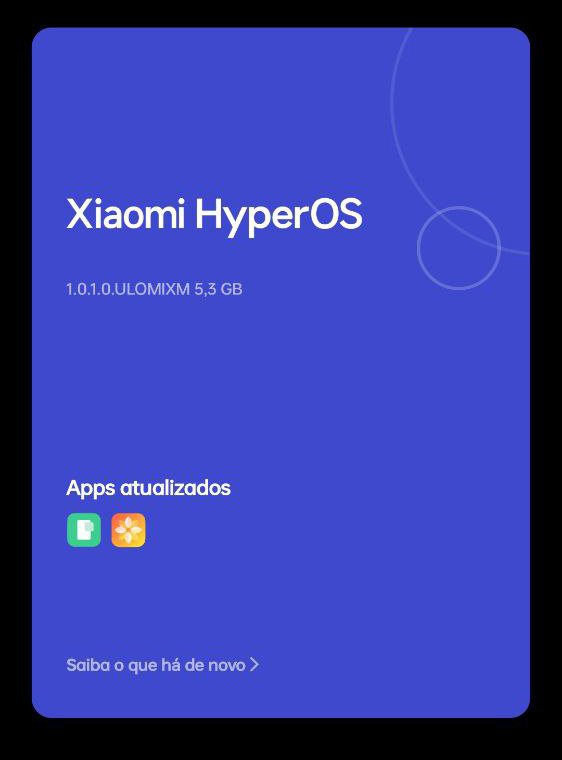
POCO X4 GT has received the HyperOS update with version OS.1.0.1.0ULOMIXM. This 5.3 GB update brings the smartphone from the MIUI 14 to Android 14-based HyperOS. The version number actually reveals where the update is released. It’s clear that this update is currently rolling out in the “Global” region.
POCO X4 GT – HyperOS
If you don’t see the update for your POCO X4 GT when you check the software updater in settings, give it some time for the update to be completely released. Xiaomi typically doesn’t release updates simultaneously for all users. It may take a while to appear on your device.
Note that the POCO X4 GT was launched in 2022 and came with Android 12 out of the box. With this newly released update, the phone has been upgraded to Android 14. This will be the last Android update the POCO X4 GT receives, it will not be getting the Android 15 update.
Samsung’s upcoming entry-level smartphone, the Galaxy M35’s render images’ leaked online. Samsung is set to add a new addition to the Galaxy M series soon, and this device is expected to be available in India.
Galaxy M35: A refreshed design & 6000 mAh battery
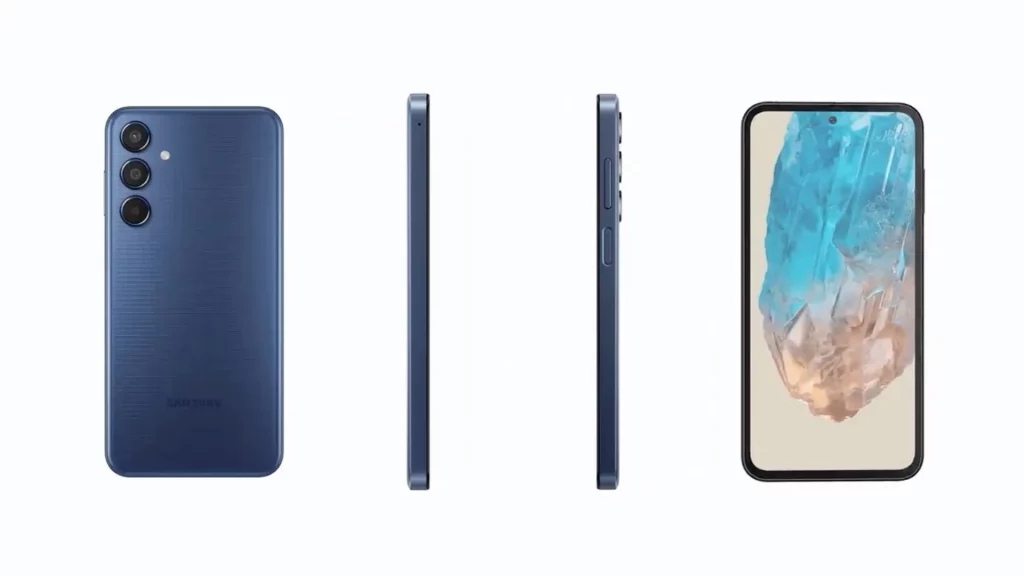
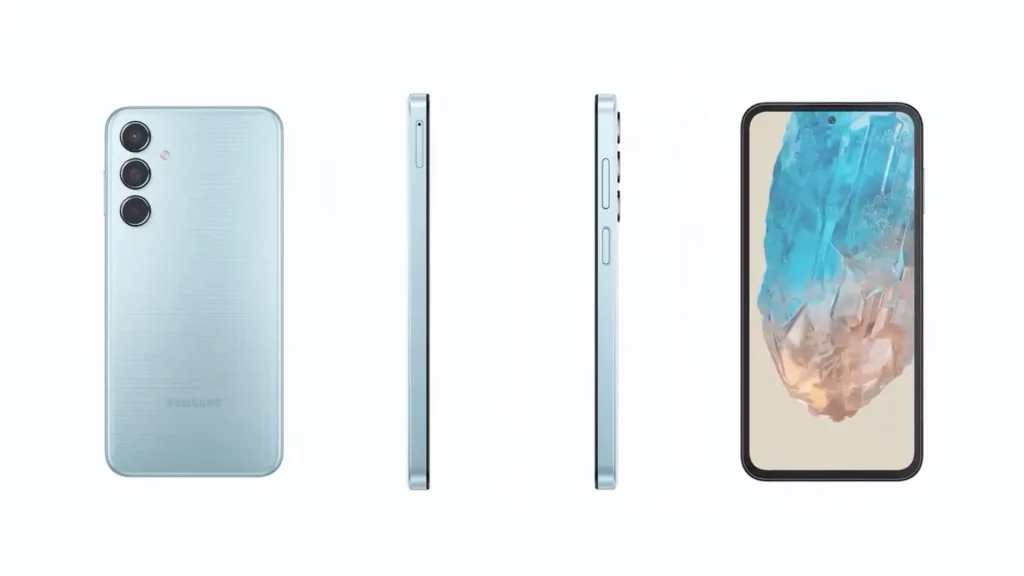
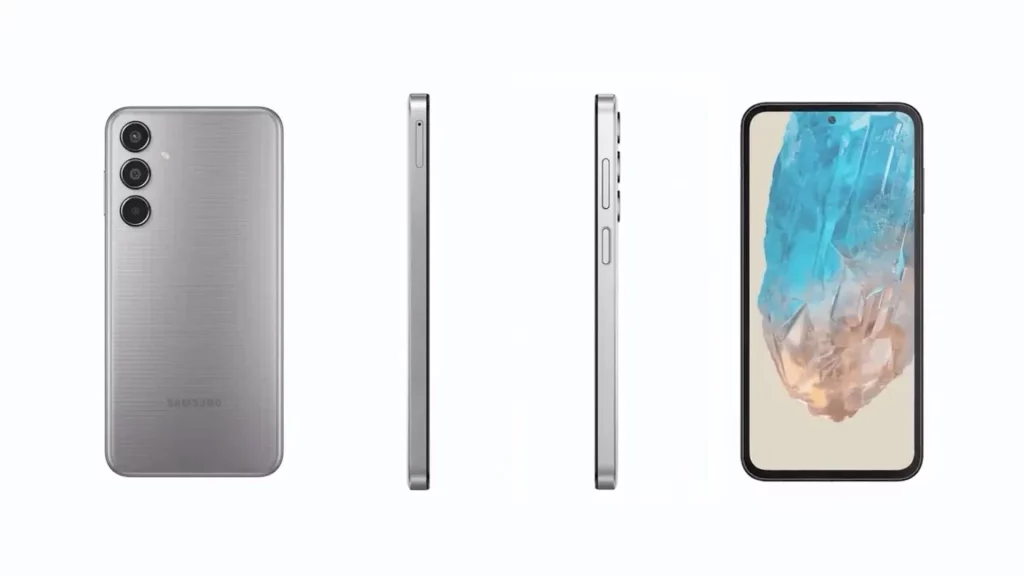
Evan Blass shared 3D renders video of the Galaxy M35 on his Twitter account. The video reveals the color options and design of the Galaxy M35. The phone features a punch-hole notch and a triple camera setup, similar to the previous Galaxy A series. Additionally, the phone comes in three different color options.
Galaxy M35
We can say that the Galaxy M35 has a very modern look. Compared to the previously released Galaxy M series, it appears to have thinner screen bezels. Moreover, the back of the phone resembles the Galaxy S24 series, it’s still a plastic cover though.
Galaxy M35
The Galaxy M35 is expected to come with the Exynos 1380 chipset and will ship with Android 14 out of the box. The model number of the upcoming smartphone, SM-M356B/DS, which have been leaked earlier. The Galaxy M35 can be considered a refreshed variant of the Galaxy A35, as the A35 features the Exynos 1380 chipset, and the M35 was already spotted on Geekbench with the exact same processor. Evan Blass also revealed that the M35 has a 6000 mAh battery, which is 20% more than the battery capacity of the Galaxy A35. While both phones carry similar specs, they are not entirely the same.
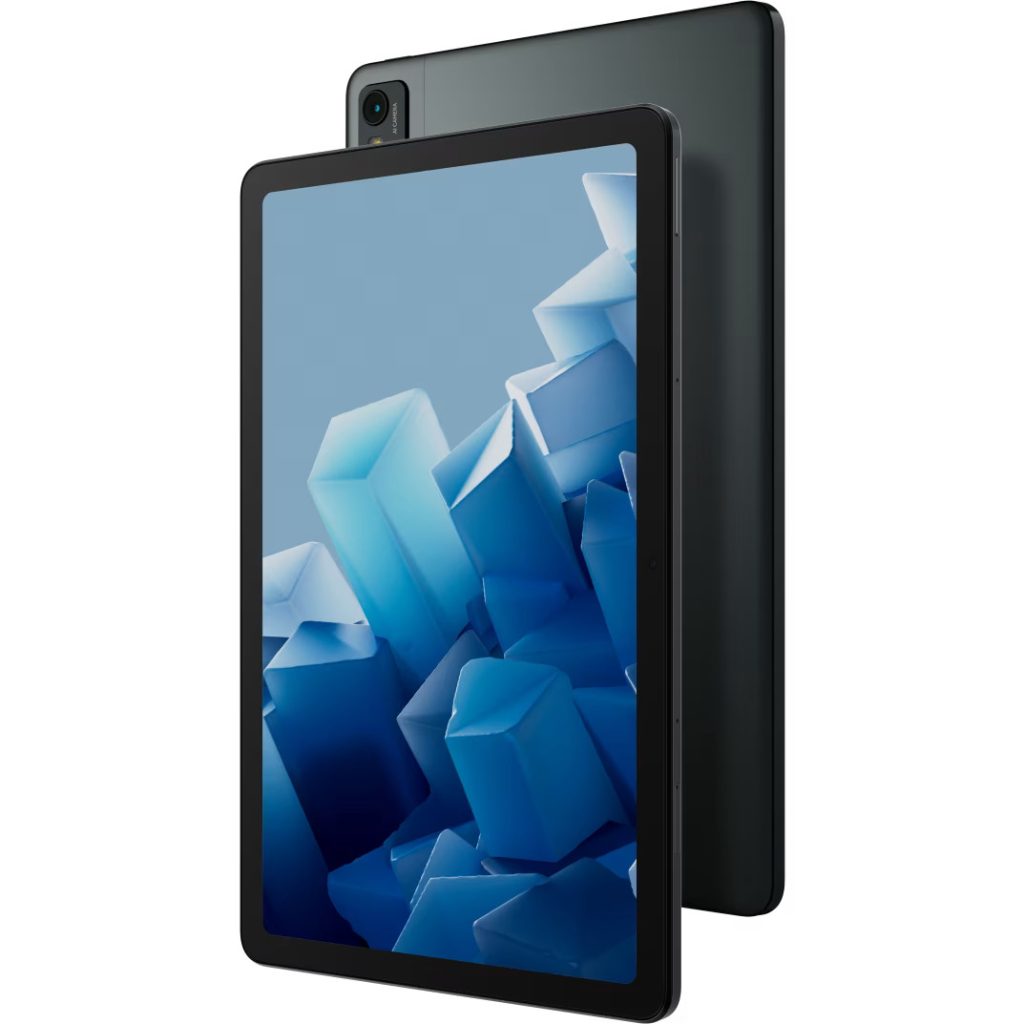
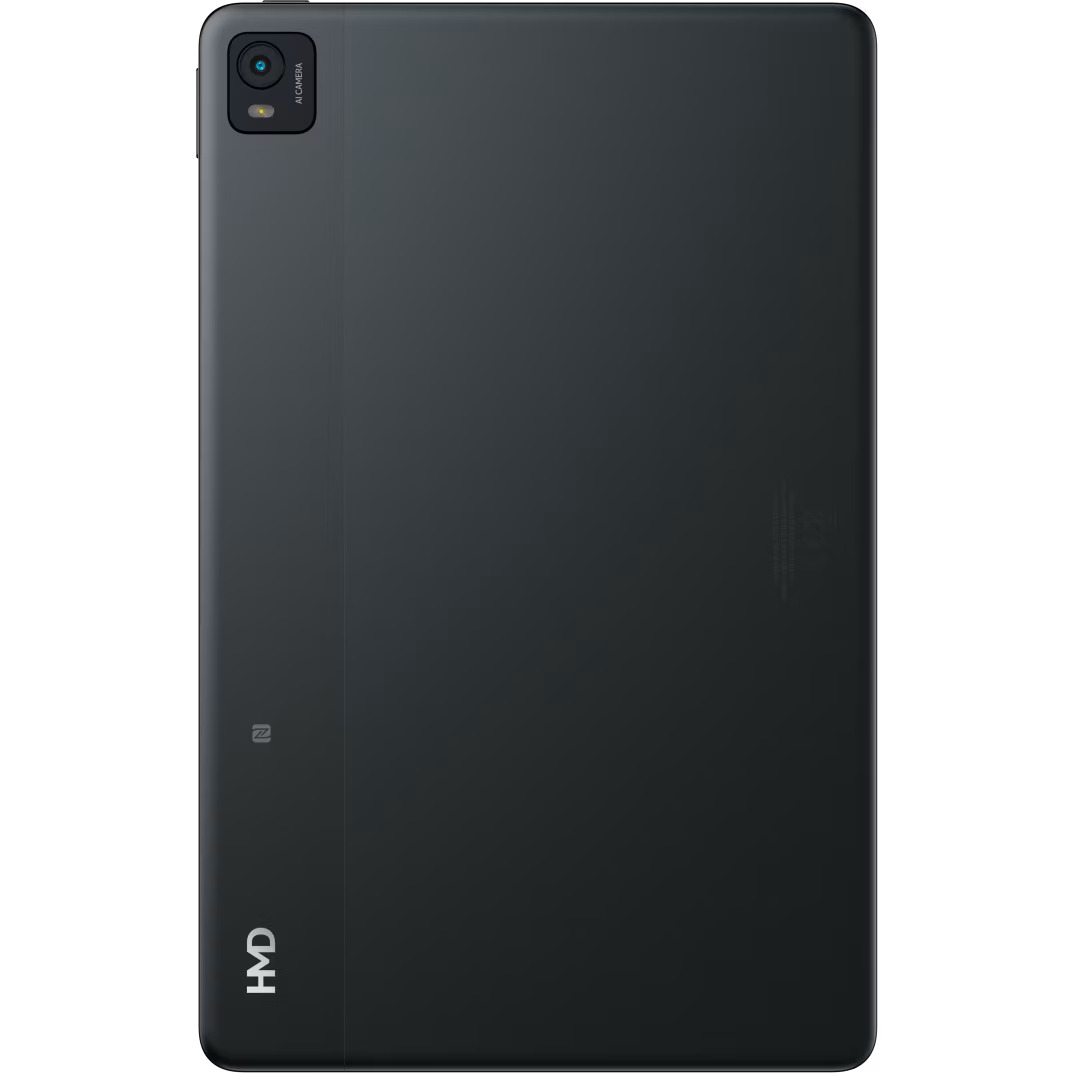
HMD Global has released the HMD T21 tablet, dropping the Nokia branding in favor of its own logo. This device is essentially a rebrand of the Nokia T21 tablet with a slightly redesigned camera module.
HMD T21 specs:
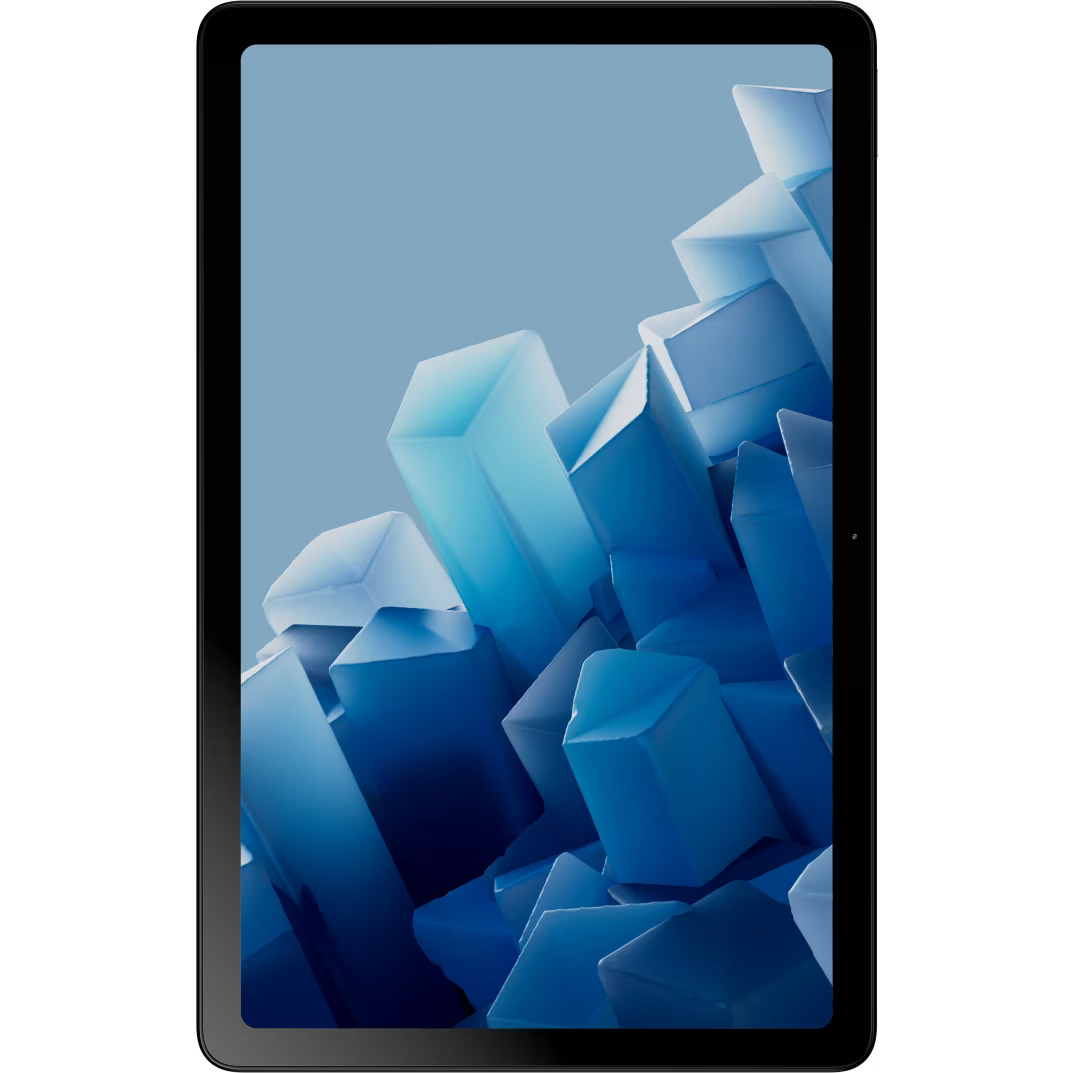
The specifications of the HMD T21 remain the same as the Nokia T21, meaning that it features a 10.36-inch IPS screen with a 2000 x 1200 pixel resolution. The display in combination with stereo speakers makes it ideal for watching movies and videos.
The display supports stylus input using WGP or AES 2.0 standards, though the stylus is sold separately. The device comes with Android 13 and the company guarantees updates up to Android 15 along with security patches through summer 2027.
Under the hood, it features a Unisoc T612, which is also onboard the Nokia T21. The tablet has an 8,200 mAh battery, with a promise of “up to 3 days” of battery. That being said, the fine print mentions that the tablet was used for 5 hours each day for the testing, so we can expect around 15 hours of battery from continuous usage.
For optics, it has an 8-megapixel camera on both the front and back. Additionally, it has Bluetooth 5.0, Wi-Fi 5, and a 3.5 mm headphone jack.
Pricing & availability
Currently, the HMD T21 is available for purchase through HMD’s online store across the EU. It is being sold with 4 GB RAM and 128 GB storage for 299 euros.
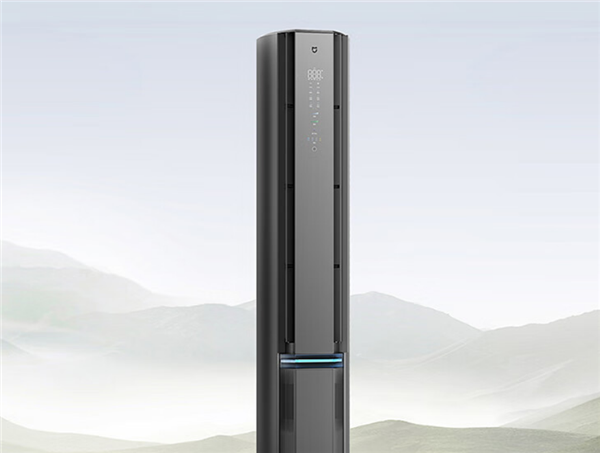
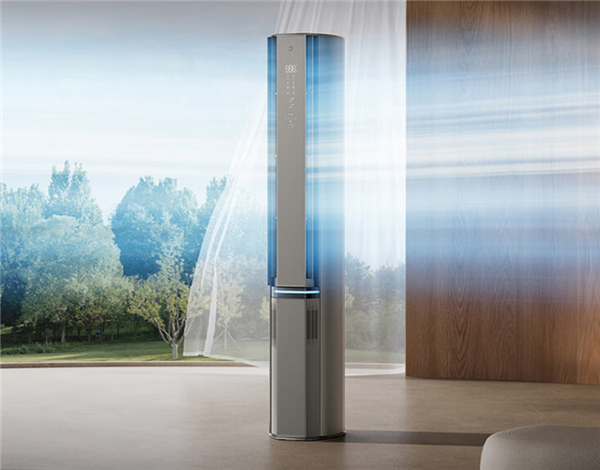
The Xiaomi MIJIA 3HP super energy efficiency dual outlet air conditioner has been released in China. The new Xiaomi MIJIA dual-outlet air conditioner is available in Natural Air Pro and Fresh Air Pro versions.
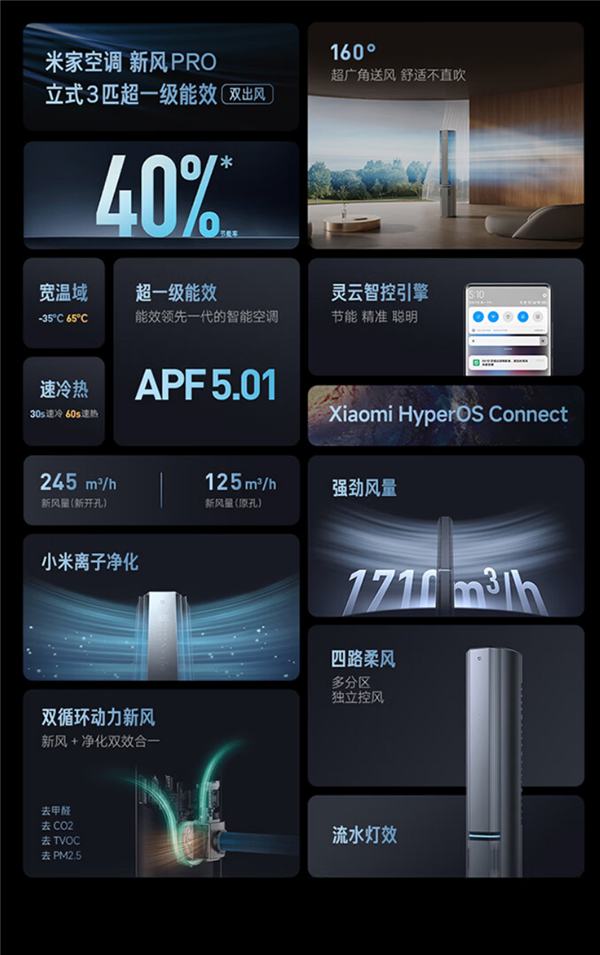
The new air conditioner is equipped with flying wing bionic dual air vents and a Lingyun Intelligent Control Engine. It is capable of delivering an air volume of 1,710 square meters per hour and supports a 160-degree ultra-wide angle for the air supply. It supports four-zone independent air control and has a built-in antibacterial and anti-mildew filter for enhanced output. The product adopts dual-circulation fresh air technology and indoor and outdoor dual circulation. The air conditioner can efficiently filter outdoor dust, purify the indoor air, and distribute oxygen throughout the house.
The Xiaomi dual-outlet air conditioner Pro models utilize EPA filter elements with four layers of high-efficiency filtration. The antibacterial rate is 99% while the anti-mold level is zero and these help to prevent the growth of bacteria on the filter. It also helps to avoid secondary pollution of the fresh air generated by the air conditioner. The air conditioner can achieve up to 40% in energy saving, underscoring its effectiveness and efficiency. Both models have a cooling power of 1,930W and a heating power of 2,680W. The noise level of the outdoor unit is between 42dB and 46 dB. The internal dimensions of the air conditioner are 340mm wide, 1,863mm high, and 444mm deep.
The Xiaomi MIJIA 3 HP super energy-efficient dual outlet air conditioner Pro series has a starting price of 6,799 yuan ($942). Xiaomi has not released the global availability information for the two air conditioners yet.
Motorola has just rolled out its newest smartphone, the X50 Ultra, in China. This launch follows its introduction to global markets under the name Edge 50 Ultra.
Moto X50 Ultra specs:
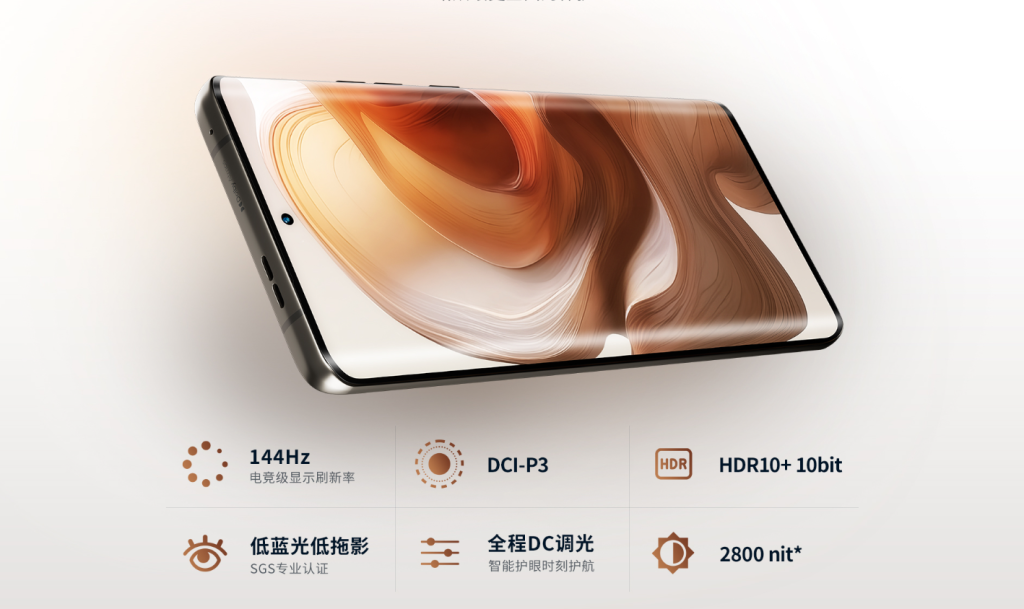
The X50 Ultra features a large 6.7-inch OLED display, boasting a resolution of 2712 x 1220 pixels. This screen supports a 144Hz refresh rate and offers a 10-bit color depth. It’s also equipped with HDR 10+ and DC Dimming capabilities and can reach a peak brightness of up to 2500 nits.
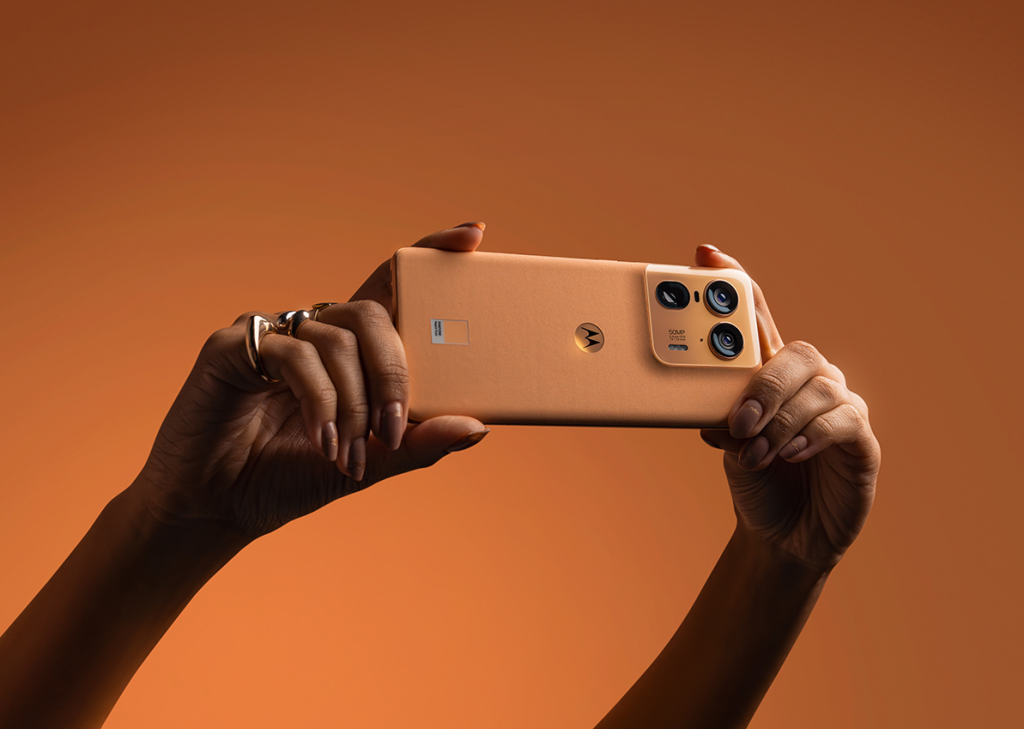
The phone is also quite durable, with IP68 dust and water resistance and a sturdy aluminum frame. It also features tough Corning Gorilla Glass Victus on the front. Customers can get it with a back made of real Nordic Wood, Forest Grey vegan leather, and Peach Fuzz—which is this year’s Pantone Color of the Year.
It runs on the powerful Snapdragon 8s Gen 3 SoC, and it’s available in various configurations, including models with 12GB or 16GB of LPDDR5X RAM and options for 256GB, 512GB, or 1TB of UFS 4.0 storage. The phone has an Android 14-based operating system.
For those who love taking photos, the X50 Ultra, features a 50MP main camera with an f/1.6 aperture and OIS, a 50MP ultra-wide camera with a 122-degree field of view and f/2.0 aperture that includes a macro option, and a 64MP telephoto camera with 3X zoom and f/2.4 aperture. The device also supports up to 100x Super Zoom. On the front, it has a 50MP selfie snapper with autofocus and an f/1.9 aperture.
The battery capacity is 4500mAh, with support for 125W TurboPower fast charging and 50W wireless charging, plus 5W reverse charging. For connectivity, the X50 Ultra supports 5G SA/NSA, Dual 4G VoLTE, Wi-Fi 7 802.11ax, Bluetooth 5.4, GPS, NFC, and USB Type-C. It also includes stereo speakers tuned by Dolby Atmos and supports Dolby Head Tracking.
Pricing & availability
Motorola has set the price at 3999 yuan (approximately $553) for the 12GB + 256GB model, 4299 yuan ($595) for the 12GB + 512GB model, and 4699 yuan ($650) for the 16GB + 1TB model.
The X50 Ultra is currently available for pre-order and will officially go on sale on May 24th in China.
A reported explosion at the Taiwan Semiconductor Manufacturing Company (TSMC) plant in Phoenix on Wednesday sparked concerns, though no injuries or facility damage were reported, according to the company’s statement.
The incident involved a waste disposal truck, with the driver rushed to the hospital. TSMC confirmed that neither employees nor construction workers were harmed during the event. Firefighters responded promptly to the scene, although further details from fire officials were not immediately available.
TSMC’s significance in the global semiconductor industry cannot be overstated. As a leading manufacturer of advanced semiconductors worldwide, the company recently secured a significant grant of $6.6 billion under the CHIPS and Science Act from the Biden administration.
Efforts to bolster chip manufacturing in the United States have seen TSMC expand its operations beyond its traditional stronghold in Taiwan. Recent expansions include facilities in Japan, Germany, and notably, Arizona, USA, where the Phoenix campus is located.
The Arizona expansion, part of TSMC’s broader initiative to bring cutting-edge chip manufacturing to the US, is poised to create thousands of jobs in both manufacturing and construction sectors. However, the project has faced challenges, including initial construction delays due to safety concerns from local unions and objections to bringing in workers from Taiwan.
Despite these challenges, Arizona’s role in the semiconductor industry has been steadily growing, with significant investments pouring into the state, exceeding $100 billion since the introduction of the CHIPS Act.
The incident at the TSMC Arizona facility comes at a critical juncture, as the company recently announced plans to expand its investment by an additional $25 billion, bringing the total to $65 billion. This expansion includes the addition of a third factory by 2030, showcasing TSMC’s commitment to US-based manufacturing.
Technological advancements are also on the horizon, with the second Arizona factory set to produce the world’s most advanced 2-nanometer technology, with production expected to commence in 2028.
Market response to the incident was initially mixed, with TSMC’s shares rising before paring gains upon news of the incident. Nevertheless, the company remains optimistic about its expansion plans and technological advancements despite the temporary setback.
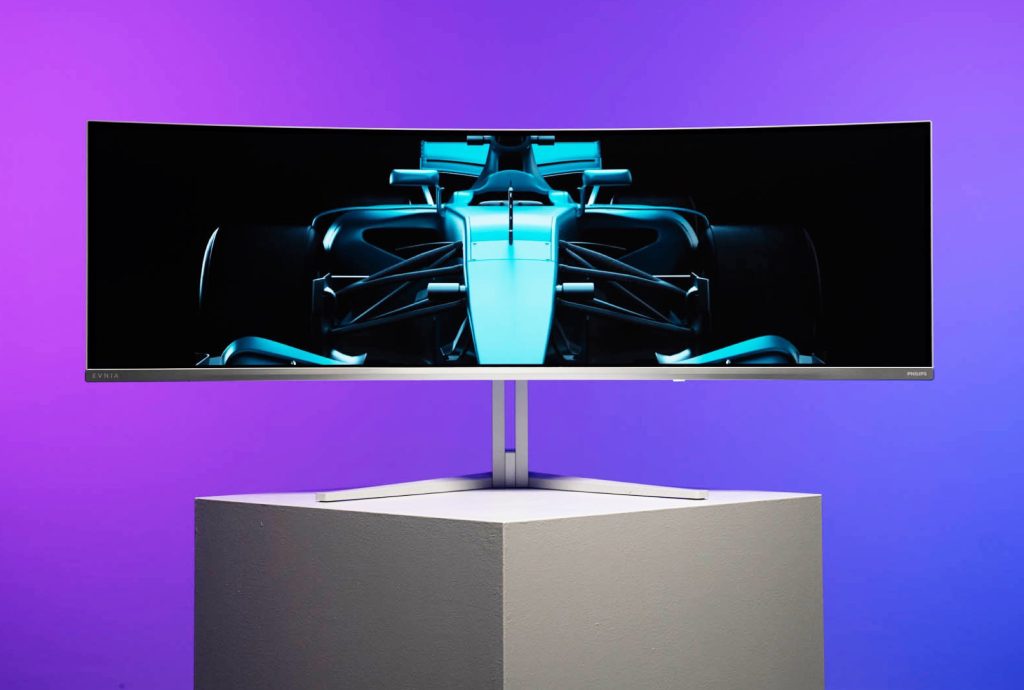
Philips has released a new gaming monitor with some impressive specs to its European audience. The Philips Evnia 49M2C8900L is equipped with a Quantum Dot OLED panel (QD-OLED) and delivers a peak brightness of 1,000 nits, as well as a 144 Hz display refresh rate.
The Evnia 49M2C8900L is similar in many ways to the Evnia 49M2C8900 model released recently. In fact, the new gaming monitor is a cheaper alternative to its predecessor which is currently priced at $1,499. The Evnia 49M2C8900L has a 49-inch screen with a curvature of 1800R. It is based on a Gen 2 Samsung Display QD-OLED panel. The new gaming monitor comes at a lower display refresh rate (144 Hz) than the Evnia 49M2C8900 which featured a 240 Hz refresh rate.
The new Philips Evnia 49M2C8900L gaming monitor has a display resolution of 5,120 x 1,440 pixels (5K2K), an aspect ratio of 32:9, and a GtG response time of 0.3 ms. The monitor has a DCI-P3 color gamut coverage of 99% and 125.2% AdobeRGB color space coverage. The new Philips Evnia gaming monitor supports AMD FreeSync Premium Pro and NVIDIA G-SYNC technologies to address image tearing. The monitor’s peak brightness of 1,000 nits drops to 450 nits or 250 nits in SDR mode.
The Philips Evnia 49M2C8900L monitor has four 7.5 W speakers with a 2.2 channel setup and a single 3.5 mm audio jack. It is also equipped with DisplayPort 1.4 (x1), HDMI 2.1 (x2), USB-A (x4), and a USB-C port with 90W Power Delivery/ DisplayPort Alt Mode. The four USB-A ports of the monitor have a maximum speed of 5 Gbps.
Pricing & Availability
The Philips Evnia 49M2C8900L gaming monitor comes with a cheaper price tag than its predecessor. It is priced in the UK at £869,99 ($1,103) and €1,089 ($1,184) in the Eurozone. It is therefore evident that the new gaming monitor is significantly cheaper than the Philips Evnia 49M2C8900 by up to $400. It is also much cheaper than some of its competitors with the same Samsung QD-OLED panel. The US pricing of the new Philips gaming monitor has not been released yet.
Immerse yourself in a visually stunning experience with the VIVO X100 Ultra’s 6.78-inch FHD+/2K Samsung E7 AMOLED display. Whether you’re streaming content or browsing, enjoy vibrant colors and crisp details, even in bright outdoor conditions, thanks to its 120Hz refresh rate and 1500 nits brightness.
Here’s an enticing deal for tech enthusiasts: Get VIVO X100 Ultra at a special presale price of $100 off! Simply use the coupon code “GX100” to avail of this discount. This offer is only valid until May 29, 2024.
Powered by the Qualcomm Snapdragon 8 Gen 3 processor, the VIVO X100 Ultra ensures lightning-fast performance for all your daily tasks, from multitasking to gaming. With 12GB/16GB of LPDDR5X RAM and up to 1TB of UFS 4.0 storage, experience seamless responsiveness and efficiency.
Forget storage concerns with up to 1TB of internal storage on the VIVO X100 Ultra, allowing you to store photos, videos, apps, and more without sacrificing speed or performance.
Capture every moment in stunning detail with the VIVO X100 Ultra’s advanced camera system, featuring a 50MP primary sensor, 50MP ultra-wide-angle lens, and a groundbreaking 200MP portrait sensor with 2x optical zoom. Plus, with a 50MP front camera, your selfies will always look flawless.
Stay powered throughout the day with the massive 5500mAh battery and 80W fast charging support, getting up to 50% battery in just 11 minutes and a full charge in 34 minutes.
Keep your device cool during intense sessions with the VIVO X100 Ultra’s VC liquid cooling solution, ensuring optimal performance without overheating worries.
Enjoy added convenience and versatility with features like NFC, HiFi audio support, dual stereo speakers, and an in-display fingerprint sensor. Plus, with dual SIM dual standby support, stay connected wherever you go.
The VIVO X100 Ultra offers cutting-edge technology, powerful performance, and sleek design for an unparalleled smartphone experience, whether you’re working, gaming, or capturing memories.
Oppo has scheduled the release of its Reno 12 Series smartphones and Enco Air 4 Pro earbuds for May 23, 2024, in China. Pre-orders for the earbuds are now open on JD.com, TM Mall, and Oppo Mall.
Ahead of the launch, specs of the upcoming Enco Air 4 Pro earbuds have been revealed. As per the listing on Oppo Mall, the Enco Air 4 Pro earbuds feature 12.4mm titanium-plated diaphragm drivers for powerful bass and support LHDC 5.0 audio codec for high-fidelity sound. They offer noise cancellation up to 49dB, cover a 4000Hz ultra-wideband, and include intelligent dynamic noise cancellation. Three microphones ensure clearer call quality.
The phone uses Bluetooth 5.4 for connectivity and offers a 47ms latency mode. It also provides single-touch pairing and easy switching between devices. Although battery sizes were not disclosed, Oppo states that the earbuds can last up to 44 hours with the charging case and 12 hours on a single charge. A 10-minute quick charge provides an additional 4 hours of use.
The earbuds will be available in White and Gray color options. While the pricing will be revealed on May 23 in China, these earbuds are also heading to the global market, as indicated by their certification listings in Malaysia and Singapore.
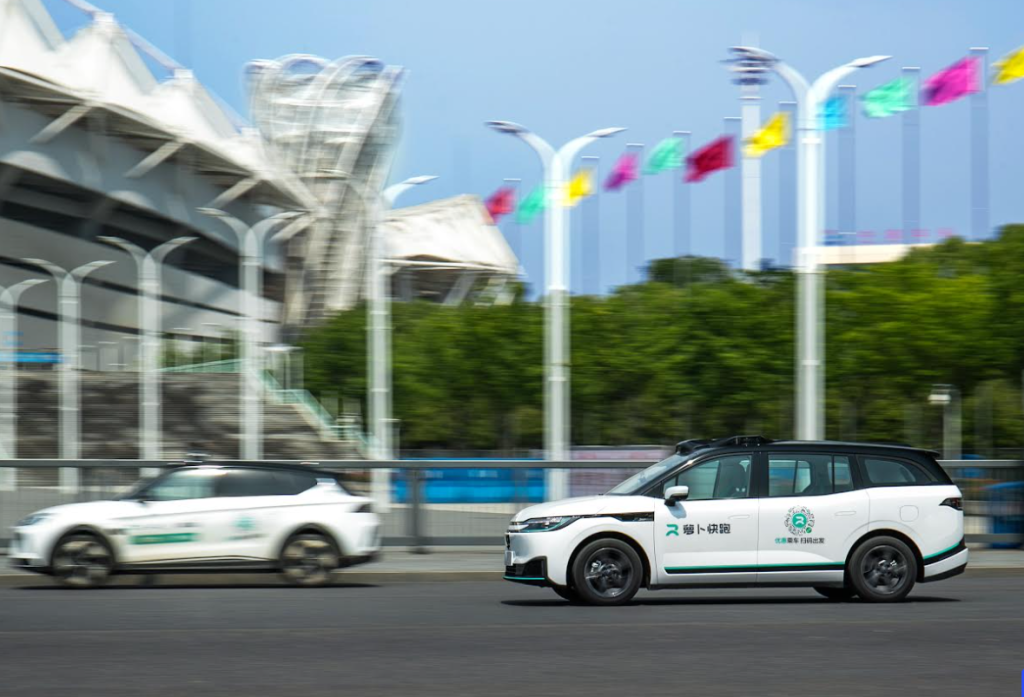
In a significant leap forward for autonomous driving technology, Baidu Apollo unveiled its 6th Generation Robotaxi in Wuhan, marking a pivotal moment in the evolution of smart mobility. The announcement was made by Yunpeng Wang, Baidu’s Corporate Vice President and President of Intelligent Driving Group.
Key highlights of the launch include a substantial reduction in unit cost, now priced at approximately RMB 200,000 (under $30,000), marking a more than 50% decrease from the previous generation. These cost savings pave the way for large-scale deployment, with Apollo Go aiming to deploy 1000 6th Gen Robotaxis in Wuhan by 2024.
Operating on Apollo Go, Baidu’s autonomous ride-hailing platform, these vehicles signify a paradigm shift towards fully autonomous transportation. The development is bolstered by Apollo Go’s fully autonomous Robotaxi operation network in Wuhan, capable of managing every aspect of the Robotaxi operation without human intervention. This innovation not only enhances efficiency but also significantly reduces operational costs.
The introduction of Apollo ADFM, the world’s first foundation model supporting Level 4 autonomous driving, further solidifies Baidu Apollo’s position at the forefront of autonomous technology. Integrated into the 6th Gen Robotaxi, this model enables the rapid deployment of driverless operations in new cities within six months, paving the way for widespread adoption.
Moreover, the upgraded Apollo Self-Driving (ASD) intelligent driving software, based on Apollo ADFM, will be accessible on all Ji Yue vehicle models, allowing users nationwide to experience intelligent driving wherever Baidu Maps is available.
In terms of safety and market adoption, Apollo Go’s service area in Wuhan now spans over 3,000 square kilometers, serving 7.7 million people, and has provided over six million rides nationwide. Notably, Apollo Go has achieved a remarkable milestone of traveling over 100 million kilometers without any major accidents as of April 2024, reassuring users with RMB 5 million insurance coverage per Robotaxi.
With these advancements, Baidu Apollo is not only reshaping the landscape of autonomous transportation but also paving the way for a safer, more efficient future of mobility.
Following Apple‘s latest product showcase, Caviar, a company known for its ultra-luxury custom electronics, has unveiled the “Criss-Cross.” This limited-edition iPad Pro 2024 boasts a design inspired by Marvel’s Deadpool.
Caviar Criss-Cross iPad Pro 2024 Specifications:
Caviar specializes in transforming everyday tech into collector’s items using premium materials and intricate craftsmanship. The design of the Criss-Cross incorporates several luxurious elements.
The centerpiece of the design is a three-dimensional bas-relief of Deadpool’s signature weapons, two Desert Eagle Mark XIX pistols, forming an “X” on the back of the iPad. These decorative guns are crafted from aviation-grade titanium and embedded within a titanium casing with a PVD coating, a process typically used in high-end Swiss timepieces.
The composition is further accentuated by blades made of black, hardened titanium, drawing inspiration from Wolverine, another iconic Marvel character slated to appear alongside Deadpool in an upcoming movie release. Red accents across the case are made from a composite element used to create custom Desert Eagle grips, adding a subtle touch that complements the overall theme.
Pricing and Availability
Only 99 units of the Criss-Cross will be produced, ensuring exclusivity for collectors and tech enthusiasts. The iPad will be available in both 11-inch and 13-inch variants, with options for Wi-Fi only or Wi-Fi and cellular connectivity.
Storage options range from 256GB to 2TB, catering to users with varying needs. The price starts at $12,200 for the 11-inch Wi-Fi model and reaches $12,630 for the 13-inch Wi-Fi and cellular variant.
Caviar’s custom iPad Pro caters to a specific audience. With its high price tag and bold design inspired by a comic book character, the Criss-Cross is likely to appeal to tech enthusiasts and collectors who prioritize exclusivity and a unique aesthetic over raw performance or value for money.
The European Union (EU) is cracking down on Meta (formerly Facebook) with a formal investigation into its handling of child safety on Facebook and Instagram. Announced on Thursday, the probe centers on concerns that Meta’s platforms may be harming children’s mental and physical well-being.
The EU Commission will carefully examine if Meta is going against the DSA
The EU Commission will specifically examine whether Meta is violating the bloc’s Digital Services Act (DSA). Here are the key areas of concern:
Addiction and Algorithmic Manipulation: The EU worries that Facebook and Instagram’s design and algorithms could be fostering “behavioral addictions” in children, essentially trapping them in endless content loops.
Inappropriate Content and Age Verification: The investigation will assess if Meta is doing enough to shield minors from harmful content and if its age verification tools are truly effective in preventing underage access.
Privacy and Safety for Minors: The EU will also scrutinize whether Meta’s content recommendation systems and default privacy settings adequately prioritize the privacy, safety, and security of children on its platforms.
This probe follows Meta’s recent efforts to improve child safety on its platforms, like restricting access to harmful content and limiting interactions with suspicious adult accounts. However, the EU’s investigation suggests these efforts might not be sufficient.
The Commission will now gather further evidence and determine the course of action. While no deadline exists for the investigation, the EU can take temporary enforcement measures against Meta during this period. If found in violation of the DSA, Meta could face hefty fines of up to 6% of its global revenue. EU Commissioner Thierry Breton emphasized the bloc’s resolve, stating, “we are sparing no effort to protect youth.”
Previously, Motorola released the Moto Buds and Moto Buds+ overseas, and now, reports have announced the release of the same two new wireless headphone models by Lenovo in China. Read our previous coverage of the same wireless earphones here.
The Moto Buds+ offer Active Noise Cancellation over the standard Moto Buds
Both models feature 12.4mm dynamic coils and long-press interaction button activation for Lenovo Xiaotian AI Assistant. They come in different colors, with Moto buds available in starry night blue and coral orange, while Moto buds+ sport dark dark green and misty gray.
The key difference lies in noise reduction and other features. Moto buds offer a base battery life of 9 hours with fast charging support, while Moto buds+ boasts active noise cancellation (ANC) up to 50db, Dolby Atmos sound effects compatibility with Motorola phones, multiple audio modes, and Dolby head tracking. Reflecting these additional features, Moto buds+ comes with a slightly shorter battery life (8 hours) and a higher price point (599 yuan) compared to the Moto buds (299 yuan).
Both headphones started pre-sale on May 16th and will be available for purchase on May 24th.
Qualcomm’s high-end flagship mobile chipsets get a “plus” version every year, but this year has been a different story. The chip giant has introduced an “s” version of its flagship chip – the Snapdragon 8s Gen 3. Many are excited to see how this new Snapdragon 8s Gen 3 chip compares with the flagship Snapdragon 8 Gen 3.
We’ll bring you every detail you need to know about these two high-end Qualcomm chipsets, including the benchmarking details, to help you make a better purchase decision.
Snapdragon 8s Gen 3 vs 8 Gen 3: Spec Sheet Comparison
Features
Snapdragon 8s Gen 3
Snapdragon 8 Gen 3
Process Node
4nm (TSMC)
4nm (TSMC)
CPU Cores
8
8
CPU Architecture
1 x Cortex-X4 @ 3.0 GHz 4 x Cortex-A720 @ 2.8 GHz 3 x Cortex-A520 @ 2.0 GHz
1 x Cortex-X4 @ 3.3 GHz 3 x Cortex-A720 @3.15 GHz 2 x Cortex-A720 @ 2.96 GHz 2 x Cortex-A520 @ 2.27 GHz
GPU
Adreno 735 @ 1100 MHz
Adreno 750 @ 770 MHz
NPU
Hexagon NPU
Hexagon NPU
RAM/Storage
– Up to 24 GB RAM – LPDDR5X RAM @ 4200 MHz – UFS 4.0 Storage
– Up to 24 GB RAM – LPDDR5X RAM @ 4800 MHz – UFS 4.0 Storage
– Snapdragon X70 5G Modem – Up to Wi-Fi 7 Support – Bluetooth 5.4 – 5G Support
– Snapdragon X75 5G Modem – Up to Wi-Fi 7 Support – Bluetooth 5.4 – 5G Support
NFC
Supported
Supported
Charging
Quick Charge 5 Support
Quick Charge 5 Support
Snapdragon 8s Gen 3 vs 8 Gen 3: Benchmarks
Geekbench 6 scores:
Geekbench 6
Snapdragon 8s Gen 3
Snapdragon 8 Gen 3
Single-core
2012
5452
Multi-core
5545
7091
Geekbench 6 GPU scores:
Geekbench 6 (GPU)
Snapdragon 8s Gen 3
Snapdragon 8 Gen 3
OpenCL
8745
14987
Vulkan
10367
16538
AnTuTu V10 scores:
AnTuTu V10
Snapdragon 8s Gen 3
Snapdragon 8 Gen 3
CPU
371183
464461
GPU
536455
877776
Memory
368763
402467
UX
276644
370028
Total score
1553045
2114732
Snapdragon 8s Gen 3 vs 8 Gen 3: CPU
Both Snapdragon 8s Gen 3 and 8 Gen 3 chipsets have eight Kyro cores and pack the same cores, although they have dissimilar core architectures with different clock speeds, which makes a significant difference in the benchmarks.
The Cortex-X4 prime core in the Snapdragon 8s Gen 3 is clocked at 3.0 GHz (vs 3.3 GHz in the 8 Gen 3). The four Cortex-A720 performance cores operate at 2.8 GHz in the 8s Gen 3, while the 8 Gen 3 has three of them clocked at 3.2 GHz and two running at 3.0 GHz.
The SD 8 Gen 3 has more performance cores, and all of them run at higher clock speeds than those in the SD 8s Gen 3. The Cortex-A520 power-efficiency cores in SD 8s Gen 3 run at 2.0GHz (vs 2.3 GHz in the SD 8s Gen 3).
While Qualcomm has used the same cores in both chipsets, the Snapdragon 8 Gen 3 has a different core architecture, featuring an additional performance core, and all eight cores operate at a higher clocked speed than those in the SD 8s Gen 3. So, there’ll be a performance gap with the Snapdragon 8 Gen 3 leading the race.
Snapdragon 8s Gen 3 vs 8 Gen 3: RAM and Storage
Both Snapdragon 8s Gen 3 and Snapdragon 8 Gen 3 support UFS 4.0 storage, ensuring fast read and write speeds. However, the LPDDR5 RAM on the 8s Gen 3 operates at a lower speed of 4200 MHz (vs 4800 MHz on the 8 Gen 3). This means the files can be fetched at the same speed in both chipsets, but it will take less time to load into the memory on a Snapdragon 8 Gen 3-powered phone.
Snapdragon 8s Gen 3 vs 8 Gen 3: GPU
The Snapdragon 8s Gen 3 ships with an Adreno 735 GPU, while the Snapdragon 8 Gen 3 has a more powerful Adreno 750 GPU. You can easily guess that the latter would provide a better gaming experience.
While the Adreno 735 in the SD 8s Gen 3 supports most Snapdragon Elite Gaming features, including Hardware-accelerated Ray Tracing, Super Resolution, HDR gaming, and Adreno Frame Motion Engine, it lacks support for Unreal Engine 5 Lumen Global Illumination and Reflection System. This means games running on an SD 8s Gen 3-powered phone won’t offer the same lighting, reflections, and shadows as you see on SD 8 Gen 3-powered phones.
Snapdragon 8s Gen 3 vs 8 Gen 3: NPU
Both the Snapdragon chipsets feature a Hexagon NPU to support generative AI models with up to 10 billion parameters on-device. However, you can’t expect the same AI performance on both chipsets, as the CPU and GPU are involved in AI tasks. Hence, the SD Gen 3 has an edge over the SD 8s Gen 3, again.
Snapdragon 8s Gen 3 vs 8 Gen 3: Multimedia
The two Qualcomm chipsets feature a Qualcomm Spectra 18-bit Triple Cognitive ISP, which is responsible for converting the raw data captured by the phone’s camera sensor and transforming it into a final image. It leverages on-device AI for real-time image and video enhancements and supports real-time semantic segmentation with up to 12 layers.
While the ISPs are the same, the Snapdragon 8 Gen 3 lets you record up to 8K HDR videos at 30 frames per second (FPS), which is limited up to 4K HDR videos at 60 FPS in the Snapdragon 8s Gen 3. The former can take 4K videos at 120 FPS and slow-mo 720p videos at 960 FPS, while the latter can take 1080p slow-mo videos at 240 FPS.
Both the chipsets support the same camera combination, which are:
Single camera with up to 200 MP resolution
Single 108MP camera with MFNR and ZSL
64 MP+ 36 MP dual cameras with MFNR and ZSL
36 MP triple cameras with MFNR and ZSL
MFNR stands for Multi-frame Noise Reduction, and ZSL means Zero Shutter Lag.
Besides 8K video recording, the Snapdragon 8s Gen 3 lacks support for several camera features, such as Truepic photo capture, AI-powered Night Vision, and video object eraser.
Snapdragon 8s Gen 3 vs 8 Gen 3: Connectivity
Both the Qualcomm chipsets feature the same Qualcomm’s FastConnect 7800 system. Hence, both of them support Bluetooth 5.4, Bluetooth Low Energy, and Wi-Fi 7. However, they do differ in terms of modems.
The Snapdragon 8s Gen 3 has an older Snapdragon X70 5G modem with pack download and upload speeds of 6.5 Gbps and 3.5 Gbps, respectively. The Snapdragon 8 Gen 3 features a newer Snapdragon X75 5G modem that can offer a maximum download speed of 10 Gbps while the upload speed remains the same.
Snapdragon 8s Gen 3 vs 8 Gen 3: Which is Better?
From the spec sheet itself, it’s pretty clear that the Snapdragon 8s Gen 3 is a toned-down version of the flagship Snapdragon 8 Gen 3 chip. The latter has powerful CPU, GPU, and imaging capabilities. In fact, the Snapdragon 8 Gen 3 has an edge over the Snapdragon 8s Gen 3 in all departments.
The Snapdragon 8s Gen 3 is an affordable version of the flagship 8 Gen 3 chip, allowing OEMs to offer Snapdragon 8-series smartphones at a more affordable price. Although there are clear differences in CPU and GPU performance, the Snapdragon 8s Gen 3, in my opinion, is still a great chipset for high-end phones.
Which one of these two Qualcomm chipsets would you pick for your next smartphone? Do let us know your valuable thoughts in the comments below.
Meizu today launched the Meizu 21 Note smartphone. The company has also launched the Lipro Downlight E2 series smart lights. It consists of two different models – the E2 Air and E2 Pro. Both the E2 Air and E2 Pro adopt a large beam angle of 58° and a golden ratio of UGR ≤ 13. It offers a good lighting effect and also increases the lighting coverage area.
Meizu Lipro Downlight E2 series features:
In addition, the smart lights reportedly cover 94.86% of the spectrums of sunlight. It also offers Ra97 color rendering and supports RG0 low blue light. It also reportedly manages to fully eliminate the flickering completely.
However, not everything is the same between the two products. The Lipro downlight E2 Pro adopts a 42mm deep light source design and offers a customized anti-glare lens to accurately control light and spread it evenly.
The E2 Pro supports the native Lipro smart home app. In addition to that, it also connects to other ecosystems such as Mijia, Matter, Xiaoai, and Apple, which makes the series an appealing option to a much wider range of users.
According to the company, its self-developed dimming algorithms can adjust the brightness between 0.01% – 100% range.
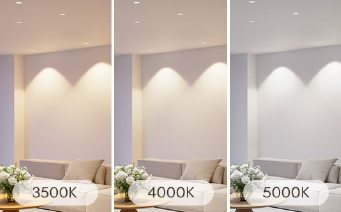
Meizu’s Lipro Downlight E2 series smart lights are also available in three different models based on power rating – 7W / 9W / 11W. The series also offers three different color temperature options to choose from – 3500K / 4000K / 5000K.
Pricing:
The Lipro Downlight E2 Air starts at 119 Yuan and the Downlight E2 Pro starts at 249 Yuan.
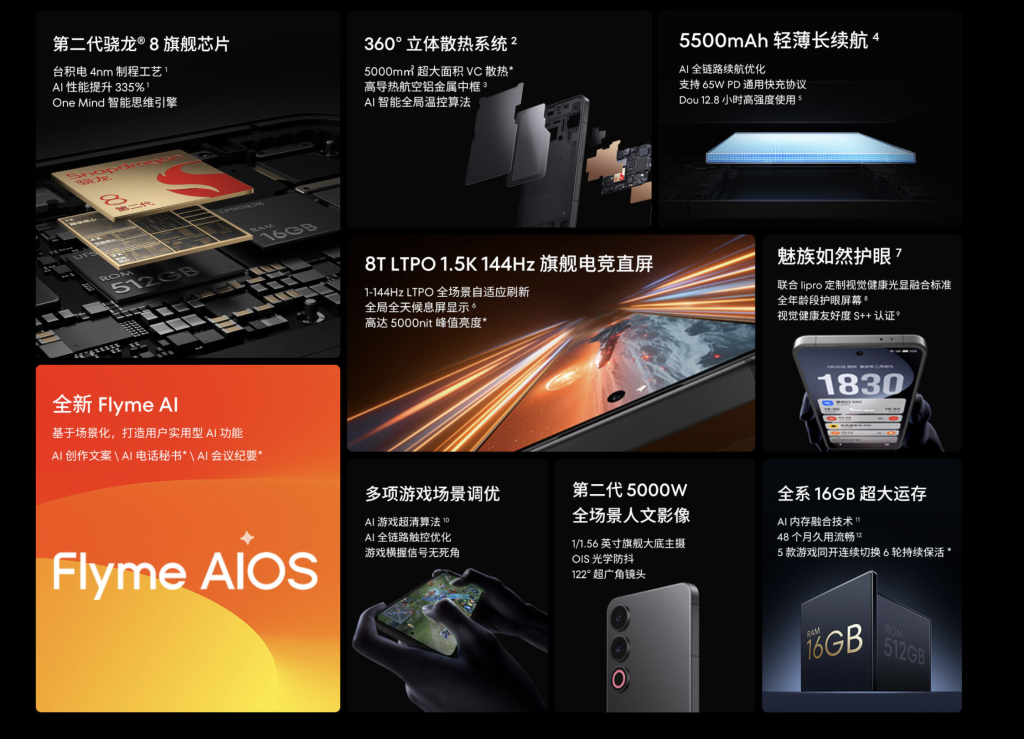
The much-awaited smartphone from Meizu, Meizu 21 Note is finally here. Despite numerous rumors surrounding the device, it has now officially launched.The unveiling date for the Meizu 21 Note was set for May 16th, and today it was revealed in China. We actually know lots of details as previous leaks revealed, the only mystery was the price. Meizu 21 Note has very good specs offered at a fair price.
Meizu 21 Note boasts a minimalist design, a powerful Snapdragon 8 Gen 2 chipset, and a stunning OLED panel – all at a surprisingly affordable price in China. The more interesting is that all configurations of the phone has 16GB of RAM. The base version (16GB+256GB) is priced at 2599 CNY (around 360 USD), with the 16GB+512GB variant priced at 2799 CNY (approximately 387 USD).
Meizu 21 Note
We can confidently say that the Meizu 21 Note is a strong flagship device, boasting beefy specifications even though its camera capabilities may not be so great. The phone is equipped with Snapdragon 8 Gen 2 chipset and comes in two different configurations: 16GB+256GB and 16GB+512GB. It features LPDDR5X RAM and UFS 3.1 storage. The 21 Note is not the best in the Meizu 21 series but it’s great that Meizu offers 16GB of RAM in both configurations. The phone comes in black and white colors, the white variant has white bezels as well.
Meizu 21 Note in White and Black
Meizu 21 Note sports a 6.78-inch 1.5K LTPO OLED panel with a 144Hz refresh rate. The display dynamically adjusts its refresh rate between 1Hz and 144Hz. This display can reach a maximum local brightness of 5000 nits and 1600 nits in HBM mode. Additionally, the phone’s screen supports 2160 Hz PWM dimming.
Meizu 21 Note packs a whopping 5500 mAh battery, despite being only 8.2mm thick. The charging speed is capped at 66W. Meizu’s ability to fit such a large battery into a relatively thin device showcases their impressive design work. Consider that phones with over 5,000mAh battery capacity often exceed 8.2mm in thickness.
The new Meizu phone, Meizu 21 Note comes with a dual-camera setup with a 50MP f/1.7maincamera (S5KGN5) and a 13MP f/2.4 ultra-wide-angle camera (S5K3L6). On the front, there is a 16MP selfie shooter, OIS is available only on the main camera. The phone is capable of recording videos up to 8K resolution and has dual speakers.
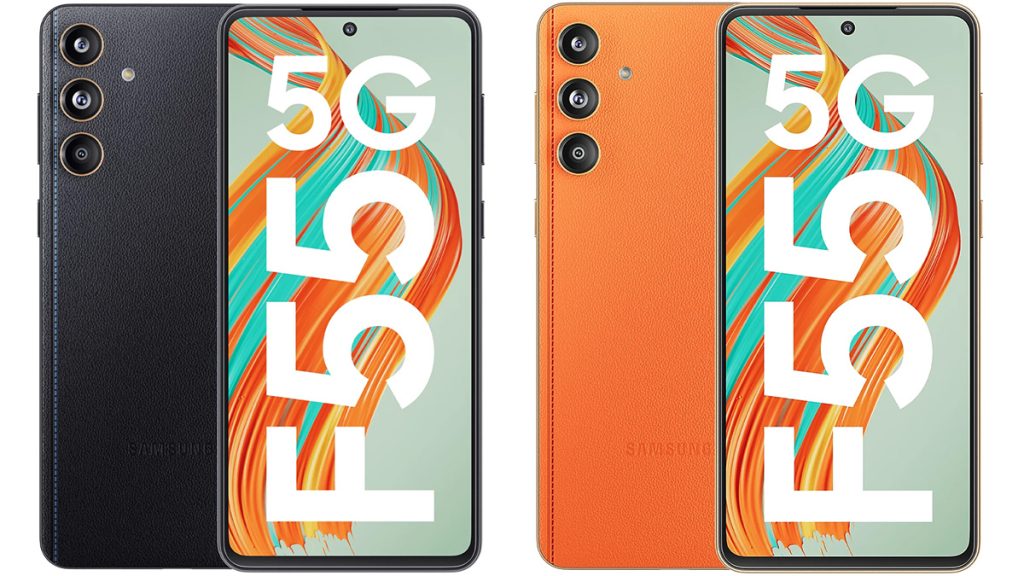
Samsung had the Galaxy F55 5G launch event scheduled for tomorrow (May 17), however, the brand has now postponed this launch event to the last week of the month.
The Galaxy F55 5G launch is now set to take place on May 27. Currently, there is no information on why the launch has been postponed. That said, the launch event is pretty much to unveil the exact price of the smartphone as the majority of other details have already been revealed.
Samsung Galaxy F55 5G specs:
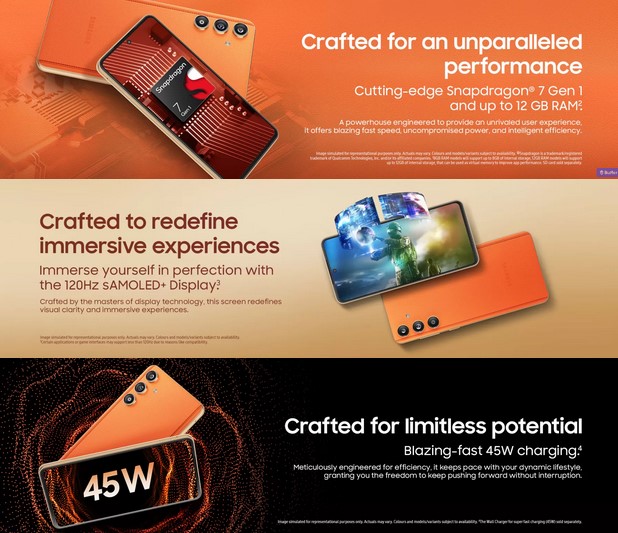
The Samsung Galaxy F55 5G is expected to have a 6.7-inch Super AMOLED Plus display with a 120Hz refresh rate, FHD+ resolution, and a peak brightness of 1,000 nits. It will likely run on the Qualcomm Snapdragon 7 Gen 1 chipset. The phone could come in two storage options, offering 8GB of RAM with either 128GB or 256GB of internal storage.
The camera setup might include a 50MP main camera with Optical Image Stabilization (OIS), an 8MP ultrawide camera, and a 2MP macro camera. For selfies, a 50MP front-facing camera is expected. The Galaxy F55 5G is anticipated to have a 5,000mAh battery with support for 25W fast charging. It will probably run on Android 14-based One UI 6.0.
A recent price leak has revealed that the 8GB + 128GB model of the smartphone will cost Rs 24,999 with bank offers.
LG has expanded its range of Tone Free wireless earphones. The newest offering from the South Korean brand is the LG Tone Free T90S. The audio device packs premium specifications and features. They pack noise cancellation and superior sound quality along with focussing on comfort and hygiene. Read on to know all the details below.
LG Tone Free T90S specifications and features
The LG Tone Free T90S have an in-ear ergonomic design with medical-grade hypoallergenic soft ear gels for a comfortable fit. The design is supported by South Korea’s POSTECH Ergonomic Design Technology Lab. The TWS earphones come in a storage case featuring a built-in UV light that is said to eliminate 99.99 percent of bacteria. The earbuds are IPX4-rated water-resistant.
On the audio front, the LG Tone Free T90S is equipped with a pure graphene driver. They feature Dolby Head Tracking technology for delivering consistent 3D immersive audio based on the user’s head movements. There is also Dolby Atmos support for studio-level audio quality. Additionally, the TWS earphones feature a Dolby Virtualizer that expands spatial dimensionality and the optimizer delivers natural and louder distraction-free sound. The Tone Free T90S come with adaptive ANC that adapts to real-time surrounding noise levels. There are three built-in microphones with Voice Pickup Unit for clear quality on calls. The audio device is also developed in collaboration with Meridian Audio.
The LG Tone Free T90S comes with Whisper mode for private conversations. The listening mode keeps the user aware of their surroundings. The TWS earphones feature a conversation mode that amplifies the person’s voice.
The LG Tone Free T90S can be paired with up to five devices and can connect to two devices simultaneously. The earbuds are rated to deliver up to 9 hours of playback whereas with the case, the battery life extends to 36 hours. The T90S can also be connected to non-Bluetooth devices as the case has a 3.5mm jack and works as a transmitter.
The LG Tone Free T90S is offered in Black and White colours. It carries a price tag of EUR 199 (~$216). The TWS earphones will be available for purchase later this month.
We use cookies on our website to give you the most relevant experience by remembering your preferences and repeat visits. By clicking “Accept”, you consent to the use of ALL the cookies.
This website uses cookies to improve your experience while you navigate through the website. Out of these, the cookies that are categorized as necessary are stored on your browser as they are essential for the working of basic functionalities of the website. We also use third-party cookies that help us analyze and understand how you use this website. These cookies will be stored in your browser only with your consent. You also have the option to opt-out of these cookies. But opting out of some of these cookies may affect your browsing experience.
Necessary cookies are absolutely essential for the website to function properly. This category only includes cookies that ensures basic functionalities and security features of the website. These cookies do not store any personal information.
Any cookies that may not be particularly necessary for the website to function and is used specifically to collect user personal data via analytics, ads, other embedded contents are termed as non-necessary cookies. It is mandatory to procure user consent prior to running these cookies on your website.