Advertisement

Xiaomi reveals global HyperOS rollout timeline for H1 2024

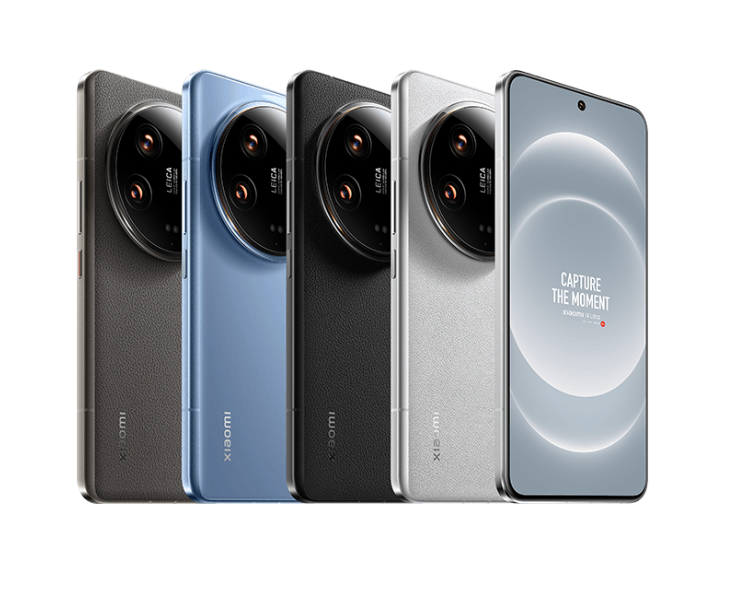
Yesterday, Xiaomi introduced the Xiaomi 14 series, including the top-of-the-line Ultra model, for the global market. These new devices come pre-installed with Xiaomi’s latest skin, HyperOS. However, these devices are not the only ones set to benefit from HyperOS.

Xiaomi-HyperOS

Xiaomi has also revealed a list of devices that will get the HyperOS update in the first half of 2024. The list of devices getting the update is not that big, but Xiaomi is slowly taking pace to release HyperOS for its global audiences. Here’s the list of devices slated to receive HyperOS in the H1 2024.

HyperOS update in H1 2024

  • Smartphones
    • Xiaomi 14 Series (Pre-installed)
    • Redmi Note 13 Series
    • Xiaomi 13 Series
    • Redmi Note 12 Pro+ 5G
    • Xiaomi 13T Series
    • Redmi Note 12 Pro 5G
    • Xiaomi 12 Series
    • Redmi Note 12 5G
  • Tablets
    • Xiaomi Pad 6S Pro (Pre-installed)
    • Xiaomi Pad 6
    • Redmi Pad SE
    • Xiaomi 12T Series
  • Wearables
    • Xiaomi Watch S3 (Pre-installed)
    • Xiaomi Smart Band 8 Pro (Pre-installed)

As mentioned in the list, HyperOS comes pre-installed on newer devices such as the Xiaomi 14 series, Watch S3, Smart Band 8 Pro, and Pad 6S Pro. So, if you plan on getting these devices, you can enjoy Xiaomi’s latest Android skin right away.

For those devices mentioned in the rollout timeline, there will be a wait time. Xiaomi hasn’t specified the exact release time for the HyperOS update on any of these devices, so the wait could be just days or months. However, as promised by Xiaomi, these devices should receive the update within the first half of 2024.

To check if your device has received the HyperOS update, go to Settings > About Device and tap on the MIUI version banner. If it has received the update, you should see it here, and then you can download and install it.

Related:

Future Apple wearables may include AirPods with cameras, smart rings, & smart glasses: Gurman

Apple could have some big plans for its future wearable products. The company is apparently looking into new wearable gadgets and even a major redesign to the existing AirPods hearables as well. So here’s everything you need to know.

Apple smart rings, smart glasses, & more on the drawing board?

The news arrives from Mark Gurman’s latest Power On newsletter. In the new report, Gurman claims that the Cupertino based giant could be exploring new forms of wearable products. This could include smart glasses, similar to the Amazon Echo Frames. For those unaware, this offers smart audio and AI features and might offer some of the augmented reality features of the Vision Pro as well.

Apple AirPods

Furthermore, a smart ring could also be planned for the future. Such a gadget comes packed with various health related sensors. These could be a viable alternative for users who dislike smartwatches like the Apple Watch. Both the smart ring and smart glasses appear to be in the early conceptual stages at the moment. On the other hand, the AirPods with a camera built into it might be in the works.

Gurman claims that the iPhone maker is looking into ways to add a camera on the AirPods TWS. He adds that the project has the codename B798 internally. This project talks about the AirPods with low resolution camera sensors. Apple is mulling over these projects to bring AI and health features, as per the report. It is worth noting that this is still just an unconfirmed report, so take this news with a pinch of salt for now.

RELATED:

Samsung unveils Galaxy Ring at MWC 2024

Samsung has officially revealed its Galaxy Ring smart ring at Mobile World Conference 2024. Initially teased during Samsung’s Unpacked event in January, the Galaxy Ring is a health and wellness-focused wearable designed to take on competitors like the Oura Ring.

Features and Design

While Samsung initially shared a few details about the Galaxy Ring, the company has now provided more information. The ring features a minimalist yet substantial design and will be available in platinum silver, gold, and ceramic black color options. 

According to TheVerge, the ring feels light when worn and comes in sizes 5 to 13, labeled S to XL inside. The battery size also varies depending on the ring size, ranging from 14.5mAh to 21.5mAh.

The Galaxy Ring will include a suite of sensors for tracking various health metrics. While Samsung has yet to reveal the Galaxy Ring’s full sensor suite, they are partnering with Natural Cycles for fertility tracking, mirroring a key feature of the Oura Ring.  

You can also expect the usual health features like sleep tracking, heart rate tracking, step counts, and breathing patterns. Samsung says users will also receive personalized health advice based on their sleep data. 

Another unique feature is Samsung’s “My Vitality Score,” designed to measure alertness and provide insights into the wearer’s overall readiness. Feedback will come through “Booster Cards” with science-based tips incorporating sleep and other health data.

Availability, Pricing, and Compatibility

The Galaxy Ring will integrate with the existing Samsung Health ecosystem, including Galaxy Watch devices. While exact pricing remains unknown, the ring is scheduled for release later this year.  

Initially, the Galaxy Ring will be compatible exclusively with Samsung Galaxy smartphones. However, Samsung plans to expand compatibility to other Android devices and potentially iOS devices in the future.

Related:

MWC 2024: Lenovo unveils ThinkPad T14 Gen 5 with major focus on repairability

Lenovo is giving its popular ThinkPad T series a major update with the release of the ThinkPad T14 Gen 5. This isn’t just about a new processor; Lenovo is focusing on repairability again with this generation of ThinkPad T laptops.

The ThinkPad T490 from 2019 moved away from the easy repairability of its predecessor, the T480. Lenovo is bringing back that feature with the T14 Gen 5, which stands out for its emphasis on repairability and updated design.

Lenovo ThinkPad T14 Gen 5 Specifications

The laptop comes with a 120 Hz OLED screen, boasting improved brightness (up to 400 cd/m²) and reduced power consumption for the standard WUXGA display options, thanks to a new optical film.

Visually, the T14 Gen 5 looks like any other ThinkPad with a slim bezel, a reverse notch webcam configuration, and the signature ThinkPad logo in an embossed black finish. 

But the keyboard has been redesigned with swapped FN/Ctrl keys, a Windows Co-Pilot key/menu key, and tactile markings for easier navigation.

In a nod to its older counterpart, the T480, the ThinkPad T14 Gen 5 includes two SO-DIMM slots, allowing for a maximum of 64GB of user-replaceable DDR5 RAM.

Lenovo has also redesigned the battery to be a Customer Replaceable Unit (CRU), meaning users can replace it themselves. This change was made possible by using a click-in connector instead of standard cabling within the laptop’s design.

Lenovo ThinkPad T14 Gen 5

Not only the battery and RAM, but the SSD and WWAN are also user-replaceable. There are also visual indicators that have been added for easier repairs.

With support from the iFixit team, Lenovo says it has also developed new repair guides, including video procedures, for all CRU parts. As a result of all this, the ThinkPad T14 Gen 5 has secured an iFixit repairability score of 9.3 out of 10. 

Processor options for the T14 Gen 5 include Intel Core Ultra with Meteor Lake H and Ryzen 8040U. Unlike its predecessor, there is no dedicated Nvidia GPU option. New features include optional WiFi 7 and Sub6 5G/LTE.

Price

Lenovo plans to start shipping the Intel-based ThinkPad T14 Gen 5 in April, with a starting price of $1,200. The AMD version will follow slightly later in May, starting at $950.

Related:

Lenovo Xiaoxin Pro 14/16 2024 Ryzen edition (R7 8845H) laptops go on sale starting from 4,999 Yuan (~$695)

Lenovo officially introduced the Xiaoxin Pro 14/16 2024 Ryzen edition laptops last month. According to the official Weibo of “Lenovo Xiaoxin”, the Xiaoxin Pro 2024 Ryzen Edition laptops are now on sale.

Lenovo Xiaoxin Pro 14 2024 Ryzen Edition price:

16GB RAM + 1TB: priced at 5,399 yuan, starting at 4,999 yuan (~$695)
32GB RAM + 1TB: priced at 5,699 yuan, starting at 5,299 yuan (~$736)

The notebook comes equipped with the AMD Ryzen 7 8845H processor. It features dual fans and a 3D composite heat pipe for efficient cooling, delivering 63W of performance. The device boasts a 14-inch OLED screen with a high refresh rate of 120Hz, a resolution of 2880×1800 pixels, and 600 nits brightness, covering 100% of the DCI-P3 color gamut. Additionally, it weighs 1.46 kg, has a thickness of 15.9mm, and is powered by an 84Wh capacity battery.

The laptop supports 100W PD fast charging and 140W Lenovo proprietary charging protocol, and it comes with a 100W gallium nitride charging head. In terms of connectivity, it offers a range of interfaces including USB 4, USB-C, USB-A, audio, SD card, and HDMI. There are also Intel Core Ultra versions of this 14″ Xiaoxin branded 2024 notebook.

Xiaoxin Pro 16 2024 Ryzen Edition price:

16GB RAM + 1TB: priced at 5,599 yuan, initial price 5,199 yuan (~$722)
32GB RAM + 1TB: priced at 5,899 yuan, initial price 5,499 yuan (~$763)

Similar to the 14-inch one, it also comes with the Ryzen 7 8845H processor and features dual fans and a 3D composite heat pipe, delivering 65W of performance. The device sports a 16-inch screen with a 120Hz refresh rate, a resolution of 2560×1600 pixels, and 350 nits brightness, covering 100% of the DCI-P3 color gamut. Weighing 1.91 kg and measuring 17.5mm thick, it also comes with an 84Wh capacity battery, supports 100W PD fast charging, and provides a variety of interfaces for connectivity.

Related:

(Source)

MWC 2024: Lenovo ThinkBook Concept Features Transparent Display Technology

MWC kicks off today, and tech brands are ready to wow us with new products and exciting concepts. Lenovo is joining the fray with several new laptops, but the star of the show is their latest innovation – a transparent laptop.

Dubbed the ThinkBook Transparent Display Laptop Concept, Lenovo’s new creation is exactly what it sounds like—a concept rather than a fully realized product. Despite this, it boasts some interesting features up its sleeve.

No prize for guessing, its standout feature is its transparent screen that offers a remarkable 55% transparency. Impressively, Lenovo has maintained vibrant display quality and a peak brightness of up to 1000 nits. And just to mention, it’s a 17.3-inch Micro-LED screen.

Beyond the transparent display, even the keyboard is see-through, utilizing laser projection for key input and doubling as a sketchpad with stylus support. However, the drawback of such a keyboard is the lack of tactile feedback from the keys which may result in a flat typing experience for users. 

The laptop also features a generously sized trackpad and essential connectivity ports for attaching external devices and peripherals. 

Additionally, it includes a rear-facing camera integrated into the chassis, which serves various functions such as scanning objects and people. With the assistance of AI, it can display digital versions of such scanned items on the laptop.

While Lenovo hasn’t shared specific hardware specifications of this ThinkBook, the transparent laptop concept runs on the standard Windows 11 operating system.

As mentioned earlier, this laptop is primarily a showcase of cutting-edge technology possibilities. According to Lenovo, it showcases “a futuristic perspective on AI PCs.” While it’s undoubtedly impressive and visually striking, do note that you can not purchase it.

Related:

Lenovo ThinkBook 14+/16+ Ryzen Edition laptops go on sale in China, Starts from 4,999 Yuan ($695)

The Lenovo ThinkBook 14+ and ThinkBook 16+ 2024 Ryzen Edition laptops have officially gone on sale in China. These laptops were announced in the region last week, and their first sale has finally kicked off. So here are all the details.

Lenovo ThinkBook 14+ & ThinkBook 16+ Specs

Apart from the screen size and display specs, both models are basically the same in every other aspect. They are equipped with AMD’s new Ryzen 8845H processor and are powered by a large 85Wh battery pack that supports fast charging. Just 30 minutes of charging can power up the laptops to 50 percent, as per official notes. The front houses an FHD webcam, while connectivity options include USB4, hidden USB 2.0, HDMI/RJ45 ports, a Micro SD card reader, and Thunderbolt 4.

As the name suggests, the 2024 Lenovo ThinkBook 14+ offers a 14.5-inch display that is surrounded by thin bezels. It offers up to 3K resolution along with a 120Hz refresh rate, DCI P3 high color gamut, and a 90 percent screen to body ratio. Meanwhile, the ThinkBook 16+ sports a tall 16-inch display with 2.5K resolution, 120Hz refresh rate, 100 percent sRGB color gamut, and 91 percent screen to body ratio.

Pricing & Availability

The new ThinkBook models have gone on sale in the Chinese market in multiple configurations, which you can check out below:

ThinkBook 14+

  • 16GB RAM + 1TB storage / 2.5K + 90Hz: 4,999 yuan ($694)
  • 16GB RAM + 1TB storage / 3K + 120Hz: 5,299 yuan ($736)
  • 32GB RAM + 1TB storage / 3K + 120Hz: 5,599 yuan ($778)

ThinkBook 16+

  • 16GB RAM + 1TB storage / 2.5K + 120Hz: 5,399 yuan ($750)
  • 32GB RAM + 1TB storage / 2.5K + 120Hz: 5,699 yuan ($791)

RELATED:

Xiaomi launches two new Bluetooth speakers with powerful 360° sound & IP67 protection

Xiaomi, after recently launching the Xiaomi 14 Ultra flagship smartphone in both China and global markets has launched two new Bluetooth speakers in China, catering to different user preferences with a focus on portability and sound quality. The launch includes the Xiaomi Bluetooth Speaker, designed for outdoor use with a powerful 40W output and 360° sound, and the smaller, more portable Xiaomi Bluetooth Speaker Mini, offering a convenient audio solution with a 3W output.

Xiaomi Bluetooth Speaker

The larger speaker is equipped with a 5-unit acoustic setup, delivering a maximum volume of 93dB. It’s built to withstand some rough conditions, featuring IP67 dust and water resistance and a durable fabric cover. A significant advantage is its 4800mAh battery, which not only provides up to 17 hours of playback but also supports 22.5W fast charging and can serve as a power bank.

Xiaomi Bluetooth Speaker

Key features include Bluetooth 5.3 connectivity, LHDC music playback, integration with Xiaomi’s HyperOS, and advanced audio processing for personalized listening experiences. Users can connect two smartphones simultaneously, adjust the RGB light strip via the Mijia app, and pair it with another Xiaomi speaker for a stereo setup.

The Xiaomi Bluetooth Speaker Mini, despite its smaller size, doesn’t compromise on sound or features. It supports 360° sound, IP67 rating, and also integrates with Xiaomi’s audio system for a tailored listening experience. Its 2000mAh battery ensures 11 hours of playback, making it ideal for on-the-go use. Like its larger counterpart, it offers Bluetooth 5.3, HyperOS connectivity, and RGB light customization.

Priced at 599 yuan ($82) for the larger model and 229 yuan ($32) for the Mini, both speakers are currently available for pre-sale in China. There’s no information yet on international availability.

RELATED:

(via 1, 2)

Samsung may unveil Galaxy Z Fold 6, Galaxy Z Flip 6, Galaxy Ring, & more at the July Unpacked event

The next Samsung Galaxy Unpacked event may include the announcement of a number of new products. The brand will likely host the event in July 2024, and now, we have an idea of all the products that could be unveiled during this time. So here are all the details.

Samsung Galaxy devices arriving at the July Unpacked

According to known tipster TheGalox, the South Korean tech giant is planning on releasing next gen models of its existing product lines along with some brand new devices. It appears that the Galaxy Z Fold 6 and Galaxy Z Flip 6 are the highlight of this event, but these will arrive with the Galaxy Buds 3 and Galaxy Watch 7 series as well.

Samsung Galaxy Z Fold 6

Another notable announcement is the Galaxy Ring. This wearable device was previously reported to launch in July, so the latest report basically backs this rumor. Apart from this, Anthony tweeted that the July 2024 Galaxy Unpacked could have the company announce a new Samsung service as well. However, details regarding this are still at large.

The tipster claims that the Galaxy Tab S10 series and Galaxy XR headset may be announced during this event, but that seems unlikely. Samsung had delayed its headset launch following the Apple Vision Pro release, but rumors had pointed at a 2024 announcement. In other words, the device could be unveiled in late 2024 and release sometime next year. Keep in mind that this is still just speculation, so take this report with a pinch of salt.

RELATED:

Sony Alpha 9 III camera Indian launch teased

Sony India is on the verge of launching the Alpha 9 III camera, having teased its upcoming release with a “Coming Soon” announcement on social media. This camera, first revealed globally in November 2023, is now confirmed to be arriving in the Indian market.

The Alpha 9 III is engineered with a global shutter, a notable feature that captures the entire image simultaneously, eliminating the common problems of rolling shutter distortion and blackout experienced with fast-moving subjects. This technology ensures that photographers can capture every detail with precision, making it especially appealing for sports and wildlife photography where every millisecond counts. The camera is equipped with a 24.6MP Exmor RS CMOS image sensor and the BIONZ XR processor, supporting a remarkable 120 fps shooting speed with AF/AE tracking, thus providing seamless capture of action shots with no delay.

Sony Alpha 9 III Camera

Sony has integrated the most advanced autofocus system into the Alpha 9 III, featuring AI-driven autofocus that performs focus calculations up to 120 times per second, ensuring sharp images in every shot. This system is complemented by full flash sync capabilities at any shooting speed, broadening the creative possibilities for photographers in various lighting conditions.

Designed for both still photography and video recording, the Alpha 9 III offers 4K 120p high-frame-rate video recording without crop, enabling wider angles and more detailed scenes to be captured. The inclusion of Sony’s S-Cinetone feature allows for cinematic quality video directly from the camera, ideal for filmmakers seeking professional results without the need for extensive editing.

RELATED:

BOULT Astra Neo gaming earbuds with Bluetooth 5.4, 70-hour battery life & low latency mode launched in India

BOULT has launched the Astra Neo, a new true wireless stereo (TWS) earbuds market, designed with gamers in mind. This made-in-India product offers a low latency feature, ensuring an unmatched gaming experience by syncing audio to action seamlessly. The Astra Neo offers a substantial 70 hours of playtime, making it perfect for long gaming marathons.

Boult Astra Neo

One of the key attractions of the Astra Neo is its Zen Quad Mic Environmental Noise Cancellation technology, which promises crystal-clear communication by filtering out background noise. It’s also designed for durability and comfort, featuring IPX5 water resistance and a comfortable grip for extended use.

The earbuds are designed not only for gaming but also for everyday use, offering features like a Comfort Grip and Mode sync LED. It features dual-device connectivity, meaning you can easily switch between devices with just one tap. As for fast charging capabilities, it comes with Lightning Boult Type-C Fast Charging providing 100 minutes of playtime from just a 10-minute charge.

Boult Astra Neo

Available in Black and White, the Astra Neo sports the latest Bluetooth 5.4 for stable connectivity and features a 40ms low latency mode specifically for gaming. It has large 13mm BoomX Bass Drivers, paired with multiple codecs, promising high-quality sound.

Pricing & availability

BOULT has set a competitive launch price of INR 1,099 for the Astra Neo, available for a limited time on their website and Flipkart, after which it will be sold at an MRP of INR 3,499.

RELATED:

Honor announces March launch for Porsche Design Magic 6 RSR

Honor, the Chinese smartphone maker, has finally announced a March launch for its highly anticipated Magic 6 RSR. The announcement comes after the initial debut of the Magic 6 and Magic 6 Pro in China back in January.

Honor Magic 6 RSR launch

The company shared a teaser video of the smartphone on Weibo confirming the Magic 6 RSR name. The video also reveals a unique hexagonal camera module design, which could be a distinctive visual element for the phone. And we can also see the 100x zoom etching on the module.

Rumors suggest the Magic 6 RSR could be the first smartphone to use the all-new OV50K camera sensor from OmniVision. The OV50K is a flagship image sensor potentially rivaling to the like of Sony LYT-900. 

If these rumors hold true, the Magic 6 RSR will face stiff competition from flagships such as the OPPO Find X7 Ultra, the Xiaomi 14 Ultra, and the rumored Vivo X100 Ultra.

According to industry insider Digital Chat Station, the main camera of the Honor Magic 6 RSR will feature a variable aperture of f/1.4 to f/2.0. This would allow for greater control over the depth of field in photos and videos.

Additionally, the phone is rumored to be powered by the formidable Snapdragon 8 Gen 3 chip and may support two-way satellite communication.

Last week, the smartphone received 3C certification, confirming its compatibility with up to 100W of fast charging, as well as satellite communication and 5G connectivity.

Apart from these details, there’s relatively little information available about the Honor Magic 6 RSR at this time. However, more updates on the device are expected as we approach the launch date.

Related:

Infinix GT Ultra flagship gaming phone teased at MWC 2024 with an AnTuTu score of 2.2 million

Infinix has just teased a new flagship gaming smartphone at the MWC 2024 event (Mobile World Congress). The Infinix GT Ultra is set to launch with some of the brand’s latest tech innovations and its synthetic benchmark performance was also teased during the major conference. So let’s have a look.

Infinix GT Ultra teased at MWC 2024

Infinix GT Ultra

The company is packing its new high end device with its new gaming technologies that focus on four core areas. This includes processor, graphics, cooling, and AI optimizations. As per official notes, the Infinix GT Ultra will be equipped with the MediaTek Dimensity 9300 SoC, which is a flagship grade processor. Complimenting this powerful chip is the CoolMax technology, which aims to keep thermal throttling at bay.

The CoolMax technology claims to offer a temperature drop of an impressive 10 degrees Celsius. Thanks to the new innovations and specs, the upcoming gaming phone was able to register the highest score on AnTutu with 2,215,639 points. Infinix is also using Pixelworks visual processors to offer refresh rates of up to 180Hz on FHD+ panels and 144Hz on WQHD+ displays. Although, it is unclear which configuration the Infinix GT ultra will launch with.

Another notable announcement during MWC was the two new charging technologies. This is the Infinix AirCharge and Infinix Extreme Temp Battery. As the name suggests, the former is a magnetic resonance based wireless charging tech. On the other hand, the Extreme Temp battery features a design that enables charging in extreme temperatures that go as low as -40 degrees Celsius. Unfortunately, finer details are still at large so stick around for more updates.

RELATED:

(Via)

Vivo Pad 3 Pro is rumored to offer a 3K LCD panel powered by Dimensity 9300 and 16GB+512GB configuration

A recent leak from prominent tipster @Digital Chat Station has unveiled key specifications of the upcoming vivo Pad 3 Pro tablet, providing a glimpse into the device’s potential capabilities.

Rumored specifications:

According to the leak, the vivo Pad 3 Pro is set to feature a Dimensity 9300 processor, offering a powerful performance for users. This processor is built on TSMC’s new generation 4nm process and boasts 22.7 billion transistors. With a CPU architecture comprising 1× 3.25GHz Cortex-X4 + 3× 2.85GHz Cortex-X4 + 4× 2.0GHz A720, the Dimensity 9300 promises enhanced performance, with a 15% improvement in performance compared to its predecessor, the Dimensity 9200. Moreover, the tablet will come with 16GB of RAM and a spacious 512GB of storage, catering to users’ multitasking and storage needs.

In terms of display, the vivo Pad 3 Pro will sport a 12.95-inch 3K LCD screen with a resolution of 3096 x 2064, ensuring a crisp and immersive viewing experience for users. Additionally, the device will feature dual cameras, including an 8MP front camera and a 13MP rear camera.

One of the standout features of the vivo Pad 3 Pro is its support for 80W charging, enabling users to quickly recharge their device. This rapid charging technology is expected to provide added convenience for users who rely heavily on their tablets for their workflow and entertainment.

A previous leak by DCS suggests that the vivo Pad 3 will be equipped with the SM8635 processor, likely to be named Snapdragon 8s Gen 3. This processor, also built on TSMC’s 4nm process technology, indicates that vivo is aiming to offer multiple options to cater to different user preferences and requirements.

While vivo has not officially announced the release date for these new tablets, the leaked specifications have generated significant excitement among people awaiting their arrival. With powerful processors, high-resolution displays, and fast-charging capabilities, the vivo Pad 3 Pro and Pad 3 are poised to offer a compelling experience for users.

Related:

Honor Magic 6 Pro outclasses Galaxy S24 Ultra & iPhone in DxOMark tests

Honor recently introduced the Magic 6 Pro smartphone globally. Shortly after its release, DxOMark also released the first analysis of the device. And early results seem quite impressive. 

DxOMark’s assessment highlights the Magic 6 Pro’s impressive 6.8-inch AMOLED display, which has now claimed the top spot in its rankings, surpassing the previous leader, the Samsung Galaxy S24 Ultra.

With a score of 157 points, the Magic 6 Pro outperformed the Galaxy S24 Ultra by two points and the Pixel 8 Pro by three points. The Apple iPhone 15 Pro Max, in comparison, ranked tenth with 149 points.

DxOMark praised the Magic 6 Pro for its exceptional motion handling, providing users with a great experience for watching videos or playing games. The phone’s smooth playback and minimal motion blur contributed to its top score in motion.

However, DxOMark’s tests revealed some limitations of the display, such as noticeable color shifts at extreme viewing angles and distracting patterns in low-light conditions with monochrome content. 

While Honor advertises a peak brightness of 5000 nits, achieving this brightness level requires specific HDR scenarios; under regular sunlight, it falls short compared to competitors.

Beyond its display, the Magic6 Pro also shines in other areas. DxOMark’s battery tests demonstrated the benefits of its large battery and efficient Snapdragon 8 Gen 3 processor, earning it the highest score of 157 points. 

The phone offers impressive runtimes, lasting 35 hours for calls, 50 hours for music streaming, and 15 hours for gaming. However, heavy camera usage notably reduces battery life to around 4 hours and 39 minutes. But this isn’t surprsing. 

Lastly, the Magic6 Pro’s 50MP ultra-wide-angle selfie camera also impressed reviewers. It dethroned the iPhone 15 Pro Max thanks to its ability to capture sharp group selfies with its wide depth of field, as well as delivering higher resolution images overall.

The selfie camera received praise for its white balance, color reproduction, noise control, and dynamic range, though it loses some detail in low light due to aggressive noise reduction and shows occasional video sharpness inconsistencies.

Related:

(Source | Via)

boAt Lunar Embrace smartwatch with 1.51″ AMOLED display, BT Calling & metal body launched in India

boAt has expanded its wearable lineup in India with the introduction of the Lunar Embrace, a new smartwatch that merges premium aesthetics with functional features. This launch marks boAt’s third smartwatch launch this month, following the boAt Lunar Link and the boAt Ultima Select smartwatches launched in the first week.

boAt Lunar Embrace smartwatch specs:

The Lunar Embrace smartwatch is designed with a durable metal body and boasts a 1.51-inch AMOLED display, allowing users to customize their watch faces according to their preferences. It’s equipped with Bluetooth calling functionality, enabling users to make and receive calls directly from the watch, with an added feature to save up to 20 contacts.

Boat Lunar Embrace smartwatch

Health and fitness tracking is a key aspect of the Lunar Embrace. It monitors heart rate, blood oxygen levels (SpO2), stress, sleep patterns, and offers menstrual tracking. The device also includes over 100 sports modes to cater to various physical activities, making it a versatile fitness companion.

Boat Lunar Embrace smartwatch

The device is IP68-rated, ensuring it is resistant to dust and water. Additional features include built-in games, music control, and a range of convenience tools such as sedentary alerts, a voice assistant, and weather updates. Despite its extensive functionality, the smartwatch maintains up to 7 days of battery life on a single charge with regular use.

Pricing & availability

Priced at Rs. 2,899, the Lunar Embrace is available in Steel Grey and Steel Black options and can be purchased via Amazon.in.

RELATED:

Vivo V30, V30 Pro price, configurations leaked before Indonesian launch

Vivo V30 and Vivo V30 Pro will be unveiled on Feb. 28 in Indonesia. Ahead of the launch, a leaked poster has surfaced on social media, revealing key features and potential pricing for both smartphones. Here’s a look at all the details that have been leaked prior to the official announcement.

Vivo V30, V30 Pro RAM, storage, and price for Indonesia (rumored)

Vivo V30 series leak for Indonesia

The leak reveals that the Vivo V30 and V30 Pro will have two 50-megapixel cameras on the back. The first one is a primary camera, and the second one is an ultra-wide lens. Both phones will have a square-shaped Aura Light Portrait LED. The V30 will feature the Snapdragon 7 Gen 3 chipset, whereas the Pro variant may arrive with the Dimensity 8200 SoC. The standard model is also said to pack a 5,000mAh battery with 80W charging support.

The Vivo V30 will arrive in two options, such as 8GB RAM + 8GB virtual RAM + 256GB storage for IDR 5,999,000 (~$384), and 12GB RAM + 12GB virtual RAM + 512GB storage for IDR 6,999,000 (~$448). It will come in three shades, such as black, white, and green.

On the other hand, the V30 Pro will come in a single 12GB RAM + 12GB virtual RAM + 512GB storage configuration. It will be priced at IDR 8,999,000 (~$575). It will come in two options, such as black and green.

Vivo V30 series specifications (rumored)

As per reports, the Vivo V30 and V30 Pro are rumored to sport a large, curved-edge 6.78-inch AMOLED display with a 120Hz refresh rate and 1.5K resolution. The series is expected to come with LPDDR4x / LPDDR5 RAM and UFS 3.1 storage. Both phones are expected to run the latest Android 14 with FunTouch OS 14 and pack a 5,000mAh battery with 80W fast charging.

While the Vivo V30 might have a triple-camera setup (50-megapixel main with OIS, 50-megapixel ultra-wide, and 2-megapixel auxiliary), the V30 Pro really ups the ante. Expect a 50-megapixel Sony IMX920 main camera (OIS-enabled), a 50-megapixel Sony IMX816 ultra-wide lens, and even a 50-megapixel telephoto camera with 3x optical zoom, on the Pro model. For selfie enthusiasts, both devices could have a 50-megapixel front camera featuring autofocus.

RELATED:

(source)

OnePlus Ace 3 / 12R Genshin Impact design officially revealed before February 28 launch

OnePlus recently confirmed that it will unveil the OnePlus 12R Genshin Impact, a special edition phone, on Feb. 28. On the same day, the rebranded version of the phone with the OnePlus Ace 3 Genshin Impact name will be announced in China. The Chinese wing of the company has revealed the design of the device.

OnePlus Ace 3 / 12R Genshin Impact

As can be seen, OnePlus is exciting Genshin Impact fans with a special edition of the Oneplus Ace 3, inspired by the popular Genshin Impact character, Keqing. The limited-edition variant is equipped with a frosted purple glass back, showcasing Keqing’s unique markings and logo through a specialized projection process. This attention to detail extends to the custom packaging and themed accessories that will accompany the phone.

The OnePlus Ace 3 Genshin Impact edition promises to be a highly sought-after collector’s item and sets a new standard for customized smartphones in 2024. The purple color variant of the device is dubbed Electro Purple for the global market.

OnePlus Ace 3 Genshin Impact edition design
OnePlus Ace 3 / 12R Genshin Impact Edition design

At present, there is no word on the RAM and storage capacities of the OnePlus Ace 3 / 12R Genshin Impact. The other specs of the device are expected to remain identical to their regular version.

OnePlus Ace 3 / 12R specifications

OnePlus Ace 3 Genshin Impact edition design1
OnePlus Ace 3 / 12R Genshin Impact Edition design

The OnePlus Ace 3 / 12R has a 6.78-inch AMOLED display that offers a 1.5K resolution of 1264 x 2780 pixels, a 120Hz refresh rate, and Gorilla Glass Victus 2 protection. The device runs on ColorOS 14 (China) or OxygenOS 14 (global)-based Android 14. The Snapdragon 8 Gen 2 chipset powers the device with up to LPDDR5x RAM and UFS 3.1 storage. It has a 5,500mAh battery with 100W charging support.

On the front, it has a 16-megapixel selfie camera. The back panel of the device has a 50-megapixel Sony IMX890 main camera with OIS support, an 8-megapixel ultra-wide lens, and a 2-megapixel macro lens.

RELATED:

Xiaomi 14 Ultra Unboxing & Hands-on: Small upgrades, Big differences?

After the Chinese New Year, Xiaomi eagerly released its 14 Ultra. Not just in China by the way, this phone will be launched globally as well, showing that Xiaomi is finally coming up with the confidence to let people all over the world use this photography monster. I’ve taken a lot of photos with the 13 Ultra over the past year, so I’m probably more excited than anyone to see what new things this phone can bring to the table.

Unboxing

This year’s Xiaomi 14 Ultra still comes in the same black box, and the appearance remains unchanged.

The accessories at the top are the same: card pins, manual, and phone case. The phone case has gone from a soft case to a hard one. Interestingly the blue version is clear frosted while the black version is black frosted.

At the bottom are the charger and charging cable. The charger is still 90W, just like the 13 Ultra.

Hands-on

In terms of looks, not much has changed from the 13 Ultra. The design language is roughly the same, with a frame that extends to the back panel and a round camera module in the center that still catches our eye.

But when I took the 13 Ultra out for a closer comparison, I still spotted a few small changes. The biggest change is that the slope next to the lens module has been removed, and it looks like the lens module sticks out more. The metal frame that extends out has also become more rounded.

So the Xiaomi 14 Ultra has become more phone-like to hold than the 13 Ultra. This year’s Xiaomi 14 Ultra has a new blue back cover version that I really like. You know what, I don’t even care if it’s blue, red, or any other color, I like it because it’s a ceramic back cover, which makes a vegan leather hater like me very happy.

And the ceramic back cover has been weighted down so that it’s not much heavier than the leather version. Now I am sure, this blue-colored Xiaomi 14 Ultra is what I need.

Although not much has changed on the back, there is a big change on the front. Yes, the screen is the same one that’s on the Xiaomi 14 Pro, even the protective glass is the same Dragon Crystal Glass. With bezels of almost equal width on all four sides, and all of them are a little bit curved, it looks and feels like the perfect screen in my mind.

The Xiaomi 14 Ultra‘s processor is of course the Snapdragon 8 Gen 3, which doesn’t come as much of a surprise. Instead, it’s the battery capacity that’s a shocker. Even though the camera module is getting bigger, the phone is getting lighter, and the battery capacity has increased by 300 mAh.

The Xiaomi 14 Ultra also adds two new Surge T1 chips and Satellite Calling, so the price getting higher is to be expected. What do you think of the price, post your thoughts in the comments section.

Speaking of the Ultra, the cameras are naturally the strongest selling point of this phone. I do love the Xiaomi Ultra series, so I took the 13 Ultra out on vacation and snapped these photos. Very pretty right? It must be hard for the 14 Ultra to top it with a similar camera.

Yep, the cameras on the Xiaomi 14 Ultra haven’t changed much compared to the 13 Ultra, with all four cameras having the same focal lengths and sensor sizes. The upgrades are things that the average person doesn’t really care about, such as a larger aperture and no digital crop on the 3.2x telephoto camera. There’s also a new AI platform added.

They said that the 14 Ultra supports four cameras switching at will in 4K 60fps video recording, I’ve tested it, and it’s truly awesome. Like the other phones in the 14 series, the front camera can now record 4K 60fps video. More about its camera system will be covered in the FULL REVIEW. What’s certain now is that it’s definitely more powerful than the 13 Ultra.

Unfortunately, there’s not much about this phone that I can tell you right now. This is because a lot of the features need to be tested by us, to know how well it works. As always, we’ll make the FULL review video as soon as we can. Remember to subscribe to our channel to make sure you don’t miss our videos.

Lava Blaze Curve 5G to feature Dimensity 7050 SoC, price point details leaked

The Indian smartphone brand Lava pulled off a surprising revival of Interest in its home country with the launch of the popular Lava Agni 2 5G smartphone, and the brand wants to keep the momentum rolling with a new smartwatch on the horizon called the Lava Blaze Curve 5G.

Lava Blaze Curve 5G image
Lava Blaze Curve 5G image via Paras Guglani

The phone is speculated to launch in the first week of March, as its Amazon India microsite is already live. Ahead of the launch, tipster Parag Guglani aka @passionategeekz has leaked some key features of the phone in a recent post on X. As per Paras, the Lava Blaze Curve 5G will house a Dimensity 7050 SoC, the same chip found in the popular Lava Agni 2. It will have two RAM and storage options: 8GB + 128GB and 8GB + 256G. The storage type will be UFS 3.1.

Lava Blaze Curve 5G

The tipster reports that the device scored over 550K points on the Antutu benchmark and will be made available in two color options. Lastly, the tipster states that the device will launch within the 16K – 19K, which is quite similar to the going prices of the Lava Agni 2 in India.

Previous leaks have confirmed that this device will debut with a 120Hz AMOLED display, likely flaunting a Full HD+ resolution. It is also said to feature a 64MP triple rear camera setup headlined by a Sony sensor. We can expect the official teasers and specifications to begin dropping in the coming days.

RELATED:

(Source)