Advertisement

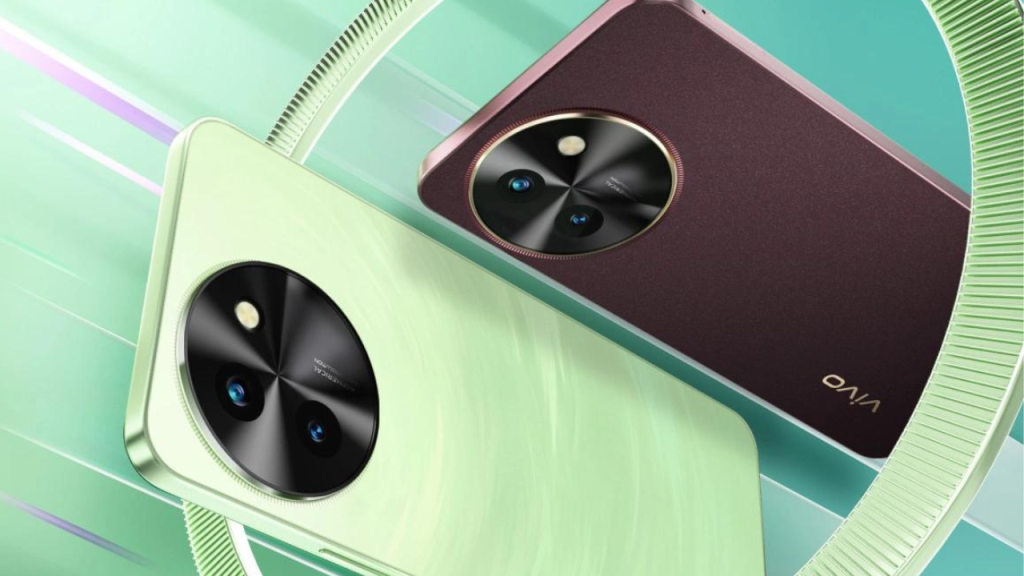
Vivo Y100t 5G launched with 120Hz display, Dimensity 8200, 120W charging

Vivo has announced a new Y100-series phone for the Chinese market. The device, dubbed the Vivo Y100t, joins existing models, such as the Vivo Y100 and Y100i, that were announced last year. While the Y100 and Y100i feature the Snapdragon 695 and Dimensity 6020 chipsets, respectively, the Y100t is a more powerful device equipped with the Dimensity 8200.

Vivo Y100t 5G specifications

Vivo Y100t
Vivo Y100t

The Vivo Y100t 5G has a 6.64-inch IPS LCD panel that offers an FHD+ resolution and a 120Hz refresh rate. Under the hood, the device is equipped with the MediaTek Dimensity 8200 chipset.

The device has 8 GB / 12 GB of RAM, 8 GB of virtual RAM, and 256 GB / 512 GB of built-in storage. The exact version of the Android OS and OriginOS that the device has is not known yet.

The Y100t packs a 5,000mAh battery with 120W fast charging. On the front, it has a 16-megapixel selfie camera, and its back panel has a 64-megapixel primary camera with OIS support and a 2-megapixel depth sensor. It comes with other features, such as NFC, a side-facing fingerprint scanner, and a 3.5mm audio jack. It measures 164.58 x 75.8 x 8.79mm and weighs 200 grams. It can be bought in shades like white and blue.

The price of the Vivo Y100t has not been confirmed yet. Its price is expected to be confirmed on Feb. 23, the day on which its pre-sale will begin in China via platforms like Vivo China’s website, JD.com, and Tmall.

To sum up, the Y100t is a tweaked version of the iQOO Z8x, which debuted with the Snapdragon 782G chip last year in China. It appears that, apart from having different chipsets, both devices are said to have the same specs. It is speculated that the same device may launch as the Vivo Y100 GT in some other markets.

RELATED:

Xiaomi 14 Ultra official images arrive before February 22 launch

Xiaomi has finally confirmed that it will hold a dedicated launch event on Feb. 22 to announce the Xiaomi 14 Ultra for the Chinese market. Now that the launch date has been confirmed, the company is now busy teasing its most premium flagship phone. Shown below are the first official images of the device.

Xiaomi 14 Ultra design revealed

Xiaomi 14 Ultra
Xiaomi 14 Ultra

As can be seen in the official images, the Xiaomi 14 Ultra sports a design that can be said to be an improved version of the Xiaomi 13 Ultra. The design is not entirely different, as it features a large round camera module with four cameras, a dual-LED flash unit, and Lecia branding in the middle.

Xiaomi 14 Ultra
Xiaomi 14 Ultra

The image of the Xiaomi 14 Ultra’s display shows that it is neither entirely flat nor does it have the same kind of curvature that was seen on the predecessor models. The micro-curvature on all four sides gives it a premium appeal.

Xiaomi 14 Ultra
Xiaomi 14 Ultra

Both the white/silver and black variants of the Xiaomi 14 Ultra have a leather finish on the back. It is said that there is a blue edition of the device equipped with a glass back. This model may remain exclusive to the Chinese market. In addition, there seems to be a special titanium edition of the phone, which could also be confined to China.

Xiaomi 14 Ultra
Xiaomi 14 Ultra

The Xiaomi 14 Ultra is scheduled to debut with the Xiaomi 14 for the global market on Feb. 25. It is likely that the phone may be released only in black and white/silver variants in markets outside of China. As far as the Feb. 22 China launch event is concerned, the company is also expected to announce the Xiaomi Pad 6S Pro tablet.

Xiaomi 14 Ultra
Xiaomi 14 Ultra

The complete specifications of the Xiaomi 14 Ultra have already been leaked. Readers can visit this link to learn everything about it.

RELATED:

BenQ LW650 laser projector with 4,000 ANSI lumens brightness launched

After recently unveiling the LH650 projector in the global market, BenQ is back with another projector model called the BenQ LW650. Both of these projects are quite similar other than the differences in their output resolution and aspect ratios.

BenQ LW650

BenQ LW650 laser projector specs:

Weighing approximately 2.9 kg, the LW650 is portable without sacrificing quality. It features a laser light source capable of delivering up to 4,000 ANSI lumens, ensuring clear visibility in various lighting conditions.

Key to its appeal, the LW650 employs strategies to cut power use by up to 70% compared to conventional projectors. It automatically adjusts light output based on the brightness of the content, and includes a standby mode and an automatic shutdown feature to conserve energy.

The projector supports a wide color spectrum with a 3,000,000:1 contrast ratio and displays up to 1.07 billion colors. Its input resolution compatibility extends up to 3840 x 2160 pixels, with a native resolution of 1280 x 800 pixels (WXGA), suitable for a range of multimedia content. For connectivity, it offers HDMI and USB Type-C ports.

Pricing

The BenQ LW650 WXGA Laser Projector’s price hasn’t been revealed yet. However, it’s expected to be less expensive than the BenQ LH650 Projector, which is currently priced at $1,199.

RELATED:

AOOSTAR GEM10 gaming mini-PC has a Ryzen 7 7840HS processor & a tiny body

AOOSTAR has announced the release of the GEM10, a compact gaming mini PC designed to deliver high performance in a small package. Measuring just 107 x 107 x 60mm, the GEM10 features an AMD Ryzen 7 7840HS processor capable of handling demanding applications and games. It also offers the flexibility to expand storage with three M.2 2280 slots for PCIe 4.0 x4 SSDs.

AOOSTAR GEM10 mini-PC

The GEM10 features a bunch of connectivity options including dual HDMI outputs, two 2.5 Gb Ethernet ports, a USB-C port with 40 Gbps speed, and an OCuLink port for 63 Gbps connections. This allows users to easily connect multiple displays, support 4K video playback, engage in light gaming, or upgrade to more intensive gaming and workstation tasks with an external GPU via the OCuLink port.

The GEM10 is competitively priced at $549 for the base model, which includes 32GB of LPDDR5-6400 RAM but lacks storage and an operating system. A higher-tier version with 32GB of RAM and a 1TB SSD is available for $590. Its integrated Radeon 780M graphics support multiple displays and 4K video, offering versatility for various multimedia tasks.

AOOSTAR has equipped the GEM10 with the Glacier 2.5 cooling system, ensuring sustained performance at 75W while keeping temperature and noise levels in check. The mini PC can support up to three 4K displays at 120 Hz or a single 8K display. Available for pre-order, the GEM10 is set to start shipping to customers by March 8th.

RELATED:

Xiaomi 14 Ultra pre-booking kicks off in China

Xiaomi is set to release the Xiaomi 14 Ultra smartphone in China later this month. Ahead of its launch, the company has started accepting pre-bookings, offering customers six exclusive gifts and a chance to win the phone for free. Details about the phone’s features remain scarce, but leaks have provided a glimpse into what to expect.

The Xiaomi 14 Ultra is rumored to feature a 6.73-inch AMOLED screen with a 120Hz refresh rate and HDR10+ support, promising a top-notch viewing experience. It’s expected to be powered by a Snapdragon 8 Gen 3 processor, equipped with 16GB of RAM and up to 1TB of storage, aiming to cater to power users and gamers.

Similar to other Ultra smartphones in the Xiaomi lineup, the spotlight of the Xiaomi 14 Ultra will be on its camera system. It is reported to include four 50-megapixel sensors catering to wide-angle, ultra-wide, and 3.2x and 5x zoom functionalities. The primary 50MP lens is reportedly equipped with a 1-inch sensor, ensuring excellent light capture with a maximum aperture size of F/1.6 and sizable sensor pixels.

The device is also set to come with a 5300mAh battery supporting fast charging, along with the latest in connectivity technologies, including WiFi 6, Bluetooth 5.2, NFC, and IP68 water and dust resistance.

RELATED:

(via)

MSI MPG 321URX QD-OLED monitor with 4K 240Hz panel up for pre-order in the US & Europe

MSI has officially launched the MPG 321URX QD-OLED, shortly after making the MAG 341CQP QD-OLED monitor available in regions like the US, UK, and Europe. These monitors were initially revealed at CES 2023, which was held last month.

MSI MPG 321URX QD-OLED monitor

The MSI MPG 321URX QD-OLED boasts a 31.5-inch display, delivering a 4K resolution at an impressive 240 Hz refresh rate and ultra-fast 0.03 ms GtG response times, making it suitable for both competitive as well as AAA titles. Additionally, it features a built-in USB hub that supports 90 W Power Delivery over USB Type-C, making it appealing for customers who also wish to use the monitor for a work/gaming hybrid setup.

Priced competitively, the MPG 321URX QD-OLED is listed at €1,399 in Europe, £1,299 in the UK, and $949 in the US, making it a more affordable option compared to its rivals like the ROG Swift OLED PG32UCDM, which was also recently made available for pre-order in the US and UK. Similar to that, the MPG 321URX QD-OLED is also up for pre-order in the US and UK, however, US customers might have to wait till April for their pre-orders to arrive.

On a related note, Alienware has also recently launched the AW2725DF gaming monitor in China, which features a 2560×1440p 360Hz QD-OLED panel. Other than features like a snappy refresh rate of 0.03ms GTG, color accuracy is also a strong suit here as it guarantees 99.3% DCI-P3 color gamut coverage. Currently, it is exclusive to China, however, the monitor could make its way to the Western market soon.

RELATED:

OpenAI hits $80 billion valuation, CEO Altman eyes AI chip manufacturing

OpenAI, the company behind the popular AI chatbot ChatGPT, has witnessed a meteoric rise in valuation, jumping to a staggering $80 billion according to a recent deal with venture capital firm Thrive Capital. This represents a nearly threefold increase from just nine months ago, highlighting the surging interest in artificial intelligence and its potential applications.

OpenAI

Skyrocketing Valuation: OpenAI’s Leap to $80 Billion Amid AI Innovations

Unlike a traditional funding round, this deal allows employees to sell their existing shares, offering them a significant windfall as OpenAI’s value skyrockets. This approach differs from last year’s tender offer, which raised new capital for the company while valuing it at around $29 billion.

OpenAI continues to push the boundaries of AI technology. Following the success of ChatGPT, they’ve recently unveiled Sora, a video generation platform that utilizes text prompts to create original content. However, public access to Sora remains limited as OpenAI prioritizes implementing safety measures to mitigate potential risks of bias and misinformation.

Sam Altman‘s aspirations extend beyond software, as he seeks to establish a new venture focused on AI chip manufacturing. This initiative aims to bolster global chip production capacity and potentially accelerate the development of AI-powered tools. However, securing U.S. government approval for such a venture could prove challenging due to potential antitrust concerns and national security implications.

While OpenAI’s current trajectory is impressive, several uncertainties cloud its future. The company’s CEO faces an uphill battle in gaining approval for his chip venture, and the long-term viability of its AI products like Sora remains to be seen. Additionally, questions surrounding OpenAI’s ultimate goals and potential impact on society continue to spark debate.

The company’s achievements highlight the immense potential of AI and its ability to disrupt various industries. However, the ethical and regulatory challenges associated with AI development require careful consideration as the technology continues to evolve.

RELATED:

(Via)

The Future is Made in China: Over 1.6 Million Patents and Counting!

China is stepping up its game in the world of inventions. The latest figures from the China National Intellectual Property Administration show a significant increase in high-value invention patents. By the end of 2023, China had amassed more than 1.66 million of these patents, marking a 25.7% jump from the year before. A figure like this is a clear sign that China is putting more effort into becoming a leader in innovation, especially in tech and key future-focused industries.

There are now 11.8 patents for every 10,000 people in China

Looking at the patents per person, there are now 11.8 patents for every 10,000 individuals. This number might seem small at first glance, but it’s a big deal because it shows that creative and practical inventions are becoming more common across the country. The spotlight shines brightest on emerging strategic industries, which now boast around 1.17 million patents, making up 70% of the total.

China Patents

What’s also interesting is how businesses are making the most of their patents. There’s been a 37.4% increase in patents being used as security for loans, allowing companies to invest more in their growth – proving the value of these patents but also pointing to a growing ecosystem where new ideas are leading to further investment and development.

Innovation is crucial for a country like China as it fuels economic growth, enhances global competitiveness, and addresses complex challenges. By investing in innovation, China transforms its vast tech resources and workforce into cutting-edge technologies and services, moving beyond traditional manufacturing to lead in sectors like technology, green energy, and biotech. It is key in reinforcing China’s position as a key player on the world stage.

RELATED:

(VIA)

Sharge launches Macintosh-style Retro 35W fast charger with a display in China

Sharge, previously known as Shargeek, is a prominent player in the power supply sector, renowned for its top-notch, stylish, and innovative offerings. Established in 2020, the company has swiftly built a reputation for delivering high-quality products.

Earlier today, the company launched the Macintosh Ultra “Retro 35W” charger, now on sale at an introductory price of 129 yuan ($18) on JD.com. This charger combines a nostalgic design inspired by the classic Apple Macintosh with advanced technology to meet modern charging requirements. This isn’t the first time they have released a Macintosh-inspired charger. In 2022, the company also launched a Macintosh-inspired charger with 67W fast charging capability.

Sharge Flash Retro 35W Charger

Sharge Retro 35W Charger Specifications:

The Retro 35W charger is crafted using an integrated injection molding process, enhancing its durability and overall aesthetic appeal. It features foldable prongs for enhanced portability and comes equipped with replaceable stickers, allowing users to customize its appearance according to their preferences.

The 35W fast charging capability is good enough for charging laptops, tablets, and smartphones including those from Apple and Huawei. Its compact design ensures portability and convenience, making it easy to carry and use.

The charger stands out for its support of various fast charging protocols such as PD3.0, PD2.0, QC4, FCP, and SCP allowing it to charge laptops and other compatible devices efficiently.

The fast charger also prioritizes safety by integrating multiple protections to safeguard devices during charging. It also comes with two bonus stickers that you can use to customize the look of the charger.

The charger features a real-time LED display indicating various power levels: white for no load or low current, yellow for 0.3W to 12W, blue for 13W to 20W, and green for 21W to 35W. The screen turns off automatically after charging completion or when there’s no load for 5 minutes. Additionally, it comes with a 12-month warranty.

The charger weighs 55g and has dimensions of 31.7 x 34.9 x 43.4mm. It features one USB-C port. The new charger is sure to be a hit with Apple fans, as it is designed to look like a classic Macintosh computer.

RELATED:

Samsung is offering cashback on Galaxy A34 5G in India

Samsung India has introduced a cashback offer for customers purchasing the Galaxy A34 5G smartphone. The device was initially released in March of last year. This promotion provides a direct discount of INR 3,000 from the Galaxy A34 5G’s standard retail price.

Following the cashback incentive, the 8GB + 128GB model of the Samsung Galaxy A34 5G is now available for INR 24,499. The variant with increased storage capacity (8GB + 256GB) can be purchased for INR 26,499. For convenience, Samsung India offers an EMI option with monthly installments starting at INR 1684.

You can buy the device either from Samsung’s official website or through their e-commerce partners all over India.

Samsung Galaxy A34 5G specifications

The Samsung Galaxy A34 5G comes with a 6.6-inch Super AMOLED display featuring Full HD+ resolution and a 120Hz refresh rate. The screen is protected by Corning Gorilla Glass 5 on the front while the phone’s back and frame are made of plastic. 

The device is powered by a MediaTek Dimensity 1080 octa-core processor and a Mali-G68 MC4 GPU. It comes with 8GB of RAM and either 128GB or 256GB of internal storage, with the option to expand storage via a microSD card. 

Galaxy A34 cashback India

Out of the box, the smartphone came with Android 13 based One UI 5.1, but Samsung is offering four generations of updates, making it good for up to Android 17. 

The Galaxy A34 5G’s camera system consists of a 48MP primary rear camera, a 12MP ultra-wide camera, and a 5MP macro sensor. For selfies, there is a 13MP front-facing camera. Keeping the lights on is a 5,000mAh battery that supports 25W fast charging.

Other features of the Galaxy A34 5G include IP67 dust and water resistance, an under-display fingerprint scanner, and a USB Type-C 2.0 port.  

Related:

AI makes global semiconductor sales mark two-decade high

The global semiconductor sales rates are currently record-high. Recent information from WSTS indicates that global semiconductor sales have recently hit their highest levels in the past 20 years. In the fourth quarter of 2023, there was an 8.4% increase in global semiconductor component sales compared to the previous quarter and a notable 11.6% surge compared to the same quarter the previous year.

Semiconductor sales soar and AI is the reason behind it

The significant contributing factor to the upward trend in semiconductor sales is the prevalence of Artificial Intelligence. AI is now an integral part of our lives, and its use is becoming widespread across almost every sector. However, it’s important to note that the operation of AI-based software is quite resource hungry, leading companies to face challenges related to high memory bandwidth. The surge in sales of semiconductor devices, especially in storage, is attributed to the increase in storage chips.

Samsung managed to have a remarkable 49% increase in revenue compared to the same quarter the previous year, while SK hynix and Micron saw revenue spikes of 24.1% and 17.9%, respectively. During this period, the collective revenue of these three manufacturers surged by 33%. Notable performers in revenue growth during this period include MediaTek (17.7% increase), Qualcomm (14.2%), and NVIDIA (10.4%).

After a decline since 2021, global semiconductor sales rates experienced a significant upswing in the final quarter of 2023. The growing adoption of artificial intelligence is expected to further drive the increase in semiconductor sales. NVIDIA, the leading manufacturer of the most important artificial intelligence chips, has witnessed a substantial surge in its stock value as well.

Related:

Vivo Y200e 5G India price leaks along with specifications

The Vivo Y200e 5G smartphone is set to launch in India on February 22 — Thursday. Ahead of its official debut, a leak from tipster Abhishek Yadav has revealed the pricing of the device for the Indian market.

The tipster seemingly shared what looks like an official marketing material for the smartphone. It shows that the Vivo Y200e will have an MRP (maximum retail price) of Rs 23,999 for the 6 GB +128 GB variant and Rs 25,999 for the 8 GB +128 GB variant in India. 

Vivo Y200e Price India

The leaked poster also sheds light on some key specifications of the device. The Vivo Y200e will feature a 6.67-inch FHD+ 120Hz AMOLED display and powering the device will be the Snapdragon 4 Gen 2 chipset.

Furthermore, the smartphone will offer up to 8 GB of additional RAM and will run on the latest FunTouch OS 14-based Android 14. It will be equipped with a 5,000mAh battery with 44W fast charging support.

In terms of cameras, the Vivo Y200e will sport a 16-megapixel front-facing camera for selfies. On the rear, it will feature a 50-megapixel main camera, accompanied by a 2-megapixel depth sensor and a flicker sensor.

Additionally, Vivo confirmed via its official Twitter handle today that the Y200e smartphone will feature India’s first durable eco-fiber leather finish on the rear side. 

It is likely that only the Orange variant will come with a leather finish featuring a textured pattern design, while the Blue variant may have a glass or plastic back. Last but not least, the smartphone will have an in-display fingerprint scanner for biometrics. 

What do you think of this leaked pricing for the Vivo Y200e in India? Let us know your thoughts in the comments.

Related:

Lenovo patents an ultrawide rollable display laptop concept

Imagine a laptop that transforms its screen from standard size to an ultra-wide screen whenever you need it. This futuristic concept is no longer just science fiction, thanks to a recent patent granted to Lenovo. This patent unveils a groundbreaking design for a laptop boasting a rollable display, potentially revolutionizing the way we work and consume content on the go.

Lenovo Ultrawide Rollable Laptop Patent

How does this work?

The core of this innovation lies in a flexible screen embedded within the laptop’s body. This screen consists of fixed and movable parts that can seamlessly extend and retract, adjusting the screen size based on your needs.

This isn’t the first time Lenovo has shown interest in rollable laptops. Last year at MWC, Lenovo already showcased a unique prototype laptop featuring a rollable OLED screen. The 13-inch rollable laptop offers a 12.7-inch display in its compact form, but it can expand vertically to a larger 15.3-inch size with the press of a button.

Lenovo’s rollable laptop

But why is this such a big deal? Well, traditional laptops, despite their undeniable portability, often suffer from limited-screen real estate. This can be a major pain point for multitaskers, creative professionals, or anyone who simply enjoys having more screen space. Lenovo’s rollable display technology addresses this issue head-on, offering a dynamic solution that adapts to your workflow.

The benefits go beyond just a bigger screen. Imagine using the extended display for side-by-side document editing, indulging in a cinematic movie experience, or even enjoying an expansive gaming world without compromising portability. The possibilities are truly endless.

Of course, this technology is still in its early stages. While rollable smartphones might hit the market sooner, foldable and rollable laptops present unique engineering challenges. However, the potential is undeniable. If Lenovo can overcome these hurdles and make these laptops accessible at reasonable prices, they could disrupt the traditional laptop market in a major way.

Lenovo also plans to unveil a transparent laptop concept at the upcoming Mobile World Congress (2024). Leaked images reveal a bezel-less display with the main components housed in a non-transparent base. The laptop appears to support a stylus and runs Windows 11. Key details like specs and release date remain unknown, but more information is expected at MWC.

RELATED:

(Via)

From fold to roll: Samsung’s new rollable device spotted

When it comes to smartphone manufacturers, Samsung is the leading competitor in the world of foldable devices. The recently surfaced patent from Samsung reveals their work on a rollable display. The newest hybrid device from Samsung combines kind of both foldable and rollable characteristics.

Samsung is about to release a rollable tablet

The book-style foldable devices are among the most innovating mobile technologies today but they are not highly efficient. Foldable devices come with two different screens, external and internal, and you cannot use one screen while using the other. The presence of two screens partially makes the foldable devices unnecessarily thick.

According to a post shared by Calibre cleaning and @xleaks7 on Twitter, Samsung is working on a rollable device. In Samsung’s upcoming rollable device, there is only one display. When you prefer to use a larger display, you can simply slide the OLED panel kept hidden inside the device, eliminating the need for two separate displays to have a larger screen.

Samsung’s upcoming rollable device essentially resembles a tablet as it’s been revealed in the images. This rollable device is pretty much like an iPad mini alternative, a tablet that can fit in your pocket but have a huge display at the same time with the help of a slide mechanism added to enable you to use the device’s full potential.

What are your thoughts on foldable and rollable devices? Would you like to have a “rollable tablet”? While Chinese OEMs have been striving to reduce the thickness of foldable devices, Samsung’s Galaxy Z Fold series still has a bulky design, maybe Samsung is preparing to introduce a device with a perfect rollable design to the market.

Related:

ASUS ROG Swift PG32UCDM gaming monitor now up for pre-orders in the US and UK

ASUS launched the ROG Swift OLED PG32UCDM gaming monitor last year in August. The monitor is now up for pre-orders in the UK and US.

UK retailer Scan has indicated that stock for the monitor is expected to arrive on March 19. The details regarding US pre-order shipping from Newegg are yet to be confirmed.

Asus ROG Swift OLED PG32UCDM

ROG Swift PG32UCDM Specifications:

ROG PG32UCDM features a stunning 31.5-inch OLED display with 4K resolution and a blazing-fast 240Hz refresh rate. It utilizes Samsung’s third-generation QD-OLED panel, delivering vibrant colors, deep blacks, and exceptional contrast. Its 4K resolution (3840 x 2160) ensures sharp and detailed visuals, while the 240Hz refresh rate guarantees buttery-smooth motion and eliminates image tearing, even in fast-paced games.

The HDR peak brightness of 1000 nits (3% APL) offers stunning HDR content with realistic highlights and shadows, while the 0.03ms GtG response time minimizes motion blur and ghosting for a truly responsive experience.

Asus ROG Swift OLED PG32UCDM

ASUS has prioritized longevity and performance with a unique cooling solution. The PG32UCDM employs a custom heatsink and a graphene back panel, eliminating the need for noisy fans. This innovative design not only reduces noise pollution but also helps prevent image retention and extends the lifespan of the OLED panel.

The monitor offers a comprehensive selection of connectivity options, including HDMI 2.1, DP 1.4 (with DSC), and USB-C ports (with DP Alt mode and power delivery). This versatility ensures compatibility with various devices, including PCs, consoles, and even laptops. It also features Smart KVM technology, allowing users to connect and control two external devices seamlessly. Furthermore, it offers a Picture-in-Picture (PIP) mode, enabling simultaneous viewing of the display output from both connected devices.

The PG32UCDM comes with a premium price tag of $1299 in the US and £1,348.99 in the UK, placing it among the most expensive options in the 32-inch OLED gaming monitor category. However, its advanced features, top-notch performance, and sleek design might be worth the investment for serious gamers.

RELATED:

Galaxy S23 and other 2023 Samsung flagships may soon get Galay AI features

Samsung has already confirmed that not all phones receiving the One UI 6.1 update will immediately gain the suite of AI features seen on the Galaxy S24.

The initial compatibility list, as confirmed by Samsung officials, has revealed that the new AI features will be restricted to flagship devices released in 2023.

Galaxy AI Samsung flagships

The company has stated that the Galaxy S23 series (including the S23 FE), Galaxy Z Fold 5, Z Flip 5, and Galaxy Tab S9 will eventually receive these AI capabilities. Looks like the company has taken the first step to preparing this rollout for smartphones.

The company has seemingly updated the Samsung On-Device Resource app on the Galaxy Store whose description suggests new AI features will make use of it.

The app, which previously managed speech-to-text functionality for Bixby and the Samsung Keyboard, now provides the processing power for several of the S24’s new AI features. 

For instance, the app includes features for real-time call translation and converting voice recordings to text. Now that the app is available on older flagships like the Z Fold 5 and S23 means that the One UI 6.1 update might be coming soon.
Whether Samsung will include these AI features directly within the One UI 6.1 update or release them separately remains to be seen. 

However, things don’t look promising for users of the Galaxy S22 series or older Samsung flagship devices who want to access the new Galaxy AI features. The new Samsung On-Device Resource app update is reportedly only available on the mentioned older models, leaving the S22 series potentially without access.

Anyway, we will continue to provide further updates on this matter as the information becomes available.

Related:

Google Messages May Soon Allow Message Editing

Google Messages, a widely used application for SMS and RCS messaging, is potentially adding a long-requested feature – the ability to edit messages after they’ve been sent. 

The feature would provide users with greater flexibility and eliminate the frustration of having to delete and resend messages due to typos or other errors.

Google Messages Message Editing(1)

The possible addition of the message editing feature in Google Messages was discovered by Twitter user AssembleDebug (via TheSpAndroid), who found evidence of the feature hidden within the beta version of Google Messages. 

Although the feature is not yet publicly available, its presence in the beta suggests that Google is certainly actively developing it behind the scenes.

AssembleDebug’s report says that users may have a 30-minute window to make edits to sent messages. Additionally, it appears that Google Messages would maintain a transparent edit history, allowing users to view any changes made. 

The editing process is expected to be simple: long-pressing the message would reveal a new pencil icon, which opens an editing field. However, the report indicates that other users must also have the feature enabled for edits to work correctly; otherwise, they won’t see the edited messages properly.

During testing with an RCS chat, users didn’t observe any editing changes on their end, but other recipients received the edited message as separate messages. This discrepancy is said to be because the feature is not enabled for them.

Also, initially, the edit feature may only apply to RCS messages, not standard SMS. Although there’s no official release date for this feature, its potential inclusion speaks to Google’s ongoing efforts to improve the functionality and user experience of Google Messages.

Related:

iPhone 16 camera design leak hints at major change

While much remains unknown about the upcoming iPhone 16 lineup, a new leak has offered us compelling evidence of changes coming to its camera configuration. 

Majin Bu, a Twitter/X user, known for occasionally sharing accurate iPhone design details, has shared an image reportedly depicting the rear camera chassis of the standard iPhone 16 model.

The image shows a vertical camera layout, signaling a departure from the diagonal design featured in the current iPhone 15 and 15 Plus. Industry sources have independently verified the authenticity of this leaked component. 

MacRumors also verified the authenticity of the component design shared by the user. Through their industry sources, the publication confirmed that “the item featured in Bu’s post is the main camera chassis for the I-34 camera project, intended for use in the base model ‌iPhone 16‌ set to be released later this year.”

This potential change wouldn’t be unprecedented, as Apple has used vertical camera arrangements in the past, including models like the iPhone X and iPhone 12.

This rumored change aligns with numerous previous leaks and prototype images hinting at an updated camera design for the iPhone 16 series. Beyond cosmetic alterations, there’s speculation that this shift could have functional implications as well.

One possibility is that Apple intends to expand its Spatial Video feature beyond the Pro models. Spatial Video enables 3D video capture viewable with Apple Vision Pro. Bringing this capability to the standard iPhone 16 would broaden its appeal, though Apple has made no official statements confirming this.

As always, it’s important to remember that leaks, even those with verified components, aren’t definitive proof of Apple’s final plans. Still, mounting evidence points to a noteworthy shift in the iPhone 16’s camera design.

We’ll continue to provide updates on the iPhone 16 and other devices in the lineup as more information becomes available.

Related:

Xiaomi 14 Ultra leak reveals it all: Specs, design, and more

Xiaomi is set to unveil the Xiaomi 14 Ultra at this year’s MWC. While leaks and rumors have been revealing details about the upcoming flagship, the latest scoop from WinFuture has revealed pretty much everything there’s to know about the smartphone. 

Xiaomi 14 Ultra Specifications (Rumored)

The latest leak confirms the design changes we saw earlier this week for the Xiaomi 14 Ultra. It will have a flat back and a flat display on the front.

The screen is expected to be a 6.73-inch AMOLED panel with a 120Hz refresh rate, 3200×1440 resolution, HDR10+ support, and impressive peak brightness.

Rumors also suggest that the Xiaomi 14 Ultra might come with a titanium frame option. However, the latest WinFuture report suggests that for the European launch, it will likely offer black and white models with regular aluminum frames. The device is quite heavy with all this, reportedly weighing under 220 grams.

One of the standout features of the Xiaomi 14 Ultra will undoubtedly be its cameras. According to the leak, the phone will sport four 50-megapixel sensors for wide-angle, ultra-wide, and both 3.2x and 5x zoom. The main 50MP lens will feature a 1-inch sensor capable of capturing ample light, boasting a maximum aperture size of F/1.6 and large sensor pixels.

Video capabilities are expected to be top-notch as well, with support for 8K recordings at up to 24 frames per second, 4K videos at up to 60 FPS, and slow-motion videos at up to 1920 frames per second in 1080p resolution.

Under the hood, the Xiaomi 14 Ultra will be powered by the Snapdragon 8 Gen 3 processor. The European model is rumored to come with 16GB of RAM and 512GB of storage, with other regions possibly offering additional configurations.

The device will feature a 5300mAh battery with support for 90W fast wired and 50W wireless charging. Other features include the WiFi 7 and Bluetooth 5.4 technology, two NanoSIM slots, NFC, and IP68 water and dust resistance. For biometrics, there will be an under-display fingerprint scanner.

Lastly, the Xiaomi 14 Ultra is rumored to be priced at 1,499 euros in France. We will have a full picture of the device during the launch.

Related:

OnePlus 12R Owners Eligible For A Limited Time Full Refund Over UFS Error

Recently, OnePlus apologized and confirmed that the OnePlus 12R uses the UFS 3.1 storage system on all variants. However, it was too late for this revelation as interested consumers had already ordered their units. Now, OnePlus President and COO Kinder Liu has confirmed that the company is offering a full refund to the OnePlus 12R owners in case they are not satisfied with the UFS 3.1. 

OnePlus 12R owners can claim a full refund after the UFS saga

To recap, the OnePlus 12R comes in 128GB and 256GB storage variants. Only the 16GB + 256GB RAM and storage configuration was advertised to feature a UFS 4.0 storage system. It packs faster read/write speeds, faster performance, and app loading speeds compared to the UFS 3.1. 

In an official community forum post, Liu has revealed that those who purchased the OnePlus 12R 256GB model are eligible for a full refund if they are not satisfied. Owners need to contact the customer service teams who are said to be fully briefed on the situation. The process could be pretty straightforward. However, it’s worth noting that the refund time window is limited and valid until March 16. 

The OnePlus 12R is a mid-range flagship with some impressive specifications. It has a 6.7-inch BOE X1-supplied OLED display with a 1.5K resolution, 4,500 nits peak brightness, and a 120Hz LTPO 4.0 refresh rate. There is a triple rear camera setup headlined by a 50MP main sensor. Internally, the smartphone is equipped with a Snapdragon 8 Gen 2 coupled with up to 16GB RAM and 256GB storage. The device draws its power from a 5,000mAh battery unit with support for 100W fast charging. 

Related: