Advertisement

Xbox Hosts Anime Month with Discounts and New Releases

Xbox is hosting Anime Month in February, offering discounts and new releases for anime fans. The Xbox Store has two game collections with titles like Dragon Ball and Naruto. PC gamers can enjoy popular games like Yakuza: Like a Dragon and Persona 5 Tactica, supporting Xbox Play Anywhere for seamless play.

Xbox Anime month

Two new game releases, Persona 3 Reload, and Jujutsu Kaisen Cursed Clash, are featured. Persona 3 Reload is a modern version of the classic RPG, while Jujutsu Kaisen Cursed Clash brings 2 VS. 2 3D battles based on the manga and anime series.

Microsoft Movies & TV is offering up to 80% off on anime titles, including classics like “Bleach: The Complete Series” and “Sailor Moon.” Game Pass Ultimate members get access to anime-inspired games, special discounts on movies and TV shows, and exclusive perks like Season 1 of “Boruto: Naruto Next Generations.”

The celebration also includes Free Play Days, where Game Pass members can try games like One Piece Odyssey and Code Vein for free on specific dates in February.

In related news, Xbox has also announced that it will launch around 13 new indie games between February 5 and 9 that will be playable on Xbox Series X|S, Xbox One, Windows, and Game Pass. These indie games include titles like Sydney Hunter and the Curse of the Mayan, Alisa Developer’s Cut, The Inquisitor, and The Tales of Bayun covering many genres like Adventure, RGP, Horror, and more.

RELATED:

IROCK launches NA 87 wired mechanical keyboard in China for 99 yuan ($14)

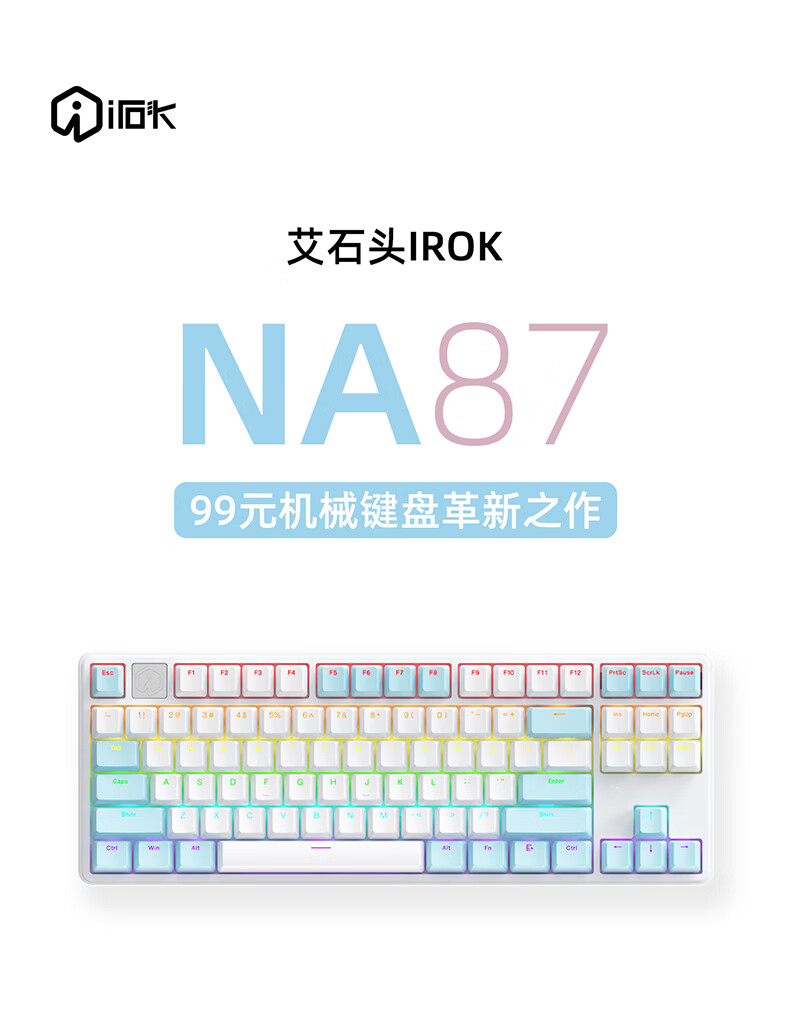
IROCK has launched the NA 87 wired mechanical keyboard in the Chinese market, and it is currently available for pre-order on JD.com at a discounted price of 99 yuan ($14).

IROCK NA 87

IROCK NA 87 Specifications:

The NA 87 keyboard comes with an 87-key layout. It comes equipped with newly developed V4 switches, known for their extended axis design, offering a smoother and more comfortable typing experience.

It also offers a dual tactile feedback system with adjustable keycaps for a firm or soft tactile feel. The keyboard includes anti-slip foot pads and a metal branding plate for stability and durability. The keys have an operating force of 42±10gf, an actuation force of 47±10gf, and key travel distances measuring 2.0±0.4mm to actuation and 3.5±0.4mm in total.

The keyboard also boasts comprehensive noise reduction features, including three layers of padding: an 8x foaming IXPE switch mat, a PET sound optimization pad, and noise-reducing bottom cotton, all contributing to a significant reduction in sound resonance.

This keyboard supports full-key rollover and hot-swappable switches, compatible with 99% of 3-pin and 5-pin mechanical switches, allowing users to personalize their tactile feedback by replacing the switches.

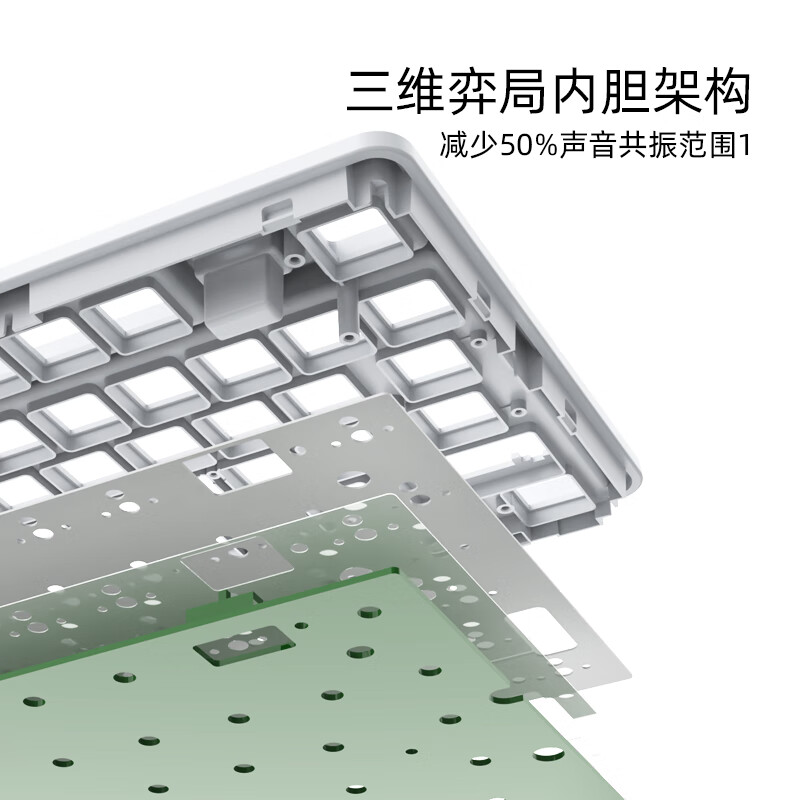
Adding to its appeal, the NA 87 features an RGB lighting system and an innovative Asat structure, which includes a chessboard-like closed single-key position structure for concentrated sound optimization, and a three-dimensional inner structure designed to reduce sound resonance by 50%. This structure, along with the keyboard’s open acoustic cavity design, is aimed at improving the sound quality of typing.

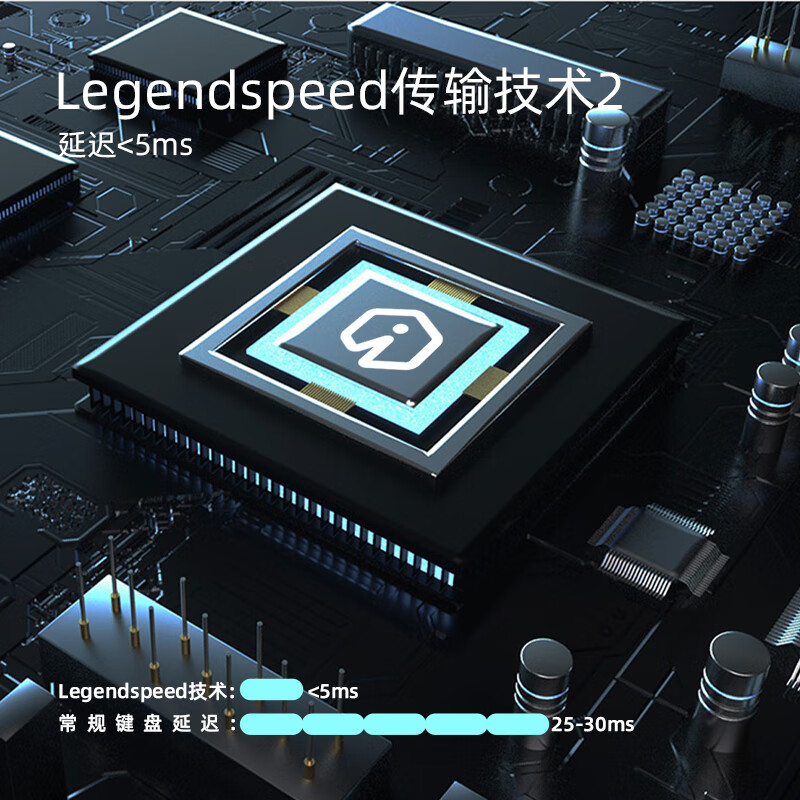
The mechanical keyboard features Legendspeed transmission technology for ultra-low latency (less than 5ms) and a USB-C connection. It is compatible with Windows, MacOS, iOS, and Android.

The keyboard’s dimensions are approximately 361 x 133.2 x 43.5 mm, and it weighs around 700g, providing a compact and lightweight design.

RELATED:

Apple Vision Pro hacked, kernel vulnerability triggers crash

A day after the release of Apple‘s latest product, the Apple Vision Pro, a security concern has emerged. Joseph Ravichandran, a PhD student from MIT with expertise in microarchitecture security, claims to have identified a critical kernel vulnerability in the device’s operating system, visionOS. This vulnerability could potentially enable jailbreaking and the development of harmful software designed to exploit this new hardware.

Kernel Vulnerability Found in Apple Vision Pro

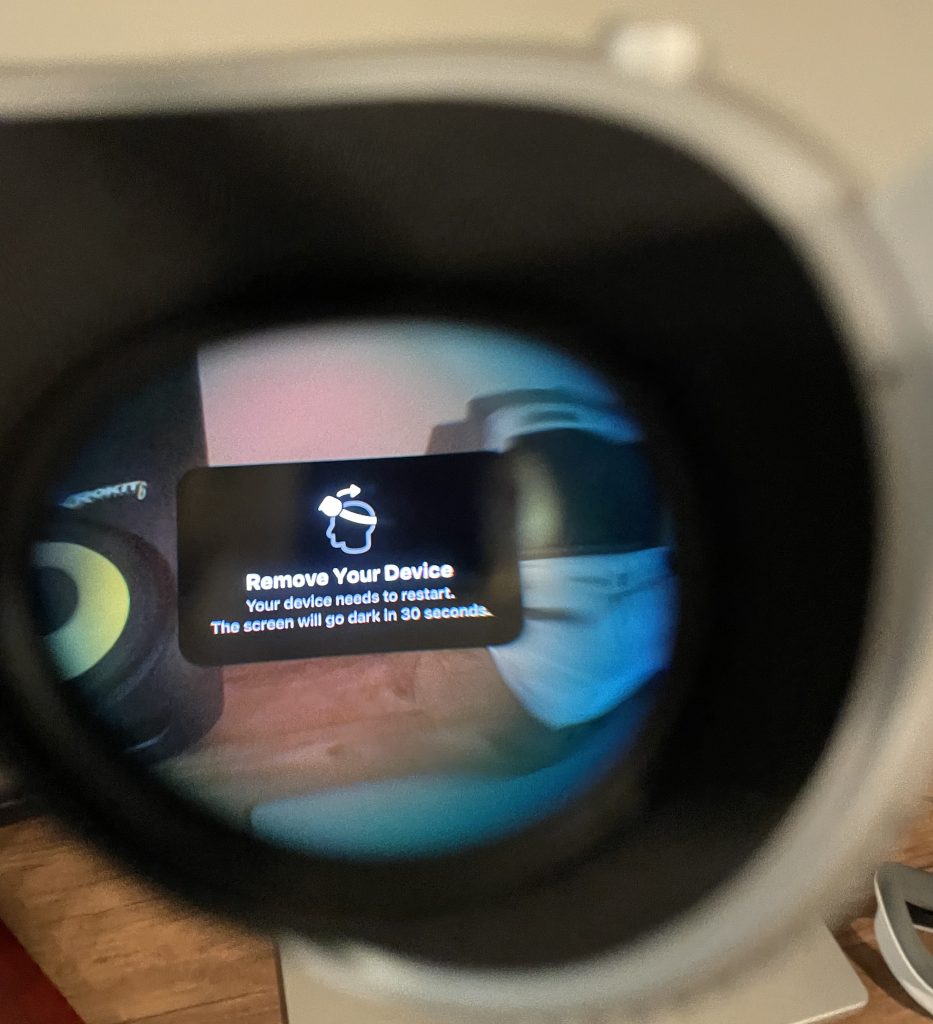
Joseph Ravichandran shared his findings on Twitter, posting a series of tweets that included photos showing the Apple Vision Pro’s reaction to a kernel exploit. After the exploit, the device goes into a “perspective mode” and instructs the user to remove the headset in preparation for a restart, which is scheduled to occur within 30 seconds.

Apple Vision Pro hacked

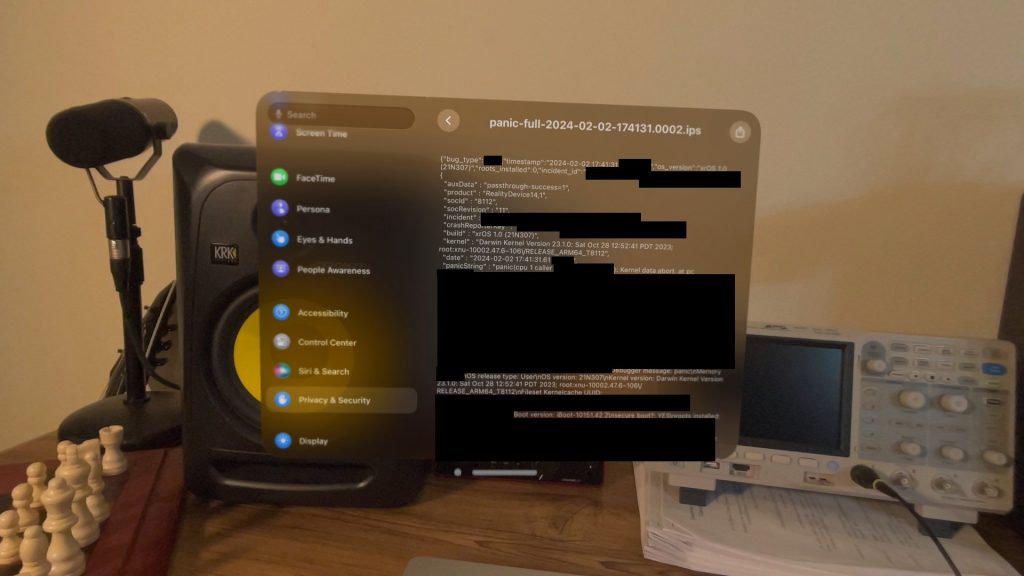
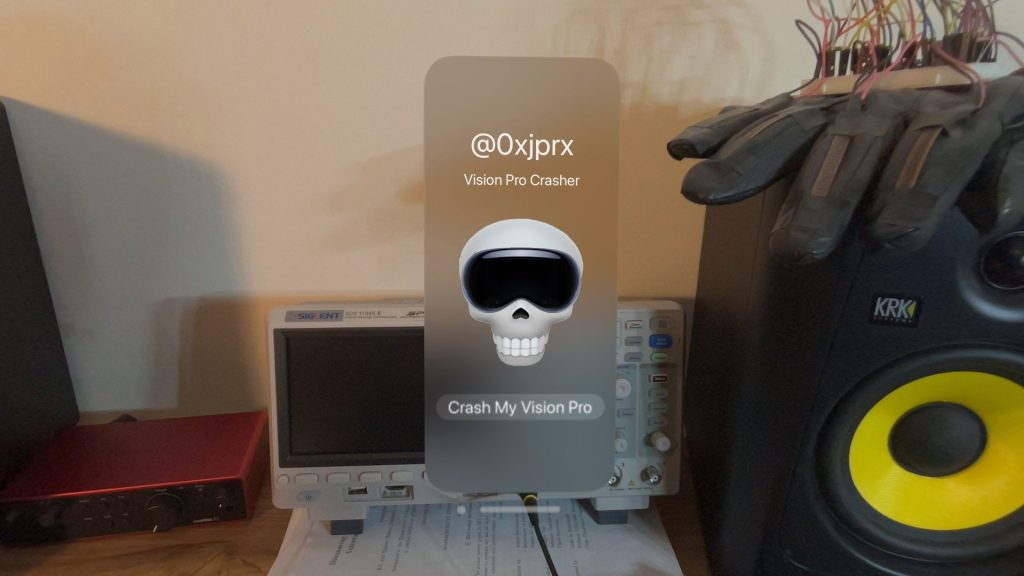
Following this restart, Ravichandran highlighted an emergency log indicating a kernel crash. Further, he showcased a custom application named Vision Pro Crasher, featuring a skull adorned with a headset icon and a button labeled Crash My Vision Pro.

This news isn’t entirely surprising. New hardware releases often attract security researchers eager to test its defenses. Similar to attempts to jailbreak iPhones, Ravichandran’s exploit highlights potential security concerns for the Vision Pro ecosystem.

However, there’s reason to remain optimistic. Apple has a proven track record of swiftly addressing security issues, especially in high-profile products like the Vision Pro. Additionally, Ravichandran hasn’t confirmed submitting his findings to Apple, though the company’s security bounty program could incentivize such disclosure.

Even if the exploit remains public, its immediate impact might be limited. The Vision Pro’s gradual rollout targets tech-savvy early adopters, making widespread exploitation less likely. Moreover, Apple will likely prioritize fixing the vulnerability in a swift update, further mitigating any potential risks.

Apple Vision Pro launched in the US earlier this week, representing a significant milestone as Apple’s first major new product category since the Apple Watch in 2015. Pre-orders became available on January 19. While there hasn’t been an official announcement about its launch in China, Tim Cook has indicated that it will happen very soon. In terms of pricing, the Apple Vision Pro starts at $3,499 in the United States.

RELATED:

(Source, Via)

OnePlus 11 and 12 gain AI features with the latest software update

While the Samsung Galaxy S24 series made headlines with its AI-powered features, OnePlus has quietly introduced its own AI offerings through a recent ColorOS update in China. 

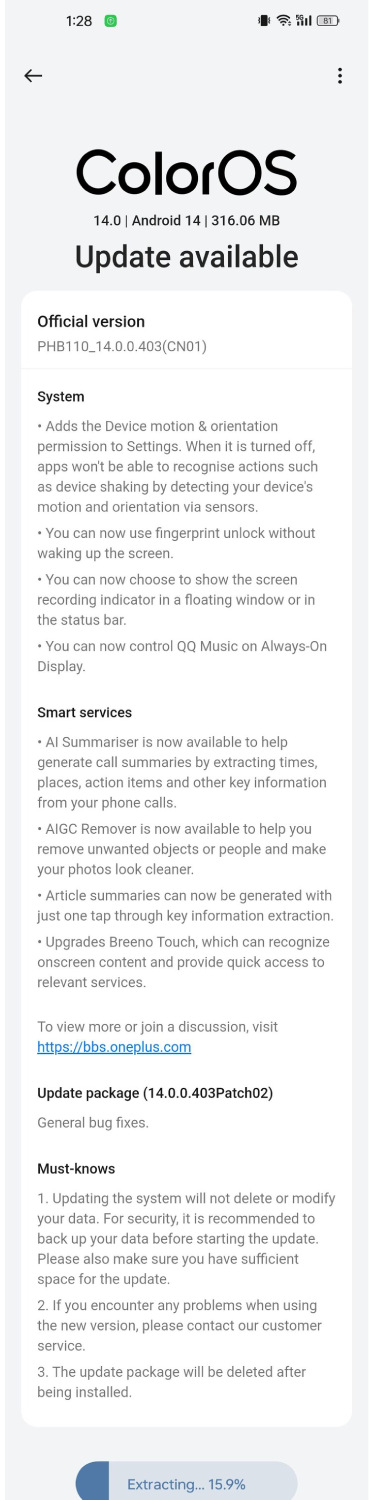
The update is rolled out to the OnePlus 12 and 11 models within the Chinese market. For the OnePlus 11, the firmware version is PHB110_14.0.0.403(CN01), and for the OnePlus 12, it is PJD110_14.0.0.405(CN01).

Though not as extensive as Samsung’s offering, the update adds three generative AI features.

First up, there’s an AI Summarizer that can generate summaries of phone calls with key information like time, location, and other relevant details.

Next up is the AIGC Remover, an image editor that lets you erase unwanted people or objects from your photos, similar to AI photo editing on Samsung and Google Pixel devices.

Finally, OnePlus is offering an Article Summarizer feature that provides quick summaries of articles with just a single tap. 

Beyond AI, the update also offers the ability to unlock the phone with the fingerprint scanner without waking the screen. Users can now control QQ Music on Always-On Display, and there is an option to display the screen recording indicator in the status bar or a floating window.

The OnePlus 12’s update not only enhances Bluetooth, NFC, and WLAN network stability and compatibility but also addresses the issue of network signals in places with subway-like conditions. You can check the complete changelog of the update via the screenshot below.

OnePlus 11 12 AI feature software update

As aforementioned, currently, these AI features are only available on the Chinese version of ColorOS. However, as ColorOS shares a similar base with OxygenOS used globally, there’s a possibility they might be rolled out to the global OnePlus 12 and 11 models in the future.

Related:

(Via)

Honor Pad 9 receives BIS certification, India launch imminent

Honor launched the Pad 9 in China in December, and it seems like the global release is imminent since the tablet has already received certification in Singapore. Additionally, the Honor Pad 9 has now secured the BIS certification, indicating its likely launch in India.

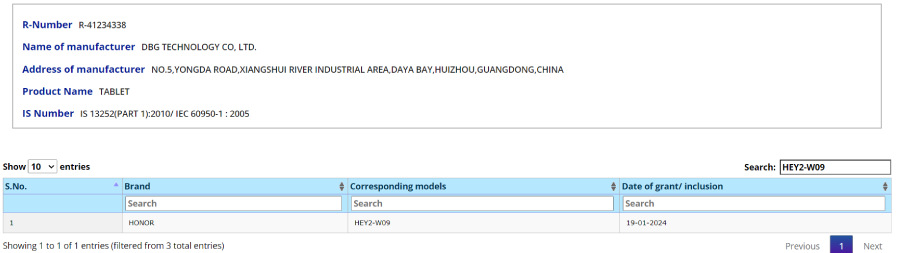
The BIS certification, granted on Jan 19 under the model number HEY2-W09, matches the one previously given by IMDA in Singapore. 

Honor Pad 9 BIS certification.

Although the certification doesn’t reveal much about the tablet, we know most details about it, thanks to its launch in China. 

Specifications

For a quick recap, the Pad 9 comes with a 12.1–inch screen with symmetrical bezels on all sides. Honor says the tablet has a paper-like display with a matte finish and a resolution of 2,560 x 1,600 pixels. 

The LCD panel offers a peak brightness of 550 nits, an 88 percent screen-to-body ratio, and a 120Hz refresh rate. Moreover, the company claims the device can eliminate 98 percent of reflected light for a glare-free viewing experience. The tablet is also compatible with stylus and keyboard.

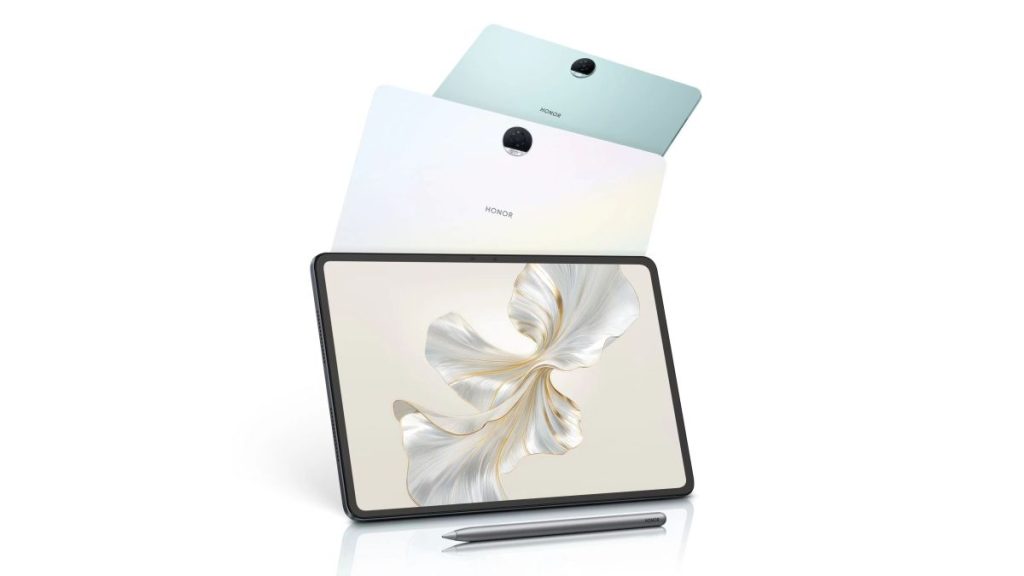
On the camera front, the tablet features a circular camera module on the back housing a 13MP sensor, along with an 8MP selfie camera. For audio, the device is equipped with eight speakers.

Under the hood, the Honor Pad 9 is powered by a Snapdragon 6 Gen 1 processor, coupled with up to 12GB RAM and 512GB storage. 

It is backed by an 8,300mAh battery with 35W fast charging support. Software-wise, it runs on MagicOS 7.2 based on Android 13 out of the box. The Honor Pad 9 is available in three color options, namely Azure, White, and Gray.

The company hasn’t confirmed any launch timeline for the tablet, but Honor has been teasing the launch of Honor X9b and Choice Earbuds X5 in India. So there’s a possibility the tablet might launch alongside them. 

Related:

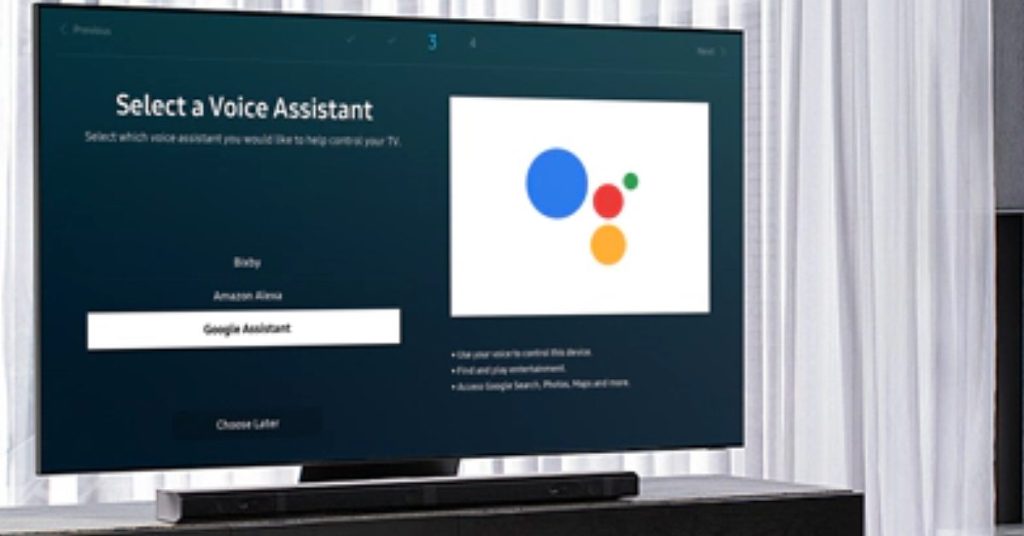
Samsung is saying goodbye to Google Assistant from all of its smart TVs

A significant change is coming to Samsung smart TVs. Starting March 1, 2024, Google Assistant will no longer be available on any Samsung TV model, including those that previously came with it.

This development follows the quiet elimination of Google Assistant from Samsung’s 2023 TV lineup. The Samsung support page now confirms the discontinuation of this feature across all Samsung smart TVs, including:

  • 2022 models
  • 2021 models
  • 2020 8K and 4K QLED TVs
  • 2020 Crystal UHD TVs
  • 2020 Lifestyle TVs (Frame, Serif, Terrace, and Sero)

Samsung started integrating Google Assistant into its TVs in 2020, but in a mere four years of time, the feature is now being removed from all supported models.

Samsung says the removal is due to “a change in Google’s policy,” although the specific details remain unclear. 

The support page notes, “Important: Due to a change in Google’s policy, Google Assistant will no longer be available on Samsung TVs beginning March 1st, 2024. Check out other options for voice assistants on Samsung TVs.”

Google recently made changes to Assistant by removing 17 features, though any connection to this development is unknown.

With the departure of Google Assistant, Samsung TV owners will now have to switch to other pre-installed voice assistants that is, Samsung’s Bixby and Amazon’s Alexa. 

But for those who are accustomed to Google Assistant, we guess you now have no option other than switching to a different TV brand altogether. This could be a viable option if you’re considering purchasing a new TV, but surely isn’t the most practical.

Currently, almost all smart TV brands, excluding Samsung, such as LG, Sony, TCL, and Hisense, continue to offer Google Assistant support in their TVs.

Related:

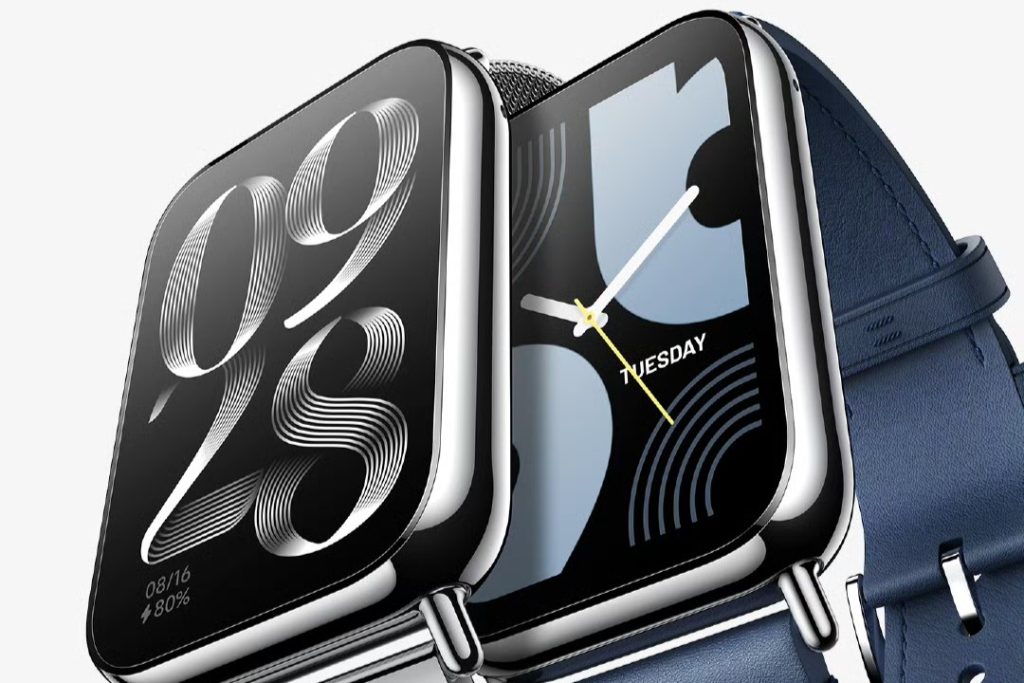
Xiaomi Smart Band 8 Pro global price leaks ahead of launch

Xiaomi Smart Band 8 Pro, which was initially launched in China last August, is now gearing up for a global release, likely at the upcoming Mobile World Congress (MWC) later this month. 

The fitness tracker offers a smartwatch-like design with features familiar to fitness tracker users. Ahead of its official global launch, Sudhanshu Ambhore, a reliable tipster through Appuals, has shared details about the pricing of the Xiaomi Smart Band 8 Pro in Europe.

Xiaomi Smart Band 8 Pro Price

According to the leak, the official price for the Band 8 Pro in Europe will be EUR 89. However, depending on promotions and local taxes, retailers might offer it for as low as EUR 69.

This is good news for consumers, considering that Xiaomi launched the Band 7 Pro for EUR 99. The fact that the iterative upgrade is priced lower will likely be well-received by buyers.

When it comes to color options, the company will be offering the Xiaomi Smart Band 8 Pro in Black and Silver.

Specifications

The Band 8 Pro has a 1.74-inch AMOLED display with a 60Hz refresh rate and 600 nits peak brightness. It is water-resistant up to 5 meters.

Xiaomi Smart Band 8 Pro

Its fitness and wellness features include heart-rate monitoring, SpO2 sensor, sleep tracker, menstrual cycle monitor, and stress level tracking. It also supports over 150 sports modes and has a somatosensory sensor for tracking data related to somatic senses while boxing.

The Band 8 Pro has a built-in GNSS chip with support for over five satellite systems that should help to accurately track the route. There’s also a built-in voice assistant, and it can be used to control other Xiaomi smart devices. 

It also features a camera and music control, a flashlight, and can show you weather updates, and notifications. The Band 8 Pro has a 297mAh battery that lasts up to 14 days on a full charge.

Related:

Apple Vision Pro teardown reveals complex design, difficult repairs

Mere two days after Apple‘s mixed-reality headset, the Vision Pro, hit the market, repair experts iFixit has already performed a teardown, offering a glimpse into its intricate workings.

The video reveals an array of components, including numerous cameras and sensors, cooling fans, and lens motors. And as expected, the teardown confirms earlier concerns about the difficulty of opening and repairing the headset.

Apple Vision Pro teardown shows its intricate details

The Vision Pro is unsurprisingly Apple’s most complex piece of hardware yet. iFixit says the device is so complicated that it requires more than one video to tackle it. So we can expect more teardown content for the Vision Pro in the coming days. 

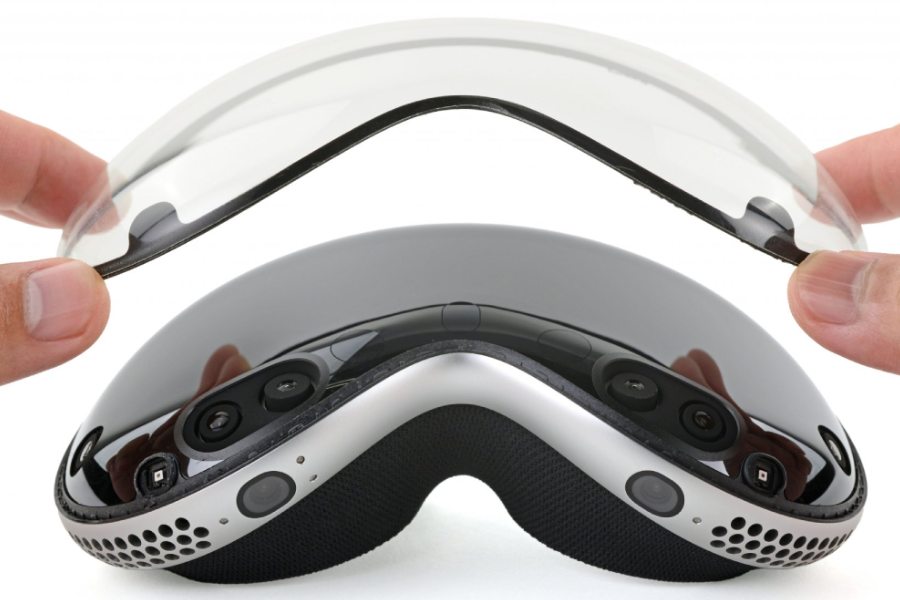
Anyway, the first part of the video focused primarily on the disassembly of the headset. The most challenging part of the teardown was removing the front curved sheet of glass. It was, however, carefully removed using heat and without damaging the display. 

Beneath the glass, there were two more layers – a black layer and an unlaminated layer over the top of the exterior screen. The black layer was likely a spacer, and the unlaminated layer was a lenticular lens array. This lens array is said to create a 3D effect when you watch content in the Vision Pro. 

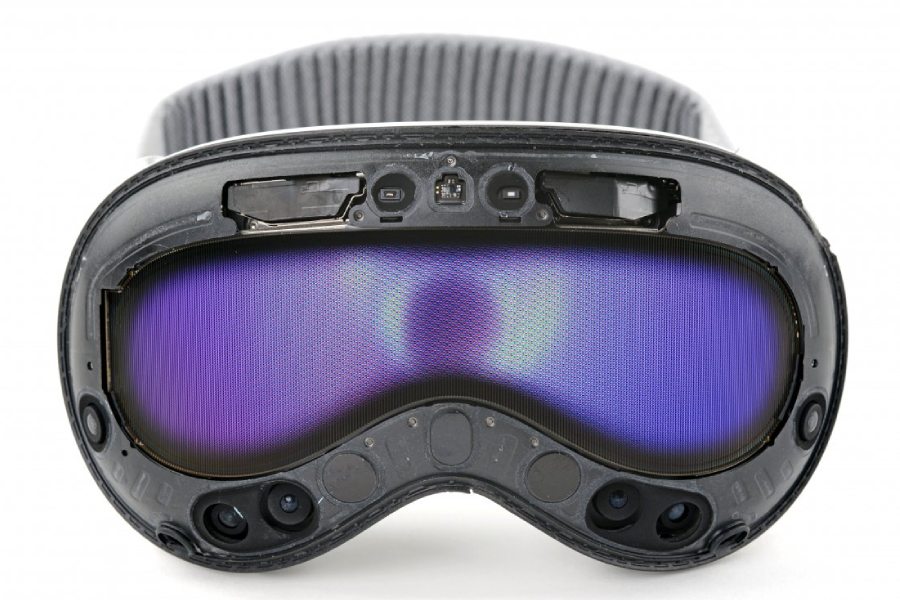
In the next step, we saw the removal of the display and lens assembly. This involved removing torque screws, as well as several layers of tape, screws, brackets, and cables. 

Once the display and lens assembly were removed, the iFixit team was able to see the cameras and the stepper motor that parks the lenses.

Taking apart the Apple Vision Pro certainly seems like a challenging task that demands a considerable amount of patience. Nevertheless, the iFixit team managed to successfully dismantle the Vision Pro, unveiling its internal mechanisms.

Although they refrained from giving a formal “repairability” score, the team did recognize that while repairs might pose a challenge, certain connections turned out to be surprisingly user-friendly.

Related:

Xiaomi 14 Ultra global edition, Civi 4 bag key certification, expected to launch soon

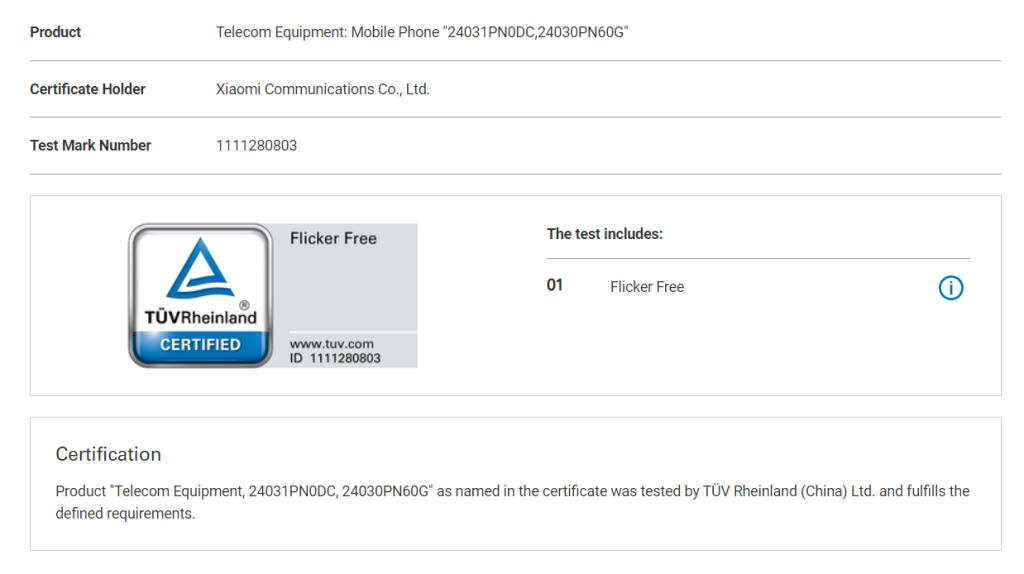
Xiaomi is reportedly working on multiple new devices, including the Xiaomi 14 Ultra, Mix Flip, Pad 7 series of tablets, Mix Fold 4, and Civi 4. It is likely that all these devices may be unveiled in the first half of 2024. A recent development discloses that the Civi 4 and 14 Ultra’s global version have received certification as Flicker-Free devices by TÜV Rheinland, indicating a potential imminent launch for these devices.

Xiaomi 14 Ultra

Reports have revealed that the model numbers 24030PN60G and 24030PN60C correspond to the global and Chinese variants of the Xiaomi 14 Ultra, respectively. The above screengrab indicates that the global version of the device has obtained approval from TUV Rhineland, but unfortunately, there is no information available regarding its specifications. However, it does bolster the news that it will be released in the global market. Speculation suggests that the Chinese variant of the 14 Ultra may launch by the end of this month, while its global release might follow a couple of weeks later.

Xiaomi Civi 4

In August 2023, a Xiaomi device with the model number 23041PN0DC surfaced in the IMEI database. Although the listing did not disclose the device’s name, speculation suggests it could be the Xiaomi Civi 4. Similar to its predecessors, the Civi 4 is anticipated to remain exclusive to the Chinese market. The provided screenshot indicates the alleged Civi 4’s appearance in TUV Rhienland’s database. According to a previous report, the Civi 4 might be equipped with the Dimensity 8300-Ultra chipset. Unfortunately, no additional details are currently available about the device. The model number hints at a potential launch in Q1 2024.

TÜV Rhienland’s Flicker Free certification means that it has conducted tests on these products to assess whether its display generates visible or invisible flicker, which could strain the user’s eyes. The tests, based on international standards and industry norms, establish minimum standards across frequency ranges. The product has undergone laboratory testing, and the “Flicker Free” designation affirms that the device meets these standards, ensuring no visible or invisible flicker within the 0 – 3000 Hz range across different brightness settings.

RELATED:

(via)

Vivo V2314DA specifications leaked via TENAA listing, could be based on iQOO Z8

In late December 2023, the Vivo device bearing the model number V2314DA received approval from the 3C certification body in China. Subsequently, the same device has surfaced in the TENAA certification platform’s database, providing key insights into its specifications.

Vivo V2314DA specifications

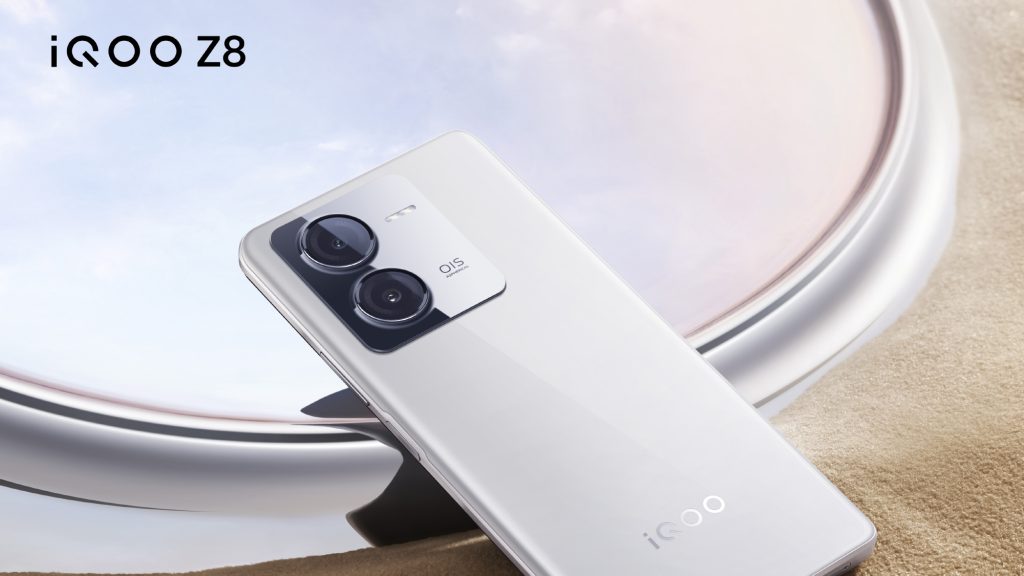
iQOO Z8

According to the TENAA certification, the Vivo V2314A will measure 164.58 x 75.8 x 8.79mm and weighs 200 grams. It will come equipped with a 6.64-inch LTPS LCD panel with a Full HD+ resolution of 2388 x 1080 pixels.

Unfortunately, the certification does not disclose details about the device’s chipset. The phone is equipped with a dual-cell battery, although the listing only specifies the size of one cell at 2,440mAh.As per the previously seen 3C listing of the device, it may arrive with support for 120W fast charging.

The Vivo V2314DA will be offered in varying RAM configurations, including 8 GB, 12 GB, and 16 GB. Regarding storage, options range from 128 GB, 256 GB, 512 GB, to 1 TB. At the time of writing, it remains unclear whether the device will come preinstalled with the latest OriginOS 4-based Android 14.

For capturing selfies, the device will have a 16-megapixel front camera. On the rear, it will feature a 64-megapixel main camera accompanied by a 2-megapixel secondary lens. Additionally, the device will support various features such as an IR blaster and a side-facing fingerprint scanner.

Could be based on iQOO Z8

Typically, the TENAA certification provides images of the phone, but, regrettably, the listing does not include them now. In August 2023, iQOO introduced the iQOO Z8 in China, featuring the Dimensity 8200 processor. Given that the Z8 carries the model number V2314A and has similar specifications, it appears that the V2314DA could be based on the Z8. Currently, the definitive moniker for the V2314DA has not been disclosed. Hence, it is unclear whether it will debut as a Vivo or iQOO device.

RELATED:

(source)

Xiaomi Mix Flip camera, chipset, design details leaked, Mix Fold 4 to be extremely thin, light

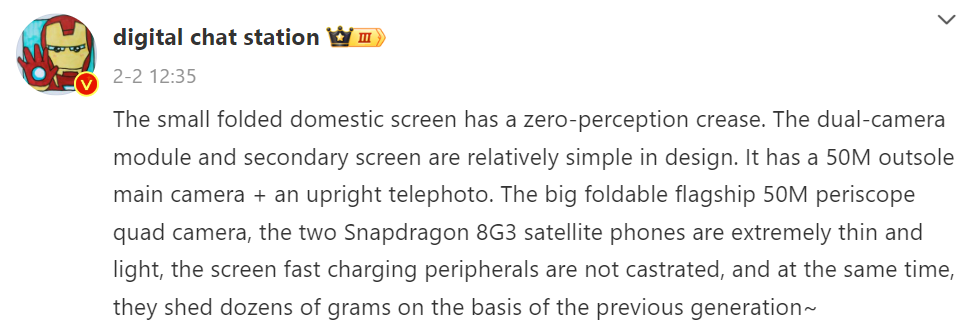
Xiaomi is reportedly developing the Xiaomi Mix Flip and Mix Fold 4 for the Chinese market, with speculations suggesting that the Mix Flip might make its debut alongside the Xiaomi 14 Ultra by the end of the month. In contrast, the Mix Fold 4 is anticipated to be unveiled in the second quarter of the year. A recent Weibo post by the tipster Digital Chat Station (DCS) revealed crucial details about what appears to be the Mix Flip, slated to be Xiaomi’s inaugural vertically foldable smartphone.

Xiaomi Mix Flip

DCS’s Weibo post highlights that the internal foldable screen of the Xiaomi Mix Flip is touted as having “zero creases.” The rear of the device is expected to feature a dual-camera system comprising a 50-megapixel primary camera and a telephoto camera. Discussing the design, the tipster noted that the Mix Flip’s cover screen and dual-camera system will have a simple appeal. The leak reiterates previous reports that the device will be equipped with the Snapdragon 8 Gen 3 SoC and support for satellite connectivity.

Xiaomi Mix Fold 4

Furthermore, the leaker shared additional insights into the Xiaomi Mix Fold 4, which is also said to incorporate the Snapdragon 8 Gen 3 chip and satellite communications support. The Mix Flip and Mix Fold 4 are expected to boast an extremely thin and lightweight design.

Notably, the Mix Fold 4 is expected to shed considerable weight compared to the Mix Fold 3, which weighs approximately 255 to 259 grams. While the leaker did not delve into specific details, it seems that the company has maintained the display quality and fast charging capabilities for both the Mix Flip and Mix Fold 4. The latter is also tipped to feature a quad-camera setup featuring a 50-megapixel periscope telephoto camera.

RELATED:

Xbox Game Releases for February 5-9 revealed

Microsoft has just revealed its hand on the new games it plans to launch from February 5 to 9 on Xbox Series X|S, Xbox One, Windows, and Game Pass. These games cover different genres, offering something for every type of gamer.

Sydney Hunter And The Curse Of The Mayan

February 5: Sydney Hunter and the Curse of the Mayan This game is a tribute to 8-bit action-adventure games. Players control Sydney Hunter, who finds himself trapped in a Maya pyramid and must reassemble the sacred Haab calendar.

February 6: Alisa Developer’s Cut Set in a world reminiscent of the 1920s, players navigate a Victorian-style mansion filled with mechanized dolls. The game combines elements of horror and mystery.

February 7: Dungeonoid 2 Awakening A top-down adventure game that combines dungeon crawling with a block-busting twist. Players choose from four RPG classes, each with unique abilities.

Cannibal Abduction

February 8: Cannibal Abduction Directed by Tomás Esconjaureguy, this horror game features survival gameplay in a low-poly, VHS-styled setting.

February 8: Invector: Rhythm Galaxy A collaboration between Warner Music and Hello There Games, this game syncs celestial landscapes with popular music tracks.

Mustache in Hell

February 8: Mustache in Hell Players control John Mustache, a police officer, through battles and boss fights in this twin-stick action game.

The Inquisitor

February 8: The Inquisitor Set in the town of Koenigstein, players assume the role of Mordimer Madderdin, an Inquisitor investigating mysteries and crimes.

Choice of Life: Middle Ages 2

February 9: Choice of Life: Middle Ages 2 A strategic card game where players make decisions that impact their survival in a kingdom.

February 9: Control: Override and Deathly Dangerous Control: Override is a puzzle game challenging physics laws, while Deathly Dangerous offers a twin-stick action experience with rogue-like elements.

February 9: Jubilee, Manitas Kitchen, Prisonela DX, The Tales of Bayun Jubilee is a precision platformer; Manitas Kitchen, a cooking game with dinosaurs; Prisonela DX, a platformer with parkour elements; and The Tales of Bayun, an RPG based on Slavic folklore.

RELATED:

(Source)

Apple CEO Tim Cook Says Vision Pro Headset is Launching in China “Soon”

Apple’s Vision Pro has just landed in the US, sparking excitement among tech enthusiasts and hinting at a new era for augmented reality. With Tim Cook‘s recent visit to the Apple store on Fifth Avenue, the buzz has only grown. When questioned about the Vision Pro’s launch in China, Cook’s reply was simple yet hopeful: “soon.”

The device’s impressive specifications are making audiences impatient.

The Headset is already being sold at ridiculous prices in China’s Grey Market. Starting at $3,499, the Vision Pro is not your average headset. It’s powered by Apple’s new R1 chip, which processes input from an impressive setup of cameras, sensors, and microphones. What truly makes it stand out is its display technology. Using micro-OLED, the Vision Pro offers a display so sharp and immersive, it feels like stepping into another world.

Apple Vision Pro

This device is designed for interaction. With the Vision Pro, you can control your digital environment using just your eyes, hands, and voice. Whether you’re browsing apps or navigating through content, everything feels more intuitive and natural.

One of the biggest concerns with such immersive technology is the potential for increased isolation. However, Tim Cook has addressed these worries directly, emphasizing that the Vision Pro aims to enhance, not diminish, real-world connections. Its design encourages eye contact and shared experiences, allowing users to remain present with one another even while engaged with digital content.

RELATED:

(Via)

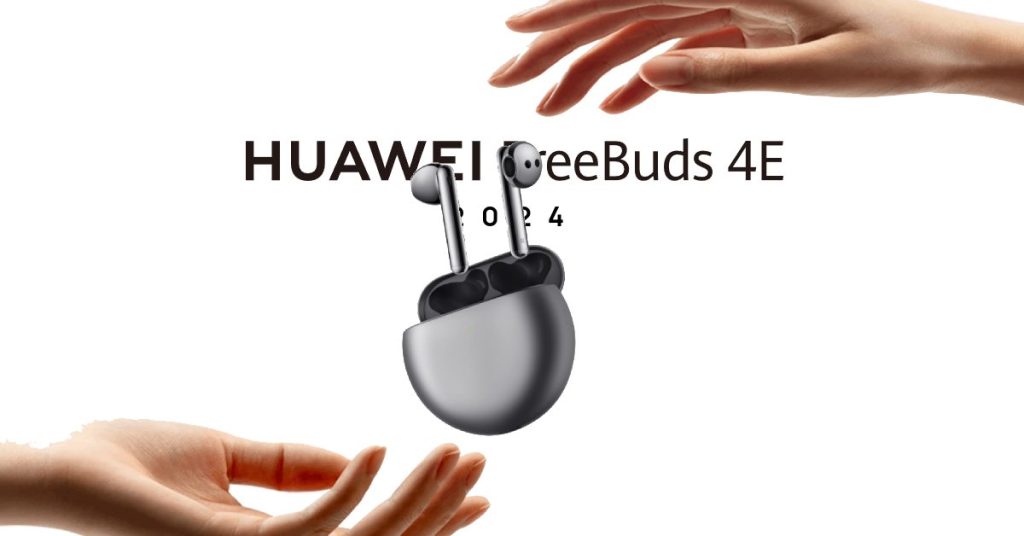
Huawei launches FreeBuds 4E 2024 with improved battery life
Huawei has launched its latest FreeBuds earbuds, the FreeBuds 4E 2024, as an upgrade to the previously released FreeBuds 4E in 2022. The new model maintains most of the features of its predecessor but comes with improved battery life. So let’s get into the details here.

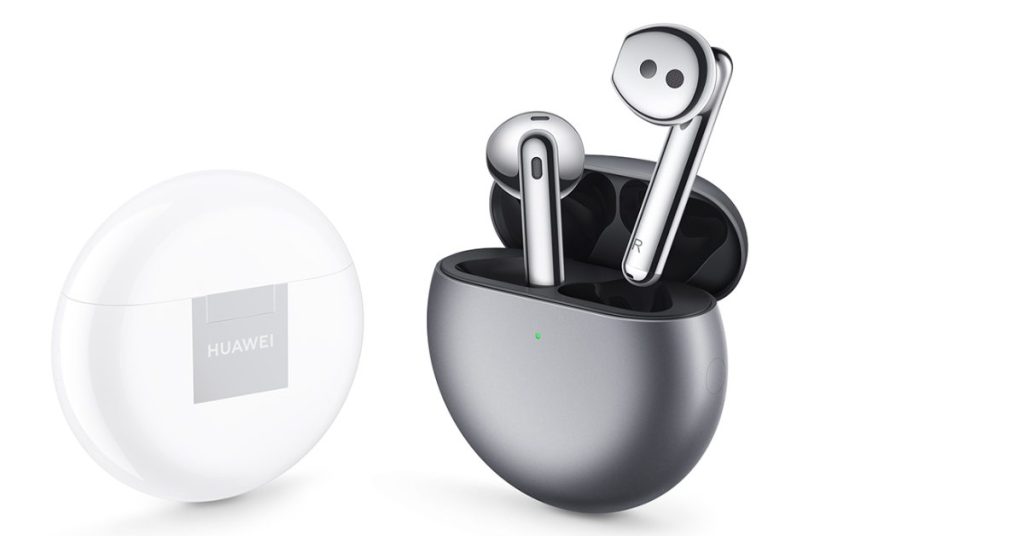
Huawei FreeBuds 4E 2024 launch

Huawei FreeBuds 4E 2024 specifications

The FreeBuds 4E 2024 continues with the same 14.3mm dynamic driver, 40KHz frequency, and semi-open style design as its predecessor. It also retains the Active Noise Cancellation 2.0 technology and uses three microphones with ENC (environmental noise cancellation) for clear audio during calls.

The notable improvement from the 2022 model is in the battery life. With the charging case, the earphones can now offer up to 26 hours of playback with noise reduction off, compared to the previous model’s 22 hours.

Even with active noise reduction on, the case provides 17 hours of use which comfortably surpasses the earlier version’s 14 hours. However, the earphones themselves have a similar battery life of 4 hours without noise cancellation and 2.5 hours with it on.

Charging times remain consistent as well. The earphones take about 40 minutes to fully charge while for the case alone, it takes around 60 minutes.

There’s support for Bluetooth 5.2 for connectivity and you can pair it with two devices simultaneously. 

Besides many similarities in specifications and design, we didn’t see the mention of the IP64 dust and water resistance rating of its predecessor. Additionally, the FreeBuds 4E 2024 is available in only two colors — Frost Silver and Ceramic White — compared to three on its predecessor. 

Price and Availability

Huawei FreeBuds 4E 2024 earbuds are available for purchase in China at 699 yuan. However, there’s currently a limited-time offer where you can grab it for just 499 yuan. You can purchase the earbuds from Huawei Mall.

Related:

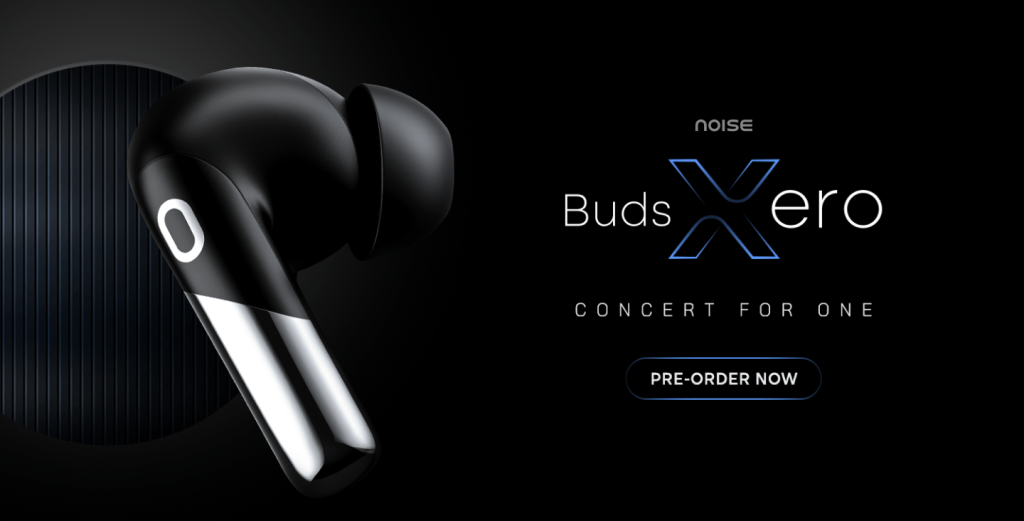
Noise launches Buds Xero with adaptive 50dB ANC, 50ms low latency in India

Noise has launched its new TWS earbuds called the Buds Xero in India, featuring three color options: Chrome Black, Chrome Beige, and Chrome Blue.

Noise Buds Xero

Pricing and Availability

These earbuds are initially priced at Rs. 3,999 (original price Rs. 4,499) and will be accessible for purchase from February 8th through Noise’s website, Flipkart, and Amazon.in. Pre-orders are currently available, offering exclusive discounts and a chance to win a Noise smartwatch.

Sale
Noise Newly Launched Buds Xero Truly Wireless in-Ear Earbuds with Adaptive Hybrid ANC (Upto 50dB), in-Ear Detection, Sound+ Algorithm, 12.4MM Driver, 50H Playtime, BT v5.3(Chrome Blue)
  • Product Aesthetics: The sleek chrome finish in a variety of shades featuring a lightweight design is not just light on the ears but easy on the eyes as well.

Please Note: When you buy something using the links in our articles, we may earn a small commission at no cost to you.

Noise Buds Xero Specifications:

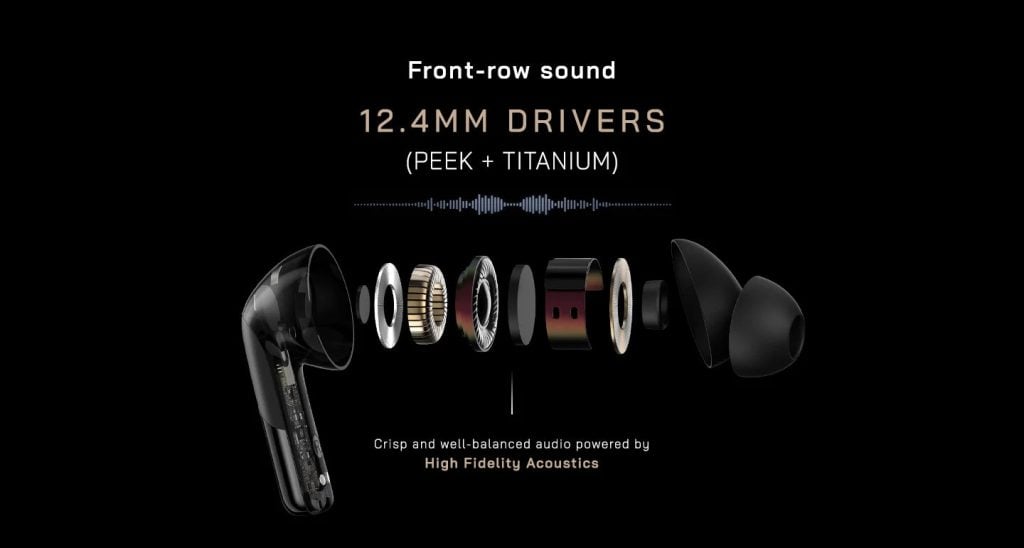
Coming to the specs, the Buds Xero boasts a stylish and lightweight design with a premium chrome dual-tone finish. It utilizes 12.4mm drivers made from PEEK (Polyether ether ketone) and titanium materials to deliver high-fidelity acoustics, ensuring clear and balanced audio performance.

Noise Buds Xero

The earbuds offer Adaptive Hybrid Active Noise Cancellation (ANC) with up to 50dB noise reduction. It provides three ANC modes (Transparent, Light, and Deep) for personalized sound control based on the surroundings. Additionally, the earbuds feature a Sound+ algorithm that improves call quality, ensuring clear communication.

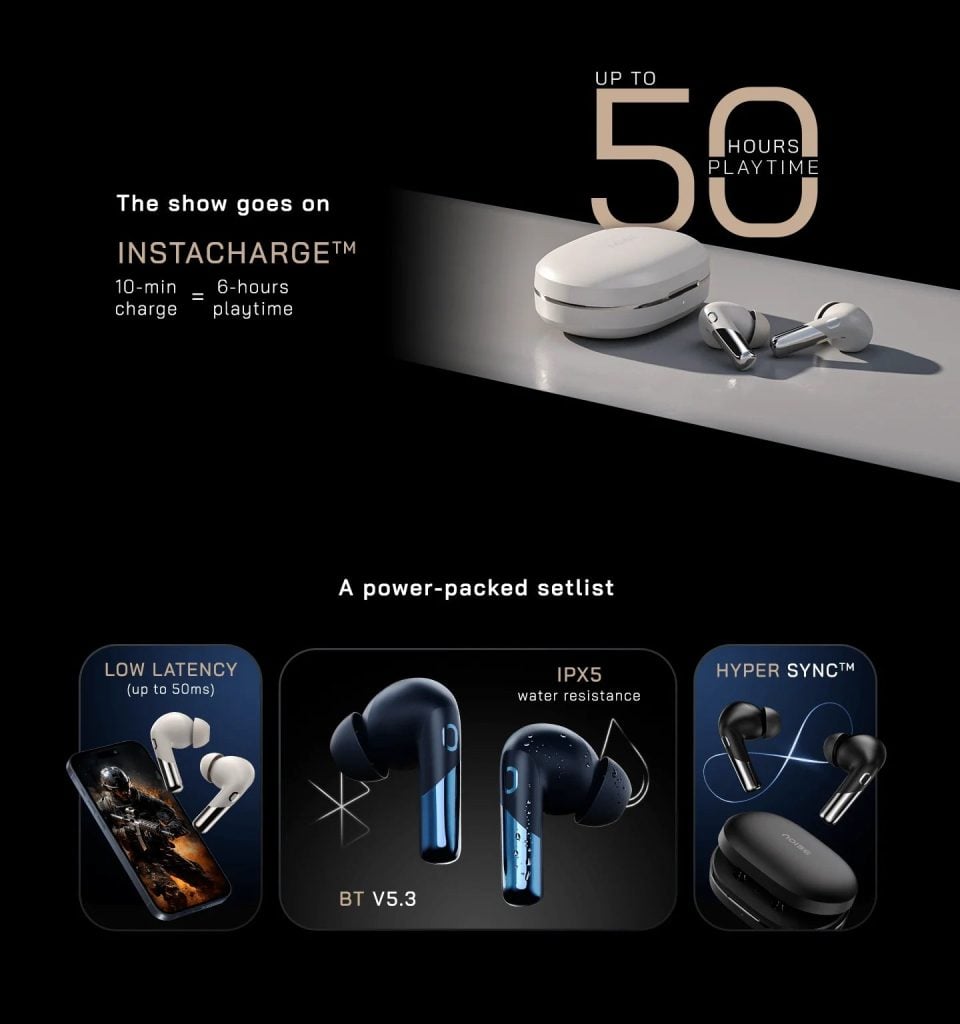
For gamers and video enthusiasts, the Buds Xero offers a low latency mode of up to 50ms, minimizing audio delay for a seamless audio-visual sync. Additionally, the in-ear detection support enhances usability, pausing and playing audio automatically when the earbuds are removed or inserted.

Noise Buds Xero

Connectivity is facilitated through Bluetooth v5.3, ensuring stable and quick pairing with devices. Users can control music playback and calls with intuitive touch controls. The earbuds also support AI Voice Assistant for hands-free commands. It also features Hyper Sync technology that lets the earbuds go into pairing mode as soon as the charging case is opened.

The earbuds offer impressive battery life, with up to 50 hours of total playback time. It features Instacharge fast charging, providing 6 hours of playback in just 10 minutes. Additionally, they come with an IPX5 rating for splash and sweat resistance and a 1-year warranty.

Noise also launched the Vortex Plus smartwatch recently in India featuring a 1.46-inch AMOLED display and Bluetooth calling.

RELATED:

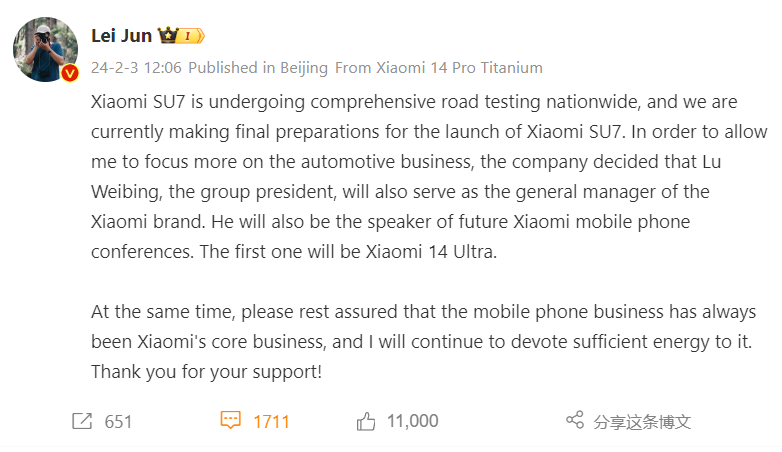
Xiaomi CEO announces shift in focus to automobiles

Xiaomi has been working on an electric vehicle for a long time and the brand new Xiaomi SU7 EV is equipped with some exciting features. Xiaomi is not only a smartphone manufacturer, Xiaomi has wide range of products, not only smart devices, Xiaomi produces air purifiers, hair trimmers, and even mousepads, and now they have entered the automotive sector.

Xiaomi CEO shifts his focus to cars

Xiaomi created a buzz in the automotive industry with the SU7 model, marking the brand’s first foray into electric vehicles with two models, Xiaomi SU7 and SU7 Max. Xiaomi’s CEO, Lei Jun, seems to have made a remarkable decision based on his statement on Weibo, indicating that automotive is now his main focus.

This surely doesn’t mean Xiaomi will stop making phones and become a solely electric vehicle manufacturing company, but Lei Jun’s actions suggest a shift in focus. Lei Jun also announced that William Lu will become the general manager of Xiaomi and Wang Teng will be the general manager of the Redmi brand.

This actually means that we will miss Lei Jun’s presence at Xiaomi’s product introduction events, as William Lu will now be the speaker at the Xiaomi 14 Ultra launch event, based on his post.

Lei Jun should have found the potential in the electric car sector to make such a decision. Lei Jun’s statements actually provide some insight into what Xiaomi could turn into in the future. A few years ago, Xiaomi was not among the top smartphone brands, but now it is the third-largest phone manufacturer in Asia. Xiaomi might become one of the top players in EV sector and only time will reveal what happens next.

Related:

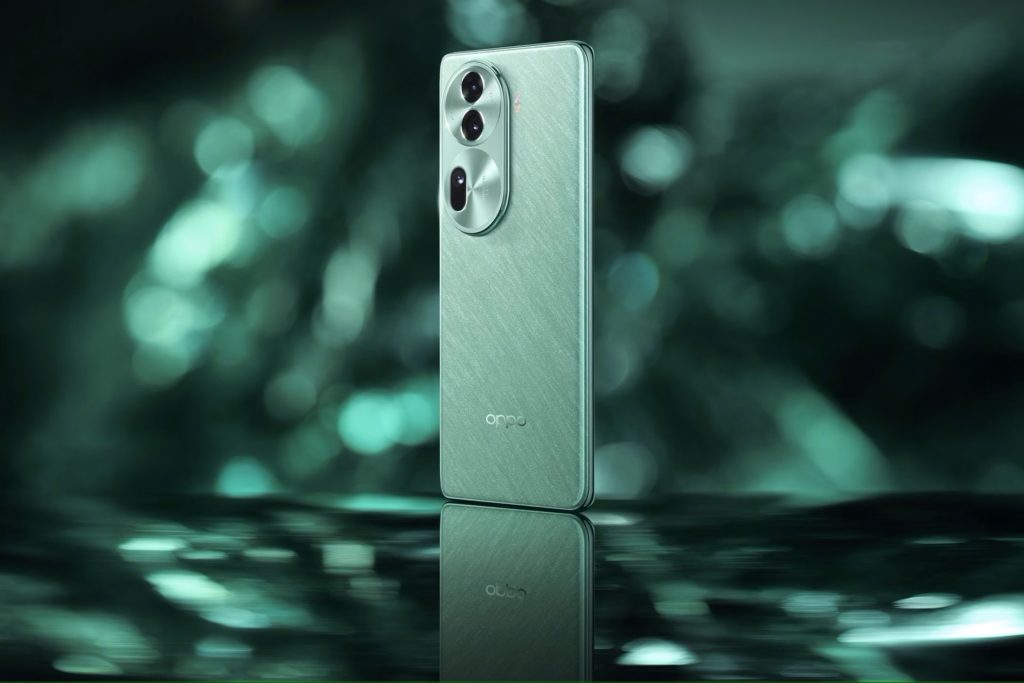
Oppo Reno 12 series leak suggests MediaTek processor for vanilla and Pro model

Just a month after the global launch of the Reno 11 series, rumors about Oppo‘s next Reno smartphones, the Reno 12 and Reno 12 Pro are already swirling online. Based on an alleged internal document, folks over at MSPowerUser have revealed some specs of the upcoming devices.

Oppo Reno 12 leak

The leaked details suggest that the Reno 12 may be equipped with a MediaTek processor called MTK 24M, though the exact processor name is unknown. It is expected to come with 12GB of RAM and storage options reaching up to 256GB.

On the other hand, the Reno 12 Pro is expected to come with a MediaTek Dimensity 9200 (MTK DX-2) processor, accompanied by 12GB of RAM and 256GB and 512GB of storage.

Likewise, both phones are rumored to sport 6.7-inch FHD OLED displays with a 120Hz refresh rate, featuring curved edges on all sides.

As for the camera specifications, the Oppo Reno 12 series is said to feature a 50MP main sensor with OIS, along with an 8MP and a 50MP lens offering 2x optical zoom. However, there may be slight variations in specifications between the vanilla and Pro model. For the selfie camera, the smartphones could come with a 50MP lens with autofocus support.

Additionally, the rumored features include a 5000mAh battery with 67W charging support and an IP65 rating.

According to the leak, the launch timeframe for the Reno 12 smartphones is expected to be in June 2024. Details about prices are still in the air, however, the publication suggests the Reno 12 could cost around $499 and the Reno 12 Pro may have a price tag of $799.

Related:

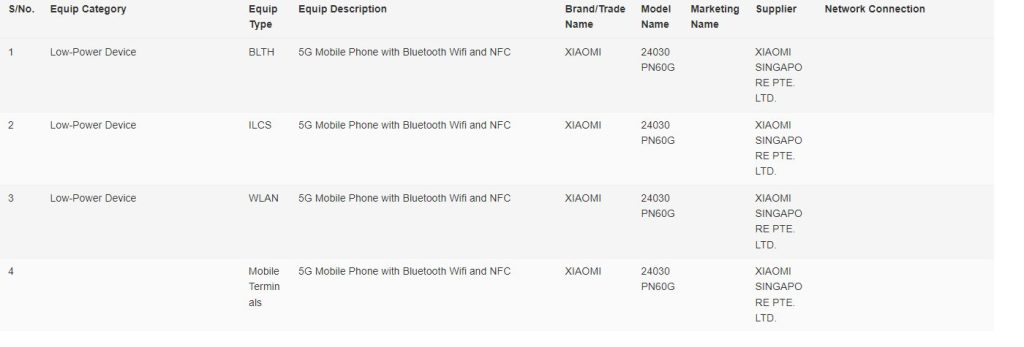
Xiaomi 14 Ultra Hits Singapore’s IMDA, Launch Seems Nearing

Xiaomi 15 leaks are around, but the Xiaomi 14 Ultra awaits its global launch. However, it is reported to debut by the end of this month, as the Xiaomi Group President posted a teaser that hints at the phone’s upcoming launch. Even Xiaomi India teased Leica and Xiaomi branding teasers a few days ago. The global variant is also doing the rounds on public certifications, including BIS India, 3C and now it has surfaced on Singapore’s IMDA certification.

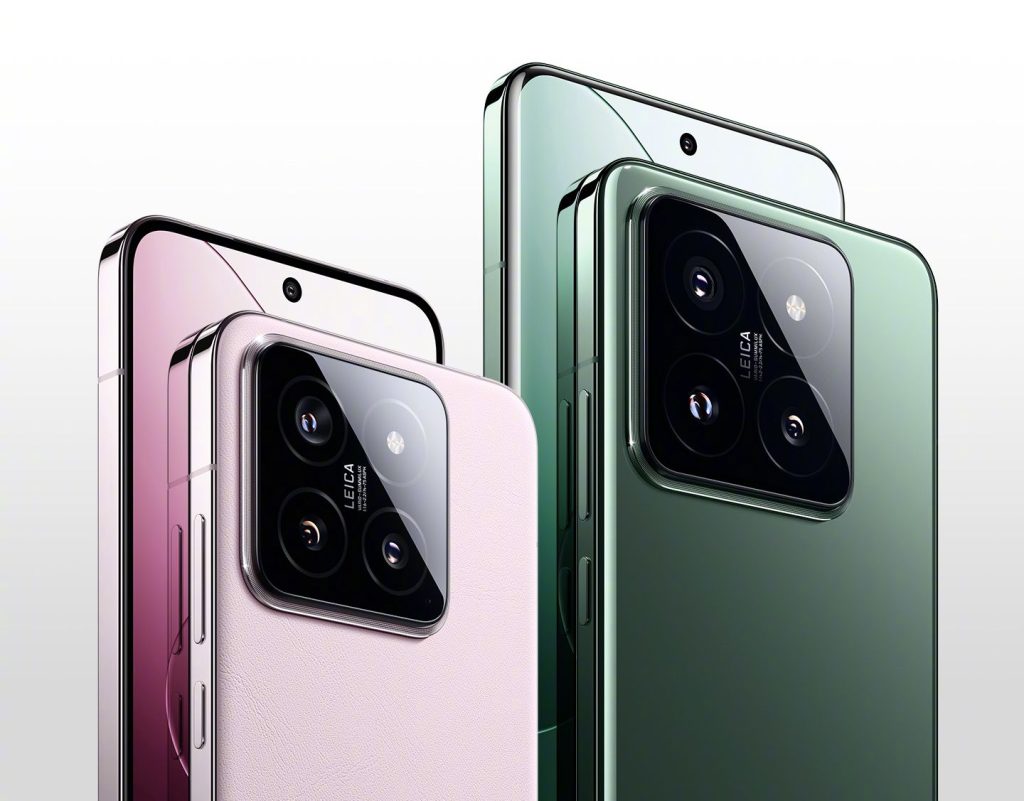
XIaomi-14-series
Xiaomi 14 series

The listing doesn’t reveal anything evident but confirms the upcoming launch in Singapore. Even a Chinese leaker who has a decent history claims the smartphone’s launch this month. So, concluding from different sources, it is highly likely that the Xiaomi 14 Utra will be launched soon.

Recent reports indicate that the primary camera of the device will boast a variable aperture range from f/1.63 to f/4.0. The main camera is expected to be the Sony LYT-900 50-megapixel camera with a one-inch sensor. Additionally, the 14 Ultra is anticipated to sport a 50-megapixel periscope telephoto camera offering up to 120 mm of focal length. The quad-camera system may also include a 50-megapixel IMX8-series ultra-wide lens and another 50-megapixel telephoto camera.

It would feature a similar design and is expected to launch in blue, orange, and black. There have already been rumors regarding cutting-edge features and even an under-display camera for selfies as well. 

While there have been leaks hinting at the presence of an under-display camera, precise details about the additional cameras are yet to be confirmed. The Snapdragon 8 Gen 3 chipset under the hood of the Xiaomi 14 Ultra will enable two-way satellite connectivity. The device is expected to house a 5,180mAh battery that supports 50W wireless charging and 90W wired charging.

The smartphone could debut during the MWC 2024 tech exhibition alongside the Xiaomi Pad 7 by the end of February.

Related:

Chinese firms lead as global mobile gaming market hits $85.76 billion

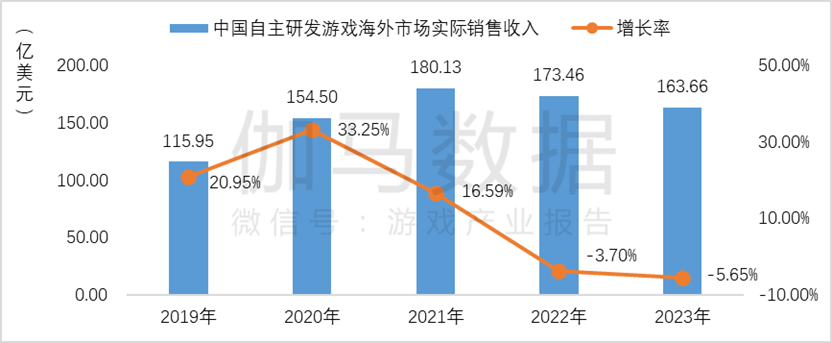
In 2023, the global gaming market witnessed significant growth, reaching 1,173.79 billion yuan ($166B) with a 6.00% increase from the previous year. Within this expansive industry, the mobile gaming sector stood out, amassing 606.27 billion yuan ($85.76B), half of which was dominated by Chinese companies. Their dominance in the global market is attributed to the creation of high-quality games, ongoing innovation, and aggressive global expansion strategies.

Gaming Market

Chinese Dominance and Diversification in the Growing Global Mobile Gaming Market

Despite this success, Chinese developers encountered a setback, as their self-developed games’ overseas revenue dipped by 5.65% to $16.366B. The major markets for Chinese mobile games, including the United States, Japan, and South Korea, still contributed to more than half of China’s overseas revenue, underscoring the international appeal of these games.

Chinese Mobile Gaming Report

This widespread acceptance is the result of continuous improvement in game quality, the introduction of innovative features, and effective market and brand expansion strategies. Although strategy games continue to lead Chinese mobile game exports, the casual gaming sector is witnessing rapid growth, with its overseas market share jumping from 0.6% to 5.1% in just three years.

The landscape is further reinforced by the presence of 52 Chinese firms among the top 100 global revenue generators in the industry, with Tencent Games standing out with revenue surpassing 100 billion yuan ($14.13B).

However, challenges persist, notably a declining revenue share from self-developed Chinese products, fierce international competition, rising user acquisition costs, and the struggle for effective localization due to a shortage of local talent.

To overcome challenges in expanding their products overseas, over 60% of surveyed Chinese companies are emphasizing long-term product operations, and about two-thirds are using brand or IP partnerships to attract international users. These strategies, combined with a focus on regional preferences and the adoption of advanced technologies such as AI and improved game engines, are essential for Chinese developers looking to maintain global dominance and succeed in the global market.

RELATED:

(Source)

Google Pixel Watch’s Camera App Gets A Significant Update With New Features

Google is rolling out a new update to the Pixel Watch. It focuses on the camera app on the smartwatch. The latest update arrives after the December update that brought DND and Bedtime modes. It has been spotted by the folks at 9to5Google. The update to the camera app on the Pixel Watch brings several features apart from the basic ones that were previously present. 

Google Pixel Watch’s camera app gets a significant update

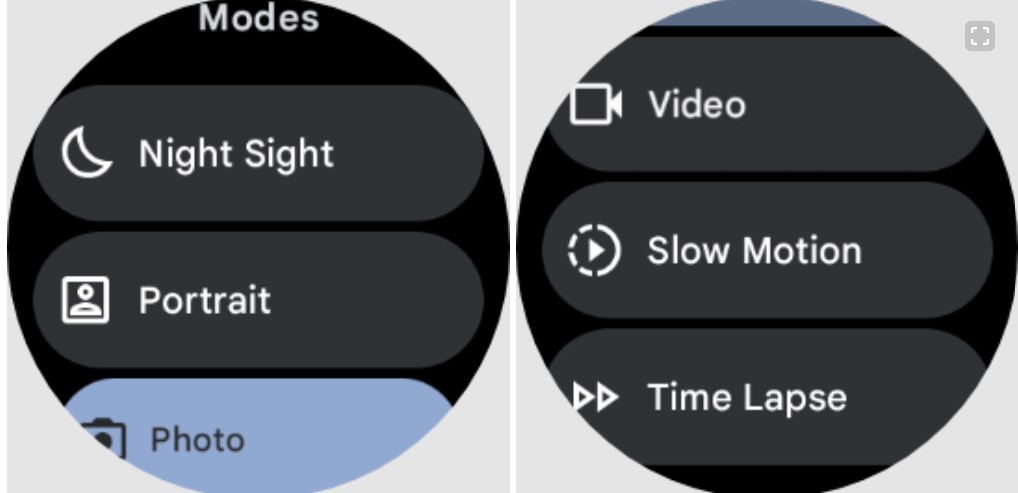
Prior to the latest update, the Google Pixel Watch offered basic features including a photo mode, zoom slider, three-second timer, and the ability to switch between front and rear cameras. 

Now, the Pixel Watch’s camera app is gaining more capabilities. Users can switch between camera modes – Night Sight and Portrait while clicking pictures. Additionally, mode switching ability is also while recording videos. These include standard, slow-motion, time-lapse, or portrait blur video. Before this update, users had to choose different modes in their Pixel phone’s camera app. Hence, the new features on the smartwatch eliminate the inconvenience of reaching the smartphone. 

Additionally, the timer functionality also gets a new option. In addition to the existing 3-second timer, the latest update now offers a 10-second timer duration. 

9to5Google adds that the main list is now called Settings and the camera switcher is now a menu instead of previously just been a single tap to change between them. Ensure that the camera app on your Pixel Watch is up to date if you don’t see the new features yet. The latest build can be checked from the Play Store. Additionally, it’s worth noting that users may not see the features if the Pixel Watch is paired with non-Pixel phones. 

Sale
Pixel Watch – Android Smartwatch with Activity Tracking – Heart Rate Tracking Watch – Matte Black Stainless Steel case with Obsidian Active Band
  • Pixel Watch has a beautiful circular, domed design and new experience with Wear OS, so it’s easy to get help at a glance

Please Note: When you buy something using the links in our articles, we may earn a small commission at no cost to you.

Related:

Source