Advertisement

Samsung Galaxy S24 Ultra will reportedly offer 2600 nit peak brightness

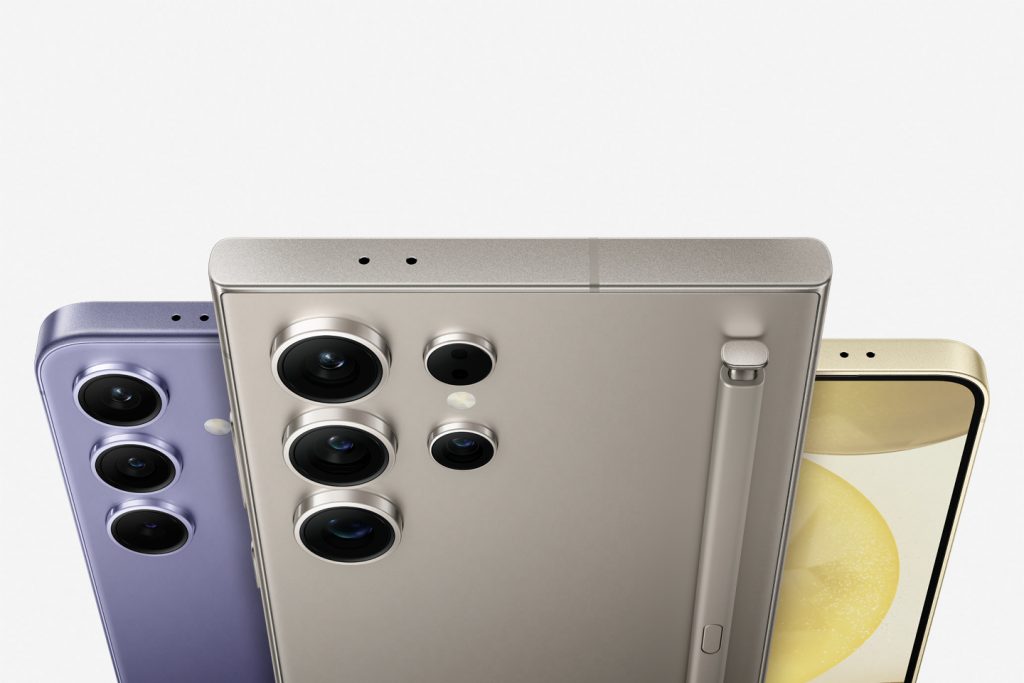
As the much-anticipated Samsung Galaxy S24 series draws near its expected January 17, 2024 unveiling, more details are emerging, particularly about the Galaxy S24 Ultra‘s display. A recent leak by tipster Ahmed Qwaider suggests that the Dynamic AMOLED 2x screen on the Galaxy S24 Ultra could boast an impressive peak screen brightness of 2600 nits. Its 100 nits higher than the previous rumors indicating 2500 nits peak brightness all models in the lineup—Galaxy S24, Galaxy S24+, and Galaxy S24 Ultra.

Galaxy S24 Ultra

Brighter than the iPhone 15 Pro Max (2000 nits) and Pixel 8 Pro (2400 nits)

If these leaks are accurate, the Galaxy S24 Ultra would surpass competitors like the iPhone 15 Pro (2000 nits) and the Google Pixel 8 Pro (2400 nits). However, it’s essential to note that the peak brightness does not ensure a higher perceivable brightness in every scenario. Usually the phone reaches the rated peak brightness in only certain scenarios like playing an HDR video in a well-lit environment. Additionally, factors like device temperature also influences the display brightness in a certain condition. Nonetheless, the phone is capable of outshining its competitors in certain scenarios – this is what we know so far.

Galaxy S24 Ultra 2600 nit brightness rumored

This upcoming Ultra flagship is expected to be Samsung’s first ‘AI Phone,’ integrating various Generative AI features. Among these features are AI-generated wallpapers, real-time voice call language translation, text summarization in Samsung Notes, and the capability to expand images by filling in non-existent content that matches the surroundings. The Galaxy S24 series is also rumored to support emergency texting via satellite connectivity.

Additionally, the Galaxy S24 Ultra is anticipated to showcase a 200-million-pixel main camera, a 12-megapixel ultra-wide-angle lens, a 10-megapixel 10x telephoto lens, and a 50-megapixel 5x telephoto lens. Reportedly, Samsung is also improving the AI object recognition engine to improve its imaging capabilities in different lighting conditions.

Related:

Redmi Note 13 series India launch date finally revealed

Xiaomi has been preparing to launch the highly anticipated Redmi Note 13 series in India soon. The release in the region had been teased recently, and now, the official launch date for the Note 13 lineup has been confirmed. So here are all the details.

Redmi Note 13 Series Arrives in January 2024

On X (formerly Twitter), the Chinese tech giant shared a new teaser image poster that confirmed the launch date of the Redmi Note 13 series. The Note 13, Note 13 Pro, and Note 13 Pro+ models are set to be unveiled in India on 4th January 2024. Earlier this month, we covered another teaser that hinted at the Redmi Note 13 Pro+ 5G’s (Review) January launch timeframe.

Redmi Note 13 series India launch date

Ahead of the global release, the high end Pro models of the lineup were spotted on the TDRA certification platform. Similarly, the smartphones were even sighted on NBTC. While the Indian pricing for these devices is still at large, the Note 13 Pro series had their pricing leaked for the European market. To recall, the Note 13 Pro and Note 13 Pro+ were listed with 12GB of RAM and 512GB of internal storage in the region, carrying the price tag of 450 Euros and 500 Euros respectively.

For those unaware, the Note 13 Pro and 13 Pro+ sports a tall 6.67-inch AMOLED display that offers 120Hz refresh rate, 1800 nits of peak brightness, 2160Hz touch sampling rate, and 1920 PWM dimming. The top end Pro+ model also offers curved screens. Under the hood, the 13 Pro is equipped with the Snapdragon 7s Gen 2 SoC while the 13 Pro+ variant will feature the MediaTek Dimensity 7200 Ultra SoC. A large 5,000mAh and 5,100mAh battery pack powers the devices, respectively. Other notable features include a 200-megapixel triple camera setup and Android 13 OS based MIUI 14 custom skin out of the box.

RELATED:

PlayStation & Xbox end-of-year recap is live for gamers

As the curtain falls on 2023, gamers can now take a lighthearted stroll down memory lane with the end-of-year wrap-up tools from PlayStation and Xbox. It’s like Spotify Wrapped, but for your gaming life – a recap of your digital adventures.

PlayStation 2023 Wrap Up

For the PlayStation enthusiasts, the Wrap-Up, accessible until January 12, 2024, lays out your gaming dossier, showcasing the number of games conquered, the total console hours clocked, and the champions that dominated your screen. Adding a dash of style, PlayStation transforms your gaming highlights into digital cards, ready to be flaunted on social media.

As an extra perk, players stand a chance to snag a unique avatar and a digital collectible – a Spider-Bot straight from Marvel’s Spider-Man universe.

Meanwhile, over in the Xbox realm, the Year In Review, freshly detailed in a post on Xbox Wire, invites console owners to unpack their gaming stats. From basking in your major triumphs to revealing your most-played game, it’s your stats, your story. Much like its gaming counterpart, Xbox has been dishing out Year In Review summaries for a while now, giving the community a chance to reminisce about their gaming exploits and, of course, bragging rights. To check out your stats, Xbox and PlayStation users can click on these links.

In related news, the world of PC gaming is buzzing with excitement as Epic Games Store prepares for its holiday season giveaway. Set to kick off on December 16, Epic Games Store will be giving one game every day till December 29. Last year, the list included popular titles like Metro Last Light Redux, Wolfenstein: The New Order, Dishonored – Definitive Edition, and more. This year, there are rumors that Epic could give us Red Dead Redemption 2 for free.

But that’s not all. Valve has also announced that the Steam Winter Sale will kick off on December 21. Along with that, the PC gaming giant has also announced the detailed schedule of its upcoming sales till the 2024 Steam Summer Sale.

RELATED:

Moment Launches 75mm Macro Mobile Lens Designed for Wider Apertures

Moment unveiled the T Series, a whole new lens system designed for the Apple iPhone 15 and iPhone 15 Pro, in September. Since then, another lens has been added to enhance the system. With the lens, the iPhone 15’s primary camera’s 35mm equivalent focal length is increased to 75 millimeters, restricting focus to objects that are between 7 and 10 cm away.

Moment claims to have chromatic aberrations of less than one pixel and distortion of less than 1%. It is claimed that the 115 grams lens produces crisp pictures all the way to the corners of the frame.

It is meant to provide customers with an angle of view that is somewhat broader and a much larger working distance to the subject than the Moment Macro 10x Lens, while still providing the same depth of field.

Officially, the lens works with the Samsung Galaxy S22, Apple iPhone 13, Google Pixel 7, and all other more recent models in the same series of smartphones—as long as the case is used in conjunction with the lens.

The macro lens may be used with ordinary 67-millimeter filters with the optional adaptor. Other smartphones may be used with the lens by using a universal adapter.

Moment 75mm Macro Lens Shots

Price and Availability

The Moment 75 mm Macro Mobile Lens may be purchased online from the manufacturer retailing for US $119. Two options are available for connecting the lens to the smartphone: the $25.99 universal adapter that works with other devices or the iPhone 15 adapter.

Related:

(Source)

Samsung Galaxy S21 FE Snapdragon 888 variant gets Android 14 x One UI 6 update

After pushing the One UI 6.1 x Android 14 update to the Galaxy S21 FE, Samsung has now started seeding the update to the Snapdragon 888 version of the Galaxy S21 FE. For those unaware, in July 2023, Samsung refreshed the Galaxy S21 FE with the Snapdragon 888 processor, after launching the original S21 FE back in January 2022.

Samsung Galaxy S21 FE

Users can easily identify the update by checking for the firmware version G990B2XXU5FWK3/G990B2ODM5FWK3/G990B2XXU5FWK3. However, it’s worth noting that this update comes with a substantial 2GB download size.

Samsung

In addition to upgrading the operating system to Android 14, the update also ups the security to the Android security patch November 2023 level. While the official update changelog from the brand is yet to be released through official channels, users will have the opportunity to review new features before proceeding with the update. Although specific details are not provided, here’s a glimpse of the general features announced by the brand for One UI 6.0.

One UI 6.0 update changelog:

  • New emoji design.
  • Picture and video previews in the Share panel.
  • More sharing options.
  • Multitasking improvements through a pop-up window that can remain open after you leave the Recents screen.
  • A lock screen clock that can be positioned freely.
  • Simplified app icon labels for the home screen.
  • A new Weather widget, more information in the Weather app — including an interactive map view — and enhanced Weather illustrations.
  • A wide range of camera improvements, including a new widget, more alignment options for watermarks, quick access to resolution settings, easy-to-apply filters and effects, and more.
  • Improvements to Calendar, Reminder, and Samsung Internet.
  • Quick actions for apps in Finder search results.
  • Recommendations in the My Files app to help you free up storage.
  • Smarter Airplane mode.
  • Auto Blocker, which is an extra layer of protection preventing unknown apps from installing, checking malware, and blocking malicious commands from being sent via a USB connection.
  • Customizable Bixby text call greetings and the option to switch to Bixby text call at any time, even during a call.
  • More accessibility features, including new magnification options and custom cursor thickness options.

Users of the smartphone can check for the Android 14 OS update by heading to Settings > Software Update > Check for updates > Download and Install if it’s available. 

RELATED:

Leak confirms satellite connectivity feature for Galaxy S24 series

Leaks and rumors about the Galaxy S24 series having satellite connectivity have been swirling for some time. Looks like now we have a clearer picture. A recent leak, discovered by SamMobile, confirms this feature will indeed be present in the upcoming flagship phones.

Galaxy S24 leak confirms satellite connectivity

The leak includes a screenshot, presumably from a Galaxy S24 model, showing a feature called “Emergency texts via satellite” alongside its function. According to Samsung, “If you call emergency services when you’re out of range or not connected to a mobile network, we will connect you via a satellite network so you can send an emergency text.”

Galaxy S24 to feature satellite connectivity

Once connected, you should be able to send text messages with precise GPS location. This is precisely how satellite connectivity works in other phones like iPhones. The feature is expected to be available across the entire Galaxy S24 lineup, regardless of the processor (Exynos or Snapdragon) powering each model.

Earlier this year, Samsung also unveiled a 5G modem technology that allows direct communication between phones and satellites. This means calls, texts, and data can flow even when cell towers are nowhere to be found.

While Samsung may introduce satellite connectivity with the S24, it might not be available everywhere initially. Similar to iPhones, it could be limited to specific countries at first, with expansion plans later. Currently, the satellite connectivity feature for iPhones is only available in 17 countries. 

Samsung-Galaxy-S24-and-Galaxy-S24-Plus-Specifications-Colors-Images

Beyond satellite talk, the Galaxy S24 series leaks also hint at an AI push. Leak suggests the top-of-the-line S24 Ultra might be marketed as the “Generative AI phone” and Samsung has even filed trademarks for “AI Phone” and “AI Smartphone.”

Samsung is expected to officially unveil the Galaxy S24 lineup on January 17 next year. We’ll keep you updated on all the details here.

Related:

(Via)

Vivo S18, S18 Pro, S18e chipsets revealed before official announcement

Vivo is all set to announce the Vivo S18 and S18 Pro smartphones on Dec. 27 in China. Before the launch, the company released official posters to confirm the chipsets that will power the Vivo S18 and S18 Pro. In addition, a leaker has revealed the name of the chipset that will power the S18e. Here is a look at all the new details about the S18 series.

Vivo S18 series’ chipset revealed

As seen in the above posters, the Vivo S18 will have the Snapdragon 7 Gen 3 chipset. It is the same chip that powers its competitor, the Honor 100.

On the other hand, the Vivo S18 Pro will arrive with the Dimensity 9200 Plus chipset. The same chip has powered the likes of the Xiaomi 13T Pro, the Redmi K60 Ultra, the Vivo X90s, and the iQOO Neo 8 Pro in the past. As per reports, the S18 and S18 Pro will be arriving in options, such as 12 GB RAM + 256 GB storage, 12 GB RAM + 512 GB storage, and 16 GB RAM + 512 GB storage.

As per a Chinese leaker, the Vivo S18e will feature the Dimensity 7200, which has also been seen on other phones, such as the Vivo S17e, the Vivo V27, the Vivo T2 Pro 5G, the iQOO Z7 Pro, and the Redmi Note 13 Pro+.

The tipster further revealed that the Vivo S18e has a flat display, but he did not mention its size. As per reports, the Vivo S18 and S18 Pro will have a 6.78-inch curved-edge OLED panel that offers a 1.5K resolution, a 120Hz refresh rate, and 2,800 nits of peak brightness. The S18e will have a 4,800mAh battery and a 50-megapixel + 2-megapixel dual-camera system.

On the other hand, the S18 and S18 Pro will have a 5,00mAh battery with 80W charging. The S18 will have a 50-megapixel + 8-megapixel dual-camera system, whereas the Pro edition will have a 50-megapixel + 50-megapixel + 12-megapixel triple camera system.

RELATED:

OnePlus 12 repair spare parts prices announced: screen at 1650 Yuan, motherboard starting from 2050 Yuan

The recently launched OnePlus 12 smartphone, priced at a starting point of 4299 yuan (~$600), has revealed the cost of repairing spare parts on the official OPPO website.

OnePlus 12

The prices are as follows

  • Screen: 1650 yuan ($232)
  • Motherboard (24G+1T): 3250 yuan ($457)
  • Motherboard (16G+1T): 2850 yuan ($400)
  • Motherboard (16G+512G): 2450 yuan ($344)
  • Motherboard (12G+256G): 2050 yuan ($288)
  • Battery cover assembly: 390 yuan ($55)
  • Front camera: 160 yuan ($23)
  • Rear main camera 50M (Sony Light Yu LYT-808): 590 yuan ($83)
  • Ultrawide camera (48M): 190 yuan ($27)
  • Rear super light and shadow periscope telephoto camera (64M): 320 yuan ($45)
  • Battery: 199 yuan ($28)
  • Speaker: 50 yuan ($7)
  • Receiver: 50 yuan ($7)
  • Motor: 50 yuan ($7)
  • Power adapter (11V 9.1A): 219 yuan ($31)
  • Data cable: 49 yuan ($7)

It’s important to note that the US pricing is based on the current conversion rates and may see a slight variation with time. Additionally, out-of-warranty maintenance fee is calculated as the cost of the maintenance spare parts plus a labor cost of 50 yuan. Additionally, on the 16th-18th of each month, designated as OPPO member day, members enjoy free labor fees for on-site repair.

The OnePlus 12 boasts impressive specifications, featuring the Snapdragon 8 Gen 3 processor, the world’s first “Oriental Screen” with a peak brightness of 4500nit, the flagship Sony LYT-808 sensor, and a robust 5400mAh battery. The device supports 100W Super Flash Charging and 50W Wireless Flash Charging. The pricing for different configurations is as follows:

  • 12GB + 256GB: 4299 yuan ($605)
  • 16GB + 512GB: 4799 yuan ($675)
  • 16GB + 1TB: 5299 yuan ($745)
  • 24GB + 1TB: 5799 yuan ($815)

For more detailed specifications, check out our OnePlus 12 launch article.

Related:

Valve Steam Sales schedule for 2024 announced, Winter sale kicks off December 21

Valve, the digital PC gaming giant, has just dropped a bombshell for gamers worldwide with its announcement of a comprehensive lineup of Steam Sales extending from the frosty Winter of 2023 to the scorching Summer of 2024. In a recent blog post, Valve outlined a whopping 14 discount extravaganzas, spanning various genres and themes.

Kicking off the gaming fiesta is the Steam Winter Sale, slated to run from December 21, 2023, to January 4, 2024. Brace yourselves for a rollercoaster ride through festivals like the Capitalism and Economy Fest, Pirates vs. Ninjas Fest, and the intriguing Dinos vs. Robots Fest, among others.

Upcoming Steam Sale events:

  • Steam Winter Sale (December 21, 2023)
  • Capitalism and Economy Fest (January 8th, 2024)
  • Pirates vs. Ninjas Fest (January 22nd)
  • Next Fest (February 5)
  • Remote Play Together (February 12)
  • Dinos vs. Robots Fest (February 26th)
  • Steam Spring Sale (March 14)
  • Deckbuilder’s Fest (March 25)
  • FFS Fest (April 15)
  • Farming Fest (April 29)
  • Endless Replayability Fest (May 13th)
  • Open World Survival Crafting Fest (May 27)
  • Next Fest (June 10)
  • Steam Summer Sale (June 27, 2024)

Valve has strategically spaced out these sales, offering a variety of themes from business simulations to open-world survival crafting. The seasonal sales, such as the Steam Spring Sale and the concluding Steam Summer Sale, promise an extensive selection of discounted games across various genres.

Steam Deck OLED

Out of all these events, one that stands out is Valve’s Next Fest, occurring multiple times a year, which goes beyond traditional discounts. It provides gamers with the opportunity to explore free demos and engage with live streams hosted by developers. It serves as a preview event for upcoming game releases, enhancing the overall gaming experience for the community.

In related news, EPIC Games Store is all set to do another massive holiday season giveaway, which is scheduled to kick off later this week. Last year, the giveaway featured some bangers like Wolfenstein: The New Order, Metro: Last Light Redux, a couple of Bethesda classics, and more. This year, there are rumors of a Red Dead Redemption 2 giveaway.

RELATED:

(Source)

Galaxy S24 Ultra camera leaks: 200MP sensor and 5x optical zoom for 8K videos

Rumors about the Galaxy S24 Ultra are coming in thick and fast, with most of its design and features already revealed. Now, a new leak sheds light on its camera capabilities, hinting at some exciting upgrades.

Galaxy S24 Ultra camera leaks

The S24 Ultra is expected to keep the familiar four-camera layout. Leaker Ahmed Qwaider claims the main sensor will be a 200MP, joined by a 12MP ultrawide and two telephoto lenses: a 10MP and a 50MP. 

And if Qwaider is right, the rear cameras will be able to shoot smooth 8K video with 5x optical zoom to keep things steady. Currently, the S23 Ultra’s 8K recording relies solely on digital zoom, which results in pixelated close-ups.

Qwaider also hints at portrait mode with 5x zoom, alongside improved stabilization both in bright and dark environments. Interestingly, both front and rear cameras are rumored to benefit from an AI-powered “object-aware engine,” although its exact function remains unclear.

In another leak, Qwaider claims that Samsung is reportedly partnering with Meta (Facebook and Instagram) to boost image and video quality when sharing through their platforms. 

Galaxy S24 Ultra camera leaks
Samsung Galaxy S24 Ultra design, color options.

This means you should directly be able to post HDR images and videos on Facebook and Instagram. A previous report also suggests that the Galaxy S24 can post images to Instagram and Snapchat directly from the lock screen shortcut.

Besides this, the S24 Ultra is almost confirmed to be powered by Snapdragon 8 Gen 3 chip. The phone will also bring a titanium body that should improve its toughness and rigidity. 

The device will be built around a 6.8-inch QHD+ LTPO (1-120Hz) AMOLED display. And, it will be available in Titanium Black, Titanium Gray, Titanium Violet, and Titanium Yellow color options.

While the official launch is still under wraps, these leaks paint a promising picture for the S24 Ultra. 

Related:

Oppo Find X7 Ultra, X7 Pro, X7 chipset, battery sizes revealed

Oppo is expected to unveil the Oppo Find X7 series of smartphones by the end of January in China. So far, reports have claimed that the series will have two models, such as the Find X7 and Find X7 Pro. However, a newer report reveals that the lineup will also have a more powerful third model called the Find X7 Ultra. Here is a look at what’s known about the Ultra variant.

Find X7 Ultra, Find X7 Pro, Find X7: What to expect?

Yesterday, tipster Digital Chat Station released a Weibo post in which he mentioned the names of three devices, such as the Find X7, the Find X7 Pro, and the Find X7 Ultra. Reports have claimed that the Find X7 will have the Dimensity 9300 chipset, whereas the Find X7 Pro will be equipped with the Snapdragon 8 Gen 3 SoC. Today, the tipster also shared some information on the X7 Ultra’s chipset and the battery capacities of each of the X7 series models.

It can be said based on the latest leak by DCS that the Find X7 will feature the D9300 chip and a 5,000mAh battery. The Pro model will have the SD8G3 chip and a 4,860mAh battery.

The Find X7 Ultra appears to be an advanced version of the Pro model, as it is tipped to feature the SD8G3 chip and a 5,000mAh battery. The tipster did not mention anything else about the Ultra variant.

It appears that the model that was believed to feature the dual periscope cameras may carry the Ultra branding instead of the Pro. Hence, it is likely that the Find X7 Ultra’s camera module may feature a one-inch LYT-900 50-megapixel main camera, a 50-megapixel ultra-wide lens, an IMX890 50-megapixel periscope telephoto camera with 3x optical zoom, and an IMX858 50-megapixel periscope zoom unit with 6x optical zoom. However, readers are advised to wait for newer reports to learn about the differences between the Find X7 Pro and X7 Ultra models.

RELATED:

Wear OS 3 update announced for Mobvoi TicWatches

Back in Summer 2021, Mobvoi revaled that Wear OS 2 would be replaced by Wear OS 3 for its smartwatches based on the Snapdragon Wear 4100. Unfortunately, that didn’t happen; it also missed the next, modified release window that was supposed to occur in Q3 of 2023.

Following months of speculation and excitement, the company has finally announced the upcoming release of the Wear OS 3 upgrade, which they hope will improve the TicWatch experience for their valued customers. The TicWatch Pro 3 Ultra GPS, TicWatch Pro 3 Ultra, TicWatch Pro 3 GPS, TicWatch Pro 3 LTE, and TicWatch E3 are among the prior TicWatch models to receive this upgrade from the firm.

Wear OS 3 update rolling out for Mobvoi TicWatches

Users must make sure that the build number on their current watch corresponds to one of the following in order to update to Wear OS 3:

  • PMRB.220703.001
  • PMKB.211102.004
  • PMKB.211102.002
  • PMRL.220704.001

Note: Before upgrading, make sure your phone can run the Mobvoi Health app on Android. Install the app from Google Play; if you get alerts about incompatibility, your phone probably doesn’t support it.

For Android users, choose an Android phone with the Google Play Store and Google Play services (GMS) pre-installed that is running AndroidT 8.0 and higher (not Go edition or phones without the original Google Play Store) to update to Wear OS 3.

For iOS users, install the Health Copilot app on your iPhone by going to the App Store. Must take notice that iPhones running iOS 16 and later can use the Health Copilot app. Next, connect the freshly downloaded Health Copilot app to your iPhone and link it with your upgraded watch.

As of right now, there aren’t any further details regarding the update. However, according to the company, Wear OS 3 could not roll out to all compatible smartwatches until the first quarter of 2024.

Related:

(Source)

Weibo user finds dead bug under brand new OnePlus 12 phone chassis

A Weibo user has reported finding a dead bug under the chassis of a new OnePlus 12 smartphone. OnePlus has acknowledged the issue and says it is working with the individual to resolve the issue. This is the first incident of such nature but the discovery of a foreign element inside the OnePlus 12 smartphone seems to be yet another dent in the much-hyped model.

OnePlus 12

The OnePlus 12 was passed as a premium offering with powerful hardware. It was also offered with an affordable price tag and many innovations from the previous OnePlus models. The inner parts of the OnePlus 12 indicate some shoddy construction and panel gaps.

Is the merger of OnePlus’ & OPPO’s R&D team responsible for the slump in quality of the flagship OnePlus 12?

The Weibo post included a photo of the unit with the dead insect sandwiched within the chassis. The panel gaps were also visible in the photo and even hair particles were present. Some of the glue holding the glass to the frame was seen in a poor state. It is unclear whether the issues highlighted in the post were one-off or widespread. It however puts in doubt the flagship credentials of the OnePlus 12.

OnePlus 12

The Weibo issue has made several other OnePlus 12 users air their views on the smartphone. One of the major issues highlighted by users is the green line on the device. The management of the incident has the potential to affect the positive vibes expected from the launch in China. The global launch of the OnePlus 12 is slated for January 23, 2024.

OnePlus 12

To summarize, the OnePlus 12 smartphone was announced in China a week ago. It features a 6.8-inch 120Hz LTPO OLED panel and up to 24GB of RAM. There are three rear cameras in the smartphone including a 64MP module. It had been unveiled after weeks of speculations and was primed as a strong challenger of flagship offerings like Xiaomi 14 and the Galaxy S24 Ultra.

RELATED:

Oppo Find X7 Pro’s camera setup explained, Find X7 Ultra’s existence tipped

Oppo is rumored to announce the Find X7 series of flagship phones in January in China. Reports suggest that the X7 Pro will have the most powerful camera setup ever seen on a smartphone, as it is said to feature a new one-inch camera as well as a pair of periscope telephoto cameras. A new leak has explained the camera details of the Find X7 Pro.

Oppo Find X7 Pro camera setup explained

Oppo Find X7 Pro camera setup explained

The above image showcases a schematic of the rear camera system of the Find X7 Pro. As can be seen, the device is equipped with four rear-facing cameras. The camera sensor placed on top is said to be the 50-megapixel Sony IMX858 periscope telephoto camera with a 1/2.51-inch sensor size and OIS support. It is expected to support up to 6x optical zoom.

The camera placed in the centre could be a 50-megapixel Sony IMX890 periscope telephoto camera with 3x optical zoom. It will be a 1/1.56-inch lens with OIS support.

The other two cameras of the Find X7 Pro are the primary lens and an ultra-wide camera. As per reports, it will be the world’s first smartphone to feature the 50-megapixel Sony LYT-900, a one-inch camera that is said to be a revised version of the existing Sony IMX989 one-inch camera. For ultra-wide shots, the device could be equipped with another 50-megapixel camera sensor, which could be the LYT-600. While leaks have not claimed anything about the front camera of the X7 Pro, it is likely to retain the 32-megapixel selfie snapper that was made available on the Find X6 Pro.

According to reports, the Find X7 will feature the Dimensity 9300 SoC, whereas the Pro model will have the Snapdragon 8 Gen 3 chipset onboard. In the above screenshot, Digital Chat Station can be seen claiming the existence of the Find X7 Ultra. It is unclear whether the Ultra variant is just a new name for the Pro model or an entirely different device.

RELATED:

(via)

iQOO Neo 9 Pro with Dimensity 9300 appears on Antutu before launch

Later this month (December), iQOO will announce the iQOO Neo 9 series in China. Ahead of the expected launch, the device’s AnTuTu listing has appeared to showcase its performance.

iQOO Neo 9 Pro Antutu listing

iQOO Neo 9 Pro Antutu
iQOO Neo 9 Pro Antutu listing

As seen in the above screenshot, the iQOO Neo 9 Pro has achieved a score of 2,334,911 points in Antutu benchmarks. This score is a total of CPU, GPU, memory, and UX tests, in which the device scored 524,383, 984,162, 483,234, and 343,132 points, respectively. For those who don’t know, the Neo 9 Pro is expected to feature the Dimensity 9300 chipset.

It appears that the iQOO Neo 9 Pro will seemingly offer better performance than the Dimensity 9300-powered Vivo X100 series, which debuted in November. The reason behind this is that the Vivo X100 has achieved a score of around 224K+ on AnTuTu benchmarks. Hence, it seems that the Dimensity 9300 may offer optimized performance on the Neo 9 Pro.

As per other reports, the Neo 9 Pro will have a 6.78-inch OLED panel that offers a 1.5K resolution of 2800 x 1260 pixels, a 144Hz refresh rate, 2160Hz PWM dimming, and an in-screen fingerprint sensor. On the front, it will have a 16-megapixel selfie camera, and its back panel is said to have a 50-megapixel IMX920 main camera and a 50-megapixel Samsung JN1 ultra-wide lens.

The device may ship with up to 24 GB of LPDDR5x RAM, up to 1 TB of storage, and a 5,160mAh battery with 120W fast charging support. It will run on Android 14 with a layer of OriginOS 4 on top.

RELATED:

Tesla Announces an Optional Extender for Cybertruck’s Range, Bumping it to 500 Miles

Remember when Tesla dropped the Cybertruck recently, people were criticizing the reduced 300-mile range amongst other things. Now, Tesla appears to try to make amends via its announcement of an optional range extender battery pack for the Cybertruck, aiming to push its range to the promised 500 miles. This development is a response to the evolving needs of electric vehicle (EV) users and the company’s commitment to innovation.

A lot of people experienced displeasure towards the Cybertruck’s range when it arrived

The range extender, an add-on to the already robust Cybertruck, is Tesla’s answer to a promise made back in 2019. Initially, many believed that the Cybertruck would hit the 500-mile mark with a single battery. However, Tesla is now introducing this range extender as a separate feature, potentially making up for earlier expectations.

Tesla Cybertruck

The rationale behind this move is twofold. Firstly, Tesla acknowledges that the average daily commute is well under the 340 miles offered by the Cybertruck’s main battery. Hence, the additional range is positioned as a luxury rather than a necessity. Secondly, and perhaps more crucially, Tesla is looking at the bigger picture regarding resource allocation. In a world where battery materials are scarce, Tesla aims to maximize the production of EVs rather than equipping individual vehicles with larger, often underutilized, batteries.

This strategy could reflect (emphasis on could) a deeper understanding of user habits and environmental responsibility. The optional range extender is not just about hitting a target range; it’s about offering flexibility to those who need it while conserving valuable resources for broader EV production. Tesla seems to be navigating the fine line between fulfilling specific customer desires and adhering to a sustainable manufacturing philosophy. Only time will tell if it works out for them.

RELATED:

(Via)

Pokémon GO’s Winter Holiday Event Unveils New Pokémon and Festive Fun

As December’s chill sets in, Pokémon GO gears up for its festive Winter Holiday Part 1 event. This year’s celebration is particularly thrilling, introducing the adorable Cetoddle and its evolution, Cetitan, to the Pokémon world. The event, running from December 18 to December 25, promises to sprinkle a little extra magic into the holiday season.

The Winter event is expected to bring old players back to the game

Pokémon GO isn’t just a game; it’s a global phenomenon that blends the virtual with the real, encouraging players to explore their surroundings in search of Pokémon. Launched back in the summer of 2016, it quickly became more than just a game—it’s a community, a way to connect, and a reason to get outside and explore.

Pokemon

This year’s event aligns with Pokémon GO’s current Season 13: Timeless Travels, focusing on Hisuian Pokémon. Trainers can eagerly anticipate more than just Cetoddle and Cetitan; Hisuian Samurott and Wrydeer also make appearances. And while the much-anticipated Pokémon GO Tour featuring Sinnoh Pokémon is on the horizon, the Winter Holiday Part 1 event provides the perfect interim excitement.

What sets this event apart is not just the new Pokémon but the festive spirit infused into the game. Pikachu and Raichu don holiday outfits, bringing cheer to every encounter. Ice-themed Pokémon like Alolan Sandshrew, Seel, and Galarian Darumaka will be more common in the wild, along with festive versions of Eevee, Stantler, and Spheal. This festive line-up extends to raids as well, with themed Pokémon appearing in one-star and three-star raids.

The event is more than just about catching Pokémon; it’s about choice and rewards. Timed Research allows trainers to choose their bonuses, be it double XP or Stardust. Field Research tasks offer encounters with winter-themed Pokémon and provide Mega Energy for Mega Abomasnow and Mega Glalie. Moreover, two paid tickets offer additional rewards, enhancing the holiday experience.

The increase in storage capacity for items and Pokémon, announced this December, talks volumes about the game’s continuous growth. The final Community Day of the year, featuring Pokémon from past events, is a nod to the game’s rich history and dedicated fan base. As trainers around the globe join in the festivities, Pokémon GO continues to prove why it remains a beloved part of many people’s lives.

RELATED:

(Via)

TikTok’s Remarkable Journey to a $10 Billion Milestone

Remember TikTok? An app that gained popularity during one of the most testing times in the world, an app that has now become a staple word, TikTok has made a stunning entry into the exclusive $10 billion club, standing out as the only non-game app to achieve this feat. This milestone marks a significant moment for TikTok, showcasing its unique position in the global app market.

TikTok has constantly faced backlash from the US as well

Unlike other popular apps in this revenue range, TikTok doesn’t rely on gaming. Instead, it’s known for its short, catchy videos that have gone viral worldwide. This achievement puts TikTok in a league with big names like Candy Crush and Clash of Clans, but it’s important to note how different TikTok’s path has been. Where most high-earning apps rely on game-related purchases, the app has carved out its success through a different model.

Tiktok

TikTok’s revenue comes mainly from its TikTok Coins, used to buy virtual gifts for content creators. This approach, combined with advertising and a budding e-commerce venture, shows TikTok’s innovative ways to engage and monetize its massive user base.

Interestingly, TikTok isn’t subscription-based, a common revenue model for other top apps like YouTube or Disney+. This makes TikTok’s achievement even more noteworthy, as it’s built its financial success on a unique model in the app world.

Despite its success, TikTok hasn’t had a smooth ride everywhere. For instance, its push into online shopping faced a setback in Indonesia, where the government banned social media-based e-commerce to protect local businesses. But TikTok isn’t backing down. It’s now eyeing a comeback in Indonesia’s e-commerce space, having invested heavily in a local company.

Looking from a distance, TikTok’s journey to this revenue milestone is a testament to the app’s immense popularity and its ability to innovate in monetization strategies. Its success story is especially significant given the challenges it’s faced, like regulatory scrutiny in the US and a shift in global digital trends. As TikTok navigates these challenges and continues to grow, it’s clear that its impact on the digital landscape is far from over.

RELATED:

(Via)

OnePlus Ace 3’s 32MP telephoto camera reportedly axed, claims leaker

OnePlus is expected to announce the OnePlus Ace 3, a sub-flagship phone, later this month in China. Rumors surrounding it have claimed that the device will feature a telephoto camera. However, a new leak, courtesy of tipster Digital Chat Station, reveals that OnePlus has removed the telephoto camera from the device.

OnePlus Ace 3 camera setup and other specs (rumored)

According to the leaker, the OnePlus Ace 3’s revised camera setup comprises a 50-megapixel main camera and an 8-megapixel camera, probably for ultra-wide shots. The new leak asserts that a 2-megapixel camera, which appears to be a macro camera, has taken the place of the previous reports’ claims that it has a 32-megapixel telephoto camera with 2x optical zoom. For selfies, it will have a 16-megapixel front camera.

In addition, the tipster reiterated details about the design and other specs of the OnePlus Ace 3 as well. In terms of appearance, the device will sport a curved-edge OLED screen with a centrally positioned punch-hole, a metal middle frame, and a glass back. It will be available in three shades, such as gray, gold, and blue.

The Ace 3 is expected to feature a 6.78-inch BOE X1 8T LTPO display that offers a 1.5K resolution (2780 x 1264 pixels), 2160Hz PWM dimming, and probably a 120Hz refresh rate. It appears to be the same display panel that is available on the Realme GT 5 Pro.

The Ace 3 will feature the Snapdragon 8 Gen 2 chipset and a 5,500mAh battery that supports 100W charging. Other reports have claimed that it will have up to 16 GB of RAM and up to 1 TB of storage. As reports have claimed, the Ace 3 is likely to get rebranded as the OnePlus 12R in the global market in January.

RELATED:

Xiaomi Accuses Huawei Executive of Lying and Misrepresenting Facts

When it comes to intellectual property rights, theft is a much more complex issue than the physical theft of an object. Therefore, courts have often become a battlefield where seemingly simple cases can turn into years-long struggles. Nevertheless, many companies find themselves frequently in the position of either defendant or plaintiff in court.

Currently, a similar development is unfolding between Xiaomi and Huawei. The two companies are engaged in a legal battle, appearing before a judge in a copyright infringement case, with Xiaomi accusing a Huawei executive of misrepresenting facts in their smartphone patent dispute. Here are the details….

Huawei Takes Legal Action Against Xiaomi Over Foldable Smartphone Patents

Huawei recently filed a lawsuit against Xiaomi, claiming that the patents related to foldable smartphone hinges had been violated. However, Xiaomi denied the allegations, instead accusing the plaintiff’s representative of misrepresenting facts and politely making false accusations. The patent in question, known as the “dragon bone” technology in foldable phones, is claimed by the defendant to have been independently developed and patented.

Xiaomi vs Huawei

In its defense, Xiaomi emphasized significant differences between the two patents, stating that there are substantial distinctions. They even went on to say, “We urge Yu to follow ‘basic scientific and rigorous standards’ and stop unfairly criticizing competitors or misleading the public in the future.” This technology made its debut in the Xiaomi Mix Fold 3 model, with its hinge mechanism particularly drawing attention. It seems that this innovation caught Huawei’s attention.

Unfortunately, the outcome of the patent dispute between the two companies remains uncertain for now. While it’s challenging to determine the truth and who is right in such cases, as mentioned earlier, patent lawsuits are complex processes. Especially in situations like these, they can drag on for years and lead to significant legal expenses. Hence, parties involved often prefer to reach an agreement in such cases. This could also be the case for Xiaomi and Huawei, but without following developments, it’s impossible to say anything definitive.

RELATED:

(via)