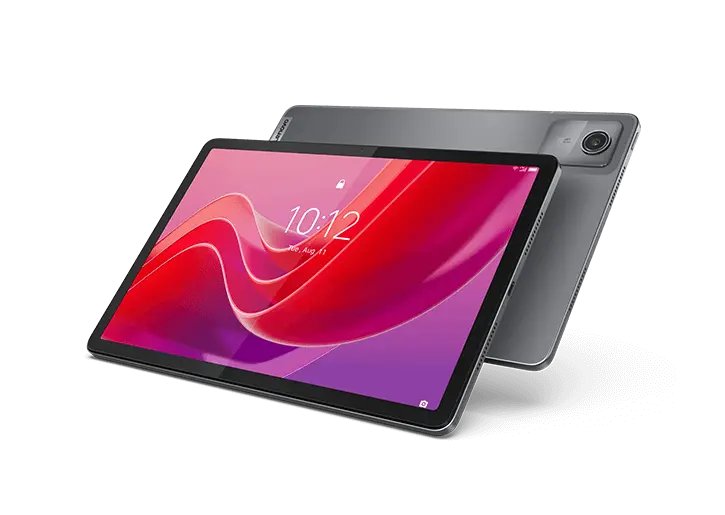
Huawei launched the MatePad Pro tablet in September this year. It is a top-notch offering packed with flagship specifications. The device was announced in a single 13.2-inch screen size. Now, the brand has launched the MatePad Pro in an 11-inch variant with toned-down specifications compared to its bigger sibling. Read on to know what the latest offering has in store for us.
Huawei MatePad Pro 11 (2024) specifications and features
The Huawei MatePad Pro 11 (2024) as the name suggests comes with an 11-inch OLED display panel bearing a WQXGA resolution, 600 nits peak brightness, and a 120Hz refresh rate. The screen is surrounded by symmetrical bezels and a punch-hole cutout at the top right corner. The tablet is compatible with a stylus called M-pencil and it can be magnetically attached to the side.
The Huawei MatePad Pro 11 (2024) features a circular camera module on the back panel. It accommodates 13MP and 8MP sensors. There is a 16MP front-facing selfie snapper. The tablet is equipped with a speaker system.
Under the hood, the Huawei MatePad Pro 11 (2024) is equipped with a Kirin 9000s processor that is slightly a downgraded version compared to the 13.2-inch model. It packs 12GB RAM and is offered in 256GB and 512GB storage options. The tablet is backed by an 8,300mAh battery unit with support for 66W fast charging. There is also a heat dissipation system onboard. Software-wise, it runs on HarmonyOS 4 with features like multitasking, PC-level apps, and more. The Huawei MatePad Pro 11 (2024) also comes with two-way satellite messaging when there is no network signal.
The Huawei MatePad Pro 11 (2024) is priced at CNY 4,299 (~$) and CNY 4,799 (~$) for the 12GB + 256GB and 12GB + 512GB RAM and storage configurations. It is offered in Green, Blue, Black, and White colors. The tablet goes on pre-orders today with sales commencing from December 8.
Following the developments around the upcoming Redmi K70 series, a new Xiaomi Smartwatch has just surfaced on the UAE’s TDRA certification. Bearing the model code M2320W1, the smartwatch is registered as a short-range smartwatch device. The listing hardly unveils anything related to the smartwatch but confirms a new smartwatch is in the making.
Due to minor details available about the new smartwatch, we are unable to conclude more about the specifications or other features. We expect more information to arrive in the coming days via public certifications or via leaks. However, Xiaomi recently teased a new Redmi Watch 4 with AMOLED display and aluminum alloy build which is expected to launch on November 29. So, the new smartwatch could be the Redmi Watch 4.
Additionally, Xiaomi’s subbrand Redmi is working to launch the Redmi K70 Series consisting of the Redmi K70e, Redmi K70, and Redmi K70 Pro. The Redmi K70e smartphone will come with a 6.67-inch OLED display with having 120Hz refresh rate and 2712 x 1220 pixels resolution. It seems to run MediaTek DImesnity 8300 Ultra SoC, LPDDR5x RAM, and UFS 4.0 Storage.
Meanwhile, the Redmi K70 and the Redmi K70 Pro will feature Snapdragon 8 Gen 2 SoC and Snapdragon 8 Gen 3 SoC, respectively.
Alongside the new smartphone, there will be a new Redmi Watch 4 and Redmi Buds 5 Pro which were teased recently with battery details.
The Korean giant is only a couple of months away from the official launch of the Galaxy S24 series. This year too, the company will bring three different models, including the Galaxy S24, the Galaxy S24+, and the Galaxy S24 Ultra. There have been ample leaks and rumors that cite information about its different aspects like design, specifications, etc. In a new public certification, the Galaxy S24 Ultra has arrived at India’s BIS certification, following its elder sibling, the Galaxy S24 Ultra, which appeared last week.
The smartphone is already doing the rounds on public certification websites, including Thailand’s NBTC and others. The BIS certification confirms the moniker of the phone as Samsung Galaxy S24+. It confirms the model code; however, the certification misses the other details about the handset.
The smartphone is reportedly launching on January 17, with pre-orders starting the same day.
Samsung Galaxy S24 Series Specifications (Expected)
The Galaxy S24 Series appears to bundle AI camera features which will compete well against the Pixel 8 Series. As per 3C certification, the smartphone appears to bundle the 45W fast charging support. The smartphone appears to feature a 4775 mAh battery as revealed by Dekra Certifications.
Further, it will house a 6.7-inch Dynamic M13 AMOLED panel with 2500 nits brightness. The smartphone will offer up to 12GB RAM and 512GB internal storage.
According to rumors and leaks, the Galaxy S24 Ultra may have a 6.8-inch WQHD+ display. It will be powered by a Snapdragon 8 Gen 3 SoC, 8/12GB of RAM, and 128/256GB of internal storage. There may be other variants as well, but these are the ones that have been suggested so far.
In the camera department, the Galaxy S24 Ultra is expected to feature a 200 MP primary camera sensor, a 12 MP ultra-wide lens, a 50 MP periscope lens, and a 10 MP telephoto sensor. The smartphone appears to feature a 5000 mAh battery, which will support 45W fast wired charging. It is said to feature a titanium frame, an IP68 rating, support for stereo speakers, and an in-display ultrasonic fingerprint sensor. In connectivity, there could be a GPS, Wi-Fi 7, Bluetooth 5.4, NFC, USB 3.2 Gen 2 Type-C port, Samsung Pay, and Wireless DeX.
We expect more information to be disclosed in the coming couple of months.
In a strategic move to fortify its presence in the United Kingdom, Taiwanese semiconductor giant MediaTek Inc. has announced a substantial investment of £10 million (US$12.59 million) over the next five years. The announcement, made on the eve of the 2023 Global Investment Summit in London, underscores the company’s commitment to fostering innovation in the UK’s burgeoning startup landscape.
This investment aligns seamlessly with the UK government’s proactive stance on attracting foreign investments, as highlighted in its recent autumn statement. The UK, currently hosting over 140 Unicorn enterprises, and privately owned startups valued at over £1 billion each, stands out as a key hub for innovation in Europe. This number surpasses the combined count in Germany, France, and Sweden, making the UK an attractive destination for companies seeking growth opportunities.
MediaTek, already operating in the UK with offices in Cambridge and Kent, focusing on research and development, has solidified its commitment to the region through recent collaborations. A joint venture with the Bullitt Group aims to pioneer two-way satellite communications technology for smartphones and other devices. Additionally, a partnership with Inmarsat plc aims to deliver satellite communications services to customers, highlighting MediaTek’s dedication to cutting-edge technological advancements.
In the global market, MediaTek has secured its position as the fifth-largest integrated circuit (IC) designer. With sales reaching approximately $3.2 billion and an 8.4% market share in Q2 of the current year, the company continues to be a significant player in the semiconductor industry.
The recent unveiling of the Dimensity 8300 chipset further solidifies MediaTek’s commitment to innovation. Positioned as the company’s premium-tier offering for 5G smartphones, the chipset boasts advanced second-generation 4-nanometer process technology, promising 20% faster CPU performance and 30% peak gains in power efficiency compared to its predecessor.
The chipset is set to debut in smartphones by the end of the year, signaling MediaTek’s intent to compete in the premium 5G smartphone market.
Infinix has scheduled the Hot 40 series global launch for December 9. The smartphone lineup will be unveiled in Lagos, Nigeria.
However, ahead of that, the brand has already started rolling out the phones in the series in some markets. The Infinix Hot 40i is the first device in the family to go official.
This product was announced in Saudi Arabia on November 26. It is even available for purchase from participating retailers.
Infinix Hot 40i Specifications
The Infinix Hot 40i released in Saudi Arabia has NFC in its name as it offers the said connectivity option for contactless payments and other uses. This suggests there could be a variant of the handset without NFC in some markets.
The device sports a 6.56-inch centered punch-hole display with an HD+ resolution and a 90Hz refresh rate. It is powered by a MediaTek Helio G88 chip and boots Android 13.
There’s a 50MP camera on the rear assisted by an unspecified secondary sensor and a ring LED flashlight. While the front of the phone includes a 32MP selfie camera. It also arrives with a side-mounted fingerprint sensor.
Last but not least, it draws energy from a 5,000mAh battery and carries support for 18W charging.
Infinix Hot 40i Price
The Infinix Hot 40i retails at the following price tags in Saudi Arabia.
4GB + 128GB – SAR 375 (~$100)
8GB + 256GB – SAR 465 (~$125)
It comes in Palm Blue, Horizon Gold, and Starlit Black color options.
Apple is turning to the supply chain in mainland China for its highly anticipated mixed reality (MR) headset, the Apple Vision Pro. Recent reports reveal that a substantial 60% of the components for the Vision Pro will be sourced from Chinese suppliers, indicating a significant increase compared to the iPhone 15 series. Set for mass production in December, Apple has set an ambitious sales target of 1 million units in 2024 and aims to reach 10 million units in the third year.
Sourcing 60% of components from China marks a notable departure from iPhone production trends
Apple Vision Pro
The estimated hardware cost of the Apple Vision Pro stands at around $1,700, with Lingyi Intelligent Manufacturing, a prominent Chinese supplier, playing a crucial role by providing components valued between $250-300. These components include heat sink modules, headbands, eye masks, and nose pads. Lixun Precision, another key supplier, will handle exclusive OEM assembly, contributing components valued at approximately $150-200 per unit.
This shift represents a departure from Apple’s recent endeavors to diversify its supply chain beyond China. The increased involvement of Chinese suppliers, particularly with the Vision Pro, contrasts sharply with the mere 2% supply chain equipment sourced for the iPhone 15 series.
Chinese supply chain companies have demonstrated remarkable flexibility and capabilities during the development and prototype stages of the Vision Pro headset, playing a pivotal role in winning Apple’s favor. Apple CEO Tim Cook has publicly expressed his preference for mainland supply chains, emphasizing their increased involvement in innovative products like the Vision Pro.
While Apple’s iPhone production witnessed a decline in the proportion of parts sourced from mainland China, the Vision Pro signals a strategic relocation of the supply chain to the country. This move is poised to benefit Apple by reducing production costs and potentially enabling the MR manufacturer to lower the overall cost of the end product.
Realme’s upcoming smartphone, the Realme C65 launch is around the corner. It has been spotted on certification websites like the EEC, SIRIM, and FCC. The smartphone’s extensive leaks have already spilled the beans about its specifications and features. In addition, the device today appeared on the UAE’s TDRA with the new model code RMX3890. Depending on the region, the company could launch the new device as the Realme C65 or Realme C67.
Already, the global version of the upcoming Realme smartphone has cleared multiple certifications and is expected to debut in India along with other countries. The 4G LTE-only device will come with a 5000 mAh battery and 33W fast charging support, confirms FCC. Further. it will measure 164.6mm x 75.4mm x 7.59mm in size. The smartphone is reportedly coming in 4/6/8GB RAM variants. It will unveil only 128GB storage with two color options – Green and Purple.
Realme C65/Realme C67 would be the latest addition to the smartphone’s C-series. Details about the launch are not yet known, but it is expected to launch by the end of this year. It will arrive as Realme C67 in Malaysia and Realme C65 in the Middle East.
Additionally, Realme is gearing up for the Realme GT 5 Pro launch in China next month, precisely, it is coming on December 7. It will be the flagship device and will feature all the best features and technology that Realme developed over the years. Further, it is preparing for the Realme V50 launch which is slated to launch on December 10.
The company introduced Realme C51 4G a couple of months ago in Carbon Black and Mint Green options. We hope the new smartphone will soon broaden the Realme C-series lineup in several countries.
Doogee is going strong this year, isn’t it! We have reviewed several products from them, each with distinctive features, and this time, there you have an upgraded tablet, the T30 Ultra. This one has a 2.5k display, Helio G99 processor, dual SIM Cards & dual-Band Wi-Fi, plus a large battery built into this premium body, really good choice for daily work and entertainment, now let’s get into the details.
Design
This T30 Ultra has a truly great look all around, when I hold it in hand, the feel is largely in line with many tablets on the market. First of all, the bezels on this 11-inch display are equal in each corner, visually it’s a piece of nice screen. Flip to the back, it has dark gray sandblasted aluminum covering most part of the body, and brushed metal finished piece at the other part, the aluminum is very smooth to the touch, and also prevent fingerprints from staying, such a diverse design creates a sleek appearance, and I really like it.
The power button and volume buttons are located at the top left corner, with the camera placed in the middle of the same side, by seeing this kind of design, you know the tablet is meant to be used both for work and entertainment. So to support such needs, there are four speakers on both sides, they are great for doing video conferencing or simply enjoying some video content, and not to forget the Hi-res audio certification.
Other ports like the type-C charging port and the keyboard connect points are also at the right places.
Performance
This tablet has the Helio G99 Octa-core Processor inside, the version in our hand has 32GB RAM+256GB ROM.
to make this clear for you guys, it is 12GB physical RAM and 20GB virtual RAM, still a decent combo after all. The limit in games is probably 30fps at smooth graphic mode, so I’ll generally be playing lighter games. For the ROM, it also supports storage expansion up to 2TB, you can put a card here in the sim card slot.
Get into the Geekbench 5 benchmarks here, it scored 1785 in multi-core performance, a decent score can’t argue with that. So G99 is the most commonly used CPU in some tech products right now, it has good performance and power efficiency, so this tablet can still manage to run some games and daily tasks well.
As you can see, if we set the graphics at a smooth level, the performance is still good, and the movements are smooth, with some minor inconsistencies in battles. So as the results suggest, this tablet will be a good choice for some light games or simple work tasks.
Display
This tablet has an 11’’ 2.5k display, 16:10 ratio, and 250nit peak brightness, It also comes with TÜV SÜD Blue Light Certification and Widevine L1 Support. All the specs translate to a good performance in daily work and entertainment situations.
As you can see I have been watching some videos, the visual is good and it does not show any lag at all, also since it has almost the perfect screen ratio for watching content, the window of the video is the best. And it is positioned as a daily driver, the blue light certification does help a lot. However there is still something not quite well made, which is the 250nit peak brightness, it is good for viewing things indoors, but could show some weakness when it’s used outdoors.
Other features
The tablet has an 8580mAh large battery built in, and 18W charger included in the package, this battery should support a 1-2 day use without any problem, and it can top up quickly in 1-2 hours.
What is included in the package are a nice screen protector and a transparent case, not many brands would do such heartwarming things for customers anymore. Also it has a 16MP main camera and 8MP front camera, it is good for taking some photos in your daily life or doing video conferencing.
I am sure you are also familiar with the original Android 13 OS, if you are used to working with Google app packs, the spreadsheet-sharing experience can be very smooth, let alone it has a free WPS app for you to process all the Excel and things. And if you always work remotely, putting a sim card inside will keep you going all the time, and once you have WIFI access, the dual-band WIFI capability will help you get a faster connection.
Verdict
To sum up this Doogee T30 Ultra tablet, it has everything you need for daily use, the perfect size and the elegant back design, it feels very good in hand. The specs are right at the edge of providing a good experience for mid-level users, and with the good OS support, it is the right choice for those people.
The smartphone market is currently buzzing with new launches, with major brands like Vivo and Xiaomi unveiling their flagship smartphones powered by the Snapdragon 8 Gen 3 processor. Redmi is also set to join the race with its new Redmi K70 series.
In contrast, Motorola has been relatively quiet this year, despite being one of the first companies to launch a Snapdragon 8 Gen 2-powered phone last year with the Moto X40. The phone was later rebranded as the Motorola Edge 40 Pro in the global market.
Motorola “XT2363-4” 3C Certification
Amidst this flurry of flagship launches, a new Motorola smartphone has surfaced on China’s 3C certification site, hinting at a potential budget/mid-range offering from the company.
The upcoming Motorola phone carries the model number XT2363-4, but its official name remains unknown.
According to the 3C certification, the device may come with an MC-208L power brick, capable of supporting up to 20W fast charging. The charging capabilities revealed through the certification hint that the XT2363-4 could be a budget/mid-range phone.
Furthermore, the certification confirms that the XT2363-4 is a 5G-enabled device. While details regarding the Motorola XT2363-4 are currently limited, the 3C certification provides some insights into the device’s specifications.
As more information becomes available, we will be sure to provide an update on this new Motorola phone.
A couple of weeks back, Vivo unveiled a new Y series smartphone in China. This device is officially Vivo Y100i.
The company revealed certain features of the handset, including its price. But the product is yet to go official even today,
Earlier in the morning, the firm opened pre-orders for it and also disclosed when it will go on sale along with its official announcement date.
Vivo says that its upcoming Vivo Y100i will be presented on November 30. However, ahead of that, the brand has already disclosed the price of the product.
The Vivo Y100i will be sold in a single 12GB + 512GB memory configuration. It will retail at ¥1,599 or about $225 in China.
The device is up for pre-order on Vivo’s official website. It is scheduled to go on sale starting December 2.
As far as features are concerned, the Vivo Y100i is IP54-rated for splash resistance. It draws energy from a 5,000mAh battery and carries support for 44W wired charging.
The handset is said to house a speaker that outputs 200% louder volume. Finally, it will be available in three colors, such as black, blue, and pink.
It is worth noting that the standard Vivo Y100 (Chinese variant) is a more premium offering with a curved display. Whereas, the Y100i has a flat frame body and non-curved display which is likely LCD. It is expected to be powered by an entry-level MediaTek 5G chip.
A new Canalys report unveils the continuous decline in smartphone shipments but hints at a slight increase in demand next year. It also cites that the decline has been narrowed to 6%, with total shipments reaching 32 million in Q3 2023. However, Samsung and Apple retained their top positions with a market share of 25% and 22%, respectively. Xiaomi, Motorola, and TCL garnered good sales in the quarter, and their overall sales are expected to grow in Europe.
There have been challenges for Apple and Samsung this quarter, as the retailers tried to reduce stocks of old smartphones, which led to a decline in shipments. Even Samsung’s strategy to shift focus from the Galaxy A Series to the more profitable mid-range smartphone, the S Series Flagship, and foldable led to a resilient demand. For Apple, the USB Type-C cable-led iPhone 15 increased its shipments by 59%. But, to reduce overstocking of iPhone 14 and older models, the retailers paused the shipments, which led to an overall decrease in shipments in Q3 2023.
Samsung remained at the top with 35% overall smartphone market share, and Apple at 22%. Xiaomi’s strong demand in the mid-range with its Redmi Series led to fetching 19% of the market share. Motorola and TCL gained 5% and 3% market share, respectively.
Meanwhile, Xiaomi, Motorola, and TCL registered significant growth in shipments, but it was limited to the low-to-mid-range segment. Buffer created by Samsung’s focus shift from low-end to high-end market paved the way for these OEMs to usher. Xiaomi gained the largest chunk with the sale of Redmi and Redmi Note 12 models in the Central and Eastern Europe regions. Motorola maintained its prowess with its best quarterly performance and registered a 30% YoY increase in shipments.
Better 2024 for Smartphone OEMs in Europe
“Canalys predicts the market will grow by 4% in 2024. The rest of this year remains important for vendors seeking to redeem their performance in 2023, start 2024 with positive momentum, and clear out channel inventory ahead of new product launches in the first half of 2024,” said Runar Bjørhovde, Analyst at Canalys.
Though the year 2023 remained not so well for the smartphone companies globally, as per the market experts, the European market will improve in 2024. It will move 4% up due to a refresh cycle of the mid-range devices bought in 2020 and 2021. Other reasons and the market’s positive momentum will further fetch good sales in the coming year. Even the ongoing festive season and enticing discounts are luring customers to grab or replace their smartphones.
Vivo, fresh off the launch of its flagship X100 series, is reportedly in the works of releasing new mid-range smartphones in the Vivo S18 series. Now, key specifications for the Vivo S18 and S18 Pro have now leaked online, courtesy of the tipster WhyLab on Weibo.
Vivo S18, S18 Pro specifications (rumored)
The leak, which appears to be a presentation for the two smartphones, reveals that the Vivo S18 will be powered by the latest Qualcomm Snapdragon 7 Gen 3 chipset. We have seen this SoC in action in the new Honor 100 so far, so the Vivo S18 will be among the first devices to feature SD 7 Gen 3.
It will sport an OLED display with 2800 nits of brightness and a 5000mAh battery. Likewise, the smartphone will offer a choice of three RAM configurations – 8GB, 12GB, or 16GB – and two storage options of 256GB or 512 GB.
On the other hand, the Vivo S18 Pro will reportedly feature the flagship-grade Dimensity 9200+ chipset and offer similar memory configurations as the Vivo S18. It will also pack a 5000mAh battery. Previously, it was tipped that both smartphones would support 80W fast charging.
The leak also reveals the Vivo S18 Pro’s main camera which is a 50MP Sony IMX920 sensor — the same as the Vivo X100. Furthermore, the smartphone will also include WiFi 7 compatibility.
Following past trends, the Vivo S18 is expected to be launched globally as the Vivo V30, while the S18 Pro is likely to hit the market as the Vivo V30 Pro. There should also be an S18e, following the S17e predecessor, which may launch as V30e globally.
While there’s no official word on the launch date and pricing of the Vivo S18 series, we can expect to hear more details from Vivo in the coming weeks.
This year, there has been a decline in the number of smartphones shipped around the world. Sales of smartphones have been falling in every major market, including those in North America, Europe, and Southeast Asia. Following the ongoing festive sales, there’s a slight chance of improvement, but the overall year remained sluggish for global shipments. Surprisingly, the Middle Eastern smartphone market defied the global smartphone market signals and registered a 21% annual growth in Q3 2023.
As per a new Canalys research report, smartphone shipments in Middle Eastern countries (excluding Turkey) have registered a significant growth of 21%, with 12.0 million shipments. An increase in business growth due to local demand is one of the primary reasons behind the growth. Job and business opportunities have exceptionally increased in recent times, unaffected by falling oil prices.
The markets in Iraq and Saudi Arabia soared to historical highs, with 57% and 46% growth on a year-over-year basis, respectively. Surprisingly, despite some limitations and challenges while importing in US dollars, Iraq gained maximum growth. Meanwhile, the United Arab Emirates market registers only a 2% increase in shipments which is mostly fueled by increased tourist footfall. Qatar and Kuwait show a slight decline due to subdued demand in both countries.
Samsung accounts for 31% of the total smartphone shipments in Q3 2023. It is followed by Transsion with 22% share, Xiaomi with 15% share, Apple with 11% share, and Realme in 5th position with a mere 4% share.
Inclination towards Budget Smartphones in Middle-East
Unlike Southeast Asian markets, the Middle East is more inclined towards budget smartphones which translates to under $200 market. The maximum sales are garnered by Chinese brands such as Xiaomi, Transsion, and Honor.
“TRANSSION is steadily increasing its footprint in response to the expanding mass-market segment amid broader economic uncertainties. Infinix introduced exclusive models with Noon in Saudi Arabia, while Tecno promoted its Camon 20 with enhanced incentives in Iraq. While Xiaomi and HONOR strive to penetrate the premium market with enticing incentives and aggressive promotions, luring customers away from established brands demands persistent investment,” reveals Manish Pravinkumar, Dubai-based Senior Consultant at Canalys.
Motorola further increases its growth in the enterprise businesses in the GCC region. However, Samsung and Apple remained at their respective positions with their extensive distribution network and ecosystem strategy, respectively.
Further, emerging brands are working on their marketing campaigns to garner sales. While Oppo and Honor are bringing foldable to the market to compete against Samsung’s prowess. However, “consumers in markets such as Qatar, Kuwait and Saudi Arabia will still hesitate to switch brands. Affordability, aspirational value and availability will be pivotal factors for emerging players, with schemes such as Buy Now Pay Later gaining traction through platforms such as Tabby and Tamara, proving beneficial for both retailers and consumers, “said Pravinkumar.
Li Jie, President of OnePlus China, now teases the camera system of the upcoming OnePlus 12 to be one of the best in the market. According to him, the phone must have top-notch hardware and software solutions to achieve the goal of being the best and that they have worked accordingly on the device. Reportedly, the company has worked with the Oppo Find series’ imaging team for the OnePlus 12 to fully equip the hardware + software package.
Li Jie claims OnePlus 12 to be the most powerful imaging flagship in OnePlus’s history
As mentioned, the device brings a “new generation of super light and shadow imaging system” with the triple camera setup. Additionally, OnePlus continued its partnership with Hasselblad to maintain its previous achievements. With all of this together in a single package, Li Jie considers the device to be strong enough to beat its Pro-level flagship competitors in the camera department.
In terms of camera hardware, the OnePlus 12 boasts the new Sony LYT-808 sensor for the main camera paired with an improved periscope telephoto, which is more expensive but adds quality to the output. Li Jie didn’t share any specifics about the ultrawide module but suggested to expect improvements here too.
He also mentions the importance of computational processing in a camera system within the smartphone form factor, stating that the phone cannot completely rely on optics due to its miniature size and low light-capturing abilities. Likely, the upcoming flagship from OnePlus has something notable in the software aspect too.
In terms of image processing software, the OnePlus 12 gets the core algorithm of the Find series, as mentioned earlier. Additionally, in terms of display technology, the phone gets an exclusive self-developed “Super Light and Shadow ProXDR Display” which will be used in its “Oriental Screen”.
In summary, OnePlus has been working with the Oppo Find series’ imaging team besides the partnership with Hasselblad to make the camera system of the OnePlus 12 stand out.
OnePlus will officially launch the OnePlus 12 in China on December 5. The company has been gradually teasing the arrival of the device, revealing the design and color options yesterday. Today, OnePlus has shared the camera details of the smartphone.
OnePlus 12 camera specifications
OnePlus 12 will feature a triple rear-camera setup with a 50MP Sony LYT-808 primary sensor, a 64MP Omnivision O64B periscope telephoto camera, and a 48MP Sony IMX581 ultra-wide lens.
The primary camera boasts an aperture of f/1.6 and a focal length of 23mm, while the ultrawide lens has an aperture of f/2.2 and a focal length of 14mm. The telephoto camera, on the other hand, has an aperture of f/2.6 and a focal length of 70mm, enabling 3x optical zoom.
OnePlus has also confirmed that the OnePlus 12 will feature the same 13-channel multi-spectral sensor as its predecessor, the OnePlus 11. This sensor is designed to capture natural colors in photos and will be used in conjunction with Hasselblad’s color calibration expertise.
These camera specifications largely align with those of the OnePlus Open. Additionally, the OnePlus 12’s cameras will also benefit from Oppo’s HDR and portrait-related technologies for enhanced image processing.
OnePlus has also revealed that the OnePlus 12 will have a 2K OLED display with curved edges, powered by the Snapdragon 8 Gen 3 SoC with up to 24GB of LPDDR5x RAM and 1TB of UFS 4.0 storage.
Likewise, the color options include black, white, and green. The battery is expected to come in at 5,400mAh and can be charged with a 100W adapter.
Xiaomi‘s sub-brand Redmi is set to unveil its latest smartphone lineup, the Redmi K70 series, on November 29th. Ahead of the official launch, live images of the Redmi K70 and Redmi K70 Pro have surfaced on Weibo, revealing the devices’ design and key specifications.
Redmi K70, K70 Pro live images
Both the Redmi K70 and Redmi K70 Pro feature a large camera island on the back housing three lenses and an LED flash. The camera modules also include a 50MP OIS engraving, indicating the presence of a 50MP main camera with optical image stabilization (OIS).
The Redmi K70 Pro also has a 2x optical zoom engraving for the telephoto camera, while the standard Redmi K70 will get a 2MP AI cam.
The front of both devices features a centrally aligned punch-hole display with thin bezels on the sides. The settings menu shown in the picture also confirms that both phones will ship with Xiaomi HyperOS 1.0.1 based on Android 14 as well as 12GB of RAM.
Redmi is expected to offer smartphones with up to 16GB of RAM, with the K70 Pro potentially reaching 24GB. Storage options will range up to 1TB.
The Redmi K70 Pro will be powered by the latest Qualcomm Snapdragon 8 Gen 3 processor, while the standard Redmi K70 will run on the Snapdragon 8 Gen 2 chipset.
Both devices will feature a 2K display with a peak brightness of 4000 nits. Additionally, both smartphones will sport a metal frame and a 1/1.55″ Light Fusion 800 sensor for the main camera.
We are just one day away from the official launch of the Redmi K70 series, where we will get all the juicy details about these devices. In the meantime, you can read a comprehensive roundup of all three smartphones in our dedicated article here.
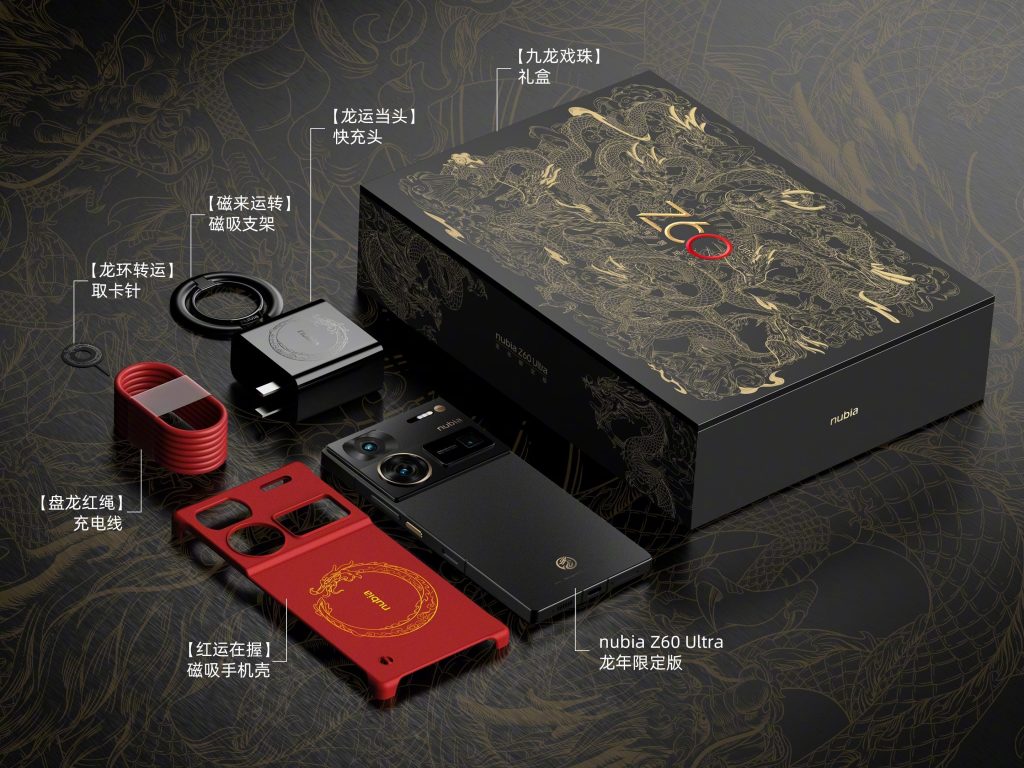
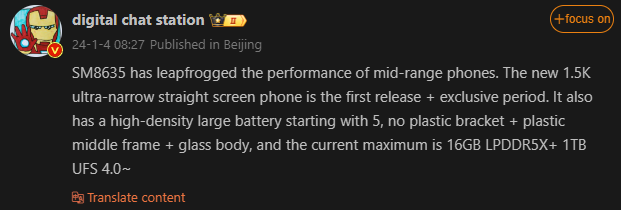
Nubia has recently announced the Red Magic 9 Pro series of gaming phones featuring the Snapdragon 8 Gen 3 chipset. Reports have revealed that the brand is also working on two Z-series flagship phones, such as the Nubia Z60 Ultra and the Nubia Z50 SE, for the Chinese market in December. The Z50 SE is said to be equipped with the Snapdragon 8 Gen 2 chipset, whereas the Z60 Ultra may feature the Snapdragon 8 Gen 3 SoC. In a new leak, tipster Digital Chat Station has revealed the key specifications of an upcoming SD8G3 phone. It appears that the tipster may have revealed details about the Z60 Ultra.
Nubia Z60 Ultra specifications (rumored)
Nubia Z50 Ultra
The leak reveals that the Nubia Z60 Ultra will arrive with a flat OLED display that seemingly supports 1.5K resolution like the Z50 Ultra.
The leak states that the device will feature the Snapdragon 8 Gen 3 chipset and a 6,000mAh battery. Another leak from the same tipster suggests that it will support 80W fast charging.
There is no word on the front camera of the Z60 Ultra. However, its rear camera setup will comprise a 50-megapixel primary camera with a 1/1.56-inch camera sensor and not the 1-inch camera sensor that was said to be present in its prototype. The main snapper will be accompanied by a 50-megapixel ultra-wide lens with a 1/1.55-inch camera sensor and a 64-megapixel telephoto camera with a 1/2-inch camera sensor.
The device was spotted with the model number NX721J in Geekbench’s database in October. The listing revealed that the device will arrive with 12 GB of RAM and Android 14 OS, which will be possibly overlaid with MyOS UI.
Display Supply Chain Consultants (DSCC) reports a notable increase in panel shipments for the iPhone 15 series. The data reveals a 16% growth in panel deliveries compared to the iPhone 14 series during the same period through October and 21% growth than the corresponding period for the iPhone 13 in 2021.
Pro iPhone models’ dominance in panel shipments
DSCC’s findings point to the growing popularity of the iPhone 15 Pro models, particularly in October. The Pro variants secured an impressive 71% share of the total panels shipped, which is a significant increase from the 65% share recorded in September.
Notably, the higher starting price of the iPhone 15 Pro Max, priced at $1,199 with 256GB of storage, compared to its predecessor, the iPhone 14 Pro Max at $1,099 with 128GB of storage, has influenced the Average Selling Price (ASP). The ASP of the iPhone 15 series registers a 5% increase compared to the iPhone 14 series. This reflects a willingness among consumers to opt for higher-storage variants.
iPhone 13, 14, 15 series cumulative Pro share
Samsung Display (SDC) continues to be a pivotal player in Apple‘s supply chain, contributing significantly to the iPhone 15 series panel shipments. Accounting for 81% of panels shipped from June to October, SDC remains a reliable and consistent supplier for Apple. This trend aligns with previous years where SDC played a key role in delivering panels for all four iPhone models in 2023, 2022, and 2021.
However, other panel suppliers have entered the scene lately. LG Display (LGD) started shipping displays for the iPhone 15 Pro Max in September, securing an 18% share for that model through October. Additionally, China’s BOE entered the supply chain last month, contributing with a 1% share for the iPhone 15 series.
Pro iPhones are getting increasingly popular among people
DSCC Senior Research Director, David Naranjo, highlights a trend where iPhone 15 Pro models are gaining increased popularity. Naranjo states, “Panel shipments for the iPhone 15 Pro models account for a higher share versus the iPhone 14 Pro and iPhone 13 Pro models during the June – October period.” Cumulatively, the iPhone 15 Pro models hold a 64% share, surpassing the 54% share recorded for the iPhone 14 series and iPhone 13 series during the same period.
In summary, the latest data suggests an increased demand for the iPhone 15 series, driven by the popularity of its Pro models.
The upcoming Samsung Galaxy S24 Ultra has received approval from the NBTC certification platform in Thailand. Although the certification does not disclose substantial details about the smartphone, it does hint at a potential official launch in January. Corresponding reports have indicated that the S24 series is scheduled to be unveiled globally on Jan. 17, with sales anticipated to commence on Jan. 30.
Samsung Galaxy S24 Ultra NBTC certification
Samsung Galaxy S24 Ultra specifications (rumored)
According to reports, the upcoming Galaxy S24 Ultra will include a flat titanium frame accompanied by a titanium lens ring. The S24 Ultra’s display is said to be a 6.78-inch flat QHD+ Dynamic AMOLED 2X display, departing from the curved design of its predecessor models. The display is set to achieve a peak brightness of 2500 nits.
Alleged Samsung Galaxy S24 Ultra live shots
The device is expected to be powered by the customized edition of the Snapdragon 8 Gen 3 chips. It is expected to arrive with 12 GB / 16 GB of RAM and is likely to be available in multiple storage choices, such as 256 GB, 512 GB, and 1 TB. The device is rumored to house a 5,000mAh battery with 45W charging support, along with 25W wireless charging and reverse wireless charging capabilities.
The camera setup of the S24 Ultra is rumored to comprise a 200-megapixel primary camera with OIS support, a 12-megapixel ultra-wide-angle lens, a 50-megapixel 5x periscope telephoto lens, and a 10-megapixel 3x telephoto camera. On the front, it is likely to feature a 12-megapixel selfie camera. It is expected to come preinstalled with One UI 6-based Android 14 and bring first access to Samsung’s Galaxy AI.
While the Galaxy S24 Ultra is expected to feature the Snapdragon 8 Gen 3 chipset in all regions, the S24 and S24+ may arrive with either the Exynos 2400 or Snapdragon 8 Gen 3 chipsets, depending on the region. Like the predecessor models, the S24 Ultra will also feature a built-in S Pen stylus.
Realme’s next flagship phone, the Realme GT 5 Pro, will be announced on Dec. 7 in China. Like the GT 5, which features the Snapdragon 8 Gen 2, the Pro model will be a performance-driven smartphone. Today, the brand released the below posters to reveal the performance capabilities of the Pro variant.
Realme GT 5 Pro be a performance-driven flagship
Like other Snapdragon 8 Gen 3-powered flagship phones, the Realme GT 5 Pro will feature LPDDR5x RAM and UFS 4.0 storage. The device, which bears the RMX3888 model number, has already been spotted with 24 GB of RAM on Geekbench. It is likely that this variant of the device will offer 1 TB of internal storage.
In addition, the GT 5 Pro promises an impressive enhancement in heat dissipation capability. Featuring a cutting-edge 3VC iceberg cooling system, it achieves unparalleled vapor chamber cooling with a surface area of 12000mm², surpassing even professional gaming phones in power.
With six times the thermal conductivity of its counterparts, the Realme GT 5 Pro’s advanced cooling system results in a remarkable maximum reduction of 21.8°C in the CPU core temperature, claims the brand. This breakthrough allows the Snapdragon 8 Gen 3 to deliver unmatched performance.
Realme GT 5 Pro live shot
Another aspect of the performance of the GT 5 Pro is its battery size and charging capabilities. Reports have revealed that the device will pack a 5,400mAh dual-cell battery that supports 100W wired charging and 50W wireless charging.
As per other reports, the Realme GT 5 Pro will have a 6.78-inch curved-edge OLED display that offers a 1.5K resolution and a 144Hz refresh rate. It is expected to feature a 32-megapixel front camera and a 50-megapixel (LYT-808 main camera, with OIS) + 8-megapixel (ultra-wide) + 50-megapixel (IMX890 telephoto with 3x optical zoom) triple camera unit on the back. It will run on Realme UI 5-based Android 14.
We use cookies on our website to give you the most relevant experience by remembering your preferences and repeat visits. By clicking “Accept”, you consent to the use of ALL the cookies.
This website uses cookies to improve your experience while you navigate through the website. Out of these, the cookies that are categorized as necessary are stored on your browser as they are essential for the working of basic functionalities of the website. We also use third-party cookies that help us analyze and understand how you use this website. These cookies will be stored in your browser only with your consent. You also have the option to opt-out of these cookies. But opting out of some of these cookies may affect your browsing experience.
Necessary cookies are absolutely essential for the website to function properly. This category only includes cookies that ensures basic functionalities and security features of the website. These cookies do not store any personal information.
Any cookies that may not be particularly necessary for the website to function and is used specifically to collect user personal data via analytics, ads, other embedded contents are termed as non-necessary cookies. It is mandatory to procure user consent prior to running these cookies on your website.