Advertisement

ASUS ROG Octopus 7 gaming router launched in China for 4,999 Yuan ($683)

ASUS has unveiled the ROG Octopus 7, a high-performance gaming router now available for pre-order, with pre-sales starting today. Priced at 4,999 yuan ($683) and limited to the first 100 units, this router is designed to cater to the most demanding of gamers. Let’s delve into the specs of this router.

ASUS ROG Octopus 7 gaming router

ASUS ROG Octopus 7 Router Key Specs:

At the heart of the Octopus 7 lies a powerful 4-core 2.6GHz Broadcom chip, complemented by 2GB of DDR4 RAM and 256MB of flash storage, ensuring smooth and stable performance even under heavy use. Although it does not support the 6GHz band, it is capable of impressive speeds, with tri-band concurrent reaching up to 13,000Mbps, thanks to its support for 4K QAM.

Connectivity-wise, the router is well-equipped with two 10G ports and four 2.5G ports for high-speed wired connections, in addition to USB 3.0 and USB 2.0 ports. It boasts a suite of features to enhance gaming experiences, including three-end game acceleration, seven customizable lighting effects for an immersive atmosphere, and the AiProtection Pro security system for commercial-grade network protection. The AiMesh 2.0 technology enables seamless roaming across large homes, ensuring a consistent connection throughout.

For wireless speed, the Octopus 7 delivers 1376 Mbps on the 2.4GHz band and 5764 Mbps on each of the two 5GHz bands, with all bands supporting 4T4R (four transmitters and four receivers). The router’s eight non-removable antennas are strategically designed to cover signal dead zones, extending the reach of the wireless network.

ASUS also emphasizes the device’s thermal management with a multi-layer aluminum heat sink and nano-carbon coating to improve cooling efficiency. The router’s appearance is as bold as its performance, with a ROG embossed semi-transparent acrylic top cover, logo light, and a distinctive heat dissipation grille.

For gamers, the router promises to prioritize gaming traffic through the ASUS-exclusive ROG GAME FIRST IV technology, potentially reducing latency by 43%. The router also includes features like Mobile Gaming Mode, which can be easily activated through the app to minimize latency. With comprehensive port configuration, link aggregation support, and the ability to connect high-speed devices, the ROG Octopus 7 stands out as a formidable centerpiece for any gaming setup.

RELATED:

Movano Evie Ring designed for women’s health unveiled

Movano Health is introducing a unique solution for women’s health with the launch of the Evie Ring. This smart ring, tailored to address the distinct health needs of women, offers essential health insights.

Movano Evie Ring

The Evie Ring goes provides key health information, including heart rate, blood oxygen saturation, sleep patterns, activity levels, and menstrual cycles. Its app tailors recommendations based on individual health goals, prioritizing healthy ranges over competitive scoring. Moreover, it offers personalized insights that connect feelings to health data. The Evie Ring is designed to adapt to natural body changes, ensuring both comfort and style for the wearer.

The company is actively collaborating with the FDA to secure regulatory clearances and is conducting further testing with health insurers and patient monitoring companies. Additionally, the Evie Ring will be featured at CES 2024.

Pricing & availability

Starting on November 20, the Evie Ring can be ordered exclusively through eviering.com, priced at $269 with no subscription fees. It is available in sizes 5 to 12, and customers can request a complimentary sizing kit.

RELATED:

(Source 1, 2, via)

Onyx Boox unveils new Mira Pro 25.3-inch E-Ink monitor with built-in front light

The Mira Pro E-Ink monitor is the latest offering by Onyx Boox. The new model is an enhanced version of the Mira Pro 25.3-inch E-Ink monitor but comes with features that allow for seamless productivity even in low light conditions.

Onyx Boox Mira Pro 25.3-inch E-Ink monitor

Features

The refreshed Onyx Boox Mira Pro has a 25.3-inch E-Ink display which offers an expansive view of the work task for any user. The Mira Pro E-Ink monitor is made of aluminum alloy and has a screen-to-body ratio of 85%. It has a sleek and sturdy stand that supports 90-degree screen rotation. The E-Ink monitor has an integrated front light feature and a resolution of 3200 x 1800 pixels. It also features the Boox-developed BSR high-refresh technology. Connectivity options for the new Mira Pro 25.3-inch E-Ink monitor include HDMI, Mini HDMI, DP, and USB-C. It has a rotary button at its side to quickly switch functions and screen refresh.

Onyx Boox Mira Pro 25.3-inch E-Ink monitor

The Onyx Boox new Mira Pro monitor has dual speakers built into the monitor. The monitor is well-suited for professionals engaged in text editing, academic research, and similar endeavors that require extended periods of screen interaction. It eliminates the problem of dry-eye syndrome for some users prone to such conditions. There are no official details yet on the release date for the new Mira Pro E-Ink monitor. Pricing information is also lacking at this time but the new model is expected to be more expensive than its predecessor.

RELATED:

Xiaomi 14 spotted on Bureau of Indian Standards, Could launch soon

Xiaomi recently debuted its highly anticipated Xiaomi 14 series smartphones, making them the first devices to be powered by the brand-new Snapdragon 8 Gen 3 processor. While the whole world is waiting for the devices to debut in their respective regions, it looks like India might be getting the Xiaomi 14 soon.

The Xiaomi 14 has been spotted on the Bureau of Indian Standards website by tipster Simranpal Singh. The device has emerged on the certification database with model number 23127PN0CG. Although the listing does not reveal any specification details, it does greenlight its imminent arrival in the country.

Xiaomi 14 specs

The Xiaomi 14 features a 6.36-inch Huaxing C8 AMOLED display with a high 1.5K resolution, a smooth 120Hz LTPO refresh rate, and an impressive peak brightness of 3,000 nits. It also boasts IP68 dust and water resistance, a durable metal middle frame, and Leica-branded cameras with a 50MP main sensor with optical image stabilization, a 50MP ultra-wide lens, and a 50MP telephoto unit with variable aperture capabilities. For selfies, it sports a 32MP front camera. The phone offers an immersive audio experience with Dolby Atmos dual stereo speakers and a 4-mic array for 360-degree sound capture.

It is powered by Qualcomm’s flagship Snapdragon 8 Gen 3 processor and can be equipped with up to 16GB LPDDR5x RAM and 1TB of UFS 4 storage. To keep the device cool, it employs a gas-liquid separation channel design. The Xiaomi 14 is equipped with a 4,610mAh battery and supports fast charging with 90W wired, 50W wireless, and 10W reverse wireless charging options. It runs on Xiaomi’s new HyperOS, based on Android 14, and offers various connectivity options, including 5G, Wi-Fi, USB Type-C 3.2 Gen 1, Bluetooth, IR Blaster, and an X-Axis linear motor.

Related:

(via)

OnePlus Nord N30 SE 5G gets TDRA certified ahead of launch

OnePlus has already started teasing its upcoming flagship, the OnePlus 12, ahead of its China launch. Meanwhile, it looks like the brand is preparing to debut the OnePlus Nord N30 SE 5G in the global market. The smartphone has appeared on the TDRA certification website, hinting at an imminent launch.

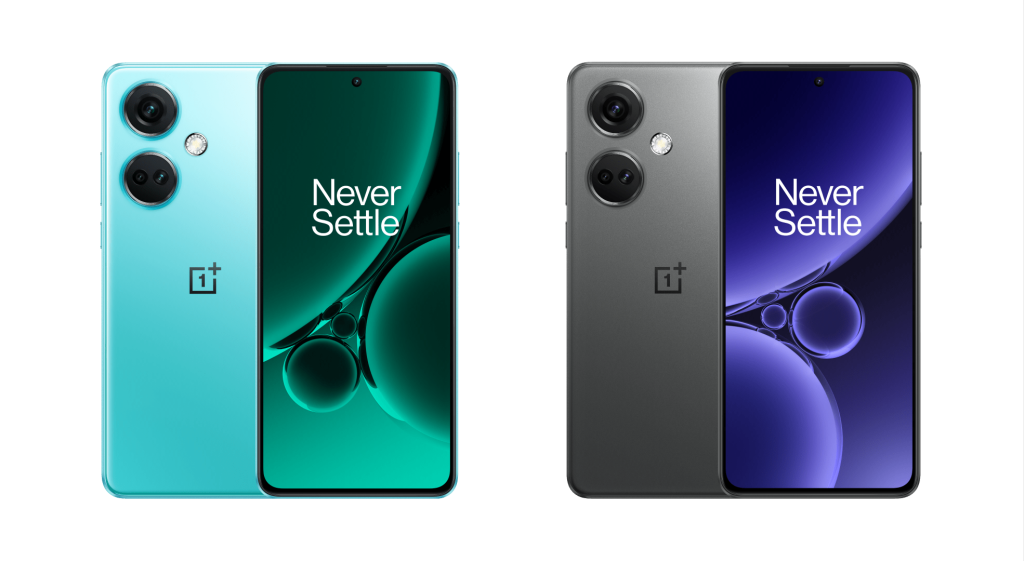
The TDRA certification database confirms that the device with the moniker “OnePlus Nord N30 SE” bears the model number CPH2605. We already know that this model number belongs to the OnePlus Nord CE 3 Lite 5G. So, the Nord N30 SE is likely a rebrand of that device meant for the UAE. Interestingly, the Nord N30 5G, which is also a rebrand of the Nord CE 3 Lite 5G is already available in the US and Canada. That being said, having the same model number does not confirm that the device will also feature the same set of specs. In the meantime, Check out the specs and features of the Nord CE 3 Lite 5G.

OnePlus Nord CE 3 Lite 5G specs

OnePlus

The OnePlus Nord CE 3 Lite smartphone comes with a 6.71-inch FHD+ display, offering a smooth 120Hz refresh rate. It has a center-aligned punch-hole design, a side-mounted fingerprint scanner that also serves as the power button, and dual stereo speakers for sound.

For its cameras, it has three at the back: a main 108MP camera with 3x zoom, a 2MP depth camera, and a 2MP macro camera. It also features a 16MP front camera for selfies.

Under the hood, it runs on the Snapdragon 695 processor with 8GB RAM. It’s available with 128GB or 256GB storage options and boasts a 5,000mAh battery with fast 67W charging. It supports 5G, WiFi, Bluetooth 5.3, USB-C, and a 3.5mm headphone jack for connectivity.

RELATED:

(via: MSP)

Alibaba unveils Tongyi Qianwen 2.0 and Industry-Specific AI Models in Global AI Race

In a bid to challenge tech giants like Amazon and Microsoft, Alibaba, China’s leading cloud computing and e-commerce company, launched its upgraded artificial intelligence model, Tongyi Qianwen 2.0, at its annual conference in Hangzhou. This latest version, touted as a significant improvement over its predecessor introduced in April, boasts “hundreds of billions of” parameters, positioning it among the world’s most powerful AI models.

Alibaba’s Tongyi Qianwen 2.0 excels in various complex tasks, including understanding intricate instructions, copywriting, reasoning, memorization, and preventing inaccuracies, referred to as “hallucinations” in the AI context. This innovation reflects the rapidly expanding and competitive landscape of China’s AI market, as tech companies rush to assert dominance in the industry.

In addition to Tongyi Qianwen 2.0, Alibaba introduced a suite of eight industry-specific AI models tailored for applications in the entertainment, finance, healthcare, and legal sectors. These specialized models signify Alibaba’s strategic move to cater to diverse business needs, emphasizing the company’s commitment to providing versatile AI solutions.

Furthermore, Alibaba unveiled the GenAI Service Platform, empowering businesses to develop their generative AI applications using proprietary data. This move addresses concerns about data security, allowing companies to harness the potential of AI technologies without compromising sensitive information. The GenAI Service Platform aligns with similar offerings from competitors, such as Microsoft’s Azure OpenAI Studio and Amazon Web Service’s Bedrock, indicating the industry-wide trend of facilitating AI development while safeguarding user data.

The rapid evolution of AI models, with continuous enhancements like Tongyi Qianwen 2.0, highlights the escalating “war of a hundred models” in China, as described by Tencent, another major player in the AI arena. With over 130 AI models flooding the market, the race for innovation and market dominance is intensifying, underscoring the transformative impact of AI technologies on various sectors.

Alibaba’s latest developments not only mark a significant milestone in China’s AI landscape but also signal the company’s determination to compete globally, challenging established players on the international stage.

Related:

(via)

Crossbeats Diva smartwatch with BT calling & 100 sports modes launched in India

Indian electronics manufacturer Crossbeats has just launched a new smartwatch aimed at the female demographic called the Crossbeats Diva. This new smartwatch comes with a pretty design along with a metallic build.

CrossBeats Diva

Crossbeats Diva specs

The Crossbeats Diva smartwatch offers a battery life of up to 7 days and features a 1.28-inch always-on AMOLED screen with 700 nits of brightness. It includes various functions like alarms, calculators, sedentary reminders, stopwatches, weather updates, phone finding, music, and camera controls, as well as reminders and alerts. With Bluetooth 5.3 support, it provides a stable and low-latency connection to your device.

CrossBeats Diva

The smartwatch also provides health monitoring for heart rate, SpO2, sleep, and blood pressure. Its stone-studded design adds a touch of style, and it comes with over 100 customizable watch faces. It has a rotating crown, is IP67-rated for water and dust resistance, and uses the FitCloud Pro app. It has over 100 sports modes and a Bluetooth calling feature that lets you answer and make calls directly from your smartwatch.

Pricing & availability

Priced at Rs. 3499, the Crossbeats Diva smartwatch is available for purchase in Rose Gold and Silver colors on Amazon.in and the Crossbeats website.

In related news, Crossbeats has also unveiled the ChatGPT-powered Crossbeats Nexus smartwatch in India. You can learn more about it by clicking the link.

RELATED:

(via: Fonearena)

Vivo X100 Pro design officially teased

Vivo is preparing to launch its new flagship series, the Vivo X100, later this month. The promotional campaign for this series is already underway as Vivo X100 Pro’s design was revealed today by Vivo’s product manager, Han Boxiao.

Vivo X100 Pro Official Render

Vivo X100 Pro design

The device boasts a distinctive blue ripple glass back and a camera module that draws inspiration from celestial elements, resembling the sun, moon, and stars against a starry sky backdrop. This design has garnered widespread acclaim, with many considering it the most beautiful flagship smartphone of the year. The X100 Pro’s aesthetic theme is reminiscent of a galaxy, and it has been confirmed that this model is indeed the Vivo X100 Pro.

One of the significant upgrades in the X100 Pro is its camera setup, featuring a larger and more centrally positioned module with T* lens coating and Zeiss branding. It includes a low-light submersible telephoto macro lens. The smartphone is reported to offer impressive camera specifications, including a 12-megapixel IMX663 ultra-wide-angle lens and a 64-megapixel periscope telephoto lens from OmniVision. In terms of battery life, the device is expected to pack a robust 5400mAh battery, supporting both 100W wired and 50W wireless charging.

According to a previous Digital Chat Station leak, Vivo plans to launch the Vivo X100 and X100 Pro in three color variants, which include orange, white, and blue models. The white and blue versions come with a glass back panel, while the orange variant features faux leather on the rear. Additionally, leaked image posters suggest the existence of a black variant with a leather back panel.

The standard X100 model has gained attention for its AnTuTu benchmark scores, showcasing the Dimensity 9300 processor, 16GB LPDDR5T RAM, and 1TB UFS 4.0 storage. It’s also expected to feature a 120Hz refresh rate display and a new Vario-APO-Sonnar lens for advanced telephoto capabilities.

Contrary to some leaks, the X100 Pro was spotted on GeekBench with a Snapdragon 8 Gen 1 chipset and 12GB of RAM. The GeekBench scores indicate strong performance, aligning with the flagship status of the phone.

Vivo has already initiated pre-orders for the X100 series, briefly appearing on JD.com before being taken down. The starting price for the 12GB+256GB version is set at 3999 yuan ($546), suggesting that it will be competitively priced in the market. As the pre-order interface has been temporarily removed, potential buyers are eagerly awaiting the official release and availability of the device. The series is expected to be announced on November 17th in China.

RELATED:

(Source)

Samsung Odyssey Ark 2nd Gen 55″ 4K mini-LED 165Hz gaming monitor hits store shelves in the US & EU

Back in August 2022, Samsung launched the Odyssey Ark curved gaming monitor featuring a 4K 165Hz display. The brand has now made its successor, called the Samsung Odyssey Ark 2nd Gen available for purchase in the US & EU markets. Here’s everything you need to know about it.

Samsung Odyssey Ark 2nd Gen

Samsung Odyssey Ark 2nd Gen specs

Like its predecessor, the Odyssey Ark 2nd Gen comes with a 1000R curvature 55″ 4K (3,840 x 2,160) mini-LED panel. The VA panel comes with a UL Glare Free, matte finish that reduces any distracting reflections. The display has a maximum refresh rate of 165Hz along with a 1,000,000:1 Contrast ratio, 16:09 aspect ratio, and 600nits maximum brightness.

The new feature on the monitor is Multi-View mode that allows display input from up to four sources at once by dividing the 55″ panel into four parts. It also has a KVM switch that helps in controlling the above-mentioned four input devices.

Powered by the Neural Quantum Processor Ultra, it supports FreeSync Premium Pro, VRR, Game Mode, and Eye Saver Mode. It comes with a 60W 2.2.2 channel speaker system and features Adaptive Sound, Dolby Atmos, and Sound Dome Technology for excellent audio quality. The operating system is Tizen, featuring SmartThings Hub, Multi-Device Experience, TV Plus, and Microsoft 365 integration. With built-in voice assistants like Alexa and Bixby, you can control your monitor effortlessly.

Samsung Odyssey Ark 2nd Gen

For connectivity, it offers Bluetooth v5.2 and Wi-Fi 5, and its I/O ports include Display Port Version 1.4, HDMI, USB ports, Ethernet, Wireless Display, and HDCP Version 2.2 support.

Pricing & availability

The Samsung Odyssey Ark 2nd Gen (G97NC) gaming monitor can be purchased for $2,999.99/€3,459 and is currently accessible for buying on both Samsung.com and select retailers like Amazon.

*Please Note: When you buy something using the links in our articles, we may earn a small commission at no cost to you.

RELATED:

Alibaba Cloud is The Unseen Engine Powering China’s Tech and AI Ambitions

Alibaba Cloud is becoming as integral to Chinese tech as electricity is to modern life. According to Joe Tsai, Group Chairman, a whopping 80% of tech companies in China and half of the country’s AI language model enterprises are already running on Alibaba Cloud. The cloud unit’s ambition doesn’t stop at providing storage and computing power; it aims to be the “most open cloud in the era of AI,” turning AI development into a walk in the park for everyone.

Alibaba is trying to make AI staple in muiltiple sectors

Alibaba Cloud has a history of focusing on efficiency, as seen in its role as a major sponsor of the Olympic Games since 2017. This drive is likely what’s underpinning its dedication to make AI easily accessible and affordable. It’s not just selling computing resources; it’s selling ease and efficiency.

Alibaba

But why does Alibaba Cloud matter to the average business or developer? Well, Alibaba is making some serious moves to make AI a staple in various sectors. At the recent Apsara Conference, the company unveiled its latest AI large language model, Tongyi Qianwen 2.0. This isn’t your average chatbot-trainer; it’s a high-capacity model that aims to perform well across a range of applications, from language understanding to arithmetic problem-solving.

What’s unique here is the company’s focus on generative AI via its GenAI Service Platform, allowing businesses to develop specialized AI models easily. This move has immense potential to democratize AI capabilities, making it more accessible for even small companies. In a rapidly shifting digital landscape, Alibaba Cloud’s commitment to open-source resources and tailored AI solutions could well be a game-changer.

But the road isn’t all easy for Alibaba. The tech giant is currently in a state of corporate restructuring, facing tough competition and an ever-changing internet ecosystem. Despite these challenges, its drive towards digital transformation is stronger than ever by being the first large-scale internet company to shift all of its businesses to the cloud.

RELATED:

(Via)

Android 13 Overtakes Android 11 to Become Most Widely Used Version of OS, Thanks to Faster Update Rollouts

Android continues to be the most popular operating system in the world. It is used on a wide range of devices, from smartphones to tablets, and even in cafe automation systems. In fact, it is used by literally billions of devices. However, unlike Apple’s iOS, these devices are divided among various versions of the operating system. For example, the usage rate of Android 9 is still close to 11% today. The primary reason for this is the differences in how manufacturers handle updates. Fortunately, the latest data shows that this issue has been resolving. Android 13 is now the most popular version of the OS. Here are the details…

Android 13 Becomes Most Popular Version of OS, a Year After Release

When it comes to software updates, it wouldn’t be entirely wrong to say that Android smartphone manufacturers have been falling short. There are millions of phones developed by numerous different manufacturers, and they often struggle to meet specific standards when it comes to updating Android to different versions. However, Google and manufacturers have been working on solving this issue that has been bothering users for a long time. Recently, Google updated the Android version distribution statistics, revealing the progress in the industry.

Android

When we look at Google’s published Android version distribution statistics, we can see that Android 13 is now the most popular version, taking the top spot. The operating system has increased its market share from 15% to 22.4% since the last update in May. Considering that only five months have passed, this is a significant achievement. It is estimated that not only newly sold phones but also existing models in the market have received these updates.

In the second position on the list, we have Android 12, which has declined from 16.3% to 15.8%. The still quite popular Android 11 has also decreased from 23.1% to 21.6%. Unfortunately, Android’s most significant challenge remains its update process. Older devices often continue to be used for years without upgrading to the latest versions. This situation not only disappoints users but also creates security vulnerabilities. For those curious, here’s the rest of the list:

Android 13: 15% -> 22.4%

  • Android 12: 16.3% -> 15.8%
  • Android 11: 23.1% -> 21.6%
  • Android 10: 17.8% -> 16.1%
  • Android 9: 11.9% -> 10.5%
  • Android 8.1: 6.1% -> 5.4%
  • Android 8: 2.2% -> 1.9%
  • Android 7.1: 1.5% -> 1.3%
  • Android 7: 1.5% -> 1.3%
  • Android 6: 2.3% -> 1.9%
  • Android 5.1: 1.5% -> 1.2%
  • Android 5: 0.3% -> 0.2%
  • Android 4.4: 0.5% -> 0.4%

RELATED:

(via)

Rivian Ends Free Charging, will Introduce Pricing Plans for Customers Soon

Rivian, the electric vehicle (EV) manufacturer, has recently notified its customers that free charging on its Rivian Adventure Network (RAN) will soon be a thing of the past. Starting in early November, all RAN charging points will no longer be free, and billing will be initiated. Although specific price details are yet to be disclosed, Rivian assures that the user experience will remain unchanged, with charges automatically billed to Rivian accounts, much like Tesla’s Supercharging network.

The changes will be incorporated in early November

The timing of this announcement seems to highlight a larger story: Rivian’s struggle to keep pace with its ambitious promises. When RAN was announced in 2021, Rivian promised that by the end of 2023, it would host over 3,500 individual fast-charging stalls and more than 600 sites in the U.S. and Canada. As of now, the actual number of DC fast charging sites is approximately 60, exclusively in the U.S.

Rivian

So, what does the end of free charging signify? For one, it could be an indicator that Rivian is adjusting its business model to generate revenue from its infrastructure, perhaps as a way to speed up the expansion of RAN. With free charging, the incentive for Rivian to invest in its network may have been diminished. Charging fees could serve as a new income stream that helps Rivian fulfill its original promises.

This move also aligns Rivian more closely with the broader EV market. It was previously announced that Rivian would eventually open up its RAN to other brands, offering special rates for Rivian vehicle owners. The implementation of fees may be a precursor to this planned diversification.

While Rivian’s charging network may still be in its nascent stage, the end of free charging could be a strategic adjustment, perhaps even a necessary one, to keep pace with the fast-moving EV market. Rivian appears to be setting the groundwork for long-term sustainability, but only time will tell if this change will help the company reach its lofty goals.

Interestingly, Rivian is also shifting to a new charging standard in 2025, adopting Tesla-developed North American Charging Standard (NACS) plugs. This could signal a broader strategy of compatibility and market entry, as Rivian looks ahead to a hopefully promising future.

RELATED:

(Via)

Nissan’s Electric GT-R may be Powered by Solid State Batteries

Nissan‘s recent announcement to embrace all-solid-state batteries (ASSBs) by 2028 promises a revolution in automotive energy solutions. But what caught the attention of car enthusiasts was the Japanese automaker’s plan to incorporate ASSBs into their iconic GT-R model, which was announced very recently. Not just a random choice, but a strategic move that addresses one of the greatest barriers to electric sports cars: weight.

Solid State Batteries offer twice the energy density of Lithium-ion batteries

Nissan’s global product boss, Ivan Espinosa, emphasized that the traditional adversary of sports cars is heft. ASSBs come into play here, as they offer twice the energy density of current liquid lithium-ion batteries. This breakthrough means engineers can integrate smaller, lighter batteries without compromising performance or the car’s 2+2 seating arrangement.

Nissan

While the company is already contemplating multiple variations, including a performance-focused Nismo version, there is an underlying concern about affordability. Espinosa suggests that the electric GT-R shouldn’t be a “super exclusive car.” However, it’s worth noting that the GT-R’s price has already escalated dramatically—from $69,850 in 2009 to a starting price of $120,990 in the 2024 model year.

The timeline for ASSBs indicates they won’t be ready until around 2028. Does this mean the current GT-R R35 will hang around until then? There are reasons to be skeptical. The R35 has already been phased out in Europe over noise restrictions, and Australia has followed suit due to safety standards. It seems that the GT-R R35 is in a holding pattern, pending the roll-out of game-changing ASSBs.

In the meantime, Nissan is also mulling over the idea of a more affordable electric sports car for younger consumers. But like its high-performance counterpart, it remains an idea. Thus, for the GT-R and its fans, the journey towards an electric future looks like a marathon, not a sprint. It’ll take time – a lot of it.

RELATED:

(Via)

iPhone 16 Pro May Reportedly Adopt Molded Glass Lenses

Details about Apple‘s next-generation iPhone 16 series have already started surfacing on the web. The Cupertino-based tech giant announced the latest-generation iPhone 15 series last month. Hence, it’s too early to take the leaks and rumors seriously about next year’s iPhones. In a new development, a report by Economic News Daily sheds some light on the iPhone 16 Pro’s telephoto camera. 

iPhone 16 Pro could adopt molded glass for camera lenses

iPhone 16 Pro 5x optical tetraprism zoom lens

As per the report, Largan will exclusively manufacture telephoto lenses for the iPhone 16 Pro. The camera lens will sport molded glass that is said to be thinner and lighter compared to traditional glass. This will potentially aid in reducing the protruding camera bump thickness and also cut some weight. It will also offer a better magnification distance. The report adds that the molded glass lens will be incorporated on both the iPhone 16 Pro and Pro Max. Due to their inherent complexity, the company is already prepping for the next year’s Pro models and hogging the supply chain with orders. 

Past report had revealed that the iPhone 16 Pro may adopt the tetraprism telephoto lens that is found on the iPhone 15 Pro Max. This lens is complex and produced by Largan as well. It offers a longer focal length and optical zoom capability without making the phone thicker. This is where the latest development of a molded glass lens comes into place due to its thinner and lighter nature. They also pack more magnification in a smaller package. 

This also means that the 120mm zoom lens capability of the iPhone 15 Pro Max will arrive on the iPhone 16 Pro putting it on par with the Pro Max model. It remains to be seen if the Cupertino-based tech giant will stick to the 24mm and 120mm focal lengths while utilizing thinner lengths. 

Related:

Source

Xiaomi 14 series can run 32-bit apps despite Snapdragon 8 Gen 3’s lack of support

The Xiaomi 14 series is one of the first smartphones to be powered by the new Snapdragon 8 Gen 3 chip. This chip is a powerhouse, but there is one big omission—it lacks native support for 32-bit apps.

However, Xiaomi has found a workaround for this issue with the help of a 32-bit to 64-bit binary translator called Tango. This translator allows 32-bit apps to run on the Snapdragon 8 Gen 3 chip without any issues.

This is great news for users who still rely on some 32-bit apps. It also means that other smartphone manufacturers can use Tango in their Snapdragon 8 Gen 3-powered devices to ensure compatibility with older apps.

Why is this important?

Google has been pushing developers to switch to 64-bit apps for a while now and the new Snapdragon 8 Gen 3 processor doesn’t support 32-bit apps as well. However, not all developers have made the switch yet. This means that there are still a significant number of 32-bit apps available on the Google Play Store.

Without Tango, users of the Xiaomi 14 series would not be able to run these apps. This would have been a major inconvenience for many users.

How does the Tango translator on Xiaomi 14 work?

Tango is a binary translator. This means that it converts 32-bit machine code into 64-bit machine code. This allows 32-bit apps to run on 64-bit processors.

Tango is a very efficient translator. It can translate machine code at runtime with minimal performance overhead. This means that users should not notice any difference in performance when running 32-bit apps on the Xiaomi 14 series.

Expert Mishaal Rahman has confirmed that Tango is working properly and that 32-bit apps, such as Flappy Bird, can run on the Xiaomi 14 series.

In Conclusion

Xiaomi’s implementation of Tango in the Xiaomi 14 series is a welcome relief. It ensures that users can still run their favorite 32-bit apps on the new Snapdragon 8 Gen 3-powered device.

It is also possible that other smartphone manufacturers will follow Xiaomi’s example and implement Tango in their own Snapdragon 8 Gen 3-powered devices. This would be a great thing for users, as it would ensure compatibility with older apps across a wider range of devices.

Related:

Samsung Galaxy S23 Series in India Receiving One UI 6.0 Stable Update

Just hours after bringing the Stable One UI 6.0 Update for Galaxy S23 Series in Germany, and a couple of other European Countries, it is now live for the India Variants. Apart from the flagship, the stable One UI 6 update is quite near for the Galaxy Z Fold 5, Galaxy S22, and other compatible devices.

Exynos 2400

Must See: Samsung One UI 6.1 to bring new AI features, more capable voice assistant

The update with the firmware version S91xBXXU3BWJM is now rolling out to the Galaxy S23, Galaxy S23+, and Galaxy S23 Ultra smartphones in India. Along with the new Android 14-based One UI 6.0 stable update, it also brings the latest October 2023 Security patch in India.

Interested users can manually check for the update by heading to Settings > Software and Install > Check for Update. It weighs around 3.1GB for normal users and 365MB for users already running One UI 6.0 Beta. The users need to wait for the official OTA update, as the new update file is currently not available for direct flashing.

There are massive new changes, from improved performance to a new user interface.

Related:

(via)

iQOO Neo 8 16GB RAM+1TB variant goes on sale in China for 2499 Yuan ($342)

iQOO introduced the Neo 8 smartphone in China earlier this year, offering up to 16GB of RAM and 512GB of storage. Back in June, they launched an upgraded variant with a whopping 16GB of RAM and 1TB of storage.

This enhanced version was listed on JD.com for pre-orders two weeks back and is set to officially hit the market tonight at 8:00 PM, with a price tag of 2499 Yuan ($342). The device was initially priced at 3699 Yuan ($505).

iQOO Neo 8 1TB pricing

The 16GB RAM + 1TB storage variant of the iQOO Neo 8 shares the same specifications as the other variants. The differences in pricing primarily stem from the increased RAM and storage capacity, making it an appealing choice for users seeking greater memory and storage capabilities without compromising on the phone’s other features and specifications.

iQOO Neo 8 Key Specifications:

Coming to the specs, iQOO Neo 8 comes with a 6.78-inch 1.5K AMOLED display offering a stunning resolution of 2800×1260 pixels, a smooth 144Hz refresh rate, and an impressive peak brightness of 1300 nits.

iQOO Neo 8

Its Snapdragon 8+ Gen 1 SoC and the vivo V1+ chip work together to reduce power consumption by 14.2% during gaming. The phone offers up to 16GB of LPDDR5X RAM and storage options of up to 1TB UFS 4.0. For efficient cooling, it boasts a 5002mm² VC vapor chamber, 125% larger than its predecessor, along with graphite heat dissipation and 9 temperature sensors.

The camera setup includes a 50MP Samsung GN5 sensor and a 2MP depth sensor at the back, with a 16MP front-facing camera. It’s powered by a 5000mAh dual-cell battery and supports rapid 120W charging. The battery is capable of charging from 1% to 50% in 9 minutes and 75% in 15 minutes.

The device runs on Android 13 with Origin OS 3 and offers 5G connectivity. It comes in vibrant color options: Orange (leather finish), Blue (enamel glass finish), and Black (crystal glass finish).

RELATED:

OnePlus Introduces ‘Maestro’ Tier To Red Cable Club With New Benefits

OnePlus has updated its Red Cable Club membership. For those unaware, RCC was announced way back in 2019. It is a unique membership program created with and by the community. RCC played a key role and helped OnePlus grow as it gave back to its loyal customers. The reward-based loyalty program offers a host of benefits. Today the company has introduced a new top-tier membership as well as revamped its system. Read on to know all the details below. 

OnePlus introduces Maestro tier in RCC

To date, OnePlus’s Red Cable Club had three different tiers namely Explorer, Insider, and Elite. Explorer was the basic membership whereas Insider the enhanced tier of the same. The Elite was the top-tier membership. Now, with the introduction of Maestro, it replaces the Elite in becoming the top-tier membership. It’s worth noting that RCC membership is free and requires no additional cost for owners of OnePlus devices. 

The newly introduced Maestro membership is limited to members who have the OnePlus Open or atleast three flagship OnePlus devices linked to their RCC account. They should also have made purchases on the OnePlus.in or the OnePlus Store app. This tier offers top-notch benefits compared to the previous Elite membership. 

Maestro members can enjoy up to Rs 1,200 off on the purchase of audio, watch, and tablets with minimum order value of Rs 1,999. Users also get 25 RedCoins on linking devices, additional 50 RedCoins regularly, three months extended warranty, and more. OnePlus Pad and OnePlus TV buyers are also eligible for discount coupons worth up to Rs 2,000 and Rs 5,000 respectively. Members can also get invited to special OnePlus event and enjoy exclusive benefits. 

First-time Red Cable Club members with OnePlus 6 series or above phone can claim a complimentary six-months Spotify Premium subscription. Members can also avail 10 percent instant discount up to Rs 1,000 using Siwggy Dineout. Meanwhile Uber users can activate their OnePlus Red Cable Club profile through the RCC platform and enjoy 25% off up to Rs. 50 vouchers, exclusive access to business Premier rides, and more.

Related:

Huawei phones label Google app as malware & dangerous, recommends uninstalling

While Huawei has shifted away from Google’s Android platform, older smartphone models from the company still feature the operating system. But now, Some users are reporting that their Huawei phones are branding the Google app as dangerous.

Huawei phones list the Google app as a security risk

On Reddit, owners of older Huawei smartphones have begun considering the Google app as a “High” security risk. One Redditor claimed that the company’s high end P30 flagship phone warned the user about the app. They received a notification that stated “Security threat. Google appears to be affected. Immediate uninstallation is advised.” This alert prompt was paired with a pop up screen, which recommended the users to uninstall this application.

Huawei labels Google app as malware

The P30 owner scanned his device but found no signs of virus infection. Similarly, another Reddit user got a similar message on the Huawei P30 Lite. The Google app is apparently being classified as malware by the Huawei smartphones. The devices consider the Google app as a TrojanSMS-PA virus. For those unaware, the Trojan program is a malware, which disguises itself as a legitimate app to trick users into installing the software. Once such dangerous apps are installed on your mobile device, the malware is tasked with stealing login information that is used to open banking and financial apps.

The goal is to get into the victim’s bank account to steal money. The Huawei phones warned that “This app was detected sending SMS privately, enticing users to pay with adult content, downloading/installing apps privately, or stealing private information, which may cause property damage and privacy leakage. We recommend uninstalling it immediately.” It is unclear if this is a bug or whether Google’s software on Huawei is performing tasks that it doesn’t have permission for.

RELATED:

(Via)

Samsung may upgrade charging speed in future Galaxy smartphones

Samsung has been lagging behind its competitors in terms of charging speed for its Galaxy smartphones, with its current flagship Galaxy S23 series supporting only up to 45W fast charging. However, there is new hope that the company could finally upgrade its charging speeds in the future.

According to a tipster Revegnus on Twitter, Atum, Samsung’s exclusive supplier of flat transformers for 45W chargers, has added 65W and 140W chargers to its portfolio. While there is no confirmation that these chargers are for Samsung devices, it is certainly a possibility.

This is especially true considering that Samsung has already been rumored to be working on a 65W charger. Additionally, Samsung makes laptops, so the 140W charger could be for those devices.

Samsung first introduced 45W charging support for its Galaxy smartphones in 2020 with the Galaxy S20 Ultra. However, the company has not upgraded its charging speed since then. In fact, the base Galaxy S22 and S23 models only support 25W charging.

Samsung Galaxy 65W charging(1)

Previously, there were rumors that the Samsung Galaxy S24 series would come with 65W charging. However, it appears that Samsung will not be upgrading its charging standard this time around.

While the Galaxy S24 series may not get 65W charging, the fact that Samsung’s supplier is working on it suggests that the company may be planning to upgrade its charging speed in future smartphones.

Related:

(Via)