Advertisement

Redmi Note 12 5G is the fastest Android phone to surpass 1 Million shipments in 2023

Redmi Note smartphones are very popular with consumers. This is shown by the fact that over 338 million Redmi Note smartphones have been sold worldwide as of September 2023. Despite reports of relatively low demand this year, one Note series smartphone has apparently done exceptionally well— the Redmi Note 12 5G. As per the company, it has become the fastest Android smartphone to cross one million shipments in 2023.

Redmi Note 12 5G impresses with its affordable price tag

The announcement was made earlier today by Xiaomi’s official X handle. “We’re thrilled to share that the #RedmiNote12 5G has set a blazing record as the fastest Android smartphone to surpass 1 Million shipments in 2023,” said the company. This data is for shipments from January to July 2023.

Budget Redmi smartphones have always performed well in the global market. The Redmi Note 12 5G in question is a well-rounded smartphone under $250. We reviewed it earlier this year and were impressed with its impressive 120Hz AMOLED display, a new chipset, and 5G connectivity. The handset also had a decent battery life but the camera performance was notably underwhelming, especially in low light.

To be more specific, the Redmi Note 12 5G brings a 6.67-inch AMOLED display that has an FHD+ resolution, 120Hz refresh rate, 1200 nits of peak brightness, and a 240Hz touch sampling rate. It is powered by the Snapdragon 4 Gen 1 chip under the hood and packs a large 5,000mAh battery. There’s a triple camera setup on the handset, comprising a 48MP primary sensor, an 8MP ultra-wide angle lens, and another 2MP shooter.

RELATED:

(Source)

You can Add your Google Home Devices to More than One Speaker Group – Again

Google is making a U-turn one more time. If you have Google Nest speakers, Chromecast, or smart displays, you can now add them to more than one speaker group in the Google Home app. This change comes after a legal battle with Sonos, a speaker company. Last month, Google had to limit these devices to just one speaker group each. This was because of a lawsuit from Sonos, which claimed Google stole its ideas for managing groups of speakers. A California court even told Google to pay $32.5 million for this.

Google was asked for $32.5 Million as a settlement amount

But here’s the twist: A judge just threw out that ruling. The judge said Sonos didn’t properly set up its patents and waited too long to file them. Because of this, Google is taking back its previous change.

Google Nest
Google Nest

Sonos is not happy. They told Reuters they plan to appeal, saying the judge got it wrong. But Google is going ahead and removing the one-group limit. The update is already out for Android and will be coming to iOS soon.

So, if you were annoyed by the limit, you’ve got your freedom back to group your devices any way you want. Lawsuits are tricky, and those involving ideas and execution pertaining to technology are even trickier. This right here is a prime example. We’ll keep you updated regarding any future updates to this story. Stay tuned!

RELATED:

(Via)

Jetson’s New Haze E-Bike Folds Up, and is Priced Below $1000

The e-bike market is booming, and one of the latest additions to that market is the Jetson Haze Folding E-Bike. However, this bike doesn’t just deliver a set of wheels powered by an electric motor; it’s offering a complete change in how we perceive urban commuting.

The bike has a top speed of 15.5 mph and has a 350-watt motor

Sure, we’ve all heard of e-bikes that promise speed and power, but the Jetson Haze puts a new spin on things. While it can reach a speed of 15.5 miles per hour, thanks to its 350-watt motor, it’s not just about getting you from A to B in record time. This compact powerhouse focuses on the little things that make a ride enjoyable and stress-free. Whether it’s the built-in tire pump or the removable battery, Jetson’s Haze is all about making your life easier, not just your commute faster.

Electric

And who said e-bikes have to be cumbersome? With a frame that can double-fold, this nifty ride can fit snugly into the trunk of a car or be carried upstairs without a fuss. Its maximum weight capacity is 265 pounds, which means it’s for everyone, not just a select few.

Now, let’s talk about money. With most e-bikes setting you back a good amount, the Haze comes as a breath of fresh air. Priced at $899.99 on Jetson’s website, there’s a scoop for budget shoppers too. It’s listed for only $549 at Costco. That’s a steal for a device that’s more than just a two-wheeler; it’s a lifestyle changer. So, if you’re not just looking for an e-bike but a whole new way to tackle daily life, the Jetson Haze could be your answer.

RELATED:

(Via)

Honor Watch 4 Pro’s price leaked along with Specs and renders

The Watch 4 Pro is Honor’s latest wearable launching tomorrow in China. The smartwatch will share the stage with the new Magic Vs 2 foldable smartphone. Just a day ahead of the official launch, the Honor Watch 4 Pro has been spotted on the China Telecom website with its complete specifications. The listing also reveals how much the upcoming smartwatch could cost. Let’s have a look at the details.

Honor Watch Pro is a premium smartwatch

According to the China Telecom listing, the Honor Watch 4 Pro measures 46.4 x 46.4 x 11.4mm and weighs 50g. The wearable boasts a premium design with slim bezels, a round dial, and leather straps. It will be available in Brown, Dark Green, and Black colors. The Honor Watch 4 Pro comes in a single variant and is listed with a retail price of CNY 2,999 ($410).

As per the listing, the Honor Watch 4 Pro will feature a circular AMOLED display measuring 1.5 inches with a screen resolution of 464 x 464 pixels. The watch is expected to be powered by a low-power processor, coupled with 4GB of RAM and 64GB of storage. It is likely to run Honor’s MagicOS 7.2 in the software department and support eSIM for cellular connectivity with VoLTE.

You should also expect to find features such as Bluetooth, NFC, SMS, and more on the smartwatch. Additionally, it might offer a range of intelligent features like a remote camera shutter, sleep tracking, calorie consumption monitoring, heart rate monitoring, pedometer, and tap-to-pay functionality. The Honor Watch 4 Pro is expected to be powered by a 480mAh battery, which is rated to last up to 10 days. Honor also shared a detailed image of the watch earlier today, giving us a detailed look at its design.

RELATED:

(Via)

Intel Launches Arc A580 GPU for $179, an Affordable Rival to Radeon RX 6600 and GeForce RTX 3050

Intel continues to expand its product line. The latest addition to the company’s successful processors is the recent Arc graphics card series. Now, the company has launches the Arc A580. Priced at $179, this graphics card targets users seeking a cost-effective solution and a smooth gaming experience at 1080p with medium to high graphics settings. Here are the details…

Intel Launches Arc A580: A $179 Graphics Card for 1080p Gaming

Intel has launches its Arc A580 graphics card, a budget-friendly gaming GPU for $179. The new Arc A580 is based on Intel’s top-tier ACM-G10 GPU, but it has a few features disabled in order to hit the lower price point. For example, it has 24 Xe-Cores instead of 32, and it doesn’t support Intel’s XeSS upscaling technology. However, it still supports ray tracing and has a number of other features that make it a good value for the price.

In terms of performance, the Arc A580 is comparable to the AMD Radeon RX 6600 and the Nvidia GeForce RTX 3050. It can handle most popular games at 1080p with high settings, and it can even play some games at 1440p with medium settings. Here are some of the key features of the Intel Arc A580:

  • 24 Xe-Cores
  • 8GB GDDR6 memory
  • 185W board power
  • Supports ray tracing
  • Supports Intel Deep Link
  • Supports Intel XeSS

RELATED:

(via)

Xiaomi addresses TV Boot Advertisements amid legal pressure

Several smart TV manufacturers have come under scrutiny for their practice of displaying advertisements when the TV is turned on, known as boot advertisements.

These ads can be frustrating as they slow down TV startup and disrupt the user experience. They serve as a revenue-generating tactic for manufacturers and content providers to promote products and services to users upon TV activation.

Notably, regulatory bodies in China have been pushing for changes in this area. For example, the Jiangsu Consumer Protection Commission recently urged TV manufacturers to include a “one-click turn-off” feature for these advertisements.

Xiaomi TV

Xiaomi’s Proactive Response to Boot Advertisements

LeTV, a TV brand that did not comply with this directive, faced legal consequences. A court ruling mandated that LeTV should ensure the presence of a “one-click turn-off feature” for their boot advertisements, emphasizing consumer rights in the media space.

In response to such regulatory pressures, Xiaomi has announced modifications to its TV offerings. Xiaomi TV now reportedly provides an option to “disable boot advertisements.” This change is seen as a significant step in addressing consumer concerns and adhering to legal requirements.

A relevant point in this regard is Article 44, Paragraph 2 of China’s Advertising Law, which clearly stipulates that any ads shown as pop-ups on internet-based platforms need to have an easily accessible close button, ensuring users can dismiss them with a single click.

Chen Yinjiang, the Deputy Secretary-General of the Consumer Rights Protection Law Research Association of the China Law Society, has previously expressed his views on this matter. In a conversation with CCTV, he highlighted the responsibility of TV manufacturers towards their consumers. According to Yinjiang, not only should information be presented truthfully and comprehensively, but consumers should also have the ability to decide if they wish to view these boot advertisements and for how long.

According to a recent report, Chinese TV sales in August 2023 dropped by 20% compared to the previous year, with about 2.95 million units sold online. Traditional brands, including Xiaomi and Hisense, were dominant, with Hisense leading in monthly sales, narrowly surpassing Xiaomi. Both brands have been key players in the Chinese TV market for years. The top four brands focused on 100-inch TVs, indicating a market trend.

RELATED:

(Via)

Xiaomi launches the MIJIA Electric Nose Hair Trimmer with a USB-C charging port for 59 yuan ($8)

Chinese tech giant Xiaomi has all sorts of products under the MIJIA brand and the product line keeps expanding. Xiaomi has a way of releasing odd products you need but may not know you need. One such product is the newly unveiled MIJIA Electric Nose Hair Trimmer. The gadget is presently released under crowdfunding on the Youpin platform in China.

MIJIA Electric Nose Hair Trimmer

Features

The MIJIA Nose Hair Trimmer isn’t one of the fancy products the brand is known for but it does its job very well. In terms of appearance, the device adopts a magnetic protective cover and hidden switch button design to prevent accidental touches that could cause an injury. It equally adopts a detachable structure while the cutter head is removable and washable.

The cutter head has a nano-antibacterial coating, which is claimed to have an effective antibacterial rate of ≥99.0%. It is also equipped with a double-edged blade that can remove nose hair neatly, reducing pulling pain and not damaging sensitive nasal mucosa. The blade is designed not to touch the nasal cavity, keeping a certain safe distance while trimming. It also doesn’t trim off all the nasal hairs as it only reduces the length, leaving some behind to continue to do the job of providing a barrier to inhaling dust and bacteria.

MIJIA Electric Nose Hair Trimmer

Internally, the electric nose hair trimmer is powered by a high-speed and low-noise micromotor. The rotation speed can stably reach 6500 rpm, and the noise generated is ≤33.8 decibels. The device has a battery life of up to 90 minutes. Xiaomi claims it can last up to one year when fully charged. Charging is done via a USB-C port.

Pricing & Availability

The MIJIA Electric Nose Hair Trimmer is presently available under crowdfunding on Xiaomi Youpin for 59 Yuan ($8). The crowdfunding exercise will end on October 18. 

RELATED:

Honor Magic Vs 2 unveiled in a shimmering blue finish

Honor launched Magic V2 earlier this year as one of the thinnest foldable smartphones yet. And tomorrow the Chinese company will launch yet another book-style foldable— the Honor Magic Vs 2. Judging by the moniker, the smartphone is an upgrade over last year’s Magic Vs. While there’s time for the official launch, Honor has shared a detailed image today showcasing the Magic Vs 2 in a shimmering blue finish.

Magic Vs 2 could be thinner than Magic Vs

Bhavya Siddappa, Honor’s global marketing and communications lead, has shared an image on X, teasing the new Magic Vs 2. The smartphone is pictured in a blue color finish that has a sparkling effect. There’s a triple-camera setup similar to Magic V2. It’s hard to tell from the image if the device will be as thin as the Magic V2, which measures only 9.9 mm when closed. However, the Magic Vs 2 is supposed to be thinner than the Magic Vs, which has a 6.1 mm profile when unfolded.

Honor is ready to launch the Magic Vs 2 on October 12 alongside the Honor Watch 4 Pro, which might also have been featured in the same picture. The handset is expected to bring a mild spec bump over last year’s Magic Vs. A recent benchmark from Geekbench suggested the Vs 2 will be powered by the Snapdragon 8+ Gen 1 chipset and 16 GB RAM.

It is expected to have a 50 MP main camera, a 50 MP ultra-wide, and an 8 MP telephoto shooter. Magic Vs 2 might support 66W charging. Other details about the smartphone will be released during the launch tomorrow. Meanwhile, you can check out our Magic Vs hands-on video below to know what to expect from its successor.

Related:

(Source)

Same Chip, Different Results: Galaxy S23 FE’s Exynos 2200 Outperforms Galaxy S22 Series

Samsung continues to expand its product lineup. The company’s latest move in this direction is the Galaxy S23 FE, which offers flagship features at a relatively affordable price. Keeping with the tradition of premium models, the Korean tech giant offers the phone with the Snapdragon 8 Gen 1 in some regions, and the Exynos 2200 in others.

Although this duality doesn’t seem problematic at first glance, it has been criticized by users in the long run. However, the current buzz isn’t about the Snapdragon vs. Exynos comparison, but rather that the Galaxy S23 FE‘s Exynos 2200 is more powerful than the Galaxy S22‘s. here are the details…

Samsung Galaxy S23 FE’s Exynos 2200 Chip Gets a Boost in Performance and GPU

If there are those among you who don’t know, the Galaxy FE series is a line of smartphones from Samsung designed to offer flagship-level features at a more affordable price. Developed to compete with Chinese manufacturers like Xiaomi, Realme, and Huawei, the latest member of this family is the Samsung Galaxy S23 FE. This phone, which was introduced surprisingly and immediately garnered significant interest, is of course the new star of benchmark tests. However, the recent tests revealed some surprising results.

Several benchmark results have shown that the Exynos 2200 in the Galaxy S23 FE is significantly more powerful than the same chip in the Galaxy S22 series. For example, in Geekbench 6.2, the Galaxy S23 FE has scored a single-core score of 1612 and a multi-core score of 4005. This is compared to the Galaxy S22‘s single-core score of 900-1500 and multi-core score of 3400-3500.

On the AnTuTu benchmark, the S23 FE achieved scores of 329,165 for the CPU test and 437,040 for the GPU test. This represents a 10% increase in CPU performance and a significant 30% rise in GPU performance when compared to the S22 Ultra, which scored 305,069 and 312,522 for the CPU and GPU tests, respectively. Of course, there could be several reasons for this.

One possibility is that Samsung has optimized the Exynos 2200 since its launch last year. Another reason could be that the Galaxy S23 FE possesses superior cooling, enabling the Exynos 2200 to maintain higher clock speeds for extended durations. We enjoy having “crazy” features in our phones. However, it’s worth noting that a 120W charge generates significantly more heat compared to 30W.

It is important to note that these are just benchmark results, and real-world performance may vary. However, the fact that the Galaxy S23 FE is outperforming the Galaxy S22 in benchmarks is a good sign for anyone who wants to buy this phone.

RELATED:

(via)

Lexar unveils JumpDrive Fingerprint F35 USB 3.0 flash drive in India

Lexar, a well-known name in data storage, has brought its JumpDrive Fingerprint F35 USB drive to India. What sets it apart is its fingerprint security, just like your phone’s fingerprint reader. This makes your data safer without any fuss.

Lexar JumpDrive Fingerprint F35 USB 3.0

The Lexar JumpDrive F35 is one of the safest USB 3.0 flash drives. It unlocks in less than a second using your fingerprint. It can save up to 10 fingerprints, so only you and your trusted friends and family can access your files. You don’t need extra software; it’s easy to set up and works fast with data transfer speeds of up to 150MB/s. Plus, it has strong security with 256-bit AES.

The Lexar JumpDrive F35 offers flexibility in terms of storage capacities and boasts a sleek Black/Silver design. Here’s a quick overview of the pricing:

The 32GB version is priced at Rs. 4500, the 64GB variant is available for Rs. 6000. Interestingly, the 128GB model is currently going for Rs. 5949 on Amazon.

In related news, Lexar has also introduced a custom 512GB NM card for Huawei smartphones. The NM card is tiny enough to fit inside the nano-SIM slot, and provides reading and writing speeds of 90MB/s and 85MB/s, respectively.

RELATED:

(via)

B&W Zeppelin McLaren Edition Speaker launched for $899

Bowers & Wilkins (B&W) has recently introduced the Zeppelin McLaren Edition Speaker, priced at $899 internationally and 5999 yuan in China, as part of their ongoing collaboration with McLaren Automotive.

This wireless speaker seamlessly combines the aesthetics of racing cars with top-notch audio performance and boasts a striking Galvanic Grey and Papaya Orange finish, paying homage to the iconic racing cars of Bruce McLaren.

B&W Zeppelin McLaren Edition Speaker

B&W Zeppelin McLaren Edition Speaker Key Features:

The speaker packs a punch with two 25 mm Double Dome tweeters, two 90 mm FST midrange drivers, and a 150 mm subwoofer, delivering an immersive 24-bit high-resolution stereo sound experience.

When it comes to streaming options, the Bowers & Wilkins speaker offers versatility, supporting Apple AirPlay 2, Bluetooth aptX Adaptive, and Spotify Connect. It’s compatible with its dedicated app and can be used with platforms like Deezer and TIDAL. Technically speaking, it’s equipped with Bluetooth 5.0, seamlessly connects with Apple devices via AirPlay 2, and links up with Macs and PCs running iTunes 12.8 or newer. Plus, it boasts a robust 240W output, covers a frequency range from 35 Hz to 24 kHz, features a USB-C service port, and is energy-efficient, using less than 2 watts when in standby mode.

The speaker measures 210 mm x 650 mm x 194 mm and has a weight of 6.5 kg. Notably, there’s also a special-edition version of the PX8 wireless headphones launched last year, known as the Px8 McLaren Edition. These headphones offer top-tier noise cancellation, advanced audio technology, and a design inspired by McLaren supercars, featuring luxurious Galvanic Grey leather and eye-catching Papaya Orange accents.

RELATED:

(Via)

Samsung Galaxy Z Flip 5 Yellow Color Option To Launch In India On October 17

Samsung launched the Galaxy Z Flip 5 globally in July this year. It was initially offered in four color options – Mint, Graphite, Cream, and Lavender. Now, the fifth-generation clamshell folding phone is confirmed to arrive in a new color option in the Indian market. The South Korean brand shared the announcement on its X profile. It seems that the upcoming variant is a part of the Dussehra and Diwali festivities in the country. 

Samsung Galaxy Z Flip 5 new color option arriving next week

The Samsung Galaxy Z Flip 5 will be available in a Yellow color option. The second (bottom) half portion of the back panel has a Yellow hue. However, compared to the other color options, the frame on the upcoming offering appears to be in Black. The Samsung Galaxy Z Flip 5 in Yellow will be launching on October 17th. 

Samsung has put up a notify me page where interested customers can register their interest in the upcoming variant. We should learn the pricing and availability of the device next Tuesday and we expect it to be the same as the current color variants. 

As for the core specifications, the Samsung Galaxy Z Flip 5 has a 6.7-inch FHD+ AMOLED display with an adaptive 120Hz refresh rate. There is a large 3.4-inch folder-shaped secondary sAMOLED display with 1,600 nits peak brightness and a 60Hz refresh rate. The clamshell phone features a side-mounted fingerprint scanner embedded in the power button. The device has a 12MP + 12MP rear cameras and a 10MP front-facing selfie snapper. Internally, the Galaxy Z Flip 5 is equipped with a Snapdragon 8 Gen 2 processor coupled with 8GB RAM and 512GB storage. It is backed by a 3,700mAh battery unit with support for 25W fast charging. 

Related:

Huawei CTR-AL20 is an upcoming budget smartphone with Mate 50 series design

An unknown Huawei smartphone with the Mate 50 series-like design was certified by TENAA late last month. It appeared on the portal alongside a P60 series lookalike phone from the company.

Now, a few days later, the specs of these devices are live on TENAA. As we have already covered the handset with a P60-like design, let’s take a look at the Mate 50 lookalike in this article.

This forthcoming Huawei-branded phone with Mate 50 series-like design bears the model number CTR-AL20. It will also come with budget specs like the P60 version but will be better.

Huawei CTR-AL20

Huawei CTR-AL20 will offer budget-level specs but with Mate 50 series design

This device will be built around a 6.7-inch centered punch-hole display. This LCD screen will offer an FHD+ resolution (2388 × 1080 pixels), unlike the HD+ resolution on the other model.

It will be limited to 4G but will be powered by a different SoC. This unnamed chip’s octa-core CPU will be faster at 2.4GHz instead of 2GHz.

The handset will come with 8GB/12GB RAM and 128GB/256GB storage. As for software, it will ship with HarmonyOS.

Further, this phone will sport a 108MP main camera compared to a 50MP sensor on the other device. However, the 2MP secondary sensor and the 8MP front-facing shooter will remain the same.

The handset will lack a nano memory card slot but will feature a side-mounted fingerprint sensor. Finally, it will draw energy from a smaller 4,900mAh battery (rated capacity).

So far, we have no info on the official marketing name of Huawei CTR-AL20 and its launch date.

RELATED:

Source / Via

Elista 75-Inch Smart QLED 4K TV With 20W Speakers, WebOS Launched In India

Elista has expanded its range of televisions in India. The brand has announced its first ultra-premium offering in the television portfolio called the Elista 75-inch Smart QLED 4K TV. It packs premium specifications and is claimed to offer a state-of-the-art TV viewing experience with top-tier audio-video at an unprecedented price point. Read on to learn the technical details of the television below. 

Elista 75-inch Smart QLED 4K TV

w

As the name suggests, the Elista Smart QLED 4K TV offers a 75-inch QLED screen size. It offers a 4K resolution along with a 60Hz refresh rate and MEMC mode for a smoother viewing experience. There is an auto-low latency mode for a lag-free and immersive gaming experience. The television has thin bezels surrounding the display and it can be wall-mounted or placed on the table. In terms of audio, the Elista Smart QLED 4K TV is equipped with a 20W speaker with support for Dolby Audio for an immersive sound experience. 

Software-wise, the Elista Smart QLED 4K TV runs on webOS TV. It features ThinQ AI allowing voice commands and smartphone control. The television also supports Apple AirPlay. It comes with a bundled magic remote with dedicated hotkeys for Netflix and Prime Video. 

Connectivity options on the Elista Smart QLED 4K TV include dual-band WiFi, Bluetooth 5.0, three HDMI ports, two USB-A, and more. 

The Elista Smart QLED 4K TV carries an introductory price tag of Rs 1,59,999. It can be purchased across leading online platforms and offline electronic stores across the country starting today. 

Related:

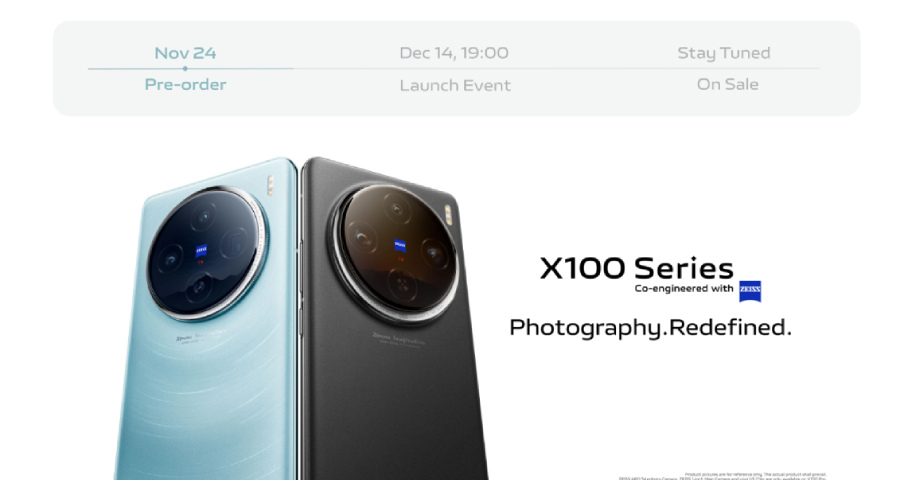
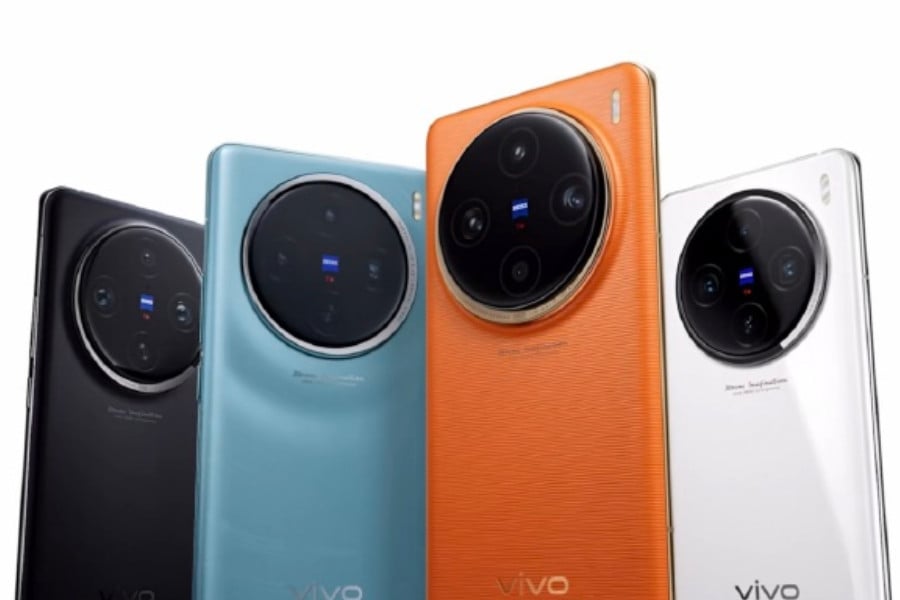
Vivo X100 Series Battery And Charging Details Surface Online

Previously, Vivo already confirmed that it will unveil its next-generation flagship X100 series smartphones by the end of the year. The lineup is expected to comprise standard, pro, and pro plus models. These will arrive as the successors to the current X90 series devices. Some key details of the Vivo X100 lineup have already surfaced in the leaks and rumors. Now, reliable tipster Digital Chat Station has shared new information revealing the battery capacities and charging speeds of the X100 devices. 

Vivo X100 series battery and charging speed tipped

As per DCS who shared the latest info on Chinese microblogging platform Weibo, the Vivo X100 will be backed by a 5,000mAh battery unit with support for 120W charging. On the other hand, the X100 Pro will be powered by a 5,100mAh cell with support for 120W wired charging as well as 50W wireless charging. Meanwhile, the top-of-the-line X100 Pro+ is tipped to be equipped with a larger 5,400mAh battery cell, however, the wired charging speed will max out at lower 100W whereas the wireless charging speed will remain the same at 50W as the X100 Pro. 

The latest post from DCS does not divulge into more details about the Vivo X100 series. As per the previous information shared by the same tipster, the X100 Pro and Pro+ will feature IP68 certification. All three smartphones in the lineup will come with dual stereo speakers, an X-Axis linear motor, as well as an IR Blaster. A recent report also revealed that the X100 Pro is rumored to have a satellite connectivity feature. 

The Vivo X100 and X100 Pro are expected to be powered by the unannounced Dimensity 9300 SoC whereas the Pro+ model will be equipped with a Snapdragon 8 Gen 3. All three phones are also tipped to pack significantly upgraded cameras along with Vivo’s V3 imaging chip onboard.

Related:

Ugreen Launches PowerRoam 2200 Portable “Power Bank” That Can Charge Your Phone Over 400+ Times

If your idea of a vacation is not staying in five-star hotels by the sea but being immersed in nature, you definitely need a power bank. However, you may have noticed that traditional power banks with capacities of 10,000-20,000 mAh aren’t sufficient for scenarios where you’ll be away from civilization for an extended period. Thankfully, Ugreen has addressed this issue with the PowerRoam 2200. Here are the details…

Ugreen PowerRoam 2200: The Portable Power Station That’s Perfect for Camping, Hiking, and Emergencies

Many of us know Ugreen for its cables, power banks, and various accessories. Now, the company has launched its new PowerRoam 2200 Portable Power Station. Adhering to the slogan “Power Anything, Anytime, Anywhere,” the PowerRoam 2200 boasts a capacity of 2048Wh and a peak output of 2400W. This product can be conveniently recharged using a wall outlet, solar panel, or car outlet.

ugreen powerroam 2200

If we were to demonstrate the power of the Ugreen PowerRoam 2200, it could charge a phone with an average battery capacity of 5000 mAh nearly 410 times. However, this is a theoretical calculation. In practice, due to conversion efficiency, cable losses, the charge state of the phone, and various other factors, the actual number will be somewhat lower.

Typically, an efficiency rate of 80-90% is assumed, which means you could realistically charge your phone between 320-370 times with this device. Of course, this would be more than sufficient for the technological devices you might have on an average camping trip, even with several days of electrical needs.

Moreover, the PowerRoam 2200 has the capability to be expanded to a capacity of 12,000Wh by adding up to 5 expansion batteries, with each battery providing an additional 2,000Wh. Using the PowerZip technology, the PowerRoam 2200 can be charged from 0% to 80% in just 50 minutes. The device is also equipped with multiple ports: 6 AC outlets, 4 USB-A ports, 1 USB-C port, 1 car outlet, and 4 DC ports.

Pricing & Availability

The PowerRoam 2200 is not just another gadget—it’s an evolution in portable power solutions. Available for purchase at $1,999 on Amazon.com and Ugreen.com for the U.S. market, it is also accessible in the UK and EU markets at respective prices of £1,999 and €1,999.

RELATED:

(via)

Nikon Unveils Lightweight NIKKOR Z 600MM f/6.3 VR S Telephoto Lens

Nikon has unveiled the NIKKOR Z 600mm f/6.3 VR S, a new addition to their camera lens lineup. This launch comes after the recent debut of the Nikon Z f Full-Frame Mirrorless Camera.

With this new lens, Nikon is addressing a long-standing challenge in photography: the balance between performance and weight. The NIKKOR Z 600mm f/6.3 VR S, weighing just 3 pounds and measuring 11 inches in length, is the lightest in its class.

What makes this lens special is its design, which places the center of gravity closer to the camera body. This makes it easy to track fast-moving subjects in sports or wildlife photography.

NIKKOR Z 600mm f/6.3 VR S Telephoto Lens

The Phase Fresnel (PF) lens element keeps the lens compact and also reduces color issues. You can use it with 1.4x and 2x teleconverters to extend your reach to 840mm and 1200mm without adding extra weight.

If you wish to use the lens for videography, the lens helps minimize focus nouse and focus breathing. It’s a durable lens that’s resistant to dust and drip, meaning that the internal components are protected from moisture. It offers Normal VR and Sport VR modes to suit your needs.

Price & availability

The NIKKOR Z 600mm f/6.3 VR S will hit the shelves in late October, with a price tag of $4,799.95.

RELATED:

(Source, via)

The Rising Number of DeFi Hacks is a Wake-Up Call for the Crypto Community

Cryptocurrency has moved from being a niche investment option to a mainstream financial asset, but this expansion has also led to a significant rise in associated risks, especially in the area of decentralized finance (DeFi). In 2023 alone, the crypto community faced losses of $1.89 billion due to 298 attacks. While the overall number of hacks remains a concern, it’s the DeFi sector that stands out with a glaring vulnerability.

The Ronin Network lost $625 million in a recent hack as well

Specifically, there’s been a considerable increase in hacks targeting DeFi platforms. In 2022 and 2023, these platforms witnessed 93 and 76 hacks, respectively, resulting in a collective loss of approximately $1.12 billion. DeFi platforms are unique because they operate without a centralized governing authority, putting users in direct interaction with smart contracts. This freedom, however, also exposes users to risks like contract loopholes and flash loan exploits, which have collectively led to a loss of $2.75 billion since 2011.

Crypto

Even major players in the crypto industry have fallen victim to security breaches. For example, the Ronin Network, associated with the popular game Axie Infinity, lost $625 million in a recent hack. Poly Network also suffered a major setback with a $610 million loss. Both of these platforms offer decentralized services, indicating that no one is completely immune to these security risks.

The continued rise in crypto and DeFi hacks serves as a wake-up call for the community. These incidents emphasize the urgent need for robust security measures, not as an option but as a requirement. As the world becomes increasingly decentralized, it’s crucial to understand the associated risks and take proactive steps to mitigate them. Focusing solely on innovation and freedom without giving due attention to security can be a costly oversight.

RELATED:

(Via)

Xiaomi 13 Pro receives Android 14 stable update in Europe

With Android 14 OS finally going official, smartphone makers are rushing to update some of their high end devices to the latest Android version. One of these brands includes Xiaomi, which is now rolling out the stable build for Android 14 on the Xiaomi 13 Pro.

Xiaomi 13 Pro gets Android 14 Update

The Chinese tech giant’s is rolling out the stable Android 14 version update. Keep in mind that this major software update is only available in the European region. The company is likely releasing the Android 14 update in a staggered manner, so a wider availability should follow soon. So now, the device runs on the latest Android version with MIUI 15 custom skin on top.

Xiaomi 13 Pro

Back in September, the MIUI 15 was being tested on the Xiaomi 13 model, so we can expect the base model of the flagship series to receive the update soon as well. The update carries the firmware version of 14.0.5.0.UMBEUXM, and has a total size of 5.5GB. Furthermore, the Android 14 OS update also comes with the September 2023 Android security patch as well.

For those unaware, the Xiaomi 13 Pro is a flagship grade handset that features top notch specs and features. It is equipped with the Qualcomm Snapdragon 8 Gen 2 SoC that is paired with up to 12GB of RAM and 512GB of internal storage. The rear packs a 50-megapixel triple camera setup, while the front houses a 32-megapixel selfie camera. It sports a tall 6.73-inch LTPO AMOLED display that offers a 2K+ resolution and 120Hz refresh rate.

RELATED:

(Via)

OnePlus Nord 3 gets a taste of Android 14 with Oxygen OS 14 Open Beta

The Oxygen OS 14 Open Beta build is finally here for the OnePlus Nord 3. Following the OnePlus 11, the Nord 3 became 2nd OnePlus smartphone to receive the Open Beta build of the latest Oxygen OS iteration. It received the Oxygen OS 14 Closed Beta a few weeks ago. The India Vairant users can now enjoy the Android 14 features on the OnePlus Nord 3.

Must See: OnePlus OxygenOS 14 launching on September 25 with new “Trinity Engine”

Oxygen OS 14 Open Beta for OnePlus Nord 3 Details

The users can be the first to enjoy the new features and enhancements on the OxygenOS 14. Unlike the Closed Beta program which is limited to selected users, the Open Beta is available for any interested user who wants to try the update before the stable build. However, it is available to the first 5000 participants who have their phone running CPH2491_13.1.0.581(EX01) firmware.

There are several new feature additions and changes including a new Cloud Photo Service in Google Photos, enhanced Security and Privacry, optimized performance, and a new Aquamorphic design.

Official Changelog

Smart and efficient
 • Improves cloud photo service by Google Photos.

Security and privacy
 • Improves photo and video-related permission management for safer access by apps.

Performance optimization
 • Improves system stability, the launch speed of apps, and the smoothness of animations.

Aquamorphic Design
 • Upgrades Aquamorphic Design with a natural, gentle, and clearer color style for a more comfortable color experience.
 • Adds Aquamorphic-themed ringtones and revamps the system notification sounds.
 • Improves system animations by making them even smoother.

User Care
 • Adds a carbon tracking AOD that visualizes the carbon emissions you avoid by walking instead of driving.

There are always some disadvantages to enjoying the new update, and yes, OOS 14 Open Beta 1 does carry some bugs and issues that may cause inconvenience for normal users. It is always better to wait for the stable build, but those who are flashing the OOS 14 Open Beta make sure you’re aware of these issues:

  • Probable flashback issue when clicking on some cards in Shelf.
  • Dual channel network acceleration function cannot be triggered automatically.
  • Abnormal display issue of bokeh icon when switching to front camera in portrait mode.

Before upgrading the device should be running the latest OxygenOS 13.1 firmware, ensure 30% of the device battery and at least 4 GB storage is empty. Once opted for the Open Beta update, the user must head over to Settings > About device > Tap up to date > Tap icon on the top right > Beta program and follow the steps to apply the update.

OnePlus will bring OxygenOS 14 to a total of 15 smartphones by next year. All the smartphones listed in the OxygenOS 14 Open Beta timeline will receive the update.

Related:

(source)