Advertisement

Huawei could launch a new Kirin 830 chip with Nova 12 series

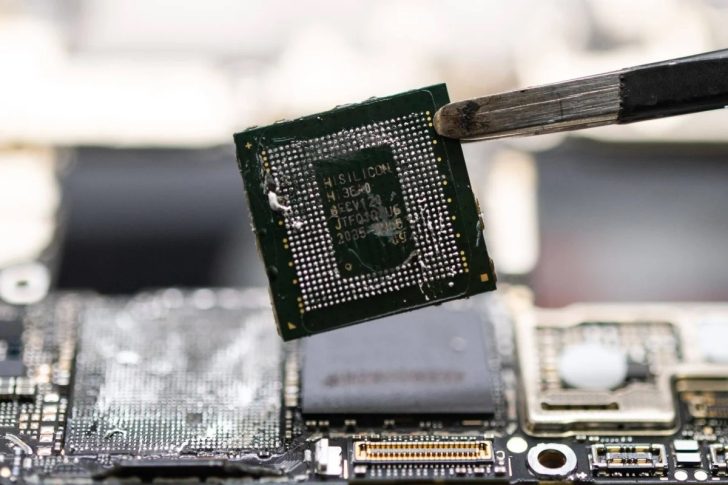
You may be aware that Huawei recently launched a new Kirin chipset called the Kirin 9000s, which supports 5G and raises questions about US restrictions. Huawei hasn’t officially provided detailed information about this new chipset yet, and now a leaker claims that another Kirin chipset might be launched by the end of this year. This processor is said to belong to the Kirin 8 series and could make its debut with the Huawei Nova 12 series. Here are the details.

Kirin 830 might debut later this year

A Chinese tipster on Weibo claims that Huawei will be launching a new Kirin 8 series chipset later this year (Via GSMArena). Although the tipster didn’t specify the name of the chip, an earlier leak revealed the upcoming Nova 12 smartphone with an unreleased Kirin 830 chip. However, it looks like only the vanilla model will get this alleged chip, while the Nova 12 Pro will feature the Kirin 9000s, the same chip that powers the Huawei Mate 60 series.
Source: Bloomberg

This new chip is supposed to support 5G connectivity, which makes one wonder who will manufacture it. Since US companies that hold the patent and 5G technology are restricted from trading with Huawei, it makes you think how Huawei is managing to produce new chips. The same questions were raised when the company launched the Kirin 9000s. Rumors suggested it was manufactured by SMIC. Some even say the Kirin 9000s is a 14nm chip that was modified to be 7nm.

In any case, the Nova 12, which is supposed to be powered by the Kirin 830 chip, is rumored to come with a curved 120Hz OLED panel with second-generation Kunlun protection. It might pack a 4,800 mAh battery with support for 88W charging. The chip itself is rumored to be comparable with Snapdragon 778G and Snapdragon 870.

RELATED:

(Source) (Via)

TSMC granted indefinite waiver by US for Chip Equipment exports to China

Taiwan Semiconductor Manufacturing Co (TSMC), the world’s largest contract chip maker, has received an indefinite exemption from US trade sanctions on mainland China. This exemption enables TSMC to continue acquiring advanced chip equipment for its operations in China, marking a pivotal moment amid ongoing global supply chain challenges.

The United States Department of Commerce’s Bureau of Industry and Security (BIS) has advised TSMC to apply for the “validated end-user” (VEU) program. Under this program, the chipmaker can receive exports without separate approvals, easing restrictions on foreign chipmakers operating in China. TSMC expressed confidence in obtaining a permanent authorization through the VEU process, streamlining its operations.

TSMC

This move follows the Biden administration’s October 2022 export controls, which aimed to limit China’s access to certain semiconductor chips made worldwide with US tools. Last year, TSMC secured a one-year authorization, covering its factory in Nanjing, China, producing 28-nanometer chips. The recent waiver extension alleviates uncertainties surrounding TSMC’s operations, enabling the company to plan its manufacturing processes effectively.

South Korea’s Samsung Electronics and SK Hynix have also received similar indefinite waivers, allowing them to supply US chip equipment to their China factories without separate approvals. These developments reflect a nuanced approach by the United States, balancing national security concerns with the complex interdependence of the global technology sector.

TSMC’s operations in mainland China, including its facilities in Shanghai and Nanjing, will continue without disruption. While specific details about the waiver’s duration were not disclosed, the industry anticipates a year-long extension, aligning with previous patterns.

This decision comes in the wake of the Biden administration’s efforts to address the challenges posed by emerging technologies.

In a bid to bolster domestic semiconductor manufacturing, the administration removed stringent curbs on expansion in China by companies receiving federal funds to build plants in the US. Both TSMC and Samsung are poised to benefit from US subsidies for their new facilities, enhancing their competitive edge and strengthening the US technology ecosystem.

TSMC’s Taipei-listed shares closed higher following the announcement, indicating positive market sentiment. As the global technology landscape continues to evolve, these developments underscore the delicate balance between international cooperation and safeguarding national interests in the realm of advanced semiconductor technologies.

Related:

(via)

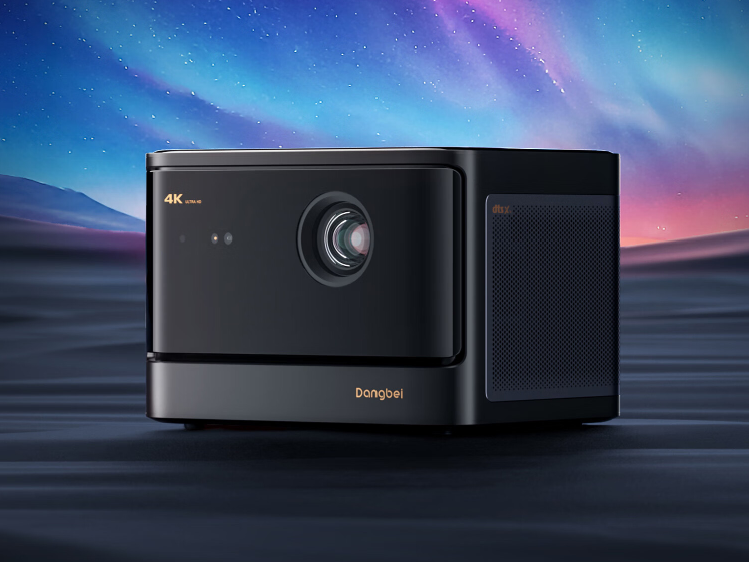
Dangbei X5 Pro 4K laser Projector with 2450 CVIA lumens brightness launched

After launching the Dangbei X5 Ultra laser projector last month, the brand has now launched a more affordable Dangbei X5 Pro model in China. Like its sibling, the X5 Pro also features 4K resolution and also has the same level of brightness.

Dangbei X5 Pro specs

The Dangbei X5 Pro laser 4K projector comes equipped with an array of impressive specifications and features. It employs DLP technology and incorporates a 0.47-inch DMD chip to offer a stunning 4K resolution of 3840 x 2160 pixels. Notably, it boasts a wide color gamut coverage, including 110% BT.2020 and 152% DCI-P3, ensuring vibrant and true-to-life colors. The projector delivers an impressive 2450 CVIA lumens of brightness, equivalent to around 4000 ANSI lumens. With a 30,000-hour laser light source lifespan, this projector promises long-lasting performance.

Dangbei X5 Pro

In terms of projection capabilities, the X5 Pro offers a 1.27:1 throw ratio, enabling it to project images of up to 200 inches in size. It simplifies setup with automatic focus, image correction, screen fit, and obstacle avoidance features. The projector runs on Android 11 and features the user-friendly Dangbei OS 4.0 interface. Additionally, it allows for easy screencasting from mobile devices.

The X5 Pro doesn’t compromise on audio quality, as it comes equipped with two built-in 12W speakers that are compatible with Dolby Audio and DTS-X. For added versatility, it supports external speakers through HDMI 2.1, USB 3.0, and USB 2.0 ports. Connectivity is robust, thanks to Bluetooth 5.3 and Wi-Fi 6, while voice command functionality enhances user convenience. With 4+128 GB of memory, this projector offers ample storage for your content and applications.

Pricing & availability

Pre-orders for the Dangbei X5 Pro 4K laser projector are open in China, priced at 6,988 yuan ($957). The retail price will be 7,099 yuan ($971).

RELATED:

(via)

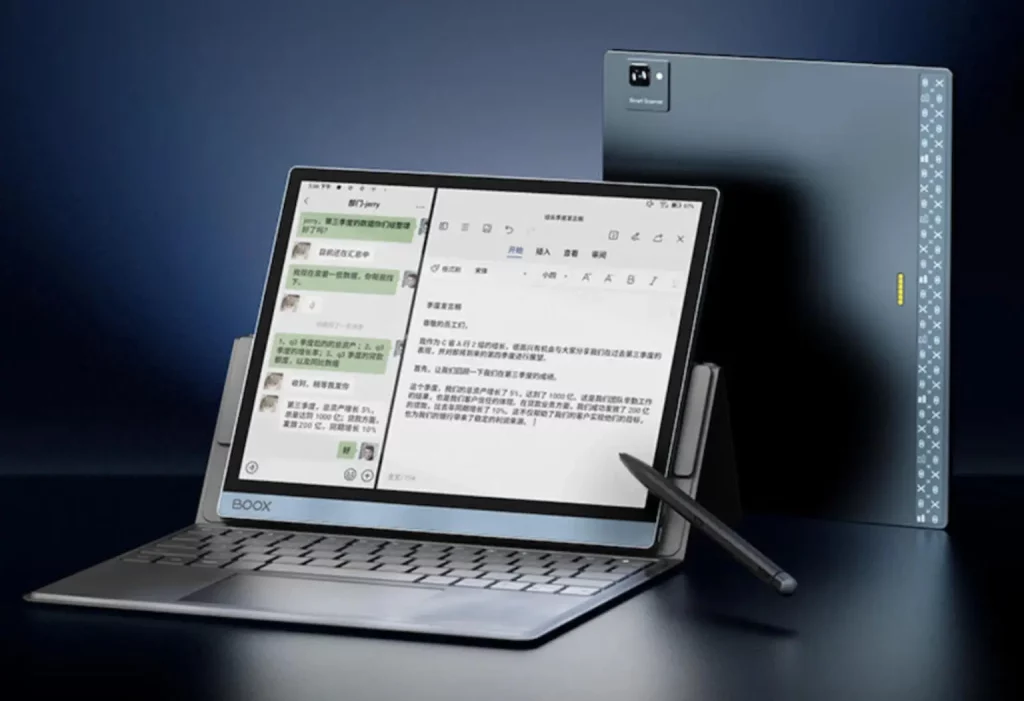
Onyx Boox Note X3 E-Note and Tab 10C Pro color E Ink tablet launched in China

The Onyx Boox Note X3 and Tab 10C Pro e-ink tablets have been unveiled in China. The Note X3 E-Note features a 10.3-inch E Ink monochrome display while the Tab 10C Pro color E Ink tablet comes with the latest Kaleido 3 E Ink display panel.

Onyx Boox Note X3 E-Note

Onyx Boox Note X3 E-Note – Features

The Onyx Boox Note X3 can be used to take notes and save or share them. It has a resolution of 227 PPI and comes with a light guide plate that is 40% less thick than its predecessor.
The distribution of the front light is also 12% better than the previous model. The e-note device has a display that is large enough to have an enjoyable reading experience from an array of resources. The Boox Note X3 runs on Android 12 Plus OS with some refreshments to accommodate a split screen mode and other improvements.

The Note X3 supports AI reading assistance and handwriting recognition. It comes with a 2.4GHz Qualcomm octa-core processor, 4GB of RAM and 64GB of expandable storage. The Onyx Boox Note X3 is offered in black and green color options.

Onyx Boox Tab 10C

Onyx Boox Tab 10C Pro color E Ink tablet

The Onyx Boox Tab 10C Pro color E Ink tablet was introduced back in May 2023. It has a 10.3-inch display with a black-and-white pixel density of 300PPI and 150PPI color pixel density. Its in-built display chip provides smoother refresh rates while it is powered by a 2.8GHz Qualcomm octa-core processor.

The Tab 10C Pro is equipped with 6GB of RAM and 128GB of internal storage. It has a 4,600mAh battery while its 16MP scanning camera supports OCR recognition. The Tab 10C Pro has the Pen2 stylus, attached to the tablet via magnetic contact. The stylus does not need to be recharged separately and has 4,096 levels of pressure sensitivity.

Pricing & Availability

The Onyx Boox Note X3 and Tab 10C Pro are available for pre-order from Jing Dong. The retail prices for the two new Onyx Boox E Ink devices are 2,599 yuan ($356) and 4,699 yuan ($643) respectively. There are no indications at this time on the global availability and pricing of the devices.

RELATED:

(via)

Teleport Ride e-bike with a top speed of 28mph, assisted range of 100 miles launched

The Teleport Ride electric bicycle has been unveiled by the Canadian startup. The Ride is Teleport’s debut e-bike offering and it features a minimalist design. The Teleport Ride will be mounted on the crowdfunding platform Indiegogo.

Teleport Ride

Features

The Teleport Ride looks more like a simple non-electric bike due to its basic design. The Ride concept was designed by Gus Johansson and then developed by Anthony Ross. The evolution of the ride into a production model began in 2021. Both Johansson and Ross co-founded Teleport and the Ride marks their entry into the ever-expanding e-bike industry. The Ride has an aluminum frame and is pretty lightweight at 34lbs.

The Ride is equipped with a 750W rear hub motor that delivers a peak power output of 1,200W. Pedaling activities are enhanced with the Gates Carbon Belt Drive system coordination of the wheel movement. The Gates system makes the bike to be largely maintenance-free and a silent ride. The Ride has a battery capacity of 36V. 11.4Ah which delivers an assistance range of 100 miles (~161km). The range of the Ride is very impressive and is due to improved battery tech featured in the e-bike.

Teleport Ride

The Ride has a top pedal assist speed of 28mph and the ride experience is made smoother with an in-built torque sensor. A thumb throttle is also featured on the Ride for riding without any pedaling activity. The electronics in the Teleport Ride, as well as the wiring, are placed within the e-bike’s frame, enhancing its sleekness. There are multiple ride modes available with the bike, with the Eco mode offering the top range of 100 miles.

The Teleport Ride has puncture-resistant 700x38c tires and Tektro hydraulic brakes. It has a payload capacity of about 290lbs and an OLED display on the handlebars helps the rider to monitor ride parameters and toggle the modes.

Teleport Ride

Pricing & Availability

The Teleport Ride is priced at $1,899 on Indiegogo. Teleport expects the impressive specs and affordable price of the Ride to deliver a successful Indiegogo campaign. The earliest deliveries will be in February 2024 if the campaign achieves its target.

RELATED:

(source)

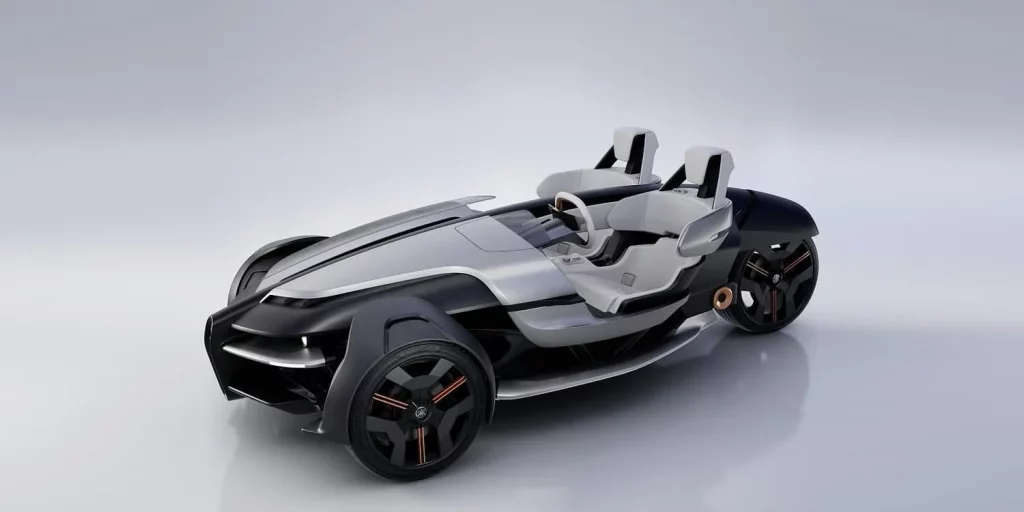
Yamaha’s new three-wheeled EV with triple-wheel steering, the Tricera, announced

Yamaha has announced a new three-wheeled electric vehicle that comes with triple-wheel steering functionality. The Yamaha Tricera is a futuristic electric vehicle concept and is set to be on display during the 2023 Japan Mobility Show later this month. The unique Yamaha Motoroid 2 self-balancing e-bike concept is also scheduled to be showcased during the Japan Mobility Show.

Yamaha Tricera

Yamaha Tricera – Yet another impressive concept

The Yamaha Tricera is a model that sits between a motorcycle and a car. It is viewed as an autocycle in some areas. However, it bears a closer semblance of a car than a motorcycle.

The Tricera comes with a unique design that, according to Yamaha, sets it apart from both motorcycles and cars. The delta trike design of the Tricera incorporates two front wheels and a single rear wheel. The Yamaha Tricera has a three-wheeled steering. A rack and pinion steering in the front is supported by the rear wheel pivot for greater maneuverability.

The design of the Yamaha Tricera has an open-top structure that omits doors. Seat bolsters are used instead to secure the rider. The Tricera features both automatic and manual steering modes for the rear wheel. The manual modes, according to Yamaha, give a sense of accomplishment for riders still learning the ropes.

Yamaha Tricera

There are no details yet on when the Yamaha Tricera concept will transit into a production vehicle. The key specs of the concept EV will be further illuminated during the Japan Mobility event later this month.

RELATED:

TSMC to produce cutting-edge Chips in second Japan plant with government subsidies

In a significant move to bolster its semiconductor industry, Taiwan Semiconductor Manufacturing Co. (TSMC) is set to produce 6-nanometer chips at its second plant in Japan. This new facility, located at TSMC’s Kumamoto site in southwestern Japan, represents a total investment of $13.3 billion. The Japanese Ministry of Economy, Trade, and Industry is reportedly considering subsidies of up to $6 billion to support this venture.

These advanced 6-nanometer chips mark a significant leap for Japan, which currently manufactures products in the 40-nanometer range. The demand for cutting-edge chips, especially for 5G and artificial intelligence applications, is rapidly increasing globally.

Construction of the second plant is slated to begin next summer, with mass production expected to commence in 2027. TSMC aims to produce approximately 60,000 units per month, manufacturing both 6-nanometer and 12-nanometer logic semiconductors. Major customers, including Sony Group, are set to benefit from this production.

The Japanese government, as part of its economic stimulus package, is planning substantial subsidies for the semiconductor sector. The government is requesting a total of 3.35 trillion yen for this fiscal year’s supplementary budget. These funds will be allocated to special-purpose funds, supporting post-5G technology, advanced semiconductors, and aiding companies like TSMC and Japanese chipmaker Rapidus.

Furthermore, Intel is set to receive 50 billion yen in subsidies for research and development focusing on back-end processes like assembly and packaging. Collaborating with Japanese semiconductor material manufacturers, Intel aims to develop automated packaging technology for high-tech chips. Sony, a key supplier of image sensors for Apple’s iPhone, will receive 310 billion yen in subsidies to ramp up production and meet rising global demands.

Apart from individual company support, Japan plans to invest approximately 100 billion yen in research for automotive and AI chip design, strengthening crucial sectors. An additional 10 billion yen will be invested in training highly skilled workers, ensuring the availability of a qualified workforce for the expanding semiconductor industry.

This move comes amidst global efforts to boost domestic chip production. The U.S. and the EU have also earmarked significant funds for their semiconductor industries, with TSMC and Intel already announcing new production plans in various countries, supported by European subsidies.

Related :

(via)

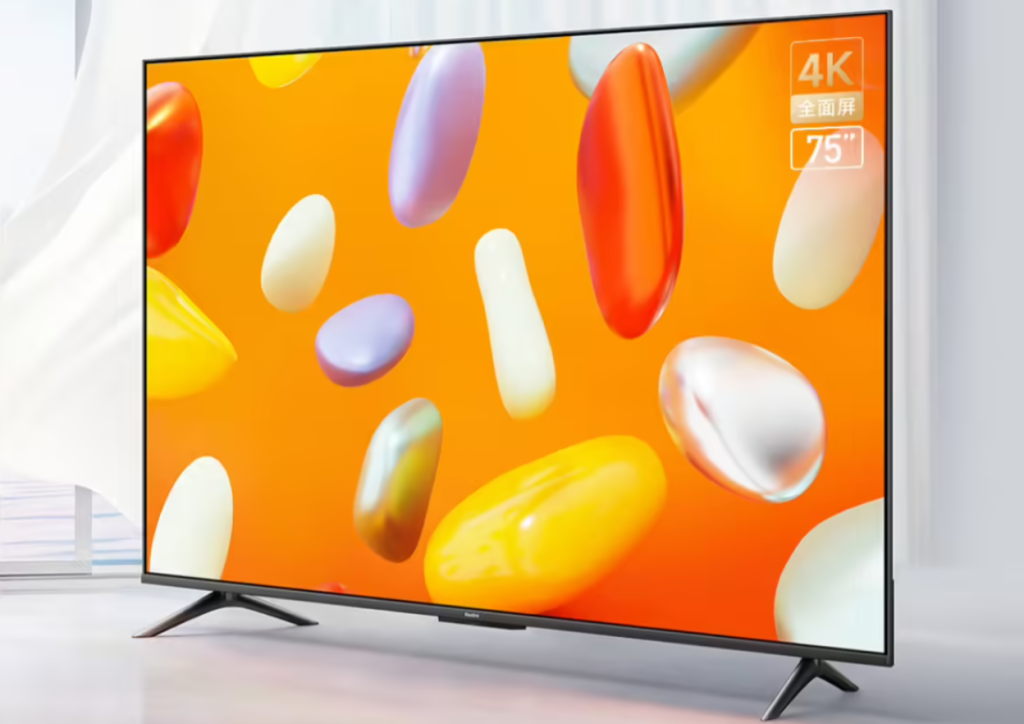
Redmi TV A75 2024 launched with 75-inch 4K 120Hz display

Redmi has a decent range of TVs both in China and the global market. Earlier this year, the company unveiled a bunch of TVs in a number of sizes— Redmi TV A32, A43, and A65. The company also launched the TV A50 2024 in August. And now, the Xiaomi sub-brand has unveiled a larger TV, dubbed the Redmi TV A75 2024. As the name suggests, the television comes with a 75-inch screen size. It offers a 4K resolution, a 120Hz refresh rate, and comes with an affordable price tag. Here are the details.

Redmi TV A75 2024 Specifications

Redmi TV A75 2024, exhibiting Xiaomi’s confusing product branding yet again, brings a premium bezel-less design. The TV has a metal body and is built around a 75-inch display. The panel offers a 4K resolution supports a 120Hz refresh rate, and has a color accuracy Delta E of less than 2. It can also show up to 1.07 billion colors.

The A75 2024 model has a total of 20 watts of speaker output, with 10 watts per speaker. This is considered to be a decent amount of power for a TV and should be sufficient for providing clear and loud sound. There are also two air ducts for bass enhancement. In terms of processing, this TV is equipped with a quad-core A35 chip, paired with 2GB of RAM and 32GB of storage space. Further, the device supports dual-band Wi-Fi at 5GHz and 2.4GHz.

Price and Availability

Redmi TV A75 2024 has been launched only in China for now and we are not sure when it will make an international debut. It is priced at 3099 Yuan which roughly converts to $412. The TV is available for sale through the official Xiaomi website and Jingdong.

RELATED:

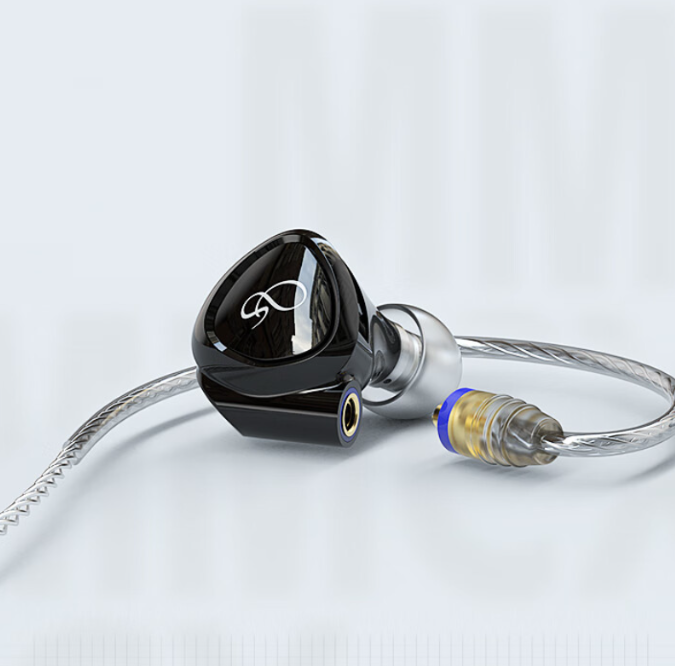
Shanling MG100 Dynamic Earphones, now available on GeekWills

Shanling MG100 Dynamic Earphones boast a host of cutting-edge features that elevate your listening sessions to unparalleled heights. The earphones are now available on GeekWills for $199. 

WHERE TO BUY
Shanling MG100 Dynamic Earphones at $199 @GeekWills

At the heart of the Shanling MG100 lies a high-precision ceramic diaphragm moving coil unit, a testament to Shanling’s commitment to superior sound quality. This diaphragm, 50% harder than polyester and 30% lighter than pure metal, ensures durability and optimal sound transmission efficiency. Its exceptional response speed and high-temperature resistance guarantee a prolonged lifespan, surpassing standard diaphragms by 500%.

Enhancing the diaphragm’s performance is the Ultra Linear Dual Magnetic Circuit System, coupled with a Dual Chamber Acoustic System. These innovations collaborate harmoniously to deliver an immersive soundstage, where every note resonates with clarity and precision. Including a 0.035 HCCAW high-tension wire voice coil further amplifies the audio experience, boasting a tensile strength three times that of ordinary wires, ensuring robustness and longevity.

Designed with audiophiles in mind, the MG100 offers versatility through interchangeable audio filters – Balance and Atmosphere. Tailor your listening experience by choosing the filter that suits your mood, allowing you to explore the depths of your music collection with nuanced detail. The Semi-Open back design complements this feature, enhancing the natural ambiance of your audio environment.

Comfort is paramount with the Shanling MG100, featuring stabilized maple wood ear shells that provide a snug fit and exude elegance. The earphones are remarkably compact and lightweight, making them ideal companions for long listening sessions without causing discomfort.

The MG100’s thoughtful design extends to its user-friendly features. The inclusion of an MMCX pin Furukawa monocrystalline copper headphone cable ensures optimal signal transmission, enhancing the overall audio quality. Additionally, the interchangeable plug design, supporting 3.5mm and 4.4mm gold-plated plugs, offers seamless connectivity across various devices. 

Shanling MG100 Dynamic Earphones embody the perfect fusion of craftsmanship and innovation. With its superior materials, advanced technology, and user-centric features, these earphones invite you to delve into a world of sonic excellence. 

For more information on such exciting deals and offers, check out our deals hub.

Honda and Mitsubishi Join Forces to Bring More Value to EV Ownership in Japan

Honda has struck a new partnership with Mitsubishi Corporation, Japan’s most significant trading entity. The partnership aims to improve the electric vehicle (EV) experience for Japanese car owners through two revolutionary business models.

Honda is introducing Battery Lifetime Management to their upcoming EVs

The initiative begins with a focus on maximizing battery utility. Traditionally, used high-voltage car batteries meet an unfortunate fate: they’re discarded as scrap. Honda aims to change this narrative by introducing a “Battery Lifetime Management” system in their upcoming mini-EVs. This innovative system will give these batteries a second life as stationary energy storage units, delaying their journey to the scrapyard and promoting responsible recycling when their time finally comes.

Honda

The second prong of this alliance has a tech-savvy appeal: smart charging and vehicle-to-grid functionalities. Imagine a world where your EV intuitively knows when to draw power from the grid at the cheapest rates and even returns power back when it’s most beneficial for you. This isn’t science fiction; it’s Honda’s proposed “Energy Management System.” With this, EV owners can expect noticeably reduced electricity bills, making EV ownership more pocket-friendly in the long run.

Meanwhile, in the U.S., Honda is prepping for the launch of its all-electric Prologue SUV next year. Yet, its global footprint is expanding, with other electric models like the Europe-bound e:Ny1 crossover and Japan’s recently launched N-Van e: commercial vehicle. With a planned investment of $40 billion through 2030, Honda is committed to making electric and hybrid vehicles up to 40% of its total sales by the end of the decade.

RELATED:

(Via)

Vivo Accused of Visa Violations and Money Laundering in India

In a turn of events that could have far-reaching consequences for Sino-Indian relations, Chinese smartphone maker Vivo is facing intense scrutiny from Indian authorities. India’s Enforcement Directorate (ED) has alleged that Vivo employees, including Chinese nationals, concealed their employer’s identity while applying for Indian visas. This revelation gains importance in the backdrop of rising tensions between India and China, particularly after border conflicts in 2020.

Claims say that Vivo channeled almost $13 Billion out of India

The ED has accused Vivo employees of violating visa conditions by entering sensitive areas in India like Jammu and Kashmir without proper permits. This issue comes to light after the arrest of Vivo executive Guangwen Kuang in a money laundering probe. The agency claims that Vivo channeled an eye-popping 1.07 trillion rupees (around US$13 billion) out of India, raising questions of tax evasion.

Vivo logo

These allegations could dent Vivo’s position in the Indian market, where it holds a 17% share. It also puts the spotlight on how foreign companies, particularly those from China, navigate regulatory landscapes amid geopolitical tensions. Both India and China have border disputes and have recently seen heightened military and political clashes. Vivo’s alleged activities seem to add a corporate angle to this volatile mix.

Vivo has responded by emphasizing its commitment to legal compliance, but this scandal could act as a litmus test for the Indian government’s policies towards Chinese investments and businesses.

RELATED:

(Via)

Philips Professional Displays Showcases Smart and Sustainable Solutions at DIDAC India 2023

Philips continues to expand its product lineup. The company recently introduced a creator-focused monitor that stands out with its 4K resolution and 96W USB-C charging features. Now, PPDS, the exclusive global provider of Philips Professional Displays and complementary solutions, is showcasing its range of smart and sustainable display products and software solutions for campuses. Here are the details…

The Next Generation Philips Professional Displays Unveiled

Visitors to the PPDS booth will be treated to a range of products designed to enhance both teaching and learning opportunities while ensuring fluid, personalized communication throughout any campus. Among the standout products is the Philips Interactive E-Line 4K Education Display. Running on Android 11, this best-in-class interactive display is specifically designed to elevate the learning process. It combines advanced technology with intuitive design, featuring anti-glare and anti-reflection 4K capabilities. The 4052E models come with a blue light filter, ensuring that content remains clear and easy to view in varied lighting conditions.

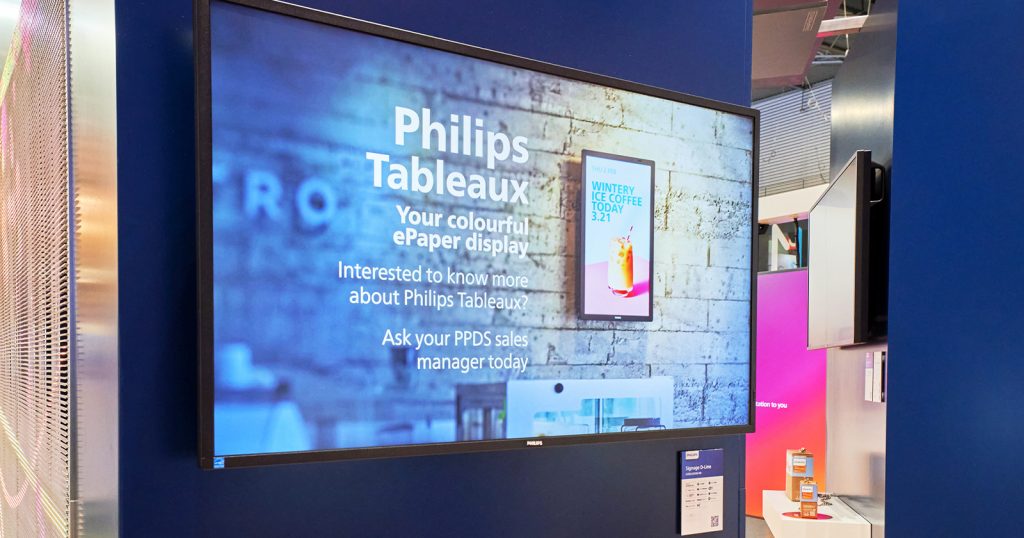
In addition, the Philips Tableaux is set to draw attention. These unique digital signage displays can project a full-color image without using any power. They are ideal for places without an external power source, serving as excellent tools for wayfinding and informational displays. Not to be overshadowed is the Philips Signage D-Line. Equipped with 4K resolution and Android SoC, this series is perfect for conveying essential information to students, seamlessly fitting into various campus settings like classrooms, corridors, libraries, and canteens.

Alongside these hardware offerings, PPDS will be introducing the PPDS Wave, a revolutionary cloud-based display management ecosystem. This system is future-focused, offering streamlined control and management for display networks in educational settings, all accessible remotely. The PPDS Wave Controller is particularly timely, given the rising global energy costs. This tool not only champions eco-friendly solutions for educational setups but also significantly reduces ownership costs by tapping into energy-saving opportunities and prolonging product lifespan.

Atul Jasra, India Business Head at PPDS, expressed his excitement, saying, “Our participation at DIDAC 2023 marks a significant milestone. We are thrilled to present our groundbreaking solutions that are set to bring transformative change to learning environments worldwide.”

RELATED:

China’s Semiconductor Imports Shows a Little Promise Amid Global Supply Shortage

Despite a tough year for global semiconductor supply, China‘s chip imports are showing signs of incremental improvement, according to recent data from the General Administration of Customs. From January to September, China imported 355.9 billion integrated circuits (ICs), which, although down from 416.7 billion during the same period last year, marks a slight uptick in recent months.

China’s overall import value still saw a 7.5% decline in the 9-month period

The total value of these imports fell 19.8% year-on-year to $252.9 billion. However, this is notably better than the 26.7% drop in the first quarter. By comparison, China’s overall import value saw a 7.5% decline in the nine-month period.

China

This subtle rebound occurs in a tricky global environment. Many Chinese tech companies are grappling with Washington’s export restrictions, which have been strategically deployed to stymie China’s access to high-end AI technology. However, the restrictions have proven to be a double-edged sword. While aiming to curb China’s tech rise, they also affect the U.S. and its allies—major players in the global semiconductor supply chain.

Data also reveals a decline in China’s imports from these U.S. allies—South Korea, Japan, and Taiwan. The most significant drop was a 23% plunge in imports from South Korea, followed by Japan and Taiwan with 16.3% and 20%, respectively.

Yet, the improvements in China’s semiconductor imports indicate a degree of resilience. With mounting export restrictions and the world still coming to terms with semiconductor scarcity, China seems to be navigating troubled waters with caution but also agility. It’s not just about the numbers; it’s also a hint at how China could be adapting to a changing tech landscape, even when faced with multifaceted challenges.

RELATED:

(Via)

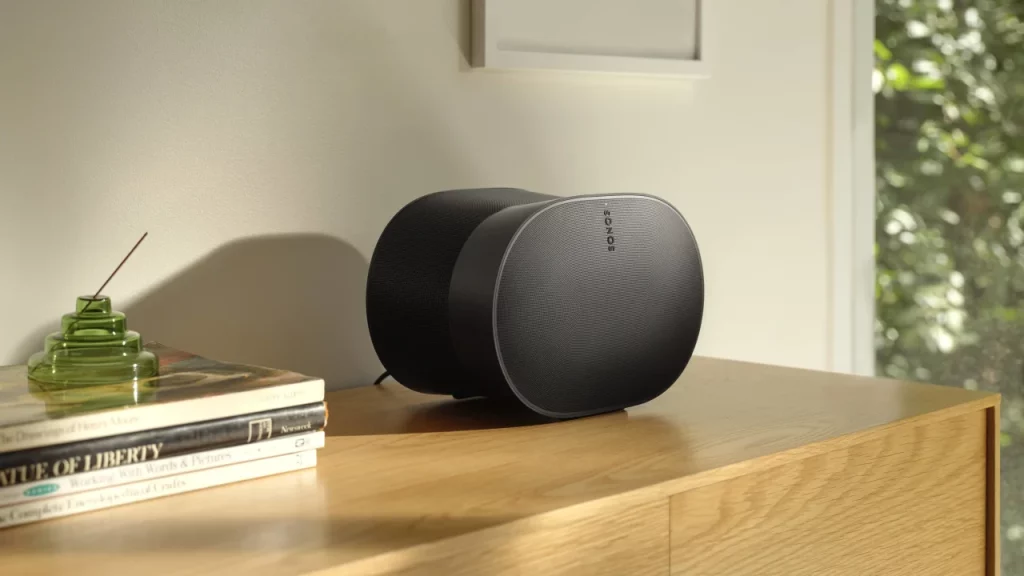
Sonos Era 300 smart speaker launched in India with Spatial Audio, Era 100 tags along

Sonos Era 300 was launched in the US and other global markets earlier this year and it managed to impress users and reviewers alike. Despite its particularly high price tag, the Era 300 is an irresistible smart speaker. The more affordable Era 100 is also a solid entry from the brand and it is seen as a neat improvement over the Sonos One. Both these speakers are packed with many new-to-Sonos features and now they have been launched in India as well.

What do Sonos Era 300 and 100 bring to the table?

Sonos Era 300 and Era 100 bring a rather different design than the rest of the Sonos speaker lineup. The Era 300 looks like a thick hourglass, featuring six powerful drivers that direct sound in various directions. The 10.2 x 7.3 x 6.3-inch Era 300 supports Spatial Audio (aka Dolby Atmos for Music) and is the first Sonos speaker to provide multi-channel surround sound for home cinemas.

You can pair two Era 300s as rear speakers with an Arc or Beam (Gen 2) soundbar and a Sub to create a home theater arrangement. Sonos claims it worked closely with its community of leading artists and creators to fine-tune Era 300, allowing you to “enjoy sound straight from the studio that’s true to the artist’s intent.”

You won’t find Spatial Audio support on the Era 100, which has a more oval and less boxy shape. The Era 100 brings one woofer and a pair of tweeters. You can pair two Sono Era 100 for a stereo effect. Also, the speaker measures 7.2 x 5.1 x 4.7 inches, a little smaller than Sono One.

Both speakers support Google Assistant and Amazon Alexa. You can connect to them via Bluetooth and Wi-Fi and charge via a USB-C port. The user interface has also seen changes with new touch controls for volume. Then there is TruePlay, Sonos’ room correction software that automatically measures the room and makes adjustments accordingly.

Pricing and Availability for India

The Sonos Era 100 is priced in India at Rs. 29,999 (approximately $370), while the Sonos Era 300 is priced at Rs. 54,999 (around $675). Both speakers are offered in black and white. You can purchase them starting October 20. Pre-orders begin on October 15 on the Sonos website.

Related:

Samsung Galaxy M44 5G surfaces on Bluetooth SIG, launch could be near

Samsung is gearing up to launch the Galaxy M44 5G model soon. The new device is the latest entry in the popular Galaxy M series, which is rumored to launch soon. Now, it has been spotted on a new certification platform prior to its release.

Samsung Galaxy M44 5G

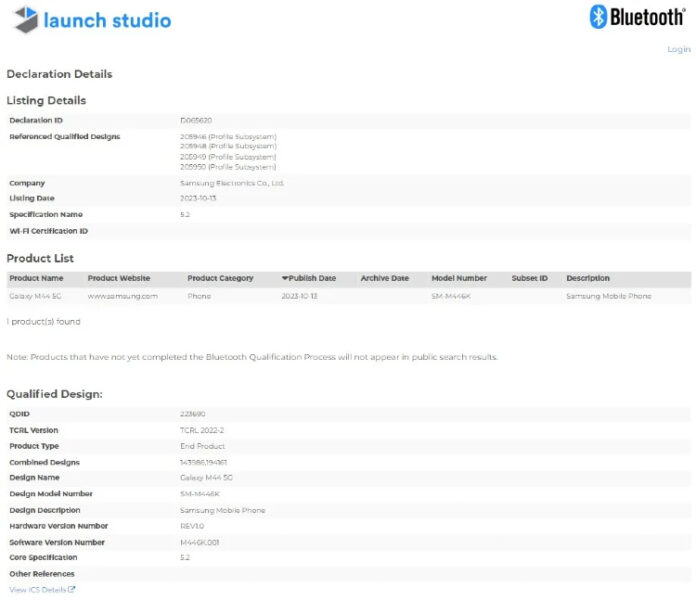
The South Korean tech giant’s Galaxy M44 5G was spotted on Bluetooth SIG carrying the model number SM-M446K. The online database revealed that this model supports Bluetooth version 5.2. This listing also confirms the Galaxy M44 5G moniker. The latest sighting also hints at the device’s imminent launch considering it has surfaced in numerous reports recently.

Samsung Galaxy M44 5G

Just like the Bluetooth SIG listing, the Galaxy M44 5G was also spotted on the NRRA certification platform in South Korea. Furthermore, a live image leak revealed its design as well. All of this hints that the smartphone is nearing announcement. A GeekBench benchmark listing confirmed some of its key specifications. It includes a Qualcomm Snapdragon 888 SoC that is paired with 6GB of RAM. The smartphone will ship with Android 13 OS based One UI custom skin out of the box.

The live images revealed that the Samsung Galaxy M44 5G features a triple camera setup on the rear, which is vertically stacked with an LED flash. Its rear panel seems to feature a matte finish but other finer details like camera specs and display parameters are still unclear. So stick around for more as we will be providing updates when additional information is available regarding this smartphone.

RELATED:

(Via)

Regular iPhone 15 is the most popular model in India, iPhone 15 Pro Max comes second

Apple unveiled the iPhone 15 lineup last month. The latest iPhones have been on sale across the world for about four weeks now.

That’s enough time to understand the preliminary supply and demand of these smartphones. Thanks to an analyst, we have a brief idea regarding the performance of the latest iPhones in India.

iPhone 15

Recently, Abhilash Kumar, an analyst at TechInsights, shared his thoughts on the supply and demand of the iPhone 15 series in India.

He says that as per estimates from TechInsights, out of all four new iPhones, the regular iPhone 15 is the highest-selling model in India. It is followed by the most expensive model — the iPhone 15 Pro Max.

Whereas the iPhone 15 Plus has the least demand, however, it is well received compared to the iPhone 14 Plus whose release was delayed by a month last year. Thus, the iPhone 15 Pro sits comfortably in the third place.

Despite the huge demand, the waiting time for the base iPhone 15 is just about 1 week, as a result of local assembling earlier than the previous year. On the other hand, the waiting period for iPhone 15 Pro and iPhone 15 Pro Max is close to 3 weeks or more.

The iPhone Pro models are still exclusively manufactured in China. While the iPhone 15 Plus will reportedly be assembled in India starting this quarter.

Additionally, Abhilash notes that the demand for the iPhone 15 Pro Max is high in India though it is $720 more expensive than in the US. He mentions features like 5x tetraprism zoom camera, titanium frame, and USB Type-C as the driving factors.

In a brief conversation with us, Mr Kumar disclosed that he personally believes upper-class Indians as the target audience for the iPhone 15 Pro series. So a ₹20,000 (~$240) price difference between the Pro and Pro Max just for a longer-range zoom camera does not bother them. 

Hence, the most premium iPhone model is in more demand in the country, preceded by the standard model.

RELATED:

Tecno Spark Go 2024 Surfaces On Google Play Console With Key Specs

Earlier today, the Tecno Spark Go 2024 bagged Thailand’s NBTC certification. Now the smartphone has surfaced on the Google Play Console certification website. The listing reveals the render as well as core specifications of the device. The Tecno Spark Go 2024 is expected to arrive as the successor to the Spark Go 2023 (review) that was announced earlier in January this year. Read on to learn what we know about the smartphone. 

Tecno Spark Go 2024 Google Play Console listing

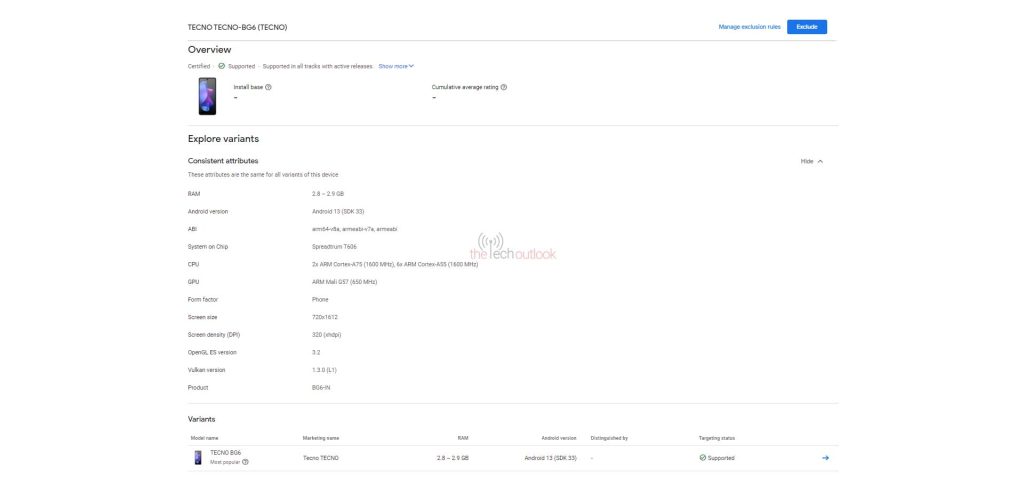
The Tecno Spark Go 2024 is listed with model number BG-6 on the Google Play Console. As per the render, the smartphone has a centre-aligned punch-hole cutout display. The certification listing reveals that the device will have display resolution of 720 x 1,612 pixels and a screen density of 320 dpi. 

As for the core specifications, the Tecno Spark Go 2024 is listed with a Unisoc T606 processor comprising of two Cortex-A75 cores at 1.6GHz and six Cortex-A55 cores clocked at 1.6GHz. The SoC will be paired with Mali G57 GPU onboard. The smartphone will pack 3GB RAM onboard and run on Android 13 OS out of the box. 

The Google Play Console listing does not divulge in to more details of the Tecno Spark Go 2024. As per the Eurofins Product Certification page, the smartphone is expected to be backed by a 4,900mAh battery unit. Meanwhile, the NBTC and Bluetooth SIG certifications of the device revealed support for 4G and Bluetooth 5.0 connectivity. 

The Tecno Spark Go 2024 is expected to be a budget offering just like its predecessor. 

Related:

Via

Oppo Find N3’s camera prowess showcased in first sample photo

Oppo’s next foldable flagship smartphone, the Find N3, is set to launch on October 19th. Ahead of the launch, Oppo’s Chief Product Officer, Pete Lau, has shared the first camera sample of the Find N3 to show off its photography prowess.

The sample shows the Find N3 up against two other flagship smartphones released this year. As you can see in the image above, the Find N3 preserves natural light without overexposing the highlights. The shadows are also well-preserved, and the transition from highlights to shadow looks quite natural. Likewise, the texts in the book are also clear to read.

In contrast, the two other flagship smartphones clearly overexposed the highlights, lost the text details, and made the dark area too bright. In short, both smartphones fail to preserve the natural look of the picture.

Reportedly, the Find N3 features Sony’s latest LYTIA 800 camera sensor, which uses a two-layer transistor pixel structure. This allows the sensor to capture more light and reduce noise, even in challenging lighting conditions. The first camera sample shared by Lau suggests that the sensor is indeed very capable.

Oppo is clearly confident about the Find N3’s camera capabilities, and it will be interesting to see how it performs in real-world conditions. The device is launching on October 19, so we’ll have to wait and see then.

Related:

(Via)

Google Pixel 8 Pro Aces JerryRigEverything’s Durability Test

Google launched the Pixel 8 series phones earlier this month. The striking highlight of the latest-generation flagships from the search giant is 7 years of guaranteed software updates. Additionally, the company also confirmed that the devices will get spare parts for the same duration to align with the longer software support. Now, the Pixel 8 Pro has undergone famous YouTuber JerryRigEverything’s intense durability test. Let’s find out if the smartphone comes out unscathed. 

Google Pixel 8 Pro durability test

The Google Pixel 8 Pro boasts a super actua display offering high brightness levels. The screen is shielded by Gorilla Glass Victus 2 and it gets scratched at level 6 with deeper grooves noticeable at level 7. It is not as resistant as Apple’s Ceramic Shield on the latest iPhone 15 series. Meanwhile, the back panel comes out with no scratches. The smartphone has a slim profile with the frame made up of recycled aluminum. It gets easily scratched on all sides in the scrape test. Notably, the camera visor on the rear suffers the same fate along with the new thermometer sensor below the LED flash unit. The power and volume rocker buttons can also be removed. 

In the burn test, the Pixel 8 Pro withstands flame for 17 seconds but succumbs to a permanent burn mark as the dead pixel does not get restored. This should not be an issue unless you find yourself in a similar situation in the real world. The optical fingerprint scanner works flawlessly despite being scratched multiple times. 

Lastly, the Pixel 8 Pro holds its ground in the most gruesome test – the bend test. Zack tries bending it from both sides with ample force multiple times. The overall structural rigidity remains uncompromised. 

Related:

Thunderbird Air 2 Smart Glasses Released: Affordable AR Glasses with Micro OLED Display and 120Hz Refresh Rate

Once only seen in science fiction and spy movies, smart glasses are now more accessible than ever. For instance, Meta recently introduced its second-generation Ray-Ban Smart Glasses, and Huawei has launched the Eyewear 2 series, both boasting impressive specifications and functionality. While these are great options, Thunderbird is determined to make this technology available to everyone with its newly introduced Air 2 smart glasses. Here are the details…

Thunderbird Air 2 Smart Glasses Released: Switch Exclusive Accessory, Bundle Price 2699 Yuan

If there are those among you who are unfamiliar, Thunderbird is a Chinese technology company that specializes in the development and production of smart glasses and other wearable devices. The company especially gained attention with the release of its Thunderbird X1 smart glasses a while ago. These glasses were released in October 2022 and are the predecessor to the Thunderbird Air 2. They feature a 1080p Micro OLED display, a 90Hz refresh rate, and a built-in battery that can last for up to 6 hours. So, how does the new model compare in terms of improvements to its predecessor?

thunderbird Air 2

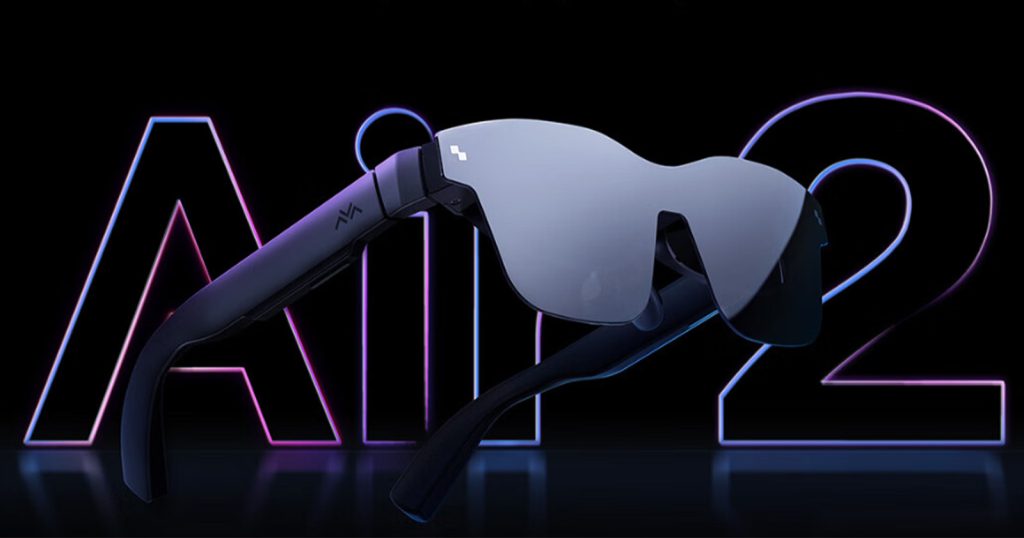
The Thunderbird Air 2 smart glasses have a design similar to regular sunglasses and weigh just 76 grams. They feature Sony’s latest 0.55-inch Micro OLED display, offering a 1080p resolution, a remarkable 4032 PPI, a PPD of 49, a 120Hz refresh rate, and a brightness up to 600 nits. Additionally, these glasses introduce a unique accessory exclusive to the Switch called the JoyDock. You can plug this accessory straight into the game console and then connect it to the smart glasses using a Type-C cable.

The device comes with a 10,000mAh battery that can charge both the Switch game console and the glasses at the same time. Moreover, the Thunderbird Air 2 can be directly connected to a smartphone using a Type-C port. It’s also designed to accommodate users who wear prescription glasses for nearsightedness or farsightedness. Pre-orders for the glasses are now available.

Price & Availability

Thunderbird Air 2 smart glasses are currently available for pre-order in China at a starting price of 2299 yuan (approximately $320 USD). The bundle price with the JoyDock accessory is 2699 yuan (approximately $370 USD). Thunderbird Air 2 is expected to be released in China in early November 2023. There is no information yet on international availability.

RELATED:

(source)