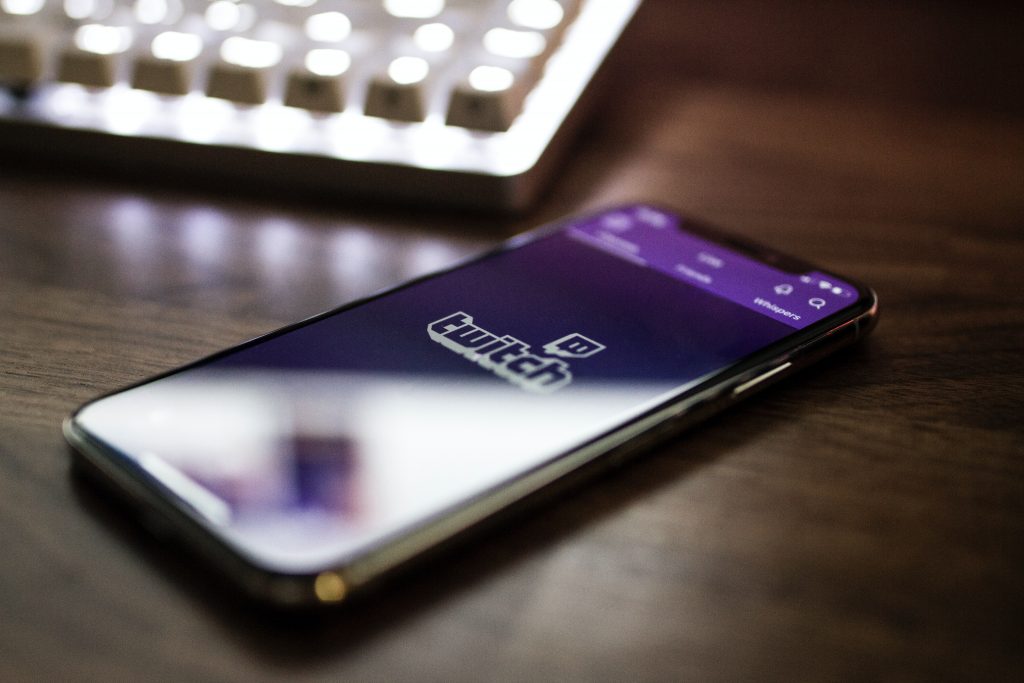
Denuvo is a top company that helps protect games on computers, phones, and game consoles from being pirated (illegally copied or shared). The company not only prevents games from piracy but also exposes players who cheats in competitive multiplayer games. Many games like Fifa 23, Monster Hunter Rise, and Battlefield 2042 use Denuvo DRM (Digital Rights Management) protection. According to recent news that has surfaced online, Denuvo might now be available on the Nintendo Switch.
Denuvo will now protect games launching on Nintendo Switch from piracy using its latest Nintendo Switch Emulator Protection. If you’re not familiar, there are certain programs online that let you play Nintendo Switch games on your computer. These programs are called emulators. As per the Denuvo team, if a game is protected against piracy on the PC version, the Nintendo Switch version can be emulated from day one and played on the PC. By blocking unauthorized emulations on PC, the Nintendo Switch Emulator Protection will ensure that anyone who wants to play the title will have to buy a permitted copy of the game.
As we all know, Denuvo protection greatly impacts the game’s performance on PC. We can only imagine what effect this might have on Nintendo Switch. Denuvo will have to come up with a solution to protect the games without having any effect on performance.
In related news, Nintendo might launch its Nintendo Switch 2 in the second quarter of 2024. According to reports, the company has been waiting this long because it doesn’t want to be a victim of the pandemic’s chip crisis. The full news covered by us can be found by clicking on this link.
The Realme GT 5 is set to launch on August 28th in China. Earlier, we covered that Realme GT 5 will come with the world’s first Miracle Glass. According to the latest Weibo post by Realme, we have received new information about this “Miracle Glass.” Let us go ahead and take a look at the post and see what this glass has to offer.
As per the official post, the company is collaborating with BYD Electronics to launch this glass. It is said that this alliance took more than a year to develop this piece of glass. The company is calling the texture of the glass “unparalleled” in the market. The phone will have a curved glass back that feels high-end. This is the company’s way of bringing a new kind of tough and textured glass to the world, challenging the industry’s glass technology.
Additionally, the official teaser released by the company shows us an LED on the back of the device, providing a more futuristic look. Previous reports have confirmed that the phone will support 240W fast charging accompanied by SuperVOOC S charging technology for longer battery life. It has been hinted that the GT 5 will give users almost 2 hours of talk time on a 30-second charge.
In related news, the Realme GT 5 has appeared on the Geekbench website, using the Snapdragon 8 Gen 2 chip. The full report can be found by clicking on this link. Stay tuned for more news on the Realme GT 5 on our website.
An Indian student just went through an odd and terrible experience of buying gadgets online. An order was placed for an Apple MacBook, but what was delivered instead was a speaker from boAt which cost a fraction of the laptop. So here’s what happened next.
Flipkart refuses to take responsibility
Receiving wrong orders isn’t too uncommon. People ordering smartphones have even received soap bars in deliveries. This time around, a student placed an order for an M1-powered MacBook on Flipkart. He paid 76,000 INR for this laptop, which was expected to be delivered by August 13. However, the delivery was delayed till August 15 since the delivery person dodged calls. The order was so delayed that the student personally went to collect it from Flipkart’s hub.
Once he got there the delivery person insisted on getting the OTP before giving his package. Opening the package revealed that the parcel under his name only featured a boAt speaker that was worth 3,000 INR. The student claimed that he provided evidence at the time of delivery and had even recorded the delivery person admitting that he received the wrong product.
Unfortunately, the amount of evidence didn’t help since Flipkart’s customer support didn’t seem all too helpful. The e-commerce platform denied refunds, stating that certain products fall under its ‘No Returns’ policy. Apple products are also included in this policy. As of right now, Flipkart has yet to issue a refund, so it’s possible that the student will take this complaint to court.
The Xiaomi 13T series is expected to launch soon. But prior to any official announcement, a new sighting on a certification website has revealed the entire design of the higher-end 13T Pro model. So let’s have a look.
Xiaomi 13T Pro looks similar to the Xiaomi 13 Pro
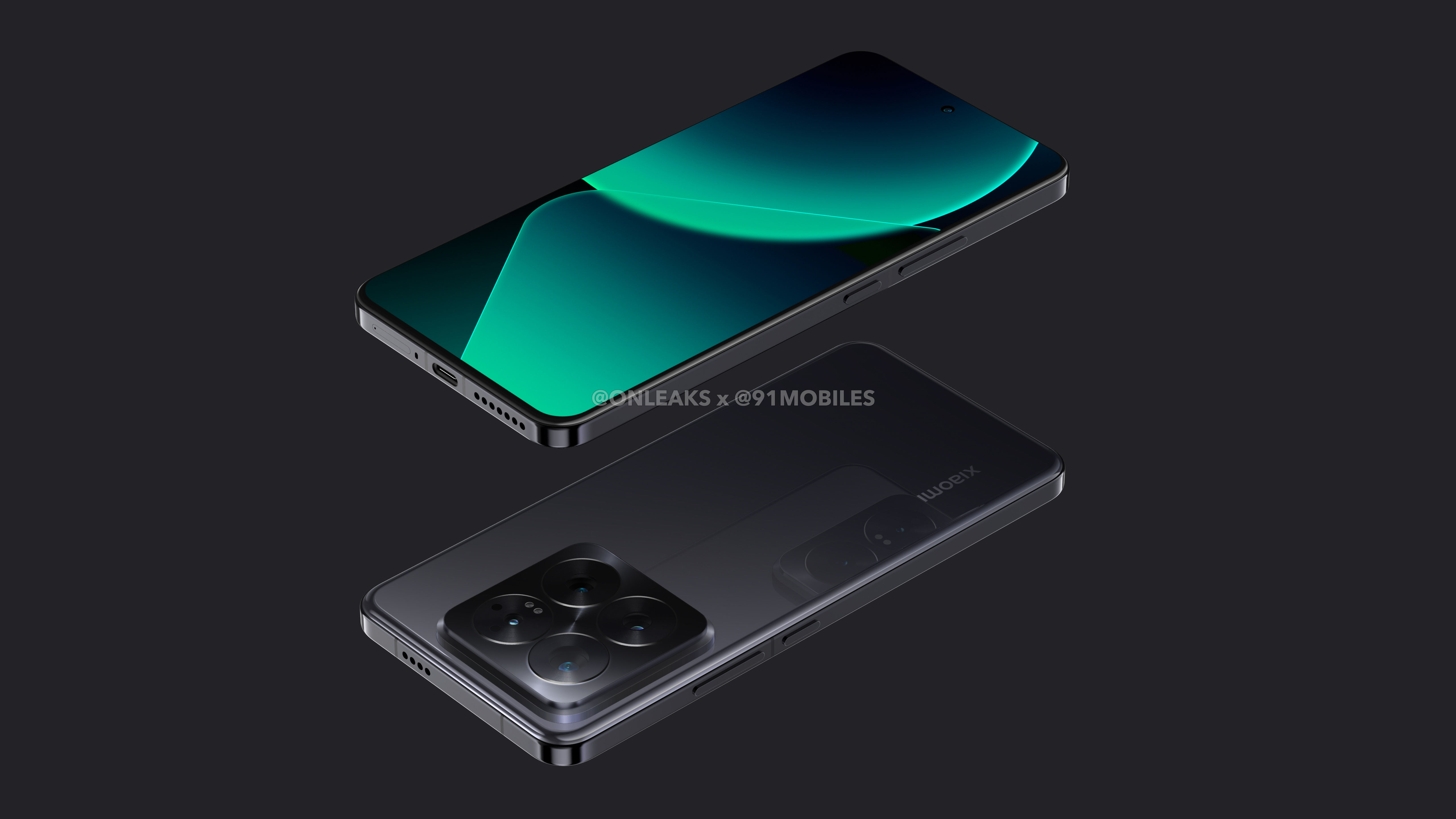
We have already reported on the upcoming 13T Pro model being spotted on other certification sites like TDRA and SIRIM. But now, the device was spotted on the NCC database. This listing also featured live images of the Xiaomi 13T Pro, which reveals its entire design. On the rear, the smartphone features a triple camera setup, with a setup reminiscent of the Xiaomi 13 Pro. Meanwhile, the bottom houses a speaker grille and a USB-Type C port for charging and data transfer, and the front houses a punch-hole selfie camera.
Based on a previous report, the handset is equipped with the MediaTek 9200+ SoC that is paired with 12GB of RAM and 256GB of internal storage. However, a 16GB RAM and 1TB storage configuration will also be released. The display is a tall 6.67-inch OLED panel that has a 2712 x 1220 resolution and 144Hz refresh rate. The rear camera module has a 50-megapixel primary sensor, a 13-megapixel ultra wide angle lens, and a 50-megapixel telephoto shooter. On the other hand, the front houses a 20-megapixel selfie camera.
A large 5,000mAh battery pack is expected to power the device, which supports 120W fast charging. Other notable features include Android 13 OS out of the box and IP68 water and dust resistance rating. This is all the information we have at the moment, so stick around for more updates.
Oppo’s next flip phone has been leaking a lot recently and now it has an official launch date. The company has confirmed the Oppo Find N3 Flip will make its Chinese debut on later this month and it won’t be alone. The new Oppo Watch 4 Pro will also share the stage with the flip phone on August 29. Oppo has also shared some images for you to have a look at before the launch.
As seen in the schematics before, the Oppo Find N3 Flip is getting a redesign. While the cover screen is similar to the Find N2 Flip’s rectangular design, Oppo is making changes to the camera module. The new module is now round and features three camera sensors. There is also a Hasselblad branding on the module, and the phone is pictured in a gold color.
The announcement post did not include any specifications. However, a recent Geekbench listing suggests that the flip phone is powered by a Dimensity 9200 chip paired with 12 GB of RAM and Android 13. The camera system is also said to be upgraded with an OIS-enabled 50MP Sony IMX890 primary camera, accompanied by an IMX581 48MP ultra-wide lens and an IMX709 32MP telephoto camera with 2x optical zoom.
We are bound to learn other details on August 29. In the meantime, Oppo has also confirmed that the Watch 4 will be launched alongside the Find N3 Flip. The images shared by the company reveal the wearable’s curved design, button layouts, case color, and strap options. The Watch 3 Pro successor is teased to have a stainless-steel case and a ceramic base.
Oppo launched the Find N2 Flip outside of China, so we hope the Find N3 Flip will receive the same treatment. However, the Watch 3 Pro remained limited to its home country, so it is unlikely that the Watch 4 Pro will go global. In any case, stay tuned for updates.
The Huawei Vision smart screen lineup has a number of TVs that are packed with intelligent features and have a premium design. Recently in May 2023, the company announced a new TV under this lineup, the Vision Smart Screen 3. Now, Huawei has announced that another new TV under this series, the Huawei Vision Smart Screen SE3, will be released on August 31.
Huawei has released a teaser video for its upcoming Vision Smart Screen SE3 TV on Weibo. The video shows that the TV has an AI super-sensing camera, which is also found on the Vision Smart Screen 3. This camera can be used for intelligent functions such as bone joint recognition, portrait tracking, and sitting posture/distance reminder.
Likewise, the TV will have a 120Hz refresh rate and 4K resolution screen. It will run on the latest version of Harmony OS, as confirmed by the words “Powered by Harmony OS” at the end of the teaser video. There is not much other information available about the TV yet.
Besides, it is worth noting that several Huawei products have recently received Bluetooth SIG certification, including the new 100-inch, 110-inch, and 130-inch Huawei Smart Screen products.
After initially unveiling its plans for a remote gaming device back in May, Sony has now released the PlayStation Portal, previously known as Project Q. The device is essentially a handheld extension of your PlayStation 5 since it cannot render the games natively. More details can be found below.
PlayStation Portal
The PlayStation Portal is essentially a glorified Remote Play machine. Sony has previously confirmed that the device will rely on Wi-Fi to stream games from your PS5 console. Yes, it means that you will need to own a PS5 to play games on the PlayStation Portal. As long as your PS5 WiFi connection and the WiFi connection at the location you are playing are strong, you won’t face any issues gaming on the handheld.
As there is no Bluetooth available on the Portal, you won’t be able to use any of the shelf wire earbuds/headsets with it. That being said, it has a few solutions for audio. First, it features a 3.5mm audio jack so you can use wired earphones with it. Another solution for audio is the dual inbuilt speakers. The third option is Sony’s new hardware which runs on its new PlayStation Link connectivity standard. These are the Pulse Elite headsets and Pulse Explorer wireless earbuds.
On to the specifications, the Portal features an 8-inch LCD screen that can stream games at 1080p 60 FPS. The controller onboard is essentially a Sony DualSense with all of its features like the haptic feedback. It uses a USB-C port for charging, and as mentioned above, has a 3.5 mm audio jack. Details about the processor and battery are still under wraps.
Pricing & availability
No launch date or pre-order date has been revealed as of yet, however, the console will cost US$199 whenever it launches.
Under new ownership, Honor got access to GMS (Google Mobile Services) on its devices. All the latest smartphones and tablets sold by the brand in global markets have it.
But it turns out the Chinese variant of the same devices still lacks support for it even after 2 years. This is finally about to change as the company has started a beta program for GMS in China.
For the unaware, Android smartphones and tablets sold in China don’t come pre-installed with Google Mobile Services like in other markets. Every OEM has its own alternative services and app stores.
However, almost all companies offer support for GMS, which needs to be installed separately from the app store itself. This move is beneficial for consumers traveling abroad and those who depend on Google apps and services for their work or personal use.
But for some reason, Honor does not offer official GMS support in the country (can be installed from external sources). The brand wants to change this as it has kickstarted a beta program.
Nonetheless, it is worth noting that the registration form lists only the following premium smartphones.
Anyways, there’s an ‘other’ category. So the official GMS support will likely arrive for all the phones and tablets released in the last two years in China.
The beta program kicked off on August 23 and will last until September 30. Therefore, the stable release may happen in October or later.
Ending all the rumors and leaks, Motorola seems to have detailed all the specifications of the Motorola Moto G84 5G via Flipkart listing. The smartphone is launching in India on September 1 with some exciting specifications and color options. The smartphone already appeared on FCC, TDRA, and several other certifications and leaks.
Motorola’s new mid-range smartphone bundles a Snapdragon 695 SoC with support for over 14 5G connectivity bands. Motorola Moto G84 5G will debut with 12GB RAM and 256GB internal storage. It houses a 6.55-inch Full HD pOLED display with 120Hz refresh rate and 1300 nits maximum brightness. It is a 10-bit display and even supports HDR10+ with 100% DCI-P3.
As revealed earlier via a leak, the Moto G84 5G will feature a 50MP Primary OIS sensor along with an 8MP ultrawide sensor and another 8MP Macro Vision + Depth sensor. Details about the front-facing camera are not yet published. Further, the smartphone will bundle a 5000 mAh battery with support for up to 30W fast-wired charging. It will run Android 13 and will be upgradable to Android 14 after some time.
Motorola Moto G84 5G ships with Dual Stereo speakers supporting Dolby Atmos and Moto Spatial audio. The experience will further improve with the presence of Moto Connect and Thinkshield features. It is an IP54 water-resistant smartphone.
In design terms, the smartphone features a flat design with a headphone jack, USB Type-C port, and speaker grill visible at the bottom side of the phone. The power button and volume rockers can be seen on the right side of the phone. A punch-hole display is seen on the front.
The smartphone is listed with three PANTONE color options – Viva Magenta, Marshmallow Blue, and Midnight Blue.
For the pricing details, we have to wait for the official launch. Moto G84 5G is a successor to the Moto G82 5G which was launched last year with the price tag of INR 21,499 for 6GB RAM + 128GB storage variant. We expect a similar price tag for the Moto G84 5G in India.
Huawei’s latest operating system, HarmonyOS 4.0, was unveiled earlier this month. The company opened the beta program in China, allowing over 36 phone and tablet users to try out the new features before the official release. Impressively, within just two weeks of its release, HarmonyOS 4 has already been installed on 5 million devices, with a remarkable 1 million users upgrading to this new operating system on its very first day.
He Gang, Chief Operating Officer of Huawei Devices BG, shared the latest stats on HarmonyOS 4 on his Weibo account. He said that the new operating system brings new visuals and interactive experiences, such as personalized themes, which have been well-received by users.
Gang also added that HarmonyOS 4 is not only fun and personalized, but it also helps users get information more efficiently through its new notification center and “Live Window” feature.
For those unaware, HarmonyOS 4 has a new feature called Live Window, which is similar to Apple’s Dynamic Island. Supported apps will show real-time alerts and notifications in a pill-shaped icon on the corner of your device. You can then tap the icon to expand the window and interact with the app.
Live Window is available on smartphones, tablets, and smartwatches, and it works with a variety of Huawei apps, as well as third-party apps from a growing list of developers. There are a bunch of other features in HarmonyOS 4 which you can learn from here.
The HarmonyOS 4 public beta is now available from Huawei for a range of 34 devices, including the Mate 50 series, P60 series, and Mate X3. A further 35 devices, including the P40, Mate 30, Nova 9, and Nova 10 series, will be added to the beta program later on.
Last week, renders of an upcoming Motorola smartphone called Moto G84 5G leaked. These pictures revealed the design of the product and confirmed its primary camera.
Just a few days later, another source says that the device will be released as early as next month. Let’s go through the details.
According to tech influencer Mukul Sharma, the Motorola Moto G84 5G will make its global debut in India. The phone will be launched in the country in September.
He also goes on to say that the handset will be available in Pantone’s color of the year 2023 — Viva Magenta. Further, it will feature a vegan leather rear finish. He even shared the image of the device in the said color and finish.
As for specs, the source has only disclosed two things. Firstly, the smartphone will be equipped with a 120Hz 10-bit pOLED display. Secondly, it will be offered in a 12GB + 256GB memory configuration.
Going by the renders, the handset will come with an OIS-assisted 50MP main camera paired with an unknown secondary camera. It will have a flat frame design and will also sport a 3.5mm headphone jack.
Finally, FCC certification had earlier revealed that the phone will draw energy from a 5,000mAh battery. It will carry support for 33W wired charging.
We expect to learn more about the Motor G84 5G in the coming days. The brand should officially tease the features ahead of its release.
In a significant development for Samsung Bixby, the Korean giant adds the ability to use your own voice for Bixby. The feature seems limited to OneUI 5.1.1 and OneUI 6.0 Beta. The users are required to install the Bixby Voice Customization App and Bixby Voice Creator app on their devices to avail of the new feature. If the user tries to install the Bixby Voice Creator app initially, then they will get “Not compatible with this device” error. The app is not available in the Galaxy Store for devices running OneUI 5.1.
It is a great enhancement for Bixby, that lets the users easily set the Custom Voice. To get the feature head to Bixby > Settings > Language and Voice Style Menu > Create Custom Voice. The user has to record 10 sentences after pressing the Start button. It may take some time, but once it’s complete, give it a name, and you will hear your voice. There’s also an option to train the Bixby in the background if the user doesn’t want to spend much time.
Before using your voice, the user can test different voice samples of your own voice. This can be done from the same menu of the Language and Voice style menu in Bixby settings. Check different voice samples by tapping on the name and selecting it by tapping on the check box.
Bixby Voice Creator App allows users to create unlimited custom voices. However, your custom voice may not work everywhere, it is created especially for text calls, and text-to-speech features while responding with weather forecast information, time information, and other general queries.
We have tried to get the feature on Galaxy S22 running OneUI 5.1, but to no success. However, we have to wait for the support on old devices. The feature is flawlessly working on OneUI 5.1.1 and OneUI 6.0 Beta running devices.
iQOO plans to launch two new smartphones in China this month called the iQOO Z8 and the Z8x. The complete spec sheet of both of these devices has leaked along with the AnTuTu benchmark listing of the Z8. Now, the brand has officially revealed the launch date of these smartphones in a new teaser.
As per a post by iQOO on Weibo, the iQOO Z8 and Z8x will be launching on August 31 in China. There is currently no word on the global launch date. In another teaser, the brand has confirmed that the Z8 smartphone will feature a Dimensity 8200 SoC.
It claims that the device has achieved an AnTuTu score of 980,832, which isn’t that far off compared to the leaked score of 972,222 points. Here’s what we know so far about both of these devices.
iQOO Z8 specs (rumored)
The iQOO Z8 is said to feature a 6.64-inch LCD panel with an FHD+ resolution of 2388 x 1080 pixels and a smooth 120Hz refresh rate. Under the hood, it is powered by the Dimensity 8200 chipset. It will come with configurations of up to 12GB of RAM and a generous 512GB of storage. This phone will likely be equipped with a 5,000mAh battery, supporting 120W fast charging. For photography, it could feature a 16MP front camera and a dual-camera system on the rear, including a 64MP main camera with Optical Image Stabilization (OIS) and a 2MP depth camera. Additionally, it runs on the OriginOS 3.0-based Android 13, includes a 3.5mm audio jack, and offers the convenience of a side-facing fingerprint scanner.
iQOO Z8x specs (rumored)
The iQOO Z8x is said to also boast a 6.64-inch LCD panel with an FHD+ resolution of 2388 x 1080 pixels and a 120Hz refresh rate. It is powered by the Snapdragon 6 Gen 1 chipset for efficient performance. The device could offer configurations with up to 12GB of RAM and 256GB of storage. It will likely pack a sizable 6,000mAh battery, supported by 44W fast charging. On the front, it could have an 8MP camera for selfies. The rear camera setup consists of a 50MP main camera and a 2MP auxiliary camera for various photography needs. It runs on OriginOS 3.0-based Android 13, retains the convenient 3.5mm audio jack, and includes a side-facing fingerprint scanner for enhanced security.
In a bid to make Play Store free from malware and junk apps, Google keeps scanning potentially dangerous apps and even removes them from the store. The apps that offer fake promises, and distribute malware are always on the radar. But, sometimes genuine apps also have to suffer due to the automated removal mechanism on Google Play Store. In a recent takedown practice, Google has removed several “Cleaner” apps including the popular SD Maid.
The developers of these apps shared their plight on Reddit and informed about the sudden removal and full account termination from the Play Store. Especially for the SD Maid app, the reason for removal is cited as a violation of Google’s “Stalkerware policy.” Considering the developer’s claim, there’s no such feature that enables them to stalk user privacy and data. Even, the SD Maid’s source code is listed on GitHub. Here’s the detailed reason for the removal of the SD Maid app:
Reason for termination: We have identified a pattern of high risk or abuse associated with your Developer Account and are taking this action pursuant to Section 8.3/10.3 of Google Play’s Developer Distribution Agreement.
Well, there are some words in the SD Maid description that could have made it fall under the suspicious category for the automated removal tools. Going through the SD Maid App description, we can spot some keywords that could raise three eyebrows. Here’s a snippet from its description:
• Browse your whole device and manipulate files through a full-fledged file explorer.
• Remove superfluous files from your system.
• Manage installed user and system apps.
• Detect files formerly belonging to uninstalled apps.
• Search for files by name, content or date.
• Obtain a detailed overview of your device’s storage.
• Optimize databases.
• Do actual app cleaning and remove expendable files, which supersedes what others may call ‘cache cleaning’.
• Detect duplicate pictures, music or documents, independent of name or location.
• Run tools automatically on a schedule or via widgets.
Early Warnings
Most of the app developers are saying that Google has cited the same reason behind the suspension of their Cleaner Apps. However, we are not sure what could be the exact reason, but Google has warned this year about the new guidelines related to “Deceptive Behavior” Apps. The apps that don’t explain the exact usage of their respective apps fall under “Deceptive Behaviour”.
The “Deceptive Behaviour” policy somehow applies to Cleaner Apps that market themselves as speed booster apps. But getting “Stalkerware policy” violations seems difficult to understand as of now. Well, Google knows better which app is violating the Play Store policies in a better way.
Sony has finally unveiled its first official wireless earbuds for PlayStation. The Pulse Explore earbuds are claimed to offer premium audio quality, low-latency performance, and a sleek design. While we don’t know exactly when they’ll be available for purchase, Sony has revealed the earbuds won’t come cheap. They’ll cost a whopping $199. Here’s what is known about the earbuds.
Sony’s Pulse Explore earbuds are a premium offering that delivers lossless audio quality and low-latency performance. They feature dual microphones with AI-enhanced noise rejection to help cancel out background noise, and they come with a charging case.
Sony is also set to release a new Pulse Elite headset priced at $149.99, which is touted as an upgrade over the PS5’s original Pulse 3D headset. Similar to the Pulse Explore, the Pulse Elite offers lossless audio and AI-enhanced noise cancellation. The headset also boasts a retractable boom microphone and a charging mount for storage and recharging when not in use. Further details, including pre-order information and the release date, will be announced at a later time.
PlayStation also dropped some exciting news about their Link Wireless Audio Technology. You’ll find this tech tucked inside a USB adapter that comes with the Pulse Elite and Pulse Explore. When you’re using it, this adapter delivers super fast, high-quality audio with minimal delay. It will let you smoothly switch between your PS5 and the PlayStation Portal (formerly known as Project Q). Plus, this nifty PlayStation Link also works on your PC and Mac. Sony will be selling it separately.
We earlier reported that Motorola is working to launch two new color options for the Moto G14, which recently made its debut in the Indian market. Now, the brand has revealed more details about one of the color options ahead of its sale later today.
The color option in question is called Pale Lilac, and it will be a vegan leather option. The brand claims that this is the segment’s 1st vegan leather design. For those unaware, Moto G14 has a price tag of ₹9,999.
Apart from that, Motorola will be selling the Moto G14 for ₹8,999 when it launches the new color options later today. Although no time is specified in the teaser poster, we expect the new colors to emerge online around 12 PM IST. Let’s take a look at the spec sheet.
Moto G14 specs
The Moto G14 sports a 6.5-inch LCD display with a clear FHD+ resolution of 2400×1080 pixels, featuring a centered punch hole for the front camera. It’s powered by the Unisoc T616 chipset, along with LPDDR4x RAM and UFS 2.2 storage for smooth performance. Out of the box, it runs on Android 13, with an upgrade to Android 14 planned.
In the camera department, it boasts a 50MP main rear camera, supported by a 2MP macro rear camera and an 8MP front-facing camera. It includes a side-mounted fingerprint sensor for enhanced security. The Moto G14 provides an immersive audio experience with dual stereo speakers that support Dolby Atmos, and it also offers a 3.5mm headphone jack for private listening.
For those needing extra storage, there’s a MicroSD card slot for easy expansion. The Moto G14 is designed to withstand splashes with its IP52 rating, adding to its durability. It’s equipped with a substantial 5,000mAh battery that supports 20W fast charging to keep everything running smoothly.
Lenovo has quietly listed its 4th Gen Tab M8 tablet on its website. The company introduced the Lenovo Tab M8 (4th Gen) in Japan and other markets last year. As a result, this new tablet is likely the successor to that model as it carries the name Lenovo Tab M8 (4th Gen) 2024. The device was spotted on the TRDA certification website in April, and now Lenovo has officially listed its specs and features on its website. Let’s take a look at them.
Lenovo Tab M8 (4th Gen) 2024 Specifications
The Lenovo Tab M8 (4th Gen) 2024 has a similar design to the previous model, with a plain back and a circular camera ring on top. The front of the screen has noticeable bezels on the top and bottom and features an 8-inch HD display with 350 nits of brightness, a 16:10 aspect ratio, and a 60Hz refresh rate. The display is also TUV low blue light certified. Lenovo Tab M8 (4th Gen) 2024 is available in two colors: Abyss Blue and Arctic Grey.
Powering the device is an octa-core MediaTek MT8768 processor with four Cortex-A53 cores running at 2.2GHz and four Cortex-A53 cores running at 1.6GHz. It runs on a near-stock version of Android 13 OS. Lenovo has confirmed that it will receive security updates for up to 2 years.
As for the memory, you get 3GB/4GB LPDDR4x RAM, and 32GB/64GB eMMC 5.1 internal storage. It also has a microSD card slot for expandable storage.
The Lenovo Tab M8 (4th Gen) 2024 has dual speakers for audio, a 2MP front-facing camera, and an 8MP rear camera. It is powered by a 5100mAh battery that can provide up to 13 hours of video playback. Connectivity options include Wi-Fi, Bluetooth 5.0, a 3.5mm headphone jack, and a USB Type-C port.
The pricing details and launch timeline for the Lenovo Tab M8 (4th Gen) 2024 are still unknown, but we should know more soon.
YouTube, the global video streaming giant, is tinkering with a crucial interface element – the “Skip Ads” button. This seemingly minor change is part of a larger pattern that reveals the platform’s priorities and their alignment with user experience.
This is a clever yet slightly shrewd strategy to get more ad-revenue
The current “Skip Ads” button, characterized by its prominent rectangular appearance, has been a relief for users during extended ad breaks. However, it has lately been seen as slightly incongruous with YouTube’s recent redesigns.
The newly proposed button is much smaller but aligns with the aesthetic that YouTube has been adopting. This transformation is not merely a visual tweak but carries strategic implications.
YouTube has confirmed the test, expressing their intention to provide a “more consistent user experience.” By making the button less obtrusive, YouTube is subtly encouraging users to watch the ads, potentially leading to higher engagement with advertisers. This aligns with the platform’s dual goals of pleasing both viewers and advertisers.
However, users have become accustomed to the existing “Skip Ads” design. A drastic change could cause confusion or frustration. This redesign must be handled with care, balancing the interests of viewers, advertisers, and the platform itself.
The change in the “Skip Ads” button’s design is a subtle hint at YouTube’s evolving strategy. It’s a smart move that reflects a thoughtful balance between aesthetics, user experience, and commercial interests. However, the implementation must be sensitive to the expectations and habits of the millions of people who interact with this button every day. This small change is a powerful reminder that in technology, even the tiniest design decisions can have widespread implications.
The Zendure SuperBase V system is the ever-seen most powerful power backup solution for the whole home, including boosting your electric car. I’d even call it the most necessary piece of equipment on everyone’s doomsday list.
But of course, we’re not at the point where we need to worry about that. This is also the biggest and most powerful tech product for individuals that I’ve ever tested, except for EVs. It’s actually bigger than I expected when I decided to test the Zendure home power solution. But to some extent, compared to the fantasies I once had about this kind of dream product, it’s surprisingly small. I used to fantasize that I’d need to set aside a large workspace in my house to put down an off-grid giant power station and power storage. But thanks to Zendure, it has been realized and easily placed in any corner of any room, with an extremely integrated and modular design.
I would define the Zendure SuperBase V6400 as a portable and modular power station that you can scale from 6.4kWh up to 64kWh with up to 4 stackable satellite battery modules, which easily power the entire home for two days straight. Meanwhile, if adding the Zendure portable solar panels, you can easily access the most direct clean energy from nature and store it in the SuperBase V system as a massive backup system.
Zendure Stackable Satellite Battery
With energy prices soaring, this will undoubtedly become a trend, with civilian-grade portability and ease of use. Without much technical setup or installation, any inexperienced individual can get a piece of nature’s most generous gift, which sounds like something out of a sci-fi story. But such a dream scenario come true.
Specifications
Model name
Zendure SuperBase V6400
Weight
130lbs / 59kg
Size
28.7 x 13.6 x 17.4in (73 x 34.6 x 44.2cm)
Capacity
6.438kWh
Input
AC Inlet
120V~60Hz, 1,800W Max
240V-60Hz, 3,600W Max
XT90 (Solar/Car)
12-150VDC, 25A, 3,000W Max
Output
AC Outlet *4
120V~60Hz, Total 3,800W
Max Discharge (dual units)
7600W
Zen AC Outlet *2
120V~60Hz or 240V~60Hz, Total 3,800W
Car Outlet
12.6V 10A, 126W Max
DC5521 *2
12.6V 3A
Andersen
12.6V 30A, 378W Max
USB-C1, USB-C2
5V3A, 9V3A, 12V3A, 15V3A, 20V5A, each port 100W Max, Total 200W
Let’s start with its delivery packaging. I didn’t think it could be shipped and collected so smoothly, which indeed thanks to Zendure’s efficient, safe, and compact design in light cardboard-based packaging. Although the SuperBase V weighs 130 lbs (59 kg) with a size of 28.7 x 13.6 x 17.4in, fortunately, the entire solid package keeps it securely on the pallet.
To free it out, just unpack the big case as shown in the video below, and pull out the hidable handles, with which you can pull it like a suitcase, and the four well-built wheels at the bottom will help you easily roll the whole unit into the desired position. Finally, lock the front wheels to make sure it doesn’t ‘run away’.
You can either pick up the single SuperBase V6400 unit for an available capacity of 6.4kWh, or also add the Zendure satellite battery units to expand the power capacity of the SuperBase V system.
The satellite battery (101lbs, 46kg) is also a big one, too. It’s unboxed in the same way as the SuperBase Unit, but instead of motorized wheels on the bottom, it only has a couple of support feet for stacking. The best way to assemble them is to lift and stack the battery on top of the SuperBase V. Remove the rubber tapes and the satellite battery would nestle securely on top of the main unit.
What’s included
In addition to the power band combo units, the box was shipped with the following accessories:
Car charging cable *1 (1.5m)
Satellite Battery Cable *1
AC cable *1 (1.5m)
Warranty Card + User Manuals
Accessory pouch
The whole power kit we tested also comes with the following Solar-recharging add-ons:
Zendure 400W Solar Panel * 1
Mc4 to XT90 Cable *1
In addition to all the accessories we mentioned above, Zendure also provides some additional add-ons, interested in click here to learn more.
Battery
The SuperBase V6400 and the Satellite Battery run on SBS (Semi-solid-state Battery) technology, which has better energy densities than lithium-ion batteries offering higher energy in the same weight. And the solid electrolytes are safer for less risk of explosion or combustion.
Capacity
Both the SuperBase V6400 and the B6400 Satellite battery come with a huge capacity of 6438Wh. The modularized design allows users to pair up to 4 Satellite batteries with each SuperBase V, which can form a 32kWh capacity backup power system without any dismantling and reinstalling process. In addition, if you can afford more, it’s available to run two SuperBase Vs in parallel, storing a total capacity of up to 64kWh, which is undoubtedly the most powerful power setup in homes without professional techniques required. It can fully charge an EV like Tesla Model Y running on a 57.5kWh battery or power up a whole family for more than 2 days.
Output
The various options available on the Zendure SuperBase over inputs and outputs were the most pleasant surprise for me. Since our studio often tests electronic products from all over the world with different AC input standards, we really need a power supply that can provide multiple outputs. Now with the SuperBase V, we can find the corresponding AC outlets for different devices and safely realize both 120V-60Hz and 240V-60Hz power at a time (Available with ZenAC Outputs, including a 240V 6-20 plug). The SuperBase V is the first and the only system to offer both at a time, thanks to its patented GridFlow 2.0 Real-time Bidirectional inverting technology.
You can find a raft of ports on the SuperBase V6400 (see the table in the Specification section).
Having six USB ports below the info panel also makes it great for powering small electronic devices, including two 100W Type-C PD fast charging posts, two standard Type-Cs, and two regular Type-As.
Apart from the USB-A, USB-C, 120V AC and 240V AC plugs, it also contains a 120V TT-30 port and another Anderson port on the side panel that power your RV or camper at 30A outdoors. On the side panel, you can also find a car outlet and two more DC5521 ports, for a total of 126W max output.
In addition to all the output features we mentioned, you can check out Zendure official website, which also offers a home panel with EV outlets. But if you need to make it work for your EV, a single unit can really only be used as an emergency supplement to extend the range a bit. But the good side is that such 6.4kWh capacity sometimes can really help!
Another great feature shared by premium backup batteries is to work as an uninterruptible power supply (UPS). No exception for the SuperBase V. It features the powerful zero-downtime online UPS to prevent from sustain damage from even a brief interruption in power. Once there’s a sudden power outage, the SuperBase V’s backup power would seamlessly switch on in 0ms and protect your appliances at work to stay online.
Inputs & Recharging
Accordingly, its AC input also supports all the wall outlets you could possibly have (120V~60Hz, 1800W Max / 240~60Hz, 3,600W Max). We tested the Superbase V6400 for its recharging with our local grid of 220V AC. It took us around 80 mins to collect back 40% of the power, and the full charge is done within 3 hours. During the whole test, we pull on the fast-charging trigger to get a max available power at 3.2kWh-3.3kWh. So if converted to a 240V grid, it’s likely to achieve a maximum charging efficiency of 3600W as advertised, and collect back all the power of 6.4kWh in about 2-2.5 hours. But please note that the recharging power will drop to a maximum of 1800W with a 120V grid.
And you can also trigger the AC charging speed switch to custom mode. It allows you to set up a custom charging speed in a range of 600W to 3600W. The figure can be decided in the Zendure app. In actual use, we think it could be more popular since the unit could run safely and quietly in some situations.
Or you may have to charge your SuperBase on the go or just to collect free solar power. The SuperBase features an MPPT solar controller for solar input through an XT90 connector. Zendure offers two options of portable solar panels (200W / 400W). The one we tested is a 400W panel, which consists of four foldable sections. It’s amazingly light enough to carry with a single hand. The panel got four attached kickstands for easy setup and free angle adjustment. We don’t think it’s completely waterproof, but our experience is that it could cope with short light rain (IP54 rated). It really makes sense. After all, we wouldn’t really expect to unfold it to collect solar power on a rainy day. It’s a very practical accessory with a handy pouch on the back side, so you can fit all the cables you might use with the SuperBase into it while having a road trip.
The main SuperBase can take up to 3,000W at 12-150VDC & 25A max current. To reach more efficient recharging, you have to wire a couple of the 400W panels in series (Max. 3 panels) or in parallel (3 series max), which is much more reasonable for home fixed location use. But with a single 400W panel, it won’t be as efficient as using the grid power.
When combining AC and solar power, SuperBase V can charge up to 5,150W on its own, or boost up to 6,600W with a Satellite Battery connected.
Meanwhile, the XT90 port can also work as a car recharging inlet via the car cigarette lighter socket. The cable of XT90 to cigarette lighter is included in the package, so it could also be one of the most convenient recharging options on the go with your cars, though it could only support a power of 12V/24V with a 10A current.
There’s another ZenT2 Port for recharging the SuperBase V from a level 1 or 2 EV charging station with an extra accessory – Zendure EV T1 adapter, which could also offer the maximum 3600W power as the AC inlet can do. But right now, it seems to be required for use in North America.
For the satellite battery, it’s available to be recharged through connection with the main SuperBase unit or the solar panels via the XT90 connecter. As an expandable battery module, it’s as safe as the main unit. But without the motorized wheels, it’s certainly not a good portable accessory but more like a fixed and stackable backup module for the whole system.
Zendure APP
The Zendure app is the best companion software that I’ve used with a backup power station. Users can get the most out of the SuperBase V and the satellite battery’s setup, such as checking out all data and its status with perfect graphics, and remotely controlling features to keep it running properly. Once the SuperBase V is connected via home Wi-Fi, it will be an important part of your smart home. You can:
See and switch charging sources and discharge status with specific figures of power outputs and input;
Monitor its operating temperature at all times;
Check out and change the ambient light effects with different color setups.
Tracking power data per day, week, month, and year.
Have voice control with Google or Alexa voice assistant.
And so on.
Experience & Comments
Let’s ignore the extremes of power usage for a moment, and imagine that during off-peak hours you could easily store 6kWh of cheap power from the mains or solar, or keep it as backup power for off-grid uses. This has been able to solve the power problems that plague most of our homes.
Let’s get a bit more creative, like placing it on an RV, where you have the option of using the car outlet to fully recharge it, or just connecting it to solar panels placed on the roof of the vehicle to collect the clean power. Then we’d have a complete regenerative power system on the go. However, with all of this solar power in mind, please first consider if your area has good high-angle sun exposure. If the answer is yes, then congratulations, the SuperBase V may be the best portable power system for you.
Some families might still keep those power outages using a gas generator as a backup power source. However, we truly see the Zendure as a smarter alternative with distinct advantages. Generally, it runs much and much quieter, and it can be useful in more usage scenarios with super expandability and portability. For those who are looking for a reliable backup power solution for their home, RV, EV, or just a remote cabin, the Zendure SuperBase V series is almost impeccable.
You don’t need to go through a lot of instructions on how to set it up and confirm the power configuration. It’s already prepared well for users. You can switch between 120V/240V recharging sources at will, and you can rely on its powerful output to power most of your appliances without distinguishing what power they require and where they come from.
The only thing you would seriously consider is its price. Such a versatile power solution doesn’t come cheap, but for those who live with unstable and expensive power supply, or travel all over the place with their EVs or RVs, it could be money well spent.
If you are interested in constructing such a power solution, it’s better to check out Zendure store on your own. I believe you will have a more concrete visualization of the future.
Indonesia, a nation with a roaring motorcycle market of 125.27 million units, is slowly but surely steering towards a greener future. On August 23, 2023, Honda‘s EM1 e: electric scooter was introduced into this vibrant market, signaling a pivotal moment in the country’s road to electric mobility.
The electric scooter is an affordable midrange solution to everyday commuting
The entry of the EM1 e: comes on the heels of Indonesia’s ambitious plans to shift completely to electric vehicles by 2050. While electric bikes currently hold a small share of the road, government initiatives like the massive subsidy program announced in March 2023 aim to place around 800,000 new electric two-wheelers on the roads.
Honda’s latest offering is now available for purchase at 40,000,000 Indonesian rupiah (about $2,610) and 45,000,000 rupiah (about $2,936) if bundled with Honda Mobile Power Pack e:. Unlike its availability in Japan and Europe, the EM1 e: will not be for rent in Indonesia.
However, this bold move also highlights a stark contrast in pricing. Traditional Honda models like the Honda ADV160 are still available at approximately half the price of the new electric scooter. Whether this pricing will deter or attract the Indonesian consumer is yet to be seen.
The infrastructure for electric vehicles in Indonesia is still in development, a critical factor that might influence consumer decisions. Yet, the government’s commitment and Honda’s innovation have set a course that resonates with a global shift towards sustainable transportation.
As Indonesia forges ahead on this journey, challenges are sure to arise. However, with significant players like Honda investing in the market, the country’s green goals appear more attainable. The coming months will undoubtedly reveal more about the adoption and adaptation to this new mode of transportation in Indonesia, reflecting a transformation that could echo across other emerging markets.
We use cookies on our website to give you the most relevant experience by remembering your preferences and repeat visits. By clicking “Accept”, you consent to the use of ALL the cookies.
This website uses cookies to improve your experience while you navigate through the website. Out of these, the cookies that are categorized as necessary are stored on your browser as they are essential for the working of basic functionalities of the website. We also use third-party cookies that help us analyze and understand how you use this website. These cookies will be stored in your browser only with your consent. You also have the option to opt-out of these cookies. But opting out of some of these cookies may affect your browsing experience.
Necessary cookies are absolutely essential for the website to function properly. This category only includes cookies that ensures basic functionalities and security features of the website. These cookies do not store any personal information.
Any cookies that may not be particularly necessary for the website to function and is used specifically to collect user personal data via analytics, ads, other embedded contents are termed as non-necessary cookies. It is mandatory to procure user consent prior to running these cookies on your website.