Advertisement

Anker Nano Power Bank 10K With Retractable USB-C Cable Launches in Pink

Anker has released a new pink version of its Nano Power Bank (10K, 45W, Built-In Retractable USB-C Cable) in the US. The power bank originally launched in July 2025 and was first sold in black, white, and green color options. The new pink model expands the lineup without changing any of the hardware or charging features.

The pink Nano Power Bank is priced at $59.99 and is currently available only through Anker’s official Amazon storefront. While the new color is selling at full price, the earlier black, white, and green versions are now discounted (down to $49.99).

Anker Nano Power Bank

Anker Nano Power Bank features

The Nano Power Bank 10K is designed for users who want a compact and easy-to-carry charging accessory. It weighs 232 grams and measures 3.2 x 2.0 x 1.4 inches. This makes it small enough to carry in a pocket or bag without adding much weight. Inside, it packs a 10,000mAh battery that supports Power Delivery, Quick Charge, and Samsung Fast Charging 2.0.

Anker Nano Power Bank

One of the main features is the built-in USB-C cable. The cable is retractable, which helps reduce clutter and removes the need to carry an extra charging cable. This USB-C cable supports charging speeds of up to 45W. Anker claims that using this cable allows the power bank to charge an iPhone 16 Pro to 50 percent in 27 minutes.

The power bank also includes a USB-A port. When charging through the USB-A port, the maximum output is limited to 22.5W. If all three outputs are used at the same time, the total output drops to 7.5W. This helps manage heat and power distribution when multiple devices are connected. Recharging the Nano Power Bank 10K is also quick. When connected to a USB-C charger that supports 30W input, the power bank can be fully charged in around two hours.

For more daily updates, please visit our News Section.

Tech enthusiast? Get the latest news first! Follow our Telegram channel and subscribe to our free newsletter for your daily tech fix!

ColorOS 16 Stable Update Now Available for Oppo Reno 11 Pro, Reno 11, Reno 10 Pro Plus, F25 Pro

Oppo started pushing ColorOS 16 globally in November, first targeting the Find N5, Find N3 Flip, and Find X8 series. After updating most 2025 devices, the company is now bringing the Android 16-based update to older models.

ColorOS 16

According to posts on Oppo Community, the stable ColorOS 16 update is now available for the Reno 11 Pro (CPH2607_16.0.2.401), Reno 11 (CPH2599_16.0.2.400), Reno 10 Pro Plus (CPH2521_16.0.2.400), and F25 Pro (CPH2603_16.0.2.400). The rollout happens gradually and may take days or weeks to reach all devices across different regions. Users can check manually by going to Settings > System & Updates > Software Update.

ColorOS 16 features

ColorOS 16 (Global Version) is based on Android 16 and puts a clear emphasis on speed, smarter features, and smoother interaction across devices. At the core of the update are the new Luminous Rendering Engine and an updated Trinity Engine. Together, they improve overall system stability by 37% and make animations feel noticeably smoother, whether the phone is an entry-level model or a flagship.

The “Luminous” design idea also carries over to the interface. ColorOS 16 introduces a new Flux Home Screen with resizable, adaptive icons that adjust more naturally to different layouts. The Always-On Display has also been expanded to full screen and now transitions smoothly into the lock screen, which makes the entire unlock experience feel more fluid and connected.

AI plays a much bigger role this time, with deeper integration of Google Gemini. AI Mind Space acts as a central hub where users can collect, organize, and revisit notes or saved information. On the creative side, features like AI Portrait Glow and Master Cut aim to make advanced photo and video editing easier, without requiring much manual effort.

Connectivity has also been improved. O+ Connect offers better integration with both Mac and Windows systems, while the enhanced Touch to Share feature simplifies file transfers to iOS devices. For privacy, ColorOS 16 relies on a Private Computing Cloud to handle sensitive AI tasks securely. Overall, the update feels faster, more practical in daily use, and better suited for users who rely on multiple devices.

For more daily updates, please visit our News Section.

Stay ahead in tech! Join our Telegram community and sign up for our daily newsletter of top stories.

(Source: 1, 2, 3 and 4)

Gmktec launches budget-friendly G3 Pro Mini PC with Intel i3-10110U, Wi-Fi 6 & 16GB DDR4 RAM

Gmktec is adding another compact machine to its growing lineup of budget-friendly mini PCs. The newly launched Gmktec G3 Pro blends modest performance with impressive expandability in a palm-sized chassis. It’s now available for preorder in China, with configurations starting as low as 899 yuan ($129).

Gmktec G3 Pro

Gmktec G3 Pro Specifications

The G3 Pro is powered by Intel’s 14nm Core i3-10110U processor, a dual-core chip with four threads and a configurable TDP ranging from 10W to 25W. It includes Intel UHD Graphics and supports 4K video playback. Gmktec pairs the processor with dual DDR4 memory slots, allowing configurations up to 16GB of RAM.

The mini PC supports dual M.2 storage options. The M.2 2280 slot supports PCIe SSDs with up to 8TB of storage, while the secondary M.2 2242 slot supports SATA SSDs up to 1TB. Gmktec uses a copper heat pipe and low-noise fan for cooling, aiming to maintain stable thermals in a compact form factor.

Gmktec G3 Pro

The chassis measures 114 × 106 × 42.5 mm and weighs 260 grams. Gmktec uses a tool-free, quick-release design that allows easier access to internal components, while an internal anti-roll cage structure enhances overall stability and rigidity.

Connectivity options include four USB 3.2 ports, two HDMI outputs, one 2.5GbE Ethernet port, Wi-Fi 6, and Bluetooth 5.2. The system supports up to two displays simultaneously, making it suitable for light office work, media streaming, or home server tasks.

Pricing and Availability

Gmktec has announced three variants. The base barebone version costs 899 yuan ($129). The mid-tier model includes 8GB of RAM and a 256GB SSD for 1,499 yuan ($215). The top configuration offers 16GB of RAM and a 512GB SSD at 2,099 yuan ($302).

In related news, Gmktec has recently launched the NucBox K16 mini PC, featuring the Ryzen 7 7735HS processor along with USB4 and OCuLink support for external GPUs.

For more daily updates, please visit our News Section.

Stay ahead in tech! Join our Telegram community and sign up for our daily newsletter of top stories! 💡

(JD)

Lei Jun Guarantees Redmi Turbo 5 Max Battery for Five Years With Free Replacement

Highlights

  • First Xiaomi smartphone with a 9,000mAh Jinshajiang battery and 5-year battery warranty
  • Supports 100W PPS fast charging with reverse charging and bypass mode
  • China launch expected later this month, rumoured for January 29

Xiaomi has officially announced the Redmi Turbo 5 Max, expanding the Turbo series with a strong focus on battery longevity and fast charging. Revealed by CEO Lei Jun, the device is the first Xiaomi smartphone to feature a 9000mAh Jinshajiang battery, designed to support up to 1600 charging cycles.

To emphasize long-term durability, Xiaomi is offering a five-year battery warranty during the first sale period. Under this policy, users are eligible for a free battery replacement if battery health falls below 80 percent within five years, with servicing fully covered through official Xiaomi service centers.

Redmi Turbo 5 Max supports 100W PPS wired fast charging, powered by Xiaomi’s Surge P3 charging chip, matching charging speeds seen on Xiaomi flagship models. It also includes 27W reverse wired charging, allowing the phone to function as a power bank. Bypass charging is supported to reduce heat and battery wear during extended gaming or heavy use.

Xiaomi claims a record energy density of 894Wh/L, the highest in its history. In internal testing, the Turbo 5 Max reportedly outlasted a competing smartphone with a 10,000mAh battery by 43 minutes.

The device is powered by the MediaTek Dimensity 9500s chipset and is expected to launch in China later this month, with January 29 widely speculated as the launch date.

Read More:

OpenAI Wants a Cut of Your Profits: Inside Its New Royalty-Based Plan and Other Business Models

OpenAI is preparing for a major shift in how it makes money. The company, best known for ChatGPT, is moving beyond relying only on subscription fees. While paid plans will continue, OpenAI is now exploring additional revenue models such as licensing, profit-sharing, advertising, and outcome-based payments. This change reflects the company’s need to fund massive computing costs while supporting growing global demand for AI services.

Royalty and Outcome-Based Pricing

OpenAI CFO Sarah Friar has outlined a future where the company earns money only when its customers succeed. In this model, OpenAI could receive royalties or licensing fees tied directly to business outcomes. For example, if a pharmaceutical company uses OpenAI tools to develop a successful drug, OpenAI could take a small percentage of the drug’s sales. This approach aligns incentives, as OpenAI benefits only when customers generate real value.

The “Rubik’s Cube” Business Strategy

Friar describes OpenAI’s strategy as a “Rubik’s Cube” of business models. Each side of the cube represents different combinations of technology, pricing, products, and markets. This metaphor highlights flexibility and rapid change. Unlike its early days, when OpenAI depended on one cloud provider, one chip partner, and one main product, the company now operates with multiple partners, products, and pricing structures.

Expanding Products and Partnerships

OpenAI has significantly expanded its portfolio. Alongside ChatGPT for consumers and businesses, it now offers tools like Sora for video generation, enterprise AI platforms, industry-specific solutions, and scientific research systems. The company also works with multiple cloud providers and chip manufacturers, reducing dependence on a single partner.

Computing Power Drives Revenue

Demand for OpenAI’s services is extremely high, but growth is limited by available computing power. Over the past two years, OpenAI’s revenue has grown nearly tenfold, closely tracking its expansion in computing capacity. To support this growth, the company has committed to massive infrastructure deals with partners like Oracle and AMD.

What Lies Ahead

OpenAI is also testing advertising for free users and exploring e-commerce features. The long-term goal is to make AI as reliable as basic infrastructure, similar to electricity. As AI agents move from experiments to core business tools, OpenAI believes diversified revenue models are essential to sustain its mission and meet future demand.

Read More:

(via)

China’s SuperTac Sensor Enables Human-Like Touch in Humanoid Robots

Researchers at China’s Tsinghua University’s Shenzhen International Graduate School have developed a next-generation tactile sensor called SuperTac. The project involved collaboration with multiple domestic and international institutions and was inspired by the unique visual structure of pigeon eyes. The research aims to solve one of robotics’ biggest challenges: enabling robots to sense touch with human-like precision and understanding.

The study was published on January 15 in Nature Sensors under the title “Biomimetic Multimodal Tactile Sensing Enables Human-like Robotic Perception.”

Why Robotic Touch Is a Big Deal

As embodied intelligence advances, robots are moving beyond controlled factory floors into human-centered environments. This shift demands high-resolution tactile sensing, multimodal perception, and better interpretation of physical contact. Current tactile sensors still struggle with limited resolution and weak data fusion, making touch one of the main bottlenecks in robotic perception.

AI-generated image for representation only

What Makes SuperTac Special

SuperTac is a multimodal, high-resolution tactile sensor that combines multispectral imaging (from ultraviolet to mid-infrared) with triboelectric sensing signals. Its ultra-thin, multi-layer sensing skin allows micrometer-level resolution and can detect force, contact position, temperature, proximity, and vibration. The system can identify material type, texture, slippage, collision, and even color with over 94% accuracy.

DOVE: Teaching Robots to Understand Touch

To process this complex tactile data, the team developed DOVE, an 850-million-parameter tactile language model. DOVE enables robots to interpret touch information in a more human-like way, significantly improving environmental understanding and manipulation accuracy.

China vs the US: The Humanoid AI Race

The SuperTac breakthrough also reflects the broader China–US humanoid AI competition. China is currently ahead in robot hardware, sensors, and large-scale deployment, supported by strong manufacturing and fast research-to-product cycles. The US, meanwhile, leads in AI software, foundation models, and autonomous intelligence, driven by companies like Tesla, Figure AI, and Boston Dynamics. In the short term, China may dominate physical humanoid deployment, while long-term leadership will depend on who best combines advanced hardware with powerful AI brains.

What to Expect?

SuperTac has already been integrated into robotic dexterous hands, enabling real-time tactile feedback. Looking ahead, this technology could transform manufacturing, medical robotics, and service robots, bringing the industry closer to robots that can truly see, think, and feel like humans.

Read More:

(via)

This tiny Android handheld might be every retro gamer’s dream come true

Ayaneo has pulled the curtain back further on the Pocket S Mini, a compact Android handheld that leans into retro gaming nostalgia with a sharp 4:3 aspect ratio and premium build. Positioned as a sibling to the larger Pocket S, the Mini trades screen size for portability, aiming to deliver a throwback experience powered by modern internals.

Ayaneo Pocket S Mini

It’s built around Qualcomm’s Snapdragon G3x Gen 2 chipset, the same chip that drove the original Pocket S to respectable performance heights. While Ayaneo hasn’t revealed RAM or storage options yet, the choice of processor suggests the Pocket S Mini won’t cut corners on raw performance, especially for emulation-heavy workloads.

The screen is confirmed to be an LCD with a 4:3 aspect ratio, but Ayaneo is still keeping the actual size and resolution under wraps. Judging by design comparisons to the Pocket Air Mini, it’s expected to fall somewhere in the 5-inch range. The throwback display format is a deliberate nod to classic consoles from the ’80s and ’90s, reinforcing the Mini’s positioning as a true retro-first device.

Ayaneo Pocket S Mini

Where the Pocket S Mini sets itself apart visually is in the hardware details. It sports a full CNC-machined metal mid-frame, RGB-lit Hall-effect joysticks, Hall-effect triggers, and Ayaneo’s crystal-texture buttons for a tactile aesthetic. It will be available in Black, White, and a Retro Power edition, drawing clear parallels to the Pocket Air Mini’s colorway.

The device runs on Android, likely with Ayaneo’s usual custom launcher layer, and targets a March 2026 release. While several specs remain under wraps, Ayaneo has signaled that more details, including pricing, will surface in future livestreams.

In related news, Ayaneo has recently launched the Pocket DMG Aura Yellow Limited Edition, while Anbernic has unveiled the RG477V gaming handheld powered by the Dimensity 8300 chipset and a 120Hz display.

For more daily updates, please visit our News Section.
Stay ahead in tech! Join our Telegram community and sign up for our daily newsletter of top stories! 💡

(Via)

Casio launches G-Shock x beautiful people with a premium metal bezel and a leather-like band

Casio has rolled out a new G-Shock collaboration with Japanese fashion label beautiful people that elevates the rugged shock-resistant spirit of G-Shock with an elegant new look. The latest G-Shock carries the GM-S2110BP-5A model number, which is now available for purchase in the US. So let’s check it out.

Casio G-Shock x beautiful people Unveiled

The Casio G-Shock x beautiful people GM-S2110BP-5A stands out with its metal-accented bezel and casing finished in a mix of gold-tone and silver hues, combined with a richly textured brown resin strap that mimics leather grain. The strap’s realistic leather-like surface is achieved using advanced inkjet printing on resin, offering the look and feel of leather while retaining G-Shock’s signature toughness and skin-friendly comfort.

Casio G-Shock x beautiful people leather Watch
Casio G-Shock x beautiful people Watch

The mix of materials gives the watch a designer quality usually unseen on typical rugged sport watches. The accents continue on the bezel, dial, and band loop, which are treated with a hairline finish for added depth. Casio also adds a finishing touch with a subtle beautiful people brand logo engraving. Although this model leans into a fashion-forward aesthetic, it retains classic G-Shock resilience and utility. So you still get the classic shock-resistant build that is also water resistant up to 200 meters.

The hybrid analog-digital display features two traditional hands alongside a small digital screen that shows the day, date or time in either 12- or 24-hour formats. It supports five daily alarms, a 1/100th-second stopwatch, countdown timer, and world time across 31 zones. The G-Shock GM-S2110BP-5A is now available for purchase via the brand’s official US store for 270 US Dollars. Casio is also offering buyers a free silver colored beautiful people bag.

For more daily updates, please visit our News Section.

Don’t miss a thing! Join our Telegram community for instant updates and grab our free daily newsletter for the best tech stories!

Motorola Signature Price Leak Positions it as a Top Flagship Killer Contender in India

Days before the Motorola Signature launches in India, the pricing details of the upcoming flagship have been leaked. The new info is different from the price that was revealed last week, and hints at the device being the flagship killer to beat in the Indian market. So here’s what you need to know.

Motorola’s New Signature Could be a Strong Budget Flagship

Motorola Signature
Motorola Signature

The latest leak arrives from known tipster Sanju Choudhary, who shared the details on X (formerly Twitter). In his tweet, the Motorola Signature will reportedly have a starting price tag of just Rs 59,999 for the 12GB + 256GB model, while the 12GB + 512GB variant costs Rs 64,999. Lastly, the top end 16GB + 1TB variant may go on sale for Rs Rs 69,999. For this price, users get flagship grade specs and features:

  • 6.8-inch LTPO AMOLED display with 1.5K resolution & a 165Hz refresh rate
  • Snapdragon 8 Gen 5 with LPDDR5X RAM and UFS 4.1 storage
  • 50MP LYT828 main (1/1.28-inch) + 50MP UW with autofocus + 50MP LYT600 periscope telephoto shooter
  • 50MP selfie camera
  • 5,200mAh battery pack with 90W wired, 50W wireless fast charging
  • sub-7mm body that weighs 186 grams
  • NFC, dual speakers, Bluetooth 6, and USB 3.2
  • IP68 + IP69 rating for water and dust resistance

While most current generation flagships/budget flagships offer massive battery packs and Snapdragon 8 Elite Gen 5, Motorola is taking its premium device in a completely different direction. It is focusing on a more premium and sleek look with flagship grade camera systems and near top-end level performance. The tipster further claims that Motorola will also offer a Rs 5,000 discount on select bank cards alongside a Rs 7,500 exchange bonus as well.

For more daily updates, please visit our News Section.

Tech enthusiast? Get the latest news first! Follow our Telegram channel and subscribe to our free newsletter for your daily tech fix! ⚡

Samsung’s First Magnetic Qi2 Power Bank With 15W Wireless Charging

A new Samsung magnetic wireless power bank has surfaced in leaks and certification listings, hinting at the company’s first Qi2-compatible attachable power bank ahead of the Galaxy S26 series launch. So here’s everything you need to know.

Samsung Magnetic Qi2 Power Bank Spotted Online

The South Korean tech giant’s upcoming magnetic power bank recently surfaced on the Wireless Power Consortium. Now, this new Samsung Magnetic Wireless Power Bank has been leaked. It supports the Qi2 wireless charging standard, and will likely debut around the same time as the Galaxy S26, Galaxy S26, and Galaxy S26 Ultra. The accessory carries the EB-U2500 model number and houses a sizeable 5,000mAh battery capacity.

Samsung Magnetic Qi2 Power Bank

What makes this accessory notable is its use of the Qi2 Magnetic Power Profile, which combines magnetic alignment and connector-free charging. In practice, this works similarly to Apple’s MagSafe technology. This allows users to attach the power bank to compatible smartphones. To recall, the Galaxy S26 series is expected to be the brand’s first flagship lineup to feature Qi2 charging. This is a shift from previous Samsung power accessories that required cases or external add-ons to achieve magnetic attachment.

Looking at the official looking renders, the power bank will sport a sleek, rectangular design with rounded edges and cut-out areas around the magnetic ring. While the wireless charging rate is set at 15W, the wired output is expected to be higher, around 20W via a UBS-C port. Meanwhile, the power bank itself could support 25W fast charging for quick top ups. Samsung will unveil the Galaxy S26 lineup next month, so its release could coincide or follow shortly after these flagships release.

For more daily updates, please visit our News Section.

Don’t miss a thing! Join our Telegram community for instant updates and grab our free daily newsletter for the best tech stories!

Huawei may launch new AI glasses with built-in translation feature

Huawei is reportedly developing a new AI-powered pair of smart glasses that could launch soon. But early leaks have hinted at its launch timeline, and a new built-in translation feature that would help users bridge the language barrier on the go. So here’s what we know.

New Huawei AI Glasses Features Translation Tools

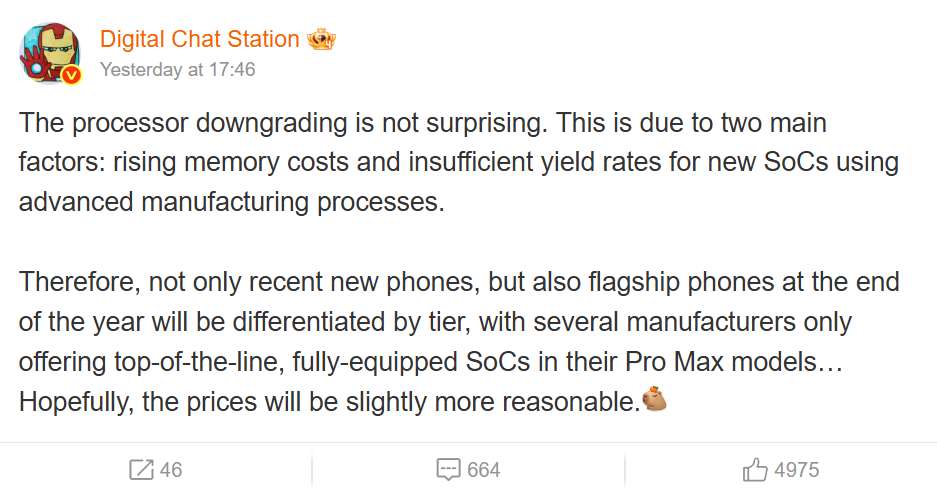
According to known tipster Digital Chat Station, the next wearable is expected to build on the brand’s existing AI glasses ecosystem by adding more advanced features. This includes a built-in translation feature, which would operate directly from the wearable without needing a separate smartphone app for basic tasks. So users can communicate more easily across more languages. It would also have Huawei’s upcoming smart wearable be in line with other recent smart glasses, which also offer real time translation and AI interactions.

Huawei Smart Glasses

Furthermore, the Chinese tech giant’s new AI smart glasses likely bring deeper integration with the HyperOS ecosystem. Apart from just translation, reports claim the glasses will be capable of taking photos and videos, recording audio, and playing music through onboard speakers and microphones, making them more than just an eyewear accessory. These features hint at a multifunctional device similar to the Meta Ray-Ban AI Glasses.

DCS claims that the new glasses will use three lithium batteries to balance power and weight. It is also expected to come in multiple color variants, namely Streamer Silver, Titanium Silver Gray, and Modern Black. The tipster further adds that the new Huawei AI Glasses could launch in the first half of 2026. Keep in mind that this is still just an unconfirmed report, so take this with a pinch of salt for now.

For more daily updates, please visit our News Section.
Tech enthusiast? Get the latest news first! Follow our Telegram channel and subscribe to our free newsletter for your daily tech fix! ⚡

Realme Neo 8 price, variants leak as camera details get officially revealed

The Realme Neo 8 is slated to go official in China tomorrow. Ahead of the launch, the brand has rolled out fresh posters confirming the primary and periscope telephoto camera details. Meanwhile, a screenshot revealing the different variants along with their pricing is now doing the rounds on Chinese social media platforms, offering an early look at the phone’s positioning.

Realme Neo 8 price leak

Realme Neo 8 price leak

The above screenshot, which reveals the pricing details of the Realme Neo 8, has reportedly originated from Oppo’s smart customer support system. The leak reveals four configurations, including 12GB+256GB, 12GB+512GB, 16GB+512GB, and 16GB+1TB variants.

As per the leak, these variants are priced at 2,599 Yuan ($375), 3,099 Yuan ($457), 3,399 Yuan ($490), and 3,899 Yuan ($560), respectively. While color options are not mentioned in the leak, the phone is expected to be available in Origin White, Mecha Grey, and Cyber Purple shades.

Realme Neo 8 camera details confirmed

Realme has officially confirmed that the Neo 8 will feature a Sony IMX896 primary camera. In addition, the phone will come equipped with a periscope telephoto camera that supports 3.5x optical zoom, 7x lossless zoom, and up to 120x digital zoom. Some reports also suggest that the device could include a Sony LYT-600 sensor as part of its camera setup.

As per TENAA listings, the rear camera system will also include an 8-megapixel ultra-wide lens. For selfies, the Realme Neo 8 is expected to feature a 16-megapixel front camera.

Beyond cameras, the Neo 8 is tipped to pack a 6.78-inch flat AMOLED display with 1.5K resolution and a 165Hz refresh rate, powered by the Snapdragon 8 Gen 5 chipset. It is expected to house an 8,000mAh battery with 80W fast charging, run Realme UI 7 based on Android 16, and offer features such as an ultrasonic in-display fingerprint sensor, IR blaster, metal frame, glass back, IP68/69 water and dust resistance, and PC handheld gaming mode.

Some reports claim that the Neo 8 could be rebranded globally as the Realme GT 8, though there is no clarity yet on its international launch timeline.

For more daily updates, please visit our News Section.

Stay ahead in tech! Join our Telegram community and sign up for our daily newsletter of top stories.

Honor Magic8 Pro Review: A Leap Forward For The Series

Honor Magic8 Pro

The wait is finally over for global flagship enthusiasts eager for the Honor Magic8 Pro. While the device shares core configurations with its China-only counterpart, targeted adjustments have been made to align with regional regulatory requirements and user demands. For reference, the Chinese version has a high-capacity 7,200 mAh battery and 120 W wired fast charging, whereas the global version has more modest specifications — a trend previously seen in models such as the Vivo X300 Pro. Despite the reduced battery capacity, however, the Honor Magic8 Pro (Global) outperforms the Vivo flagship in terms of real-world battery endurance.

As our OnePlus 15 China vs. Global comparison analysis highlighted, many brands choose to reduce the battery capacity of devices intended for non-Chinese markets, particularly EU-compliant variants, in order to comply with strict regional regulations. This raises two key questions: what modifications have specifically been implemented on the global Honor Magic8 Pro, and what exclusive features does it offer international users? This review summarises weeks of real-world testing to answer these questions.

Band Support & eSIM

Above all, support for 5G bands is the key factor in determining the viability of Chinese flagship smartphones in overseas markets. Fortunately, the Honor Magic8 Pro (Global) supports almost all of the major European 5G bands (Congratulations to European users!). My colleague Paco conducted a field test in the UK and verified stable connectivity and consistent data speeds, even in high-traffic urban areas and remote mountainous areas.

Compatibility testing also confirms support for most North American 5G bands, with only a small number of US carriers excluded from the list. For the majority of users in Europe and North America, this translates to seamless, reliable 5G performance.

The most notable upgrade for global travellers and digital nomads is eSIM support, a feature that was unavailable on the China-only model. The device offers a variety of connectivity options, including dual nano-SIMs, dual eSIMs, or a combination of one nano-SIM and one eSIM. This flexibility allows users to switch between local carriers while travelling internationally without having to swap physical SIM cards, making the Honor Magic8 Pro (Global) one of the most travel-friendly Android flagship phones currently available.

Battery

Next, this review examined the battery life and charging speed of the Magic8 Pro, which has been the subject of much discussion around the world. The China model sets a high benchmark with its 7,200 mAh battery and 120 W wired charging; the global variant, however, has a 7,100 mAh battery and 100 W wired charging. While this appears to be a significant compromise on paper, real-world testing yields a contrasting conclusion.

A standardized battery stress test was conducted, encompassing the following scenarios:

  • 1 hour of 1080p YouTube video streaming
  • 1 hour of social media browsing and interaction
  • 30 minutes of 4K video recording
  • 1 hour of 5G web browsing
  • 30 minutes of graphics-intensive gaming

Test results demonstrate impressive power efficiency across all scenarios. Heavy users can retain 15–20% battery power by bedtime after a full day of intensive use, while light users can extend a single charge to two complete days. The 100W wired charging still delivers rapid replenishment, charging the battery from 0% to 50% in just 12 minutes and achieving a full charge in less than 30 minutes—sufficient for quick top-ups between daily activities.

Camera System

The global Magic8 Pro has the same camera hardware as its Chinese counterpart, which is a key advantage for photography enthusiasts. However, a critical question remains: does the camera system live up to flagship standards, or is it the ‘least competent’ among top-tier Android devices, as some critics have claimed? This section analyses sample images and real-world performance to provide a definitive answer.

In bright daylight (as the afternoon sun neared sunset), the main sensor provides an exceptional dynamic range, preserving sharp details in overexposed skies and shadowed foregrounds without the need for artificial colour enhancement. Colour reproduction is neutral and true to life, with no oversaturation, making it ideal for landscape, cityscape and travel photography.

The 200MP Super Night Telephoto lens is the undisputed standout component of the camera system. It captures clear, sharp candid shots even in low-light environments, and with CIPA 5.5-level optical image stabilization, it maintains crisp details at 10–30x zoom ratios.

Distant subjects—ranging from pedestrians in crowded squares to intricate building facades—are rendered with minimal noise in low-light telephoto mode. This feature establishes the Magic8 Pro’s competitive edge over many of its counterparts in the telephoto imaging category.

Although the ultra-wide-angle lens is the sole underperforming component, this is not an indication of poor quality. With a focal length of 12 mm, it captures expansive scenes with solid edge sharpness and minimal barrel distortion. However, it lacks the visual impact of the main and telephoto lenses. Nevertheless, it remains a viable option for architectural photography and group portraits.

Camera features are characterized by practicality, with no flashy gimmicks cluttering the interface. Film filters, AI subject tracking, and one-tap AI enhancement simplify the shooting process for novice users, while the dedicated AI button—a feature not available on iPhone devices—enables quick access to camera launch or zoom adjustments, facilitating the capture of spontaneous moments without navigating complex menus.

Compared to flagships from Xiaomi, Vivo, and Oppo, the Magic8 Pro’s imaging system lacks a distinctive, stylized color profile. For users who prioritize true-to-reality image output over processed, social media-optimized shots, however, this is a significant advantage.

Video Performance

Video performance represents the only shortcoming of the Magic8 Pro’s imaging suite, falling short of its photographic capabilities. Low-light footage exhibits noticeable noise and inconsistent white balance, with color tones fluctuating between warm and cool in mixed-light environments such as restaurants or night markets—a distraction for professional video creators.

On the positive side, the device supports 4K 60fps HDR Vivid recording across all lenses, as well as 4K 120fps slow-motion recording on the main and telephoto lenses. For daytime vlogging or casual video shooting, it meets basic requirements, but it is not a preferred choice for professional video production.

Display

To enhance ergonomics, Honor has slightly reduced the display size of the global variant, but it retains the same curved LTPO OLED panel as the Chinese model, ensuring no compromises in design or visual quality.

The 1.5K resolution strikes an optimal balance between sharpness and power efficiency. In real-world usage, display clarity is nearly indistinguishable from 2K screens, with crisp text rendering and detailed image presentation, and no visible pixelation even at close viewing distances. LTPO technology adjusts the refresh rate dynamically between 1–120Hz based on content type, conserving battery life without sacrificing visual smoothness.

The display’s most prominent selling point is its industry-leading eye-care technology. A combination of 4,320Hz high-frequency PWM dimming and DC-like dimming significantly reduces eye strain caused by screen flicker—a common issue with low-frequency PWM displays. Low-light testing confirms that flicker is nearly imperceptible, making the device far more comfortable to use at night than many competing flagships. Honor has also integrated dedicated features for users with dry eye syndrome, a thoughtful design element that differentiates the device from its peers.

Performance & Software

Under the hood, the Honor Magic8 Pro (Global) is powered by the latest flagship SoC, which is specifically optimized for regional 5G band support. The processing architecture is identical to the Chinese model, and it retains the same advanced cooling system—an essential feature for maintaining performance in extreme climates, ranging from the scorching temperatures of Middle Eastern deserts to the frigid conditions of Northern European winters.

Benchmark tests and gaming trials validate its flagship-level performance credentials. Graphically intensive games such as Genshin Impact run smoothly at a stable 60fps with medium-to-high settings, and even during 2-hour marathon gaming sessions, the device remains cool to the touch, with minimal thermal throttling.

For global consumers, the software represents a major highlight. The core experience of MagicOS 10 is 100% consistent with the Chinese version, with three standout features:

  • Intuitive multitasking: Floating windows, split-screen mode, and app cloning function seamlessly, allowing users to run two apps simultaneously or clone social media accounts for work and personal use—a critical advantage for international professionals.
  • Powerful AI tools: Beyond basic translation and document scanning, the device offers smart text extraction, enabling users to extract phone numbers, addresses, or URLs from images with a single tap.
  • Bloat-free interface: Unlike other Android custom skins, MagicOS 10 excludes region-locked pre-installed applications. Most importantly, it provides full access to the Google Play Store—a key feature absent from the China-only model.

Final Verdict

The Honor Magic8 Pro (Global) is a well-rounded flagship that addresses the core needs of international users. It retains the top-tier camera system, eye-friendly display, and flagship-level performance of the Chinese model, while delivering the same polished MagicOS 10 experience. The adjustments to battery and charging specifications have minimal impact on daily usage, and 80W wireless charging is consistently available across all regions.

Its greatest strengths for global users are broad 5G band support and eSIM compatibility—two features that resolve the primary pain points associated with using Chinese flagships overseas. For travelers, digital nomads, and anyone seeking a reliable, high-performance Android flagship, the device represents a compelling option.

In summary, the Honor Magic8 Pro (Global) is a worthy investment for consumers seeking a powerful, travel-friendly flagship smartphone that strikes the right balance between performance, cameras, display quality, and battery life without unnecessary compromises.

New Motorola Budget Phones Leaked: 108MP Main Camera, OLED displays, & More

A new leak has just revealed key details of Motorola‘s upcoming Moto G77 and Moto G67. The details were revealed after an online retailer’s listing got leaked, which also shared early renders of the pictures. These listings paint a clear picture of Motorola’s next generation G-series ahead of their official announcement. So let’s check it out.

Moto G67 Specifications

The Motorola Moto G67 leak shows the phone will sport a large 6.8-inch Extreme AMOLED display with a 1.5K resolution, a 120Hz refresh rate, up to 5,000 nits of peak brightness, and Corning’s Gorilla Glass 7i for protection. Under the hood, it’s tipped to be powered by a MediaTek Dimensity 6300 chipset paired with 4GB of RAM and 128GB of storage, which can also be expanded by up to 2TB via a microSD card slot.

For photography, the rear features a 50MP Sony LYT600 primary sensor with an f/1.8 aperture and an 8MP ultra wide angle lens with an f/2.2 aperture. Meanwhile, the front houses a 32MP shooter with an f/2.2 aperture for selfies and video calls. A sizeable 5,200mAh battery pack powers this model, which supports 30W wired fast charging. Motorola is also offering an IP64 rating for water and dust resistance along with a MIL-STD-810H certification for added durability.

Motorola's Moto G77 & G67
Moto G67 and Moto G77

Moto G77 Specifications

The Moto G77 shares many of the core specs seen on the G67. You get the same 6.8-inch Extreme AMOLED display with a 1.5K resolution, a 120Hz refresh rate, up to 5,000 nits of peak brightness, and Corning’s Gorilla Glass 7i. Even the 32MP selfie camera and 8MP ultra wide angle lens. However, it steps up the hardware with a MediaTek Dimensity 6400 processor and 8GB of RAM for more responsive performance.

That’s not all, the Moto G77 is expected to feature a 108MP primary camera with an f/1.8 aperture. So we can expect a capable photography experience from this mid range device. Other notable features include stereo speakers with Dolby Atmos support, an IP64 rating for water and dust resistance, and a similar military grade durability.

Shared Features

Both the Moto G67 and Moto G77 are rumored to run on the Android 16 OS out of the box. Alongside this, you get a hybrid dual SIM support, 5G connectivity, WiFi, Bluetooth, and NFC. The large OLED panels and balanced battery sizes suggest Motorola is aiming for devices that combine everyday usability with strong multimedia performance without pushing into the premium price bracket. Unfortunately, the pricing and official launch details are still at large.

For more daily updates, please visit our News Section.
Don’t miss a thing! Join our Telegram community for instant updates and grab our free daily newsletter for the best tech stories!

Realme devices eligible for four major Android OS updates: Here’s the complete list

Realme four major Android OS updates list

Realme started offering four major Android updates to its devices last year, beginning with the Realme GT 7. Some more devices later arrived with this updated software policy, but the overall list is still too short, as Realme hasn’t expanded the new policy beyond the premium segment.

We’ve curated a list of Realme devices that promise four years of Android OS updates. Take a look at it below:

  • Realme GT 8 Pro (last update: Android 20)
  • Realme GT 8 (last update: Android 20)
  • Realme GT 7 (last update: Android 19)
  • Realme GT 7T (last update: Android 19)

If your Realme device is on the list, you’re in luck. But millions of Realme users are getting up to three Android OS updates, while brands like Samsung offer up to six on many of their budget phones, and their high-end phones get seven OS updates.

The four Android OS update policy is very welcoming from Realme, but it really shouldn’t be limited to premium phones. Even premium mid-range phones, such as the Realme 16 Pro+, which costs up to INR 45,000, only guarantee up to three Android OS updates.

Realme really needs to up its software update policy, as its competitors are doing it aggressively. Take Motorola, for example: the brand isn’t well-reputed for software updates, but it has been greatly improving rollout speed for the last few months. Not just that, the brand now promises up to five major OS updates for many of its mid-range phones, and recently matched Google and Samsung by promising seven years of Android OS support for the Motorola Signature smartphone.

Its Chinese rivals, including Oppo and Xiaomi, are also ahead with up to five major Android OS updates. Additionally, they promise longer updates to newer mid-range phones. So, I guess Realme wouldn’t want its customers to switch to other brands just for this reason, and therefore, we’ll likely see an improved software update policy anytime soon, at least for mid-range phones.

Remember to visit the Realme section regularly for the latest updates. Alternatively, you can join our Telegram channel for instant notifications about the latest happenings in tech.

Oppo Find X9 Ultra leaked images reveal 4.28x teleconverter with 300mm reach

The Oppo Find X9 Ultra is expected to launch soon in China, and fresh leaked images are beginning to offer a clearer idea of what the device may bring. These images primarily highlight an upgraded teleconverter accessory, suggesting a noticeable improvement over the one available for the Find X9 Pro.

Find X9 Ultra: Bigger teleconverter and long-range photography focus

The leaked images indicate that the Oppo Find X9 Ultra will support a redesigned external teleconverter accessory and show the device being tested outdoors with the attachment fitted, suggesting Oppo is refining real-world performance. Unlike the Find X9 Pro’s optional 3.28x teleconverter, the larger new unit for the X9 Ultra is said to deliver 4.28x optical magnification, translating to an effective 300mm focal length.

The accessory itself looks larger and more complex than before, reportedly featuring additional optical elements. This setup is expected to work in tandem with a 200-megapixel periscope telephoto camera, allowing users to capture detailed shots with true optical depth rather than relying heavily on digital cropping.

Oppo Find X9 Ultra specifications (rumored)

Leaks suggest that the Find X9 Ultra will retain a dual periscope telephoto configuration. Apart from the 200-megapixel OmniVision OV52A periscope telephoto camera, which will offer 3x optical zoom, the second periscope camera is tipped to be a 50-megapixel unit supporting 10x optical zoom.

The rest of the camera setup is expected to include a 200-megapixel Sony LYT-901 main camera, a 50-megapixel Samsung JN5 ultra-wide lens, and a dedicated multispectral sensor for improved color accuracy. Both the main and telephoto cameras are said to support optical image stabilization. For selfies, it may feature a 50-megapixel front camera with autofocus support.

Beyond cameras, the Find X9 Ultra is rumored to feature a 6.82-inch 2K AMOLED flat display, the Snapdragon 8 Elite Gen 5 chipset, ColorOS 16, full-level dust and water resistance, and a battery exceeding 7,000mAh with fast wired and wireless charging. The phone is expected to debut in China around March. It is also likely to launch in other markets.

For more daily updates, please visit our News Section.
Stay ahead in tech! Join our Telegram community and sign up for our daily newsletter of top stories.

iQOO 15 Ultra schematic emerge to reveal design, company exec. reveals unprecedented gaming performance

iQOO has started teasing its first Ultra-branded smartphone, with early details pointing towards a clear emphasis on performance. In a recent development, tipster Digital Chat Station shared an internal schematic of the iQOO 15 Ultra, while iQOO Product Director Galant V highlighted its gaming capabilities in a Weibo post. Together, these updates suggest the device is being designed with sustained gaming performance in mind, rather than positioning it as a conventional flagship.

iQOO 15 Ultra schematic

iQOO 15 Ultra schemeatic
iQOO 15 Ultra schematic

According to Digital Chat Station, the shared schematic highlights a hidden active cooling setup inside the iQOO 15 Ultra. The air intake is discreetly placed beneath the rear camera module, while the exhaust vent sits along the side frame. This layout allows the phone to accommodate a large 17 x 17 x 4mm cooling fan, said to be the biggest used in the segment so far, positioned directly next to the main chipset.

The design reportedly creates a wide airflow channel inside the chassis, improving heat dissipation efficiency without altering the external appearance. Despite the inclusion of a fan and independent air duct, the overall industrial design and protection levels are said to remain unaffected. Alongside this, the phone is tipped to feature an extra-large vapour chamber heat spreader, with a surface area said to reach up to 8,000 square millimetres, further strengthening thermal control during long gaming sessions.

The tipster has also revealed that the iQOO 15 Ultra will arrive in 16GB+512GB and 24GB+1TB variants. This Snapdragon 8 Elite Gen 5-powered device was recently spotted with a record-breaking AnTuTu score of 4.51 million.

Gaming stability backed by software and hardware

iQOO 15 Ultra gaming perofrmance
iQOO 15 Ultra gaming performance

On the performance side, Galant V has highlighted iQOO’s focus on real-world gaming stability rather than peak frame rates alone. The iQOO 15 Ultra is claimed to handle one of the most demanding mobile games at the highest visual preset, 60 frames per second, while keeping both average frame rate and 1 percent low frame rate fully stable. Power consumption in this scenario is said to hover just above 7W, indicating tight control over efficiency.

This stability is credited to a combination of iQOO’s in-house Monster Super Core Engine, which works at a deep system level, and the brand’s first active cooling solution branded as the Ice Dome Air Cooling System. With this approach, iQOO positions the 15 Ultra as a performance exploration device aimed squarely at high-end mobile gamers who value consistency under extreme loads.

For more daily updates, please visit our News Section.

Stay ahead in tech! Join our Telegram community and sign up for our daily newsletter of top stories.

Honor 500 Pro POPMart Molly Edition Now Available at Giztop for $899

Honor has launched a truly eye-catching smartphone: the Honor 500 Pro POPMart Molly Edition, now available on Giztop for $899. This special edition isn’t just about performance; it blends flagship power with collectible art-inspired design.

The phone features a 6.55-inch AMOLED display with FHD+ resolution, a 120Hz refresh rate, and an impressive 5000 nits peak brightness, making it perfect for streaming, gaming, and outdoor use. Powering the device is the Qualcomm Snapdragon 8 Elite SoC, paired with 16GB RAM and 512GB storage, ensuring smooth multitasking and fast performance.

Photography is a major highlight. The triple rear camera setup includes a 200MP main sensor with gimbal OIS, a 50MP telephoto lens with 3x optical zoom, and a 12MP ultra-wide camera. Selfie lovers get a sharp 50MP front camera.

The massive 8000mAh battery supports 80W fast wired charging, 50W wireless charging, and 27W reverse charging, easily lasting more than a day. The phone runs Magic UI 10.0 based on Android 16, offering a clean and fast user experience.

Exclusive POPMart Molly Collector Box:

What makes this edition special is the box, which includes exclusive Molly-themed accessories, custom art cards, stickers, red envelopes, and even refrigerator magnets, making it a collector’s delight.

If you want a powerful phone with personality, the Honor 500 Pro POPMart Molly Edition stands out.


Read More:

Xiaomi launches Sound 2 Pro Hi-Fi speakers with premium metal build

Xiaomi has expanded its home audio lineup with the Sound 2 Pro speaker. This model is designed to offer high fidelity sound and a premium metal body. It is positioned right below the larger Xiaomi Sound 2 Max, but still offers powerful sound, two way audio, a sleek new look, and much more. So here are all the details.

Xiaomi Sound 2 Pro Specifications

The Chinese tech giant’s latest Xiaomi Sound 2 Pro is crafted with a metal enclosure that not only makes it sturdy but also makes it feel premium. Its design is quite similar to the larger Sound 2 Max model, while scaling down in size and output to keep costs accessible for a broader audience. The speaker uses a two-way crossover setup with separate drivers for mid-range and high frequencies, delivering clear highs and substantial bass from its 40W mid-woofer and 20W tweeter configuration.

Xiaomi Sound 2 Pro HiFi Speakers

In other words, you get a total 60W output of balanced audio playback. On the connectivity front, the Sound 2 Pro supports Bluetooth 5.2 for traditional wireless streaming and Wi-Fi 6 for robust home network integration. It also includes RCA and USB-C inputs for analog and digital audio sources, making it flexible enough to connect to TVs, laptops, and other audio equipment. Users can pair up to four Sound 2 Pro speakers simultaneously, allowing for wider sound coverage or synchronized playback.

The speaker also integrates with Xiaomi HyperOS smart home ecosystems. Xiaomi has just announced the Sound 2 Pro for 1,399 Yuan, which is roughly around 201 US Dollars. At the moment, this device has only been released in the brand’s home market of China, and there has been no confirmation of an international release.

For more daily updates, please visit our News Section.

Tech enthusiast? Get the latest news first! Follow our Telegram channel and subscribe to our free newsletter for your daily tech fix! ⚡

BMAX B9 Power Mini PC Drops to $499.99: Core i9 Performance at 50% Off

Designed for professionals who want desktop-class performance without the bulk of a traditional tower, the BMAX B9 Power Mini PC stands out as a compact yet powerful computing solution. It is currently available for $499.99, reduced from $999.99, delivering a substantial 50% discount for a limited time.

At its core is Intel’s Core i9-12900HK processor, a high-performance chip built to handle demanding workloads such as software development, data analysis, advanced office multitasking, and creative production. Paired with LPDDR5 memory and a 1TB NVMe SSD, the system offers fast boot times, smooth multitasking, and reliable performance when working with large files or multiple applications simultaneously.

The B9 Power is also designed for productivity-focused setups. Support for triple 4K displays via HDMI, DisplayPort, and USB-C allows users to build efficient multi-screen workstations for trading, content creation, or professional office environments. Modern connectivity options, including Wi-Fi 6 and Bluetooth 5.2, ensure stable wireless performance and compatibility with current peripherals.

Thermal management is another strong point, with an advanced cooling system that helps maintain consistent performance during extended workloads. Added features such as One-Click System Rescue provide extra reliability, allowing quick system recovery when needed.

At half its original price, the BMAX B9 Power Mini PC offers exceptional value for power users, professionals, and businesses looking to upgrade to a compact yet capable system while this limited-time deal is available.