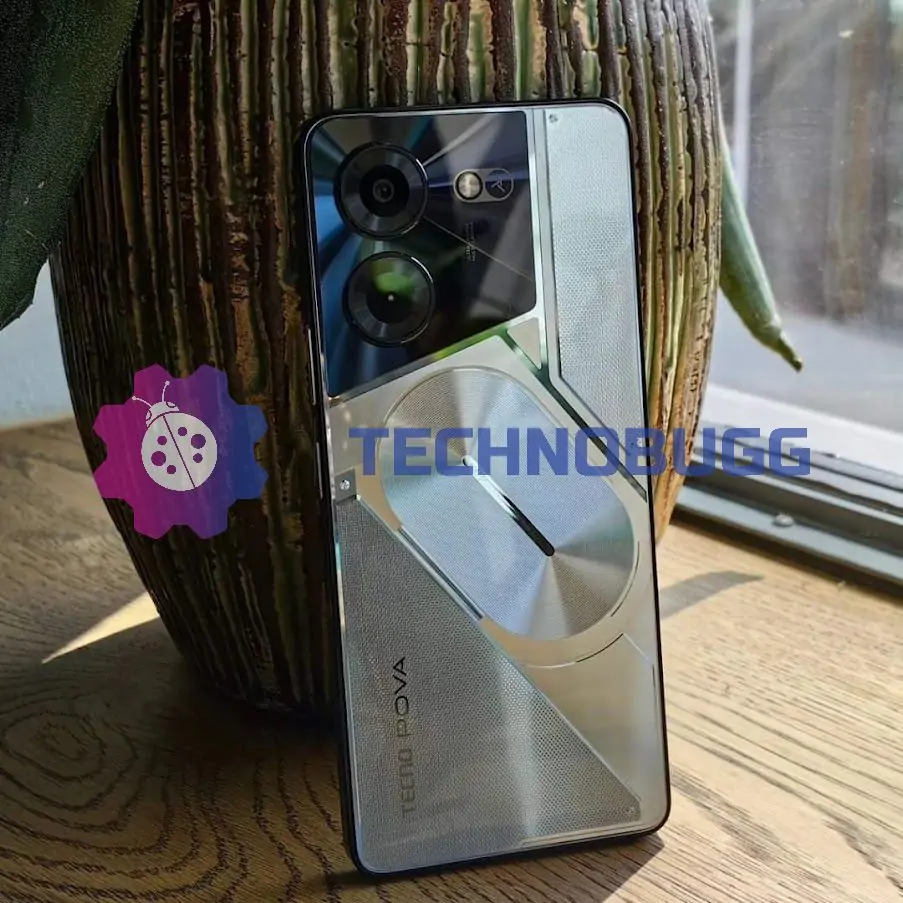
Last week, we got the first glimpse of the Tecno Pova 5 4G smartphone via a leaked dummy model courtesy of tipster Paras Guglani. The tipster has now leaked the live images of the actual device in collaboration with Tecnobugg.
The device pretty much looks exactly like the dummy shared earlier but with a few added details on the back. Instead of a boring frat back, the brand appears to be going for a metallic look with a titled oval as the centerpiece. The camera island is all glass with two large cutouts and a smaller one beside the LED flash. Other than the image, the tipster has also shared some key specifications of the device.
Tecno Pova 5 4G specs
According to the report, the upcoming Tecno Pova 5 4G smartphone will feature a 6.82-inch punch-hole IPS LCD display with an HD+ resolution, a 20.5:9 aspect ratio, and a smooth 90Hz refresh rate. The device will sport a 50MP primary camera, a 2MP secondary camera, and an 8MP front camera, offering versatile photography capabilities.
An earlier leak revealed that the device will feature a MediaTek Helio G99 chipset. It will run on the HiOS 12.0 overlay based on Android 13, providing an enhanced user experience and Widevine L1 support for HD content streaming on OTT platforms. With a 6,000mAh battery, the Pova 5 4G is expected to support 45W fast charging. The smartphone will be available in two color options, namely Amber Gold and Mecha Black, and offer up to 8GB of RAM and 256GB of storage.
The EU (European Union) is apparently planning on bring back an old staple feature that has almost completely disappeared from the smartphone industry. A new rule is being pushed for the return of batteries that can be replaced by users.
EU to wants to bring back replaceable batteries within the next five years
The European Parliament recently approved a new rule that is based around the production, design, and recycling of all rechargeable batteries that are being sold in the region. This new rule will not only electric vehicles but even portable batteries for mobile devices like smartphones, tablets, and more. It will require manufacturers to make design changes that will allow users to remove the batteries and replace them on their own. This is also in line with one of our previous reports regarding removable batteries returning.
As of right now, the removable battery design has been nearly replaced for sealed battery packs that require special tools and knowledge to remove. Notably, this news also arrives after the EU also pushed for a USB Type C standardization, which is forcing Apple to comply for its future iPhones and other products. The move seeks to help in easier recovery and recycling of old batteries and reducing the overall waste.
This new rule will go into effect by early 2027, but the EU might postpone this based on the manufactures ability to make such a major redesign. Keep in mind that the sealed smartphones also help in bringing better protection against the elements and were also seen as a cost cutting measure for the companies. It remains to be seen how different OEMs respond to this decision so stick around for more updates.
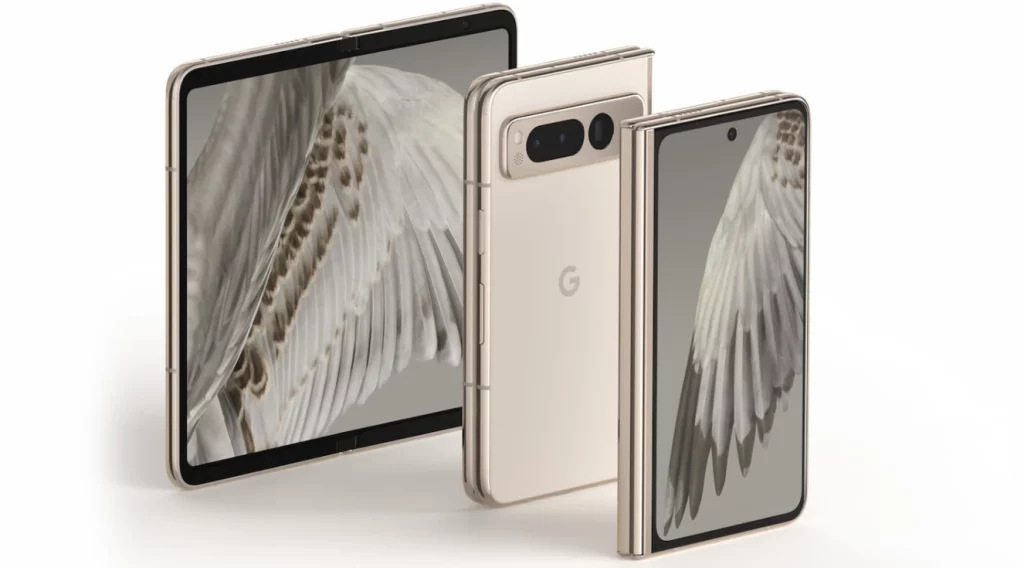
Last month, Google unveiled its first-ever foldable phone called the Pixel Fold. The search giant previously revealed that it was indeed working on a second foldable phone that didn’t make it to the market. Now, in an interview with Engadget, two Google Product Managers have revealed more information on the Pixel Fold’s various aspects. Read on to know more below.
More details on the Pixel Fold revealed
The interview highlights how Google’s Pixel Fold differs from Samsung’s Galaxy Z Fold. The former has a compact form factor with a wider aspect ratio that resembles a passport. One of the product managers on the Pixel Fold team, Hwang says that Google wanted to make the foldable phone’s exterior display usable so that users can use it like a regular phone for quick interactions without having to open the device. The search giant focussed on exterior display first unlike other brands that focus on interior screen.
Hwang also reveals the Pixel Fold’s hinge, bezels, crease, and camera system. The Pixel Fold team designed a unique hinge mechanism that relocates the hinges to the very edge of the device. It reduced the thickness of the device, increased the difference between interior and exterior screen sizes, and Google was also able to make a phone that folds completely flat. The Pixel Fold’s bezels on the interior display were widely criticized, however, Hwang explained that Google opted for bezels to avoid using an under-display camera, improved durability and water resistance, and to provide a resting area for hands. The search giant also decided on a hybrid approach that produces a water drop-like fold instead of a full crease for minimizing the visibility of the crease.
Hardware and software are important parameters to enhance the foldable phone’s capabilities. Andrea Zvinakis, Product Manager from the Android Platforms team highlighted the importance of continuity and posture for the Pixel Fold. The former refers to the position of the phone’s screen from open to closed and every angle in between. She added that posture detection can enable dual-screen interpreter mode that allows two people to see different languages translated in real-time on each side of the screen. Zvinakis also mentioned other features such as a taskbar, dual shade, and split-screen.
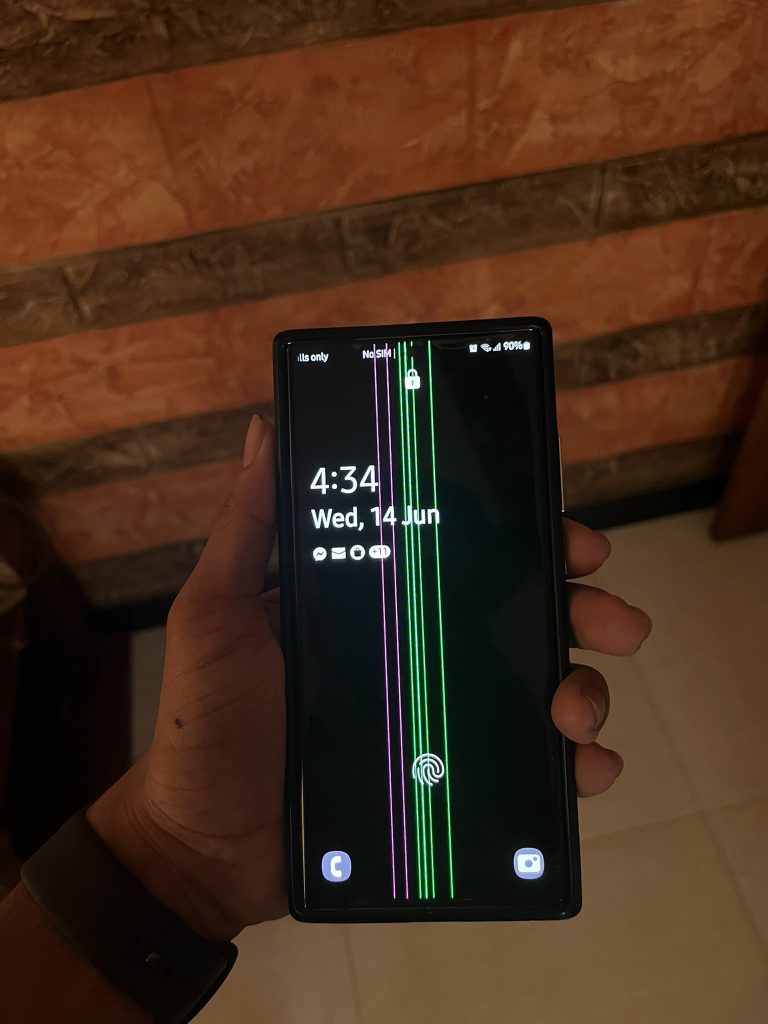
Samsung has taken a customer-centric approach by offering a free screen replacement for Galaxy Note 20 Ultra users who encountered a display issue after installing a recent software update. The problem manifested as green and pink lines appearing vertically across the screen following the installation of the June 2023 security update.
Samsung Resolves Green Line Issue for Free
While this issue has been reported in India, it is not isolated to this region, as other Samsung smartphone models and even devices from other brands utilizing Samsung Display’s OLED screens have also encountered similar problems. Recently a user reported a similar pink line issue on Samsung Galaxy S21 following May 2023 update.
Although Samsung has not officially acknowledged the issue at this time, the company promptly responded to one Galaxy Note 20 Ultra user (@CoconutShawarma) and replaced both the OLED screen and the battery free of charge. Despite the affected device being out of warranty, Samsung took responsibility for the issue, potentially indicating a fault with either the software or the OLED screen itself.
Samsung’s proactive approach in resolving this matter is commendable. However, if the issue is indeed caused by faulty software or display panels, it is crucial for the company to address the problem globally and extend the same free replacement offer to all Galaxy users worldwide who have encountered similar issues.
Overall, Samsung’s gesture of replacing the affected Galaxy Note 20 Ultra screens and batteries free of charge demonstrates their commitment to customer satisfaction, and it highlights the importance of promptly addressing potential hardware or software concerns for a seamless user experience.
Back in November 2022, Sony had officially unveiled the new LYTIA branding for its new range of image sensors that were built specifically for mobile devices. Now, the company has finally revealed a couple of new image sensors from this new lineup. So here are all the details.
Sony LYTIA series brings new 50MP image sensors
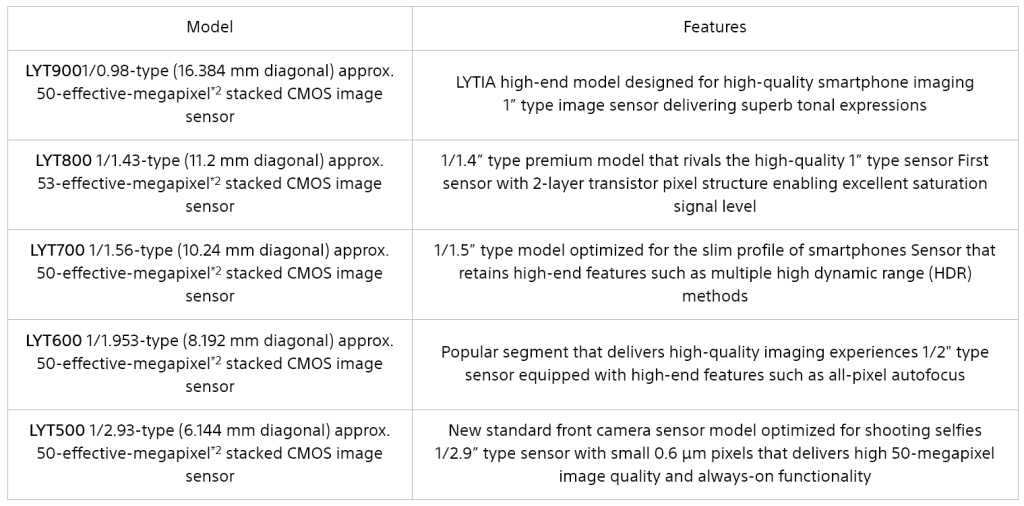
Previously, the company offered its IMX series for its latest and most advanced image sensors. And now, it appears to be expanding its image sensor lineup that will be offered to different mobile platforms. Although, it is still unclear if the LYTIA brand will eventually replace the IMX series or simply co-exist alongside it. Sony’s Semiconductor Solutions unit will launch new sensors that effectively have a 50 megapixel across the lineup.
The base model is the new LYT500, which has a small 1/2.93 inch sensor with 0.6 micron pixels. On the other hand, the higher end LYT700 is HDR enabled and features a 1/1.56 inch sensor size. The higher end LYT800 is for premium devices and is the first imaging CMOS to support a “2 layer transistor pixel structure, enabling excellent saturation signal level”. However, the lineup doesn’t end there with a flagship sensor dubbed the LYT900 built for top end devices.
This model offers a 1 inch (1/0.98 inches) sensor and will likely make its way to flagship grade smartphones. It is unclear which models will feature these new image sensors, but it will likely be found in models like the next gen Oppo Find X series phone or Xiaomi’s numbered series’ Ultra grade models. So stick around for more updates.
Baseus has expanded its range of audio devices. The brand has announced a new wireless headphone dubbed Baseus D03. Last month, the company had launched the Bowie M2s and Baseus H1i TWS ANC headphones. Read on to know more about the latest offering.
Baseus D03 specifications and features
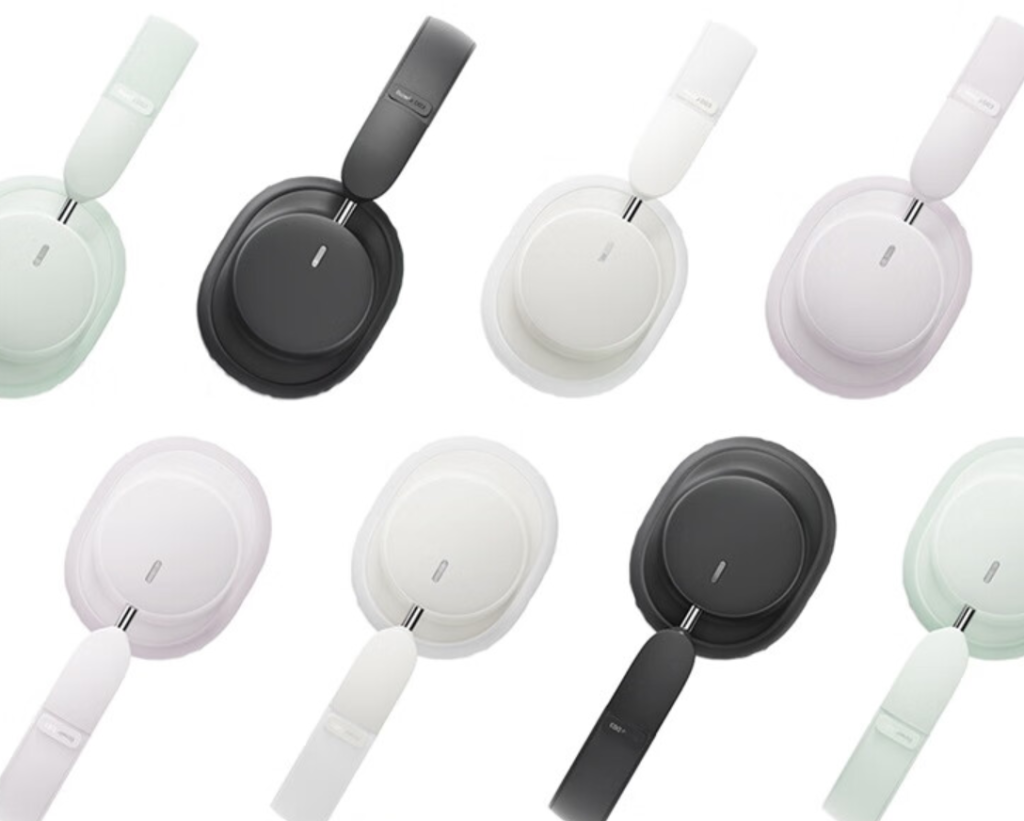
The Baseus D03 is an over-ear wireless headphone with an adjustable metal headband. The ear cushions are soft and large for a comfortable experience during long listening hours. The earcups can also be rotated to 95 degrees for different usage scenarios. The headphones feature multi-functional buttons on one side.
In terms of audio, the Baseus D03 over-ear wireless headphone is equipped with a 40mm dynamic driver for a rich and balanced sound output. It supports low-latency mode and a binaural delay of 0.08 seconds. The audio device supports Bluetooth 5.3 connectivity and a range of 10 meters. The headset also comes with a 3.5mm jack for connecting to other devices via a wired cable when the battery runs out. The Baseus D03 is powered by a 300mAh battery unit that is claimed to last 30 hours on a single usage and can be topped up via a USB-C port.
The Baseus D03 over-ear wireless headphone is priced at Yuan 109. It is offered in White, Grey, and Black color, and can be purchased from JD.com.
It has been more than 3 years since Huawei released a first-party 5G smartphone. However, in the last couple of years, the company managed to launch certain handsets with 5G support under different names with partnerships.
One of these partners is Wiko, a brand that releases select Huawei budget smartphones with 5G support. The last device from the brand was just launched in April and it is already gearing up to debut another.
A new Wiko 5G handset has been listed in the product library of China Telecom. Let’s go through the details.
The new Wiko product is surprisingly not a rebranded Huawei smartphone
Wiko’s upcoming device is officially called Wiko Hi Enjoy 60 Pro 5G. Though it sounds like a 5G version of Huawei Enjoy 60 Pro that was released in May, it is not.
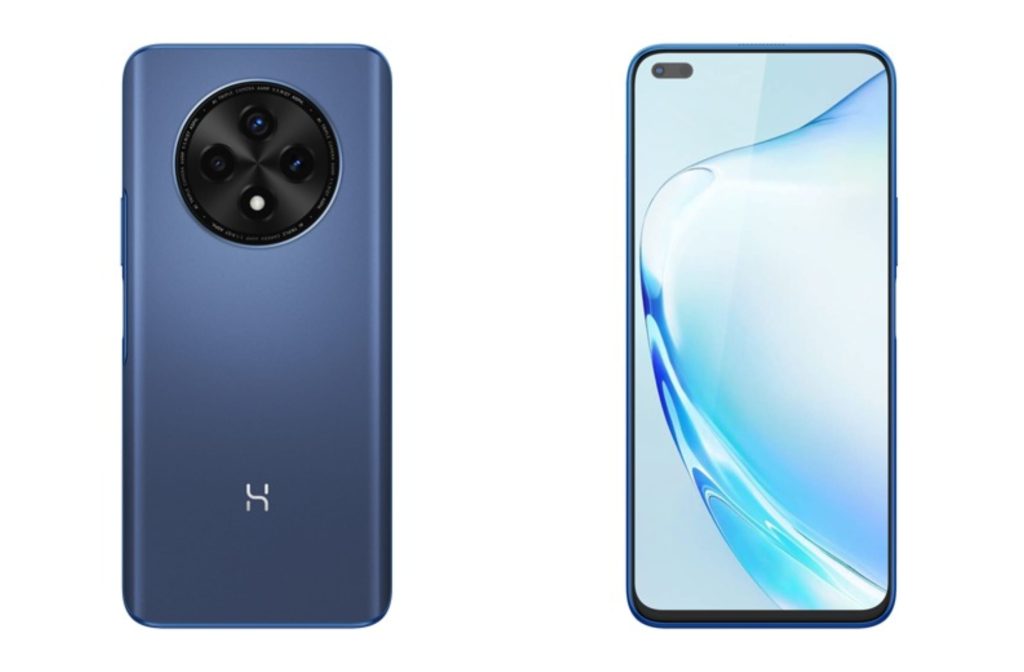
The new 5G-enabled Wiko phone not only has different specs but also a non-identical design. It has a single circular camera island on the rear and curved sides.
The handset is built around a 6.67-inch display (LCD) with a pill-shaped cutout on the top left corner. The screen offers a resolution of 2367×1080 pixels and a 120Hz refresh rate.
The smartphone is powered by a Qualcomm Snapdragon 695 chipset paired with 8GB RAM and 128GB/256GB storage. It draws energy from a 4,300mAh battery and boots Android 11.
It features a triple camera system comprising a 64MP primary sensor, an 8MP ultra-wide unit, and a 2 MP unspecified sensor. On the front, it has a 16MP snapper for selfies and video calls.
There’s no MicroSD card slot but the phone comes with a 3.5mm headphone jack, a side-mounted fingerprint sensor, and a USB Type-C port. Last but not least, it measures 161.85 × 74.7 × 8.48mm in dimensions and weighs 195g.
The Wiko Hi Enjoy 60 Pro 5G is listed at ¥1,699 (~$240) and ¥1,899 (~$265) for 8GB + 128GB and 8GB + 256GB memory configurations, respectively. The actual price could be lower and it should be known whenever the phone goes official.
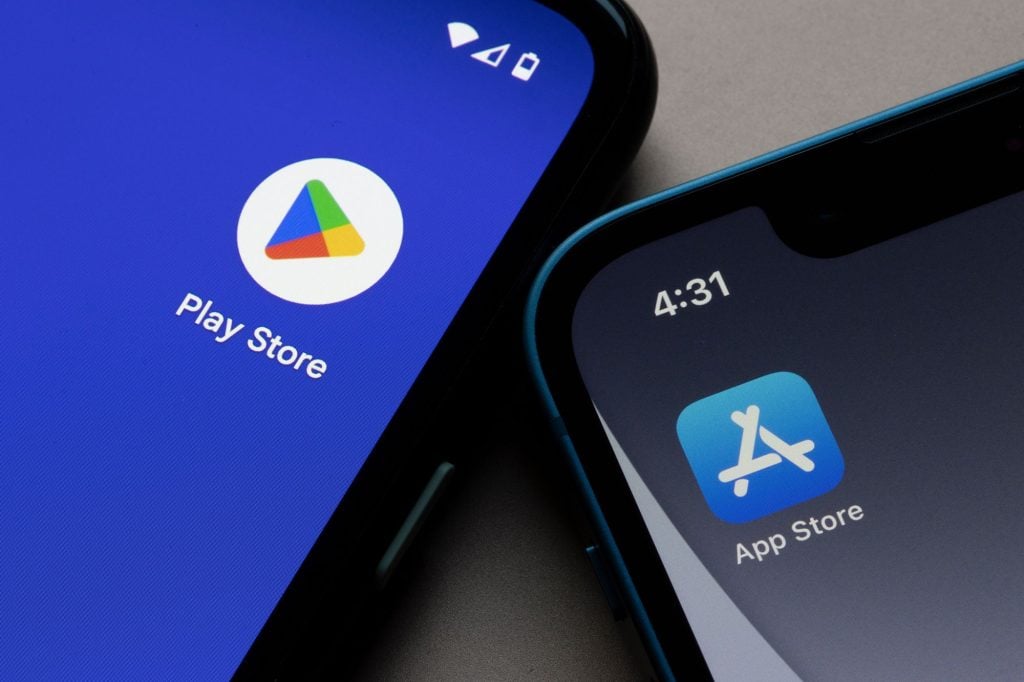
The Play Store and App Store are the only places most people go to get new apps for their phones. This is because these two stores come pre-installed on our phones, and also we don’t have any other choice. Both Google and Apple have been trying to prevent people from installing apps from other sources, which would allow them to keep their monopoly on the app market. However, Japan is preparing to change this by allowing other app stores to compete with the Play Store and App Store. Here are the details…
Japan to open up Apple and Google app stores to competition
The free market is a powerful force that drives innovation and competition. It gives consumers the freedom to choose the products and services that they want, and it gives businesses the incentive to create better products and services at lower prices. However, the app store market is not exactly free. Compaines like Google, Apple, and Huawei have all created closed ecosystems that limit the choices that developers and users have. However, this is changing soon.
Japan’s government has announced plans to open up the smartphone app stores of Apple and Google to competition. The move is aimed at spurring competition and leading to lower app prices. The new regulations would allow users to download apps from other app stores, as long as those stores meet certain security and privacy standards. The regulations would also allow users to pay for apps using third-party payment platforms.
In addition, the regulations would require Apple and Google to allow users to delete pre-installed apps and to stop giving preferential treatment to their own services in their search engines. The government says the new regulations will help to create a more level playing field for app developers and consumers. It is also expected to lead to lower app prices. The regulations are still in the draft stage, but the government plans to submit them to parliament for approval later this year.
Last month, Apple announced 20 new games for the Apple Arcade. Now the Cupertino-based tech giant has expanded its premium gaming subscription service by introducing two new games and rolling out new updates to several other popular games that have been available before. Read on to know more below.
Apple Arcade gets two new games and adds updates to other games
The newly announced game on Apple Arcade is called Jet Dragon. It is said to be developed exclusively for Apple’s gaming subscription service by Grezzo. The Japanese developer has previously worked on The Legend of Zelda series. The new game combines racing and sports management as players have to build a team, train dragons, compete against rivals, and participate in dragon races.
Another new game introduced to Apple Arcade is Bold Moves. It is a word puzzle game that integrates serene scenes, challenging levels, daily/weekly events, and inspirational quote puzzles.
Apart from the new games, Apple has also released updates for several other games like NBA 2K23 Arcade Edition, LEGO Brawls, GOAT Simulator+, Football Manager 2023 Touch, JellyCar Worlds, and Solitaire Stories.
Apple Arcade gaming service offers games with no ads and in-app purchases. Every game is playable offline and most have support for controllers. The gaming subscription service is priced at $5 monthly or $60 annually with a one-month free trial. Additionally, customers who have purchased a new iPhone, iPad, Mac, or Apple TV receive three months of Apple Arcade for free.2
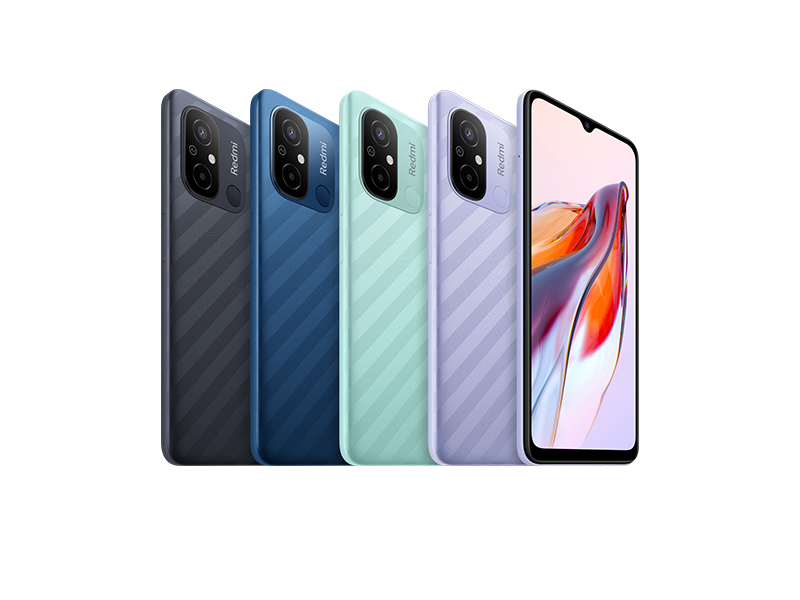
Redmi recently teased a new variant of the Redmi 12C smartphone in India. The device made its debut in the country back in March 2023 with 4GB RAM + 64GB storage and 6GB RAM + 128GB storage configurations.
Now, Redmi has announced a new configuration for the device, which will have 4GB RAM and 128GB storage. This is the perfect balance for people looking for extra storage but doesn’t have use for the additional RAM. That being said, the device has the option to extend the RAM virtually up to 3GB. The launch date of this variant is still under wraps, but the brand has already launched this configuration in Kenya.
Redmi 12C specs
The Redmi 12C smartphone features a large 6.71-inch IPS LCD display with an HD+ resolution of 1650 x 720 pixels, offering an immersive visual experience with its 20.6:9 aspect ratio, 500 nits brightness, 1500:1 contrast ratio, and 70% NTSC color gamut. Running on Android 12 with the MIUI 13 overlay, it provides a customized user interface.
Under the hood, the Redmi 12C is powered by the Helio G85 chipset, coupled with up to 6 GB of RAM and up to 128 GB of storage. The device also offers expandable storage through a dedicated microSD card slot. It offers convenient security options with face unlock and a rear-facing fingerprint scanner. For photography, it sports a 5-megapixel front camera and a 50-megapixel main camera on the back, along with a depth sensor and LED flash for capturing high-quality photos and depth information.
The device houses a substantial 5,000mAh battery with 10W charging support. Connectivity options include dual SIM capability, 4G VoLTE, Wi-Fi 802.11ac, Bluetooth 5.1, GPS, a microUSB port, and a 3.5mm headphone jack, ensuring seamless connectivity for users.
OnePlus has just updated its Community platform to include “The Lab” for its users from select regions across the globe. The Lab brings users the opportunity to apply for the community review program for the latest Nord series smartphone, which is the Nord 3.
OnePlus The Lab community review live for the next Nord
For those unaware, the Nord 3 is the latest entry in the main Nord series of mid range smartphones from the Chinese smartphone maker. This model is set to launch next month, but prior to its release, The Lab has opened applications for the brand’s Community members in India, Europe, and APAC regions. These applications are open till the 25th of June 2023. Notably, this isn’t a new practice as OnePlus has carried out its community review since the OnePlus 3 series.
To elaborate further, it basically let’s community members get a chance at reviewing the brand’s latest smartphones and offer their opinions on the new product. This application is open to everyone and is not strictly restricted to OnePlus users. However, The Lab is only live in the regions listed above. The company plans to let 6 people review their new device, out of which, 3 of the review models will be reserved to the OnePlus Community users that have also registered in the previous community review program.
The applications are currently live and you can click here to register for the chance to review the Nord 3. Meanwhile, users selection will be between the 20th and 26th of this month. Furthermore, the winners for the program will be revealed on 27th of this month.
Nothing is set to launch the Phone (2) on July 11. The brand has confirmed a few details about the upcoming offering. Now, the company’s CEO Carl Pei has revealed a transparent USB Type-C cable. The accessory will likely be limited to the Nothing Phone (2) at launch. Read on to know more below.
Carl Pei took to Twitter to share the image of the transparent USB Type-C cable and said that it is nice. The accessory will be third offering from the brand to feature a transparent design after the smartphone and TWS earbuds. The image reveals that both the end ports of the Nothing USB Type-C cable will have transparent lids instead of a plastic coating that is found on regular cables. There is also a Nothing logo inside the ports. It’s worth noting that he rest of the cable i.e. the wire is made of different materials similar to regular cables. The accessory is seen in a White color option.
It’s unclear if the Nothing USB Type-C cable will be available only for the upcoming Phone (2). It also remains to be seen if the accessory will be sold separately or bundled with the smartphone.
As for the core specifications of the Nothing Phone (2), it is confirmed to be powered by a Snapdragon 8+ Gen 1 chipset and be backed by a 4,700mAh battery unit. It will feature a transparent design with a redesigned Glyph interface that has multiple small strips surrounding the charging coil. The device will come with RAW HDR format and 4K 60 fps video recording. The smartphone is confirmed to not receive a significant price hike despite the upgrades. It is also said to be manufactured in India.
In a recent appearance at the VivaTech technology conference in France, Tesla CEO Elon Musk expressed his surprise at the level of support he received after calling for a pause on advanced artificial intelligence (AI) development. Musk had joined hundreds of tech luminaries in signing an open letter that emphasized the potential dangers of advanced AI and advocated for a six-month pause on developing technologies more advanced than OpenAI’sGPT-4 chatbot.
Musk Calls for Strong Regulation in the Face of Advanced AI Development
While Musk didn’t expect anyone to actually agree to the pause, he reiterated his stance, stating, “I just want to say, ‘I think we should pause.'” The seriousness of the letter was recognized by both its signatories and its critics, with notable figures such as Bill Gates, Senator Mike Rounds, and Geoffrey Hinton expressing their opinions on the matter.
Hinton, often referred to as the “Godfather of AI,” argued against the pause, suggesting that if research were halted in certain regions, it would continue elsewhere, particularly in China. Google CEO Sundar Pichai also acknowledged the letter as a conversation starter, emphasizing the collective action problem it poses.
Aidan Gomez, CEO of Cohere, a $2 billion AI startup, expressed skepticism about the feasibility of implementing the pause, stating that debating the extinction of humanity due to superintelligent AI. was an inefficient use of time and resources.
In contrast, Musk warned of the potential catastrophic consequences if artificial general intelligence (AGI) were not handled with care, noting that AGI could surpass human intelligence by a significant margin. He reiterated the need for strong regulation and highlighted the risk that advanced AI poses to the public. Musk emphasized the importance of minimizing the probability of negative outcomes while acknowledging the positive potential of AI.
While Musk’s call for an AI pause continues to spark debates and varying perspectives, his primary concern remains the responsible development and governance of artificial intelligence technology.
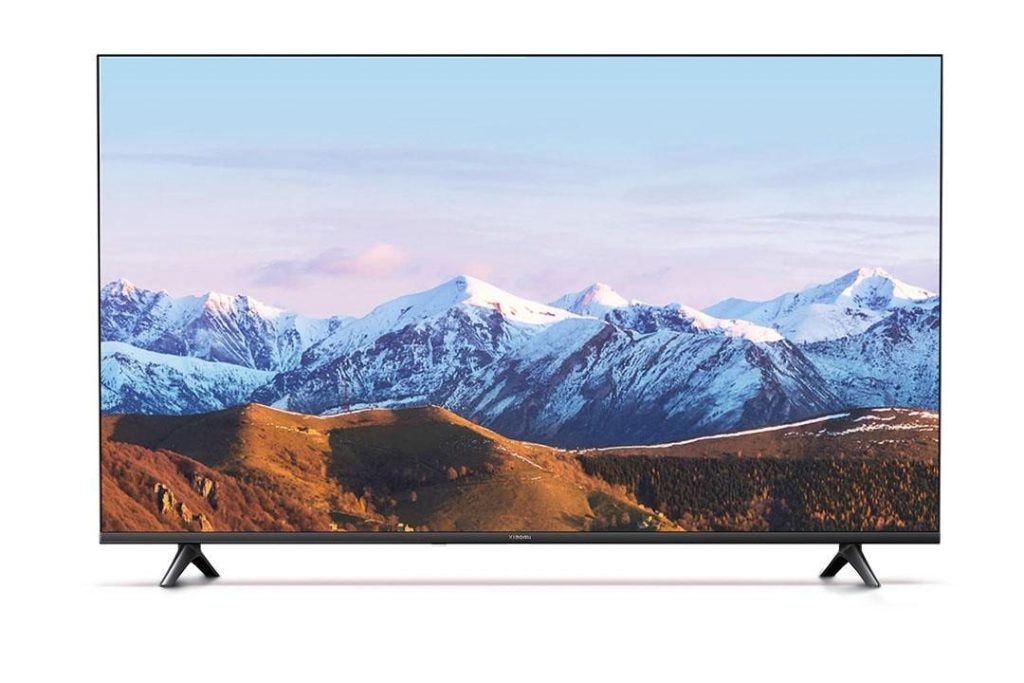
Xiaomi has launched a new budget smart TV in China called Xiaomi TV EA43 2023. As the name suggests, it is the 2023 edition of the already existing 2022 model.
The latest television costs the same as its predecessor and shares almost all of its features. In fact, it only comes with a single notable upgrade.
Let’s go through everything offered by this TV along with its pricing and availability.
Xiaomi TV EA43 2023 Specifications
The Xiaomi TV EA43 went official quietly earlier today. The product was not announced on social media. It got listed on a website of an online retailer directly.
Just like its predecessor, this television features a metal frame and a 1080p (FHD) screen. The panel measures 43 inches diagonally with a 96.7% screen-to-body ratio.
The LED-backlit LCD screen has a resolution of 1920 x 1080 pixels and a 60Hz refresh rate. There’s no support for HDR and the viewing angle is 178°.
Further, the TV is powered by an unnamed 64-bit chipset paired with 1GB RAM and 8GB storage. This quad-core chip is an upgrade over the dual-core Amlogic chip present inside the previous model.
Thanks to an advanced chipset, the television supports dual-band WiFi, which is missing from its predecessor. There’s also Bluetooth, 2 x HDMI, AV, 2 x USB, S/PDIF, Antenna, and Ethernet.
Finally, the television boots MIUI for TV 3.0 and houses 2 x 8W speakers (16W) with support for DTS-HD.
Xiaomi TV EA43 2023 Price
The Xiaomi TV EA43 2023 is priced at ¥799 (~$110) in China. It is currently up for sale on Xiaomi Youpin. It should be available from other retailers in the coming days.
Similar to other Xiaomi TV EA models, this one too may not release in global markets.
Following its successful launch in Indonesia, Vivo is now preparing to introduce the Y36 4G smartphone to the Indian market. Earlier leaks indicated that the device would likely be launched this month and fall within the price range of 18,000 to 20,000 INR. A recent report by Pricebaba has now disclosed the precise price range and Indian launch date, providing more details on the upcoming Vivo Y36 4G smartphone.
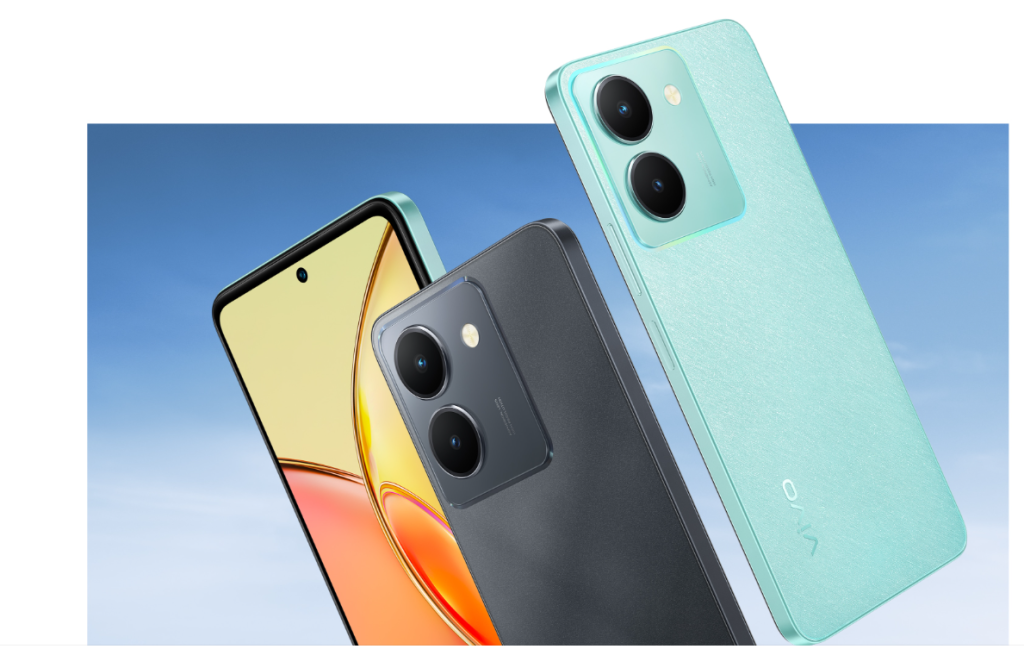
The latest report unveils that the Vivo Y36 4G is scheduled to make its debut in India on June 26. Priced at Rs 19,500, the smartphone is expected to offer a compelling package for Indian consumers. Additionally, the promotional image shared by Pricebaba showcases the Y36 4G in two attractive color options: Black and Cream, adding further appeal to the upcoming device. Vivo will likely take a few more days before teasing the upcoming Indian launch of the device in an official manner. Till then, let’s check out the specifications and features of the device.
Vivo Y36 4G specs & features
The Vivo Y36 smartphone offers a captivating viewing experience with its 6.64-inch IPS LCD display featuring Full HD+ resolution and a centrally positioned hole-punch cutout. The display supports a smooth 90Hz refresh rate and delivers vibrant visuals with an impressive peak brightness of 950 nits, ensuring excellent visibility even in bright lighting conditions.
In terms of photography, the Y36 features a dual-camera setup on the rear, comprising a 50MP primary camera and a 2MP secondary sensor. On the front, there is a 16MP camera that captures stunning selfies and facilitates engaging video calls. Under the hood, the device is powered by the Qualcomm Snapdragon 680 SoC, providing reliable performance and efficient multitasking. It offers 8GB of RAM and a generous 256GB of storage, allowing ample space for apps, media, and files.
The Y36 is equipped with a sizable 5000mAh battery, ensuring long-lasting usage, and supports 44W fast charging for quick recharging times. Additionally, it runs on Funtouch OS 13 based on Android 13 and boasts features like an IP54 rating for water and dust resistance, Bluetooth 5.1, microSD card support of up to 1TB, 8GB virtual RAM support, and GPS capabilities.
Apple just recently announced the Vision Pro, which marked its brand new product line and entry into the VR/AR enabled headset market. But with the new headset, it appears that there will be some notable changes coming to its popular iPhone series as well to ensure seamless integration.
Future Apple iPhones to better support Vision Pro headset
According to known analyst Ming-Chi Kuo, the Cupertino based giant is working on making its upcoming iPhone models better integrate with the Vision Pro headset. To achieve this, the company will apparently be bringing hardware upgrades to its future iPhones. This move isn’t surprising considering the brand seamlessly connects various products across multiple platforms, ranging from iPhones, iPads, MacBooks, and more.
Kuo stated that Apple might soon bring Wi-Fi 7 and UWB (Ultra Wideband) technology to its upcoming iPhone models. This would help them be work better with the new Vision Pro headset. In other words, the iPhone 15 will likely arrive with an upgraded Ultra Wideband chip to offer a robust and seamless connection with the latest entry in the Apple ecosystem. Kuo claims that the new iPhones will arrive with an upgraded version of the U1 chip. For those unaware, this UWB chipset was first shipped inside the iPhone 11.
The new and improved chip would even help bring upgrades to various existing features like AirDrop, Find My, and more. But the primary benefit with the update U1 chip is better integration with the Vision Pro headset. Apart from this, Kuo also believes that the iPhone 16 will be the first smartphone from the company to feature Wi-Fi 7. This wireless tech will enable faster speeds and many other benefits. This is crucial for better virtual and augmented reality experiences. Overall, we can even expect the tech to offer better integration across the multiple platforms.
We have reviewed a lot of rugged phones, they are very different and have their own characteristics. There are those with very large batteries, those with a watch embedded in the back, and those that can be used as a portable Bluetooth speaker.
Our protagonist today: is the IIIF 150 Raptor, which of course has some features that other phones don’t have. For example, the 64MP Night Vision Camera, the large 10,000 mAh battery, and this 65w charger.
Unboxing
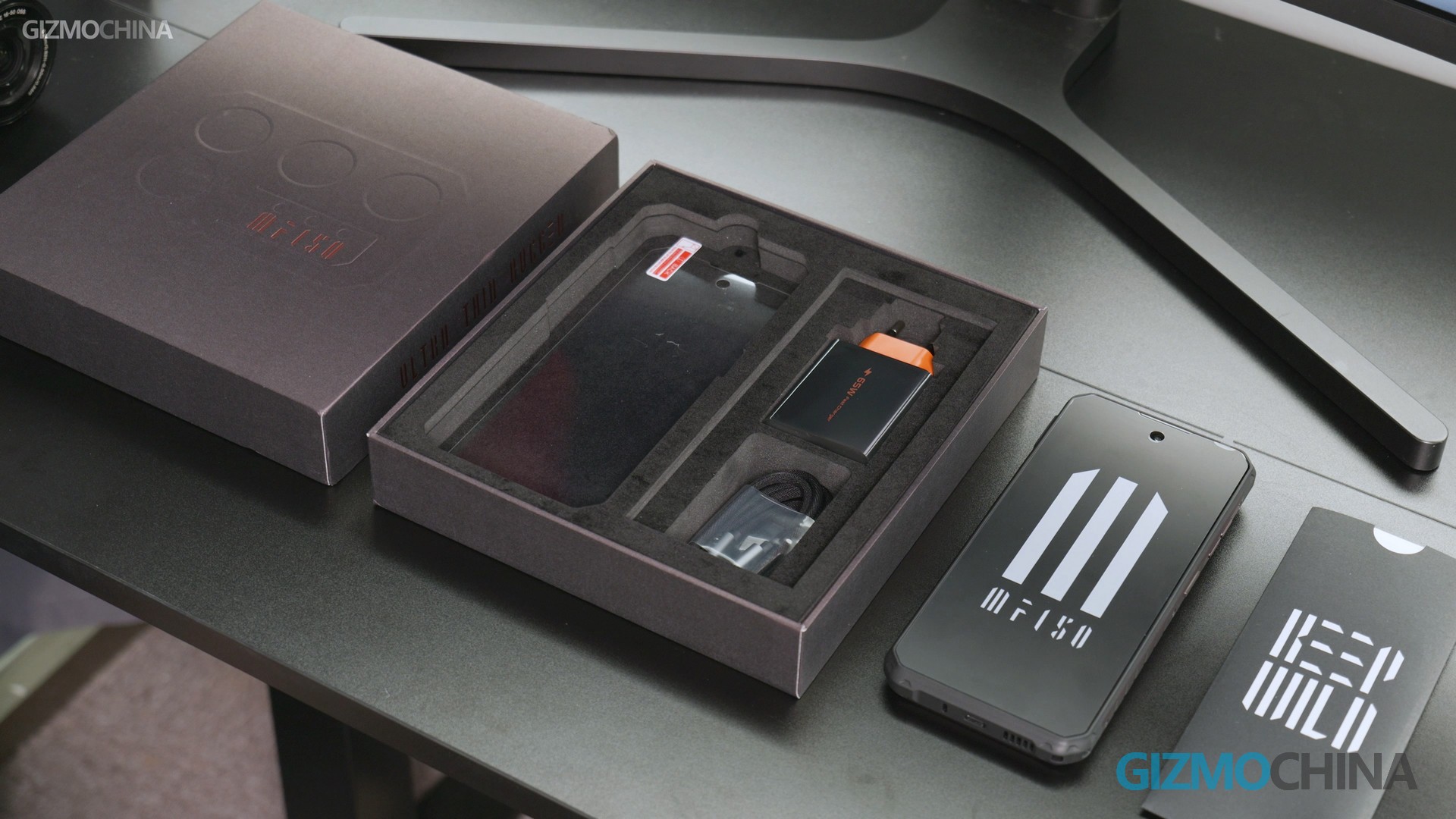
When you purchase the IIIF 150 Raptor, you will receive a large box like this. Open it, take out the phone and manual, and put it aside, its biggest selling points are underneath. In addition to the extra one that comes with a tempered film, there is also the charger we just mentioned.
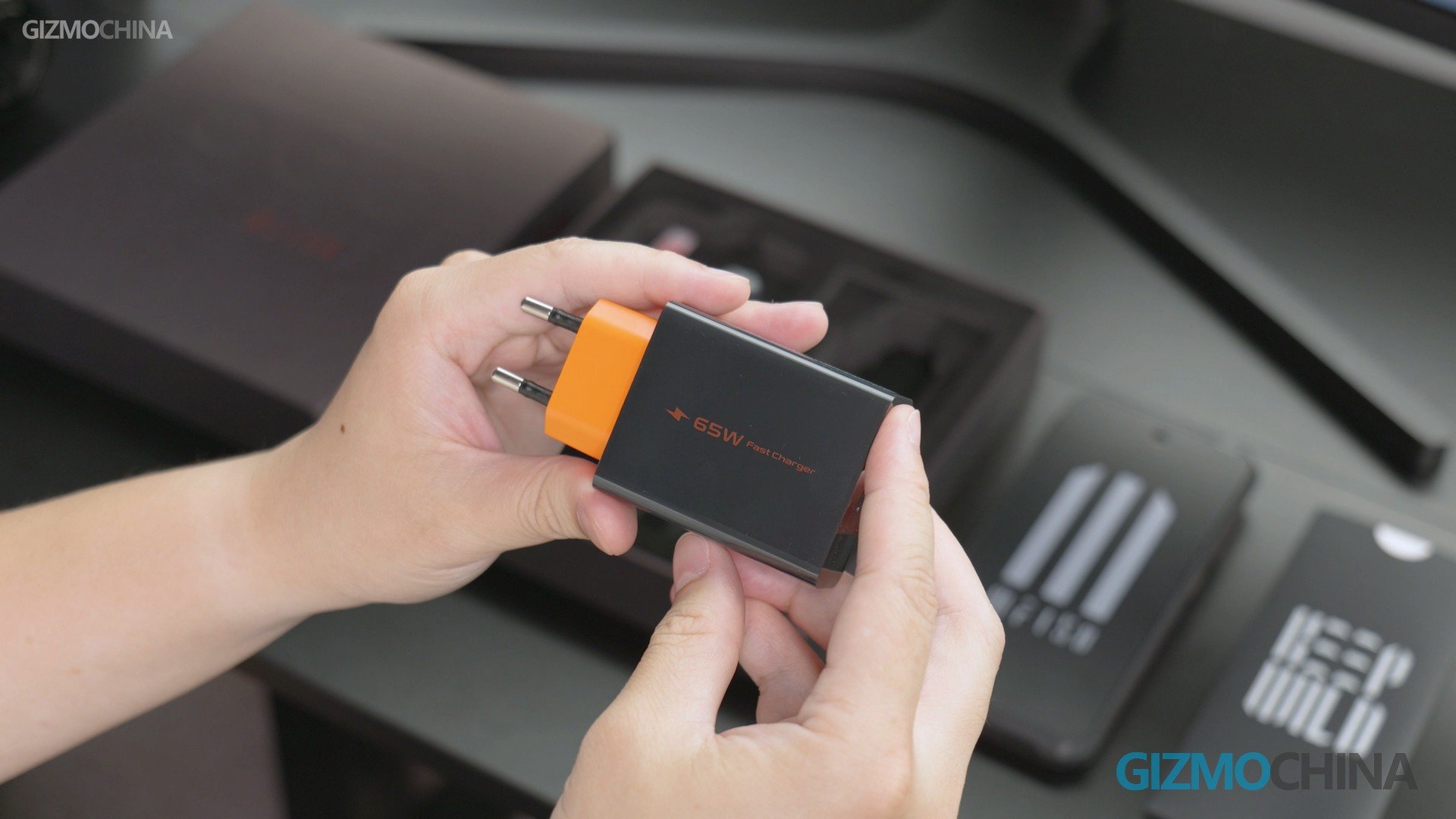
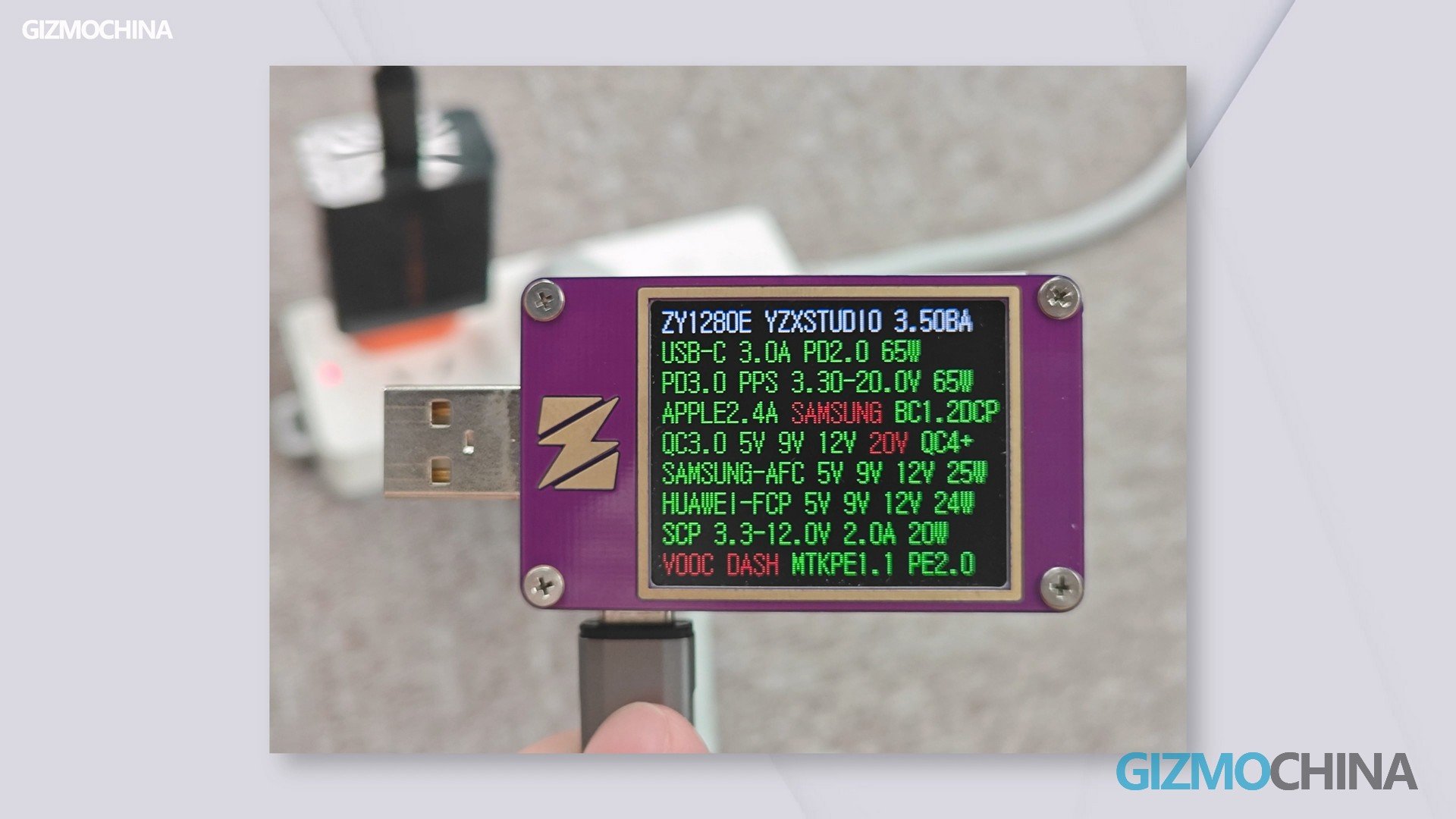
I must say, this is one of the best free chargers I’ve ever seen. This USB-C 65W Gallium Nitride charger has a very full charging protocol. It can charge almost all devices quickly except for OPPO and Vivo phones which might be a little slower. If you go to buy one of these chargers, it will cost you at least $20.
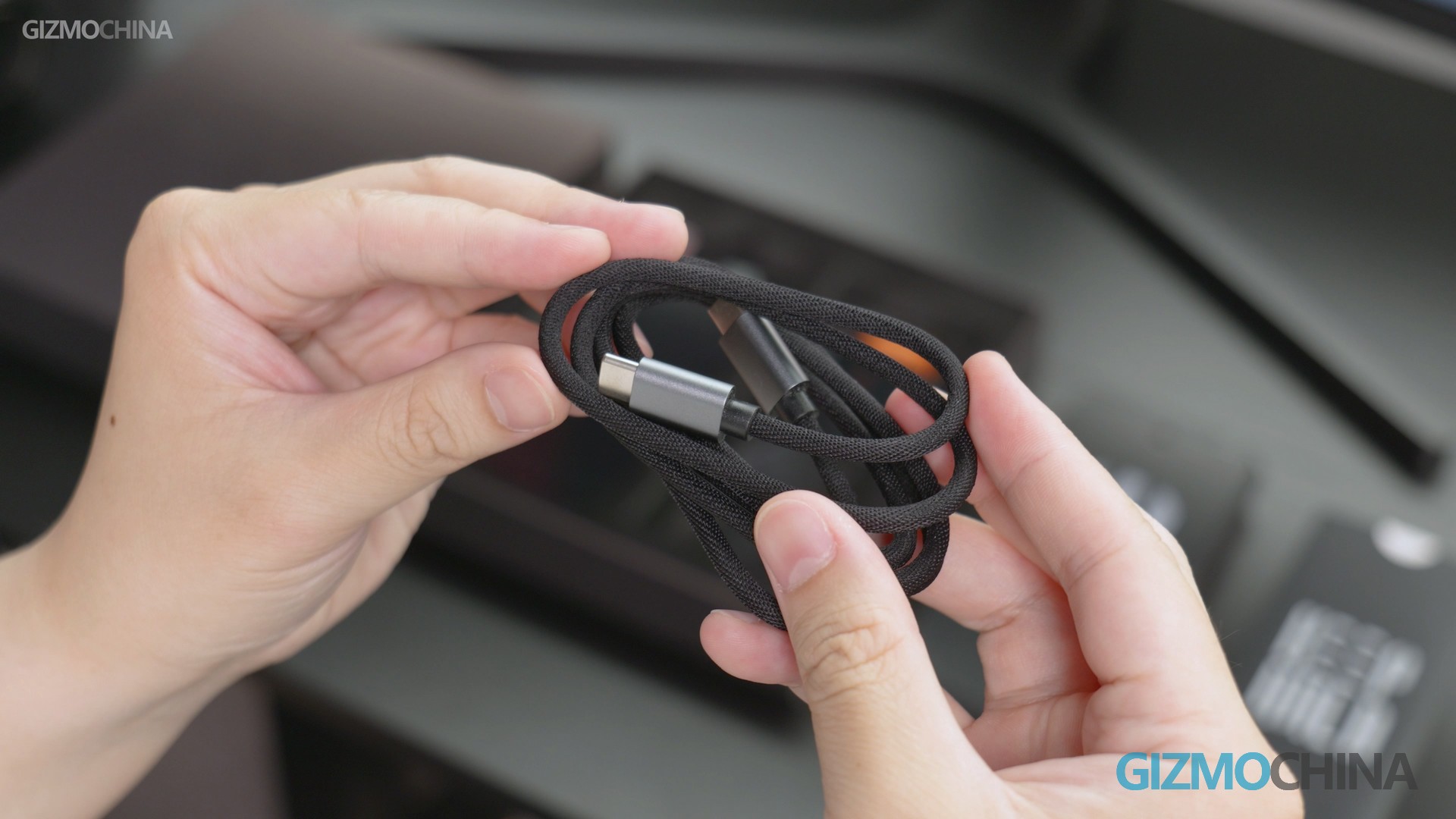
Not only is the charger great, but even the built quality of the charging cable is very good. It is a C-to-C cable made of a braided cord. This charging kit is perfect, and it seems that IIIF 150 knows one thing very well: it is true that rugged phones need a large battery, but they also need a charger that can charge quickly.
Design
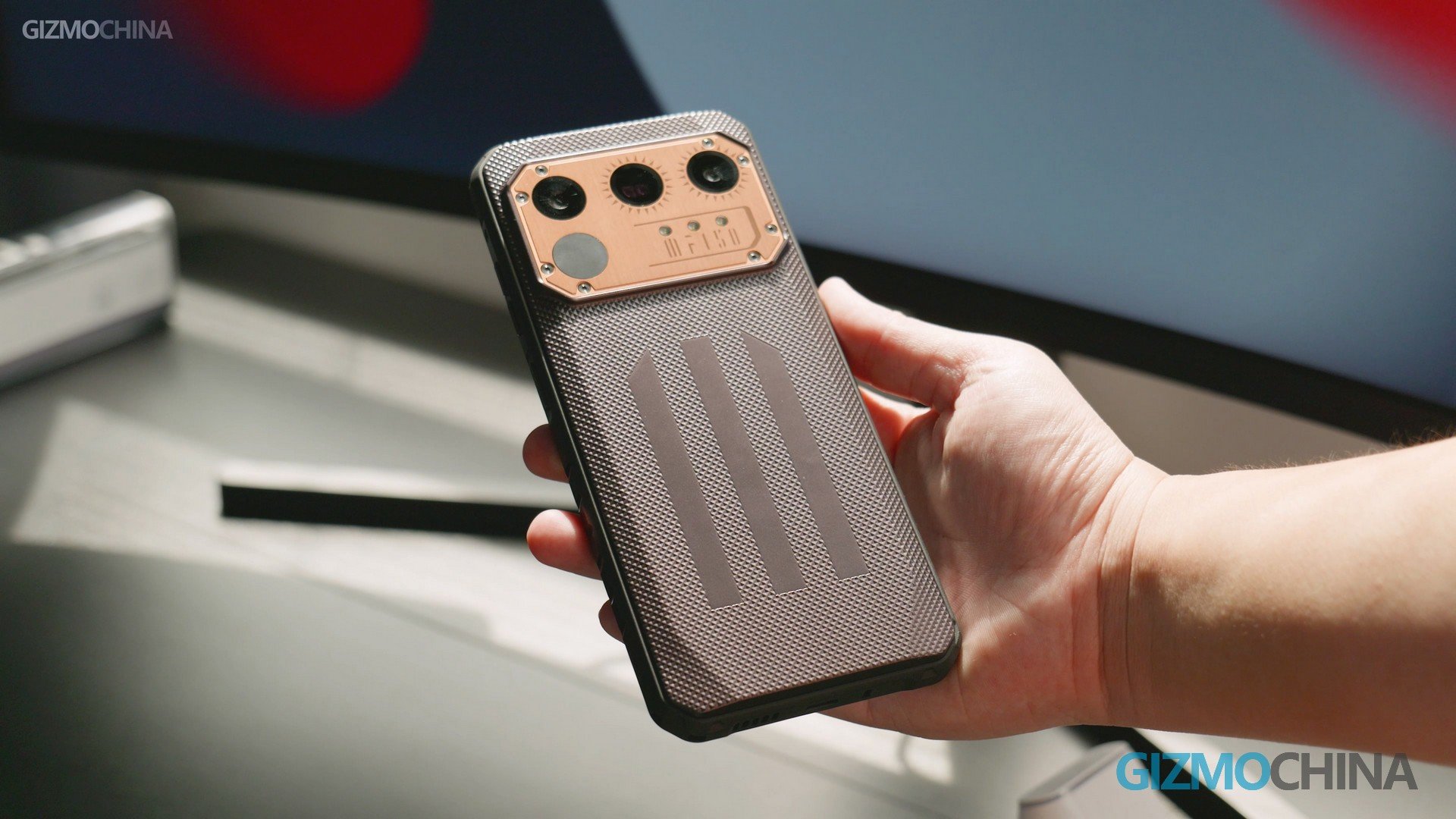
Raptor is also quite unique in terms of design. It has a very flat back except for a little bump on the camera module. The diamond pattern adds friction to the grip, and the three vertical lines in the middle make it immediately obvious that this is an IIIF 150 phone.
The most interesting thing is the design of the camera module. This Sun emblem together with the IIIF 150 logo makes the camera area look a bit like Egyptian frescoes. it just so happens that the whole phone is brown in color which looks very classic.
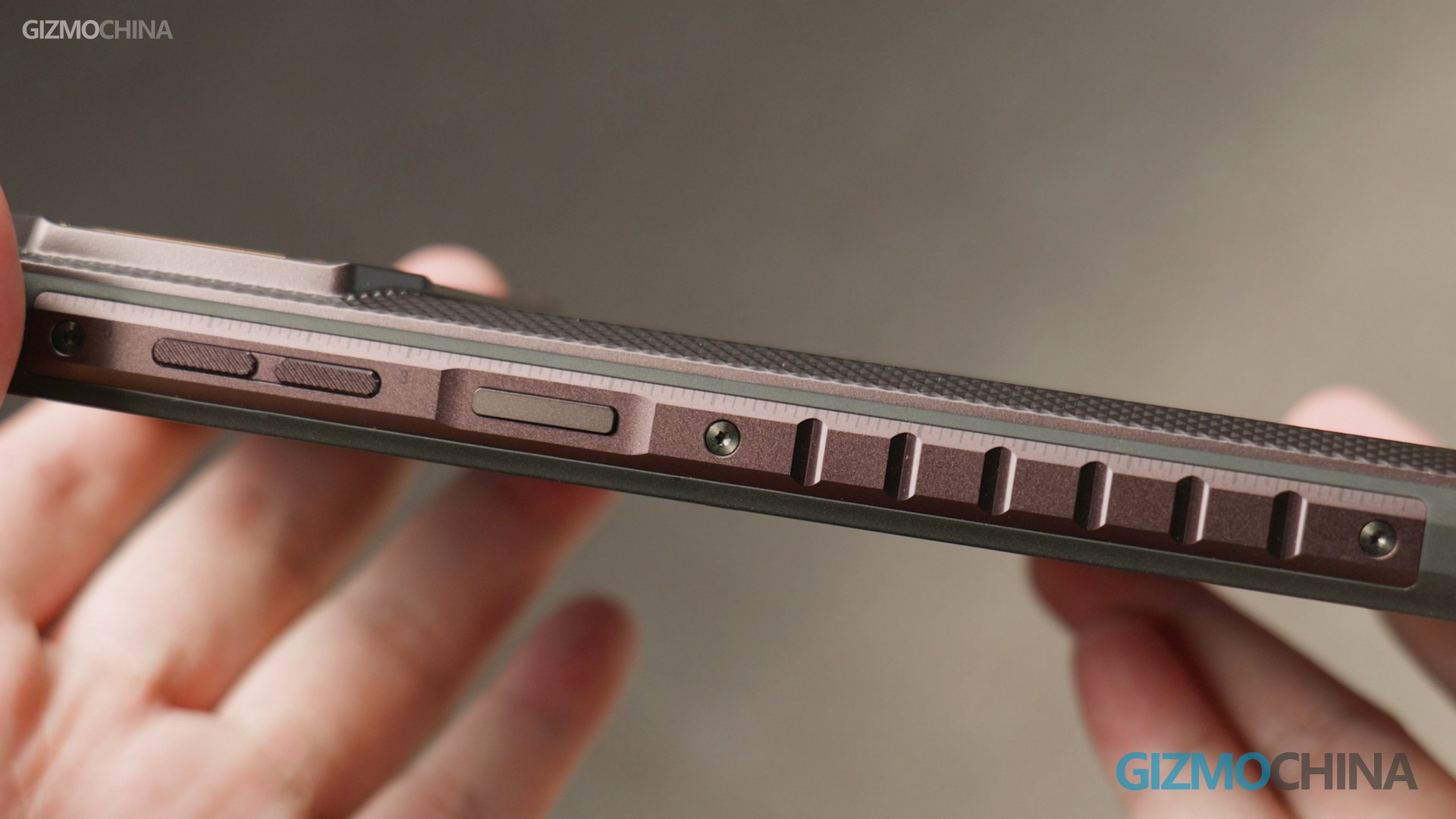
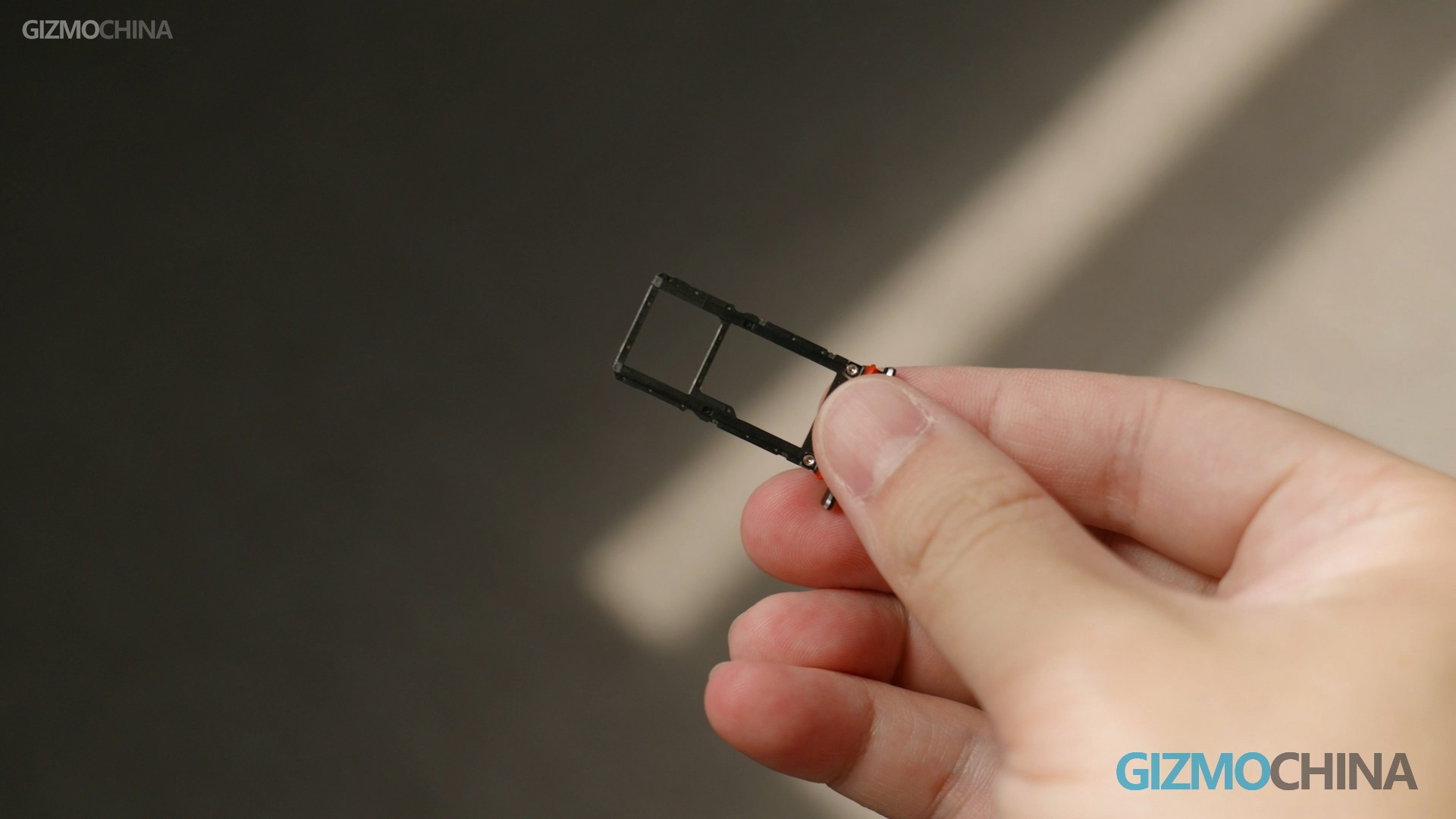
There is a very thoughtful design here: to give this Raptor more functionality, there are two scales on the side frame. One side is in centimeters and the other is in inches. When you need it, you can use it as a ruler. You don’t need a card pin to install the SIM card, you can snap out the slot with your fingernail.
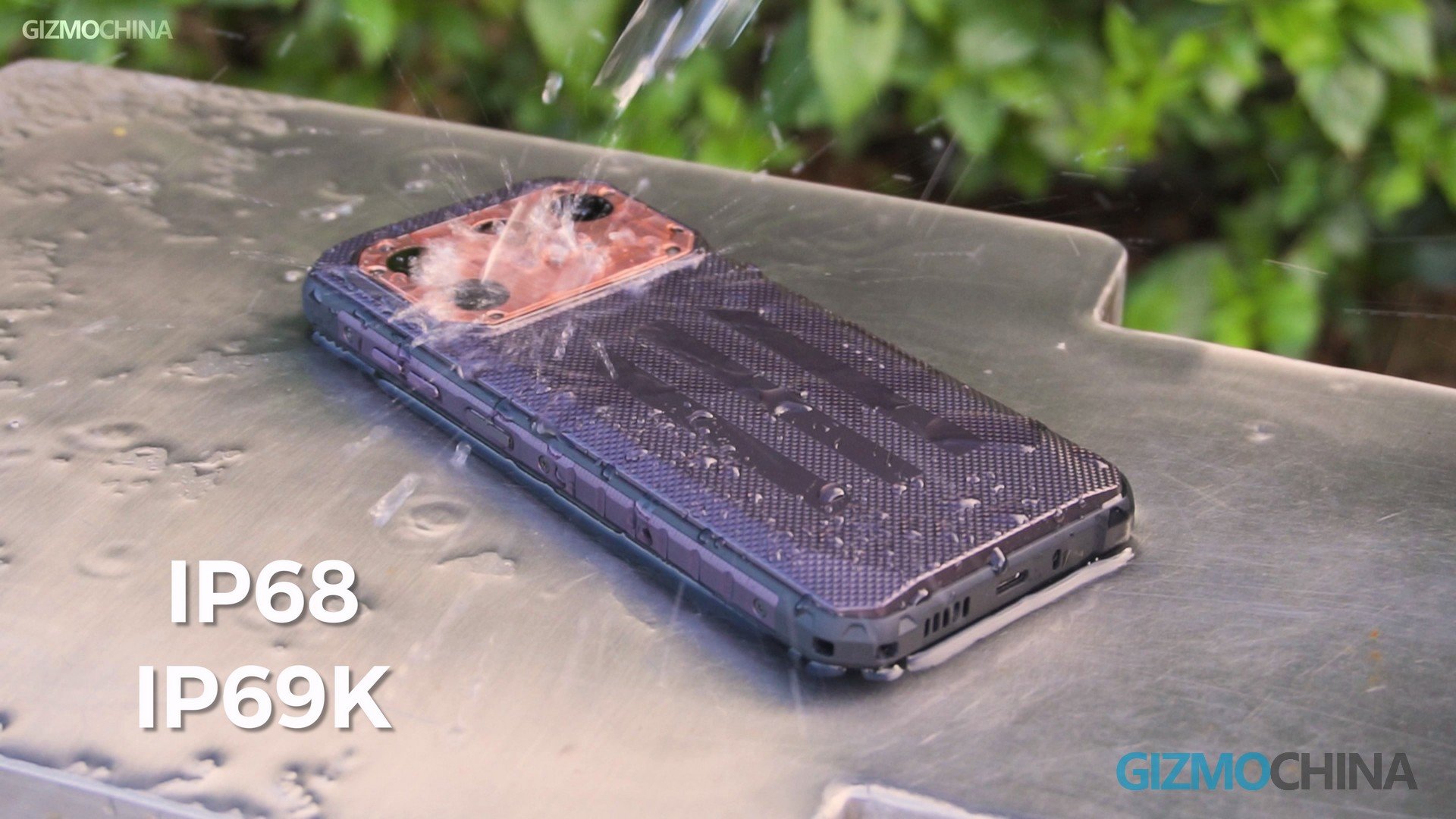
The charging port also does not have a dust plug, meaning that whatever charging cable can be used normally and will not get stuck. The Raptor without the dust plug also still passed the IP68 and IP69K waterproof certifications. The only regret is perhaps the lack of a headphone jack.
Camera
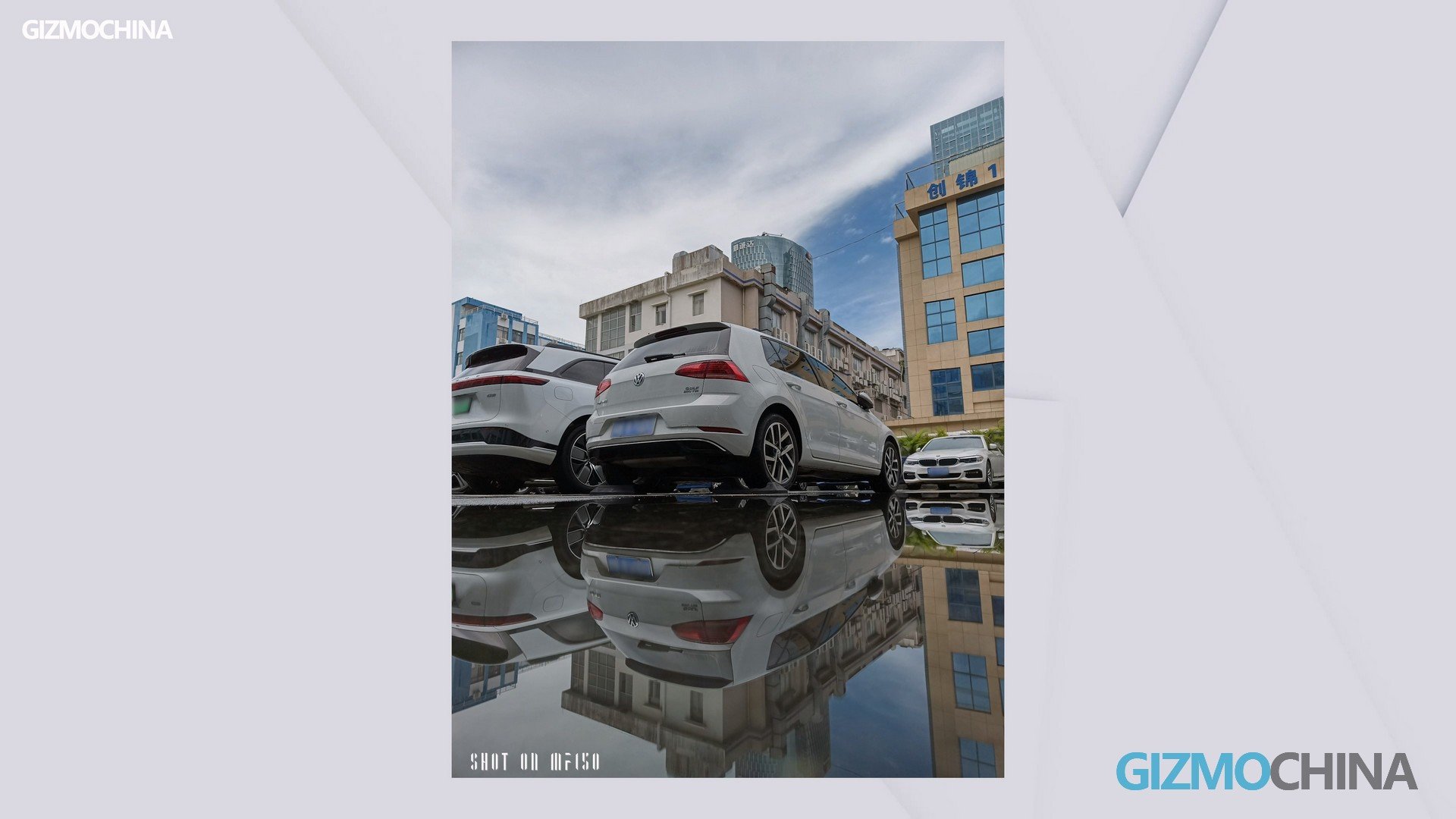
The IIIF 150 Raptor is not the first rugged phone with a 108 MP main camera, but it is among the better-optimized ones. It can take satisfactory pictures in most scenarios.
Although most rugged phones have a night vision camera, most are 20MP and do not have autofocus. 64MP Auto Focus night vision camera on the Raptor is a big advantage, both for night vision photos and videos are very clear.
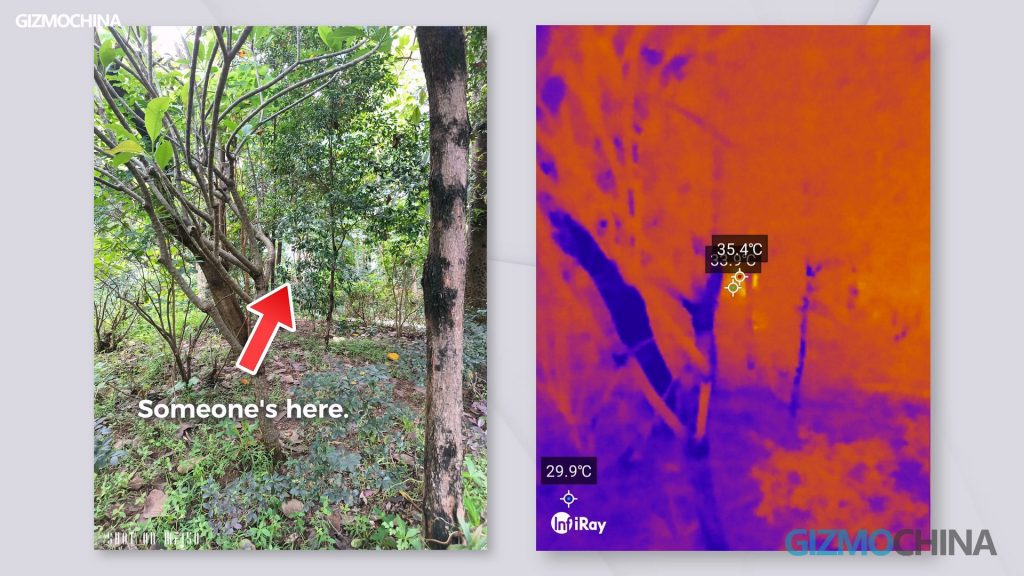
The thermal imaging lens is also an old friend of ours. It can help you spot things you can’t see.
Performance & Display
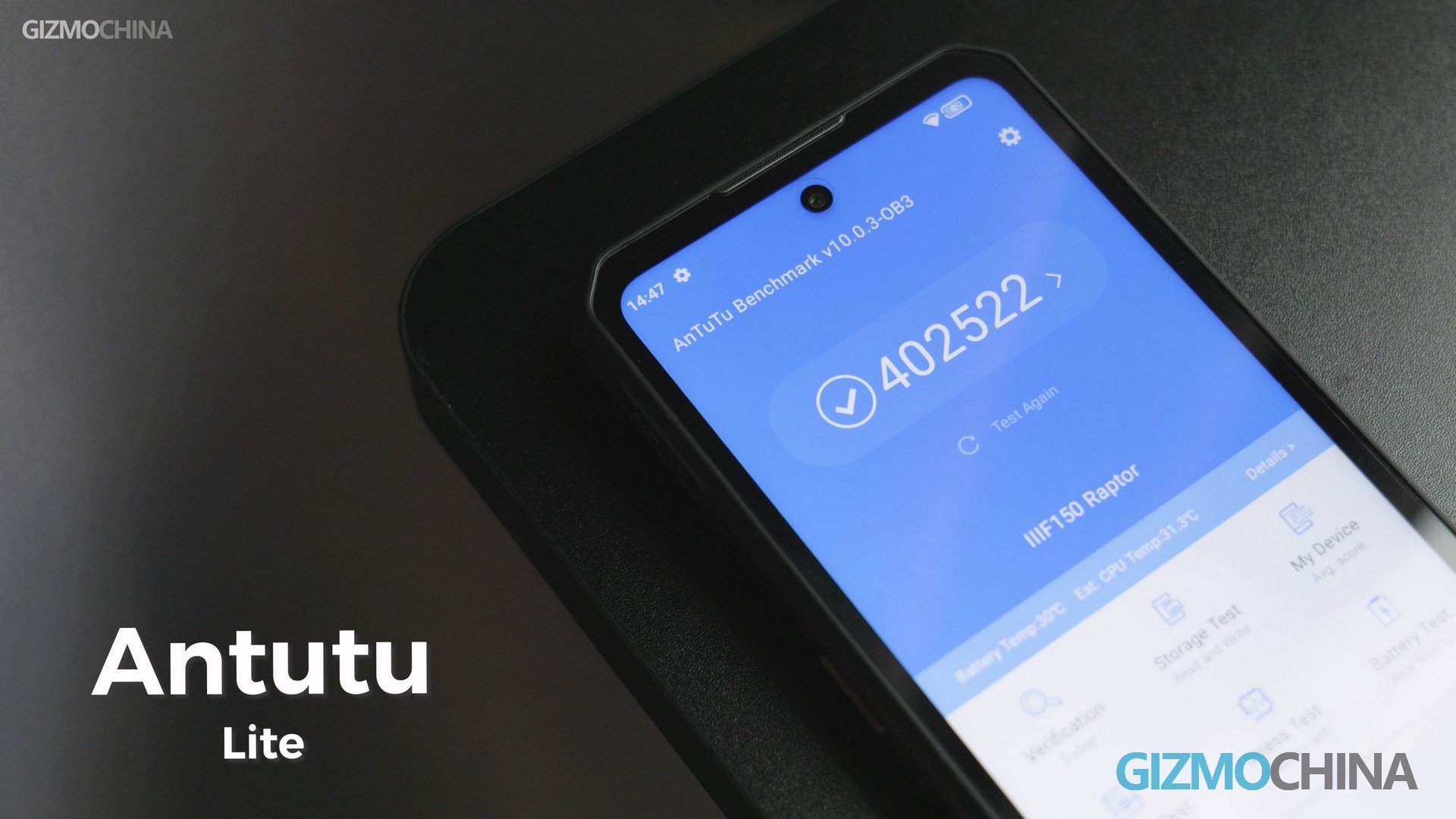
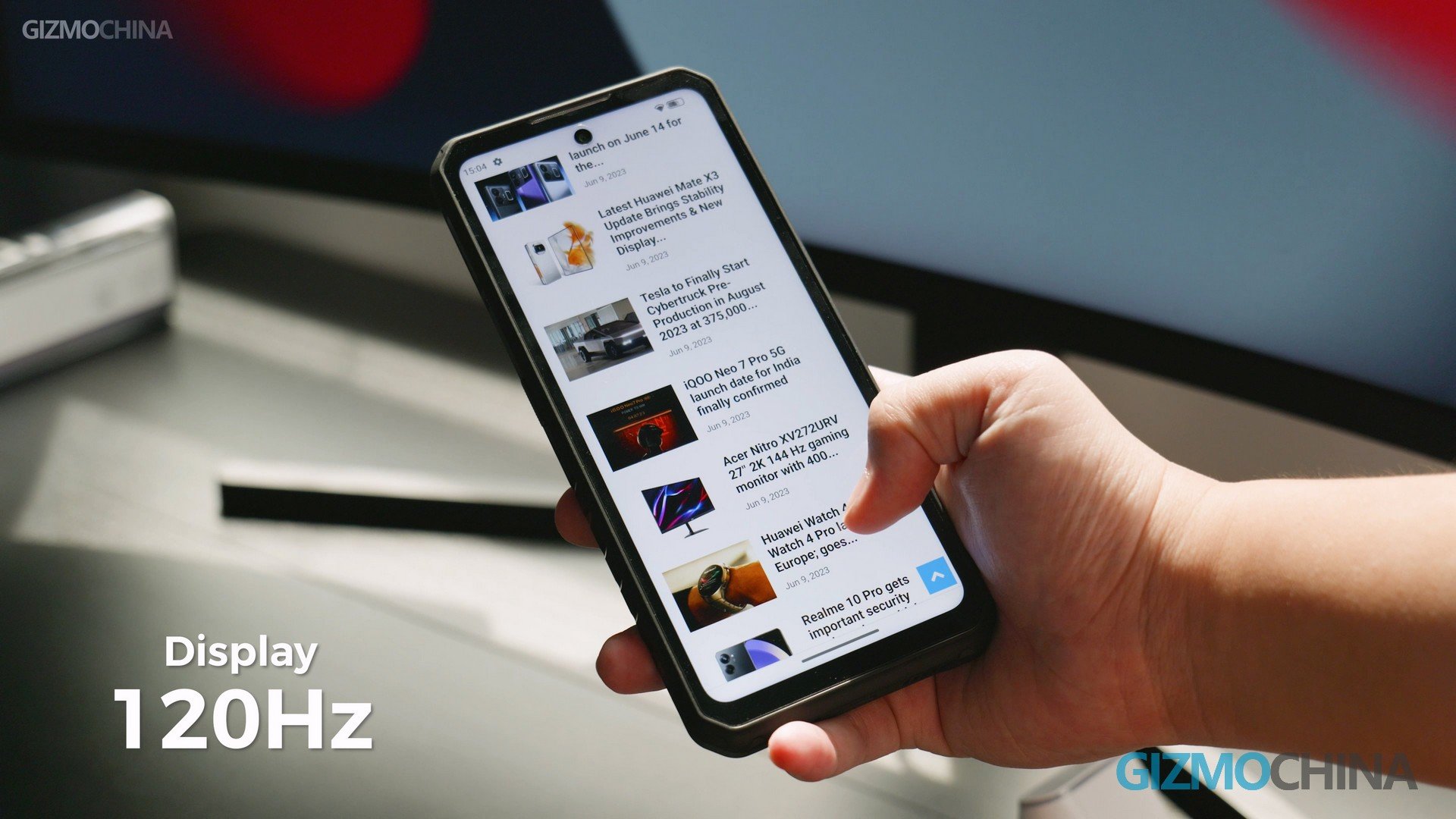
Raptor’s processor is MediaTek Helio G99, which is an old friend of ours. We’ve seen it in many rugged phones, and its performance level is well-known to everyone. PUBG Mobile is still stable at 40fps in balanced graphics and doesn’t overheat. Raptor has an FHD+ high refresh rate screen, 120Hz will make everything you do on the phone look smoother.
Battery
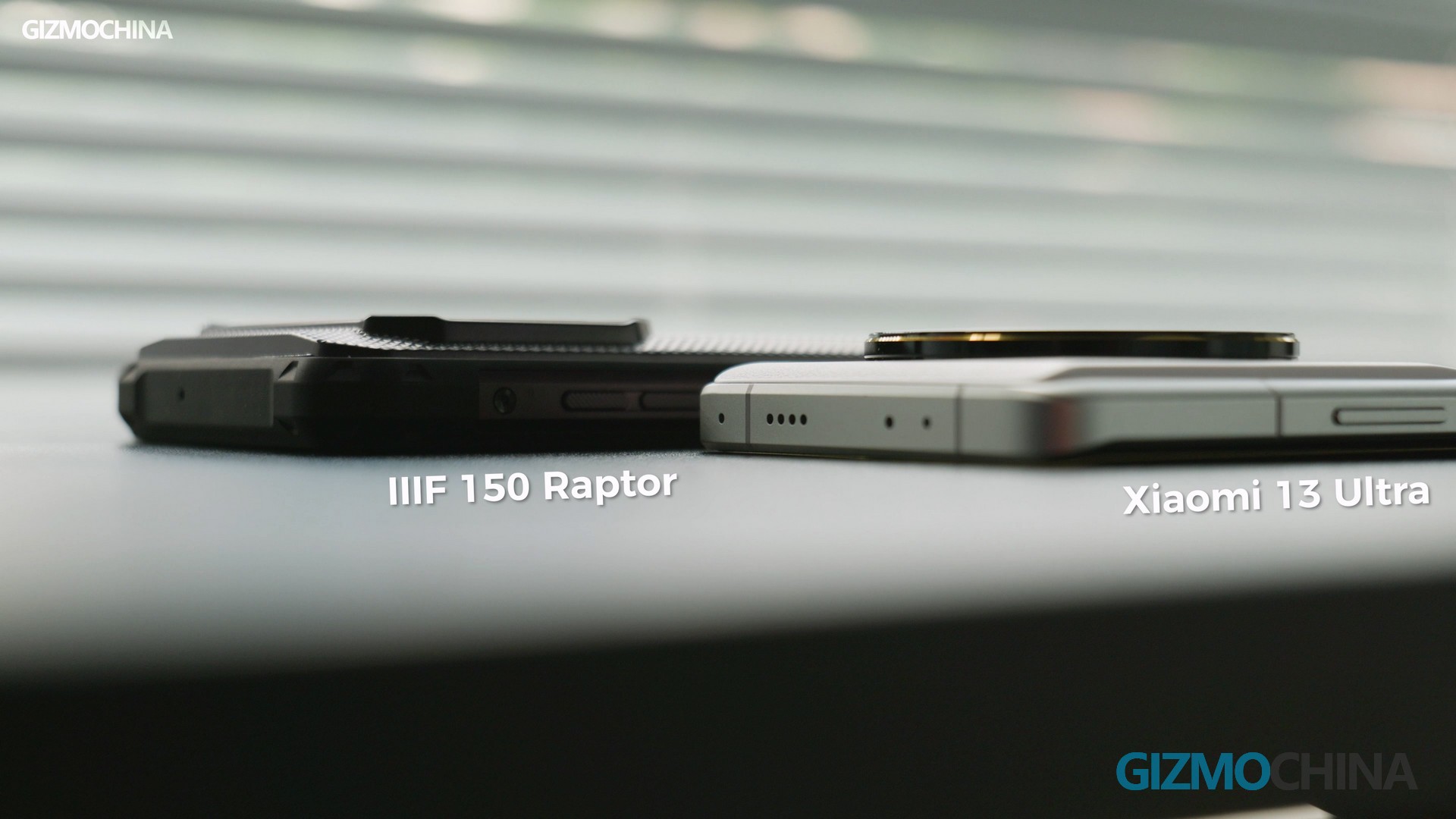
Besides the really great charger and 64MP Night Vision Camera, another selling point is that it’s the world’s thinnest 10,000mAh rugged phone. Rugged phones are generally heavier and thicker, but of all the rugged phones we’ve seen, the only one with a battery that big and only 15mm is the Raptor. It’s about the same size as a 10,000mAh power bank and can charge other devices. That’s why it comes in a box with a C-to-C charging cable. I have to repeat it, it’s the perfect charging kit.
Conclusion
This is the latest model of IIIF 150. It has a large battery capacity, but it’s not thick. And it gives you a valuable charger and cable. It’s also the world’s first rugged phone with a 64MP night vision camera, and that’s what makes the Raptor different from other phones. If you like one of the selling points, then you can only choose it. Because no other rugged phone can do that.
Amidst the increased scrutiny of Chinese companies by the Indian government, Realme has become the latest brand to face challenges, as accusations of collecting personal user data have surfaced. Further details will be provided to give a comprehensive understanding of the situation.
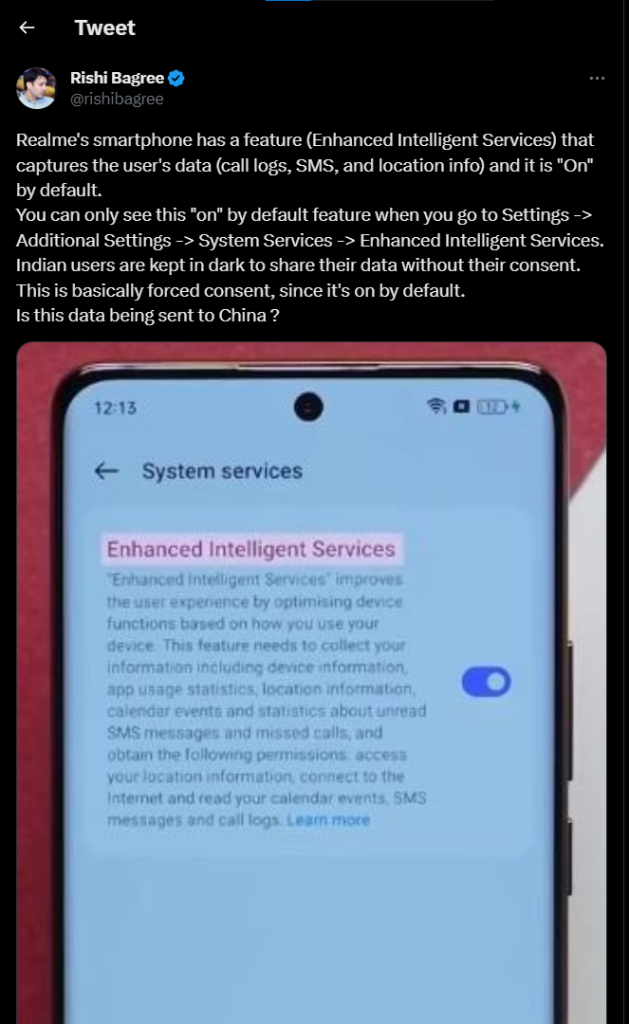
Realme has recently faced allegations of collecting user data through a default-enabled feature. The feature in question, known as “Enhanced Intelligent Services,” is found in Realme UI 4.0, the operating system running on many Realme smartphone models. The concerns were raised by Twitter user Rishi Bagree, who highlighted that this feature, which is enabled by default, gathers various types of data such as device information, app usage statistics, location data, calendar events, and statistics related to SMS messages and calls. Notably, this information is explicitly mentioned in the description of the feature, leaving little room for speculation.
Realme in Union Minister of Electronics and Technology’s radar
In response to the allegations, Twitter users questioned the purpose of the default-enabled service and raised concerns about where the collected data was being sent. The tweet gained attention when Rajeev Chandrashekar, Union Minister of Electronics and Technology, shared it, expressing that the government would investigate and verify the claims. Given the Indian government’s past actions of banning numerous China-based apps due to data privacy concerns, this situation could potentially escalate into a significant issue for the Realme brand.
Realme has promptly responded to the allegations and provided a statement to 91mobiles, addressing the concerns regarding the functionality of the app and the security and privacy of Realme users.
The brand said that “realme attaches great importance to the privacy and security of our consumers and we are committed to maintaining the confidentiality of data security. Specific to the issue raised, we would like to clarify that the enhanced intelligent services feature is linked to optimising device usage to ensure that consumers get better battery life and temperature performance. However, contrary to the current description, we do not connect any data on SMS, phone calls, schedules, etc.
All data processed in this service is encrypted and stored in encrypted hardware within user’s device strictly in compliance with Android security mechanisms. This data is completely stored within the device and is not shared anywhere else or uploaded on the cloud. We place great emphasis on user privacy protection, the enhanced intelligent services feature can be manually turned on or off basis the needs of the consumers.”
Realme’s official statement emphasizes that the data collection process is intended solely to enhance the user experience, assuring that all collected data remains stored locally on the device. However, due to the recurring history of significant data allegations associated with Chinese companies, it is understandable that users have raised concerns about data privacy and security. Interestingly, Twitter users have also discovered a similar feature on OnePlus devices, suggesting that this issue might not be limited to Realme alone.
The Samsung Galaxy Unpacked event is just around the corner. During this major event, the company is set to unveil a number of highly anticipated smartphones, tablets, and much more. However, prior to this conference, new leaks have revealed the promotional image posters that showcase the Galaxy Z Fold 5, Galaxy Z Flip 5, Galaxy Tab S9 series, and Galaxy Watch 6 series. So let’s have a look.
Samsung promo material leak showcase a number of its upcoming products
The leaked official images arrive from multiple sources which includes known tipster Evan Blass. These leaked official image posters were shared on Twitter and offer us a glimpse of devices like the upcoming foldable phones, Galaxy Z Fold 5 and Galaxy Z Flip 5, along with the new Galaxy Watch 6 and Galaxy Watch 6 Classic, and Galaxy Tab S9 series that consists of the base model, Galaxy Tab S9+, and Galaxy Tab S9 Ultra.
In one of the pictures, we can see multiple Samsung devices together, including the Galaxy Z Flip 5 and Galaxy Watch 6 in Mint color, Galaxy Tab S9 Ultra with an S Pen, and lastly the Galaxy Buds earbuds in white, which is likely the Galaxy Buds 3 model. The Tab S9 series promo picture has the three models together while the Galaxy Z Fold 5 and Galaxy Z Flip 5 were spotted on separate images, which showcased their front and rear design.
The Flip 5 images also highlight the larger cover display, which is in line with out previous render leak. The Galaxy Z Flip 5 will arrive with a 3.4 inch external display that is a taller than the 1.9 inch panel that was found on the previous generations. This device is also expected to arrive with a new hinge mechanism. The Galaxy Tab S9 series poster images also hint at its protection rating, being clearly advertised as at least splash resistant.
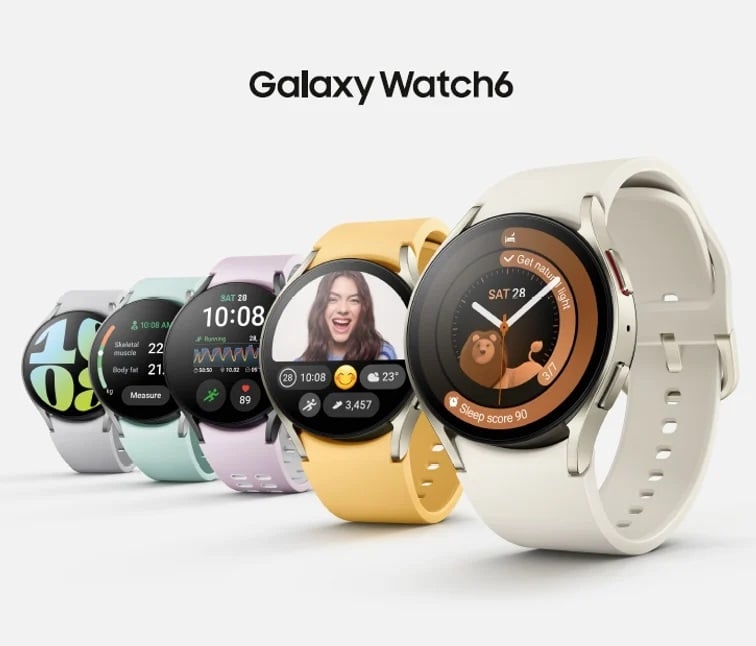
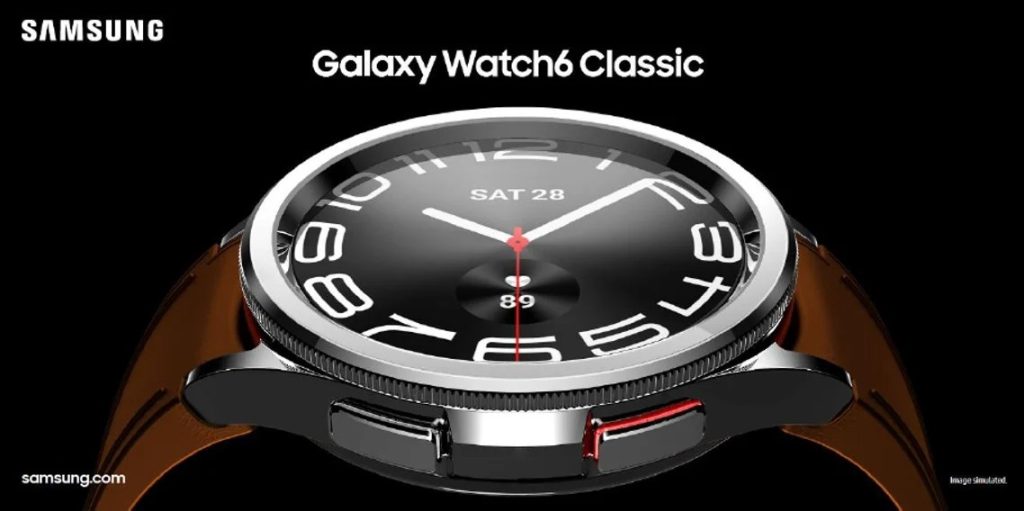
Arriving at the last device that was leaked, the Galaxy Watch 6 and Galaxy Watch 6 Classic model were spotted in these recent promo images. We can see the base model in multiple color option, namely white, yellow, lavender, mint, and gray as well. On the other hand, the Galaxy Watch 6 Classic appears to feature its rotating bezel. This smartwatch might also launch with special band options as well.
Based on what we know so far, the South Korean tech giant is rumored to kick off its Galaxy Unpacked event next month, around the 26th or 27th of July 2023. Unfortunately, the new leak only shares the promo images of the new gadgets but do not reveal any finer details like specifications and pricing. So stick around for more as we will be providing updates and will also be covering the launch event next month.
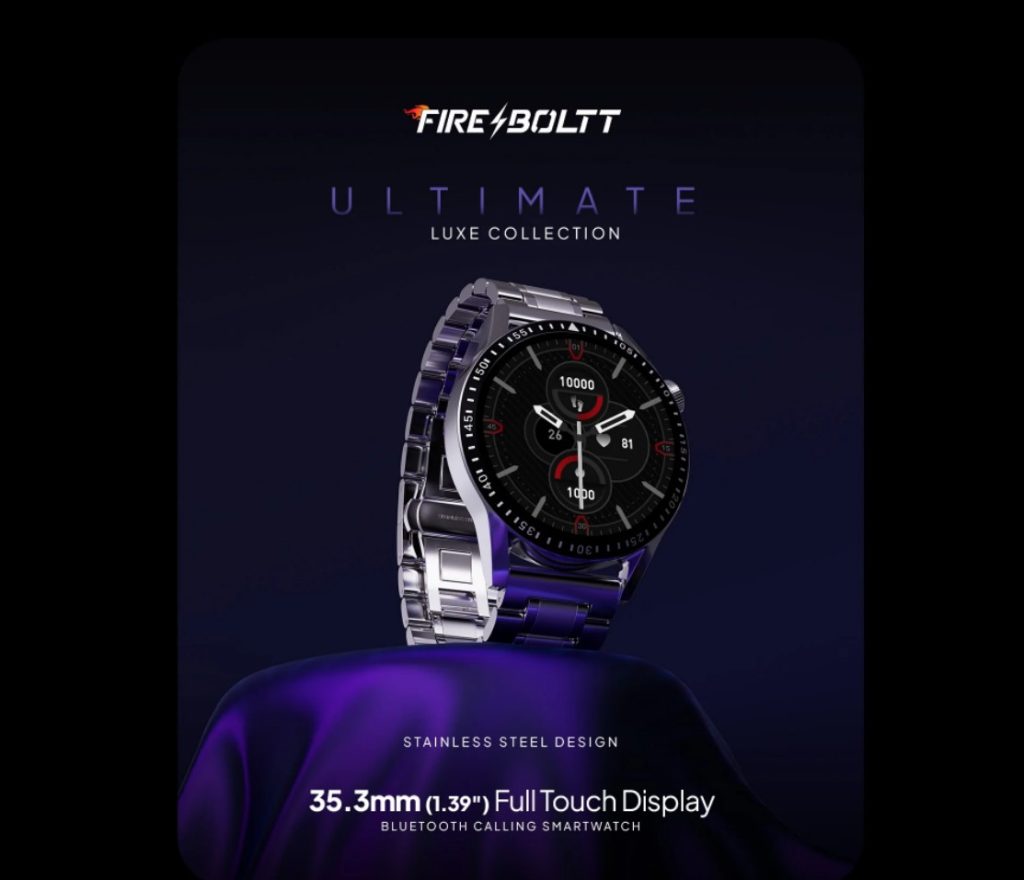
Fire-Boltt, a prominent player in the Indian smartwatch market, has unveiled its latest offering, the Fire-Boltt Ultimate. Targeted at budget-conscious consumers looking for a feature-rich smartwatch, the Fire-Boltt Ultimate boasts an attractive price point and impressive specifications.
Fire-Boltt Ultimate features:
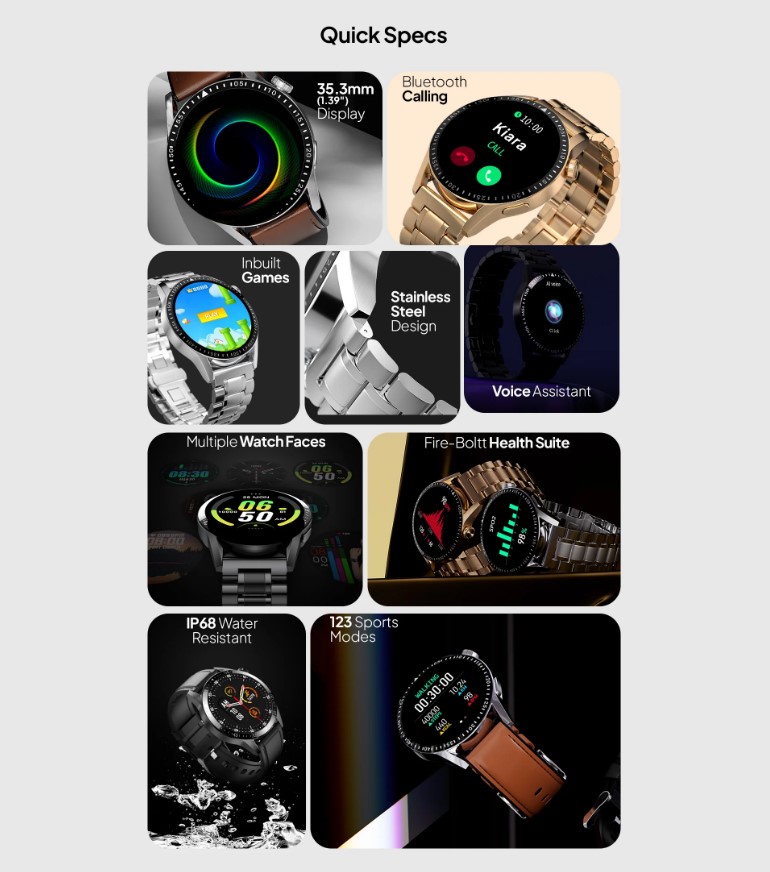
The Fire-Boltt Ultimate features a 1.39-inch circular display with HD resolution and a pixel count of 240 x 240. The watch offers multiple watch face options to cater to individual preferences. With a sleek and stylish circular dial design, the Fire-Boltt Ultimate exudes a premium feel.
One of the standout features of the Fire-Boltt Ultimate is its Bluetooth calling capability. By leveraging the in-built microphone, speaker, and Bluetooth 5.0 protocol, users can conveniently make and receive calls directly from their wrist. The smartwatch also includes a dedicated Dial Pad and supports call history and contact synchronization for seamless communication.
According to Fire-Boltt, the watch features fashion-style glass for the circular dial, ensuring durability and a sophisticated look. Fitness enthusiasts will appreciate the watch’s comprehensive activity tracking capabilities, which cover running, swimming, cycling, and an impressive 123 other sports activities. Moreover, the in-built microphone and speaker enable access to the integrated voice assistant for added convenience.
To enhance the overall user experience, Fire-Boltt has equipped the smartwatch with a range of additional features. Users can enjoy in-built games, as well as access the Fire-Boltt Health Suite, which offers various health tracking features. These include female health care tracking, heart rate monitoring, and SpO2 measurement.
With an IP68 rating, the Fire-Boltt Ultimate is suitable for outdoor use, ensuring resistance against water and other environmental conditions. The watch also includes features such as drinking water and sedentary reminders, smart notifications, weather updates, and control over music and camera functions.
The watch is powered by a 270mAh battery, which provides an impressive runtime of up to 7 days without Bluetooth calling and 3 days with Bluetooth calling. In standby mode, the Fire-Boltt Ultimate can last up to 20 days. Charging the watch from 0 to 100 percent takes 120 minutes.
Fire-Boltt Ultimate pricing:
The Fire-Boltt Ultimate comes in two variants: one with a metallic strap available in Black, Silver, and Gold, and another with a leather strap in Black and Brown options. The metallic strap variant is available at an introductory price of Rs 1,999, while the leather strap variant is priced at Rs 1,799. The Fire-Boltt Ultimate will be up for sale from Flipkart and Fire-Boltt’s eStore starting at 12 PM on June 19. The company also launched Fire-Boltt Dagger Luxe and Fire-Boltt Blizzard recently.
We use cookies on our website to give you the most relevant experience by remembering your preferences and repeat visits. By clicking “Accept”, you consent to the use of ALL the cookies.
This website uses cookies to improve your experience while you navigate through the website. Out of these, the cookies that are categorized as necessary are stored on your browser as they are essential for the working of basic functionalities of the website. We also use third-party cookies that help us analyze and understand how you use this website. These cookies will be stored in your browser only with your consent. You also have the option to opt-out of these cookies. But opting out of some of these cookies may affect your browsing experience.
Necessary cookies are absolutely essential for the website to function properly. This category only includes cookies that ensures basic functionalities and security features of the website. These cookies do not store any personal information.
Any cookies that may not be particularly necessary for the website to function and is used specifically to collect user personal data via analytics, ads, other embedded contents are termed as non-necessary cookies. It is mandatory to procure user consent prior to running these cookies on your website.