Switching to a new smartphone is a tedious job. One needs to migrate their data from the old phone to the new one.
Companies have been providing built-in tools to achieve this. However, for the most part, they only work well when users switch phones between the same brand.
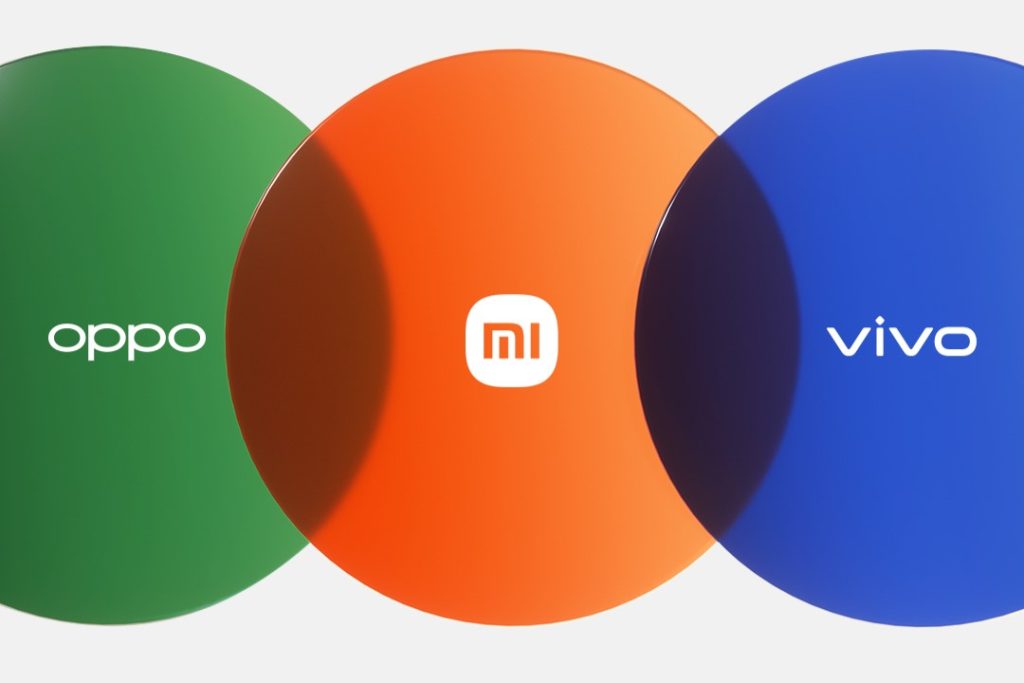
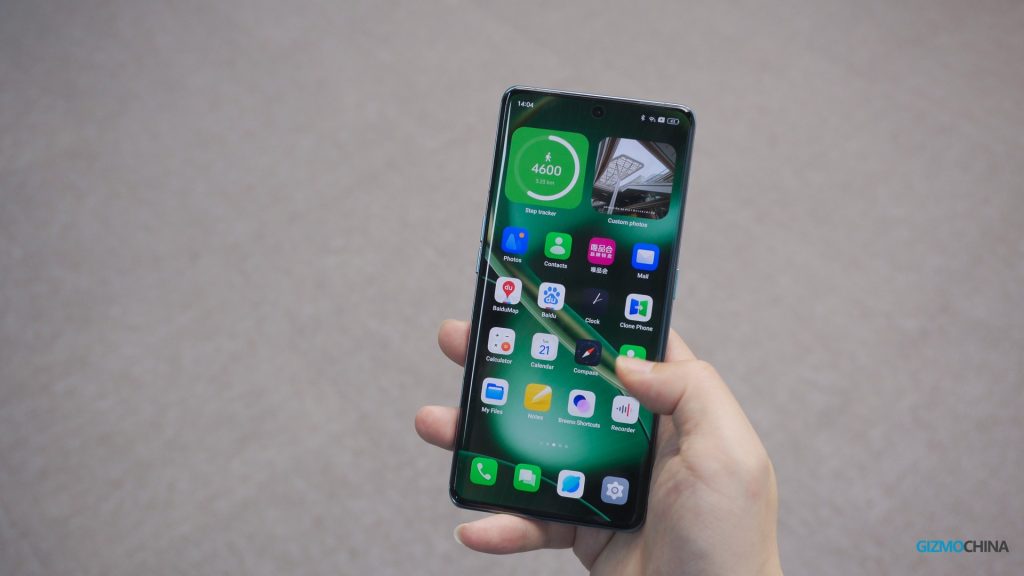
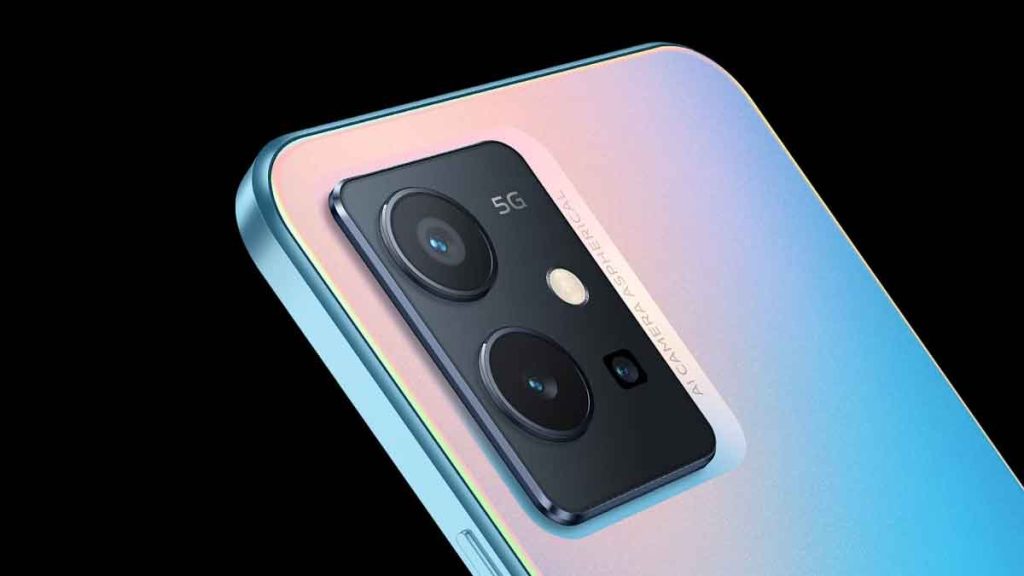
To mitigate this issue, the top 3 Chinese OEMs have partnered to build a new solution.
Thanks to this new partnership, users can migrate data from their old smartphones to new handsets belonging to any of these three brands efficiently.
Previously, users were only able to transfer photos and contacts between devices from these brands. But now, they can also transfer third-party apps and their data. Thus, the experience is now almost similar to migrating data between handsets from the same brand.
As of now, we are not sure if this functionality will make its way to global markets. Since peer-to-peer transfer is available outside mainland China, the improved data migration feature may also arrive in the near future.
Also, almost all brands, including Samsung (exclusive to China), joined the transfer alliance since its formation in 2019. So we can expect other brands to collaborate for the new better migration system.
Internationally, Google allows users to migrate data between different brands. But it is not perfect. Similarly, the search giant offers ‘Nearby Share’ to transfer files.
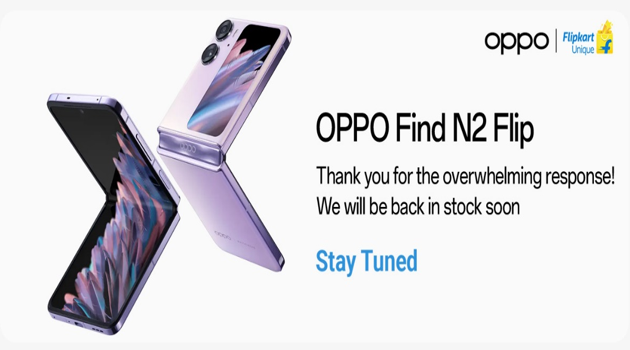
Oppo has just recently launched the Find N2 Flip in India, which is its latest foldable smartphone. But just a week into its release, it appears that the company’s new high end device has already been sold out in the region.
For those unaware, the Chinese smartphone maker had finally released the Find N2 Flip back on 17th March 2023. but earlier this week, the company announced that the Find N2 Flip model has been sold out within the first week of its availability on Flipkart. In other words, the device has been quite successful in the region, despite having an exorbitant price tag of 89,999 INR (roughly 1,088 US Dollars).
Talking more about this device, the Find N2 Flip also debuts the brand’s all new Flexion Hinge design that creates a water drop fold. In simpler terms, it has a much shallower and narrower crease on the main display compared to any other foldable phone. Oppo has also managed to fit a large 3.26 inch secondary display, which is quite large for a clamshell like handsets.
According to Damyant Singh Khanoria, Oppo India’s Chief Marketing Officer, “We are thrilled to bring the OPPO Find N2 Flip to our customers. The remarkable response within first week of its launch is a testament to the love for the best flip phone ever launched.” He further added that “Our partnership with Google further enhances the user experience by providing six months of free YouTube Premium and Google One to Find N2 Flip consumers. This partnership is a win-win for our customers and elevates the Find N2 Flip experience.”
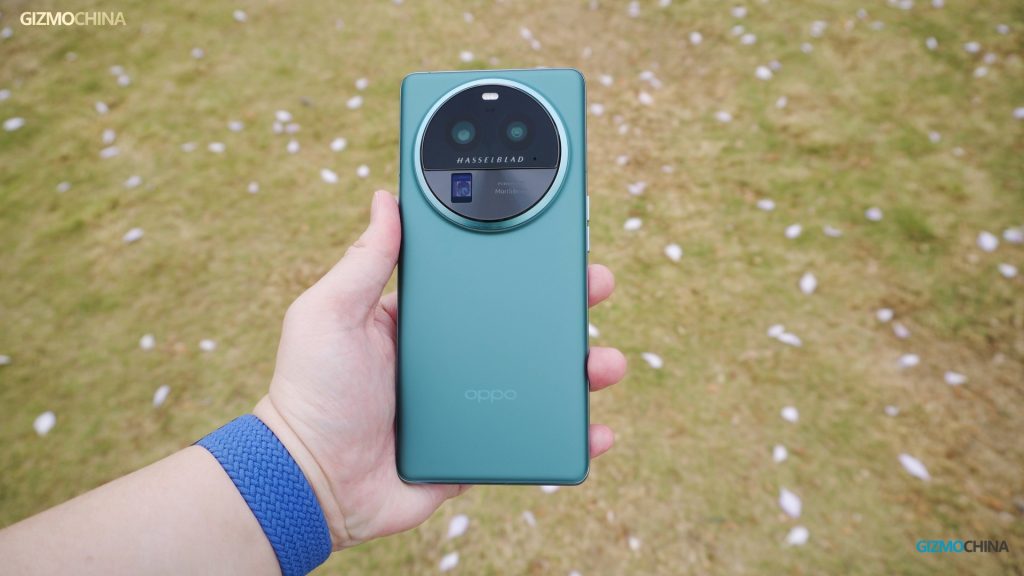
This is our most anticipated premium phone this year, the OPPO Find x6 Pro. It’s been in my hands for about a week, and now I’m pretty sure it will probably become the legendary model of the whole series. It has the best display for a smartphone, the biggest sensors for triple main cameras, and the top performance and power solution. I know it sounds almost perfect, but I’m not exaggerating.
Design
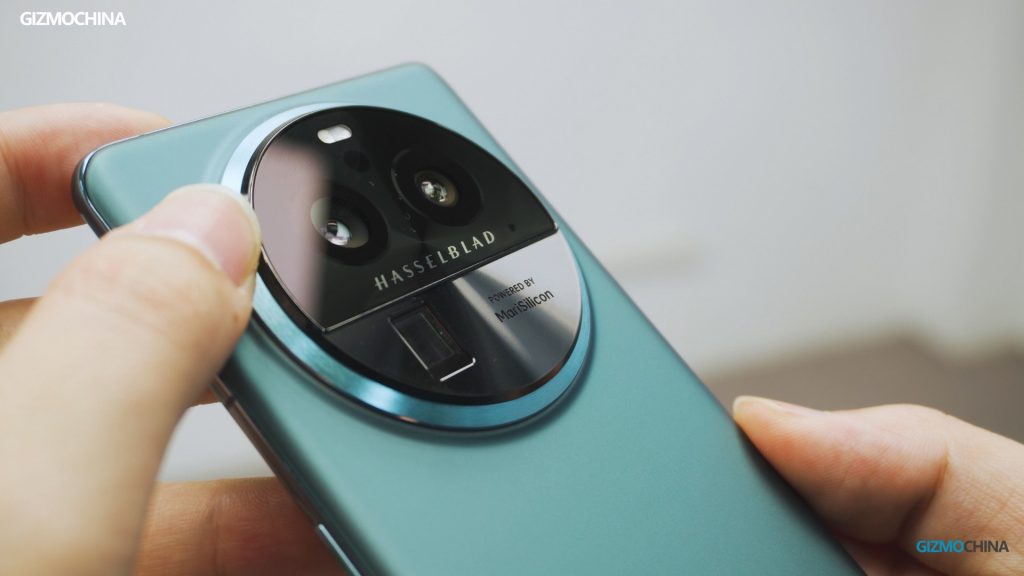
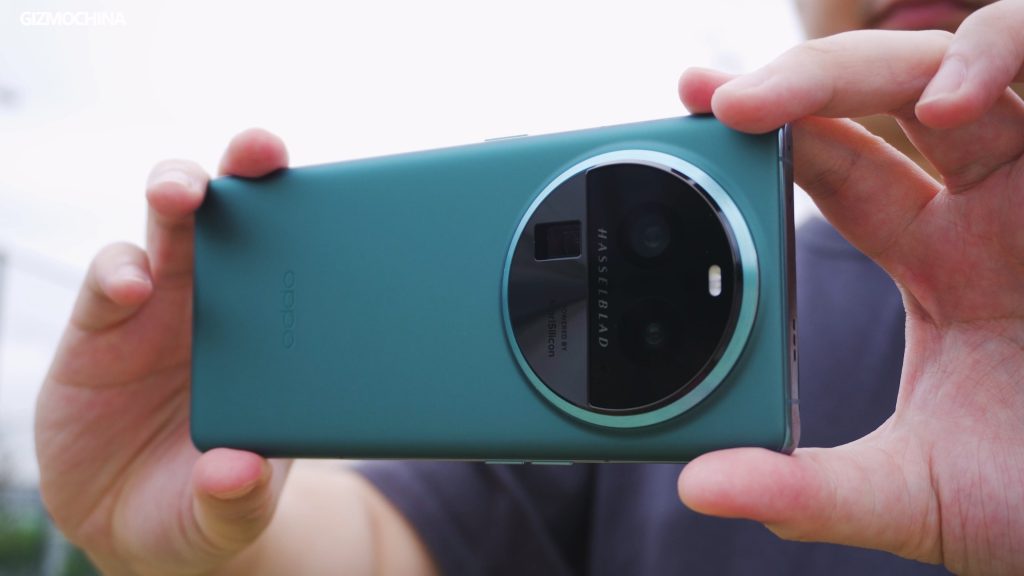
As the top flagship of OPPO, the Find X6 Pro still has excellent built quality with a smart and recognizable design. OPPO abandoned the sloping camera island design that they used on the Find X5 Pro, which was almost my favorite phone design last year. The brand-new huge round-camera module is swearing to us that aesthetics is giving way to powerful functionality. As the triple lenses with great sensors require much more space inside, the camera bump couldn’t flowingly blend with the back.
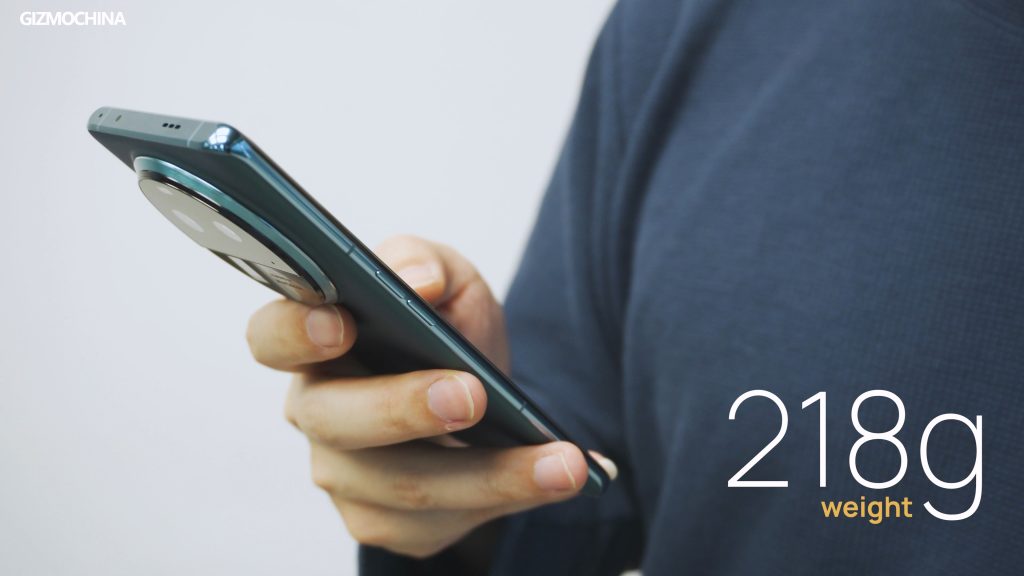
However, its center of gravity is not much affected by the large and thick module and neither shifted forward. And the weight of 218g is surprisingly lighter than I thought. So for me, the grip is good, not too heavy or too thick for holding. The glass variant looks pretty premium but it does feel a bit slippery.
I pretty much like the line they add to the camera module, which keeps the three lenses from being disorganized and also gives the location of the Hasselblad logo a reasonable reference. Actually, the upper part is covered with an extra protective glass panel.
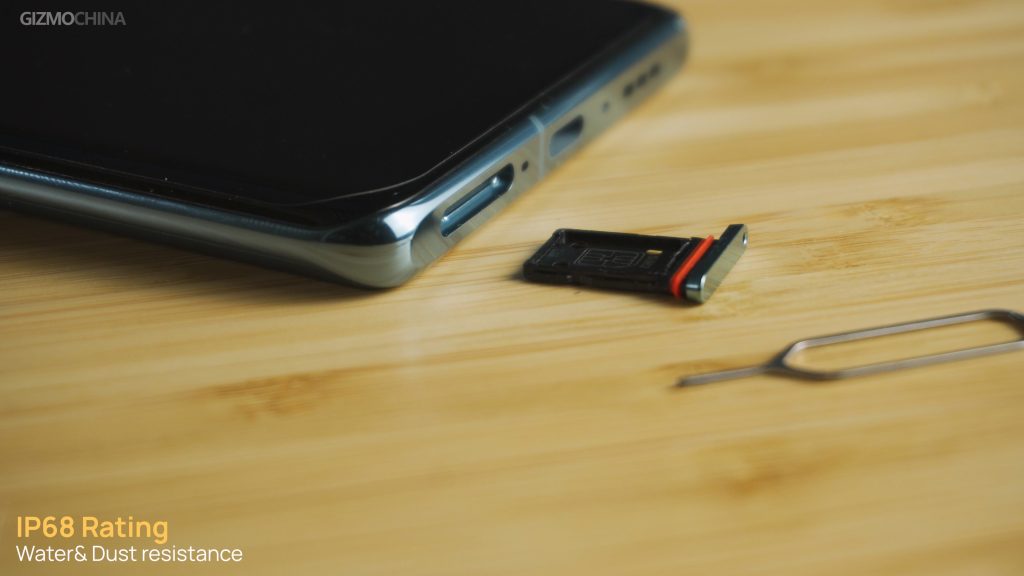
The glass cover mainly curves towards both sides where it meets the polished aluminum frame. Like its predecessor, the frame is thin but solid on the sides and interrupted by antenna strips in 7 spots. The SIM slot with a rubber ring is on the bottom, which can take up to two nano-sized cards. As claimed, the phone supports IP68 rating water and dust resistance.
The Brightest Display
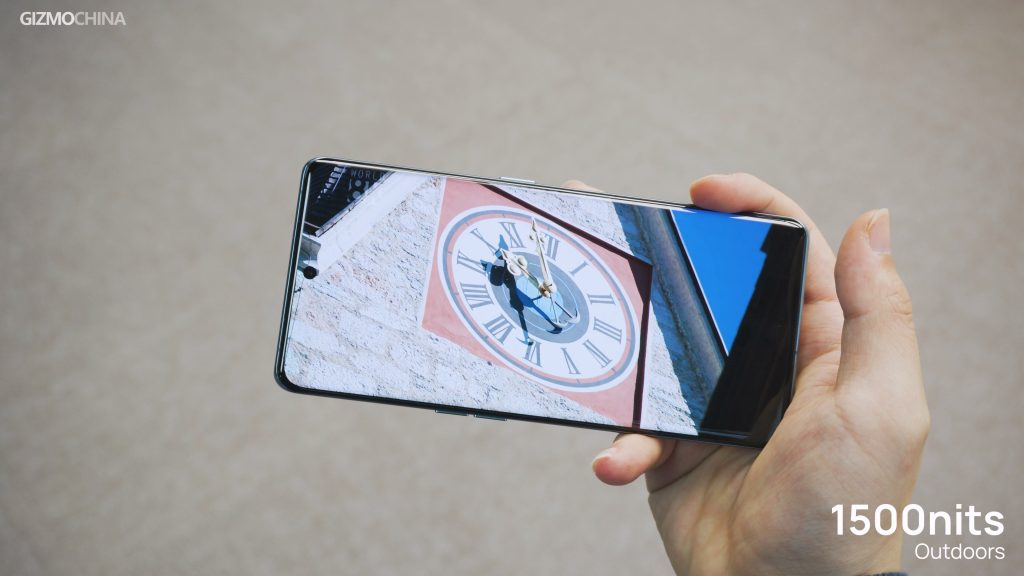
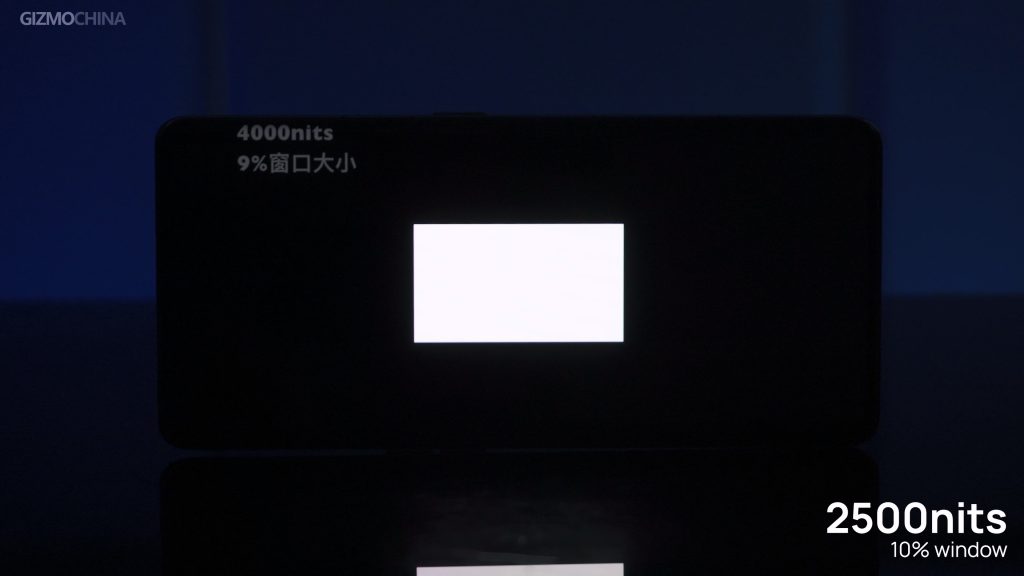
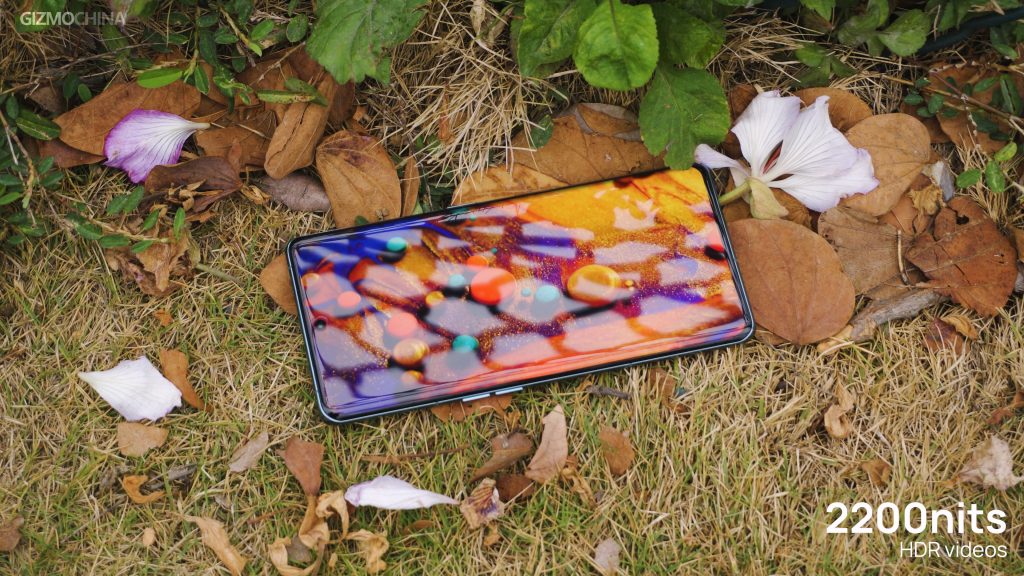
The front face covers a 6.82″ 2K-level 120Hz LTPO Amoled display, which is one of the most stunning phone screens I’ve ever seen, because it’s so bright! The screen is OPPO’s brightest screen ever and probably the brightest one that I’ve ever reviewed. It can be boosted up to 1500 nits outdoors, and reach around 2500 nits in a 10% window. What made me so surprised is for watching HDR content. If we turn on the bright HDR video mode in settings, the activated brightness can be boosted up to around 2200nits.
Outdoorslocal 10% windowHDR 10+ & Dolby Vision
Sometimes I even felt uncomfortable when activating the maximum brightness indoors. But this’s not its fault. The super-bright screen provides a better option to enjoy Dolby Vision and HDR videos. And of course, the Find X6 Pro comes with dual loudspeakers for stereo sounds. You can check it out here by yourselves.
Triple main cameras with big sensors
It’s almost like an end-game of all brands’ camera phones this year since there’s not much space for the existing technologies to support the annual upgrade. You will probably find a lot of new flagship models coming with similar multi-lens setups, but hard to figure out what exactly got improved. Even though the shooting experience could be improved, it’s hard to say how much progress in imaging it has made over tough conditions.
But the OPPO Find X6 Pro is an exception. It’s done almost all it can do to construct the huge round module. And the fact is that its upgrade of the cameras is so straightforward, instead of just staying on the advertisement and so-called algorithm optimization.
So what’s the most effective way to improve the imaging quality of the three lenses? It’s quite easy to answer the question: a bigger sensor, another bigger sensor, and another bigger sensor.
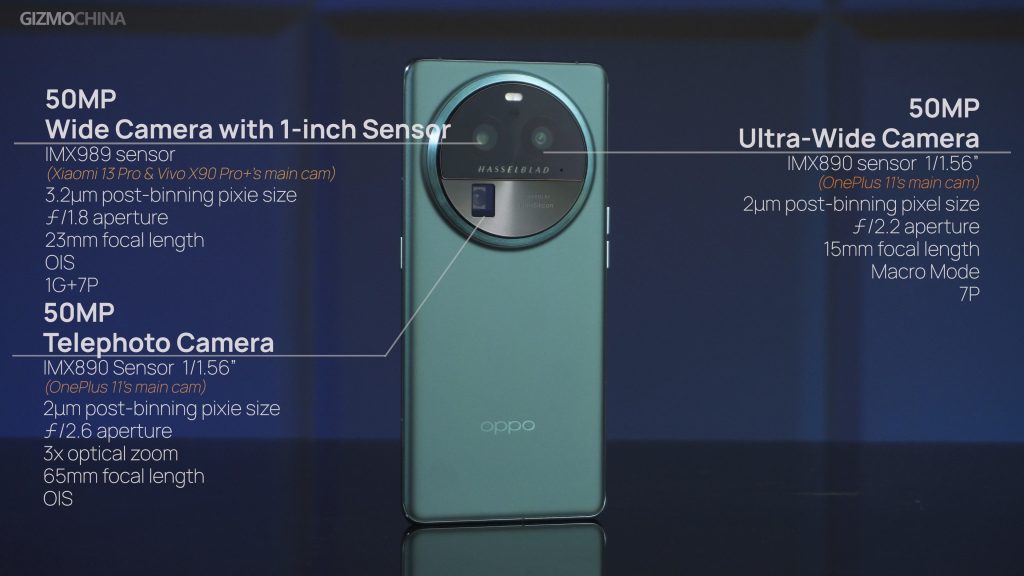
This is their most aggressive solution ever. The 0.6x ultrawide angle lens and 3x telephoto lens both use the same SONY IMX890 sensor as the main camera of the OnePlus 11, while the 1x main camera uses the same SONY IMX989 as the main camera of the Vivo X90 Pro+ and the Xiaomi 13 Pro. We can even say that the Find X6 Pro comes with three main cameras without any secondary lenses.
So technically the Find X6 Pro should have the best 3x telephoto lens and best ultrawide lens for smartphones and is likely to have one of the best 1x main cameras.
HDR – Colors are not oversaturated but great in original image
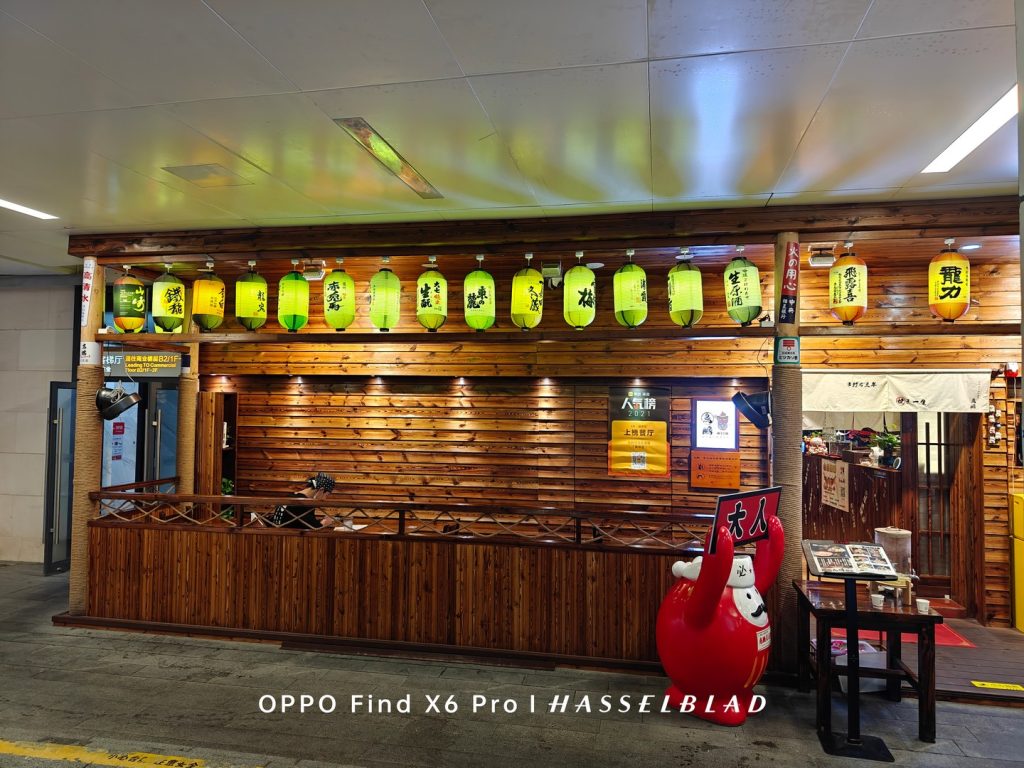
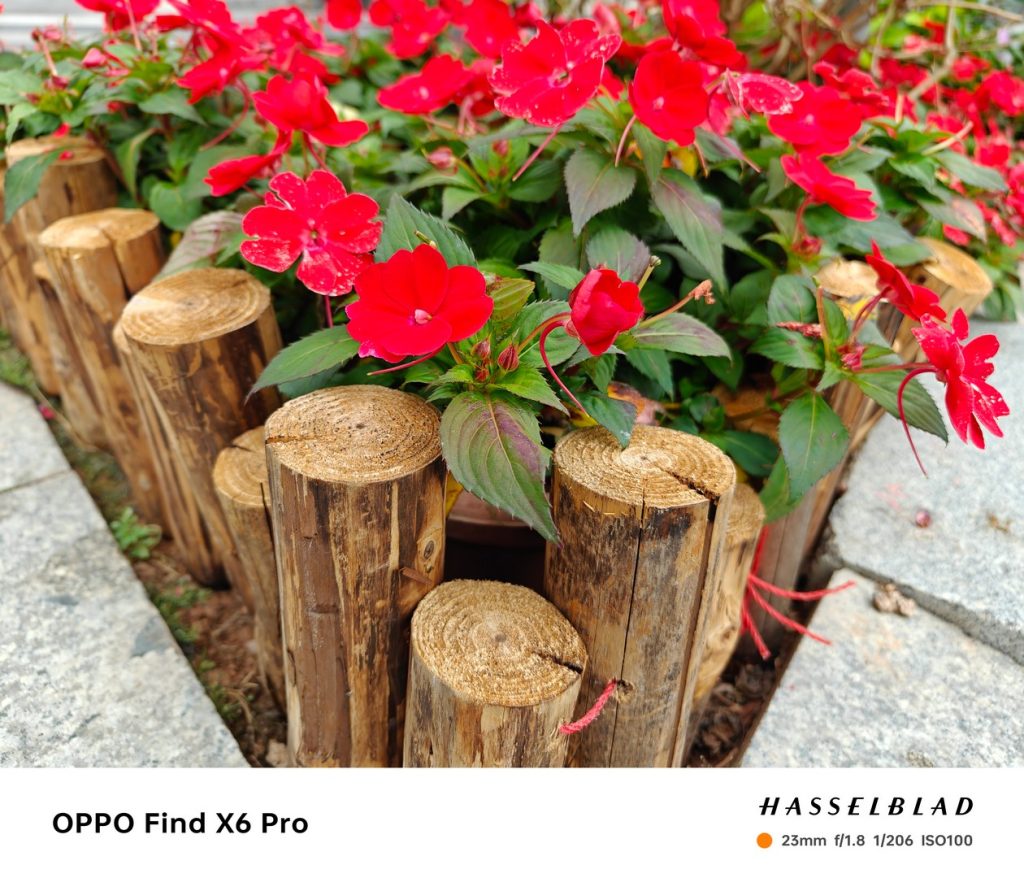
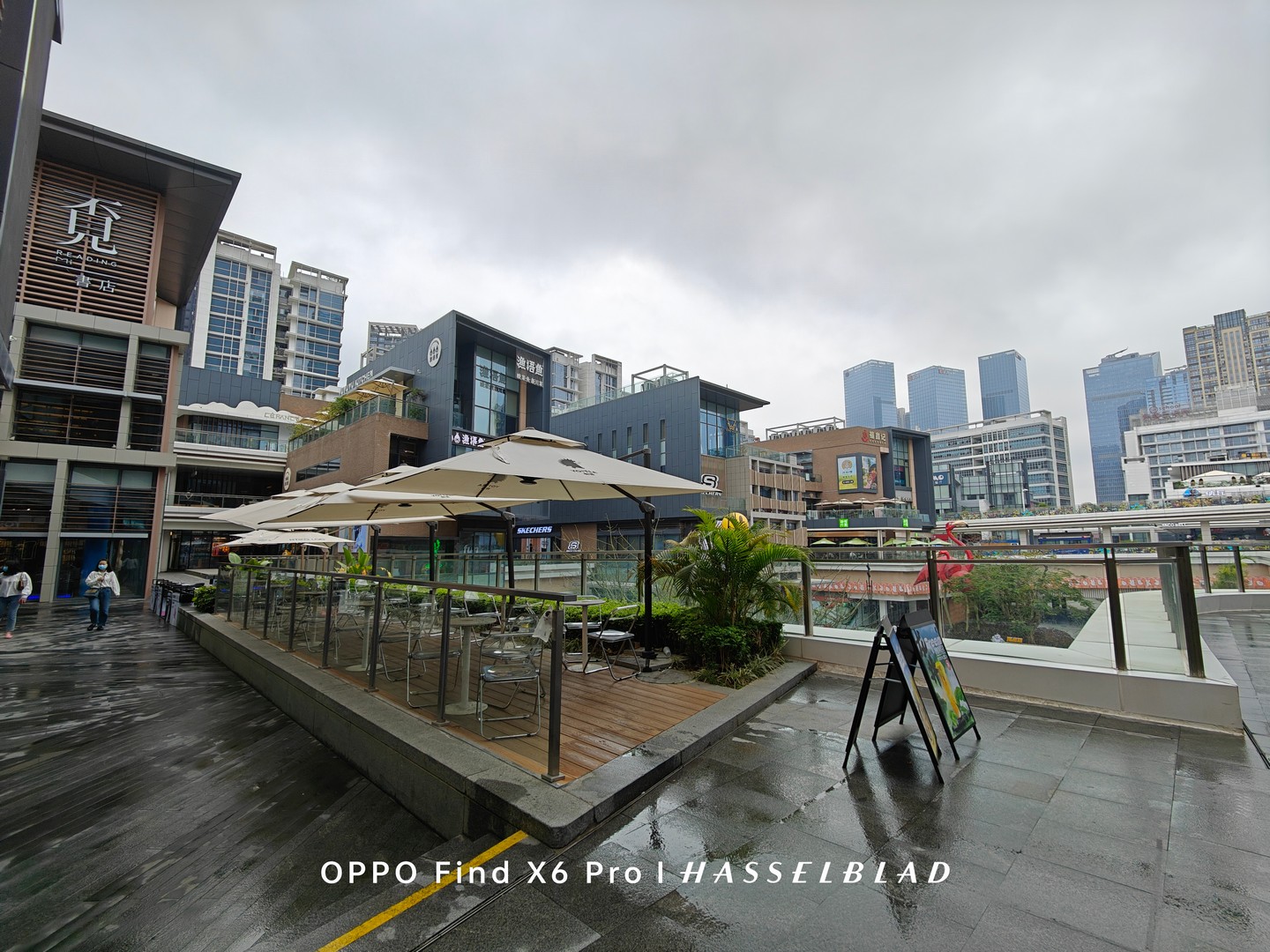
The sample was taken outdoors on a cloudy day, and the Find X6 Pro has the same natural but stylish colors, and the excellent dynamic range is also impressive under such a complex scenario. We can see that the sky is not overexposed and we can see some detail in the clouds, while the buildings in high contrast also reserve good detail with correct exposure.
The SONY IMX890 has almost twice the size of other telephoto sensors on flagship phones, so actually, it’s what we really anticipate. In this section, we will focus on the telephoto lens.
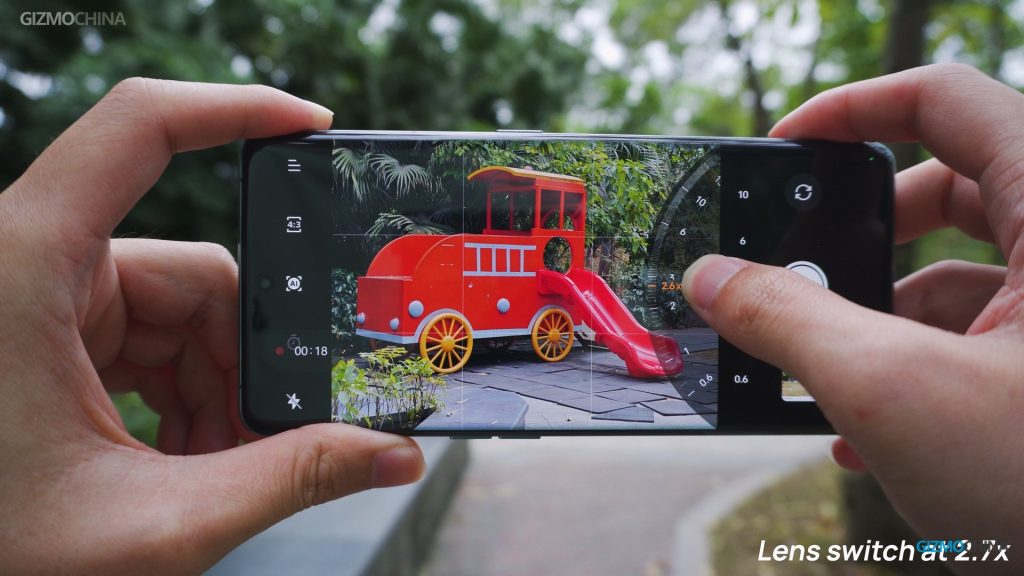
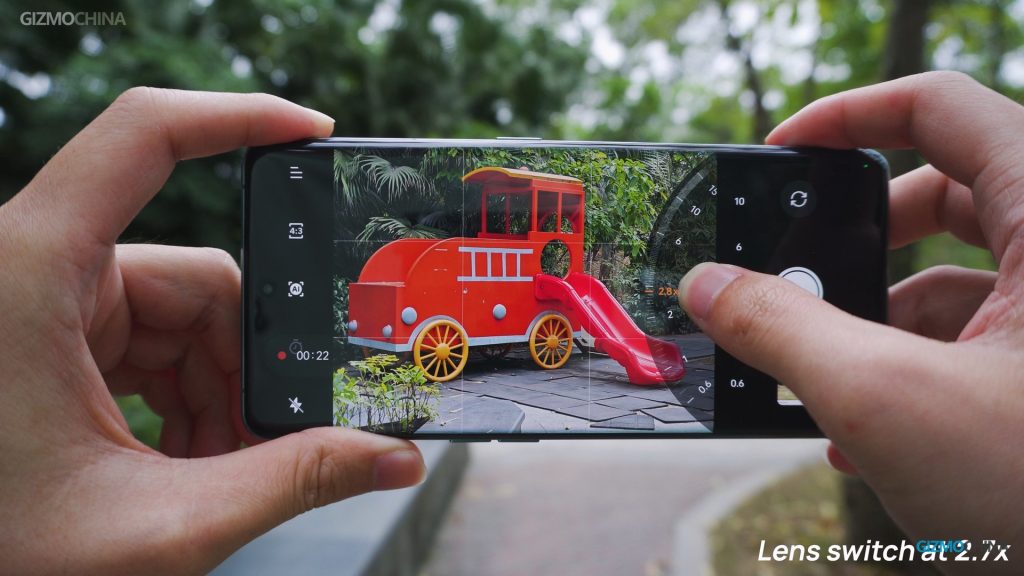
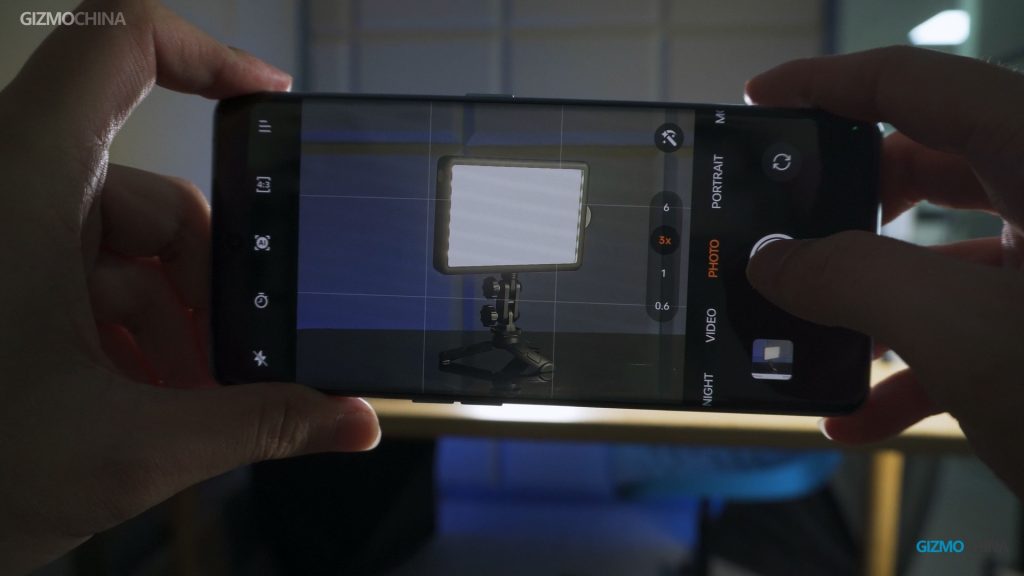
Because of the large sensor size, the Find X6 Pro’s telephoto camera couldn’t have a high-x optical zoom. Although the default optical zoom option is 3X, you will find that the lens could be switched to 2.7X if you manually zoom in. So it’s actually a 65mm full-frame equivalent lens.
2.7x – Lens switch2.6x – 1x lens
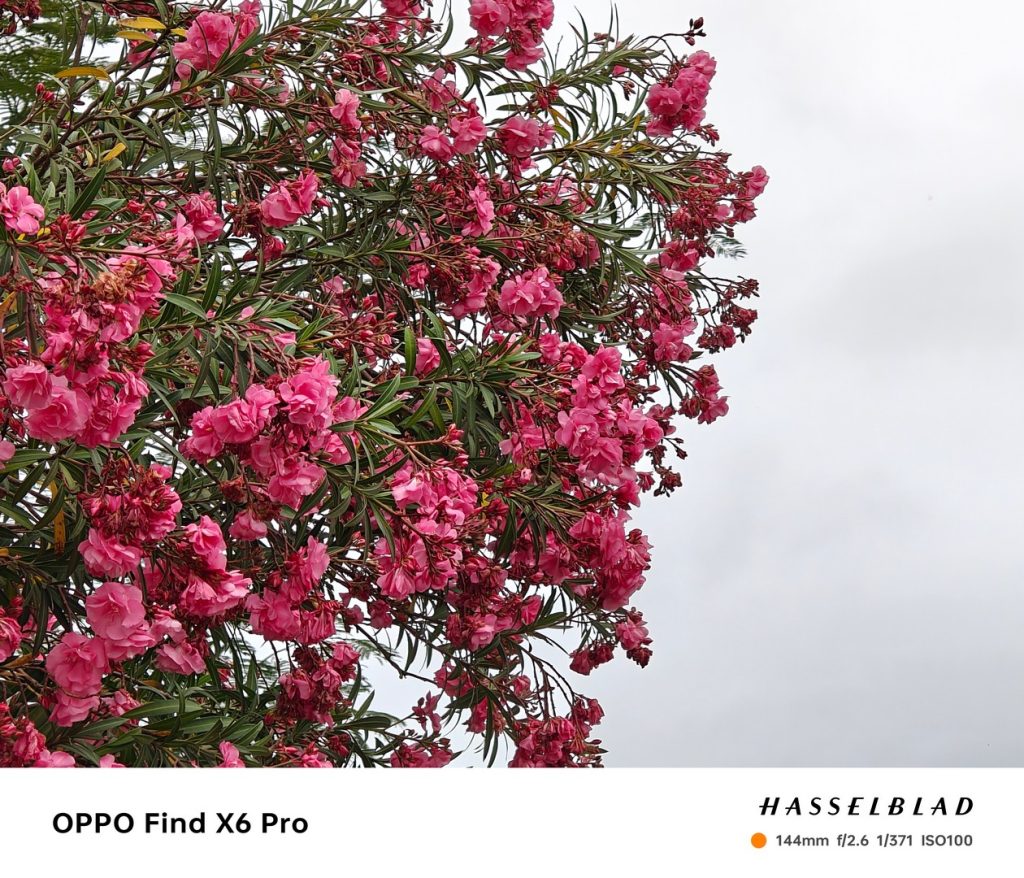
There is also a 6X option on the default list. Thanks to the huge size and sufficient pixels of the imx890 sensor, OPPO brought the in-sensor Zoom technology to the Find X6 Pro’s telephoto lens, which delivers sharper detail and less noise than traditional digital zooms.
Another impressive experience is the smooth zooming in and out between the three lenses. The image and colors are almost consistent in the view-finder when the lenses switch.
When switching to the telephoto lens, the optical zoom brings much more subtle detail compared to the other lenses. When switched to the 6X Zoom, the detail of the photos was even further enhanced, which is not attributed to the excellent optical quality of the sensor, but also thanks to the optimization of OPPO’s Mari silicon NPU over the past two years. The AI capacity allowed for further enhancement of the textures of various objects in the photos.
From the samples here we can see that the Find X6 Pro’s telephoto lens not only brings amazing detail to the photos, but also achieves great consistency in color and white balance with the 1x lenses, and once again, if you capture zoom-in photos a lot, I highly recommend you try the 6X Zoom on the X6 Pro. The in-sensor Zoom took better advantage of the huge number of pixels on the sensor. And you no longer need to tolerate the slow capture speed and huge photos under the high-resolution mode and crop the picture by yourself. On the Find X6 Pro, it’s really smooth and convenient.
3x6x3x6x3x6x3x6x
There is no doubt that the ultrawide angle lens with SONY IMX890 is the best ultrawide lens I’ve ever experienced. It has the least noticeable lens distortion and the best detail we’ve seen on an Ultrawide angle lens. The Sony IMX890 sensor makes it no longer a dispensable appendage: great dynamics, consistent colors, and no more fringing.
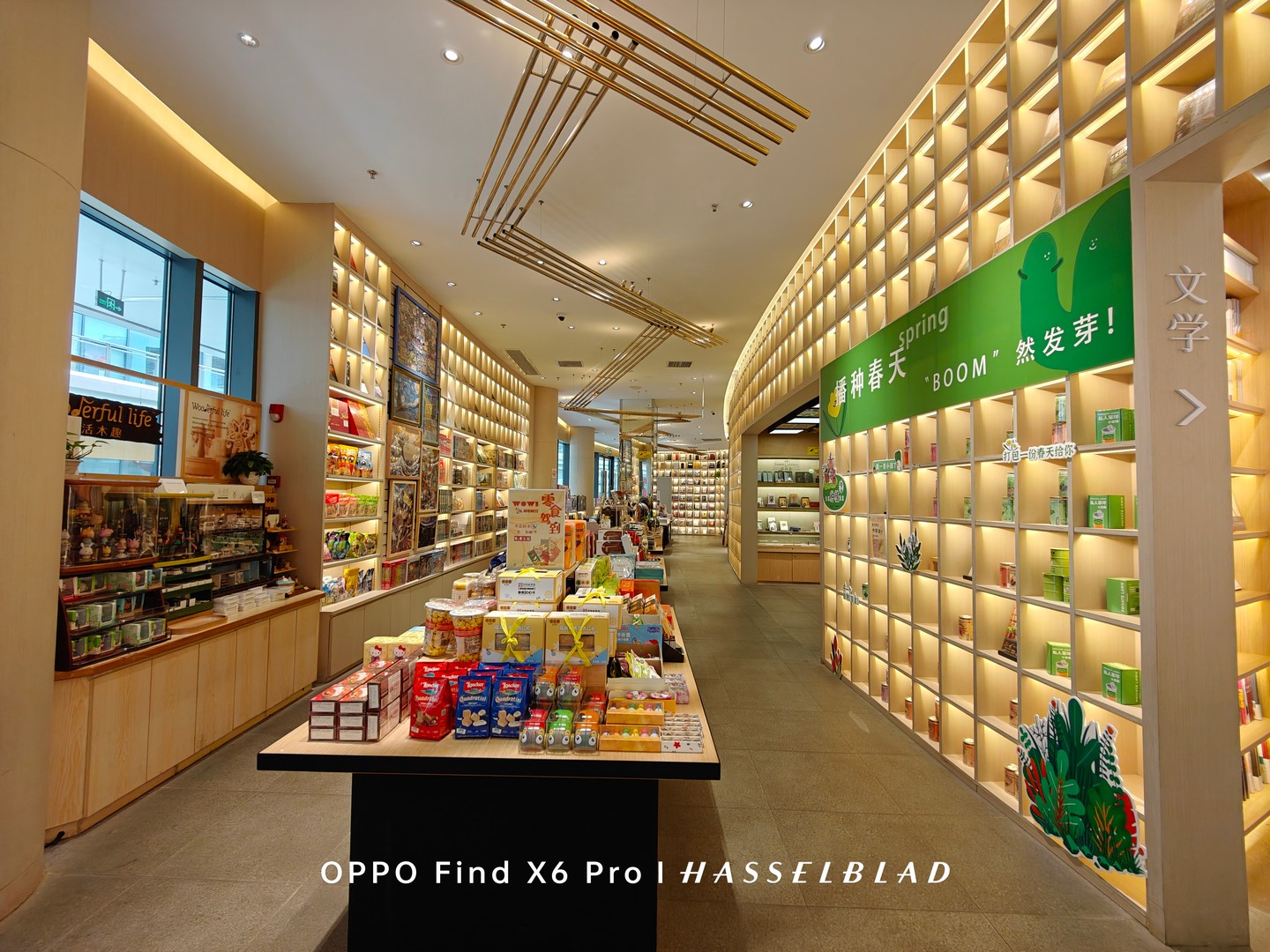
When we moved indoors with more complex lighting, the Find X6 Pro’s telephoto lens even showed us a comparable dynamic range with the sample shot with the one-inch sensor, The complex reflections on the surface of the model bear are so fantastic as you can see with your naked eye, and its colors are more vibrant and vivid.
When I came to this scene the ambient light was even worse, and it is a common fact that in this case, many flagship phones with a telephoto lens will auto-switch to a main camera when it detects insufficient lighting. Because the smaller sensor on most telephoto cameras may get worse photos by optical zoom in low light. But on the Find X6 Pro, we can see that the photos captured by the telephoto lens are substantially better than the 1x camera in terms of detail, color, and dynamic range.
3x6x3x6x3x6x3x6x3x6x
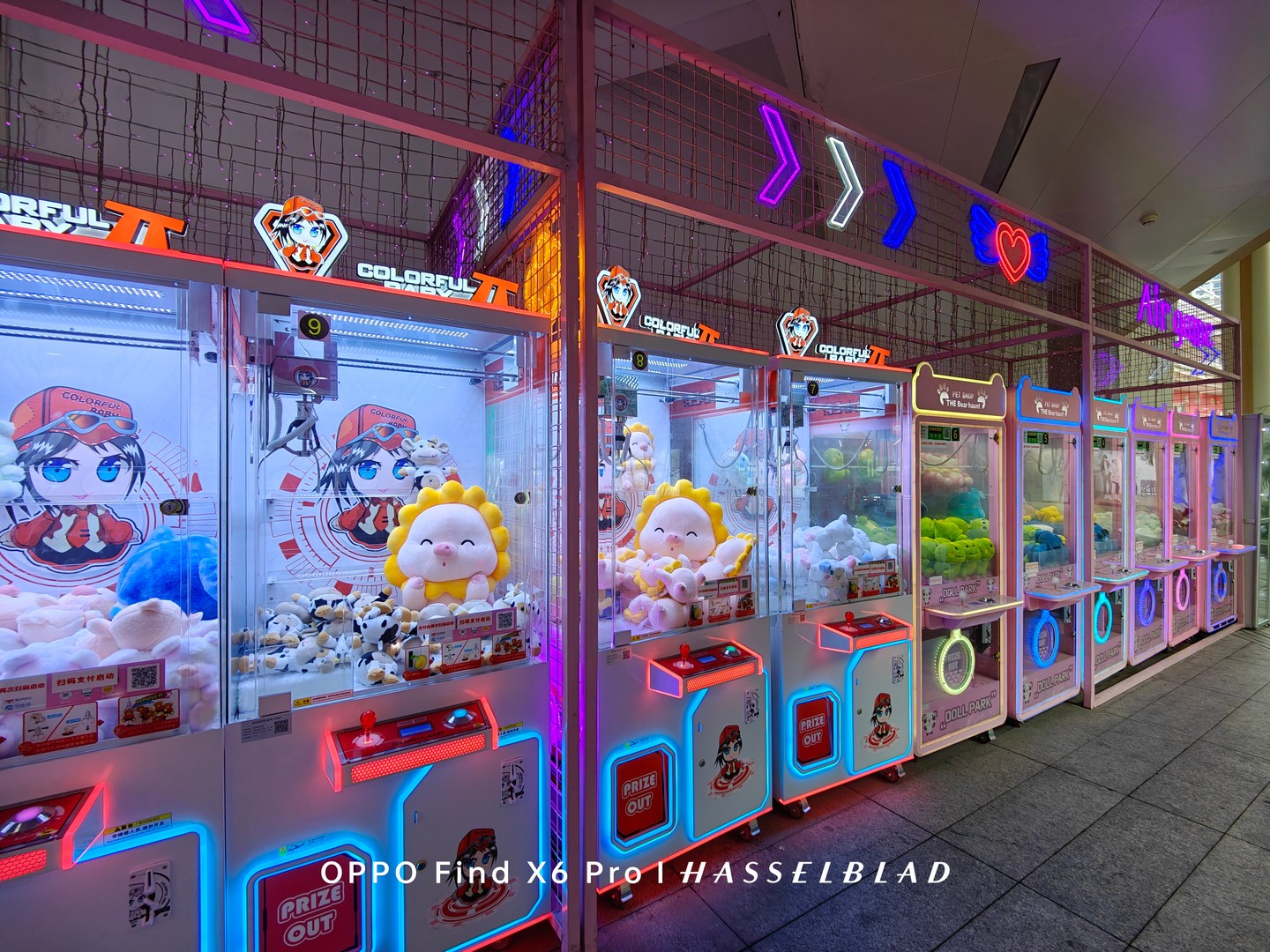
I tried shooting these samples in low-lighting conditions to find out which lens is better for night shooting. But there’s no absolute answer on the Find X6 Pro, which now is really up to users. No matter which lens you use, it can handle well with night scenes. You just have to make sure that the composition is what you really want. The Find X6 Pro makes the lenses indeed no priority. All three lenses are able to get the best photos at their own focal length.
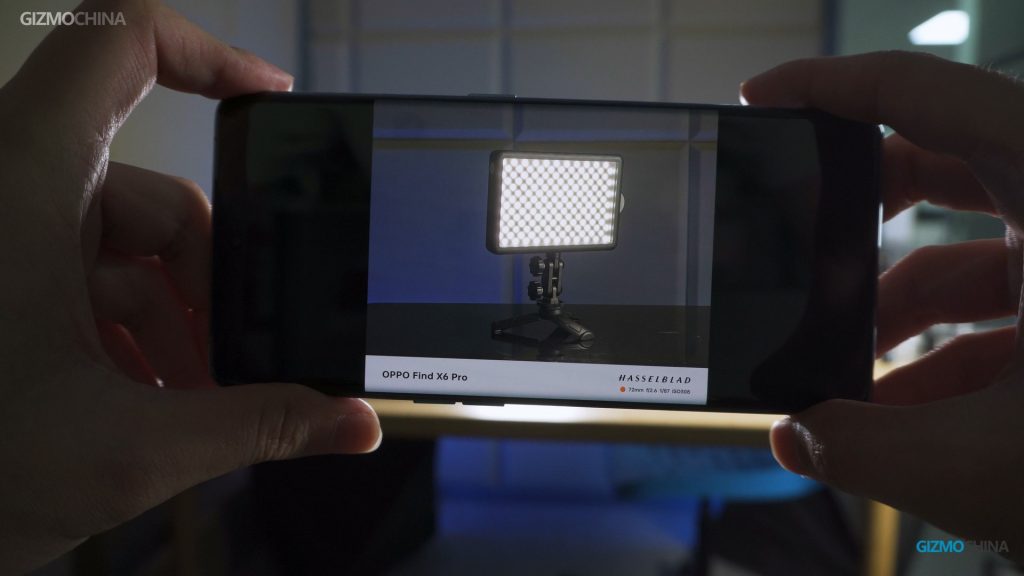
The new Hasselblad Portrait Mode is also impressive. Available at 24 and 65-mm focal lengths, the simulated lenses bring a stunning bokeh effect and impressive contrast. The photo keying does look pretty accurate and natural, as they claimed a new bokeh algorithm is applied here.
Given the OPPO Find X6 Pro’s incredible improvement in all the lenses, especially in telephoto shooting, I think it’s likely to be the best camera phone of 2023, even if the upcoming Xiaomi 13 Ultra may gain ground in other dimensions, My only complaint about the Find X6 Pro is still not able to bring live preview to the camera, although it’s not a problem specific to OPPO phones. When you take a night shot, you can only see the final result in the album. While this is a process that can bring surprises, I think users would be happier if they could see what they would get in the camera viewfinder.
viewfinderimage we got
The delayed preview also led me to an unexpectedly small bug. The telephoto lens sometimes would incorrectly handle the color of the lights at night. You can see that the algorithm incorrectly recognizes the purple lightbox as black&white, but the camera handles the colors correctly once switching to the 6X Zoom. But apparently, OPPO applies complex algorithms here to perform great real-time processing on each photo, and hopefully, they will fix it in the near updates.
Video shooting
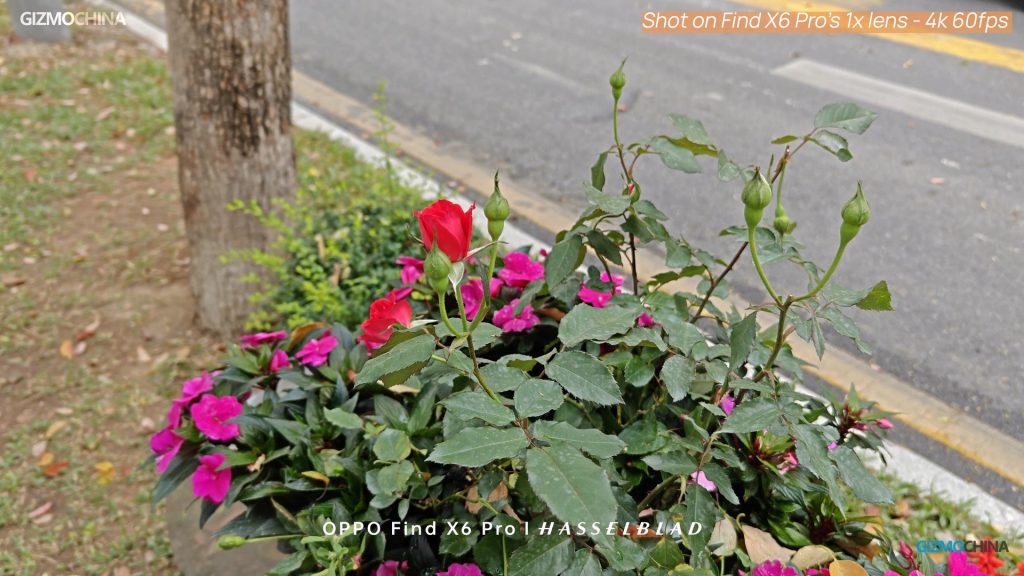
In terms of video recording, OPPO didn’t pursue 8K resolution, but put more effort into color and dynamic range for up to 4K videos shot on all three lenses including a 6x option. The footage here shows that the cloud has a good transition without over-exposure issues. Even when we switch to the telephoto lens, the rich details of the surface of distant objects can be captured very well.
1x3x
The telephoto lens with great aperture is impressive to have close shots. You can get a very nice depth of field and pretty sharp details, This is the first time I feel that smartphones are finally catching up with some portable digital cameras over video shooting.
4K 30fps Dolby Vision shot & playback on Find X6 Pro
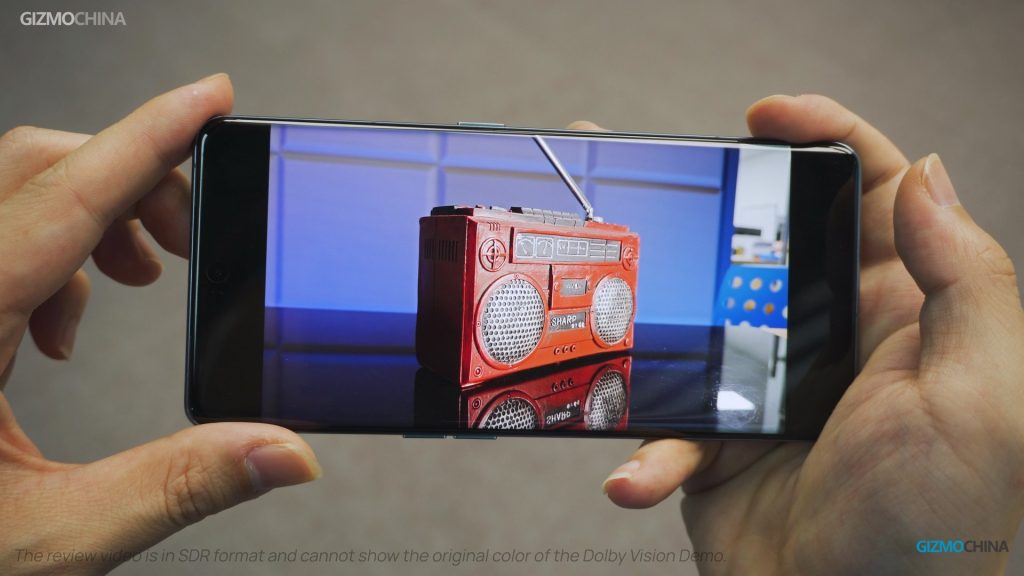
Another great surprise is the capacity of shooting Dolby Vision videos. And it’s also a pleasure to play back the footage with the bright display. The Dolby-Vision shooting seems to be more meaningful at the same time, as we can see a more immersive dynamic image on the phone, and its rich colors and high contrast easily pull us into the memories of the shoot.
Verdict
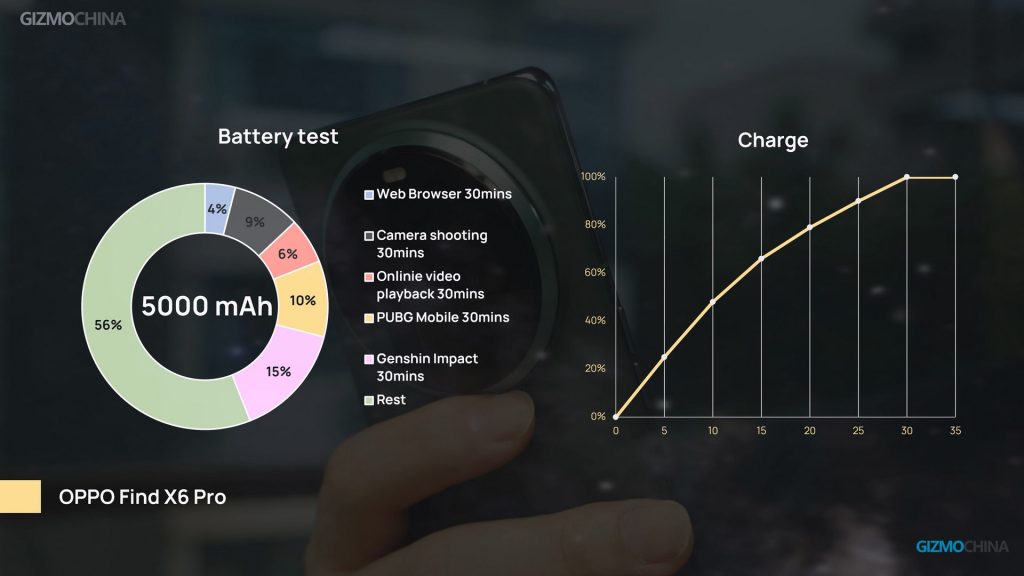
To be honest, there’s still a lot to share with you about the OPPO Find X6 Pro, like Snapdragon 8 Gen 2 performance, 100W wired plus 50W wireless charge, and new software features of Color OS. It doesn’t seem to have any drawbacks, and I did try very hard to dig into it for more details. But that will have to wait until our next video about it, so please stay tuned and subscribe to our YouTube channel Gizmochina.
Disclaimer: All of the opinions in this Oppo Find X6 Pro review are the Gizmochina Review team’s and based on editors’ own experiences. There has been no editorial input from Oppo.
According to a recent report by Mandiant, a leading information security company, hackers exploited 55 zero-day vulnerabilities in 2022. Zero-day vulnerabilities refer to security flaws in software that are publicly disclosed or exploited before the company responsible for patching it is aware of the issue. Due to the lack of protections or firewalls in place, hackers often take advantage of these vulnerabilities to carry out attacks.
The report by Mandiant found that the three largest technology vendors in the world, Microsoft, Google, and Apple, were the most commonly exploited vendors for the third year in a row, with 18, 10, and 9 zero-day vulnerabilities respectively. The most frequently affected product types were operating systems (19), browsers (11), security, IT, and network management products (10), and mobile operating systems (6).
Interestingly, the report revealed that desktop operating systems were most exploited, with 19 zero-day vulnerabilities identified. Windows was the most affected, with 15 zero-day flaws, followed by macOS with four. In the case of mobile operating systems, 5 zero-day vulnerabilities were exploited in iOS and one in Android.
The report also highlights that China was the country that exploited the most zero-day vulnerabilities in 2022, followed by North Korea and Russia.
While the number of zero-day vulnerabilities exploited in 2022 decreased from the previous year, the report indicates that these kinds of exploits will likely continue. The report recommends that organizations take proactive measures to address these vulnerabilities, such as implementing security patches and conducting regular vulnerability assessments.
Recently, Microsoft fixed a critical zero-day issue in Outlook that had been exploited by a hacker group to attack a number of European government and military organizations in 2022. It is important for organizations to remain vigilant and take necessary precautions to prevent potential zero-day vulnerabilities from being exploited by cybercriminals.
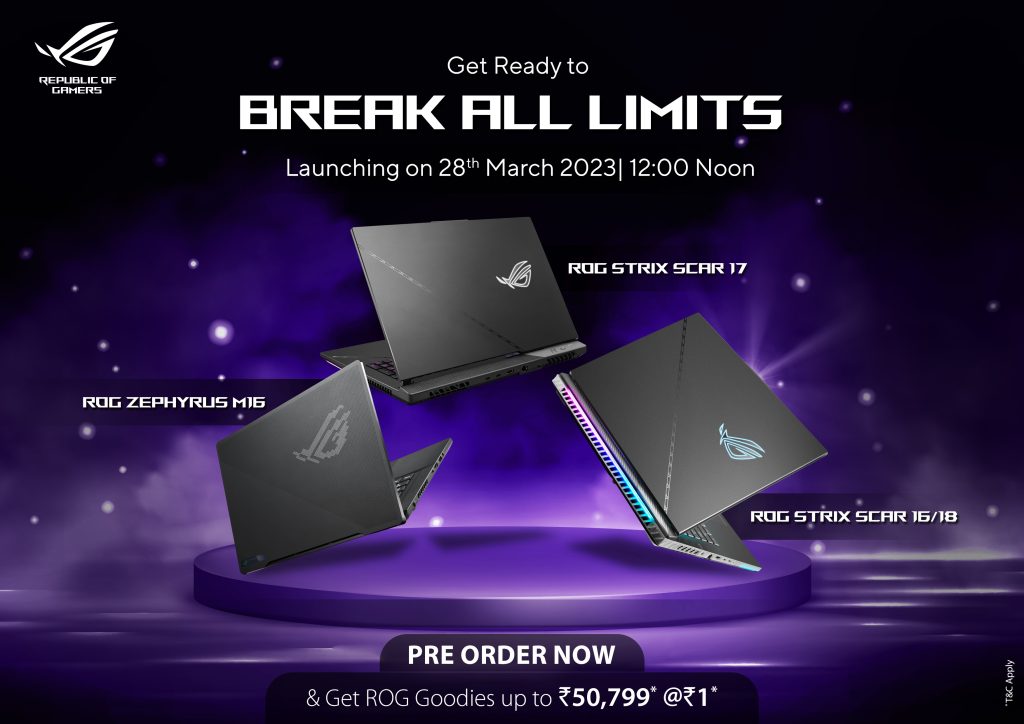
Asus has just began taking pre-orders for a couple of its latest generation of gaming laptops. These notebooks fall under its ROG (Republic of Gamers) lineup’s Zephyrus and Strix Scar series. So here are all the details.
With the new ROG laptops, the company is aiming to offer a top notch gaming experience. These new gaming notebooks will be equipped with the latest CPUs and GPUs from the likes of AMD, Intel, and Nvidia. These beefy specs will also be paired with a robust thermal management system called Intelligent Cooling Technology for improved cooling efficiency to avoid throttling. Talking about the ROG Strix Scar 2023 series first, the these models feature a much more capable cooling mechanism to allow for longer gaming sessions.
Apart from refresh in internal hardware to bring latest specs, Asus has also bumped up the size of the display on these gaming laptops, which now start from 16 inches and go up to 18 inches for a more immersive experience. The ROG Strix Scar models basically aim to offer the best gaming experience, while the new Zephyrus models are thin and light models that aim to offer strong performance on the go.
The new models include the new Zephyrus M16 and the Zephyrus 16 Duo, which feature sleek and lightweight design. This model is equipped with an AniMe Matrix display, which is basically an array of LED lights. Furthermore, users can also customize the screen to display different patterns and animations. Despite its portable form factor, the Zephyrus M16 will still offer a great platform for gamers.
The Asus ROG Strix Scar Series and Zephyrus M16 are currently available for pre-order along with the Zephyrus Duo 16. The Strix Scar models includes the new Strix Scar 16, Scar 17, and the Scar 18. For those that register to get a chance to pre-order these new laptops, they can expect to receive a bundle of ROG accessories. This includes the new Gladius Il Mouse, ROG Scope Keyboard, and ROG Strix go core Headphones.
Alongside this, users can also get a 1+2 warranty and a 3 year LADP on the laptops, valued at up to Rs. 50,799, all for just 1 INR. You can redeem these goodies by filling out the pre-order form which will get you a coupon code that you can redeem at asuspromo.in. For those interested, you can also read to Asus Exclusive Stores, Flipkart, Amazon, or the company’s official website, as well as Reliance, Vijay Sales, Croma, and JioMart to pre-order the new laptops between 22nd March to 27th March 2023.
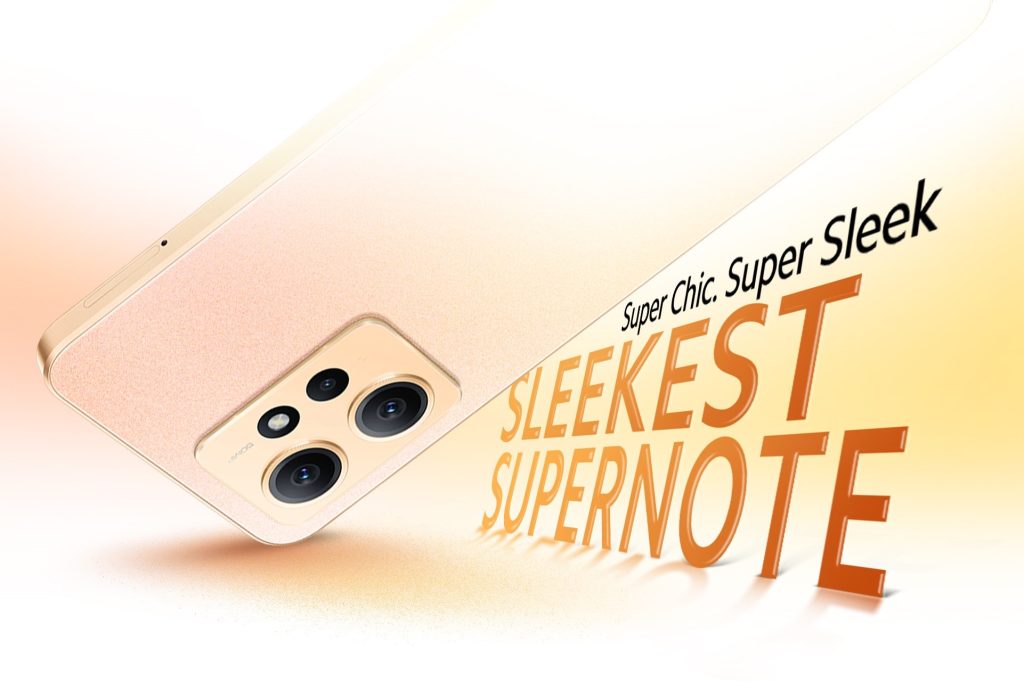
Xiaomi launched theRedmi Note 12 series in India in early January. The company introduced three models and all of them are 5G-enabled.
Now, weeks later, the firm has confirmed to debut a new phone in the lineup. This device is limited to 4G connectivity and it is officially called Redmi Note 12 (without 5G at the end).
The 4G variant of Redmi Note 12 is scheduled to launch in India on March 30. It will be one of the many new products debuting at the Xiaomi Fan Festival, which will run from March 30 to April 20.
The teaser page for the handset discloses its key features. The smartphone will look similar to its 5G counterpart, however, the specs will be nearly identical to those of the Redmi Note 11.
The phone is said to come with a 120Hz Super AMOLED display. The screen is expected to offer FHD+ resolution and measure 6.67 inches in size.
The device will be powered by a Qualcomm Snapdragon 685 SoC, which is nothing but an overclocked Snapdragon 680. It will flaunt a 50MP (wide) + 8MP (ultra-wide) + 2MP (macro) triple rear camera system and a 13MP selfie camera.
Last but not least, the handset will be backed by a 5,000mAh battery with support for 33W wired charging.
Huawei is gearing up to launch the P60 series flagship smartphones in China tomorrow. These devices will be accompanied by the Enjoy 60 smartphone and the Huawei FreeBuds 5 TWS earphones. The upcoming TWS earphones feature quite an interesting design that looks like a weather drop. Leaked images and specs of the earbuds have given us a fair idea of what to expect. Although the gadget will launch tomorrow only in China, the global launch will likely happen soon after as the FreeBuds 5 have cleared SIRIM certification.
Spotted by tipster Mukul Sharma, the listing reveals that the Huawei FreeBuds 5 bears the model number T0013 and confirms the Huawei FreeBuds 5 moniker. No further details are revealed by the listing, but it’s almost certain that the earbuds will soon launch in Malaysia. Let’s take a look at what we know so far about these earbuds.
Huawei FreeBuds 5 specs (rumored)
The much-awaited Huawei FreeBuds 5 have been creating quite a buzz lately, and leaked images have now revealed their unique design. With a waterdrop-shaped structure that boasts a rounded handle and textured appearance, the earbuds offer a comfortable fit with no discomfort. Furthermore, they weigh only 5.5g each, making them incredibly lightweight, while the charging case weighs 44.4g, bringing the total weight of the set to 55.3g.
Apart from their design, the FreeBuds 5 are also reported to offer exceptional sound quality and noise reduction. They support active noise cancellation and LDAC sound quality, as well as adaptive environmental noise reduction. Users will also have the option to customize swipe, double tap, and hold actions to their liking. Additionally, these earbuds are HWA/ Hi-Res Audio Wireless gold standard certified, which guarantees an exceptional audio output.
Although there is not much information available about the FreeBuds 5 yet, Huawei has confirmed that they will launch on March 23 in China, along with the Huawei P60 series, Mate X3 foldable, and the MatePad 11 (2023).
Xiaomi-backed Redmi has confirmed that the company will be launching its new Redmi Note 12 Turbo smartphone in its home country on 28th March.
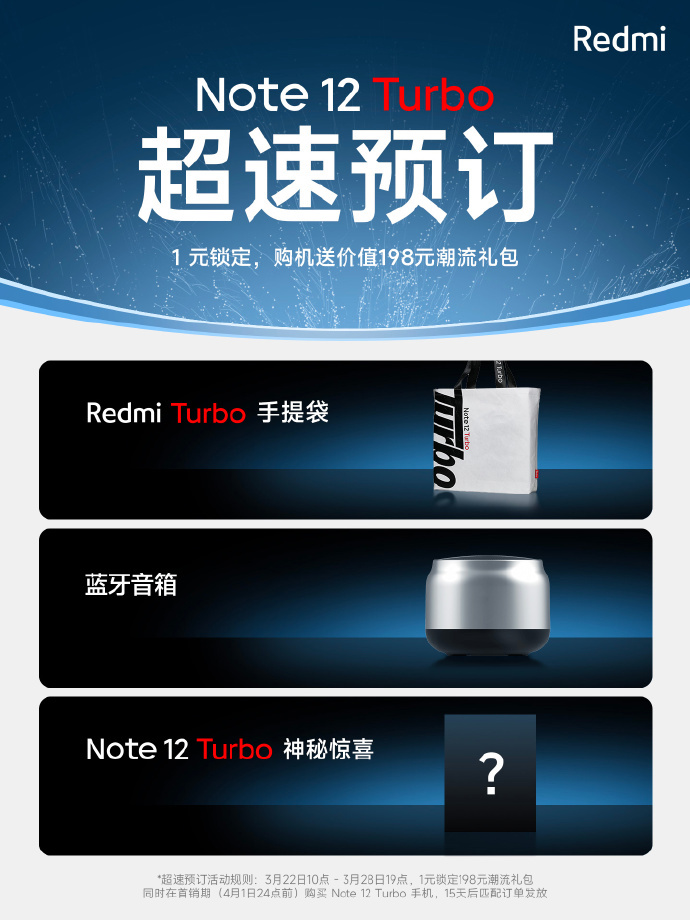
Now, ahead of its launch next week, the Redmi Note 12 Turbo is available for reservation in China. The phone can be reserved by paying 1 yuan and when it’s purchased after the launch, the buyer will get goodies worth 198 yuan.
The teaser poster shared by the company reveals that the smartphone will feature a triple-camera setup on the back panel with a 64-megapixel primary sensor. There are volume rocker keys on the right side of the device, along with a side-mounted fingerprint sensor.
The top edge of the phone has a microphone, an IR blaster, a speaker grille, and a 3.5mm audio jack. On the bottom side, there’s a speaker grille, a USB-C port, a microphone, and a SIM slot.
Coming to the specifications, the Redmi Note 12 Turbo is expected to feature a 6.67-inch flat OLED display with a 120Hz refresh rate and a Full HD+ screen resolution. Under the hood, the device will be powered by the Qualcomm Snapdragon 7+ Gen 2 processor, making it the world’s first smartphone to come powered by this chipset.
As for the memory configuration, it packs up to 12GB of LPDDR5 RAM and 256GB of UFS 3.1 internal storage. Along with the 64MP primary camera sensor on the back, there could also be an 8MP ultra-wide lens and a 2MP macro lens. On the front side, there will be a 16MP snapper for taking selfies and video calling.
The smartphone is likely to run the Android 13 operating system out-of-the-box with the company’s own MIUI 14 custom user interface. It will be powered by a 5,000mAh battery with support for 67W fast charging.
Earlier today, Redmi revealed the launch date for the Note 12 Turbo. Now, Realme has listed the GT Neo 5 SE on a popular online retailer in China.
Unlike Redmi, Realme is yet to disclose the launch date for its Snapdragon 7 Plus Gen 2 smartphone. But thanks to the JD listing, we at least know the sale date.
The Realme GT Neo 5 SE will be available for purchase from April 3 at 10 AM GMT+8. This means the device will be made official before the aforementioned date.
For the unaware, the Redmi Note 12 Turbo, which is scheduled to launch on March 28, is being marketed as the world’s first Snapdragon 7 Plus Gen 2 phone. Thus, Realme GT Neo 5 SE should release around March 29-April 2.
Talking about specs, the device is said to sport a 6.74-inch OLED display with an FHD+ resolution and a 144Hz refresh rate. Its chipset will be paired with LPDDR5 RAM and UFS 3.1 storage.
The handset is expected to offer a triple-camera system comprising a 64MP primary sensor, an 8MP ultra-wide unit, and a 2MP macro snapper. On the front, there’s a 16MP shooter.
Last but not least, the phone is tipped to draw power from a 5,500mAh battery with support for 100W wired charging.
Instagram ads are quite a popular form of social media advertising that allows businesses and individuals to promote their products or services to a large audience, given Instagram’s massive user base. These ads appear in users’ feeds or stories and can be targeted based on factors such as demographics, interests, and behaviours. Instagram ads can be created and managed through Facebook Ads Manager, which provides a variety of ad formats, including photos, videos, carousels, and stories. Instagram is expanding its advertising options in a move that could benefit businesses seeking greater visibility. As part of its latest testing phase, the app has introduced a couple of new ad placements that could transform the way brands are discovered on the platform. One such placement involves sponsored ads appearing in search results when users enter specific terms, such as “makeup”, or “shoes”. These ads will be marked as sponsored and will show up in users’ feeds alongside the actual search results. The company has said it intends to make this placement available globally in the coming months.
Instagram
The app is also partnering with selected brands to trial a new format known as “reminder ads”, which could provide businesses with a more direct way to notify users of upcoming events or launches. Once users opt into these reminders, they will receive notifications from Instagram one day before the event, 15 minutes prior, and when it commences. These notifications will appear like any other Instagram notification and will display on users’ lock screens.
The introduction of these new advertising options is hardly surprising given the importance of ads to Meta, the parent company of Instagram. Meta‘s advertising revenue dropped for the first time in 2022, so it is actively looking for new ways to monetize its platforms. Despite this setback, the company still earned $31.25 billion in advertising revenue in the fourth quarter of 2022.
Gaming laptops require a significant amount of power to run the high-end hardware they come equipped with, including powerful graphics cards and processors. As a result, the power adapters for gaming laptops are much larger and heavier than those for standard laptops. These adapters can be as big as a brick and weigh a pound or more, making them quite bulky and difficult to carry around. This size is necessary to deliver the high wattage and voltage required to power the gaming laptop’s components.
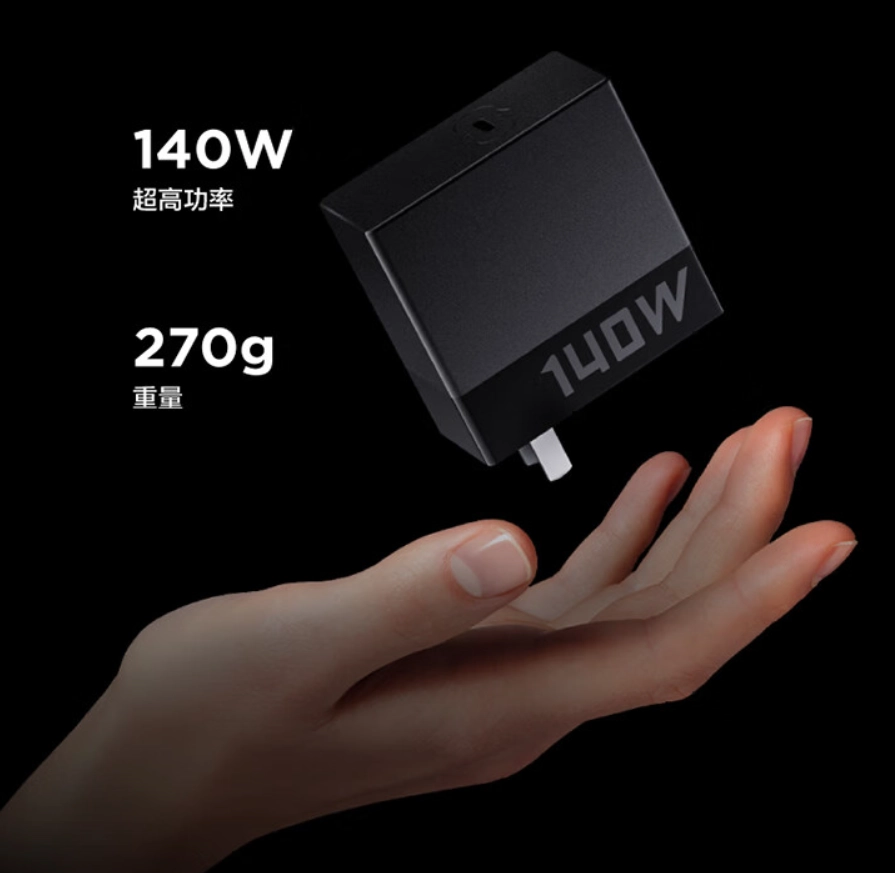
Lenovo has come up with a solution to the cumbersome size of power adapters for gaming laptops with its latest product release. At the Lenovo Savior spring ecological new product launch conference, Lenovo introduced the C140 GaN charger, which delivers a high power output of 140W. Even though gaming laptops require a significant amount of power to run, the C140 GaN charger is small in size but still able to achieve about 80% of the performance of ordinary adapters. As per test data, popular MOBA game DOTA 2 was played at the highest image quality, and while doing so, the frame rate using the original 300W adapter was 182. On the other hand, the frame rate using the 140W charger was 142. This is quite impressive for a charger which is less than half the wattage of the original power brick.
This charger is compatible with the Lenovo Legion series gaming notebooks, and it supports PD3.1, QC3.0, PPS3.0, and other fast charging protocols. The charger has a sleek design, a volume of 66.2×65×30.6mm, and a weight of about 270g, which is 26% of the original 300W charger of the Legion series notebooks. The C140 GaN charger is available for pre-order on the e-commerce platform for 269 yuan (~$39), with an initial price of 199 yuan (~$29). The pre-orders have already begun, and the charger will go on sale on April 7.
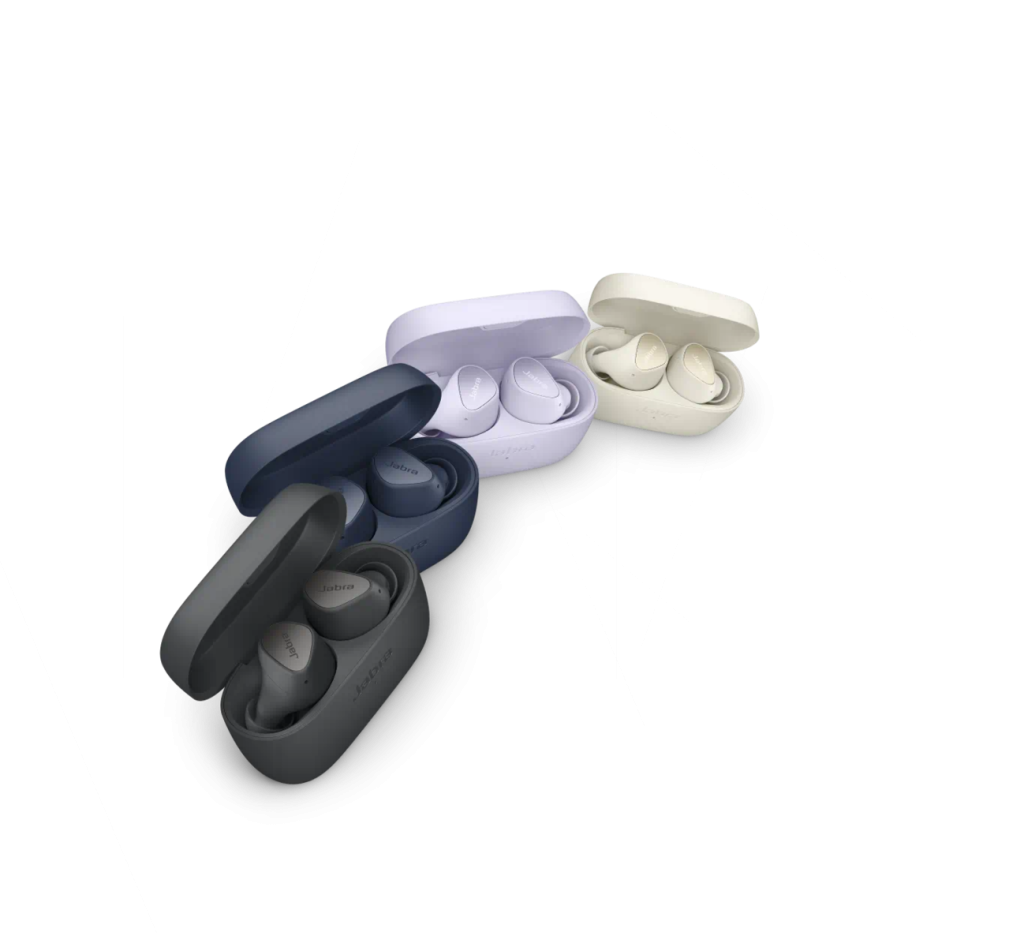
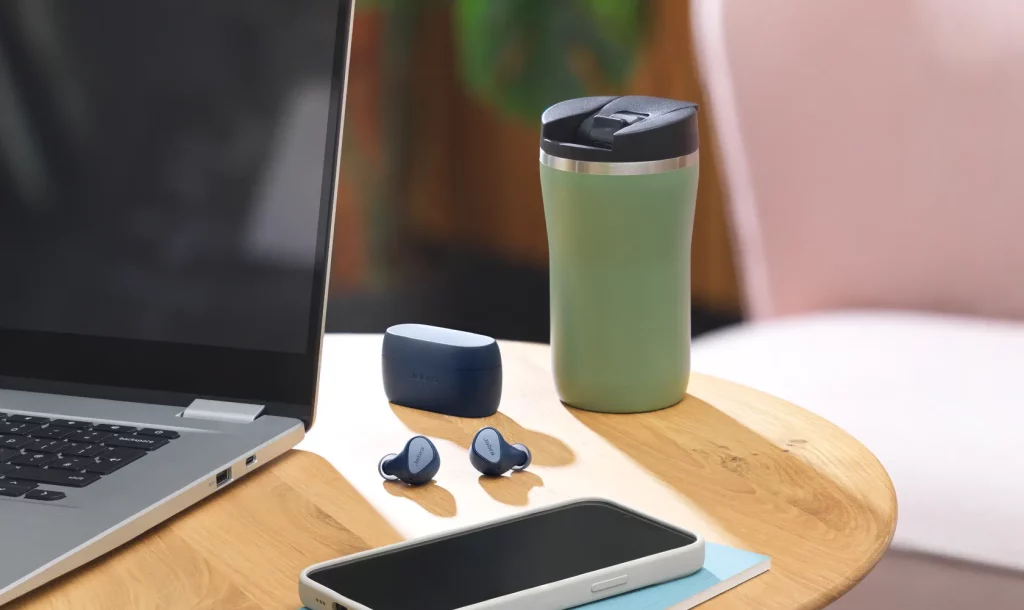
In December, Jabra introduced the Jabra Elite 4 Active TWS earbuds to the global market. These earbuds are specifically designed for sports and physical activities, providing exceptional sweat resistance that surpasses that of most other earbuds available in the market. The brand has now launched the Jabra Elite 4 earbuds, which succeed the Elite 3 model from 2021.
Compared to the Elite 4 Active, the Elite 4 retains most of the core features, with ith a few of them slightly toned down. The Jabra Elite 4 TWS earbuds provide IP55 dust and water resistance, which makes them fairly resistant to sweat and rain, although slightly less so than the Elite 4 Active’s IP57 rating. The earbuds offer up to 5.5 hours of listening time, in contrast to the Active’s seven hours (with a total of 22 hours and 28 hours respectively, when used with the charging case).
It is not clear whether the Elite 4 has the same transparency mode as the higher-end model. Nevertheless, the earbuds come equipped with four microphones, and aptX support helps optimize audio quality, making the most of Bluetooth’s limited bandwidth.
ANC and Bluetooth multipoint are undoubtedly excellent features to have in a pair of earbuds, and a $20 price increase from the Elite 3’s $80 price point to the Elite 4’s $100 price point appears reasonable to incorporate these features. However, it’s worth noting that the Elite 4 doesn’t boast any other significant improvements. The earbuds come with the same 6mm drivers, the same IP55 rating for protection against water and dust, and the same battery size as the Elite 3.
Car thefts remain a prevalent issue worldwide, with millions of vehicles stolen each year. Not only does it result in financial losses for car owners, but it also contributes to higher insurance premiums and poses a significant threat to public safety. The recent Kia Boyz thefts have become a serious problem in the United States, particularly for owners of certain Kia and Hyundai models. A group of teenagers identified a security loophole in these models, allowing them to start the cars without a key. The thefts quickly spread across the country, and many were documented on social media platforms, leading to a rise in car thefts and vandalism.
Hyundai and Kia have been criticized for not equipping their cars with the necessary security features, particularly engine immobilizers. Models produced between 2011 and 2021 are particularly vulnerable, and thieves have been able to start the cars with just a USB cable and a screwdriver. The companies have since released software updates that require physical keys to start the cars and sound alarms for longer periods if a thief tries to start the car. However, these updates came too late for many owners who have already been affected by the thefts.
The Kia Boyz thefts have caused insurance companies to refuse to cover affected Kia and Hyundai models, further compounding the problem for owners. The rise of this problem has been attributed to the lack of necessary security features in the cars, and the popularity of the vehicles due to their lower price point.
The Kia Boyz trend gained popularity on TikTok, leading to a surge in car thefts, vandalism, and accidents in many cities across the country. In 2021 alone, 10,471 vehicles were reported stolen in the US, with 67 percent of them being Kia or Hyundai cars. While both companies have made efforts to address the security issues, the damage has already been done, and many owners are left with the consequences.
In conclusion, the Kia Boyz thefts have highlighted the need for adequate security features in cars, particularly in models produced by Hyundai and Kia. The lack of engine immobilizers in these models has made them vulnerable to theft, and the rise of social media trends has only exacerbated the problem. While the companies have taken steps to address the issue, it remains to be seen whether they will be able to restore confidence in their products and win back the trust of affected owners.
The iQOO Z6 5G has received a price cut in India after the launch of the iQOO Z7 5G. After the price cut, the Z6 is now listed on Amazon and iQOO India’s website with a starting price of Rs 14,499.
iQOO Z6 5G Receives Price Cut in India
The iQOO Z6 5G comes in three variants, such as 4 GB RAM + 128 GB storage, 6 GB RAM + 128 GB storage, and 8 GB RAM + 128 GB storage. At launch, these variants were priced at Rs 15,499, Rs 16,999, and Rs 17,999, respectively.
iQOO Z6 5G
Now, the iQOO Z6 5G has received a price cut of Rs 1,000 in the country. Hence, its three variants are now available for Rs 14,499, Rs 15,999, and Rs 16,999, respectively. To further sweeten the deal, buyers can take advantage of the Rs 1,000 discount by HDFC and ICICI bank cards while placing the order. The device comes in two colors, such as Raven Black and Lumena Blue.
iQOO Z6 5G specifications
The iQOO Z6 5G has a 6.58-inch IPS LCD screen that offers an FHD+ resolution and a 120Hz refresh rate. The display notch houses a 16-megapixel selfie camera, and its rear shell has a 50-megapixel Samsung JN1 primary camera, a 2-megapixel macro camera, and a 2-megapixel depth sensor.
The Snapdragon 695 chipset is at the helm of the iQOO Z6 5G. The device comes with up to 8 GB of LPDDR4x RAM, 128GB of storage, and a microSD card slot. It comes with other features like FunTouch OS 12-based Android 12, a side-facing fingerprint scanner, and a 5,000mAh battery with 18W charging.
While the iQOO Z6 5G is now reasonably priced, the iQOO Z7 5G, which was recently launched with a starting price of Rs 17,499 (after discount), is a better buy. It has a 6.38-inch FHD+ 90Hz AMOLED display with a fingerprint scanner, a Dimensity 920 chip, 64-megapixel dual rear cameras, and a 4,500mAh battery with 44W fast charging.
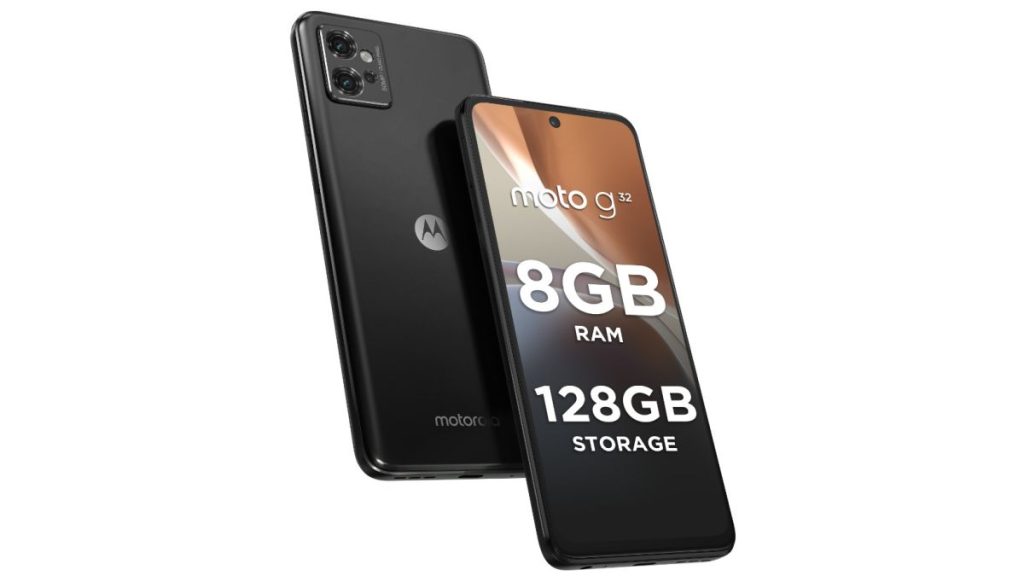
Motorola announced the Moto G32 in August 2021 in India. Since its launch, the device has been available in a single trim that offers 4 GB of RAM and 64 GB of storage. Today, the company confirmed the arrival of a new variant that offers 8 GB of RAM and 128 GB of storage.
Moto G32 8GB RAM variant price in India
Moto G32 8GB RAM variant launched in India
The 8GB+128GB edition of the Moto G32 is priced at Rs 11,999. It will be available for purchase starting at 12 pm today (March 22) through Flipkart. It can be purchased in colors like Mineral Grey and Satin Silver.
Moto G32’s 4 GB RAM + 64 GB storage variant is now available for Rs 10,499. It was priced at Rs 12,999 at launch.
Moto G32 specifications
The Moto G32 houses a 6.5-inch IPS LCD display that produces a Full HD+ resolution and a 90Hz refresh rate. The device s powered by the Snapdragon 680 chipset. It comes with 4 GB / 8 GB of LPDDR4x RAM and 64 GB / 128 GB of storage. For additional storage, it comes equipped with a microSD card slot.
The G32 has a 16-megapixel front-facing camera. Its rear shell has a 50-megapixel primary camera, an 8-megapixel ultra-wide lens, and a 2-megapixel macro camera. The device is equipped with a 5,000mAh battery with 30W charging. The G32 offers other features like dual stereo speakers, a side-facing fingerprint scanner, and an IP52-rated chassis.
Today, Nothing is set to launch the Nothing Ear (2) TWS earbuds, which will be an upgrade from the Nothing Ear (1). While there won’t be any significant changes in the earbuds’ design, improvements have been made internally. Recently, the European pricing of the earbuds was revealed, and now, the Indian pricing has also been leaked online.
According to a well-known tipster, Paras Guglani, the Nothing Ear (2) earbuds will be released in India on March 28. However, it’s unclear whether this refers to the date when the price will be announced or when the earbuds will be available for purchase. Only the white color model will be available in India, as per the leaks.
Guglani has revealed that the retail price of the Ear (2) TWS earbuds in India will be ₹11,499, but during the first sale, it will cost ₹9,499. Additionally, customers can avail of an extra 10% discount through Bank offers.
Nothing Ear (2) specs
The upcoming Nothing Ear (2) TWS earbuds will feature a stem design with silicone ear tips that provide a comfortable and secure fit, as well as passive noise cancellation. The earbuds will have a transparent section that showcases their internal components and battery cells. The stem of each earbud will have a microphone cutout and the Nothing Ear (2) branding imprinted on it. The charging case will have a semi-transparent design with a transparent lid, revealing its internal components.
The earbuds will retain the 11.6mm drivers seen in the previous model, and each earbud will offer up to six hours of playback time with a single charge. The charging case is expected to provide up to 36 hours of battery life and will support fast charging and Qi wireless charging.
The Ear (2) will feature Hybrid ANC, which will effectively reduce background noise for an immersive listening experience. The earbuds will weigh just 4.5 grams each, which is 0.2 grams lighter than the previous model. Additionally, the Ear (2) will have an IP54 rating for protection against water splashes and sweat.
There are speculations that the Nothing earbuds will allow for connecting two devices simultaneously and offer Personalized Active Noise Cancellation (ANC), which will enable users to adjust the ANC strength according to their preference. The Advanced EQ feature will allow users to customize their sound preferences as well.
Android vs iOS has constantly been a constant topic of discussion among smartphone users. When it comes to smartphone brand loyalty, Apple reigns supreme with its unwavering fan base in North America. While the general public may lean towards Android, Apple holds the title for being the top smartphone brand. AddictiveTips recently conducted a survey to uncover the extent of Americans’ loyalty towards their smartphone brands. The survey delved into the demographics of users, how it influences their work life, and how receptive they are to the idea of switching to a different brand. Over 1,000 Americans participated in the survey, with half identifying as Android users and the other half as iPhone users. The findings are quite intriguing.
The study reveals that iPhone users (94%) are more loyal to their brand compared to Android users (80%). Interestingly, managers are 33% more likely to be iPhone users, with 63% of them feeling more at ease working with colleagues who use the same brand. Additionally, the researchers discovered that iPhone users spend over 15 more days each year staring at their smartphone screens compared to Android users. Furthermore, 60% of iPhone users claimed that they would consider switching to Android if Twitter were removed from the App Store.
What’s fascinating is that iPhone users were found to be 18% more loyal to their brand than Android users. Not only that, 72% of iPhone users reported being happy with their current phone compared to 66% of Android users. AddictiveTips speculates that this could be due to Apple’s suite of devices designed to work seamlessly together. Finally, the report concludes with a surprising (and unusual) finding: over 80% of both iPhone and Android users stated that they would likely purchase a smartphone from Elon Musk.
Generative language AI refers to artificial intelligence systems that can produce natural language text that is similar to what a human might write. These systems are typically based on deep learning neural networks and use large datasets of text to learn the patterns and structures of language. One of the most popular approaches to generative language AI is the use of language models, such as the GPT series of models developed by OpenAI. These models are trained on massive amounts of text data, allowing them to generate high-quality text that is often indistinguishable from human writing.
Lee Kai-fu, a renowned Chinese venture capitalist and former president of Google China, has announced the launch of a new artificial intelligence (AI) company called Project AI 2.0. Unlike other similar ventures, Lee aims to establish a global tech firm that focuses on building AI 2.0 platforms and productivity applications. In his recent announcement on WeChat, Lee highlighted that the company is not just a Chinese version of ChatGPT and will offer more than high-performance chatting tools, AI-generated graphics, and texts. Lee’s goal is to redefine how users access and interact with interfaces through AI 2.0, which he believes will be the most significant enabling technology to boost social productivity in the 21st century.
Lee has secured funding and computing power for Project AI 2.0 and plans to attract top talent from around the world. With the breakthrough in deep learning, Lee predicts that AI has moved from version 1.0 to 2.0, leading to a platform-based transformation. The announcement comes after a string of Chinese big tech companies, including Baidu, Alibaba, and Tencent, have rushed to announce AI products similar to ChatGPT. Despite the competition, Lee is confident that Project AI 2.0 will stand out due to its focus on global reach and productivity applications.
Realme has announced the Realme 10T 5G smartphone in Thailand. It has arrived as a rebranded version of the Realme 9i 5G, which debuted in India last year. Here is a look at the specifications, features, and price of the Realme 10T 5G.
Realme 10T 5G specifications and features
The Realme 10T 5G measures 164.4 x 75.1 x 8.1mm and weighs 187 grams. It houses a 6.6-inch IPS LCD display with a waterdrop notch. The screen supports an FHD+ resolution, a 90Hz refresh rate, a 180Hz touch sampling rate, 400 nits of brightness, and a 90.4 percent screen-to-body ratio. It will have a 16-megapixel front-facing camera and a 50-megapixel (main) + 2-megapixel (portrait) + 2-megapixel (macro) triple camera unit on the back.
Realme 10T 5G
The 10T 5G is powered by the Dimensity 810 SoC. The device offers up to 8 GB of LPDDR4x RAM, and up to 256 GB of UFS 2.2 storage. There is a microSD card slot on the device for additional storage. It houses a 5,000mAh battery with 18W charging support.
For security, the Realme 10T 5G has a side-facing fingerprint scanner. It offers other features like dual SIM, 5G, Wi-Fi 6, Bluetooth 5.1, GPS, a USB-C port, and a 3.5mm audio jack.
Realme 10T 5G price and availability
The Realme 10T 5G will arrive in two variants, such as 4 GB RAM + 128 GB storage for THB 6,999 (~$203) and 8 GB RAM + 256 GB storage for THB 8,999 (~$206). It comes in two shades, such as Electric Black and Dash Blue.
Apple has been rumored to be working on OLED panels for the MacBook lineup, which has not materialized yet. However, if the new reports are to be believed, the wait could finally be over.
As per the reports, the new Apple MacBook Air could be the first MacBook device to feature an OLED display panel, and the launch of this new model could take place in early 2024.
The upcoming MacBook Air will reportedly use an OLED technology called “tandem stack,” which is a type of cutting-edge OLED technology that improves the display’s longevity, improves power efficiency, and increases brightness.
While the MacBook Air will be switched to using OLED panels, the MacBook Pro will continue to have mini-LED displays for some more time, and there’s no information available about when the Pro models will switch to OLEDs.
Meanwhile, the Cupertino-based technology giant is also working on new 13-inch and 15-inch MacBook Air powered by the yet unannounced Apple M3 chipset. Although the company has not revealed anything about this, the new laptops are expected to get launched sometime in June this year during WWDC 2024.
We use cookies on our website to give you the most relevant experience by remembering your preferences and repeat visits. By clicking “Accept”, you consent to the use of ALL the cookies.
This website uses cookies to improve your experience while you navigate through the website. Out of these, the cookies that are categorized as necessary are stored on your browser as they are essential for the working of basic functionalities of the website. We also use third-party cookies that help us analyze and understand how you use this website. These cookies will be stored in your browser only with your consent. You also have the option to opt-out of these cookies. But opting out of some of these cookies may affect your browsing experience.
Necessary cookies are absolutely essential for the website to function properly. This category only includes cookies that ensures basic functionalities and security features of the website. These cookies do not store any personal information.
Any cookies that may not be particularly necessary for the website to function and is used specifically to collect user personal data via analytics, ads, other embedded contents are termed as non-necessary cookies. It is mandatory to procure user consent prior to running these cookies on your website.