Recently four Nokia smartphones have received Bluetooth SIG certification. The devices have been listed with model numbers TA-1533, TA-1536, TA-1541, and TA-1539 and support 2G, 3G, and 4G network connectivity along with Bluetooth 4.2 and Wi-Fi support. Although not much information is available about the devices, it is believed that all four models might be the same device with different model numbers.
According to reports, the TA-1533 model number is linked to the Nokia C22 smartphone that was recently launched ahead of the MWC Event in Barcelona. The certification hints that the smartphone might be launched in more markets soon.
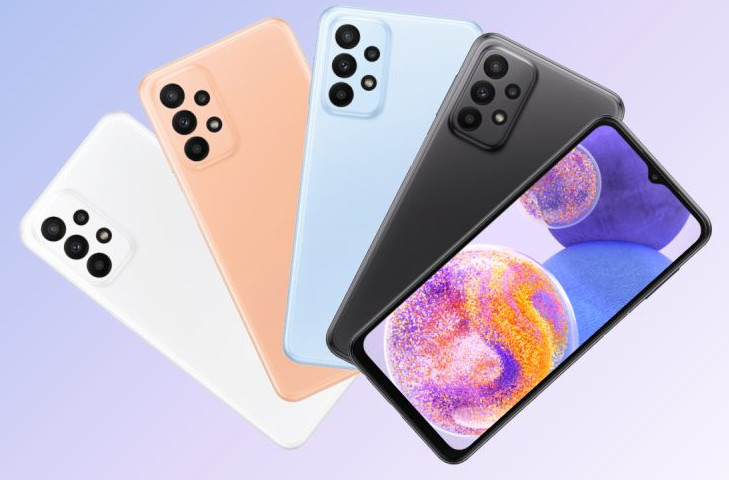
The Nokia C22 smartphone is a budget-friendly device and was launched on 25th February 2023. It comes with a 6.5-inch IPS LCD display with a screen resolution of 720 x 1600 pixels and runs on the Android 13 (Go edition) operating system. It is powered by a Unisoc SC9863A (28nm) Chipset clocked at 1.6 GHz and comes with 2GB or 3GB RAM options and 64GB internal storage.
The smartphone features a 13MP + 2MP dual-camera setup at the rear and an 8MP front camera. It also comes with a rear-mounted fingerprint sensor and other sensors like an accelerometer and proximity sensor. The device is backed by a 5000mAh battery with 10W wired fast charging and is available in Sand and Midnight Black color variants.
Nokia claims that the device will provide its users with three-day-long battery life and features an AI-powered battery management system. The smartphone is priced at EUR 109 (approximately Rs. 9,500) and is yet to be launched in other smartphone markets, including India.
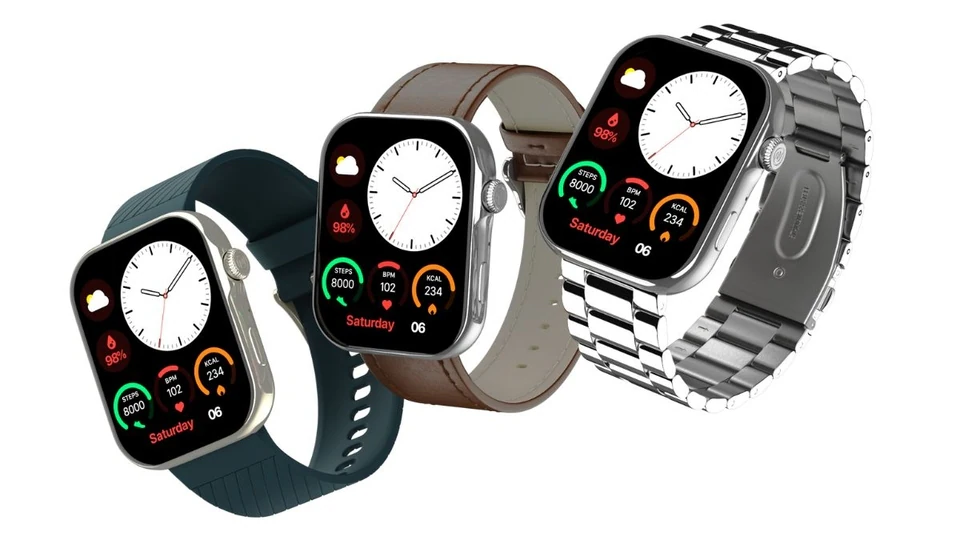
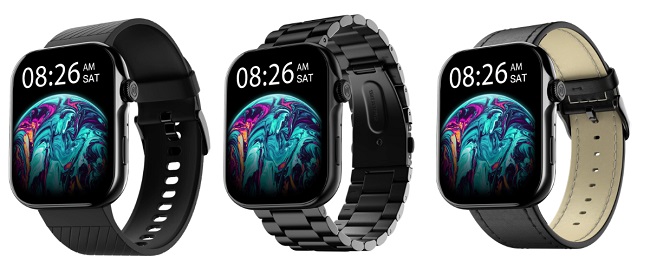
Pebble recently launched the Spectra Pro and Vision Bluetooth calling smartwatches in India. Now, the brand has debuted another wearable with the BT calling capability called the Pebble Cosmos Bold. With a metallic shock-proof casing that exudes a premium vibe, the affordable watch is packed with a plethora of health-centric features that are worth checking out.
Pebble Cosmos Bold specs & features
Boasting an impressive 1.39-inch round IPS display with a screen resolution of 360×360 pixels and 500 nits of brightness, the Cosmos Bold by Pebble offers more than 100+ cloud-based watch faces to choose from.
Equipped with Bluetooth version 5.0, a loudspeaker, and a microphone, the smartwatch allows access to recent call logs and the keypad for direct number dialing. Its health-centric features include a heart rate sensor, SpO2 monitor, sleep, step, and calorie trackers, and over 100 sports modes to track a wide range of activities.
With a 260mAh battery, the Cosmos Bold can last up to 7 days on a single charge. It also offers a Zen mode for relaxation, inbuilt games, an alarm clock, calendar, calculator, timer, flashlight, Find phone feature, music/camera controls, and various menu UIs.
The watch also supports social media apps, SMS, call, and other notifications. What’s more, it supports voice assistance via Google Assistant and Siri, as well as Hindi language, and has an IP67 rating.
Pricing & availability
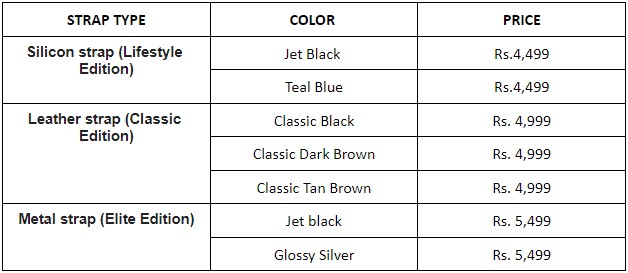
The Pebble Spectra Pro is currently available in Jet Black, Midnight Gold, Winter Blue, and Misty Grey color variants. It can be purchased for Rs. 2,299 from both the official Pebble website and Flipkart.
Just last week, the pre-orders for the highly anticipated OnePlus Buds Pro 2R truly wireless earbuds had officially kicked off. Now, the company has finally began the first open sales for the Buds Pro 2R starting today (14th March 2023).
Talking about the earbuds itself, the Buds Pro 2R arrives as a more affordable version of the Chinese smartphone maker’s Buds Pro 2. Both models are practically identical, although, the Buds Pro 2R lacks two notable features, which is the head tracking and wireless charging. Despite not supporting head tracking, the earbuds still offers Spatial Audio. The Buds Pro 2R houses a dual driver setup with 11mm and 6mm MelodyBoost drivers that were co created with Dynaudio.
While it lacks certain features, the OnePlus Buds Pro 2R is still a high end pair of TWS earbuds. It offers 48 decibels of TUV certified Adaptive Noise Cancellation and 54ms of low latency. Other notable features include Dolby Atmos and 39 hours of total battery life with 9 hours from the earbuds alone with ANC turned off. The earbuds is currently available for purchase as of 12PM IST today.
The OnePlus Buds Pro 2R has launched in two color options, namely OBsidian Black and Misty White. It has a price tag of 9,999 INR and will be available for purchase on Amazon, the company’s official website, and even the OnePlus Experience Stores offline. One can even avail a 500 INR discount by buying the earbuds through ICICI Bank Credit Cards, Credit & Debit EMI transactions. An additional 150 INR can be availed through ICICI net banking.
Lenovo has recently unveiled its latest Yoga Pro 14s (2023) laptop with a new color scheme called “Sunshine Reflecting the Tide”. The laptop is a sleek and lightweight that supports 180° opening and closing. The company has made some changes over the previous generation, with some design similarities. Here are the details…
Lenovo’s official self-exposure video shows YOGA Pro 14s 2023 laptop with jewel-like design
Lenovo has share a new video on Weibo about the s Yoga Pro 14s. The company has made some changes to the laptop’s design, including slightly more prominent “little bangs” that make it easier to open and close the laptop with one hand. The whole machine has a theme color of fog sea blue, and the Lenovo logo and keyboard are in rose gold and gold, respectively. The breathing lamp adds to the laptop’s premium look and feel.
The Yoga Pro 14s 2023 also boasts a range of interface features, including an updated power interface, with two sides for HDMI, two Type-C, and one USB-A, as well as a 3.5mm headphone jack. An electronic control switch for the camera ensures users’ privacy is protected and puts them in full control of their data.
With the “s” suffix, the laptop is designed for those who are always on the go, and it’s set to be released at the end of April. The Yoga Pro 14s 2023 is expected to be popular among tech enthusiasts and professionals. Stay tuned to Gizmochina for updates.
Meizu has just revealed the launch date for its next generation of flagship Meizu 20 series smartphones. The company will be hosting an event later this month in China where it will also be unveiling the premium grade handset. So here are all the details.
The Chinese smartphone maker has announced that it will be hosting a new event with Lynk & Co on 30th March 2023 at the Shanghai Mercedes-Benz Cultural Center at 19:30 CST. During this conference, the company is set to launch Meizu 20 series of flagship phones, Flyme 10, and even Flyme Auto, which is an in vehicle user interface software. Alongside these new products, the event will also include announcements for new Lynk & Co products that will be showcased on the same stage.
At the moment, the Meizu 20 series of smartphones are now available for reservations on major e-commerce platforms and Meizy mall. For those unaware, the upcoming premium grade lineup consists of the Meizu 20 and 20 Pro models. Based on what we know so far, the smartphones will feature a high 144Hz refresh rate display with narrow bezels. The display will also offer 1.07 billion colors, HDR support, and low blue light certification. The company is known for building smartphones that are quite attractive and these devices are no different.
Being high end phones, the 20 series will be powered by Qualcomm’s latest and greatest Snapdragon 8 Gen 2 SoC. Furthermore, the devices will also house a dual stereo speaker setup, 13 high energy antennas, and 36242mm² of heat dissipation area for better thermals. So stick around for more as we will be covering the launch event.
As scheduled, Xiaomi launched the first Redmi-branded Amazon FireOS-powered smart TV in India today. The product officially goes by Redmi Smart Fire TV. The television currently arrives in a single 32-inch variant.
For the unaware, this is not the first FireOS TV from Xiaomi. The company sells a couple of models in Europe. But those televisions are Xiaomi-branded and not Redmi like this one.
Let’s check out what this new Redmi TV for India has to offer.
Redmi Smart Fire TV 32 Specifications
The TV sports a 32-inch LED-backlit LCD panel with a resolution of 1366 x 768 pixels (HD Ready), and a 60Hz refresh rate. The display supports up to 6.5ms response time and a 178° viewing angle. Just like all Xiaomi televisions, it comes with the company’s proprietary picture profile called ‘Vivid Picture Engine’.
The screen is further paired with 20W (2 x 10W) speakers. There’s support for Dolby Audio, DTS-HD, and DTS Virtual: X. The TV has a metal frame but other parts of the body, including stands, are plastic.
It is powered by an unnamed chipset comprising a quad-core CPU (4 x ARM Cortex-A35) and an ARM Mali G31 MP2 GPU. The silicon is paired with 1GB RAM and 8GB storage.
The device boots Amazon Fire OS 7 with support for all the leading streaming platforms, free live TV channels, Alexa, Miracast, and Apple AirPlay. It ships with a new voice-enabled remote control, which is different from the one included with the firm’s Android TV-powered televisions. This latest remote includes useful keys for playback controls, mute, guide, apps, and Alexa.
On the connectivity front, the TV offers dual-band WiFi, Bluetooth 5.0, and Ethernet. It comes with all the essential ports, such as 1 x AV, 2 x HDMI (one of them is ARC compatible), a 3.5mm headphone jack, an antenna, and 2 x USB.
Last but not least, the television ships in an eco-friendly box that can be repurposed for DIY furniture.
Redmi Smart Fire TV 32 Price and Availability in India
The Redmi Smart Fire TV 32 is priced at ₹13,999 (~$170) in India. However, for a limited time, it will be sold at ₹12,999 (~$158). Customers can avail bank discount/coupon to further lower the price to ₹11,999 (~$146).
The television will be available for purchase starting at 12 PM on March 21. It will be sold via Mi.com and Amazon India.
Microsoft is exploring new revenue streams through generative AI chatbots and has begun showcasing its ad format for its ChatGPT version of Bing Search to advertisers. The new Bing encourages users to give more input through dialogue and can answer questions and complete tasks in a concise manner through an artificial intelligence chatbot. Compared to traditional search engines, users comparing different items also get an annotated response that indicates the source of the information, and advertisers can extend text ads, multimedia ads, product ads, and vertical ads to the new Bing chatbot without creating a separate ad delivery plan.
While campaigns run through Bing search will automatically expand to the chatbot, advertisers cannot currently place ads exclusively through the Bing chatbot. Advertisers will receive a separate report on the new Bing ads, and Microsoft will aggregate the performance of all search ads and send them to advertisers. The number of daily active users of the new Bing has reached 100 million, according to Dennis Westerbeek, senior digital marketer at digital agency Adwise, who participated in Microsoft Advertising’s roadshow event in Amsterdam.
However, agency sources have raised questions about how Bing chatbots will enable ad targeting. It is not clear whether the ads users see are based on search keywords, users’ own data, or content generated by artificial intelligence in chat results. Microsoft declined to comment. Microsoft hopes to use the outside world’s attention to the new Bing and OpenAI to promote commercial realization. Microsoft has previously said that every percentage point increase in this market share can bring in $2 billion in search advertising revenue. Google is also working on its own AI conversational search called Bard.
In a time when consumers around the world are extending their replacement cycle for smartphones, one smartphone manufacturer has managed to break the trend and achieve contrarian growth in sales. OnePlus, under the leadership of President Li Jie, has announced that it has achieved a year-on-year sales growth of 260% in 2023, making it the fastest-growing smartphone brand.
Li Jie attributes this success to the company’s dual-brand strategy and the release of three strong products, the OnePlus 11, OnePlus Ace 2, and OnePlus Ace 2V. These products have been praised for their strength, affordability, and popularity among consumers in the $300-$700 price range. Despite facing controversy and challenges, OnePlus has remained steadfast in its commitment to creating good products for its users.
In addition to thanking its users for their support, Li Jie has also promised more surprises from OnePlus in the coming days of 2023. This announcement comes as a refreshing break in an industry that has been struggling with declining sales due to factors such as the pandemic, and global recession.
OnePlus’ success can also be attributed to its strong online presence. The company’s official flagship store on JD.com and Tmall has seen a significant increase in visitors.
Overall, OnePlus’ contrarian growth in 2023 is a testament to the company’s commitment to innovation and providing quality products to its users. As the smartphone industry continues to face challenges, OnePlus has proven that it is possible to achieve success by staying true to its principles and delivering what consumers want.
POCO has just launched its latest entry from its mid range X series of smartphones in the Indian market. The company has released the new POCO X5 in the region today (14th March 2023), so here are all the details.
The X5 sports a 6.7 inch Full HD+ AMOLED display that offers 1200 nits of peak brightness, 120Hz refresh rate, 240Hz touch sampling rate, and Corning Gorilla Glass protection. This panel also supports 100 percent DCI P3 color gamut along with SGS certification for eye care. Meanwhile, the rear packs a triple camera setup on a large camera island that also carries the brand’s logo. Under the hood, the POCO X5 is equipped with a Qualcomm Snapdragon 695 SoC that is paired with 8GB of RAM and up to 256GB of internal storage.
On the rear, it features a 48 megapixel primary camera that is paired with an 8 megapixel ultra wide angle lens, and a 2 megapixel macro sensor. The front houses a 13 megapixel selfie shooter in a center aligned punch hole cutout. The smartphone is powered by a large 5,000mAh battery pack that supports up to 33W fast charging. Other notable features include, IP53 water and dust resistance, 3.5mm headphone hack with Hi-Res audio support, IR Blaster, WiFi 6, Bluetooth 5.1, and more.
The POCO X5 5G will be available in India in two storage variants. The 6GB + 128GB model has a price tag of 18,999 INR, while the higher end 8GB + 256GB variant costs 20,999 INR. The Chinese smartphone maker is also offering a bank discount worth and an additional exchange offer worth 2,000 on the first day of the sale. The device will go on sale starting from March 21 and the device will be available in three color options, namely Jaguar Black, Wildcat Blue, and Supernova Green, exclusively on Flipkart.
The Redmi Note 10S and the POCO F2 Pro, two of Xiaomi’s best-selling smartphones, have now received the MIUI 14 update. The latest version of Xiaomi’s customized Android ROM, MIUI 14, adds a number of new features and enhancements to its smartphones.
The Redmi Note 10S MIUI 14 update is built on Android 13, the latest release of Google’s mobile operating system. The update, with the build number V14.0.2.0.TKLMIXM has been released for the device’s global variant. A new visual design, enhanced home screen functionality, increased battery life, and faster app start times are all included in the update.
The POCO F2 Pro MIUI 14 update is based on Android 12, the previous version of Google’s operating system. The device’s European version has received the update, which has the build number V14.0.1.0.SJKEUXM. Here’s the changelog of updates for the Redmi Note 10S smartphone.
Highlights
MIUI uses less memory now and keeps being swift and responsive over much more extended periods.
Attention to detail redefines personalization and brings it to a new level.
Basic experience
MIUI uses less memory now and keeps being swift and responsive over much more extended periods.
Personalization
Attention to detail redefines personalization and brings it to a new level.
Super icons will give your Home screen a new look. (Update the Home screen and Themes to the latest version to be able to use Super icons.)
Home screen folders will highlight the apps you need most making them just one tap away from you.
More features and improvements
Search in Settings is now more advanced. With search history and categories in results, everything looks much crisper now.
System
Stable MIUI based on Android 13
Updated Android security patch to February 2023. Increased System security.
The updated MIUI 14, which is based on Android 13, makes it possible for the devices to run faster, consistently, and responsively. The system is much easier to understand, requires less memory, and is more effective. The photonic engine architecture, system applications, and third-party apps are all fully accelerated in addition to being smoother and more power-efficient.
Yesterday, Realme launched the Realme C33 128GB storage variant smartphone in India. Now, the brand has officially revealed the launch date of the upcoming Realme C55 smartphone for the sub-continent.
The Realme C55, which debuted earlier this month in Indonesia will be launching on March 21 in the Indian market. The announcement came via a micro-site that went live on the Realme India website. Madhav Sheth, the Vice President of Realme, announced on social media that the Realme C55 will be launched in India. The company’s launch teaser confirms that the Indian version will have the same 64MP camera setup as the global variant. Let’s delve deeper into the specifications, and features of the Realme C55.
Realme C55 specs & features
The Realme C55 boasts a 6.52-inch LCD display with a high refresh rate of 90Hz, Full HD+ resolution, 180Hz touch sampling rate, and a peak brightness of 680nits. The front-facing camera is situated within a punch-hole notch, providing an unobstructed view of the screen.
Under the hood, the smartphone is powered by an octa-core MediaTek Helio G88 processor, paired with a Mali G52 graphics unit. The device offers up to 8GB of RAM and up to 256GB of internal storage, which can be expanded further using the virtual RAM feature. It runs on Android 13-based Realme UI 4.0.
In the camera department, the Realme C55 features a dual-rear camera setup with a 64MP primary sensor, a 2MP depth sensor, and an LED flash. On the front, there’s an 8MP camera for selfies and video calls.
The device comes equipped with a 5000mAh battery with 33W SuperVOOC fast charging support and a USB Type-C port for charging and data transfers. It also includes a side-mounted fingerprint scanner and a dedicated microSD card slot. The Realme C55 is available in Sunshower and Rainy Night color options, weighs 189.5 grams and is around 7.89mm thick. It also has a 3.5mm audio jack.
In the past we reviewed INMOTION’s S1 electric Scooter. that is a very good Scooter, for heavy people is also very convenient transportation. Today we received this electric scooter model called INMOTION Climber. see the name you should know that the power of this scooter should be a beast level.
Unboxing
The INMOTION Climber is super easy to set up. Remove from the box only need to tighten the handlebar and kickstand screws can be used normally. The included accessories include a few screwdrivers and spare screws, in addition to the kickstand and charger. Two spare inner tubes and a valve conduit. Put it on your car can always replace your broken tires.
Design
Let’s start with the design. Compared with most other electric scooters, it doesn’t have much special design. But the simple black body is also good-looking. The all-metal body also ensures its structural strength. The brake system and cables are orange, so it doesn’t look boring either. INMOTION’s scooter footrest painted is a little smaller than the S1’s because there are two fewer suspensions, but even so, it is quite large, which is friendly to people with big feet. It can load up to 130kg. Most people should be able to ride it without any problems.
It’s big but foldable. 20.8kg is also a little lighter than the S1. It should be relatively easy to put in your car. It also supports IPX6-rated splash and water resistance. Whether sunny or rainy you don’t have to worry about damaging the scooter because of water ingress.
Braking system
Let’s take a look at the INMOTION Climber’s braking system. Equipped with a powerful braking system with electric brakes on both tires and disc brakes on the rear tire, Climber provides more precise control during braking events and the reaction time can be within 0.01 seconds. It has only one brake lever, after pressing the front and rear wheels will be braked at the same time, avoiding you from only braking the front wheel or rear wheel to fall down.
Tires
INMOTION Climber applies the 10-inch low-rolling resistance tires with an extra-thick inner tube to help reduce the puncture chance and deliver improved grip comfort and durability. Just ride with ease over city terrain and enjoy a smooth ride even at speed from start to finish.
It is also very easy to maintain. Thanks to the modular design and split-rim technology, tire changing can be done as easily as 123. Enjoy the pleasant maintenance experience in your garage within 10 minutes.
Power System & Experience
The climber is the first INMOTION electric scooter equipped with dual motors. It boasts dual 750W motors, producing total nominal power of up to 1500W, making it take on 36% slopes, inclines, and any terrain with ease.
If you want, the official website shows it can reach a top speed of 38km/h. It takes only 3.5 seconds to go from 0 to 25km/h, which is already a very impressive powertrain for an electric scooter. It has three-speed levels, the lowest 5mph, which is equivalent to the speed of normal walking. The middle gear is 15mph, which is more suitable for urban traffic. The top gear can reach 20mph, and if you go downhill, you can reach 22mph or more. The Handlebar is like pulling your body forward. I can be sure that its speed will give you a great sense of excitement.
Battery
The INMOTION Climber has a maximum range of about 56km / 35 miles. It takes about 9 hours to fully charge, so it is recommended that you plug the power in before going to bed. Climber features the smart Battery Management System(BMS) to constantly monitor the status of each battery cell and improve the available capacity of a battery pack. Also, it is built packed with a battery balancer in a battery pack to perform battery balancing, this can greatly increase each cell’s longevity and charge safely.
Control & APP
The whole scooter has only one button to control the whole system. Click to turn on/off the headlight, double click to switch speed gears, and long press to turn on/off the power. The function of the APP is relatively simple, mainly displaying some basic data, such as total mileage or Max speed. You can use the phone to control the headlight, you can also lock the scooter. Lock in the scooter will apply a reaction force to the forward force so that the thief is difficult to escape.
The INMOTION Climber is as powerful as its name implies, with a very powerful powertrain. I recommend you use it on flat and straight roads than off-road. Because of its super-fast speed, you can feel the joy of speed. Of course, be sure to ensure safety, make sure the road conditions are good, and wear a helmet. Then take the new Climber and go exploring.
Microsoft OneNote is a digital note-taking application that allows users to create and organize notes, drawings, and audio recordings in one place. It is available as part of the Microsoft Office suite or as a standalone application. OneNote provides a flexible and customizable workspace for users to capture and organize their thoughts and ideas. Users can also share their notebooks with others, collaborate in real-time, and access their notes from anywhere with an internet connection. OneNote has become a popular tool for students, professionals, and individuals looking to streamline their note-taking and organization processes. Its features include the ability to clip web pages, highlight text, add tags, and search for notes easily.
Microsoft is set to release an update to its OneNote application in April to improve its protection against known high-risk phishing attacks. The move comes after TrustWave reported in January that attackers were using OneNote’s native .one file format to launch phishing attacks via email. When users open OneNote attachments, they see a blurry thumbnail and a “View Document” button. If the button is clicked, a security alert pops up, warning that opening the attachment could harm the computer and data.
If the user ignores the warning and clicks OK, a WSF file in OneNote is executed. WSF, or Windows Script File, is used by Microsoft Windows Script Host. If the user still chooses to proceed, the WSF file embedded in OneNote will then run a PowerShell command to download and execute the file from the internet. The new feature is expected to provide greater protection for OneNote users against phishing attacks.
After being acquired by Hubei Xingji Shidai Technology, a venture launched by Geely, Meizu has relocated its headquarters to Wuhan, China. The brand is now preparing to release its first smartphone series since the acquisition, named Meizu 20. The lineup should include Meizu 20 and 20 Pro. And while we wait for their formal debut, the two handsets have been spotted on Geekbench with Snapdragon 8 Gen 2 SoC under the hood. Here are the details.
Meizu 20 series has been in the news for a couple of months now and the company has already started teasing its launch in China. And today it has been confirmed the Meizu 20 and 20 Pro will make their debut in the Chinese market on March 30. Ahead of the official release, the Meizu 20 and 20 Pro have appeared on Geekbench.
Both smartphones have been listed on the benchmarking site with the latest and greatest Snapdragon 8 Gen 2 chipset. While the specific name of the chipset is not explicitly stated in the listings, the information provided regarding the CPU and GPU strongly suggests that it is Qualcomm’s latest flagship mobile platform.
Geekbench reveals both devices are equipped with 12GB of RAM and run on the Android 13 OS. Both single-core and multi-core tests were conducted on the vanilla model and the Meizu 20 Pro. The standard Meizu 20 received scores of 2019 and 5749 points in the single-core and multi-core tests, respectively. In comparison, the Meizu 20 Pro achieved scores of 2038 and 5719 points in the single-core and multi-core tests, respectively.
Teasers have revealed the pro model will pack a 2K+ Samsung E6 AMOLED panel with a peak brightness of 1800nits and 1-120 frame LTPO adaptive refresh technology. It will pack a built-in 5000mAh battery with support for 80W charging.
Ever since EVs started getting more popular, safety regulations have been constantly evolving in order to accommodate EV standards. The safety of EVs is an ongoing concern for automakers and regulators alike. Although the vast majority of EVs are at low risk for battery fires, these incidents can be serious when they do occur. As per recent news, Ford has issued a recall notice for 18 F-150 Lightning pickup trucks due to defective battery cells.
The issue caused at least one truck to catch fire. Production of the electric truck was paused for four weeks while Ford investigated the cause of the defect. The automobile manufacturer will restart production on Monday, March 13th, with a “clean stock” of battery packs. The affected vehicles are either on dealer lots or in customer’s hands. Ford has been in close contact with the National Highway Traffic Safety Administration, which is expected to publish the recall notice next week.
The “root cause” of the issue was at South Korean battery supplier SK On’s factory in Georgia, according to Ford. In a statement, spokesperson Emma Bergg said that the company was not aware of any reports of accidents or injuries related to this recall. Ford has confirmed the root cause with SK On and implemented quality actions to prevent future issues.
Battery fires, while rare, remain a serious concern for EV makers. More data is needed, but researchers have determined that the vast majority of EVs are at low risk for battery fires. However, when fires do occur, EVs with lithium-ion batteries burn hotter, faster, and require more water to extinguish. This fact has led some towns to retrain their emergency responders for when such incidents occur.
The most serious incident involving battery fires in EVs was with the Chevy Bolt. The vehicle was recalled after GM reported at least 19 battery fires due to defective cells from the supplier LG. The automaker was forced to temporarily shut down production after a software fix failed to prevent several more fires. Chevy resumed production last year after installing new battery packs.
Earlier this year, OnePlus debuted a couple of devices in the global market. These were the OnePlus 11 and OnePlus 11R/Ace 2. The brand also announced its plans to offer long software support for these deviecs. The OnePlus 11 will be getting 4 major updates, with the last one being Android 17, while the 11R/Ace 2 will get 3 major updates, i.e. up to Android 16.
Now, the brand has revealed that the recently launched OnePlus Ace 2V will also be getting major updates till it hits Android 16. In addition to that, the brand will also provided an additional ear of security patches, meaning that the actual software support will last for 4 years. This is good news for buyers of this mid-range device as they are now guaranteed 3 major updates.
Rumors suggest that the OnePlus Ace 2V will be launched outside of China as the OnePlus Nord 3 in a few months. It is expected that the global version will receive similar software support, which is a noteworthy feature. Besides this, let’s explore what other features this device may offer.
OnePlus Ace 2V specs
The OnePlus Ace 2V boasts a 6.74-inch OLED display with a centered punch-hole cutout for its front-facing camera. The screen has a 10-bit color depth, a resolution of 2772 x 1240 pixels, a 120Hz refresh rate, a peak brightness of 1450 nits, and HDR10+ support.
Under the hood, the phone is powered by the MediaTek Dimensity 9000 SoC, combined with LPDDR5x RAM and UFS 3.1 internal storage. The camera system comprises a 64MP primary sensor, an 8MP ultra-wide lens, and a 2MP macro snapper, while the front-facing camera is a 16MP unit.
The OnePlus Ace 2V also features dual stereo speakers, an in-screen fingerprint sensor, dual SIM, 5G, WiFi 6, Bluetooth 5.3, GNSS, NFC, and USB 2.0 (Type-C). It runs on the Android 13 operating system with the company’s proprietary ColorOS 13 custom user interface. The device packs a 5,000mAh battery that supports 80W fast charging.
The fields of technology and healthcare have always been closely connected. The advancements made in science form the foundation of modern medicine, from curing diseases and facilitating surgeries to playing a crucial role in early diagnosis. Recently, many technology companies like Apple have focused on bringing health solutions to the forefront through their products. We have already reported on Gizmochina about how the Apple Watch can pre-detect some heart conditions. Now, a similar move has come from South Korea. Samsung has announced that it is supporting the digital diagnosis of Alzheimer through the use of the Galaxy Tab S8+. Here are the details…
Samsung’s Galaxy Tab S8+ to Play Major Role in Digital Alzheimer Diagnosis
Samsung has announced that it is supporting the digital diagnosis of Alzheimer using the Galaxy Tab S8+ Enterprise Edition. The company’s Swiss subsidiary has collaborated with Bottneuro AG, a medical technology startup, to conduct research on the development of an Alzheimer’s diagnosis solution.
Bottneuro has developed technology that identifies the brain area where Alzheimer occurs through 3D MRI and PET data, and conducts electric target treatment with the self-developed neurostimulator ‘Mia Mind’. The Galaxy Tab S8+ is used to control the neurostimulator and transmit treatment data. This development makes early diagnosis much easier and accessible.
The solution developed through this research will be provided to clinical patients in hospitals in Switzerland. Samsung plans to supply 100 Galaxy Tab S8+ products in June, with the number of units supplied set to increase to 2,500 by the end of this year. The company aims to expand product supply to various regions, including Europe, next year.
The use of digital diagnosis for Alzheimer’s disease is becoming increasingly important as the global population ages. According to the World Health Organization (WHO), there are currently around 50 million people worldwide with dementia, with Alzheimer’s disease being the most common form. This number is expected to triple by 2050.
According to the World Health Organization (WHO), an estimated 50 million people worldwide suffer from dementia, and Alzheimer’s disease accounts for 60-70% of dementia cases. In 2021, the number of people with dementia is projected to be approximately 55 million, and this number is expected to increase to 78 million by 2030 and 139 million by 2050, due to the aging of the global population.
Meta, formerly known as Facebook, has decided to wind down support for NFTs on its platforms, Facebook and Instagram. The move comes less than a year after the company started pushing for the adoption of digital collectibles on its platforms. Meta’s Head of Commerce and Financial Technologies, Stephane Kasriel, announced the decision on Twitter and stated that the company had learned a lot from the initiative that could be applied to products that support creators, people, and businesses on its apps, both now and in the metaverse. Kasriel did not provide a reason for the decision but said the company would focus on monetization opportunities for Reels and messaging payments across Meta.
NFTs, or non-fungible tokens, are unique digital assets that use blockchain technology to verify ownership and authenticity. They can represent a wide range of digital content, such as art, music, videos, and tweets. NFTs have gained popularity as a way for creators to monetize their digital works and for collectors to own unique and rare digital items.
Mark Zuckerberg had previously announced Instagram’s work on NFT support at SXSW in March 2021, and the feature was launched in May of the same year. The company announced its expansion in November 2021, allowing creators to mint and sell collectibles directly on Instagram. Zuckerberg had suggested that NFTs could play a role in Meta’s metaverse plans, stating that he hoped users could mint their avatar’s clothing as NFTs and take it between different places in the metaverse.
Meta has been in a period of restructuring, and many initiatives have been shut down. The company has laid off thousands of workers and shut down numerous projects in what Zuckerberg has described as the company’s “year of efficiency.” Meta’s crypto wallet, Novi, was sacked last year, and rumours that it would have NFT support on its roadmap have not materialized. The company has also cut back on projects with its metaverse division, Reality Labs, and its program that paid bonuses to Reels creators.
In 2021, Nothing, a tech startup, released its first product called the Nothing Ear (1), which gained popularity for its unique transparent design and inclusion of ANC. The brand is now preparing to launch its successor, the Nothing Ear (2), with a scheduled launch date of March 22. Despite this, promotional material and specifications for the earbuds have already surfaced online.
The leak comes from Tech Outlook citing tipster OnLeaks as the source. The report reveals the design of the Nothing Ear (2) will be quite similar to its predecessor. The earbuds will continue to sport a semi-transparent design for the earbuds and the charging case.
Featuring a stem design and silicone ear tips for improved grip and passive noise cancellation, the earbuds showcase their internal components and battery cells through a transparent section. A microphone cutout can be observed on both sides of the earbud, and the Nothing Ear (2) branding is imprinted on the stem. The charging case also boasts a semi-transparent design, with a transparent lid and a white covering that conceals its internal components.
As per the aforementioned report, the upcoming Nothing TWS earbuds will retain the 11.6mm drivers seen in the first-generation model. Each earbud will offer a claimed playback time of up to six hours with a single charge, while the charging case is expected to provide up to 36 hours of battery life. The charging case will also support fast charging and Qi wireless charging.
The Ear (2) is said to come equipped with some premium features like Hybrid ANC, which will effectively reduce background noise. Weighing at just 4.5 grams each, the Ear (2) will be lighter than its predecessor by 0.2 grams. The earbuds will also come with an IP54 rating for protection against water splashes and sweat.
There are speculations that the Nothing earbuds will allow for connecting two devices at the same time, and might also offer Personalised Active Noise Cancellation (ANC), allowing users to adjust the ANC strength to their preference. Additionally, the Advanced EQ feature will enable users to customize their sound preferences as well.
Samsung Foundry, the second-largest foundry in the world after TSMC, is set to begin mass production of chips using its third-generation 4nm process node. This comes after the company had yield issues with its 4nm chip production last year, resulting in Qualcomm moving production of its Snapdragon 8+ Gen 1, Snapdragon 8 Gen 2, and the upcoming Snapdragon 8 Gen 3 to TSMC. However, Samsung has seen improvements in its yield rates, which have risen from 35% at one point last year to 60% now, as well as boosts in performance and energy-efficiency. We might get to see the new 4nm process node in Google’s Pixel 8 lineup, which is expected to release later this year.
While 3nm is the most advanced node available, Samsung’s 4nm and 5nm processes are currently being used more frequently, accounting for 22% of chips produced during the third quarter of last year compared to 16% manufactured using 6nm and 7nm process nodes. The only phones expected to be powered by 3nm silicon this year are the iPhone 15 Pro and iPhone 15 Ultra.
Google’s Pixel 8 series, set to be released in the fourth quarter of this year, is likely to be powered by the third-generation 4nm process node, with the Google Tensor 3 chipset for the new handsets expected to be produced using this technology. The Pixel Fold, Pixel Tablet, and Pixel 7a are expected to be powered by the Tensor 2, which is built on Samsung’s second-generation 4nm node.
Both TSMC and Samsung plan to produce 4nm chips in the United States starting next year, with TSMC’s fab in Phoenix, Arizona and Samsung Foundry’s facility in Taylor, Texas, adding a 4nm production line. TSMC hopes to start shipping 2nm chips to customers in 2026, while Samsung plans to begin 2nm production in 2025, followed by 1.4nm production in 2027. Intel has also stated that it plans to match TSMC and Samsung Foundry in 2024 and regain process leadership the following year.
We use cookies on our website to give you the most relevant experience by remembering your preferences and repeat visits. By clicking “Accept”, you consent to the use of ALL the cookies.
This website uses cookies to improve your experience while you navigate through the website. Out of these, the cookies that are categorized as necessary are stored on your browser as they are essential for the working of basic functionalities of the website. We also use third-party cookies that help us analyze and understand how you use this website. These cookies will be stored in your browser only with your consent. You also have the option to opt-out of these cookies. But opting out of some of these cookies may affect your browsing experience.
Necessary cookies are absolutely essential for the website to function properly. This category only includes cookies that ensures basic functionalities and security features of the website. These cookies do not store any personal information.
Any cookies that may not be particularly necessary for the website to function and is used specifically to collect user personal data via analytics, ads, other embedded contents are termed as non-necessary cookies. It is mandatory to procure user consent prior to running these cookies on your website.