Advertisement

Huawei Disappointed by Lack of Progress in Autonomous Car Business

The electric vehicle market continues to grow. Therefore, the industry attracting the attention of both technology companies and traditional automobile manufacturers. Tech giants such as Xiaomi, Apple, and Huawei are making great efforts to gain a share of the market. However, things are not going as planned for these companies. According to the latest reports, a key player in the Huawei automobile project has been suspended. Here are the details..

Huawei auto business unit COO Wang Jun suspended

Huawei lost most of its share in the smartphone market due to the US embargo. To address this, the company shifted its focus to other sectors such as electric vehicles, but things haven’t gone as planned there either. Lastly, Huawei has suspended its auto business chief operating officer Wang Jun, who also served as the president of its intelligent driving product line. 

The decision was related to the poor progress of Huawei’s HI mode, the high-end intelligent autonomous driving solution (ADS). The campony has launched two models in its HI mode, namely the Arcfox Alpha S and the Avatr 11. However, these models has struggled with low sales due to delays in delivering its main product feature.

In contrast, the smart car selection business, led by Yu Chengdong, has been more successful with the launch of models like AITO Wenjie M5 and Wenjie M7, selling over 75,000 cars by the end of 2022. The changes in the Car BU in the past two years have resulted in a shift in focus from the parts business to the smart selection business. This has also resulted in limited bandwidth for the Car BU as compared to other parts companies in the auto industry, as Huawei focuses its resources on supporting the smart selection business.

RELATED:

(source)

Realme GT Neo 5 Will Offer up to 1TB Storage and 16GB RAM

Realme is all set to launch the Realme GT Neo 5 tomorrow (February 9). Ahead of that, the brand has been teasing the features of the smartphone for the last few days.

Thanks to these official teasers and leaks, we know almost everything about the upcoming device. Today’s teaser reveals the maximum memory that will be offered on the handset.

realme-GT-Neo-5-teaser-

Realme has formally revealed that the Realme GT Neo 5 will arrive with up to 16GB of RAM and a whopping 1TB of storage. Normally, 1TB storage is reserved for premium smartphones but the GT Neo 5 is a flagship-killer (upper mid-ranger).

As per previous teasers and leaks, the phone will come in two variants. The cheaper model will arrive with a 5,000mAh battery and 150W charging support, whereas, the costlier version will house a smaller 4,600mAh battery but will offer support for a much faster 240W charging standard.

The device will sport a 6.74-inch OLED display with a resolution of 2772 x 1240 pixels (1.5K), a 144Hz refresh rate, and a 2160Hz PWM dimming. It will be powered by a Qualcomm Snapdragon 8 Plus Gen 1 chipset paired with LPDDR5x RAM and UFS 3.1 storage.

The handset will house a triple camera system on the back and a 16MP front-facing camera. The rear camera setup will include a 50MP Sony IMX890 primary sensor, an 8MP ultra-wide unit, and a 2MP macro snapper.

Other features of the phone will include Realme UI 4.0 based on Android 13, RGB lighting, NFC, and IR blaster.

RELATED:

OnePlus to Launch Its First Foldable Phone Later This Year

OnePlus just held its Cloud 11 event in which it announced a number of its highly anticipated products like the OnePlus 11. But during this same event, the company also revealed its plans for other exciting upcoming devices. So let’s have a look.

While the flagship smartphone was undoubtedly the highlight of the major conference, the Chinese handset maker also revealed the launch timeline for a new breed of mobile devices. The company has officially confirmed that it is working on a new foldable smartphone and it will be launching sometime later this year. Devices with foldable displays aren’t exactly a new thing, but it is still mostly offered by major OEMs like Huawei, Xiaomi, Oppo, Samsung, and others.

OnePlus

But it appears that OnePlus is also planning on releasing its own iteration this year, around the third quarter. In other words, we can expect the brand to officially announce the device sometime between the months of July to September. Unfortunately, the company only teased the device’s launch so far and has refrained from talking more about this foldable phone. So, finer details regarding this upcoming high end smartphone is still at large.

Based on previous reports, the foldable phone model in question could simply be called the OnePlus Fold. Furthermore, initial reports had hinted at the device also being a rebranded Oppo Find N. Although, it now appears that the company is actually developing this device from the ground up, but we can expect Oppo’s foldable phones to have some influence on this smartphone.

RELATED:

India’s EV Market Sees 223% Growth in 2022

The Indian light vehicle market experienced a remarkable 23% growth in 2022, reaching 3.8 million units, according to the latest Canalys Automotive Analysis data. In light of the growing awareness of electric vehicles in the country, the electric vehicle (EV) market share in India saw a stunning 223% increase last year, with 48,000 EVs added to the market.

Electric Vehicles

Canalys Automotive Analyst, Ashwin Amberkar, highlights that there’s quite a positive outlook for the automotive industry in India, thanks to growing consumer buying power and pent-up demand. The Indian EV market is still in its early stages, but Tata dominates the market with 86% share from their Nexon EV and Tigore EV models. Other car brands, such as MG and Hyundai, are offering premium EVs that attract eco-conscious and tech-savvy buyers.

While luxury brands like Audi, BMW, and Mercedes-Benz sell popular EVs in India, they account for only a small portion of the market. However, luxury brand sales still grew by 34% in 2022, reaching 36,000 units. The government’s FAME India Phase II scheme will continue to promote widespread EV adoption through incentives for automakers, until its expiration in 2024. Canalys predicts that the Indian EV market will reach 300,000 units by 2025, representing 6% of the total light car market and experiencing a 59% compound annual growth rate.

Maruti Suzuki, the leading Indian car maker, plans to focus on manufacturing hybrids and alternative fuel vehicles in 2023, with their first electric SUV launching in 2025. This puts them behind Tata, who is quickly establishing a presence in the mid-market EV market, and Hyundai, who has already launched their second electric SUV. Other major automakers, such as Kia, MG, and BYD, have launched EVs in India and plan to proliferate their offerings by 2025. However, brands like Toyota, Honda, Volkswagen, and Renault, who already have a global presence in the EV market, are yet to launch any EVs in India, risking missing out on a potential loyal customer base that can drive a business for years.

RELATED:

(Source)

Huawei FreeBuds Pro 2+ Earphones Leak Reveals Heart Rate Measurement Technology

Truly Wireless Earphones are becoming a standard now, with each tech company adding its own variants to the market every year. Huawei previously took the world by storm with the launch of their FreeBuds Pro 2 earphones, offering high-resolution audio. Now, it appears that the latest iteration, the FreeBuds Pro 2+, is set to raise the bar even higher with its innovative heart rate measurement technology.

Huawei Freebuds 2

The leaked information suggests that the new FreeBuds Pro 2+ will be the first Huawei earphones to boast this capability. With the ability to measure real-time heart rate, users can wear the earbuds comfortably and stay on top of their health with high heart rate reminders and a high precision heart rate mode. 

Although the details of the heart rate sensor or its placement are not yet known, it is definitely exciting to see this technology finally being integrated into earbuds. This eliminates the need for a smartwatch to track vitals. The leaked data also showcases an attractive design upgrade for the FreeBuds Pro 2+ with Huawei + Devialet branding on the charging box and a sparkly gold outline around the earbuds. The previous iteration of the earphones, the Huawei FreeBuds Pro 2 have a battery capacity of 420mAh, and they last 2.5 hours on a single charge and up to 15 hours with the charging case. The case charges via a USB-C port and can also be charged wirelessly.

While there’s no official word from Huawei yet, new updates will available in the not-so-distant future. As mentioned previously, the specs of the FreeBuds Pro 2 were quite appealing. These earphones boast dual speakers that produce true tone sound, new smart active noise control 2.0, and dual device connection for seamless control from your smartphone or tablet. Plus, they’re HWA and Hi-Res audio wireless certified, providing a pure audio experience powered by French audio technology company Devialet. However, the new FreeBuds Pro 2+ are expected to top these specifications when they drop.

RELATED:

(Via)

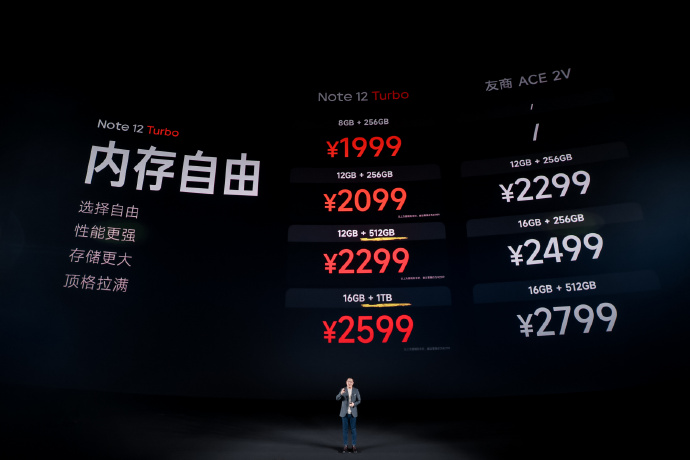
Redmi Note 12 Turbo Could Launch as Poco X5 GT Outside China

Xiaomi is expected to release another Redmi Note 12 device. This phone is said to go official as Redmi Note 12 Turbo.

The said smartphone seems to have been spotted in the IMEI database. The listings suggest that the handset will be also released under another name.

Poco X5 Pro

According to findings by Xiaomiui, the Redmi Note 12 Turbo may launch under the Poco brand outside mainland China. The device will be also available in one of the key markets — India.

The publication suggests that the smartphone could be officially called Poco X5 GT in international markets. Further, it will boot MIUI 14 based on Android 13, which we already know from earlier reports.

In a nutshell, three will be the following three variants of the Redmi Note 12 Turbo, which is codenamed ‘Marble’.

  • 23049RAD8C (China) – Redmi Note 12 Turbo
  • 23049PCD8G (Global) – Poco X5 GT
  • 23049PCD8I (India) – Poco X5 GT

According to previous reports, the phone will be powered by a Qualcomm Snapdragon 7 Gen 2 chipset. The SoC will be paired with up to 12GB RAM and 512GB storage.

It will flaunt a 6.67-inch OLED display with a resolution of FHD+ and up to a 120Hz refresh rate. The fingerprint sensor will be housed underneath the screen.

The device will come with a triple camera system comprising a 50MP primary sensor, an 8MP secondary sensor, and a 2MP tertiary sensor. Last but not least, it will be backed by a 5,500mAh battery with support for 67W fast wired charging.

RELATED:

Honor 80 Pro Three Body Limited Edition Smartphone Goes on Sale in China

Honor, which is gearing up to launch the Honor Magic 5 series smartphones at the upcoming Mobile World Congress, recently announced the limited edition device named Honor 80 Pro Three Body Limited Edition.

Today, the Honor 80 Pro Three Body Limited Edition smartphone is available for purchase in the Chinese market, priced at 4,099 yuan (~$604) for the 12GB RAM and 512GB storage model.

onor 80 Pro Three Body Limited Edition Smartphone

The smartphone is based on the Mo Yunqing color scheme of the Honor 80 Pro. It features a 6.78-inch OLED display with a Full HD+ screen resolution of 2400 x 1224 pixels and supports 120Hz refresh rate, 1920Hz high-frequency PWM dimming, and 10-bit color depth.

Under the hood, the device is powered by the Qualcomm Snapdragon 8+ Gen 1 processor, coupled with 12GB of RAM and 512GB of internal storage. In the camera department, there’s a 160MP wide-angle primary lens, a 50MP ultrawide secondary lens, and a 2MP depth-of-field sensor.

On the front side, there’s a 50MP primary sensor and a 2MP depth-of-field lens. In the software department, there’s a MagicOS 7.0 out-of-the-box, and the device is powered by a 4,800mAh battery with support for 66W fast charging.

RELATED:

Alleged Redmi Note 12 Turbo Bags 3C Certification

A mysterious smartphone from Xiaomi has been certified by 3C. The listing reveals the charging speed of this upcoming handset.

This device could be the rumored Redmi Note 12 Turbo. Let’s go through all of its known details.

Redmi Note 12 Pro Plus

As per 3C, this forthcoming Xiaomi smartphone bears model number 23049RAD8C. It will carry support for 67W fast wired charging. It will ship with Xiaomi’s 67W power adapter sporting model number MDY-12-EF.

Going by the recent reports, this phone will likely go official as Redmi Note 12 Turbo. This handset is tipped to arrive with a Qualcomm Snapdragon 7 Gen 2 chipset paired with up to 12GB RAM and 512GB storage. It will boot MIUI 14 based on Android 13.

Further, it is expected to sport a 6.67-inch OLED display with a resolution of FHD+ and up to a 120Hz refresh rate. Unlike the other Redmi Note 12 series models, this one will come with an in-screen fingerprint sensor. Thus, it will be the first Redmi Note lineup device to feature this type of biometric sensor.

The phone is said to house a triple camera setup on the rear. The system will include a 50MP primary sensor, an 8MP secondary sensor, and a 2MP tertiary sensor. Last but not least, it will be backed by a 5,500mAh battery.

More details about the alleged Redmi Note 12 Turbo may emerge in the coming days as the smartphone has started clearing certifications.

RELATED:

WhatsApp Adds Tons of New Features to Its Status Section

WhatsApp is one of the most widely used messaging apps. Billions of people have used it extensively all around the world. The application has a “status” feature that enables users to post any photographs or short videos in that part, which they can be viewed by all of their saved contacts for 24 hours. The status will be automatically removed after 24 hours. Users could only upload certain texts, images, or short videos until recently, but WhatsApp has now added a tonne of new options to the status option, enhancing its feature set. Let’s explore in greater detail the specific features that the company has added.

First of all, voice messages can now be recorded and shared as statuses. These may last for up to 30 seconds. To pick who can see (or hear) your status whenever you update it, you can then update the privacy settings for each status. As you may expect, the audience choice you made most recently is kept and then used as the default for your subsequent status. After the introduction of chat reactions last year, status reactions, which let you reply to status updates, were reportedly the most often requested feature for WhatsApp. By swiping up and selecting one of the eight emojis, you may swiftly respond to any status. You can still respond by text, voicemail, or stickers, of course.

WhatsApp Features

Every time your contact posts a status update, a new status profile ring will appear around their profile picture. This ring will be displayed in the chat list, group participant lists, and contact information area. Finally, link previews are now enabled in status updates, just like they are in conversations. Therefore, when you publish a link on your status, the preview will automatically appear, improving the appearance of your status and letting your contacts know what the link is about before tapping on it.

That was all we had to cover up regarding the addition of features to the WhatsApp messaging platform. What do you think about this? Does the addition of features changes your perspective on the messaging platform? Do let us know by dropping a comment in your words down below. Thanks a lot for reading the post till the end.

RELATED

Samsung Galaxy S23 Ultra Allows Its Users to Zoom a Little Higher in Gallery App

Samsung recently launched its 2023 lineup of flagship smartphones. The Samsung Galaxy S23 Ultra was the top-end smartphone in the lineup, and it’s the first device coming from the house Samsung which boasts a 200-megapixel high-resolution primary camera. By default, the device captures images in normal 12-megapixel resolution. But when you enable high-resolution mode in the camera app, it uses pixel binning and produces a 200-megapixel image output. Obviously, the higher-resolution images are larger in size and contain more details.

Although all of these phones offer the option to switch to their camera’s highest photo resolution, most users typically end up with 12MP photographs when taking pictures with their phones. The Galaxy S23 series is the same, but when you subsequently see those 12MP images in the gallery, there is actually one obvious difference: you can zoom in on images a little bit farther than usual. This implies that the Galaxy S22 Ultra won’t be able to crop an image as much as the S23 Ultra when you take the identical image from the Gallery and try to zoom in. There haven’t been any major breakthroughs, but the effort is effort.

Samsung Galaxy S23 Ultra

When you take a picture with the Galaxy S23 Ultra’s 200-megapixel resolution and compare it to the S22 Ultra’s 108-megapixel resolution, it is evident that the S23 Ultra’s picture has more detail because it has more megapixels. But because the standard 12-megapixel image also has greater zooming capabilities, at least from the Gallery application, this suggests that when we zoom in on the images, we will see a little bit more information, crisper texts, and better highlights. For some users, this improvement might be helpful.

In addition to this, the newer generation has significantly improved the camera compared to its predecessor. The gadget offers a far better video shooting experience and can record images that are more precise. Samsung has invested a lot of effort into improving its camera algorithms, which, when combined with more contemporary improved sensors, produce some truly impressive results. That concludes our article on the Samsung Galaxy S23 Ultra. I appreciate you reading this article all the way through.

RELATED

Source

Apple Watch Ultra MicroLED Upgrade Pushed Back to 2025

The Apple Watch Ultra is one of the most capable smartwatches in the world right now. The watch has a host of features that sets it apart from its competition, such as 100m water resistance and up to 60 hours of battery life. The watch also boasts an OLED display. Speaking of displays, Apple screens have always been a topic of discussion among fans and critics alike. While the iPhone finally got an OLED display in 2017, many iPad models still sport LED screens. As per the latest reports, the tech giant will delay the adoption of microLED technology for the Apple Watch Ultra.

Apple Watch Ultra

As reported by MacRumors, based on a tweet by display industry expert Ross Young, the transition to microLED will now be postponed until 2025. This news contradicts earlier reports that the microLED Apple Watch Ultra would hit the market in 2024. It must be noted that developing a microLED display technology is a bit more complex since these displays are not as common or mass-producible as OLED and LCDs.

The switch to microLED technology brings several benefits to the table, including improved power efficiency and durability, which are crucial selling points for the premium Apple Watch Ultra. There were also rumors of a slightly larger microLED panel, which could attract more athletes and outdoor enthusiasts, the target audience for the wearable.

However, the Apple Watch Ultra seems to have been put on hold due to Apple’s focus on its upcoming VR/AR headset, the Reality Pro. Apple is pitching a lot of hope on its headset, and its other devices might face some whiplash from that. Recently, the company collaborated with Disney to develop Virtual content. Like the iPad (which will receive new upgrades in 2024), the Apple Watch lineup is also facing delays due to upgrades being pushed back. Nevertheless, the Apple Watch Ultra still remains a formidable device, even with its current specifications.

RELATED:

(Source, Via)

Microsoft CEO Reveals Plans to Power Bing With OpenAI, Taking on Google in Search Engine Face-Off

In a recent interview with Microsoft CEO Satya Nadella, the company’s future plans regarding AI took shape. Microsoft’s search engine, Bing will soon be powered by OpenAI, the company that designed ChatGPT. Their announcement is all about reimagining the search engine with AI. Microsoft has incorporated ChatGPT in its search models, allowing users to converse after queries – using Bing as a co-pilot for the web. For instance, users could be looking on Edge for a website or a document, and they will be able to summarize it with a single prompt. A whole lot of features come together in order to make this work, Microsoft says.

Microsoft

The relationship of Microsoft with OpenAI is multifaceted, Nadella stated. What they’ve done over the last 4 years is build out the core infrastructure upon which OpenAI is built. Plus, a lot of services, such as Character.AI already use AzureAI. When questioned about using 3rd party software for its benefit, Microsoft focused on the assets the company gains from using OpenAI with their models. They get to incorporate these large models with their products, and they receive an investment return and a commercial return in the long run.

Since OpenAI is all about safety in AI, Microsoft will make sure that OpenAI will adhere to its set of principles (and incorporate it for engineering models). For their coming models, the company states it will make sure that add humans in the design loops so that human agency and judgment play a key role in training the model. They will also focus on the quality of the pre-train data. The company will filter and catch harmful data via safety nets in the AI model to create a safer, friendly tool for everyone. 

The way that people will get their value back from Bing Search with GPT will be focused on new incentives for SEO. Everything will be linkable and searchable from the same page. This won’t be a complete departure from the current search model, but it will work in a similar way. When questioned regarding Google’s position in the search engine arena, Nadella stated that they want to help website publishers get to more people and seen by multiple demographics. By having a more evenly spread search share, it will help publishers divert traffic from multiple sources, increasing revenue, data collection and effectively helping the user utilize the search engines for their benefit. 

Lastly, Microsoft has a very interesting stance on its competition with search engine giant, Google. Chrome uses google search to divert traffic, Edge uses Bing to do so. They want to build a competitive product that is everywhere where their users want it. Recent partnerships such as Android on Microsoft hardware will only help innovate further, Nadella says. He further states that with the integration of Microsoft with ChatGPT, they are looking forward to Google stepping down in the ring themselves and showing everyone what they can do, since Microsoft is confident in its capabilities to go up against Google. Microsoft has already integrated GPT3.5 with Teams. The latest Prometheus model, as Nadella stated, will be a game changer in the search category. 

RELATED:

(Source)

Under Screen Face ID Patent Granted by Apple; Next Generation of Dynamic Island

Technology is constantly changing. We have come a long way from ordinary brick-shaped phones to smartphones and foldable phones. Many companies are developing new innovations and making them accessible to the broader public. Under-screen cameras are included in the Samsung foldable, while Xiaomi also showcased a smartphone with a 360-degree screen and perhaps other features. An under-screen Face ID patent has now been issued by Apple. The patent outlines a unique concept for the Face ID under-screen technology.

The patent showcases the evolution of Dynamic Island and applies it in a flexible way. Apple switched to two cutouts in the display itself with the iPhone 14 Pro models and calls it the dynamic island cutout. These are single pill-shaped cutout that has been cleverly integrated into the user interface by increasing their apparent breadth and showing contextual content there. The notch, which sits in the middle of the status bar at the top of an iPhone, was Apple’s initial attempt to integrate Face ID into the display.

Apple Dynamic Island Patent

The “single slab of glass,” in which the display takes up the entire front of the iPhone, has been the company’s long-term objective, but it necessitates finding other ways to conceal the Face ID modules and front-facing camera. Nevertheless, a fresh patent issued today details what seems to be a development of the Dynamic Island strategy.

According to a report from PatentlyApple, a portion of the patent text only outlines the way Dynamic Island is now implemented. It then, however, goes beyond this in two different ways. Beginning with gestures made without actually touching the screen, the patent details a wide spectrum of sensors that might be integrated into the display. Second, by using a number of tiny transparent windows whose apparent size and location can be efficiently adjusted across the display by selectively activating and deactivating individual pixels, the position of the Dynamic Island may be altered.

Image Credit – PatentlyApple

According to Apple, a typical display used in its products has 13 layers, and since light transmission through these areas is reduced by as much as 80%, it may be necessary to lower the number of layers in areas housing sensors. However, the idea seems to provide a way to distribute these areas that would make them undetectable to the naked eye, without impairing touch sensitivity or performance, and in a way that would enable nearby pixels to be turned off only when needed to maximise light transmission. So that’s how the brand has patented the under-screen Faced ID. Thanks a lot for reading the post till the end.

RELATED

Samsung Odyssey Neo G7 43″ 4K Mini-LED Gaming Monitor Pre-orders live in Europe

A couple of weeks back, the Samsung Odyssey Neo G7 43-inch 4K monitor made its global debut. This massive display is the first flat Mini LED gaming monitor in the world. Samsung promised that the monitor will soon be available in European countries and the United States without specifying any dates.

Now, the brand has started taking pre-orders in the Eurozone, while offering and attractive discounts and freebies. The Odyssey Neo G7 43″ gaming monitor from Samsung has an expected retail price of €1,619 in the Eurozone, but is currently being offered for €1,399, which represents a discount of €220. As an added bonus, pre-orders come with a pair of Galaxy Buds2 Pro earbuds worth €199.

Samsung Odyssey Neo G7 specs

The Samsung Odyssey Neo G7 43″ monitor boasts a Quantum Mini-LED display with a resolution of 3,840 x 2,160, a 16:9 aspect ratio, and a fast refresh rate of 144 Hz with a 1 ms response time. It also offers VESA-certified DisplayHDR 600 and an impressive 1,000,000:1 contrast ratio.

In terms of connectivity, the monitor has two HDMI 2.1 ports, one DisplayPort 1.4 port, and two USB 3.0 connections. It also features 20 W stereo speakers.

Additionally, the Samsung Odyssey Neo G7 has a built-in Samsung Gaming Hub streaming tool and supports AMD’s FreeSync Premium Pro software for smoother gameplay. With OTT integration, the 43″ monitor can be used for various services, like Netflix, without a PC or TV connection.

RELATED:

(via)

Oppo Find N2 Flip Appears on TKDN Website, Could Launch Soon in Indonesia

Oppo is expected to unveil the Find N2 Flip smartphone for the global market at the Mobile World Congress 2023 show. The event will happen at the end of February. Ahead of the launch, many reports have emerged revealing the pricing of this device in various markets. Now, the device has cleared Indonesia’s TKDN certification, which strongly suggests that it will launch in the country.

The listing does not reveal many details aside from the model number, which is CPH2437. It will support LTE connectivity, along with 5G bands including n1, n3, n5, n8, and N40. As the device is already in sale in China, we know all there is to know about it specs-wise.

Oppo Find N2 Flip specs

The Oppo Find N2 Flip features a 6.8-inch Full HD+ AMOLED foldable screen with a 120Hz refresh rate and a 32MP front camera with a hole-punch cutout.

OPPO Find N2 Flip

The Find N2 Flip boasts a large exterior cover display with a 60Hz refresh rate and measures 3.26 inches in height. It has a dual camera setup consisting of a 50MP Sony IMX890 primary camera and an 8MP ultra-wide camera, as well as a 32MP front camera for selfies.

The device is powered by a Dimensity 9000+ SoC and comes with 256GB of storage and up to 12GB of RAM. It features a 4300mAh battery with 44W fast charging support and runs on Android 13 with ColorOS 13.

RELATED:

(via)

Asus Vivobook 13 Slate OLED 2-in-1 Gets New Intel Alder Lake-N Processors

Last year, Asus launched the Vivobook 13 Slate 2-in-1 convertible notebook with an attractive OLED panel and stylus support. The machine was overall a great package for creatives as well as regular users, as it could seamlessly switch between being an OLED tablet to being an OLED laptop.

Asus

The device has now received a much-needed refresh which replaces its Pentium Silver N6000 processors with Intel’s latest Alder Lake-N chips. The Vivobook 13 Slate 2-in-1 now comes with the Intel N200 and Intel Core i3-N300 processors. The N200 is a quad-core chip with 6 W TDP, while the i3-N300 has eight cores and 7 W TDP. Asus is reportedly enhancing the memory specifications by upgrading from LPDDR4X to LPDDR5, with a maximum capacity of 8GB. The storage options are rumored to be either 256GB UFS 2.1 or up to 512GB PCIe 3.0 NVMe SSD. Additionally, users may be able to increase storage space through the use of a microSD card reader that is included.

Asus

Other specifications are the same as before, which means that the device has a 13.3-inch OLED screen with an FHD resolution, 60Hz refresh rate, 16:9 aspect ratio, and 266Hz touch sampling rate. It has a maximum brightness of 550 nits and supports Dolby Vision HDR, and 100% DCI-P3 color gamut. There is also support for ASUS Pen 2.0 Stylus.

Asus

The Vivobook 13 features the latest Windows 11 operating system and a detachable keyboard with a spacious trackpad and chiclet-style keys. It boasts a 13MP camera on the back and a 5MP front-facing camera for selfies, as well as a fingerprint reader for added security. The tablet is powered by a 50WHr battery with support for 65W fast charging and has four built-in speakers that are compatible with Dolby Atmos technology.

The Vivobook 13 retains its port selection, including 2 USB-C 3.2 Gen 2 ports and an audio jack. The wireless connectivity has been improved, with an upgrade from Bluetooth 5.0 to 5.2. The availability and pricing of the refreshed models is yet to be announced.

RELATED:

(via)

Xiaomi 13 Lite European Price, Launch Timeline & Storage Options Tipped

Back in December 2023, Xiaomi debuted its new flagship devices in China dubbed the Xiaomi 13 and Xiaomi 13 Pro. Rumors suggest that these devices could debut globally in the coming months. Through a Google Play Console listing, we also know that Xiaomi will be launching another device in the lineup called the Xiaomi 13 Lite. This will be a rebranded Xiaomi CIVI 2.

Ahead of the global launch, tipster @billbil-kun has leaked the European pricing, availability, and configurations for the Xiaomi 13 Lite. The leaker reports that the Xiaomi 13 Lite will debut in Europe alongside the Xiaomi 13 and Xiaomi 13 Pro. Currently, rumors suggest that these devices will debut at the MWC 2023 event in Barcelona, however, pre-orders will begin on March 8.

Image via billbil-kun

The leaker claims that the Xiaomi 13 Lite will be sold for €549 with 256GB storage, which is not typical for Xiaomi’s mid-range smartphones which usually have 128GB storage. Hence, it’s possible that €549 is the priciest variant of the Xiaomi 13 Lite. As for color options, the device will come in light blue and black colors.

Xiaomi 13 Lite specs (expected)

As the Xiaomi 13 Lite is a rebranded version of the Xiaomi CIVI 2, we expect it to feature the exact spec sheet. The drive is expected to have a 6.55-inch Full HD+ resolution AMOLED panel with Full HD+ resolution and 120Hz refresh rate. The display has a pill-shape cutout for the selfie cameras at the top center of the display.

There are reports suggesting that the Xiaomi 13 Lite could feature a Qualcomm Snapdragon 7 Gen 1 processor and might have the option of up to 12GB LPDDR4X RAM and up to 256GB UFS 2.2 storage. The front camera system of the device is said to be a highlight, with the presence of dual 32-megapixel sensors being mentioned. It is also reported that the back camera setup could feature a triple camera setup, including a 50MP Sony IMX766 primary sensor, a 20MP Sony IMX376K ultra-wide sensor, and a 2MP macro unit. The battery capacity is rumored to be 4,500mAh, and it has been suggested that it could support 67W fast-wired charging. However, these details have not been officially confirmed.

RELATED:

(via NotebookCheck)

Alleged OnePlus Ace 2 Pro specifications Leak Reveals Dimensity 9000, 16GB RAM, and More

The OnePlus Ace 2 has been announced in China. Some of its key features include a 6.7-inch AMOLED with support for a 144Hz refresh rate, the Snapdragon 8 Plus Gen 1 chipset, 50-megapixel triple rear cameras, and 100W charging. The same device has been rebranded as the OnePlus 11R 5G in the Indian market. Now, in a new leak, reliable tipster Digital Chat Station has revealed that OnePlus is working on a new Ace-branded phone for the Chinese market. He has tipped the model number and key specifications of the device.

According to the tipster, the next OnePlus Ace has the model number PHP110. He revealed that the device has a 6.7-inch flat AMOLED display with a centrally positioned punch-hole. The device offers a 1.5K resolution of 2772 x 1240 pixels and high-frequency dimming.

Under the hood, the device will feature the Dimensity 9000 chipset and 16GB of RAM. It will be backed by a 5,000mAh battery that supports 100W charging.

OnePlus Ace 2
OnePlus Ace 2

The leak states that its rear camera setup will feature a 64-megapixel OmniVision OV64M main camera with an f/1.79 aperture, an 8-megapixel Sony IMX355 ultra-wide lens, and a 2-megapixel GalaxyCore GC02M macro camera. While the tipster did not say anything about the storage and front camera of the device, it appears that it may offer up to 512GB of UFS 3.1 storage and a 16-megapixel front camera.

Last year, OnePlus released three Ace-branded models in China, such as the OnePlus Ace, the OnePlus Ace Racing Edition, and the OnePlus Ace Pro. The Ace 2 has been announced as a successor to the original Ace. The OnePlus Ace 2 Racing Edition is said to have a Dimensity 8200 chip onboard. The same device is likely to be called the OnePlus Nord 3 in the global market. Hence, it appears that the OnePlus Ace phone with model number PHP110 could be the OnePlus Ace 2 Pro.

RELATED:

(Source)

OnePlus Keyboard 81 Pro Customizable Mechanical Keyboard Unveiled

At the recent launch event, OnePlus launched a bunch of new devices including the OnePlus 11, OnePlus 11R, and OnePlus Buds 2 Pro. We also got a glimpse of the upcoming OnePlus Pad tablet and the OnePlus Hub 5G Router, with the promise of a future launch.

OnePlus

One such device unveiled at the launch event was the OnePlus Keyboard 81 Pro. This is the brand’s latest effort of breaking into the PC and PC gaming market. Recently, the brand also launched a couple of desktop monitors, with one made for work and media consumption, while the other one offering a high resolution, high refresh rate panel for gaming.

OnePlus

The OnePlus Keyboard 81 Pro is the brand’s first mechanical keyboard. The new keyboard from OnePlus features a unique design with marble-mallow keycaps made of a patented thermoplastic elastomer that offers a comfortable and springy feel with every keystroke.

It has an aluminum body which is quite lightweight. The gasket is designed for a more refined typing experience and satisfying sound. The keyboard also has a built-in holder and customizable options like hot-swappable switches and open-source firmware. OnePlus has teamed up with Keychron to bring compatibility with multiple operating systems, including macOS, Windows, and Linux, to their new keyboard.

It has two connectivity modes – Bluetooth and wired. To switch between the two, OnePlus has provided an Alert Slider-style toggle key. For a wireless connection, the keyboard is equipped with Bluetooth 5.1 that offers up to 10m of connectivity range. It has a 4,000mAh battery onboard that can last up to 100 hours at the lowest brightness setting. It uses a USB Type-C port for wired connection and charging, and the battery refills in about 5 hours.

The new OnePlus 81 Pro Keyboard comes in two shades of gray, dark and light, and is set to be released in April with pricing details to be announced near the launch date.

RELATED:

OnePlus Hub 5G Router Unveiled, Coming to Markets in July

OnePlus launched many new devices at its recently held Cloud 11+ event. Among them were the expected OnePlus 11, the OnePlus 11R, and the OnePlus Buds Pro. There were also some announcements regarding upcoming products such as the OnePlus Pad and the OnePlus Mechanical Keyboard.

OnePlus

In a surprise reveal, the brand announced that it will soon be launching the OnePlus Hub 5G Router. This is the first router from OnePlus which appears to be diversifying its portfolio as of late. We have already seen the Phone maker entering the PC gaming market with high-performance desktop monitors. As mentioned above, it also has a mechanical keyboard with some cool features on the way.

Currently, many of the details about this device are kept under wraps. The information that has been made public reveals that this router features support for 4G and 5G SIM cards. This means that users can directly insert SIM cards into this router, and it will provide connectivity using it for nearby devices.

The device is capable of blasting WIFI 6 signals for your devices. It can also form a mesh network by connecting two or more routers to provide strong connectivity across your house/office. You will also be able to make the router into a Home Hub with Matter protocol support.

The revealed images of the device do not show any cables attached to the router which leads us to believe that it could come with an inbuilt battery and an option for power. If this turns out to be true, the device will be quite portable and practical as it will allow laptop users and WiFi-only tablet users to move around freely without worrying about connectivity or the availability of WiFi. This is mere speculation at this point tho, so take it with a pinch of sale and stay tuned for the launch of the OnePlus Hub 5G Router which is said to take place in July 2023.

RELATED: