Advertisement

Samsung Galaxy F04 Goes on Sale Today at a Discounted Price

On Jan. 4, Samsung unveiled the Galaxy F04 entry-level smartphone in India. Starting today, it will be available for purchase for the first time in the country. Here is all the information on the specifications, price, and offers for people who are looking forward to purchasing the F04.

Samsung Galaxy F04 price in India

The Galaxy F04 will be available for purchase at 12 pm (local time) today via. Flipkart. The handset costs Rs 8,499 (~$84) in India. However, only today, customers can purchase it with a discount of Rs 1,000 (~$12) through ICICI credit / debit and EMI transactions. It can be bought in colors like Jade Purple and Opal Green.

Samsung Galaxy F04 specifications

Samsung-Galaxy-F04
Samsung Galaxy F04

The Samsung Galaxy F04 has a 6.5-inch IPS LCD screen with a teardrop notch. The screen offers an HD+ resolution of 720 x 1600 pixels and a refresh rate of 60Hz. There is no fingerprint scanner on the device. On the front, it has a 5-megapixel selfie camera. Its back panel has a 13-megapixel main snapper, a 2-megapixel depth camera, and an LED flash.

The Galaxy F04 comes preloaded with One UI flavored Android 12 (Go edition). The South Korean company has confirmed that the F04 will receive two OS upgrades. Under the hood, the F04 has the Helio P35 chipset.

The device comes with 4 GB of RAM and 128 GB of storage. It also offers 4 GB of virtual RAM and a dedicated slot for adding a microSD card. To keep the lights on, it has a 5,000mAh battery with 15W charging support. The other features that are available on the device include dual SIM support, 4G VoLTE, Wi-Fi, Bluetooth, GPS, a USB-C port, and a 3.5mm audio jack.

RELATED:

Samsung Galaxy S23 High-Resolution Renders Emerge, Reveals Design, Color Options

The Samsung Galaxy S23 series is scheduled to debut through the Galaxy Unpacked event that is scheduled to take place on Feb. 1v. Leaks that have surfaced so far have revealed what the Galaxy S23, S23+, and S23 Ultra will look like. Now, Winfuture.de has published a fresh set of renders of the Galaxy S23 to give a good look at its design and color options.

In the following renders, the Galaxy S23 can be seen in four colors like Phantom Black, Cotton Flower (white), Botanic Green, and Mystic Lilac (pink / purple). The images show that Samsung is not offering an entirely new design for the Galaxy S23. Instead, the Galaxy S23 appears to be a refined version of its predecessor.

Samsung Galaxy S23 renders Phantom Black
Samsung Galaxy S23 in Phantom Black

The Galaxy S23 does not have a raised camera island like the S22. As can be seen, only the individual protrudes from the rear shell of the device. As per the report, the device will feature a metal frame and a glass back. The frame and the rear shell have the same colors. For a better grip, the S23 has a slight curvature towards the edges.

Samsung Galaxy S23 colors side-vieew
Samsung Galaxy S23 colors variants

On the front, the Galaxy S23 can be seen sporting a flat display. The small punch-hole on the screen is said to house a new 12-megapixel selfie camera. The rear camera setup of the phone is expected to include a 50-megapixel main camera, a 12-megapixel ultra-wide lens, and a 10-megapixel telephoto camera. The device will have a 6.1-inch AMOLED FHD+ display that offers a 120Hz refresh rate.

Samsung Galaxy S23 renders Mystic Lilac
Samsung Galaxy S23 in Mystic Lilac

The Galaxy S23 will be powered by the Snapdragon 8 Gen 2 chip and a 3,700mAh battery with 25W fast charging and wireless charging support. It is expected to come in two configurations, such as 8 GB RAM + 128 GB storage and 8 GB RAM + 256 GB storage.

RELATED:

(Source)

BYD Watch with Alcohol Detection Function, Apple Watch-like Design Patented in China

There are reports in the Chinese media that a BYD smartwatch patent with alcohol detection capability has gotten approval. The approval by the country’s intellectual property office is a critical step in the evolution of the smartwatch. The design summary of the BYD smartwatch patent shows it can detect alcohol intake, in addition to other health sensors. These include heart rate, body temperature, blood oxygen levels, and blood pressure monitoring.

BYD smartwatch

There had been rumors since 2021 about a BYD smartwatch in development. It announced a BYD-branded smartwatch in 2021 that could unlock BYD vehicles. Its features included smart ignition, smart locking, comfortable entry, as well as opening the car’s tailgate. The watch, however, did not make it to the market and BYD has been silent on it.

The new patent indicates a simple layout design for the smartwatch. It bears some semblance with the Apple Watch and joins a growing fad for automakers to have companion smartwatches for their cars. These smartwatches can be paired with the car’s app to deliver a raft of services.

The new smartwatch will be expected to be compatible with BYD cars. There are no official details or timeline for the release of the BYD smartwatch with alcohol detection.

The reports of the BYD smartwatch patent with alcohol detection function point to a possible release in the future. BYD continues to chalk impressive numbers but alcohol intake detection is a new technology. There are varying degrees of accuracy for alcohol detection smartwatches in the market. There are some that come with sensors and others feature blowpipes for increased precision. The impact of alcohol on a driver’s system while driving can be disastrous. Hence BYD’s patent is important.

RELATED:

(via)

iFi Audio Go Link USB DAC & Amp Unveiled in India

Audio accessories maker iFi Audio has unveiled its latest portable USB DAC and Amp, the Go Link in India. The Go Link has an ergonomically comfortable architecture and enables the listening of hi-fi music. The India unveiling of the Go Link follows the release last year of the ZEN Air CAN and ZEN Air DAC in the subcontinent.

iFi Audio Go Link USB DAC & Amp

The Go Link has a magnesium alloy case and silver-plated copper cables. This allows for enhanced signal purity and flexibility. In addition, it has a gold-plated 3.5mm headphone output compatible with in-ear monitors. The Go Link delivers optimal performance for in-ear monitors and headphones. It can be connected to a laptop, iPad, Mac, or smartphone as well. The Go Link delivers Hi-Res True Native playback of all the popular music formats.

iFi Audio Go Link USB DAC & Amp

The setup of the Go Link includes a headphone amp, volume control, and a 32-bit, 2-channel audio SABRE HiFi D/A converter with DRE and Quad DAC+ technology. It also has a power—sensitive output switch for audiophile applications. In terms of sound output, the Go Link can reach sound levels of up to 122 decibels DNR. It has a time domain Jitter Eliminator and an overall high-performance level.

iFi Audio Go Link USB DAC & Amp

The iFi Audio Go Link USB DAC & Amp retails in India for Rs. 4,999 (~$61). It can be purchased directly from Headphone Zone, as well as e-commerce platforms in India. There are no indications yet whether the Go Link will be available outside India.

Related:

Redmi Note 12 (India) vs Note 12 Pro vs Note 12 Pro+: Specs Comparison

In October last year, Xiaomi launched the new Redmi Note 12 in the Chinese market. Now, the lineup finally went Global with the official launch in India. It is composed of three models: the vanilla Redmi Note 12, the Note 12 Pro, and the Note 12 Pro Plus. Regarding the vanilla version, there are a few slight differences from the Chinese one. Here is a comparison between the main specifications of the three variants.

Xiaomi Redmi Note 12 vs Xiaomi Redmi Note 12 Pro vs Xiaomi Redmi Note 12 Pro Plus

Xiaomi Redmi Note 12 Xiaomi Redmi Note 12 Pro Xiaomi Redmi Note 12 Pro Plus
DIMENSIONS AND WEIGHT 165.9 x 76.2 x 8 mm,
188 g
162.9 x 76 x 7.9 mm,
187 g
162.9 x 76 x 9 mm,
208 g
DISPLAY 6.67 inches, 1080 x 2400 pixels (Full HD+), AMOLED 6.67 inches, 1080 x 2400 pixels (Full HD+), OLED 6.67 inches, 1080 x 2400 pixels (Full HD+), OLED
PROCESSOR Qualcomm Snapdragon 4 Gen 1, octa-core 2 GHz Mediatek Dimensity 1080, octa-core 2.6 GHz Mediatek Dimensity 1080, octa-core 2.6 GHz
MEMORY 4 GB RAM, 128 GB – 6 GB RAM, 128 GB – micro SD slot 6 GB RAM, 128 GB – 8 GB RAM, 128 GB – 8 GB RAM, 256 GB – 12 GB RAM, 256 GB  8 GB RAM, 256 GB – 12 GB RAM, 256 GB
SOFTWARE Android 12, MIUI Android 12, MIUI Android 12, MIUI
CONNECTIVITY Wi-Fi 802.11 a/b/g/n/ac, Bluetooth 5.1, GPS Wi-Fi 802.11 a/b/g/n/ac/6, Bluetooth 5.2, GPS Wi-Fi 802.11 a/b/g/n/ac/6, Bluetooth 5.2, GPS
CAMERA Dual 48 + 8 + 2 MP, f/1.8 + + f/2.2 + f/2.4
13 MP f/2.5 front camera
Triple 50 + 8 + 2 MP, f/1.9 + f/1.9 + f/2.4
16 MP front camera
Triple 200 + 8 + 2 MP, f/1.7 + f/1.9 + f/2.4
16 MP front camera
BATTERY 5000 mAh, fast charging 33W 5000 mAh, fast charging 67W 5000 mAh, fast charging 120W
ADDITIONAL FEATURES 5G, dual SIM, IP53 dust and splash resistant 5G, dual SIM, IP53 splash and dust resistant 5G, dual SIM, IP53 splash and dust resistant

Design

All of the variants from the new series come with more or less the same design, but there is a slight difference between the vanilla version and the other ones. We are talking about the screen to body ratio, higher on the Pro variants. Further, the Pro and the Pro Plus come with different and more beautiful color options. All the phones come with the IP53 certification thanks to which they are dust resistant and splash resistant.

Display

The Redmi Note 12 Pro and the Pro Plus have a different and better display if compared to the vanilla version (and they have the same panel). It is an OLED panel with one billion colors, a diagonal of 6.67 inches, a Full HD+ resolution, a 120 Hz refresh rate, Dolby Vision support, and HDR10+ certification.

Specs & Software

If you are looking for the best performance, you can either choose the Redmi Note 12 Pro or the Pro Plus. They are both powered by the Dimensity 1080 chipset by MediaTek: a great midrange processor. It is a chipset built with a 6 nm production process and sporting an octa-core architecture composed of two Cortex A78 CPUs running at 2.6 GHz, six Cortex A55 CPUs running at 2 GHz, and a Mali G68 MC4 GPU. Further, they offer up to 12 GB of RAM and up to 256 GB of native storage. The vanilla version is powered by the Snapdragon 4 Gen 1 mobile platform, which is way inferior to the Dimensity 1080. Unfortunately, all the variants ship with Android 12 instead of Android 13, even though they hitten the shelves in 2023.

Camera

The Redmi Note 12 Pro Plus is equipped with the best camera setup and it is the only device of the trio which can be considered a high-end camera phone. It has a 200 MP main sensor with OIS, an 8 MP ultrawide shooter, and a 2 MP macro camera, as well as a 16 MP front camera. The Pro variant has exactly the same secondary sensors, but the main camera is different: it is a 50 MP shooter with OIS. Instead, the vanilla version is the most disappointing because it comes with a 48 MP main sensor and without OIS.

Battery

All of the variants from the Redmi Note 12 series come with the same battery capacity: 5000 mAh. But the charging speeds are different on each of these phones. The vanilla version supports 33W fast charging, the Pro supports 67W fast charging, and the Pro Plus goes up to 125W.

Price

The starting price of the Redmi Note 12 in India is Rs. 17,999, the Redmi Note 12 Pro starts from Rs. 24,999, and the Pro Plus begins at Rs. 29,999. Which one would you pick?

Xiaomi Redmi Note 12 vs Xiaomi Redmi Note 12 Pro vs Xiaomi Redmi Note 12 Pro Plus: PRO and CONS

Xiaomi Redmi Note 12

PRO

  • More affordable
  • More memory configurations
  • Thinner

CONS

  • Inferior cameras

Xiaomi Redmi Note 12 Pro

PRO

  • Original design
  • Great display
  • High-end chipset
  • 67W fast charging
  • OIS
  • Quality price ratio
  • Stereo speakers

CONS

  • Nothing particular

Xiaomi Redmi Note 12 Pro Plus

PRO

  • Fastest charging
  • Great display
  • Stereo speakers
  • High-end chipset
  • Best camera

CONS

  • Price

RELATED

Check the latest videos from our YouTube channel and subscribe:

*Please Note: When you buy something using the links in our articles, we may earn a small commission at no cost to you.

Honor Magic5 Appears on CMIIT Website, Camera Details Also Emerge

Honor is reportedly gearing up to launch the Honor Magic 5 series in its home country China by the end of next month. Reports suggest the new lineup will be equipped with a Snapdragon 8 Gen 2 processor and some serious camera tech. Ahead of any official announcement, an Honor Magic 5 series model has been spotted on China’s MIIT website. Separately, a leaker has revealed the camera details of the upcoming smartphones.

An Honor smartphone with model number PGT-AN00 has visited China’s Ministry of Industry and Information Technology (MIIT) certification site. The model number is said to be associated with the Honor Magic 5 series, codenamed “Piaget”. As usual, the listing did not shed any light on the specs of the smartphone but hints at an imminent launch.

Honor magic 5 CMIIT

According to leaker Digital Chat Station, the lineup will debut with an impressive camera setup. The Pro and Ultimate models could come with a quad 50MP camera setup, however, some devices may have a 64MP camera sensor. Notably, the smartphones could also support up to 100X of digital zoom.

All three handsets— Honor Magic5, Magic5 Pro, and Magic5 Ultimate— are expected to feature the new Snapdragon 8 Gen 2 processor under the hood. There could also be a more affordable model, called Magic5 Lite, which may feature an overclocked Snapdragon 695 SoC. The devices may come with a 120Hz refresh rate, PWM dimming, and IP68 rating.

Recently leaked renders suggest the series will continue to use the popular circular camera design consisting of three camera sensors aligned in a triangular pattern. The renders are likely for the vanilla model. The brand hasn’t confirmed the launch date yet but reports suggest the Magic 5 series will debut on February 27.

RELATED:

(Source 1, 2) (Via)

Sol Reader’s Upcoming e-Ink Headset Showcased as a Wearable eReader

Sol Reader will soon release its E-ink headset which functions as an eReader. The prototype of the E-ink headset was showcased on YouTube by Brad Lynch. The new headset will enter the market in the fall of 2023. It is a lightweight head-mounted display that’s an eBook reader.

Sol Reader

Sol began producing prototypes of the eReader last fall and the official prototype was shown to Lynch. The video provides more details about the E-ink headset. The display has two front-lit E ink displays and Bluetooth and WiFi connectivity options. There is also a USB-C port for charging the device. The E-ink headset has a battery life of 30 hours.

The Sol eReader is designed for reading eBooks or other compatible documents while lying down. It is useful in any situation where holding an eReader may be uncomfortable. The headset uses a wireless controller that features page turn buttons. The gadget is lighter than most VR headsets but comes with less functionality. Its grayscale displays have slower refresh rates which could be annoying sometimes. It will be difficult to use the headset for anything else other than reading.

The eReader has pancake lenses with interpupillary distance (IPD) sliders. It supports diopter adjustments, so you can tweak the headset to make text visible. Headsets have continued to evolve with an array of innovative features. Some headsets deliver immersive virtual or augmented reality in gaming, design, work, and other applications. The headset targets customers who are interested in a wearable E-ink display. The gadget can however pack more functionality and improved display quality.

According to Lynch, the eReader has a low-resolution display and the retail price is $350. The low-resolution issue could be addressed by upgrading to higher pixels in subsequent iterations. It remains to be seen how competitive the $350 price tag is. We expect Sol Reader to enter the market with limited quantities of the product and gauge its reception.

RELATED:

(source)

Lenovo Legion Play Prototypes with a 7-inch Display and Snapdragon 888 Chipset are Being Sold in China

The canceled Lenovo Legion Play prototypes are currently being sold in China. The Legion Play sports a 7-inch display and a Snapdragon 888 chipset. Other specifications of the Legion Play have also surfaced.

Lenovo Legion Play

It would seem that the Lenovo Legion Play was close to its release before the company pulled the plug. The seemingly impressive gaming handheld was scheduled for launch during MWC 2021. However, it wasn’t released with no reason provided. The Legion Play provides cloud game streaming functionality.

Gaming handhelds have been on a positive trajectory in recent years. Several of these devices have AMD APUs and most also run on Windows. A tipster Taki Udon says that the prototype units of the Legion Play were being sold for as low as $160 in China. Some additional details from the prototypes include Android 11 OS from the box with a custom launcher and HDR10 support. It also has stereo front-facing speakers and a 7,000mAh battery.

One of the critical factors that could have affected the release of the Legion Play is the pricing. It is speculated that the Lenovo Legion Play could have been more expensive than the Logitech G Cloud. The G Cloud is currently priced at $300 but comes with a less powerful Snapdragon 720G. A possible reason for the cancellation of the Legion Play is the Steam Deck which is powered by the more powerful AMD APU.

The Lenovo Legion Play has a net weight of 436g and a display resolution of 1,920 x 1,080 pixels. There is no indication of the number of units of the Legion Play that was or is still being sold. It is also unclear whether the device will have software support for it to function.

RELATED:

Huawei P60 Series Could Launch in March, Key Specifications Leaked

Huawei is planning to refresh its flagship P-series. The Huawei P50 lineup was introduced late in 2021 and it is reported that the new P60 series will be unveiled in March this year. Ahead of an official announcement, several leaks have revealed the key specifications of the upcoming Huawei P60 and P60 Pro. The duo is expected to arrive with improved cameras, better displays, and larger batteries. Here are the details.

The rumor mill has been churning out that Huawei P60 Pro will come with a 6.6-inch 120Hz BOE-manufactured OLED panel, which has a resolution of 3200 x 1440. The display will support 1920Hz high-frequency PWM dimming. The screen will also house a 32MP selfie camera.

While on the rear, the smartphone is expected to have a triple camera unit, headlined by a 50MP main camera (IMX888). It will also have a 50MP ultrawide-angle lens and a 64MP telephoto sensor.

Huawei P60 series

The camera on the vanilla model is also expected to be quite impressive. According to Digital Chat Station, the Huawei P60 will arrive with two new sensors—IMX789 and IMX888. Both these sensors offer a resolution of 50MP, with a size of 1/1.4 inches. The two phone are said to be equipped with variable apertures, similar to the Mate 50 Pro.

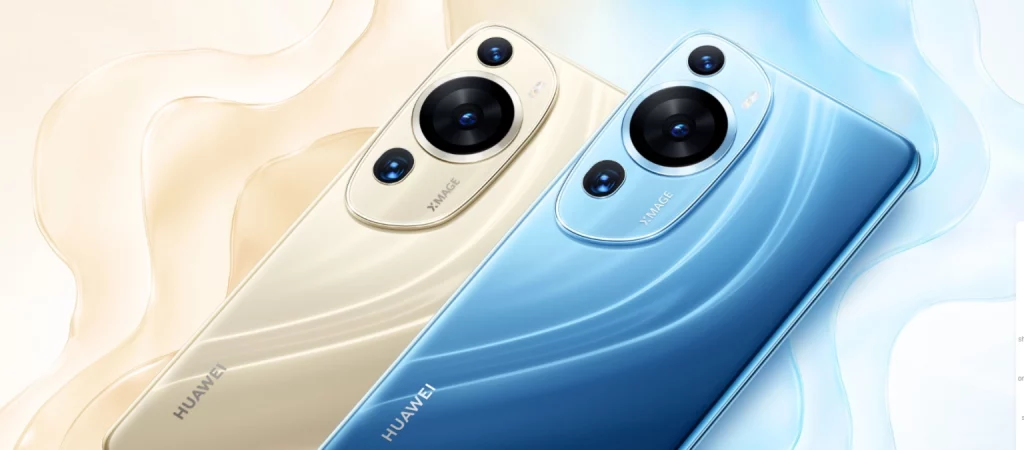
The cameras on the two phones will be based on the in-house XMAGE imaging system, which focuses on optical systems, mechanical structures, imaging technology, and image processing.

It has also been reported that the P60 Pro will be powered by a Snapdragon 8+ Gen 1 chipset. However, a 4G version of the chipset will be used. It could have a 5,500mAh battery with 100W wired and 50W wireless charging. Both smartphones are also expected to support satellite connectivity and feature Kunlun toughened glass on the display.

RELATED:

(Source 1, 2) (Via)

Global Moto G53 Could Launch Soon, Bags GCF Certification

Motorola recently launched a budget smartphone, dubbed Moto G53 in China. A handset with the same name but different specs and design is expected to launch soon in the global market as well. It was recently spotted on various certification sites, including BIS India, FCC, and TDRA. In the latest update, the global Moto G53 has bagged compulsory GCF certification, hinting at a nearby launch. Here are the details.

A Motorola smartphone with model number XT2335-1 has been spotted on GCF (Global Certification Forum) website. As per previous listings, this model number is associated with the global version of the Moto G53. For the unaware, GCF certification is a must for all kinds of devices that operate on the cellular network.

Moto G53 Global v China
Moto G53 Global and Chinese version

The listing did not reveal any specifications of the device but it hints at an imminent launch. As of writing this, we don’t have a confirmation from Motorola. We can expect an official word pretty soon.

As mentioned, the global Moto G53 strays far from its Chinese counterpart both in terms of specifications and design. It could arrive with a new Snapdragon 4 Gen 1 SoC instead of the Snapdragon 480+ chip that was seen in the Chinese version. The phone may have a 16MP camera for selfies and video calls.

It is reported to feature a better display. The smartphone may have a 6.6-inch OLED panel that produces an FHD+ resolution and a 90Hz refresh rate. The Chinese one sports a 6.5-inch LCD panel with a 120Hz refresh rate. The handset is believed to pack a triple-rear camera configuration with a 50MP main sensor. It could be paired with an 8MP secondary sensor and a 2MP auxiliary sensor.

Related:

(Via)

Samsung Might Not Launch a Galaxy S24 Plus Next Year

Samsung’s flagship S series usually consists of three models. There’s a standard model with a compact form factor, a Plus version with basically the same specs as the standard one but a larger display, and an Ultra model with an even bigger display and better specs. The same formula is expected to be followed in the upcoming Galaxy S23 Series. However, the Korean company might remove the Plus model from its 2024’s Galaxy S24 lineup.

According to a report by The Elec, Samsung is planning to exclude the Galaxy S24 Plus from the next year’s Galaxy S24 series. This means only the standard Galaxy S24 and the higher-end Galaxy S24 Ultra will be launched. Only “DM1” (Samsung Galaxy S24) and “DM3” (Samsung Galaxy S24 Ultra) projects are in the works, according to the report. The “DM2”, which should be the Samsung Galaxy S24 Plus is missing.

Galaxy S22 Plus

Apparently, the Plus model is not as popular as the rest two models in the series, and it has poor sales. The publication, citing Gfk figures, reports that only 5.5 million units of Galaxy S22 Plus were sold last year, which is around 17% of total Galaxy S22 shipments. The base and ultra devices, on the contrary, accounted for 38% and 45% of 2022 shipments respectively.

In addition, Samsung is also said to be reviewing ways to reduce the number of models in the low-end Galaxy A series. The brand is reported to continue launching new models in the Galaxy A1x, A3x, and A5x series. However, it may discontinue the A2x series. By reducing the number of poor-performing smartphones (In terms of sales), Samsung could improve its profitability.

RELATED:
(Source) (Via)

DJI RS 3 Mini Launched as the Brand’s Smallest Pro-level Gimbal

DJI‘s product release cycle last year was quite eventful with a raft of industry-defining products joining the fray. On the gimbal aspect, the DJI RS 3 Pro and RS 3 gimbals were launched. The company equally shared a teaser recently that suggested a mini version of the RS 3 gimbal was coming. Indeed, the DJI RS 3 Mini has beeen launched for the global market.

DJI RS 3 Mini

The DJI RS 3 Mini adopts a new integrated design with a compact and portable build. The compacy build makes it possible to fit the gimbal into a shoulder bag. The vertical shooting mode weighs only 795 grams, which is about 50% lighter than the RS 3 Pro, and the horizontal shooting mode is only 850 grams. In addition, the handle extension tripod is about 128 grams.

The RS 3 Mini gimbal has a load capacity of 0.4-2.0 kg. It is supported by mainstream models of full-frame and APS-C format mirrorless cameras. It can be equipped with a Sony A7S3+24-70mm F2.8 GM lens at the highest. The zoom lens can still be used at the maximum focal length to keep it steady.

DJI RS 3 Mini

In order to meet the needs of short video shooting, the RS Mini 3 supports native vertical shooting for the first time. You can directly install the standard quick-release plate on the vertical arm of the gimbal to switch to vertical shooting, and the rotation angle of the gimbal is not limited.

Technically, it continues the third-generation stabilization algorithm, Bluetooth (5.1) shutter control function, etc. The gimbal recording button can directly control the camera to start and stop recording or trigger a photo.

DJI RS 3 Mini

The RS 3 Mini is also equipped with a 1.4-inch touch-sensitive color screen and adopts a new UI design. Most of the function adjustments can be completed without an app. The side is equipped with a NATO interface, which supports the installation of portable transfer handles, external fill lights, and monitors as well as other accessories.

DJI RS 3 Mini

In addition, the standard battery capacity is 2450mAh. The battery life can last up to 10 hours and it supports charging while using. It uses a USB-C interface and can fully charge in 2.5 hours.

As for the price, the DJI RS 3 Mini is priced at 1999 yuan ($295) which includes the main body of the gimbal, tripod, quick release plate, and other accessories.

RELATED:

Apple Watch may face a ban in the US over its Blood Oxygen tracking feature

Apple has recently been dealing with another legal dispute regarding the technology it offers. The latest one is another patent infringement case, which might affect the sale of its Apple Watch series in the US. So here are all the details.

The Cupertino based giant is no stranger with patent disputes. However, the latest battle has started off against the iPhone maker and could possibly even lead to the ban of the Apple Watch Series 6 and newer models in the US. The company is being sued by Masimo, which is a brand that medical grade products. As per the new lawsuit, the company is suing Apple for breaking five of its pulse oximeters, which is used on the Watch’s blood oxygen monitoring feature on its Watch Series 6 and later models.

Apple

Just yesterday, a judge in the US International Trade Commission (ITC) ruled that Apple did break one of Masimo’s pulse oximeter patents. Meaning, the company wasn’t guilty on infringing on the other four patents. So now, the US ITC will decide if it will ban the import of Apple Watch models that can monitor blood oxygen levels of its users. According to Masimo CEO Joe Kiani “We are happy that the judge recognized Apple’s infringement of Masimo’s pulse oximetry technology and took this critical first step toward accountability.”

The senior official further added that “Today’s decision should help restore fairness in the market. Apple has similarly infringed on other companies’ technologies, and we believe today’s ruling exposes Apple as a company that takes other companies’ innovations and repackages them.” On the other hand, Apple responded by stating that “We respectfully disagree with today’s decision and look forward to a full review by the Commission.”

RELATED:

(Via)

Philips TAH8506BK ANC Headphone Along With Four More Models Launched In India

Philips has launched new headphones in India. The range comprises of TAH8560BK, TAH6506BK, TAA4216BK, TAH4205XTBK, and TAUH201BK. The TAH8560BK is the more premium offering in the lineup. Read on to know what the headphones offer out of the box. 

The Philips TAH8560BK, TAH6506BK, and TAA4216BK have an over-ear design whereas the TAH4205XTBK, and TAUH201BK are on-ear headphones. The TAH8560BK has touch controls for performing various tasks instead of physical buttons on the rest of the offerings. All five headphones have adjustable and foldable ear cups. 

In terms of audio, beginning with the TAH8560BK, it offers an immersive experience with adaptive active noise cancellation. The headphone features certified Hi-res audio capable 40mm speakers for rich sound. There is also customisable ambient mode and four preset EQ levels. The TAH8560BK is claimed to deliver 60 hours of usage and 45 hours with ANC enabled. On the other hand, the Philips TAH6506BK is equipped with a 32mm driver. It has a hybrid active noise cancellation for eliminating unwanted noise. There is a audio-in port and the device is claimed to offer 30 hours play time and 25 hours with ANC enabled. 

The Philips TAH8560BK and TAH6506BK also come with multipoint pairing capabilities via Bluetooth connectivity. 

Coming to the Philips TAA4216BK, it has detachable ear cups for easier cleaning. The ear cups are loaded with a cooling gel for a comfortable experience over longer periods. There is a multi-functional button and a built-in mic. The TAA4216BK is equipped with a 40mm neodymium driver and is claimed to offer 35 hours of usage. As for the Philips TAH4205XTBK, it features a multi-functional button along with a dedicated bass boost button for instantly making louder bass and beats. The headphone comes with a 32mm driver and 29 hours of battery life. 

Lastly, the Philips TAUH201BK is a wired on-ear headphone with in-line remote and built-in mic. The device features a 32mm driver with environmental noise cancellation. 

The Philips TAH8560BK carries a price tag of Rs 10,999. The Philips TAH6506BK, TAA4216BK, TAH4205XTBK & TAUH201BK headphones are priced at Rs. 11,999, Rs. 8,999, Rs. 4,999 & Rs. 1,990 respectively. All five audio devices are available for purchase at all leading online and offline stores across the country.

Related:

ColorOS 13 Stable Out for Oppo Find X2 Series, Ace 2, and More

Oppo has begun to roll out the Android 13-based ColorOS 13 stable update for more smartphones starting January 10. These devices range from budget to flagship categories.

Only two of these handsets were released in global markets. Whereas, the rest of them are launched exclusively in China. Let’s go through the details.

Oppo Find X2 Pro
Oppo Find X2 Pro

As per official announcement posts on the Oppo community, the following smartphones have started receiving the Android 13 stable update with ColorOS 13 skin.

  • Oppo Find X2
  • Oppo Find X2 League of Legends S10 Limited Edition
  • Oppo Find X2 Pro
  • Oppo Find X2 Pro Automobili Lamborghini Edition
  • Oppo Ace 2
  • Oppo K10 Pro
  • Oppo K10x

The Find X2 and Find X2 Pro are the only phones on the list that were released outside mainland China. Hence, the latest software update is available for them in Indonesia. The update should be rolled out in more regions in the coming weeks.

On the other hand, the remaining devices on the list were launched only in China. However, it is worth noting that the Oppo K10x goes by OnePlus Nord CE 2 Lite in select global markets. That device got the Android 13 stable update before New Year’s day.

Having said that, the update for these handsets is being rolled out in batches as usual. Therefore, some users may get access to the update earlier than others. In the end, every unit should be upgraded to fresh software in the upcoming days.

RELATED:

(Source 1, 2, 3, 4, 5)

Xiaomi, Siemens, & others finally end their long IP disputes

Earlier today (11th January 2023), Xiaomi and a couple of other companies jointly announced that they will finally be bringing an end to their long lasting IP disputes (Intellectual Property) as they looked towards the future.

The Chinese tech giant had been in dispute with other patent owners like IP Bridge, Orange, and Siemens. However, the firms have decided to make amends with one another through an innovative patent licensing transaction. In simpler terms, the companies are simply creating an efficient way of licensing patents across multiple technologies to push innovation and remove future disputes for Xiaomi and its future technologies.

Xiaomi

According to Ran Xu, Xiaomi General Manager of Global Business Development and IP Strategy stated that “We continue to explore complementary licensing models to the traditional patent pool and bilateral models in order to avoid time-consuming disputes and to focus on innovation. This unique transaction structure lets Xiaomi customers enjoy benefits of inventions from 3 companies, efficiently.” The disputes were ended thanks to Norvus IP, which is a company that is owned by Xiaomi’s former Head of IP Strategy.

This firm helped the smartphone maker and the other three licensors and close this licensing transaction in an efficient manner. Similar, Rudolf Freytag, Siemens’ Head of Licensing and Technology said that “For us, protection of innovation by patents is of high importance. We highly welcome this agreement, as it constitutes a mutually very satisfactory solution over litigations and appreciates the solution- oriented approach of all parties involved in the deal.”

RELATED:

Google Working on Making eSIM Transfers Easier on Android

Google has recently rolled out the second Android 13 QPR2 beta update to supported Pixel devices, which includes a number of underlying changes. According to Mishaal Rahman, among these changes is a new system property called ‘euicc.seamless_transfer_enabled_in_non_qs’, suggesting that Android could soon gain support for seamless eSIM transfers.

Currently, Android users have to deactivate their eSIM profile on their old phone and activate it on their new phone. This process is not seamless and may require the user to contact their carrier to activate the eSIM on their new phone. In contrast, iOS offers a built-in Quick Transfer feature that allows users to transfer physical or eSIMs from their old iPhone to a new model without contacting their carrier. It seems that Google is taking inspiration from this iOS feature and working on bringing similar functionality to Android.

The feature is being implemented in the SIM Manager app on Pixel phones and several other phones that ship with Google Mobile Services. However, the complete compatibility details are not available yet. It’s likely that Google’s Pixel lineup will support both eSIM profile transfers and converting a physical SIM to an eSIM profile. Devices from other OEMs will also get support for eSIM profile transfers, but the ability to convert a physical SIM to an eSIM profile might be limited to a few models.

It’s not yet clear when Google plans to release this feature. It could arrive with the March 2023 Pixel Feature Drop or later in the year with Android 14. The company has not yet commented on the matter, and it’s not known when more information will be available.

Overall this feature will make the transition of eSIM profile to new phone much easier and more seamless, by not requiring users to contact their carrier and make activation. This could make the transition process much more user-friendly and less time-consuming.

RELATED:

(via)

ForMovie S5 Rolling Projector/Speaker With a 360 Rotatable Stand Launched

Chinese projector manufacturer Fengmi which trades in the overseas markets as ForMovie has launched a new laser projector. The product is known as the ForMovie S5 Rolling projector and it uses ALPD laser display technology.

ForMovie S5 Rolling Projector

As can be seen from the official pictures, the ForMovie S5 Rolling Projector adopts a new frame shape, which is connected to the main body of the projector with a rounded rectangular frame and a pan-tilt structure. This design ensures that the projection can achieve 360° vertical rotation. The Formovie S5 can deliver a brighter image with 1100 ANSI Lumens in a small and compact design by utilizing ALPD laser display technology.

When the projector is closed, the whole machine can be transformed into a suspended desktop audio system. The stereo sound system is created by a qualified team in collaboration with the renowned audio company Denon. Additionally, the FengOS and several clever automation make it much simpler to project and utilize. Also, the exquisite design of the projector also sees the bottom aspect of having support for wireless charging. The base can be used to charge devices that support wireless charging.

ForMovie S5 Rolling Projector

ForMovie also unveiled the Formovie V10 projector at CES 2023. It is one of the finest projectors for gaming because of its 240Hz ultra-high refresh rate and low latency of 12ms. Along with true 4K resolution, Formovie V10 also offers a magnificent viewing experience with 2500 ANSI Lumens. Standard 7.5W full-range speakers and a separate 15W subwoofer are also supplied. Users may experience 360°surround sound thanks to Dolby surround sound support. The Formovie V10’s design is modern, uncomplicated, and suitable for various types of home decor.

The official has not yet announced the price details and release time of these two new products.

RELATED:

boAt Aavante Bar 1150D Soundbar With Dolby Audio Launched In India

boAt has launched a new audio device in India. It is called the boAt Aavante Bar and with the latest offering, the homegrown brand has expanded its range of soundbars in the country. Read on to know what the device offers out of the box. 

The boAt Aavante Bar 1150D has a sleek look and premium finish. It has multiple connectivity modes including Bluetooth 5.0,USB, AUX, HDMI (ARC), and optical connectivity.  

In terms of audio, the boAt Aavante Bar 1150D is equipped with a driver size of 5.5×8.5cm x 2+2.25 inches x 2. It has a 4Ωx4 + 8Ωx2 impedance and a frequency response of 55Hz-20KHz. The soundbar has an 80W boAt Signature Sound output and a 60W subwoofer that is said to enhance every part of the entertainment. It features a signal-noise ratio of 60 dB. The boAt Aavante Bar 1150D comes with a 2.1 channel surround sound and Dolby Audio that delivers a balanced sound and deep bass for movies, music, and video games. It also offers four EQ modes including movies, news, 3D, and music. 

The boAt Aavante Bar 1150D comes with a remote control that lets users control various functions of the devices. 

The boAt Aavante Bar 1150D carries a price tag of Rs 7,999. It can be purchased from Flipkart and the brand’s website starting tomorrow, at 12 pm. 

In other news, last week, boAt launched the Wave Edge smartwatch in India. It features a 1.85-inch display, a digital crown, and a built-in speaker and microphone. The smartwatch is available for purchase in the country.

Related:

Apple working on custom MicroLED tech that may debut on the Apple Watch

With Apple unveiling its proprietary silicon for its various products, it was clear that it aims to rely on its self designed technologies. Now, it appears that the display is the next such goal of the company.

The Cupertino based giant already employs its tight ecosystem of software that seamless work with its PC, smartphones, and other products. So, it isn’t surprising that it is extending its proprietary reach to the hardware level as well. A new report has revealed that the iPhone maker is working on its own custom design for displays that are based on microLED technology, and it appears that a future Apple Watch model will be the first to debut this display.

Apple

According to Bloomberg’s Mark Gurman, the device with such a screen could be launched as early as next year, with its development process and planning being in the works for almost 5 years now. For those unaware, Apple typically orders its screens from major display manufacturers like Samsung, LG, and BOE. But for its custom microLED designs, it might employ a separate manufacturer to produce the displays.

Similarly, the company is also working on its own proprietary modems to replace the 5G modems it orders from Qualcomm for its iPhones. Although, developing its very own microLED display technology is a bit more complex. This breed of display are not as common in use as OLED or LCDs. Furthermore, these are usually used in large sizes in commercial spaces rather than mass production due to their cost of production. So, Apple might just start small with the Watch debuting this technology sometime by 2024 or 2025.

RELATED:

(Source, Via)