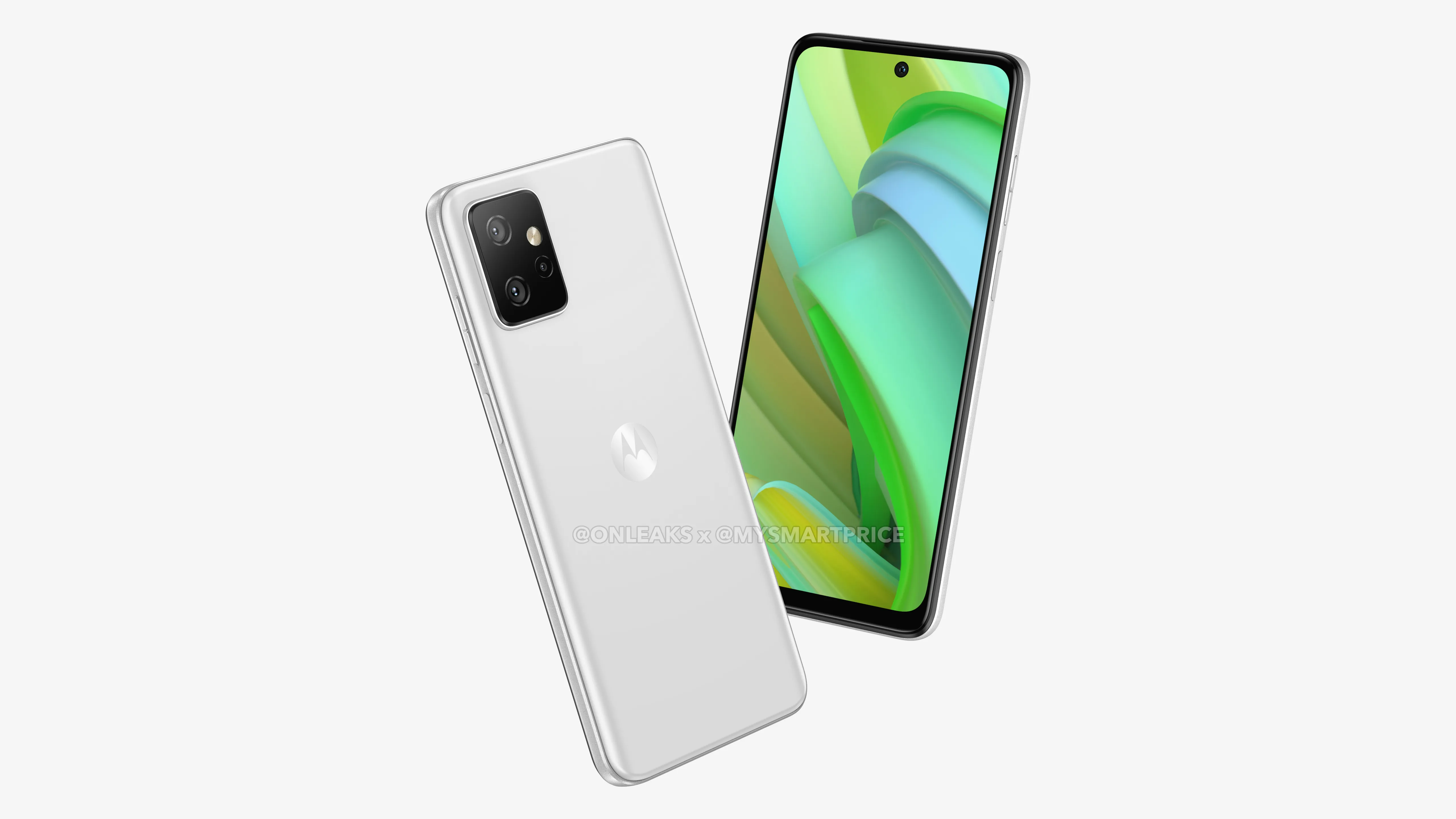
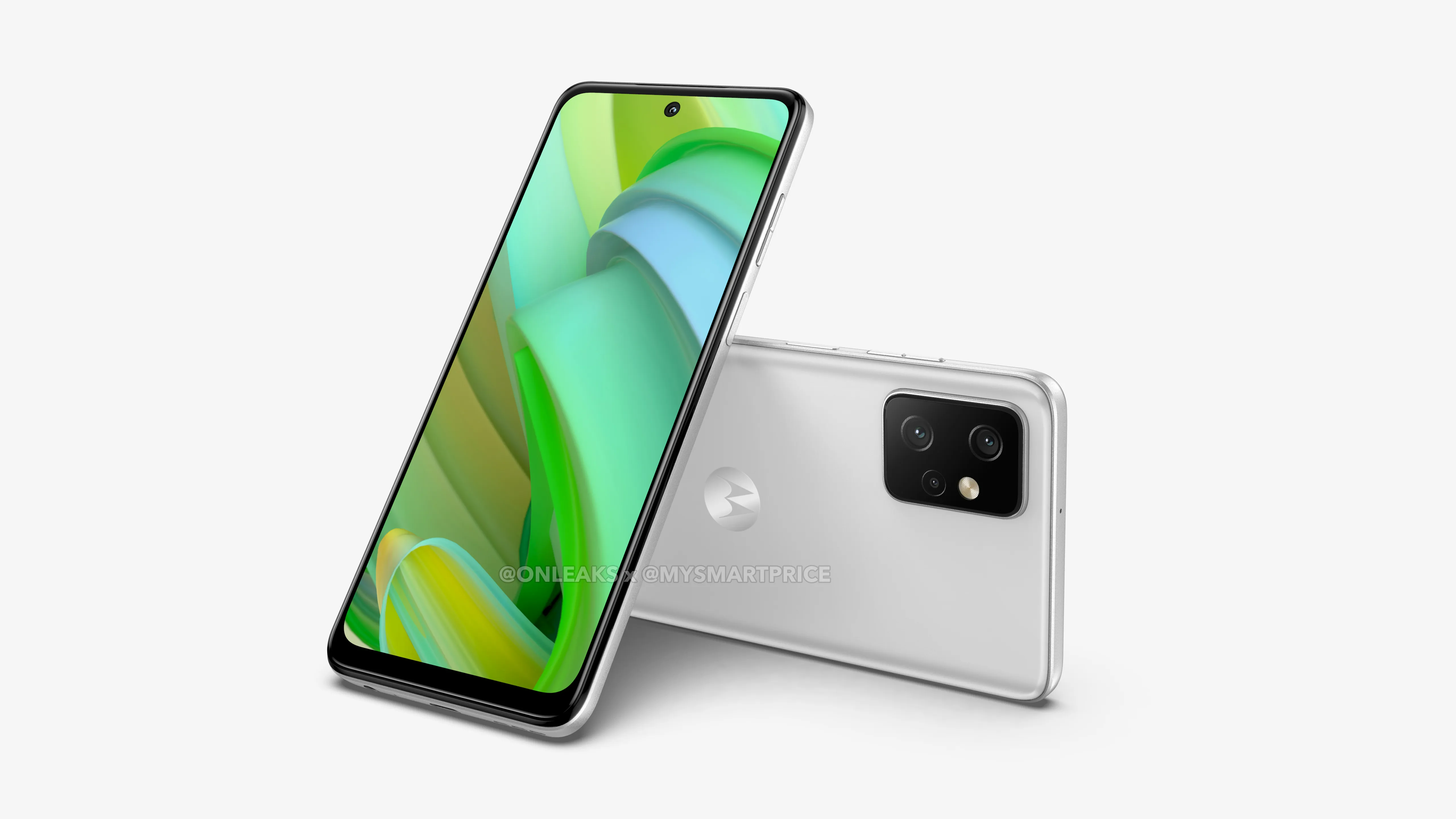
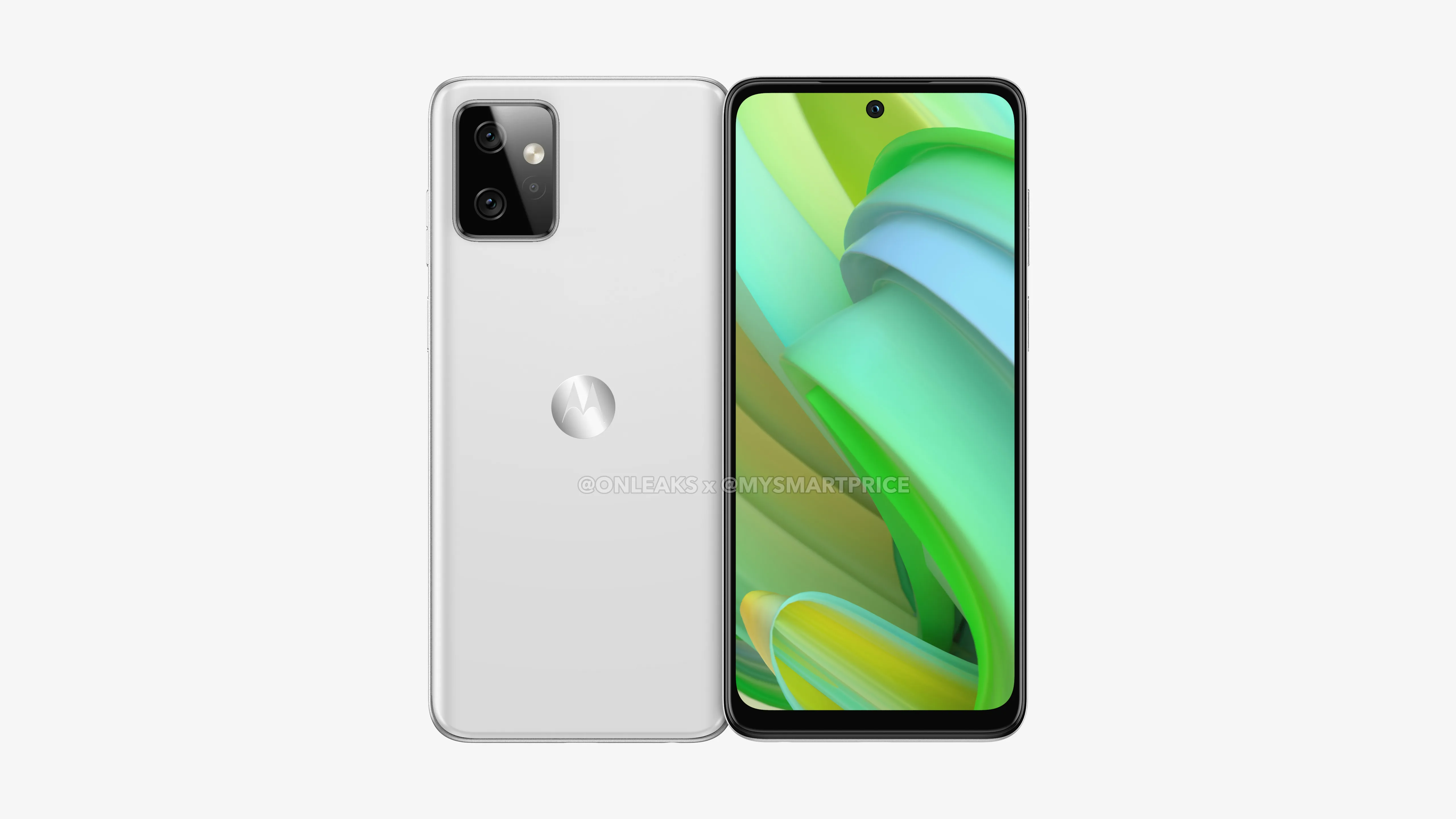
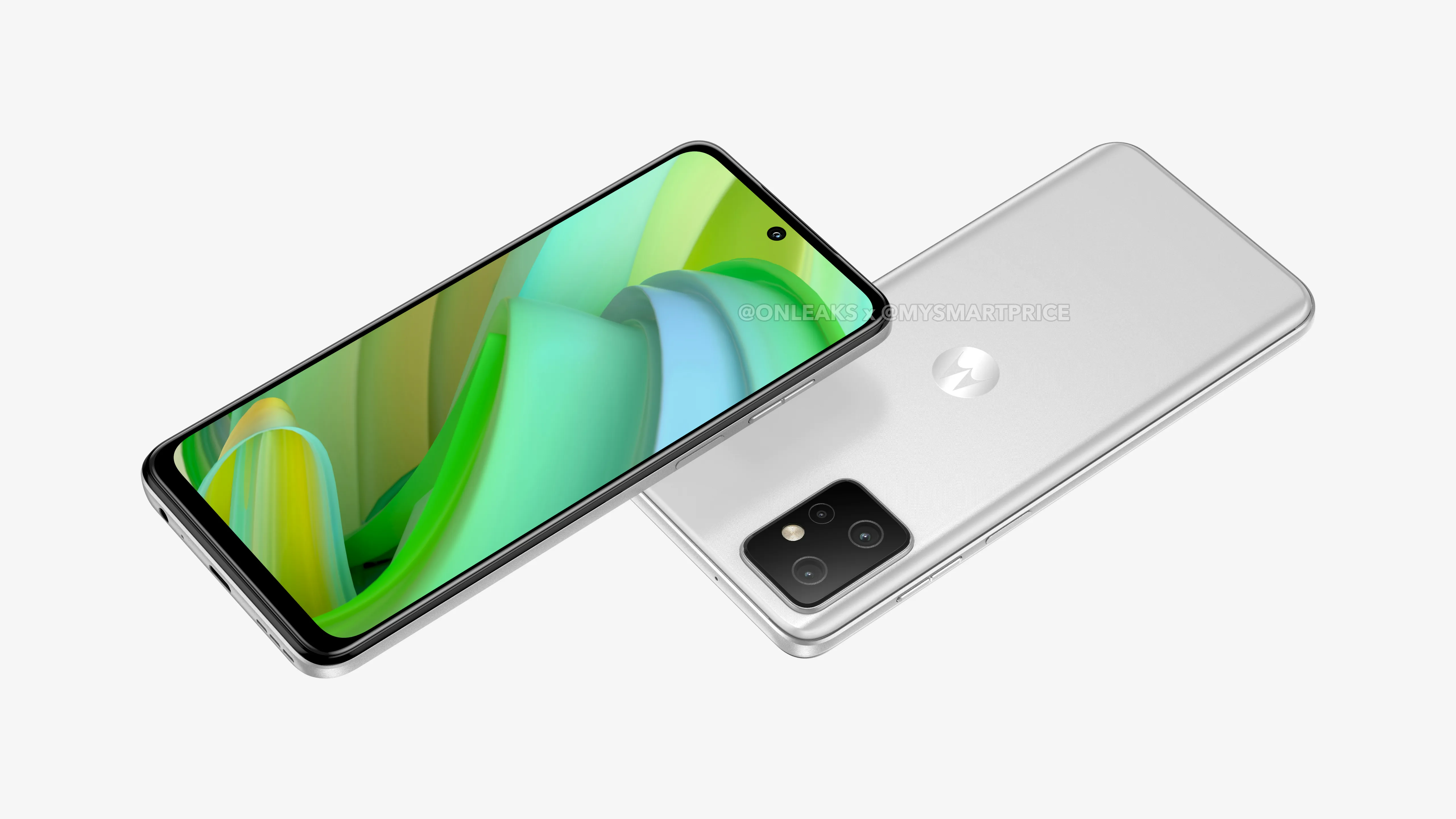
Moto G Power 2023 has been spotted in leaked renders. The images give a look at the upcoming smartphone. It is expected to arrive as the successor to the Moto G Power 2022. The renders have been shared by industry tipster Onleaks in collaboration with MySmartPrice.
Beginning with the design, the Moto G Power 2023 is seen with a centre aligned punch hole cutout and thick bottom bezel. The device features a slim form factor with two buttons on the right side. There is a squarish camera module housing three sensors on the back panel. Dimensions wise the Moto G Power 2023 measures 163.1 x 74.8 x 8.4mm (10mm including the rear camera bump).
The Moto G Power 2023 is tipped to feature a 6.5 inch display but the screen resolution and refresh rate remain unknown. The renders reveal a 3.5mm headphone jack, a charging port, and a speaker grille at the bottom. The volume rocker and power buttons are located on the right side with the later expected to double up as a fingerprint scanner.
Now that the renders of the Moto G Power 2023 have appeared, it appears that it will not take too long for it to debut. Here is a look at the specifications of the predecessor model.
Moto G Power 2022 Specifications
Debuted in November 2021, the Moto G Power 2022 came with a 6.5-inch IPS LCD display that offered an HD+ resolution and a 90Hz refresh rate. It came equipped with the Helio G37 chipset, 4GB of RAM, and 64GB / 128GB of storage.
The device featured an 8MP front camera, and its back panel housed a 50MP main camera along with a pair of 2MP auxiliary snappers. It was powered by a 5,000mAh battery with 10W charging. For security, it featured a side-mounted fingerprint scanner.
Asia is a very crucial market for the smartphone industry, as it contains the world’s largest markets for smartphones, which are India and China, both amounting to nearly 3 billion potential customers using smartphones. Thus, it is no surprise that there are a wide variety of smartphone brands in the region such as Xiaomi, Realme, OnePlus, Samsung, Tecno and Infinix competing in the space.
And recently, StatCounter by Global Stats, published their data on Mobile Vendor Market Share in Asia for February 2023, and Apple had overtaken Xiaomi as the 2nd most popular smartphone brand in Asia, while Samsung remains on top.
The data shows that Samsung leads the pact with a 22.25% market share, Apple in second with 17.15%, Xiaomi in 3rd with 16.19%, Oppo in 4th with 10.82%, and Vivo in 5th with 9.76%.
Samsung’s large market share in Asia could be easily explained by its brand presence, as the smartphone manufacturer puts a lot into brand advertising as well as the availability of its offline retail and service stores. In addition, with the discounts given to its devices post-launch, makes it seem like a good bargain, which entices more customers to buy their smartphones, like the Samsung Galaxy S20 FE and Samsung Galaxy S23 series.
Meanwhile, Apple has now become the 2nd largest smartphone brand in Asia, which could be attributed to the brand expanding more of its presence in Asia. With the departure of Huawei, previous Huawei flagship owners might prefer iOS over stock Android due to iOS’ similarities to Huawei’s previous EMUI operating system, thus switching over to iPhone. And with the introduction of student discounts to developing Asian markets such as Malaysia and Vietnam, helps to expand the brand’s market share as well.
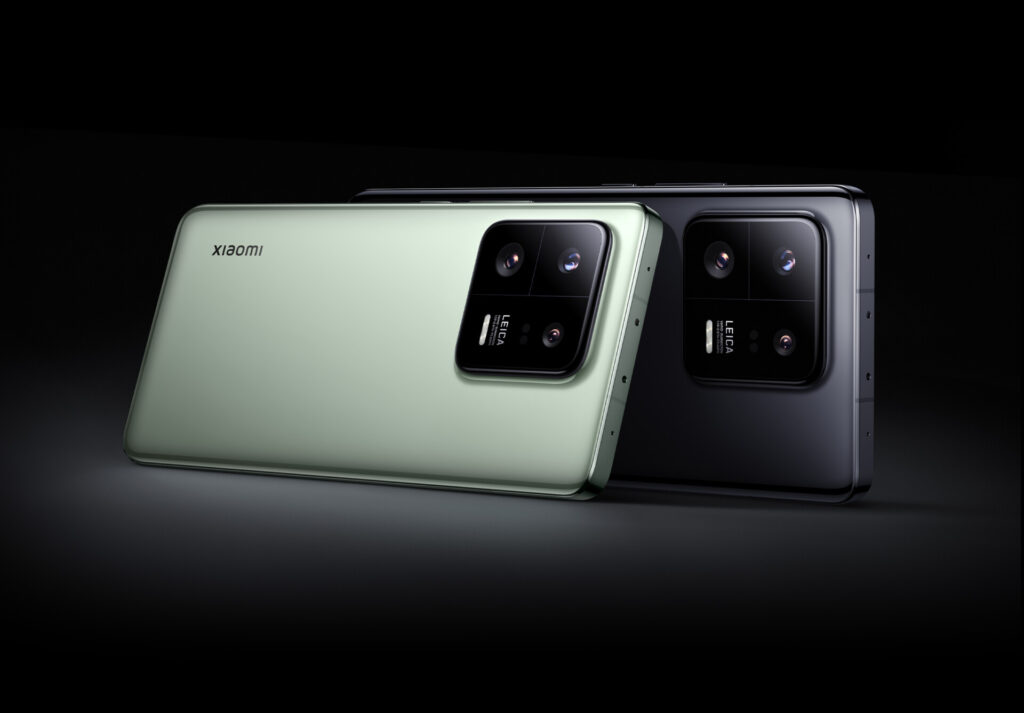
Xiaomi 13 Series
Meanwhile, Xiaomi, Oppo and Vivo had not launched any devices for the global market during February, and with the stagnation of the Chinese smartphone market, the global market outside of China should be a primary focus of these Chinese smartphone brands. Just this week, Xiaomi had just launched the Xiaomi 13 series for the global market with a free 6-month Google One subscription that includes features such as the Google Pixel Magic Eraser.
Skype has been around for a long time as one of the pioneers of voice and video calling over the internet. But in recent years, it has faced stiff competition from other messaging apps like WhatsApp and Telegram, which offer more features and privacy options. However, Skype is not giving up without a fight. The service, owned by Microsoft, has just introduced a new AI-powered Bing chatbot that can make your conversations more fun, informative and productive.
Bing in Skype vs Whatsapp and Telegram
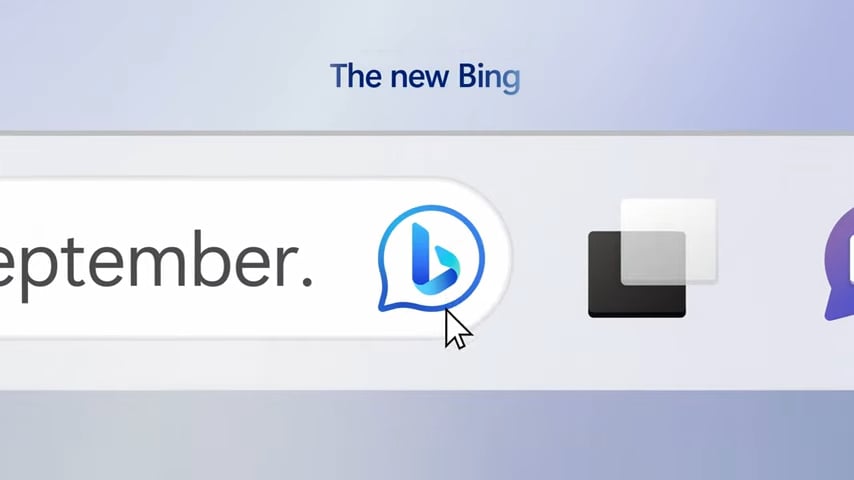
The new Bing chatbot is integrated into Skype chat and can be accessed by typing @Bing in any group conversation. You can ask it anything you would normally ask on Bing.com or Microsoft Edge, such as trivia questions, news headlines, weather forecasts, flight and hotel information, etc. But that’s not all. The Bing chatbot can also generate ideas, and recommendations and draft messages for you based on your preferences and context.
For example, if you are planning a trip with your friends on Skype group chat, you can tag @Bing and ask it to suggest some destinations, activities and attractions based on your budget and interests. The Bing chatbot will then provide you with relevant web links, images and videos to help you decide. According to Microsoft, you can also ask it to book flights and hotels for you directly from Skype using Microsoft Pay.
Another cool feature of the new Bing chatbot is that it can help you write better messages by offering suggestions based on natural language processing (NLP) technology. For instance, if you want to send a birthday greeting to your friend on Skype but don’t know what to say, you can type @Bing followed by “birthday message” and it will generate some options for you to choose from or edit as you like.
The new Bing chatbot is not only useful but also entertaining. It can tell jokes, stories, poems and even rap lyrics if you ask it nicely. It can also play games with you such as trivia quizzes or tic-tac-toe. And if you are feeling bored or lonely, you can just have a casual chat with it about anything.
The new Bing chatbot is a game-changer for Skype users who want to have more engaging and creative conversations with their contacts. It also gives Skype an edge over other messaging apps like WhatsApp and Telegram which do not have such an advanced AI assistant built-in.
However, the new Bing chatbot is not perfect yet. With our editor, Leo’s time playing around with it, he noticed it still has some limitations that need to be addressed in future updates. For example:
The Bing chatbot cannot listen to audio messages or access photos and videos in chat.
The Bing chatbot may not always understand complex queries or slang terms.
The Bing chatbot may sometimes give inaccurate or inappropriate responses due to data sources or algorithms.
Despite these drawbacks, the new Bing chatbot is still an impressive addition to Skype that shows how AI technology can enhance social messaging platforms. If you want to learn how to use Bing in Skype yourself, you can visit our guide here.
Skype is a messaging service acquired by Microsoft in 2011 that offers text messaging, voice calls and video calls over the Internet, as compared to traditional messaging via SMS. Over the past 13 years, the service has gradually lost its popularity, primarily to Zoom, Whatsapp and Telegram. But recently, Microsoft has breathed in some fresh AI blood into Skype, with its new Bing ChatGPT integrated into the messaging service.
So how do you add Bing ChatGPT to Skype? Here are the 5 simple steps.
Step 1: Sign up for the Bing Waitlist
If you are already inside the Bing Preview, proceed to step 2. Currently, to use Bing ChatGPT on Skype, you must be selected to be part of the Bing Preview and to join the preview, you have to sign up for the waitlist here.
Once you received an email from Microsoft that notifies you that you are selected to try out the Bing Preview, then you may proceed to the next step.
Step 2: Download the Skype app on Windows
If you already have the Skype app on your PC, proceed to step 3. You need to download the Skype app on your Windows 10 or 11 PChere.
After a successful download, double-click on the download file and install the program. Upon successful installation, proceed to the next step.
Step 3: Log into Skype
Log in to Skype with either your Skype account or Microsoft account.
Step 4: Add Bing to your Skype contacts
Go to “New Chat > New Chat > Search “Bing” > Bing “ to create a conversation with Bing. Say “Hi” to Bing and he will be automatically added to your Skype contacts!
Step 5: Add Bing to your Group Chats (Optional)
Go to your Group Chat, and select the setting gears icon next to the group name, then “Add Participants > Bing”, and now Bing is officially in the group chat! To chat with Bing in the group chat, simply add @Bing, at the beginning of your message.
And that’s all, you can now chat with the New Bing ChatGPT in Skype! Bing can also help summarise group chats upon request, as well as give suggestions for which restaurants to go to with your friends. Not to mention that you can also use Skype on Android and iOS with the apps available on the Google Play Store and Apple App Store.
To learn more about why the new Bing ChatGPT is a game-changer for social messaging, you can head on over to our article here.
Artificial intelligence (AI) is transforming many aspects of our lives, and smartphones are no exception. In today’s article, we will explore three ways AI will transform the smartphone industry in the next five years.
1. Battery life and battery health
The battery is one of the most important components of a smartphone, as it determines how long we can use our devices without recharging. However, battery performance can degrade over time due to various factors such as temperature, charging cycles, and usage patterns. Although we can’t change the way we use our smartphones ourselves, we can change the way smartphones control battery and charging with AI!
OnePlus 11
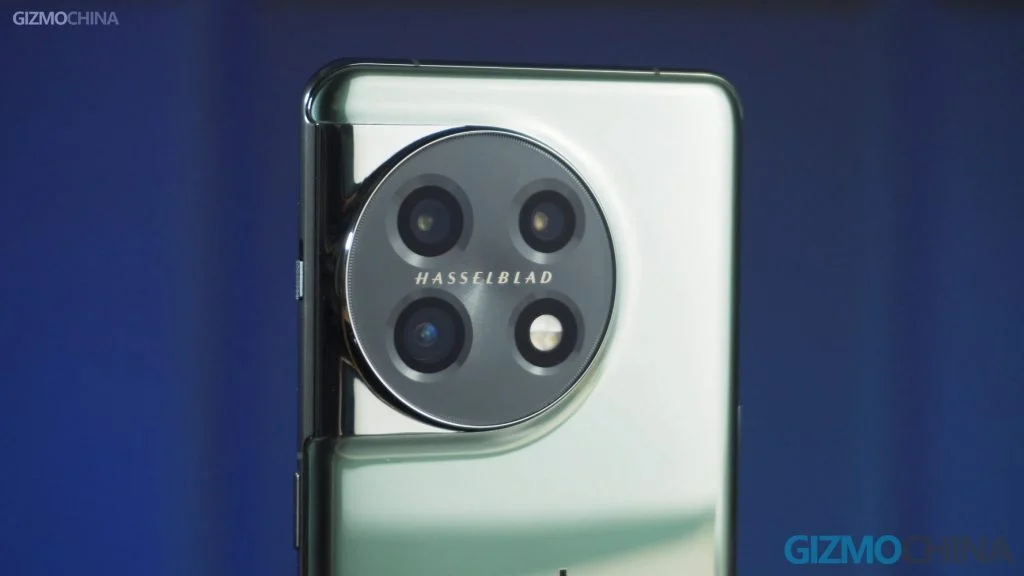
AI can help improve battery life by predicting its useful life, optimizing its settings based on user behaviour, and reducing power consumption by smartly managing background processes. For example, adaptive charging implemented by Xiaomi, and smart protection implemented by Oppo and OnePlus in their SuperVOOC changing standards. These AI techniques can potentially boost smartphone battery endurance by up to 30%, improve long-term battery health of your smartphone by up to 40% and save energy costs for users.
2. The voice assistant
The voice assistant is a convenient way to interact with our smartphones using natural language. Voice assistants use technologies such as voice recognition, natural language processing (NLP), and AI to understand and respond to human commands. Voice assistants can perform various tasks such as making calls, sending messages, playing music, checking the weather, setting reminders, and more. However, voice assistants still face some challenges such as accuracy issues (especially with accents or background noise), limited functionality (compared to touch-based interactions), and privacy concerns (due to data collection).
Newer AI technologies can improve voice assistants by using advanced NLP models such as OpenAI’s ChatGPT, which can generate more natural and engaging responses based on context and personality traits. Newer AI can also enable voice assistants to learn from user feedback, adapt to different scenarios, and provide more personalized services. Another example is Microsoft Bing’s ChatGPT which was recently updated with a speaking voice, and is available on both Android and iOS, challenging Apple’s Siri and Google Assistant.
3. The smartphone camera
The camera is another key feature of a smartphone that attracts many consumers. With AI, smartphone cameras today can achieve stunning results that rival professional DSLR cameras. AI can enhance smartphone cameras by using scene recognition, which automatically adjusts the settings for the best possible shot depending on what category the subject falls under and other factors like lighting conditions. AI can also enable object recognition, which allows the camera to differentiate faces from the background and apply effects such as bokeh for portrait mode. Moreover, AI can improve image quality by using computational photography techniques such as HDR (high dynamic range), super-resolution, and low-light enhancement.
Vivo X90 Series
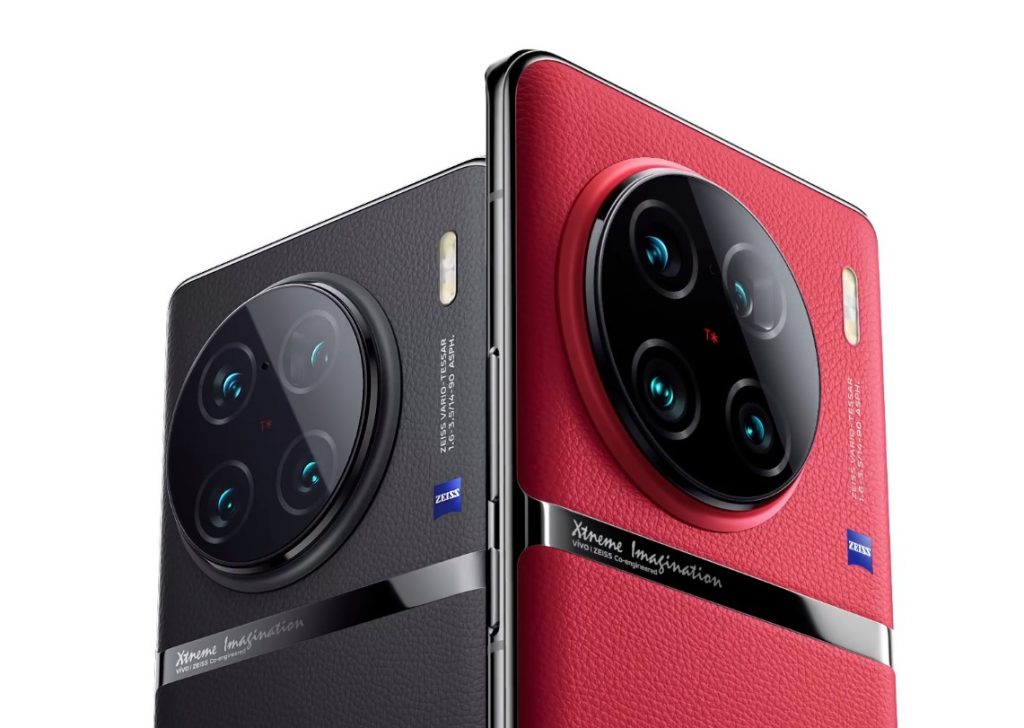
Speaking of AI-assisted smartphone cameras, Vivo’s latest flagship Vivo X90 series of smartphones are definitely not to be overlooked. Equipped with Vivo’s latest Vivo V2 ISP imaging silicon, computational photography on the Vivo X90 is near instant compared to its competitor. However, the better photos are also assisted by Vivo’s partnership with Zeiss, which enabled the company to put Zeiss’ signature T* coating on the flagship Sony IMX sensor onboard the Vivo X90 series.
To learn more, you can visit our Vivo X90 review here.
In conclusion, AI will transform smartphones in many ways in the next five years. By improving battery life, camera quality, and voice assistant capabilities, AI will make future smartphones more powerful, versatile, and user-friendly than ever before.
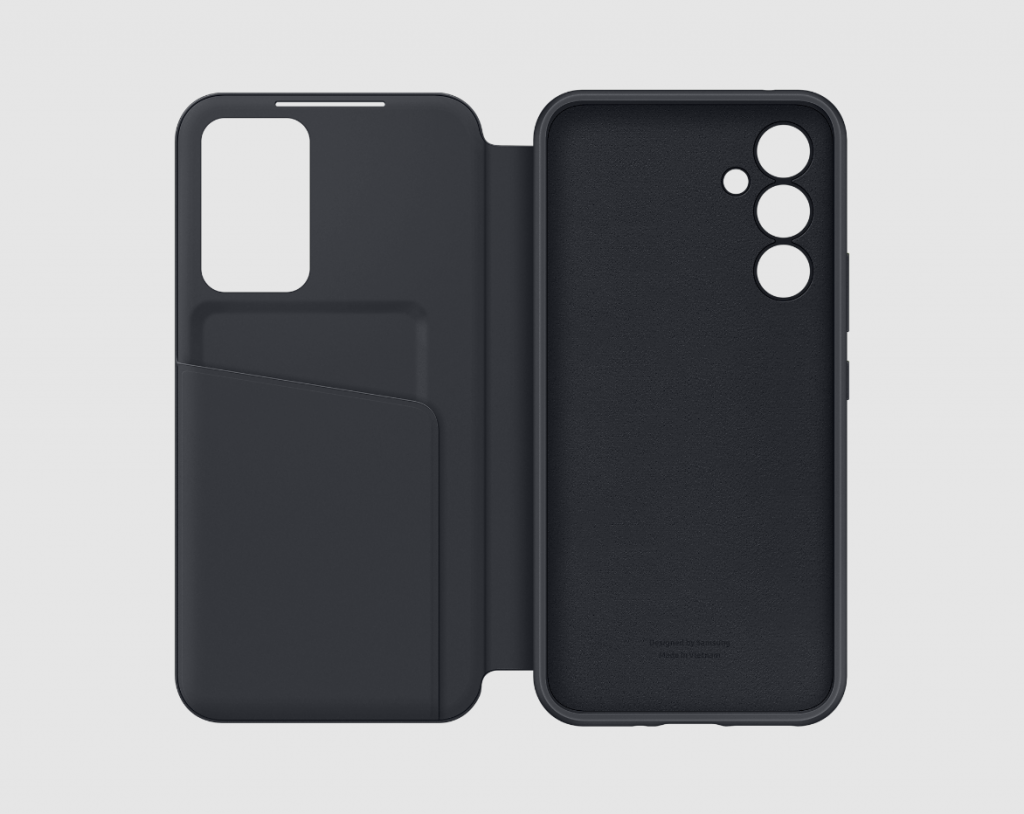
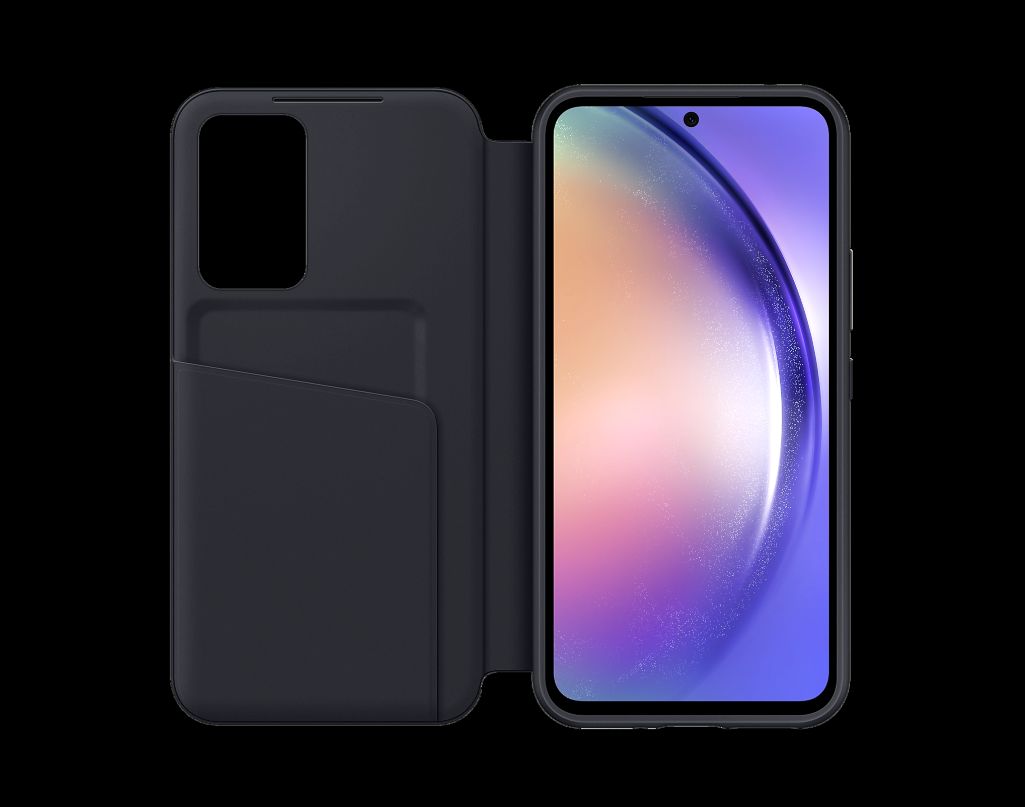
Samsung is all set to launch the Galaxy A54 smartphone. There were plenty of leaks already up on the internet, regarding the Galaxy A54. The leaked renders revealed the complete looks and form factor of the device. But now, Samsung has leaked the smart view case of the upcoming device on its official portal for Macedonia. The smart view case not only reveals its own form factor, but it reveals the complete look of the smartphone too.
Although the actual case isn’t yet ready for purchase, Samsung has released a few renders of the accessory. These confirm the phone’s design, which has individual circular camera cutouts and flat glass panels sandwiched between a slightly rounded metallic frame. According to the case, the device will very much look like the Galaxy S23.
The design, which is leaked on the official port, is very much in-line with the previously leaked renders. Three separate camera bumps can be seen with each bump housing a single camera lens. The device will adopt a flat panel on the front with centre aligned punch-hole cutout for the selfie camera.
The official title is “Smart View Wallet Case.” The accessory includes a screen cover with a small cutout for the Always-On Display clock and a credit card holder on the other side of the screen cover. The renderings show a USB-C port on the phone’s bottom edge, accompanied by a microphone and a speaker grille. The side key and volume rocker are located on the right edge of the Galaxy A54.
On the Samsung website, the Smart View Wallet Cover is only available in one colour. It’s black. However, the images also show the attachment in lime green and lavender, indicating that these colour options may be available once the phone is officially released. So that was all we had to say about the subject. Please share your thoughts on this by leaving a comment in your own words down below. Thank you for sticking with me until the end.
Nubia Mobile has officially teased the launch of its latest flagship device, the Nubia Z50 Ultra Starry Night Collector’s Edition. The phone boasts cutting-edge technology and design inspired by Vincent van Gogh’s “Starry Night.”
One of the key features of the Nubia Z50 Ultra is its environmentally friendly glass with a three-dimensional etching process, combined with nano-scale photolithographic texture AG glass material. This design brings technology and art together, creating a unique and visually stunning phone.
The phone’s design is further enhanced with the fourth-generation under-screen camera technology and an ultra-narrow four-micro-edge straight-screen design. This combination offers a truly immersive visual experience, making the Nubia Z50 Ultra a true flagship device.
The device will be powered by the Snapdragon 8 Gen 2, UFS 4.0, and LPDDR5X combination. This ensures that the phone can handle any task with ease and offers a smooth user experience.
In terms of the camera specs, the Nubia Z50 Ultra features a 35mm camera along with an 85mm shooter. This is paired with a third 64MP periscope telephoto lens. The brand has also improved selfie and video call quality on its “Neovision” under-display camera.
The display for the device has been developed in partnership with BOE, offering a 2K resolution display with a second-gen display chip. Additionally, the Nubia Z50 Ultra will feature a 5,000mAh battery, ensuring that it can last all day.
The Nubia Z50 Ultra will be officially released on March 7th and is set to be the strongest flagship device in Nubia’s history.
A man from Delhi lost Rs. 29 lakhs after falling victim to an Instagram scam in a horrifying event. The man had purchased an iPhone from an Instagram seller. The seller gave a significant discount on the iPhones, causing the consumer to make the deal. The complainant, identified as Vikas Katiyar by officials, resides in Delhi’s Ghitorni neighbourhood.
The complainant told the police that a few days before, he went to an Instagram page where he saw iPhones being sold at high discounts and was attracted to buy one. According to Katiyar, this gang of people requested 30% of the phone’s purchase in advance, or Rs. 28,000. Following that, their staff contacted him via several mobile phones and requested further payments to clear customs holdings and other taxes.
Nevertheless, the customer did not get any shipment details after making the purchase. When he contacted the seller, the seller stated that the shipment was held up in customs and requested additional funds to clear it. The buyer deposited more money into the seller’s account after believing the seller’s story. This went on for a few weeks until the customer realised he had been duped.
According to the victim’s complaint, he transferred INR 28,69,850 ($35,000) across many accounts, expecting that everything would be addressed and that he would receive the aforesaid iPhone. The buyer filed a report with the Delhi Police’s cybercrime unit, which is looking into the situation. The police have warned people to be cautious while making online transactions and to confirm the seller’s legitimacy before making any payments.
This instance emphasises the significance of exercising caution while making online transactions, particularly from unknown sellers on social networking sites. Before making any payments, it is critical to verify the seller’s validity and to look for reviews and ratings.
Scammers have used advanced ways to trick unwary victims in recent years, making online frauds more widespread. To prevent falling victim to such scams, it is critical to be conscious of the many forms of online fraud and to take the required safeguards when doing online transactions. That concludes this post. Thank you for sticking with me all the way to the end. Please share your thoughts on this by leaving a comment in your own words down below.
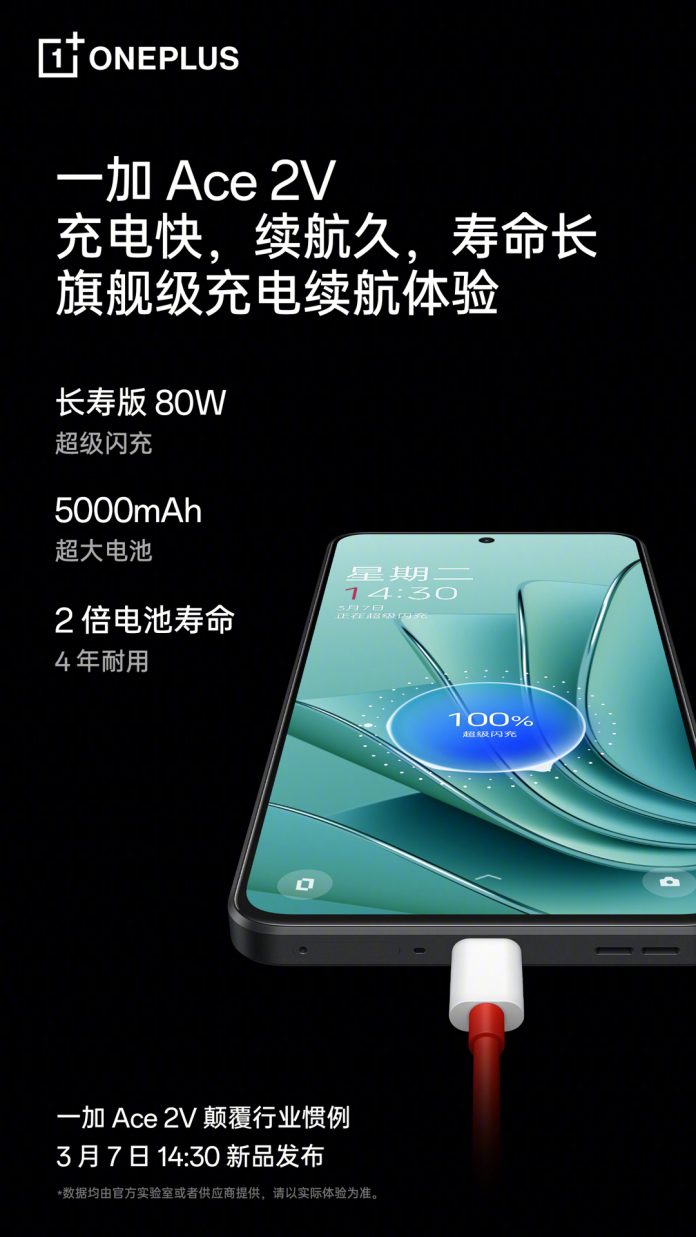
OnePlus recently launched the OnePlus 11R in the global market. The same device was rebranded as the OnePlus Ace 2 for China. Now, the brand is gearing up to make another addition to the Ace lineup in its domestic market called the OnePlus Ace 2V. OnePlus has set the launch for March 7 and has already confirmed many features on the Ace V2 via teasers. Here’s everything that’s known about the device so far.
Design & display
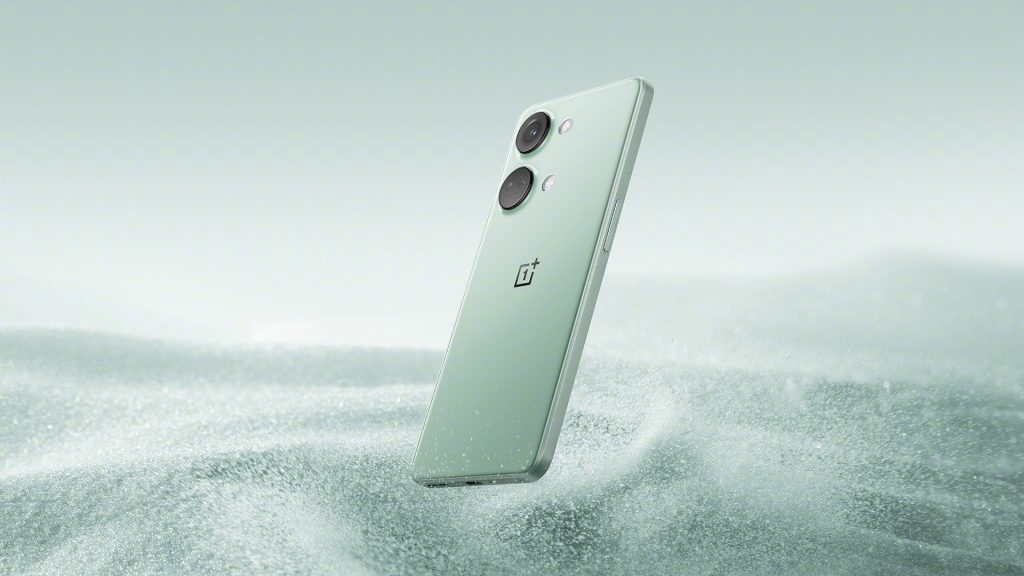
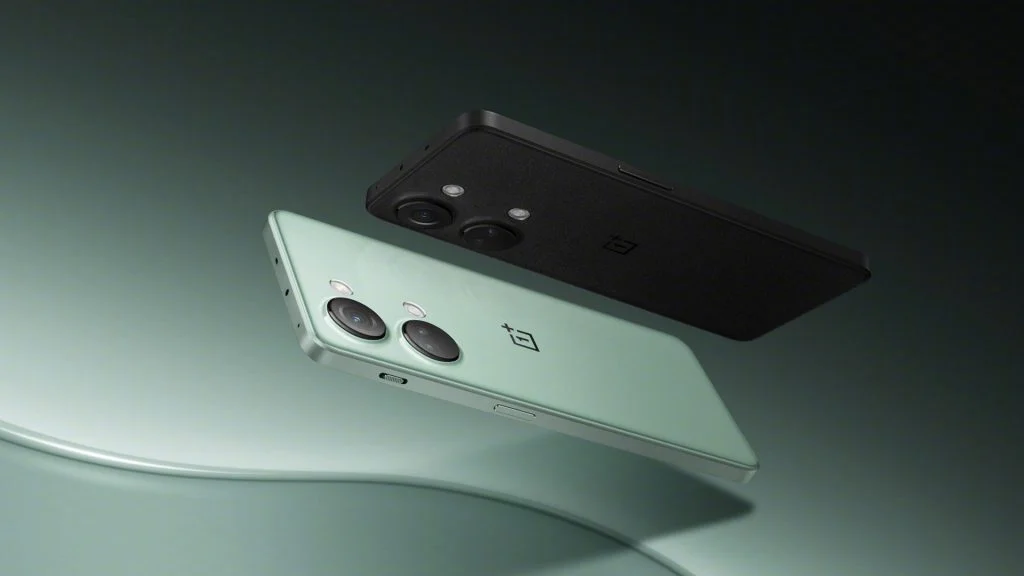
Starting off, multiple teasers have revealed that the OnePlus Ace V2 will feature a boxy design with flat edges. The brand has revealed that these edges will be made of high quality aluminium that’s usually found on flagship smartphones. The back panel will also be flat and house a triple camera setup located on two circular camera islands. This camera design has previously appeared on multiple devices including the OnePlus Nord 2T and Realme 10 series.
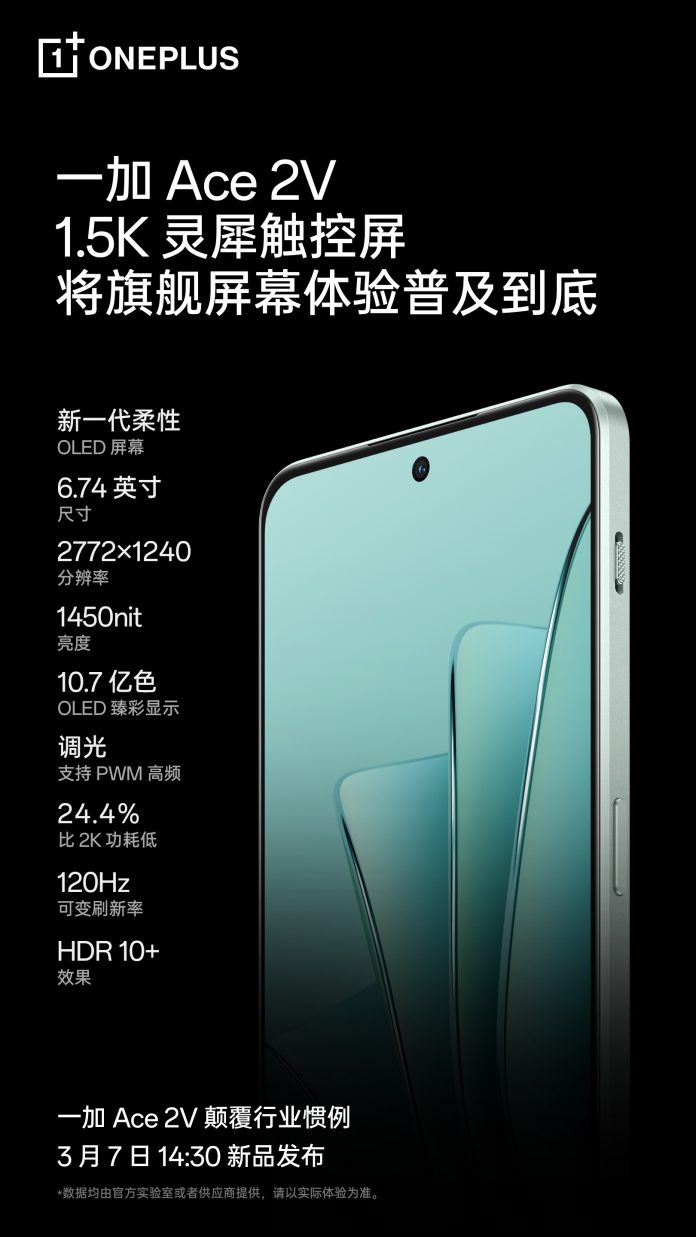
The front of the device will have a flat OLED display that measures 6.74 inches and offers a resolution of 2772 x 1240 pixels, a refresh rate of 120Hz, and 10-bit colors. It also features high-frequency PWM dimming, a brightness of 1450 nits, and HDR 10+ for improved image quality. It will have a centered punch hole for the front camera. The bezels surrounding the device are revealed to be super thin and even. The phone will also include the popular notification slider on the side of the smartphone.
Performance
The brand has also released additional information about the Ace 2V, stating that it will be powered by a Dimensity 9000 chipset and will come with LPDDR5x RAM and UFS 3.1 storage. The Dimensity 9000 processor will have eight cores, including a 3.05GHz Cortex-X2 core, three 2.85GHz Cortex-A710 cores, and four 1.80GHz Cortex-A510 cores. The phone will also have an integrated Mali G710 GPU to manage its graphics processing. It will be offered in two configurations, one with 12GB of RAM and 256GB of storage, and another with 16GB of RAM and 256GB of storage.
The device will support high frame rates of 120fps in “League of Legends” and 90fps in “Game for Peace,” and will also feature game cloud computing technology to enhance the overall gaming experience. The device has already appeared on Geekbench and AnTuTu benchmark websites revealing the performance of the device.
A large 5,000mAh battery will supply power to the device, and it will feature 80W fast charging to quickly top up the battery whenever you are running low.
Cameras
The OnePlus Ace 2V is anticipated to feature a 16-megapixel front-facing camera, along with a triple camera system on the back. The rear camera setup is said to include a 64-megapixel primary lens with OIS, an 8-megapixel ultra-wide lens, and a 2-megapixel macro lens. Other than that, the device is confirmed to come in Green and Black color options.
This week Lenovo did a teaser announcement stating that their next affordable Lenovo Legion gaming laptop in China will Nvidia’s latest generation RTX 4050 GPU, but it seems that the brand decided to share more details of the upcoming gaming laptop, including an option for buyers to upgrade to an RTX 4060 as well.
Lenovo Legion Geek Pro G5000, Source: Lenovo
The announcement comes from the official Lenovo Legion Weibo account in China, as they announce that the upcoming Lenovo Legion Geek Pro G5000 will feature an option for buyers to upgrade to an Nvidia GeForce RTX 4060 GPU that has a max TDP of 115W. Previously it was announced that the Legion laptop will arrive in a base model that has RTX 4050 with a max TDP of 95W, so giving consumers the option to upgrade to a better configuration is a commonplace market practice.
As for the details of the 115W RTX 4060 GPU in Lenovo’s upcoming Legion Geek Pro G5000, the company shared that the GPU will have 8GB of GDDR6 VRAM, support for the AV1 video-encoding codec, and Nvidia’s DLSS 3.0 graphics technology.
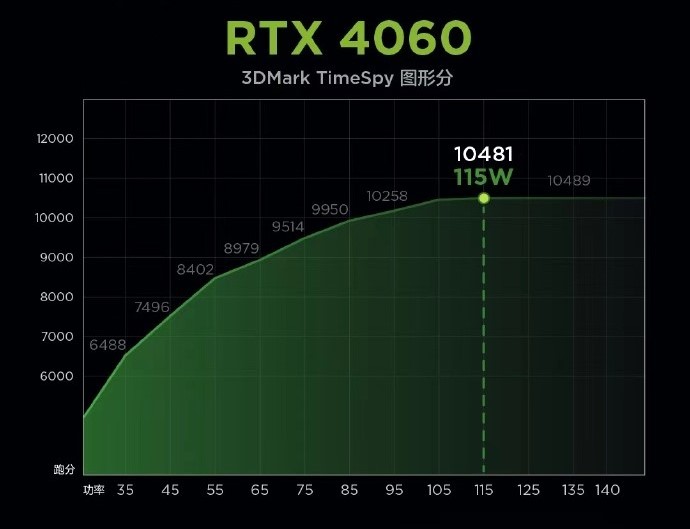
RTX 4060 115W 3DMark Benchmark
The company also shared some performance benchmarks, namely 3DMark Time Spy Benchmarks, of the RTX 4060 running on the affordable gaming laptop. It can be seen that the RTX 4060 has extraordinary power efficiency, as with only 45W of power, less than 40% of the max TDP of 115W, the RTX 4060 GPU can already pump out 70% of its max achievable performance.
Besides the GPU, ITHome quoted that Lenovo has stated that the Legion Geek Pro G5000 will be powered by Intel’s 13th Gen Core i5 processors, equipped with a 15.6-inch screen, 16:9 ratio, 2560 x 1440 resolution, 165 Hz refresh rate, 100% sRGB coverage of the colour gamut, and 350 nits of brightness. The Lenovo GeekPro G5000 series of gaming notebooks will arrive with 1 TB of onboard SSDs, and an additional M.2 slot for those who want to expand their storage more.
To catch up with the latest tech news from China, stay tuned to our coverage here at Gizmochina.
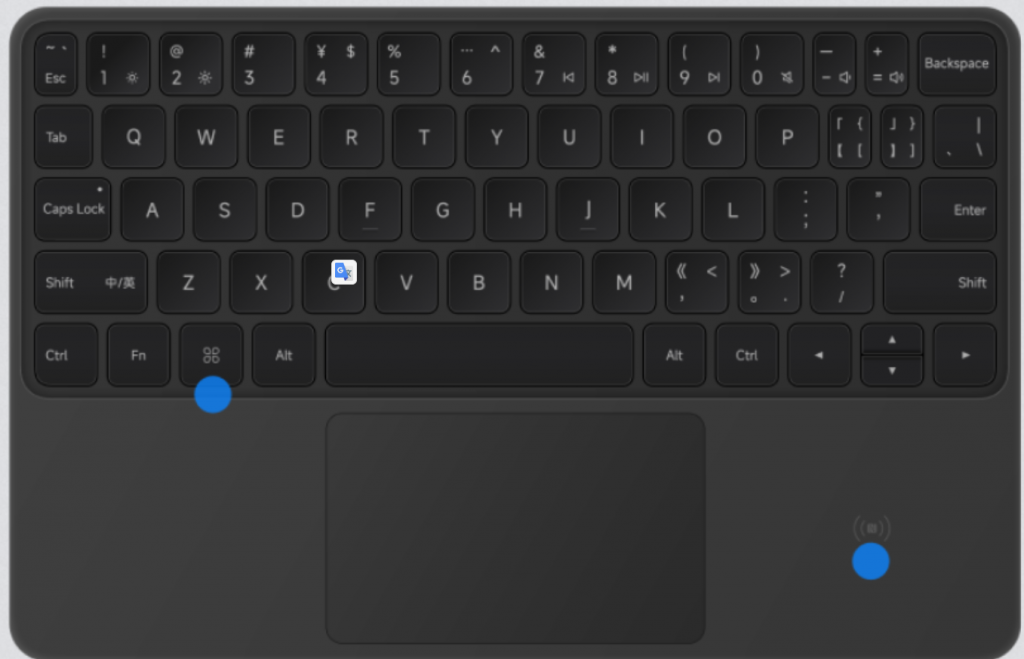
Xiaomi is gearing up to launch the Xiaomi Pad 6 lineup of tablets in the market. Xiaomi has launched some of the best tablets in the market, previously launched Xiaomi Pad 5 is one such example. Anyway, some past leaks confirm that the Pad 6 series will feature a design similar to its predecessor. Now, upcoming Xiaomi’s dedicated tablet keyboard has been leaked online. It could very well be a part of the Xiaomi Pad 6.
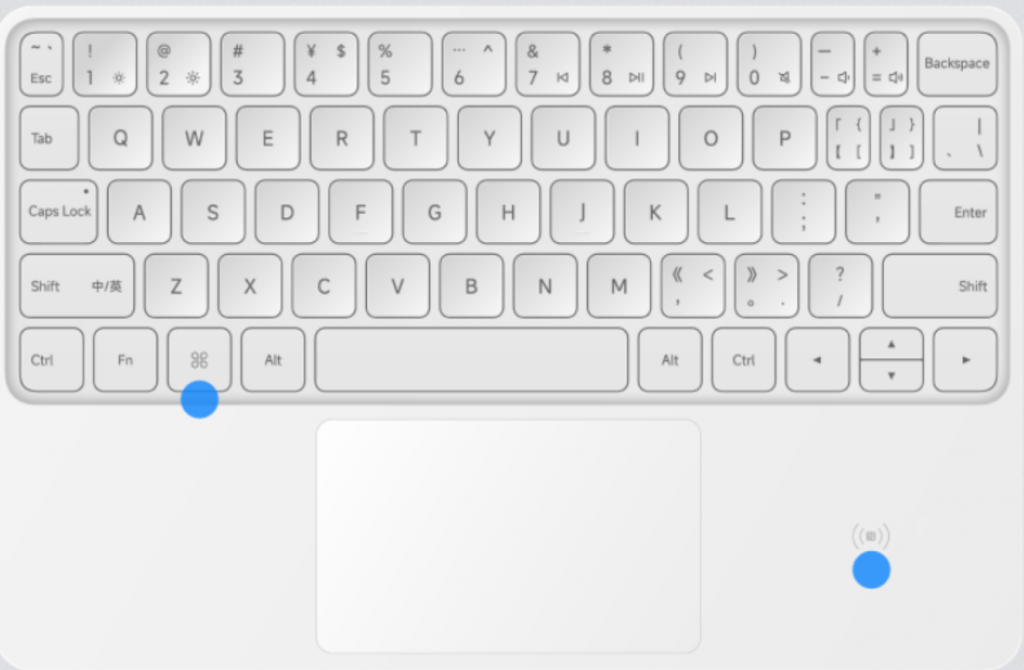
Known tipster Kacper Skrzypek on Twitter shared some images of the upcoming Xiaomi keyboard and also further claimed some of its features. According to the report, the tablet will be a part of the Xiaomi Pad 6 series, which means it will be compatible with the tablet. The keyboard is visible in black and blue colour combinations. The gadget adopts a completely straightforward design. Further, it comes with an NFC sensor, which could be used to share the screen of a smartphone and transfer different kinds of files.
The keyboard also comes with the support of a full-fledged touchpad, with the support of gesture controls such as swiping down three fingers to capture screenshots, swiping left and light to switch apps etc. Apart from this, we do not have much information to share regarding the gadget. We could soon get to hear some official announcements regarding the Xiaomi Pad 6 series of tablets in the upcoming days.
The upcoming premium tablets from Xiaomi will reportedly be powered by either a Dimensity 9000 or Snapdragon 8+ Gen 1 chipset from MediaTek, according to earlier reports. Contrary to the Snapdragon 860 found in the Xiaomi Pad 5, the Xiaomi Pad 6’s base model is anticipated to have a Snapdragon 870. So that was all for the post. Thanks for reading till the end. Do let us know your thoughts on this by dropping a comment down below.
Nintendo has announced that it has taken Mario Kart 8 and Splatoon offline due to security issues. The company posted a message on its website stating that urgent maintenance was required to fix a vulnerability related to online play. Nintendo has not yet provided an estimated time for when the network services will be restored. The company apologizes for any inconvenience caused by this situation.
According to Dataminer OatmealDome, the issue is “almost certainly” due to ENLBufferPwn. This exploit could allow an attacker to take control of a victim’s system by simply being matched with them in an online multiplayer game. It was previously found to be a problem in Mario Kart 7 on the 3DS and several other Switch games, including Mario Kart 8 Deluxe, Animal Crossing: New Horizons, Nintendo Switch Sports, Splatoon 2 and 3. However, Nintendo has already patched those titles to protect them against the exploit.
A video posted by YouTuber PabloMK7 showed ENLBufferPwn in action on Mario Kart 7. It allowed custom firmware to be inserted onto the targeted console, and it could have potentially been used to steal account or credit card information, as well as to record a victim using the 3DS’ mic and cameras.
Although it may disappoint those still playing the games on the discontinued Wii U system, it seems that Nintendo had little choice but to take the online features offline until the security issue is resolved. Nintendo takes its privacy issues quite seriously, and it doesn’t help that Mario Kart 8 was the biggest-selling game on the Wii U, with nearly 8.5 million copies sold. On the other hand, the original Splatoon sold almost 5 million copies.
The issue surfaced just a few weeks before March 27, as Nintendo is shutting down the Wii U and 3DS eShops. After that, owners of the systems will not be able to make purchases on the digital storefronts, but they will still be able to download titles they previously bought.
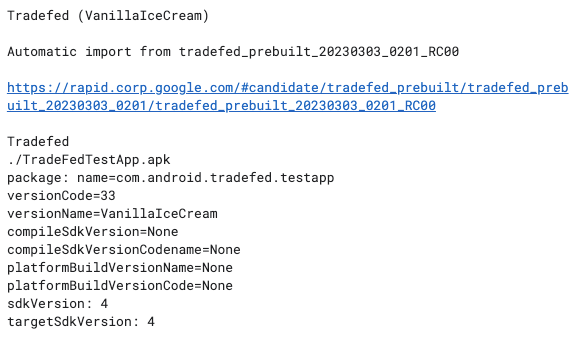
Google‘s upcoming Android update, codenamed “Vanilla Ice Cream”, has been revealed through a series of code changes in Android’s Trade Federation (Tradefed/TF), as reported by Mishaal Rahman tipped by TeamB58. While the dessert-themed codename has no significant meaning, it is a fun little tradition since the early days of Android.
Although there are no details about what to expect with the Android update set to arrive sometime in 2024, Rahman states that Google is always looking ahead and working on new enhancements and features. If these features don’t make it into the current build, there is always a chance that they might be pushed to a later update or not even make it into the OS at all. As such, Android users will have to wait and see what new features and enhancements “Vanilla Ice Cream” will bring.
The code changes in Tradefed indicate that Android’s testing framework has been updated with a new version that makes direct reference to Android 15’s codename. However, this does not give us much insight into what we can expect from the update.
As we eagerly anticipate ‘Vanilla Ice Cream’, we are just beginning to get a taste of Android 14‘s ‘Upside Down Cake’. The first preview for this update was released less than a month ago, and it includes features like scrolling screenshots, redesigned notifications, and improved privacy settings.
Overall, the reveal of ‘Vanilla Ice Cream’ is a reminder of Android’s tradition of using dessert-themed codenames for its updates, and it generates excitement among Android users who are curious about what new features and improvements the update will bring. With Android constantly working to improve its operating system, users can look forward to the future of mobile technology.
Foldable smartphones are gaining in popularity due to their unique design and innovative features. With the ability to fold in half, these phones give users a larger screen size that can easily fit into a pocket or purse when not in use. Additionally, foldable phones offer a degree of versatility that traditional smartphones do not, allowing users to use them in a variety of different ways. As more companies release foldable phone models and improve upon their design, it is likely that they will become even more popular in the coming years. Right now, however, it seems like Samsung has a strong hold over the foldables market, since the sales of its foldable smartphones were more than all other brands’ foldables combined.
According to a report by Steven Kiernan and Yongsub Eric Shin, the foldable smartphone market recorded an impressive 14.2 million total shipments in 2022. Samsung emerged as the clear leader, with just under 12 million foldable devices shipped. Other players in the market, such as Huawei, Oppo,Vivo, Xiaomi, and Honor, each shipped under 1 million foldable devices in the same period. However, despite the decline in shipments in Q4 2022, the foldable market seems to be in a relatively healthy place, especially considering the challenges faced by the smartphone industry as a whole in 2022.
Looking ahead, estimates suggest that foldable smartphone shipments will double in 2023, reaching an impressive 30 million. Samsung has set a shipment target of 15 million units for the Galaxy Z Fold 4 and Galaxy Z Flip 4 combined. The two aforementioned devices with high refresh rate displays, Snapdragon 8+ Gen SOCs, and amazing camera units. Samsung is looking to tighten its grip on the foldable smartphone market even further with the launch of the Galaxy Z Fold 5 and Galaxy Z Flip 5 later this year.
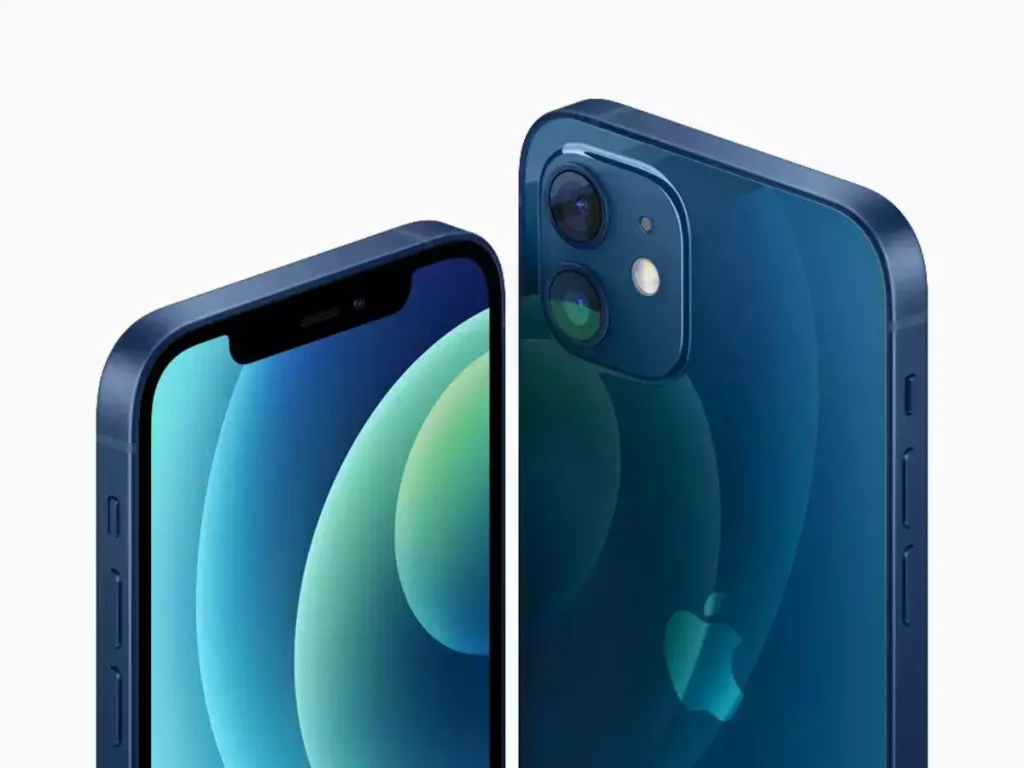
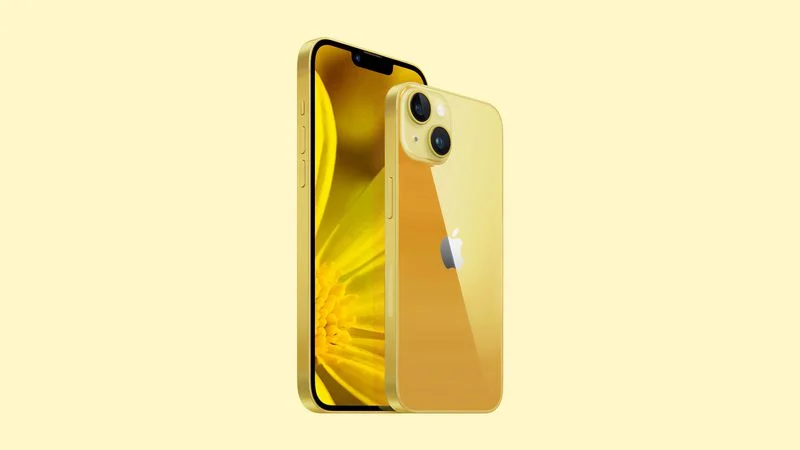
Apple fans may soon have a new color option for the iPhone 14 and iPhone 14 Plus. According to a recent Weibo post shared by the Japanese blog MacOtakara, the tech giant is planning to make the upcoming models available in yellow this spring.
While the Weibo account’s track record is unknown, MacRumors reported that multiple sources have confirmed Apple’s PR team is planning a product briefing next week, which could be related to the new iPhone color option or something else entirely.
Adding new color options mid-cycle has been a common tactic for Apple to boost sales and media attention. Last year, the company introduced new Green colors for the iPhone 13 series, and in April 2021, the iPhone 12 and iPhone 12 mini became available in Purple.
The current color options for the iPhone 14 and iPhone 14 Plus include Blue, Purple, Midnight (Black), Starlight (White/Silver), and Product Red, while the iPhone 14 Pro models come in Deep Purple, Gold, Silver, and Space Black. It’s unclear whether the Pro models will receive the yellow color option or if Apple will hold off on adding a new color for them. While some fans may be excited about a potential yellow iPhone 14, others may feel that the bright hue is better suited for only non-Pro models.
Apple’s next iPhone, the iPhone 15 Pro, is reportedly set to come in a new, deeper red color option. Unlike the bright “Product Red” color of previous models, this new shade is said to be darker and more subdued. Stay tuned for updates on this potential addition to Apple’s popular smartphone lineup.
High refresh rate gaming monitors have become increasingly popular among gamers in recent years. These monitors offer a smoother and more responsive gaming experience, allowing players to react faster to in-game actions. The refresh rate of a monitor is measured in Hertz (Hz) and refers to the number of times per second that the screen refreshes. While traditional monitors typically have a refresh rate of 60Hz, gaming monitors can have refresh rates of up to 360Hz or even 500Hz. Although 500Hz may sound a bit too much, Alienware is looking to lead the gaming monitors industry with the commercial launch of its new AW2524H 500Hz IPS monitor.
The Alienware AW2524H is not your average gaming monitor, boasting impressive technical specifications that make it a standout product in the market. With a native refresh rate of 480Hz, the monitor has been overclocked to an incredible 500Hz, offering a gameplay experience that is both fluid and responsive. Admittedly, the resolution is limited to 1080p, but this is a common constraint in high refresh rate screens due to bandwidth limitations. On the plus side, the anti-glare IPS screen will appeal to many gamers, delivering vivid colors and great viewing angles.
The Alienware AW2524H is equipped with a wide range of features. Customers get four 5Gbps USB-A ports, two standard 3.5mm audio-out jacks, a DisplayPort 1.4 connector, and two HDMI 2.1 ports – although it’s important to note that the HDMI connection is limited to 240Hz. Additionally, the monitor is certified with DisplayHDR 400, and comes with Nvidia‘s G-Sync and Reflex Analyzer tech, customizable RGB backlighting, and a convenient pull-out headset hanger.
The Alienware AW2524H is a niche product priced at just under $830, which isn’t exactly affordable but it could have been worse compared to other innovative gaming displays that can cost up to $3,500 like the Samsung Odyssey Ark. While the negligible response time difference between a 500Hz and other high refresh displays makes it unlikely for many gamers to gravitate towards the 500Hz gaming monitor, professional esports players might benefit from it. It’s noteworthy that while Alienware was the first to launch a 500Hz monitor, ASUS was the first company to announce a faster 540Hz version called the Asus ROG Swift Pro PG248QP, expected to launch in Q2 this year.
Electric vehicles (EVs) are becoming increasingly popular due to their lower environmental impact and technological advancements that have improved their performance and affordability. As concerns about climate change and air pollution have grown, many people are looking for more sustainable transportation options, and EVs have emerged as a viable solution. The battery technology that powers EVs has improved significantly, allowing for longer ranges and shorter charging times.
Turkey has recently imposed a 40% additional tariff on the imports of electric motor vehicles from China. This decision was made by the Turkish government and published in the country’s Official Gazette on Friday. The new tariff applies only to motor vehicles that have electric motors and are imported from China, making it clear that Turkey is trying to protect its domestic electric vehicle industry. The decision comes at a time when the global electric vehicle market is growing, and China has become a major player in the manufacturing of electric cars. However, this tariff is likely to make Chinese-made electric vehicles more expensive in the Turkish market, which could create an opportunity for local manufacturers to compete. The move could also be seen as an attempt to reduce Turkey’s trade deficit with China, which has been a concern for the government for some time. Overall, this decision is likely to have an impact on the Turkish electric vehicle market and could lead to changes in the competitive landscape of the industry.
Additionally, government incentives and regulations have made EVs more accessible and affordable to consumers worldwide. As a result, many car manufacturers have increased their EV production to meet the rising demand. With further technological advancements and increasing consumer interest, it’s likely that the popularity of electric vehicles will continue to rise in the coming years.
Xiaomi has been rolling out the latest Android 13-based MIUI 14 update to their bunch of devices in recent times. The brand had previously pushed out the update to the devices like Xiaomi 12 Pro, Xiaomi Mi 11 Lite 5G and Xiaomi 12X. More devices will soon get the update in the forthcoming days. Now, the Mi 11X and Mi 11X Pro smartphones have started receiving the latest Android 13-based MIUI 14 update in India. The users can now experience the taste of the latest MIUI on their devices.
The latest update includes a January 2023 patch for the Mi 11X and a February 2023 security patch for the Mi 11X Pro. Android 11 was pre-installed on the handsets when they first launched. The smartphones have received two significant updates, the most recent of which was just released. The device might get one more major update in the future. The MIUI 14 update’s build numbers are V14.0.2.0.TKKINXM for the Mi 11X Pro and V14.0.2.0.TKHINXM for the Mi 11X. A number of new features are added to the device with the MIUI 14 update, which also makes the device more fluid. The whole changelog for the update can be found below.
Highlights
MIUI uses less memory now and keeps being swift and responsive over much more extended periods.
Attention to detail redefines personalization and brings it to a new level.
Basic experience
MIUI uses less memory now and keeps being swift and responsive over much more extended periods.
Personalization
Attention to detail redefines personalization and brings it to a new level.
Super icons will give your Home screen a new look. (Update the Home screen and Themes to the latest version to be able to use Super icons.)
Home screen folders will highlight the apps you need most making them just one tap away from you.
More features and improvements
Search in Settings is now more advanced. With search history and categories in results, everything looks much crisper now.
System
Stable MIUI based on Android 13
Updated Android security patch to January 2023 (for Mi 11X) and February 2023 (for Mi 11X Pro). Increased System security.
Thanks to the updated MIUI 14, which is based on Android 13, the devices will now operate significantly more quickly, stably, and responsively. Moreover, users should receive additional home screen features as a result of this release. The system is far more straightforward, uses less memory, and is more efficient. In addition to being smoother and more power-efficient, the photonic engine architecture, system applications, and third-party apps are all completely accelerated. Our article is now complete. I appreciate you taking the time to read the whole thing.
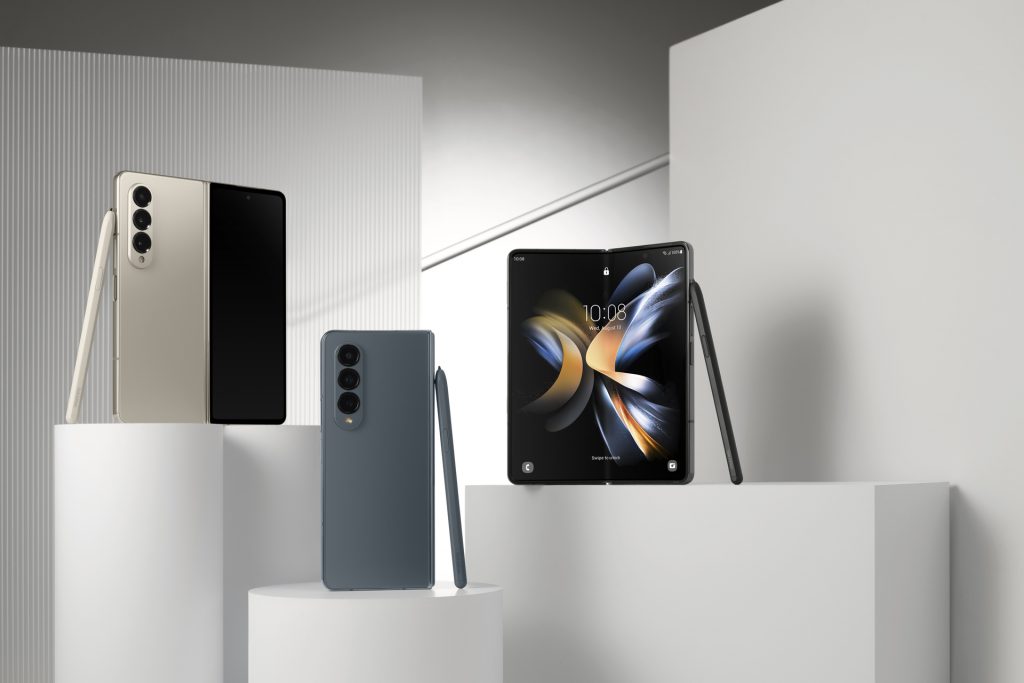
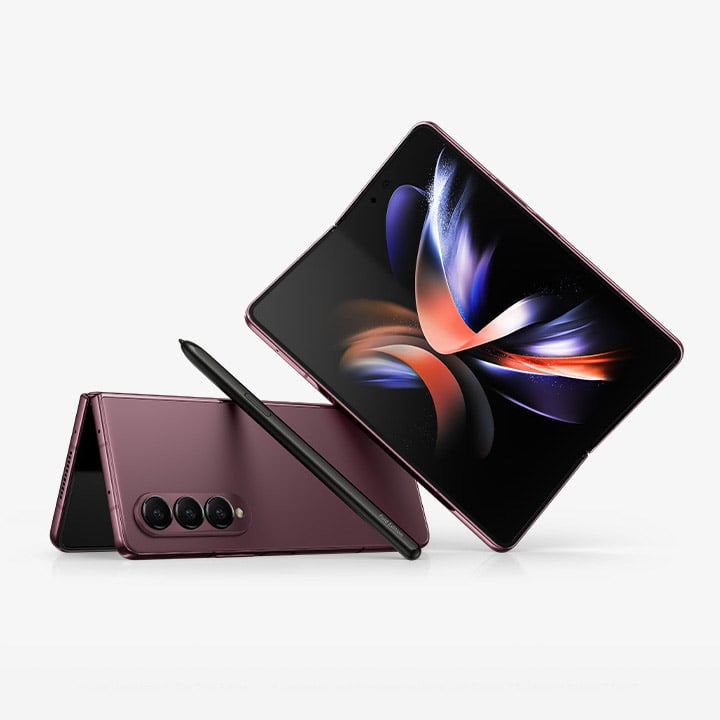
Samsung is reportedly testing a new hinge design for its upcoming Galaxy Z Fold 5 smartphone, set to be released in the first half of 2023. The new hinge, called the “waterdrop” hinge, flexes the screen inwards instead of folding it at a tight radius when the phone is closed. This design is said to offer multiple benefits, including a less noticeable crease on the display and no gap when the phone is folded.
Samsung Galaxy Z Fold4
One of the most significant advantages of this new hinge design is that it may allow the Galaxy Z Fold 5 to be thinner than its predecessor. The report claims that the phone will be 14mm or less in thickness, compared to the Galaxy Z Fold 4‘s maximum thickness of 15.8mm.
However, the report notes that Samsung’s fold tests are lagging behind some of its competitors. Oppo, for example, promises 400,000 folds on its Find N2 and Find N2 Flip phones, which is twice the amount that Samsung commits to. Nevertheless, Samsung aims to retain nearly 85% of the initial strength of the phone after 200,000 folds.
Samsung’s new hinge design is currently in the “final” testing stage, with the company expected to finalize the design once testing is completed. The company will also test the reliability of the new hinge and display panel by folding the phone between 200,000 and 300,000 times.
Overall, Samsung’s improved hinge design for the Galaxy Z Fold 5 shows its continued commitment to innovation in the foldable smartphone market. As more companies release their own foldable devices, Samsung will need to continue pushing the boundaries to stay ahead of the competition.
According to recent reports, Samsung’s upcoming Galaxy Z Fold 5 will feature a new Qualcomm Snapdragon 985 5G processor, based on a 4nm process node. The Galaxy Z Fold 5 is likely to arrive in 256GB, 512GB, and 1TB storage variants, and feature a triple camera unit and a 12-megapixel front-facing camera.
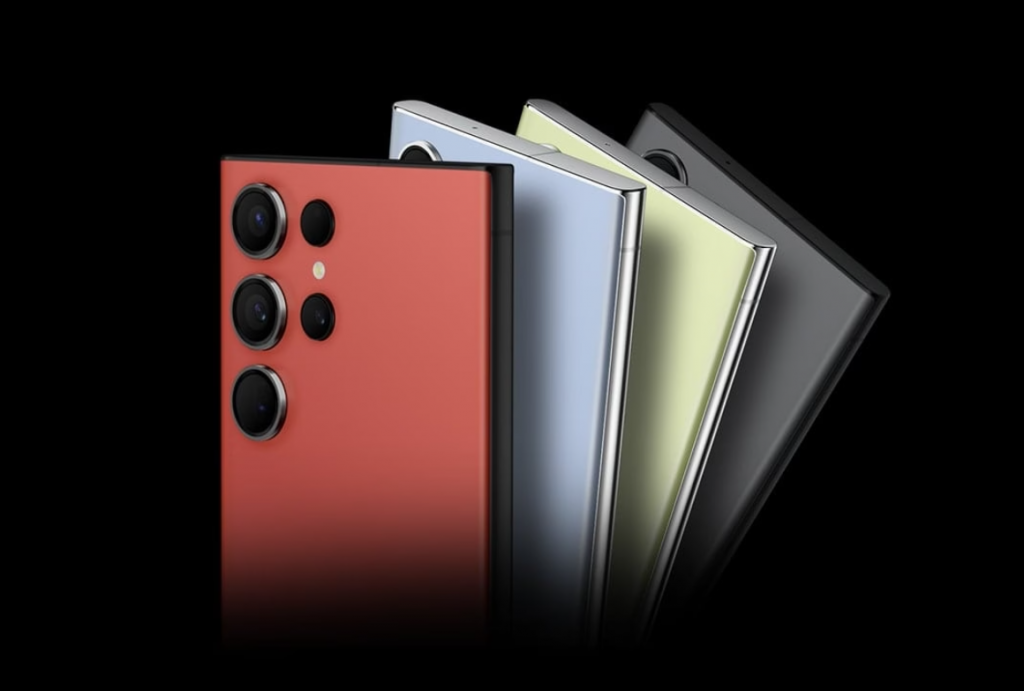
The Samsung Galaxy S23 Ultra is the latest top-of-the-line flagship from the Korean tech giant Samsung. Users of the Galaxy S23 Ultra have previously reported some issues, such as difficulties connecting the device to Android Auto. After the newest One UI 5.1 upgrade, certain older Galaxy handsets experienced significant battery drain problems. Nevertheless, a new issue with the S-Pen connection with the Galaxy S23 Ultra has begun to surface on the internet.
The Galaxy S23 Ultra includes an S-Pen stylus, which allows users to draw, write, and manage their devices with more precision and control. It’s a must-have for anyone who needs to take notes, draw sketches, or do other chores that demand more accurate input than a finger touch. However, some customers have reported that the S-Pen intermittently disconnects from the smartphone, rendering it useless.
Users of the Galaxy S23 Ultra have suggested a few fixes, one of which is resetting the S Pen. Users must open the “Advanced Features” menu in the Settings app to access S Pen options, then hit the three-dot button to reset. The “Keep S Pen connected” option, which is by default disabled to conserve battery life whenever the S Pen is inactive for an extended period of time, is another potential solution to this problem. Users must open the Settings app, go to “Advanced features,” select “S Pen,” then “Additional S Pen Settings” to enable this function.
There are currently no official statements on the issue, and the brand has not yet acknowledged the problem. I strongly hope that the company will take care of the problem and make a patch available as soon as possible. Most users won’t have a problem with this, but those who use the S-Pen frequently might become frustrated. Future upgrades from the company could resolve the problem. That concludes our post on the subject. Please share your thoughts on this by leaving a comment below in your own words.
We use cookies on our website to give you the most relevant experience by remembering your preferences and repeat visits. By clicking “Accept”, you consent to the use of ALL the cookies.
This website uses cookies to improve your experience while you navigate through the website. Out of these, the cookies that are categorized as necessary are stored on your browser as they are essential for the working of basic functionalities of the website. We also use third-party cookies that help us analyze and understand how you use this website. These cookies will be stored in your browser only with your consent. You also have the option to opt-out of these cookies. But opting out of some of these cookies may affect your browsing experience.
Necessary cookies are absolutely essential for the website to function properly. This category only includes cookies that ensures basic functionalities and security features of the website. These cookies do not store any personal information.
Any cookies that may not be particularly necessary for the website to function and is used specifically to collect user personal data via analytics, ads, other embedded contents are termed as non-necessary cookies. It is mandatory to procure user consent prior to running these cookies on your website.