SpaceX President and COO Gwynne Shotwell, has announced that the company is all set to conduct a full static fire test on its Starship Launch Vehicle. The test will happen on 9 February and will be the first attempt at the static-fire test of all 33 engines in the Starship booster.
The Static fire test is one of the most essential parts of the final stage of technical tests conducted on the starship and is the last ground test to be conducted on the heavy-lift launch vehicle.
source: SpaceX
What is Static Fire Test?
A static fire test is a type of launch vehicle system test that helps to assess the readiness of the vehicle to reach orbit. In this test, the launch vehicle engines are filled with fuel and fired at full thrust. The vehicle is secured to the launch pad and only the engines are tested at their full capacity while the launch vehicle is clamped to the pad.
The SpaceX Starship is a launch vehicle designed to carry people and cargo to Moon, Mars, and beyond. The vehicle has a first-stage massive booster called Super Heavy and a 165-foot tall second-stage spacecraft named Starship.
The Super Heavy booster will be powered by 33 raptor engines which will be tested today at full capacity. This is a new milestone for SpaceX as it has never ignited more than 14 of its raptor engines simultaneously.
The Raptor is a group of staged combustion cycle engines, specially designed by SpaceX for Starship. The engines are fueled by cryogenic liquid methane and liquid oxygen and are more powerful than the Merlin 1D rocket engines, used in the Falcon Heavy Launch Vehicles.
Today’s static fire test is another step toward SpaceX CEO Elon Musks‘ goal of sending humans to Mars and building an interplanetary civilization. On successful completion of the static fire test, the company can get the launch license from the U.S. Federal Aviation Administration and send Starship to Orbit as early as next month.
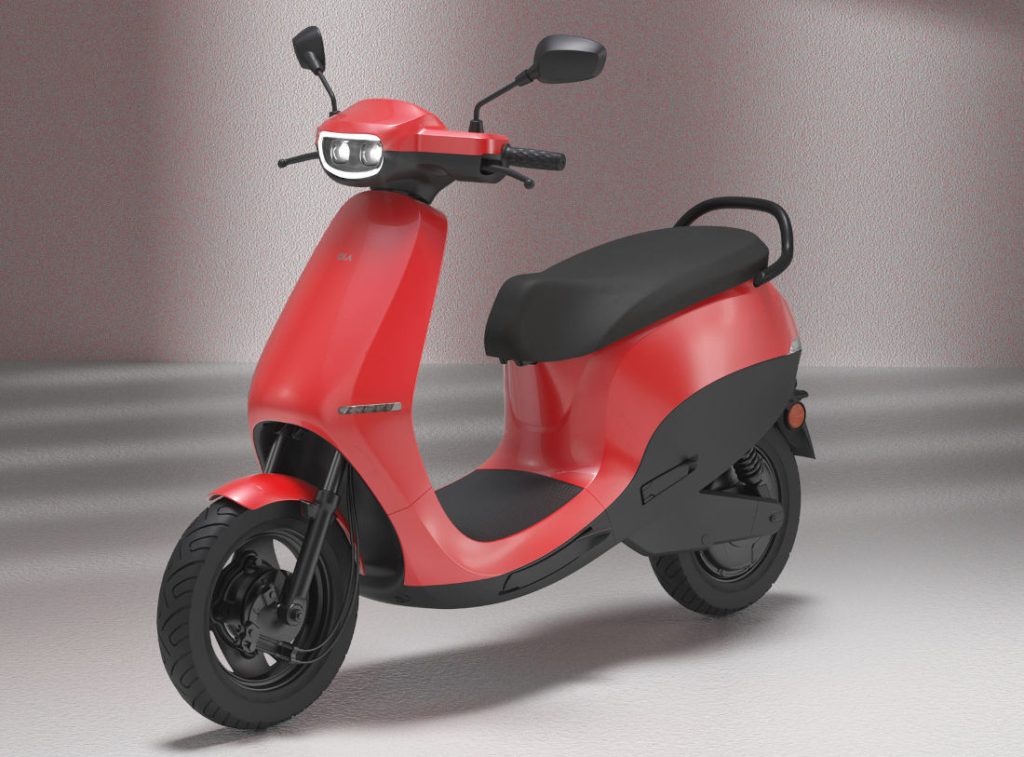
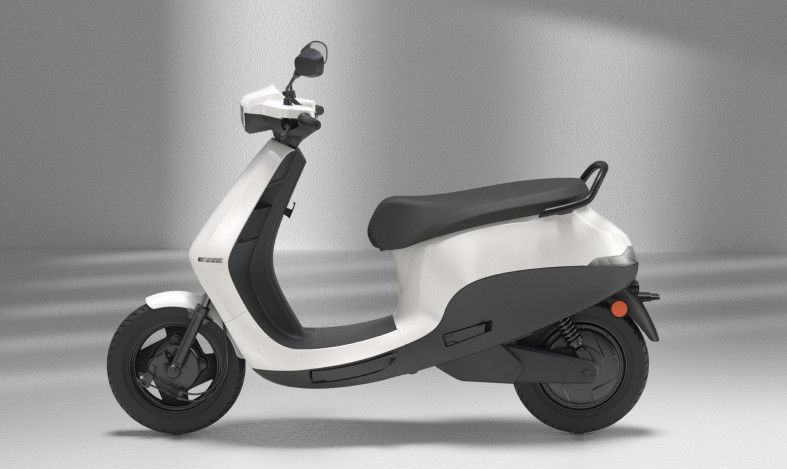
Indian electric scooter manufacturer Ola has garnered a solid reputation for its affordable e-scooters, especially the S1 models. However, the brand’s successes as not been without controversies. After announcing the e-scooters, delays in shipment, software glitches and build quality issues were among the challenges the company had to grapple with. Nonetheless, the Ola S1 series has been a success and it is no surprise that the company has just announced a new model – the Ola S1 Air.
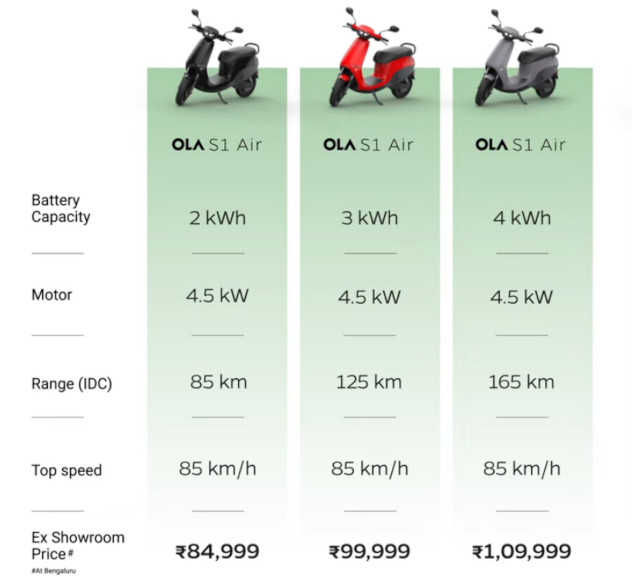
The Ola S1 Air isn’t entirely a new line as the company unveiled the first model in October 2022. However, these new models bring several power options and other tweaks. The new Ola S1 Air electric scooter is available in three models. There is a 3kWh model, a 2KWh model, and a 4kWh model. This has further increased the options best suited to the buyer’s pocket.
The 3kWh model has a range of 125 km per charge, which is significantly more than the 2kWh model and should be sufficient for most daily commutes and errands. Meanwhile, the top-end 4kWh model offers an impressive 165 km range per charge, making it a great option for those who need to travel longer distances without worrying about running out of power.
The Ola S1 Air also packs a number of features that make it stand out from other e-scooters in the same price category. It utilizes a 7-inch TFT touchscreen display that gives users access to all the scooter’s functions. It also comes with support for 4G connectivity, Wi-Fi, and Bluetooth, making it easy to stay connected while on the go. The system is powered by an Octa-core processor backed by 3GB of RAM that ensures that the scooter runs smoothly and efficiently. The scooter models also have 34L buddy space under their seats.
The design is similar to that of the S1 and S1 Pro. The S1 Air has a lightweight design, which makes it easier to handle and maneuver than some other electric scooters in the same category. The front telescopic fork and rear twin suspension provide a comfortable and stable ride. The scooter utilizes drum brakes instead of disc brakes on both the front and rear tires which may be a drawback for some customers.
As far as pricing goes, the Ola S1 Air starts at Rs. 84,999 ($1,029) for the 2kWh model which is pretty cheap. The 3kWh model is priced at Rs. 99,999 ($1,211) while the top-end 4kWh model is priced at Rs. 109999 ($1,332). Overall, the scooters are available in five stylish color options – Neo Mint, Jet Black, Coral Glam, Porcelain White, and Liquid Silver.
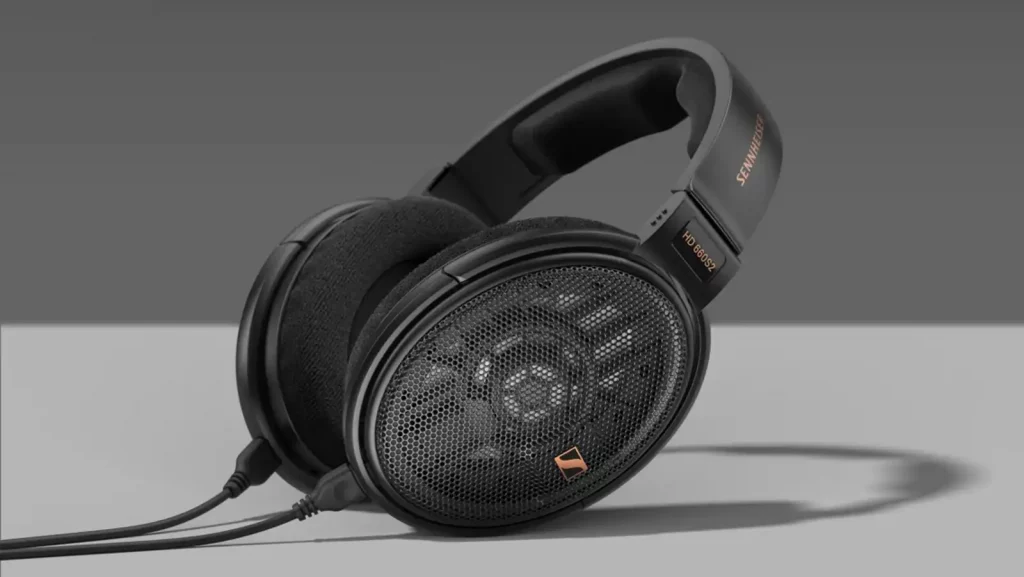
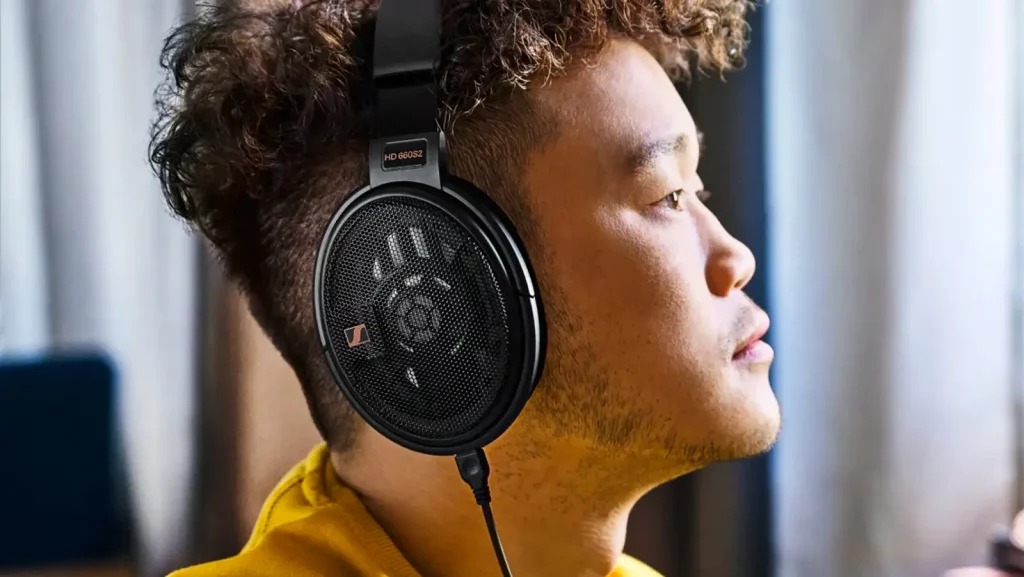
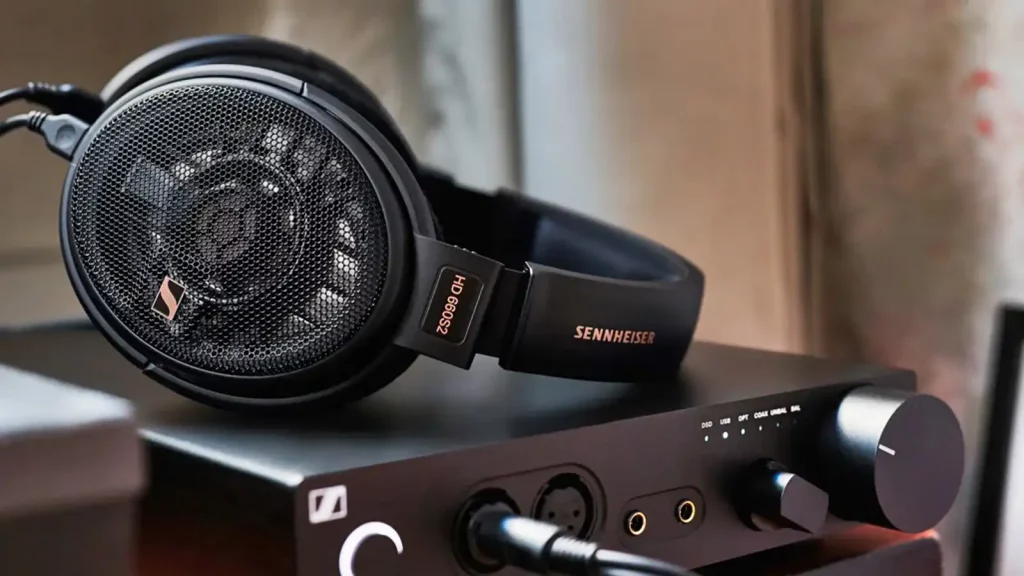
The Sennheiser HD 660S2 Headphones have been unveiled. The new headphones come with a bigger price tag than Apple’s AirPods Max. This is even more outstanding because the HD 660S2 comes without ANC or wireless functionality.
The Sennheiser 600 series has been a leading product among audio enthusiasts who require a pair of solid cans. The series has gone through several iterations during the 25 years since it debuted. The new HD 660S2 offers excellent sound improvements from its predecessors and comes with a solid build.
The original Sennheiser HD 600 model was priced at $450 when it was released in 1997. That price tag translates to about $850 today and the new model is pretty still affordable. Sennheiser says the revised 300-ohm transducers help to lower the resonant frequency down to 70Hz for hefty kick drums in the headphones.
All the models in the Sennheiser 600 series are open-back headphones that allow some degree of noise interference. The HD 660S2 is designed to leak sound to improve its performance. The HD 660S2 lacks active noise cancellation, so is useful only in quiet environments. They can be terrible when used in the office or in public places. The open-back design also implies that incorporating noise cancellation is not feasible.
The headphones have a pair of 5.8ft swappable cables with 0.25-inch and 4.4mm stereo plugs. The headphones can also be connected with an amp using its 1/8-inch adapter. Connection to an amp helps the user to have the full complement of the device’s capabilities.
The Sennheiser HD 660S2 is designed for those folks who want to enjoy hi-res audio to the fullest without paying a premium amount for it. It does not have any app support and the user is guaranteed unbridled sound output. The headphones could be pre-ordered directly from Sehneisser at $400.
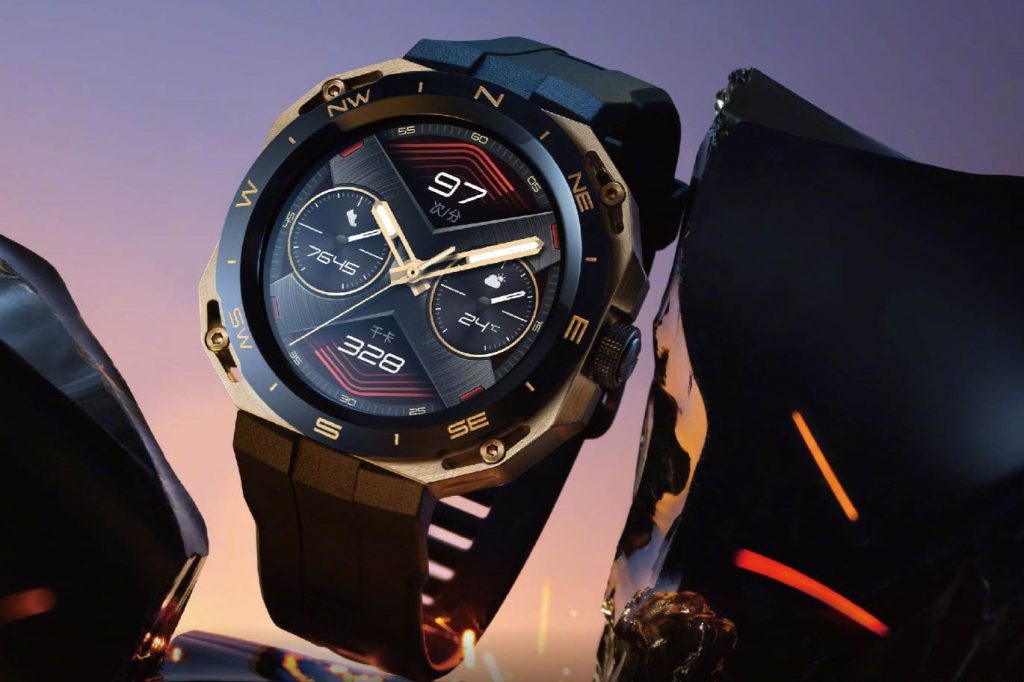
Back in November 2022, Huawei unveiled a rather unusual smartwatch called Watch GT Cyber in its home country China. The wearable has a unique detachable design that allows users to switch between different straps and cases. Today, the company released the smartwatch in the international market for the first time. Here are its specifications and pricing.
As mentioned, Huawei Watch GT Cyber is an interesting smartwatch. Its face detaches from its casing and strap, allowing wearers to swap different combinations. It is offered in three types of cases, namely Sports, Fashion, and Urban Explorer. The watch is MIL-STD-certified, meaning it can withstand extreme temperature, moisture, dust, and shock.
The smartwatch comes with a 1.32-inch circular AMOLED display with a resolution of 466 x 466 pixels. On the software front, it runs OpenHarmony-based software with support for over 100 sports modes, sleep tracking, heart rate monitoring, blood oxygen level monitoring, stress monitoring, menstrual cycle tracking, and more. The wearable has a built-in GPS and NFC for contactless payments. Other notable features include music playback, Bluetooth calling, and a voice assistant.
The Huawei Watch GT Cyber is compatible with smartphones running at least HarmonyOS 2, Android 6.0, and iOS 9.0. The watch comes with 5ATM water-resistant watch and is backed by a 292mAh battery. It charges wirelessly and can last seven days of usage.
As of writing this, the smartwatch is only available in Mexico. It can be pre-ordered in the country with a MEX$ 100 ($5) deposit. Customers pre-ordering will get the Watch GT Cyber for a discounted price of MEX$ 3,699 ($196). Its original price will be MEX$ 3,999 ($212). Huawei may soon bring the smartwatch to other markets. We’ll keep you posted.
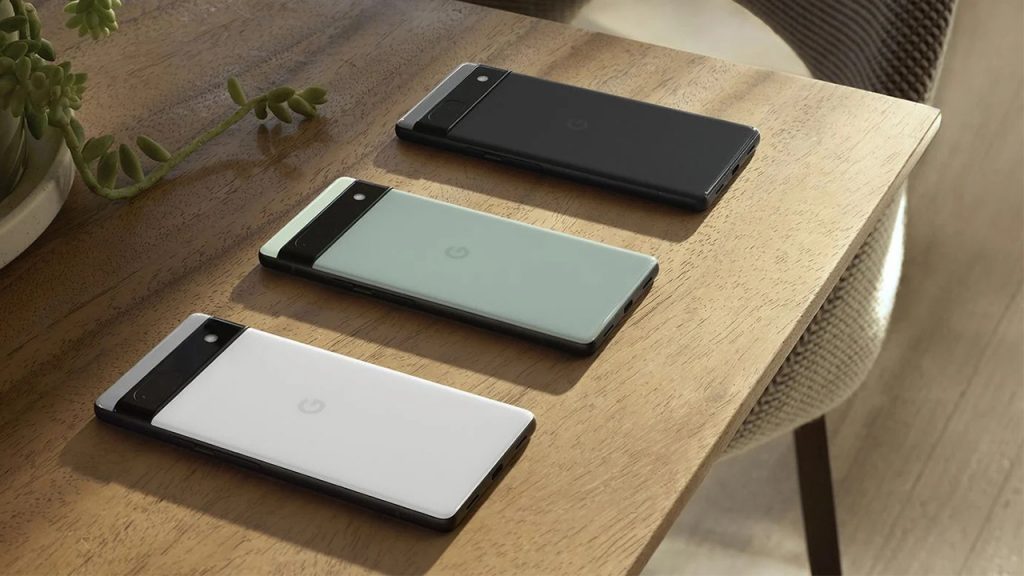
Google Pixel 6a is one of the best budget-friendly smartphones available in the market. It offers unbeatable value for money, with its powerful processor, high-quality display, and ample storage capacity. The latest price drop has only made it more appealing to consumers, as it brings down the cost to just $299.
Google Pixel 6a gets another price drop, bringing it down to $299
The Google Pixel 6a is powered by Google’s Tensor processor, which provides an edge over its competition. The 6.1-inch AMOLED display runs at 60Hz, offering a smooth and vivid visual experience. Additionally, the device has 6GB of RAM and 128GB of internal storage, making it an excellent choice for multitasking and storage-intensive applications.
The camera capabilities of the Pixel 6a are also impressive, with a dual-camera setup that includes a 12MP main camera and a 12MP ultrawide lens. The 4,303mAh battery can easily last a full day of use, ensuring you are never left without power.
Software is one of the strongest selling points of the Pixel 6a, with Android 12 pre-installed, and support for up to three OS updates. This means that users can enjoy the latest software releases, including security updates, for several years to come. In addition, tech-savvy users can even install early versions of Android, such as the Android 14 Developer Preview.
If you’re looking for an affordable smartphone that offers high-quality features, performance, and software updates, the Google Pixel 6a is the perfect choice. With the latest price drop, there has never been a better time to purchase this exceptional device. Hurry, grab your hands on this smartphone before the discount ends.
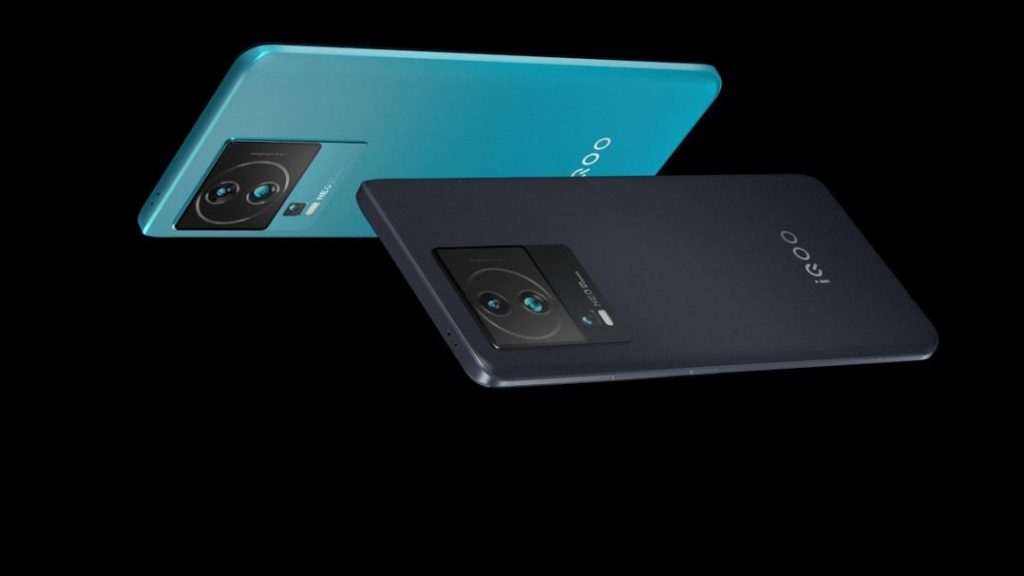
iQOO is ready to launch the new Neo 7 in India on February 16 with a powerful Dimensity 8200 processor. A recent leak revealed the SoC offers significant performance improvements over its predecessor— Dimensity 8100. While we are still more than a week away from iQOO Neo 7’s formal debut, a tipster has shared its pricing for India as well as the storage and color options. Here are the details.
iQOO Neo 7 will be a mid-range offering, just like last year’s Neo 6. Tipster Paras Guglani says the upcoming smartphone will be available in India in two storage configurations— A base model with 8GB RAM and 128GB storage and higher-end trim with 12GB RAM and 256GB onboard storage. Interested shoppers may be able to choose from Interstellar Black and Frost Blue color options.
As for the pricing, Guglani claims the 12GB version of the iQOO Neo 7 will cost Indian buyers around Rs 34,999. We believe the pricing is fairly competitive as the Neo 6 came with a price tag of Rs 33,999 (for the 12GB trim). To make the deal sweeter, iQOO is said to offer up to Rs. 4000 cashback (Bank offers and Exchange included).
Further, the handset is reported to go on sale in India on February 19 or 20. It should be available for purchase through Amazon, iQOO e-store, and Vivo’s offline stores as well. The Neo 7 is expected to be a rebranded iQOO Neo 7 SE. It will likely pack a 6.78-inch AMOLED E5 display with a Full HD+ resolution, a 120Hz refresh rate, and an under-display fingerprint sensor.
Powered by the Dimensity 8200 SoC, the smartphone could come with a 3D cooling system and 120W fast charging. There may be an OIS-enabled triple-camera unit on the back of the device.
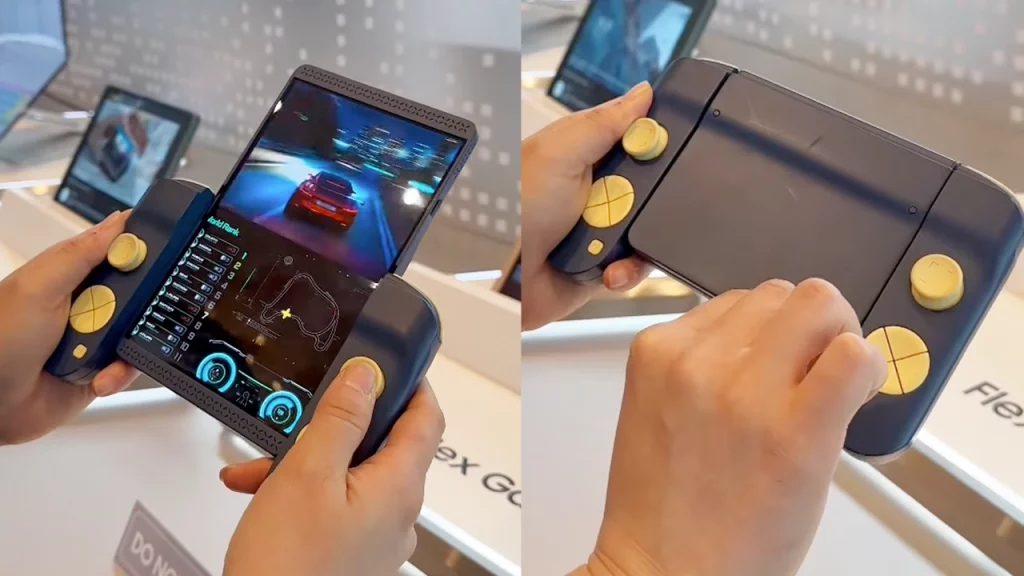
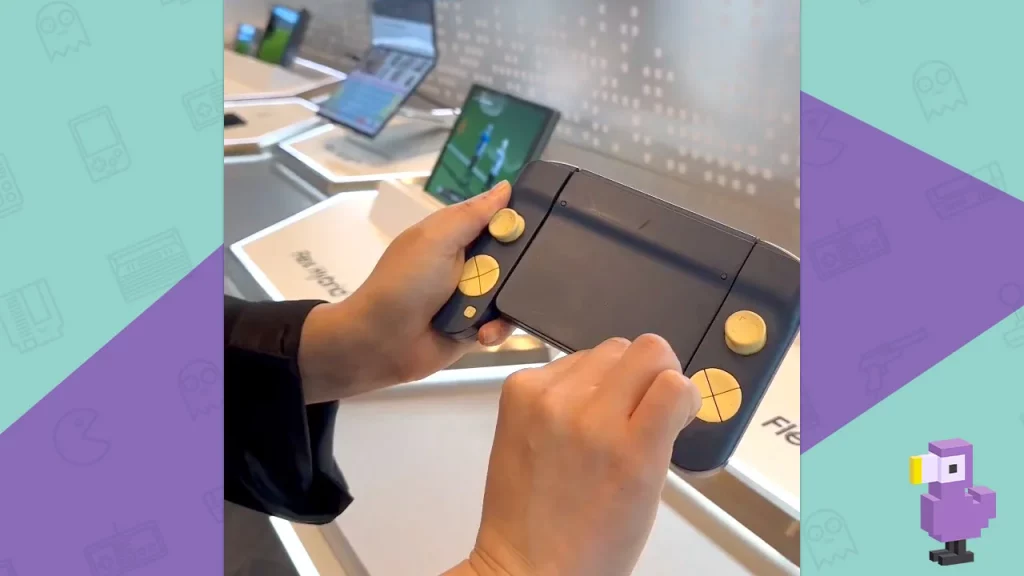
At the recently concluded CES 2023 event held in Las Vegas, Samsung announced a number of products ranging from smart home gadgets to smart TVs and monitors. The Korean tech giant seems to have announced a concept gaming device that slipped through the cracks. The Samsung Flex Gaming handheld, as it is called, is a new handheld Android gaming device prototype. The device was captured in a short video by a tech and gaming reviewer and shows a female staff member demonstrating the folding screen and fitted controller peripheral. The screen displayed a looped video of a racing game, but the device was not actually being played.
The Samsung Flex Gaming seems to adopt a tablet-like design with a custom controller peripheral, similar to the Razer Edge. However, the controller seems to be much more integrated with the device, leading to speculation that it could be a single unit. The device’s folding screen technology is in line with Samsung’s focus on folding displays, as they have recently released the Samsung Flex Hybrid, a large folding tablet with unique moving parts.
With the rise of Android gaming, it’s not surprising to see Samsung entering the handheld gaming market. Samsung has a reputation for pushing the boundaries with their cell phones and tablets, and the Samsung Flex Gaming could be another example of their innovative approach.
However, it’s important to keep in mind that prototypes may not end up making it to the market. It remains to be seen if Samsung will announce the Flex Gaming as a commercial product.
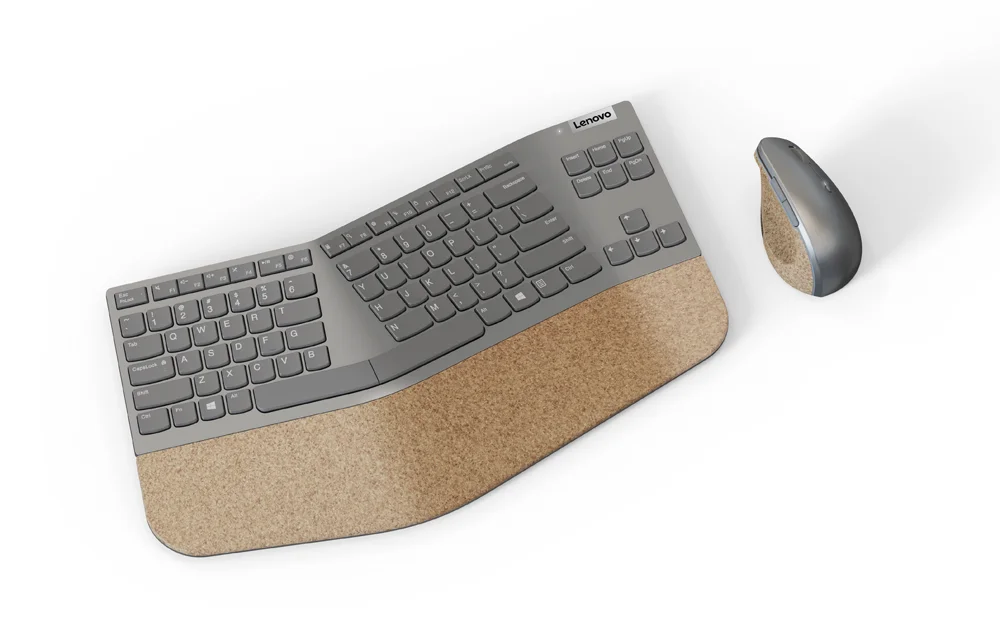
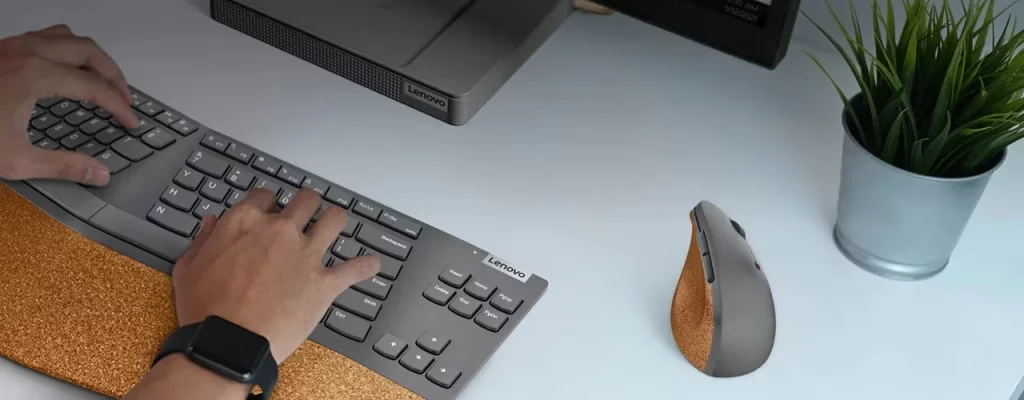
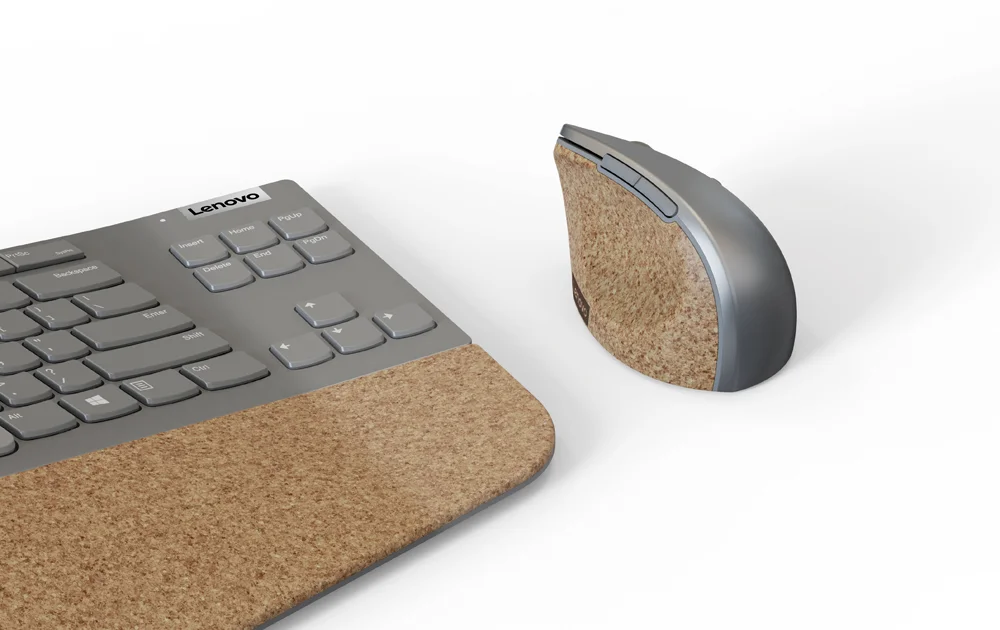
Lenovo has released a new set of ergonomic accessories inspired by the human form. The Lenovo Go Wireless Split Keyboard and Lenovo Go Vertical Mouse have an ergonomic design. The new accessories were created by Lenovo’s Design Innovation Team with a focus on comfortable use. Both accessories are designed to ease pressure on the muscles and joints.
The Lenovo Ergonomic Set (comprising the keyboard and mouse) is engineered for maximum end-user comfort and enhanced productivity. Both accessories have been awarded the 2022 Good Design Award. The Lenovo Go Wireless Split Keyboard has an island-style key at 13 degrees projection and promotes a straight wrist during use. It offers relief from the pressure on your wrist joints, unlike regular keyboards. The tilting of the key zone enables the arm muscles to be at a more relaxed natural angle.
The Lenovo Wireless Split Keyboard has a front end that can be raised by 4 degrees higher than its rear. This design which is a departure from the regular keyboards, will enhance the writing experience and prevent wrist strain/ carpal tunnel syndrome. The negative tilt riser can be detached from the keyboard. It is useful when typing on a lower surface or when standing. The home and arrow keys are also positioned for easy reach when typing.
The Lenovo Go Wireless Vertical Mouse helps to reduce the stress on hands laid flat on tables for long periods. It replicates the natural handshake position with a 45-degree palm grip for better control and reduced muscle strain. The design promotes the use of the larger arm muscles and reduces the possibility of pronation. The design of the Go Wireless Vertical Mouse also reduces the likelihood of carpal tunnel syndrome. The angle and curvature of the mouse make it very comfortable to use.
There are no release details yet for the Lenovo Go Wireless Split Keyboard and Lenovo Vertical Mouse. Their innovative design puts both accessories in a great position to be well-received in the market.
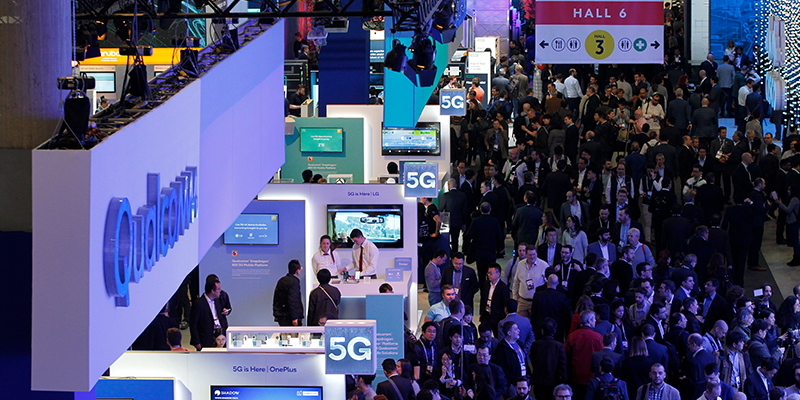
The number of digital events is increasing day by day. Today, many brands prefer to announce their new products to the entire world simultaneously in a virtual environment. However, events where all the big tech brands come together still exist. One of the largest of these is the Mobile World Congress (MWC). The show witnesses the launch of many smartphones, smartwatches, tablets, and other new technologies. So when is MWC 2023 and what can we expect from this event? Here’s everything we know…
When is Mobile World Congress?
The Mobile World Congress, which begins in the last week of February every year, will continue this tradition in 2023. It is organized by the GSMA and will take place in Barcelona, Spain from Monday, February 27th to Thursday, March 2nd. The media launches will occur on the preceding days, February 25th and 26th, giving us a few days of rapid announcements.
Xiaomi at MWC 2023
Xiaomi is one of the first brands that comes to mind when it comes to technology and will attend MWC 2023, along with many of its competitors. The company, which recently introduced the Xiaomi 13 series, is allegedly going to appear in Barcelona with the Xiaomi 13 Ultra model. This could be a flagship Snapdragon-powered phone with a Leica camera. A date of February 26th has been confirmed by the company’s founder and CEO, Lei Jun. However, companies often announce their products prior to the event, so it’s possible we will see the product being promoted a few days before the event.
Oppo at MWC 2023
Oppo, one of the world’s largest smartphone manufacturers, will attend MWC 2023. The biggest surprise from the company is expected to be the Oppo Find X6. There are also rumours of the Oppo Pad 2, as well as the folding Oppo Find N2 Flip so there could be a lot to come. The Find N2 Flip was recently introduced in China and received high praise. Also the company is expected to present various models and technologies to its users.
Samsung at MWC 2023
Samsung introduced new laptop models at last year’s Mobile World Congress 2022. However, Galaxy Unpacked has already given us the Galaxy S23 family and the Galaxy Book 3 Pro series. We’re not sure if there will be any major announcements from Samsung at MWC. In any case, the South Korean tech giant will probably show something in MWC 2023.
Realme at MWC 2023
Realme, which was established to compete with Redmi just a few years ago, is now an important player in the smartphone market. The company announced the international launch of the Realme GT 2 and GT 2 Pro during MWC 2022, but the launch of the Realme GT Neo 5 is expected on February 9th. Therefore, it’s possible that there will either be a simple demonstration or no demonstration at all.
Huaweiat MWC 2023
Huawei is facing difficulties in the smartphone market due to the US embargo, but that doesn’t mean the company will stop experimenting and producing cutting-edge products. Huawei is said to have big plans for MWC 2023 and is reportedly planning to have a massive presence at the show. So, what might it launch? We might see the company’s next-gen folding phone, the Huawei Mate X3, which is rumored to have satellite communication functions. There are also rumors of the Huawei P60 and the Huawei Mate 60, but none of these have been confirmed yet.
Nokiaat MWC 2023
The legendary Nokia will be one of the companies present at MWC 2023. However, don’t let this presence raise your expectations too much. Unfortunately, the brand is far from the level of influence it once had. Today, it only offers entry-level and updated versions of classic models. This is probably what we will see when we visit the Nokia booth at the event.
Honorat MWC 2023
Honor, which was once associated with Huawei when it comes to MWC, will be appearing as an independent brand this year. The company has big plans for MWC 2023. Honor has confirmed that it will be launching the Honor Magic 5 series and giving the Magic Vs a global launch. Additionally, for the first time, the company will be showcasing some surprise products that we don’t yet know about.
Googleat MWC 2023
Google holds an important place in the world of mobile technology, both as the developer of Android and as a producer of its own phones. However, the company promotes its products at an event it organizes, similar to Apple. This event, known as Google I/O, is used to showcase both Android and new products. For this reason, the US technology giant is not expected to have a significant presence at MWC 2023.
OnePlusat MWC 2023
OnePlus, once known as the “flagship killer,” is no longer as competitive when it comes to pricing. However, the company still produces successful smartphones. A few days ago, OnePlus announced the OnePlus 11 and other devices. But the company has promised to showcase a new OnePlus Concept at the event. There are also rumors of a foldable OnePlus model, but we will have to wait until MWC 2023 for any developments.
Motorolaat MWC 2023
Another phone manufacturer that lives in the shadow of its past is undoubtedly Motorola. The company, once at the top, now operates under the umbrella of Lenovo. It is known that Lenovo will introduce many new products at MWC 2023. Therefore, Motorola is likely to follow a similar strategy. The Motorola Edge 40 is probably one of them.
Tecnoat MWC 2023
Tecno, a relatively new smartphone manufacturer, has become one of the fastest-growing debut brands of 2022 with its regional products and marketing strategies. The company has announced that it will launch its latest flagship model under the Phantom series at MWC 2023. At the Tecno booth, new models from the company’s smartphone series, such as Phantom, Camon, Spark, and Pova, will be presented.
vivoat MWC 2023
Vivo continues to grow in popularity among smartphone manufacturers. Although the company offers products across a range of prices, from low to high, it has established a reputation for its entry-level and mid-range models. Unfortunately, we do not have information on Vivo’s plans for MWC 2023, but we expect an announcement to come soon.
MediaTek at MWC 2023
MediaTek enables nearly 2 billion connected devices a year. The company is the market leader in developing innovative systems-on-chip (SoC) for mobile device, home entertainment, connectivity and IoT products. The company, which is expected to have a technology-focused event, will introduce highly power-efficient mobile technologies, automotive solutions and a broad range of advanced multimedia products such as smartphones, tablets, digital televisions, 5G, Voice Assistant Devices (VAD) and wearables.
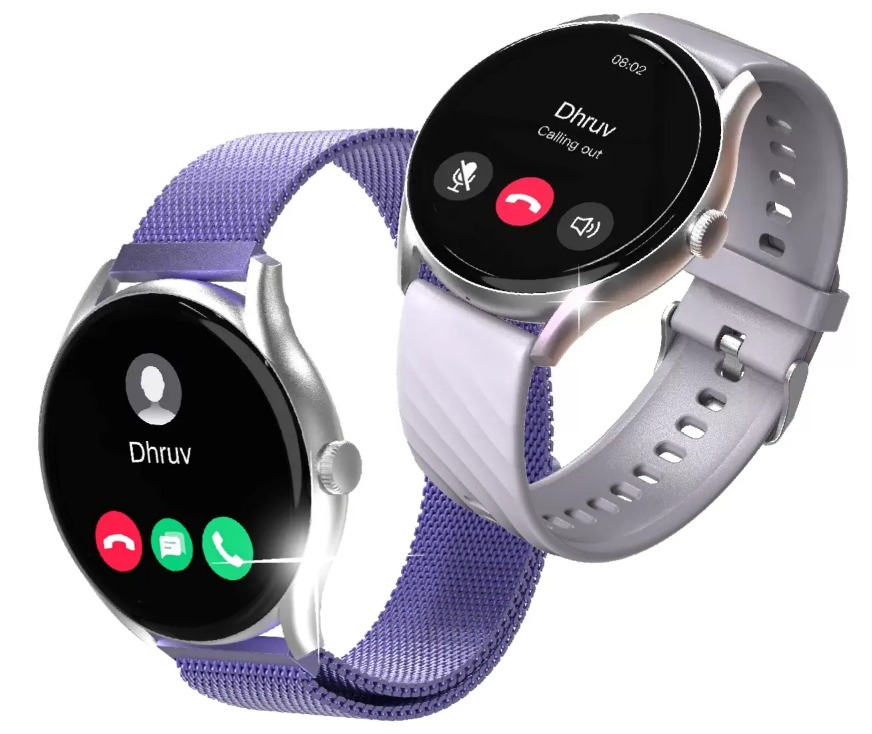
Indian smartwatch manufacturer Fitshot has launched a wearable device for the Indian market dubbed Fitshot Aster. The new smartwatch packs a number of features including fitness tracking, health monitoring, and Bluetooth calling capabilities combined with a compact and stylish design.
In terms of design, the Fitshot Aster comes with a large 1.43-inch circular AMOLED display. The display has a resolution of 466 x 466 pixels, a peak brightness of 1000 nits, and supports a 60Hz refresh rate. On the software side, the smartwatch comes with over 100 watch faces.
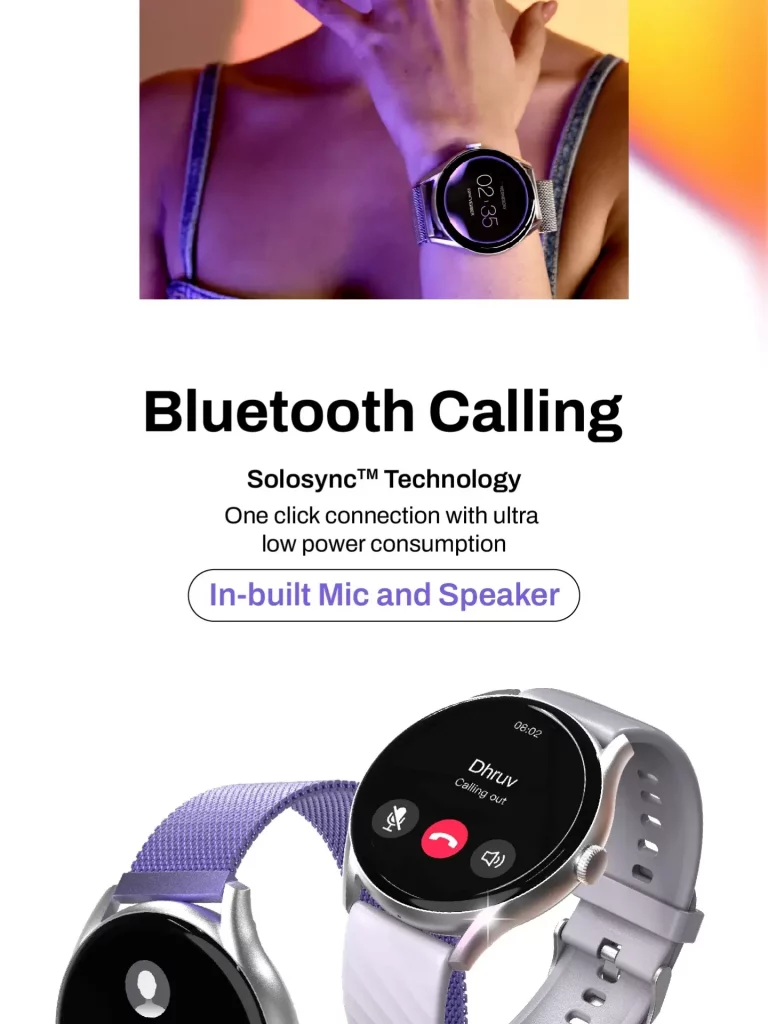
Furthermore, the Aster is equipped with a decent 280mAh battery that provides up to 7 days of battery life. Since the watch supports Bluetooth calling, there is an inbuilt microphone and speaker. This makes it possible to take calls and talk to voice assistants without having to take your phone out of your pocket.
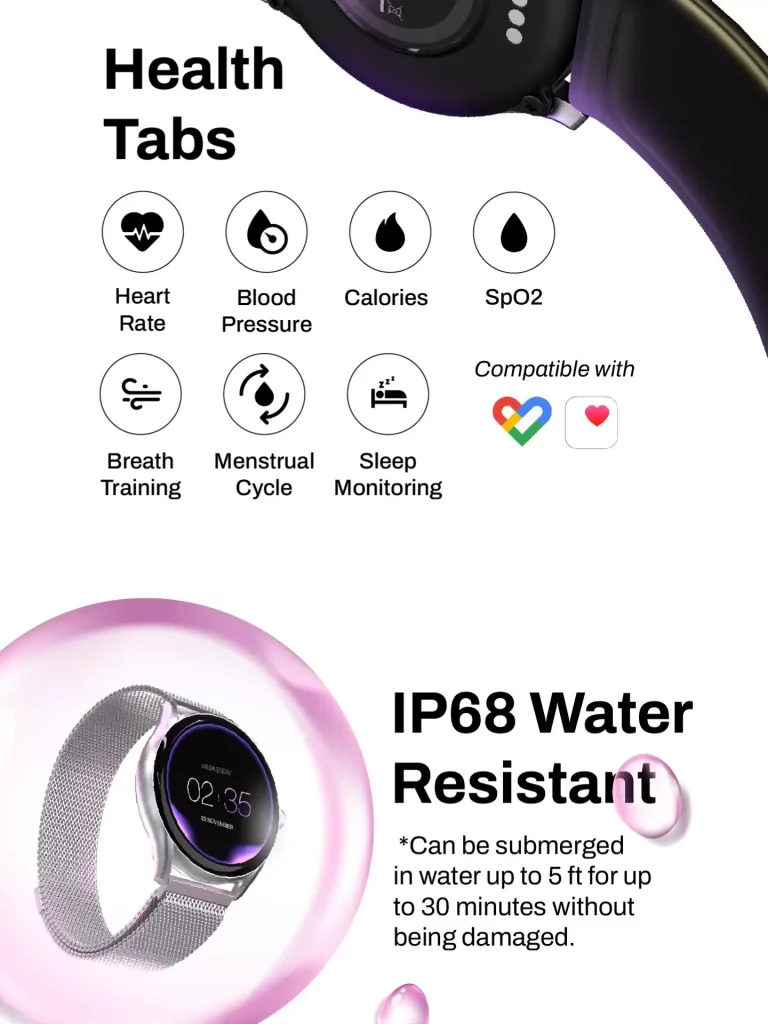
Other features of the Fitbit Aster include over 100 sports modes, making it possible to track your progress in a wide range of activities, from running to swimming. It also has a smart health assistant that provides SpO2 monitoring, heart rate monitoring, blood pressure monitoring, sleep tracking, and menstrual tracking. The sedentary reminder and breath training features help you maintain a healthy lifestyle.
The Fitshot Aster comes with an IP68 waterproof rating meaning it can withstand immersion in water for up to 30 minutes. It also has an SOS feature, allowing you to quickly send an emergency message to a pre-set contact in case of an emergency. In addition, the smartwatch has a password protection feature, giving you an extra layer of security for your personal data.
As for the pricing, the Fitshot Aster will retail for Rs. 2,499 ($30) during its first sale on February 12th. The price will be hiked to Rs. 3,999 ($48) after the first sale. The watch is available in five stylish colors: black silicone, lilac silicone, purple metallic, silver metallic, and black metallic. It will be available on Flipkart and the Fitshot website.
Back in 2021, Fitbit started a research initiative with the aim to measure blood pressure without the traditional arm-cuff method. The study was conducted with a number of U.S. Fitbit Sense users to determine how pulse arrival time (PAT) can be used to measure blood pressure. Now, the Google-owned company has filed a patent for a new blood pressure wearable technology that may soon debut with a new smartwatch.
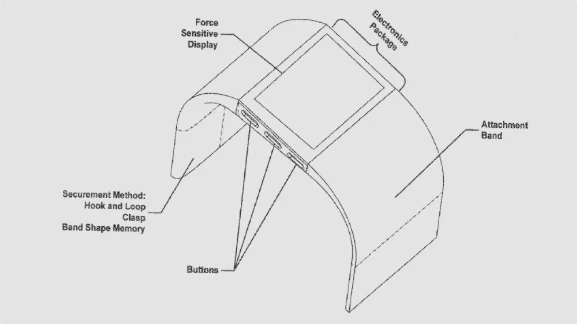
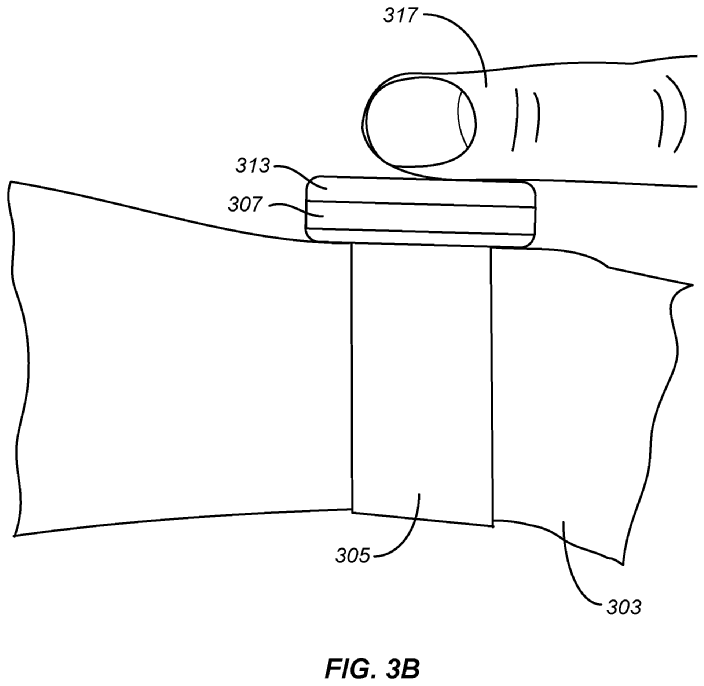
The patent documents show a wearable with a pressure sensor in the display, which imitates a blood pressure cuff. To measure the blood pressure, the wearer will have to pressure the sensor on the panel specifically with their index finger— as it is where the radial artery is located.
The mechanism is almost similar to a traditional blood pressure cuff, which is placed around the stretched-out upper arm, and inflated until no blood can flow through the brachial artery. The strength of the heart rate against that pressure is measured to obtain the blood pressure.
The filing says the wearer could be given on-screen instructions to apply the right amount of pressure on the wrist. Also, a PPG sensor will measure the heartbeat, allowing the device to provide systolic and diastolic readings. Systolic readings refer to the pressure in your arteries when your heart beats, while diastolic readings can be defined as the pressure in your arteries when your heart rests between beats.
“A user applies a variable pressure to his or her blood vessels while a PPG sensor measures the amplitude of blood volume pulses. The resulting PPG signal and associated pressure data is used to calculate blood pressure. Standard approaches to determining blood pressure from oscillometric data can be used,” reads the description of the patent.
Samsung recently announced its Galaxy S23 lineup of smartphones. The devices brought up several improvements over the Galaxy S22 series. Anyway, the brand releases a special edition variant of its smartphone, smartwatch and wireless earbuds every year after its flagship launch. Now, Samsung has unveiled the Samsung Galaxy S23 Ultra BMW M Limited Edition version in the South Korean market. The special edition smartphone brings several changes in the look and feel of the device when compared to the standard variant. However, the extra customization adds up to the price of the device making it costlier too.
The Samsung Galaxy S23 Ultra BMW M Special Edition has been launched in the South Korean market with a price tag of KRW 1,727,000 (~$1300). The price is a little higher when compared with the standard variant. The limited edition variant of the device will available to purchase in the country till February 13th, 2023. The brand has only released 1000 units of the device. So if anyone wants to buy the device, they will have to order it as soon as possible or before the stock runs out. It would be available in one and only 12GB RAM + 512GB onboard storage variant.
Regarding the differences between the normal variant and BMW M Edition, there are not any differences in the hardware. The brand has only done some tweaks in the packaging and provided goodies and looks of the device. The special edition device comes with a BMW-oriented packaging box. It comes packaged with a hard case that features the kidney grille and the G80’s hood design since it is modelled by the classic BMW M3 E30 automobile. Six badges, representing various eras of BMW performance automobiles, are included with the phone. A BMW roundel was also unveiled last year to commemorate the company’s 50th anniversary of creation. The phone itself has a boot animation modelled after the original BMW M3 car, and everything is housed in a tidy box.
A miniature air compressor, an analogue watch, a sunglasses holder, a poster, a photo book, a keychain, and the metal “We Are M” emblem are among the extras. A Starter Pack Voucher for the BMW Driving Center in Incheon, South Korea, will also be given to lucky customers. A qualified instructor at this driving school will provide insightful advice on how to improve your driving. So that’s all there was to say about the Samsung Galaxy S23 Ultra’s BMW M Edition. I appreciate you taking the time to read the entire post.
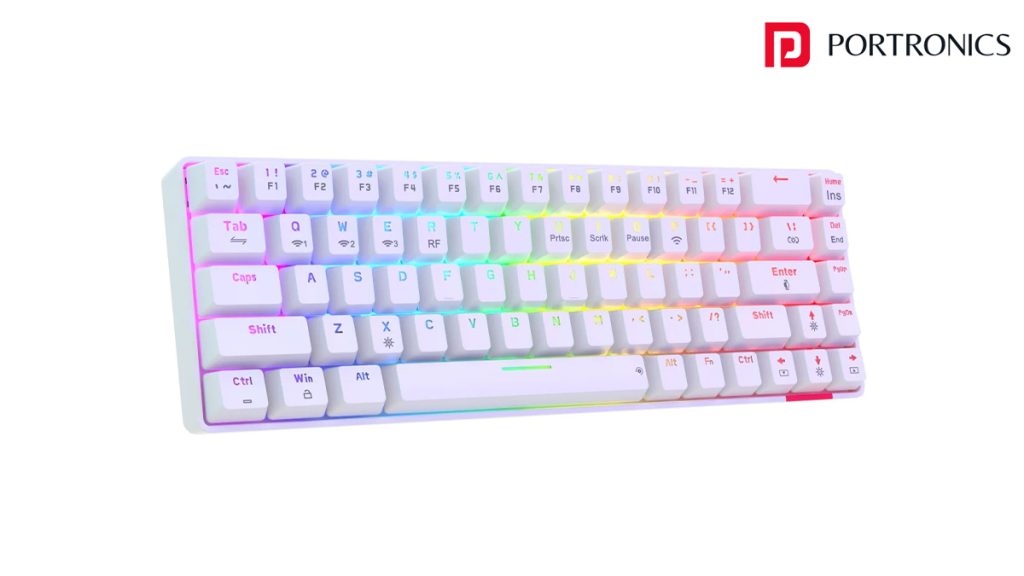
Portronics has expanded its range of keyboards in India. The homegrown brand has launched a new offering called Hydra 10. It is also the first wireless RGB mechanical gaming keyboard from Portronics. The accessory device also carries an affordable price tag. Read on to know more about it below.
The Portronics Hydra 10 is a small and compact keyboard that can be taken everywhere. Its 68-key form factor is said to be lightweight measuring 580 grams. The keyboard features a tactile touch with linear red keys for a responsive and pain-free clicking experience.
The Portronics Hydra 10 feature RGB lights with 20 customisation options. The backlighting can generate 16.8 million different colours. The keys are detachable and be easily removed making the keyboard easy to clean and keep it neat. The device also has multimedia shortcut keys.
The Portronics Hydra 10 can be connected to four devices at once. It can be used with three Bluetooth-enabled devices and one device via a 2.4GHz wireless receiver on a desktop or laptop computer. Users can easily switch between connected devices. The keyboard is powered by a 1000mAh rechargeable battery via a USB-C port. The connector can also be utilised to connect it as a wired keyboard. The Hydra 10 is claimed to offer 5 days of wireless usage.
The Portronics Hydra 10 RGB mechanical wireless keyboard carries a price tag of Rs 2,999 and is offered in a White colour option. It can be purchased from the brand’s official website, Amazon, Flipkart, and other major online and offline outlets across India
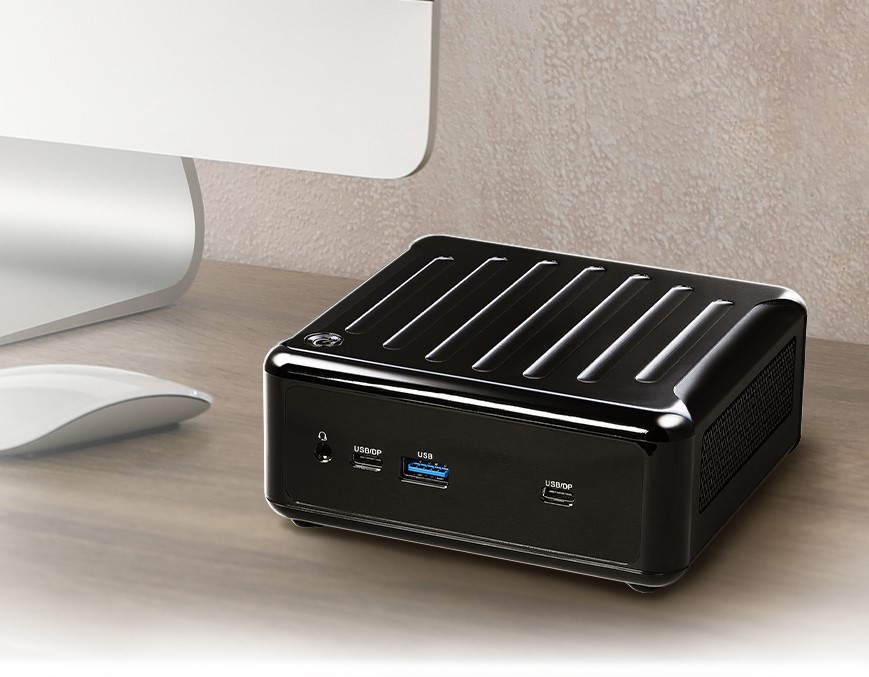
The world of computing continues to evolve and shrink in size, as evidenced by the latest innovation from ASRock – the 4X4 BOX mini PC. This tiny powerhouse packs a punch with its compact design, yet boasts impressive specifications that rival even the larger desktop computers. The 4X4 BOX mini PC is designed for both home and office use, offering the perfect solution for users looking to save space without sacrificing performance.
The ASRock 4X4 BOX mini PC refresh brings the new Ryzen 7000U lineup to the devices. As we know, the 7000U is a mobile processor lineup, meaning that it is meant for low-power devices like laptops. However, considering that it is based on AMD’s Zen 3+ architecture, the power performance per watt of power is actually quite high. Apart from the new Ryzen 7000U processors, these mini PCs are among the first AMD-powered devices to offer two USB4 ports.
These mini PCs also offer support for the faster DDR5 memory standard, with two SO-DIMM slots that can accommodate up to 64 GB of DDR5-4800 RAM. Users can choose from two processor options: the Ryzen 7 7735U with 8 cores and 16 threads, and the Ryzen 5 7535U with 6 cores and 12 threads. The mini PCs have a SATA 3 slot for HDDs and SDDs, as well as an M.2 2280 slot for a PCIe 4.0 X4 NVme SSD.
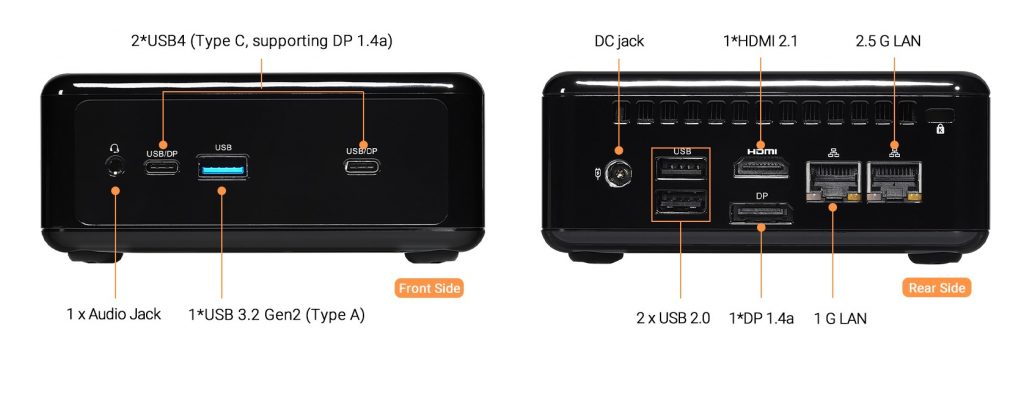
The 4X4 BOX mini PC also features dual LAN jacks, including 2.5 GbE and 1 GbE, 1 USB-A 3.2 Gen 2, 2 USB 2.0 ports, a headphone jack, and HDMI 2.1 and DP 1.4 video outputs that provide a total of 4 4K displays. It has built-in wireless connectivity through its M.2 module, which supports Wi-Fi 6E and Bluetooth 5.2. Additionally, the mini PC includes a Realtek ALC233 HD Audio codec and a TPM 2.0 chip. The compact system chassis measures 110.0 x 117.5 x 47.85mm.
Pricing and availability information about the ASRock 4X4 BOX mini PCs are still under wraps, however, we can expect them to appear soon.
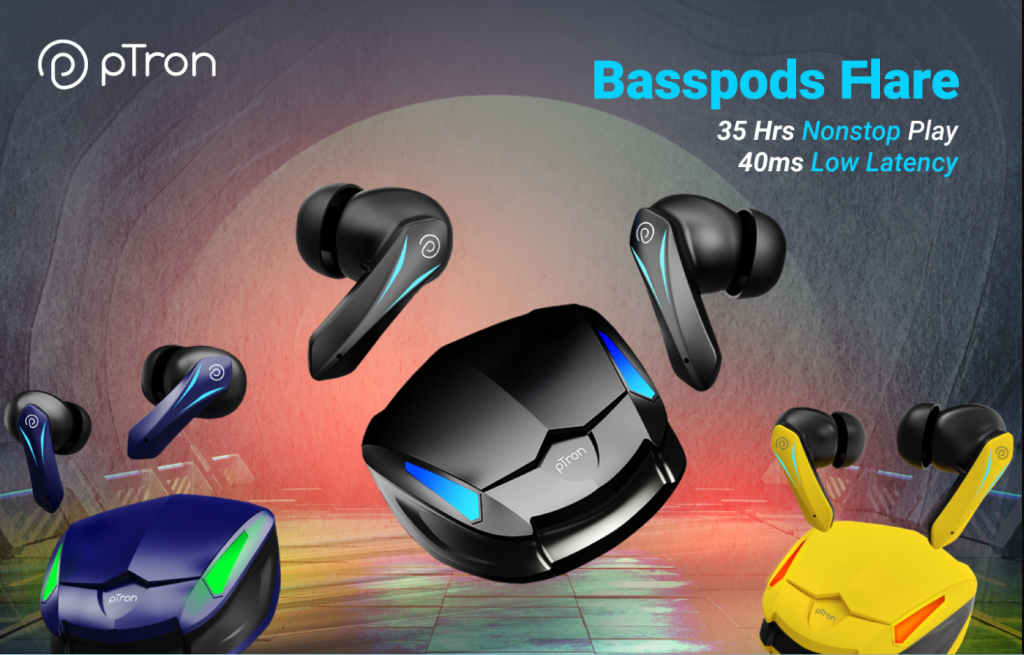
In India, pTron is one of the most well-known smartphone accessory manufacturers. They have introduced a number of products in the nation. A new model of pTron Basspods Flare with a couple of exciting features has now been released by the company in India. The Basspods Flare is a gaming-focused TWS that provides low-latency wireless technology for a fluid gaming experience and gaming-grade audio performance on a variety of devices. Let’s take a closer look at the device’s features and characteristics.
The 13mm high-fidelity audio drivers in the pTron Basspods Flare provide an immersive listening experience. According to the manufacturer, the drivers are specifically tuned to deliver a clear and rich audio experience with support for surround sound. The drivers have also been tweaked to deliver the finest gaming experience possible. TruTalk technology, which is also included with the TWS, delivers dynamic noise reduction and offers a clean and crisp audio pickup while on calls. The gadget has a special gaming mode that makes use of AptSense technology. When playing games, the technique reduces the device’s latency to 40ms.
The manufacturer has included RGB light support in the charging case to give it a gaming-focused look. The weight of each earbud is about 3.5 grammes. Additionally, the device supports multi-function touch control. The touch controls allow users to do a variety of things, like play and pause audio. In terms of connectivity, Bluetooth 5.3 is included with the earphones. The device has a USB Type-C charging port, and the manufacturer claims that a single full charge will power it for up to 35 hours.
Additionally, the earbuds have a voice assistant capability. The brand has additionally incorporated an IPX4 grade for sweat and splash resistance. There will be three colour options for the TWS: Black, Blue, and Yellow. Starting on February 9th, 2022, Flipkart India will offer it for sale in the nation at a price of INR 1,299 per unit. However, as an introductory deal, the device would be priced at INR 899. This concludes the post on the pTron Basspods Flare. Many thanks for reading this post all the way through.
The Nokia X30 5G was launched in the global markets in September last year. Now the device is set to arrive in the Indian markets soon. The revelation comes from Nokia India’s Vice President on the microblogging platform Twitter. He added that the X30 5G is ‘coming to India soon’. However, the exact launch timeline remains a mystery. We can expect to learn the official details in the coming days.
Thank you for leading the way.
Our Nokia X30 5G is made with 100 recycled aluminium & 65% recycled plastic and we are here together to make a better tomorrow. Nokia X30 5G coming soon to India. Stay tuned. #NokiaX30 5G #PlaytheLongGamehttps://t.co/PeWUiCcBmU
The Indian variant of the Nokia X30 5G is expected to pack the same specifications as its global counterpart. It is an environmentally friendly smartphone made up of 100 percent recycled aluminium and 65 percent plastic. The device features a 6.43-inch AMOLED display with an FHD+ resolution, 90Hz refresh rate, and a centre-aligned punch-hole cutout. It is equipped with an in-screen fingerprint scanner. The device is shielded by Gorilla Glass Victus and is IP67-certified waterproof.
The Nokia X30 5G sports a dual rear camera setup comprising a 50MP main sensor and a 13MP ultra-wide-angle lens. There is a 16MP front-facing selfie snapper.
Internally, the Nokia X30 5G is equipped with a Snapdragon 695 processor. It is offered in 6GB + 128GB and 8GB + 256GB RAM and storage configurations. The smartphone is backed by a 4,200mAh battery unit with support for 33W fast charging. On the software front, the device comes with three years of OS upgrades as well as monthly security updates.
The Nokia X30 5G is priced at $529 in the global market.
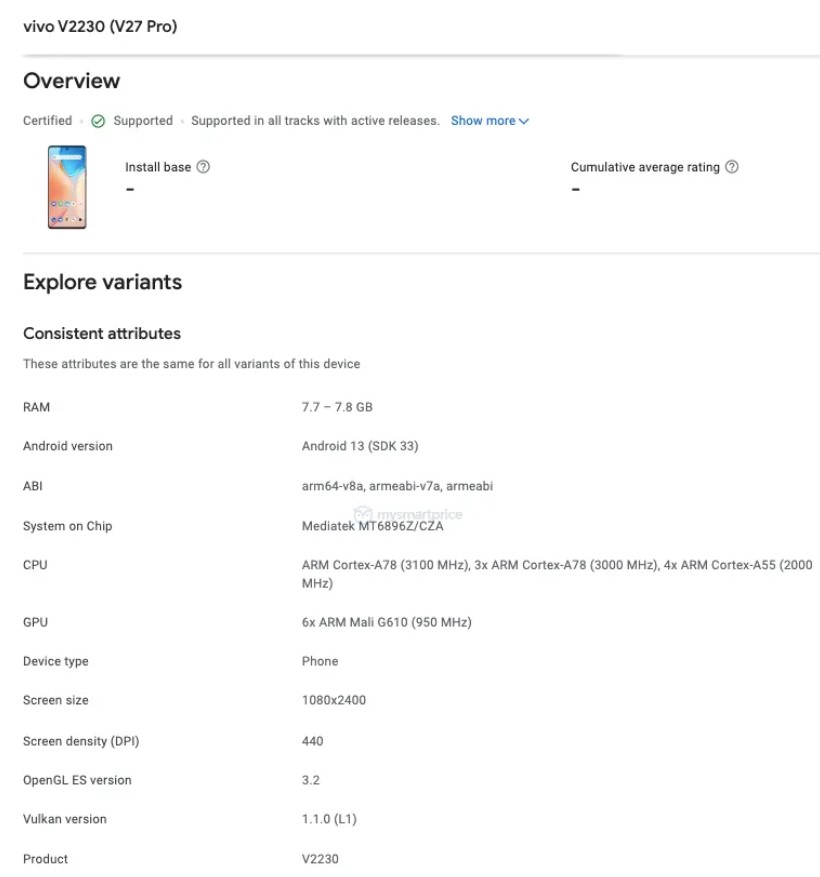
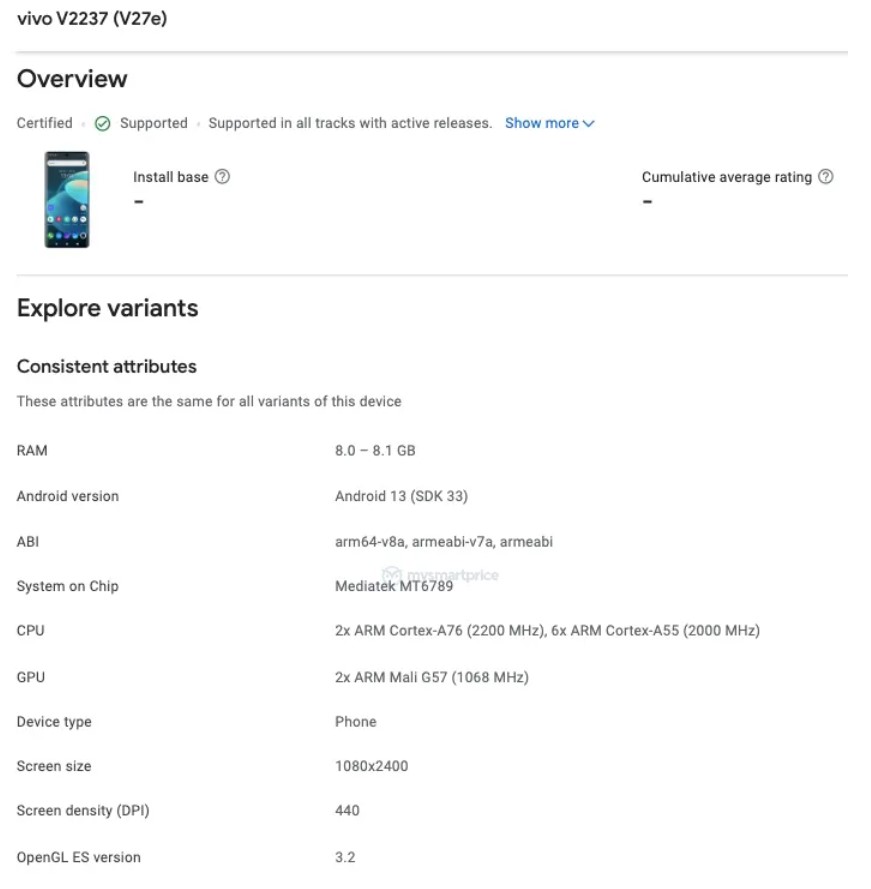
Two new Vivo V-series smartphones have been spotted on the Google Play Console listing. The devices are the upcoming Vivo V27 Pro and V27e. The former is listed with model number V2230 whereas the latter has model number V2237. The Vivo V27 series has been subject to leaks and rumours in the past. This suggests that the smartphones may launch soon in India.
Beginning with the Play Console listing, the Vivo V27 Pro will feature a display resolution of 1,080 x 2,400 pixels and have a 440 ppi pixel density. The rendered image shows the phone with a centre-aligned punch-hole cutout and curved edges. The listing mentions the presence of MediaTek MT6896Z/CZA processor that corresponds to the Dimensity 8200 SoC. It packs 8GB RAM and runs on Android 13 OS out of the box. We can expect the smartphone to be available in more RAM and storage configurations.
As for the Vivo V27e, it is listed with the same display, RAM, and operating system details as the V27 Pro. The V27e is expected to be powered by MediaTek MT6789 SoC which is actually the Helio G99. The smartphone is also seen with a curved display and centre-aligned punch-hole cutout.
The Vivo V27 series also includes a standard variant. It has not appeared on the Play Console listing but was spotted on Geekbench recently with an unannounced MediaTek chipset and 12GB RAM. The smartphone is rumoured to be priced around Rs 35,000 whereas the Pro model is expected to cost Rs around Rs 40,000.
We will learn more details about the Vivo V27 series in the coming weeks.
Tecno has confirmed that it will unveil the Tecno Pop 7 Pro in India next week. It is not an entirely new phone since it has already been launched in Africa. In addition, it bears similarities with the Spark Go 2023. Hence, it appears that the Spark Go 2023 and Pop 7 Pro may mainly differ in departments like RAM and storage.
Yesterday, GizmoChina carried an exclusive post to reveal that the Tecno Pop 7 Pro will debut this month, and as can be seen in the tweet, the company has confirmed that it will launch next week. In Africa, the device is available in black, blue, and purple.
Tecno Pop 7 Pro
In India, the Tecno Pop 7 Pro will come in two colors, and one of them is blue. It will succeed the Pop 6 Pro, which debuted for Rs 7,999 in September 2022. Here is a look at the specifications of the Pop 7 Pro.
Tecno Pop 7 Pro specifications
The Tecno Pop 7 Pro, available in Africa, has a 6.56-inch LCD display with a teardrop notch. It has an HD+ resolution and a refresh rate of 60Hz. Under the hood, the Pop 7 Pro features a Helio A22 chipset, up to 4 GB of RAM, and 64 GB of storage. The device runs the HiOS 12-based Android 12 OS. For additional storage, it has a microSD card slot.
On the front of the Pop 7 Pro is a 5-megapixel camera with an LED flash. The rear shell of the device has a 13-megapixel camera with an LED flash and a fingerprint scanner. It has a 5,000mAh battery that supports charging via the USB-C port.
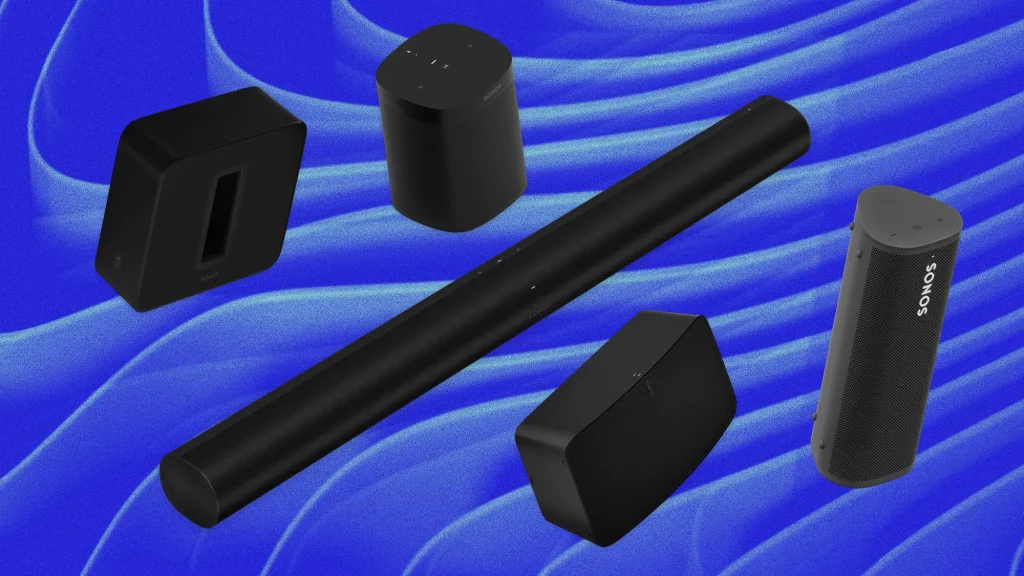
Sonos CEO, Patrick Spence, recently took aim at big tech companies Amazon, Google and Apple during the company’s Q1 2023 earnings call. Despite facing strong competition in the audio market, Spence praised Sonos’ financial performance and sales momentum and took the opportunity to criticize his competitors for not “doing anything interesting” in the audio industry. Here are the details…
Sonos CEO says Amazon, Google aren’t ‘doing anything interesting’ in audio
According to Patrick Spence none of the big tech companies launched any new audio hardware during the crucial holiday quarter. However, Spence remains confident about Sonos’ future, stating that he is “excited and confident about the product roadmap we have and our ability to take more and more of that $96 billion [global audio market]”.
Google’s most recent home audio product is the aging Nest Audio, while Amazon’s fall 2022 hardware event lacked the introduction of new smart speakers. Sonos has said it will release a product in one of its four new categories in 2023 and is set to revitalize its high-end home audio lineup with new speakers. The company also has a second-generation Sonos Move portable speaker under development.
Sonos delivered strong earnings and beat Wall Street expectations for the Q1 fiscal quarter, thanks in part to discounts on its products over the holidays. This was the first time in three years that Sonos was able to offer promotions and the company emphasized bundles that boosted the percentage of multi-product customer households. The average number of products for each Sonos household is currently 2.98 and the company sees a $5 billion revenue opportunity in converting single-product customers to the multi-device lifestyle.
In a recent report, the Semiconductor Industry Association (SIA) announced that the global semiconductor sales for 2022 stand at $573.5 billion, showing a 3.2% increase from last year. China still holds the number one position in the semiconductor market which accounts for one-third of the global revenue. This is also the highest global sales ever reported by the industry, despite the ongoing US-China tech war and economic downturn.
source: SIA
SIA President and CEO, John Neuffer, said that the global semiconductor market experienced significant ups and downs in 2022, with record-high sales early in the year followed by a cyclical downturn taking hold later in the year.
He further added that despite short-term fluctuations in sales due to market cyclicality and macroeconomic conditions, the long-term outlook for the semiconductor market remains incredibly strong, due to the ever-increasing role of chips in making the world smarter, more efficient, and better connected.
Why are semiconductors important?
Semiconductors are one of the most important technology items of the era. . All the major technology sectors, like wired communication, consumer electronics, industrial electronics, automotive electronics, wireless communication, and computing and data storage, require semiconductors. Advancement in artificial intelligence, military and weapons systems, space technology, and more is not possible without having the latest and cutting-edge semiconductor tech.
Semiconductors are divided on the basis of circuit design and function. As per the integrated circuitry, the semiconductors can be classified as digital, analog, and mixed and as per functionality they are classified as memory chips, microprocessors, standard chips, and complex systems-on-a-chip (SoCs).
In 2022, microprocessors generated the highest revenue of $176 billion followed by memory chips which reported sales of $130 billion. The biggest revenue jump was seen in analog chips used in automobiles, computers, and other consumer goods. Analog chips reported $89 billion in revenue, a 7.5% increase in 2022.
China’s Semiconductor Industry:
China the world’s largest semiconductor market accounted for almost one-third of the global sales. The Chinese semiconductor industry plays a major role in the technology sector of the country, which accounts for almost 30% of its GDP. The semiconductor industry includes a wide variety of companies, from integrated device manufacturers to pure-play foundries, fabless semiconductor companies, and OSAT companies.
Currently, China’s semiconductor industry includes a wide variety of companies from Fabless semiconductor firms like ZhaoXin, UNISOC, and HiSilocon to IDMs (Integrated Device Manufacturers) like Yangtze Memory Technology Corp and ChangXin memory Technologies.
China which aims to become the global leader in artificial intelligence and quantum computing needs an uninterrupted supply of semiconductors to achieve this target. However, the country is facing huge pressure under the US sanctions on the semiconductor export to China.
Last year US introduced increased restrictions on semiconductor exports to China to stop its advancement in AI and disrupt its progress in chip making. These restrictions stopped US companies and some of its allies like the Netherlands and Japan from providing machines, tools, personnel, and technical know-how to Chinese companies.
The sanctions and additional restrictions on China have made a global impact as, despite the increase in total sales, the second half of 2022 reported a gradual decrease in revenue. The fourth-quarter sales of $130.2 billion were 14.7% less than in the same period in 2021 and 7.7% lower than in the third quarter of 2022. Global sales for the month of December 2022 were $43.4 billion, a decrease of 4.4% compared to November 2022.
We use cookies on our website to give you the most relevant experience by remembering your preferences and repeat visits. By clicking “Accept”, you consent to the use of ALL the cookies.
This website uses cookies to improve your experience while you navigate through the website. Out of these, the cookies that are categorized as necessary are stored on your browser as they are essential for the working of basic functionalities of the website. We also use third-party cookies that help us analyze and understand how you use this website. These cookies will be stored in your browser only with your consent. You also have the option to opt-out of these cookies. But opting out of some of these cookies may affect your browsing experience.
Necessary cookies are absolutely essential for the website to function properly. This category only includes cookies that ensures basic functionalities and security features of the website. These cookies do not store any personal information.
Any cookies that may not be particularly necessary for the website to function and is used specifically to collect user personal data via analytics, ads, other embedded contents are termed as non-necessary cookies. It is mandatory to procure user consent prior to running these cookies on your website.