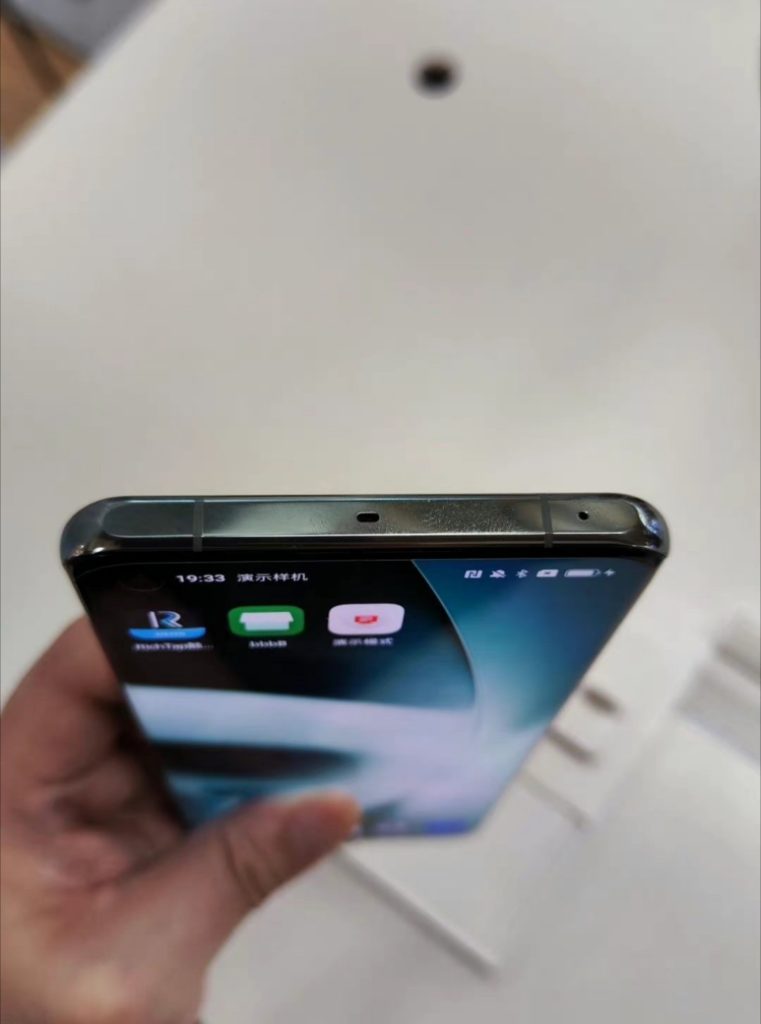
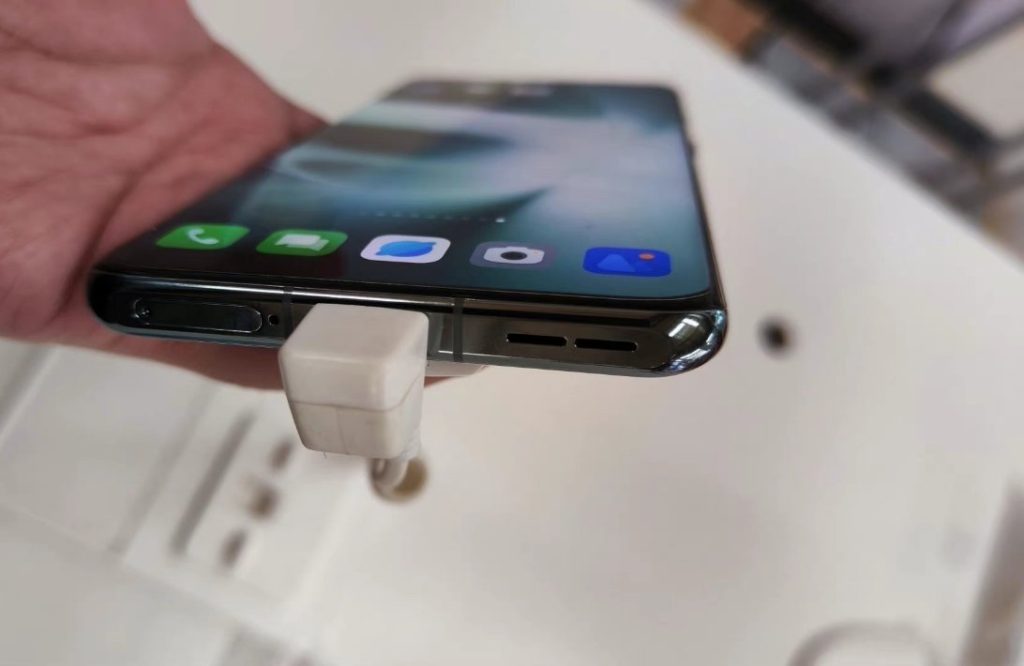
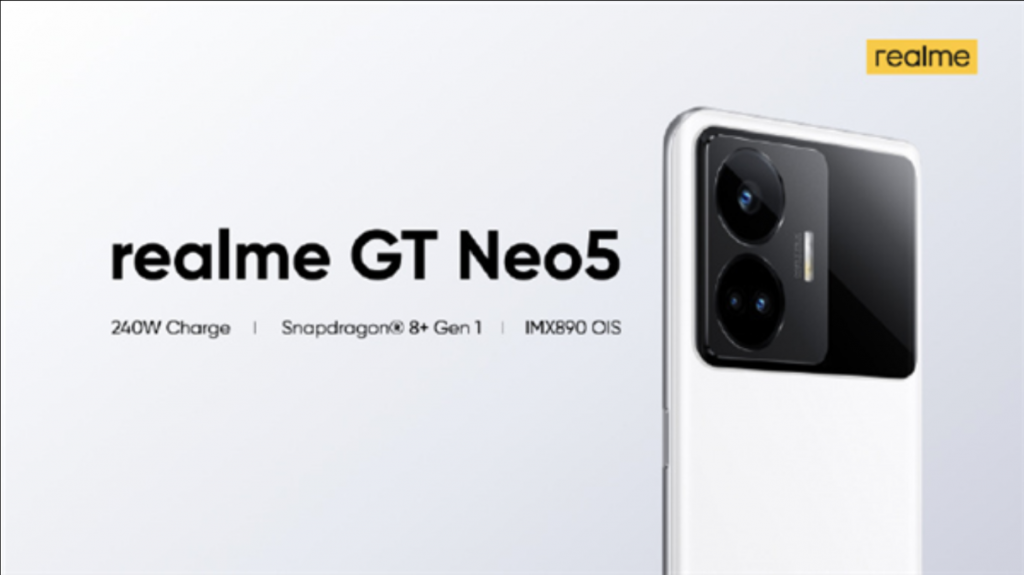
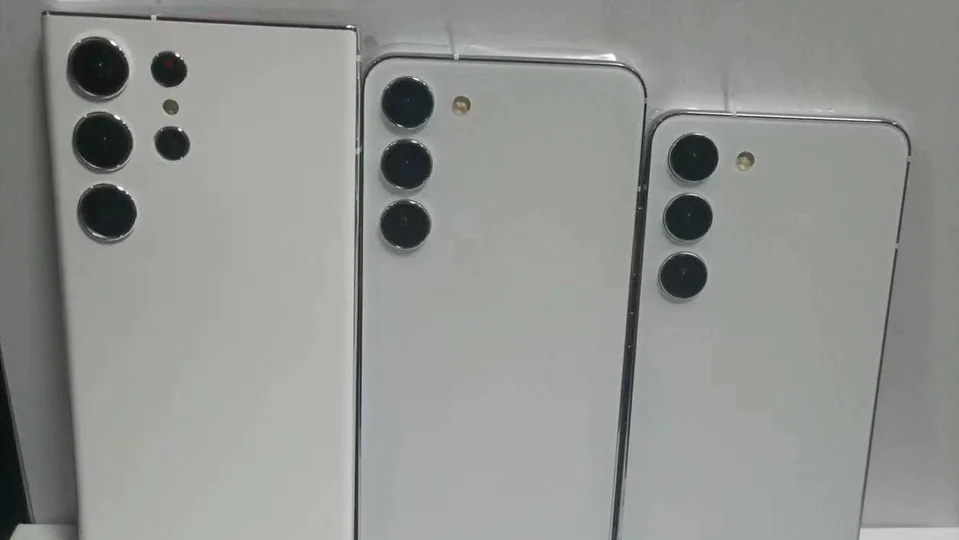
There are not going to be many smartphone launches next week. Only one brand has scheduled an event and that is Realme.
Realme is set to introduce the Realme 10 series in China on November 17 (Thursday). The conference will begin at 2 PM GMT+8 and will be live-streamed on Weibo and other leading Chinese video streaming platforms.
The brand was expected to debut three models, namely Realme 10, Realme 10 Pro, and Realme 10 Pro+. However, it has already announced the vanilla model earlier today.
Hence, let’s take a look at the remaining two phones.
The Realme 10 Pro carries model number RMX3663. It is expected to come in three memory configurations, such as 8GB + 128GB, 8GB + 256GB, and 12GB + 256GB.
It will sport a 6.78-inch FHD+ display. The type of panel is not known. Interestingly, the handset is said to house a 16MP main camera accompanied by two 2MP sensors(likely for macro and depth). Even the selfie camera will have 16 megapixels.
The device will be likely powered by a Qualcomm Snapdragon 695 SoC and will boot Android 13. Finally, it will be backed by a 5,000mAh battery.
2. Realme 10 Pro Plus
Realme 10 Pro Plus | Source: Realme
The model number of Realme 10 Pro Plus is RMX3687. It will release as the brand’s first curved display smartphone.
The phone will sport a 6.7-inch FHD+ curved display with a 120Hz refresh rate and a 2160Hz PWM dimming. It will be powered by a MediaTek Dimensity 1080 SoC and will boot Android 13.
The device will arrive with a 108MP main camera, an 8MP secondary camera, and a 2MP tertiary camera. On the front, it will have a 16MP snapper for selfies and video calls.
It will be available in three memory variants, like 8GB + 128GB, 8GB + 256GB, and 12GB + 256GB. Last but not least, the handset will draw power from a 5,000mAh battery.
After rolling out the OxygenOS 13 stable update for the OnePlus 10 Pro, the OEM has now started seeding the stable Android 13 update for its last-gen flagships, namely the OnePlus 9 and OnePlus 9 Pro. The OxygenOS 13 update for these devices is rolling out in India, Europe, as well as North America.
OnePlus made a public announcement about it on the OnePlus Community Forum. Indian Users of the OnePlus 9 Pro are receiving firmware updates with version LE2121 11.F.16. On the other hand, Europe and North American users are receiving software updates with firmware LE2123 11.F.16 and LE2125 11.F.16, respectively.
Indian customers of the OnePlus 9 are currently getting firmware updates with version LE2111 11.F.16. The same device is being updated with firmware versions LE2113 11.F.16 and NE2215 11.F.16, respectively, for users in Europe and North America. Let’s take a look at the official changelog to find out what’s new with the update.
The all-new aquamorphic design included in the OxygenOS 13 update improves visual comfort and makes the UI more pleasing to look at. A few additional features have also been implemented to improve multitasking effectiveness. Users must guarantee at least 30% battery, according to OnePlus. Before beginning the installation, the devices must have at least 5GB of internal storage available.
Changelog:
Aquamorphic Design ● Adds Aquamorphic Design theme colors for enhanced visual comfort. ● Applies the Aquamorphic Design philosophy to animations to make them natural and vivid. ● Adds Shadow-Reflective Clock, with shadow simulating the orientation of the sun and moon. ● Adds a Home screen world clock widget to show the time in different time zones. ● Upgrades to Quantum Animation Engine 4.0, with a new behavior recognition feature, which recognizes complex gestures and provides optimized interactions. ● Optimizes UI layers for a clearer and neater visual experience. ● Applies real-world physical motions to animations to make them look more natural and intuitive. ● Optimizes the widget design to make information easier and quicker to find. ● Optimizes fonts for better readability. ● Optimizes system icons by using the latest color scheme to make the icons easier to recognize. ● Enriches and optimizes illustrations for features by incorporating multicultural and inclusive elements.

Efficiency ● Adds Meeting Assistant to enhance the meeting connecting and note-taking experience, and introduces an option to make notifications more subtle and less distracting. ● Adds large folders to the Home screen. You can now open an app in an enlarged folder with just one tap and turn pages in the folder with a swipe. ● Adds a new type of Always-On Display that shows live information about music, ride-hailing, and food delivery (Supports only some apps). ● Adds media playback control, and optimizes the Quick Settings experience. ● Adds more markup tools for screenshot editing. ● Adds support for adding widgets to the Home screen, making information display more personalized. ● Adds Sidebar Toolbox. You can open a floating window inside apps for smooth operation. Upgrades Doodle in Notes. You can now draw on graphics to take notes more efficiently. ● Optimizes Shelf. Swiping down on the Home screen will bring up Shelf by default. You can search content online and on your device.
Seamless interconnection ● Optimizes cross-device file transfer, with more file formats and device models supported. ● Optimizes Screencast, with cast content automatically adapting to the target screen. ● Optimizes earphone connectivity to deliver a more seamless experience.
Personalization ● Optimizes Bitmoji to offer more Always-On Display animations. ● Optimizes Insight Always-On Display, with more personalized Always-On Display settings available. ● Optimizes Portrait Silhouette Always-On Display, with more drawing tools and line colors available.
Security & Privacy ● Adds an automatic pixelation feature for chat screenshots The system can identify and automatically pixelate profile pictures and display names in a chat screenshot to protect your privacy. ● Adds regular clearing of clipboard data for privacy protection. ● Optimizes Private Safe. The Advanced Encryption Standard (AES) is used to encrypt all files for enhanced security of private files.
Health & Digital wellbeing ● Adds Kid Space. When in Kid Space, your browser app automatically switches to Kids mode to create a child-friendly space. ● Adds Eye comfort in Kid Space to protect children’s vision.
Performance optimization ● Adds Dynamic Computing Engine to improve the system speed, stability, battery life, and app experience
Gaming experience ● Upgrades to HyperBoost GPA 4.0 to stabilize the frame rate and balance the performance and power consumption in key scenarios.
The OxygenOS 13 upgrade for the aforementioned devices is now being rolled out by OnePlus in phases, so not all units may have it yet. However, we can expect a broader deployment in the coming days.
MediaTek has become one of the leading chipset makers for a wide range of devices, including smartphones, Chromebooks, Smart TVs, IoT devices, and more. The company also has a lineup of 5G modems to offer an alternative to leading modems like Qualcomm and Samsung’s offerings.
Now, along with a few new chips, MediaTek T800 5G modem has also been launched, which promises a speed of up to 7.9Gbps. It is a part of the newly announced MediaTek Dimensity 9200 SoC, but the company says that it can also be used for industrial IoT, M2M, and always-connected PCs.
As the name itself indicates, the newly launched MediaTek T800 is a successor to the T700. It is a fast and efficient modem with support for sub-6GHz and mmWave brands on StandAlone (SA) and Non-StandAlone (NSA) networks.
It also has support for the Dual SIM Dual Standby feature. The modem can deliver download speeds of up to 7.9Gbps and upload speeds of up to 4.2Gbps. The modem fully supports 4GPP Release-16 specification for 5G along with 4CC carrier aggregation. In comparison, Qualcomm’s Snapdragon X70 modem peaks at 10 Gbps download speeds and 3.5 Gbps upload speeds.
The MediaTek T800 5G modem is built on a power-efficient 4nm node and packs 5G UltraSave technology for optimized power consumption. It comes with support for PCIe and USB host interfaces but can be connected to the rest of the machine through other means as well. It offers a fully integrated 3GPP Release-16 5G cellular modem, FR1 Transceivers, an Envelope Tracking (ET) chip, an MLNA (Monolithic Low Noise Amplifier), a GNSS receiver, and associated PMICs.
MediaTek is one of the leading players when it comes to the choice of processors for entry-level Chromebooks. Now, the company is doubling down in this segment with the launch of two new chips — MediaTek Kompanio 520 and MediaTek Kompanio 528.
Both these new chipsets come with improved support for the display, better power management, upgraded imaging capabilities, and a few other things for the Chromebooks.
MediaTek’s Kompanio 520 and 528 chips use two ARM Cortex-A76 cores from eight total cores. The 520 has a clock speed of 2.0GHz, while the 528 has a clock speed of 2.2GHz. Along with that, the chips also come with an upgraded dual-core GPU and integrated APU for improving AI-powered performance.
Coming to the improved display support, the new MediaTek Kompanio 520 and Kompanio 528 have support for Full HD+ display with 2520 x 1080 pixels screen resolution and support to add a secondary Full HD display with 1920 x 1080 pixels screen resolution.
Both processors come with support for LPDDR4x RAM and eMMC 5.1 storage. In the camera department, there’s support for camera sensors up to 32-megapixel with 60fps FHD video recording. It also packs HiFi-5 DSP for improved microphone processing. For connectivity, there’s support for Wi-Fi 6 on both chips.
As for availability, the company has said that the first Chromebooks powered by the Kompanio 520 and 528 will start appearing from the first quarter of the year 2023.
According to the BenchLeaks Twitter account, specifications for Razer’s upcoming flagship gaming laptop, along with some excellent test results, appear to have been leaked on Geekbench. The Razer Blade 18 (RX09-0484) with an upcoming i9-13900HX Raptor Lake mobile processor and 32 GB of RAM is mentioned in the Geekbench test entry.
Razer Blade 17
According to Videocardz, this would be Razer’s first laptop to ever include a HX-series processor. For the HX CPU, which is effectively a BGA version of the desktop SKU with the exact same 24-core and 32-thread architecture, Razer has apparently chosen an 18-inch chassis, which hasn’t appeared in almost ten years. BenchLeaks claims that the i9-13900HX operates at a minimum frequency of 3.5 GHz and a maximum boost clock of 5.38 GHz, around 400 MHz less than the desktop model.
Even when compared to the i9-12950HX from the current generation, the i9-13900HX seems like a beast with 2063 points for single-core testing and 20164 points for multi-core testing. According to research done by Videocardz, the i9-13900HX would perform 14% faster under single-core load and 45% faster under multi-core load than the i9-12950HX. BenchLeaks also compares the desktop-grade Ryzen 7 5800X from AMD, which it claims is 19.4% slower under single-core loads and at least 87.7% slower under multi-core loads.
The launch date for the Raptor Lake mobile CPU series is yet unknown. Intel CEO Pat Gelsinger hinted at a late 2022 release date, however, considering that Intel usually launched the HX versions after the H models, we can expect the i9-13900HX to debut around Q1 2023.
Motorola is gearing up to launch its latest Edge 40 series of flagship smartphones in the market soon. But prior to any official announcement, the company’s high end Edge 40 Pro model was spotted on a certification website.
The company’s upcoming premium device was just recently spotted getting certified on the TDRA website. This certification listing basically confirms the official moniker of the handset and even revealed its XT2301-4 model number. The Edge 40 Pro is also expected to be the rebranded Moto X40 model, which is rumored to launch in China soon. In other words, the TDRA database also hints at an imminent launch of the new smartphone.
Notably, the X40 model carries the model number XT2301, which basically indicates that the Edge 40 Pro is a rebranded version. Apart from the TDRA listing, the smartphone was also certified on the EEC website as well. But unfortunately, both of the new online listings do not reveal any finer details like the internal specifications or design of the Edge 40 Pro. But we do have previous rumors and leaks regarding the Moto X40 to go for now.
The handset is expected to be equipped with Qualcomm’s next gen flagship chip, the Snapdragon 8 Gen 2 SoC. This chip is confirmed to be paired with the LPDDR5X RAM as well. The Edge 40 Pro is rumored to feature a triple camera setup on the rear, consisting of a 50 megapixel primary sensor, 50 megapixel ultra wide angle lens, and a 12 megapixel telephoto shooter. The device will support 68W fast charging and the front will sport a curved OLED panel that has a 165Hz refresh rate.
Huawei has finally brought the MateBook 14s 2022 laptop refresh to the European market alongside its newly launched Watch GT 3 SE smartwatch.
The MateBook 14s 2022 is marketed by the OEM as a remote work-ready PC with “Smart Conference” capabilities like FollowCam and Clean Voice. It can link to other devices to create an “ecosystem” using the P50 Pro or a MateView display. The smartwatch is a more cost-effective “ultra-light” version of the standard flagship GT 3.
Huawei MateBook 14s & Watch GT 3 SE European pricing
The MateBook 14s 2022 laptop is priced at £1299.99 (~US$1,522) with 16GB of RAM and 1TB NVMe storage on Huawei’s UK website. The Watch GT 3 SE on the other hand is listed for €179 on Amazon Germany.
Huawei MateBook 14s 2022 specifications
The MateBook 14s 2022 has a 14.2-inch, 2.5k resolution, 3:2 touch-screen display with a refresh rate of 90Hz and a brightness of 400 nits. Furthermore, the display has a 100% sRGB color gamut and supports 10-point multi-touch technology.
Under the hood, there is a 12th-gen Core i7-12700H processor paired with Intel Iris Xe graphics. It is currently being offered in a sole 16GB RAM + 1TB SSD storage setup. In addition, the new MateBook 14s has a built-in 60Wh battery, a 90W GaN charger, a 720p webcam, and a four-speaker audio system. Interfaces include 1 x HDMI, 1 x Thunderbolt 4, 1 x USB Type-A, a USB Type-C, and a 3.5mm combo audio jack.
Huawei Watch GT 3 SE specs & features
The Watch GT 3 SE has a 46 mm case and a 1.43-inch AMOLED display with a resolution of 466 x 466 pixels. On the right side of the wearable, there is a physical button as well as a digital crown.
The Watch GT 3 SE, like other Huawei smartwatches, comes with Huawei TruSport, which provides personalized recommendations to improve your workouts and sports performance. In terms of sports, the smartwatch has over 100 different sports modes. Blood oxygen and heart rate monitoring are two health-related aspects. Huawei TruSleep 3.0 is also included, and it precisely records your sleep habits as well as snoring and sleep talking.
With average use, the Watch GT 3 SE should last up to two weeks, and with severe use, one week. Last but not least, the smartwatch has a 5 ATM water-resistant rating, making it a wonderful swimming buddy.
Inbase has launched three power banks named Inbase Style, Cruze, and Club in India. All of them carry support for fast charging. The Inbase Club is meant for those who do not like to carry cables along with a power bank, whereas the Style and Cruze are travel-friendly power banks.
Inbase Style
Inbase Style
The Inbase Style power bank houses a 10,000mAh Li-Polymer battery. It has an ergonomically designed, durable body, which protects it from external damage. It features two USB A ports and a USB-C PD port. The Inbase Style supports up to 15W USB-PD charging and up to 15W wireless charging. Hence, with the three USB ports and wireless charging, the Inbase Style allows users to charge up to four devices simultaneously. It also comes with a smart IC that protects it from overcharging, overheating, overcurrent, and overvoltage.
Inbase Cruze
Inbase Cruze
The Inbase Cruze comes with a scratch-resistant aluminium metal casing and packs a 10,000mAh Li-Po battery. It has two USB-A ports that support 18W charging and a USB-C PD port with support for 22.5W charging. It can be used to charge up to three devices at the same time. Its other features include LED indicators for checking charging status and a smart IC.
Inbase Club
Inbase Club
The Inbase Club is a 4-in-1 power bank that features four built-in USB cables with connectors like USB-A, USB-C, microUSB, and Lighting. Hence, users of Inbase Club do not need to carry charging cables to charge their devices. The four cables can be tucked flush on the rear panel of the device when they are not in use. Like the above models, it also packs a 10,000mAh Li-Po battery. Its other features include up to 12W charging, an LED display for charging status, and a smart IC.
The Inbase Style, Cruze, and Club are priced at Rs 1,899 (~$23), Rs 1,299 (~$16), and Rs 999 (~$12), respectively. These products come with a 1-year warranty. To purchase, users can visit Inbasetech.in, Amazon India, or Flipkart. You can also buy these power banks from other major online and offline stores in India.
A major exploit in Google Pixel smartphones has just been revealed, allowing an attacker to unlock and access your smartphone by switching out the SIM card.
The issue has been discovered by David Schütz (CVE-2022-20465) who says an “attacker with physical access [can] bypass the lock screen protections (fingerprint, PIN, etc.) and gain complete access to the user’s device.” The issue has been fixed in the November security patch for Pixel devices. Read below to find out how the exploit works.
We can see a locked smartphone with biometrics deactivated after numerous unsuccessful attempts in the demonstration video above. After changing the SIM, you will be prompted to “Enter SIM PIN.” After three incorrect PIN attempts, users are prompted to enter the PUK code, which you should know because it’s your SIM card.
When you enter a new PIN number for that SIM card after successfully entering the previous one, the phone will unlock to your home screen and give you full access.
Schütz explains that since the attacker could just bring his/her own PIN-locked SIM card, nothing other than physical access was required for exploitation. The attacker could just swap the SIM in the victim’s device, and perform the exploit with a SIM card that had a PIN lock and for which the attacker knew the correct PUK code.
Google did not address the Pixel lockscreen issue until September after Schütz reported the unlock bug to Android’s Vulnerability Rewards Program in the middle of this year (after some in-person prompting). A $70,000 reward was given for solving it, and it is classified as a “System” issue with “High” severity in the November security patch. The fix has been rolled out to Android 10, 11, 12, 12L, and 13 AOSP versions. The November security patch is currently available for the Pixel 4a and newer. So if you have a Pixel device with this patch available, we advise you to update ASAP.
Earlier this week, Realme globally unveiled the Realme 10 4G, which features the MediaTek Helio G99 chipset. Today, the Chinese manufacturer silently unveiled the Realme 10 in China. Even though the home market has received the 5G version of the device, the company does not mention “5G” in its moniker. As for the key features of the device, it offers a 90Hz LCD display, 50-megapixel triple cameras, and a Dimensity 700 chipset.
Realme 10 (5G) specifications and features
The Realme 10 has a 6.6-inch LCD panel with a teardrop notch. It offers a 90Hz refresh rate, a 180Hz touch sampling rate, a 20.06:9 aspect ratio, 401 ppi pixel density, 400 nits of brightness, and a 90.4 percent screen-to-body ratio. Under the hood, it packs a 5,000mAh battery that supports 33W fast charging via the USB-C port.
Realme 10 5G
The Dimensity 700 is the driving force of the Realme 10. The device comes with 8 GB of LPDDR4x RAM, 6 GB of virtual RAM, and 128 GB / 256 GB of UFS 2.2 storage. It runs on Android 12 OS, which is overlaid with Realme UI 3.0. There is a dedicated microSD card slot onboard for additional storage.
Realme 10 5G
The Realme 10 has an 8-megapixel camera on the front for selfies and video calls. The LED-assisted rear camera setup has a 50-megapixel main camera, a 2-megapixel macro, and an AI lens. On the connectivity front, the device offers dual SIM support, 5G, Wi-Fi 802.11ac, Bluetooth 5.2, GPS, and a 3.5mm audio jack. It also features a side-mounted fingerprint scanner. The device measures 164.4 x 75.1 x 8.1mm and weighs around 191 grams.
Realme 10 5G
Realme 10 (5G) price and availability
The Realme 10 has arrived in China in two variants: 8 GB RAM + 128 GB storage and 8 GB RAM + 256 GB storage. Both models are priced at 1,299 Yuan (~$181) and 1,599 Yuan (~$222), respectively. It is available for purchase in China in shades like Rijin Doujin (gold) and Stone Crystal Black.
Realme decided to launch the Realme 10 Series starting from a single device: the vanilla Realme 10 (4G version). The phone made its debut in the global market and it is now available with midrange-class specifications and an affordable price. It is definitely interesting for all of those who search for a phone with a very high value for money, but it is a new phone and this means that its price is still not at its minimum. That is the reason why a lot of people are wondering whether they should choose the new device or go for its predecessor Realme 9 4G which is currently available at a more affordable price. And in 2022, a more recent phone does not mean a better phone anymore, even when it belongs to the same lineup. Here is a comparison between the main specifications of the old but still very actual Realme 9 4G and the new Realme 10 4G.
Triple 108 + 8 + 2 MP, f/1.8 + f/2.2 + f/2.4
16 MP f/2.5 front camera
Dual 50 + 2 MP, f/1.8 + f/2.4
16 MP front camera
BATTERY
5000 mAh, fast charging 33W
ADDITIONAL FEATURES
5G, dual SIM
5G, dual SIM
Design
One of the most evident improvements of the Realme 10 4G over its predecessor is the design. It is more curated and original, with flat borders just like the latest iPhones and a more minimalistic look. The camera modules are very elegant as they go directly into the rear cover without the presence of a dedicated camera island. Further, the rear side is made with a special gradient color that changes depending on the light reflection. Even though I personally prefer the more recent device, the Realme 9 4G is still an elegant and good-looking phone. It has a punch hole display, more or less the same screen to body ratio as the new model, and good color options as well. However, both devices come with a plastic body and they are not made with premium materials, unlike high-end phones.
Display
The older Realme 9 4G and the new Realme 10 4G have exactly the same display. So, if you want to know which one is the best for you, it is better to focus on the other specifications. Regarding the display, they both come with an AMOLED panel showing the images with a diagonal of 6.4 inches, a Full HD+ resolution of 1080 x 2400 pixels, a 90 Hz refresh rate, and the Gorilla Glass 5 protection, as well as a peak brightness of 1,000 nits. It is a very good display for a mid-ranger, showing brilliant colors and deep blacks. But there is a difference between these two panels, even though it is not related to the image quality: the fingerprint reader. The 9 4G has an in-display fingerprint reader, while the 10 4G has a side-mounted sensor, placed on the power key.
Specs & Software
If you are looking for better performance, choose the Realme 10 4G. It is fueled by a superior processor: the Helio G99 by MediaTek. It is a chipset built with a 6 nm production process sporting an octa-core architecture composed of two Cortex A76 CPUs running at a max frequency of 2.2 GHz, six Cortex A55 CPUs running at 2 GHz, and a Mali G57 MC2. Alongside the SoC, there are up to 8 GB of RAM and up to 256 GB of storage. The Realme 9 4G comes with an inferior Snapdragon 680 4G chipset paired with up to 8 GB of RAM and up to 128 GB of native storage. Both phones run Android 12 customized by Realme UI 3.0.
Camera
The winner of the camera comparison is the Realme 9 4G. It has a triple rear camera composed of a 108 MP main shooter, an 8 MP ultrawide lens, and a 2 MP macro camera. The Realme 10 4G has an inferior main camera with a 50 MP resolution, it lacks an ultrawide sensor and it only adds a 2 MP depth sensor. Both feature a 16 MP selfie snapper.
The batteries have the same capacity: 5000 mAh, and there are just marginal differences in terms of battery life. Even the charging speeds are the same, with 33W fast charging.
Price
You can currently find the Realme 9 4G easily for less than €230/$230, while you need €280/$280 to purchase the Realme 10 4G. Despite being older, the 9 4G wins the comparison thanks to the presence of a superior camera.
Vivo has unveiled a new chip that will be paired with the Dimensity 9200 processor for artificial intelligence enhancement. The announcement was made during this year’s Dual-Core X Imaging Technology Communication Conference in China. The event showcased new technologies from different brands including a collaboration between MediaTek and Vivo. The Vivo V2 chip offers a new high-speed communication method with the MediaTek Dimensity 9200 chipset. It uses the FIT dual-core connectivity technology to achieve high-speed communication.
The V2 chip is a self-developed Vivo chip and is evidence of the independent research and development done by the company. The V2 has more memory, more features, and supports AI computing. The V2 is also capable of image processing with significant improvements over its predecessors, the V1, and V1+.
Dual-core interconnection synchronization between two distinct chips enables optimal data and computing power coordination. The DLA Vivo AI deep learning accelerator module in the V2, coupled with a large-capacity SRAM cache unit provides unmatched computing power for the chip. It also has greater computing power density and data density. Power efficiency is further enhanced significantly due to the SRAM architecture. The V2 chip provides ultra-clear images with its high-end image engine. The ultra-clear image quality engine can restore up to 35% of the focal length together with other image quality enhancement features.
The V2 chip also offers zero latency snapshots and motion detection techniques. The self-learning capacity of the chip is further enhanced when capturing moving images. Vivo also implements the RawEnhance 2.0 technology for enhanced capture capability in dark light. The system superimposes moving images with smearing eliminated, delivering high-quality dynamic photos always. The interfacing with the Dimensity 9200 provides greater depth for the chip, with lots of AI features including AI airport mode activated. The V2 is expected to be featured in the X90 series powered by Dimensity 9200.
The Desiknio X20 Pinion e-bike has been launched in Europe. The e-bike has an innovative feature that allows the settings to be adjusted via Bluetooth. It equally packs 250W of power from its Mahle electric motor.
The 2023 Desiknio X20 Pinion e-bike weighs 1.3 kg and has a PAS sensor to monitor pedaling. The integrated 250Wh battery is located inside the bike’s frame and can be fully charged in about 3 hours.
A smart X20 Bluetooth unit is featured in the e-bike and the bicycle can reach a top speed of 25km/h and an assistance range of 100 km. The bicycle can be connected to the smart X20 mobile app via which you can control the assistance level. The X20 smart Bluetooth unit also enables you to view the battery level via the app. The e-bike has a Pinion C1.9XR gearbox and TRP C1.8 Clean Cockpit brakes.
The X20 comes in three variants – Standard, Standard Carbon Fork, and Comfort. Apart from the Standard Model, the rest have a carbon fiber fork. This implies that they are lighter and have reduced drag. In addition, the Standard and Standard Carbon Fork variants have a diamond-shaped frame while the Comfort option has a step-through design. The Supernova V521s front and E3 taillights can be switched on using the iWOC ONE controller on the handlebar.
The 2023 Desiknio X20 Pinion e-bike is priced in Europe starting at €5,495 (~$5,528). Any of the models can be gotten from dealers across the UK and the EU. Four color options are available namely Polar Blue, Granada Red, Jade Green, and Dark Grey.
Vivo’s X90 series is reported to arrive by the end of this year in China, and ahead of it, one of the lineup models has appeared on the Geekbench benchmarking site with a few key specs. The device has model number V2227A, which indicates it is the top-tier Vivo X90 Pro+ model. Let’s look at the details.
Vivo X90 Pro+ has been spotted on the Geekbench website with model number V2227A (via MySmartPrice). The listing suggests the device will be powered by a Qualcomm chipset codenamed Kalama. This is believed to be the upcoming Snapdragon 8 Gen 2, which is built on TSMC’s 4 nm process node and is claimed to offer a significant performance boost.
The listing reveals that the processor has a peak clock speed of 3.19GHz. It has four performance cores clocked at 2.80GHz and three efficiency cores clocked at 2.02GHz. The smartphone also packs 12GB of RAM and runs on Android 13.
According to Geekbench, the X90 Pro+ has received a single-core performance score of 1485 points and a multi-core performance score of 4739 points. The listing does not reveal many details about the specs of the upcoming handset.
The handset is reported to feature a 6.78-inch Samsung AMOLED E6 display that will support a 2K resolution, a 120Hz refresh rate, and 1440Hz high-frequency dimming. It will likely have a quad-camera setup consisting of a 50-megapixel Sony IMX989V 1-inch camera sensor accompanied by a 48-megapixel Sony IMX598 ultra-wide camera, a 50-megapixel Sony IMX578 portrait lens, and an OmniVision OV64A periscope zoom unit.
Vivo X90 Pro+ could have up to 12GB LPDDR5x RAM and 512GB UFS 4.0 storage. The device may pack a 4,700mAh battery supporting 80W fast charging.
The recent JerryRigEverything structural integrity test for the Asus ROG Phone 6 Pro has revealed its fragile nature. This follows the trajectory of its predecessor, the ROG Phone 5 Pro which also came up short in the JerryRigEverything test previously.
The ROG Phone 6 Pro has a bulky chassis with a 6.78-inch AMOLED display, a 6,000mAh battery and a whole load of cooling. It is powered by the Snapdragon 8+ Gen 1 chipset with up to 18GB of RAMit would seem however that the veneer of the flagship phone is just skin deep. The ROG Phone 6 Pro comes with an impressive display refresh rate of 165Hz. The flagship has a rear-facing RGB secondary display and a 3.5mm audio jack. Being a gaming smartphone, one would expect the ROG Phone 6 Pro to pass integrity tests like JerryRigEverything.
During the test, the phone’s rear panel crumbled quickly during the bend test like its predecessor. This was attributed to the dual-battery set-up that delivers 65W fast charging. Its secondary, landscape-oriented USB type-C port also seems to be another point of weakness on the frame.
Remarkably, the 6 Pro’s failure becomes more poignant with the rival RedMagic 7 passing the test. The RedMagic 7 mobile gaming is priced much lower than the $1,300 price tag of the ROG Phone 6 Pro. The industry-leading 165Hz refresh rate and its flagship status could keep the Phone 6 Pro even with its poor JerryRigEverything’s showing.
Oppo Reno 9 series is reportedly in the works, and it may debut by the end of this month. The upcoming lineup may include the vanilla Reno 9, Reno 9 Pro, and Reno 9 Pro+. While we are still waiting for an official announcement, a possible Reno 9 series device has been spotted on the Geekbench benchmarking site with Qualcomm’s Snapdragon 8 Gen 1 SoC with 16GB RAM. Let’s have a look at the details.
An Oppo smartphone with model number PGW110 has been listed on the Geekbench database (via MySmartPrice). Although we don’t know which smartphone this model number belongs to, it’s likely associated with the upcoming Reno 9 series. It could be the alleged Reno 9 Pro+, but we can’t say for sure.
It is listed to feature an octa-core processor with the codename Taro. The chipset is believed to be the flagship Snapdragon 8 Gen 1, which is fabbed on the 4 nm process node and offers great performance. The smartphone also packs 16GB of RAM and runs on Android 13.
As per the Geekbench listing, the unknown handset has received a single-core performance score of 1043 points and a multi-core performance score of 3685 points. The listing does not reveal much else about this smartphone’s specifications.
If the listed smartphone is the Reno 9 Pro+, we can expect it to have a curved 6.7-inch OLED panel with a punch hole and narrow bezels. The screen may offer a Full HD+ resolution of 2,400 x 1080 pixels and a refresh rate of up to 120Hz.
It could feature a 32-megapixel camera for selfies. For photography, it may have a 50-megapixel primary camera on the rear. It could be powered by a 4,700mAh battery that supports 80W fast charging.
To celebrate the holiday season, Signify formerly known as Philips Lighting, has unveiled the Philips Hue Festavia smart string lights. This is coming on the heels of the launch of the Philips Sensio U5 smart projector. The device includes 250 small smart LEDs strung along a 20 m (66 ft) wire. The smart lights, like other Philips Hue devices, can be controlled via an app, where you can alter settings such as brightness and turn them on or off. You can also automate the lights by setting a timer or schedule. You can also select a color or create a color gradient along the string.
Using Spotify or Samsung SmartThings integration, users can connect the Festavia string lights to other Philips Hue products and sync them to flash, dim, or brighten in time with music. The Festavia smart lights are recommended for decorating a Christmas tree or a stairway, according to the company.
In addition to the Festavia string lights, Signify has released a new Sparkle effect, which makes the lights appear to twinkle. The feature is available in the Hue app with other effects like as Candle and Fireplace. Customers can also choose from two new styles: Scattered, which allows you to have up to five colors randomly spread along your string lights, and Linear, which provides a smooth gradient.
The Philips Hue Festavia string lights will be available in Europe and the United States on November 15 for US$159.99 (€159.99), only via the Philips Hue online store.
Apple has officially claimed that the M1 and M2-powered Macs can only support one external display. However, the Mac Mini with M1 can support up to two external displays. Clearly, the external display support for the latest generation of Macs is kind of limited. Addressing the following problem, Plugable has launched its all-new USB-C or USB 3.0 to Quad HDMI Adapter. This new adapter claims to extend the external display support limitations on Macs.
Plugable has released its USB Type-C or USB 3.0 to Quad HDMI Adapter (USBD-768H4). The brand claims that it can support up to four external monitors via HDMI. Apple M1 and M2-powered Macs are also included in this. To use the adapter, your device should be running Windows 10 or macOS 11 and above. According to the claim made by the company, it can extend the number of support for the external display on Macs. Their claim goes above what Apple has officially revealed.
According to Plugable’s statement, the adapter can boost M1 and M2 monitor support because it does not rely on Alt Mode. Instead, the adapter makes use of a Silicon Motion chipset, which is well-known for producing NAND flash controllers for SSDs, as well as a software driver. So this is probably how the adapter is able to increase the number of external display support for Macs.
According to Silicon Motion’s InstantView website, “when a dock is connected every time, it will automatically enable the monitor to display the laptop screen without any user intervention.” Docks from Accell and Wavlink are two other products that employ InstantView. And don’t expect it to build a pixel paradise full of high-resolution screens. Each of the four monitors connected through HDMI is limited to 1920*1080 resolution at a refresh rate of 60 Hz. Even with all ports enabled, Mac users will be restricted to the number of pixels available on a single 4K panel.
A report online has claimed that more than two dozens laptops manufactured by Lenovo are vulnerable to malicious hacks that disable the UEFI secure boot process and then run unsigned UEFI apps or load bootloaders that permanently add a backdoor on the device. This is a serious security issue present on multiple Lenovo products right now.
Second, after a study from ESET’s research group revealed the flaws, the notebook manufacturer issued security upgrades for 25 models, including ThinkPads, Yoga Slims, and IdeaPads. Vulnerabilities that compromise UEFI secure boot can be dangerous because they allow attackers to install malicious software that survives numerous operating system reinstallations.
The vulnerabilities, identified as CVE-2022-3430, CVE-2022-3431, and CVE-2022-3432, “enable disabling UEFI Secure Boot or restoring factory default Secure Boot databases, all simply from an OS,” according to ESET. In particular, the DBX database maintains cryptographic hashes of refused keys. An attacker can eliminate constraints that would usually be in place by disabling or restoring default values in databases.
UEFI, which stands for Unified Extensible Firmware Interface, is the programme that connects a computer’s device firmware to its operating system. It is the first link in the security chain since it is the first piece of code to run when practically any modern machine is turned on. Infections are difficult to detect and remove since the UEFI is stored in a flash chip on the motherboard. Wiping the hard drive and reinstalling the operating system have no effect because the UEFI virus will simply reinfect the computer.
By tampering with variables in NVRAM, the non-volatile RAM that holds numerous boot choices, the vulnerabilities can be exploited. The flaws are the result of Lenovo releasing Notebooks with drivers that were only intended for usage during the production process. The following vulnerabilities have been identified:
CVE-2022-3430: A possible vulnerability in the WMI Setup driver on some consumer Lenovo Notebook devices could allow an attacker with elevated access to change secure boot settings by modifying an NVRAM variable.
CVE-2022-3431: A possible vulnerability in a driver used during the manufacturing process on select consumer Lenovo Notebook devices that was inadvertently left enabled may allow an attacker with elevated capabilities to change the secure boot option by modifying an NVRAM variable.
CVE-2022-3432: A possible vulnerability in a driver used during the manufacturing process on the Ideapad Y700-14ISK that was inadvertently left on may allow an attacker with elevated capabilities to modify secure boot settings by modifying an NVRAM variable.
Realme has been currently working on providing the Android 13-based Realme UI 3.0 update to its smartphone as early as possible. The Realme 9 Pro 5G, the brand’s budget-oriented smartphone, is now eligible for the open beta program of Android 13-based RealmeUI 3.0. The device was launched back in the month of February 2022 running Android 12 Realme UI 3.0 right out of the box. The brand has now officially started the open beta program for the device.
Interested users can apply for it, and after a quick verification, their device will get an OTA update of the Android 13-based Realme UI 3.0 update. Users of the Realme 9 Pro in India are eligible to apply for the Android 13 Open Beta program, which was announced earlier today by the firm. To be eligible for the program, users must have their Realme 9 Pro firmware updated to one of the following versions: RMX3471 11 A.42, RMX3471 11 A.43, RMX3471 11 A.44, or RMX3471 11 A.45.
To enrol yourself for the open beta program, head over to Settings >> Software Update >> Tap on the setting icon in the top right corner >> Trail version >> Fill up all the required details >> Tab on Submit. This is how you can apply for it, now the application will go to the brand for verification. If your application gets verified successfully, you will receive the update in a few hours.
The company has advised users to keep at least 5GB of internal storage free, or else the upgrade will fail. Additionally, Realme 9 Pro users must confirm that the battery level on their device is at least 60% before beginning the installation procedure. The device must not be rooted, and the brand recommends making a backup for added security.
We use cookies on our website to give you the most relevant experience by remembering your preferences and repeat visits. By clicking “Accept”, you consent to the use of ALL the cookies.
This website uses cookies to improve your experience while you navigate through the website. Out of these, the cookies that are categorized as necessary are stored on your browser as they are essential for the working of basic functionalities of the website. We also use third-party cookies that help us analyze and understand how you use this website. These cookies will be stored in your browser only with your consent. You also have the option to opt-out of these cookies. But opting out of some of these cookies may affect your browsing experience.
Necessary cookies are absolutely essential for the website to function properly. This category only includes cookies that ensures basic functionalities and security features of the website. These cookies do not store any personal information.
Any cookies that may not be particularly necessary for the website to function and is used specifically to collect user personal data via analytics, ads, other embedded contents are termed as non-necessary cookies. It is mandatory to procure user consent prior to running these cookies on your website.