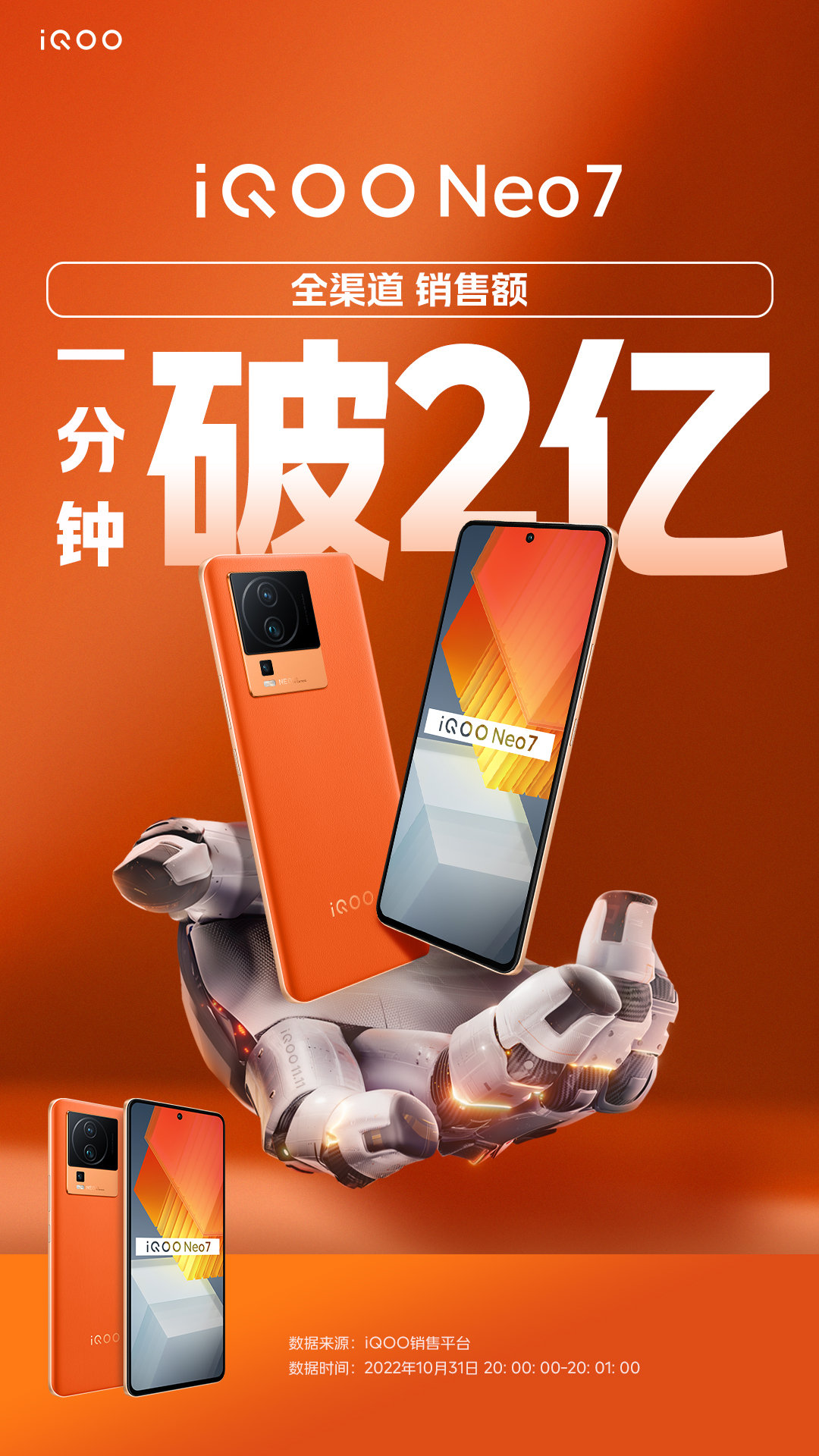
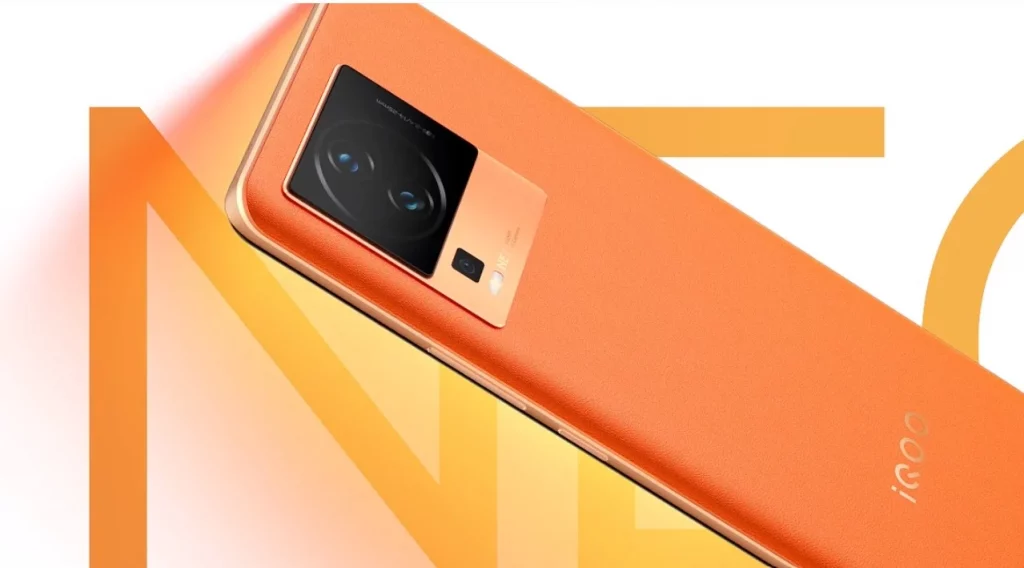
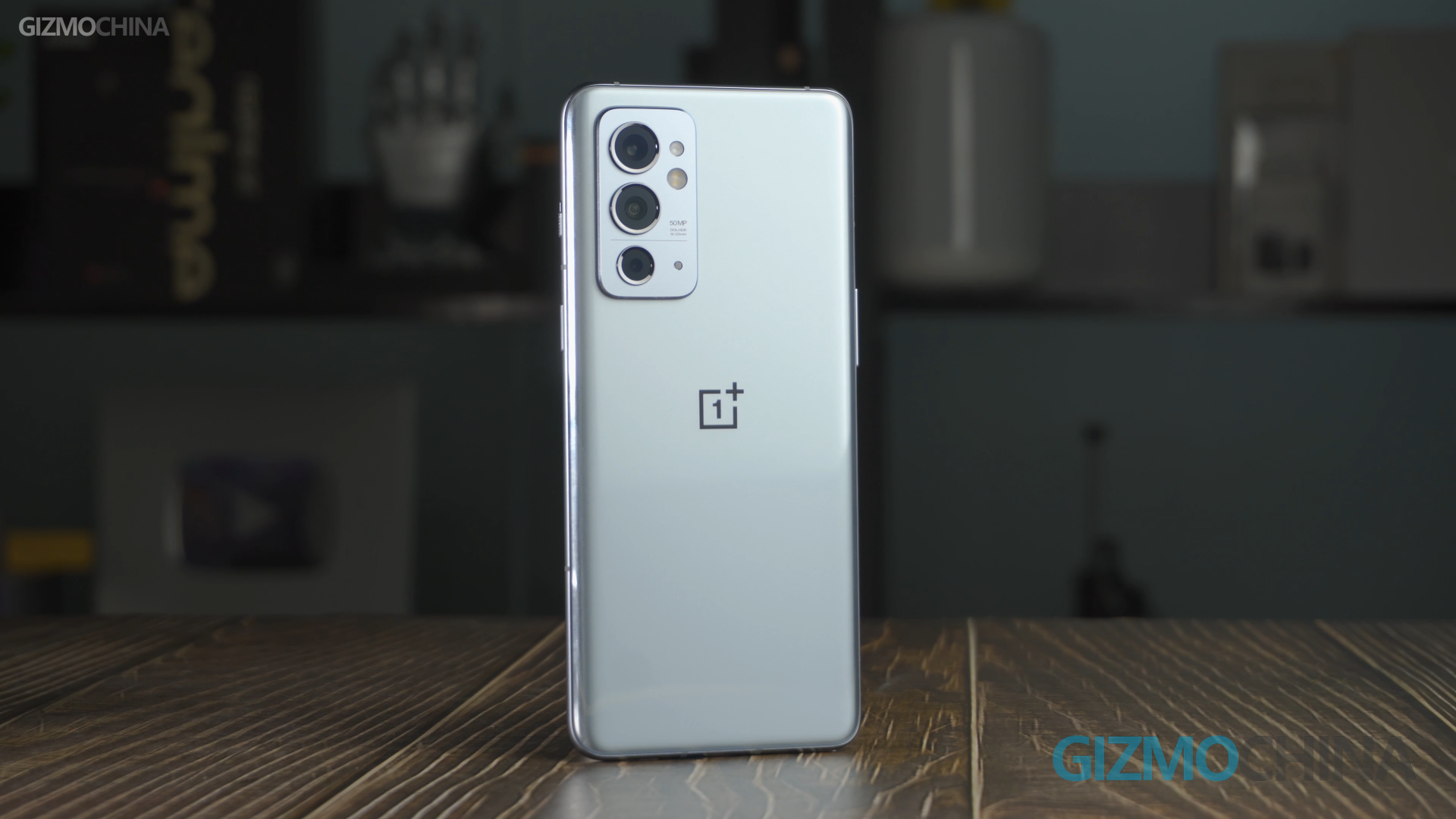
Yesterday, iQOO carried out the first sale of the iQOO Neo 7 in China. Soon after making it available for purchase, the company confirmed that sales of the Neo 7 exceeded 200 million Yuan in just one minute.
The iQOO Neo 7 was made available for purchase at 8 pm (local time) on Oct. 31 in China. It comes in four variants, such as 8 GB RAM + 128 GB storage for 2,699 Yuan (~$369), 8 GB RAM + 256 GB storage for 2,999 Yuan (~$410), 12 GB RAM + 256 GB storage for 3,299 Yuan (~$452), and 12 GB RAM + 512 GB storage for 3,599 Yuan (~$493).
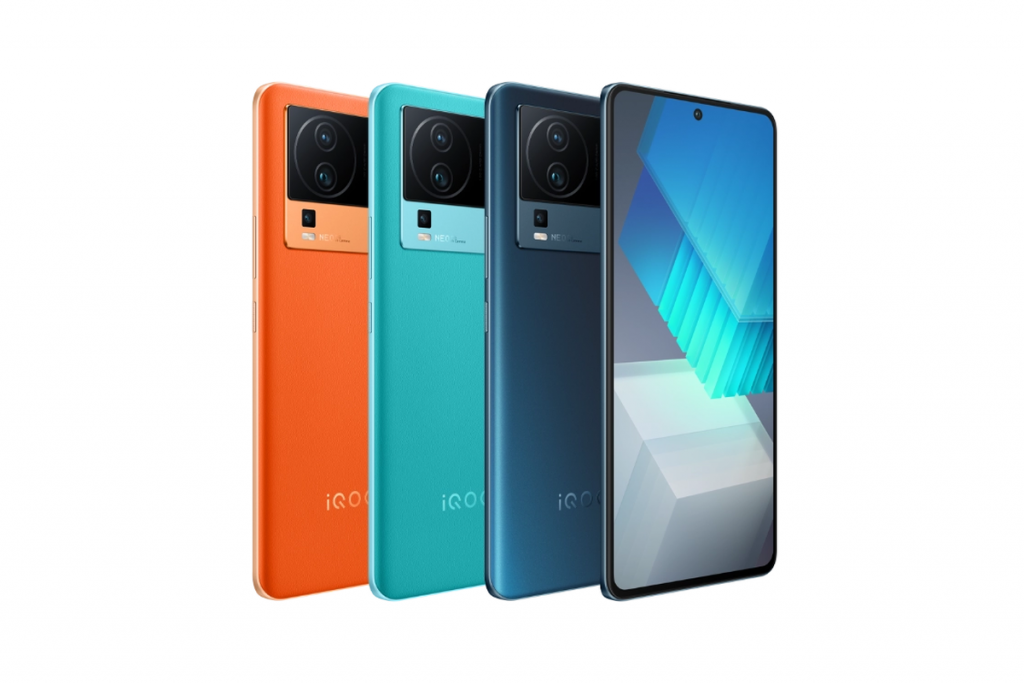
Hence, it seems that the company sold around 55,570 to 74,100 units of the Neo 7 in the first sale. Apart from Vivo China’s website, it was also available through other platforms like JD.com. It is available in colors like Geometric Black, Impression Blue, and Pop Orange.
iQOO Neo 7 specifications
iQOO Neo 7
The iQOO Neo 7 has a 6.78-inch E5 AMOLED display that offers a Full HD+ resolution, a 120Hz refresh rate, and an under-screen fingerprint scanner. It is powered by the Dimensity 9000 Plus chipset, up to 12 GB of LPDDR5 RAM, and a 5,000mAh battery that supports 120W charging. The phone runs on Android 13 OS, which is overlaid with the OriginOS Ocean UI.
The Neo 7 has a 16-megapixel camera on the front. The back panel of the device features a 50-megapixel Sony IMX766V camera with OIS support, an 8-megapixel ultra-wide lens, and a 2-megapixel macro camera. The handset offers up to 512 GB of UFS 3.1 storage.
DJI has launched a new flying suit of the Air 2S drone in China. The new smooth flying suit comes with an RC remote control and has a more expensive price tag than its predecessor. The new package comes with an RC remote control in place of the previous RC-N1 remote. The new remote control has a 5.5-inch display.
The more expansive controller for the Air 2S flying suit means that users do not need an extra smartphone and they can have greater image clarity via the controller even in direct sunlight. The package for the flying suit includes a battery butler, shoulder bag, ND mirror set, and three intelligent flight batteries. Other useful accessories are offered with the DJI Air 2S flying suit.
The Air 2S drone entered the industry back in April 2021 and is equipped with a 1-inch image sensor. It offers 5.4K/ 30fps and 4K/ 60fps video shooting. The new DJI Air 2S has upper, front, and rear obstacle avoidance capabilities. It has a built-in ADS-B receiver and it can automatically react when a manned aircraft appears in the nearby airspace.
The enhanced safety capability of the Air 2S provides a more seamless flight performance. Four dual-band antennas, adaptive 2.4GHz//5.8GHz provide the transmission capability of the Air 2S. It has a maximum image transmission distance of 12km and a maximum resolution of 1080 pixels. The Air 2S flying suit has a flight time of 31 minutes on a single charge.
The DJI Air 2S flying suit is available in China at a retail price of 9,399 yuan (~$1,287). It can be purchased from retail platforms like JD.com, while its global availability is unclear at this time.
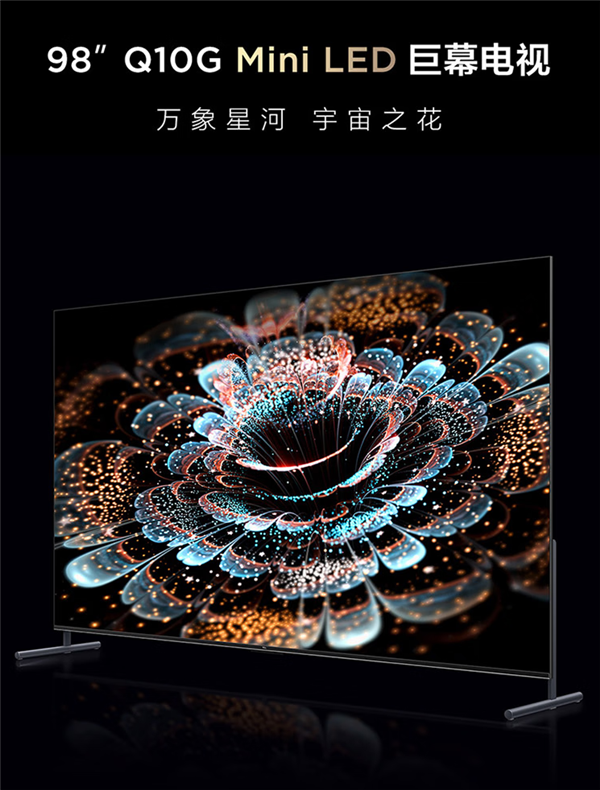
TCL has launched a new smart Mini LED TV with a mammoth 98-inch display in China. The TCL 98-inch Q10G is a Mini LED TV with 672 partitions. It uses the Mini LED micron-level dot-matrix light control technology and offers more powerful light control capabilities. The TV comes with a far higher number of partitions bringing significantly improved light control capabilities.
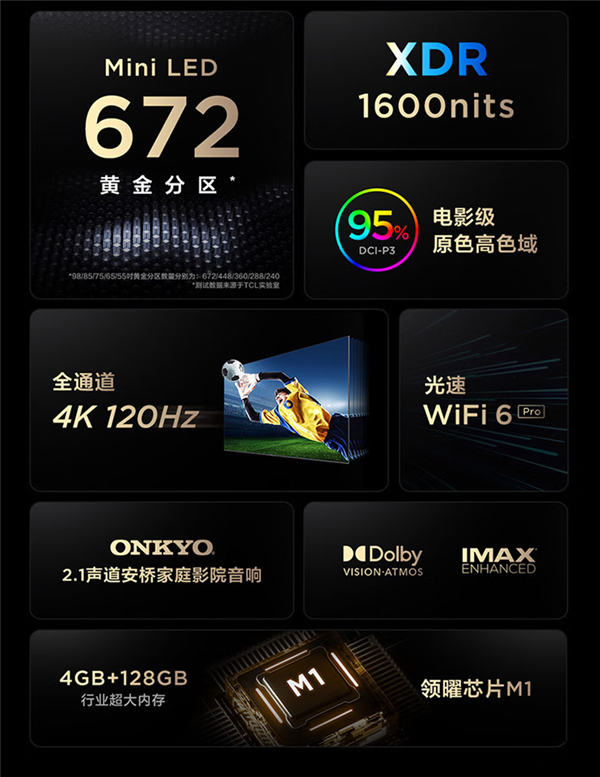
The new TV is powered by the premium M1 smart chip and integrates much of TCL’s image quality adjustment algorithms and technologies. It can adjust the image quality at the pixel level. The TV a 4GB memory and 28GB of storage, allowing more applications to be installed. It also offers a smooth performance. The TV is equipped with a high-performance sound system that supports Dolby Atmos and IMAX ENHANCED projection.
The 98Q10G has an expansive 98-inch 4K display It offers a 95% DCI-P3 color gamut, clear picture quality, substantially increased light precision, and a more refreshing image display. It uses 59 distributed backlight driver chips and the micro-lens lighthouse technology. Due to the TV’s 95% brightness uniformity, the halo is virtually absent for an immersive viewing experience. In terms of brightness, the TCL TV 98Q10G has a maximum of 1,600 nits. Its dynamic contrast ratio is 16 million: 1.
The TCL 98Q10G Smart TV is available for pre-order directly from TCL or via online platforms like JD.com. The TV has a hefty 21,999 yuan (~$3,012) price tag.
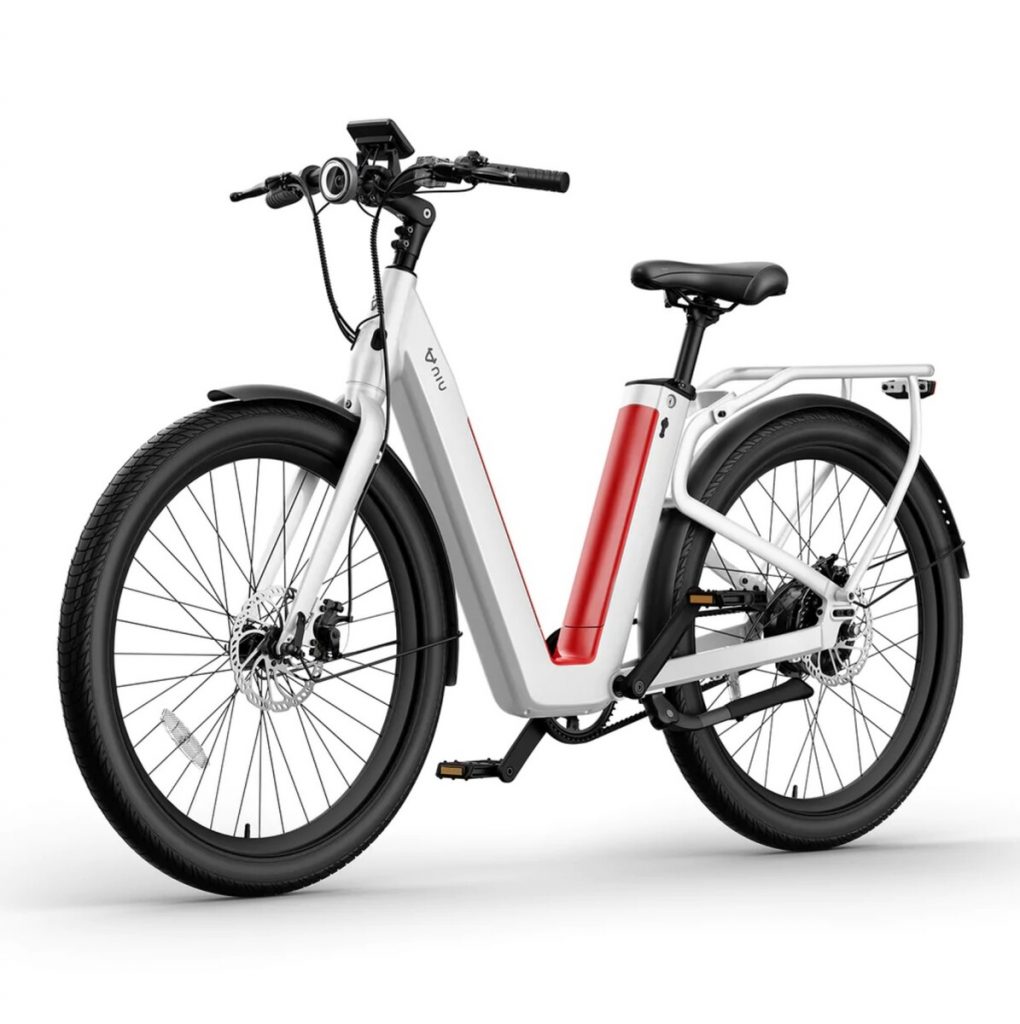
The NIU BQi-C3 e-bike has been unveiled. The new electric bike comes with twin swappable batteries and a combined capacity of 920Wh. The e-bike can reach a top speed of 28mph with a range of 62 miles.
The BQi-C3 is equipped with a 500W electric motor with a peak power of 750W and 45Nm of torque. Three riding modes are available on the e-bike to provide various degrees of assisted riding. The riding modes are Pedal, Throttle, and Pedal-Assist. The company also says that the e-bike’s Gates Carbon Belt drive is up to 33 times more durable than traditional metal chain drives. Its lightweight swappable batteries have a combined capacity of 920Wh and this accounts for its range of 62 miles (~100km). Each battery weighs about 5.4kg and can be easily carried and swapped when needed.
The NIU GQi-C3 has puncture-resistant tires that assure a stress-free ride even in difficult terrain. It has a 3.5-inch integrated TFT color display that provides a quick view of real-time riding information. You can monitor your speed, battery status, distance traveled, and other ride information. Lighting for the e-bike is provided by integrated halo and rear lights while front and rear disc brakes provide control for the bike.
The C3 e-bike weighs about 32kg and comes in a step-through frame. It is available in white, glossy gray, and Matte black colors. The GQi-C3 is priced at $1,999 and will be available from November 5 (the white and Matte models). The glossy gray model will be available on November 15. NIU is offering a two-year warranty that also covers both the battery and electric motor. The e-bike can be ordered directly from NIU and the company is offering free shipping to US customers.
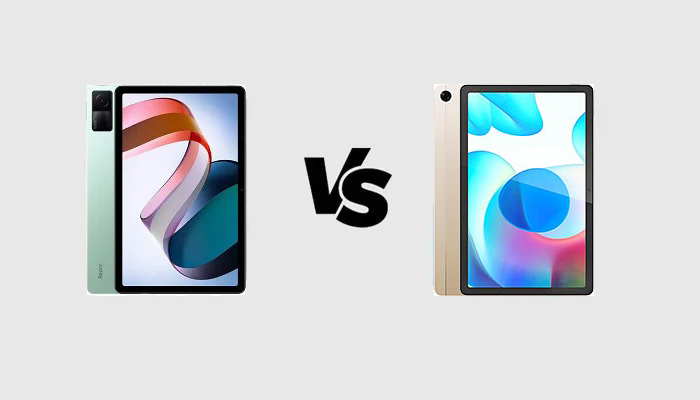
Finally, even Redmi has a tablet. Just like all of its phones, it is an affordable tablet, and this is its biggest advantage. It brings a powerful chipset and a big battery to the market at a very affordable price. But Redmi is not the only sub-brand that brought a tablet to the market: its direct rival is Realme, which came up with the Realme Pad. Another very affordable tablet that was released more than a year before, but still very actual. A lot of people are actually wondering whether they should go for the amazing street prices of the Realme tablet or they should get something launched more recently such as the Redmi one. Here is a comparison between the main specifications of the Redmi Pad and the Realme Pad which will help you to find it out.
The most beautiful tablet of the duo is the Realme Pad. First of all, it is entirely built with a premium material as it comes with an aluminum frame and aluminum back. It is very thin and even pretty lightweight. Further, it does not have a big camera module but just a single camera placed directly on the rear cover, so it provides a very minimalistic look. Last but not least, it is more compact because it packs a smaller display and a smaller battery. The Redmi Pad is built with a plastic back and an aluminum frame, it is bigger and chunkier than its rival. Further, it has a big camera module, not the best for design lovers. Both tablets come with a pretty high screen to body ratio, the bezels around the displays are very narrow and the screen covers more than 80 percent of the front panel.
Display
Are you looking for the most advanced display overall? If so, you should opt for the Redmi Pad without thinking twice. First of all, with a diagonal of 10.61 inches, it has a wider display than its opponent. Further, it is able to show up to one billion colors with a Full HD+ resolution of 1200 x 2000 pixels; last but not least, it has a 90 Hz refresh rate, great for gaming and for those who want a smoother viewing experience. The Realme Pad has a 10.4-inch panel with a 10.4-inch diagonal showing the images with a Full HD+ resolution of 1200 x 2000 pixels. Unfortunately, both handsets feature IPS LCD panels, so do not expect those deep blacks and brilliant colors you can get with OLED displays. But they both come with four stereo speakers, so the audio experience is good.
Specs & Software
The most powerful hardware setup belongs to the Redmi Pad. It is powered by the new MediaTek Helio G99 chipset built with a 6 nm production process and with an octa-core architecture composed of two Cortex A76 CPUs running at a max frequency of 2.2 GHz, six Cortex A55 CPUs running at 2 GHz, and a Mali G57 MC2 GPU. Alongside the chipset, there are up to 6 GB of RAM and up to 128 GB of UFS 2.2 native storage. With the Realme Pad, you get an inferior MediaTek Helio G80 mobile platform paired with up to 6 GB of RAM and up to 128 GB of native storage. Besides having a better hardware, the Redmi Pad ships with Android 12 out of the box, while the Realme Pad is still based on Android 11.
Camera
There are no big differences between these two tablets when it comes to the cameras, as their sensors are the same. They come with an 8 MP rear camera and an 8 MP ultrawide front camera sporting a FOV of 105 degrees. The photo quality is more or less the same and they are able to record videos with a 1080p resolution at 30 fps.
The Redmi Pad is equipped with a big battery and it is able to provide a longer battery life with every usage. Given its bigger dimensions, it was easier for Xiaomi to include a bigger battery. The Realme Pad has a smaller battery but it supports reverse charging allowing you to use it as a power bank.
Price
The starting price of the Redmi Pad in the Chinese market roughly translates into €250 or $250 at the actual change, while you can easily find the Realme Pad for less than €160 or $160. The Redmi tablet wins the comparison, but its price is way higher.
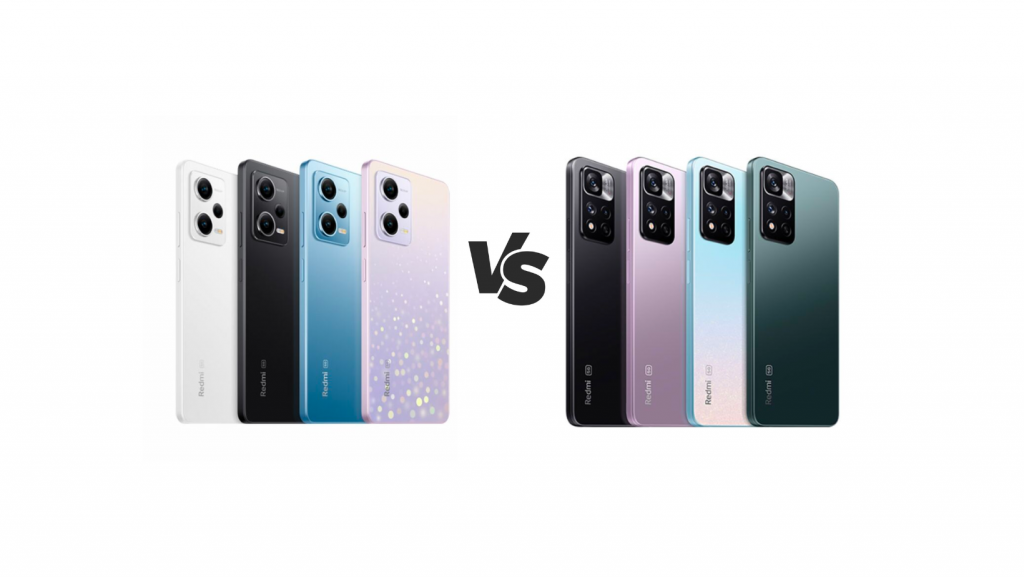
Xiaomi announced the Redmi Note 12 series a few days ago and with it, we have got four new value for money devices. The four devices are targeted at different price segments and offers users the flexibility of choosing the best model that suits their needs. The Redmi Note 12 series lineup consists of a vanilla Redmi Note 12, a more powerful Redmi Note 12 Pro, a premium Redmi Note 12 Pro Plus, and also a special Redmi Note 12 Explorer Edition. We have covered the entire Redmi Note 12 lineup in a previous comparison and we’ve also compared how the new vanilla Redmi Note 12 fares against its predecessor. But in this article, let’s take a closer look at how the Redmi Note 12 Pro compares against the Redmi Note 11 Pro model.
The Redmi Note 12 Pro comes with a new Dimensity 1080 chipset as compared to the Dimensity 920 chip found on the Redmi Note 11 Pro model in China. The new model is both lighter and thinner than its predecessor, making it easier for users to hold the device, even with one hand. The phone also upgrades the memory configuration, offering up to 12GB of RAM onboard.
Redmi Note 12 Pro vs Redmi Note 11 Pro
Xiaomi Redmi Note 12 Pro vs Xiaomi Redmi Note 11 Pro
Xiaomi Redmi Note 12 Pro
Xiaomi Redmi Note 11 Pro
DIMENSIONS AND WEIGHT
162.9 x 76 x 7.9 mm, 187 g
163.7 x 76.2 x 8.3 mm, 207 g
DISPLAY
6.67 inches, 1080 x 2400 pixels (Full HD+), OLED, 120Hz
6.67 inches, 1080 x 2400p (Full HD+), AMOLED, 120Hz
Similar to how the vanilla Redmi Note 12 model cleared up the clutter at the back with just two cameras, the Redmi Note 12 Pro too follows suit with a simple arrangement of its triple camera setup. In contrast, the Redmi Note 11 Pro featured a complex array of sensors at the back in its rectangular camera module. There’s no doubt that the new design looks a lot better and refined than its predecessor.
In terms of dimensions, the Redmi Note 12 Pro is thinner at 7.9mm vs 8.3 mm on the Redmi Note 11 Pro 5G model. The new model also reduces the weight to 187 grams. Notably, the Note 12 is both smaller and narrower, making it more compact than its predecessor.
Both the models are IP53 certified, so they are dust and splash resistant. The Redmi Note 12 Pro comes in Black, Blue White, and a special Violet color option while the Redmi Note 11 Pro came in Mysterious Black, Forest Green, Timeless Purple, and Milky Way Blue color options.
Display
The Redmi Note 12 Pro model features with a 6.67-inch OLED panel featuring 2400 x 1080p resolution, 120Hz refresh rate, and 900 nits HBM brightness. In comparison, the older model comes with a same sized 6.67-inch AMOLED panel featuring 2400 x 1080p resolution and 120Hz refresh rate. Surprisingly, the older model has a brighter display panel at 1200 nits when compared to the new Note 12 Pro.
However, note that the Redmi Note 12 Pro supports HDR10+ certification.
Specs & Software
The Redmi Note 12 Pro comes with the relatively powerful MediaTek Dimensity 1080 processor clocked at 2.6GHz. In comparison, the Redmi Note 11 Pro came with the the Dimensity 920 processor clocked at 2.5GHz. Both these chips support 5G networks and should offer pretty good performance for its price segment.
Both the models offer start at 6GB RAM and 128GB of ROM and but only the new Redmi Note 12 Pro offers up to 12GB of RAM and 256GB of storage. The older Redmi Note 11 Pro maxes out at 8GB RAM.
The Redmi Note 12 Pro comes with Android 12 out of the box with MIUI 13. In comparison, the Redmi Note 11 Pro features Android 11 based MIUI 12.5 on top.
Camera
Redmi has given up the high resolution 108MP sensor on the new Redmi Note 12 Pro model. So it comes with a smaller 50MP primary camera with f/1.9 aperture along with the same two secondary sensors, 8MP f/1.9 ultra wide shooter, and a 2MP macro shooter found on its predecessor. To be fair, the downgrade from the 108MP sensor on the Redmi Note 11 Pro might not result in any major difference in the camera quality.
On the front, Redmi has not given any upgrades to the new model. So both the phones feature the same 16MP shooter for selfies and video calls.
Like the camera department, there are some slight changes in the battery department too on the new model. The Redmi Note 12 Pro comes with a 5000mAh battery with 67W fast charging support. This battery capacity is slightly lower than the 5160mAh capacity found on the Note 11 Pro model. Notably, the charging speed remains the same as the older model.
Price
The Redmi Note 12 Pro model is available in the Chinese market with an official starting price tag of around €240 or $240, but internationally it will sold at a higher price tag. In comparison, the Redmi Note 11 Pro is available for around $240 on global retailers like Giztop.
Considering the price difference, which one would you pick?
The iQOO Neo 7 finally went on sale in China today, and the rumors about the speed edition of the smartphone have already started to pick up. A popular Indian tipster has shared some key specifications of the alleged iQOO Neo 7 SE and revealed that it will carry the same specs as the Neo 7 5G, except for the processor. Here are the details.
According to tipster Paras Guglani, iQOO Neo 7 SE will come with an AMOLED display offering a 120Hz refresh rate. The handset will be powered by a Snapdragon 8 series processor paired with 8GB/ 12GB RAM. It is currently unknown which processor will be packed inside this smartphone. Our best guess is Snapdragon 8+ Gen 1.
Further, the Neo 7 SE is tipped to feature a 5000mAh battery and support particularly extreme 120W fast charging. For reference, the Neo 6 SE came with a 4700mAh battery and 80W fast charging support. The handset is also said to sport a 50MP main camera with support for optical image stabilization (OIS) on the back. It will likely have a triple camera setup on the back.
Guglani says the only difference between the iQOO Neo 7 SE and Neo 7 5G will be the processor. The Neo 7 comes with a MediaTek 9000+ SoC. In addition, it is expected that the Neo 7 SE will debut in India as the Neo 7 5G.
Details about the Neo 7 SE are still pretty short. iQOO is yet to confirm any details about the alleged handset. We should learn more details about it in the coming days. Stick around for the updates.
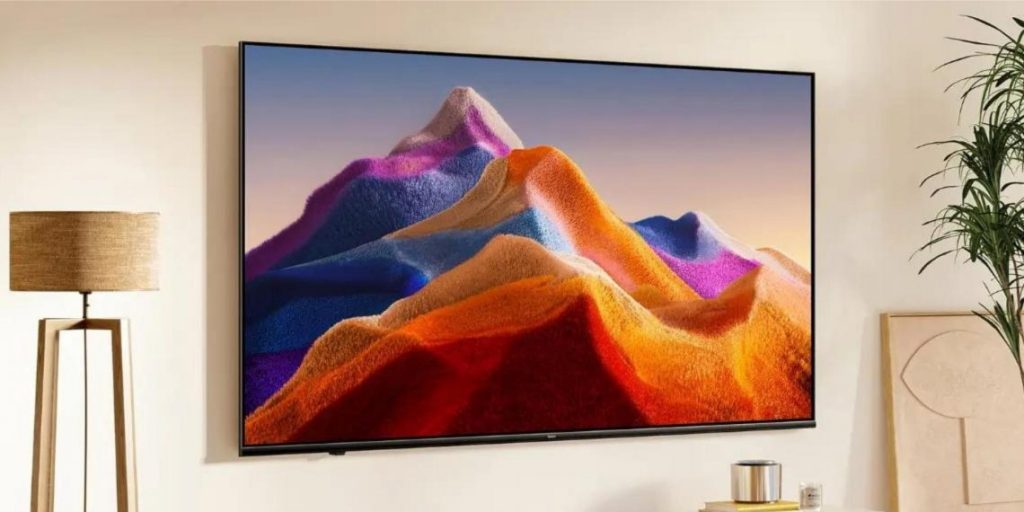
Earlier this month, Xiaomi launched the new Redmi smart TV A70 in China and today the brand finally made the device available for purchase in the country. The Redmi TV comes with a 70-inch 4K screen with a contrast ratio of up to 5000:1 and a 96 percent screen-to-body ratio. It features 20W speakers and is equipped with a Quad-core A35 processor paired with 1.5GB of RAM and 8GB of flash memory. Let’s take a detailed look at its price and specifications.
Redmi Smart TV A70 Pricing
The Redmi Smart TV A70 has been priced at 2199 yuan ($306) and is now available for purchase in China through the company’s official website and Jingdong. We are not sure if the company will bring the smart TV to the global market. In any case, we’ll keep you updated.
Redmi Smart TV A70 Specifications
The Redmi Smart TV A70 boasts a 70-inch display that produces a 4K (3840×2160 pixels) resolution and has a 5,000:1 contrast ratio. It has a 96% screen-to-body ratio and a 10-bit panel with 178° viewing angles. It supports a 78% DCI-P3 color gamut, 1 billion primary color displays, and a 60Hz refresh rate.
The Smart TV A70 comes equipped with a Quad-core A35 processor paired with up to 1.5GB of RAM, and 8GB of flash memory onboard. There are two 10W speakers that produce high-quality audio. Moreover, the TV uses an air duct design for better bass. It comes pre-installed with the Android-based MIUI TV.
The TV also comes with 2.4G Wi-Fi and infrared support. The Redmi TV has two USB ports, two HDMI interfaces, an antenna, S/PDIF, AV input, and a network port.
There are indications that Apple could review downwards its production targets due to COVID-19 curbs affecting its China operations. Sources point to a possible decline of up to 30% at one of the world’s biggest factories in Zhengzhou next month. The impact of the slump is however being mitigated by Foxconn in boosting production at another facility in Shenzhen.
The Foxconn Zhengzhou plant has over 200,000 workers but has endured some stringent measures aimed at curbing the spread of COVID-19. This led to several workers fleeing the site a few days back. This comes at a time when demand for electronics is traditionally on an upward swing. Foxconn in an official statement on October 30, said it was bringing the situation under control. It also says it will coordinate backup production with other plants to reduce any potentially damaging impact.
As of this moment, Apple has not made any official statement on the issue. Foxconn is Apple’s biggest iPhone vendor and its share price declined by 1.4% at the close on Monday. Foxconn accounts for up to 70% of global iPhone shipments annually. Foxconn’s iPhone production accounts for up to 45% of the overall revenue of the Taiwanese manufacturer. Foxconn has production facilities in India but the Zhengzhou plant is its largest.
Although production continues in the plant, it is under strict COVID-19 protocols put in place to quell any major outbreak. The measures in place in the factory include full-scale lockdowns. Even when factories in such areas are allowed to be open, they must operate under a closed-loop system that prevents workers from their regular work routines, as they must live in the facility. The company also banned dining inside canteens as workers were expected to eat in their dormitories. These heavy measures resulted in some workers allegedly fleeing from the facility.
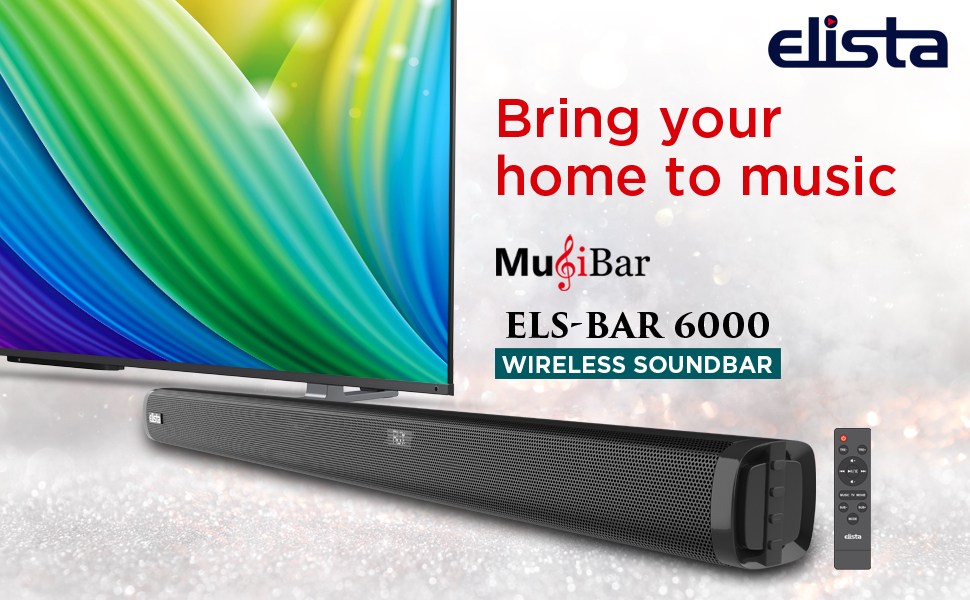
Electronics brand Elista has launched its first soundbar, MusiBar ELS Bar 6000. The brand hopes to replicate its success with its range of webOS TVs and speakers with this launch. The soundbar comes with a high-end, polished look and boasts a 60W output with a digital amplifier. It pairs seamlessly with smart home products like a smart TV, enhancing the overall experience of the users. Let’s have a closer look at its specifications and pricing.
The MusiBar ELS Bar 6000 offers a 60W output with a digital amplifier. It is claimed to provide immersive and high-quality audio. It sports a sleek and compact cylindrical design with a shiny front grille.
There are a variety of connectivity options available, including AUX, Coaxial, and USB. Additionally, the MusiBar ELS Bar 6000 features a 7-segment LED display and HDMI ARC, which provide the user with all the information they need. It uses Bluetooth v5.0 streaming, so you can expect a wireless range of up to 10 meters.
The soundbar comes with a remote control that will allow users to adjust the volume, select tracks, and play/pause music. Its ergonomic design allows for a better grip and perfectly complements the glossy design of the soundbar. The audio product also comes with 1 year of warranty.
Elista did not disclose the battery capacity and playback time of the soundbar. Also, we are not aware of its dimensions and weight.
The Elista MusiBar ELS Bar 6000 has an MRP (maximum retail price) of Rs. 8000 and will be sold at a discounted price of Rs. 4,999. It will be available for purchase offline through various outlets. The company has also partnered with Flipkart and Amazon to sell the soundbar through online channels. It will go on sale starting October 31.
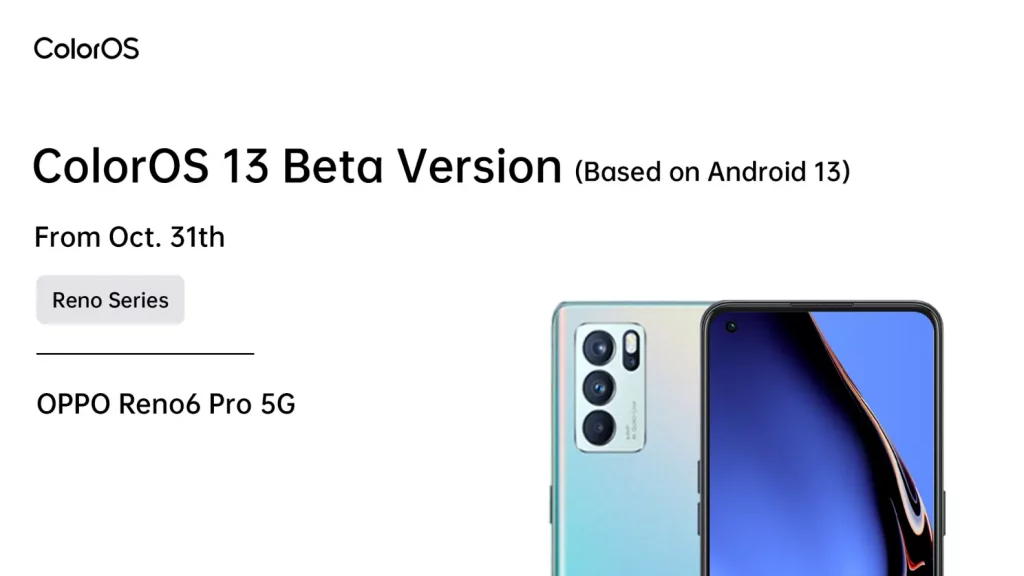
OPPO has been doing a really impressive job of updating its smartphones to Android 13. The Chinese company has even outdone Samsung, which is regarded as the undisputed king of software updates. Over the last few months, OPPO has rolled out stable and beta builds of ColorOS 13 to not only its flagships but also its mid-range and budget smartphones. In the latest development, the firm has commenced ColorOS 13 beta recruitment for a bunch of new devices, including the OPPO Reno 6 Pro, 6 Pro Plus, and Reno 5 Pro Plus.
As per recent announcements on the community forum, OPPO has kicked off the ColorOS 13 beta program for the OPPO Reno 6 Pro (In India), Reno 6 Pro, and Reno 6 Pro Plus (In China). Users of these smartphones can now get an early taste of the software and also help the company improve the overall experience.
In India, the company is looking for 5000 Reno 6 Pro users to test the beta software. Interested users can submit the application for the same by going to the “Software Update” section in the device settings. Tap on the settings icon and select “Apply for Beta Version.” Next, fill out the application, and you will receive the beta update on your device once your application is accepted.
However, note that since it’s a beta release, you may encounter some bugs. You can report the bugs through the ‘Feedback’ APP on the desktop or by opening the Google Dialer and typing *#800#.
If we talk about the update itself, the ColorOS 13 (review) introduces a bunch of new features and improvements. It brings an Aquamorphic design and includes all the new features Google added in Android 13. It also comes with several exclusives, such as a Shadow-Reflective Clock widget, an IoT device control module, media playback controls for the updated Control Center, a Meeting Assistant, and more.
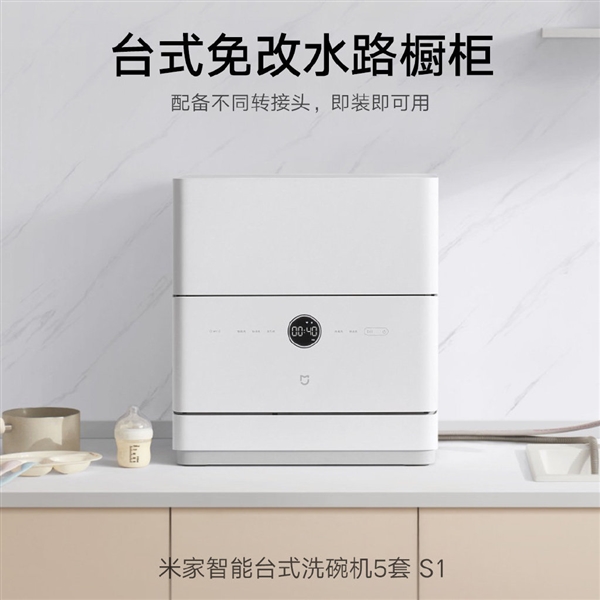
Xiaomi has unveiled the MIJIA Smart Desktop Dishwasher S1 in China. The product will be first sold under crowdfunding starting at 10:00 am on November 1. The crowdfunding price is 1399 yuan ($191) but the product will retail for 1699 yuan ($232) after the crowdfunding exercise.
The MIJIA Smart Desktop Dishwasher S1 can take five sets of dishes at a go and it is equipped with different adapters to accommodate different shapes of dishes. The device has a width of 550mm while the compartment has a depth of 350mm. It occupies about 0.19m² of table space. Thanks to the design of the folding door, the opening depth of the product is only 600mm.
The dishwasher is equipped with two groups of 3-fork high-frequency spray arms at the bottom. The outlet pressure is 30kPa. The device supports optical water quality monitoring and AI intelligent algorithms. In just 10 seconds, the degree of dirt can be determined and the wash mode is automatically selected. Xiaomi claims that the MIJIA dishwasher consumes 85% less water compared to hand washing. It can wash 5 sets of standard tableware and chopsticks at one time, a total of 39 pieces of tableware, and the power consumption of a single washing is 0.53kWh.
Furthermore, the MIJIA Dishwasher S1 adopts PTC hot air circulation drying with an ultraviolet (UV) bacteriostatic rate of 99.9%. The dishwasher supports 7 washing modes, including smart wash (75°C), standard wash (75°C), strong wash (75°C), disinfection wash (75°C), quick wash (55°C), Energy saving wash (56°C), Self-cleaning (55°C), and Single drying (75°C).
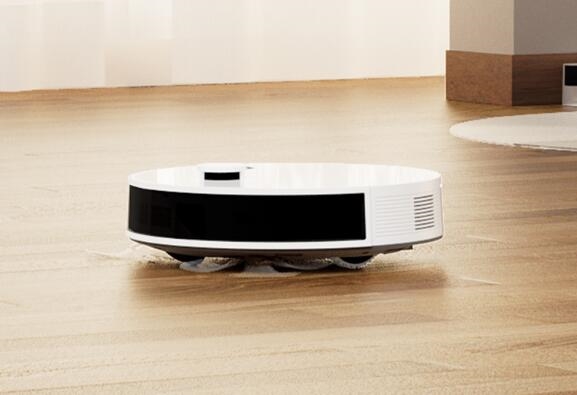
Chinese tech giant OPPO has launched a new robot vacuum cleaner in China. The product’s name translates as OPPO Sweeping Robot N3. It uses a high-frequency sound wave vibration to mop the floor and can effectively remove floor stains. The product carries a starting price tag of 1999 yuan ($274).
The OPPO Sweeping Robot N3 is capable of up to 4,000 pa suction power thanks to an upgraded motor onboard. The product can perform 12,000 high-frequency sonic vibration mopping per minute which is suitable for different cleaning scenarios.
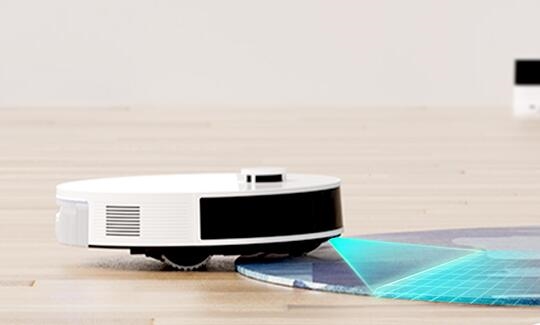
The new product has a built-in dToF lidar with a scanning radius of 10m. The LiDar technology which can accurately build maps, with a construction area of up to 900 square meters. It also utilizes the SLAM algorithm which can assist homeowners in intelligently planning cleaning routes based on previous usages.
At the same time, the OPPO Sweeping Robot N3 is equipped with the Freemove full-body induction system, with 31 sensors and 20+ independent patented algorithms. These can also aid the vacuum cleaner to navigate complex scenes such as sofas, bed bottoms, and carpets, without worrying about getting stuck.
In addition, this product can be connected to OPPO’s Smart Home companion app from where users can control the device. The app offers controls such as scheduled cleaning, gear adjustment, etc. It can also be linked with the smart home hub and set to trigger the cleaning mode after closing the door. There is also support for OPPO’s smart voice control.
OnePlus smartphones boot vanilla ColorOS in China. Hence, with the advent of ColorOS 13, the brand’s handsets soon became part of the beta program as all of them are either flagships or upper mid-rangers.
Last week, all the remaining eligible OnePlus phones joined the Android 13-based ColorOS 13 beta program. Just a few days from that, Oppo has already revealed when most of these devices will receive the stable update.
OnePlus 9RT
Today, Oppo China disclosed the ColorOS 13 update plan for the month of November 2022. The schedule reveals the date on which the last remaining eligible OnePlus smartphones will get access to the stable update.
According to the timeline, the following OnePlus handsets will get access to the ColorOS 13 stable update on November 16 in China.
OnePlus Ace
OnePlus 9RT
OnePlus 9R
OnePlus 8T
OnePlus 8 Pro
OnePlus 8
The only device missing on the list is the latest OnePlus Ace Pro (aka OnePlus 10T), which recently got a Genshin Impact limited edition.
Hence, apart from the Ace Pro, all the eligible OnePlus phones will boot Android 13 stable software as early as mid-November in China. We wish we could say the same for global variants of these smartphones. Unfortunately, that doesn’t seem to be the case as of now.
Oppo has come a long way by improving its Android skin a lot. In fact, it currently has more models running the Android 13 stable build than Samsung.
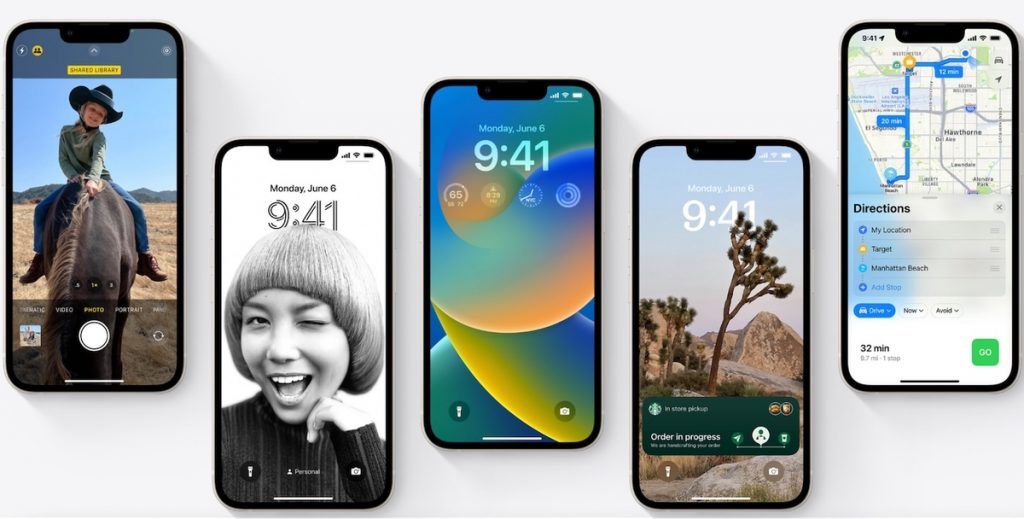
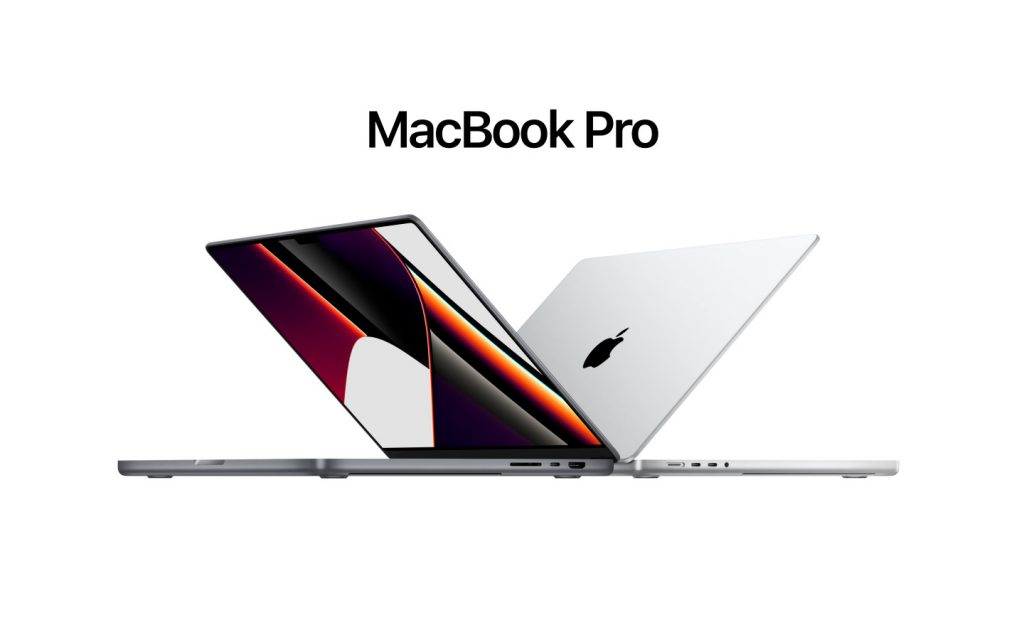
Apple was tipped to launch new Macs this month or the next. At last week’s quarterly earnings call, CEO Tim Cook called the product line ‘set’ for this holiday season. Additionally, the company’s CFO also added that there would be no MacBook Pro this year like last year. Now, Bloomberg’s Mark Gurman reports that the Cupertino-based tech giant will unveil its next-generation Macs early next year. He adds that the company aims to introduce MacBook Pros in the first quarter of 2023. This seems highly unusual considering Apple does not launch products between January to March.
Apple launched the Mac Studio earlier in March this year. Hence, the next-generation 14 and 16-inch MacBook Pros powered by the upgraded M2 processor are expected to debut in the first half of March. The devices will succeed last year’s models. Gurman adds that the launches have been tied to the upcoming macOS Ventura 13.3 and iOS 16.3. Those software updates are expected to roll out between early February and the beginning of March.
Gurman says “When I first reported on the new MacBook Pros in June, I said that Apple was aiming for a release between the end of 2022 and early 2023, so I wouldn’t consider a March release to be late by any means”
The report also adds that the iOS 16.2 and iPadOS 16.2 updates are expected to be released around mid-December. Apple had earlier hoped to include the MacBook Pro as a part of those releases, but it doesn’t make much sense. Alongside the new MacBooks, Apple will also likely introduce the M2-powered Mac Mini and Apple Silicone Mac Pro.
The Redmi Note 12 series was recently unveiled last week in China. The lineup consists of regular, Pro, Pro+ and Discover Edition variants. The smartphone’s availability outside China remains unknown for now. Tipster Kacper Skrzpek has unearthed some details about the Redmi Note 12 Pro+ in a MIUI codebase.
Skrzpek revealed that the Redmi Note 12 Pro+ could arrive as Xiaomi 12i HyperCharge in the Indian market. It will likely arrive as the successor to the Xiaomi 11i HyperCharge that debuted earlier this year. This doesn’t seem surprising since the Xiaomi 11i HyperCharge is a rebranded version of the Redmi Note 11 Pro+ 5G in China. The tipster did not reveal any information on the standard Redmi Note 12 Pro. However, the Indian variant of the Redmi Note 12 Pro has already appeared in the IMEI database and has also bagged BIS certification. It’s likely that the Xiaomi 12i could be a rebadged version of the Redmi Note 12 Pro.
Since the Xiaomi 12i HyperCharge is tipped to be a rebranded Redmi Note 12 Pro+, we can expect the same specifications. This means that the device could come with a 6.67-inch FHD+ AMOLED display with a 120Hz refresh rate, 900 nits brightness, HDR10+, and Dolby Vision support. It is powered by a Dimensity 1080 SoC coupled with up to 12GB RAM and 256GB storage. There is a VC cooling system for heat dissipation.
The Redmi Note 12 Pro+ is backed by a 5,000mAh battery with support for 120W fast charging. There is a 200MP main camera with OIS support, an 8MP ultra-wide lens, and a 2MP macro unit. The device features a side-mounted fingerprint scanner and packs connectivity options like a USB-C port, 5G, WiFi-6, Bluetooth 5.2, IR Blaster, and an X-Axis Linear motor.
Over the last few days, leaks and rumours about the Realme 10 series have been surfacing online. Now the Chinese brand has confirmed that the Realme 10 will debut globally on November 9th. It is likely to be announced alongside the Realme 10 Pro+. Additionally, Realme’s Indonesia branch has listed the Realme 10 on its official website revealing key specifications.
As per the official listing, the Realme 10 is confirmed to come with a 6.4-inch AMOLED display with a punch-hole cutout. It will offer an FHD+ resolution and a 90Hz refresh rate. There are two traditional circular camera rings on the back panel devoid of any camera island. The power button doubles up as a fingerprint scanner. The device will feature a 50MP primary camera paired with a 2MP secondary lens along with an LED flash. On the front, there will be a 16MP selfie snapper.
Under the hood, the Realme 10 is confirmed to be powered by MediaTek’s Helio G99 processor based on a 6nm process. It scores 4,00,086 points in AnTuTu benchmark results. The device is listed in 4GB and 8GB RAM options paired with 128GB and 256GB storage. There is also said to be 8GB virtual RAM support. The upcoming offering will be backed by a 5,000mAh battery unit with support for 33W fast charging. The smartphone will run on Realme UI 3.0 based on Android 12 out of the box.
Connectivity-wise, the Realme 10 comes with 3.5mm jack, USB-C port, dual 4G VoLTE, WiFi, and Bluetooth 5.3
The Realme 10 will come in Clash Black and Rush White colour options.
Twitter is apparently planning on launching a new paid plan for verifications. The company is rumored to soon charge a per month fee for verifications among other plans. So let’s have a look.
For those unaware, this news follows soon after Elon Musk finally sealed the deal for acquriing the microblogging website for a hefty sum of 44 billion US Dollars. This was also followed by Musk firing the CEO and CFO of Twitter. Now, sources close to the matter have claimed that the brand will soon turn Twitter Blue, which is its optional 4.99 US Dollars subscription service that offers additional features, into a new paid subscription that is more expensive and even verifies its users.
Image Via Reuters
This new Twitter Blue service will reportedly cost around 19.99 US Dollars per month. Furthermore, users that are verified already will have around 90 days under the current plant to subscribe or face losing their blue tick mark. A couple of days prior, the employees of the social media blogging platform were also told that they must launch the new features by the 7th of November 2022, or they will be fired. This is in like with Elon Musk’s directive to terminate workers that are failing to meet deadlines.
Twitter Blue initially helped offer an ad free experience and even changes the app’s home screen symbol. It was launched around a year ago and it was a new source of revenue for the brand that lived mostly from advertising. On the other hand, Elon Musk wishes to change the revenue stream by having subscriptions make up about 50 percent of the total revenue. He also added that he wants to change the way the company validates accounts and handles bots as well.
Just like Samsung, Huawei has been releasing foldable smartphones since 2019. However, the company debuted its first clamshell foldable phone (Huawei P50 Pocket) only last year.
Almost a year from that, the firm is now gearing up to launch its second clamshell foldable handset, the Huawei P50 Pocket S. This device is set to go official later this week.
Like any other smartphone, this one has leaked multiple times in the last few weeks. It has also been officially teased by the company.
Here in this article, let’s look at everything known about this device ahead of its official launch.
Huawei P50 Pocket S | Source: Huawei
Huawei P50 Pocket S Launch Date
The Huawei P50 Pocket S is scheduled to launch in China on November 2 (Wednesday). It will be made official at an event planned to begin at 7 PM GMT+8.
The conference will be live-streamed on Weibo and other leading Chinese video streaming platforms.
Huawei P50 Pocket S Design
The Huawei P50 Pocket S is expected to have a somewhat same design as the original Huawei P50. However, it may not feature an external display on the rear but the official teaser video suggests otherwise.
The phone will likely sport a metal frame, metal hinge, and a glass back. It will also house a side-mounted fingerprint sensor.
Lastly, it will probably arrive in six colors, such as black, blue, pink, white, green, and yellow.
Huawei P50 Pocket S Specifications
The Huawei P50 Pocket S is said to be a watered-down version of the Huawei P50 Pocket. However, it will come with the company’s in-house XMAGE image processing algorithm, which is not present in the original.
The handset is tipped to be powered by a 4G variant of Qualcomm Snapdragon 778G Soc paired with 8GB RAM. For comparison, the previous model is run by a 4G version of Qualcomm Snapdragon 888 chipset coupled with 8GB/12GB RAM.
Anyway, the P50 Pocket S will retain the 120Hz refresh rate from the P50 Pocket. Unfortunately, we don’t have further details on the display size and resolution.
Previously, it was said that the smartphone will be available in 256GB and 512GB storage models. But the latest leak suggests that there will be a 128GB variant instead of 512GB.
Huawei P50 Pocket S Expected Price
As mentioned earlier, the Huawei P50 Pocket S was earlier tipped to arrive in 256GB and 512GB storage variants priced at ¥4,999 ($685) and ¥6,999 ($959), respectively.
However, as per the latest information, it may come in 128GB and 256GB versions. The base model may either start at ¥5,488 ($752) or ¥6,488 ($889).
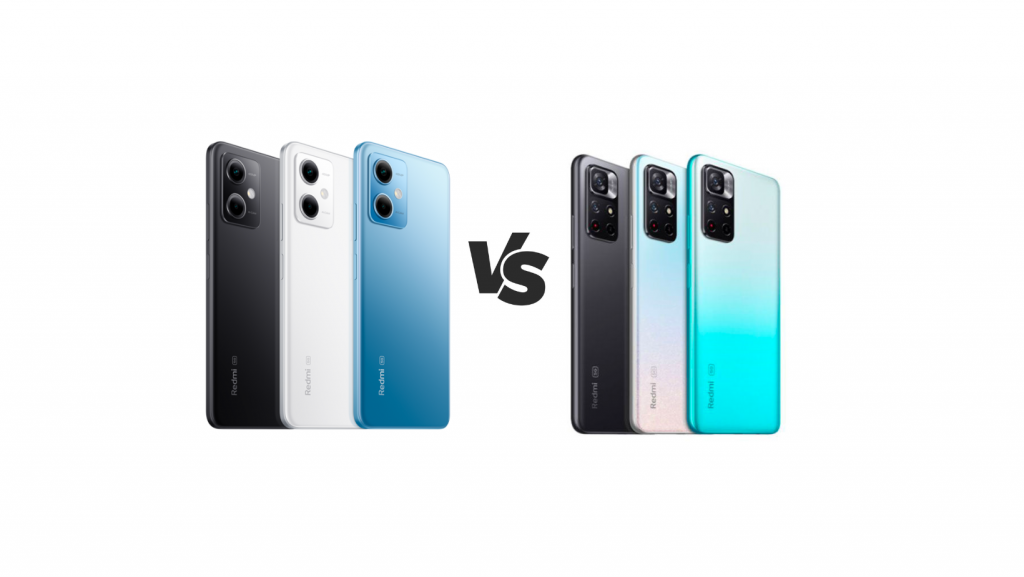
Xiaomi’s independent brand Redmi released the latest Redmi Note 12 series lineup in China recently. The lineup consists of multiple smartphones including the Redmi Note 12, Redmi Note 12 Pro, Redmi Note 12 Pro Plus, and Redmi Note 12 Explorer Edition. We have already taken a look at how these four models differ from each other in a dedicated comparison, but it’s time to check out how the individual models compare to their predecessors.
The Redmi Note 12 comes with a new Cortex A78 powered Snapdragon 4 Gen 1 chipset as compared to the Cortex A76 powered Dimensity 810 chipset on the Redmi Note 11. The new model also shaves off a few grams off its weight and upgrades the display to a Samsung AMOLED panel instead of IPS LCD. But there are a bunch of changes too, which could be called as downgrades, especially in the camera department.
So let’s take a closer look at how the new Redmi vanilla model compares against its predecessor in this Redmi Note 12 vs Redmi Note 11 comparison.
Xiaomi Redmi Note 12 vs Xiaomi Redmi Note 11
Xiaomi Redmi Note 12
Xiaomi Redmi Note 11
DIMENSIONS AND WEIGHT
165.9 x 76.2 x 8 mm, 188 g
152.7 x 69.9 x 8.2 mm, 179 g
DISPLAY
6.67 inches, 1080 x 2400 pixels (Full HD+), AMOLED, 120Hz
6.6 inches, 1080 x 2400p (Full HD+), IPS LCD, 90Hz
Dual 48 + 2 MP, f/1.8 + f/2.4 8 MP f/2.0 front camera
Dual 50 + 8 MP (UW), f/1.8 16 MP f/2.0 front camera
BATTERY
5000 mAh, fast charging 33W
5000 mAh, fast charging 33W
ADDITIONAL FEATURES
5G, dual SIM, IP53 dust and splash resistant, fingerprint(side-mounted)
5G, dual SIM, IP53 dust and splash resistant, fingerprint(side-mounted)
Design
The Redmi Note 11 5G launched last year featured a complex camera module at the back, despite featuring only two usable cameras. On the other hand, the new model revamps its camera module with a cleaner design featuring just two large cameras. Personally, we feel the new design looks a lot more refined and symmetric. The back looks a lot cleaner now, inline with the premium model designs that we’ve seen over the past few years.
In terms of dimensions, the Redmi Note 12 is thinner at 8mm vs 8.8mm on the Redmi Note 11 5G model. The new model also reduces the weight to 188 grams. However, the Note 12 is both taller and wider than the previous generation.
Both the models are IP53 certified, so they are dust and splash resistant. The Redmi Note 12 comes in Black, White, and Blue color options while the Redmi Note 11 came in Black, Blue, and Mint Green options.
Display
Display is one area where the Redmi Note 12 brings significant upgrades over its predecessor. The Note 12 model comes with a 6.67-inch Samsung AMOLED panel featuring 2400 x 1080p resolution, 120Hz refresh rate, and 1200 nits peak brightness. In comparison, the older model featured a 6.6-inch IPS LCD panel with the same resolution and a lower 90Hz refresh rate.
This ensures that the Redmi Note 12 brings significantly better display experience over its predecessor and makes for a good reason for users to upgrade to the new model.
Specs & Software
The Redmi Note 12 features a decent entry-level Qualcomm chipset from the last generation: the Snapdragon 4 Gen 1 with 5G support. In comparison, the Redmi Note 11 featured the Dimensity 810 processor clocked at 2.4GHz. Both these chips are aimed at the budget market with 5G support, so don’t expect any significant difference in terms of performance.
Both the models start at 4GB RAM and 128GB of ROM and go up to 8GB and 256GB of ROM in China. Note that these are UFS 2.2 storage storages.
The Redmi Note 12 runs Android 12 out of the box with MIUI 13. In comparison, the Redmi Note 11 comes with an older Android 11 version with MIUI 12.5 on top.
Camera
The camera section is a bit confusing. After all, Redmi has removed the useful ultra-wide angle sensor on the new model, replacing it with a pretty useless depth sensor.
The Redmi Note 12 features a 48MP primary shooter and a 2MP depth shooter while the older model had a 50MP primary camera and an 8MP secondary ultra wide camera. Clearly, the presence of the UW sensor makes the Redmi Note 11 more versatile and useful than the camera module found on the new model. In fact, it is disappointing to see a 2022 smartphone missing out on an ultra-wide sensor.
Even the front camera gets a lower resolution 8MP shooter instead of 16MP on the Redmi Note 11, however, the aperture is wider at 2.0 on the new model.
Both the model have the exact same battery configuration. The Redmi Note 12 and the Note 11 come with decent 5000mAh batteries on board with up to 33W fast charging.
Price
The vanilla Redmi Note 12 is available in the Chinese market with an official starting price tag of €170 or $170 but internationally it will be sold at a higher price tag. On the other hand, the older model retails for around $200 on global retailers like Giztop.
Considering the price difference, which one would you pick?
We use cookies on our website to give you the most relevant experience by remembering your preferences and repeat visits. By clicking “Accept”, you consent to the use of ALL the cookies.
This website uses cookies to improve your experience while you navigate through the website. Out of these, the cookies that are categorized as necessary are stored on your browser as they are essential for the working of basic functionalities of the website. We also use third-party cookies that help us analyze and understand how you use this website. These cookies will be stored in your browser only with your consent. You also have the option to opt-out of these cookies. But opting out of some of these cookies may affect your browsing experience.
Necessary cookies are absolutely essential for the website to function properly. This category only includes cookies that ensures basic functionalities and security features of the website. These cookies do not store any personal information.
Any cookies that may not be particularly necessary for the website to function and is used specifically to collect user personal data via analytics, ads, other embedded contents are termed as non-necessary cookies. It is mandatory to procure user consent prior to running these cookies on your website.