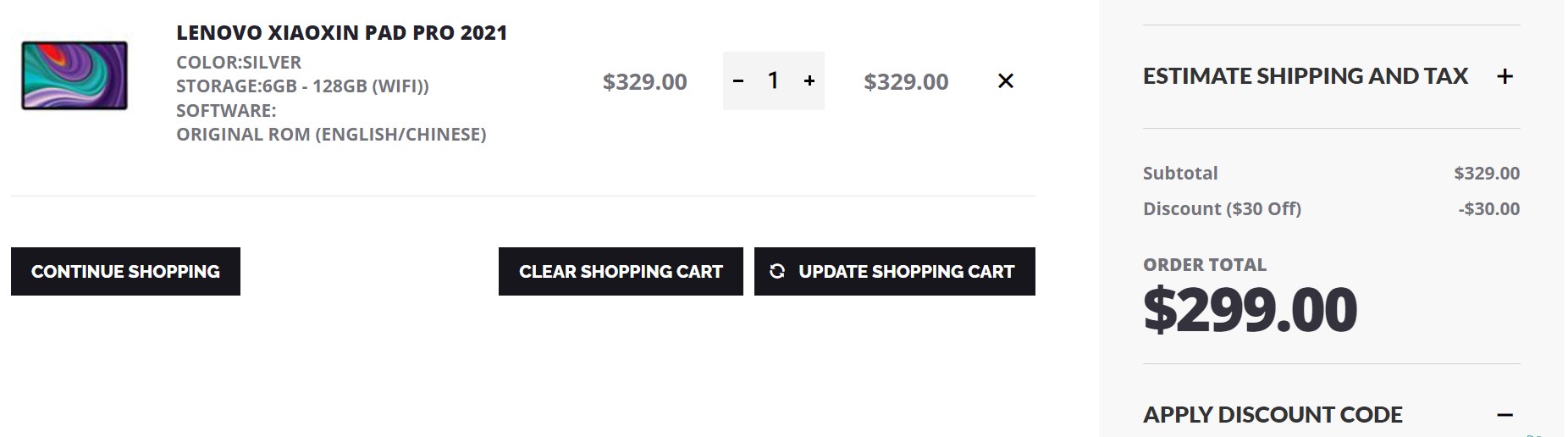
Lenovo XiaoXin Pad Pro 2022which retails for $599 is now available at a discounted price of $329 only. Moreover by using the coupon code: PP2021 you can get a further discount of $30. Thus you can buy the XiaoXin Pad Pro 2022 for as low as $299 only on Giztop. Please note that this is one of the lowest prices offered on this tablet.
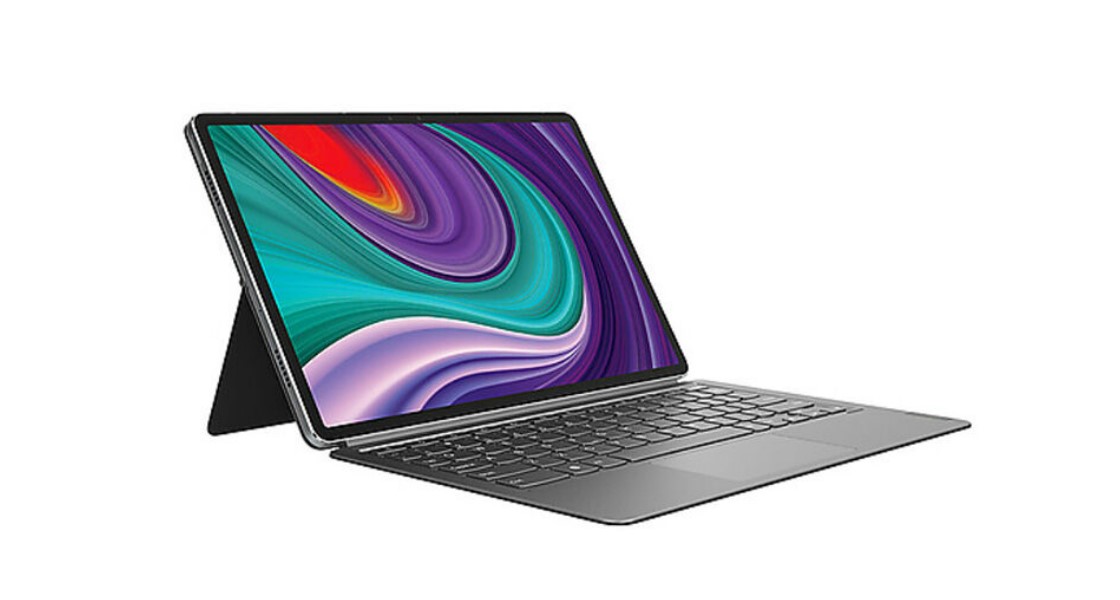
Lenovo XiaoXin Pad Pro 2022 is a premium tablet that features an 11.2-inch, 2.5K OLED display with a 120Hz refresh rate. The tablet comes with two processor options viz. Snapdragon 870 Octa-Core Processor and MediaTek Kompanio 1300T chipset. You can choose between 6GB/ 8GB RAM options and 128GB internal storage.
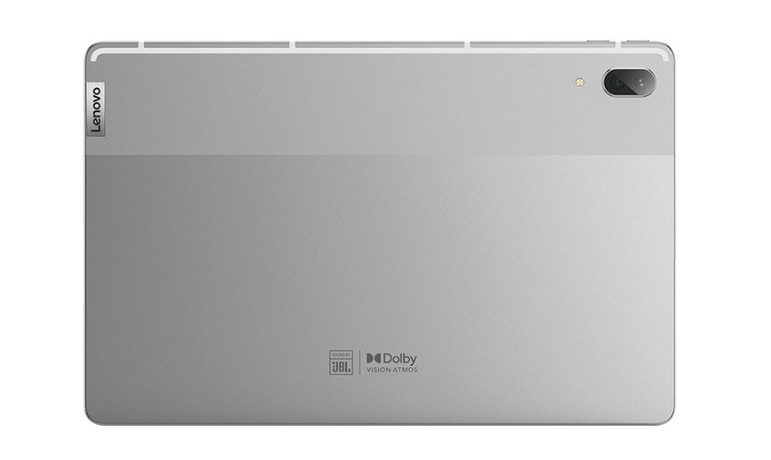
XiaoXin Pad Pro is fueled by a powerful 8200mAh battery that gives you up to 8 hours of non-stop usage on a single charge. You can choose between a 68W or 30W fast charger as per your need. The tablet features 4 JBL-certified speakers and 8MP front and 13MP rear cameras. You can now buy Lenovo XiaoXin Pad Pro 2022 for as low as $299 at Giztop. The tablet is available in Grey, Gold, and Silver color options.
For more information on such exciting deals and offers check out our deals hub.
Great news for tech lovers. Giztop is offering a Back to School Sale. Under this sale, you can get a 5% discount on all the products available on Giztop.com by using the coupon code: BTS2022. Please note that the coupon expires on September 15, 2022.
Giztop is a famous and trustworthy online retail shop that sells tech gadgets and accessories. You can find the latest and the most unique gadgets including smartphones, tablets, laptops, earphones, smartwatches, and more on giztop.com.
You can find the latest smartphones like Xiaomi 12S ultra, Xiaomi Mix FOld 2, Motorola Razr 2022, etc on Giztop. There are other additional deals and discounts for specific products available on the website. So be sure to check out your favorite gadget at Giztop to avail yourself of huge discounts.
For more information on such exciting deals and offers check out our deals hub.
POCO is gearing up for the global launch of the POCO M5 series, which is scheduled for September 5th. The event will see the debut of the POCO M5 and the POCO M5s.
Ahead of the launch, a new report has emerged revealing the renders, storage variants, and pricing of the devices. So, let’s take a look.
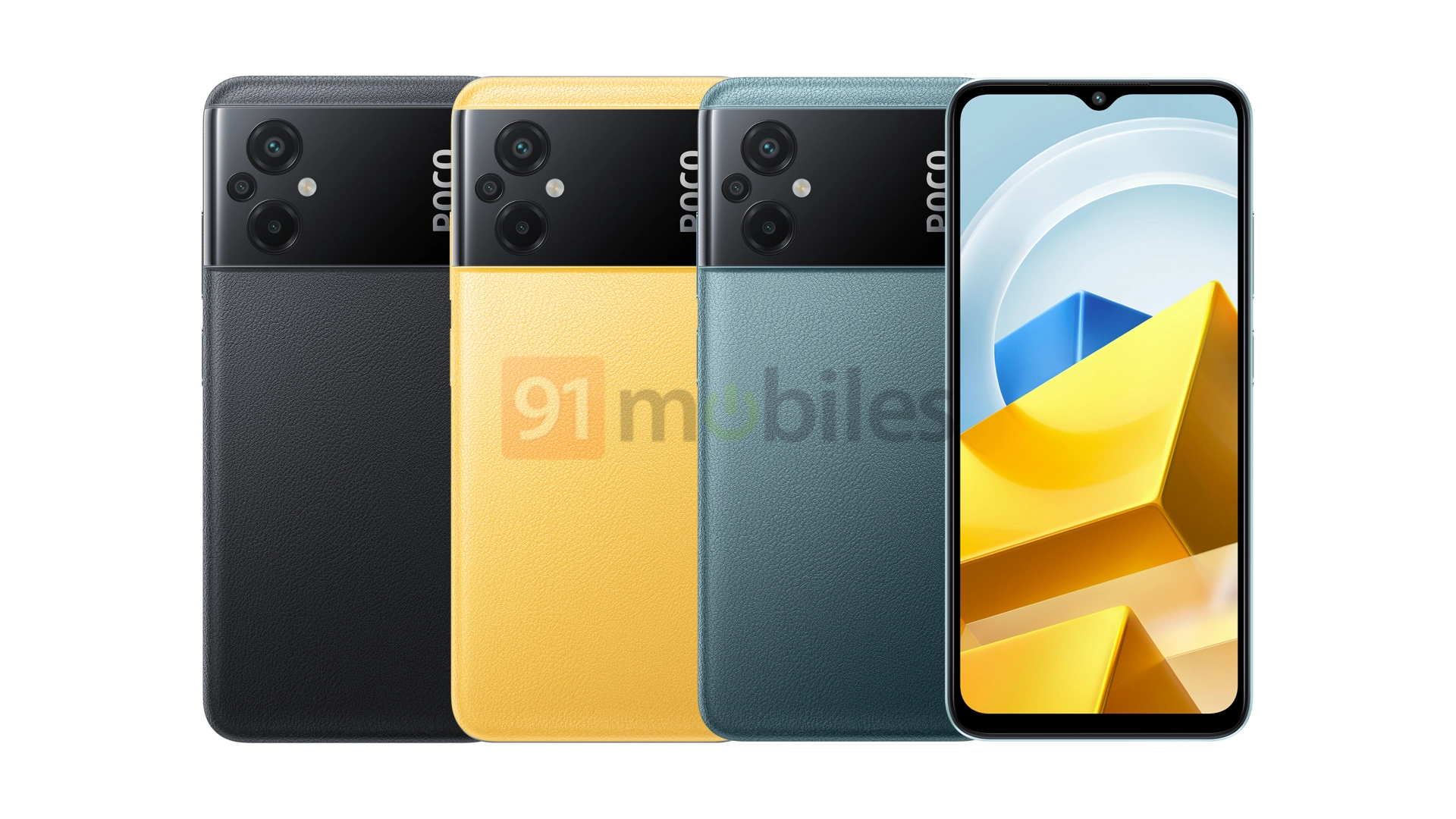
POCO M5 render
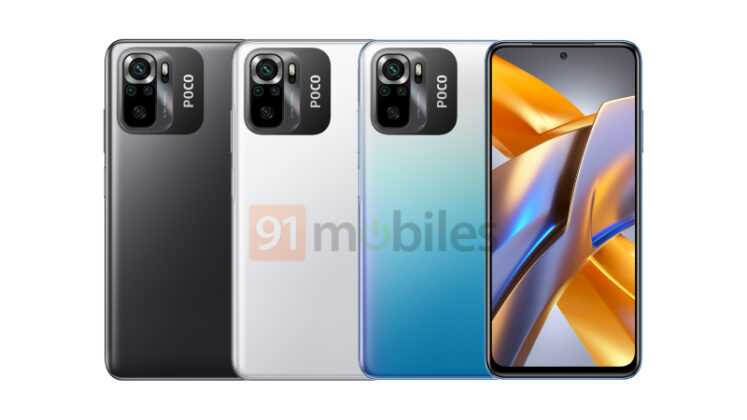
According to the renders of the POCO M5, the device will be available in Black, Yellow, and Green color options. On the other hand, the POCO M5s will debut in Black, Blue, and White color options. The brand has already confirmed that the vanilla M5 will come with a MediaTek Helio G99 chipset and a 90Hz display. The M5s renders reveal the design of the device, giving credence to the rumors that the M5s will be a rebranded Redmi Note 10S.
Moving on to storage variants and pricing, the report states that the POCO M5 will be available in 4GB + 64GB and 4GB + 128GB configurations. The former is expected to cost EUR 189, while the latter will cost EUR 209. The POCO M5s, on the other hand, will be available in 4GB+64GB and 4GB+128GB configurations for EUR 229 and EUR 249.
POCO M5 specifications (rumored)
The M5 will come with a MediaTek Helio G99 chipset and a 6.58-inch LDC display with FHD+ resolution. A 5,000mAh battery with 33W fast charging is also expected.
It might have a side-facing fingerprint sensor for security and will likely run MIUI 13 based on Android 12. Other specifications are still under wraps.
POCO M5s specifications (rumored)
Assuming that the M5s is indeed a rebranded Redmi Note 10S, it will feature a 6.43-inch FHD+ AMOLED display. Under the hood, we can expect the Helio G96 SoC complemented by LPDDR4x RAM and UFS 2.2 storage.
For optics, the device will have a quad-camera setup made up of a 64MP primary, 8MP ultra-wide, 2MP macro, and 2MP depth sensor. Up front, we’ll get a 13 MP selfie camera.
Other features may include dual stereo speakers, a 3.5mm headphone jack, a dedicated MicroSD card slot, a side-mounted fingerprint sensor, an IP53 rating, a 5,000mAh battery, and 33W fast charging support.
The Note 12 Pro 4G has arrived as India’s first phone powered by the Helio G99 chipset. It offers other exciting features, such as an AMOLED display, 108-megapixel triple rear cameras, and a big battery with fast charging support. The first sale of the device will be carried out at 12 pm (local time) on Flipkart today (Sept. 1).
Infinix Note 12 Pro 4G price, launch offers
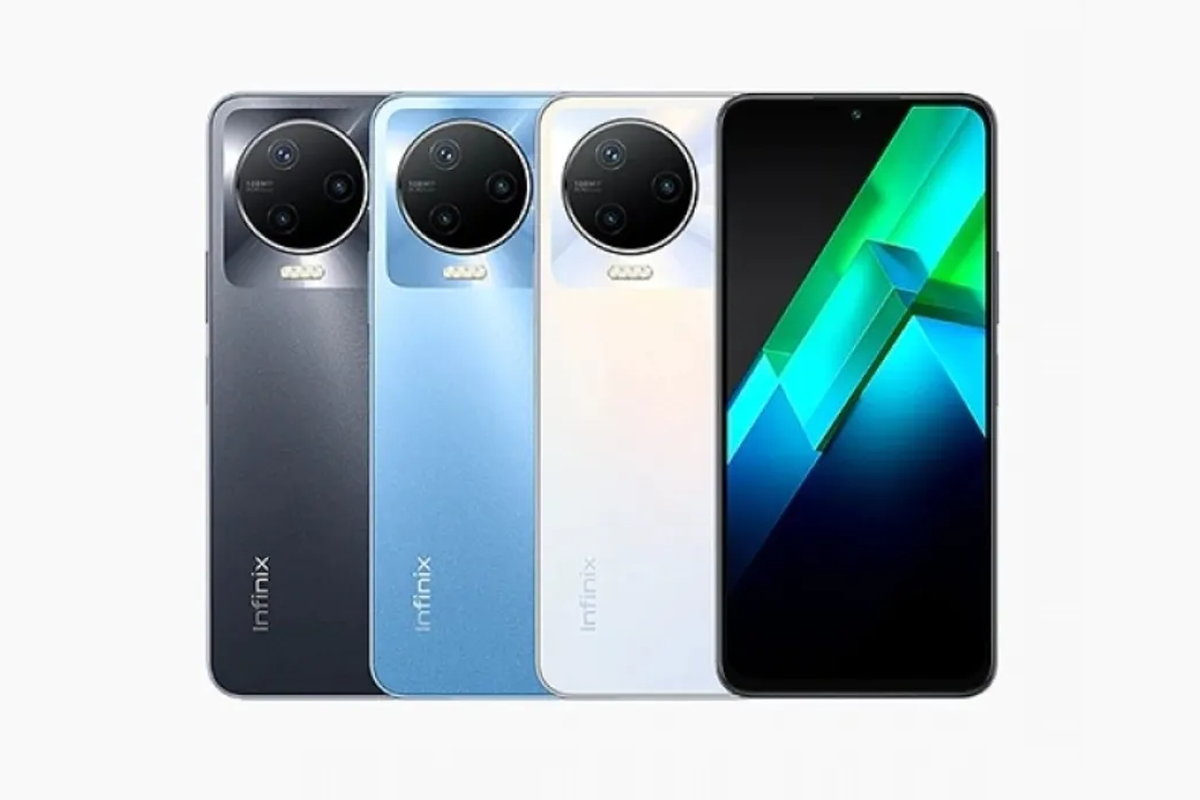
The Infinix Note 12 Pro 4G is priced at Rs 16,999 (~$214). At this price, it offers 8 GB of RAM and 256 GB of native storage. It comes in Volcanic Grey, Tuscany Blue, and Alphine White colourways. Buyers of the Note 12 Pro 4G will get a free pair of Snokor XE 18 TWS worth Rs 1,099 (~$14) for Re 1.
Infinix Note 12 Pro 4G
In addition, buyers can get a Rs 1,500 (~$19) discount using debit and credit cards. There is 5 percent cashback offer available on Flipkart Axis Bank card. Customers can also redeem 500 supercoins while purchasing the Note 12 Pro 4G on Flipkart. Other offers include no-cost EMI on ZestMoney and debit card EMI.
Infinix Note 12 Pro 4G specifications
The Note 12 Pro has a 6.7-inch AMOLED FHD+ display with a teardrop notch. It is powered by the Helio G99 chip, 8 GB of RAM, and a 5,000mAh battery with 33W fast charging. The device runs on Android 12 OS with XOS 10.6 on top.
The device features a 16-megapixel selfie camera with a dual front-facing flash. Its back panel has a 108-megapixel main camera, a 2-megapixel depth sensor, an AI lens, and a quad-LED flash. It has other features such as a side-facing fingerprint scanner and a microSD card slot.
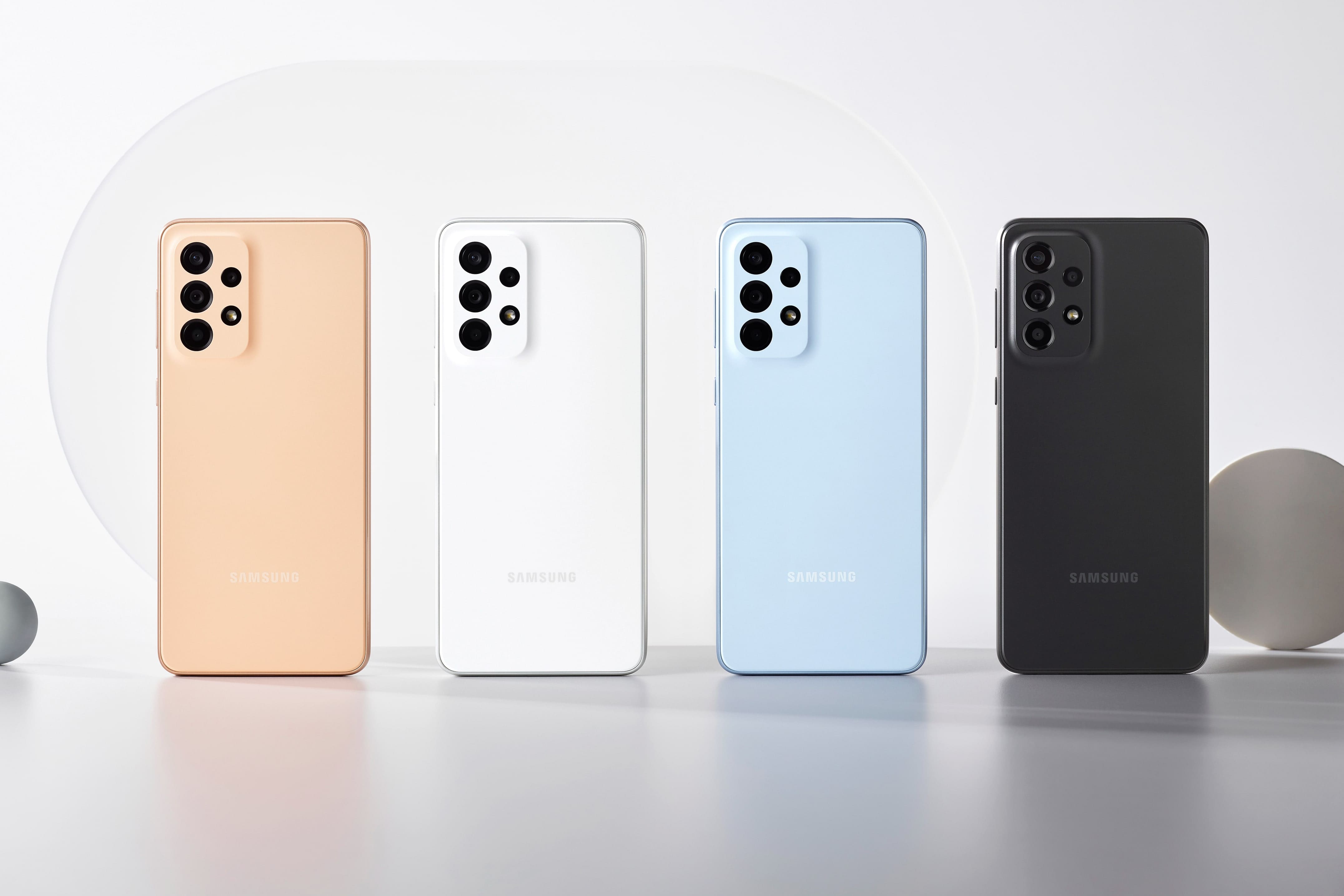
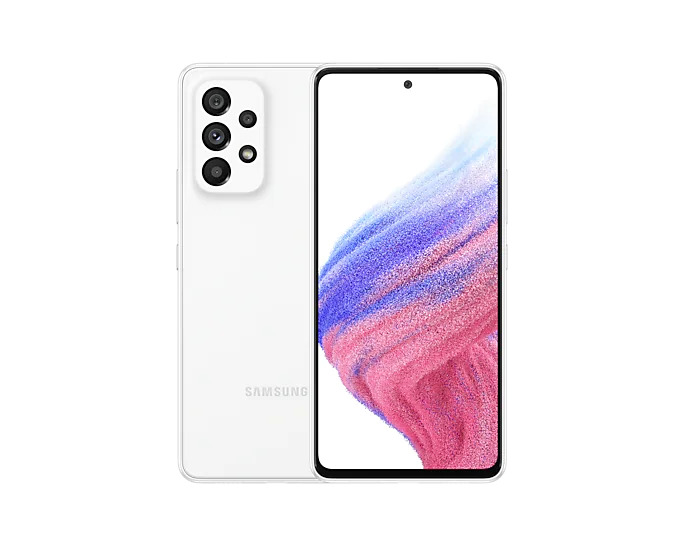
In March 2022, Samsung launched the Galaxy A53 5G smartphone in the Indian market. Currently, the device only comes in two configurations – 6GB RAM + 128GB and 8GB RAM + 128GB.
Now, tipster Abhishek Yadav has stated that the device’s 8GB RAM + 256GB storage variant will launch soon in India. It will be priced at ₹38,999 at launch. However, Samsung will provide ₹3,000 off as launch offers, effectively bringing its price down to ₹35,999.
Samsung Galaxy A53 5G specs & features
The Samsung Galaxy A53 5G features a 6.5-inch FHD+ SuperAMOLED Infinity-O display. It offers a 120Hz refresh rate, 800 nits of brightness, and Eye Comfort Shield compatibility.
The device is powered by a 5nm Exynos 1280 SoC with up to 8GB of RAM and 256GB of internal storage. The phone also features the RAM Plus feather, which allows an additional 8GB of RAM to be added via internal storage. It has a 5,000mAh battery and supports 25W rapid charging. The phone, however, does not come with a charging adapter.
At the back, it has a quad-camera system with a 64MP OIS primary lens with f/1.8 aperture, a 12MP ultra-wide lens, a 5MP depth sensor, and a 5MP macro lens. It includes a 32MP selfie camera with an f/2.2 aperture on the front.
It is water and dust resistant to IP67 standards and boasts Dolby Atmos-tuned speakers. In terms of security, it offers an in-screen fingerprint scanner as well as a facial unlock option. The phone comes pre-installed with One UI 4 (Android 12 OS) with Samsung’s Knox security.
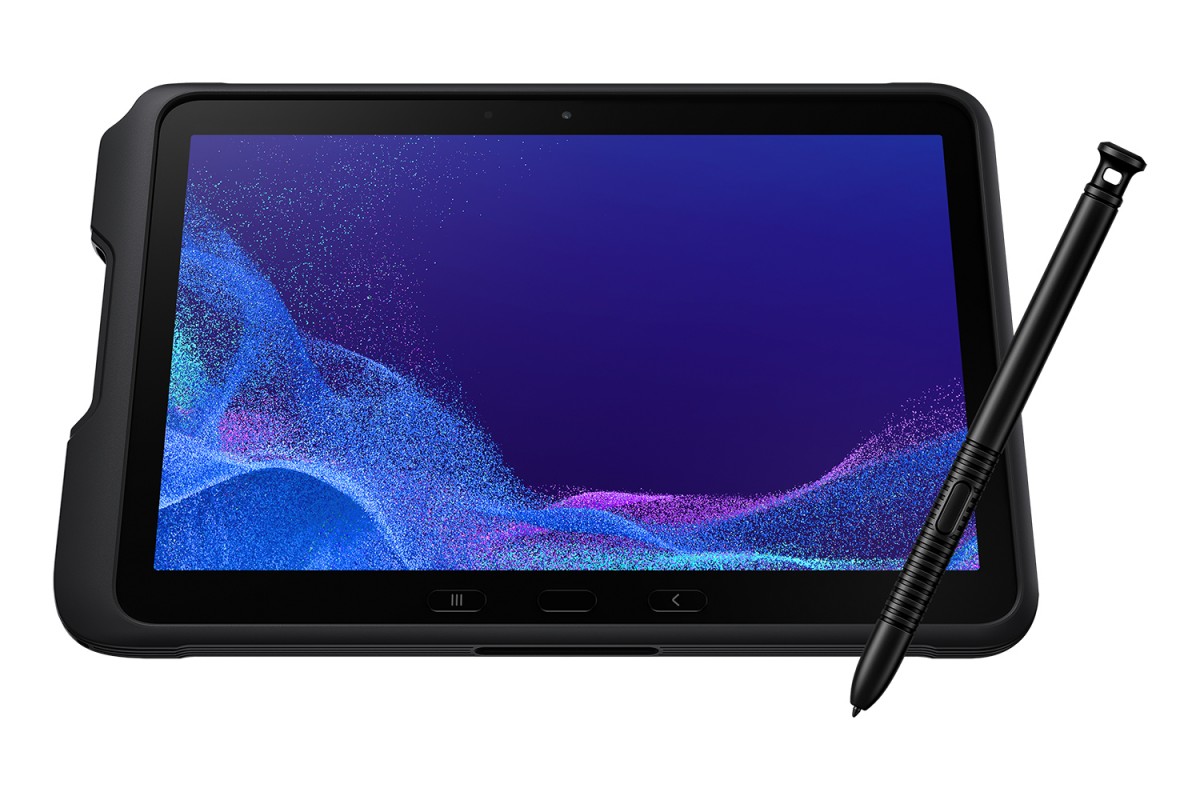
Samsung has quietly announced the Galaxy Tab Active 4 Pro tablet. It is a MIL-STD-810-compliant device, meaning that it can withstand extreme conditions. Furthermore, it is an IP68-certified product, which makes it resistant to dust and water. The Tab Active 4 Pro comes with an integrated S Pen. Here is all the information on the specifications, features, and price of the tablet.
Samsung Galaxy Tab Active 4 Pro specifications and features
The Galaxy Tab Active 4 Pro has a 10.1-inch TFT LCD display that offers a resolution of 1920 x 1200 pixels. The screen gets Gorilla Glass 5 protection. The official press release states that it is powered by a 6nm octa-core processor. However, it is known through its previously seen Google Play Console listing that it features the Snapdragon 778G mobile platform.
Samsung Gaalaxy Tab Active 4 Pro
The Tab Active 4 Pro comes in two configurations: 4 GB RAM + 64 GB storage and 6 GB RAM + 128 GB storage. It houses a 7,600mAh removable battery. It offers a No Battery Mode, which makes it possible to use the Tab Active 4 Pro by connecting to an external power source without a battery.
The tablet features an 8-megapixel front camera. Its back panel has an autofocus-enabled 13-megapixel camera with an f/1.9 aperture and LED flash. There is a physical key called the Active Key, which can be configured to launch any app.
The Galaxy Tab Active 4 Pro runs on the One UI flavored Android 12 OS. The tablet comes with Knox security, and it can be used with Samsung DeX or Standalone, which gives the tablet a desktop interface.It offers other features, such as dual SIM, 5G (sub-6GHz), Wi-Fi 6, Bluetooth 5.2, GPS, NFC, a microSD card, and a USB-C port.
The tablet has a thickness of 10.2mm and weighs around 675 grams. There is no word on the price of the device. Starting this month (September). Later this year, it will arrive in Asia, Latin America, North America, and the Middle East.
OPPO Reno 8 5G was unveiled in China in May 2021. In July, OPPO announced the Reno 8 5G alongside other products, such as the Reno 8 Pro 5G, the OPPO Pad, and the Enco X2 TWS earbuds. It has now also arrived in Europe along with its other siblings, like the Reno 8 Pro 5G and Reno 8 Lite. In Europe, early buyers of the Reno 8 trio will get a free pair of Enco X2 buds worth 199 euros and an extended 3-year warranty.
The Reno 8 5G is priced at Rs 29,999 (~$376) in India, £419 in the UK, and 599 euros in other European countries. It rivals similarly priced smartphones, such as the OnePlus Nord 2T 5G, POCO F4 5G, iQOO Neo 6 5G, and Nothing Phone (1). Here is a full review of the Reno 8 5G to see how it stacks up against its rivals.
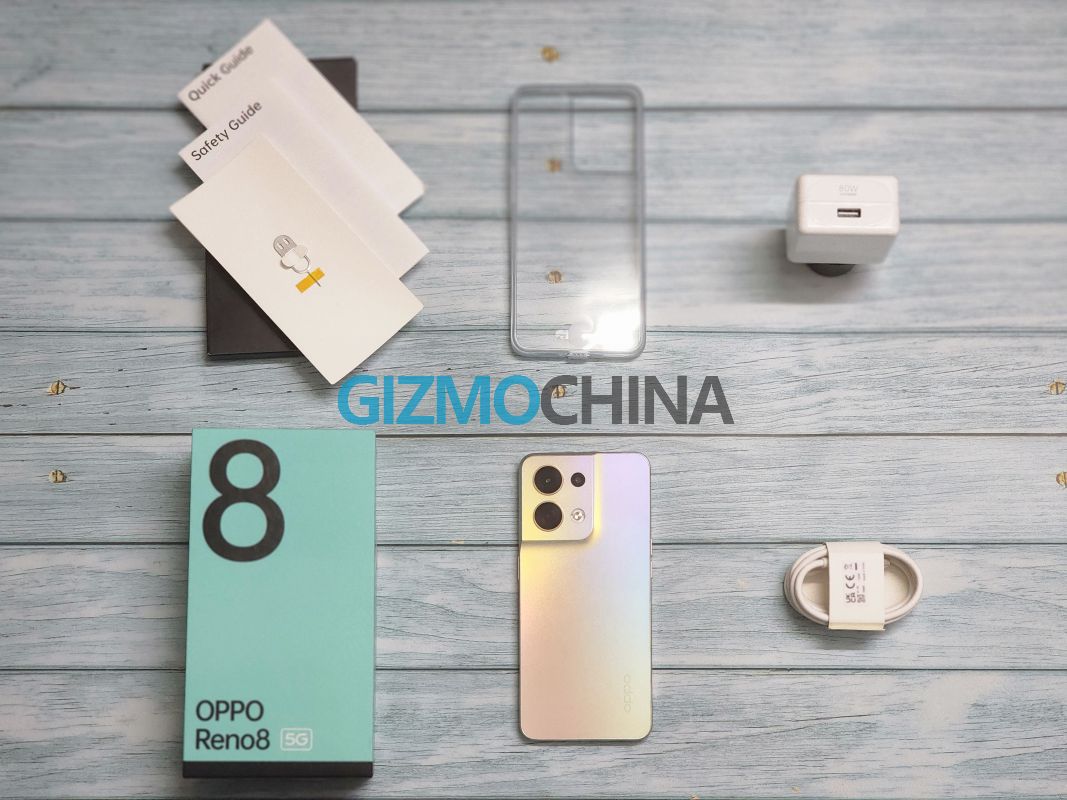
What’s in the box
OPPO Reno 8 5G what’s in the box
The retail package for the OPPO Reno 8 5G comes with the phone, an 80W SuperVOOC charger, a USB-C charging cable, a SIM ejector tool, a clear plastic case, and some paperwork.
Design and Display
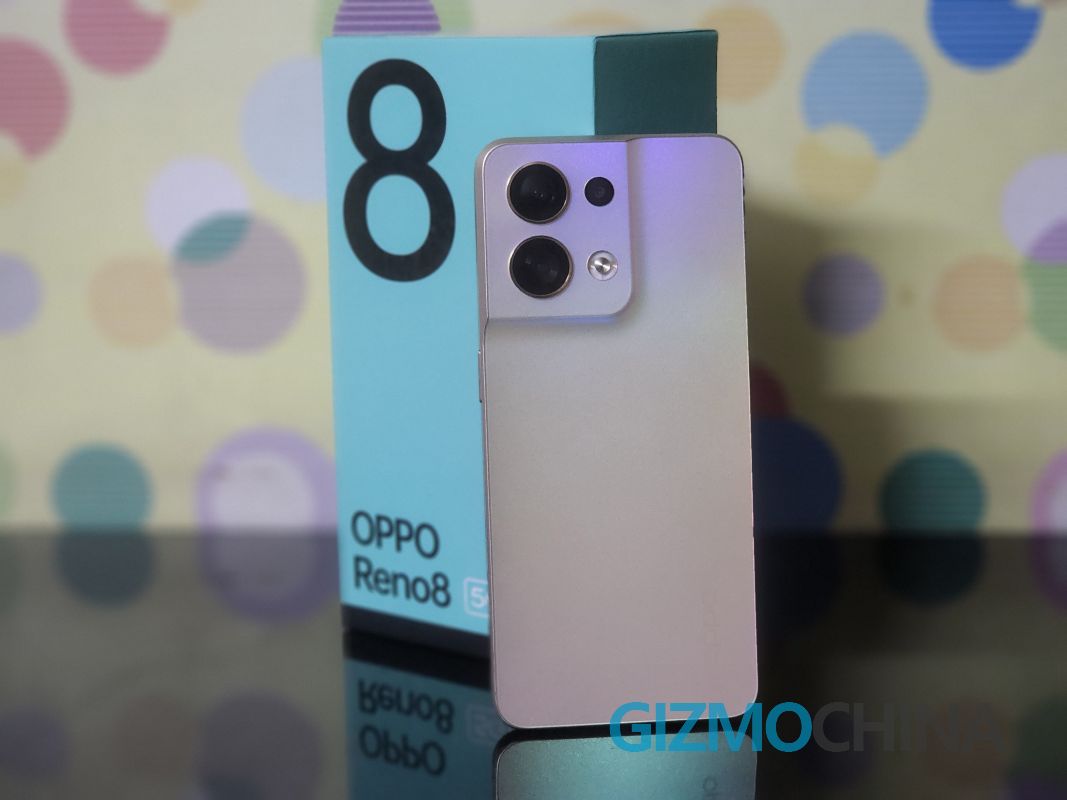
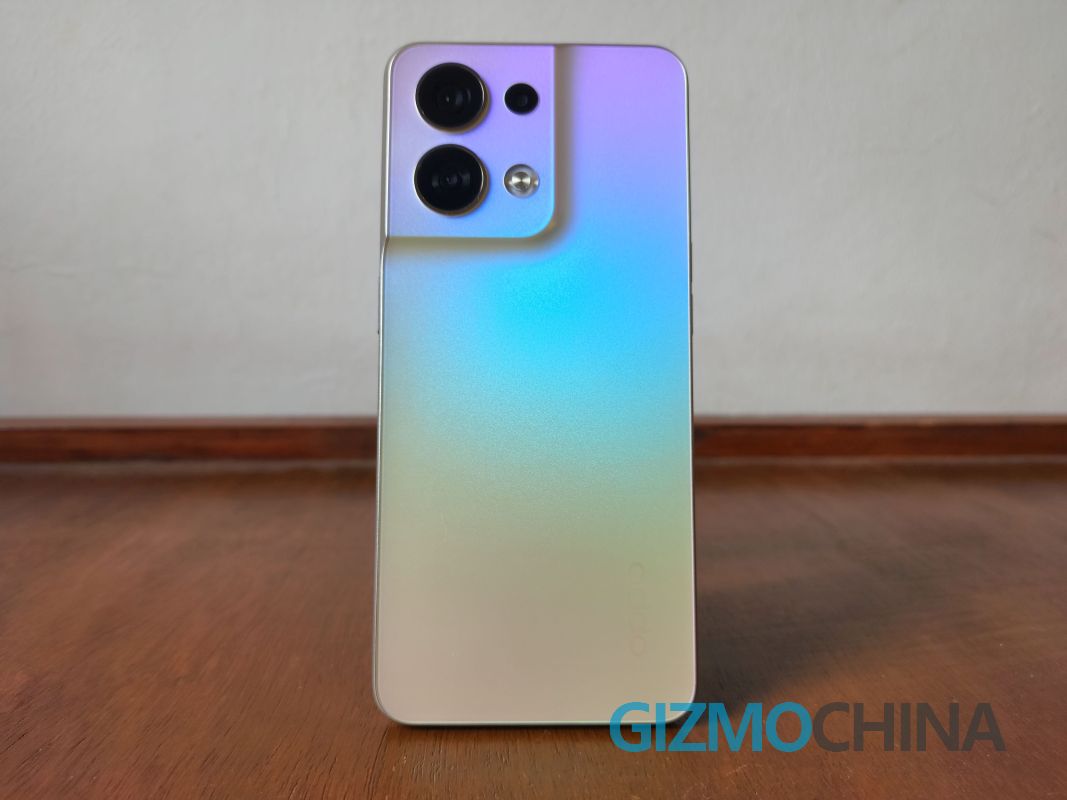
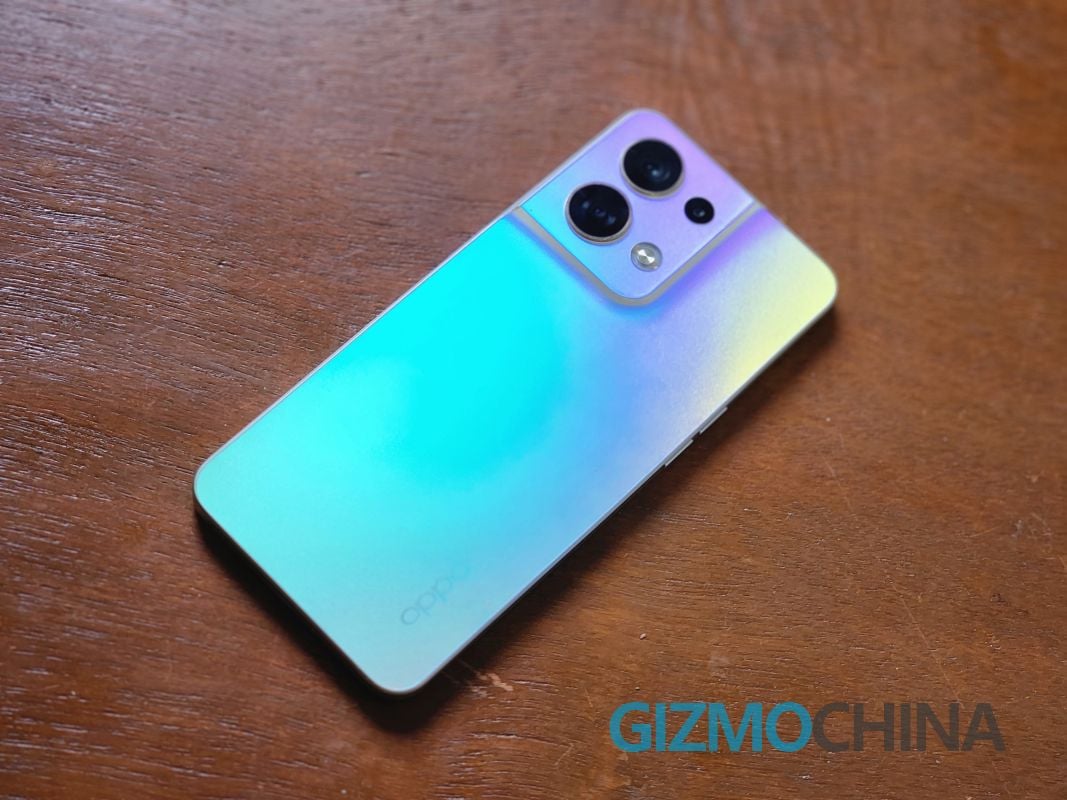
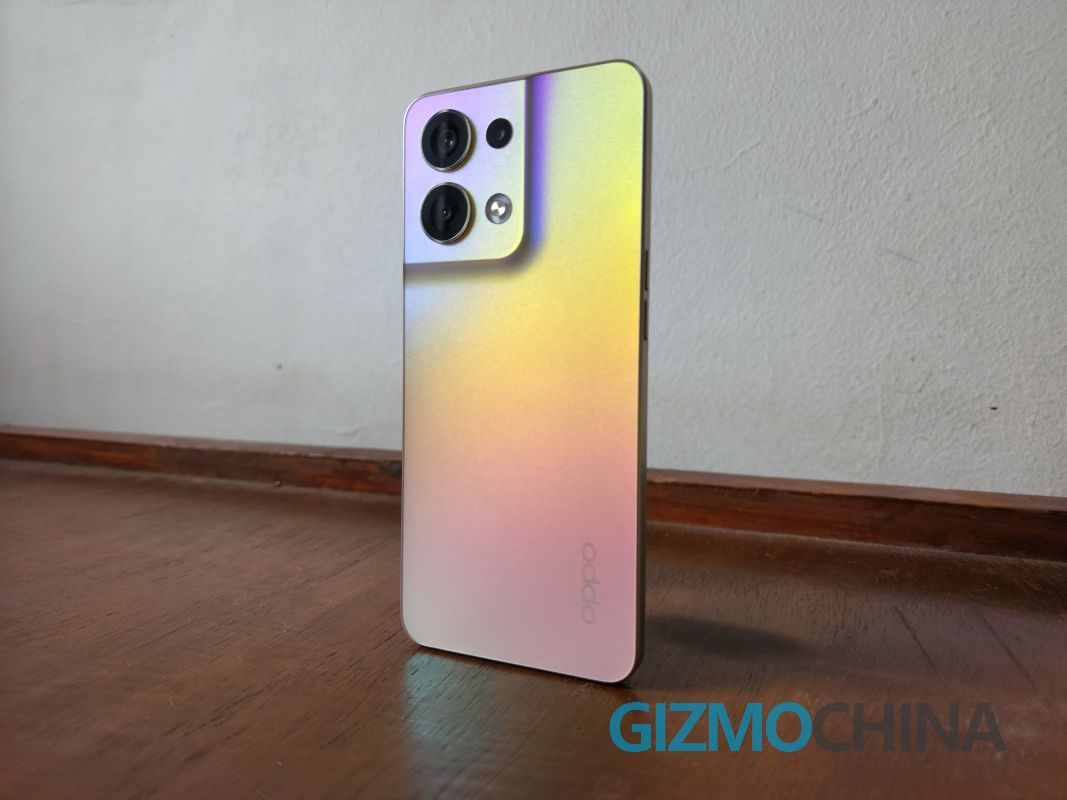
One of the major attractions of the OPPO Reno 8 5G is its design. As you can see in the images, I received the Shimmer Gold colour variant of the Reno 8 5G from OPPO. The Reno 8 5G has an attractive design, but readers should be aware that it has a polycarbonate back and frame. Some may think that the company should have offered a glass chassis on the Reno 8 5G considering its price.
But in my opinion, the Reno 8 5G’s color-changing rear shell is simply eye-catching and boasts a premium look. It shows different shades of gold, pink, blue, and green when viewed from different angles. I believe that the brand really knows how to make good-looking smartphones. Another good thing about the phone’s back is that it is resistant to fingerprint marks and smudges. However, it does appear a bit slippery.
1 of 2
OPPO Reno 8 5G
OPPO Reno 8 5G unboxing, first impressions
The Reno 8 5G has flat edges and a unibody design, meaning it does not have a separate camera module. The top edge of the device has a microphone, its right edge has a power button, and the volume buttons are placed on the left edge. The bottom edge has a SIM card slot, a microphone, a USB-C port, and a speaker grille. It lacks a 3.5mm audio jack and a second speaker for stereo output. These features were also unavailable on the Reno 7 5G.
The illuminated accent ring in the camera bump of the Reno 7 5G functions as a notification light. Sadly, there is no notification LED light on the Reno 8 5G. Weighing 179 grams, the Reno 8 5G is one of the most lightweight smartphones on the market in its price segment. It measures only 7.67mm in thickness. Apart from Shimmer Gold, it also comes in Shimmer Black.
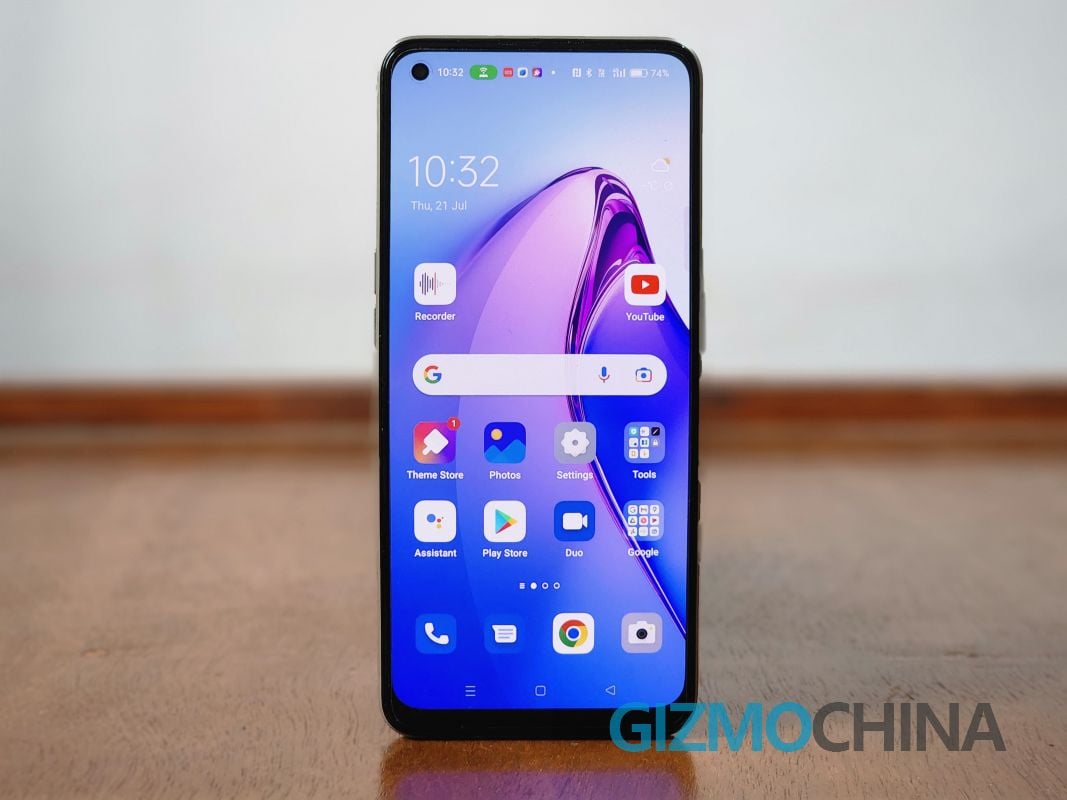
On the front, it has a 6.43-inch punch-hole display with an in-screen fingerprint scanner. It is an OLED panel, which comes with Gorilla Glass 5 protection. The screen supports a Full HD+ resolution, a 20:9 aspect ratio, a 90Hz refresh rate, and up to a 180Hz touch sampling rate. I used the device on a daily basis, and I did not find any issues with viewing the display in bright sunlight. The screen supports a peak brightness of 800 nits and the adaptive brightness feature works fine outdoors.
1 of 3
OPPO Reno 8 5G
OPPO Reno 8 5G
OPPO Reno 8 5G
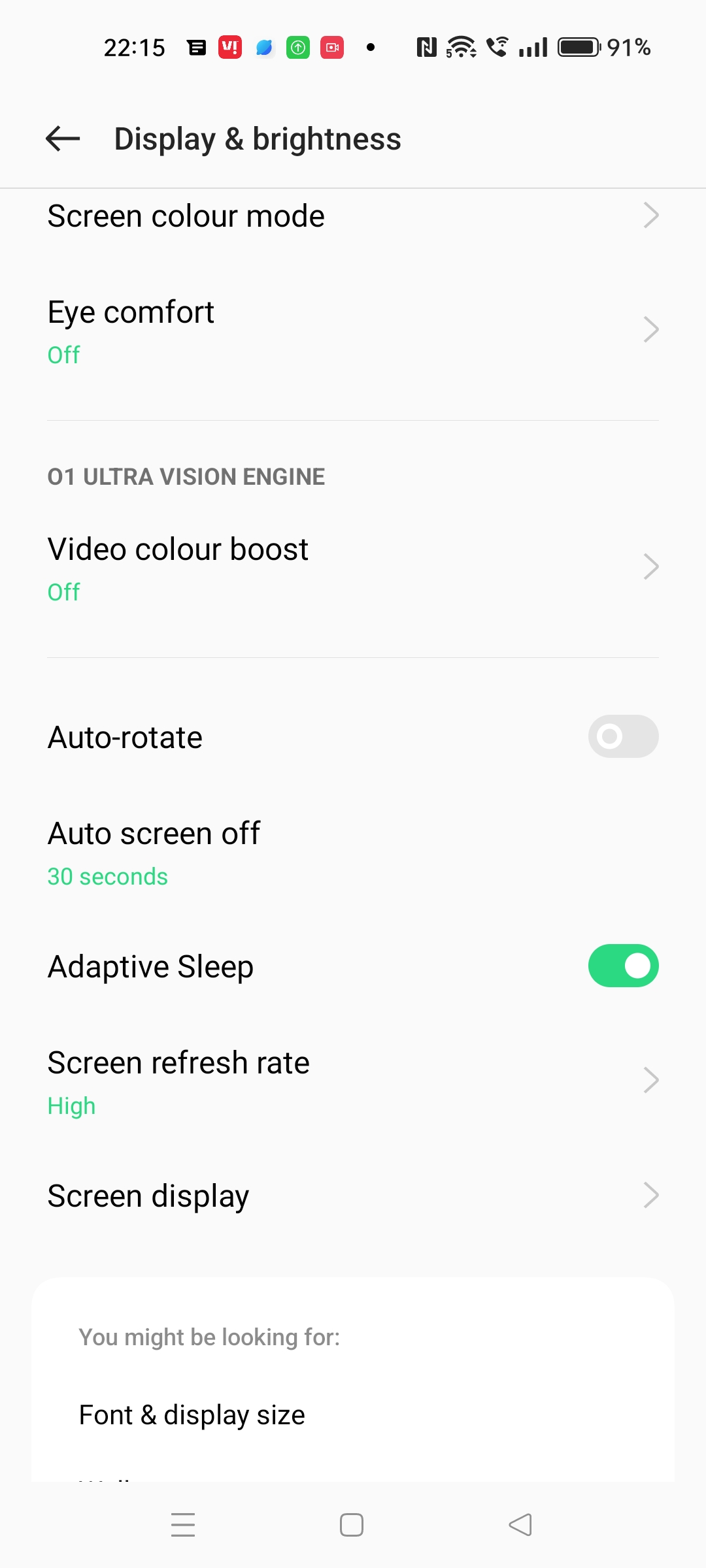
Users can navigate to Settings to access Light / Dark mode, Always-on Display, automatic brightness, eye comfort mode, options to select 60Hz or 90Hz refresh rate, and adaptive sleep function, which prevents the screen from going to sleep or auto-dimming while viewing the screen. There is O1 Ultra Vision Engine, which produces optimal colours while watching videos on the device.
The screen is integrated with an optical in-screen fingerprint scanner, which is quite responsive and rarely misreads. The device comes with Widevine L1 certification for viewing content on Netflix and Prime Video. So, what’s the downside of the display? It does not support a 120Hz refresh rate, and it has a thick-sized bottom bezel. While I can live with the latter, other users might not.
The sound output through the Reno 8 5G’s single speaker is quite loud and is almost equivalent to the sound output of the Galaxy S22 Ultra, which features dual stereo speakers. It supports SBC, AAC, aptX HD, and LDAC audio codecs.
Color OS experience
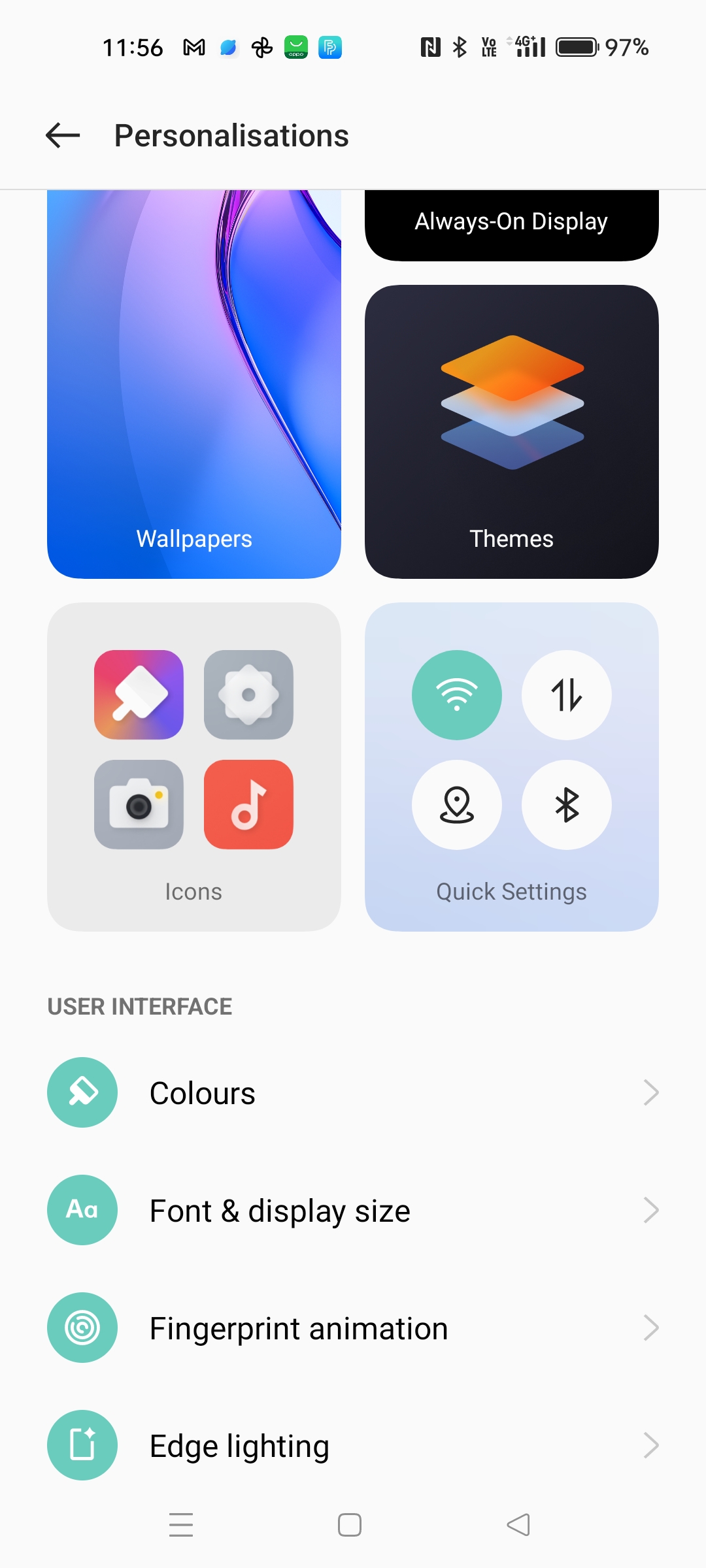
The OPPO Reno 8 5G is powered by ColorOS 12.1, which is based on Android 12. The OS experience is generally fast and fluid. I did not encounter any noticeable bugs or lags. One of the major highlights of the ColorOS is the customization options that it offers apart from the stock Android-like experience. There is a “Personalisation” section in Settings, where users can find customisation options for Always-on Display, wallpapers, themes, icons, quick settings, modifications for font and display size, fingerprint animation, and edge lighting.
1 of 5
OPPO Reno 8 5g display settings
OPPO Reno 8 5G ColorOS Personalisations
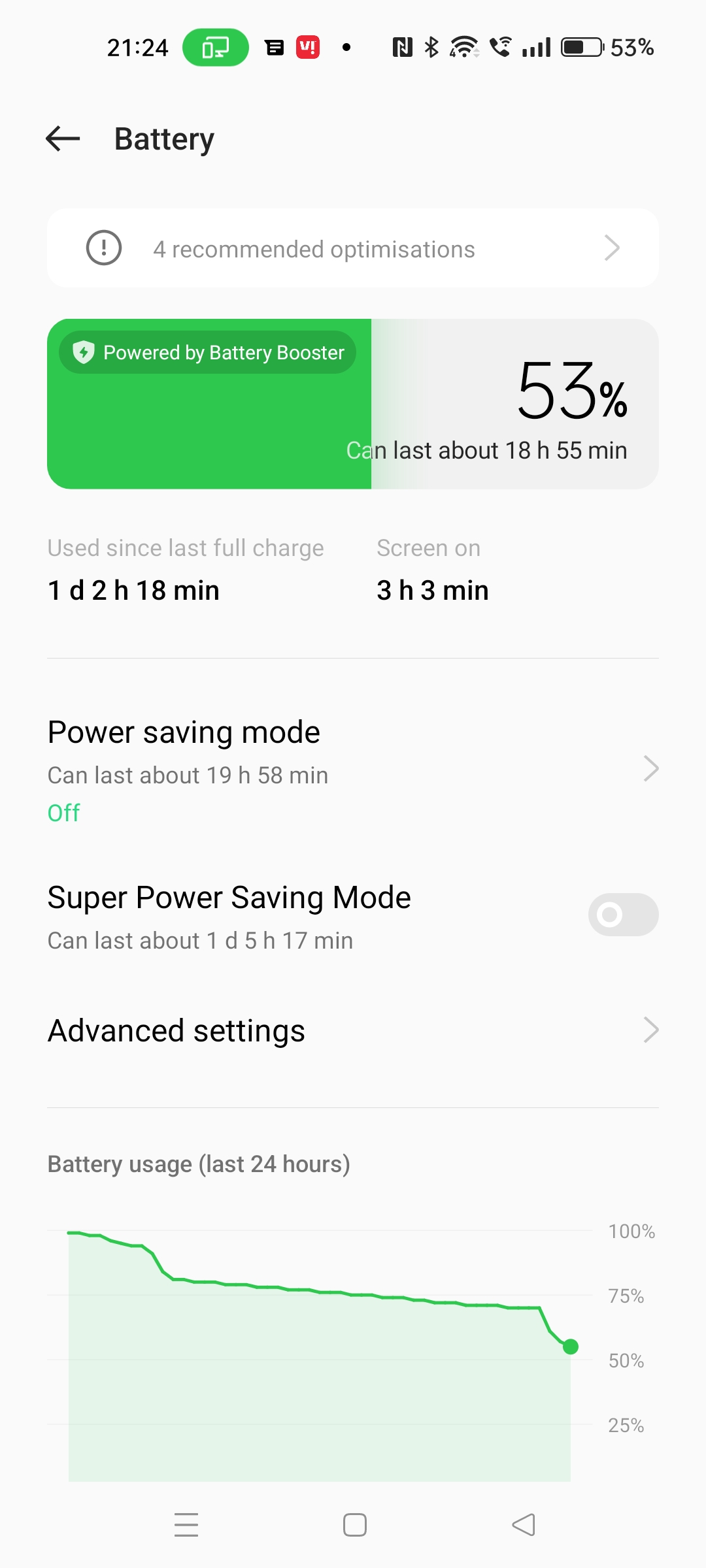
OPPO Reno 8 5G battery performance
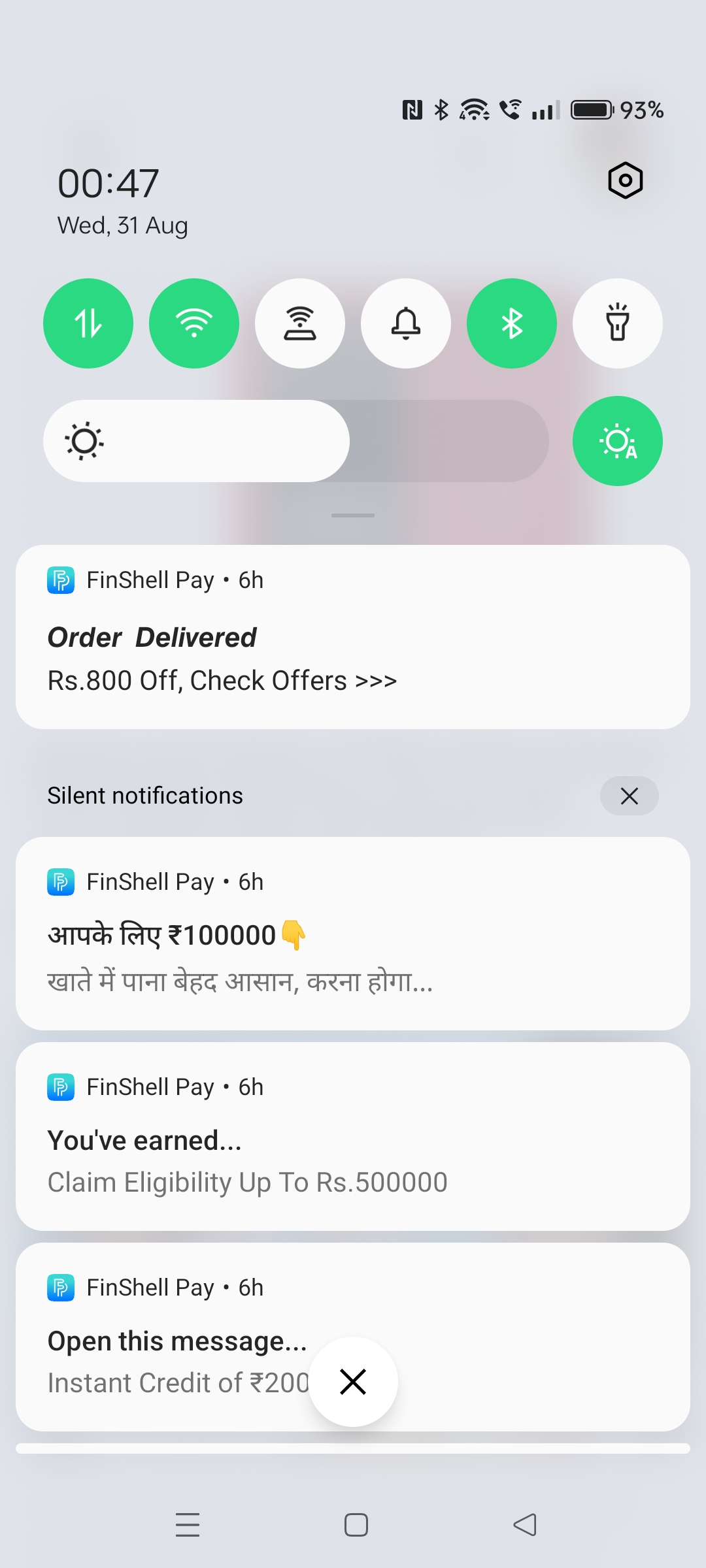
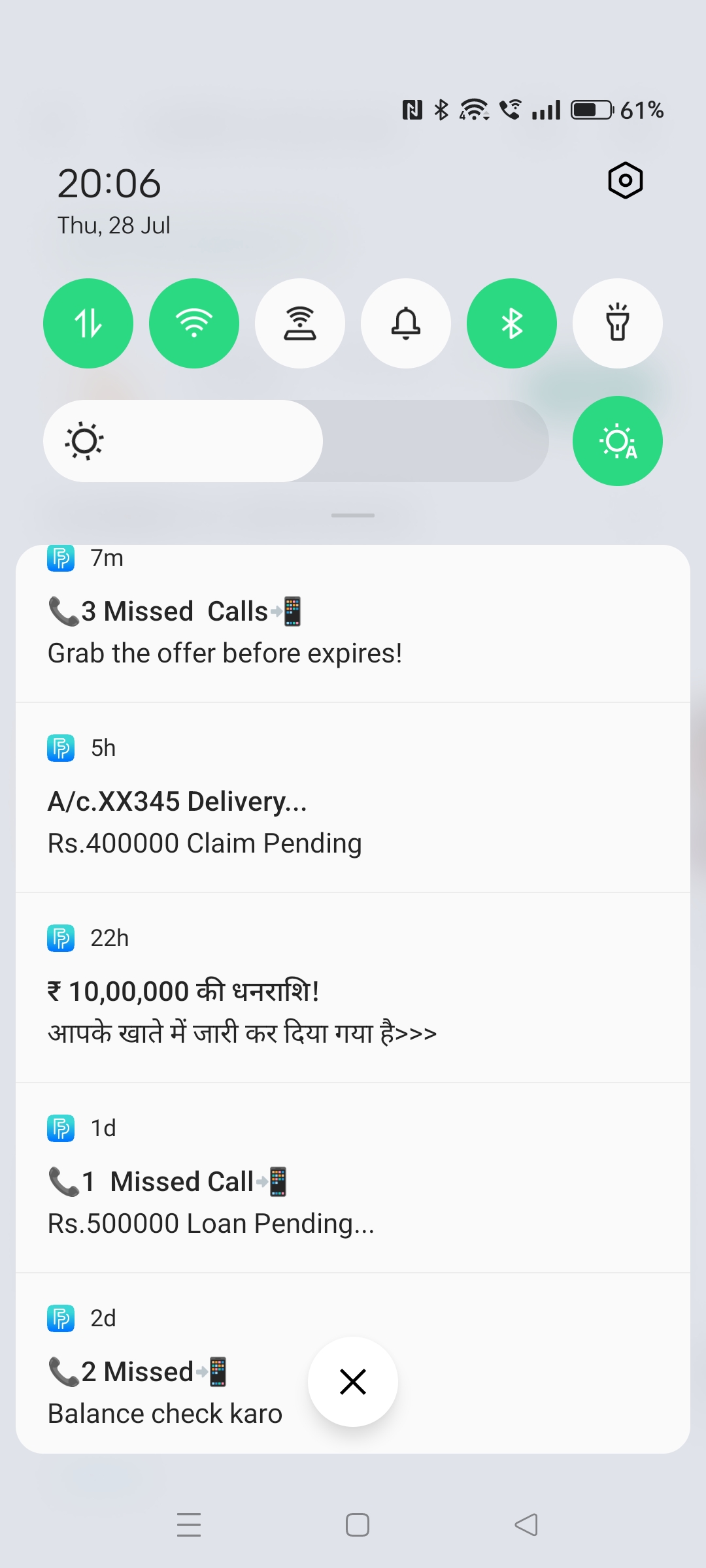
OPPO Reno 8 5G FinShell Pay notifications
OPPO Reno 8 5G FinShell Pay notifications
When it comes to privacy, the Reno 8 5G offers features like Privacy Dashboard, Permission Manager, Camera / Microphone access toggle, and more. Air Gestures is another cool feature that lets users answer/mute calls, scroll up/down (only on Facebook/YouTube), and play/pause videos (YouTube). According to OPPO, “the AI System Booster adjusts automatically to keep your phone running smoothly, even after 3 years!” Only time can tell whether the device is able to keep up to the promise. My Reno 8 5G review unit received the ColorOS 12.1.1 update after using the device for a couple of days. Shown here is a screenshot of the changelog.
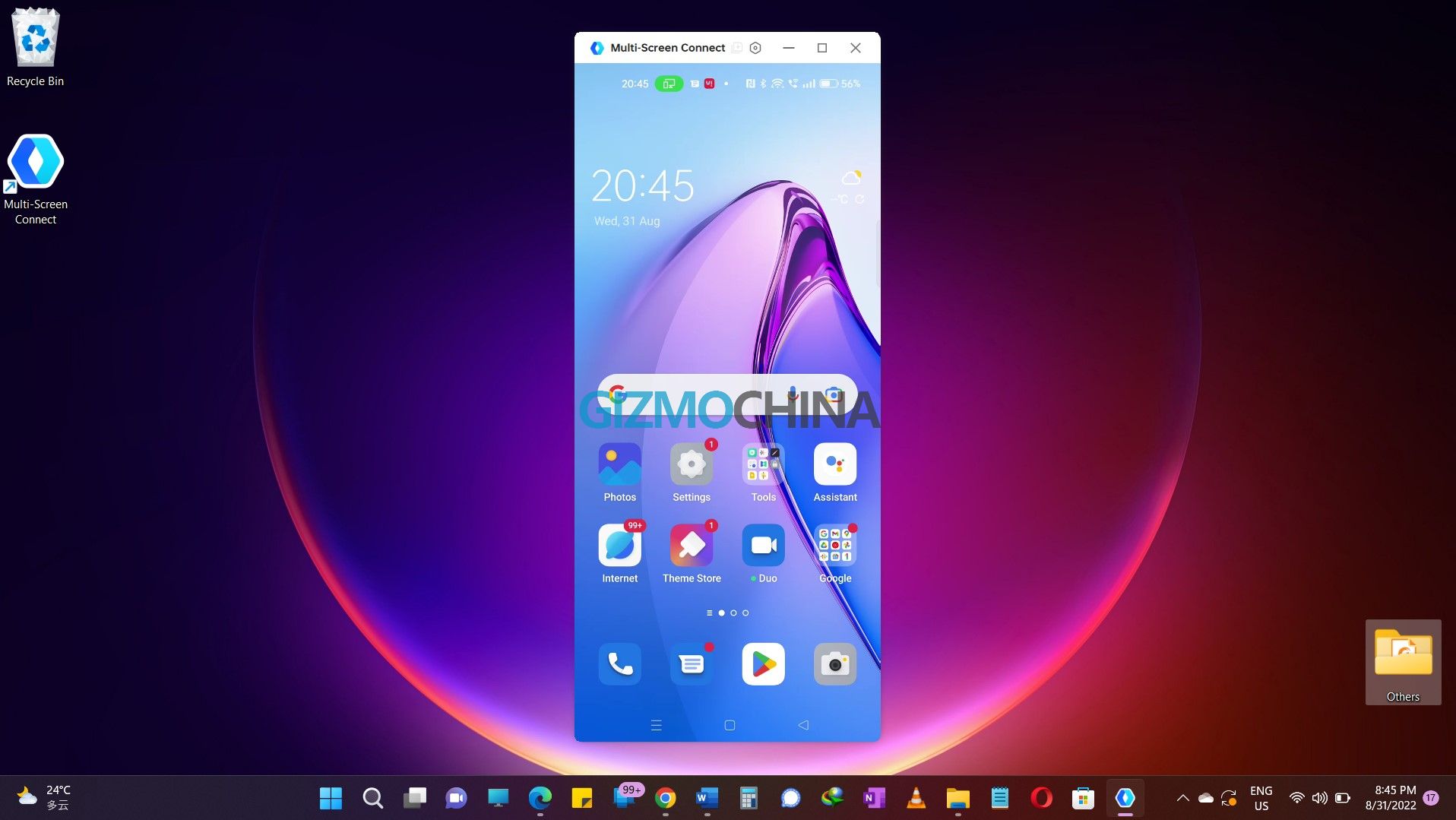
One of the less talked about features of ColorOS 12 is the inclusion of support for PC Connect. It allows users to view the Reno 8 5G’s screen on a paired PC. This feature allows users to view notifications, transfer / edit files, copy / paste text across the devices without physically using the Reno 8 5G. Although it does not a very smooth experience, it appears quite stable and sometimes even better than the Phone Link feature available on some of the high-end Samsung phones like the Galaxy S22 Ultra.
OPPO Reno 8 5G Multi-Screen Connect
What I didn’t like about the OS is that it’s preloaded with some useless apps (bloatware). Some of the preloaded apps include Amazon, BYJU’S The Learning App, Facebook, FinShell Pay, Hot Apps, Josh, Moj, Netflix, ShareChat, and Snapchat. I found that OPPO’s FinShell Pay (check screenshots in the slideshow above) sends out shady notifications stating your order has been delivered or you have received money, even if you have never used the app. Some of the apps can be uninstalled, while others, like FinShell Pay, cannot be removed, but can be disabled.
OPPO recently unveiled the ColorOS 13 UI recently. The company has promised to begin the ColorOS 13 beta program, which is based on Android 13, in September. And the good news is that the Reno 8 series will be the first ones to receive the latest software upgrade. To be precise, the Reno 8 Pro will get it in September, whereas the Reno 8 will be treated with an update in October. It looks like the Reno 8 and 8 Pro will get ColorOS 13’s stable version about a month after the beta program starts.
The 6nm MediaTek Dimensity 1300 chipset, which slots itself between Snapdragon 778G and Snapdragon 870 in terms of performance, is present under the hood of the Reno 8 5G. The device ships with 8GB of LPDDR4x RAM and 128GB of UFS 3.1 storage. There is no microSD card slot on the device.
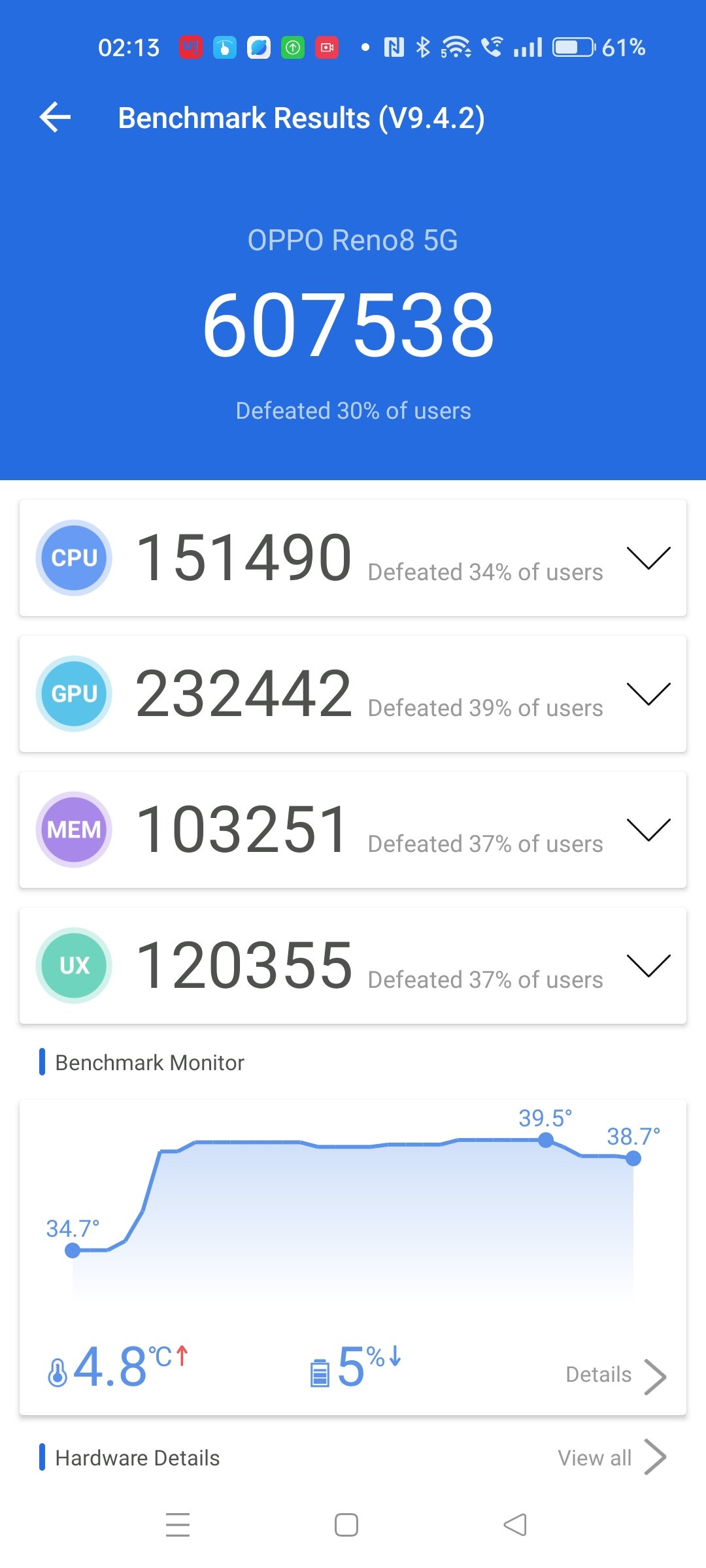
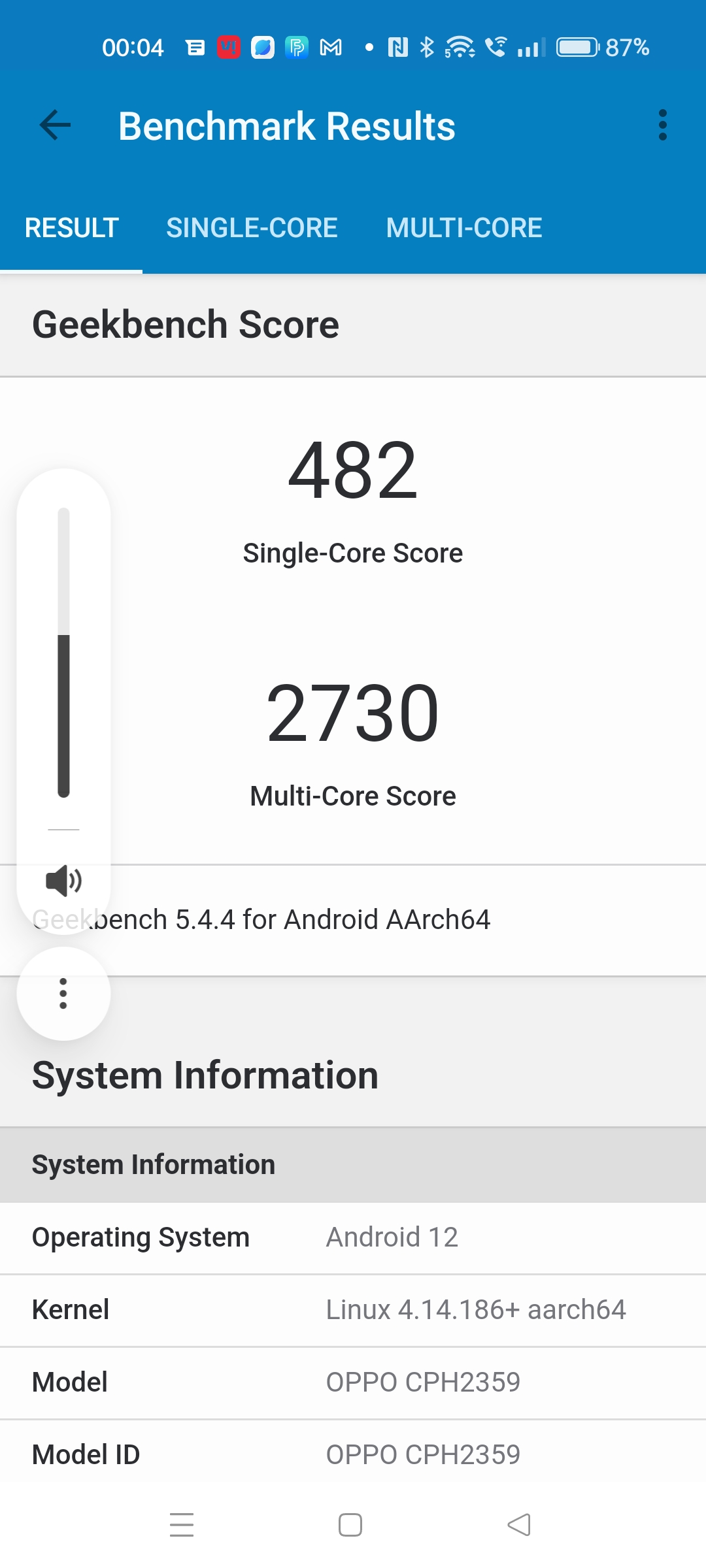
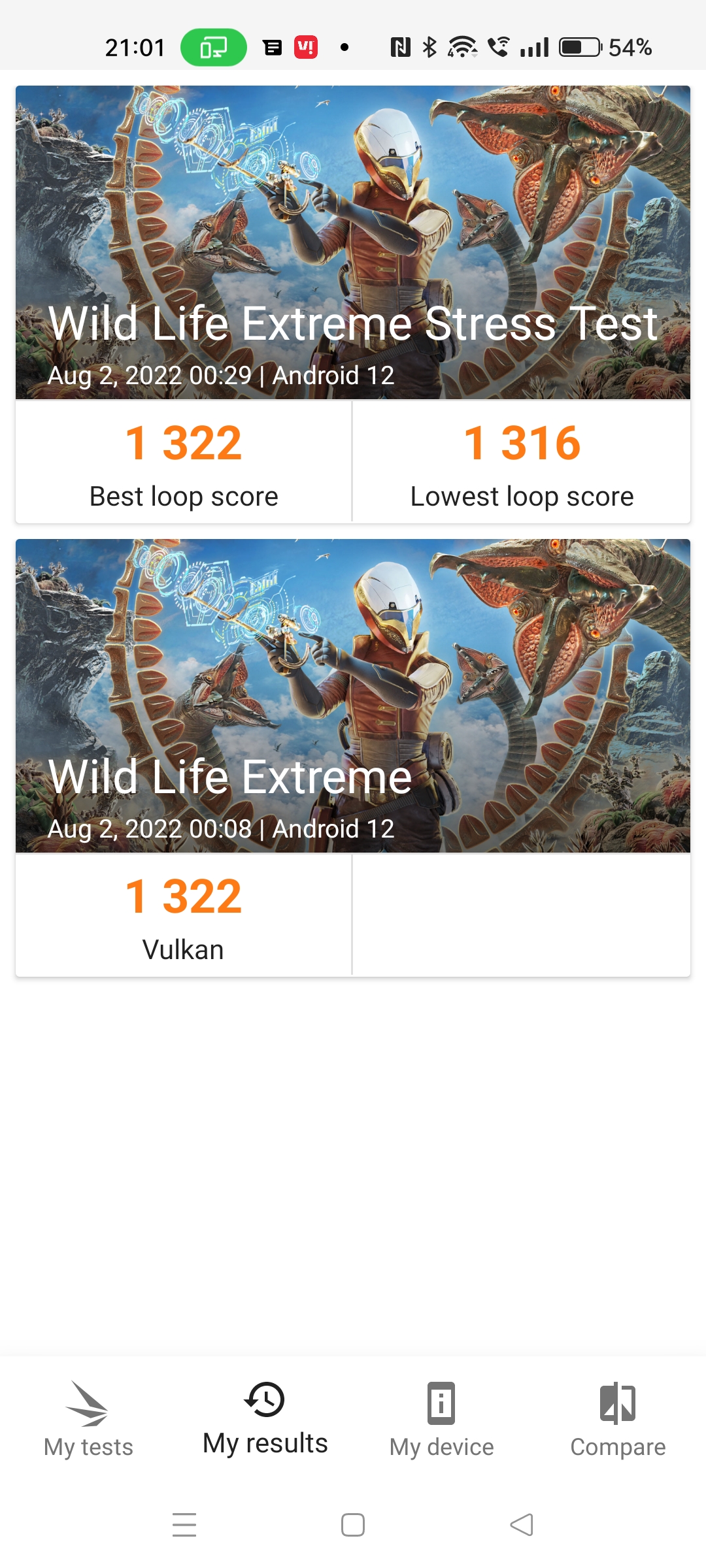
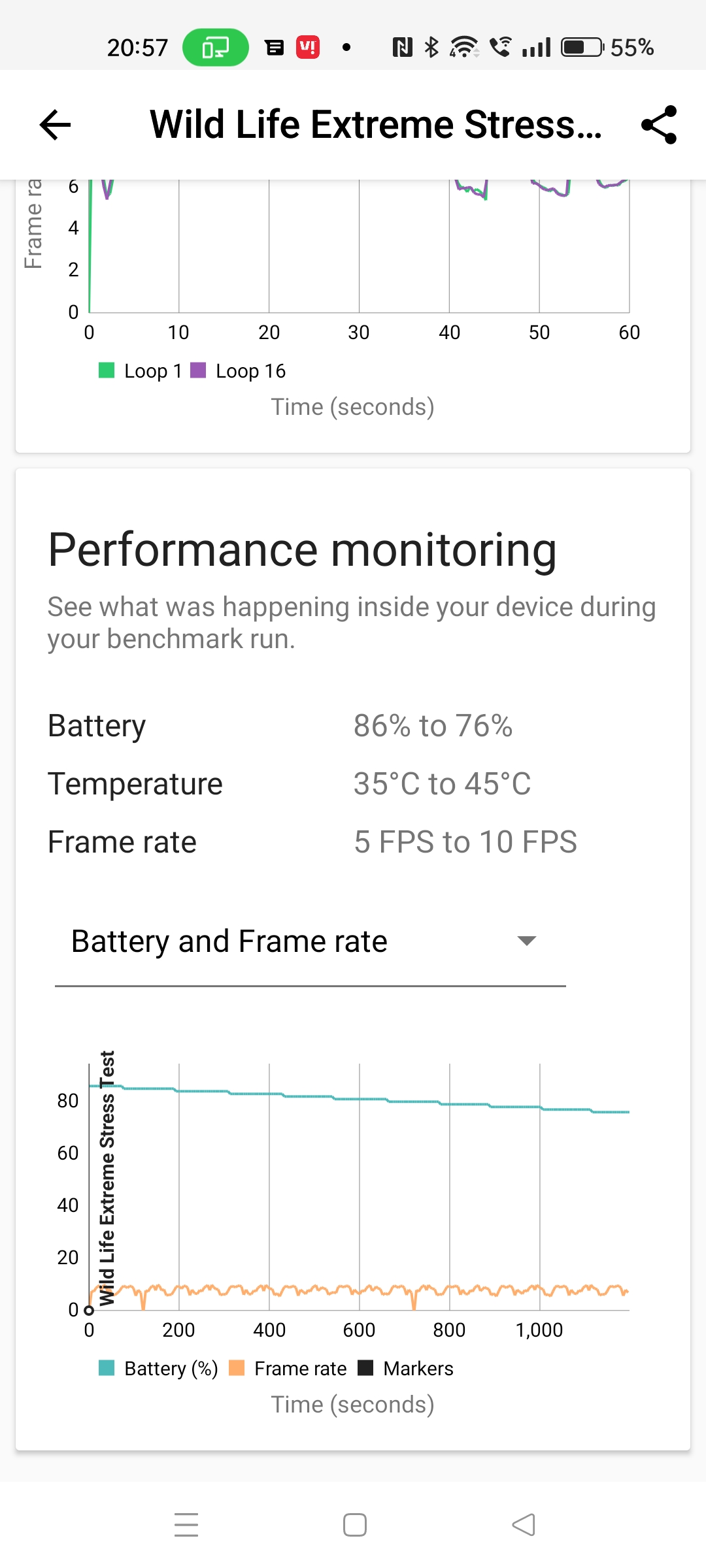
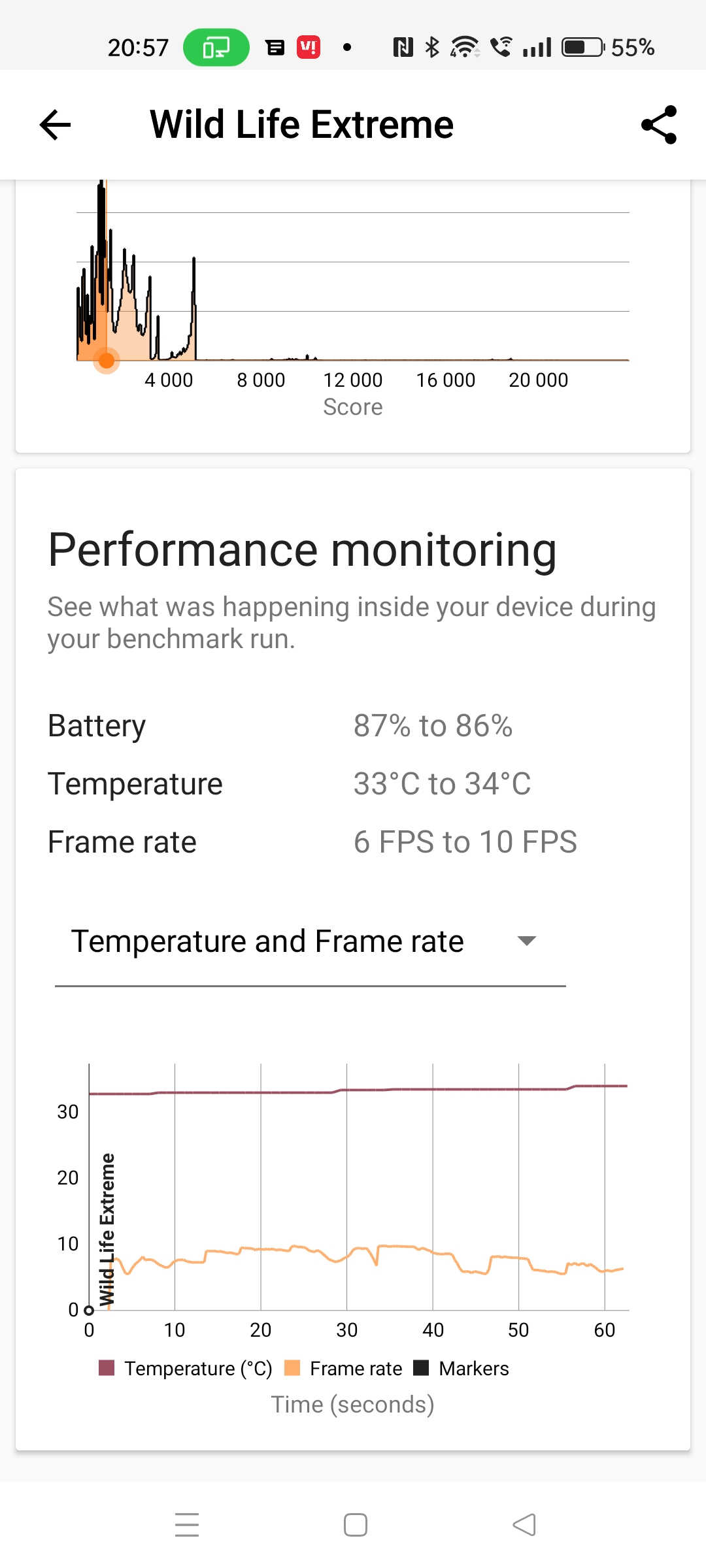
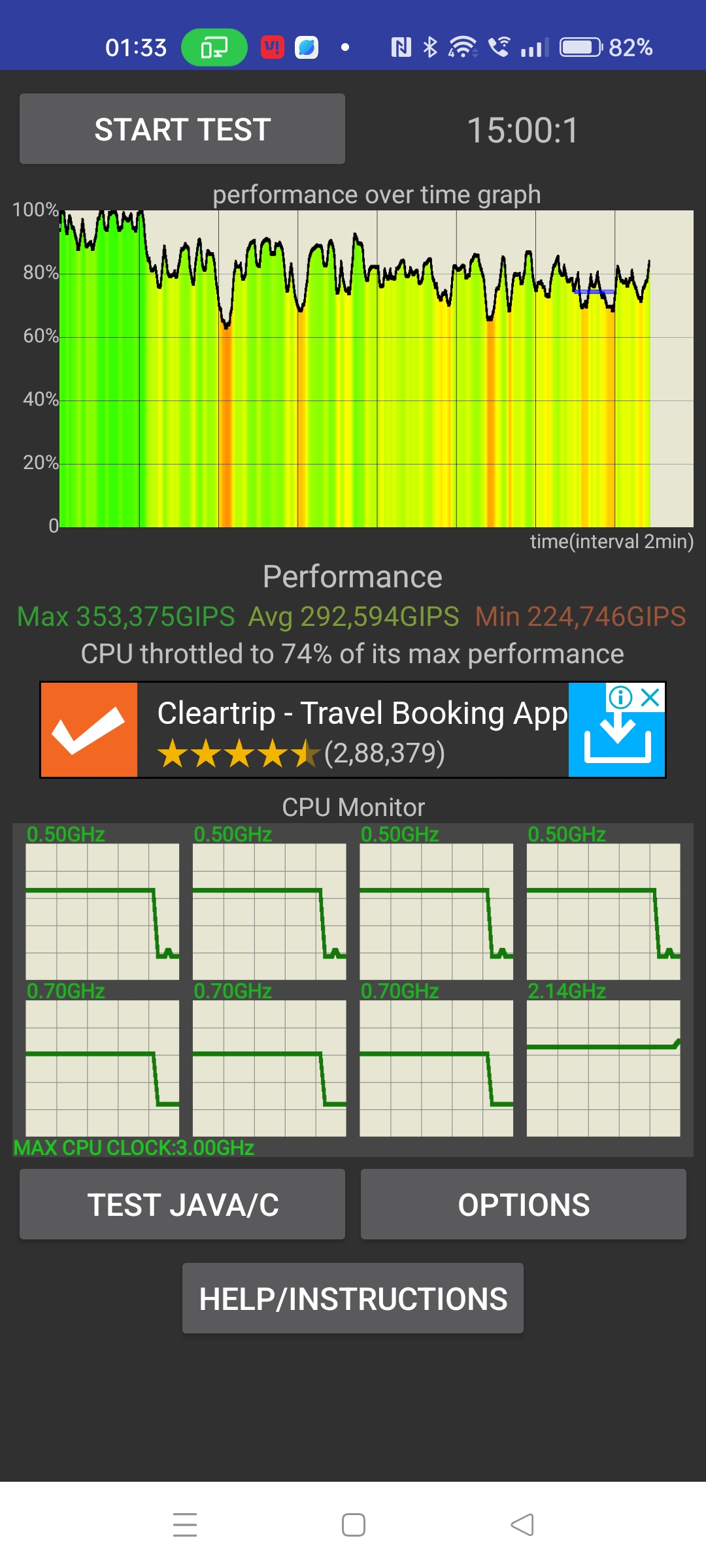
Moving on to the gaming capabilities of the OPPO Reno 8 5G. Even after playing BGMI continuously for an hour, there was slight heating or thermal throttling issue on the device. The Asphalt 9 also worked fine on the Reno 8G. However, it became a bit warm after playing for nearly an hour. For maintaining the internal temperature and heat dissipation, the device is equipped with a vapour chamber liquid cooling system. The x-axis linear motor does a decent job when it comes to in-game vibrations. Here is a look at the Reno 8 5G’s performance on benchmarking apps, such as AnTuTu, Geekbench, 3D Mark, and CPU Throttle test.
1 of 7
OPPO Reno 8 5G AnTuTu
OPPO Reno 8 5G Geekbench screenshots
OPPO Reno 8 5G 3DMark Test
OPPO Reno 8 5G 3DMark Test Wildlife Extreme Stress
OPPO Reno 8 5G 3DMark Test Wildlife ExtremeOPPO Reno 8 5G 3DMark Test Wildlife Extreme
OPPO Reno 8 5G CPU Throttle
OPPO Reno 8 5G battery performance
One of my favorite features of the phone is the support for 80W fast charging, which comes with 5-layer charging protection for safety. It took 35:22 minutes to fully charge the Reno 8 5G using the bundled 80W SuperVOOC charger. Subsequent charging revealed that the device took around 35 to 38 minutes to achieve a full charge. Once charged, it can easily last for a day or two, depending on the usage. If the phone is not in use for several hours, the battery does not drain easily. It offers around 7 hours of screen-on time. As can be seen in the screenshot, even at 53 percent battery level, it can last for 20 hours more. According to OPPO, its proprietary Battery Health Engine ensures 1,600 charging cycles (roughly 4 years) of peak battery performance on the Reno 8 5G.
Photography
The OPPO Reno 8 5G has two flagship cameras: a Sony IMX709 32-megapixel on the front and a rear-facing 50-megapixel Sony IMX766 camera with 1/1.56-inch sensor size and 1.0µm pixel size. The Reno 8 5G is the only phone in its price range with a front-facing camera with a 32-megapixel IMX709 lens from Sony. It is a custom-made lens made for OPPO with an RGBW filter, a 1/2.74 sensor size, a 0.8m pixel size, and an f/2.4 aperture. The selfie camera lacks support for autofocus.
What I miss on the Reno 8 5G is the support for OIS (Optical Image Stabilization). Its major rival, the OnePlus Nord 2T has the same 50-megapixel Sony IMX766 primary camera with OIS support. However, the OnePlus Nord 2T has a Sony IMX615 32-megapixel selfie camera. The Reno 8 5G’s rear camera setup has a 50-megapixel main camera, an 8-megapixel Sony IMX355 ultra-wide camera, and a 2-megapixel GalaxyCore GC02M1 macro camera.
1 of 7
OPPO Reno 8 5G main camera HDR-
OPPO Reno 8 5G main camera
OPPO Reno 8 5G ultra-wide shot
OPPO Reno 8 5G main camera with HDR
OPPO Reno 8 ultra-wide shot
OPPO Reno 8 5G main camera with HDR--
OPPO Reno 8 5G ultra-wide shot-
The photography modes available on the device include night mode, portrait mode, Pro mode, panorama, macro mode, time-lapse, dual-view video, sticker, text scanner, and Soloop templates. The camera app allows users to switch between ultra-wide (0.6x), 1x, and 2x zoom.
1 of 2
OPPO Reno 8 5G main camera (indoor)
PPO Reno 8 5G ultra-wide (indoor)
The 50-megapixel camera does a good job when it comes to snapping photos in daylight. There is no significant shutter lag while shooting in normal mode. However, it can take a second or two more when snapping photos in low-light conditions. The main snapper is equipped with all-pixel omni-directional PDAF for faster focus and DOL-HDR for better dynamic range. The quality of 2x zoom shots is almost the same as the standard 1x photos. In the Night mode, the Reno 8 5G took long-exposure shots, which came out good only when the subject did not move and when the device was held firmly.
1 of 10
OPPO Reno 8 5G main camera in low-light
OPPO Reno 8 5G ultra-wide in low-light (16:9)
OPPO Reno 8 5G main camera in low-light (!6:9)
OPPO Reno 8 5G main camera in low-light
OPPO Reno 8 5G main camera in low-light-
OPPO Reno 8 5G ultra-wide in low-light
OPPO Reno 5G main camera in low-light
PPO Reno 8 5G main camera in low-light with night mode
The ultra-wide shots come out similar to the shots taken by the main snapper, but they are captured with fewer details. As far as the macro camera is concerned, it only manages to capture some okayish images when there is sufficient light.
1 of 3
OPPO Reno 8 5G macro shot
OPPO Reno 8 5G macro shot
The Reno 8 5G offers features like AI enhancement, background blur, and plenty of filters while shooting 1080p videos at 30 / 60 fps. However, most of the filters work only while recording in 720p quality. When Ultra-Steady stabilization is selected, it can capture stabilized videos, but features like AI enhancement and filters are not available.
Again, AI enhancement, filters, and Ultra-Steady features are absent when Reno 8 5G is used to capture 30fps 4K videos. The device allows users to shoot photos while recording videos. It can shoot up to 960fps (720p) videos.
There is an Extra HD mode, which allows the Reno 8 5G to snap 50-megapixel shots and upscale them to 108-megapixel. However, the result is not that good, and it is always advisable to shoot photos at 50-megapixel for snapping high-quality images.
Coming to the selfie camera, the Reno 8 5G manages to capture impressive selfies in bright environments. The portrait shots come out with amazing background blur and accurate edge detection on the subject. It allows the user to adjust the blur effect. In dim-light conditions or indoors, the Reno 8 5G shot overexposed images while retaining the image quality. The available image editing tools can help in reducing exposure to achieve a more natural-looking result. When there is less light, the Reno 8 5G captures selfies with its screen flash automatically. The handset can shoot stellar selfie videos with background blur.
Verdict
It goes without saying that the strengths of the Reno 8 5G are its flagship cameras, smooth OS experience, fast charging, decent gaming performance, and attractive design. The device certainly misses features like a notification LED, OIS, and stereo speakers. Also, the handset is not suited for people who like to play CPU-intensive games.
However, I feel the pros manage to outweigh the cons of the Reno 8 5G. It is certainly one of the devices to recommend for people who are looking forward to purchasing a phone priced around Rs 30,000 (~$376) in India and £420 in the UK.
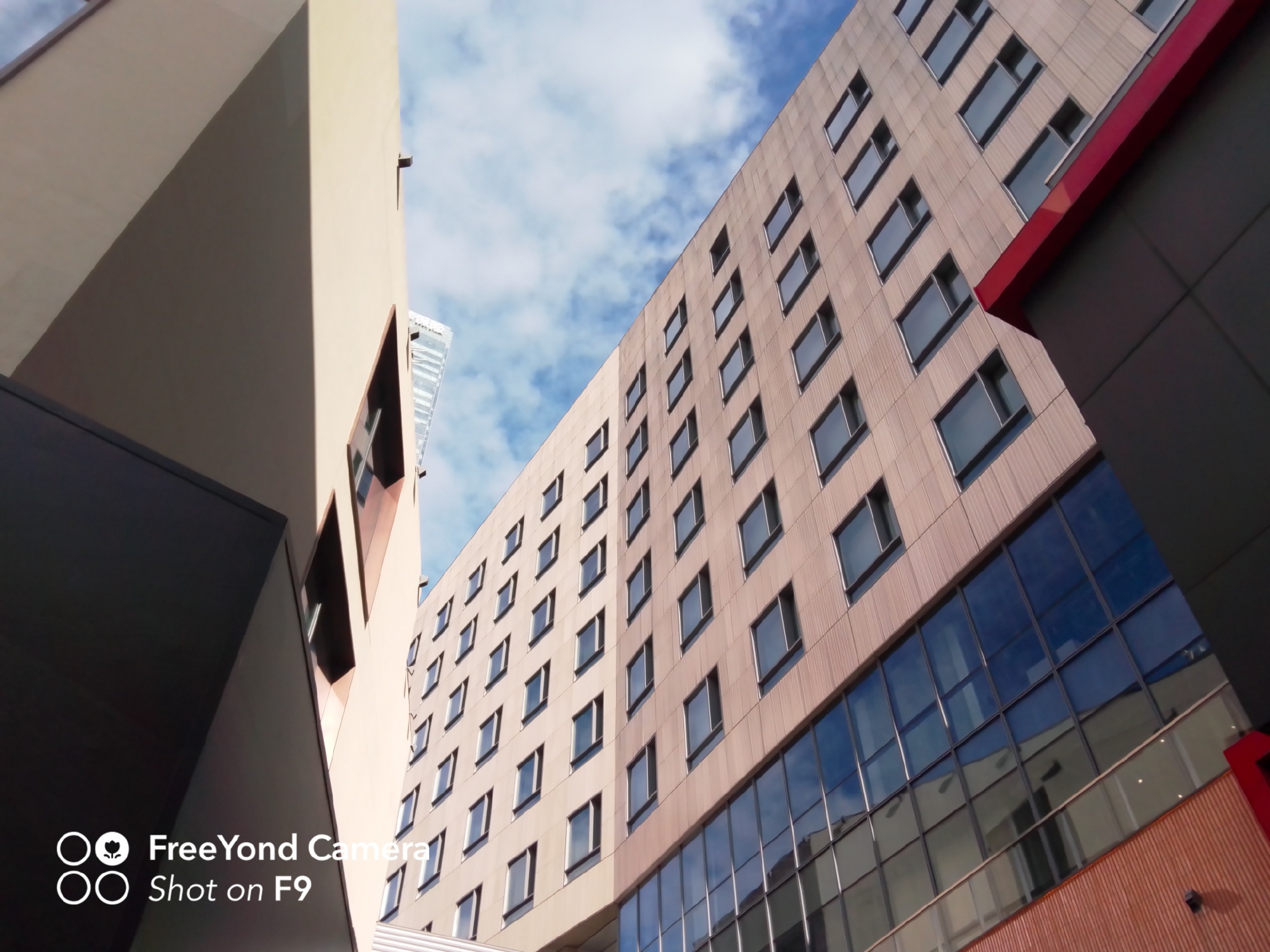
A new Chinese smartphone company, FreeYond, will soon unveil its first smartphone, called the FreeYond F9. The company is led by some of the former employees of Gionee, which went bankrupt in 2018. The F9 will be an affordable offering from the brand. TechGoinghas shared the first camera samples of the F9 to reveal its camera performance.
FreeYond F9 camera samples
Here are the camera samples of the FreeYond F9. All the images show that the device is capable of snapping decent shots when there is sufficient light. It is not clear whether the mid-ranger will be able to perform as well in low light.
1 of 8
FreeYong Y9 camera sample
FreeYong Y9 camera sample
FreeYong Y9 camera sample
FreeYong Y9 camera sample
FreeYong Y9 camera sample
FreeYong Y9 camera sample
FreeYond F9 specifications
The FreeYond F9 has a 6.5-inch display with a teardrop notch. It is an IPS LCD panel that offers a 20:9 aspect ratio and an HD+ resolution of 720 x 1600 pixels. It is powered by a 1.6GHz octa-core processor. The device has 2 GB of RAM, 64 GB of internal storage, and a microSD card slot for additional storage. The device runs on the Android 12 Go edition.
The F9 has a 5,000mAh battery that supports 10W charging. It has an 8-megapixel front-facing camera, and its back panel has a 13-megapixel main camera along with a 2-megapixel macro snapper. The device offers other features such as dual SIM support, 2.4GHz Wi-Fi, Bluetooth 4.2, GPS, a USB-C port, and a 3.5mm headphone jack.
FreeYond is a new smartphone whose founder and CEO is Yu Lei. He is the former vice president of Gionee. Its team members include Chang Shidan, former sales director of Gionee Group and CEO of the India branch; Qiu Zhimin, former financial director of Gionee Group; Yuan Xuanhua, former chief designer of Gionee Group; Gionee Group veteran , Li Jian, the former head of the Integrated Marketing Communication Center; Guo Xianqiu, the former head of the China business of TCL Communications, a veteran of the mobile phone industry, and the former vice president of Hexin Communications.
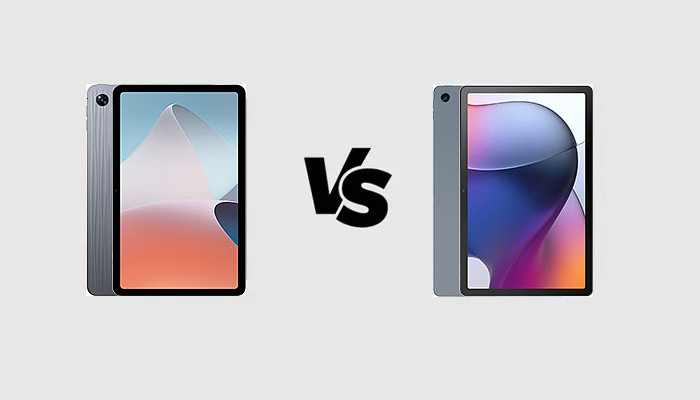
A bunch of hours ago, the OPPO Pad Air went official in the European market. It is the first OPPO tablet to hit Europe and it is also a device with a high value for money, thanks to its affordable price tag. But there is another tablet launched a few days ago representing a perfect competitor for the OPPO one. We are talking about the Motorola Moto Tab G62: Lenovo seems seriously intentioned to take on OPPO, Realme, and Samsung not only in the global smartphone market but in the tablet market as well. Is its new tablet good enough to challenge the best affordable tablets out there? In order to answer this question, after comparing the Motorola tablet to the Realme Pad, we decided to publish a comparison between the main specifications of the OPPO Pad Air and the Motorola Moto Tab G62.
If I had to choose between these two tablets, I would definitely go for the OPPO Pad Air without thinking twice. It has a very interesting design made of two elegant pieces and it is very curated. It is one of the most beautiful tablets you can choose and even one of the thinnest and most lightweight ones, with a thickness of just 6.9 mm and a weight of 440 grams. It has a very high screen to body ratio and one single camera placed on the upper left corner of the rear side. It supports the stylus for handwriting and drawing, so it is a very good tablet for productivity, even though it is an affordable model. Even though the OPPO Pad Air wins the design comparison, the Motorola Moto Tab G62 remains a beautiful device. It is made entirely of aluminum with the exception of the front glass: it has an aluminum back, an aluminum frame, and a very thin profile with a thickness of just 7.5 mm. Further, it has a water repellent body, so you can use it even in the rain. The screen to body ratio is high even in this case but this device does not support the stylus for handwriting and drawing.
Display
If you are looking for the best image quality, you should go for the OPPO Pad Air. It has an IPS LCD display, so nothing particularly amazing because the best displays are OLED. But it is able to show up to one billion colors, so you can get good color accuracy. The display has a diagonal of 10.36 inches, a Full HD+ resolution of 1200 x 2000 pixels and, as already mentioned, it supports the stylus. The display of the Motorola Moto G62 is inferior in terms of image quality, but it is a bigger panel, with a diagonal of 10.6 inches. It has a Full HD+ resolution of 1200 x 2000 pixels and IPS LCD technology. Both the tablets feature four stereo speakers for an improved audio experience, but they lack a fingerprint reader and you can only unlock them through a code or other traditional methods.
Specs & Software
Now, let’s talk about the hardware department. These are midrange tablets, and midrange tablets are usually inferior to midrange phones. So you should not expect blazing speeds and the highest performance, but these devices are always more than acceptable. They are powered by the Snapdragon 680 4G mobile platform by Qualcomm: a chipset built with a 6 nm production process sporting an octa-core architecture composed of four Kryo 265 Gold CPUs running at a max frequency of 2.4 GHz, as well as four Kryo 265 Silver CPUs running at a frequency of 1.9 GHz, and an Adreno 610 GPU. The OPPO Pad Air wins the hardware comparison because it provides a higher amount of RAM and internal storage: it offers up to 6 GB of RAM and up to 128 GB of UFS 2.2 native storage which you can furtherly expand with a micro SD, while the Motorola Moto Tab G62 stops at 4 GB of RAM and 64 GB of expandable native storage. These tablets run Android 12 out of the box, but the ColorOS for Pad found on the OPPO device is way better than the Motorola customized user interface.
Camera
Do you need a better rear camera? If so, then buy the OPPO Pad Air. It has the same 8 MP resolution as the Motorola Moto Tab G62, but thanks to a brighter f/2.0 focal aperture and a better camera algorithm, it is able to provide higher camera performance. On the other hand, the Moto Tab G62 by Motorola has a better 8 MP front camera.
The Motorola Moto Tab G62 is able to provide a longer battery life thanks to the presence of a bigger battery with a capacity of 7700 mAh.
Price
The OPPO Pad Air sells with a starting price of €213/$213 in the Indian market, while the Motorola Moto Tab G62 starts from €200/$200 at the actual change. Which one would you pick?
OPPO Pad Air vs Motorola Moto Tab G62: PRO and CONS
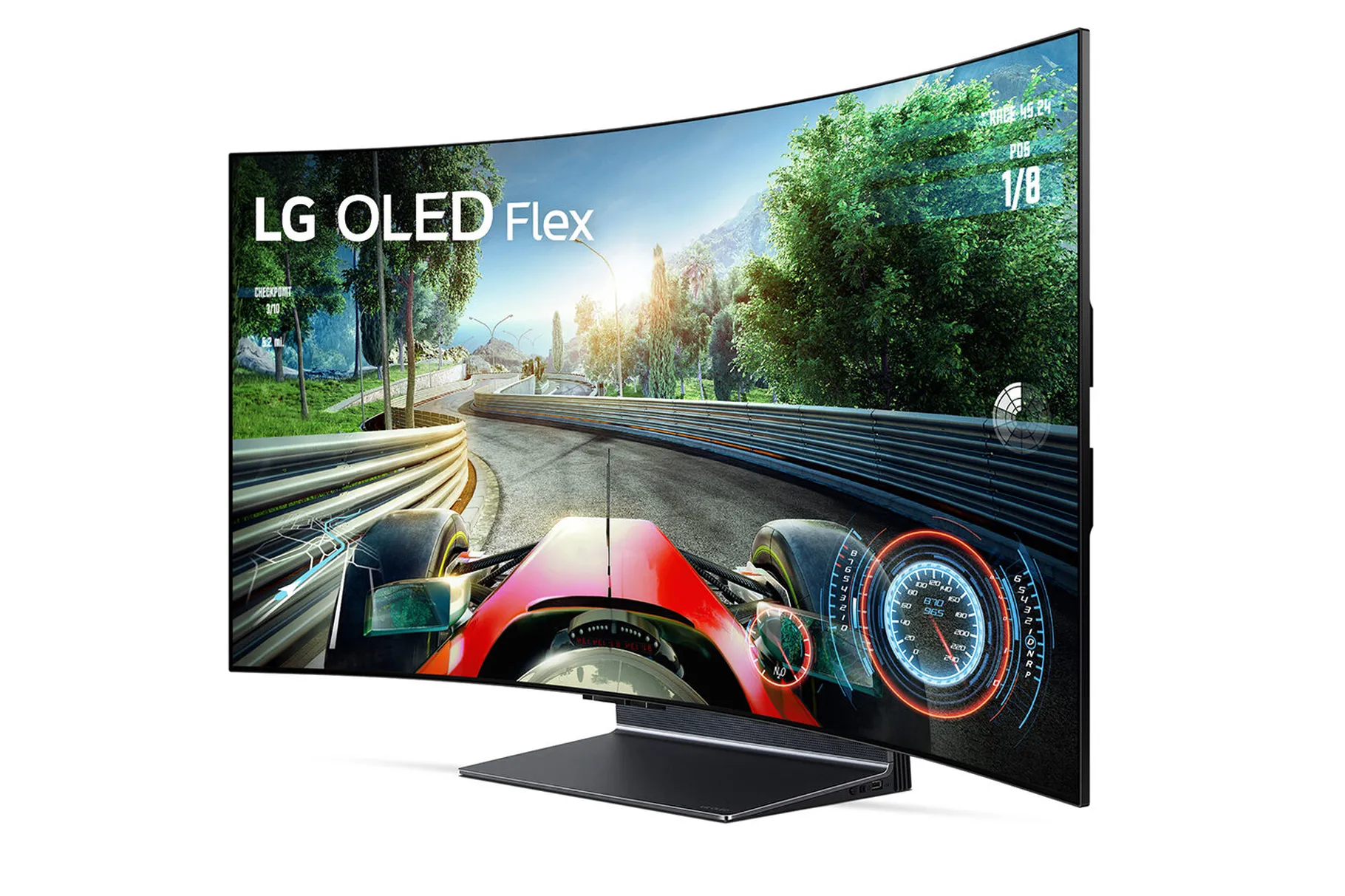
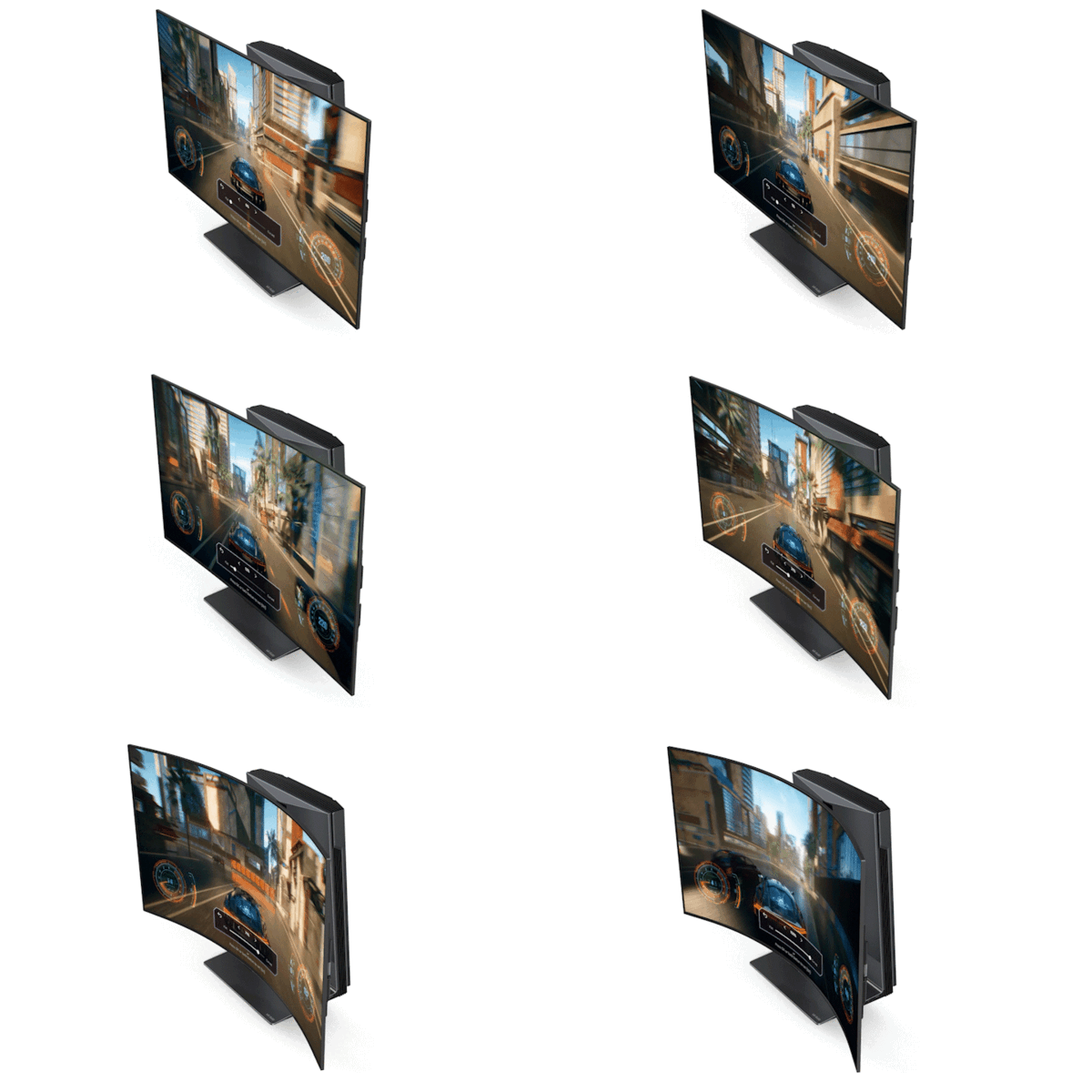
LG has unveiled its first bendable OLED TV, which can function as a flat or curved display. The LG OLED Flex is equipped with a 42-inch OLED panel as well as LG’s latest display technology that bends into a curved (900R) TV.
Curved displays are better suited for immersive gaming, whilst flat panels are better suited for watching TV broadcasts or streaming services. Using a special button on the TV remote, LG OLED Flex users can automatically bend and adjust the TV into its curved mode. (As opposed to certain morphing monitors, which require manual adjustment.) There are two settings, or owners can alter the display curve in 5% increments through 20 different levels.
The 42-inch bending display is aimed at gamers, thanks to a slew of capabilities that console and PC gamers would appreciate. The LX3 supports Dolby Vision gaming at 4K 120Hz and has all of the latest HDMI 2.1 capabilities like variable refresh rate (VRR) and auto low latency mode (ALLM). It also supports Nvidia’s G-Sync and AMD’s FreeSync technologies, which reduce tearing and stuttering during gameplay.
This TV certainly seems more like a huge monitor, and it even has a height-adjustable stand that allows you to tilt the image towards or away from you. There are also gaming settings that allow you to reduce the 42-inch display to 32- or 27-inch proportions if you don’t want to play specific games at full screen.
Gamers can also use LG’s Multi View mode to simultaneously view content from two different sources. So, you could use the LG Flex to play a PC or console game while simultaneously viewing a YouTube video streamed to the TV from a phone.
LG has not announced pricing or a release date for the OLED Flex TV. The LG Flex will be on show this week at IFA in Germany.
A new official video of the upcoming AYA Neo Slide handheld gaming console has been released by the company. The progress video indicates that the Slide is on track for its scheduled Q4 2022 release. The gaming handheld was announced in May 2022 and the new video followed its prototype release last month.
The AYA NEO Slide is powered by AMD’s Ryzen 7 680DU chipset with Zen 3+ CPU cores and a Radeon 680M iGPU. The SLIDE will likely square up with the GPD Win 4 and the display can be viewed from at least two angles. The video also reveals some design similarities with the Win 4 but the SLIDE comes with some unique features. You can orientate the SLIDE in a flat orientation or at a 45-degree angle. It is unclear whether the display supports other orientations and how this feature pans out during gaming. The AYA Neo Slide offers shallow keyboard keys while the display sits atop its chassis unlike the GPD Win 4. It is noted that what is known about the Win 4 are leaks, as official renders are yet to be available. The SLIDE will have an LPDDR5-6400 RAM and at least two color variants. The video also reveals USB-C connectivity, a microSD card reader, a 3.5mm headphone jack, and a gamepad layout.
The model is still at the prototype stage but is expected to be released in Q4 2022. AYA NEO has not provided other details including pricing and availability of the upcoming handheld.
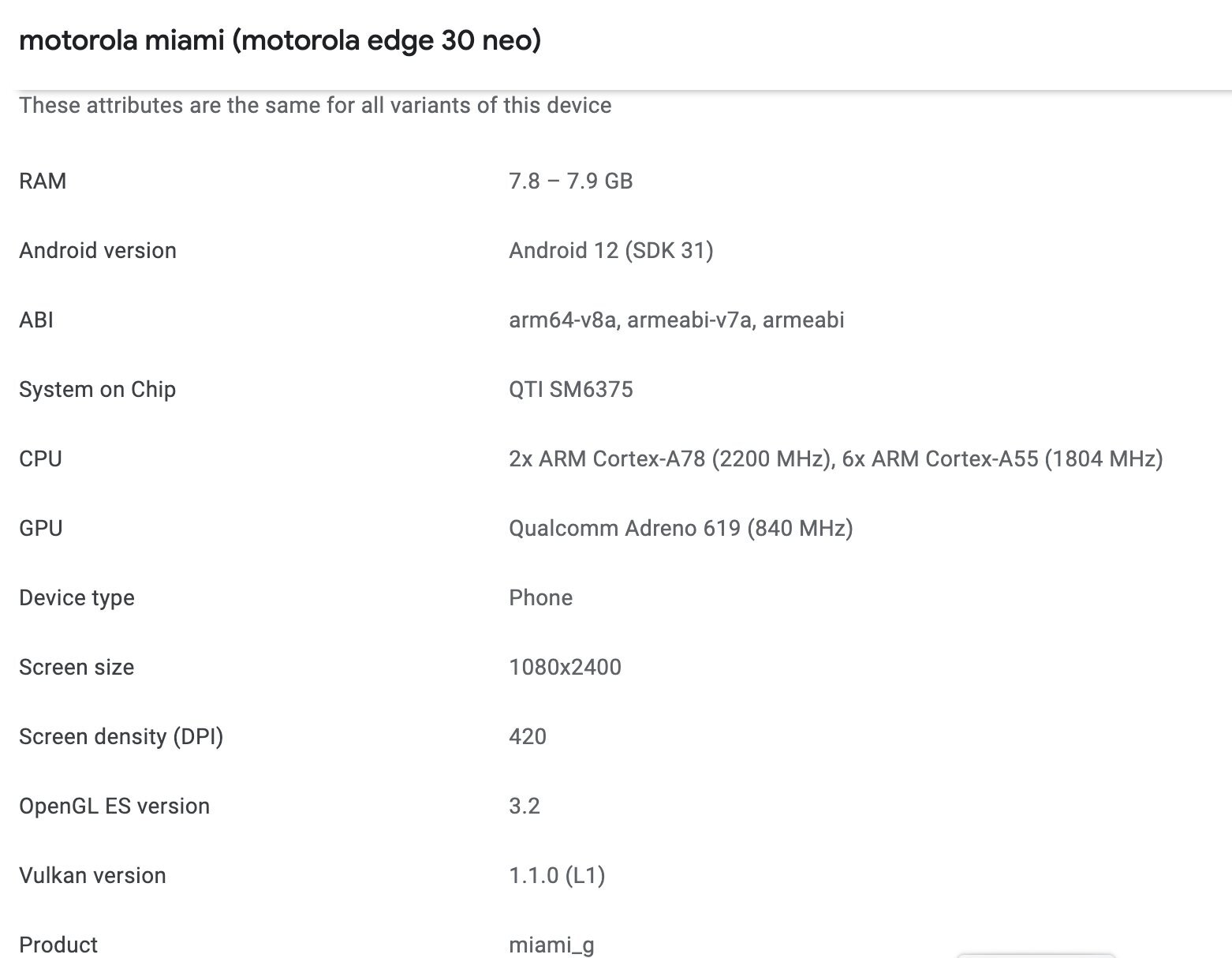
Motorola Edge 30 Neo is expected to launch in the first week of September. The details are yet to be officially announced by the company, but ahead of it, the Edge-series smartphone has been spotted on the Google Play console website, hinting at a few key specs. The listing suggests Edge 30 Neo will be equipped with Snapdragon 695 Soc, FHD+ Display, 8GB RAM, and more. Let’s have a look at all the details.
Tipster Mukul Sharma has spotted the Moto Edge 30 Neo on the Google Play Console website with the codename “Miami”. As per the listing, the device will be powered by a Qualcomm Snapdragon 695 SoC, coupled with Adreno 619 GPU. It will be equipped with a full-HD+ display with a hole-punch cutout, housing a selfie camera. It will run Android 12-based MyUX out of the box.
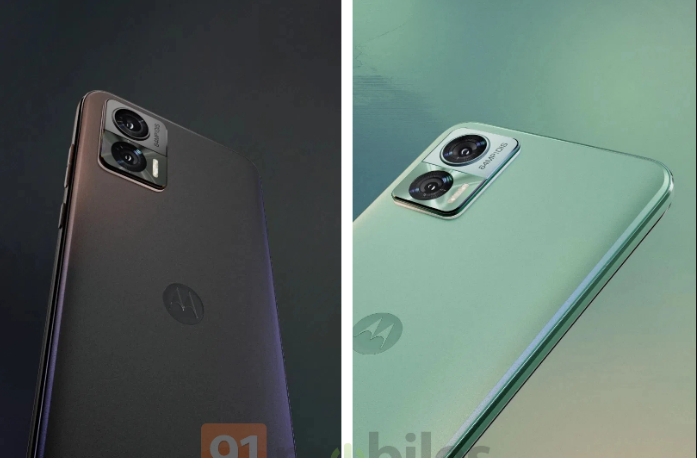
Recently, the renders of the Moto Edge 30 Neo surfaced online, which revealed the device will be offered in Aqua Foam, Black Onyx, Ice Palace, and Very Peri color options.
Further, the device is rumored to have a 6.28-inch P-OLED display offering a 120Hz refresh rate. It is said to have up to 8GB RAM and 256GB of onboard storage. For photography, it could feature dual rear cameras consisting of a 64MP main camera with OIS accompanied by a 13MP ultrawide sensor. It is expected to come with a 4,020 mAh and will support 30W charging.
As for the price, Moto Edge 30 Neo is expected to cost around 399 euros in Europe. As mentioned, Motorola is yet to confirm any details about the smartphone yet. We hope to learn more in the coming days.
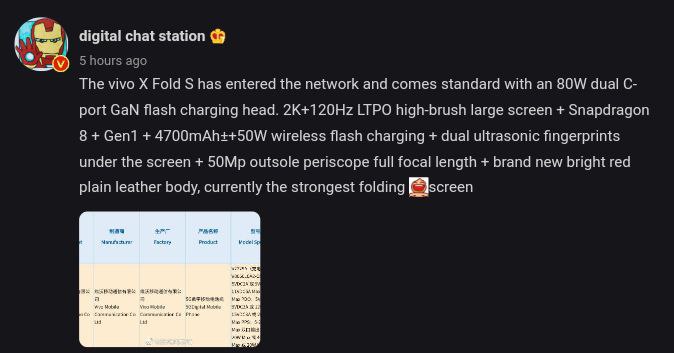
Vivo is reportedly working on its next-gen foldable smartphone, dubbed X Fold S. The foldable has been the subject of various leaks recently. And today, it has been spotted on China’s 3C certification platform, hinting at an imminent launch. The listing reveals the device will support 80W fast charging. It is also rumored to be equipped with Snapdragon 8+ Gen 1 Soc.
Tipster Digital Chat Station has spotted the Vivo X Fold S on China’s 3C certification site with model number V2229A. The listing confirms the device will be with an 80W dual C-port GaN flash charging head.
The tipster also sheds some light on the specifications of the device. He claims the Vivo X Fold S will be powered by the Snapdragon 8+ Gen1 chipset. It will have a large screen offering 2K resolution and 120hz refresh rate.
Further, the foldable is said to be fueled by a 4700mAh battery and support 80W wired and 50W wireless charging. The tipster previously claimed that the X Fold S will have a quad camera setup that consists of a 50-megapixel primary, 48-megapixel ultra-wide-angle, 12-megapixel telephoto, and 8-megapixel periscopic sensors. While on the front, it will house a 16-megapixel selfie shooter. The device is also said to have a new bright red plain leather body.
Vivo X Fold
The Vivo X Fold S will launch as the successor to the Vivo X Fold that was launched in April last year. The exact launch date of the forthcoming foldable is yet to be revealed, however, the 3C certification hints that the device may arrive soon.
Vivo hasn’t confirmed any details about the X Fold S yet, so we recommend you take the specs mentioned above with a pinch of launch. We hope to learn more details about the foldable in the coming days.
New Realme gadgets are coming to India. The company has already confirmed it will be launching the Realme Watch 3 pro in India on September 6. And now it has announced a new pair of TWS earbuds, dubbed Realme Buds Air 3S will debut alongside the smartwatch.
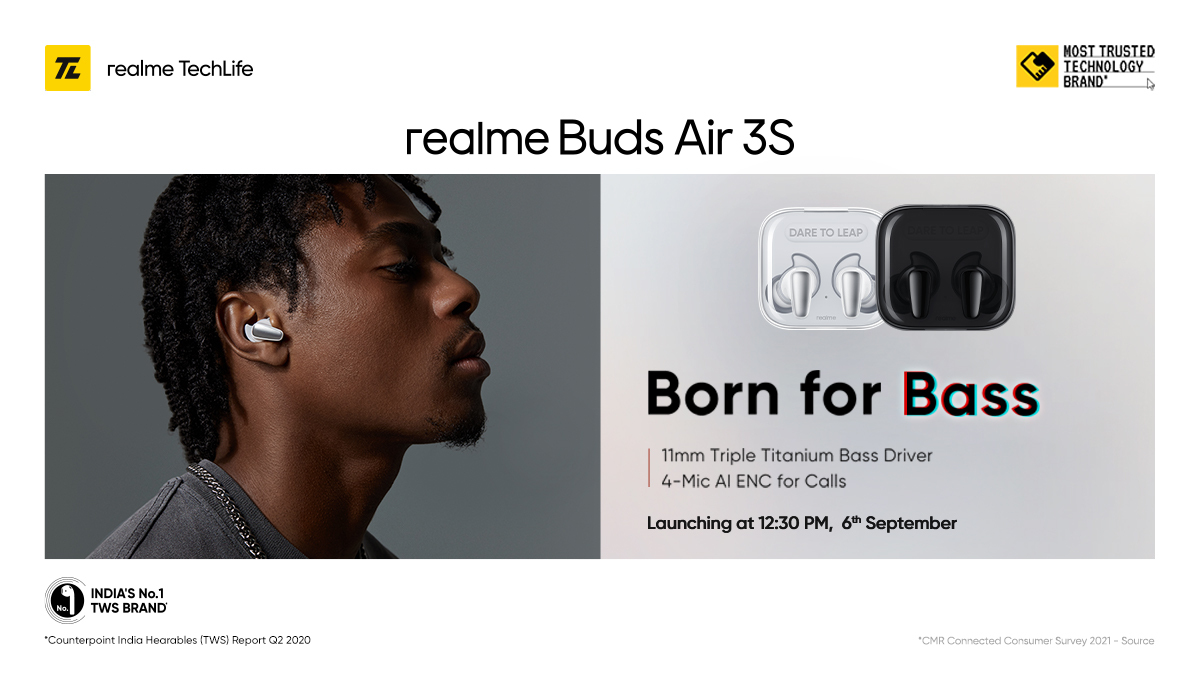
Realme took to Twitter to announce the launch date of the Realme Buds Air 3S. The hearables will debut in India on September on September 6 at 12:30 PM. The company has also revealed the design and appearance of the upcoming earbuds through the announcement post.
The Buds Air 3S can be seen to have a design completely different from its siblings in the series. The earbuds have a flat stem, and silicone ear-wing tips. Judging from the design, the buds could be aimed toward athletes and fitness enthusiasts. Interestingly, the case of the earbuds is having a transparent lid.
Talking about the specs, the company has confirmed the Realme Buds Air 3S will sport an 11mm triple titanium bass driver and 4-microphones with an AI ENCE noise reduction algorithm.
As mentioned, the Chinese manufacturer will also launch the Realme Watch 3 Pro. Reports suggest the smartwatch will sport an AMOLED display with a 1.78-inch screen size offering a 368 × 448-pixel resolution, and 500nits peak brightness. It will likely come with in-built GPS and may support Bluetooth calling. The Realme Watch 3 Pro is said to offer up to seven days of battery life on a single charge.
In addition, the watch is confirmed to go on sale through Flipkart. The price and other details about both the products are yet to be known. We hope to see a few more leaks revealing more details ahead of launch.
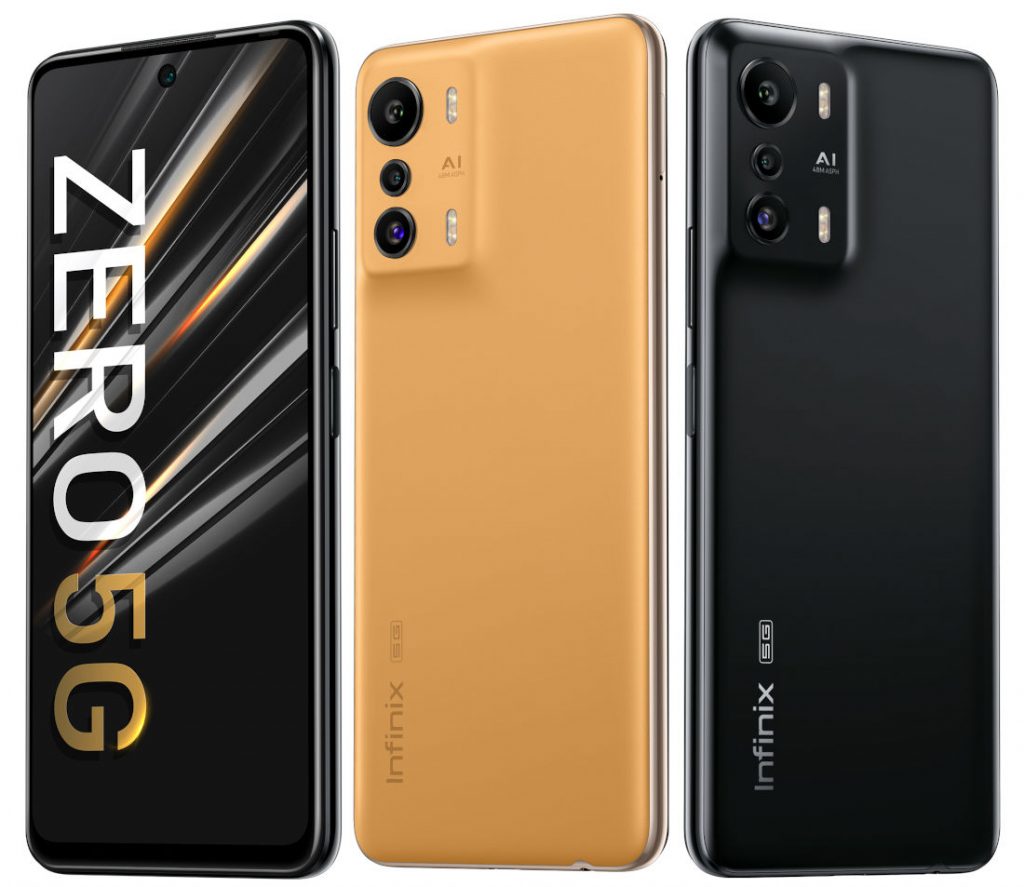
Infinix has started the rollout of the upgrade of three of its recent smartphones from Android 11 to Android 12. The Infinix Zero 5G, Note 11, and Note 12 were launched with Android 11 out of the box and are now getting their first OS upgrade.
While the Infinix Note 11 was launched in 2021, the Note 12 and Zero 5G models entered the market this year. The Android 12 beta upgrade will provide improvements in the user interface and general outlook of the three models. Indeed, Infinix says the rollout is in sync with its commitment to give its customers the most powerful and optimized experience via the update.
The Android 12 upgrade will be done sequentially in batches starting from August 31. Infinix India, in a tweet outlining the update, stated that the rollout will start with the beta version and the stable update will follow thereafter. The OEM says that after the beta, which is available for download for everyone, the optimized version will be available within 30 days. The schedule for the rollout indicates that the Zero 5G will kick off the update on August 31. The Note 11 and Note 12 updates will roll out subsequently within the first week of September.
To ensure a stable upgrade, the rollout will first happen through a Fan’s beta version, available for download for all. Check the key dates above for Zero 5G, Note 11 and Note 12 beta release. Post the beta, a full rollout of the optimized software will happen within 30 days.
The Android 12 upgrade will provide security, privacy, and performance improvements for the devices. The latest Android 12 updates for the latest Infinix models could be the precursor for the Android 12 update for older Infinix models. The company, however, remains silent on other models lined up for the Android 12 update.
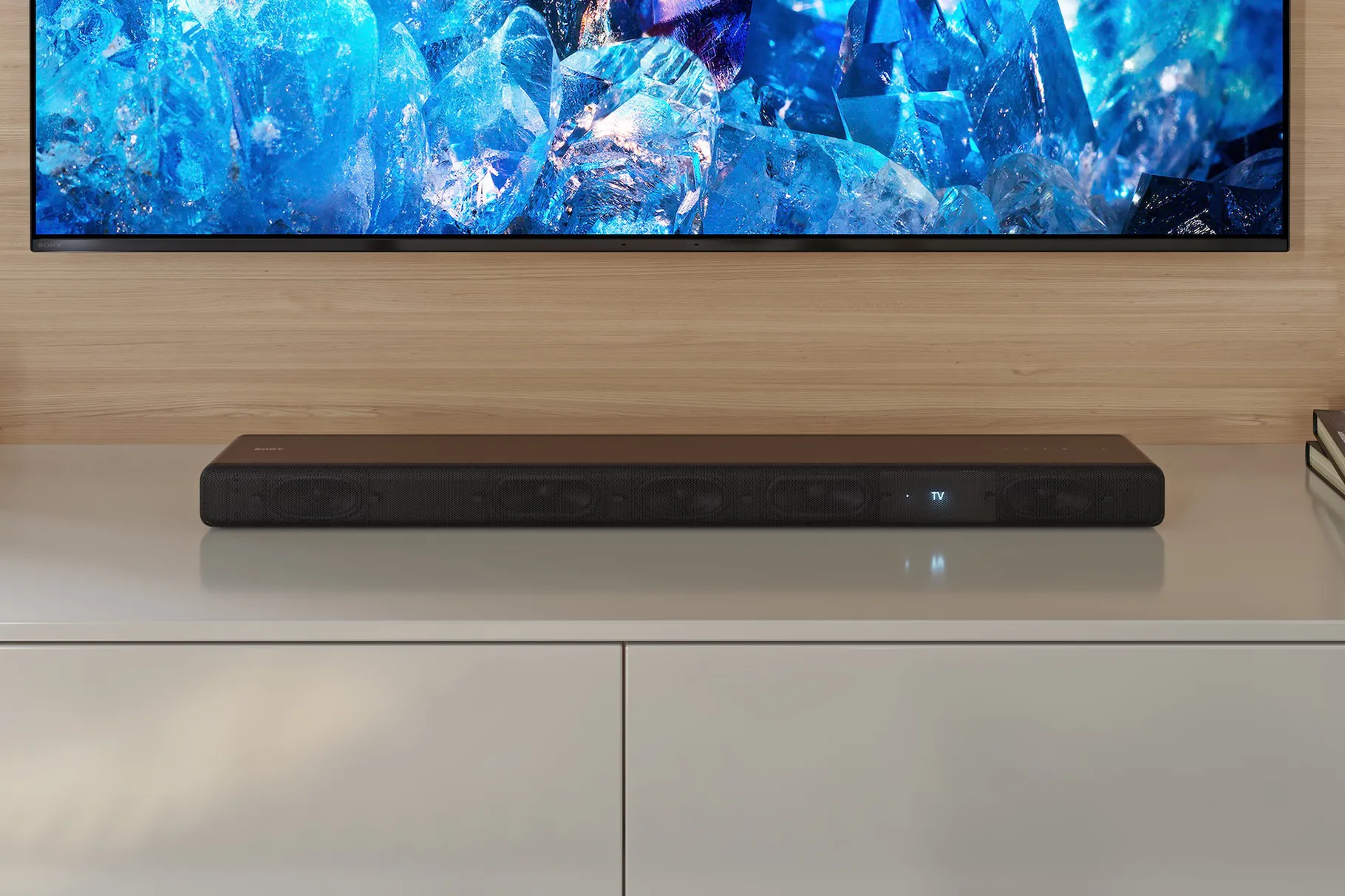
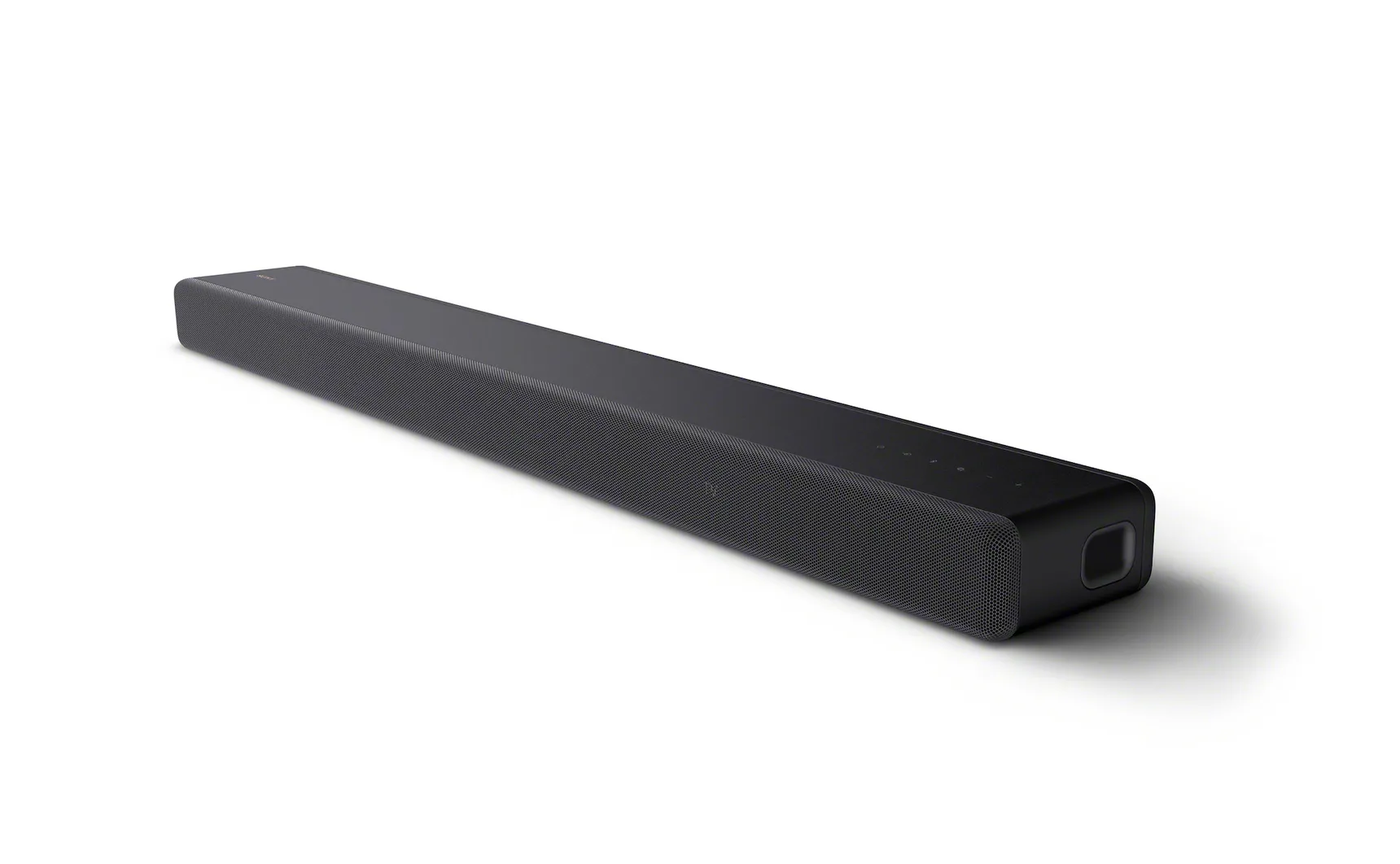
The latest Sony soundbar is a 3.1-channel speaker with visualized Dolby Atmos and other impressive features. The HT-A3000 comes with the DTS:X surround sound and is seemingly the last model in the A-series lineup. Although it is the cheapest soundbar in the series, it comes with some impressive specs that are comparable with its more expensive siblings.
The HT-A3000 soundbar has many of the software capabilities and features of the higher HT-A7000, HT-A5000, and HT-A9 soundbars. The soundbar supports Chromecast, Spotify Connect, AirPlay 2, and Bluetooth playback. The model has left, right, and center channels in addition to dual built-in subwoofers. It can also accommodate additional rear surround speakers and a dedicated subwoofer for greater output.
The Sony HT-A3000 features Sony’s 360 spatial sound mapping and sound field optimization functionalities. This allows for a customized and optimal sound that is tailored to the ambient acoustic profile. It lacks more channels unlike the other models in the lineup, as well as the absence of HDMI passthrough. This means that you will not be able to run a gaming console or any other intermediate device. It however has the x-balanced speaker design present in other models in the series. This offers clarity and a more dynamic output.
The soundbar can be used with Sony’s recent TVs like the Bravia XR. With compatible Sony TVs, it is also possible to connect an S-Center Out cable to the TV for a more immersive output in combination with the TV’s speakers. The HT-A3000 retails at $699 and it could be more expensive when it is part of a surround sound system compared to a higher and more expensive model. It is, however, a great bargain as a standalone soundbar for smaller spaces.
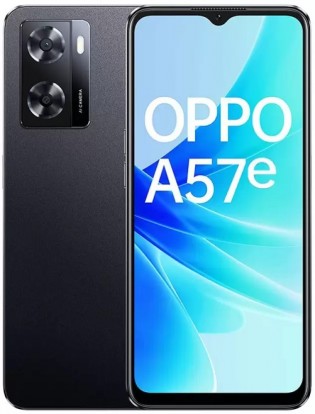
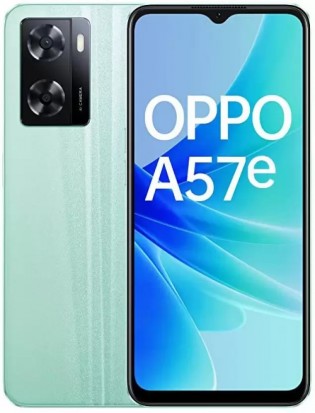
OPPO A57e has been launched in India as the company’s latest budget smartphone. The smartphone is very similar to the OPPO A57s that debuted recently. The handset comes with features like MediaTek Helio G35 SoC, 6.56-inch LCD, dual rear cameras, and more. Let’s have a closer look at the price, specifications, and features of the newly launched smartphone.
OPPO A57e Specifications and Features
As mentioned, OPPO A57e is almost the same as OPPO A57s with just a few differences. The device comes with a 6.56-inch IPS LCD screen offering an HD+ resolution of 1612 x 720 pixels, up to 600 nits of brightness, and 269 PPI pixel density. It supports a standard 60Hz refresh rate and is protected by Panda glass (manufactured by a Beijing-based company).
Under the hood, the A57e is powered by the MediaTek Helio G35 chip paired with 4 GB of LPDDR4x RAM, and 64 GB of internal storage. The device comes with a RAM expansion feature which enables you to virtually increase RAM by up to 4GB. The handset also sports a microSD card slot for storage expansion up to 1TB.
As far as the cameras are concerned, the OPPO smartphone has a dual rear camera setup consisting of a 13-megapixel main camera accompanied by a 2MP monochrome sensor. While on the front, it features an 8-megapixel camera for selfies and video calls.
OPPO A57e is backed by a 5,000mAh battery that supports 33W SuperVOOC charging. The phone runs on Android 12 OS with ColorOS 12.1 on top. Unlike the OPPO A57s, the A57e does not come with NFC support and stereo speakers. It also features Bluetooth 5.2 instead of 5.3.
OPPO A57e Price in India, Availability
OPPO A57e price in India is set at Rs 13,999 ($175) for the sole 4GB RAM + 64GB Storage variant. The device is offered in Green and Black colors and is available for purchase in India through Flipkart.
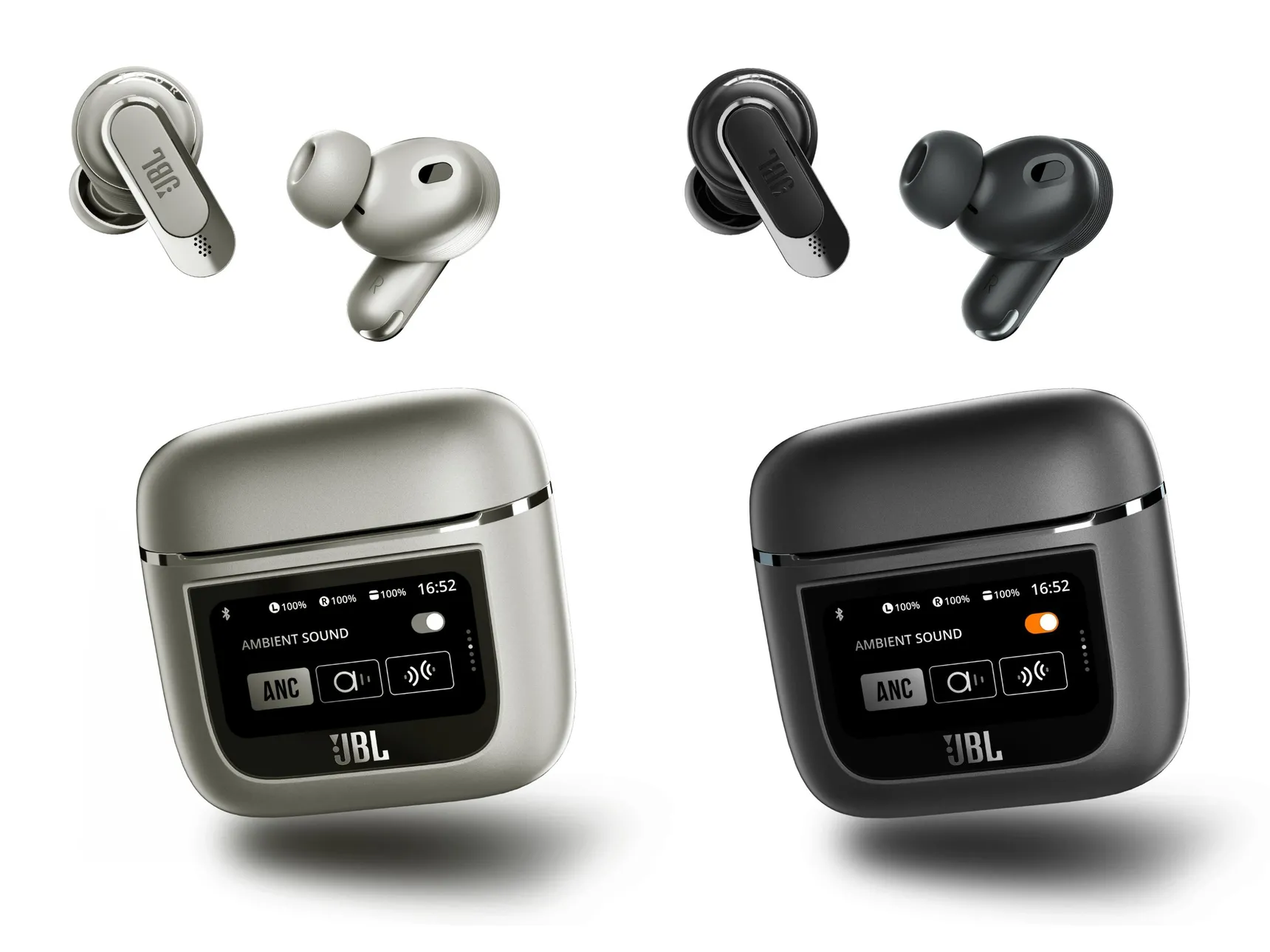
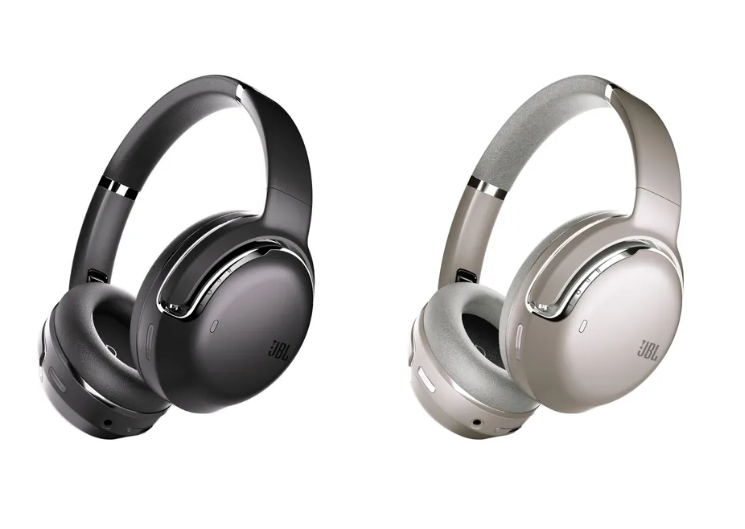
JBL has announced the Tour Pro 2 wireless earbuds with a smart LED interface in its charging case. The new wireless earbuds come with significant improvements from its predecessor, the Tour Pro Plus. The company also announced the Tour One M2 over-ear wireless headphones with true adaptive ANC.
The JBL Tour Pro 2 is claimed to be the first-ever wireless earbuds with a LED touchscreen control panel in its charging case. The LED display enables the user to play music, receive calls, adjust the earbuds, and receive messages and notifications.
The 1.45” LED screen looks like a smartwatch interface and enables the user to do lots of activities outside the smartphone. The Tour Pro 2 features adaptive noise cancellation, Bluetooth 5.3 LTE compatibility, 10mm drivers, and up to 40 hours of playtime overall. The JBL Tour Pro 2 wireless earbuds have several noticeable improvements from its predecessor but still retain the six-microphone setup of the Tour Pro Plus.
JBL also announced the Tour One M2 wireless headphones which come with JBL Pro-tuned drivers, Bluetooth 5.3 connectivity, and up to 30 hours of activity with ANC active. It also has a fast-charging functionality, with 10 minutes of charge yielding 5 hours of power. The two models will be available in Black and Champagne color options from January 2023. The JBL Tour Pro 2 is priced at €249 (~$249) while the Tour One M2 will retail at €299 (~$299). The pricing details at this time relate to the availability of the two models in Europe.
Nothing launched its first ever smartphone dubbed the Phone (1) last month. It was widely criticised for the lack of a bundled charger in the box. The Carl Pei-helmed company sold the charger called Nothing Power (45W) separately.
Now Nothing has announced that it will hold a special sale for customers who want to purchase the Phone (1)’s charger at a discounted price. This is only valid for customers who pre-ordered the Phone (1) and missed buying the Power (45W) at an introductory price before. The charger is available for Rs 1,499 instead of the regular price tag of Rs 2,499. The Nothing Power (45W) will be available at a discounted price tag until stocks last and the special sale is already live on Flipkart. If you have pre-ordered the Phone (1), here’s your chance to grab the Power (45W).
The Nothing Power (45W) offers greater power than the Phone (1) which maxes out at 33W charging speed. The device supports 3A superfast charging with PD 3.0 as well as USB-C. The Nothing Power (45W) is compatible with QC and PPS-enabled for quick charging. This means that the charger also works with laptops.
As for the Nothing Phone (1) core specifications, it comes with 6.55-inch FHD+ AMOLED display with 120Hz refresh rate and an integrated fingerprint scanner. The device features 50MP + 50MP rear cameras and a 16MP front-facing snapper. Internally, the Nothing Phone (1) is powered by a Snapdragon 778+ processor coupled with up to 12GB RAM and 256GB onboard storage. The smartphone is backed by a 4,500mAh battery unit with support for 33W fast charging and 15W wireless charging.
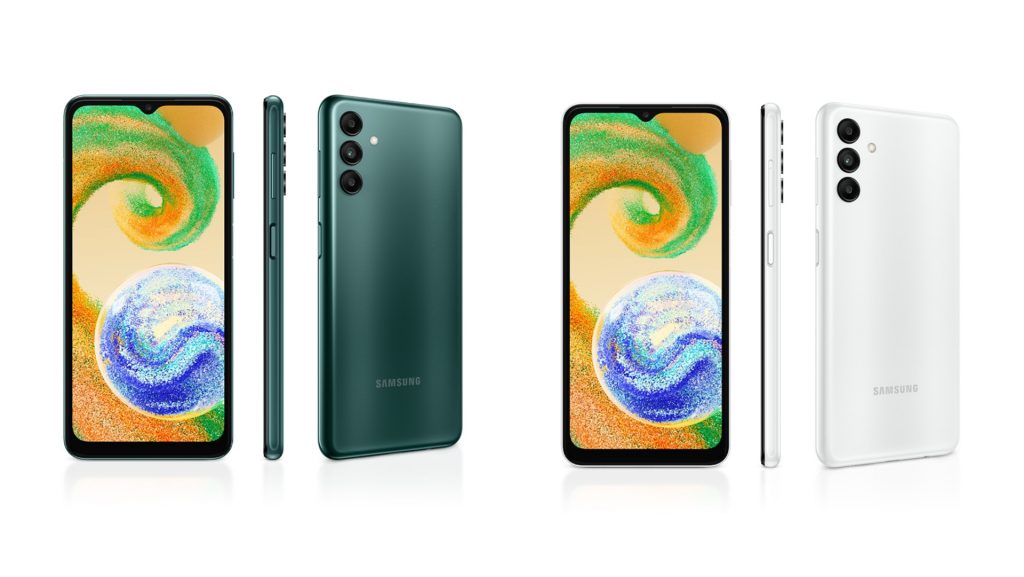
Samsung Galaxy A04s has quietly launched today in global markets. It is an upgraded variant of the Galaxy A04 that debuted recently. The latest offering arrives as the successor to the Galaxy A03s that was announced last year. Read on to know what the device offers out of the box.
The Samsung Galaxy A04s features a 6.5-inch IPS LCD display bearing an HD+ resolution and a waterdrop notch. It offers a 90Hz refresh rate and the screen is shielded by Gorilla Glass 3. The device has a side-mounted fingerprint scanner embedded in the power button.
On the optics front, the Samsung Galaxy A04s has a triple rear camera setup comprising a 50MP main sensor, a 2MP macro lens, and a 2MP portrait unit. There is a 5MP front-facing selfie camera.
Internally, the Galaxy A04s is equipped with an unspecified octa-core processor but we expect it to be the Exynos 850. It is offered in 3GB and 4GB RAM along with 32GB, 64GB, and 128GB onboard storage options. There is a microSD card slot support for additional storage needs up to 1TB. The device draws its power from a 5,000mAh battery unit with support for 15W fast charging. The smartphone runs on OneUI 4.1 based on Android 12 OS.
Connectivity options on the Galaxy A04s include a 3.5mm headphone jack, dual SIM, 4G, WiFi-5, and Bluetooth 5.
The Samsung Galaxy A04s comes in Black, Green, White, and Copper colours. There is no word on the pricing of the smartphone but it is listed on the brand’s online store in Denmark, Finland, Norway, and Sweden.
We use cookies on our website to give you the most relevant experience by remembering your preferences and repeat visits. By clicking “Accept”, you consent to the use of ALL the cookies.
This website uses cookies to improve your experience while you navigate through the website. Out of these, the cookies that are categorized as necessary are stored on your browser as they are essential for the working of basic functionalities of the website. We also use third-party cookies that help us analyze and understand how you use this website. These cookies will be stored in your browser only with your consent. You also have the option to opt-out of these cookies. But opting out of some of these cookies may affect your browsing experience.
Necessary cookies are absolutely essential for the website to function properly. This category only includes cookies that ensures basic functionalities and security features of the website. These cookies do not store any personal information.
Any cookies that may not be particularly necessary for the website to function and is used specifically to collect user personal data via analytics, ads, other embedded contents are termed as non-necessary cookies. It is mandatory to procure user consent prior to running these cookies on your website.

 You can now buy Lenovo XiaoXin Pad Pro 2022 for as low as $299 at Giztop. The tablet is available in Grey, Gold, and Silver color options.