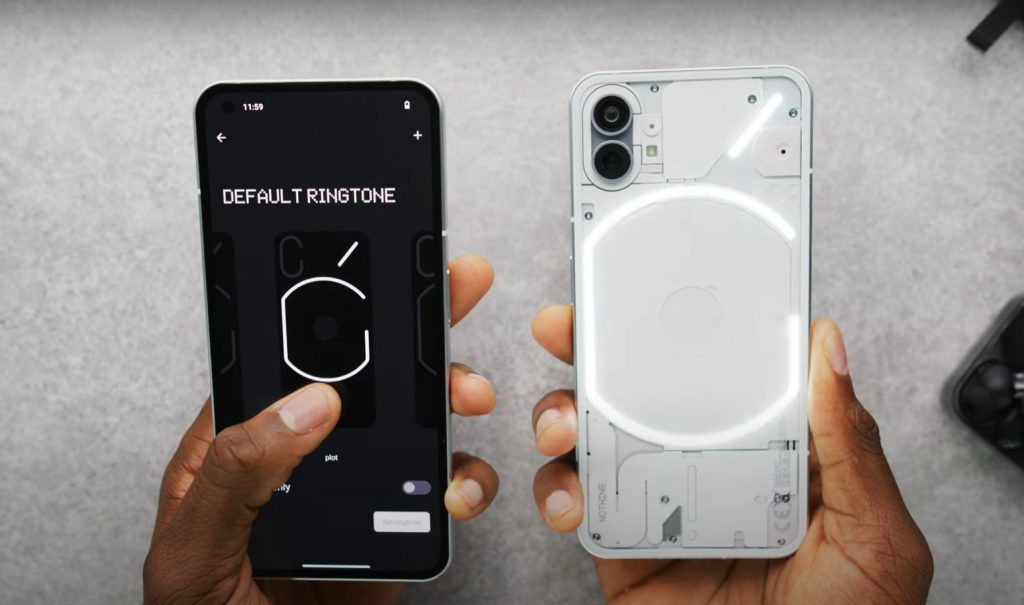
Nothingcould be working on its next phone. According to a report by The Mobile Indian, the next Nothing smartphone could be called the Phone (1) Lite. The moniker of the device suggests that it will be an inferior version of the Nothing Phone (1), which debuted last month. Before reading ahead, readers are advised to digest the leak with a pinch of salt as the company has denied the existence of the Nothing Phone (1) Lite.
It has been just a few days since the Nothing Phone (1) has been made available for purchase. The company has already encountered issues like shipment delays and quality issues with the device. Hence, it appears that Nothing will not be talking about the Phone (1) Lite even if it exists.
Nothing Phone (1)
The report reveals that the Nothing Phone (1) Lite will be almost identical to the Phone (1), but it will lack two features. The Lite model will not have the LED layout called the Glyph interface on the back, and it will lack support for wireless charging. It may house a larger 5,000mAh battery.
Apart from these changes, the Lite (1) may not differ from the Phone (1). The device could be bundled with a 42W charger. However, it will only support 33W rapid charging. The publication claims that the Phone (1) Lite may break cover during the upcoming festive season in India.
To recall, the Nothing Phone (1) has a 6.55-inch AMOLED Full HD+ display that produces a 120Hz refresh rate. The device is powered by the Snapdragon 778G+ and comes with 8 GB/12 GB of RAM, 128 GB/256 GB of UFS 3.1 storage, and a 4,500mAh battery with 33W fast charging support. It has a 16-megapixel front camera and a 50-megapixel (main) + 50-megapixel (ultra-wide) dual-camera setup.
The Nothing Phone (1) Lite could be priced under Rs 25,000. The report states that Phone (1) may receive a price cut during the next festive season in India.
Reports have revealed that the Galaxy S23 Ultra will be Samsung’s first phone to feature a 200-megapixel camera. The South Korean company has already launched 200-megapixel ISOCELL HP1 and HP3 sensors. However, none of these sensors are expected to be available on the S23 Ultra. According to reliable tipster Ice Universe, it will be equipped with the unannounced ISOCELL HP2 camera sensor.
The tipster claims that he is very sure that the Galaxy S23 Ultra will feature the unreleased HP2 sensor. The detailed specifications of the HP2 sensor are not known yet.
According to tipster Chun, Samsung will only use the HP2 sensor on its Ultra-branded flagships. He added that the HP1 and HP3 camera sensors will be available on the Galaxy A-series and on smartphones by Chinese brands.
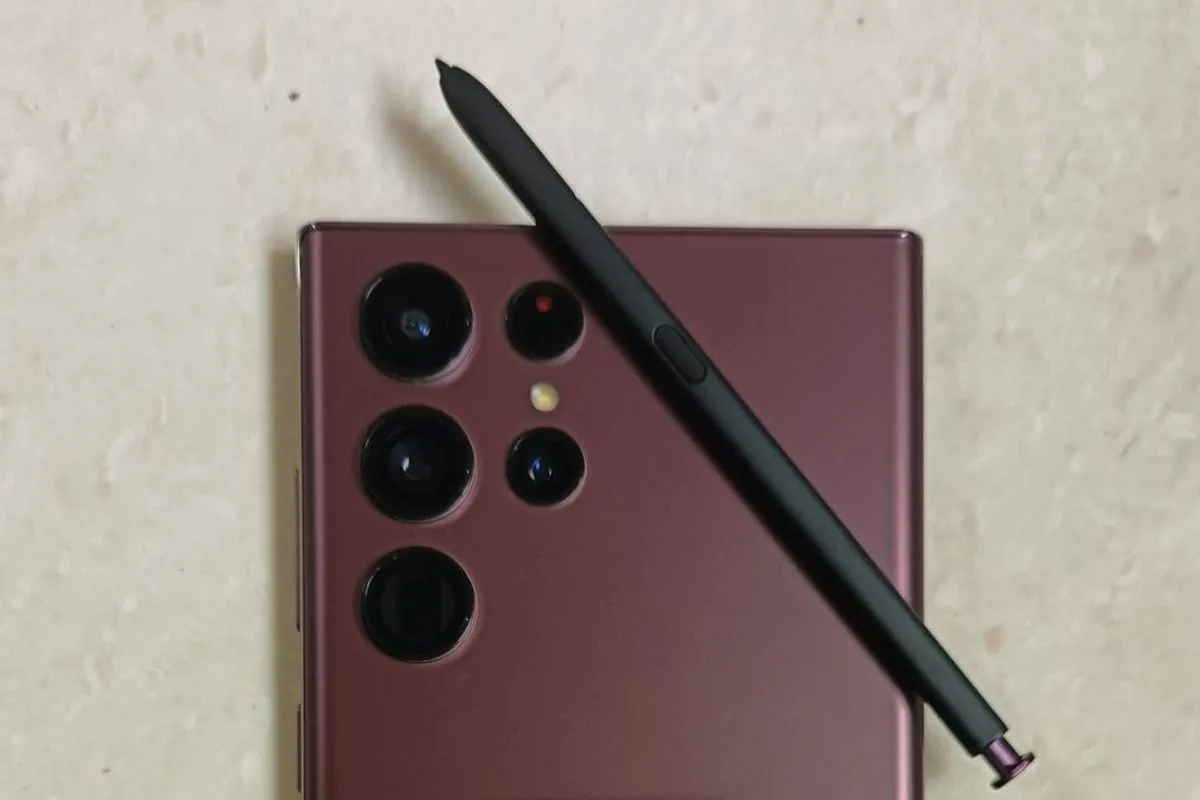
Samsung Galaxy S22 Ultra
So far, reports have revealed that the Galaxy S23 Ultra will have the ISOCELL HP2 as its primary camera. It will be assisted by a 12-megapixel ultra-wide lens, a 10-megapixel telephoto camera with 3x optical zoom, and a 10-megapixel periscope zoom camera with 10x optical zoom support.
While there is no word on the front camera of the Galaxy S23 Ultra. It is likely to retain the 40-megapixel camera, which comes with features like autofocus and 60fps 4K video shooting. While the S23 Ultra is expected to feature the upcoming Snapdragon 8 Gen 2 mobile platform, there is no word on its other specifications.
The Galaxy S23 Ultra is expected to launch in Q1 2023. It is likely to be accompanied by the Galaxy S23 and the Galaxy S23 Plus. At present, the rumor mill is focused on the Unpacked event, which is scheduled to take place on Aug. 10. The company will unveil devices like the Galaxy Z Fold 4, the Galaxy Z Flip 4, the Galaxy Watch 5 series, and the Galaxy Buds 2 Pro at the event.
Last month, Lu Weibing, General Manager of the Redmi brand, revealed that the company will be launching a new Redmi K50 series smartphone powered by Qualcomm Snapdragon 8 Plus Gen 1 SoC. A few interesting details about this upcoming handset have now emerged.
Redmi K50 Pro
The forthcoming Redmi-branded smartphone with a Snapdragon 8 Plus Gen 1 chipset is rumored to go official as Redmi K50S Pro. According to Digital Chat Station, this phone will also arrive with an improved display, cameras, and battery/charging.
Most importantly, the tipster also suggests the presence of a telephoto camera. But it will be likely a normal 2x or 3x shooter instead of a periscope module.
The last Redmi phone with a zoom camera was the China-exclusive Redmi K30 Pro Zoom Edition whose 8MP telephoto camera was paired with a 3x lens and OIS.
Prior to that, both the Redmi K20 and the Redmi K20 Pro had an 8MP telephoto shooter with a 2x lens. The Redmi K series was expected to retain a proper wide + ultra-wide + telephoto camera setup after its debut. But unfortunately, that did not happen.
The Redmi K30 and the Redmi K30 5G came with useless 2MP macro and 2MP depth sensors. Xiaomi’s popular 5MP telemacro camera with auto-focus debuted on the Redmi K30 Pro. This camera was later used by the entire Redmi K40 lineup (except Redmi K40 Gaming Edition) but has been dropped by this year’s Redmi K50 series in favor of useless 2MP macro snapper.
The Redmi K50S Pro is expected to release as Xiaomi 12T Pro in international markets. Hence, if the aforementioned information is true, customers outside mainland China will be also able to use a zoom camera on a flagship killer Xiaomi smartphone after a long time.
Google had just recently announced the Pixel 6a for the Indian market. Soon after its official release, the company also rolled out the first OTA update for the new smartphone. Now, the Pixel 6a is also a part of the Android 13 Beta program.
As of right now, the Android 13 Beta 4.1 build is the latest version of the next gen Android operating system. The Search Engine giant has yet to release the stable build of the new Android version, although, it typically releases new Android OS in August. In other words, the new Android 13 Beta version will be the first and only Beta build that the Pixel 6a receives before directly upgrading to Android 13 OS.
Pixel 6a
Keep in mind that this is still just speculation at the moment and Google’s plans are still unclear. For those interested in trying out the Android 13 Beta on the Pixel 6a, you can visit the Android Beta webpage. Once you get there, check for eligible devices and if you have a Pixel 6a registered, simply opting in would make sure that you receive the new OTA update in just a few minutes. The Pixel 6a is expected to receive another OTA update that brings an August security patch soon.
Last week, Infinix unveiled the Infinix Smart 6 Plus smartphone in India. Now, the brand is back with a new phone called the Infinix Hot 12 Pro smartphone in India. Some of the notable features of the Hot 12 include a 90Hz display, 50-megapixel dual rear cameras, and a large battery with fast charging support.
Infinix Hot 12 Pro specifications and features
The Infinix Hot 12 Pro sports a 6.6-inch LCD panel with a teardrop notch. It offers an HD+ resolution, a 90Hz refresh rate, and a 180Hz touch sampling rate. The device runs on the Android 12 OS and XOS 10.6 UI.
The Unisoc T616 chipset is present at the helm of the Hot 12 Pro. The device ships with up to 8 GB of LPDDR4x RAM, up to 3 GB of virtual RAM, and up to 128 GB of UFS 2.2 storage. For additional storage, it has a dedicated microSD card slot.
Infinix Hot 12 Pro
The Hot 12 Pro has a 5,000mAh battery with 18W fast charging support. It has an 8-megapixel camera for shooting selfies. The rear-facing camera setup of the phone has a 50-megapixel main camera, an AI lens, and an LED flash unit. The back panel of the device also features a fingerprint scanner.
The Hot 12 Pro supports other features, such as dual SIM support, Wi-Fi, Bluetooth, GPS, a USB-C port, a 3.5mm audio jack, and DTS-HD Surround Sound support. The device has a thickness of 8.42mm and weighs around 191 grams.
Infinix Hot 12 Pro price in India
The Hot 12 Pro has arrived in India in two options, such as 6 GB RAM + 64 GB storage for Rs 10,999 (~$140) and 8 GB RAM + 128 GB storage for Rs 11,999 (~$153). The device comes in four shades: Electric Blue, Racing Black, Lightsaber Green, and Halo White. Flipkart will carry out the Infinix Hot 12 Pro’s first sale on Aug. 8.
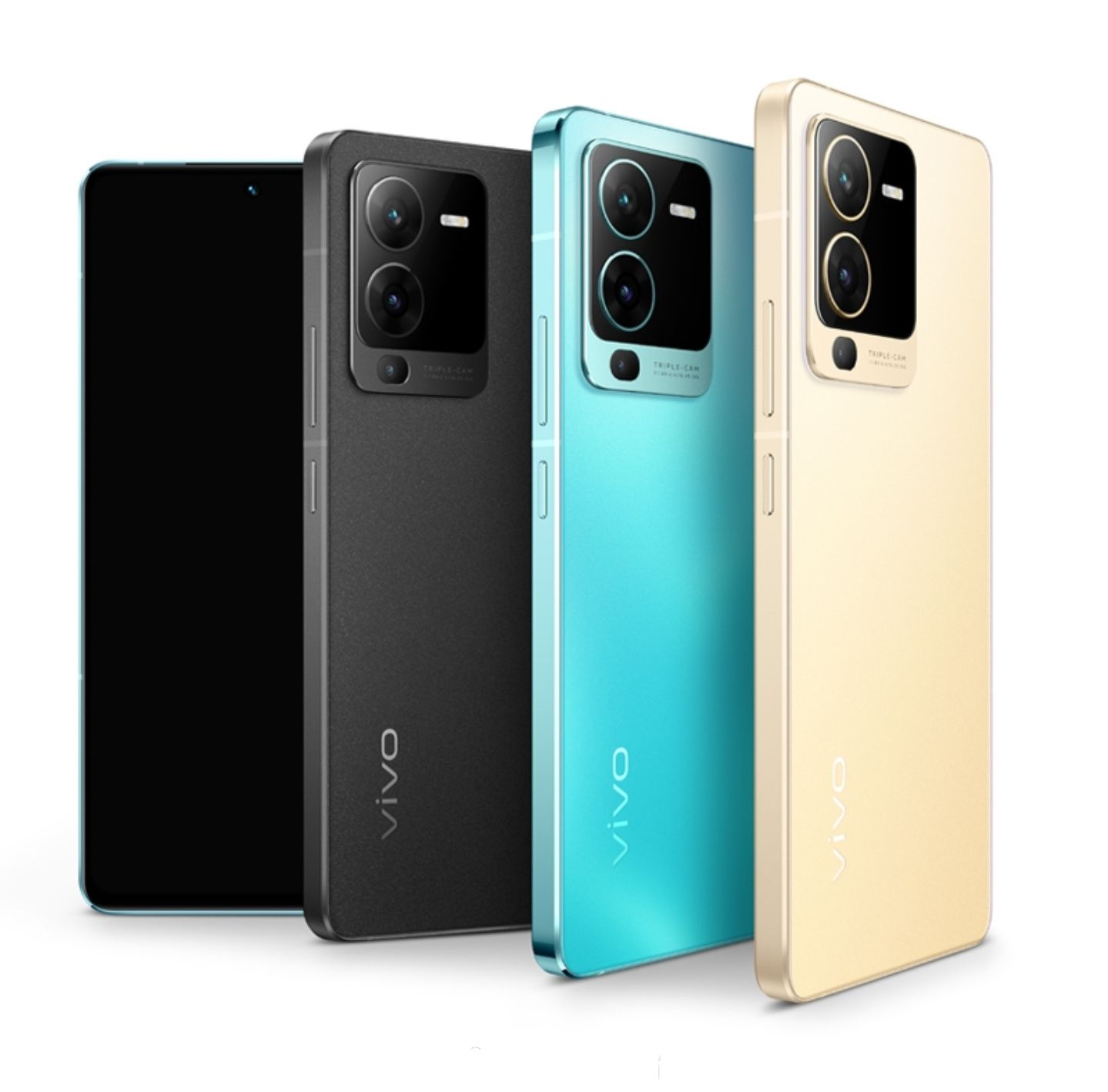
Over the last couple of days, we have covered multiple reports regarding the Vivo V25 series of smartphones, which are set to launch in India soon. Now, prior to any official announcement, additional details regarding the higher end Vivo V25 Pro model has just been revealed.
The news arrives from an IndiaTodayreport, which claimed that the upcoming V25 Pro will sport a triple camera setup. Out of the three sensors on the rear, the model will apparently house a 64 megapixel primary sensor. This camera will also supports Optical Image Stabilization (OIS) that should help in capturing steadier videos and even better low light camera performance.
The report further added that the secondary camera will likely offer Electronic Image Stabilization (EIS). On the other hand, the upcoming smartphone will supposedly feature a 32 megapixel Eye AF seflie shooter on the front. While the Vivo V23 Pro arrives with 44W fast charging support, it appears that the company is upgrading this for the next gen V25 Pro. The IndiaToday report claims that the handset will have a 66W fast charging rate.
Based on our previous reports, the V25 Pro will sport a curved FHD+ 3D AMOLED display that has a 120Hz refresh rate. Under the hood, the device will be equipped with a MediaTek Dimensity 1300 SoC. As of right now, finer details regarding the Vivo V25 Pro is still unknown. However, the smartphone is believed to cost less than 40,000 INR (roughly 509 US Dollars) for the Indian market.
Motorola is rumored to announce the Moto S30 Pro later today in China alongside the Moto Edge 30 Pro and Razr 2022. This smartphone is expected to release as Motorola Edge 30 Fusion in international markets. It has been now spotted on BIS, suggesting its availability in India.
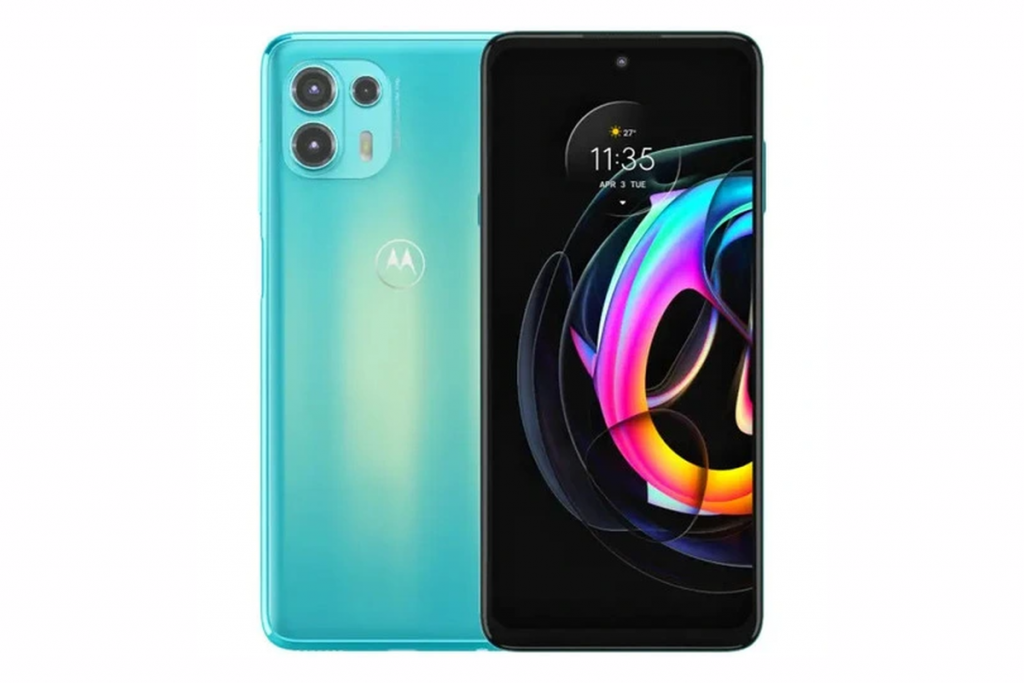
Motorola Edge 20 Fusion
The upcoming Motorola Edge 30 Fusion with model number XT2243 has been certified by BIS (Bureau of Indian Standards). This means the handset may soon launch in India. But unfortunately, we don’t have a date as the company is yet to tease the phone officially.
As mentioned in the beginning, the Motorola Edge 30 Fusion is a rebranded Moto S30 Pro. Therefore, we know a few details about it as the specs of the original model have leaked recently via TENAA, 3C, and Geekbench.
This device will sport a 6.55-inch OLED display with a resolution of 2400 x 1080 pixels (FHD+). It will be powered by a Qualcomm Snapdragon 888 Plus chipset and will boot Android 12.
It will house a dual camera system on the rear with support for 8K video recording. It will be backed by a 4,270mAh battery with support for 68.2W fast wired charging.
In China, the smartphone will come with 8GB/12GB/16GB RAM and 128GB/256GB/512GB storage. It will be available in black, gold, blue, white, cyan, red, silver, and gray color options.
Last but not least, the handset will measure 158.4 x 71.9 x 7.6mm in dimensions and weigh 170 grams.
The Realme Watch 3 will finally be going on sale in India for the first time ever today (2nd August 2022). The company had announced this smartwatch during its AIoT product launch event last week and now its finally available for purchase. So let’s have a look at its price and offers.
The Chinese smartphone maker’s Watch 3 sports a 1.8 inch TFT LCD panel that has a 240 x 268 pixel resolution. This display also arrives with support for more than 100 watch faces. For connectivity, the new smart wearable supports Bluetooth 5.3 and can be paired with both iOS and Android devices. Since its a modern day smartwatch, it arrives with a number of health related sensors.
This includes an optical heart rate sensor, SpO2 blood oxygen tracking, stress monitoring, and sleep mapping as well. Apart from this, the new Realme smartwatch supports over 110 sports modes like football, cricket, basketball, badminton, and many more. The Watch 3 also supports call notifications, music controls, and even supports Bluetooth calling since it is equipped a speaker and microphone. Furthermore, the new device is also supports noise cancellation for voice calls using an AI algorithm.
Realme Watch 3
The Realme Watch 3 houses a 340mAh battery pack that offers up to 7 days of battery life. It also arrives in two color options, namely Gray and Black. The new smartwatch is priced at 3,499 INR and is available for purchase on Flipkart and the company’s official store for an introductory price tag of 2,999 INR.
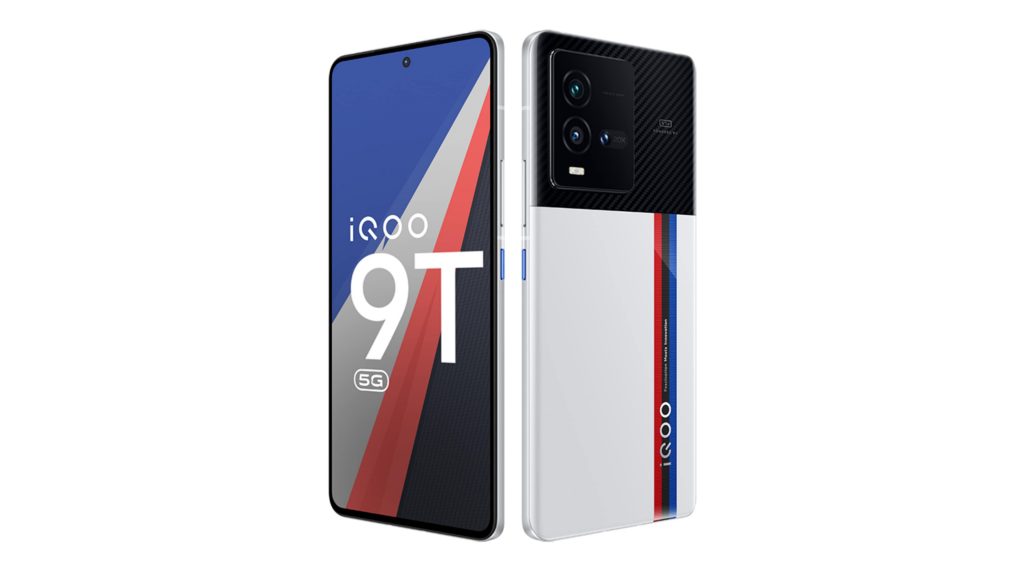
A few days back, iQOO announced the iQOO 9T in India. The smartphone is a rebranded iQOO 10 from China. It comes with a Qualcomm Snapdragon 8 Plus Gen 1 SoC and a triple camera system comprising wide, ultra-wide, and telephoto lenses.
This device is now finally up for sale in the country. Let’s take a look at its price and launch offers.
iQOO 9T India Price, Launch Offers
The iQOO 9T retails at the following price tags in India.
8GB + 128GB – ₹49,999 ($636)
12GB + 256GB – ₹54,999 ($700)
The handset can be purchased in either Alpha (Black) or Legend (BMW M Motorsport) color options from iQOO.com. It will be also available via Amazon India from 12 PM on August 4.
Buyers can avail of a ₹4,000 cashback on ICICI Bank credit/debit card transactions. They can also get an exchange bonus value of ₹5,000 (non-iQOO devices) or ₹7,000 (iQOO devices).
Additionally, customers ordering the phone from iQOO.com during August 2-10 will get an iQOO Gamepad worth ₹2,999 for free.
Finally, both Amazon and iQOO.com buyers are eligible for a one-time screen replacement offer with a validity of 6 months. They have to order the smartphone by August 10 as well as activate it by August 31.
iQOO 9T Specifications
The iQOO 9T sports a 6.78-inch Samsung E5 AMOLED display with a resolution of 2400 x 1080 pixels (FHD+) and up to a 120Hz refresh rate. The Schott Xensation UP glass-protected panel supports HDR10, 1500 nits peak brightness level, and 100% of the DCI-P3 color gamut.
The phone is powered by a Qualcomm Snapdragon 8 Plus Gen 1 chipset paired with LPDDR5 RAM, UFS 3.1 storage, and a VC liquid cooling system. It also houses a Vivo V1+ chip for image processing and display optimizations.
On the software front, the smartphone boots Funtouch OS 12.1 based on Android 12. It is guaranteed to receive 3 Android updates and 4 years of security updates.
Further, the triple camera system on the rear consists of an OIS-assisted 50MP Samsung ISOCELL GN5 primary sensor, a 13MP ultra-wide + macro unit, and a 12MP Sony IMX663 sensor with a 2x optical lens. On the front, there’s a 16MP snapper inside the centered punch-hole.
The connectivity options on the handset include dual-SIM, 5G, WiFi 6, Bluetooth 5.2, GNSS, NFC, and a USB Type-C port. For security, it uses an in-display fingerprint sensor, and for protection, it has an IP52 rating. It also features dual stereo speakers.
Last but not least, the iQOO 9T is backed by a 4,700mAh battery with support for 120W fast wired charging.
The popular battle-royale game Battlegrounds Mobile India (BGMI) was banned as a result of a report from a central intelligence agency and a message from the Ministry of Home Affairs (MHA) to the Ministry of Electronics and Information Technology (Meity).
The report discussed offenses that could lead to cyber dangers by gathering user data for the purpose of conducting targeted cyberattacks against Indian users.
A senior government official claims that although the application has other problems, the biggest issue was that it was talking to servers that are either directly or indirectly situated in China. Other apps that have “rebranded” have also been confirmed by sources to be connecting with Chinese servers and are under investigation. After several iterations of study by the Indian officials, the government requested Google to delete the application from the Play Store.
According to News18, a senior government official on the condition of anonymity said, “The analysis also showed that this application has malicious code and also acquires a host of critical permissions, which could be misused for compromising user data for surveillance through camera/microphone, location tracking, and malicious network activities.”
The official added that such apps are a risk to India’s security grid and have the potential to harm the country’s sovereignty and integrity.
Although the official decision to ban BGMI from India has not yet been issued, MeitY has asked the affected companies to remove it from app marketplaces like Google Play and App Store. Following Krafton’s presentation of its case, a final conclusion regarding a complete ban is still impending.
According to the developer, efforts are being made to revive the game. The South Korean video game developer and distributor, recently released a statement in which it expressed its commitment to the Indian market and its optimism about the potential there. “At KRAFTON, the security and privacy of our user data are of utmost importance to us. We have always been compliant with all the laws and regulations in India, including data protection laws and regulations, and will continue abiding by them.”
The report adds that a number of Chinese apps have rebranded themselves to circumvent the ban in India. They don’t have any servers in India and gather sensitive information like ‘location and audio’.
While BGMI was supposed to be a dedicated game for the Indian market and crossed over 100 million users in a year, clearly, the Indian government is still not happy with how the app is processing user data.
Altogether, the ban seems like a decent way to go if Krafton is unable to deliver a solid case for themselves. However, if the India-dedicated version comes out from the abyss, we shall see a revival of hope for the youth to socialize and entertain once again.
OnePlus is gearing up to launch the new OnePlus Ace Pro smartphone in its home country China on 3rd August. The flagship-grade smartphone will debut as the OnePlus 10T in the global markets.
Now, ahead of the official launch, the teaser poster for the OnePlus Ace Pro shared by the company reveals details about the signal capacity of the smartphone.
The teaser poster confirms that the smartphone will come with support for n28 5G signal, which has a wider coverage area and stronger wall penetration capability compared to other 5G frequency bands.
The phone has built-in four n28 antennas, which means that the device can receive four n28 signals simultaneously for a better 5G connectivity experience indoors, in underground garages, in the suburbs, and more.
The teaser also claims that the n28 5G network speed of the OnePlus Ace Pro smartphone will be doubled and the signal acceptance range will be increased by 1.96 times, while the anti-interface ability will be increased two times.
OnePlus has already confirmed that the phone will feature a 6.7-inch AMOLED Full HD+ display with a 120Hz refresh rate and a 720Hz touch sampling rate. It will feature support for HDR10+ and will also be capable of producing 1.07 billion colors.
In the camera department, there will be a 50-megapixel Sony IMX766 primary sensor, an 8-megapixel ultra-wide camera, and a 2-megapixel macro camera. There will also be a 16-megapixel front-facing snapper.
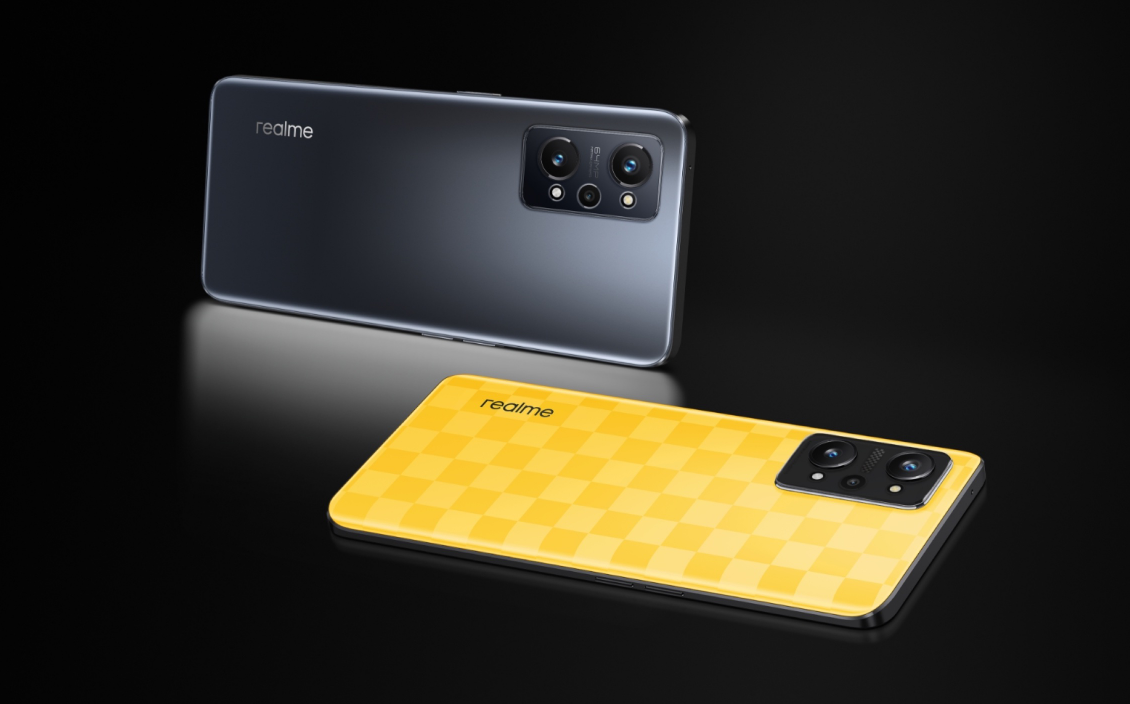
In June, Realme unveiled the Realme GT Neo 3T for the global market. It arrived as a rebadged version of the Realme Q5 Pro, which debuted in April this year in China. It appears that the GT Neo 3T will debut as early as this month in India.
The support page for the GT Neo 3T appeared on Realme India’s website back in June. It was speculated at that time that it may debut by June end or early July. The entire July month passed, and the company didn’t even release the GT Neo 3T teasers in India. Recently, Realme CEO Madhav Sheth revealed through the AskMadhav episode on YouTube that the GT Neo 3T will debut and go on sale in August in India.
Realme GT Neo 3T
Past reports have revealed that the Realme GT Neo 3T will come in three flavors: 6 GB RAM + 128 GB storage, 8 GBR AM + 128 GB storage, and 8 GB RAM + 256 GB storage. It will be available in shades like Dash Yellow, Drifting White, and Shade Black.
Realme GT Neo 3T specifications
The Realme GT Neo 3T has a 6.62-inch AMOLED display that offers a Full HD+ resolution and a 120Hz refresh rate. It is powered by the Snapdragon 870 mobile platform, LPDDR4x RAM, and UFS 3.1 storage. The device runs on Android 12 OS with Realme UI 3.0 on top.
The device is fitted with a 16-megapixel front-facing camera. Its back panel has a 64-megapixel main camera, an 8-megapixel ultra-wide snapper, and a 2-megapixel macro camera. It has a 5,000mAh battery that carries support for 80W fast charging.
It appears that it will rival the likes of the POCO F4 5G, iQOO Neo 6 5G, and OPPO Reno 8 5G in India. Hence, it is likely to arrive with a sub-Rs 30,000 (~$380) starting price in the country.
Several reports have revealed that OPPO is gearing up to launch the OPPO Reno 8z in different markets. The launch date of the smartphone could be drawing near since it has bagged several certifications. A few images of the Reno 8z’s prototype have appeared through its NCC certification in Taiwan. Now, reliable tipster Evan Blass has released a poster of the unreleased smartphone to reveal its design. The leaked image shows that it looks quite similar to the Reno 7z.
The leaked poster shows that the arrangement of the triple camera unit and the LED flash is identical to the Reno 7z. There is RGB light around the two large-sized cameras. The “AI Portrait Camera” text can be seen below the camera setup.
This is the Reno 8 Z 5G; look familiar? It should – just like Oppo brought the Reno 7 Lite to global markets as the Reno 8 Lite, so seems to be the case with the Reno 7/8 Z 5G. pic.twitter.com/nUlEpmofcd
The Reno 8z has a boxy design with flat edges. The flat side of the device has a SIM card slot and volume buttons. It has a microphone on the top. The Reno 8z images that appeared through its NCC listing revealed that its bottom has a 3.5mm audio jack, a USB-C port, a microphone, and a speaker grille.
OPPO Reno 8z specifications (rumored)
The rumor mill is yet to spill the entire specifications of the Reno 8z. Reports have revealed that the device will come equipped with the Snapdragon 695 chipset, 8 GB of RAM, and Android 12 OS. To recall, the Reno 7z was also powered by the same chipset.
The Reno 8z is expected to arrive in three configurations: 6 GB RAM + 128 GB storage, 8 GB RAM + 128 GB storage, and 8 GB RAM + 256 GB storage. It will pack a 4,500mAh battery with 33W fast charging support. It appears that apart from the above-shown color variant, the Reno 8z will also arrive in black and blue colors.
Amazfit‘s latest rugged sports watch – the T-Rex 2 was launched with a couple of innovative features that may have attracted many enthusiasts of sports like mountain biking, trekking, or snowboarding. Zepp Health advertised the second-gen rugged smartwatch as having the ability to import and display routes directly on its AMOLED display. This feature will allow users to use Real-time Navigation to find and follow a route without having to pull out a smartphone.
However, these new features were not available on the firmware that shipped with the T-Rex 2 when it started shipping. Fans of the watch were given the assurance by the brand, which is becoming more well-known in the wearables industry, that the features would be released as soon as possible via an OTA software update.
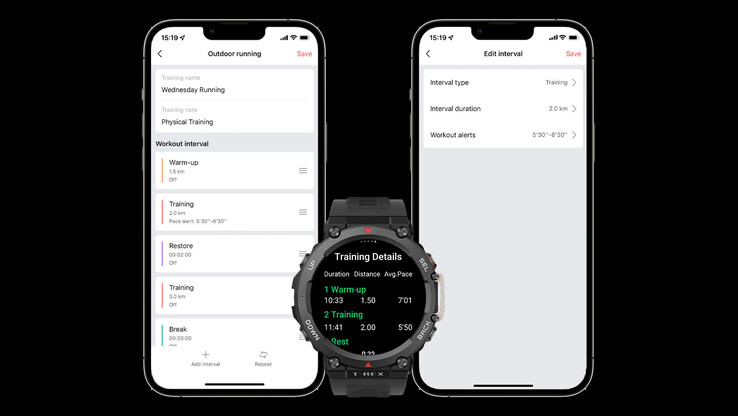
Amazfit has fulfilled this commitment by releasing Zepp OS v9.22.7.2 for the T-Rex 2. Not only does it enable Training Templates for this watch, but it also adds Real-time Navigation and Route Import. The import can be done via the Zepp app on a smartphone or through other services such as Strava or local QR-code facilities.
By altering the numerous pre-set templates offered by Zepp, the latter enables the user to create their own workouts by interval (or stage, potentially providing ample recuperation or warm-up time as required). The latest update ought to be accessible starting right now using the app on a specific T-Rex 2’s associated phone.
OPPO is gearing up to launch its next-generation OPPO Watch 3 series wearable devices sometime later this month. As the name indicates, the smartwatch will be a successor to the OPPO Watch 2 launched last year.
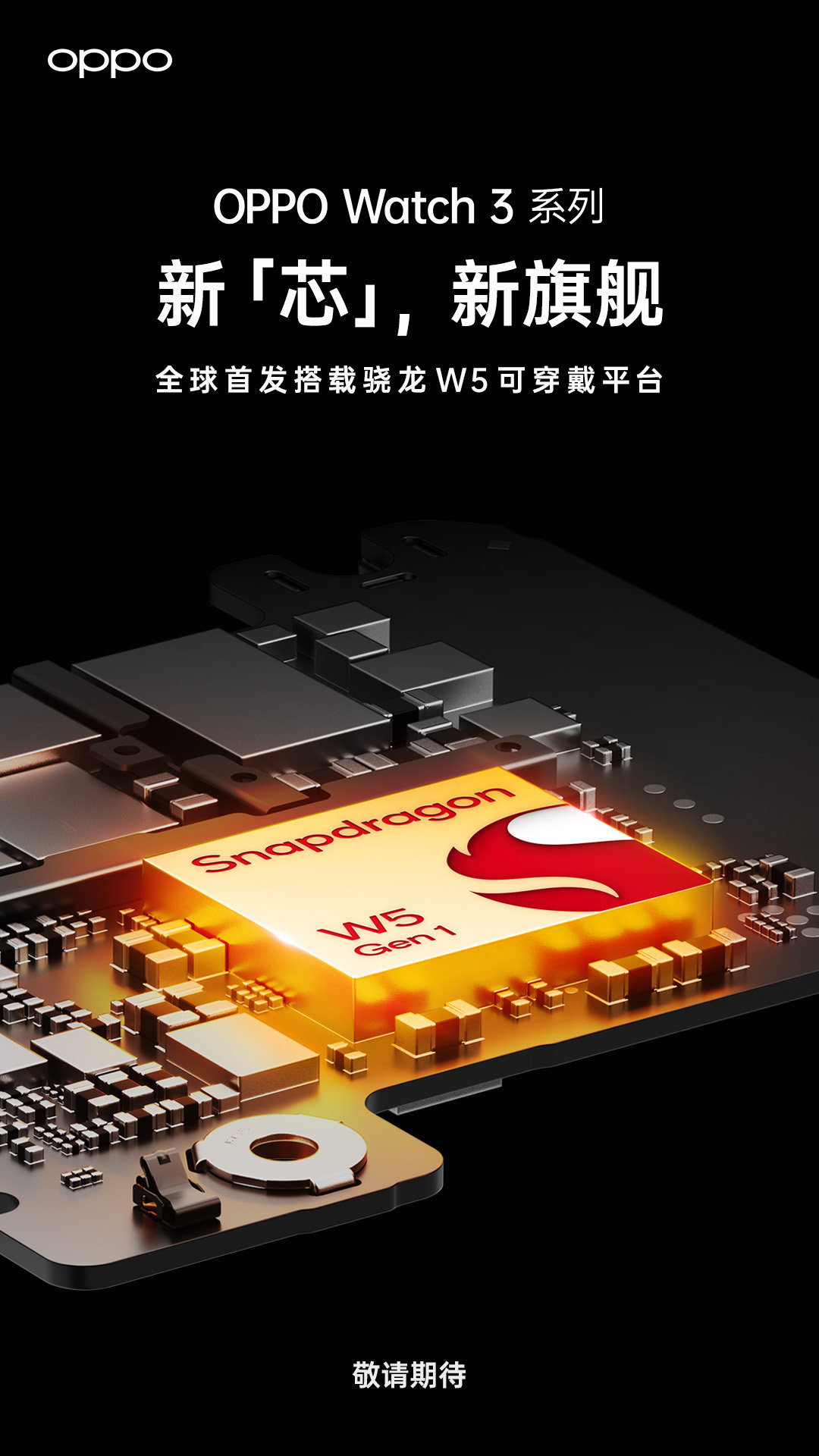
Now, ahead of the official launch, the company has shared a teaser poster for the OPPO Watch 3 series, which confirms the chipset that will power the upcoming smartwatches.
The teaser poster confirms that the OPPO Watch 3 series will come powered by the newly announced Qualcomm Snapdragon W5 wearable platform. This makes it the first smartwatch to be powered by this new chipset.
A few days ago, Qualcomm announced its all-new Snapdragon W5 Gen 1 and W5+ Gen 1 processors built using the 4nm process. The chips, made especially for wearable devices, offer 2x power using half the power compared to their predecessor.
OPPO has not revealed the launch date for the upcoming smartwatches, nor has it revealed much about the devices’ specifications and features. But we expect to know more through teasers and leaks in the coming days.
If the reports are to be believed, then the OPPO Watch 3 series will have three models in the lineup and feature a high screen-to-body ratio and support for eSIM functionality. They will be running ColorOS Watch operating system.
Apart from OPPO, TicWatch has also confirmed that its upcoming flagship smartwatch models will come powered by the Snapdragon W5+ Gen 1 processor. The company is expected to launch TicWatch 4 Pro, the first device with W5+ chip, in the coming weeks.
Samsung has confirmed that the company will be hosting its Galaxy Unpacked event on 10th August, where the upcoming foldable smartphones from the brand will be announced.
Ahead of the launch event, the company has shared a new teaser video that teases the next-generation foldable smartphones — Galaxy Z Fold 4 and the Galaxy Z Flip 4.
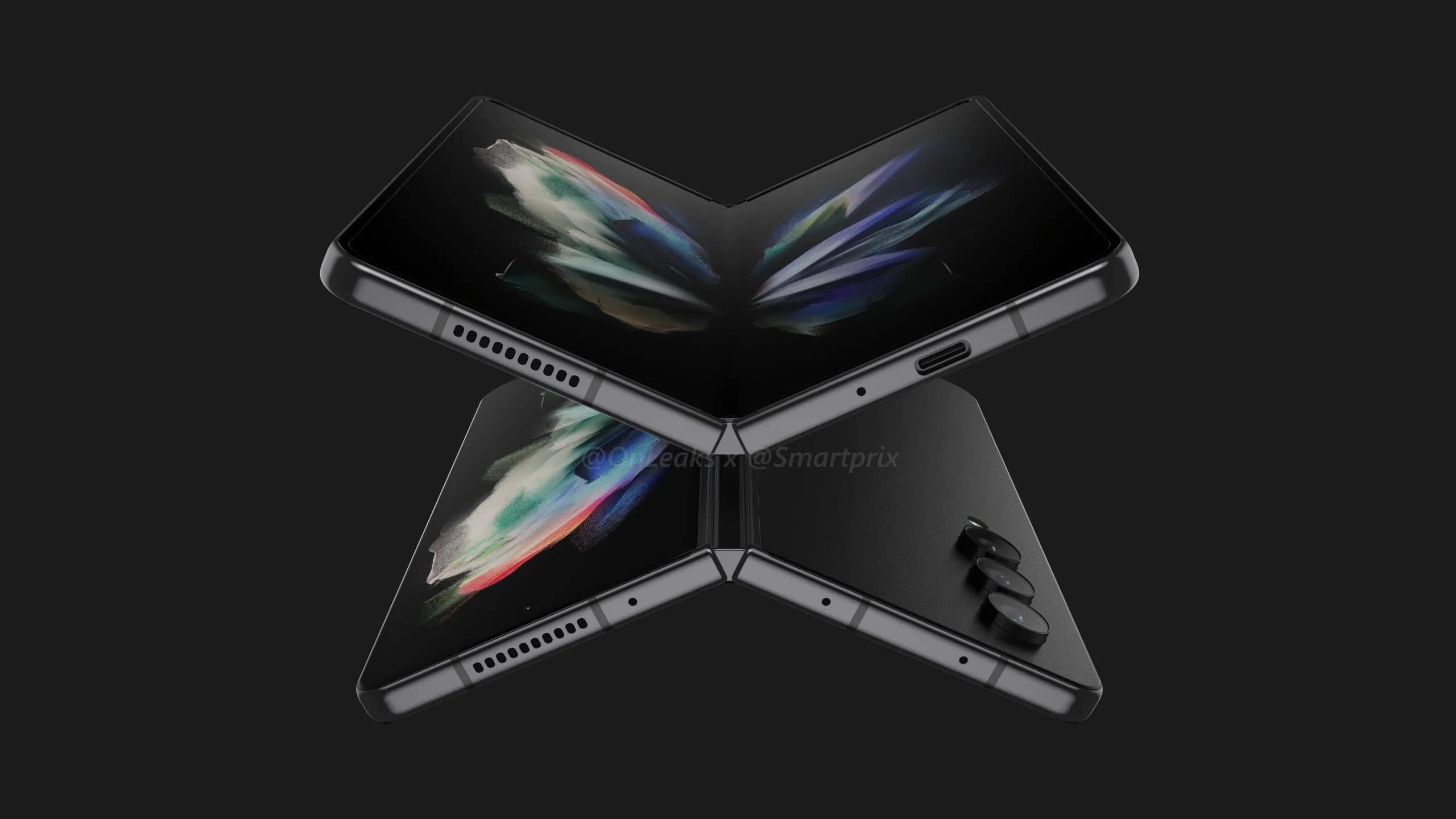
Samsung Galaxy Z Fold 4 render by OnLeaks / Smartprix
The Samsung Galaxy Unpacked event will take place on 10th August at 09:00 AM Eastern Time (EST), which is 06:30 PM in India. Along with the foldable phones, the company is also expected to launch the next-gen Galaxy Watch 5 series at the event.
Based on the reports, the Samsung Galaxy Z Fold 4 will feature an updated design and a smaller, lighter, and thinner single hinge design instead of the double hinges found on the previous generation models.
It will feature a 7.6-inch interior display with a 120Hz refresh rate, and is rumored to have an under-display fingerprint sensor. On the other hand, the Galaxy Z Flip 4 will feature a 6.7-inch display that folds out vertically, but will have a larger 2-inch cover display.
Both the smartphones will come powered by the Qualcomm Snapdragon 8+ Gen 1 processor with up to 12GB of RAM and 512GB of internal storage. As for cameras, the Samsung Galaxy Z Fold 4 will have a 10-megapixel telephoto sensor with 3x optical zoom, a 50-megapixel wide-angle camera, and a 12-megapixel ultra-wide camera.
The South Korean giant has already started accepting pre-orders for the Galaxy Z Fold 4 and the Galaxy Z Flip 4 smartphones. The official pricing and the availability dates are unknown, and we will have to wait for the launch event to know more.
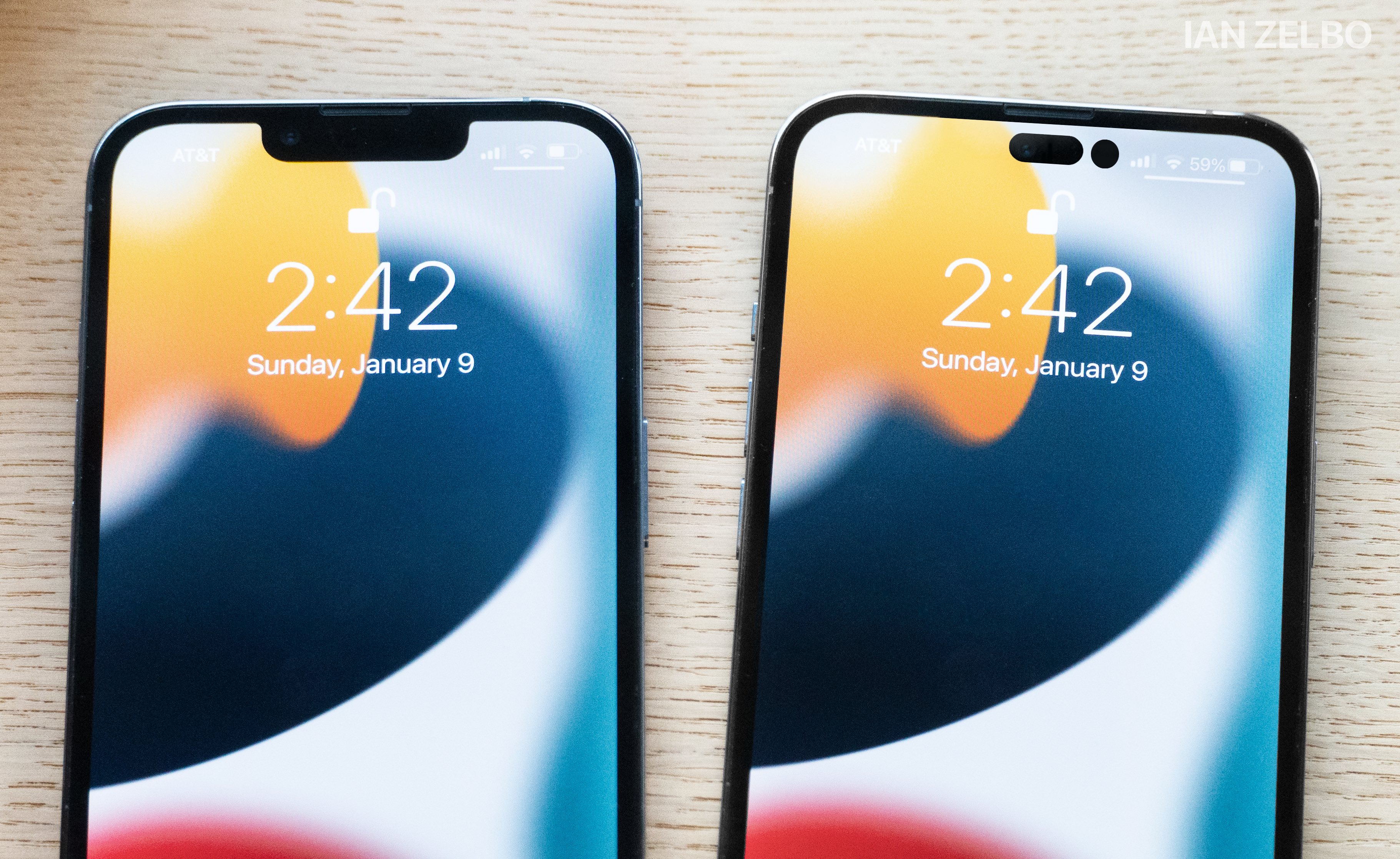
Apple is expected to launch the next generation of iPhones dubbed the iPhone 14 series around September. This time around, we are expecting four phones to debut at the launch event including the vanilla iPhone 14, the iPhone 14 Max, the iPhone 14 Pro, and the iPhone 14 Pro Max.
We have already reported that the vanilla and Max models will not be getting the ProMotion display(Apple’s marketing term for high refresh rate), and now, a new report from The Elec has revealed the type of panels that will be going on each of the models.
According to the report, the iPhone 14 (6.1-inch) and iPhone 14 Max (6.7-inch) will use LTPS backplanes. These will be made of the M11 material set. This is an exclusive material set that is currently used for the manufacturing of the Galaxy S22+ and S22 Ultra display panels.
The iPhone 14 Pro (6.1-inch) and the iPhone 14 Pro Max (6.7-inch) will use an LTPO display plane with ProMotion. The new panel will be made from Samsung’s M12 material set. This material set has not been used for any smartphone’s display panel yet and is set to debut with the launch of the Samsung Galaxy Z Fold 4 and Galaxy Z Flip 4.
According to the report, All four iPhone 14 variants will have displays provided by Samsung, which has reportedly secured an order for 80 million screens. Additionally, LG will contribute by producing panels for both the standard iPhone 14 and the premium iPhone 14 Pro Max. The RS-L material set will be used to create them. With the previous RS-K set, LG was producing iPhone 13 panels last year.
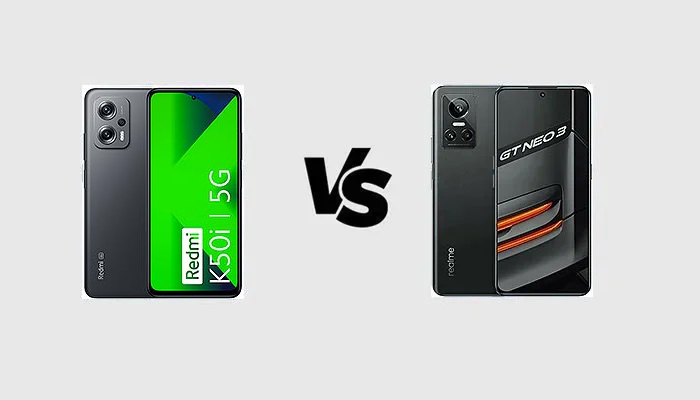
A few days ago, there was a new addition to the Redmi K50 series: we are talking about the Redmi K50i, announced on July 20 and launched in the Indian market. There, it has a lot of rivals, and one of the most important ones is definitely the Realme GT Neo 3. While the Redmi offers an outstanding value for money, the Realme comes with astonishing specifications: just to make an example, it is the world’s first phone with 150W fast charging and it will be followed by the OnePlus 10T in a few days. This is a comparison between the specifications of the Redmi K50i and the Realme GT Neo3. Note that the Realme comes in two variants with different batteries and charging speeds: there is also a variant of this phone with 80W fast charging and a bigger 5000 mAh battery.
Xiaomi Redmi K50i vs Realme GT Neo3
Xiaomi Redmi K50i
Realme GT Neo3
DIMENSIONS AND WEIGHT
163.6 x 74.3 x 8.9 mm,
200 g
163.3 x 75.6 x 8.2 mm,
188 g
DISPLAY
6.6 inches, 1080 x 2460 pixels (Full HD+), FFS LCD
Triple 64 + 8 + 2 MP, f/1.9 + f/2.2 + f/2.4
16 MP f/2.5 front camera
Triple 50 + 8 + 2 MP, f/1.9 + f/2.3 + f/2.4
16 MP f/2.5 front camera
BATTERY
5080 mAh, fast charging 67W
4500 mAh, Fast Charging 150W or 5000 mAh with 80W fast charging
ADDITIONAL FEATURES
5G, dual SIM
5G, dual SIM
Design
The most attractive design belongs to the Realme GT Neo 3. Just like most of the other phones from the GT series, its design is reminiscent of a sports car, due to vertical stripes on its rear side. But it also comes in a color option without those stripes, for those who want a soberer design. I personally love the camera module of the Realme GT Neo3 due to the position of the sensors. Further, it is thinner and lighter than the Redmi K50i: its thickness is just 8.2 mm, while the weight is 188 grams. Last but not least, it has a higher screen to body ratio thanks to the presence of a thinner chin below the display. Both the phones have a centrally-placed punch hole housing the front camera, but there are different positions for the physical keys, and the power key of the Redmi K50i doubles as a fingerprint reader, while the fingerprint scanner of the Realme device is placed under the screen.
Display
There is no challenge if we talk about the display: the Realme GT Neo3 is the clear winner of this comparison. We just need to say that it is the only one with an AMOLED display to let you understand which one is the best, but this is not the only superior aspect. The Realme flagship is able to show up to one billion colors with a Full HD+ resolution of 1080 x 2412 pixels, a 120 Hz refresh rate, and the HDR10+ certification. Further, as already mentioned in the previous section of this comparison, it has an in-display fingerprint reader. Unfortunately, the Redmi K50i has an LCD display, so you should not expect vibrant colors and deep blacks like OLED panels. But it is still a good display with a diagonal of 6.6 inches, a Full HD+ resolution of 1080 x 2460 pixels, a 144 Hz refresh rate, the HDR10 certification, and Dolby Vision support. Note that the display fingerprint reader is side-mounted. Both the handsets feature stereo speakers, but the Redmi K50i is the only one with a 3.5 mm audio jack for wired earphones.
Specs & Software
The Realme GT Neo 3 and the Redmi K50i are powered by the same mobile platform: the Dimensity 8100 by MediaTek built with a 5 nm production process. This processor is one of the best by MediaTek but not the most advanced one, as there are Dimensity 9000 and Dimensity 9000+ with higher performance. The octa-core architecture of this SoC is composed of four Cortex A78 CPUs running at a max frequency of 2.85 GHz, four Cortex A55 CPUs with a frequency of 2 GHz, and a Mali G610 MC6 GPU. But the Realme GT Neo 3 wins the hardware comparison because it comes in a better memory configuration, as it offers up to 12 GB of RAM and up to 256 GB of UFS 3.1 internal storage, while you can get just 8 GB of RAM with the Redmi K50i. Both the handsets run Android 12 with a highly customized user interface on top.
Camera
If you are looking for a real camera phone, you should opt for the Realme GT Neo 3. It has a better main camera: the flagship-class Sony IMX766 sensor with a 50 MP resolution and OIS support (while the Redmi has a midrange-class 64 MP main cameras). The secondary sensors of these phones are the same: an 8 MP ultrawide lens and a 2 MP macro camera. Even the front camera does not change: it is a 16 MP selfie snapper. So what makes the difference is just the main rear camera.
The Redmi K50i has a bigger battery than the Realme GT Neo 3, with a capacity of 5080 mAh. However, the 5000 mAh variant of the GT Neo3 offers a longer battery life in several scenarios because the phone has a more efficient AMOLED display. Further, it charges faster thanks to 80W fast charging (instead of just 67W). The 150W version of the GT charges even quicker thanks to 150W fast charging, but it has a smaller 4500 mAh battery.
Price
The price of the Redmi K50i in India is Rs. 25,999 / $330, while the Realme GT Neo3 starts from Rs. 36,999 / $470. The Realme wins the comparison, but the Redmi has a higher value for money. Which one would you pick?
Recently, WhatsApp has brought many new features to its instant message service like the increased file sharing size, mute messages from specific users in a group chat, and hiding last seen profile picture, and online status from certain contacts.
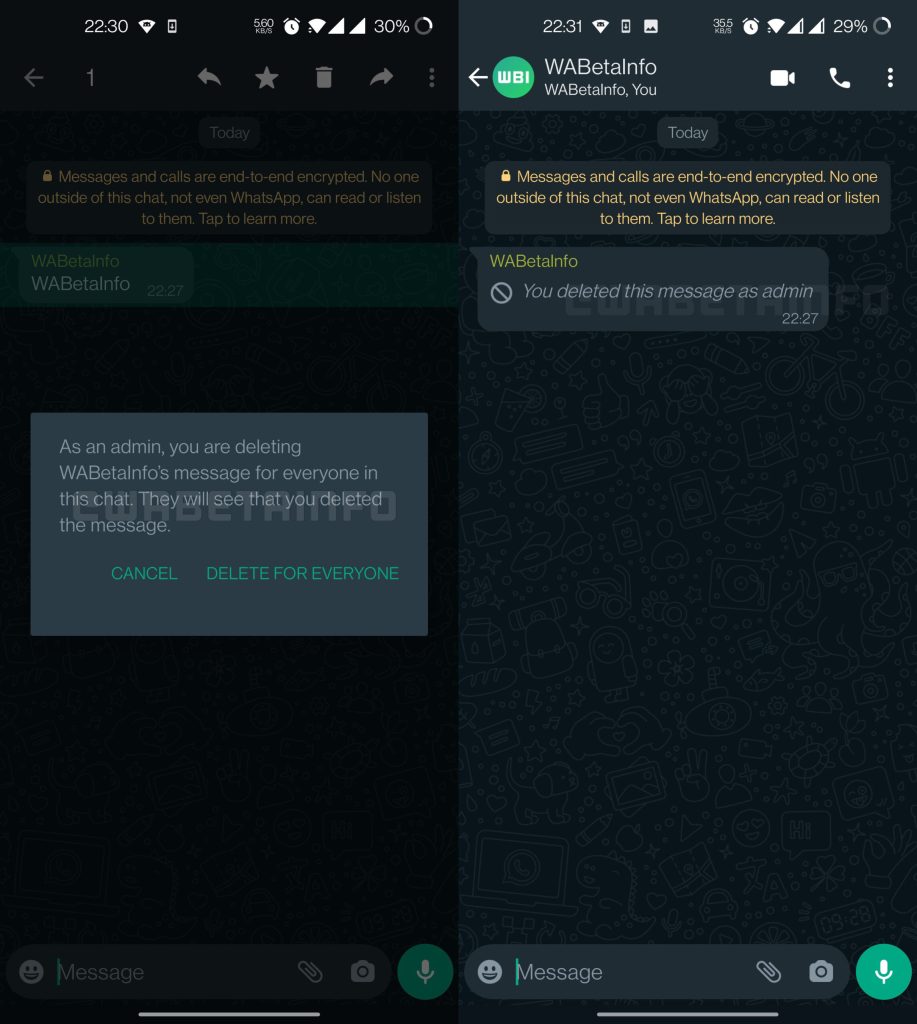
Now, WhatsApp is getting ready to release a new feature that gives group admins the power to delete any message for everyone. With the inclusion of the ability to delete group messages for everyone, group administrators will be able to better manage their WhatsApp groups.
The feature will be made available to WhatsApp beta testers on Android with versions up to 2.22.17.12. If you are the group administrator and attempt to delete an incoming message and see the option “delete for everyone,” it indicates the feature is available for you. Your name will always appear in the chat bubble when you delete a message sent to the entire group by another group member, letting everyone know that you did so.
Additionally, a fix for the catch-up button is also being released by WhatsApp. The catch-up button, which usually appears when someone mentions you in a group chat is bugged in the currently bugged and appears for no particular reason.
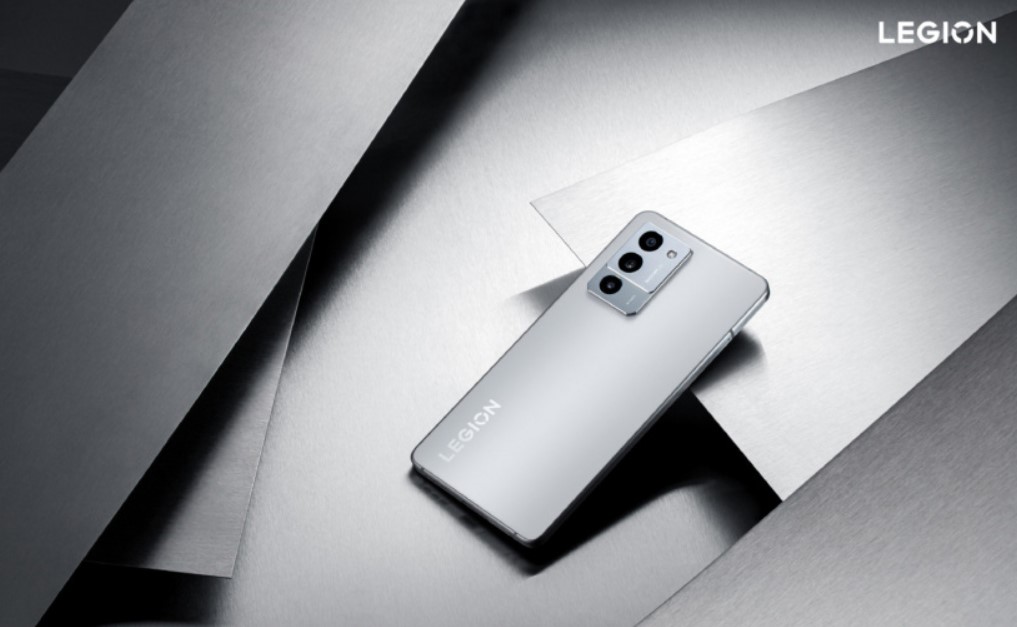
Lenovo has officially announced the new Legion Y70 smartphone and has also confirmed that the new Legion handset will be launched in August. In the announcement post, Lenovo gave us a glimpse of what the phone could look like and today the company has shared some images that confirm the design and appearance of the forthcoming Legion Y70.
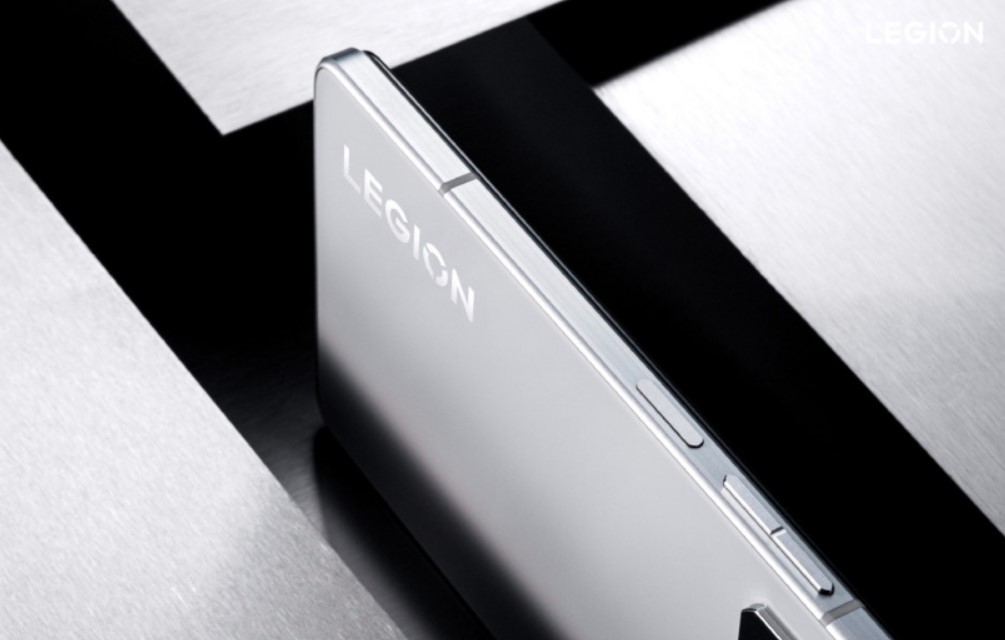
Ahead of the imminent launch of the new Legion Y70, the company has shared some high-resolution images revealing the design of the device. The images show that the upcoming Lenovo device will have a boxy design with slightly squared edges. The phone can be seen to have a flat back featuring a rectangular camera module on the top left. The overall design of the smartphone is pretty neat and looks quite premium.
The smartphone also has a thin body, Lenovo claims that the Legion Y70 is only 7.99mm thin and has a light body design. It is said to have CNC as well as a carved metal middle frame. In addition to the silver model pictured above, the Lenovo Savior Y70 will also come in Red and Black.
The smartphone is expected to be powered by a Snapdragon 8+ processor. The device is said to be equipped with a 6.67-inch OLED straight screen that offers a resolution of 2400×1080. It has a 50-megapixel triple camera setup. The smartphone could be fueled by a 4880mAh battery and may carry support for 68W fast charging. The device will likely have an under-display fingerprint sensor for security.
As mentioned, Lenovo has revealed that the Legion Y70 will launch in August but hasn’t specified the launch date yet. We hope to learn more details about the device in the coming days.
We use cookies on our website to give you the most relevant experience by remembering your preferences and repeat visits. By clicking “Accept”, you consent to the use of ALL the cookies.
This website uses cookies to improve your experience while you navigate through the website. Out of these, the cookies that are categorized as necessary are stored on your browser as they are essential for the working of basic functionalities of the website. We also use third-party cookies that help us analyze and understand how you use this website. These cookies will be stored in your browser only with your consent. You also have the option to opt-out of these cookies. But opting out of some of these cookies may affect your browsing experience.
Necessary cookies are absolutely essential for the website to function properly. This category only includes cookies that ensures basic functionalities and security features of the website. These cookies do not store any personal information.
Any cookies that may not be particularly necessary for the website to function and is used specifically to collect user personal data via analytics, ads, other embedded contents are termed as non-necessary cookies. It is mandatory to procure user consent prior to running these cookies on your website.