Apple is gearing up to launch the upcoming iPhone 14 series smartphones in which the Pro models will come with a revamped design that will see the company adopting the pill-and-hole cutout for the front-facing camera.
Now, a new report coming from analyst Ross Young claims that Apple will fully adopt the new pill-and-hole cutout design for the front panel of next year’s Apple iPhone 15 series.
If the report is to be believed, then unlike this year’s iPhone 14 lineup, the new design won’t be limited to Pro models, but all the models in the iPhone 15 series will have pill-and-hole cutout instead of a notch. The non-Pro iPhone 14 models launching this year will continue to have a notch on top of the screen.
In the new design of the phone’s front panel, the pill-shaped cutout is for the Face ID sensors, while the hole is for housing the front-facing camera.
Eventually, the Cupertino-based technology giant will move the Face ID sensors and the front-facing camera lens under the display. As per the report, if everything goes according to the company’s plan, then the move to shift components under the screen could start happening with iPhone 16 models coming in 2024.
The Apple iPhone 14 series, which will have four models, will be the first in the lineup to have significantly different specifications and features for the non-Pro and Pro versions.
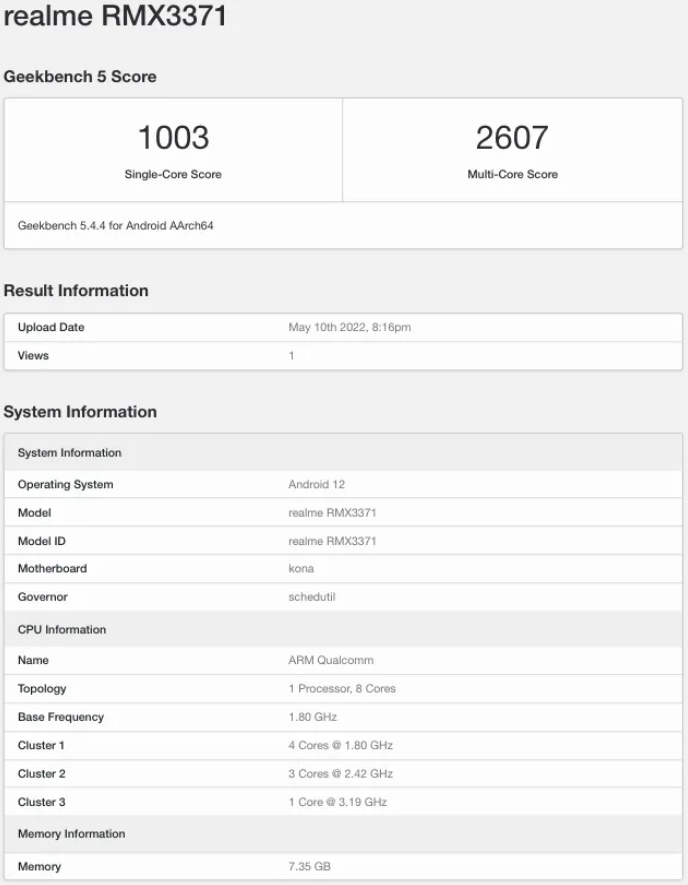
Yesterday, the upcoming Realme GT Neo 3T was spotted in the database of Thailand’s NBTC certification. It revealed that the upcoming Realme phone with model number RMX3371 will be debuting on the market with the Realme GT Neo3T moniker. It appears that the company could be internally testing the performance of the smartphone as it has appeared in the database of the Geekbench benchmarking site (via. MySmartPrice). The listing has revealed the chipset and RAM capacity of the device.
As can be seen in the screenshot below, the Realme RMX3371 will come preloaded with Android 12 OS, which will be overlaid with Realme UI 3.0. It will be powered by Qualcomm’s chipset that has the “Kona” codename. The CPU configuration and GPU information (through source code) of the chipset reveal that the smartphone is powered by the Snapdragon 870 chipset.
In the single-core test, the Realme GT Neo 3T scored 1003 points, and it recorded a score of 2607 points in the multi-core test. The smartphone will be arriving as a successor to last year’s Realme GT Neo2T, which was powered by the Dimensity 1200 chipset.
Realme GT Neo 3T specifications (rumored)
The Realme GT Neo 3T is expected to house a 6.5-inch display, which appears to be an AMOLED panel with an in-screen fingerprint scanner. It will feature a 16-megapixel camera for snapping selfies.
The rear camera island will feature a 64-megapixel primary camera. The Snapdragon 870-powered phone could have up to 12 GB of RAM and 256 GB of storage. Hopefully, the rumor mill will spill more information on its specs in the coming days.
Apart from Thailand, the Realme GT Neo3T is also expected to be released in other markets like Indonesia and India.
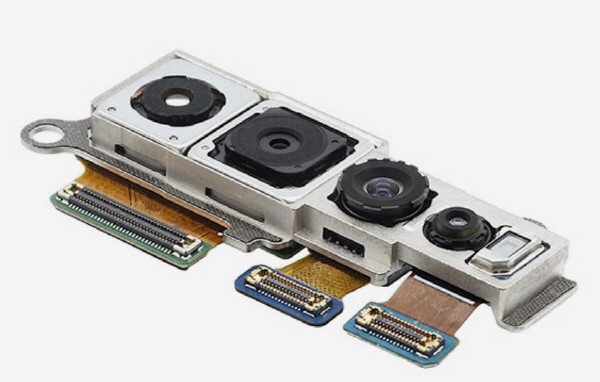
Samsung‘s next flagship – the Galaxy S23 series is still several months away from its launch but it could come with a very powerful camera. There are indications that Samsung Electronics is developing a monster 200MP smartphone camera unlike any before it. The new camera is being hyped as the highest-grade smartphone camera ever produced. The new camera which is under development could debut with the Galaxy S23.
The relevant production arms of Samsung Electronics are reported to be at the final stages of the development of the 200MP camera. The mobile arm of the tech giant and Samsung Electro-Mechanics are also developing other components in the smartphone camera module. The partnership between Samsung Electronics and Samsung Electro-Mechanics has been very productive.
Samsung’s dual parts manufacturing plan strategy will see Samsung Electro-Mechanics manufacturing 70% while 30% will come from Samsung Electronics. There are indications that Samsung already shared with its major partners, the key aspects of the new 200MP smartphone camera. In 2021, the 200MP image sensor was announced as the first of its kind in the world. The new 200MP image sensor has been touted to be the main camera of the Galaxy S23 Ultra. There is no definitive information on the new sensor berthing on the Galaxy S23.
The new 200MP sensor is almost twice that of the Galaxy S22 Ultra at 108MP. The Galaxy S20 and S21 lineup also had 108MP cameras. The new 200MP camera will also bring about several modifications to the S23 from its predecessor. There will be improvements in performance, memory, lens, and other critical components. These improvements could help the Galaxy S23 square off with the Apple iPhone 14. The finer optics of the 200MP Samsung camera and whether it could be sold to other OEMs remains unclear.
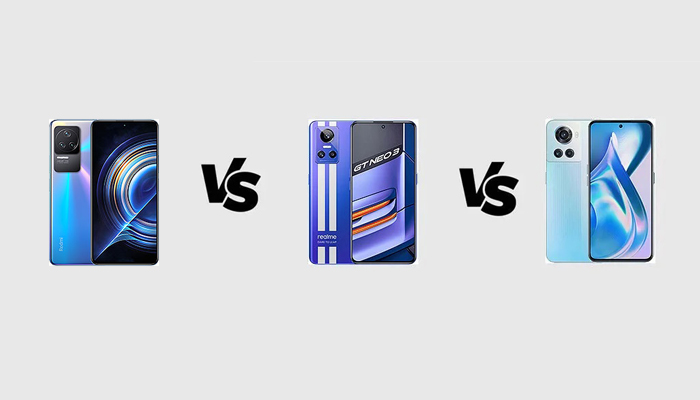
2022 is a great year for flagship killers. MediaTek released several new high-end chipsets thanks to which we will see a lot of affordable high-end devices on the shelves. Xiaomi, Realme, and OnePlus are among the main smartphone manufacturers which released new flagship killers. Xiaomi came up with the Redmi K50 series including the vanilla Redmi K50, Realme recently announced the Realme GT Neo3, and OnePlus launched the OnePlus 10R which is the global version of the OnePlus Ace. This is a comparison between the specifications of the Redmi K50, the Realme GT Neo3, and the OnePlus 10R.
Triple 50 + 8 + 2 MP, f/1.9 + f/2.2 + f/2.4
16 MP f/2.4 front camera
Triple 50 + 8 + 2 MP, f/1.9 + f/2.2 + f/2.4
16 MP f/2.4 front camera
BATTERY
5500 mAh, fast charging 67W
4500 mAh, fast charging 150W or 5000 mAh, fast charging 80W
4500 mAh, Fast Charging 150W
ADDITIONAL FEATURES
5G, dual SIM slot
5G, dual SIM slot
5G, dual SIM slot
Design
The Redmi K50 is the handset of the trio with the best build quality. It is the only one equipped with a glass back and a front glass protected by Gorilla Glass Victus, and it is even the only one to sport the IP53 certification making it dust resistant and splash resistant. The OnePlus 10R is the one with the most original design, while the Realme GT Neo3 is the most sportive and gaming-centric one in terms of aesthetics, but the OnePlus and Realme flagship killers are made of plastic and do not provide the users with any certification against dust and water.
Display
The Redmi K50 features the most impressive display, at least on the paper. It has a higher Quad HD+ resolution with 1440 x 3200 pixels, it comes with the Dolby Vision support, and it is able to provide a higher level of detail. The Redmi K50 has an OLED panel with a 6.67-inch diagonal, a 120 Hz refresh rate, and a 120 Hz refresh rate. The OnePlus 10R and the Realme GT Neo3 come with the same display sporting a lower Full HD+ resolution of 1080 x 2400 pixels and no Dolby Vision, but they are able to show up to one billion colors. Further, note that the OnePlus and Realme handsets, come with an in-display fingerprint reader, while the Xiaomi one has a side-mounted biometric sensor, placed on the power key.
Specs & Software
The hardware departments of these two devices are the same: they are powered by the Dimensity 8100 mobile platform by Mediatek, built at 5 nm and running at a max frequency of 2.85 GHz. The chipset is paired with up to 12 GB of LPDDR5 RAM and up to 256 GB of UFS 3.1 internal storage. They run Android 12 out of the box but are customized by different user interfaces: the Redmi K50 comes with MIUI 13, the OnePlus 10R has OxygenOS 12, and the Realme GT Neo3 has Realme UI 3.0.
Camera
The camera setups of the Realme GT Neo3 and the OnePlus 10R are exactly the same and they are superior if compared to the one found on the Redmi K50. They sport a 50 MP main camera (a Sony IMX766 sensor with OIS), an 8 MP ultrawide lens, a 2 MP macro camera, and a 16 MP selfie snapper. With the Redmi K50, you get a 48 MP main camera with OIS, an 8 MP ultrawide sensor, a 2 MP macro lens, and a 20 MP selfie shooter.
The Redmi K50 provides a longer battery life thanks to a bigger 5500 mAh battery, while Realme GT Neo3 and OnePlus 10R feature faster charging with a power of up to 150W.
Price
Redmi K50 is expected to hit India with a €350/$369 price tag, Realme GT Neo3 begins at $478/€454, and the OnePlus 10R costs €480/$505 in its base variant. While the OnePlus 10R and the Realme GT Neo3 feature better cameras and faster charging, the Redmi K50 has a bigger battery: which one would you pick?
Xiaomi Redmi K50 vs Realme GT Neo3 vs OnePlus 10R: PRO and CONS
Back in April, Xiaomi had launched the MIJIA Dual-brush Wireless Mopping Machine under crowdfunding on Xiaomi Mall. Right now, the company has now officially launched the product for sale with a price tag of 999 yuan (~$156) which is slightly higher than the 899 yuan (~$141) crowdfunding price.
The MIJIA dual-brush wireless mopping machine is not a regular product as it only performs the function of mopping the floor. The device features an innovative dual-brush design and supports real-time spray cleaning. The front brush washes the dirt in the front while the brush at the back wipes the stains in the back thus ensuring the floor is thoroughly cleaned. The self-driving traction force of the motor enables smooth pushing and pulling for free cleaning.
In addition, the MIJIA mopping machine can spray clean the roller brush with clean water in real-time to keep it clean after use. Furthermore, after the cleaning is over, all the user needs to do is to put the brush back on the base and turn on the auxiliary cleaning with one button to simulate manual hand washing, reducing the frequency of cleaning the roller brush and making it more convenient to take care of. It also automatically stops when the water is empty or the degree of dirt is high and emits a buzzer sound to remind you to clean up in time.
For the design, the MIJIA mop adopts a frameless design. The front roller brush can deform to take the shape of wall edges in other to effectively clean the edges where the floor meets the wall. Also, when cleaning low places such as the bottom of the sofa and underneath the bed, the MIJIA double-brush wireless mopping machine can be adjusted to assume a lay-flat state, with a lay-flat thickness of 13cm. It equally supports 90° up and down rotation in this state. The machine can also be left upright anytime, anywhere.
As for the battery life, the MIJIA Dual-brush wireless mopping machine has a single usage duration of up to 35 minutes with a single charge. It also packs a built-in 420mL water purification tank and a 200mL sewage tank.
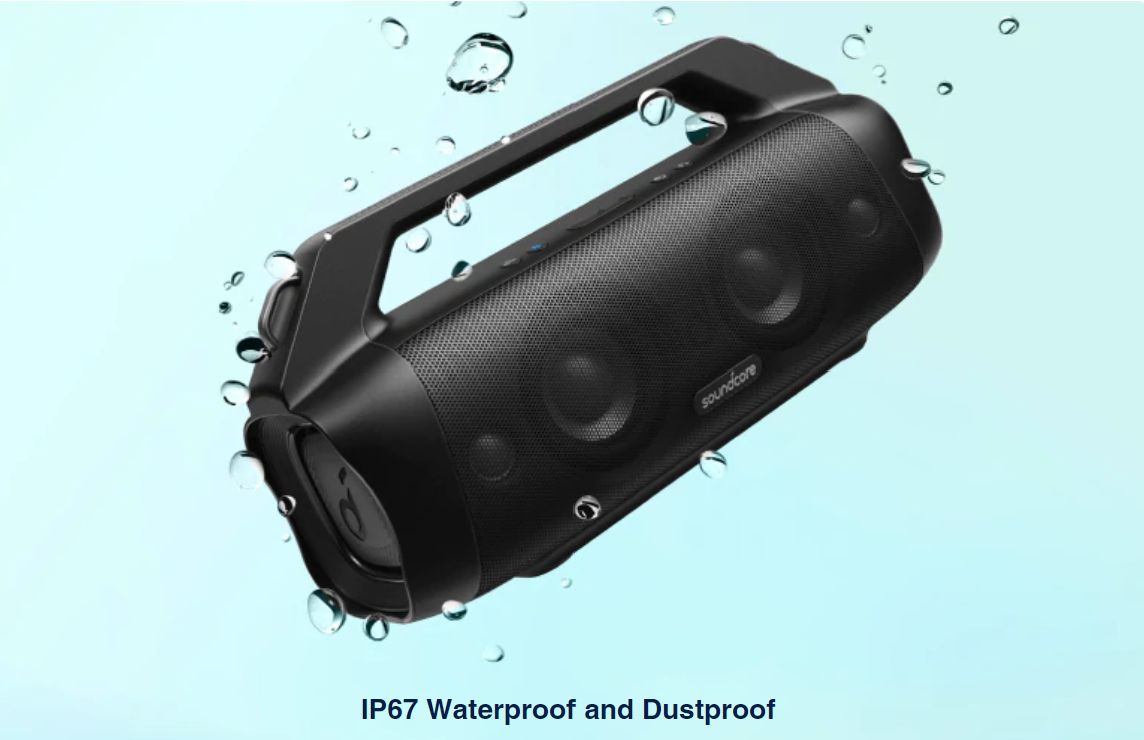
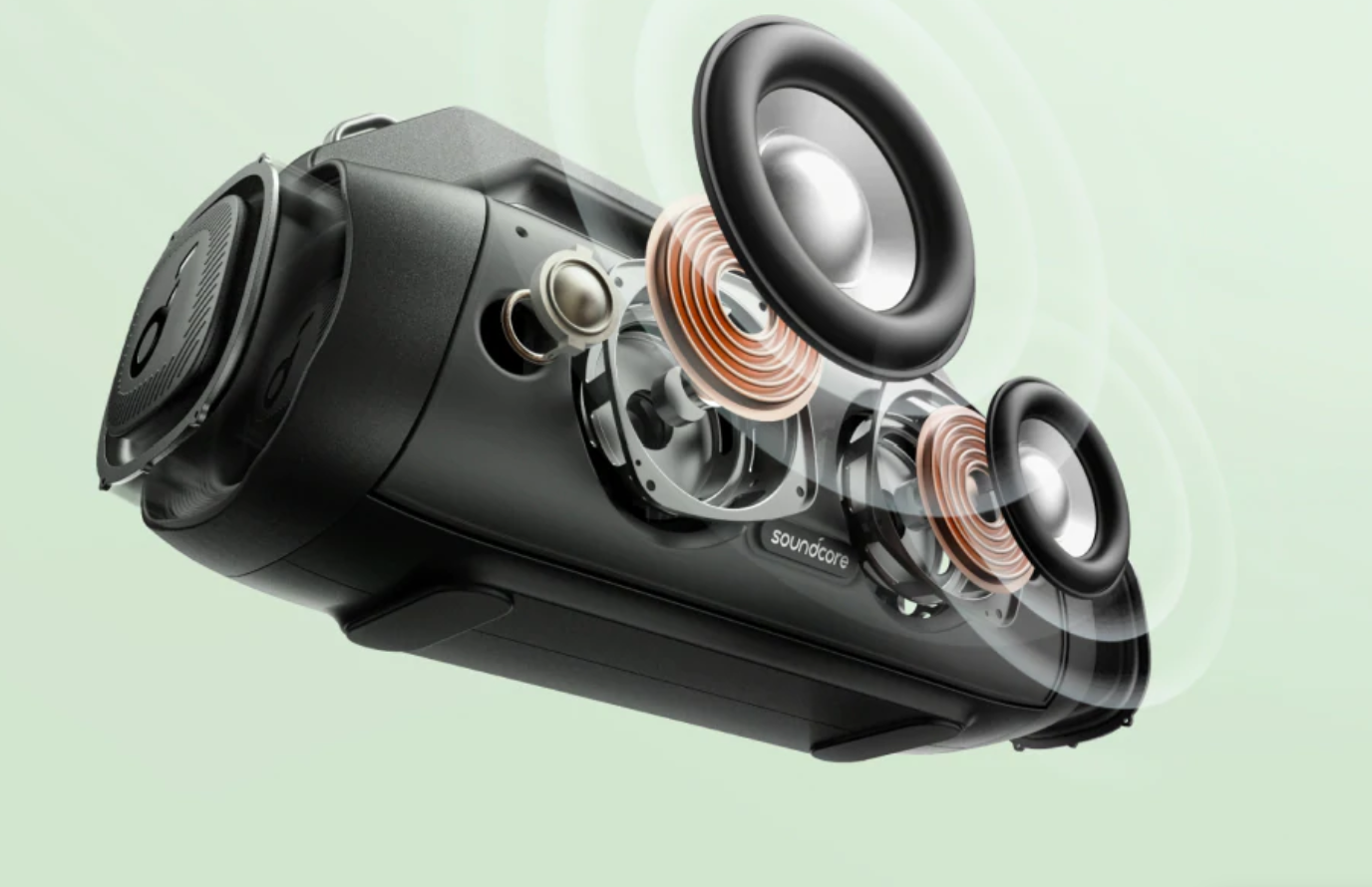
Anker‘s Soundcore has released its latest speaker with an improved sound and IP67 water resistance dubbed Soundcore Motion Boom Plus speaker. The product comes with a discounted price of $141.99 which is $38 off but that is for those who reserve the product with $1 right away. The Motion Boom Plus is clearly a revitalized successor to the Motion Boom party speaker. It will be released on May 30.
The Motion Boom Plus includes two 30W woofers and two 10W tweeters, delivering an output of 80W of sound. It has the same titanium drivers as the 2021 Motion Boom but adds PartyCast 2.0 to the mix. The Soundcore Motion Boom Plus has a 13,400mAh battery, which is bigger than that of the Motion Boom.
The improved output of the Motion Boom Plus means that its larger battery offers less mileage than its predecessor. While the Motion Boom Plus delivers about 20 hours of activity, the Motion Boom gives 24 hours.
The IP67 rating of the Motion Boom Plus is also an improvement from its predecessor. Although the new model is slightly heavier at 2.4kg, it comes with a strap. The PartyCast 2.0 feature enables the Motion Boom Plus to connect to more than 100 individual speakers for a more powerful performance. Some Soundcore speakers can also be synchronized to provide lighting with the sound.
The Motion Boom Plus supports Bluetooth 5.3 connectivity ahead of its predecessor. The Motion Boom Plus will be available from May 30, but reservations can be made before then.
The decline of Huawei in the smartphone market had been seen a long time coming. With the halt to the production of its own in-house HiSilicon Kirin chips and the sanctions of 5G chipsets against the company, it seemed like the company would have to exit the smartphone market sooner or later.
But in an unlikely turn of events in 2022, we could still get “Huawei designed” smartphones, but not “Huawei branded” smartphones. Today, on May 10th 2022, TD Tech, a newcomer to the smartphone business, is launching its first-ever flagship smartphone, the TD Tech M40 to the Chinese market.
Source: TD Tech
If the design seems familiar to you, that is because this is literally the Huawei Mate 40, but now “TD Tech” branded with an upgraded 5G chipset and upgraded cameras. Here are the features of this new TD Tech M40 smartphone, and the pricing of the device in China.
Let’s start with the design, the TD Tech M40 is housed within an aluminium build chassis that features a premium shiny matte glass finish with a circular camera island on its back, and a 3D curved AMOLED with a left punch hole upfront. The “TD Tech” branding is also printed on the back to let you know, that this is indeed the newer model.
The front display panel is a 6.5-inch FHD+ 60Hz AMOLED display with support for HDR 10+ content and a 240Hz touch sampling rate. The device is also rated for IP53 dust and water resistance to keep your phone safe from the light drizzle in the rain.
The main upgrade here is the processor, instead of using the outdated Kirin 9000 4G processor on the Huawei Mate 40, the TD Tech M40 features the MediaTek Dimensity 1000 Plus SoC instead. With the SoC change, the new TD Tech M40 features dual sim 5G connectivity, which allows for faster mobile data speeds, and improved CPU performance over its Kirin cousin.
Coming to the rear cameras, the TD Tech M40 has a triple camera setup. Instead of the 50MP sensor found on the Huawei Mate 40, the TD Tech M40 utilises a 64MP main sensor instead with Laser Autofocus, f/1.9 aperture and support for 4K video recording. The 2 others are also very competitive as well, with the ultra-wide being a 16MP f/2.2 sensor with an additional macro-photography mode and an 8MP telephoto sensor with 3x optical zoom. You’ll also get a 13MP wide-angle selfie camera at the front, for when you want to fit more memories into your photo.
As for the battery, the TD Tech M40 is equipped with a 4200mAh battery with 40W USB-C Fast Wired Charging and 40W Fast Wireless Charging. Another welcome addition to the device is also the inclusion of the 3.5mm headphone jack. The smartphone is also equipped with dual top-bottom stereo speakers for an immersive audio experience at home.
The device will be available in 3 gorgeous colours: Ceramic White, Secret Silver and Shiny Black. Its pricing for its two memory configurations is as follows:
8GB + 128GB – 3999 RMB (594 USD)
8GB + 256GB – 4499 RMB (668 USD)
The TD Tech M40 will be running with HarmonyOS 2.0 based on Android 10 out of the box in China, and the device will officially go on sale in China from May 13th onwards.
Realme Narzo 50 5G series is set to launch in India soon. The lineup will consist of a standard and Pro model. Both devices are confirmed to be available from Amazon. Now ahead of the launch, tipster Mukul Sharma has shared a poster of the upcoming offerings giving us a glimpse at the smartphones.
The Narzo 50 5G series will be new additions to the existing Narzo 50 lineup that consists of the Narzo 50, 50i, 50A, and 50A Prime. The upcoming smartphones are teased to come with the fastest 5G processor and the best cooling technology in the segment.
Realme Narzo 50 5G series is confirmed to launch in India soon
As per the images shared by the tipster, the Narzo 50 5G has a center-aligned punch-hole cutout for the front camera. On the other hand, the cutout is located at the top left corner on the Narzo 50 Pro 5G. Apart from this, the leaked renders of the Narzo 50 5G revealed a compact form factor and a back panel with striped pattern housing a rectangular camera module.
A report by 91Mobilesreveals the key details of the Narzo 50 Pro 5G. The smartphone is tipped to come in 4GB + 128GB and 6GB + 128GB RAM and storage configurations. It will be available in Blue and Black color options. On the other hand, the regular Narzo 50 5G will reportedly be powered by Dimensity 810 SoC coupled with 6GB RAM and 128GB storage.
Asus has unveiled the Vivobook Pro 14X OLED notebook. The laptop comes with an immersive 14.5-inch 2.8K 120 Hz OLED display. It is powered by the 12th gen Intel Core i9-12900H processor paired with 32 GB of LPDDR5 RAM and up to 1 TB PCIe 4.0 SSD. The device will likely go on sale in the third quarter of 2022.
The Vivobook Pro 14X OLED will be the latest addition to the Vivobook pro series. The laptop comes with high-end features and aims to compete with the premium offerings of HP and Apple. The design and appearance of the laptop are different from the other laptops in the series. It comes with an all-metal build and features a unique logo design on the back.
The highlight of the laptop is the 14.5-inch 2.8K 120 Hz OLED display. The display comes with comes 0.2ms response time and is capable of providing the best colors and quality for any content be it gaming, entertainment, or work. The panel has a peak brightness of up to 600 nits, a contrast ratio of 1,000,000:1, and 100% coverage of the DCI-P3 color gamut.
If we talk about the input devices, the Vivobook Pro 14X OLED comes with a new ErgoSense keyboard that has 19.05 mm of key pitch, 1.4 mm long key travel, and 0.2 mm key-cap dish. The trackpad is large and comes with Asus’ virtual rotary control.
The hardware game is strong with this one. The laptop can be configured with either a 12th gen Core i7-12700H or a 12th gen Core i9-12900H. It comes with up to 32 GB of LPDDR5 memory and up to 1 TB of PCIe Gen 4 NVMe SSD. Moreover, the Vivobook Pro 14X OLED comes with NVIDIA GeForce RTX 3050 Ti GPU.
The laptop includes all of the necessary I/O ports. There’s an HDMI® 2.1 port for connecting up to a 4K 120 Hz / 8K 60 Hz monitor, a USB 3.2 Gen 1 Type-A port, two USB 2.0 Type-A ports, and a ThunderboltTM 4 USB-C port for rapid charging. There is also a high-speed microSD card reader that enables quick data interchange at speeds of up to 50 MB/s. The laptop is fueled by a 70 WH battery that can be charged 50% in just 30 minutes.
The price of the laptop is yet to be known. However, its launch is expected in Q3 2022.
Last week, the Indian government issued an order which required VPN (Virtual Private Network) based companies to collect and provide it with user data.
The order, issued by the Computer Emergency Response Team (CERT-in), which is a department under the Ministry of Electronics and IT requires these companies to collect sensitive user data like IP addresses, usage patterns, etc, and store it for up to 5 years before eventually handing it over to the government whenever asked. Failing to comply with these orders can result in prison sentences of up to a year under Section 70B(7).
The government has stated that this move is aimed at “coordinate response activities as well as emergency measures with respect to cyber security incidents.”
As you can imagine, this is a direct step against data privacy. And it appears that major VPN companies operating in India are unlikely to comply with these orders according to recent statements issued by them.
Laura Tyrylyte, who is the security spokesperson for NordVPN said “We are committed to protecting the privacy of our customers, therefore, we may remove our servers from India if no other options are left.”
Express VPN also issued a statement saying “VPNs are critical for user safety and the preservation of user’s right to online privacy and are fundamentally opposed to any efforts to undermine such technologies.”
Shurfshark VPN’s legal head Gytis Malinauskas has said that “We operate only with RAM-only servers, which means that at this moment, even technically, we would not be able to comply with the logging requirements.
Going by the statements of these major VPN service providers and their firm stance against the Indian Government’s mandate, it could be possible that these companies might soon stop providing their services in India. The last date for complying with the CERT-in’s directive is June 27th, 2022, so stay tuned for more updates on the matter.
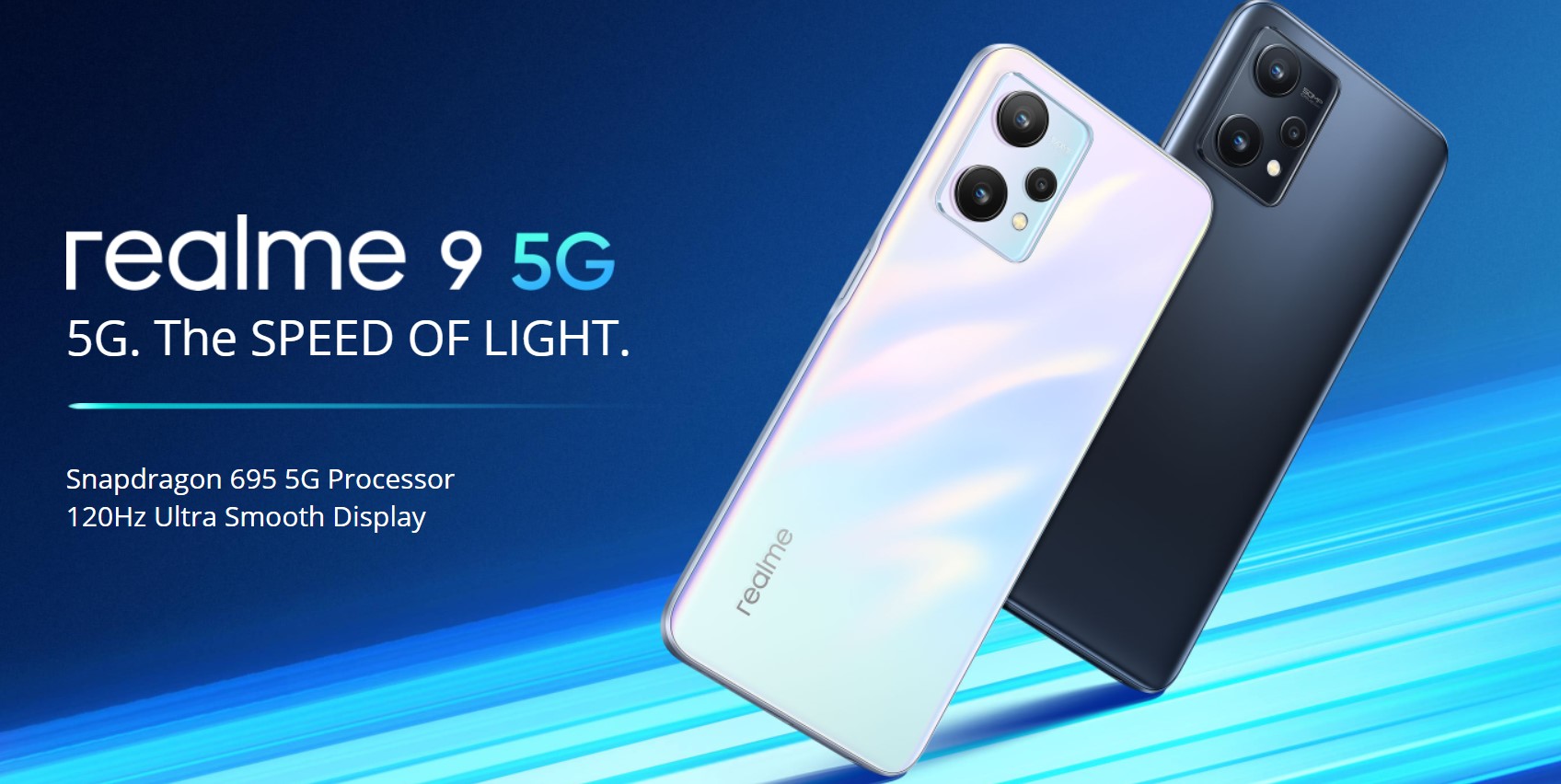
Realme is expected to launch the Realme 9 and the Realme 9 5G smartphones along with the Realme Pad Mini in the upcoming Europe-specific event. However, just days ahead of the launch, the European version of Realme 9 5G was spotted on the company website. The smartphone appeared with a new chipset and camera setup, confirming that it is not the same as the previously launched Indian variant.
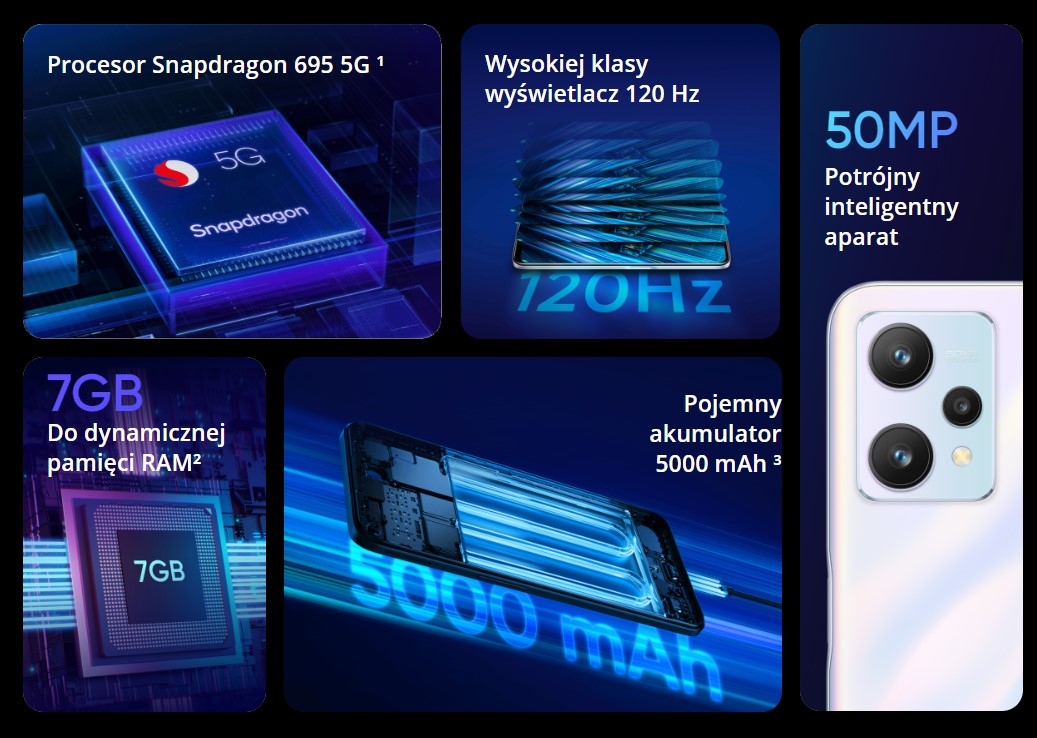
As first reported by GSMArena, the Realme 9 5G has appeared on the company’s Poland website. It seems that Realme has accidentally posted the smartphone on the website. From the specifications, it is evident that the smartphone is different from its Indian variant. The handset is carrying a Snapdragon 695 5G processor and a 50MP main camera.
Realme 9 5G (European version) Specifications.
As per the specifications listed on the website, the new Realme 9 5G features a 6.6” LCD display with 1080p resolution. The panel carries support for 120Hz refresh rate and 240Hz touch sampling rate. It also has a fingerprint scanner on the side. The handset is powered by a Snapdragon 695 5G processor, unlike the Indian variant that came out with Dimensity 810 chipset. The Snapdragon 695 brings a 2x Kryo Gold 2.2 GHz + 6x Kryo Silver 1.8 GHz CPU.
If we talk about the storage configuration, the smartphone comes with 4GB RAM and 64 GB or 128 GB storage options. As far as the optics are concerned, the Realme 9 5G houses a 50MP main camera, 2MP B&W camera, and a 2MP depth camera on the back, while the front features a 16MP f/2.1 snapper for selfies and video calls.
Realme 9 5G
The smartphone has a 5,000mAh battery that supports 18W charging. The Realme 9 5G will run Realme UI 3.0 based on Android 12 out of the box. The handset is available in two color options- White and Black. The phone’s dimensions will be 164.3 mm x 75.6 mm x 8.5 mm and it will weigh 191 grams.
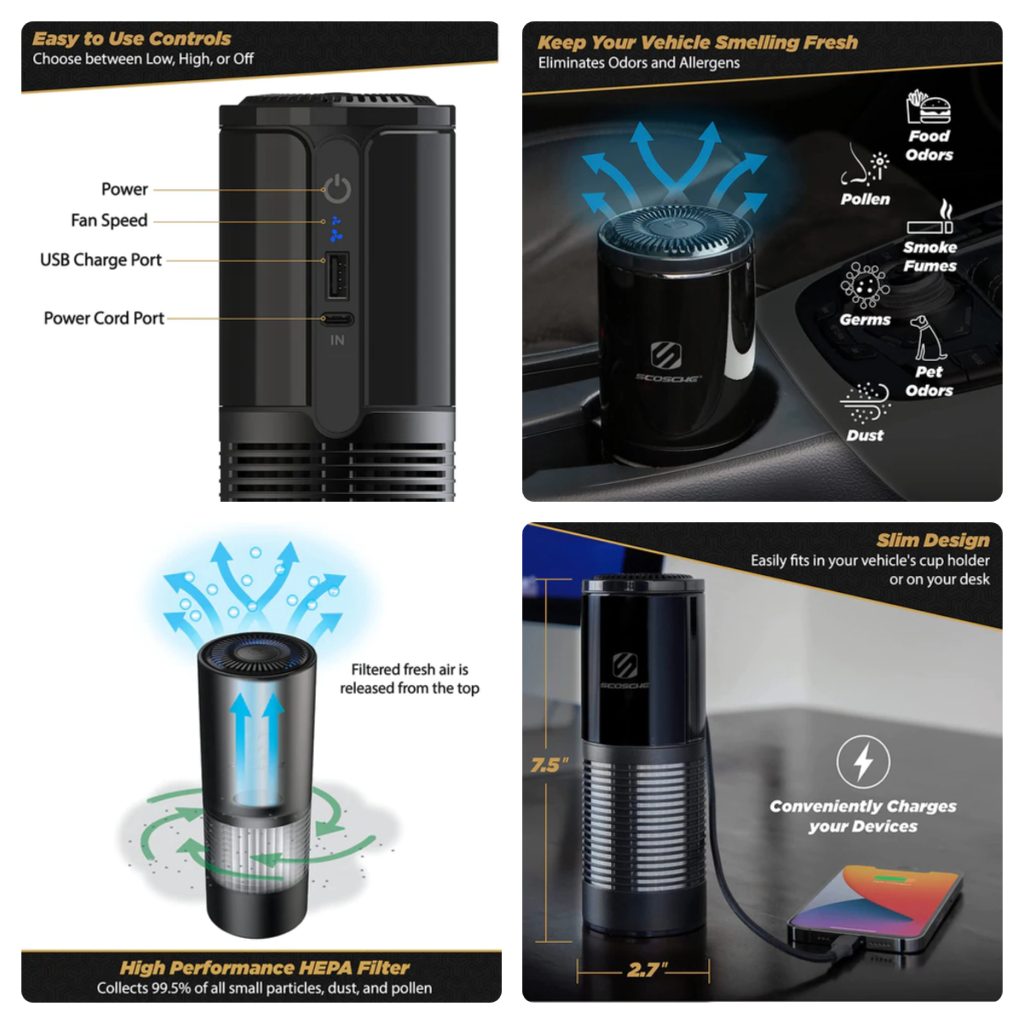
The Scosche AFP2-SP FrescheAir HEPA Air Purifier has been introduced to the Indian market. The new air purifier is being offered at an introductory price of Rs. 6,999 (~$91). The new product is similar to the Xiaomi Smart Air Purifier 4 Pro and it is originally priced at Rs. 9,999 (~$129). It will be available via Amazon India and Tekkitake.com at the introductory price.
The Scosche portable HEPA air purifier helps to clean the air in closed spaces, as well as neutralize persistent smells. It is being promoted as a must-have for clean, odor-free, and safe interiors. The device is designed to fit in the cup holder of a car or a room. It is a mobile air purifier and can be deployed to swift effect in any enclosed environment. It can be charged via a USB-C wall or car charger, and it also offers portable power bank services.
The Scosche AFP2-SP FrescheAir HEPA Air Purifier is about 0.38kg and is made of PC/TPU material. It has a rechargeable battery and USB port that helps the device to function as a portable power bank. The device comes in black and a 12-month warranty is part of the package. The two modes: automatic and manual in the device offer a few operational choices.
Asus has announced its latest pop art-inspired convertible laptops and they are quite catchy. The Vivobook Slate 13 OLED Limited Artist Edition models will be showcased during Computex 2022.
The Asus Vivobook Slate 13 OLED models are the culmination of its collaboration with two outstanding pop artists. Philip Colbert and Steven Harrington are the two artists behind the new Asus colorful convertible laptops. According to Asus, the new Limited Artist Edition models represent the unique worldview of the artist. The two laptops have themed accessories and packaging brimming with original artwork from the two artists.
The Asus Vivobook Slate 13 adds to the collection of Asus collaborations with artists to deliver several art-inspired designs. Some previous models include the Acronym-inspired laptop and the one inspired by a Norwegian disc jockey, Alan Walker. The fact that Asus has continued to deliver these limited-edition art-inspired laptops points to some demand for them.
The Philip Colbert Edition model is covered with original artwork with lots of eggs and lobsters. The cover stand is artwork based on fried-egg themes. It has a sculptured cartoon lobster figurine that doubles as a stylus holder for the Asus Pen 2.0. The Steven Harrington Edition sports an array of diverse art designs. It is seen as a chaotic design by a particular review of the laptop, with palm trees, a disembodied eyeball, and a bowtie-wearing dog.
The Asus Vivobook 13 Slate art edition offers a detachable keyboard and Intel Pentium Silver N6000 processor. The RAM/ storage configuration can get up to 8GB/256GB which packs less capacity. There is no availability and pricing information yet for the Asus Vivobook Slate 13 Limited Artist Edition. More details will surface as we inch closer to a potential Q2 2022 launch, although the current Vivobook 13 Slate is priced at $600.
On April 29th, OnePlus launched the Nord Buds TWS earphones at the OnePlus 10R launch event. The earbuds are now available to purchase in India, so let’s once again take a look at their pricing, specs, and features.
OnePlus Nord Buds price in India
The Nord Buds from OnePlus are priced at ₹2,799 (~$36) and are available in two colors namely Black Slate and White Marble. The buds can be purchased from Flipkart, Amazon, the OnePlus India website, and offline stores across India.
OnePlus Nord Buds specs & features
Coming to its specifications, the TWS earbuds feature big 12.4mm audio drivers and come with Bluetooth 5.2 support. They feature an in-ear style design that snugly fits for maximum comfort and a present listening experience.
Each individual earphone packs a 41mAh battery, while the charging case houses a 480mAh battery. It’s capable of up to 7 hours of audio playback on a single charge and up to 30 hours of playback with the charging case. One of the highlight features of the Nord Buds is its fast charging capability which allows up to 5 hours of playback with just a 10-minute charge.
The Nord Buds feature Dolby Atmos audio support, a dedicated 94ms low latency gaming mode on select smartphones, and a dual-mic setup that offers AI noise reduction. Other features offered on the TWS earbuds are an IP55 protection rating, USB Type C charging port, touch controls, Dirac audio tuned, three sound presets, and even fast pairing with OnePlus smartphones.
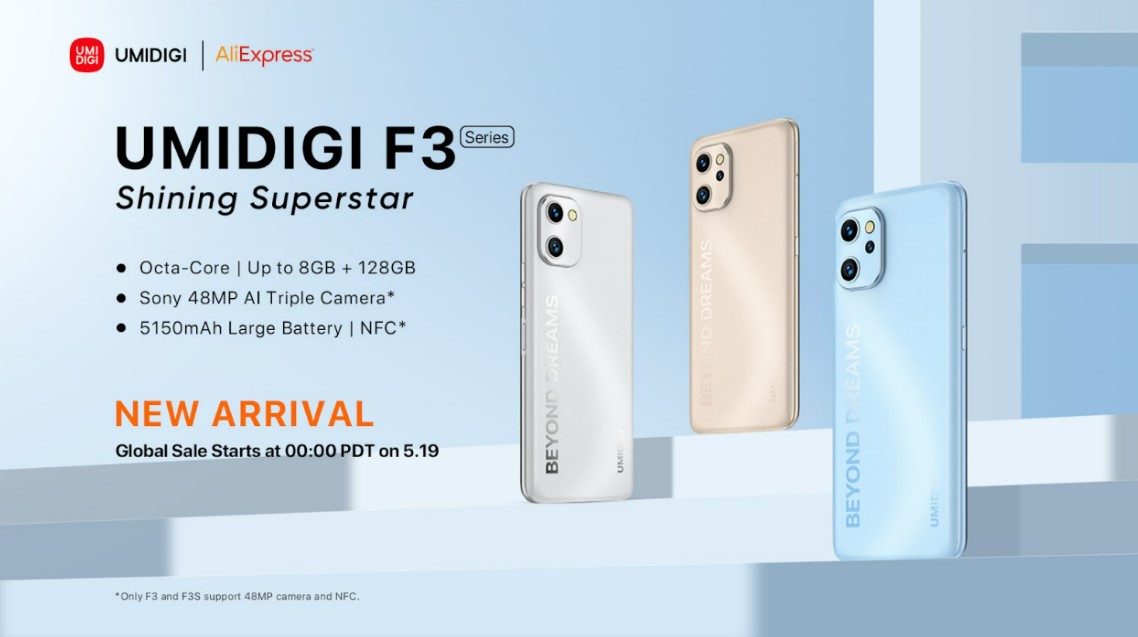
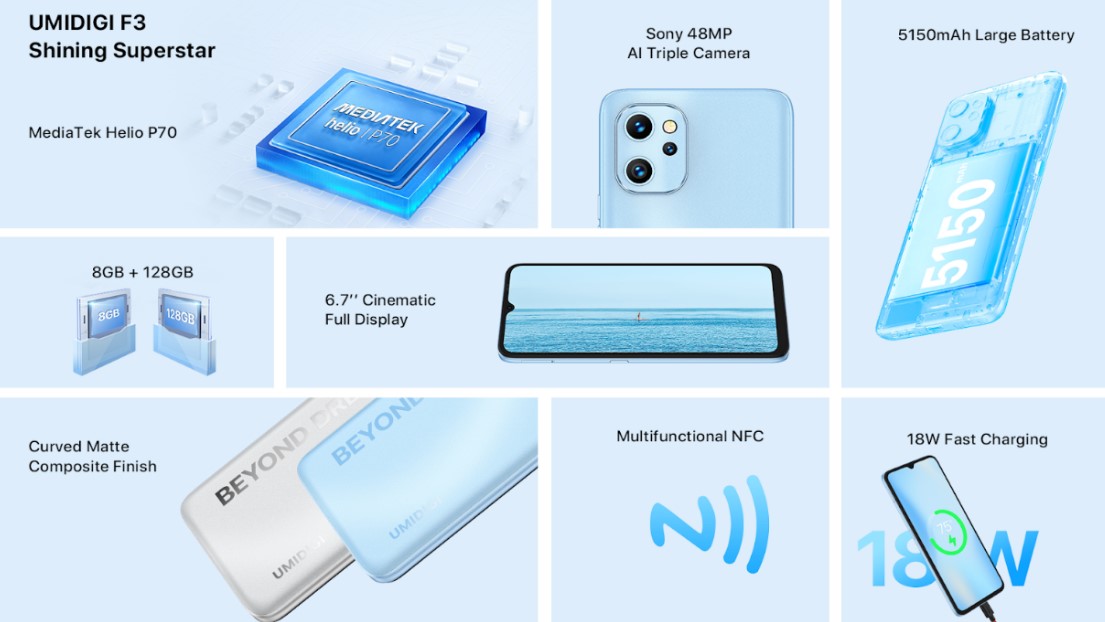
UMIDIGI is launching its much-awaited F3 series on 19 May 2022. Under this series, you have the F3, F3S, and F3 SE variants all available for sale to global consumers at the world premiere sale on AliExpress. With the F3 series, the brand is focusing on premium and high-quality photography, powerful performance, large memory, and massive battery all packed into a sleek and stylish design, made available at an affordable price. So let’s take a look at the specs of the F series.
All phones in the UMIDIGI F series come with a 3D curved edge design and a dazzling matte finish that makes them look sleek and stylish. The F3 features a 6.7-inch display and is powered by a MediaTek Helio P70 chipset. It comes with 8GB RAM and 128GB internal storage.
For your pictures videos and images, you have a triple rear AI camera set up with a 48MP main camera, 8MP ultra-wide angle sensor, and a 5MP macro sensor. For your selfies, you have a 16MP sensor in the front.
The phone is fueled by a massive 5150mAh battery and supports 18W fast charging. Other interesting features include an integrated fingerprint sensor cum power button, AI Face unlock, NFC, headset free FM Radio, Quad Navigation system, etc.
The F3S phone sports a smaller RAM as compared to the F3. It comes with 6GB RAM and 128GB storage and is powered by the UNISOC Tiger T610 chipset. The camera setup and battery remain the same in both F3 and F3S variants however you get only 10W fast charging as compared to the 18W in F3. Other interesting features include an integrated fingerprint sensor cum power button, AI Face unlock NFC, headset free FM Radio, Quad Navigation system, etc.
The F3 SE variant is a lot different from F3 and F3S. It comes with the smallest RAM option i.e. 4GB and does not feature NFC function. Also instead of triple camera, you have a dual rear camera setup with a 20MP main camera and 8MP secondary sensor.
UMIDIGI F3 VS F3S VS F3 SE – Full Specs Comparison
SPECS
F3
F3S
F3 SE
Display
6.7 inches,
1650 x 720p
6.7 inches,
1650 x 720p
6.7 inches,
1650 x 720p
Body Material
AG Matte Composite Finish
AG Matte Composite Finish
AG Matte Composite Finish
Processor
MediaTek Helio P70
Unisoc T610
Unisoc T610
RAM + ROM
8GB + 128GB
LPDDR4X + UFS 2.1
6GB + 128GB
LPDDR4X+eMMC 5.1
4GB + 128GB
LPDDR4X + eMMC 5.1
Operating System
Android 11
Android 11
Android 11
Rear Camera
Triple:48MP +8MP +5 MP
Triple:48MP +8MP +5 MP
Dual: 20MP + 8MP
Selfie Camera
16MP
16MP
8MP
Battery
5150mAh
5150mAh
5150mAh
Charging
18W, Type -C
10W, Type -C
10W, Type -C
Unlock
Side-fingerprint Sensor + AI Face Unlock
Side-fingerprint Sensor + AI Face Unlock
Side-fingerprint Sensor + AI Face Unlock
Bluetooth
v4.2
v5.0
v5.0
NFC
Yes
Yes
No
Navigation
GPS+ Glonass + Beidou + Galileo
GPS+ Glonass + Beidou + Galileo
GPS+ Glonass + Beidou + Galileo
Special features
Independent Shortcut Key &
Headset-free FM Radio
Independent Shortcut Key &
Headset-free FM Radio
Independent Shortcut Key &
Headset-free FM Radio
Colors:
Hawaii Blue, Silver, Galaxy Blue, Black and Gold
Hawaii Blue, Silver, Galaxy Blue, Black and Gold
Hawaii Blue, Silver, Galaxy Blue, Black and Gold
PRICE:
$179.99
$159.99
$129.99
F3 Series + A13 Series, the Shining Gemini
UMIDIGI has come up with a novel branding concept called the UMIDIGI Gemini series wherein they have combined the F3 series with the similarly designed A13 to create a best-selling combo offer for the consumers. Both F3 and A13 series feature a dazzling matte back finish, but the F3 sports curved edges while the A13 series features a flat-edge design. SO if you are interested in buying the combo then checkout the Gemini offer.
Global Giveaway
From 4 May to 11 May 2022, UMIDIGI is hosting a global giveaway on their official Facebook page, where 3 winners can get the new F3 phone for free. If you are interested in this product or you want one for free, then check out their Facebook page to learn more and join in.
For more information on such exciting deals and offers check out our deals hub.
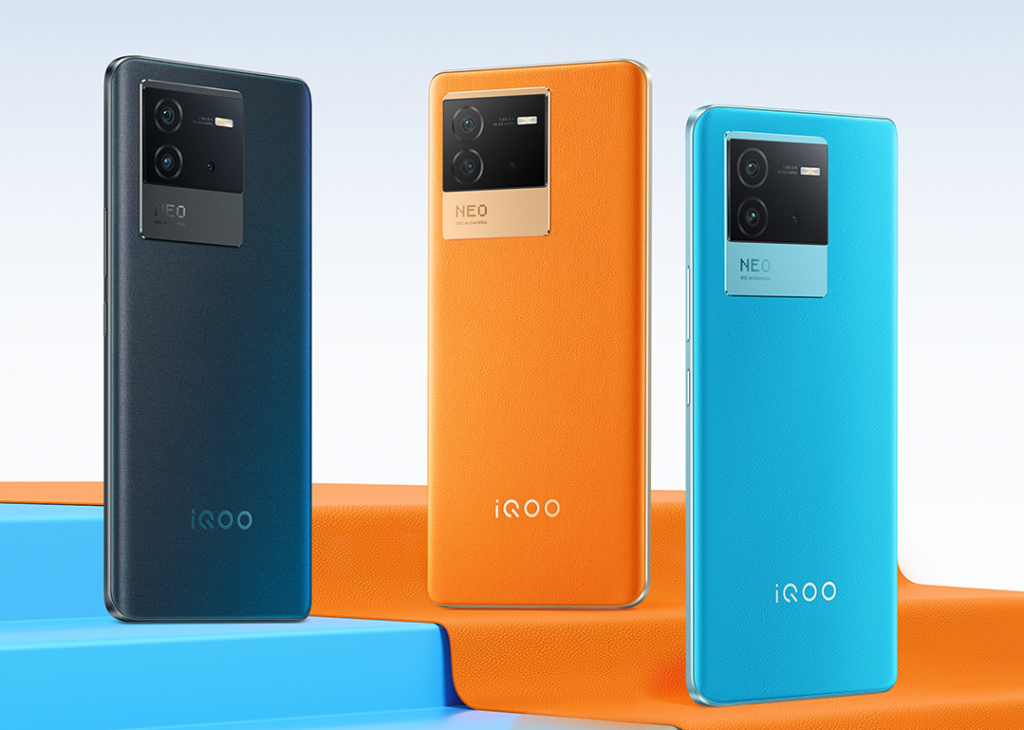
Last month, iQOO launched the Neo 6 smartphone with Snapdragon 8 Gen 1 in China. The company followed the launch by debuting the Neo 6 SE smartphone last week.
Now, tipster Mukul Sharma has revealed in a tweet that iQOO plans to soon launch the Neo 6 series in India. The smartphone will focus on providing an all-round flagship experience and will be priced between ₹30,000-₹35,000. The spec sheet, however, will differ for the Indian variants of the Neo 6 and the Neo 6 SE.
[Exclusive] Can confirm that #iQOO is finally bringing the Neo series smartphones to India.#iQOONeo6 will be the 1st to launch in the country Focus will be on an all-round flagship experience Price between 30K-35K Specs will differ for India Feel free to retweet 😉
It would be interesting to see what spec changes are made to the smartphone. The Chinese variant of the iQOO Neo 6 comes with the powerful Snapdragon 8 Gen 1 chipset while the Neo 6 SE features the Snapdragon 870 SoC, which is praised to provide excellent thermal performance compared to other 800 series chipsets.
Both devices feature a 6.62-inch FHD+ AMOLED display panel with 1300nits peak brightness and 120Hz refresh rate. The Neo 6 comes with the independent Display Chip Pro to provide a boost in gaming performance. The devices are offered in up to 12GB RAM and 256GB storage configurations and run Android 12 out of the box.
Both also have the same battery size and fast charging rate at 4700mAh and 80W respectively. And also offer similar camera setups with a 64-megapixel primary (with OIS) + 12-megapixel ultrawide + 2-megapixel portrait sensor (in the Neo 6) and depth sensor (in the Neo 6 SE). The front camera of both devices has a 16-megapixel resolution.
OPPO has a lot of mid-range launches planned for the upcoming months including the Oppo K10x and Oppo Reno 8 series devices.
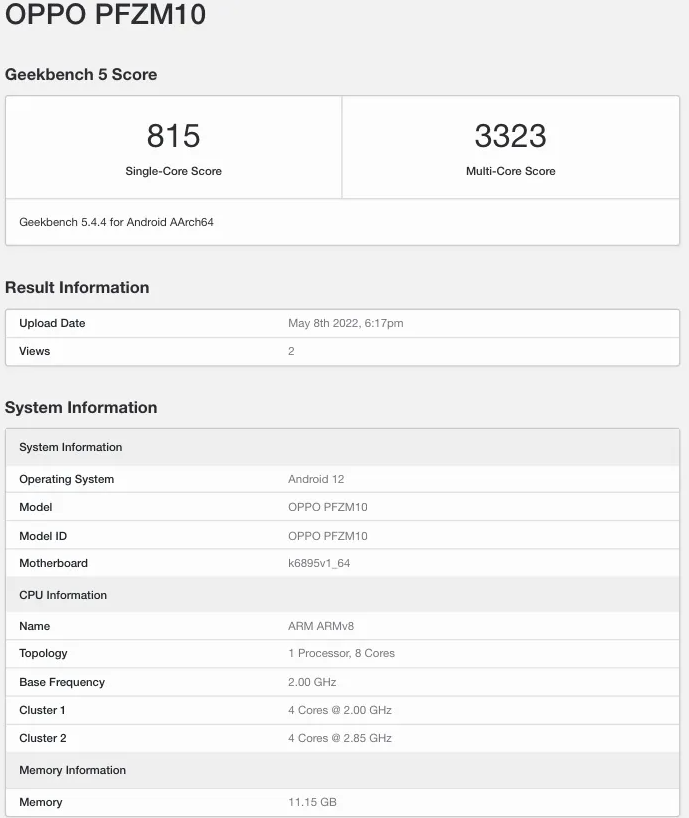
Now, an OPPO smartphone with a PFZM10 model number has appeared on Geekbench’s database rocking a premium-midrange MediaTek SoC.
According to the listing, the smartphone has an octa-core processor with four cores clocked at 2.00GHz and the other four clocked at 2.85GHz. Going by these details, this is most likely the Dimensity 8100 or the Dimensity 8100-Max SoC.
Other than that, the listing reveals that the smartphone has 12GB RAM and operates on Android 12. OPPO has yet to debut a smartphone with the Dimensity 8100 SoC. But according to recent rumors, the company will provide this chipset in the upcoming Reno 8 Pro. This leads us to speculate that the PFZM10 model number could belong to the Reno 8 Pro. However, this is still unconfirmed so we suggest our readers take it with a pinch of salt.
Separately, some specifications of the upcoming vanilla Reno 8 have already surfaced online. The device is expected to come with a 6.55-inch OLED display with a 120Hz refresh rate. It has a Snapdragon 7 Gen 1 SoC at its core, which will likely be coupled with 8GB of LPDDR5 RAM and up to 256GB of UFS 3.1 storage.
The device will draw juice from a 5,000mAh battery with 80W fast charging support and will operate on Android 12. For optics, the device will carry a 50MP IMX766 primary sensor clubbed together with an 8MP ultra-wide shooter and a 2MP camera. On the front, the device will get a 32MP snapper for video calls and selfies.
5G smartphones have basically become the standard for most modern smartphones in the high end and upper mid range market. However, the entry level segments have yet to see the same level of 5G penetration. While Realme had plans on changing this, it appears that an affordable budget 5G phone is still sometime away.
According to Madhav Sheth, CEO of the Chinese brand’s Indian unit, it will be difficult for the company to launch a 5G enabled handset in the region that is priced under 10,000 INR (roughly 130 US Dollars). The senior executive further added that the company is actively working on lowering the price tag of a 5G phone without compromising on specifications and performance. However, this is not a simple task and it will likely take sometime to achieve.
In other words, there is currently no set timeline for Realme’s first affordable 5G phone as of right now. The top official told ETthat “We have to make more affordable 5G devices. We want to be a prominent hardware provider for the government’s digitization vision with 5G. There are no new 4G chips in the making, so if you need any good performance phone, we have to bring in 5G chips. For brands, the biggest challenge is not to compromise on other specs by making 5G more affordable.”
Furthermore, Sheth added that while the sub 10,000 INR 5G model in 2022 is difficult, it might be possible next year since “we have already started seeing the democratization of 5G technology.” The CEO also believes that 5G shouldn’t be used as a marketing tool to sell your device and continued to talk about the ongoing supply chain issues. He said that the gap between demand and supply is much better than before.
Last year, OPPO debuted the Reno 7 series smartphones in China. Its successor dubbed the Reno 8 series is said to debut in the month of July.
OPPO Reno8 Lite 5G
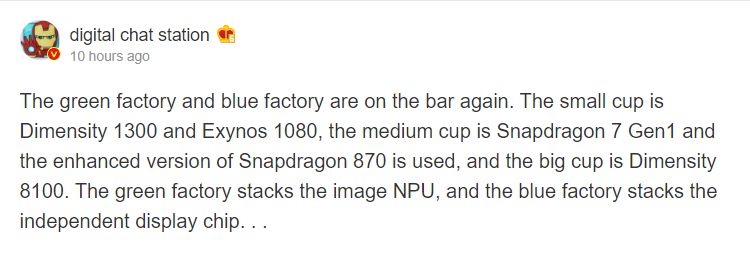
Ahead of its launch, the OPPO Reno 8 appeared on Geekbench with the unreleased Snapdragon 7 Gen 1 SoC. Now, popular Weibo tipster Digital Chat Station has leaked all the SoC configurations of the upcoming Reno 8 series.
According to the tipster, the upcoming OPPO Reno 8 series will come with the Snapdragon 7 Gen 1, Dimensity 1300, and Dimensity 8100 chipsets. This means that the OPPO Reno 8 will come with the Snapdragon 7 Gen 1, the Reno 8 SE with the Dimensity 1300, and the Reno 8 Pro will come with the Dimensity 8100 SoC. The tipster adds that these devices also come with an independent display chip.
OPPO Reno 8 specifications (Expected)
According to rumors so far, the vanilla Reno 8 is expected to come with a 6.55-inch OLED display with 120Hz refresh rate. Recent renders have revealed that its back panel has a stovetop camera module design like the OnePlus 10 Pro.
The Snapdragon 7 Gen 1 SoC will be paired with 8GB LPDDR5 RAM and up to 256GB of UFS 3.1 storage.
Powering the device will likely be a 5,000mAh battery with 80W fast charging support. Coming to optics, the smartphone is said to house a 50-megapixel Sony IMX766 primary sensor with OIS support. Its auxiliary camera setup is rumored to consist of an 8-megapixel ultra-wide lens and another 2-megapixel camera.
On the front, the device is expected to house a 32-megapixel Sony IMX709 front camera like its predecessor, the Reno7 series.
We already know that Tecno is working on launching a new smartphone within the POVA series. Now, we have more details regarding the POVA 3 as its renders has been leaked, which showcases its design.
The latest leak was shared by tipsterParas Guglani. Looking at these renders, we have a close observation at the upcoming smartphone’s design and its possible color options as well. The handset will reportedly be available in three color variants, including a Electric Blue, Tech Silver, and Eco Black option. On the back of the device, we can see a triple camera setup that is stacked vertically on the top left corner, with the LED flash next to it.
Meanwhile on the front, the Tecno POVA 3 sports a center aligned punch hole cutout for the selfie camera. Notably, the rear panel also features a dual tone color finish with a vertical glossy strip dividing the two halves. Furthermore, the right side of the device also houses the volume rockers and the side mounted fingerprint scanner as well. Unfortunately, the leak did not reveal any other finer details regarding the new smartphone, but a previous report has offered us an idea regarding its specifications.
The POVA 3 sport a massive 6.9 inch display that has a Full HD+ resolution and a 90Hz refresh rate. Under the hood, it is believed to be equipped with a MediaTek Helio G85 SoC that is paired with up to 6GB of RAM and up to 128GB of internal storage. The primary rear sensor is expected to be a 50 megapixel sensor while the front may feature an 8 megapixel selfie shooter.
We use cookies on our website to give you the most relevant experience by remembering your preferences and repeat visits. By clicking “Accept”, you consent to the use of ALL the cookies.
This website uses cookies to improve your experience while you navigate through the website. Out of these, the cookies that are categorized as necessary are stored on your browser as they are essential for the working of basic functionalities of the website. We also use third-party cookies that help us analyze and understand how you use this website. These cookies will be stored in your browser only with your consent. You also have the option to opt-out of these cookies. But opting out of some of these cookies may affect your browsing experience.
Necessary cookies are absolutely essential for the website to function properly. This category only includes cookies that ensures basic functionalities and security features of the website. These cookies do not store any personal information.
Any cookies that may not be particularly necessary for the website to function and is used specifically to collect user personal data via analytics, ads, other embedded contents are termed as non-necessary cookies. It is mandatory to procure user consent prior to running these cookies on your website.












 The highlight of the laptop is the 14.5-inch 2.8K 120 Hz OLED display. The display comes with comes 0.2ms response time and is capable of providing the best colors and quality for any content be it gaming, entertainment, or work. The panel has a peak brightness of up to 600 nits, a contrast ratio of 1,000,000:1, and 100% coverage of the DCI-P3 color gamut.
 The hardware game is strong with this one. The laptop can be configured with either a 12th gen Core i7-12700H or a 12th gen Core i9-12900H. It comes with up to 32 GB of LPDDR5 memory and up to 1 TB of PCIe Gen 4 NVMe SSD. Moreover, the Vivobook Pro 14X OLED comes with NVIDIA GeForce RTX 3050 Ti GPU.
 The laptop includes all of the necessary I/O ports. There’s an HDMI® 2.1 port for connecting up to a 4K 120 Hz / 8K 60 Hz monitor, a USB 3.2 Gen 1 Type-A port, two USB 2.0 Type-A ports, and a ThunderboltTM 4 USB-C port for rapid charging. There is also a high-speed microSD card reader that enables quick data interchange at speeds of up to 50 MB/s. The laptop is fueled by a 70 WH battery that can be charged 50% in just 30 minutes.