Ford is planning on investing up to 20 billion US Dollars as it seeks to step into the electric vehicle market. The large sum will help reorganize its operations to include EVs in the future.
According to a Bloombergreport, the American automobile giant had previously announced that it will be spending around 30 billion US Dollars on electric and autonomous vehicle development by 2025. In other words, this news is in line with its initial plans. Furthermore, Ford is reportedly bringing Apple and Tesla executive Doug Field, who will be in charge of the reorganization.
This will have him oversee the conversion of its factories from gas based to electric vehicle production. Doug Field had also served as the vice president of special projects at Apple. He also led the Cupertino based giant’s efforts for a self driving electric car. He even worked as the chief vehicle engineer at Tesla.
The shift in focus will have the brand hire more engineers as well. As of right now, Tesla is leading the EV market, with Ford struggling to catch up. While the company is a major player in the automobile industry, selling more F series trucks alone than Tesla’s entire output, it still is behind the latter in terms of EVs. Notably, Elon Musk’s vision of an all electric future has also been successful with investors owing to its future potential. So it remains to be seen if Ford manages to successfully expand into the EV segment and rival both Tesla and other Chinese EV makers that have grown in popularity recently.
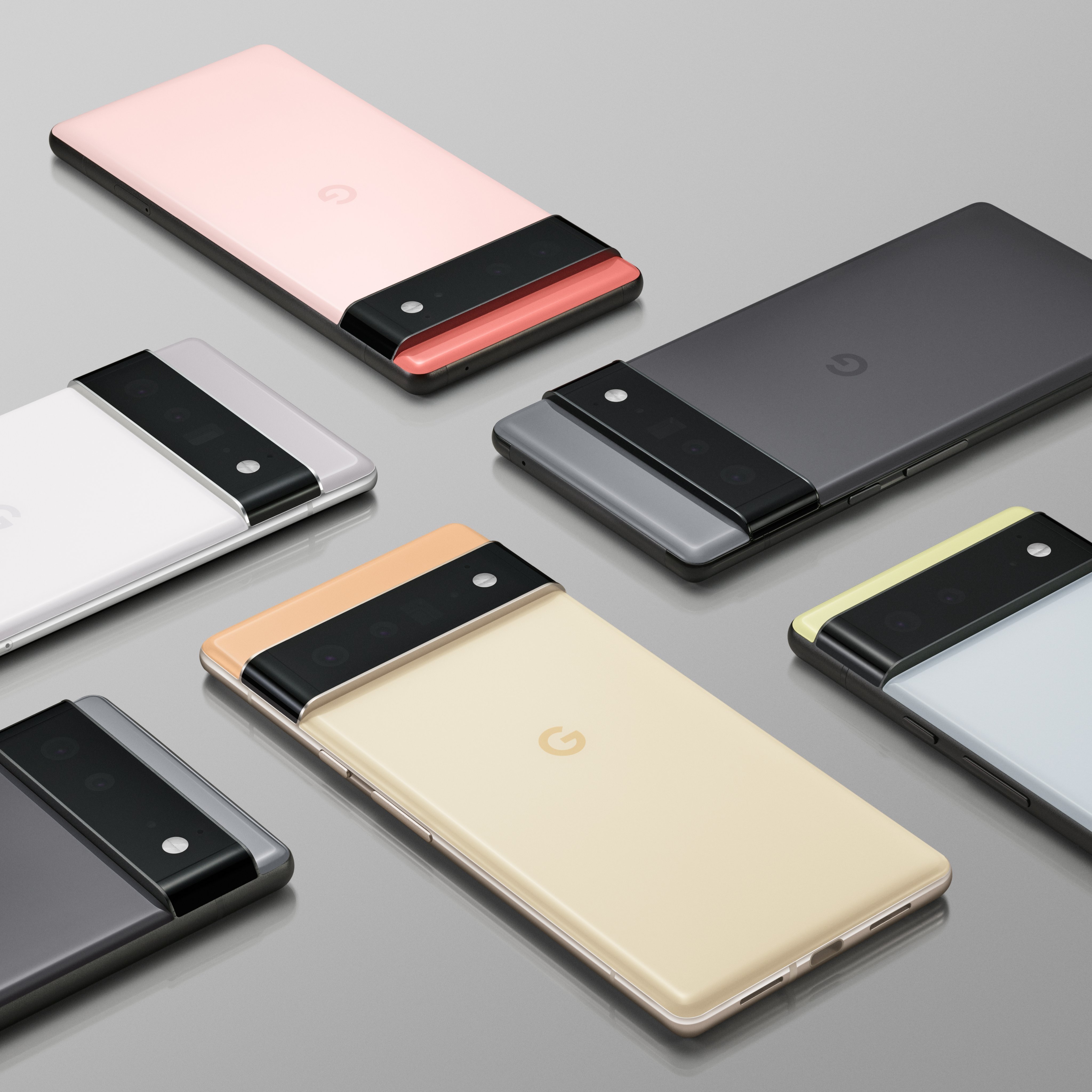
Despite the Pixel 6 series being in the news over various bugs and issues, the Google flagship lineup has seen great success in the market. Now, an official financial report from the company has revealed that the new phones have even managed to break past its previous sales records.
Pixel 6 Pro
Sundar Pichai, the CEO of Alphabet (parent company of Google), stated in the earning’s call that the Pixel 6 series has set an “all time quarterly sales record.” The senior official attributed the latest Pixel phones’ success to its new real time translation tools (Via AndroidPolice). Unfortunately, the Search Engine giant did not reveal any accurate figures and groups its hardware products along with its software as “Google Services.”
It includes Android, Chrome, Google Maps, Search, Google Play, and YouTube as well. But looking at the overall financial figures, we can clearly tell that the brand saw a notable rise, as its revenue hit 69 billion US Dollars in Q4 2021. This also marked a noticeable bump compared to the fourth and final quarter of 2020, in which the company had a revenue of 52.8 billion US Dollars. Meanwhile, profits also saw a boost, reaching 26 billion US Dollars in 2021, compared to 19 billion US Dollars from back in 2020.
With the Pixel series launching sometime between October and November, its clear great sales of the premium grade smartphones helped Google boost its revenue. However, it is still doubtful if the Pixel 6 is actually the best selling Pixel ever, considering it isn’t as widely available as its predecessors and has only been available since October 2021. But with its current pace, it might become the most popular Pixel model.
Peloton has added a new armband to its lineup of fitness devices and it offers greater comfort than the chest-based heart rate monitors. The Peloton Heart Rate Armband is priced at $90 and will be appropriate for tracking workouts using its optical heart rate sensor. It is also easier to use than the chest strap which requires precise placement and a moistened contact point.
The Peloton Heart Rate Band will be a great device for persons with mobility issues who may find it difficult or outright impossible to use chest-based heart rate monitors. It is available in the United States, Australia, Canada, Germany, and the United Kingdom, while other regions could subsequently get access to the device.
The Peloton app provides greater depth for the heart rate armband, with several functions and data analysis available via the app. The Peloton Heart Rate Band also works with other devices like treadmills, and Bike models.
Interestingly, the armband is also compatible with other products that recognize common Bluetooth heart rate monitors although there is no ANT+ support.
The price of the Peloton Heart Rate Band ($90) may be on the high side in comparison with current heart rate bands. The corresponding Peloton chest strap is priced at $49, while arm-based bands might be ineffective for some persons.
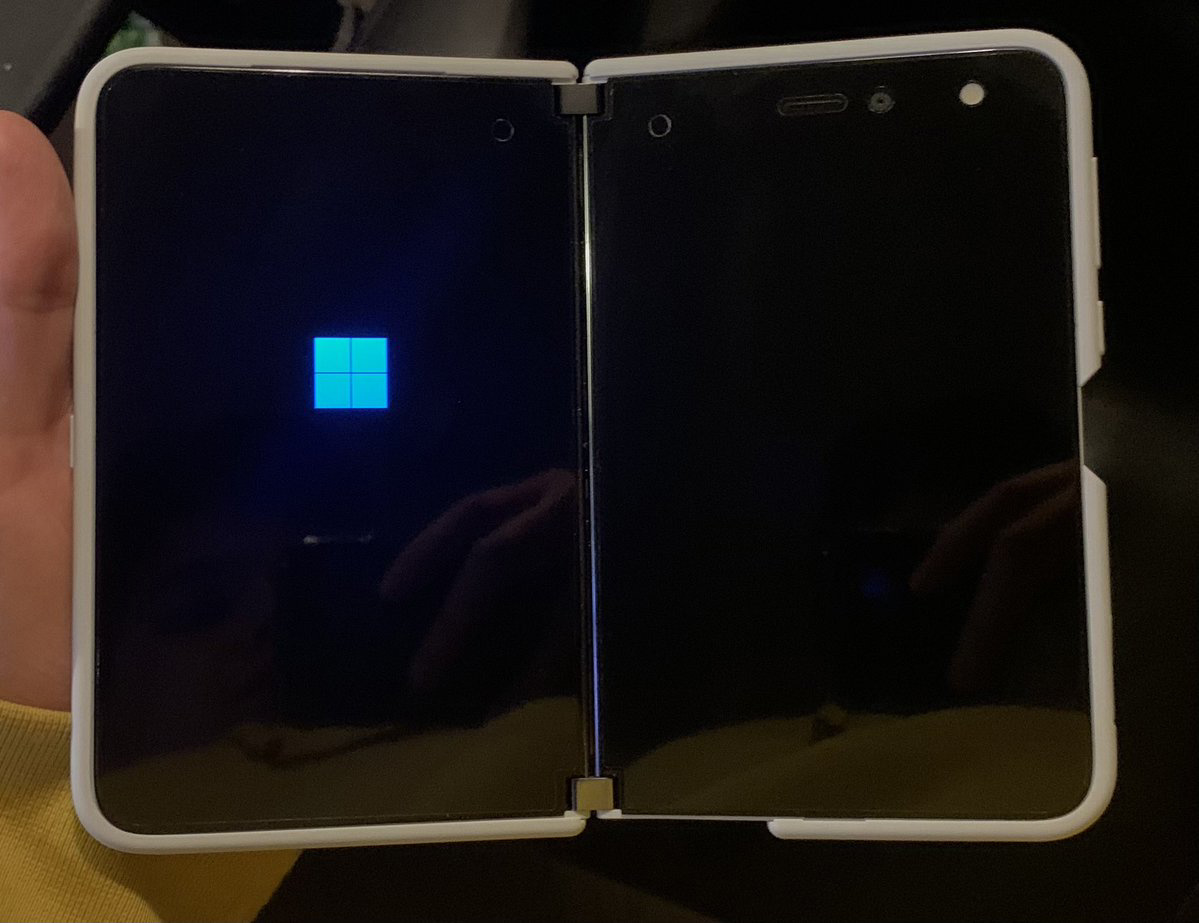
Earlier this month, we had reported on Microsoft finally bringing the Android 11 OS update to its dual display smartphone, the Surface Duo. But while the official build seems to be behind the overall mobile market, it seems that an unofficial build is up to date with the PC market.
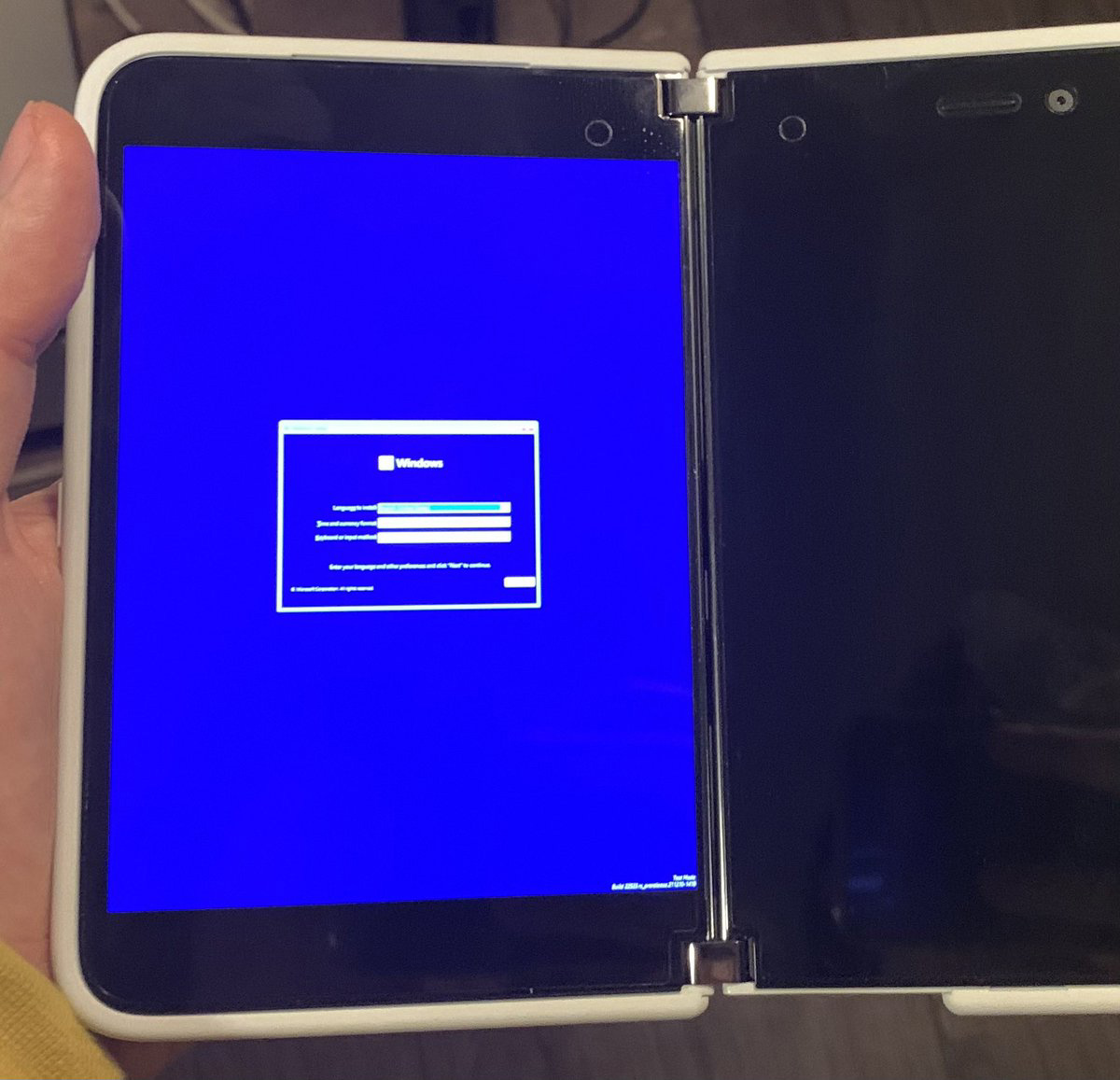
According to an ITHomereport, developer Gustave Monce of the main LumiaWoA project shared images of a Surface Duo running on Windows 11 based on the ARM64 system. Previously, Gustave had also ported Windows 10 OS on the American tech giant’s Lumia 950XL as well. Similarly, he had also managed to port Windows 11 ARM on the dual display smartphone as well.
Now, it seems that the project has seen further progress as it is running on Windows 11 ARM64 system. For those unaware, Microsoft has officially ended the support for Windows 10 mobile, so the efforts of the WoA developers have helped older Lumia models receive updates and even refresh their entire OS as well. These developers are an independent group that has been working on the unofficial Windows on ARM project for the last year years.
The project initially focused on Windows 10, but with the launch of Windows 11, they are now also working on the newer operating system as well. Gustave even shared images of the Surface Duo running Windows 11. So it is safe to assume that the project will soon grow to include other devices soon.
Apple is expected to host a new product launch event in spring, sometime in March or April where the brand could launch its new iPhone SE 3 model along with new iPad Air and at least one MacBook model with the new Apple Silicon chip.
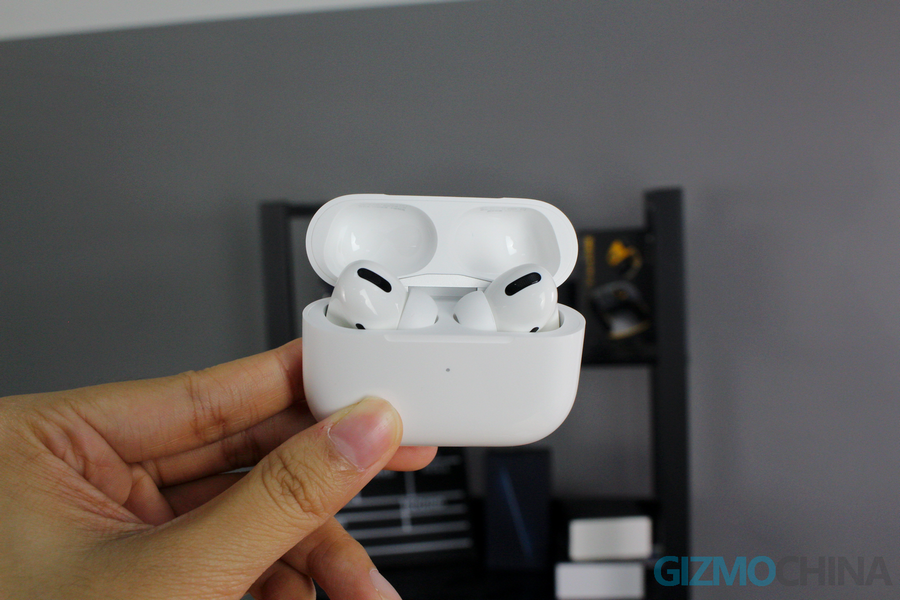
Amid all this, there are also reports related to the much-awaited Apple AirPods Pro 2 making rounds. There’s now a new report about the upcoming TWS earbuds with a feature that Samsung experimented with a few years back.
It is being claimed by Mark Gurman and Debby Wu of Bloomberg that the upcoming models of the AirPods 2 will come packed with motion sensors for the fitness tracking capabilities alongside the Apple Watch.
They are also claiming that the second-generation AirPods Pro will have a revamped design, eliminating the stems that drop below the earbuds. It is also expected to be powered by an upgraded chip that brings advanced audio-related functions like active noise cancellation and more improvements, resulting in improved battery life.
It is also being claimed that the earbuds may support Apple Lossless Audio Codec (ALAC) and if that happens, then it would be the first TWS earphones from the Cupertino-based tech giant to support lossless audio.
Another interesting development is that the charging case of the AirPods Pro 2 could have support for emitting sound. This is to help find the charging case if it’s separated from the AirPods or has been misplaced by the user.
Currently, the AirPods themselves make a noise when trying to locate them via the Find My app. Further, Kuo adds that the earphones may undergo a redesign to focus more on fitness which could include a more rounded shape.
As for the launch timeline, it is said that the AirPods 2 Pro won’t be available for purchase until Q4 2022, which means that they will go on sale for the holiday season this year, somewhere between October and December.
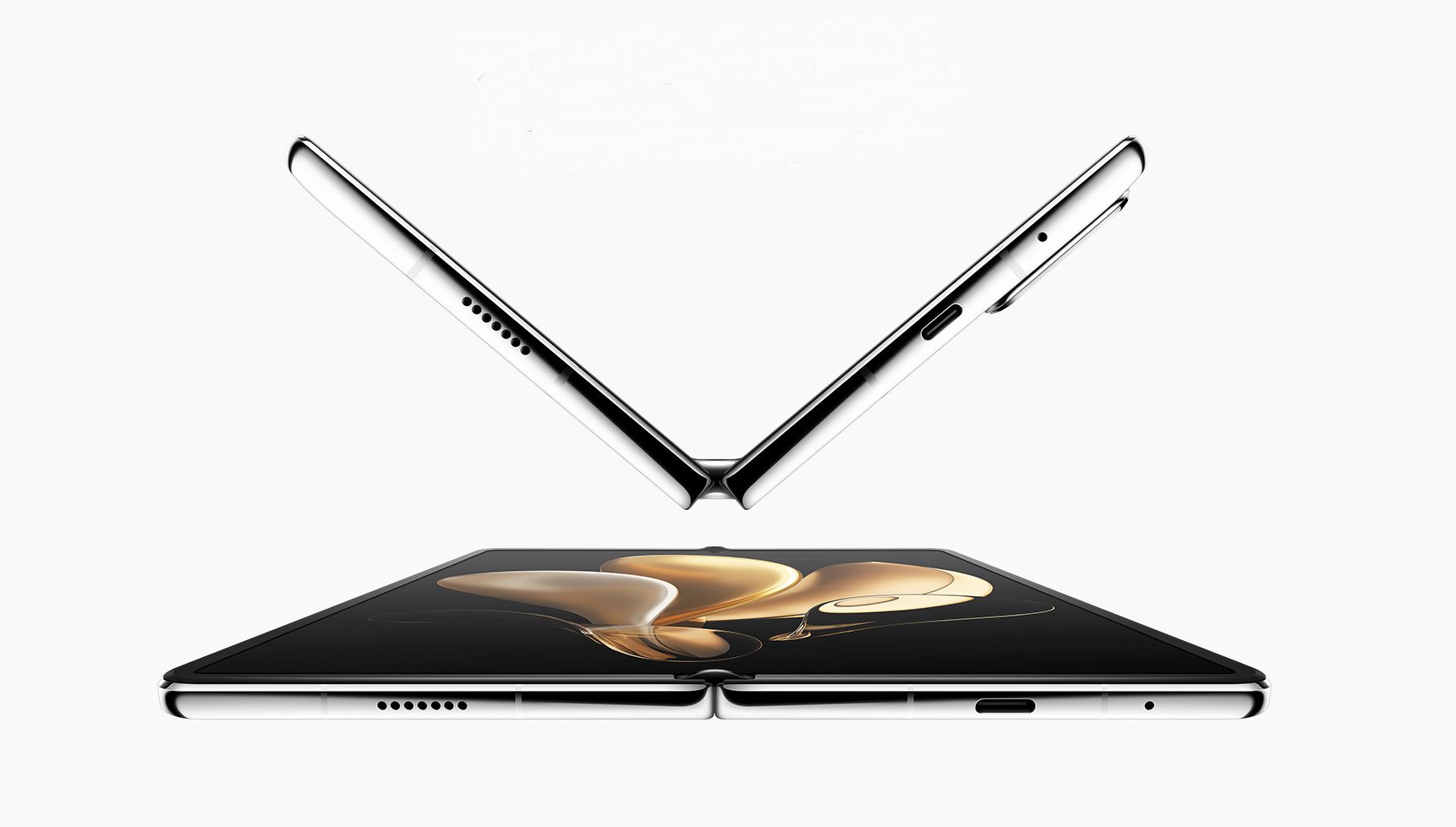
A couple of weeks ago, the Honor Magic V smartphone, which is the brand’s first foldable smartphone, went on sale in the Chinese market. The device was sold out soon after it was made available for purchase.
Now, the company has again made the device available for purchase in China. This is the second time the Honor Magic V smartphone is up for sale.
The Honor Magic V comes in configurations — 12GB RAM and 256GB internal storage which costs 9,999 yuan (~$1,572) and 12GB RAM with 512GB internal storage, which is priced at 10,999 (~$1,729). It is offered in three colors — Space Silver, Black, and Burnt Orange.
It features a 6.45-inch OLED single-curve external display with a screen resolution of 2560 x 1080 pixels, a 120Hz refresh rate, and a 21:9 aspect ratio. On the inner side, the display is a near-square in shape, offering a 90Hz refresh rate and 10:9 aspect ratio.
The display also comes with support for 10bit color depth, 100% DCI-P3 color gamut, HDR10+, 1920Hz high-frequency PWM dimming, 90 percent screen-to-body ratio, and a nano-ceramic coating on top that improves the anti-drop performance by five times.
Under the hood, the device is powered by the Qualcomm Snapdragon 8 Gen 1 chipset, which is manufactured using a 4nm process. The AI performance has been claimed to be increased by 300 percent, which helps Magic UI adapt to usage scenarios of the users through Magic Live AI Engine.
In the camera department, there’s a triple-camera setup on the back that includes a 50MP primary f/1.9 aperture sensor, a 50MP spectrally enhanced f/2.0 lens and a 50MP ultrawide sensor with f/2.2 aperture cameras. On the front side, there are dual 42MP cameras, one in the outer and one in the inner display.
The Honor Magic V is running an Android-based Magic UI 6 custom interface out-of-the-box with features dedicated to making multitasking and split-screen usage easier. The phone is powered by a 4,750mAh battery with support for 66W wired SuperCharge that is claimed to fill up the battery to 50 percent in just 15 minutes.
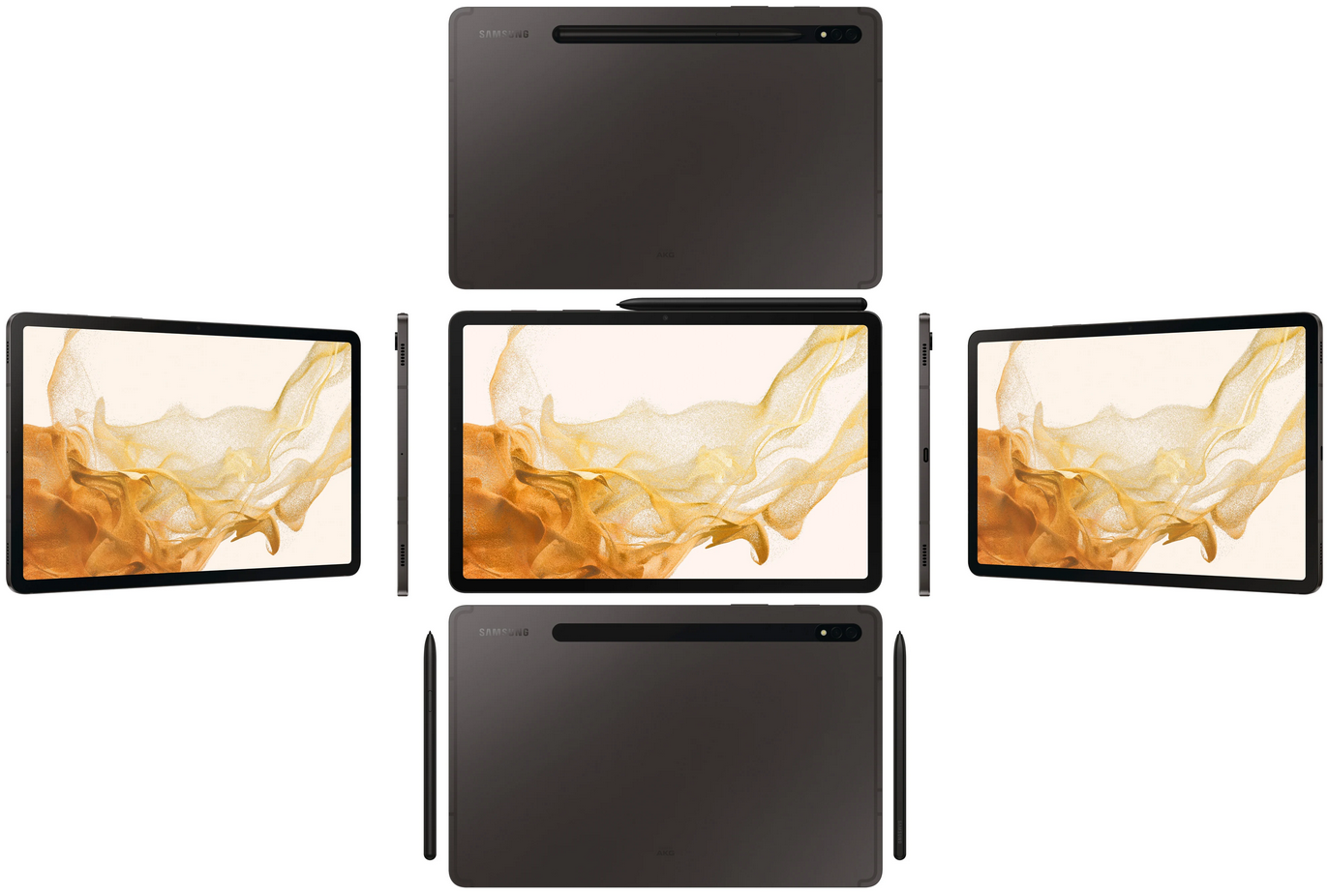
Recently, we have covered a number of reports related to the upcoming Samsung Galaxy Tab S8 series. The new tablets are expected to be unveiled in a week, but prior to their launch, pricing details for the new lineup have been revealed.
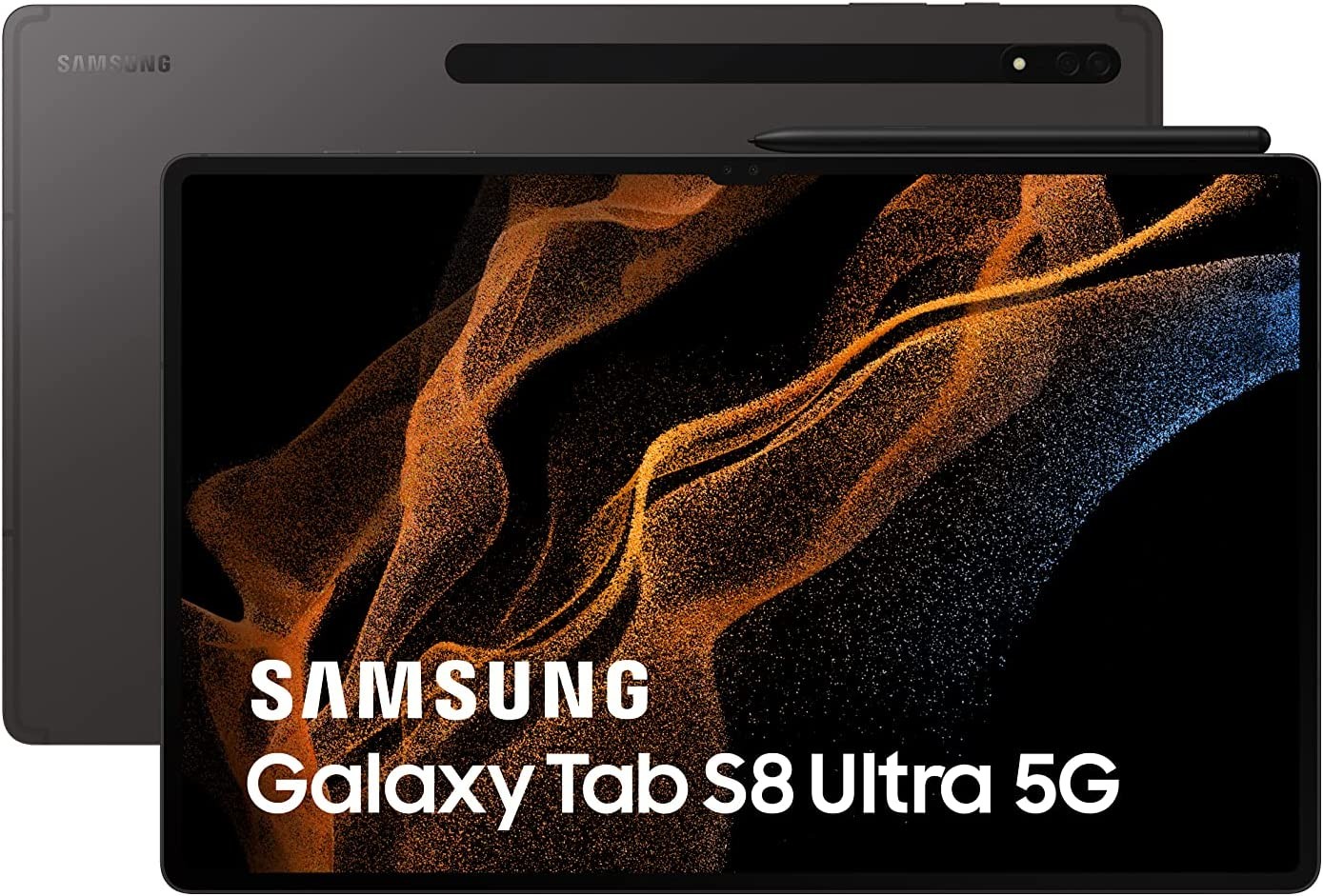
Talking about the top end model first, the Galaxy Tab S8 Ultra is currently listed for pre-orders in France (Via GSMArena) with a price tag of 1,699 EUR (roughly 1,915 US Dollars) for its most expensive version. This variant comes with 16GB of RAM and 512GB of internal storage. Furthermore, it also features Android 12, S Pen, a Qualcomm Snapdragon 8 Gen 1 chip, and a large 11,200mAh battery pack. On the front, it sports a 14.6 inch Super AMOLED panel (2960x1848px resolution) with a 120Hz refresh rate.
The tablet is listed as “in stock” but the shipments will likely begin sometime after 9th February 2022, following the Galaxy Unpacked launch event. Similar to the Ultra variant, Samsung’s Galaxy Tab S8+ is also listed for pre-orders from another French retailer, with its 8GB RAM and 128GB internal storage configuration costing 999 EUR (roughly 1,126 US Dollars). It sports a 12.4 inch Super AMOLED display (2800x1752px resolution) that also offers a 120Hz refresh rate and is powered by a 10,090mAh battery pack.
Lastly, the base Galaxy Tab S8 comes with an 11 inch LTPS TFT screen (2560x1600px resolution) that supports a 120Hz refresh rate as well and is powered by an 8,000mAh battery pack. It is listedfor a price of 970 EUR (roughly 1,100 US Dollars). We will be covering the Galaxy Unpacked launch event so stick around for more updates regarding this matter.
Yesterday, out of nowhere, details about an interesting OnePlus-branded budget smartphone emerged on the internet. The device, which is said to go official as OnePlus Nord CE 2 Lite is tipped to pack features that were never heard of on affordable OnePlus phones to date. If the leak is to be believed, the handset will likely compete with the Redmi Note 11 Pro 5G, which is already facing competition from its siblings.
Introduction
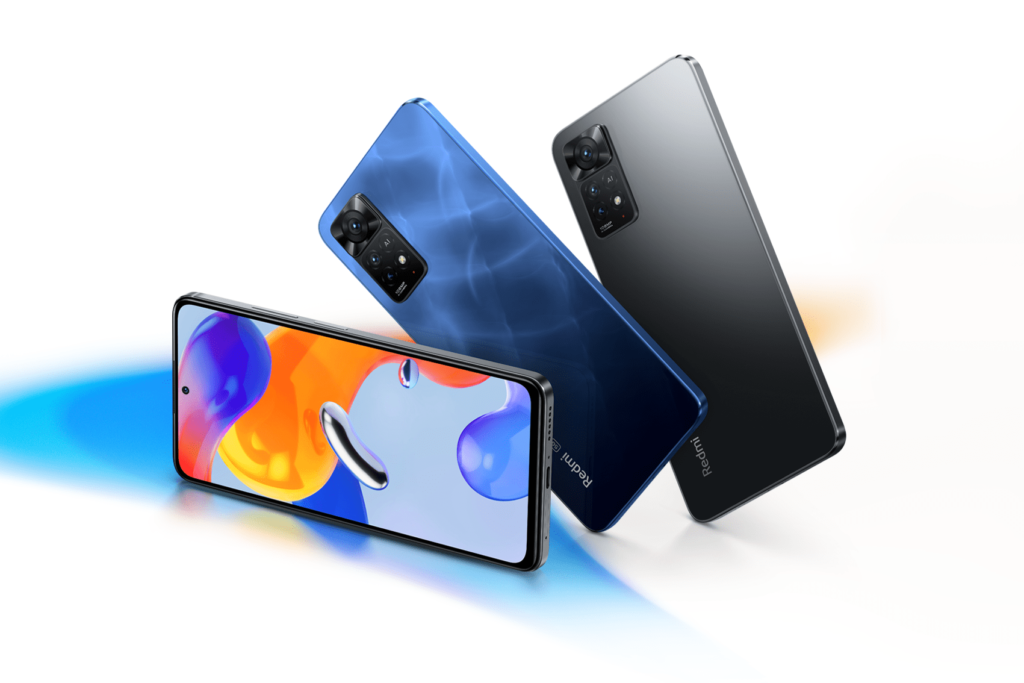
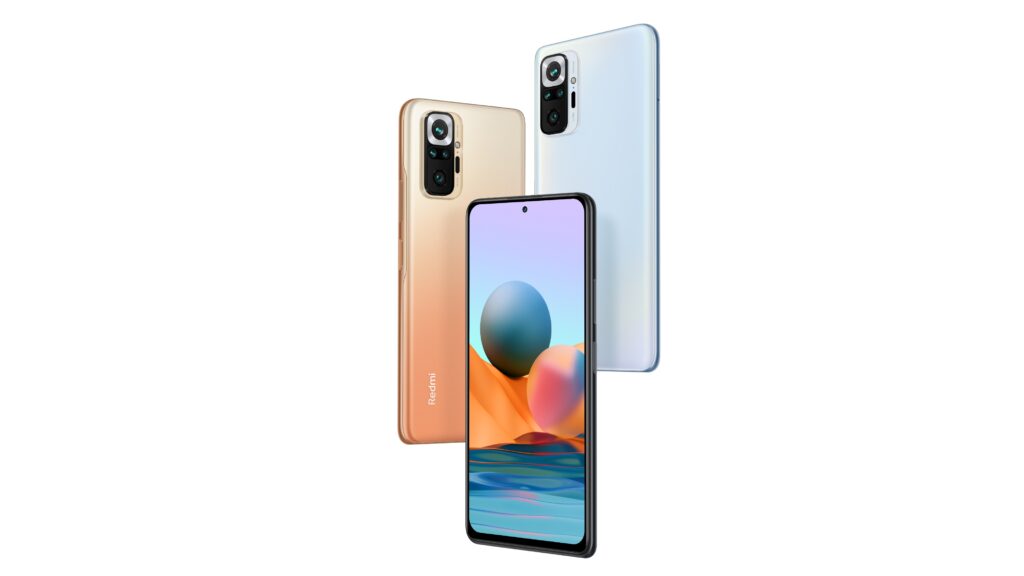
Last week, Xiaomi took the wraps off the international Redmi Note 11 series consisting of four devices. The Redmi Note 11 Pro 5G is the topmost model with all the bells and whistles, however, it is not as value for money as the Redmi Note 11S or even the last year’s Redmi Note 10 Pro (aka Redmi Note 10 Pro Max).
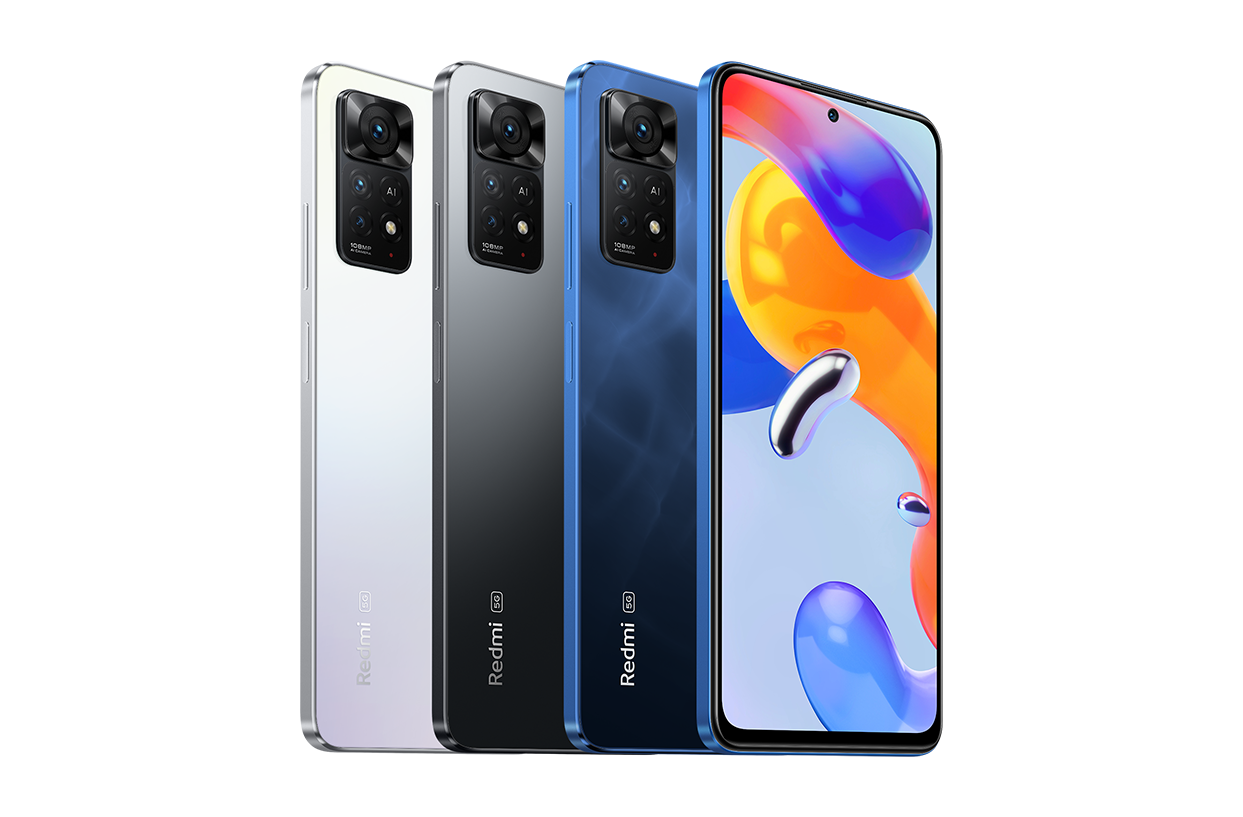
Redmi Note 11 Pro 5G
To make the situation even worse, the phone is about to get two competitors from the Oujia group (OPLUS) – Realme 9 Pro+ and OnePlus Nord CE 2 Lite.
We already know about the former, and given the features it will come with, the handset will likely be more expensive than the Redmi Note 11 Pro 5G. Hence, the proper competitor could be the OnePlus Nord CE 2 Lite instead.
OnePlus has been long rumored to release the OnePlus Nord CE 2. But no one expected a lite variant of this device, which sounds more promising for markets like India.
Redmi Note 10 Pro can still take on Redmi Note 11 Pro 5G
The Redmi Note 11 Pro 5G is not as interesting as its predecessor Redmi Note 10 Pro. Because the latter had already set the bar for budget smartphones last year. The newer handset is merely an iterative model.
Anyway, it still arrives with some upgraded features like 67W fast charging, 5G connectivity via Qualcomm Snapdragon 695 SoC, liquid cooling technology, and MIUI 13 out of the box.
Redmi Note 10 Pro
The phone also sports a flat frame design and comes in a unique colorway called Atlantic Blue that mimics water waves. But it lacks one of the best features of its forerunner – a 5MP telemacro camera with autofocus.
If you look at this smartphone discretely, it still sounds like a good deal. However, when you start comparing it with its predecessor, you may find the older handset a better deal as it is not only cheaper but offers the almost same experience.
Anyhoo, Xiaomi is known for discontinuing the older phone with the release of their successor. So it may soon become difficult to get hands on the Redmi Note 10 Pro.
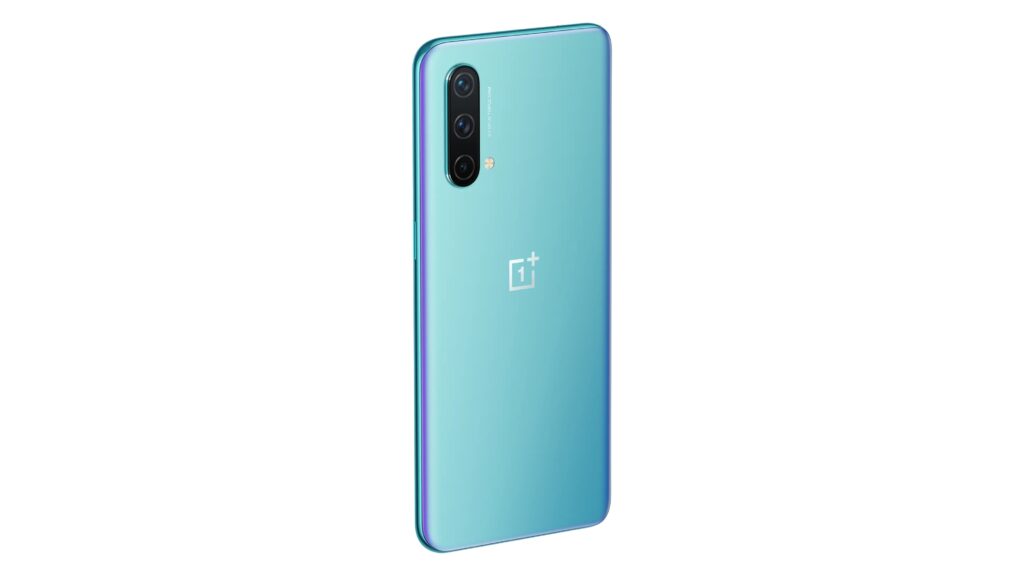
The new kid on the block – OnePlus Nord CE 2 Lite
Unlike the Redmi Note 10 Pro, the OnePlus Nord CE 2 Lite is yet to release, and therefore, it will be on the market for months to come. We believe that it will act as the true competitor of the Redmi Note 11 Pro 5G.
Because the new Nord is anticipated to arrive with some compelling features for the first time on an affordable OnePlus-branded smartphone. First and foremost, it will have the same Qualcomm Snapdragon 695 chipset as the Redmi device.
Further, it will ship with Android 12-based OxygenOS 12 instead of MIUI 13 based on Android 11 like the Redmi. However, though it will have an identical 5,000mAh battery, it will only support 33W fast charging.
OnePlus Nord CE
Another con is that there will be no ultra-wide camera on the OnePlus. It will feature a 64MP triple camera setup comprising two useless 2MP sensors and a 16MP selfie camera.
Finally, it will sport a 6.59-inch ‘fluid’ (high refresh rate) display with an FHD resolution. The type of panel is a mystery for now. Hence, we cannot rule out the possibility of LCD though the vanilla OnePlus Nord CE 2 is said to come with an AMOLED screen.
When you compare the raw specs of the Redmi Note 11 Pro and the OnePlus Nord 2 CE, the former is definitely better. But there’s more to a product than its specifications.
Brand power plays a key role
Unlike Redmi, OnePlus is considered a reputed brand by the general public in most markets. Because the former is still associated with affordable smartphones. On the other hand, the latter started its journey as a flagship killer and made a name for itself in the premium segment, especially in India.
And above all, OnePlus’ marketing prowess is much better than Xiaomi. This has helped OnePlus to increase its market share with mid-range Nord handsets even though there are phones with better specs in the same price bracket.
Contemplating all these facts, we think that the OnePlus Nord CE 2 Lite will be the true competitor of the Redmi Note 11 Pro 5G whenever it releases.
Having said that, this is just an opinion from our end. What are your thoughts on these two devices? Do let us know in the comment section below.
Update: A tipster has revealed that the device could be equipped with the Dimensity 810 chipset. To recollect, the Realme 8 5G featured the Dimensity 700 SoC.
Looks like RMX3388 which was recently spotted on FCC filings is realme 9 5G… and it's coming with Mediatek Dimensity 810 chipset(as can be seen in last pic).
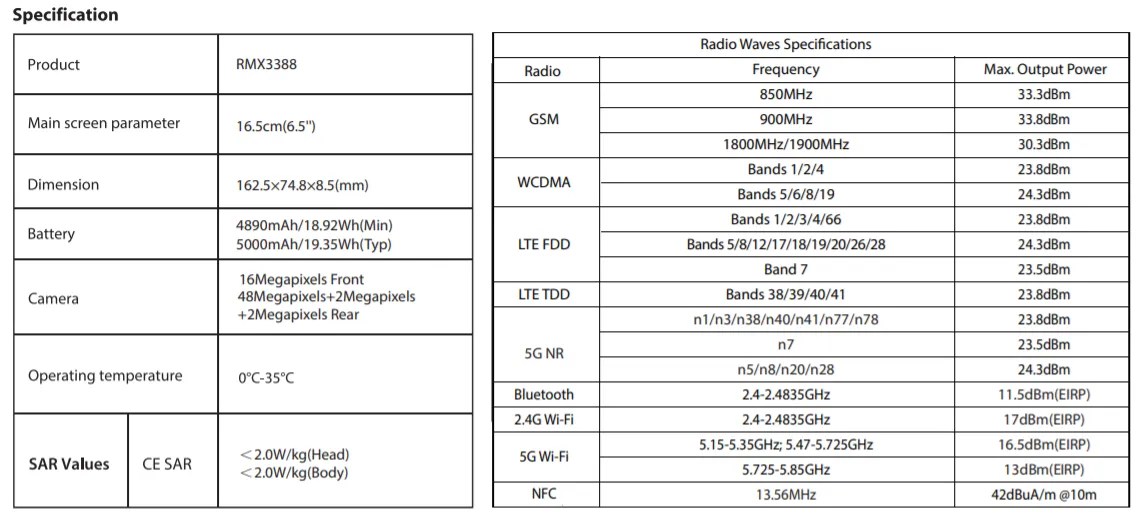
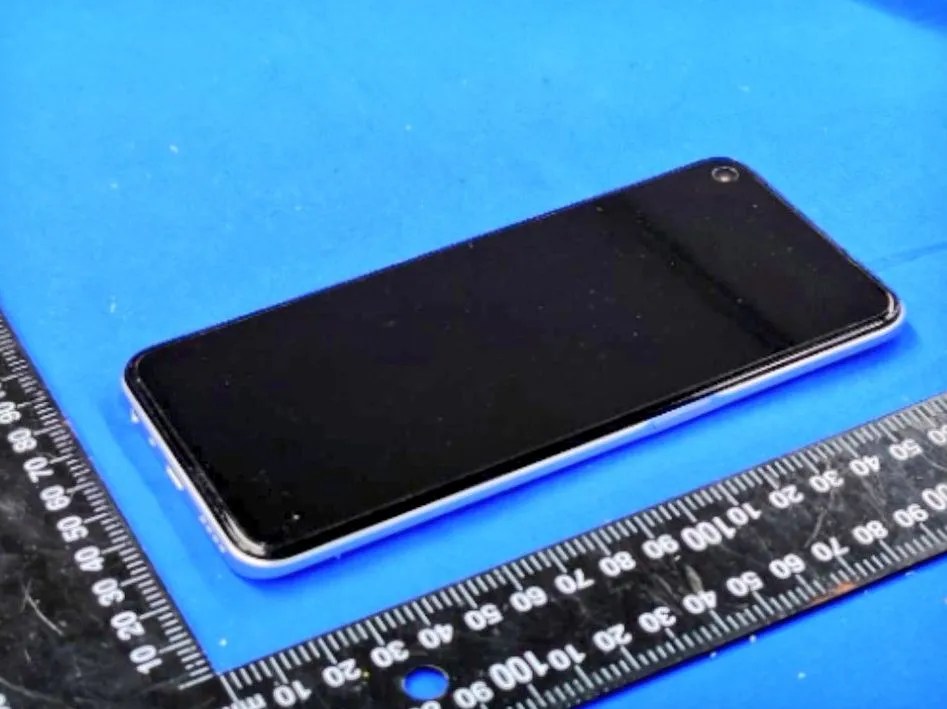
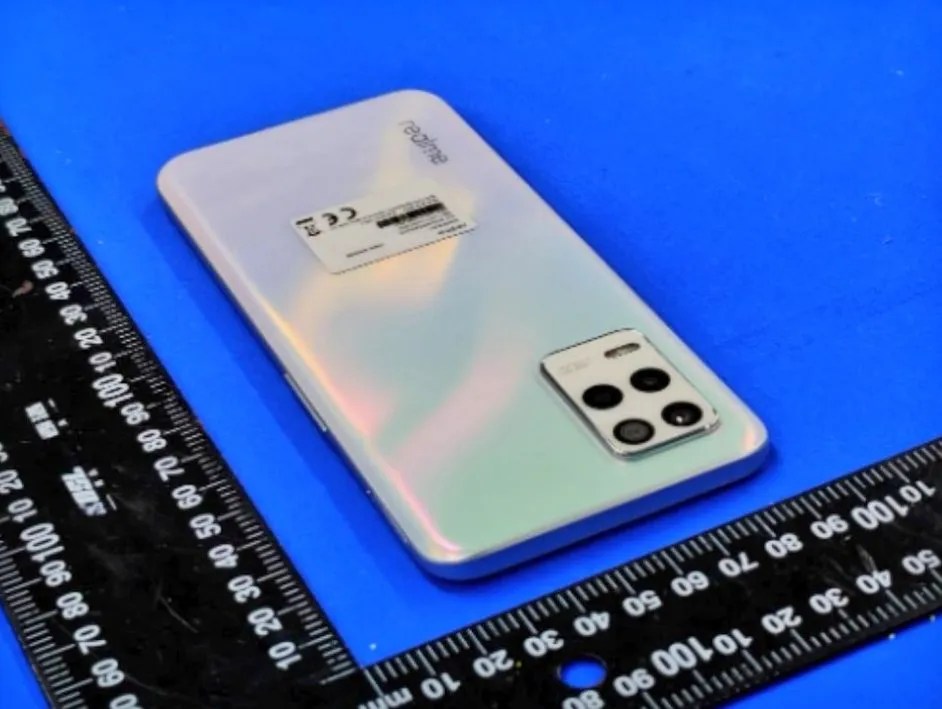
The Realme phone with RMX3388 model number that has been certified by BIS, EEC, and FCC certification sites is believed to debut as the Realme 9 5G in different markets. The images of the phone that appeared through the FCC certification revealed it could be almost identical to the Realme 8 5G from last year. The user manual of the phone (via) had also appeared in the FCC documents. It appears that it went unnoticed by most publications that reported about its FCC certification.
Alleged Realme 9 5G specifications
The user manual of the Realme RMX3388 shows that the device has 162.5 x 74.8 x 8.5mm dimensions. It features a 6.5-inch punch-hole display and it is backed by a 5,000mAh battery.
1 of 3
Realme-RMX3388
Realme-RMX3388
Realme-RMX3388
The front side of the RMX3388 has a 16-megapixel camera. Its rear-facing camera unit has a 48-megapixel main camera and a pair of 2-megapixel lenses. The RMX3388 supports n1, n3, n5, n7, n8, n20, n28, n38, n40, n41, n77, and n78 5G bands, dual-band Wi-Fi, Bluetooth, and NFC. The rest of the specs of the RMX3388 are under the wraps.
Shown above are some of the images of the Realme RMX3388 that were spotted in the FCC documents. The images have revealed that it is equipped with a side-facing fingerprint scanner, a 3.5mm audio jack, and a USB-C port. The FCC certification has also revealed that it may ship with an 18W charger.
The above-mentioned specs and design of the Realme RMX3388 resemble with last year’s Realme 8 5G which has an RMX3241 model number. Here’s what the FCC document say about the RMX3388, “Except the model name, and FCC ID number change, the EUT [equipment under testing] are electronically/ electrically identical to the original equipment (probably RMX3241) and that the original test results continue to be representative of and applicable to it.”
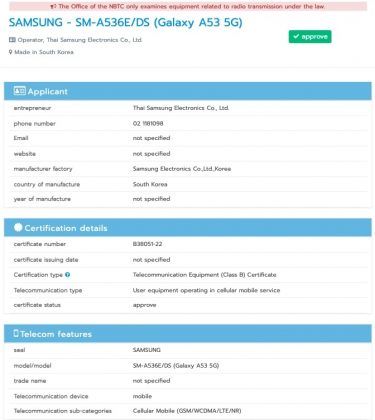
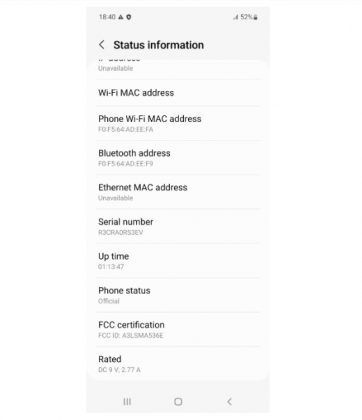
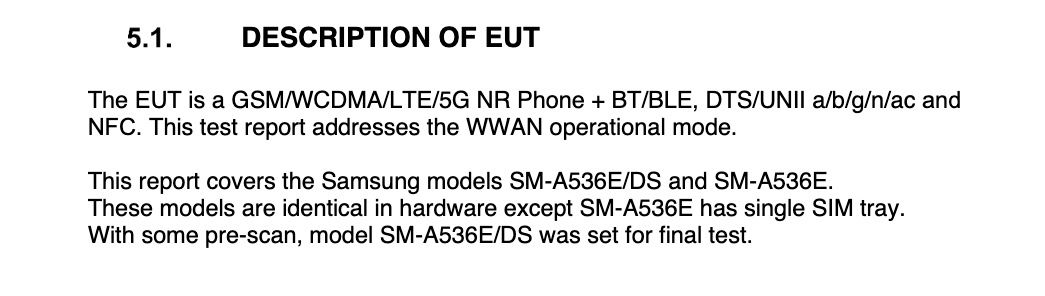
Samsung will be launching the Galaxy S22 series of flagship phones in the coming week. Reports have claimed a couple of new A-series of smartphones such as Galaxy A73, Galaxy A53, and Galaxy A53 are likely to go official by the end of this month or in March in multiple markets. Ahead of the expected launch, the Galaxy A53 has now been spotted at NBTC and FCC certification platforms (via).
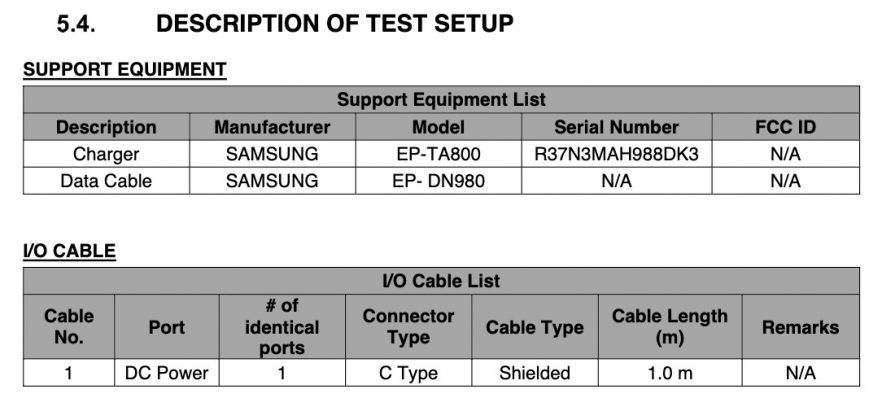
The Samsung Galaxy A53 5G with SM-A536E/DS (dual SIM) model number has been spotted at the NBTC certification site. The SM-A536E/DS and SM-A536E (single SIM) variants have appeared at FCC. The FCC listing reveals that the device may ship with a 25W charger. It also reveals that the device is equipped with connectivity features such as 5G, Wi-Fi 802.11ac, Bluetooth, and NFC.
1 of 4
Galaxy-A53-5G-NBTC-375x420
Galaxy-A53-5G-FCC-Label-362x420
Galaxy-A53-5G-FCC
Galaxy-A53-5G-FCC-Charger-882x420
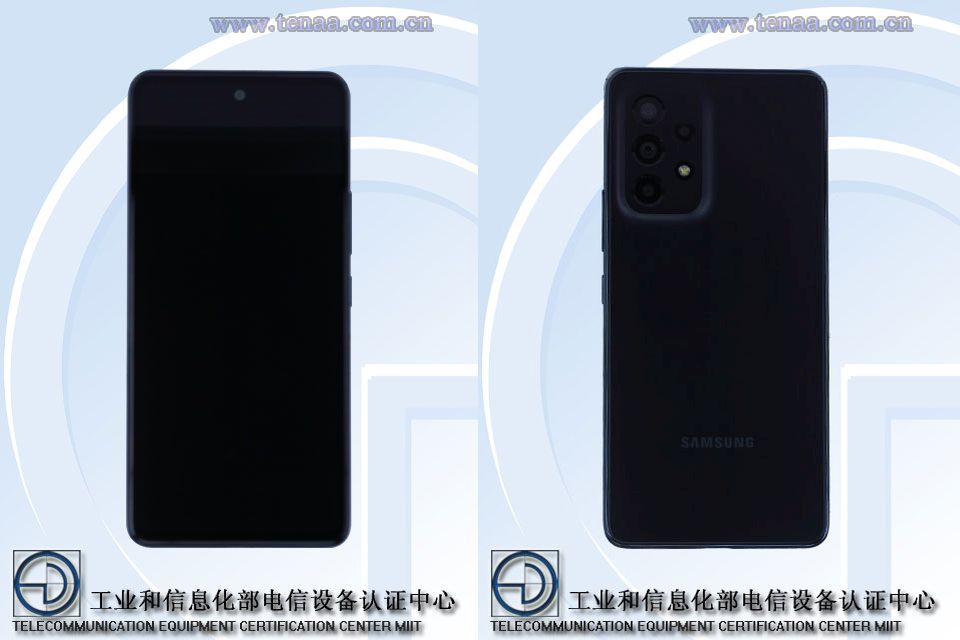
The Galaxy A53 5G was spotted at the Bluetooth SIG certification last week. The handset was spotted at China’s TENAA certification last month through which its entire specifications were revealed.
Samsung Galaxy A53 5G specifications (rumored)
The Galaxy A53 5G has a 6.46-inch AMOLED display that offers a Full HD+ resolution. Probably, it carries support for a high refresh rate. It is speculated to be equipped with the Exynos 1200 chipset. The handset appeared with 8 GB of RAM and 128 GB / 256 GB storage in TENAA’s database.
Samsung Galxay A53 5G TENAA listing
The device seems to house a 5,000mAh battery. Probably, it will carry support for 25W fast charging. It Is likely to run on Android 12 OS and the latest One UI 4.x. For selfies, it may feature a front camera of 32-megapixel and a 64-megapixel + 12-megapixel + 5-megapixel + 5-megapixel quad-camera unit.
The handset is speculated to arrive in configurations such as 6 GB RAM + 128 GB storage and 6 GB RAM + 256 GB storage in some markets. It will come in four colors such as black, white, blue, and orange.
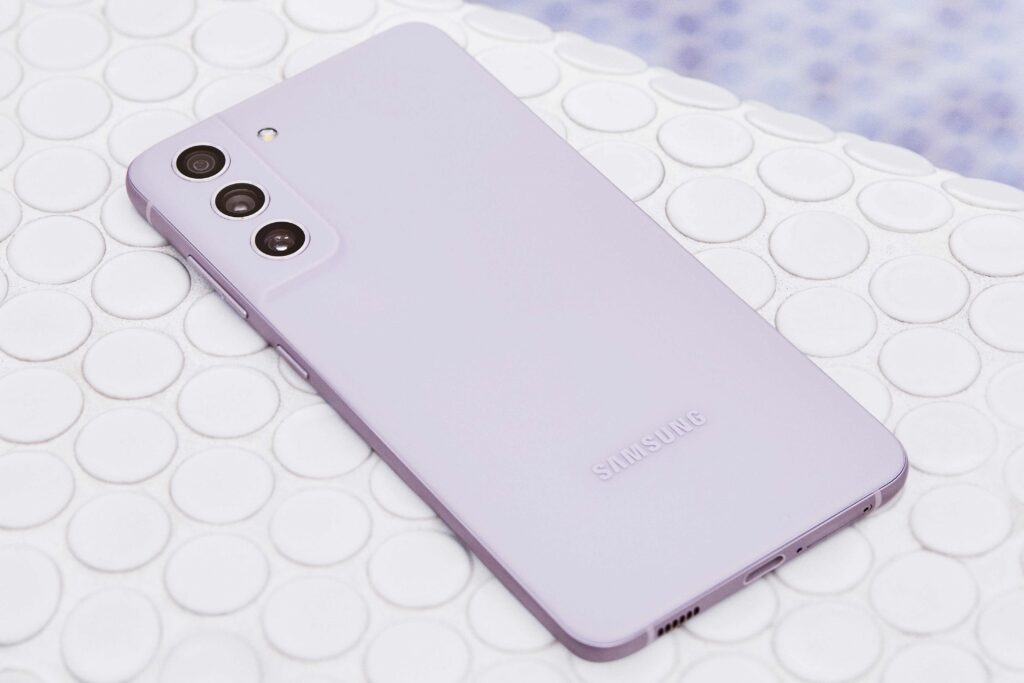
Samsung launched the Galaxy S21 FE last month. The smartphone debuted at $699.99 in the US. Within a few days from its release, the handset is already discounted in the country. Let’s check out how much it costs now in the region.
Samsung Galaxy S21 FE
According to XDA Developers, Amazon is offering a $100 discount on the base variant of the Galaxy S21 FE with 6GB RAM and 128GB storage. Hence, its price comes down to $599.99.
With the new price tag, the successor of Galaxy S0 FE now competes directly with the Pixel 6 (8GB + 128GB) as it also costs the same. However, the latest value for money flagship smartphone from Google is currently unavailable on Amazon.
It is worth noting that the $100 discount offered by Amazon is also applicable to the higher 8GB + 256G variant of Galaxy S21 FE. Therefore, it now costs $669.99 instead of $769.99.
Having said that, it is not known how long this deal will be on the offer. Hence, make use of it while you can. The phone can be availed in all four standard colors, namely Graphite, White, Lavender, and Olive.
Since the Navy colorway is exclusive to Best Buy, it’s being sold at the original price. However, buyers get a $200 discount if they upgrade their existing line or add a new line with their carrier.
Smartphone shipments in the Indian market have witnessed a growth of 11 percent year-on-year in the year 2021, despite several issues hitting the smartphone industry, ranging from a shortage of components to supply chain disruption.
The latest report from Counterpoint Research adds that the country saw shipments of 169 million units in 2021. However, the shipments in the fourth quarter (i.e. Q4 2021) witnessed a decline of 8 percent.
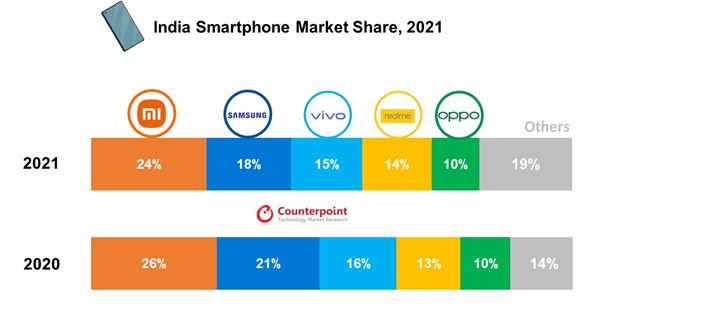
Chinese brand Xiaomi managed to retain its position at the top, covering a 24 percent market share. Unlike previous years, the company’s growth was quite limited to just 2 percent year-on-year.
The good news for Xioami is that the company managed to get more share in the premium segment this time, witnessing a massive growth of 258 percent. It’s noteworthy that the report considers devices priced above ₹30,000 as premium phones.
South Korean giant Samsung came in second with a market share of 18 percent while Vivo took the third spot as the company managed to capture about 15 percent of the market share, followed by Vivo’s sister companies Realme and OPPO with 14 percent and 10 percent market share respectively.
Talking about the 5G smartphones, Samsung emerges as the leading brand in the Indian market in Q4 2021. The South Korean giant also led in the mid-range segment with a 28 percent market share. The brand also managed to grow its share by triple digits in the foldable smartphones category.
Apple emerged as the fastest-growing smartphone brand in 2021 with 108 percent year-on-year growth. It led the premium segment in India with a massive 44 percent market share and the brand is now getting aggressive in the country, which could further help cement its position in the premium category.
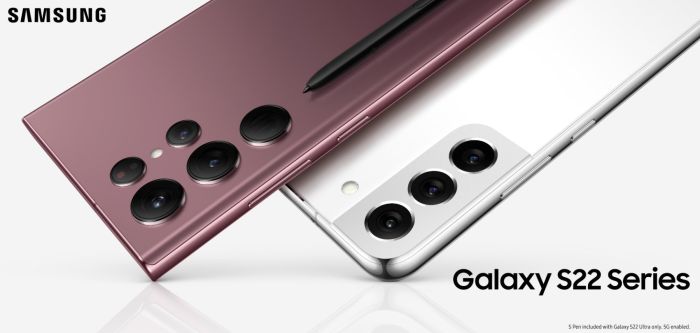
Samsung’s upcoming Galaxy S22-series flagship smartphones have been leaked numerous times and with just a few days more for the official launch, some key details about the lineup are now surfacing online.
In a new leak, the pricing details for the upcoming Samsung Galaxy S22 series flagship smartphones for the United States market have surfaced.
Samsung Galaxy S22 series
The new report coming from Jon Prosser of Front Page Tech reveals that the Samsung Galaxy S22 will have a starting price of $799 while the Galaxy S22 Plus will start at $999. The top-end model in the lineup, the Galaxy S22 Ultra, will reportedly carry a starting price of $1,199 in the United States.
This newly leaked pricing is essentially in line with the pricing of the last year’s Galaxy S21 series smartphones. It also contradicts previous reports about Samsung slightly increasing pricing of the upcoming phones.
If this turns out to be true, then it seems like a good move from the South Korean giant as it faces a lot of competition in the premium smartphone market from the likes of the Apple iPhone 13 series and the Google Pixel 6 series.
In the Asian market, Samsung will be competing against the likes of the Xiaomi 12 series of flagship smartphones, along with the likes of the OnePlus 10 Pro and premium devices coming from brands like Realme and OPPO, among others.
Apart from the pricing leak, some details about the phone’s availability have also surfaced online. It is said that after being available for pre-order from 9th February, the S22 Ultra will start shipping from 25th February while the S22 and S22 Plus will go on sale a bit later, around 11th March.
To know for sure what the South Korean giant has planned for the next-generation Galaxy S-series lineup, we will have to wait for the official Galaxy Unpacked launch event, which is scheduled for 9th February.
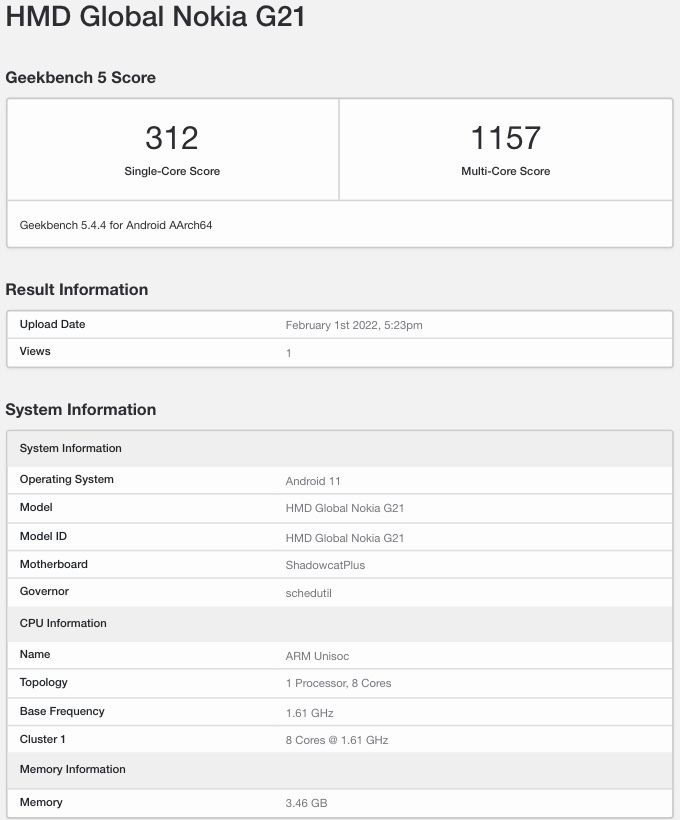
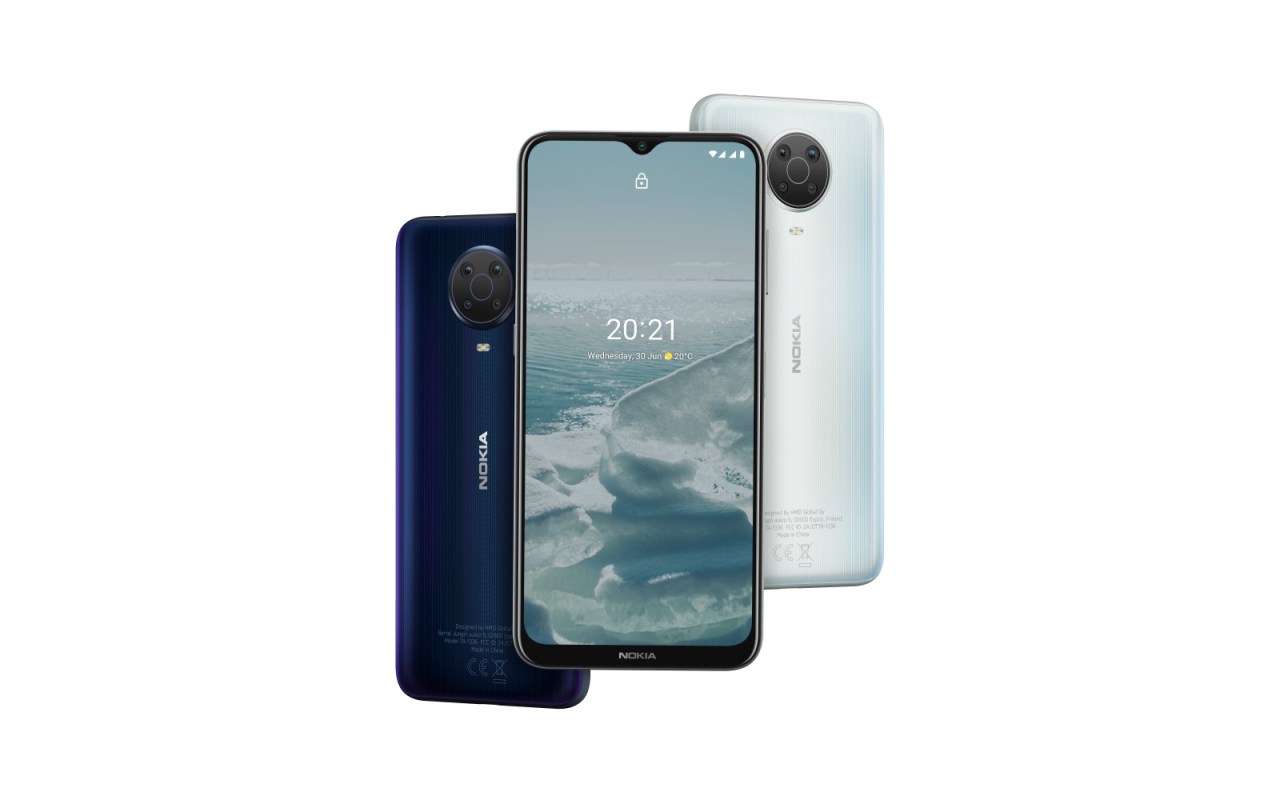
Nokia is reportedly working on the Nokia G21 smartphone. As the name goes, the device will be succeeding the Nokia G20 from last year. The device has paid a visit to Geekbench benchmarking site (via) through which its key details have been revealed.
The Nokia G21 Geekbench listing reveals that it is powered by a Unisoc processor that offers a base frequency of 1.61GHz. This indicates that the device could be powered by the Unisoc T606 chipset. The SoC is accompanied by 4 GB of RAM, and it runs on Android 11. It has scored 312 and 1157 points in the single-core and multi-core tests of Geekbench, respectively.
Nokia G21 specifications (rumored)
Reports have revealed that the Nokia G21 will be sporting an IPS LCD panel of 6.5 inches. The images of the phone that have appeared through its FCC certification revealed that it will be equipped with a teardrop notch display. The screen is expected to carry support for an HD+ resolution and a 20:9 aspect ratio.
Nokia G20
For selfies and video calls, it may feature an 8-megapixel selfie camera. The rear camera system of the phone may feature a 50-megapixel primary camera and a pair of 2-megapixel lenses. The device will be packed with a 5,000mAh battery with 18W fast charging support.
The Nokia G21 is likely to arrive with up to 4 GB of RAM and up to 128 GB of built-in storage. Like other Nokia phones, it will run on the stock version of Android. There is no word on the pricing of the device. A recent leak claimed that the device may go official as early as this month in India. The G21 may come in colors like black and dusk.
HMD Global, the company behind the Nokia smartphones, has announced new protection plans and extended warranty for its devices. With this move, the Finnish company is offering an option for those customers who are concerned about their device’s longevity.
The newly introduced extended warry for the Nokia smartphones is priced at $10 in the United States and offers an additional 12 months of warranty following the device’s original warranty period, covering mechanical and electrical failures.
The company has also introduced protection plans, which are useful for those customers whose smartphones are prone to accidental or liquid damage. HMD Global has introduced two different protection plans.
While one plan is for the 14-month duration, the other plan is offering protection for 24 months. As for the pricing, the cost of these new protection plans for the Nokia smartphones starts at $19.
As for the coverage for the protection plan, the company lists out the following:
Damage due to negligence, gross misconduct, or normal wear and tear
Cosmetic damages (dent on outer body damage, stripping of color, scratches, etc.)
Software issues beyond the Manufacturer’s Limited Warranty, malware, and damages to accessories
Theft or loss of the device
Damage or loss of insured equipment following a fire.
Interestingly, the protection plan also comes with an extended warranty for the device, which usually costs $10. The newly announced services from the company are only available for the new Nokia devices and the service must be activated within 30 days of purchase for protection plans and within 90 days for an extended warranty.
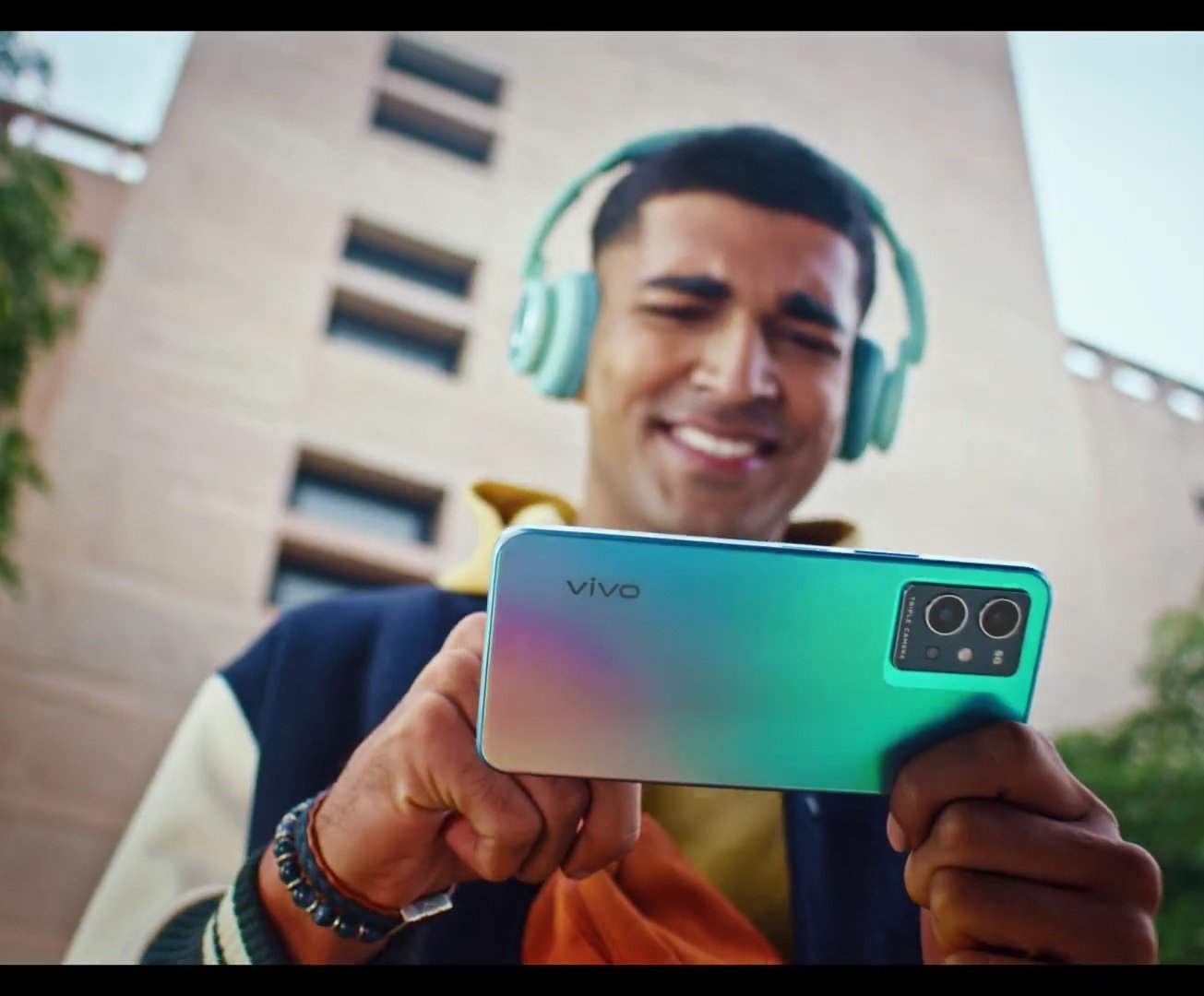
Vivo T1 5G is all set to debut on Feb. 9 in India. Vivo has released a teaser video of the T1 to showcase its key features and design from all angles.
The Vivo T1 5G promo video has revealed that it will be sporting a teardrop notch display. The side bezels and the chin of the device are quite thin. The gradient-coloured rear shell of the device has a triple camera unit with an LED flash.
1 of 2
Vivo T1 5G teaser display
Vivo T1 5G teaser rear
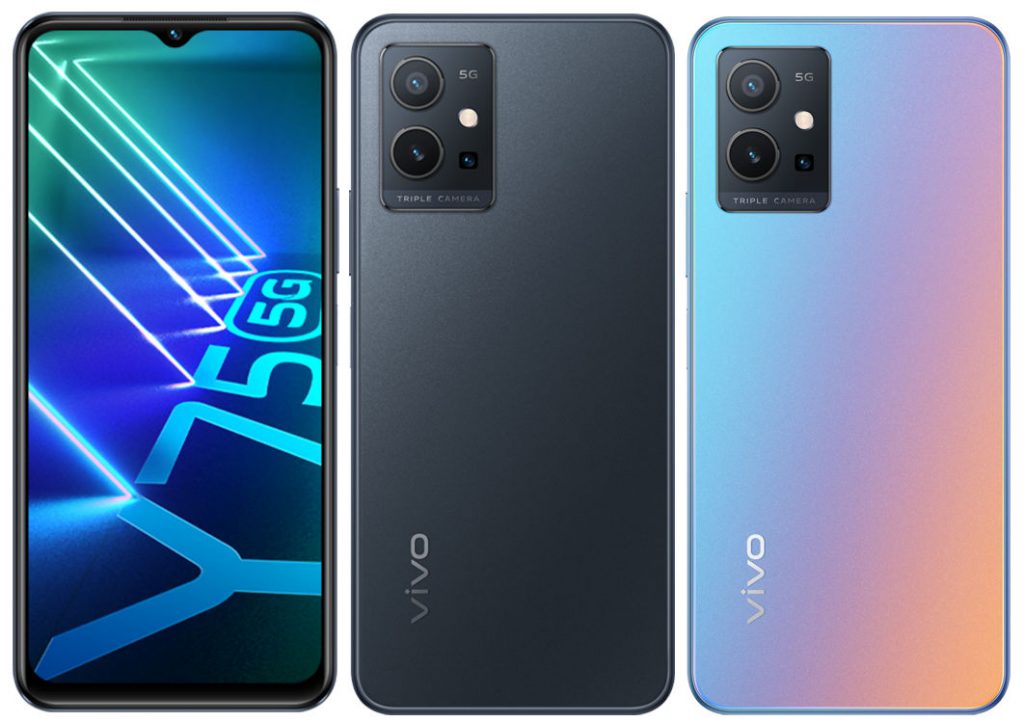
The device seems to feature a side-facing fingerprint scanner. its bottom edge features a 3.5mm audio jack, a USB-C, a microphone, and a speaker grille. The appearance of the device is similar to the Vivo Y75 5G, which debuted in the previous week in India.
The specs of the T1 are not known yet. However, a recent report revealed that it will be driven by the Snapdragon 695 mobile platform. The T1 will be arriving with a sub-Rs 20,000 (~$268). With an AnTuTu score of 400K+, it is likely to be the fastest smartphone in its price segment. There is a possibility that the T1 may borrow most of its specs from the Y75, which was introduced with a pricing of Rs 21,990 (~$294).
Vivo Y75 5G
The Y75 has a 6.58-inch IPS LCD FHD+ 60Hz display, Dimensity 700 chipset, 8 GB of RAM, 128 GB of storage, and a 5,000mAh battery with 18W charging. It has a 16-megapixel front camera, and a 50-megapixel (main) + 2-megapixel (depth) + 2-megapixel (macro) triple camera unit. The device offers other features like Android 11 and a side-facing fingerprint scanner.
As it is known, the upcoming T-series phones from the brand will be available for purchase exclusively through online channels. The T1 will be sold through Flipkart.
A Xiaomi handset with a 2201116PG model number has been spotted a couple of times. This model was recently spotted at a Malaysian certification site and at FCC. Its Indian variant has been spotted 2201116PI model number. DealnTechhas come across the TDRA certification database listing of the device. The listing reveals that the device may launch with the POCO X4 Pro 5G moniker.
POCO X4 Pro 5G TDRA listing
The 2201116PG (global edition) and 2201116PI (Indian edition) models were spotted first at the IMEI database back in November 2021. At that time, it was speculated that these models may debut as a POCO X4 series handset.
Let’s talk about the Redmi Note 11 Pro 5G which debuted in global markets to know what to expect from 2201116PG/I POCO smartphone. It is known that the Redmi Note 11 Pro 5G has 2201116SG and 2201116SR model numbers. The 2201116SC and 2201116SI are the respective model numbers of its Chinese and Indian variants. However, their monikers for Chinese and Indian markets are not known yet.
Redmi Note 11 Pro 5G global edition
It was reported by Xiaomiui back in December 2021 that the 2201116PI / 2201116PG POCO phones will be identical to the Redmi Note 11 Pro 5G. It can be now said based on TDRA listing that the 2201116PG could be heading to global markets with the POCO X4 Pro 5G name.
POCO X4 Pro 5G specifications (rumored)
The POCO X4 Pro 5G is likely to feature a 6.67-inch AMOLED FHD+ 120Hz display, Snapdragon 695 chipset, up to 8 GB of LPDDR4x RAM, up to 128 GB of UFS 2.1 storage, Android 11 with MIUI 13, and a 5,000mAh battery that supports 67W fast charging. It has a 16-megapixel front camera, a 108-megapixel (main) + 8-megapixel (ultrawide) + 2-megapixel (macro) triple camera unit, side-facing fingerprint scanner, and stereo speakers.
What’s confusing is that the 220111P6G was recently spotted with the POCO X4 5G moniker at Malaysia’s SIRIM certification site. Hence, it is advisable to wait for more reports to know the final marketing name of the 220111P6G. Nevertheless, the handset is expected to launch as early as this month in global and Indian markets.
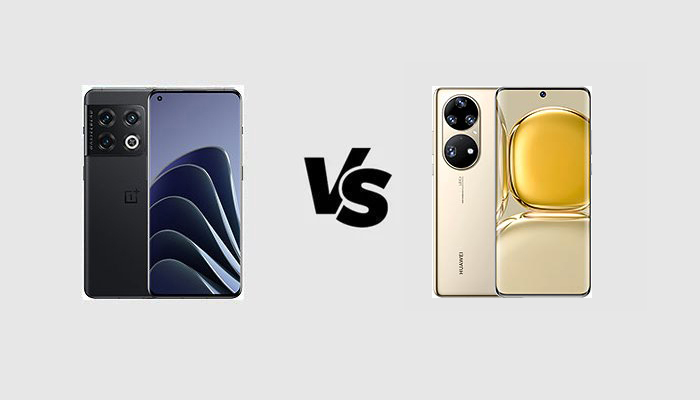
A lot of people probably did not expect it, but Huawei came back to the European market with two new flagships: the Huawei P50 Pro and the foldable P50 Pocket. The prohibition to use Google Mobile Services and 5G components did not prevent Huawei from launching another generation of flagships in the Old Continent; the Huawei P50 Pro is the most advanced one in terms of specifications and it has nothing to envy to the most expensive flagships out there, if we exclude the 5G connectivity. That is the reason why we decided to compare it to the most powerful Chinese flagship released in 2022 until now: the OnePlus 10 Pro. Here you will find the main differences between these handsets as well as their pros and cons.
OnePlus 10 Pro vs Huawei P50 Pro
OnePlus 10 Pro
Huawei P50 Pro
DIMENSIONS AND WEIGHT
163 x 73.9 x 8.6 mm,
200.5 g
158.8 x 72.8 x 8.5 mm,
195 g
DISPLAY
6.7 inches, 1440 x 3216 pixels (Quad HD+), AMOLED
6.6 inches, 1228 x 2700 pixels (Full HD+), OLED
PROCESSOR
Qualcomm Snapdragon 8 Gen 1, octa-core 3 GHz
Huawei Hisilicon Kirin 9000, octa-core 3.13 GHz or Qualcomm Snapdragon 888, octa-core 2.84 GHz
5000 mAh, fast charging 80W, fast wireless charging 50W
4360 mAh, Fast Charging 66W, fast wireless charging 50W
ADDITIONAL FEATURES
5G, dual SIM, reverse wireless charging
Optional dual SIM, IP68 waterproof
Design
With its circular camera modules, the Huawei P50 Pro has a very original design if compared to the concurrency. Further, it is very attractive because its curved screen at the sides comes with a higher screen to body ratio than OnePlus 10 Pro. It is even a more compact device thanks to its slightly smaller display and its incredibly narrow bezels. Both the phones are made with a glass back and an aluminum frame, but the Huawei P50 Pro adds the IP68 certification which makes it waterproof and dustproof, while there is no certification against water and dust for the OnePlus flagship.
Display
If you are looking for the most advanced display, then you should go for the OnePlus 10 Pro without thinking twice. It has an AMOLED panel with the new LTPO 2.0 technology enabling an adaptive refresh rate from 1 to 120 Hz and very low energy consumption. It is able to show up to one billion colors and it sports a higher Quad HD+ resolution with 1440 x 3216 pixels, as well as the HDR10+ certification. The Huawei P50 Pro has an OLED display with one billion colors as well, but it lacks an adaptive refresh rate and it comes with the Full HD+ resolution of 1228 x 2700 pixels. That is the reason why OnePlus provides a better display. Both the phones pack stereo speakers and an in-display fingerprint scanner.
Specs & Software
The OnePlus 10 Pro is the winner even when it comes to the hardware department. Even if we exclude the absence of the 5G connectivity on the Huawei flagship, the OP10 Pro remains a superior phone because it has a better chipset: the octa-core Snapdragon 8 Gen 1 mobile platform running at a max frequency of 3 GHz. Depending on the market, the Huawei P50 Pro offers either the Kirin 9000 mobile platform or the Snapdragon 888, both 2021 flagship chipset inferior to the Snapdragon 8 Gen 1. The only advantage of the Huawei P50 Pro is the storage as it provides up to 512 GB and an expansion slot for nano memory cards. On the global market, the Huawei P50 Pro lacks the Google Mobile Services including the Play Store, replaced by the Huawei Mobile Services.
Camera
Are you looking for the best camera? Then the Huawei P50 Pro is the best device for you and even DxOMark agrees on this after defining it the best Android flagship for mobile photography. It sports a 50 MP main sensor with laser autofocus and OIS, a 64 MP periscope sensor with 3.5x optical zoom and OIS, a 13 MP ultrawide camera and a 40 MP monochromatic sensor. However, the OnePlus 10 Pro still comes with great cameras and it includes a better 50 MP ultrawide sensor.
The battery of the OnePlus 10 Pro is bigger and its display is more efficient, this means that it will offer a longer battery life in most of the scenarios. It features faster charging with a power of 80W, but given that the Huawei P50 Pro has a smaller battery, it will be likely faster to reach the 100%.
Price
Huawei P50 Pro is priced at €1199/$1065 globally, while the OnePlus 10 Pro starts from €650/$732 and it is still not available in the global market. Unless you need the best camera out there, the OnePlus 10 Pro can be considered a superior device.
Back in December 2021, Apple filed a lawsuit against Ericsson accusing it of unfair and strong-arm tactics in cellular patent licensing negotiations. In retaliation, Ericsson has filed a patent infringement litigation against the Cupertino giant and is now targeting its Brazilian redistributor.
Last year, Apple had some of its Standards-Essential Patents (SEPs) expire which are owned by Ericsson. The company did not renew them and instead tried to negotiate with Ericsson for a better deal. However, talks fell apart and Ericsson filed a lawsuit accusing Apple of bad faith negotiations and patent infringement. Apple responded with a lawsuit of their own accusing Ericsson of unfair and strong-arm tactics in cellular patent licensing negotiations.
For those unaware, Standards-Essential Patent (SEPs) are patents without which, in the case of smartphones, a manufacturer cannot make a device. There is a global agreement that licenses for these patents must be available on FRAND terms: fair, reasonable, and non-discriminatory.
Since then, the legal battle over the patents has continued to escalate as Ericsson is now going after the Cupertino giant’s Brazillian wholesaler Allied Tecnologia SA in order to make pressure on Apple by cutting off their Brazillian supply chain.
A Foss Patents report on the matter reads “Ericsson keeps up the pressure on Apple. A filing made by Apple in the Eastern District of Texas on Monday (January 31) mentions that “[i]n Brazil […], in addition to targeting Apple in a previous injunction request, Ericsson […] filed for a second preliminary injunction on January 17 against Allied Tecnologia S.A., based on Ericsson’s claimed 4G cellular SEPs and merely because Allied resells Apple cellular products.” Apple is now intervening to protect its wholesaler.
Ericsson’s tactic to go after resellers is the same one that Apple used back in 2012 as part of its own patent infringement claims against Samsung.
Apple has also escalated the matter and is trying to invalidate ten patents held by Ericsson.
Vivo has scheduled to launch the Vivo T1 5G smartphone on February 9 in India. This would be the first T-series phone in the Indian market and is tipped to replace the Y-series in the future. Now, ahead of the phone’s debut, the device has appeared on AnTuTu benchmarks showing an impressive score.
The AnTuTu result was first shared by Mukul Sharma and it reveals that the device scores over 4 lakh+/400,000+ scores. The smartphone passes the AnTuTu test by an impressive 410,072 points.
[Exclusive] Vivo T1 5G is launching soon in India. Will talk more about the device soon. For now, here's how the device has performed on the AnTuTu benchmarking platform. 4L+ is the fastest in this price segment.#vivo#vivoT15Gpic.twitter.com/P9xemIRI4w
The device has 122,481 and 101,345 points in the CPU and GPU departments, respectively. This impressive AnTuTu score is possible, thanks to the rumored Qualcomm Snapdragon 695 SoC, under the hood.
Apart from this, the Vivo T1 5G is already available in China. But before you start looking for its specs, do note that it won’t be the same device for the Indian market. As mentioned above, the Indian model will be powered by the Snapdragon 695 SoC and the Chinese model has Snapdragon 778G chipset.
Vivo T1 5G teaser
At around Rs. 20,000 ($268) price range(at which the phone is rumored to arrive) in India, the majority of phones are likely to launch with the Snapdragon 695 chipset. Having said that, Vivo seems to be segmenting the phone as per the Indian market competition by going with a different chipset.
Currently, there’s the Moto G71 5G that comes with the Snapdragon 695 SoC. Realme’s 9 Pro will also launch this month with the same chipset. The G71 5G costs Rs. 18,999(~$254) and the 9 Pro is expected to cost above Rs. 15,000(~$201) in India.
We use cookies on our website to give you the most relevant experience by remembering your preferences and repeat visits. By clicking “Accept”, you consent to the use of ALL the cookies.
This website uses cookies to improve your experience while you navigate through the website. Out of these, the cookies that are categorized as necessary are stored on your browser as they are essential for the working of basic functionalities of the website. We also use third-party cookies that help us analyze and understand how you use this website. These cookies will be stored in your browser only with your consent. You also have the option to opt-out of these cookies. But opting out of some of these cookies may affect your browsing experience.
Necessary cookies are absolutely essential for the website to function properly. This category only includes cookies that ensures basic functionalities and security features of the website. These cookies do not store any personal information.
Any cookies that may not be particularly necessary for the website to function and is used specifically to collect user personal data via analytics, ads, other embedded contents are termed as non-necessary cookies. It is mandatory to procure user consent prior to running these cookies on your website.