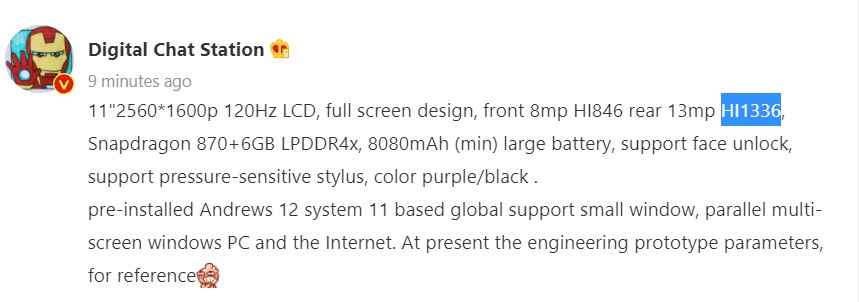
OPPO is reportedly working on the OPPO Pad tablet. A couple of leaks that surfaced last month revealed key information on the specs, design, and pricing of the device. Today, reliable tipster Digital Chat Station shared the specifications of a mysterious tablet. It seems that the tipster may have leaked details of the upcoming OPPO Pad.
Alleged OPPO Pad specifications
The leak states that the tablet is equipped with an 11-inch LCD panel with a full-screen design, which indicates that it will be equipped with slim bezels. The screen is expected to support a 120Hz refresh rate and a 2560 x 1600 pixels resolution.
On the photography front, the device is expected to offer users an 8-megapixel camera on the front and a Hynix Hi336 13-megapixel rear camera. The device does not seem to feature a fingerprint scanner, but it is expected to carry support for face unlock.
Leaked image of an OPPO tablet
The Snapdragon 870 chipset is expected to power the OPPO tablet. It may ship with 6 GB of LPDDR4x RAM. The leak has no information on the internal storage of the device. However, a previous leak claimed that it has 256 GB of built-in storage. It states that the tablet will come preinstalled with Android 12 OS and it will carry support for parallel multi-screen and a desktop mode.
The tablet will draw power from an 8,080mAh battery, but there is no word on its fast charging capabilities. It will also carry support for a pressure-sensitive stylus. The slate is expected to come in purple and black colors. It is likely to be priced at around 2,000 Yuan (~$314).
After several weeks of leaks and rumors, Xiaomi has confirmed that the company will be launching its next-generation Xiaomi 12 and 12 Pro flagship smartphones on 28th December in its home market China.
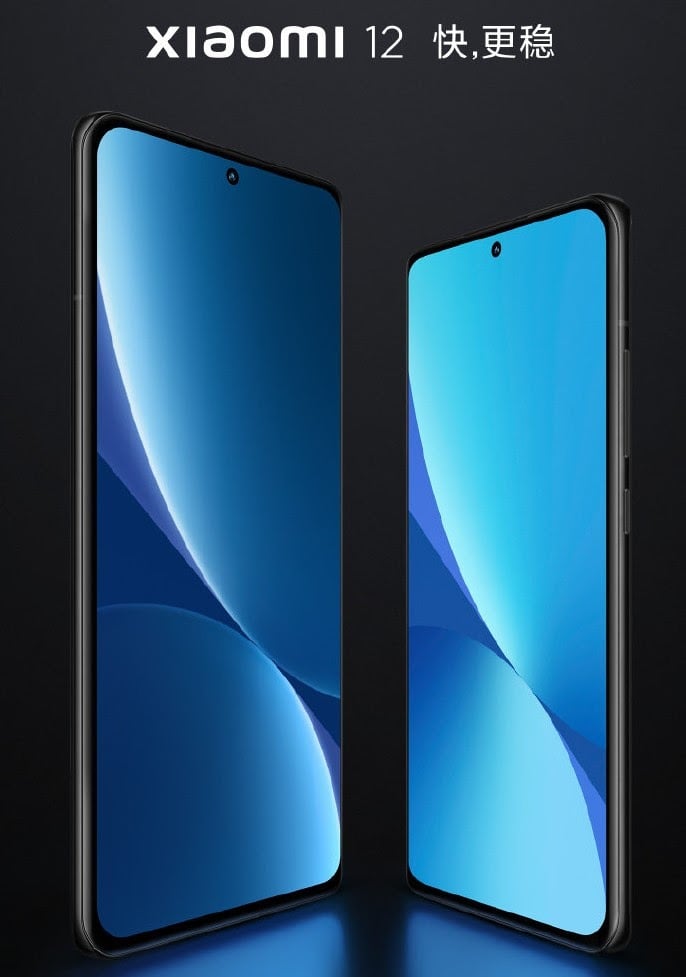
Today, Lei Jun, Founder and Chief Executive Officer of Xiaomi, has shared a teaser poster on his Weibo account which reveals that the display of the upcoming Xiaomi 12 has been certified with A+ ratings by DisplayMate.
Further, he adds that the smartphone has also created 15 new screen-related records for DisplayMate but more details about that remain unknown.
Lei Jun has revealed that the Xiaomi 12 uses a high-precision AMOLED display which takes into account delicate display and endurance experience, supports 16,000-level screen brightness adjustment, and has a more robust Corning Gorilla Glass Victus for protection.
Coming to the specifications, both the upcoming smartphones are expected to come powered by the latest Qualcomm Snapdragon 8 Gen 1 chipset. Recently, in a leaked benchmark test by Geekbench, the Pro variant of flagship scored 1246 in the single-core tests and 3903 in the multi-core tests.
The smartphones are expected to come pre-installed with the MIUI 13 custom user interface based on the Android 12 operating system, which is also set to go official along with the latest flagship smartphones on 28th December.
If the reports are to be believed, then Xiaomi will be launching more than two models in the Xiaomi 12 lineup but it remains to be seen if all the models go official next week or not.
iQOO 9 series of smartphones are likely to go official in January 2022 in China. Today, Chinese tipster Digital Chat Station shared key details on the display, camera, battery, and fast charging capabilities of an upcoming smartphone. Probably, he could be talking about the vanilla iQOO 9 handset.
The leak begins by stating that the device will be equipped with a 6.78-inch Samsung AMOLED E5 display that offers a Full HD+ resolution. It will be backed by a 4,650mAh± battery that offers 120W fast charging.
iQOO had only offered micro-gimbal OIS support on the iQOO 8 Pro, and not on the vanilla iQOO 8. However, a recent leak claimed that the vanilla iQOO 9 will also come with a micro-gimbal camera. The new leak states that it will be equipped with a Samsung GN5 50-megapixel primary camera. The 1/1.5-inch sensor will be equipped with a new dual-axis micro-gimbal stabilization.
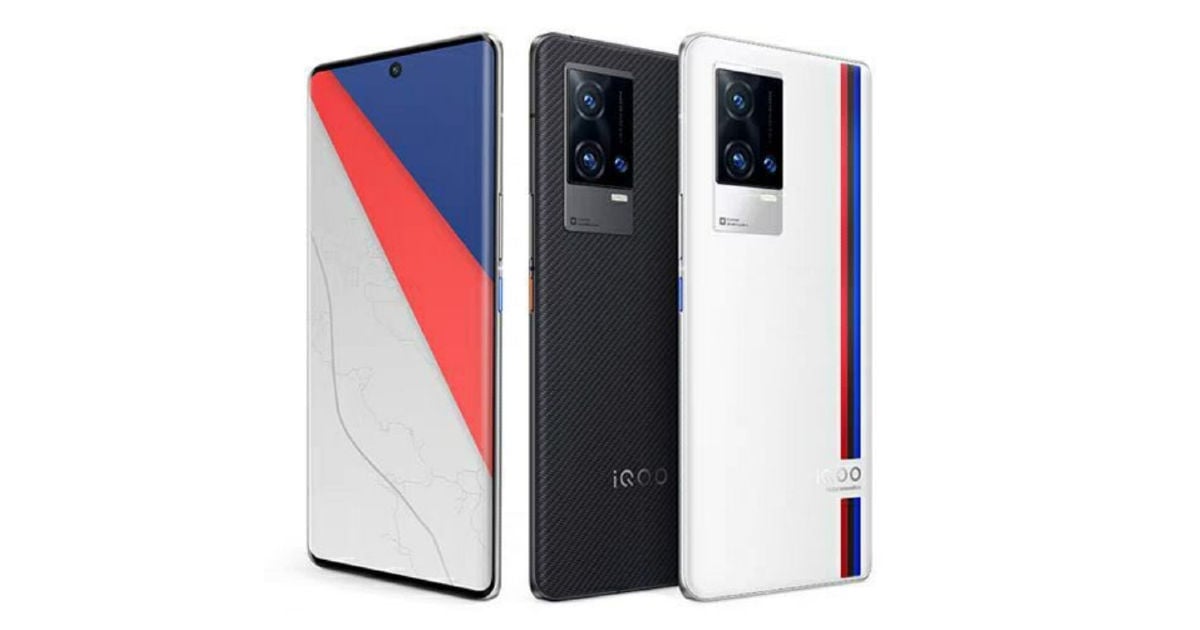
iQOO 8 Pro
The alleged iQOO 9 Pro is likely to house a Samsung AMOLED E5 display with a curved edge design. It is likely that the iQOO 9 and iQOO 9 Pro will be equipped with the Snapdragon 8 Gen 1 mobile platform. The Pro model is also expected to house a 4,700mAh battery that supports 120W fast charging.
In related news, iQOO recently unveiled the iQOO Neo5S with Snapdragon 888 and iQOO Neo5 SE with Snapdragon 870 in China. Launching the iQOO 9 series early in January may cannibalize the sales of the Neo branded models. Hence, it is likely that the iQOO 9 models may go official by the end of January 2022.
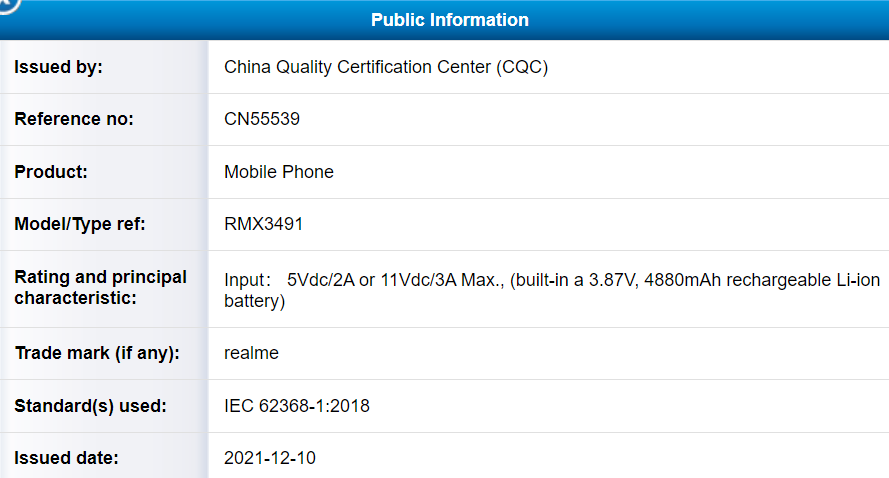
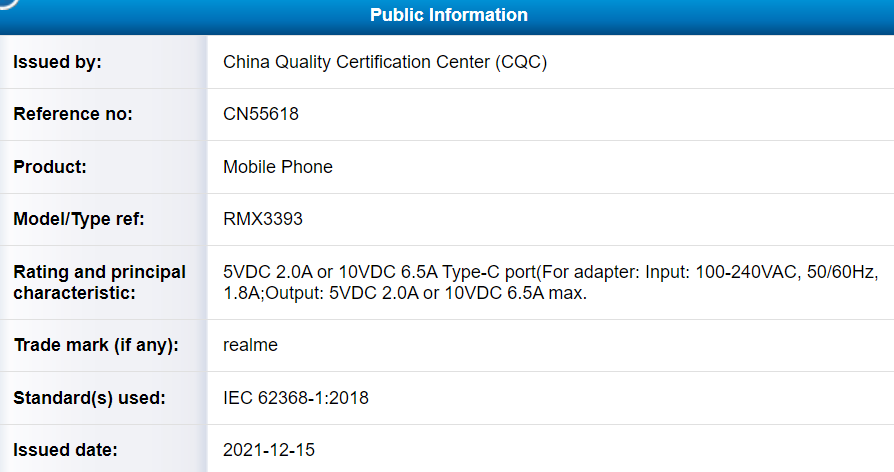
The rumor mill has already spilt a lot of information about the Realme 9i handset. Now, the specifications of the Realme 9 Pro+ 5G are surfacing in bits and pieces from different sources. Fresh information reveals that the Realme 9i and Realme 9 Pro+ have both have been approved by China Qualification Certification (CQC) platform (via. My Smart Price). These certifications have leaked key information on the battery and charging capabilities.
Realme 9i at CQC
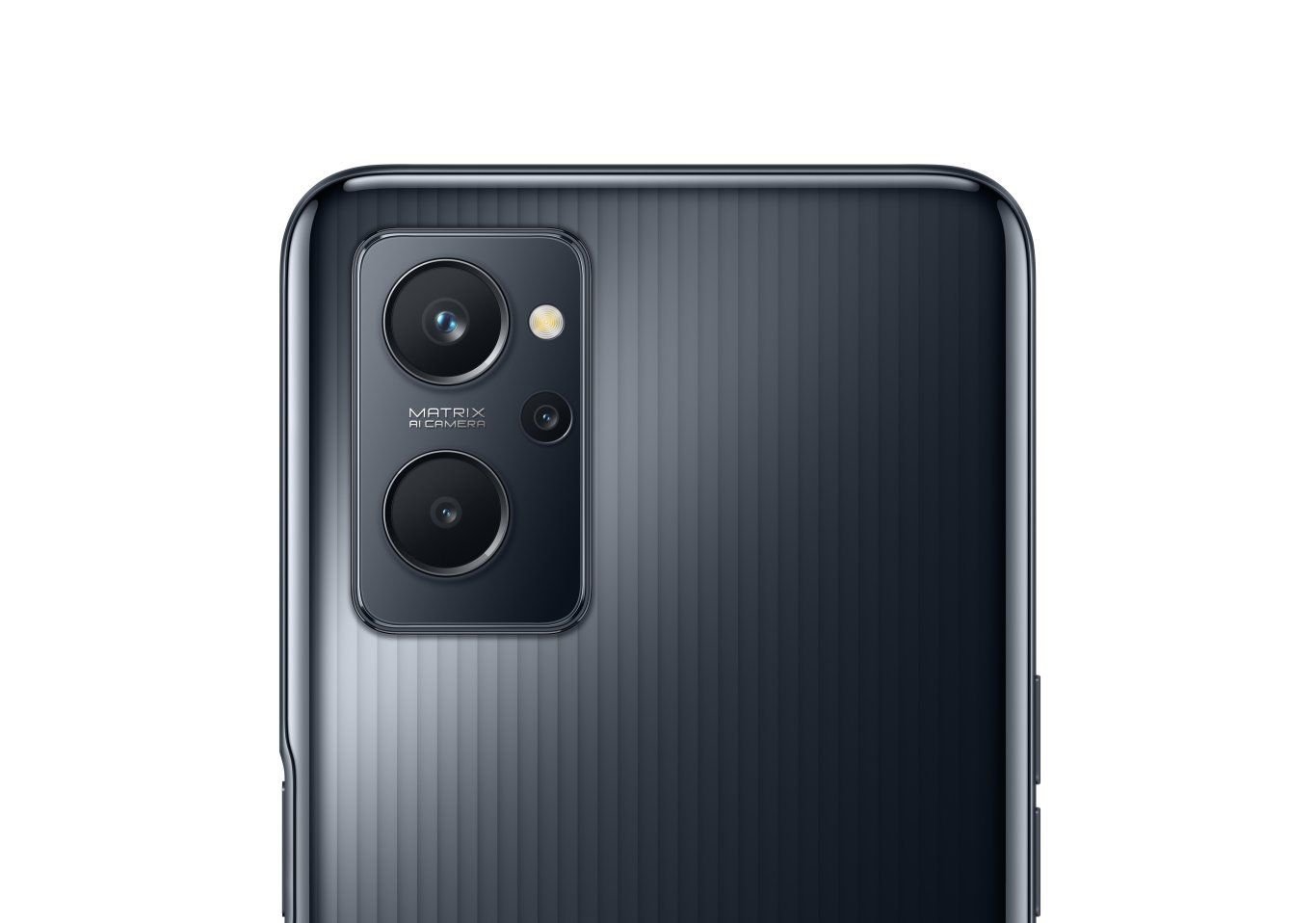
The Realme 9i (model number RMX3491) has appeared a 4,880mAh rated battery at CQC, which indicates it could be housing a 5,000mAh typical value battery. The listing also confirms that the device will carry support for 33W fast charging. The moniker of this device is yet to be confirmed as a recent report claimed that it may debut with the Narzo 9i moniker.
On the other hand, the CQC listing of the Realme 9 Pro+ 5G (model number RMX3393) has revealed that it may carry support for 65W fast charging. Unfortunately, there is no information on the battery size of the Realme 9 Pro+ 5G.
Realme 9 Pro+ 5G at CQC
So far, reports have revealed that the Realme 9 Pro+ 5G may feature a 50-megapixel main camera with an f/1.8 aperture and a 16-megapixel selfie camera. The other specs of the phone are under the wraps. It is speculated that there could be 4G and 5G editions of the device.
Realme 9i
As far as Realme 9i (or Narzo 9i) is concerned, it is expected to arrive with specs like a 6.6-inch LCD FHD+ 90Hz screen, Snapdragon 680 chipset, 4 GB / 6 GB of RAM, and 64 GB / 128 GB of storage. It may come with other features like a 16-megapixel front camera, a 50-megapixel + 8-megapixel + 2-megapixel triple camera system, and a side-facing fingerprint scanner.
Realme took to its Weibo account today that it will be unveiling the Realme GT 2 series of smartphones at 7:30 PM (local time) on Jan. 4 in China. The global launch of the GT 2 lineup will be held at the same time at 11:30 AM (UTC+8). Rumors have it that the company may two flagship phones named Realme GT 2 and GT 2 Pro through the upcoming launch event.
Realme GT 2 specifications (Rumored)
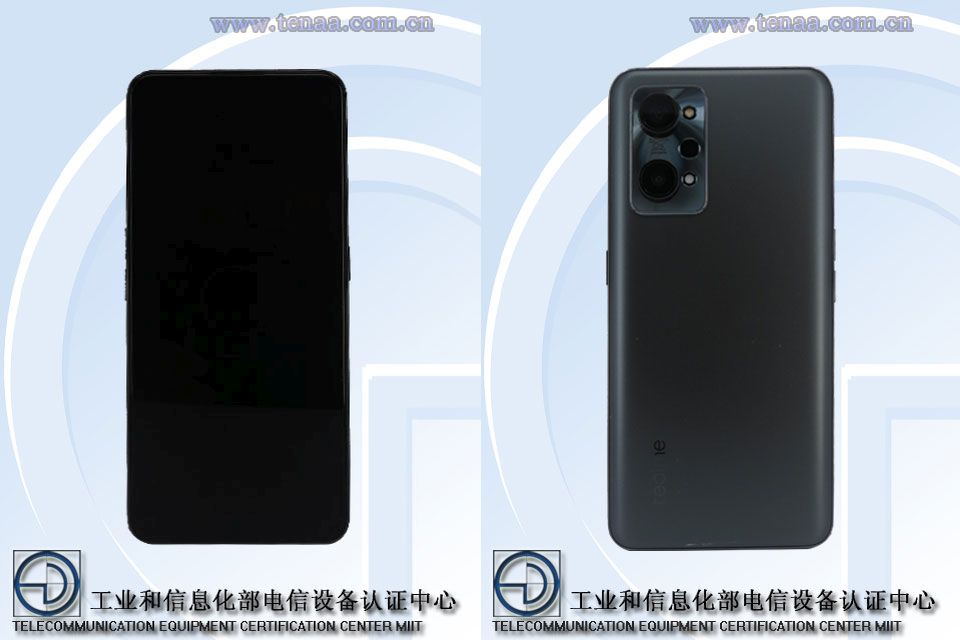
Speculations are rife that the Realme RMX3310 model number that was recently approved by the Chinese certification sites may debut with the Realme GT 2 name. It has a 6.62-inch AMOLED display that delivers a Full HD+ resolution and a 120Hz refresh rate. For photography, it has a 16-megapixel selfie camera and a 50-megapixel + 8-megapixel + 2-megapixel triple camera setup.
Realme RMX3310 TENAA
The GT 2 is likely to feature the Snapdragon 888 mobile platform, up to 12 GB of RAM, and up to 256 GB of storage. It will be backed by a 5,000mAh battery that supports 65W fast charging. It may come with other features such as dual speakers, an x-axis linear motor, and an in-display fingerprint scanner.
Realme GT 2 Pro specifications (Rumored)
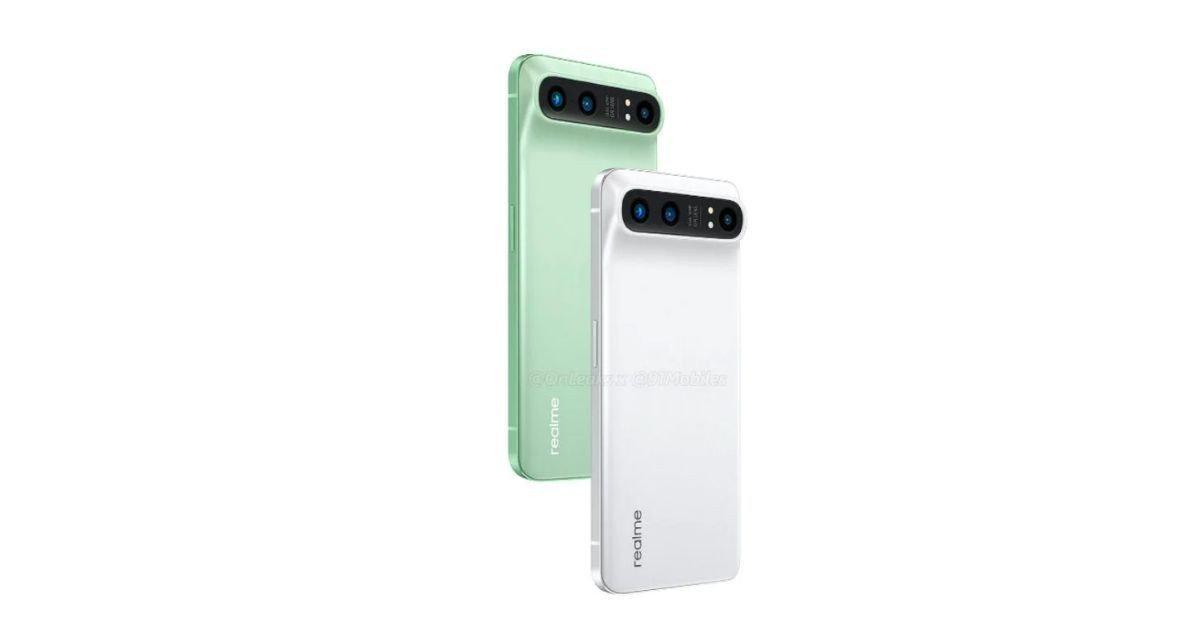
The Realme GT 2 Pro may feature a 6.7-inch AMOLED display that offers a Quad HD+ resolution and a 120Hz refresh rate. The Snapdragon 8 Gen 1 powered model may offer up to 12 GB of RAM, up to 1 TB of storage, and 65W rapid charging. It may come with a 32-megapixel front-facing camera and a 50-megapixel (Sony IMX766 with OIS) + 50-megapixel (ultrawide) + telephoto triple camera unit.
Realme GT2 Pro render
The GT 2 Pro will come with some advanced features like a 150-degree ultrawide snapper, an antenna array matrix system for stable connectivity, and an eco-friendly design/package. The Chinese manufacturer is speculated to announce a GT 2 Pro variant with an under-display camera.
Xiaomi China today confirmed via social media that both the Xiaomi 12 and Xiaomi 12 Pro will be using Qualcomm’s latest and greatest, the Snapdragon 8 Gen 1 chipset to provide the “fastest in the industry” performance for its customers.
However, Xiaomi is not the only phone manufacturer that is using the Snapdragon 8 Gen 1 for its flagships. There is also the upcoming Samsung Galaxy S22 series, Realme GT 2 Pro, Oppo Find X4 Pro and the recenty released Motorola Edge X30 packing the same flagship chipset as the Xiaomi 12 Pro.
Recently, benchmark scores of Xiaomi 12 Pro were leaked, and the news is promising. In Geekbench 5, the Xiaomi 12 Pro had scored 1246 in the single-core tests and 3903 in the multi-core tests. In comparison, the Moto X30, the Snapdragon 8 Gen 1 Qualcomm Reference Device, and the Dimensity 9000 MediaTek Reference Device scored lower than the Xiaomi flagship in the same benchmarking test.
However, according to official Geekbench results, we can see that the Xiaomi 12 Pro lags behind the Dimensity 9000 in multi-core score. The new MediaTek chip scores above 4000 in the multi-core test unlike the Xiaomi 12 in this listing which had a score of just over 3900. In terms of single-core scores, the difference between the Dimensity 9000 and Xiaomi 12 Pro is marginal, yet still in favor of the Dimensity 9000. The Geekbench testing also records that the 12GB variant of the Xiaomi 12 Pro running Android 12 was used for the tests.
Leaked images of the Xiaomi 12 and 12 Pro
Xiaomi is welcoming 2022 with its most highlighted flagship series, the Xiaomi 12 lineup and to know more about them, stay tuned for the launch event on 28 December at 7:30 pm CST.
Honor has been actively launching new devices ever since the company split from Huawei to become an independent brand. It has also launched a few premium devices in the market and has not set its eyes on foldable devices.
Today, the company officially teased its upcoming device — Honor Magic V which will soon get launched as the brand’s first foldable smartphone. The teaser shared by the brand doesn’t reveal much about the phones but showcases two panels connected by a hinge.
The company has not yet revealed anything else related to this upcoming smartphone. It is not known if the phone features a book-like fold or a clamshell fold design. Honor is expected to launch two foldable smartphones and this Magic V could be any one of them.
Although Honor has not confirmed this, the device is likely to go official in January. Further, the official teaser from the company pretty much confirms that the launch of the foldable smartphone is imminent.
A recent leak had hinted about an 8-inch inner display and a 6.5-inch cover screen for the upcoming Honor foldable smartphone but it remains to be seen if the Magic V is this device. It is also said to use display panels supplied by BOE and Visionox.
The smartphone is likely to come powered by the Qualcomm Snapdragon 8 Gen 1 chipset which was launched earlier this month. Honor was featured in a list of manufacturers to be among the first to release a smartphone powered by the new SoC and this could be it.
We expect the company to share more details about this upcoming foldable smartphone in the coming days, including its key specifications and features through teasers.
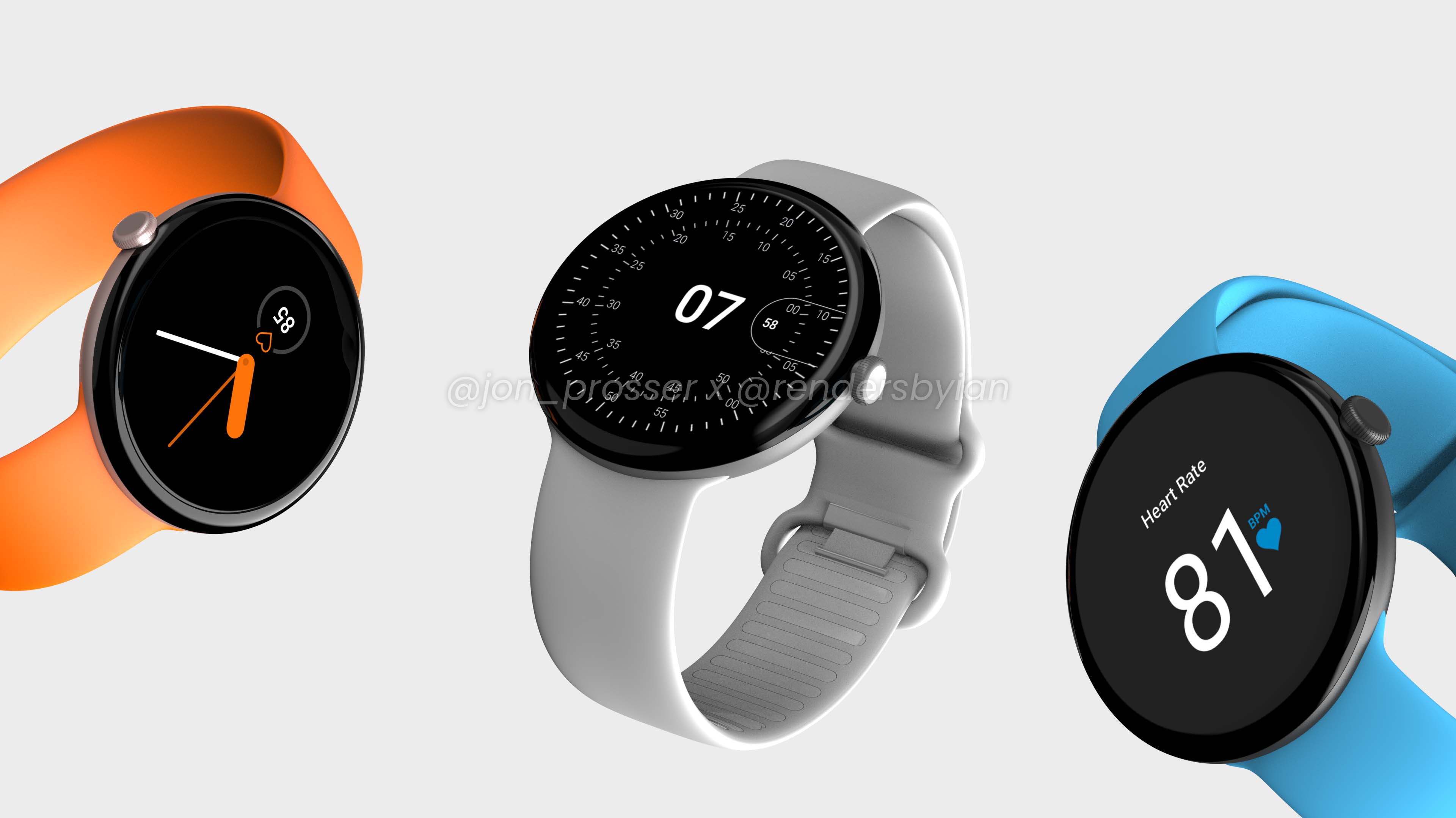
Google has a lineup of smartphones under its Pixel brand and now the technology giant is gearing up to enter the smart wearables market as the company is rumored to soon launch a Pixel-branded smartwatch.
Ahead of the official announcement from Google, some details about the Pixel Watch have surfaced online. A report from 9to5Google has found that the device, running Wear OS, will come with some exclusive features.
Google Pixel Watch 3D renders by Jon Prosser
The latest version of the Google app has a “PIXEL_EXPERIENCE_WATCH” tag which hints that the Pixel Watch will come with some features that won’t be available on other Wear OS devices, at least for some time.
For those who are unaware, Google uses the tag “PIXEL_EXPERIENCE” or a variation of it for rolling out exclusive features that are not available for other devices in the market. For instance, there’s “PIXEL_EXPERIENCE_2021” for the Pixel 6 series phones.
Coming back to the features, it is speculated that the Pixel Watch will come with a next-generation Assistant. It is expected to be built into the watch and have support for on-device processing instead of relying on the cloud. This should result in much faster operations and make the device stand out from others.
Recently, the watch faces for the upcoming smartwatch were leaked online and will come running the Wear OS 3 which is a new operating system created with the merger of Google’s Android-based Wear OS and Samsung’s Tizen OS.
If the leaks are to be believed, then the upcoming Google Pixel Watch will come powered by the Samsung Exynos processor similar to the Exynos W920 that the South Korean giant is using on its own Galaxy Watch4 series.
The device is expected to get launched sometime in Spring 2022 and could be priced above $300. To know more about the device, we will have to wait for a few more weeks or months for more details to surface online.
Apple revamped the iMac lineup earlier this year with the launch of a 24-inch iMac powered by the company’s own M1 chipset. Now, the company is expected to update the iMac Pro model sometime next year.
Recently, it was reported that the upcoming iMac Pro will feature a Mini-LED display along with an Apple Silicon processor. Now, a new report coming from DigiTimes (via 9to5Mac) also claims that the new iMac coming next year will feature a Mini-LED screen.
The report also claims that Apple’s suppliers have already started shipping components in small volumes for the new 27-inch iMac series models. While the launch date is not yet confirmed, it is said to go official sometime in Spring.
Last week, it was revealed that the device will feature a MiniLED screen and have support for 120Hz variable refresh rate and Oxide backplanes. This will also mark the introduction of Pro Motion display technology to the iMac lineup.
Further, the device is expected to have a starting configuration of 16GB RAM and 512GB of SSD storage, just like the recently launched MacBook Pro lineup. Further, users will likely get an option to choose between M1 Pro and M1 Max chipsets.
Apple has a few other devices lined up with a Mini-LED display, including new iPad models but if the recent reports are to be believed, then the iPad with Mini-LED screen is expected to go official in a couple of years and not anytime soon.
OPPO just launched its first foldable phone and it is already an outstanding success. The official sales will begin on December 23 but the handset already went on sale in limited quantities a few days ago, with an immediate sold-out. According to OnePlus’ CEO Pete Lau and a lot of other people, the OPPO Find N is the best foldable phone released until now. But is it the truth? In order to understand it, we decided to compare it to the other last-generation foldable phones. After comparing it to the Samsung Galaxy Z Fold 3, here is a comparison between the specifications of OPPO Find N and Xiaomi Mi Mix Fold.
Xiaomi Mi Mix Fold vs OPPO Find N
Xiaomi Mi Mix Fold
OPPO Find N
THICKNESS
17.2 mm when folded, 7.6 mm when unfolded
15.9 mm when folded, 8 mm when unfolded
DISPLAY
Main display: 8.01 inches, 1860 x 2480p (Quad HD+), 387 ppi, Foldable AMOLED
External display: 6.52 inches HD+ (840 x 2520p), 27:9 ratio, AMOLED
7.1 inches, 1792 x 1920p (Quad HD+), Foldable AMOLED
External display: 5.49 inches, AMOLED, 988 x 1972 pixels (HD+)
The design of the OPPO Find N is simply stunning. In my opinion, the phone is a lot more attractive than Xiaomi Mi Mix Fold due to its amazing glossy finish, color options, and, more than anything, its compact dimensions. Its rear glass protected by Gorilla Glass Victus is reminiscent of the OPPO Find X3 and the Reno6 Series, and it is very compact while folded thanks to a 5.49-inch external display with very narrow bezels. The Xiaomi Mi Mix Fold uses ceramic instead of glass, but it is not enough to make it more suggestive than OPPO Find N which is also thinner and lighter than its rival.
Display
The display of the OPPO Find N is smaller than the one of the Xiaomi Mi Mix Fold with a diagonal of 7.1 inches against 8.01 inches, but its quality is higher. It is an AMOLED display provided by Samsung with the LTPO technology enabling an adaptive refresh rate up to 120 Hz, the HDR10+ certification, and a very high resolution. Unfortunately, the internal display of the Xiaomi Mi Mix Fold does not have a high refresh rate, but it shows up to one billion colors and supports Dolby Vision, besides the HDR10+ certification. When it comes to the external displays, the Xiaomi Mi Mix Fold wins the fight with its 90 Hz AMOLED panel providing HDR10+ and Dolby Vision just like the foldable panel inside. OPPO Find N and Xiaomi Mi Mix Fold have stereo speakers and rely on side-mounted fingerprint readers for authentication.
Specs & Software
The OPPO Find N and the Xiaomi Mi Mix Fold are powered by the same mobile platform: the flagship-class Snapdragon 888 running at a max frequency of 2.84 GHz. They both provide flagship performance with almost no limits in every scenario. The winner of the hardware comparison is the highest-end memory configuration of the Xiaomi Mi Mix Fold because it provides 16 GB of RAM. On the other hand, the OPPO Find N is based on Android 11 (customized by ColorOS 12), while the Xiaomi Mi Mix Fold still ships with Android 10 (customized by MIUI 12). Note that the OPPO Find N also provides very advanced software features taking advantage of its form factor.
Camera
The best foldable phone in terms of camera performance in the whole market is the OPPO Find N. It is equipped with a 50 MP Sony IMX766 main camera, a 13 MP telephoto sensor with 2x optical zoom, and a 16 MP ultrawide camera. The Xiaomi Mi Mix Fold features 3x optical zoom, but its main camera is inferior, as well as its 20 MP front camera. The OPPO Find N has two amazing 32 MP front cameras: one on the internal display and another one on the external panel.
The battery of the Xiaomi Mi Mix Fold is actually bigger because the phone is bigger too and there is more space to contain a bigger battery. The Xiaomi Mi Mix Fold should guarantee a longer battery life in several scenarios due to its bigger 5000 mAh unit, and it will also provide faster charging thanks to a power of 67W. But the OPPO Find N adds wireless charging, which is not present on the Mi Mix Fold.
Price
Xiaomi Mi Mix Fold starts from about €1300/$1470, while the starting price tag of the OPPO Find N roughly translates into €1070/$1210. Due to its more compact form factor, I personally prefer the Find N. It also provides better cameras, so it is definitely the winner of this comparison, in my honest opinion.
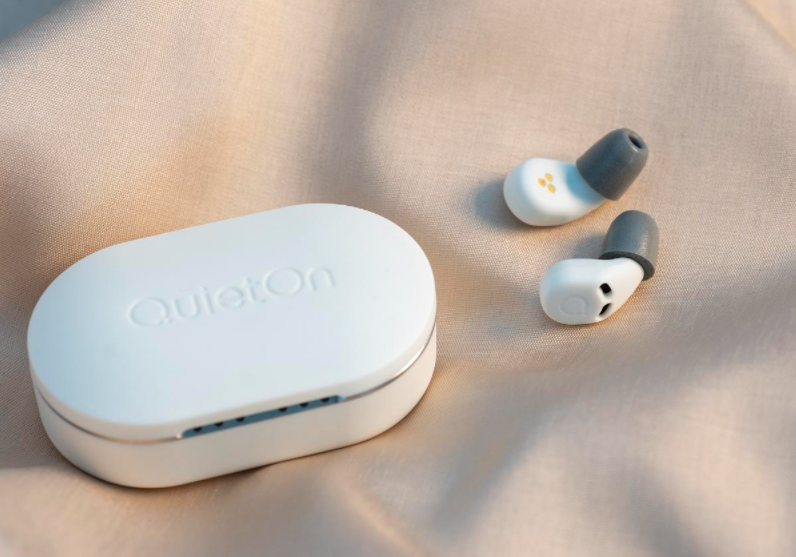
QuietOn 3 earbuds take active noise canceling (ANC) to another direction with its ability to help the user drift into a deep sleep, although this is dependent on the environment. The QuietOn 3 earbuds is a smaller version than its earlier two predecessors although it bears a close semblance with the QuietOn 2.
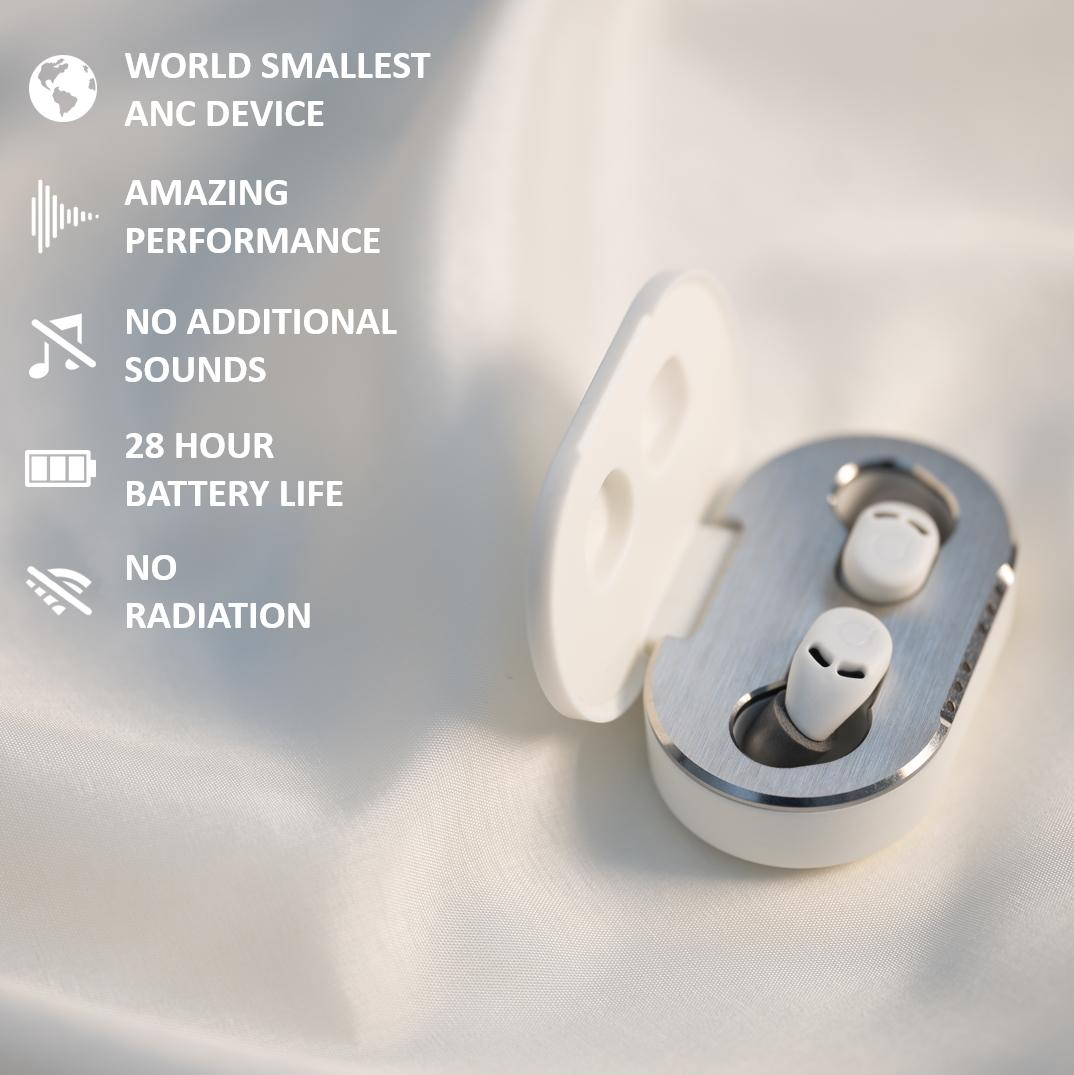
The earbud is said to be a “help to sleep” pair of earbuds but it does not generate white noise, unlike some of the popular earbuds in the segment. The QuietOn3 does not play quiet music either or any of those measures that could create a sleep atmosphere via benign sounds.
Rather the QuietOn3 earbuds simply eliminate low-frequency noises around the sleep environment, although you can still hear some sounds like your alarm ringing. The in-built sound system of the device helps to create a phase-shifted sound thus canceling the original sound that could hamper smooth sleep.
The operation of the QuietOn 3 is unlike most of the ANC earbuds and their effectiveness may depend on the environment and the nature of the sleep pattern of the user. The QuietOn 3 earbuds are priced at $239 and there is a debate whether the functionality it captures is worth the price tag for the earbuds. There are several other earbuds with similar capacity, although not advertised as sleep-promoting devices and even greater ANC capacity.
Austria-based electric mobility company Horwin has released the SK3 e-scooter targeting the European market. Horwin is building on its track record of delivering stylish and affordable mobility vehicles across several markets over the years. Due to its outsourcing template that sees its electric motorcycles and e-scooters produced in China, Horwin has seen a surge in the number of products it is releasing. It has also continued to sustain an affordable pricing regime for its products, amidst growing demand for its products.
The Horwin CR6 and EK3 models have had a great run in Europe, and the company is adding the SK3 to its European lineup with a 2022 release date. The SK3 is a utilitarian and highly functional e-scooter with a simple, yet sporty design. It will be well suited for daily commutes and comes with several important features. It has full LED lighting, a digital LCD instrument panel, and an overall lightweight design. The SK3 also offers cruise control and it can achieve a top speed of 90km/h, with the battery offering a range of about 80km. As per charging, the SK3 e-scooter can be plugged into a standard electrical outlet using its 8A charger. The range of the SK3 can be scaled by purchasing a secondary battery that will be placed on the under-seat storage compartment.
The Horwin SK3 will debut in Europe in Early 2022 and starts at €3,990 ($4,509), while a couple of other affordable models are also lined up for a potential 2022 launch.
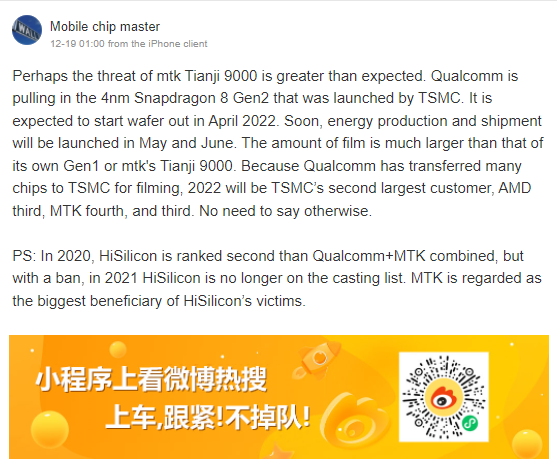
In the wake of the recent release of the Qualcomm Snapdragon 8 Gen 1 chipset for flagship devices, the rumor is rife that the chipmaker is already working on its next flagship. The Snapdragon 8 Gen 2 may already be in development according to a Weibo tipster. The chip industry tipster asserts that the possibly accelerated timeline for the new chipset may not be unconnected with the progress made by MediaTek in the field.
Snapdragon 8 Gen 1
The top-end Snapdragon 8 Gen 1 processor is now gradually being deployed in flagship offerings by some of the popular smartphone manufacturers. The Snapdragon 8 Gen 1 comes with a lot of improvements and extended capabilities from its predecessors and peers across the chip industry. The Weibo tipster, Mobile Chip Masters has also put a probable release date for the next Qualcomm Snapdragon chipset within the second quarter of 2022. The tipster specifically mentioned May 2022 as the date of release of the Snapdragon 8 Gen 2.
The Snapdragon Gen 2 is expected to outperform the Snapdragon 8 Gen 1, as well as MediaTek’s Dimensity 9000, which is also a premium processor. The tipster speculated that Qualcomm is fast-tracking the development of the new chipset as a direct response to the Dimensity 9000, although it could also be a batch of the Snapdragon 8 Gen 1 that was ported to TSMC amidst the global chip crisis.
The leak highlights the intense competition that is going on between chipmakers as they continue to seek products that outclass other competitors as durable, efficient and innovative processors.
Lately, phishing attacks have been on the rise and have vastly affected Facebook, Messenger, Instagram, and WhatsApp users. In an attempt to stop ongoing phishing attacks, Meta, formerly known as Facebook, filed a federal lawsuit in California court.
Meta has stated that the attackers were trying to steal the login credentials of various users of its multiple platforms by creating fake login pages that looked like Meta’s social media platforms to obtain Meta’s users’ login credentials. The goal was to deceive the users into entering their credentials, like usernames and passwords.
For those unaware, Phishing attacks are the practice of sending fraudulent communications that appear to come from a trustworthy source. It is usually done through email. The goal is to steal sensitive data like credit card and login information or install malware on the victim’s machine.
Jessica Romero, Meta’s director of platform and litigation, said that “Reports of phishing attacks have been on the rise across the industry, and we are taking this action to uncover the identities of the people behind the attack and stop their harmful conduct.”
Meta made a blog post stating that the phishing scam included more than 39,000 fake websites and masked their identity by using a relay service that redirected the internet traffic to their phishing pages while simultaneously concealing their actual location and identities. The relay service also masked the online hosting providers of the perpetrators.
According to the social media giant, phishing attacks have increased since March 2021, and Meta has suspended thousands of URLs to such phishing sites. Although the culprits are yet to be identified, the lawsuit is another step in its actions to protect people’s safety and privacy. The filed lawsuit by Meta shows the company’s position against those trying to abuse its platforms.
In the blog post, meta reassured that they would continue to fight the phishing attacks that try to deceive its users and share the phishing sites with other platforms so that they can block the attackers as well.
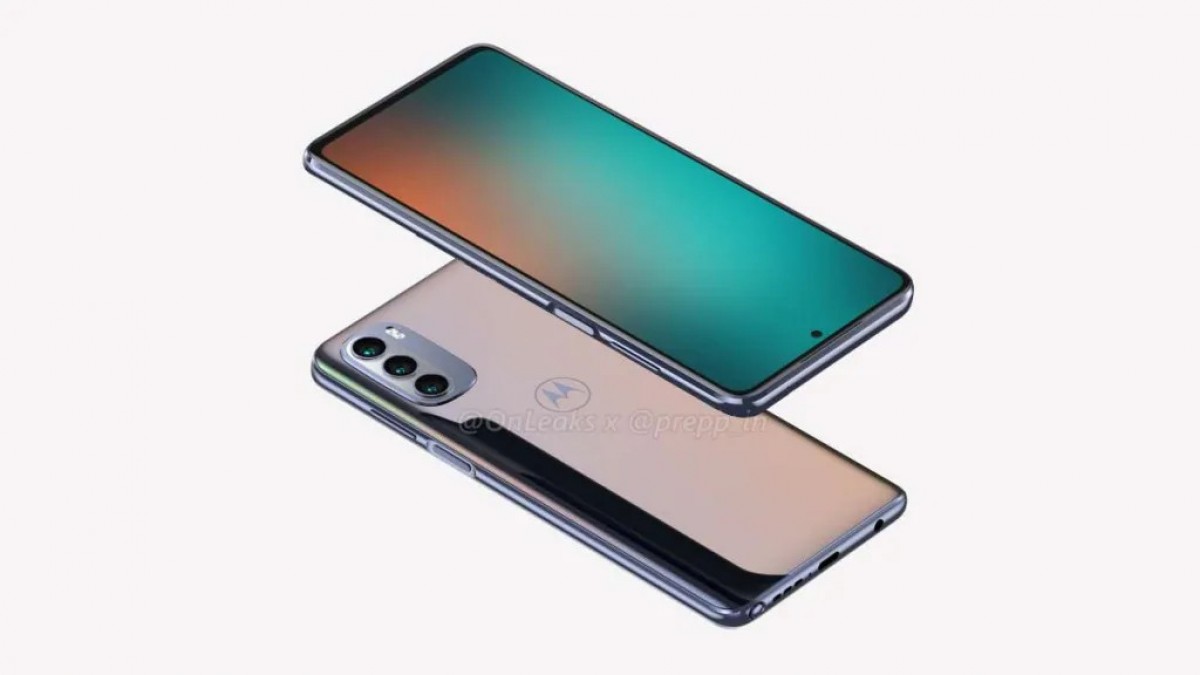
Back in June, Motorola announced the Moto G Stylus 5G in the US. It offered Stylus-Pen support and Snapdragon 480 SoC at an affordable price. Coming to the end of this year, the rumours for a new stylus phone dubbed Moto G Stylus 2022 were up in the air. Last time, the phone’s renders were leaked in the Black colour variant and now, the device has appeared in another shade.
According to the renders(courtesy –Prepp), the Motorola Moto G Stylus 2022 edition will come with a flat-screen display. It seems to have a large punch-hole panel with the selfie camera cut-out at the top middle as compared to the predecessor’s left-side camera cut-out. The phone seems to have a side-facing fingerprint scanner which hints that the device may have an LCD screen and not an OLED panel.
1 of 4
It also has the volume rocker above the side fingerprint reader which apparently also doubles up as a power button. Moving to the rear, the device has a triple camera system and rumours reveal that it is a 48MP sensor. We expect the other sensor to be an ultra-wide and a tertiary lens. The phone also has a Motorola brand at the rear.
Previously, the smartphone was touted to come with a 6.81-inch display and have a Snapdragon 480+ 5G chipset. The device is tipped to house either a 4,500mAh or a 5,000mAh battery cell. It is expected to run on Android 12 out of the box.
Last week, OnePlus launched its latest pair of TWS earphones in European and US markets, the OnePlus Buds Z2. It came as a successor to the popular OnePlus Buds Z which is an affordable TWS earphone from OnePlus. The new Buds Z2 brought some interesting features to the earphones like active noise cancellation and up to 38 hours of battery backup.
Now, according to a report by 91mobiles, the new Buds Z2 might soon arrive in India as popular tipster Yogesh Brar has tipped its pricing in the subcontinent.
The report states that OnePlus is gearing up to launch the OnePlus Budz2 in India at Rs 4,999($66). This is a bit pricier than the release price of the OnePlus Buds Z in the country but is probably due to the inclusion of premium features like the active noise canceling, 11nm bass-tuned dynamic driver, and up to 38 hours battery backup.
Keeping up with the pattern, the earbuds are launching at a lower price compared to other markets at $66, while the Buds Z2 go for around $99 in the US and €99 in European markets.
As the TWS earphones have already been released in other markets, we know that they will feature 11mm base-tuned Dynamic Drivers and come with a 3-mic setup for calibrating the Nouse and White reduction. It has Dolby Atmos support and features Bluetooth v5.2.
The Buds Z2 is capable of 40dB Active Noise Cancellation and also features a transparency mode which is useful for listening to music or taking calls while being aware of your surroundings.
OnePlus Buds Z2 comes with a charging case and has a total battery life of 38 hours. It supports OnePlus’s Flash Charge technology that offers up to 5 hours of music playback with just 10 minutes of charging. It can offer up to 7 hours if the ANC feature is turned off.
Although there have been no words from OnePlus on the possible release date of the Buds Z2 TWS earphones, rumors suggest it will launch with the OnePlus 9RT in India which is expected to be released before the end of the year, so stay tuned.
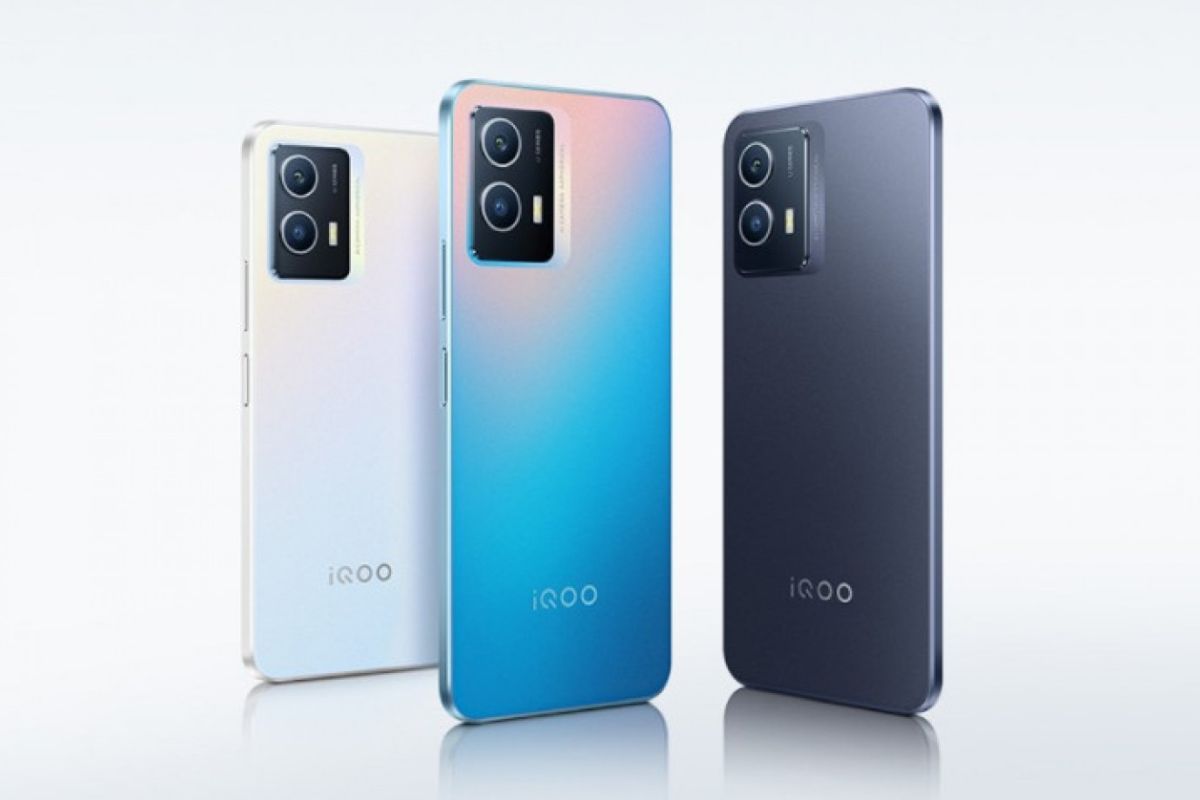
iQOO on Tuesday has officially announced the iQOO U5 5G in China. The smartphone comes as a successor to the iQOO U3 and it brings better display, cameras, and the latest hardware. One of the major highlights of the smartphone is the latest Qualcomm Snapdragon 695 SoC. Let’s have a look at its all specs and other details.
iQOO has kept the U5 5G’s pricing under wraps, however, the colour variants and configurations are known. The device will come with a 4GB RAM + 128GB base configuration, a 6GB RAM + 128GB option, and lastly a 8GB RAM + 128GB variant. It has three colour variants – Dark Black, Magic Blue, and Silver White.
The smartphone will go on pre-orders starting from December 24 in China. As of now, there’s no mention regarding its global availability.
iQOO U5 5G Specifications
The iQOO U5 5G features a 6.58-inch display with a Full-HD+ resolution. It is a water-drop notch panel with a 120Hz refresh rate. It has an 8MP selfie camera over the front notch. It sports a dual-camera system at the rear. The layout goes by a 50MP main sensor and a 2MP macro unit.
Qualcomm’s Snapdragon 695 SoC is at the helm paired with 4GB, 6GB, and 8GB of RAM and 128GB of internal storage. The 5G handset packs a 5,000mAh battery and has an 18W fast charging support. It has a side-facing fingerprint scanner for security and boots on iQOO UI 1.0 on top of the Android 11 operating system.
Earlier today, the CEO of the famous Chinese smartphone brand OnePlus officially announced that the next-gen OnePlus 10 Pro would launch in January. Although he has not revealed the date, reports indicate that it could take place on 5th January.
OnePlus 10 Pro CAD renders by Zouton / Steve Hemmerstoffer
The upcoming smartphone has been subject to numerous leaks hinting at its design via early renders, and now, these renders have been brought to life in a Youtube video by the famous tech concept renderer Waqar Khan.
The video manages to capture the premium feel of the upcoming flagship and features every angle revealed yet by the renders. The device is shown in four different colors: black, purple, silver, and green, which is a bit different from the current color scheme of the OnePlus 9 series in black, dark green, and grey.
The camera setup of the OnePlus 10 Pro has been given special attention in the video, with the Youtuber displaying the symmetrical two-column design, encased in a protruding frame that elegantly wraps around the frame on the side of the phone. Additionally, the camera module proudly displays the Hasselblad branding, which is rumored to collaborate with OnePlus for the 10 series flagships.
The frame of the device features rounded edges that seamlessly blend with the phone’s curved display, making it destined to fit comfortably in your hands. While a peek at the underside of the phone reveal neet-looking cutouts for the microphone, USB-C, and a speaker. The iconic Alert slider can be observed on the right spine of the device along with the power button, while the volume rocker is present on the left.
The video does not offer anything that we don’t know of but makes it easier for us to imagine how the smartphone will feel ln our hands.
To give you a quick rundown of the leaks so far, the OnePlus 10 Pro is said to feature a 6.7-inch curved LTPO AMOLED display with a 2K resolution and a 120Hz high refresh rate. The punch-hole cutout in the top-left corner of the screen will house a 32-megapixel camera sensor for taking selfies and video calling.
Under the hood, the device will feature a Snapdragon 8 Gen 1 SoC with up to 12GB of LPDDR5 RAM and 256GB of UFS 3.1 storage.
In the camera department, the smartphone will have a triple-camera setup consisting of a 48MP primary sensor, a 50MP ultrawide-angle lens, and an 8MP lens with 3x optical zoom support.
The phone will be running the ColorOS 12 custom skin on top of the Android 12 operating system. It is said to be powered by a 5,000mAh battery and comes with support for 80W wired fast charging and 50W wireless fast charging.
Ulefone Power Armor 14 was designed to withstand the harsh and extreme outdoors. And to that end, this 6.52” Smartphone comes with IP68/69K and MIL-STD – 810G military-grade certifications. But Ulefone Power Armor 14 stands out from other rugged smartphones not just for its endurance but also for its exceptional battery life.
The 10000mAh battery can last you for up to two days on moderate usage and gives you 54 hrs of call time and 540 hrs of standby on a single charge. When put under an official battery test with Navigation ON from dawn to dusk, the smartphone which showed 100% battery charge at 10 AM came down to just 76% at 5:30 PM. This means even after continuous GPS usage for almost the entire day, the smartphone retained more than 70% of its battery charge. For more information on the battery performance, check out this Ulefone Power Armor 14 Battery Drain test video.
Supports 18W wired fast charging, 15W wireless charging
Charging Interface: USB Type-C
IP68/69K, MIL-STD – 810G certified: waterproof, dustproof, and shockproof
Headset free FM radio
Navigations: GPS, GLONASS, Beidou, Galileo
NFC, Fingerprint ID, Face unlocking, etc
Ulefone Power Armor 14 retails for $219.99 only. This means you get a stylish and rugged smartphone with super battery life at an affordable price. For further information on the specs, utility, and features check out the official website of Ulefone here.
For more information on such exciting deals and offers check out our deals hub.
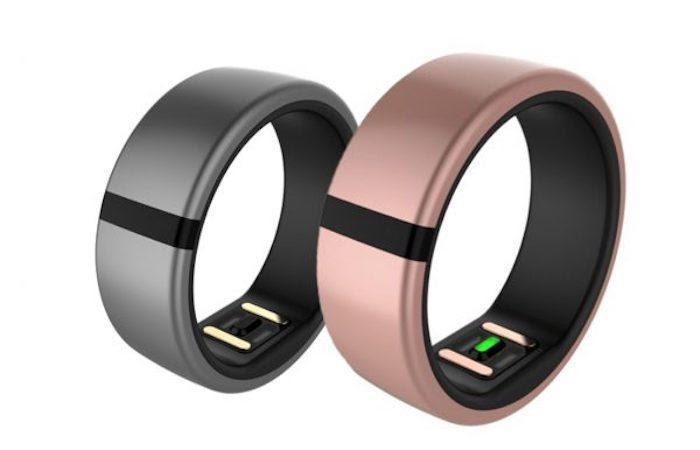
As technology becomes more advanced, gadgets become more compact, because we are able to fit more circuits, more transistors into the device than ever before. Humans started with the giant server, then the computer, then the smartphone, then the smartwatch. And now we can make a smart ring that can fit onto your finger?
Well, the concept of the smart ring is exactly new since the current known player in the smart ring business is Motiv with its Motiv Ring, released back in 2017.
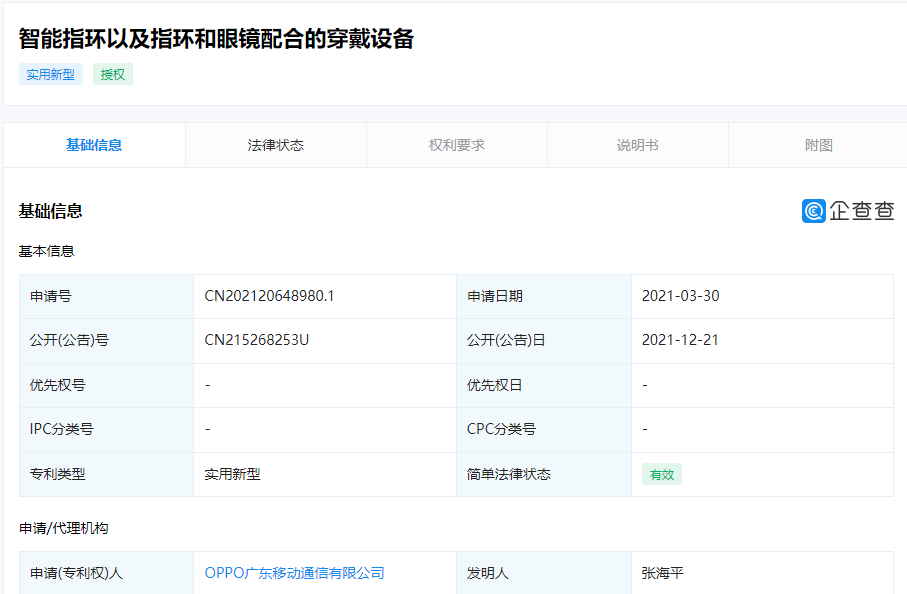
But Oppo is looking to revive the industry as the latest reports from China show that Oppo has been granted patents to develop its own Smart Ring.
An insider from China reports that from the QCC Database, they found that Oppo submitted a patent for its own smart ring, and it was approved by Chinese authorities.
The Oppo Air Glass are a pair of AR(assisted reality) smart eyeglasses released by Oppo. The glass features futuristic styling with a single lens design and weighs less than 30 grams. Powered by Qualcomm’s Snapdragon Wear 4100 SoC, it features functionalities like weather reminders, schedule reminders, a Health app, and a teleprompter which will benefit users with speeches, presentations, and many more scenarios.
As for other details such as the specs, battery or design of the Oppo Smart Ring, it was not listed within the database. Hopefully, the development of the Oppo Smart Ring is already underway as the concept sounds interesting.
We use cookies on our website to give you the most relevant experience by remembering your preferences and repeat visits. By clicking “Accept”, you consent to the use of ALL the cookies.
This website uses cookies to improve your experience while you navigate through the website. Out of these, the cookies that are categorized as necessary are stored on your browser as they are essential for the working of basic functionalities of the website. We also use third-party cookies that help us analyze and understand how you use this website. These cookies will be stored in your browser only with your consent. You also have the option to opt-out of these cookies. But opting out of some of these cookies may affect your browsing experience.
Necessary cookies are absolutely essential for the website to function properly. This category only includes cookies that ensures basic functionalities and security features of the website. These cookies do not store any personal information.
Any cookies that may not be particularly necessary for the website to function and is used specifically to collect user personal data via analytics, ads, other embedded contents are termed as non-necessary cookies. It is mandatory to procure user consent prior to running these cookies on your website.