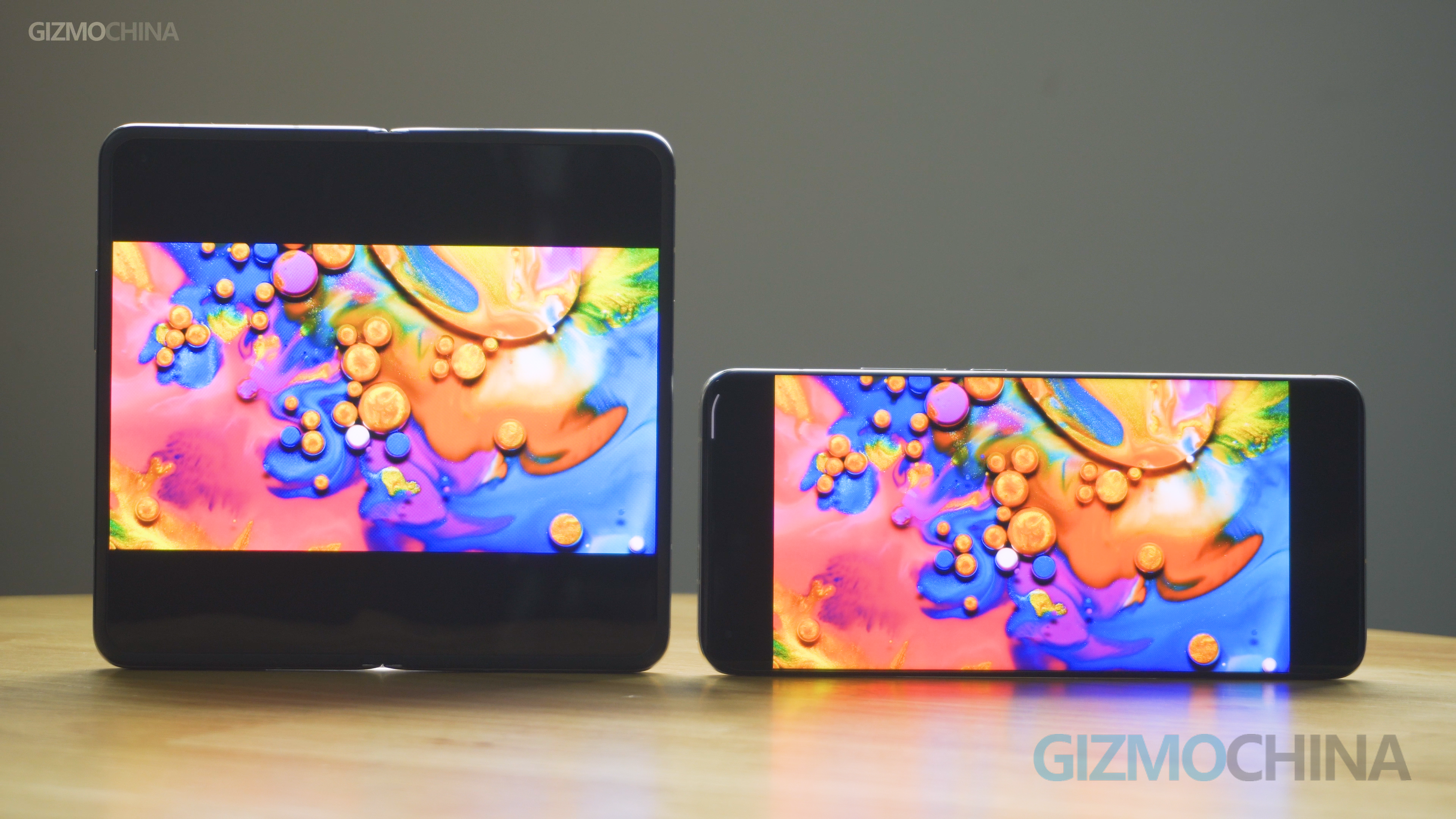
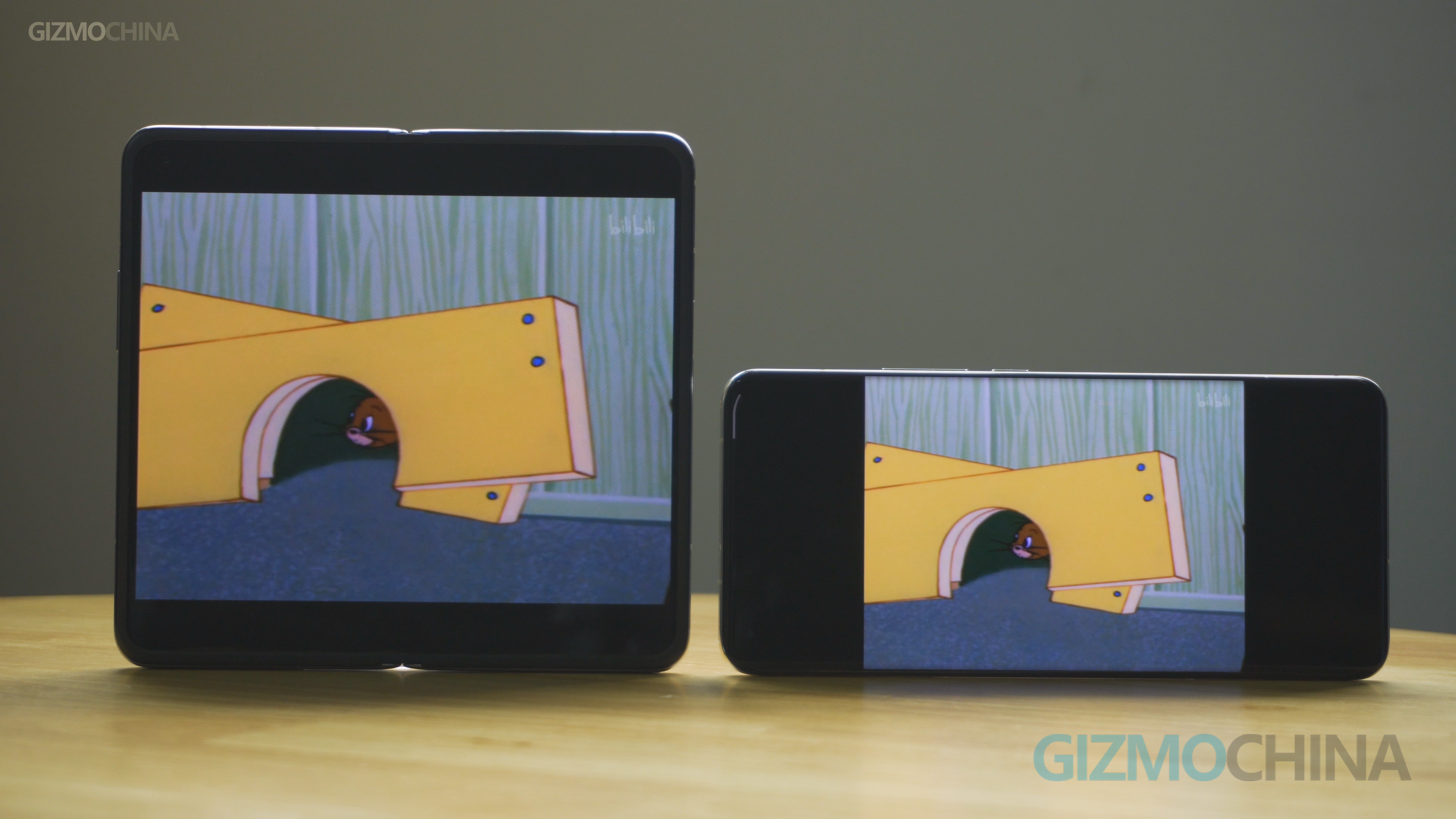
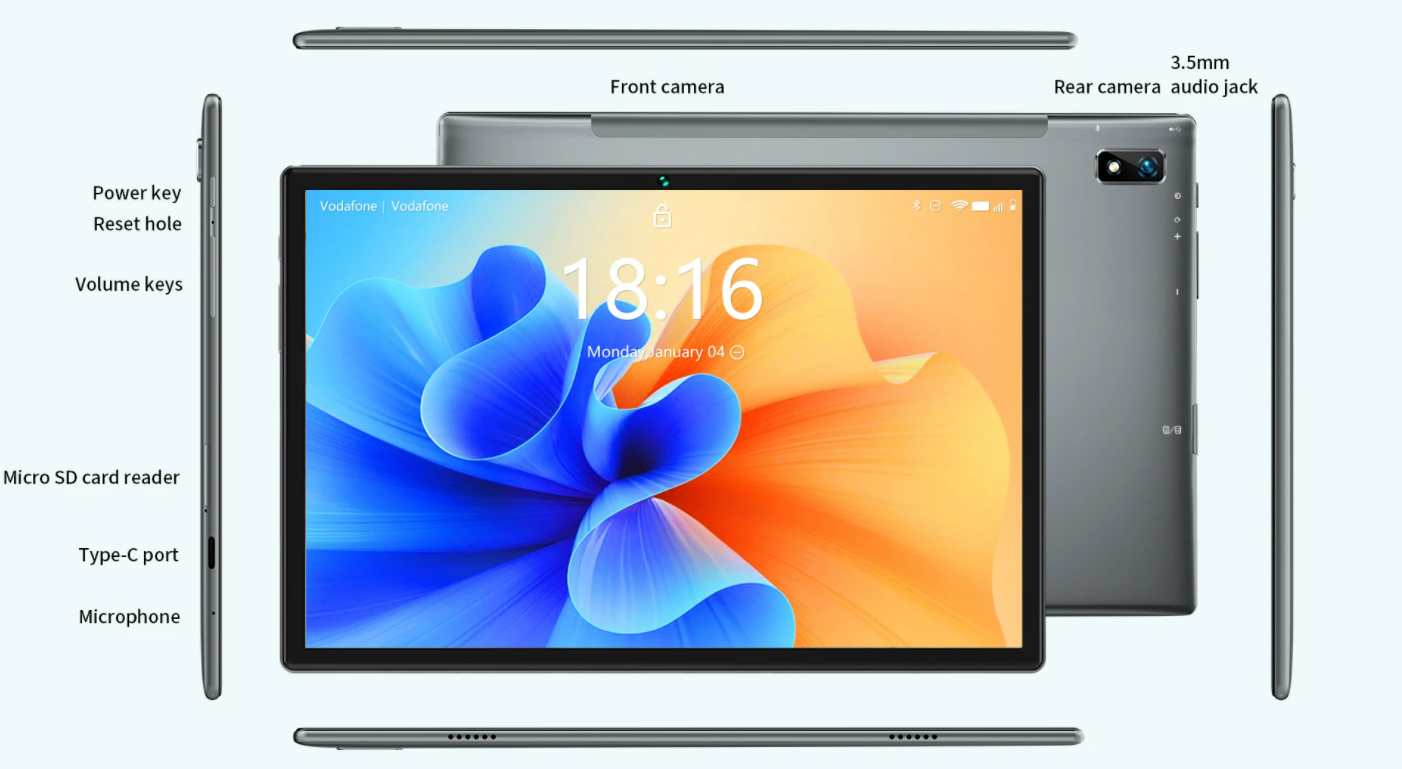
The current-gen Motorola Edge series of smartphones come with a feature called Ready For. It allows users to connect their phones to a Windows PC or a monitor. With an external display and a desktop UI, users can have better multi-tasking and multimedia experience. Now, according to FCC, the Lenovo-owned company might soon release a dedicated hardware product for Ready For.
1 of 2
A new Motorolla device called ‘Ready For Wireless 4K Adapter’ has been certified by FCC (via Google Chromecast Hub). It carries model number MD-02.
As per documentation, the product resembles a puck with the iconic ‘Motorola Batwing’ logo and an LED indicator on the top. The sides have an HDMI port, a USB Type-C port, and a power button.
The description of the device says that it extends the phone’s experience to any compatible TV or monitor. This suggests that the adapter can be used with any smartphone. Since it appears to be developed by EZcast, it could be compatible with both Android and iOS.
1 of 5
In a nutshell, Motorola wants everyone to try its Ready For platform without investing in an Edge series smartphone. Unlike other 4K streaming devices in the market, this one can be used for both multimedia as well as productivity. This will be probably its only advantage.
Having said that, we expect to learn more about the upcoming ‘Motorola Ready For Wireless 4K Adapter’ before its official announcement in the coming days.
The Vivo Y71t has just been launched in China. This device features an AMOLED display and arrives with a 64 megapixel dual camera system along with a MediaTek Dimensity 810 processor, which is a first for the company.
The smartphone sports a 6.44 inch AMOLED display that has a FHD+ resolution, 3000000:1 contrast ratio, and a 60Hz refresh rate. This display has a waterdrop notch with a 16 megapixel front facing camera and an in display fingerprint reader as well. On the rear, a vertically stacked dual camera system can be found, which includes the 64 megapixel primary shooter and an 8 megapixel ultra wide angle lens.
The device runs OriginOS 1.0, which is based on the Android 11 operating system. Under the hood, it houses a Dimensity 810 processor that is paired with 8GB of RAM and up to 256GB of internal storage, which can be further expanded using a microSD card slot. A sizeable 4,000mAh battery pack powers the handset that also supports 44W fast charging as well. For connectivity, it offers dual SIM support, 5G, WiFi 5, Bluetooth 5.1, GPS, a USB Type C port, a 3.5mm headphone jack, and even face unlock.
The Vivo Y71t has been launched in China in two storage configurations, namely 8GB+128GB and 8GB+256GB options. The former is available for a price of 1,799 Yuan (roughly 281 US Dollars) while the latter is available for 1,999 Yuan (roughly 312 US Dollars). For those interested, it is also being launched in two color options, including Mirage and Midnight Blue.
OnePlus recently unveiled the successor to the OnePlus 9R i.e OnePlus 9RT along with new TWS earbuds. At an event held in China, the company unleashed the OnePlus Buds Z2 with premium features like 40dB ANC, 11mm moving coil, and up to 38-hour long battery life. Giztop is retailing the new TWS earbuds with global shipping options with color availability of White and Black variants.
Giztop offers global shipping at minimal costs without any hassle of customs. It is an exceptional offer to grab the earbuds before the official launch in your respective countries.
OnePlus introduced the Buds Z2 TWS at an affordable price while bringing some premium features onboard. The new TWS buds come with a 40dB active noise cancellation feature (ANC) which improves the sound quality and even enhances the listening capability. The presence of three mics effectively reduces the noise. It has an 11mm moving coil unit to offer outstanding sound quality and helps in enabling “Dolby Atmos”.
The buds support Bluetooth 5.2 for efficient and effective connectivity. It can offer up to 28-hours of battery life upon a single full charge of both the cases and buds. OnePlus Buds Z2 TWS carries IP55 water certification and sweatproof rating enabling use for workouts and other intensive exercises.
OnePlus Buds Z2 are now available from Giztop for the price of $89.99. It is a great opportunity to grab excellent earbuds at a discounted price.
Back in 2020, Apple had shifted away from Intel processors in favor of its own chips. Now, the iPhone maker had just launched its latest generation of custom silicon, namely the M1 Pro and M1 Pro. But despite team blue losing orders from Apple for its chips, it still seeks on doing business with the iPhone maker.
According to a DigiTimesreport, the American chipmaking giant is hoping to acquire chip orders from the smartphone brand, along with South Korea’s Samsung Electronics. In other words, the Cupertino based giant might be planning on diversifying its supply chain away from just TSMC, the world’s largest contract chipmaker. Notably, this news arrives after we had reported on Intel’s CEO, Pat Gelsinger, stating that he hoped to win back chip orders from Apple by making better processors that the smartphone brand.
M1 Max
And now, the report from DigiTimes has revealed that the chipmaker is still trying to enter Apple’s supply chain. The report said that Intel and Samsung are “striving to win orders for Apple’s in house developed Mac processors.” Although, sources close to the matter did point out that this is still unlikely as of right now. While Intel is still seeking orders from Apple for its M1 chips, its actions in the past had suggested otherwise. Previously, the brand had even launched smear campaigns against custom the Mac processors by highlighting their shortcomings.
Not even a year has passed since the release of the Redmi Note 10 series and the Redmi Note 11 series is almost upon us. The phones are after all a part of Xiaomi’s critically acclaimed Note series – a series so popular that it actually has a major role to play in making the brand what it is today.
Still, the Redmi Note 10 series is by no means out of date and continues to be a compelling buy even now, that is if the lack of 5G support on most of the models is overlooked. This lacking is obviously being made up by its successor, and that’s something we can get behind. But what’s hugely more interesting is the design upgrade. It’s a deviation from the usual rounded edge design we are all familiar with in favor of a more boxy one – a new trend set by the iPhone 12.
The front and back glass of the Redmi Note 11 are now both flat. The last time we have seen this was with the Redmi Note 7. However, unlike the Redmi Note 7, the edges are now sharp and angular with almost 90° curves.
Pros & Cons
While opinions on whether the boxier form factor looks better are highly subjective, there is actually a plus point associated with it from an engineering perspective. A rectangular design is highly space-efficient and allows to fit more inside, as opposed to a phone of the same dimensions with a curved back.
This may have a role to play in making the iPhone 12 much slimmer than the iPhone 11 and now possibly the Redmi Note 11 slimmer than the Redmi Note 10.
Yep, the Redmi Note 11 measures just 8.34mm including the camera module. For comparison, the Note 10 Pro measured 8.1mm excluding its cameras. Xiaomi is yet to reveal the actual thickness of the Redmi Note 11 without the camera bump but we are positive that it will be much lesser than its predecessor, which is a huge plus.
However, there are downsides to a boxier approach too. iPhone 12 owners have frequently complained about the phone feeling a bit too sharp around the edges – something that can feel unpleasant when the phone is held sans cover. This sensation is compounded when a device is especially large and hefty. We, therefore, hope that the Redmi Note 11 series will also be featherweight along with being exceptionally slim.
Apart from that, the Redmi Note 11 series features a camera module design that’s not unlike the one found on the Redmi 10 Prime. The primary sensor is housed within a shiny little island of its own that sits atop two more cameras and a flash, making it a triple camera system. The module is larger in area and more eye-catching than the one found on the Redmi Note 10 series.
Last but not least, the Redmi Note 11 has switched to an AG glass for the rear panel. It may not look as flashy as regular glass but is much grippier and much less prone to collecting fingerprints and grime. AG glass is also something that’s associated with more premium models and that’s something the Redmi Note 11 has indeed become with its much-upgraded specs, hence the design refinements. It’s likely that all this will be driving the price up.
Conclusion
All in all, the design is a step forward in my opinion as its many pros overweigh the only con. I’d naturally prefer a slimmer and grippier design even if it comes at the cost of slight discomfort from sharper edges – discomfort that can easily be eliminated with the use of a case. A case is preferred by most device owners anyway.
The Redmi Note 11 series is comprised of three models:
Redmi Note 11 that will be available in Shallow Dream Galaxy, Mint Mint, and Mysterious Black Realm colors,
Redmi Note 11 Pro that will be available in Shallow Dream Galaxy, Time Quiet Purple, Misty Forest, and Mysterious Black Mirror,
And the Redmi Note 11 Pro+ with Time Quiet Purple, Misty Forest, and Mysterious Black Mirror color options.
A couple of months ago, in August, HMD Global had announced a few devices in the Indian market, including Nokia XR20, C30, C20 Plus, G10, and C01 Plus. Apart from C20 Plus, none of those models went on sale in India.
Today, the Finnish company has officially launched a new budget C-series smartphone in the Indian market — Nokia C30.
The smartphone features a 6.82-inch HD+ LCD display that offers 1600 x 720 pixels screen resolution and a 20:9 aspect ratio. Under the hood, the device is powered by a Unisoc SC9863A processor, coupled with an IMG8322 GPU.
It comes in two memory variants — 3GB RAM with 32GB eMMC 5.1 internal storage and 4GB RAM with 64GB eMMC 5.1 internal storage. Both the models have a microSD card slot for expanding the storage capacity up to 256GB.
In the camera department, there’s a 13-megapixel primary sensor and a 2-megapixel depth sensor, completing the dual-camera setup on the back. On the front side, it features a 5-megapixel snapper for taking selfies and video calling.
The device comes with a rear-mounted fingerprint sensor for added protection. As for connectivity options, the smartphone supports Dual SIM, 4G VoLTE, Wi-Fi 802.11 b/g/n, Bluetooth 4.2, GPS + GLONASS, and has a micro-USB port.
It is running the Android 11 operating system out-of-the-box and is powered by a 6,000mAh battery that supports 10W charging. The device measures 177.7 x 79.1 x9.9mm and weighs 237 grams.
The Nokia C30 comes in two color options — Green and White. The base model with 3GB RAM is priced at ₹10,999 which is approximately $147 while the 4GB RAM model costs ₹11,999 which converts to about $160.
The smartphone is launched in a strategic partnership with Jio, making it the fourth Nokia smartphone that comes with the benefits of the special JioExclusive program. Customers are eligible to get instant price support of 10% (₹1000 maximum) and will have to pay ₹9999 and ₹10,999 for the 3GB RAM and 4GB variant respectively.
Xiaomi’s full-view display smartphone – Xiaomi Mix 4 which was recently launched in China is now available with a massive $100 discount via Giztop. The interested folks can grab the beautiful yet powerful device at a discounted price with global shipping options. However, use coupon code MIX100 on the checkout page to grab a $100 discount.
Giztop is offering the smartphone in all three color options of Black, Grey and White. However, Black color variant is available in all storage options of 8GB + 128GB, 8GB + 256GB, 12GB + 256GB and 12GB + 512GB. Meanwhile, Grey and White variants are available in 8GB + 128GB, 8GB + 256GB, and 12GB + 256GB internal storage options.
Xiaomi Mix 4 smartphone comes with a 6.67-inch AMOLED 3D curved display with 1080 x 2340 pixels resolution and 386ppi pixel density. The display offers HDR10+ and Dolby Vision support along with Gorilla Glass Victus protection on the display.
It is pwoered with Qualcomm Snapdragon 888+ SoC coupled with an octa-core processor and Adreno 660 GPU. It further bundles up to 12GB LPDDR5 RAM and up to 51GB UFS 3.1 storage.
In the camera department, the smartphone hosts a tripel-rear camera module consisting of a 108MP HMX primary sensor, an 8MP 50x periscope camera, and a 13MP ultra-wide angle sensor. On the front, a 20MP CUP selfie camera that offers a large pixel size.
There’s a 4500 mAh battery with 50W fast wireless charging and 120W fast wired charging. In connectivity, the smartphone offers WiFi 6, NFC, GPS, and USB Type-C cable.
The smartphone is already available at a competitive price, but the recent $100 discount from Giztop makes the deal even sweeter.
Just a couple of days ago, Google officially launched its latest flagship smartphones — Pixel 6 and Pixel 6 Pro. Both the phones are now up for pre-orders in eight countries around the world and will start shipping from 28th October.
However, as expected, India is missing from the list of countries where the Pixel 6 series smartphones will be available. It has now been confirmed that the Pixel 6 and 6 Pro won’t get launched in India in the foreseeable future.
Google is attributing the non-availability of its flagship phones from the Indian market to a “variety of factors” including global supply chain issues.
In a statement, Google’s spokesperson said: “Due to a variety of factors including global demand-supply issues, we are not able to make our products available in all markets. We remain committed to our current Pixel phones and look forward to bringing future Pixel devices to more countries in the future.”
Another factor that Google may have considered when deciding not to launch flagships in India is the pricing. Almost 90 percent of the Indian smartphone market is for devices priced under $300 — a price range that is dominated by the Chinese makers and Google cannot compete with.
This isn’t the first time that the Pixel lineup isn’t launching in one of the world’s largest smartphone markets. The company has not launched the flagship Pixel smartphone in India for the past couple of years but the watered-down variant with A-suffix does get launched in the Indian market.
Coming to the latest flagships, the Pixel 6 features a 6.1-inch Full HD+ AMOLED 90Hz display while the Pro model comes with a 6.7-inch 120Hz display. They have a 50-megapixel primary sensor, coupled with a 12-megapixel ultrawide sensor. The Pro variant gets an additional 48-megapixel telephoto lens with 4x optical zoom support.
This time, the tech giant has ditched Qualcomm and has used its own custom-made Tensor chipset that is aimed to enhance artificial intelligence (AI) and machine learning (ML) capabilities on the device.
On the front side, the Pixel 6 feature an 8-megapixel snapper while the 6 Pro model comes equipped with an 11.1-megapixel sensor. Both the smartphones come running the latest Android 12 operating system out-of-the-box. The Pixel 6 is powered by a 4,614mAh battery while the Pixel 6 Pro is powered by a 5,000mAh battery.
The Google Pixel 6 and 6 Pro are now available for pre-order in the United States, United Kingdom, Canada, Australia, France, Germany, Japan, and Taiwan. As noted, they will be available for purchase from 28th October.
After launching Honor Play 5T Vitality Edition in April this year, the China-based company is now all set to launch a new Vitality Edition (aka Youth Edition) smartphone in its home country. The company will be launching the Honor Play5 Vitality Edition on 25th October.
Now, ahead of the launch, Honor has started sharing some key features of the smartphone through teaser posters. In the latest teaser, the company has confirmed that the upcoming Honor Play5 Vitality Edition will come with support for 66W fast charging technology.
As the name indicates, the phone launching on 25th October is a new variant of the Honor Play5 smartphone that was officially launched in China in May this year. It features a 6.53-inch OLED display that offers a Full HD+ screen resolution of 1080 x 2400 pixels.
There’s a waterdrop notch on top of the screen that houses a 16-megapixel selfie snapper. On the backside, the device features a quad-camera setup that includes a 64-megapixel primary camera sensor, an 8-megapixel ultrawide lens, a 2-megapixel macro lens, and a 2-megapixel depth sensor, along with an LED flash.
Under the hood, it is powered by the MediaTek Dimensity 800U processor, coupled with 8GB of RAM and 128/256GB of internal storage. The phone runs the Android 10 operating system with Magic UI 4.0 on top and is powered by a 3,800mAh battery which comes with support for 66W fast charging technology.
We expect to know more about the Honor Play5 Vitality Edition in the coming days through teaser posters but for the phone’s pricing and availability details, we will have to wait for the official launch event.
A few days back, Apple officially launched the latest MacBook Pro and Max laptops in the market. The Apple MacBook Pro M1 Max comes with a 16-inch display and has the new M1 Max chipset. The laptop has just passed the Geekbench certification and it reveals some impressive results.
According to the Geekbench certification, the Apple MacBook Pro M1 Max has scored 1749 single-core points and 11542 multi-core points. This result is quite impressive when compared to the older models. The major performance increase of the laptop is touted to be due to the M1 Max chipset.
It is said that the M1 Max is way faster than the M1 chipset. In fact, the above score of the M1 Max is twice of the older M1 chipset. Speaking of the M1 Max, it supports 64GB of memory and up to 400GB/s bandwidth. The chipset is based on 5nm and it comes with 57 billion transistors.
The MacBook Pro M1 Max is priced at ₹2,39,900 in India. The laptop is available in all Apple authorised stores across India.
A few months ago, in May this year, Sony launched its Xperia 1 III smartphone in the Chinese market in three color options — Purple, Black, and Grey. Now, the company has announced a fourth color option in the Chinese market — Qingchuan Green.
The new green-colored Sony Xperia 1 III is now up for pre-order in China, until 11th November — the day of the Double 11 sale in the country. The device, which packs 12GB RAM and 256GB storage is priced at 7,999 yuan, which roughly converts to $1,252.
Apart from the new color option, everything else remains the same. It features a 6.9-inch HDR OLED display with 3840 x 1644 pixels screen resolution, 120Hz refresh rate, 21:9 screen aspect ratio, and 100% DCI-P3 color gamut.
Under the hood, the device is powered by Qualcomm Snapdragon 888 chipset, coupled with 12GB RAM and 256GB or 512GB internal storage. There’s also a microSD card slot for expanding the storage capacity.
It is also well-suited as a gaming phone, with a 240Hz touch sampling rate, motion blur reduction, heat suppression technology, and an ability to bypass the battery when playing games and charging the phone.
In the camera department, the phone comes with a triple-camera setup on the back that includes a 12-megapixel wide-angle sensor, a 12-megapixel telephoto lens, and a 12-megapixel ultra-wide sensor. On the front side, there’s an 8-megapixel snapper that allows users to take selfies and make video calls.
The smartphone is running Android 11 operating system out-of-the-box and is powered by a 4,500mAh battery that comes with support for 30W wired fast charging, wireless charging, as well as reverse wireless charging.
Earlier this year, Lenovo launched its latest flagship-grade gaming smartphone in the Chinese market, dubbed as Lenovo Legion 2 Pro. Now, the company has officially announced discounted prices of the same smartphone for the upcoming Double 11 sale.
Lenovo has revealed that the 12GB RAM + 128GB internal storage model of the Lenovo Legion 2 Pro gaming smartphone will cost 2,799 yuan (~$438) instead of 4,099 yuan (~$642) while the 12GB RAM + 256GB storage model sees a price reduction from 4,399 yuan (~$689) to 2,999 yuan (~$469).
The 16GB RAM + 256GB storage model will be available for 3,299 yuan (~$516) while the 18GB RAM and 256GB storage model will be priced at 3,499 yuan (~$548). Both these models are regularly priced at 4,799 yuan (~$751) and 5,299 yuan (~$829) respectively.
The company has also announced a discount for the 16GB RAM + 512GB storage model and 18GB RAM + 512GB storage model, both of which will be available at 3,999 yuan (~$626) and 4,899 yuan (~$767) respectively, instead of these model’s regular pricing which is 5,299 yuan (~$829) and 5,999 yuan (~$939).
The Lenovo Legion 2 Pro features a 6.92-inch Samsung E4 AMOLED display that has a 20.5:9 aspect ratio, a 2460 x 1080 screen resolution, a 144Hz refresh rate, a 720Hz touch response rate, and a 3.8ms response time.
Under the hood, the device is powered by the Qualcomm Snapdragon 888 chipset. As for the camera configuration, it comes with an OmniVision 64-megapixel f/1.9 1.0 µm main sensor, coupled with a 16-megapixel f/2.2 123° ultrawide angle camera.
On the front side, there’s a 44-megapixel f/2.0 sensor that slides out from the middle of the frame. The phone can record in 8K at 24 fps and 4K at 60fps. It can also record slow-motion videos in 1080p at 240fps and shoot in RAW format.
It also comes with support for Dolby Atmos and a game mode that enhances the in-game sound experience. Running Android 11 operating system, the phone is powered by a 5,500mAh battery that supports a maximum of 90W fast charging via two USB-C ports.
PayPal, one of the leading and well-known online payments platforms, is in advanced talks to acquire digital pinboard platform Pinterest for $45 billion. The development was first reported by Bloomberg, citing people aware of the matter but didn’t want to be identified.
If the deal goes through, then it will mark the biggest acquisition of a social media company so far. Currently, Microsoft’s acquisition of LinkedIn for $26.2 billion in the year 2016 is the biggest transaction in this category.
A source aware of the development has said that PayPal is offering $70 per share for the acquisition of Pinterest, mostly in stock. If everything goes as expected for the online payments provider, then the deal could be announced early next month when PayPal reports its quarterly earnings.
However, do note that the deal isn’t certain yet and the terms associated with it could get changed. As the news surfaced online, the shares of PayPal fell while Pinterest saw a surge in its shares.
With the acquisition of Pinterest, PayPal would be able to capture more of the e-commerce growth as online shoppers are following influencers on platforms. It will also help the company diversify its income with advertising revenue.
Pinterest was valued at about $13 billion when it went public in 2019 and since then, the company saw a huge spike in users looking for crafts and DIY project ideas because of the COVID-19 pandemic. The company has warned about slowing user growth, especially in the US, as lockdowns eased.
The price offered by PayPal for the acquisition of Pinterest, founded in 2010, is 62 times the social media company’s earnings before interest, taxes, depreciation, and amortization over the last 12 months.
PayPal has turned towards acquisition to boost its e-commerce offerings. In 2019, the company purchased Honey Science for $4 billion, and earlier this year, it acquired Japan-based Buy-Now-Pay-Later (BNPL) firm Paidy for $2.7 billion. It has also acquired return-service provider Happy Returns in May this year.
In related news, Pinterest co-founder Evan Sharp announced last week that he would step down as the company’s chief creative officer to join LoveFrom, a firm led by Jony Ive, known for designing many Apple products.
In August, Samsung announced the Galaxy A03s smartphone. It is speculated that the South Korean company is working on the Galaxy A03 handset. Last month, the A03 was spotted at the Geekbench benchmarking site and the FCC certification platform. Fresh information reveals that it has received approval from the Wi-Fi Alliance authority.
The Galaxy A03 has appeared with its SM-A032F/DS model number in the database of Wi-Fi Alliance database. The listing reveals that the device carries support for Wi-Fi 802.11 b/g/n, which indicates that it will be a low-end device.
Past reports have revealed that the Galaxy A03 could be powered by the Unisoc SC9863A chipset. It will be equipped with 2 GB of RAM and Android 11 OS. the latter could be made available in its Go edition version. The FCC certification of the device revealed that it is backed by a 5,000mAh battery. At present, there is no other information available on the specs of the A03.
The predecessor Galaxy A02 was made available in a 3 GB RAM variant. Hence, it is likely that the upcoming A03 may also come in a 3 GB RAM variant. The handset is likely to borrow some of its specs from the Galaxy A03s handset.
The Galaxy A03s has a 6.5-inch HD+ display, a 5-megapixel front camera, and a 13-megapixel + 2-megapixel + 2-megapixel triple camera unit. The device is powered by the Helio P35 chipset and a 5,000mAh battery. It comes with 4 GB of RAM, 64 GB of built-in storage, and Android 11 OS. Probably, the Galaxy A03 will go official in the coming month.
Motorola is reportedly working on a new smartphone called the Moto G51 5G. This phone is expected to arrive as the successor to the Moto G50 5G. A fresh report by TechnikNewshas revealed the key specifications of the G51.
The report reveals that the Moto G51 5G is codenamed as “Cyprus 5G” and its model number is XT2171-1. While the exact screen size of the G51 is not known, the report claims that it supports a Full HD+ resolution. There is no clear information on the refresh rate of the G51.
There is no information on the processor of the Moto G51. It is fitted with a 13-megapixel camera on the front. The rear-facing triple camera unit features a 50-megapixel primary camera, an 8-megapixel ultrawide lens that doubles up as a depth sensor, and a 2-megapixel lens.
Last week, the Moto G51 5G was spotted at the Geekbench benchmarking site. It was spotted with specs like the Snapdragon 750G chipset, 4 GB of RAM, and Android 11 OS. The other details of the smartphone are under wraps.
According to the publication, the Moto G51 5G will be launching in a few weeks. It is speculated to launch in November. Reports have revealed that the Lenovo-owned company is also working on a handset called the Moto G71 5G. It was recently approved by the Federal Communications Commission (FCC). The certification only revealed that it is a 5G-ready device, and it carries support for NFC connectivity.
On Oct. 25, Honor will be announcing the Honor Play5 Vitality Edition smartphone in China. It is likely that the company may use the same platform to unleash the Honor X30i and Honor X30 Max handsets. Here is all the information on the specification of the Honor X30i and X30 Max.
Honor X30i specifications (Rumored)
The upcoming Honor X30i will be sporting a 6.7-inch LCD panel with a centrally positioned punch-hole. It carries support for a Full HD+ resolution of 1080 x 2388 pixels. It carries support for a 90Hz refresh rate and a 180Hz touch sampling rate.
The X30i has an 8-megapixel front camera. The square-shaped camera module on its back has a 48-megapixel primary camera, a pair of 2-megapixel sensors, and an LED flash. The Dimensity 810 powered handset is backed by a 4,000mAh battery that supports 22.5W fast charging.
The handset has a side-facing fingerprint scanner. It measures 7.45mm in thickness and weighs 175 grams. t will be available in colors like Charm Sea Blue, Titanium Silver, Rose Gold, and Night Black.
Honor X30 Max specifications (Rumored)
The Honor X30 Max has a 7.09-inch LCD waterdrop notch display. It supports a Full HD+ resolution of 1080 x 2280 pixels. It has an 8-megapixel selfie camera and a 64-megapixel + 2-megapixel dual-camera system. The Dimensity 900 powered phone has a 5,000mAh battery that supports 22.5W fast charging. It comes with other specs like a side-facing fingerprint scanner, NFC, dual speakers, 8.3mm thickness, and weighs 227 grams. It will come in three colors like Charm Sea Blue, Titanium Silver, and Night Black.
When you were a kid, one of the toys you most likely owned was a toy telephone. What if your childhood toy telephone was made into a real phone that could make and receive calls? That’s what popular toymaker, Fisher-Price has done with its Chatter Telephone toy.
The manufacturer has released a special version of the Chatter Telephone to celebrate the 60th anniversary of the toy. The Chatter Telephone with Bluetooth looks no different from the toy but it now has Bluetooth, allowing owners to connect it to their smartphones to make and receive calls. Yes, you will be able to dial your friends’ numbers using the rotary dial. It also has a speakerphone function which can be activated with the red button below the dialer.
1 of 3
The spec sheet says that there is a 500mAh battery inside that will provide up to 9 hours of talk time. Behind the toy is a charging port but we are not sure if it is MicroUSB or USB-C. The Bluetooth range is 15 feet and the toy telephone is compatible with both iOS and Android devices.
The Chatter Telephone with Bluetooth will be sold in the U.S. by Best Buy for $60. However, it is not yet available for purchase, but when it does, it is expected to fly off the shelves as both adults who have been gripped by nostalgia as well as kids will want to get one.
OnePlus is rolling out an update to the OnePlus 8 series and the OnePlus 8T. The update is rolling out to all three devices and it brings October’s security patch, bug fixes, a new Google app among others.
The update is arriving on the OnePlus 8 and OnePlus 8 Pro as OxygenOS 11.0.9.9 while the OnePlus 8T will receive it as OxygenOS 11.0.10.10/11.0.11.11 depending on the region. The changelog which is listed below is pretty much the same across the board.
Added the Files by Google, find files faster with search and simple browsing
Updated Android security patch to 2021.10
Improved system stability
Fixed known issues
The addition of the Files by Google app is a continuation of OnePlus’s switch to Google’s apps instead of using its own. OnePlus phones, starting with the OnePlus Nord released last year, now come with Google’s Phone, Messages, and Duo apps pre-installed as the default apps for calls, messaging, and video calling. Now, it appears to be making the switch to Google’s file manager app.
Noted Weibo tipster Digital Chat Station has revealed some key specs of the unreleased Qualcomm Snapdragon 898 and MediaTek Dimensity 2000 chipsets which are both premium-grade and flagship offerings from the two chipmakers. We already knew some details about these chips but the new details released further illuminate these very impressive SoCs.
The Snapdragon 898 will have an octa-core CPU consisting of a Cortex-X2-based main core alongside 3x Cortex-A719-based performance cores clocked at 2.5GHz. It also contains energy-efficient Cortex-A510-based cores and the Adreno 730 GPU which will take care of the graphics workload. The Snapdragon 898 will be produced by Samsung via its 4nm process.
The Dimensity 2000 on the other hand, will feature a similar configuration to the Snapdragon 898 but with a considerably higher cluster of the three performance cores clocked at 2.85GHz. It is speculated to have the Mali-G710 MC10 GPU. The MediaTek Dimensity 200 will be based on TSMC’s 4nm process, showing an identical production trajectory as the Snapdragon 898.
There are still some unreleased aspects of both flagship chips, and these will become known as we get closer to the eventual unveiling of the SoCs. One area of interest will be the brands that these chips will debut with.
A very reliable display analyst has projected that Apple could unveil its 27-inch iMac as early as the first quarter of 2022. The new Apple iMac, according to display analyst Ross Young, will feature ProMotion mini-LED display, similar to what we have in the freshly-released MacBook Pros laptops.
Apple has had an impressive debut for the MacBook Pro, which offers a 14-inch and 16-inch display. The company is carrying out a silent transition from Intel to ARM CPUs, and the trend implies that the new CPUs will also be extended to the 27-inch iMac Pro, the Mac mini, and the Mac Pro laptops. The 27-inch iMac, as per the tweet by Ross Young, will also come with a 120Hz display refresh rate, and it could well be Apple’s all-in-one offering in the high-end segment as per screen sizes.
There are still some loose details about the new iMac which seems to be a revamped version of the discontinued iMac Pro. It will also offer some improvements from the current models or at least make it at par with key aspects of current models. The 27-inch iMac may be powered by the M1 Max chipset, with Apple making progress in the development of improved versions of these models.
It is unclear how authentic the projection by the display analyst on the iMac. However, he has had a decent record of correct predictions over time. Apple has continued to grapple with the unauthorized release of its trade secrets by its employees or third parties. It had put some stringent measures to track and deter tipsters from dealing with such secrets, but this has not stopped the issue. It, therefore, remains to be seen whether the projection by Ross Young is a big hit or miss by Q1 2022.
We use cookies on our website to give you the most relevant experience by remembering your preferences and repeat visits. By clicking “Accept”, you consent to the use of ALL the cookies.
This website uses cookies to improve your experience while you navigate through the website. Out of these, the cookies that are categorized as necessary are stored on your browser as they are essential for the working of basic functionalities of the website. We also use third-party cookies that help us analyze and understand how you use this website. These cookies will be stored in your browser only with your consent. You also have the option to opt-out of these cookies. But opting out of some of these cookies may affect your browsing experience.
Necessary cookies are absolutely essential for the website to function properly. This category only includes cookies that ensures basic functionalities and security features of the website. These cookies do not store any personal information.
Any cookies that may not be particularly necessary for the website to function and is used specifically to collect user personal data via analytics, ads, other embedded contents are termed as non-necessary cookies. It is mandatory to procure user consent prior to running these cookies on your website.