A few days ago, Chinese smartphone maker OPPO had revealed that its newly updated version of ColorOS will be officially unveiled in mid-to-late September without actually revealing the exact date.
Well, the company has now revealed more information. It has been confirmed that the upcoming ColorOS 12 will be officially announced on 16th September at a launch event in China, which will commence at 18:00 local time.
This new operating system coming from OPPO is codenamed “Da Vinci” and will come with several new features and functionalities. It is said to be based on the latest Android 12 operating system. Revealing the codename on its Weibo account, the company had said that there has been not a single human in history as proficient as Leonardo da Vinci in art, technology, and science.
A promotional poster of the ColorOS 12 leaked by ‘Digital Chat Station’ showcases a smartphone, a tablet, and a smartwatch, indicating that the newer version of ColorOS will have support for all three device types. It’s noteworthy that OPPO has not yet launched its tablet but this confirms that the product is coming soon.
The new OPPO software is said to come with a new feature called ‘Cross-Screen Interconnection’, which is similar to the Huawei Multi-Screen Collaboration. The company is also tipped to adopt several new features from Chinese Android skins, including the likes of MIUI from Xiaomi, Flyme from Meizu, Smartisan OS, and HydrogenOS.
Apart from OPPO smartphones, the OnePlus phones in China will run ColorOS while the global models will continue to run OxygenOS. Given that Realme is also virtually a sub-brand of OPPO, the ColorOS 12 or its features will also make its way to its phones as the Reame UI is just a tweaked version of ColorOS.
Xiaomi is all set to announce the Xiaomi 11T series of smartphones on Sept. 15 through a global launch event. Recently, Pricebaba shared the leaked renders of the 11T and 11T Pro smartphones. Now, tipster Snoopy has shared new renders of the 11T duo before the official announcement.
The new renders show that the Xiaomi 11T and Xiaomi 11T Pro will sport an identical design. Both models can be seen in colors like Meteorite Gray, Celestial Blue, and Moonlight White.
Xiaomi 11T
The front side of the Xiaomi 11T / 11T Pro features a punch-hole display with a centrally aligned punch-hole. The rear shell of the device has a rectangle-shaped unit that houses three cameras and a triple camera unit. Both smartphones are fitted with a side-facing fingerprint scanner.
Xiaomi 11T, 11T Pro specifications (Rumored)
Past reports have revealed that the Xiaomi 11T Pro will feature house an OLED panel that offers a 120Hz refresh rate, Dimensity 1200 chipset, 8 GB of RAM, 128 GB / 256 GB of storage, and a 4,500mAh or 5,000mAh battery that supports 120W fast charging. For photography, it may feature a 20-megapixel front camera and a 108-megapixel triple camera unit.
Xiaomi 11T Pro
The Xiaomi 11T is expected to feature a 64-megapixel triple camera unit. The rest of its specs are likely to be identical to the Pro model. Both models are promised to receive three years of Android OS upgrades and four years of security patches. At present, there is no word on the pricing of the 11T and 11T Pro smartphones.
Apart from launching the Xiaomi 11T / 11T Pro, the Chinese manufacturer is also expected to announce Xiaomi 11 Lite 5G NE and Mi Pad 5 through the upcoming launch event.
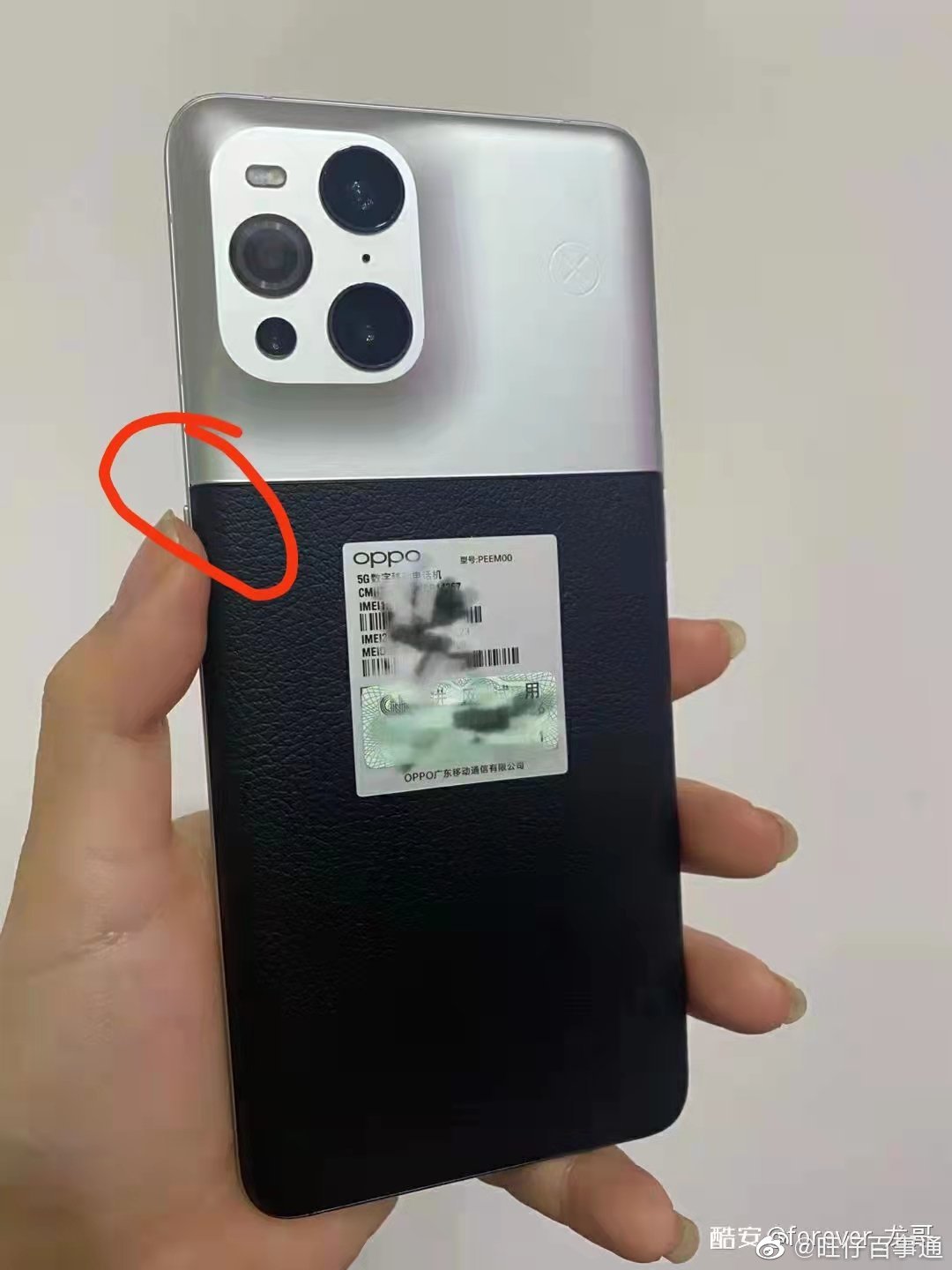
OPPO’s Find X3 series launched in March of this year, bringing a new design and some incredible specs. Unlike other manufacturers that have launched another flagship for the second half of the year, OPPO has no plans to do so. However, a report said it is planning a special edition of the Find X3 Pro whose alleged photo has now appeared online.
Dubbed the Find X3 Pro Photographer Edition (not the official name), a photo of the said device is already making the rounds on Weibo. As seen below, OPPO has adopted a dual-textured finish for the phone. About one-third of the back of the phone is covered in metal while the remainder has a leather finish.
This special edition is said to be a partnership between OPPO and Kodak, and it pays tribute to a classic Kodak camera according to a leak by Digital Chat Station. Save for the different finish, the rest of the specs should remain unchanged.
The Find X3 Pro has a 6.7-inch QHD+ LTPO AMOLED screen with a 120Hz refresh rate. The phone is powered by the Snapdragon 888 processor and has up to 16GB of RAM and 512GB of non-expandable storage.
The cameras are one of the highlights of the phone. There are two main cameras – a 50MP f/1.8 camera and a second 50MP f/2/.2 ultrawide angle camera. Both have Omnidirectional PDAF but only the former has OIS. The other two rear cameras are a 13MP telephoto camera with 2x optical zoom and a 3MP microscopic camera with a 60x magnification. For the front-facing camera, OPPO ships the phone with a 32MP sensor for the front-facing camera.
The Find X3 Pro packs a 4500mAh battery and supports 65W fast wired charging, 30W fast wireless charging, and 10W reverse wireless charging. It has an IP68 rating, NFC, Bluetooth 5.2, stereo speakers, and an in-display fingerprint scanner.
We do not know when this special version of the Find X3 Pro will be announced as OPPO is yet to release any info regarding it. Regardless, the launch should not be far off.
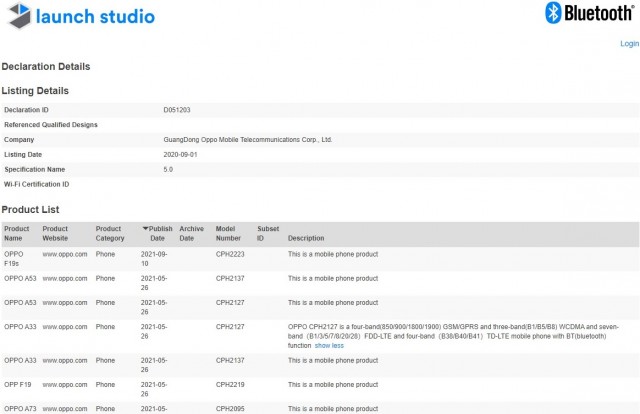
There are indications that the Oppo F19s could be launched anytime soon, following the Bluetooth SIG certification of the device. The F19s will join the lineup of smartphones in the F19 series, the first of which was unveiled in March 2021. The lineup currently includes the F19 Pro and F19 Pro+ 5G which were both unveiled in March 2021, and the F19, launched in April 2021.
Oppo F19
The Bluetooth SIG certification usually precedes the launch of devices, although it is not definitive and one cannot predict the length of time until the launch of the device. However, most products do get a quick lunch after their Bluetooth certification. There are only a few details that could be pieced from the Bluetooth certifying authority. The model number of the Oppo F19s is CPH2223. It will have Bluetooth 5.0 connectivity.
The Oppo F19s has also been the subject of a few tipsters. A recent leak indicated that the F19s is primed for an imminent launch in India at Rs. 18,000 ($245). It was also stated that the F19s will be powered by Qualcomm Snapdragon 662 processor. The F19s is rumored to run on Android 11 together with ColorOS11.1. As per the specs, the F19s will have a 6.43-inch Full HD+ AMOLED display with a decent refresh rate, as well as 4GB of RAM and 128GB of internal storage.
The Oppo F19s is also rumored to have a triple camera setup on the rear, signposted by a 48MP main camera. It also comes with a 5,000mAh battery and 33W charging support. If the projections are right, we may see the unveiling of the Oppo F19s anytime soon.
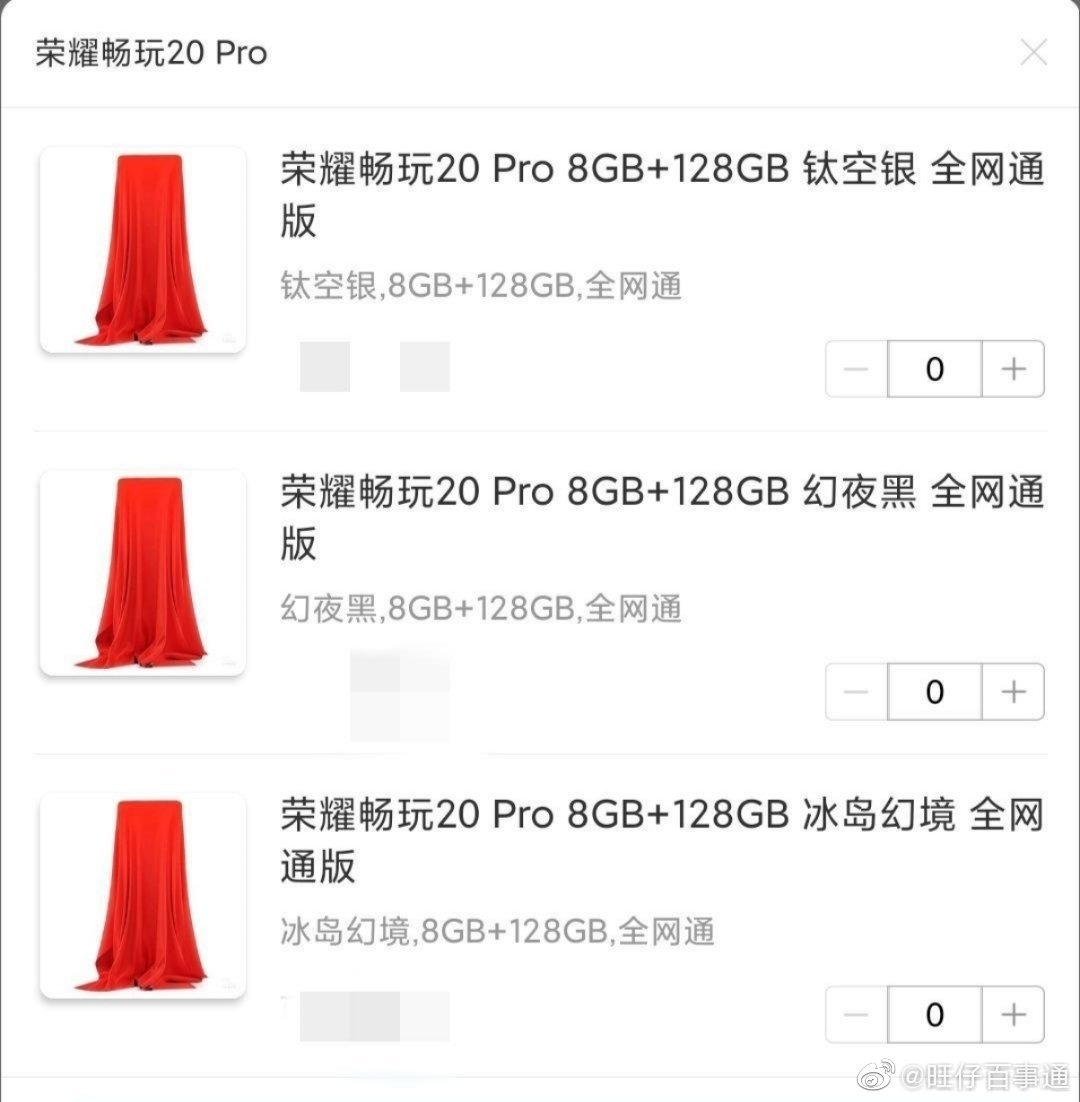
Earlier this year, Honor launched the Honor Play 20, an entry-level smartphone with a Unisoc T610 processor. Now, it is ready to follow it up with a pro model. Listings of the Honor Play 20 Pro have been posted online and they reveal some key details of the upcoming phone.
The Honor Play 20 Pro has appeared on an unnamed website. The listing shows that the phone will have 8GB of RAM and 128GB of storage, though we believe there will be other configurations when it launches. The phone will be available in three colors – Titanium Silver, Magic Night Black, and Icelandic Fantasyland.
Image source: Weibo
The source (@Jiwai Digital VVV) that found the listings said the phone will be powered by a Unisoc processor but another Weibo user, ”@Wang Tsai Know-how”, says that is not the case. However, he says the Honor Play 20 Pro will be a 4G phone just like the Honor Play 20. He also said that the phone will be priced between ¥999 (~$155) – ¥1199 (~$186). This price is most likely for the base model considering the Honor Play 20 launched with a starting price tag of ¥899 (~$139) and goes up to ¥1399 (~$217).
The Honor Play 20 will have a 6.52-inch display with an HD+ resolution and a waterdrop notch. The Unisoc Tiger T610 under its hood is paired with up to 8GB of RAM. All RAM variants have the same 128GB of eMMC storage but you can add more space via the MicroSD card slot.
The Play 20 packs a 13MP + 2MP dual-camera setup on the back of the phone while a 5MP sensor is in front for selfies. Other features include a 5000mAh battery capacity with support for 10W charging. It runs Android 10 with Magic UI 4.0 on top.
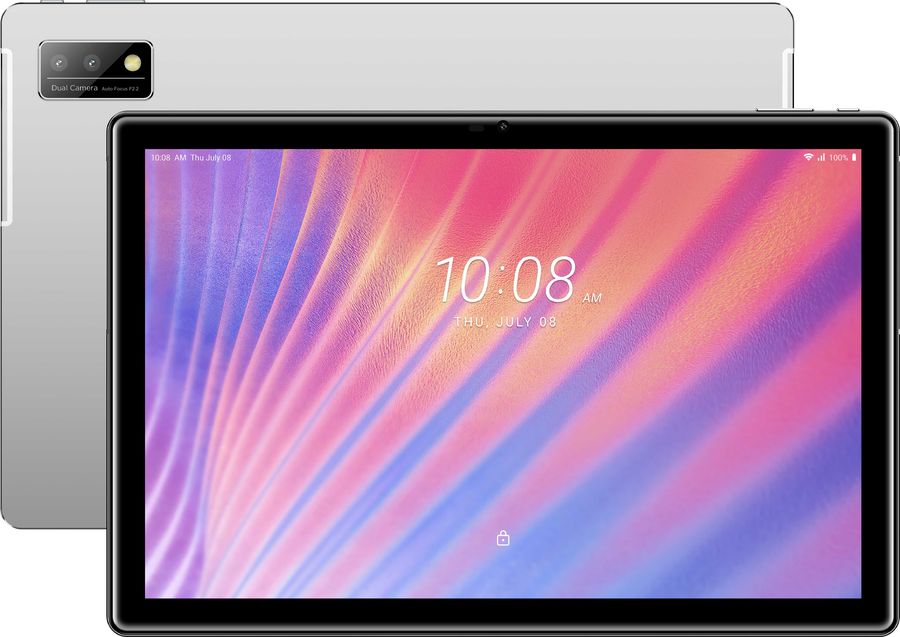
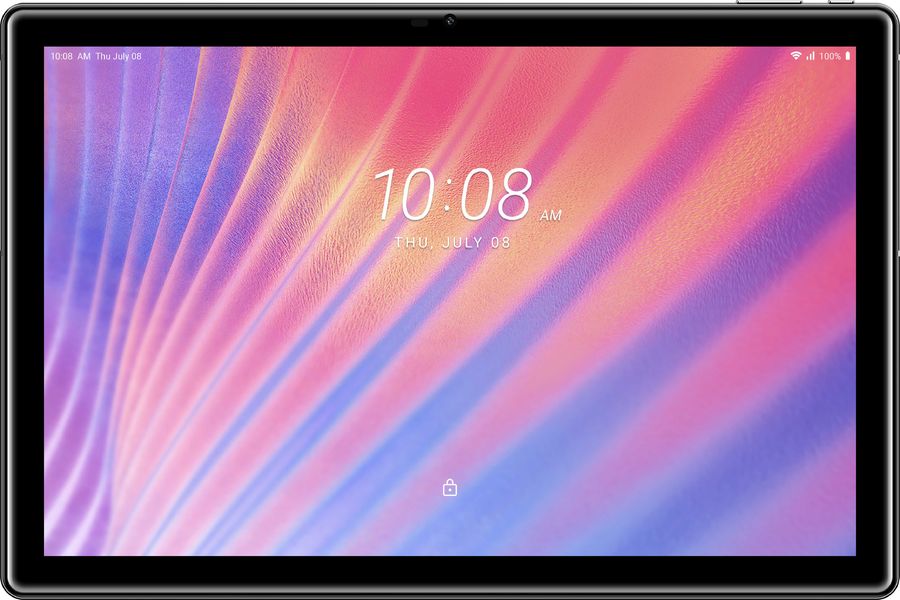
Early last month, an HTC tablet was spotted on the Google Play Console. The device has now been officially unveiled in Russia as the HTC A100 and it packs mid-range specs at a price that falls under $300.
Image source: Citilink.ru
The HTC A100 has a 10.1-inch IPS LCD display with a 1920 x 1200 resolution. The screen is housed in an aluminum chassis with rounded corners. There are bezels around the display, and while they are not humongous, they are not the slimmest. However, they do have the same thickness on all sides.
For its first tablet in years, HTC has gone with the UNISOC Tiger T618, the same chipset we have seen in phones such as ZTE’s Axon 20 4G and Blade V30 smartphones and the Alldocube iPlay 40 tablet. The 12nm processor has an 8-core CPU made up of two Cortex-A75 cores clocked at 2.0GHz and six Cortex-A55 cores clocked at 2.0GHz. It also has a Mali G52 MP2 GPU.
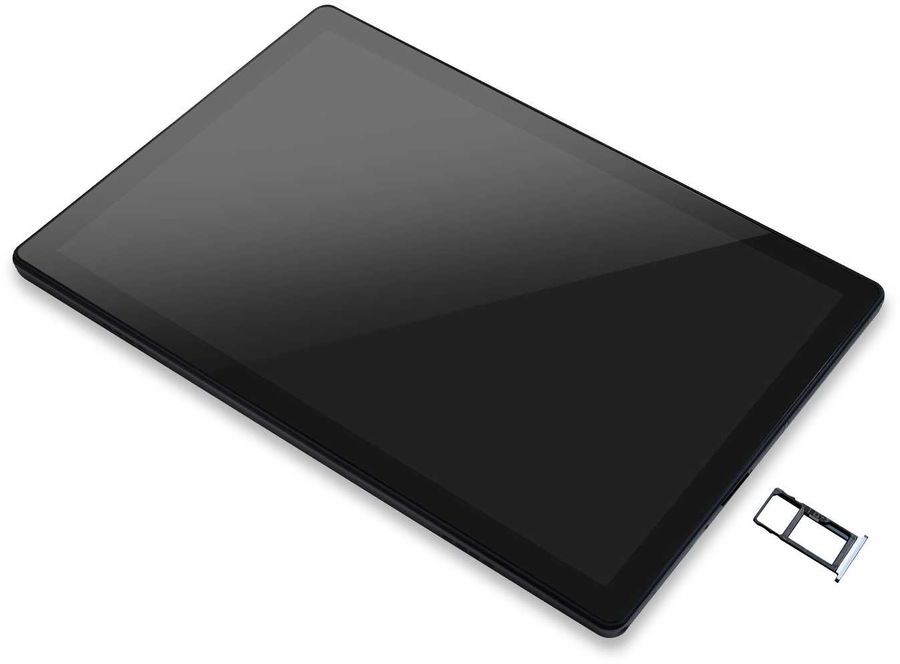
The processor is paired with 8GB DDR3 RAM and 128GB of storage. There is a MicroSD card slot that allows the user to add up to an extra 256GB of storage. The tablet also has support for dual SIMs via its hybrid SIM slot.
1 of 5
On the back of the HTC A100 are two cameras – a 13MP main camera and a 2MP secondary camera. It also has a 5MP front-facing camera for video calls. There are two speaker grilles at the bottom, and on the same side as the SIM tray and USB-C port lies an audio jack. The tablet packs a 7000mAh battery capacity, ships with a power brick in the box, and runs Android 11.
The HTC A100 is already available for purchase in Russia at a price of ₽19,990 which converts to about $273. At the moment, we do not know if the tablet will be announced in other regions.
The Redmi 10 was first launched in Malaysia last month. Now it seems it will soon make its way to Europe as a leak as revealed the specifications and pricing details for the budget mid-range device heading to the region.
According to Roland Quandt of Winfuture.de, the Redmi 10 will have the same specifications as the model sold in the Asia Pacific region. However, it will only be available in one RAM variant in the Old Continent.
The Redmi 10 (Europe and Rest of The World) will have a 6.5-inch FHD+ display with a 90Hz AdaptiveSync refresh rate. MediaTek’s Helio G88 processor will power it along with 4GB of RAM and 64GB or 128GB of storage.
Xiaomi Redmi 10 Euro/ROW model: 179 Euro for 64GB, 199 Euro for 128GB 4GB RAM rest same as APAC/non-chinese model: 6,5" FHD+ 2400×1080 90Hz AdaptiveSync 50MP, 8+2+2MP cams, 8MP FFC Helio G88 Dual SIM 5000mAh, 18W charging, incl. charger, case Don't see NFC anywhere, but not sure.
There will be four cameras on the rear – a 50MP main sensor, an 8MP ultrawide angle camera, and two 2MP cameras for depth and macro. The front-facing camera is an 8MP sensor.
The Redmi 10 will pack a 5000mAh battery with support for 18W fast charging. Unlike Nokia who isn’t shipping some of its mid-range phones with a charger, the Redmi 10 will come with an 18W power brick in the box. It will also ship with a protective case.
The source has revealed that the phone will have support for Dual SIM but there is no confirmation it has NFC. While it is not mentioned, the Redmi 10 sold in Europe should have a side-mounted fingerprint scanner, IR blaster, stereo speakers, and an audio jack.
Redmi has put a price tag of €179 on the 64GB version while the 128GB version will sell for €199. Unfortunately, there is no mention of the colors the phone will be available in when it launches in Europe.
GoPro is all set to announce its new action camera on September 15, but a recent leak has spoiled the suspense for the fans waiting for the Hero 10 Black. A few days ago, Roland Quandt from WinFuture revealed the European prices for the Hero 10 Black, and now he’s back again, revealing the design, specifications and features of GoPro’s upcoming action camera.
GoPro would be marketing the Hero 10 Black as the “most powerful GoPro of all time”. The Her 10 Black action camera would come with a new GP2 chip. The GP2 chip is reported to offer double the performance compared to its predecessor, improved low light performance with more hardware upgrades. It would come with an updated stabilization dubbed HyperSmooth 4.0, marketed as “groundbreaking.” The HyperSmooth 4.0 would ensure that users can activate the recording anytime without any hassle. The new algorithm would also improve the low light performance during recordings. The design of Hero 10 Black won’t be much different than the Hero 9 Black.
1 of 5
According to the report, the GoPro Hero 10 Black would offer images up to 23 megapixels and 5.3K videos at up to 60 frames per second. Further, the slow-motion videos can be recorded at 8 times delay at 2.7K resolution (at 240fps). The Hero 10 Black will also allow users to extract images of 15.3 megapixels from the 5.3K videos. The upcoming GoPro action camera will feature a new lens with a hydrophobic layer minimizing reflections and preventing disturbing effects.
The Hero 10 Black will come with the same 2.7-inch display as its predecessor with touch functionality. However, the refresh rate of the front display is said to be increased to achieve a more fluid output display. GoPro claims that the upcoming Hero 10 Black would offer smoother touch controls and a faster shutter release. The live stream image quality is also said to be higher than its predecessor. The FoV will remain the same at 132 degrees, but it can be widened to 155 degrees using the Max Lens mod. The battery also remains unchanged at 1720mAh with support for fast charging.
The upcoming Hero 10 Black is expected to be officially announced on September 15. It is expected to cost 539.99 euros without the GoProCloud subscription.
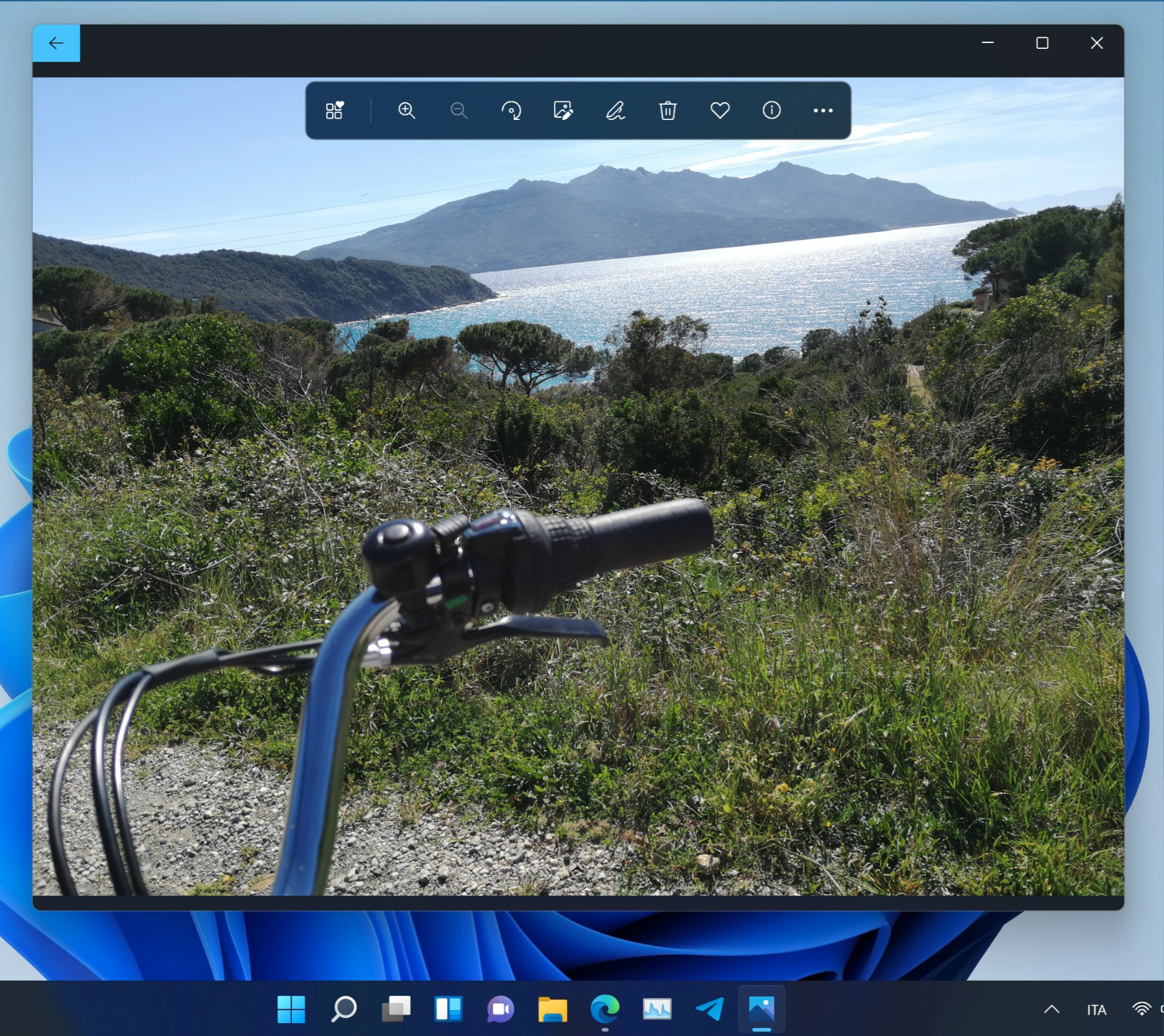
Windows 11 is just a few weeks away from the official release, and Microsoft is not teasing new features. Earlier this week, Microsoft teased a redesigned Photos app for Windows 11. Now, the Redmond giant has started rolling out the new app to the users who registered for the Windows Insider program.
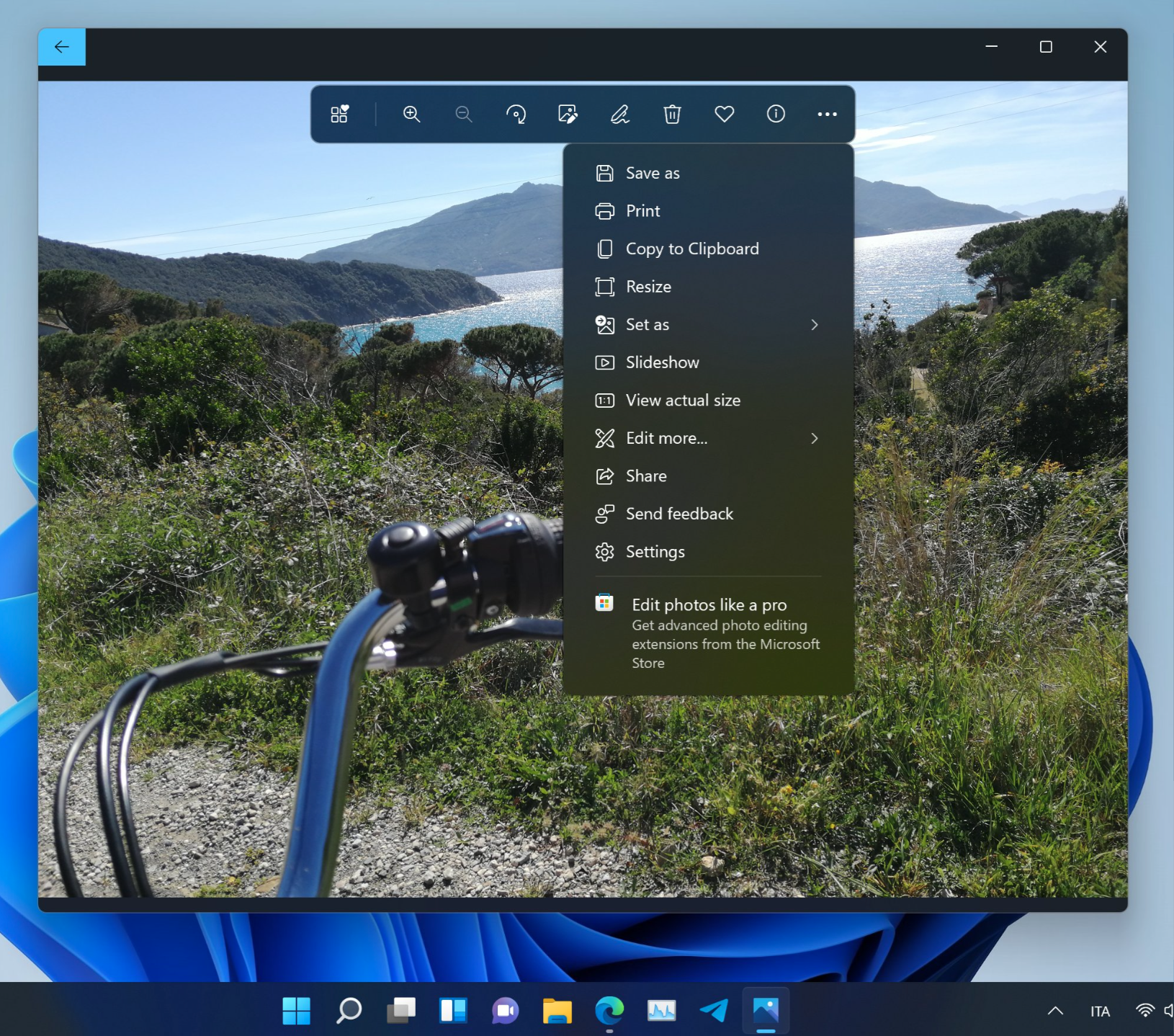
The new Photos app has a refreshed user interface, matching Windows 11’s modern UI changes such as a new typeface, rounded corners and a new icon. The app also gets the Dark Mode which will also be present system-wide with the Windows 11 update. The app will also support extensions that can be downloaded from the Microsoft store. The redesigned Photos app is only rolling out to a select batch of users, and more people will be able to check out the new app in the coming weeks with Windows 11 as the release date comes near.
1 of 3
Source: MSPowerUser
Source: MSPowerUser
Source: MSPowerUser
Windows 11 is set to be rolled out to eligible devices as a free upgrade starting October 5. It could take some weeks or months before you get an option to upgrade your machine. Aaron Woodman, GM, Windows Marketing, says that every eligible machine would receive the Windows 11 update by the middle of 2022. Users would be getting a notification as soon as the update is ready for their device.
Windows 11 brings a major revamp and a bunch of new features onboard, and here are the 11 interesting features that Windows 11 brings. However, most of the features might not be available at the launch. A report from The Verge suggests that the android app support might come as late as 2022.
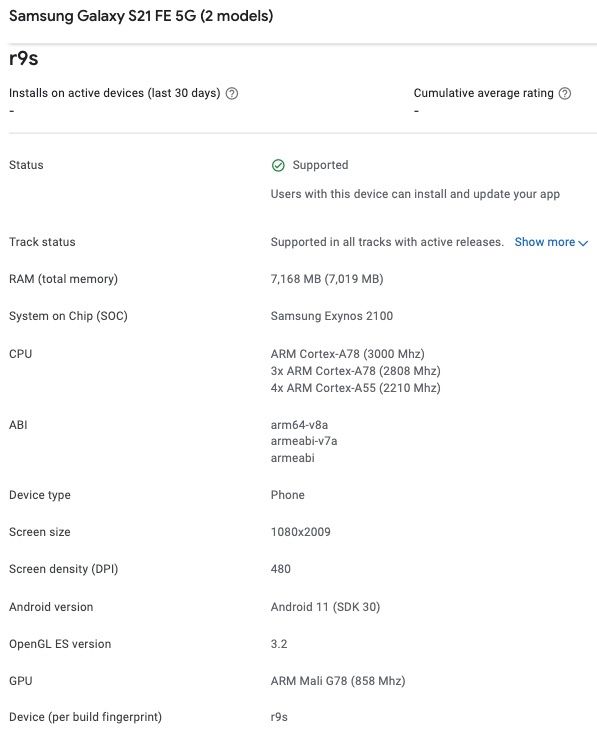
Samsung’s upcoming budget flagship, the Galaxy S21 FE, has been doing rounds of the internet lately. Now, the smartphone has appeared on Google Play Console with Samsung’s Exynos 2100 chipset. The listing also reveals some key specifications of the S21 FE.
1 of 2
The Exynos 2100 chipset powered the variant listed on Google Play Console. The Exynos 2100 is built on TSMC’s 7nm process node, and it features 1x ARM Cortex-A78 core clocked at 3GHz, 3x Cortex-A78 cores clocked at 2.8GHz and 4x Cortex-A55 cores clocked at 2.2GHz. The processor inside is paired with Mali G78 GPU. Further, the variant had 8GB of RAM, and it was running Android 11 out of the box. The smartphone is expected to run OneUI 3.0 on top of Android 11.
Samsung Galaxy S21 FE TENAA images
The Google Play Console listing reveals that the Galaxy S21 FE features a Full HD+ display having a resolution of 1080 x 2009 pixels and a screen density of 480 pixels per inch. The listing also has an image attached which reveals the front of the smartphone. The Galaxy S21 FE would have a bezel-less display with a centred punch-hole cut out as per the image.
Samsung Galaxy S21 FE rumoured specifications
The Galaxy S21 FE is expected to come in a similar design as the other Galaxy S21 series smartphones. It might feature a flat 6.4-inch FHD AMOLED display with a refresh rate of 120Hz. The S21 FE would come in two variants, one powered by Snapdragon 888+ chipset and another with Exynos 2100 at its helm. The smartphone is said to boast 4,370mAh with support for 25W fast wired charging. It is expected to feature a triple rear camera setup in a 32MP+12MP+8MP configuration, and it would have a 12MP camera on the front housed inside the punch hole cutout for selfies.
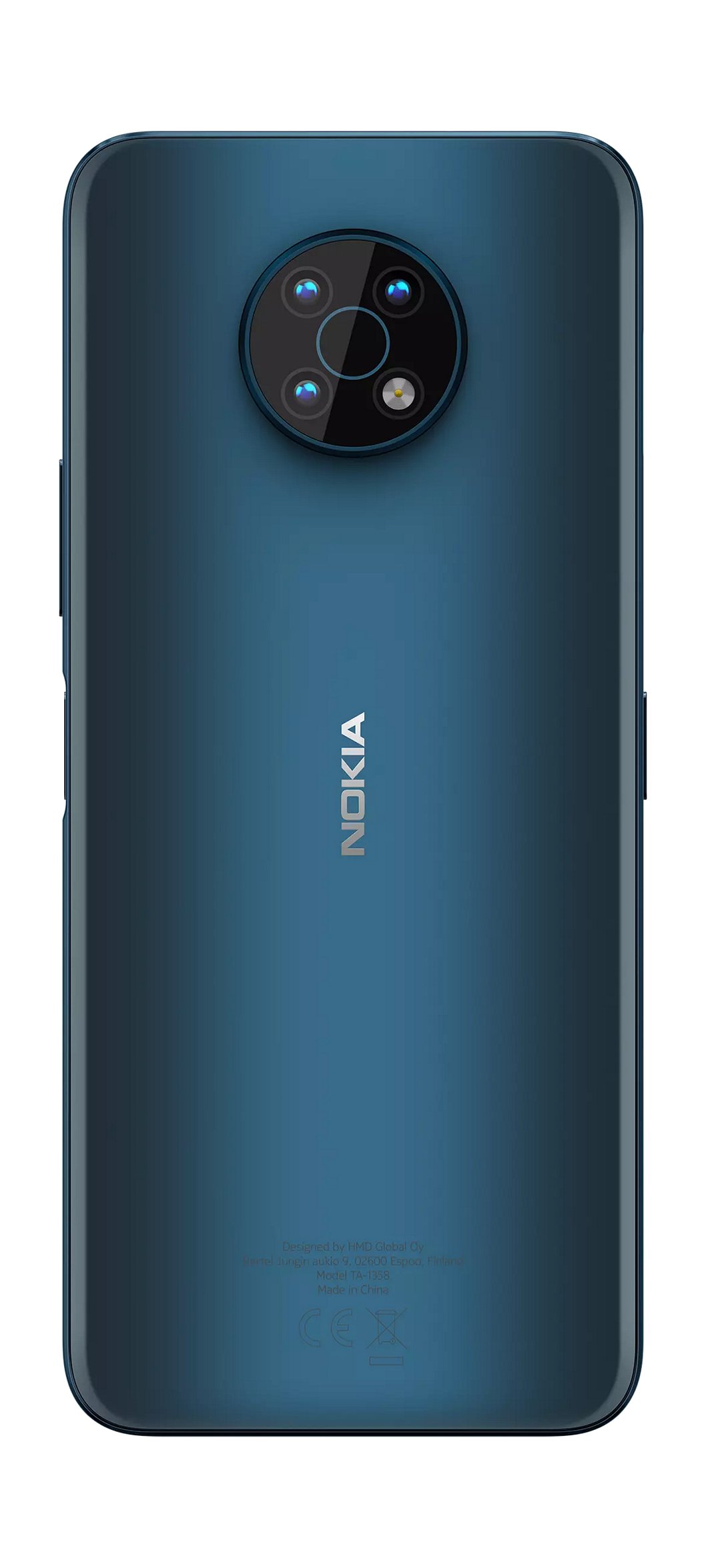
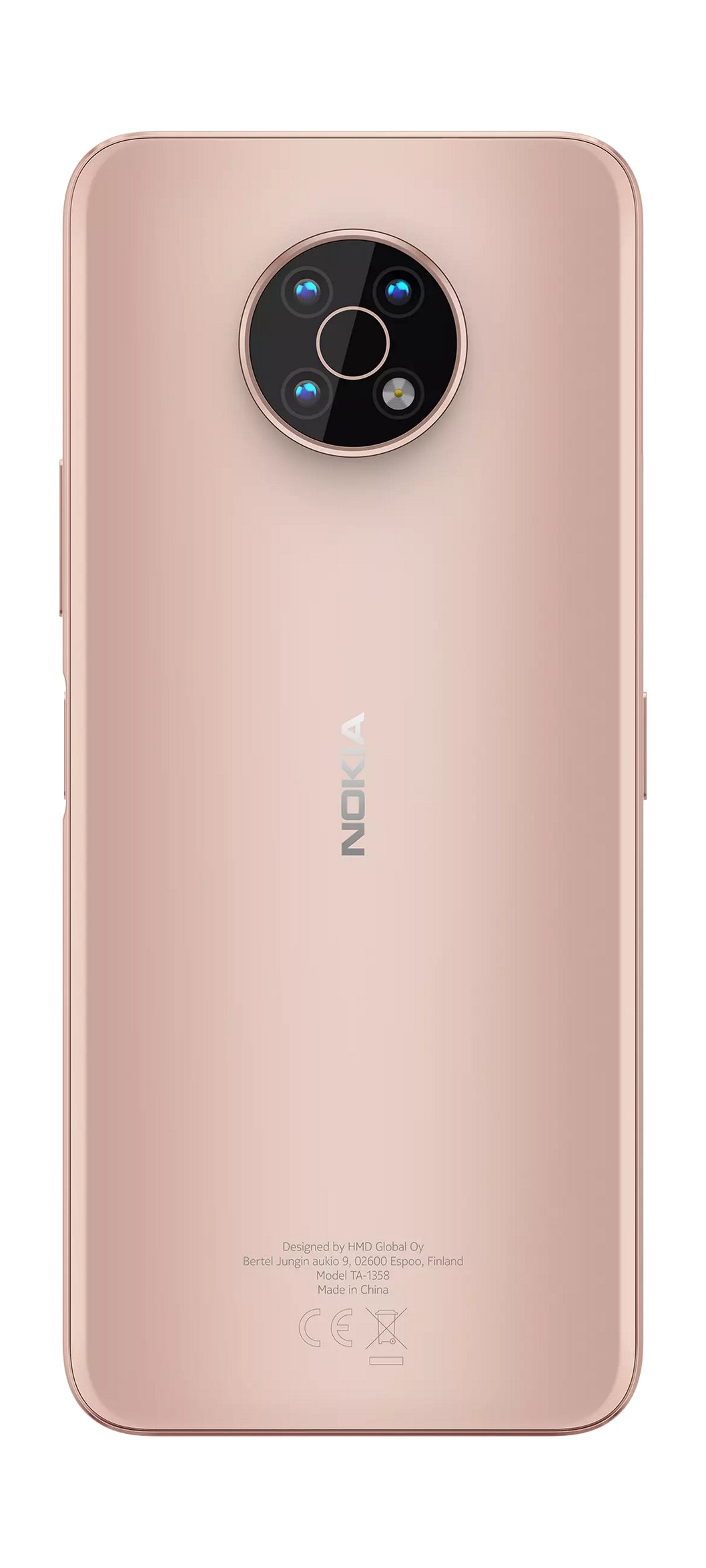
Nokia G50 5G is likely to go official at some point this month. Winfuture.de shared the key specifications and renders of the smartphone by August end. Ahead of the rumored launch, reliable tipster Roland Quandt has shared the pricing, specifications, and renders of the G50 5G.
Nokia G50 5G specifications (Rumored)
The Nokia G50 5G has a 6.82-inch IPS panel that offers a Full HD+ resolution of 720 x 1640 pixels. The Snapdragon 480 chipset is present under the hood of the device. It is expected to arrive with 4 GB of RAM and 128 GB of built-in storage.
For selfies, it will feature a front camera of 8-megapixel. Its rear camera setup has a 48-megapixel primary camera, a 5-megapixel ultrawide lens, and a 2-megapixel depth sensor. The device will carry support for 30fps 1080p video recording.
1 of 8
Nokia G50 Ocean Blue
Nokia G50 Ocean Blue
Nokia G50 Ocean Blue
Nokia G50 Ocean Blue
Nokia G50 Midnight Sun
Nokia G50 Midnight Sun
Nokia G50 Midnight Sun
Nokia G50 Midnight Sun
The G50 5G will come preinstalled with Android 11 OS. It will receive 2 years of software upgrades and 3 years of security updates. It will be backed by a 4,850mAh battery. It will offer other features such as Wi-Fi 5, Bluetooth 5.0, NFC, a USB-C port, a 3.5mm audio jack, and a side-mounted fingerprint scanner. It measures 8.85mm in thickness and weighs 190 grams.
Nokia G50 5G pricing (Rumored)
The Nokia G50 5G will be priced at 259 / 269 euros, and as shown in the above renders, it will come in Ocean Blue and Midnight Sun color variants. The handset will come with 2 years of warranty support.
Unlike the European market, Xiaomi has a huge rival in India: Transsion. It is the company that owns Micromax, Infinix, and Tecno and it also operates in the African markets. In a few days, Xiaomi’s sub-brand will launch the Redmi 10 Prime in India and, despite it is likely to become one of the best sellers in the next future, the competition will be hard to beat. This is a comparison between the Redmi 10 Prime and two devices from Transsion’s brands in the same price range: Infinix Note 10 and Micromax In note 1.
Xiaomi Redmi 10 Prime vs Infinix Note 10 vs Micromax In note 1
Triple 48 + 2 + 2 MP, f/2.4 and f/2.4
16 MP front camera
Quad 48 + 5 + 2 + 2 MP, f/1.8, f/2.2, f/2.4 and f/2.4
16 MP f/2.0 front camera
BATTERY
6000 mAh, fast charging 18W
5000 mAh, fast charging 18W
5000 mAh, fast charging 18W
ADDITIONAL FEATURES
Dual SIM slot, reverse charging 9W, dustproof and splash proof
Dual SIM slot
Dual SIM slot, reverse charging
Design
The design of the Redmi 10 Prime reminds me of a flagship from the last generation: the Xiaomi Mi 10 Ultra. Someone might find the camera module big and invasive, but I prefer this device in terms of design because it is more compact and it has a cleaner look if we exclude the camera module. Further, it is dustproof and splashproof. Just like the Infinix Note 10, it has a side-mounted fingerprint reader, while the Micromax In note 1 has a rear-mounted scanner. The Infinix Note 10 is one of the biggest phones out there, so it is not for everyone. If we exclude the rear-mounted fingerprint reader, the Micromax In note 1 is attractive with its reflective back and oleophobic coating for the display.
Display
The most advanced display belongs to the Redmi 10 Prime. It is the only one to offer a 90 Hz refresh rate, while Micromax In note 10 and Infinix Note 10 come with standard 60 Hz displays. However, the Infinix Note 10 has another important advantage: with a diagonal of 6.95 inches, its display is very wide and good for productivity and power users. Just like the Redmi 10 Prime, Infinix Note 10 has stereo speakers, while you get a mono speaker with the Micromax In note 1.
Hardware/Software
The Redmi 10 Prime is fueled by a better processor compared to its two opponents: not a big improvement, but still a better chipset. We are talking about the Helio G88 mobile platform, which is an upgrade of the Helio G85 found on the Infinix Note 10 and the Micromax In note 1. The chip is paired with up to 6 GB of RAM and 128 GB of internal storage you can furtherly expand with a micro SD. You can get the same memory configuration with the Infinix Note 10, but not with the Micromax In note 1 which stops at 4 GB of RAM. The Redmi and the Infinix run Android 11 out of the box, while Micromax In note 1 is still based on Android 10.
Camera
The Redmi 10 Prime is the most advanced camera phone: first of all, it has a better main camera with a 50 MP resolution. Further, it comes with a better ultrawide camera with an 8 MP resolution. To be accurate, the Infinix Note 10 does not even have an ultrawide camera, but it comes with a Quad LED flash making photos in the dark brighter. The Micromax In note 1 should be better for taking selfies with its 16 MP f/2.0 front camera.
Battery
The battery life king is the Redmi 10 Prime thanks to its bigger 6000 mAh battery. Besides fast charging, it even supports reverse charging.
Xiaomi Redmi 10 Prime vs Infinix Note 10 vs Micromax In note 1: Price
Redmi 10 Prime will hit India with Rs. 12,499 / $170 starting price, Infinix Note 10 costs Rs. 10,999 / $150, and Micromax In note 1 costs Rs. 11,499 / $156. Redmi 10 Prime is the best of the trio, but you can get a higher value for money with Infinix Note 10.
There is a lot to look forward to this week if you are a phone geek, most especially those who are Apple fans. The American company has got multiple new products launching this week that will be the headlines for days if not weeks to come. For non-Apple fans, there are other exciting things coming too. Xiaomi and Huawei both have events this week and there will be several new products unveiled. Here is a roundup of what is coming next week:
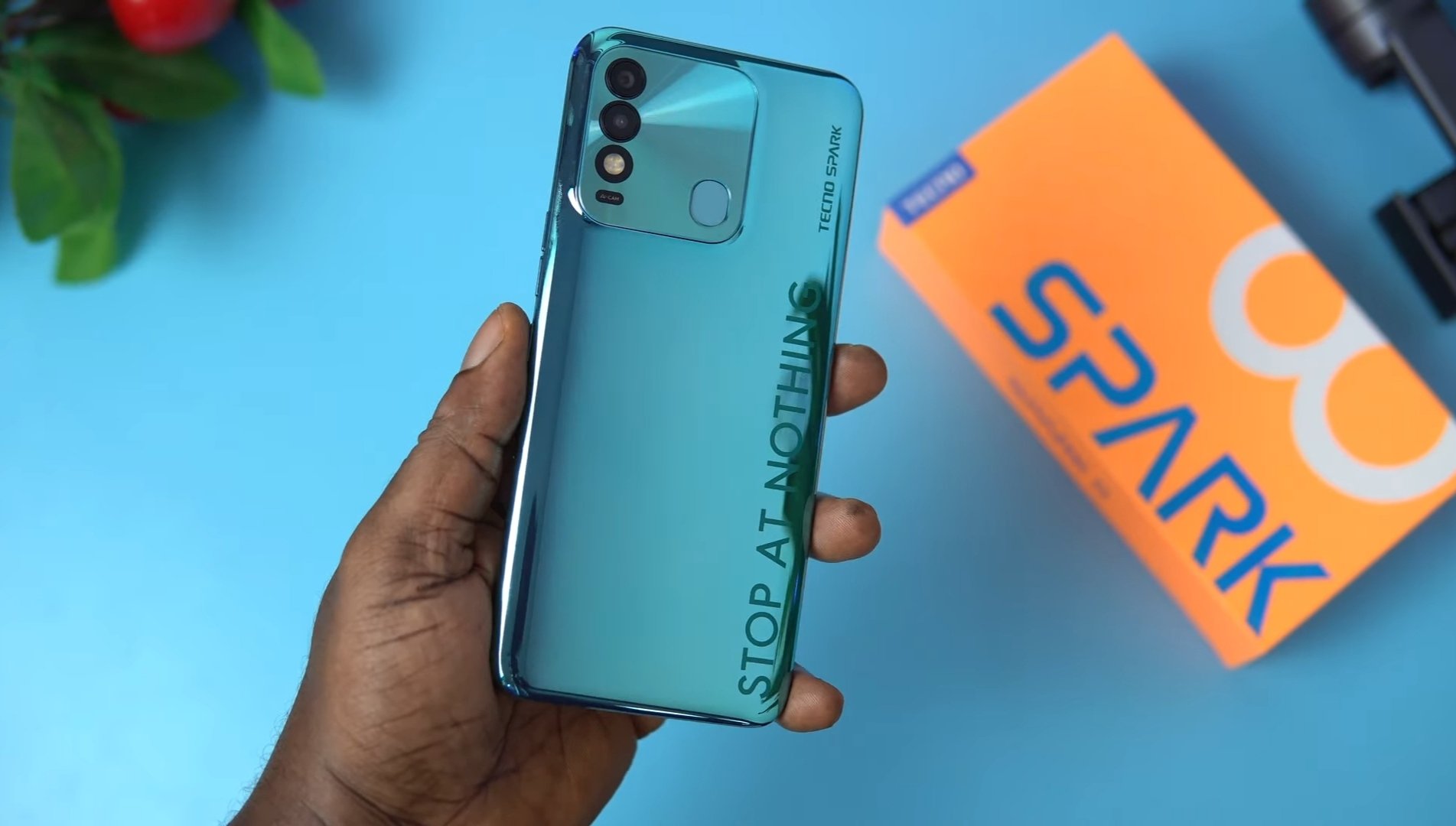
Tecno Spark 8 – September 13
Transsion Holdings-owned brand, Tecno, will kick off the week with the launch of its Spark 8 smartphone. The entry-level phone already launched in Nigeria but will be making its way to India next week. The specs are pretty modest and Tecno will ship it with Android 11 Go Edition.
Infinix Zero X – September 13
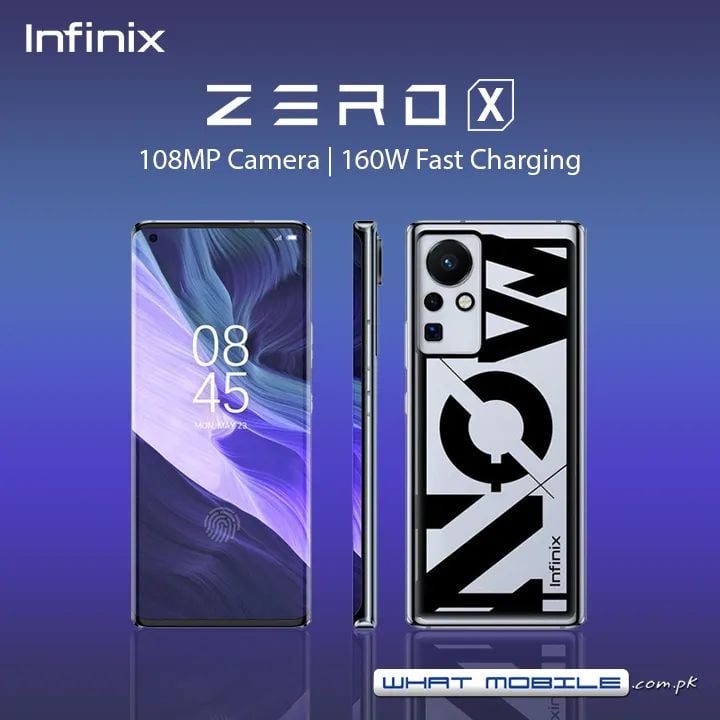
Another Transsion Holdings brand, Infinix, will be announcing a new smartphone on September 13 too. It has been reported that the Infinix Zero X will launch with an Helio G96 processor under its hood, a display with a high refresh rate, and a triple camera setup on the rear that includes a sensor with a periscope lens.
Apple has scheduled an announcement for new products on Tuesday, September 14. It is expected to unveil the new iPhone 13 series, the Apple Watch 7 series, new iPads, and new MacBooks.
The new iPhones will be the highlight of the event which will be live-streamed. The iPhone 13, iPhone 13 Mini, iPhone 13 Pro, and iPhone 13 Pro Max will come with a new powerful processor, a smaller notch, bigger batteries, and support for faster charging.
Xiaomi Event – September 15
On Wednesday, September 15, Xiaomi will have a global event during which it will announce a bunch of new products. The star of the launch will be the Xiaomi 11T/Mi 11T series and the global launch of the Mi Pad 5. However, there are bound to be other product announcements too.
Infinix Hot 11S – September 17
Infinix will have another launch but in India. This time, it will announce the Hot 11S, an Helio G88-powered smartphone with quad rear cameras. While the specs may be uninteresting the phone does have a nice design that will turn heads.
Samsung introduced ‘Note’ branding for smartphones with the launch of its iconic Galaxy Note lineup. On the other hand, Xiaomi popularised this name with its Redmi Note series in the budget segment. There are also other Note-branded handsets like Micromax IN Note 1. This particular phone is now said to get a Pro model.
Micromax IN Note 1
As per tech influencer Mukul Sharma (@stufflistings), Micromax’s upcoming phone will be called Micromax IN Note 1 Pro. He says that this device will launch at the end of September.
Apart from the name of the smartphone and its release timeline, Sharma does not reveal anything else about this device. But we do know that it could be powered by a MediaTek Helio G90 chipset.
In related news, the world’s fastest-growing smartphone brand realme may also introduce the realme Note series in the near future. These phones called realme Note 9 and realme Note 9 Prime might go official next year at around the same time as the realme 9 series.
As mentioned in the beginning, only Samsung and Xiaomi have managed to be associated with the Note branding though there are many Notes out there. Only time will tell if Micromax and realme can do the same.
Ulefone recently launched a promising rugged smartphone, the Armor 12 5G, bringing upgrades in areas wherever it’s necessary than its predecessors. Despite featuring much-improved specs and features, Ulefone was able to make the device thin and light. All thanks to the engineering prowess, the Armor 12 5G is a rugged phone which most of us will love to grab. In case if you’re curious to know how Ulefone was able to give us Armor 12 5G with such a decent build, then the company has released a video on how the Armor 12 5G is made in the factory.
The Official Video lasting up to 1 minute and 19 seconds takes you through the key steps in the manufacturing of the Armor 12 5G. You will be able to see the spacious factory, advanced production equipment, professional R&D team, and skilled workers of Ulefone. It’s literally a feast to watch and have a glimpse of the manufacturing and assembly process carried out behind the Armor 12 5G. Indeed an engineering marvel!
In case if you’re unaware, the Ulefone Armor 12 5G is the world’s first antibacterial dual 5G rugged phone. It is powered by Dimensity 700 5G octa-core chipset, paired with 8GB RAM + 128GB ROM storage, and supports a much advanced Dual 5G Hyperfast network. Keeping the lights on of the device is a 5180mAh battery that supports 15W wireless charging. It boasts a 6.52-inch waterdrop screen, 48MP quad rear camera, and runs the latest available Android 11 OS.
The USP of the device is the presence of Silver ion antibacterial coating claimed to eliminate bacteria up to 99.9%. This could be useful especially in this challenging era where pathogens have created havoc all around the globe. Furthermore, the device itself is rated IP68/69K for waterproof and drop resistance.
Ulefone has started the pre-sale of the Armor 12 5G through its official webpage. The pre-ordered devices are expected to ship starting from September 15th. You may visit www.ulefone.com for more info and the availability in your region.
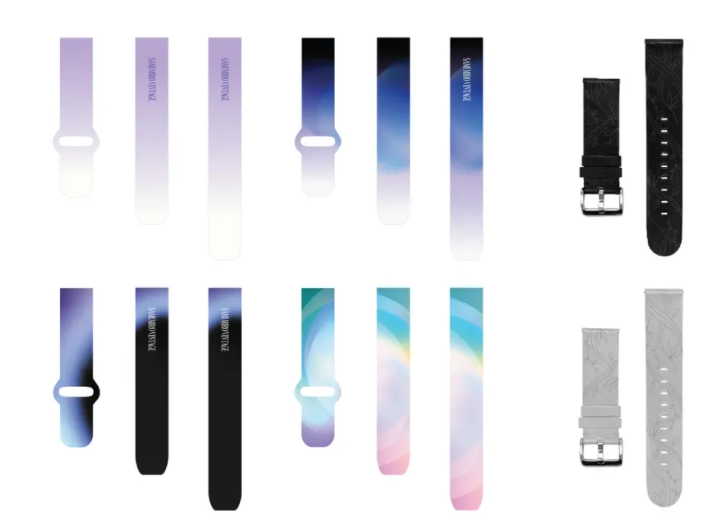
Samsung has released six watch bands for the Galaxy Watch 4. The limited-edition watch bands are made from eco-friendly, recyclable materials including apple peels, according to the South Korea-based company. The new watchband was designed and produced in collaboration with fashion designer Sami Miro. Miro’s previous collections have used some of the materials deployed in the new Samsung collection of watch bands.
The six watch bands are Midnight Black, Stratus Sky (both made 100 percent from apple peels), Aurora Night, Cloud Navy, Earth Sunrise, and Dawn Atlas (made of thermoplastic polyurethane recyclable materials). Both the Midnight Black and Stratus Sky watch bands amazingly retain the premium look of leather even though they are made from non-animal materials. The six Samsung Galaxy Watch 4 replacement watch bands are available at a starting price of $39.99.
While the new watch bands align with a conscious policy by Samsung to reduce its carbon footprint, there are still several areas where the company needs massive improvements. The durability of these new watch bands may not be as strong as the traditional materials, but they are important improvements all the same. However, much still needs to be done in terms of the reparability of most of its devices. In addition, the eco-friendly status of much of Samsung’s production facilities in several countries is still very low, while in some other countries, the company has fully transited to renewable energy in such plants.
Samsung has also introduced three new watch faces and they can be downloaded from the Google Play Store.
The Google Pixel 6 series is highly anticipated. Not only is Google revamping the design this year, but the new phones will also be powered by Google’s own processor which is dubbed Google Tensor. New details of the processor have leaked and they reveal an interesting detail.
Just like this year’s flagship chipsets from Qualcomm and Samsung i.e. the Snapdragon 888/Snapdragon 888+ and the Exynos 2100, a leak by the Chinese leaker, Digital Chat Station, has revealed that the Tensor processor will also feature Arm’s Cortex-A1 CPU core. However, it won’t have one but two of these cores. The info was revealed in a Weibo post.
The leaker revealed the processor will have the two Cortex-X1 cores clocked at 2.8GHz along with two high-performance cores clocked at 2.25GHz and four efficiency cores clocked at 1.8GHz. The CPU is paired with the Mali-G78 GPU whose clockspeed wasn’t revealed.
An earlier report disclosed that the Google Tensor chip will be built on Samsung’s 5nm node. The processor will bring key improvements in AI tasks such as translation, captioning, and dictation. Google has also revealed that the phones will feature the most layers of hardware security in any phone.
The Pixel 6 and Pixel 6 Pro will have displays with a punch hole for the front-facing camera. The former will have two rear cameras while the pro model will have three rear cameras that include one with a telephoto lens that provides 4x optical zoom.
Google is yet to announce a date for the release of the phones but multiple sources point to an October release date.
Qualcomm has announced a handful of processors this year but it still has more in the pipeline as revealed by a new report. These new processors will launch under the mid-range category.
These new processors will be launching under the Snapdragon 600 series according to their part numbers discovered by Winfuture.de. There is also a possibility that the chipsets may have gaming variants, so we may see the G-suffix naming which Qualcomm uses for the Snapdragon 700 series get applied to the Snapdragon 600 series too.
Qualcomm SM6375
The SM6375 is expected to launch in four variants all of which will have different CPU and GPU clock rates but the same base. All four will have 8 CPU cores made up of four Gold cores and four Silver cores. Below are the configurations that have been spotted. The GPU clock speed is said to be between 940Hz and 960Hz.
4x Gold cores at 2.1GHz + 4x Silver cores 1.8GHz
4x Gold cores at 2.2GHz + 4x Silver cores 2.0GHz
4x Gold cores at 2.3GHz + 4x Silver cores 2.1GHz
4x Gold cores at 2.5GHz + 4x Silver cores 2.2GHz
The source reports that one of the developer platforms based on one of the chips has a maximum refresh rate of 144Hz which further reinforces the speculation that at least one of the processors may have the G-suffix. A wild guess says we may see two of the chips arrive as the Snapdragon 695 and Snapdragon 695G respectively.
Qualcomm SM6225
The Snapdragon SM6225 is the second chipset that was discovered by the source and it is expected to launch under the Snapdragon 690 which has part number SM6350. However, there are similarities between the chipset and the Snapdragon 765 a.k.a. SM7250. Unfortunately, more specific details about the CPU and GPU are not available, though it has been reported that the specs of the testing platforms are in line with mid-range devices such as 6GB of RAM, 128GB of UFS 2.2 storage, and a 90Hz FHD+ display.
Both the Qualcomm SM6375 and the Qualcomm SM6225 are manufactured by TSMC but their node size is unknown. Also, the chips should launch this year as the above details are said to be at least two months old already.
The year-long Apple versus Epic case instituted at a California court has been concluded with the Judge making a couple of important rulings. Judge Yvonne G. Rogers has issued a permanent injunction that restricts Apple from enforcing some of its previous restrictions as it relates to in-app purchases in the App Store.
According to the court papers released, Judge Rogers stated that Apple is permanently restrained and enjoined from prohibiting developers from including in their apps external links that direct users to purchasing mechanisms, communicating with customers through points of contacts obtained voluntarily from the app. In simple terms, however, this means that going forward, iOS apps must now be allowed to direct customers to payment options outside those offered by Apple. Pending no appeal, the ruling will come into force within 90 days (December 9).
However, Apple seems to have avoided any damages over the substantive issue which was also decided upon by the court. The court ruled that Epic Games breached its contract with Apple when it unilaterally implemented the alternative payment system in the Fortnite game app. Epic was therefore directed to pay Apple 30 percent of all revenue collected through the system before Apple pulled the game from its store in August 2020. Apple will therefore receive $3.5 million from Epic.
While Apple has put a statement in support of the decision, Epic could be preparing an appeal of the ruling in a higher court, as it is unsatisfied with the decision. The court failed to support the deputation by Epic, the plaintiff, that Apple was monopolistic, although it reflected that Apple is engaging in anticompetitive conduct under California’s competition laws. Apple says it remains committed to ensuring the App Store is a safe and trusted marketplace.
Apple had come under closer regulatory scrutiny after the case was filed by Epic in August 2020. It is already under some form of restrictions notably from Japan and South Korea, and the new ruling will further keep the company and its marketplace practices in the spotlight.
Samsung is introducing the virtual RAM capability to its devices and this has commenced with the Galaxy A52s 5G smartphone released recently. The virtual RAM approach to enhancing the capability of Android devices is a growing trend begun by some Chinese pacesetters.
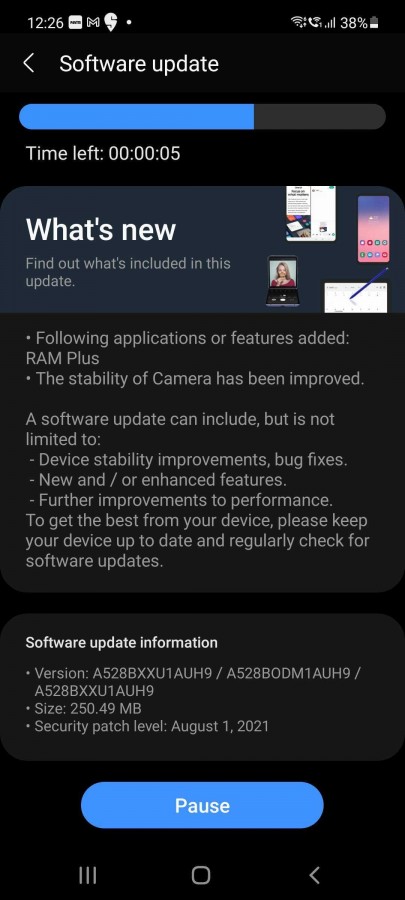
The update of the Galaxy A52s 5G RAM resources is powered by the new program called RAM Plus which enables users of the device in certain regions including India, to automatically install a software update that will thereafter create an additional 4GB of RAM capability using the device’s internal storage. The approach is not new per se, as the pagefiles method had existed before now. The RAM Plus is thus a rehash of the memory paging feature in Android and other devices.
The version of the software is A528BXXU1AUH9 and is applicable for the Galaxy A52s 5G in India. The download is 250MB and is speculated that this upgrade will improve the camera and overall device stability, as well as provide additional resources to install more apps on the device. Users in India and other regions where the RAM upgrade is available should go to the Settings menu on their A52s 5G smartphone and choose Software Update to download and install the new RAM upgrade software. It is also possible to manually download the firmware and install it on your device.
The Samsung Galaxy A52s 5G is powered by Qualcomm Snapdragon 778G processor, which is the major distinguishing feature between it and the Galaxy A52 5G which was released earlier in the year. It is unclear which other smartphones are lined up for the RAM Plus feature, as Samsung is yet to provide those details at this time.
We use cookies on our website to give you the most relevant experience by remembering your preferences and repeat visits. By clicking “Accept”, you consent to the use of ALL the cookies.
This website uses cookies to improve your experience while you navigate through the website. Out of these, the cookies that are categorized as necessary are stored on your browser as they are essential for the working of basic functionalities of the website. We also use third-party cookies that help us analyze and understand how you use this website. These cookies will be stored in your browser only with your consent. You also have the option to opt-out of these cookies. But opting out of some of these cookies may affect your browsing experience.
Necessary cookies are absolutely essential for the website to function properly. This category only includes cookies that ensures basic functionalities and security features of the website. These cookies do not store any personal information.
Any cookies that may not be particularly necessary for the website to function and is used specifically to collect user personal data via analytics, ads, other embedded contents are termed as non-necessary cookies. It is mandatory to procure user consent prior to running these cookies on your website.