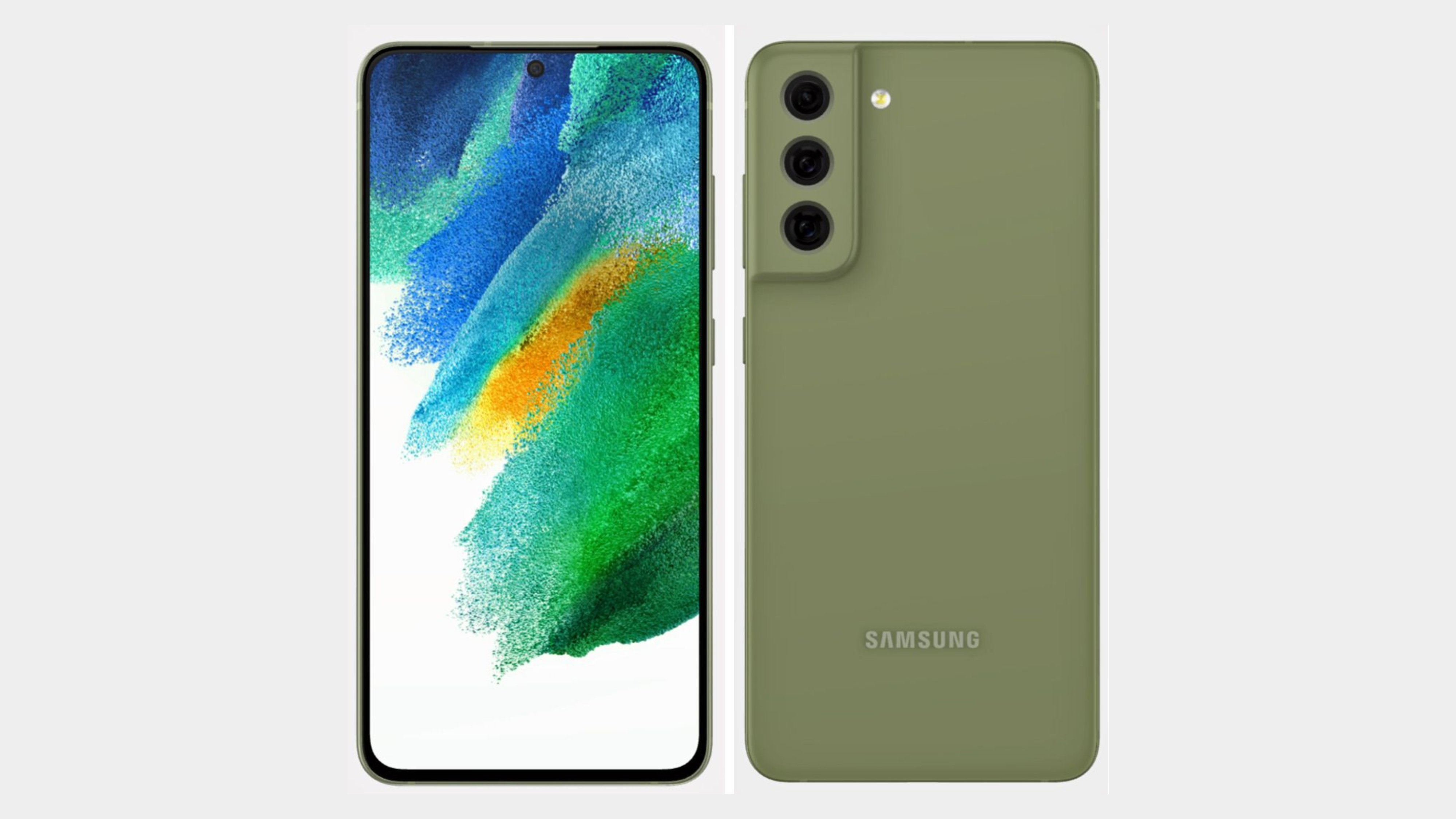
Samsung is said to hold its next Galaxy Unpacked event on August 3. The company is expected to unveil the Galaxy Z Fold3, Galaxy Z Flip3, Galaxy Watch4, and the Galaxy Watch Active4 at this conference. These devices are said to be followed by the Galaxy S21 FE. According to a new report, the successor to the popular Galaxy S20 FE will not only be delayed but may also not launch in most markets.
Samsung Galaxy S21 FE | Source: Evan Blass
A few days back, news broke out that the GalaxyS21 FE will be delayed by a month. The handset was supposed to debut alongside the new foldables and smartwatches in August. However, due to supply chain issues, it was said to launch a month later in September.
Now, a new report by Financial News (via SamMobile) sheds more info on this situation. A Samsung Electronics official partner confirms that the Galaxy S21 FE was indeed set to debut in August powered by a Qualcomm Snapdragon 888 chipset. But now, the phone may be delayed until October.
That’s not all, it may only release in the US and Europe. In other words, the smartphone may not even launch in the company’s home country South Korea.
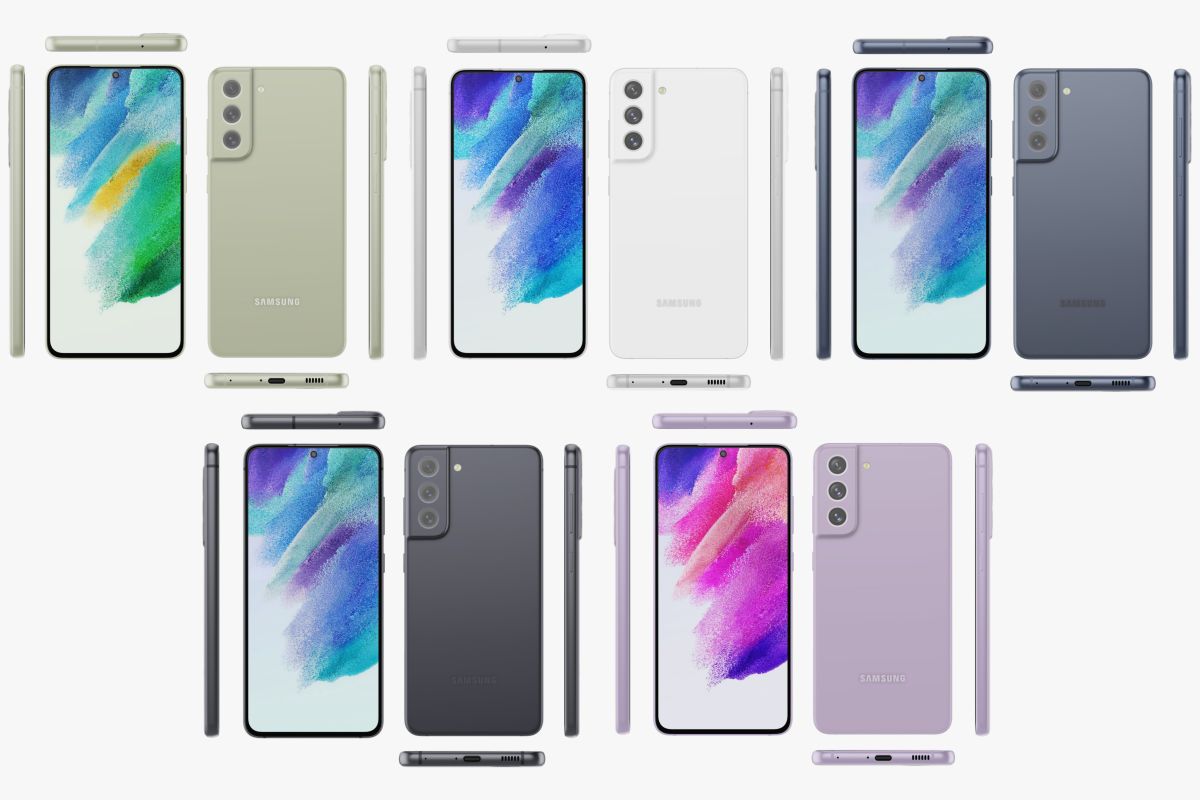
Samsung Galaxy S21 FE | Source: Evan Blass
The primary reason for the delay is unsurprisingly the shortage of Snapdragon 888 chips. Even the current stipulated October schedule is not guaranteed as the supply and demand of semiconductors is that serious. The units for the US and Europe could also be lowered than previously planned.
As per earlier reports, the Galaxy S21 FE will feature a 6.5-inch Super AMOLED Infinity-O display with a 120Hz refresh rate, up to 8GB RAM and 256GB internal storage, 12MP triple camera setup, 32MP selfie camera, One UI 3.1.1 based on Android 11, 4,500mAh battery, 25W fast wired charging, 15W fast wireless charging, and 4.5W reverse wireless charging.
A new report has revealed that nearly half of all smartphones that will be sold in 2022 will feature an OLED panel. This marks the growing popularity of the organic light emitting diode display technology in the smartphone market.
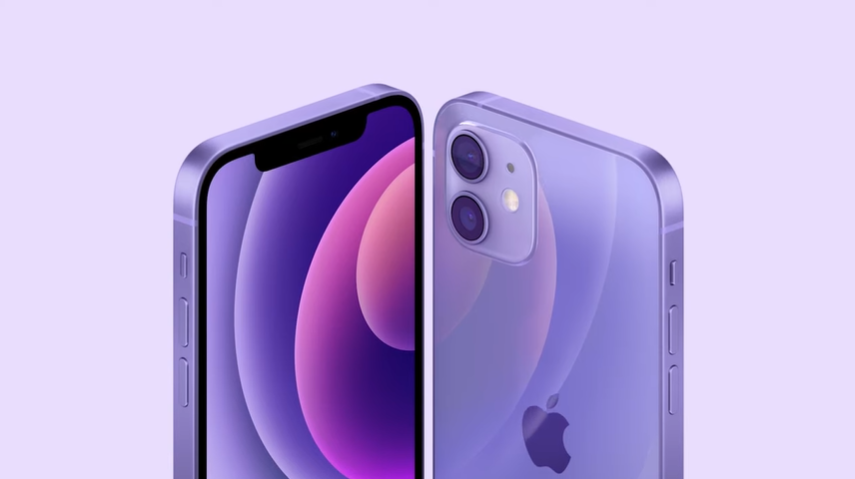
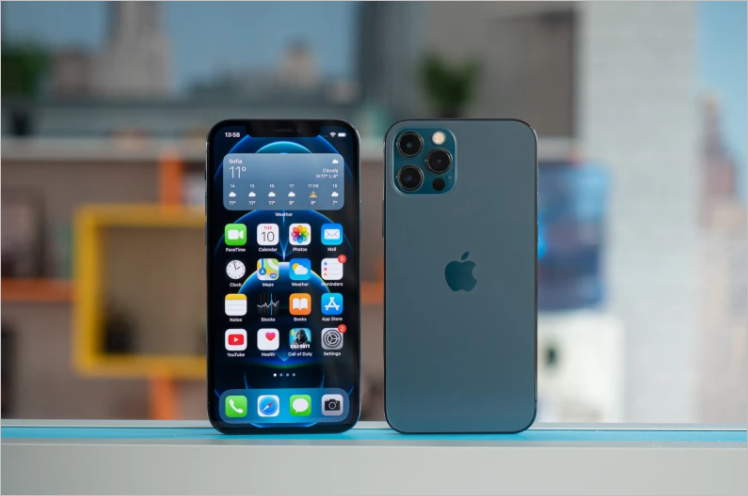
Apple iPhone 12 series features OLEDs
According to a TrendForcereport, 39.8 percent of all smartphones sold this year feature OLED panels. On the other hand, 45 percent of total handset sold next year are expected to sport this type of display. The research analytics based firm added that major smartphone makers like Apple and Samsung‘s wider adoption of the AMOLED and OLED display technology is one of the primary reasons for the jump in market share of the OLED equipped devices.
Although, the display driver IC supply for OLED panels is currently unable to keep up with the high demand at the moment. The report added that these chipsets are relatively larger than other chips, so fewer numbers are able to be made per wafer. Most display drivers use 40 nanometer to 28 nanometer processes for the IC. As of right now, only a few foundries like TSMC (Taiwan Semiconductor Manufacturing Company Limited), Samsung Electronics, UMC, and GlobalFoundries can manufacture display driver ICs for OLEDs.
However, out of these chip making giants, only TSMC, Samsung, and UMC are the ones who were able to secure sufficient wafers to manufacture the display drivers. While other foundries are currently working on developing necessary process technology, these have have to finalize to begin mass production. Another notable factor is that different panel makers require different specifications for their display driver ICs.
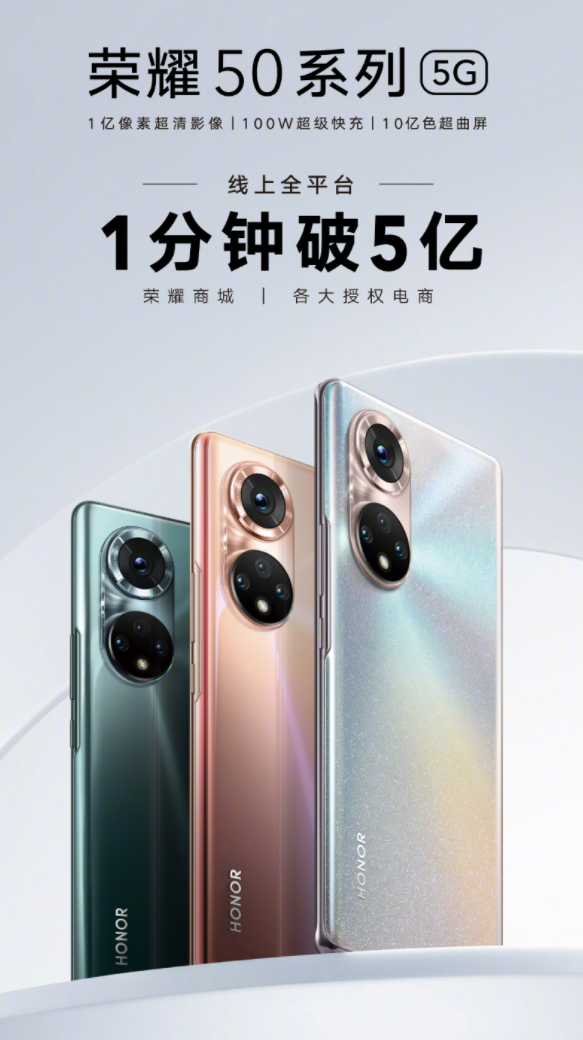
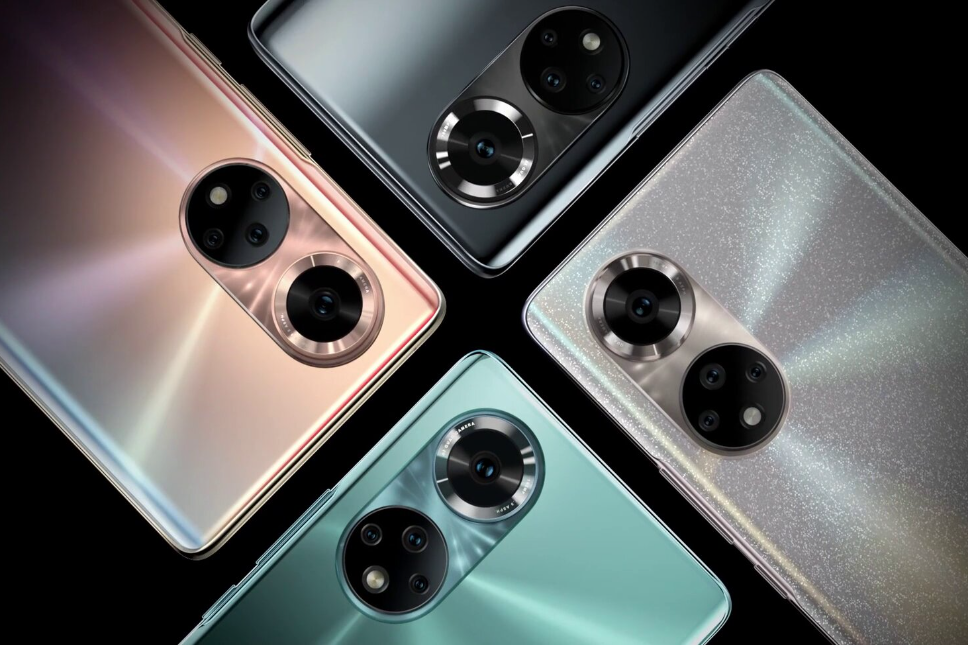
Earlier today (25th June 2021), the Honor 50 series was available for purchase for the first time. This included the Honor 50 and 50 Pro, which went on sale and crossed 500 million Yuan (roughly 77 million US Dollars) in just 1 minute.
The smartphone maker shared this achievement today and announced that the new lineup crossed 500 million Yuan during its first sale. Talking about the newly launched smartphones, the base model features a 6.57 inch OLED curved screen that supports a 120Hz screen refresh rate and 300Hz touch sampling rate. The display utilizes a single punch hole design located centrally at the top of the screen. Meanwhile, the Pro variant sports a 6.72 inch display but it has a dual punch hole design on the top left corner of the screen.
Both handsets are powered by the Qualcomm Snapdragon 778G mobile platform, which uses 6nm process technology and a Kryo 670 architecture. For graphics, the 5G enabled processor integrates the Adreno 642L GPU. The Pro variant houses a 4000mAh battery that supports 100W wired fast charging. On the other hand, Honor 50 is equipped with a slightly larger 4300mAh battery that supports 66W wired fast charging. Both models run on Magic UI 4.2 based on Android 11 and feature support for NFC.
In terms of pricing, the Honor 50 8GB + 128GB is available for 2699 yuan (roughly 422 US Dollars), the 8GB + 256GB is priced at 2999 yuan (roughly 469 US Dollars), and the 12GB + 256GB is priced at 3399 yuan (roughly 531 US Dollars). On the other hand, the Honor 50 Pro 8GB + 256GB is priced at 3699 yuan (roughly 578 US Dollars), 12GB + 256GB is priced at 3999 yuan (roughly 625 US Dollars).
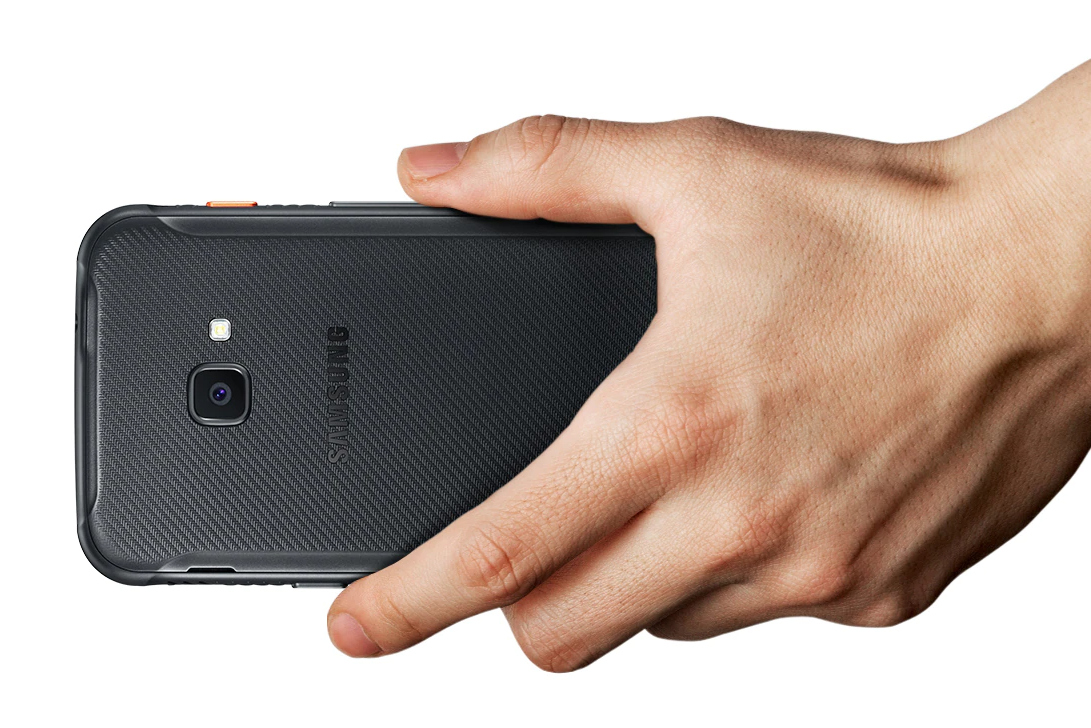
Samsung is known for selling handsets at various price points. The company also sells rugged smartphones in the form of the Galaxy XCover series. One of these models called Galaxy XCover 4s has now started receiving the Android 11 update.
Samsung Galaxy XCover 4s
The Android 11 update for the Samsung Galaxy XCover 4s arrives as One UI 3.1. The update is currently live in Poland with firmware version G398FNXXUCCUF4. Apart from bringing new features, the latest system update also bumps up the security patch level to June 2021.
The update should be rolled out to other regional variants of this phone in the upcoming days. Users can head over to Settings > Software update > Download and install to check whether their unit has received the new system update via OTA.
Samsung debuted the Galaxy XCover 4s with One UI based on Android 9.0 Pie. The smartphone was updated to Android 10-based One UI 2.x last year. Hence, the One UI 3.1 (Android 11) is its second major update.
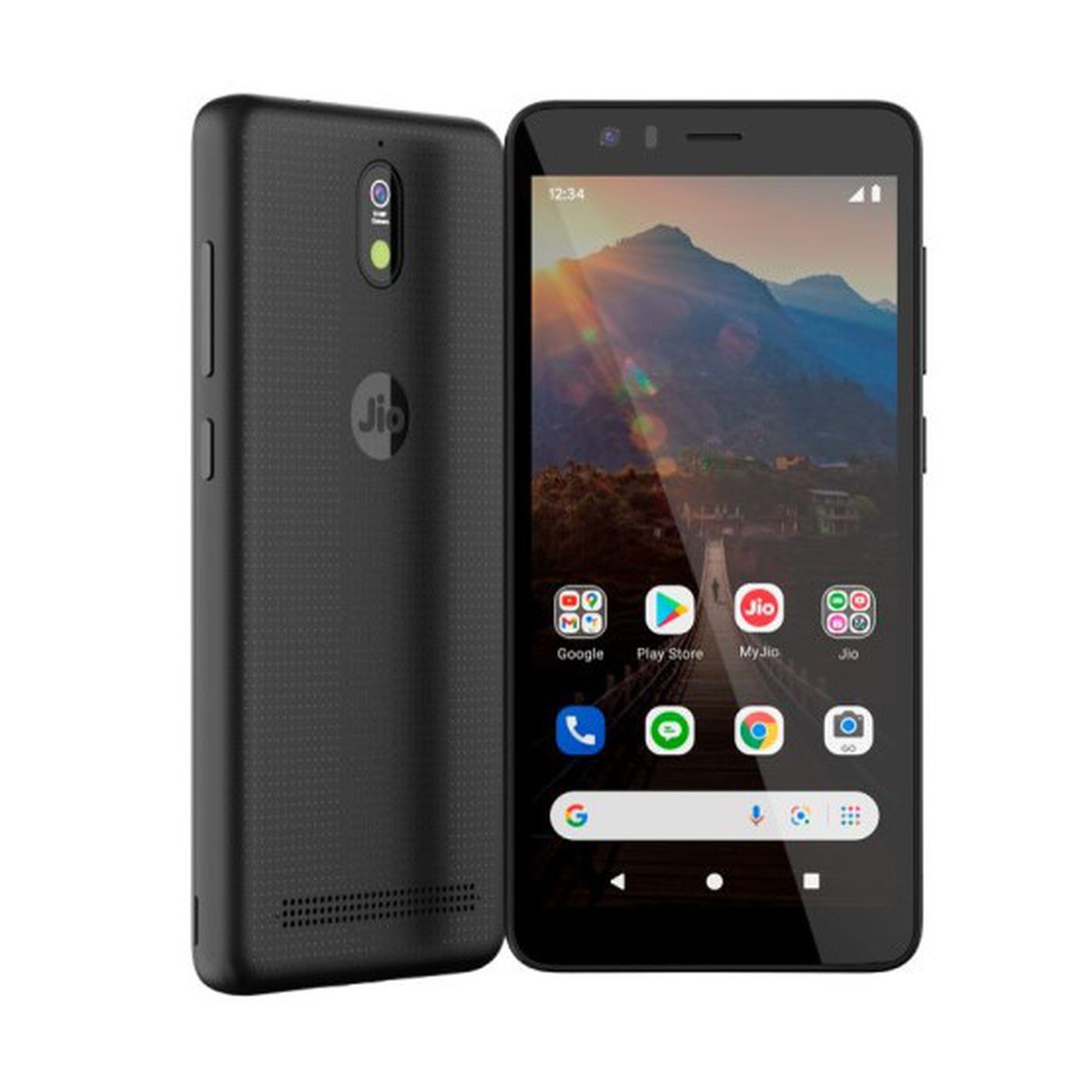
The JioPhone Next is set to launch on 10th September 2021. The ultra affordable smartphone arrives with an optimized version of the Android operating system that was jointly developed by Reliance Jio and Google.
The Indian telecom giant has built the new smartphone that has been specifically tailored for the Indian market. Through its affordable price tag, the company aims to bring in millions of new users to experience the internet for the very first time.The JioPhone Next will be powered by an optimized version of Android that was made in cooperation with the search engine giant. This device will even support the Play Store and will support a voice assistant, automatic read aloud, off screen text language translation, smart camera with augmented reality filters, and much more.
Mukesh Ambani, Chairman of Reliance Industries, stated that “Last year, Sundar and I talked about Google and Jio co developing a next-generation feature rich, but extremely affordable smartphone, aimed at providing first-time internet access for 2G users. Today I’m pleased to announce that Google and Jio teams have jointly developed a truly breakthrough smartphone that we are calling JioPhone Next, a fully featured smartphone, supporting the entire suite of applications from both Google and Jio and as well as the Android Play Store, through which users will have access to the entire universe of Android apps.”
Earlier this year, OnePlus co-founder Carl Pei announced his departure from the company, shocking everyone in the industry. Soon after that, he announced his new venture named ‘Nothing’ and the brand’s first product — ear (1), a true wireless earphone.
Today, the company has announced its foray into the Indian market through a partnership with Walmart-owned Flipkart. The Nothing ear (1) will be exclusively available for purchase in India through the online marketplace Flipkart when it gets launched.
As for the launch of the ear (1), it was slated to happen this month, i.e. June 2021. However, the company has pushed the launch to summer. The India launch of the earphones will happen along with the global launch of the product this summer.
The company says that its upcoming first product — ear (1) will combine “notes of transparency, iconic form, and refined functionality.” Back in March this year, Nothing had teased the design of its upcoming TWS earphones and also shared its design principles.
Earlier this year, it had brought on board Teenage Engineering as a founding partner of the company. The Stockholm-based company is known for making audio equipment and has been developing products for sound, music, and design enthusiasts for over a decade.
In February this year, Nothing appointed Manu Sharman, an ex-Samsung Vice President for the role of General Manager of Nothing India. He will also hold the title of Vice President of the company. Prior to his move to Nothing, he was the Head of Product Strategy at Samsung up until December 2020.
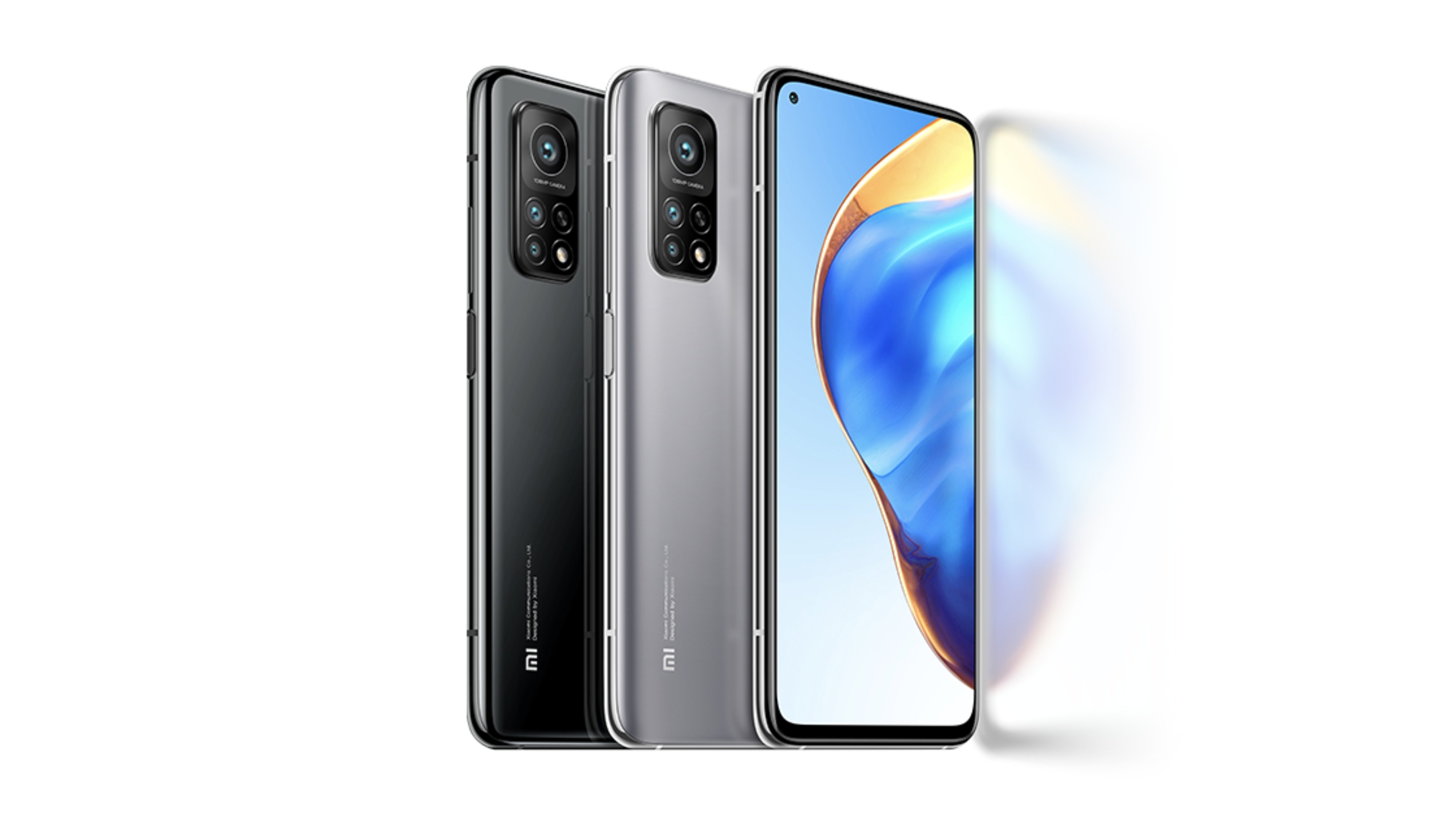
The Xiaomi Mi 10T and the Mi 10T Pro launched in the second half of 2020. These devices were introduced as a cheaper alternative to the Mi 10 and the Mi 10 Pro. Last week, they started receiving MIUI 12.5 update. A few days later, the update is now live in India as well.
Xiaomi did not bring the Mi 10 Pro to India. However, the company launched both the Mi 10T and the Mi 10T Pro. The duo runs a common MIUI build. Hence, they get new updates together.
Right now, they have begun to receive MIUI 12.5 in the country with build number V12.5.1.0.RJDINXM. The software build is labeled as ‘Stable Beta’. This means it is only available for a select few users for now.
Anyway, the update should reach all the units in the region very soon. Similarly, the remaining regional variants of the handsets should also get the update.
The Mi 10T and the Mi 10T Pro launched with MIUI 12 based on Android 10. The smartphones updated to Android 11 earlier this year. Now, they are getting the MIUI 12.5 update. They should be also eligible for the upcoming MIUI 13 update.
Apple analyst Ming-Chi Kuo has shared a note with investors in which he predicts strong iPhone 13 shipments which are slated to get released in September this year. Apart from new features, the primary reason for increased sales of the upcoming iPhone models is being attributed to the Huawei ban.
Kuo believes that Apple will have stronger sales for iPhone not only in 2021 but also in the next year as well, i.e. 2022. He expects the shipments to reach 230-240 million to 250-260 million units in 2021 and 2022 respectively. In the year 2020, the shipments for the brand reached had reached 195 million.
Huawei’s global smartphone market share has been declining ever since the company has been put on Entity List by the United States, effectively banning the company in the country. It has also made it difficult for the Chinese giant to do business in the smartphone and network equipment business. The company had a market share of 17 percent in Q1 2020, which dropped to just 4 percent in Q1 2021.
For the second half of 2021, Kuo predicts that the iPhone will gain in the high-end market share due to “specifications upgrade” and the “US ban on Huawei.” Apple is expected to announce four new iPhone models this year with a smaller notch, upgraded camera, 120HZ refresh rate, and a new A15 processor.
Kuo estimates that the new 2H21 iPhone shipments will reach up to 88 million units vs. 75 million units in 2H20. He also adds that a new iPhone SE is still on track for next year.
The iPhone 13 lineup will include four models, similar to the strategy used by Apple last year for the iPhone 12 series. The leaks related to the phone indicate that the cameras on the regular models will have a slightly new design while the Pro models will exclusively maintain the LiDAR Scanner.
The Nova 8 series of smartphones by Huawei includes multiple phones such as Nova 8 SE (Dimensity 800U and Dimensity 700 CPU variants), Nova 8 5G, Nova 8 Pro 5G, and Nova 8 Pro 4G. Fresh information shared byPlayfuldroidreveals that the company is now gearing up to launch the Nova 8i handset in Southeast Asian markets. The publication claims that the arrival of the phone was confirmed through a product briefing. Here is what to expect from the Nova 8i.
Huawei Nova 8i specifications (Expected)
The Nova 8i will be sporting a 6.67-inch LCD punch-hole panel that offers a Full HD+ resolution, DCI-P3 color gamut, and it will offer an impressive screen-to-body ratio of 94.7 percent. There is no information available about the front camera of the device.
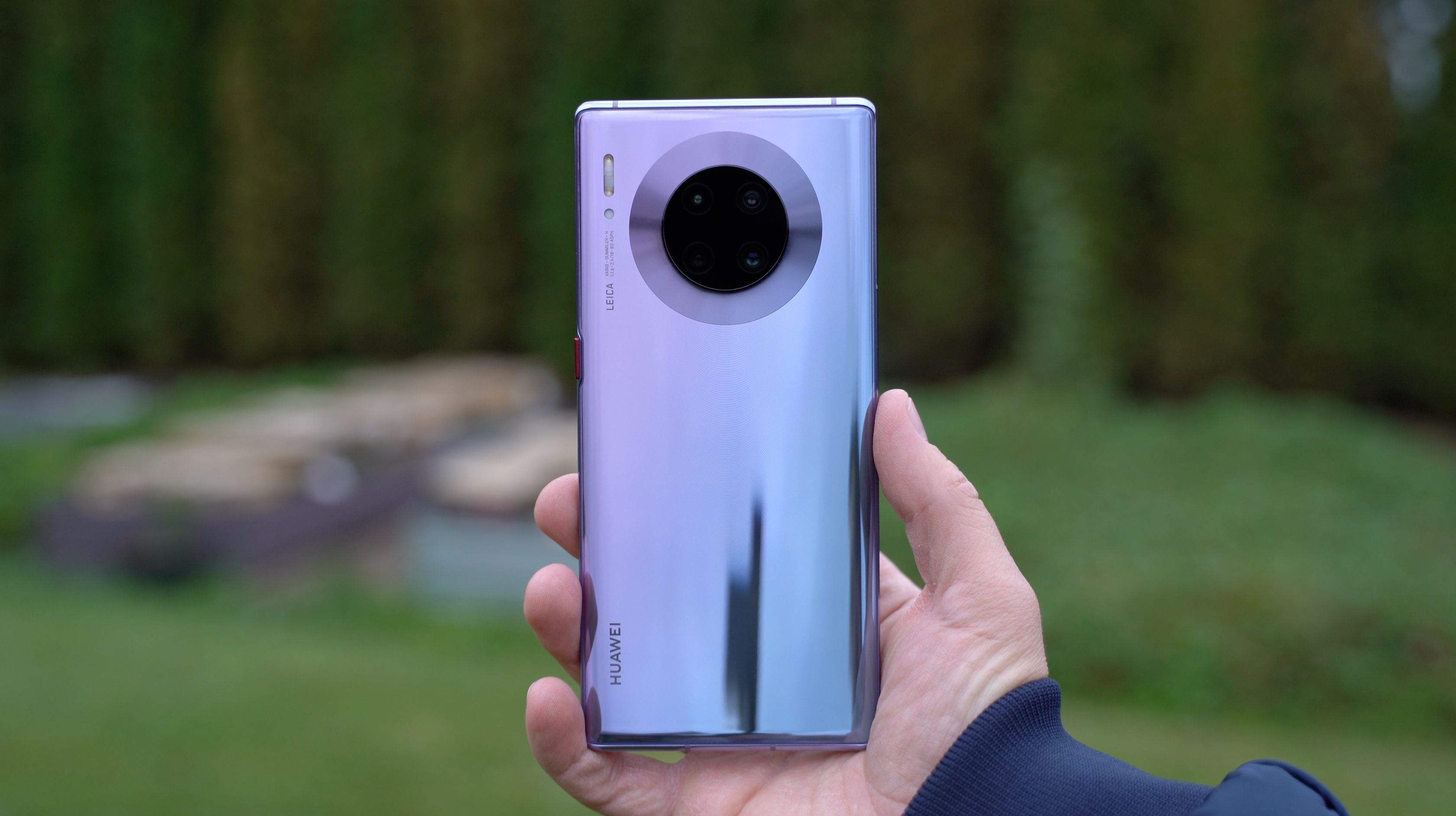
The rear shell of the phone will feature a circular camera module like the Huawei Mate 30 Pro. It will comprise a 64-megapixel main camera with f/1.9 aperture, an 8-megapixel ultrawide lens with a 120-degree FOV, a 2-megapixel macro camera, and a 2-megapixel depth sensor.
Huawei Mate 30 Pro
The mid-range device will be fueled by the Snapdragon 662 chipset and a 4,300mAh battery that will carry support for 66W Huawei SuperCharge. The company claims that the handset can be fully charged from scratch in just 38 minutes.
The Huawei Nova 8i will ship with EMUI 11 based on Android 10 OS. Huawei will be bringing the HarmonyOS to this device later on. It will be available in three colors like Moonlight Silver, Starry Black, as well as Interstellar Blue.
A Chinese blogger named Gu Xuyang, who runs Beautiful Technology, has been ordered to pay a compensation of one million yuan for leaking details about a Xiaomi smartphone.
In August last year, Gu Xuyang had released an unboxing video of the Xiaomi Mi 10 Extreme Commemorative Edition ahead of the official launch of the device. This was in violation of the confidentiality agreement between the blogger and Xiaomi.
According to the ruling by China International Economic and Trade Arbitration Commission, Gu Xuyang, head of Beautiful Technology, failed to comply with the confidentiality agreement signed with Xiaomi and leaked information about the Mi 10 Extreme Commemorative Edition.
It added that he recorded the unboxing video of the Mi 10 Extreme Commemorative Edition and did not take any confidentiality measures, resulting in the video being circulated on the Internet. His behavior seriously violated the confidentiality agreement between the two parties, disrupted the pace of the announcement of Xiaomi’s new products, and caused irreparable losses to the company.
Gu Xuyang has been ordered to pay Xiaomi liquidated damage of RMB 1 million, which roughly converts to $154,695. If he fails to pay the damage within the determined time period, he will have to pay the debt interest during the delayed period. Further, he is also asked to tender a public apology within seven days, the content and method of which shall be determined through negotiations between the two parties.
He is also ordered to pay the arbitration fee of the case, which stands at RMB 96,360 which is around $14,908. Complying with the ruling, the blogger has issued an apology on Weibo, which reads: “This case was arbitrated by the China International Economic and Trade Arbitration Commission, and it was determined that my actions had violated the confidentiality agreement and caused serious consequences. Xiaomi should make reasonable compensation. I recognize the arbitration result and am willing to undertake the corresponding Responsibility.” He has apologized to Xiaomi, Lei Jun, and Xiaomi users.
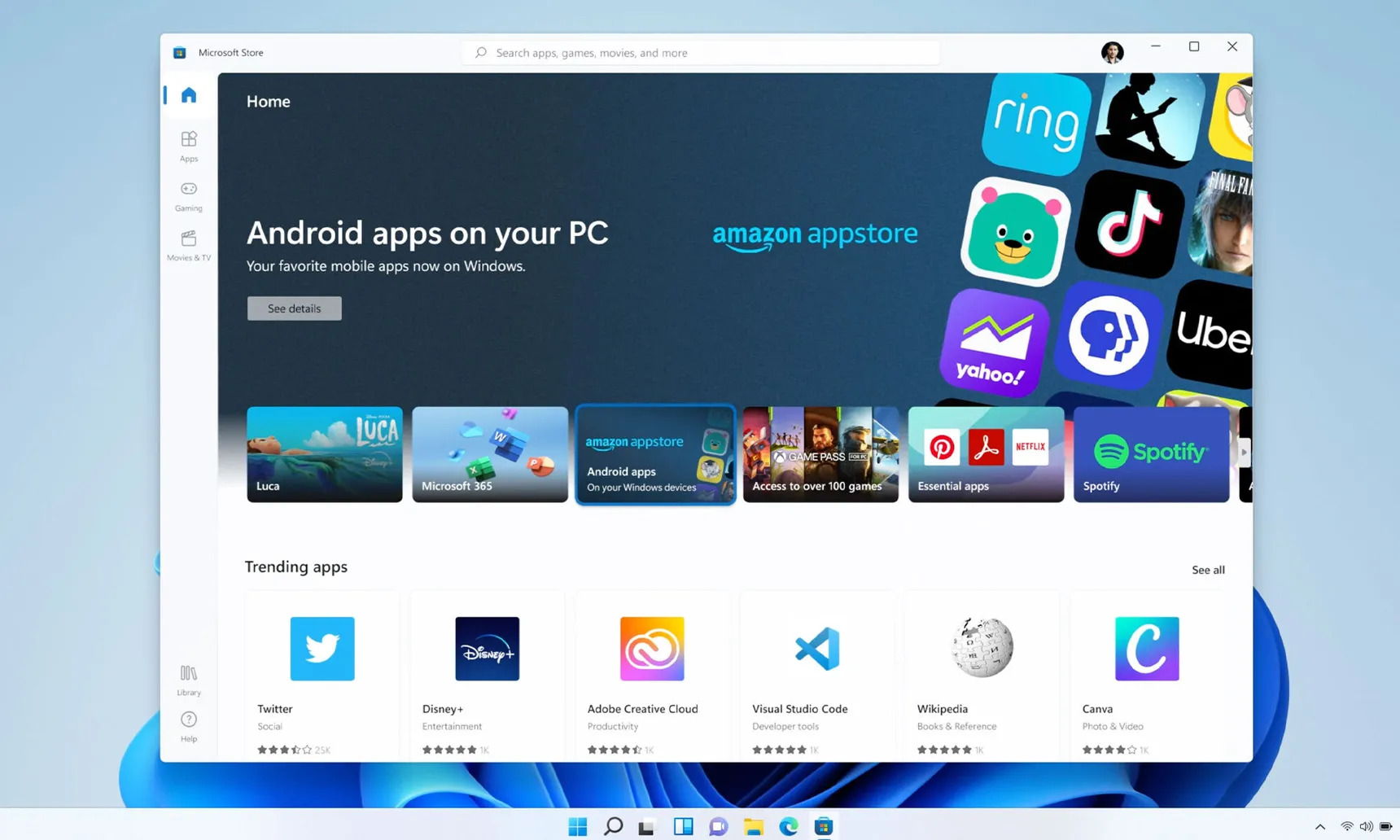
Android applications are finally coming to Windows operating system. At a special Windows event, the software giant announced Windows 11 operating system and has revealed that the system will natively run Android apps.
The Android apps on Windows 11 operating system will be available through Amazon’s Appstore. Applications will be listed in the new Windows Store and can be pinned to the taskbar or snapped alongside traditional Windows apps.
Microsoft is also partnering with Intel to use its Intel Bridge technology to make this a reality, although the Android apps will still work with both AMD and Arm-based systems. It seems that the Redmond-based tech giant is taking on Apple with this.
Recently, Apple started transitioning from Intel-based chips to Apple Silicon chips, starting with the M1 chipset. It also brings support for iOS apps to macOS. Now, Windows too comes with native support for running Android applications.
As of now, it is not clear how well many existing devices will support Android apps with Windows 11, as Microsoft is pushing its support of Intel Bridge technology as the favored way to run these apps.
Microsoft has been planning to offer support for using existing Android apps since 2015 as a part of Project Astoria. It was a method to try to convince developers to port apps and make it easier to do so. But the plan didn’t last for long, with Microsoft admitting that having “two bridge technologies to bring code from mobile operating systems to Windows was unnecessary.”
Currently, Android applications are available to use on Windows 10 operating system through the Your Phone app that was rolled out last year by Microsoft. Apart from the app’s support, Windows 11 will also introduce a prettified version of desktop widgets, new Xbox gaming features, and much more.
Microsoft hasn’t confirmed the official release date for Windows 11 to the general public, but we do know it’ll be available this holiday season. It will be available as a free upgrade for eligible Windows 10 PCs and on new PCs.
Samsung is expected to announce the Galaxy Z Fold3 and Galaxy Z Flip3 5G foldable devices in August this year. Well ahead of the launch, reputed tipster Evan Blass shared leaked renders of the Galaxy Z Fold3 and Galaxy Z Flip3 5G. The new leak not only confirms their monikers but also reveals their design.
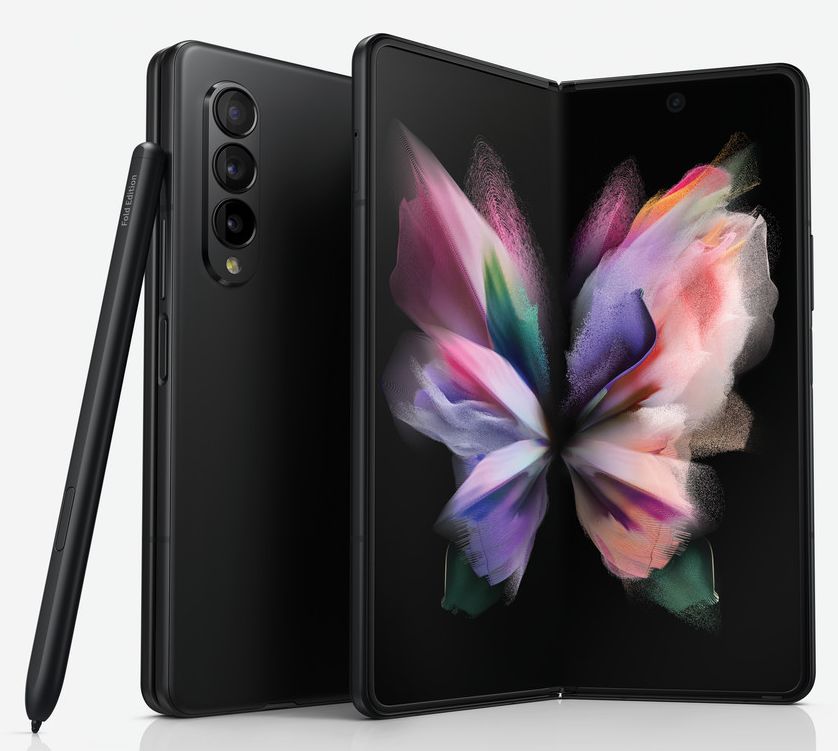
Starting with the Galaxy Z Fold3, the render confirms that it will arrive with S Pen stylus support. It appears to be a specially designed stylus as the text “Fold Edition” is imprinted on it. Rumors have it that there will be a dedicated storage compartment in the device for storing the S Pen. While the render gives a good look at its design, it does not confirm the presence of a storage slot for the stylus.
Galaxy Z Fold3 render by Evan Blass
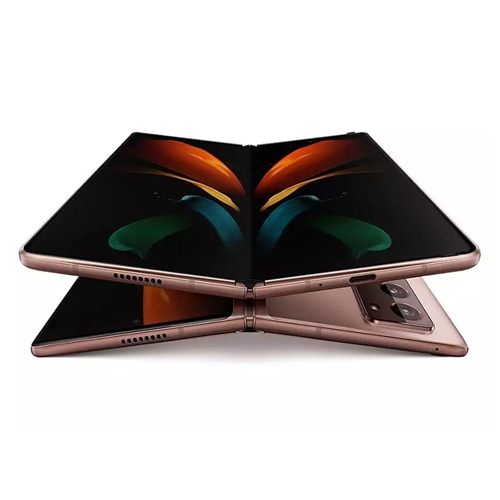
Moving to the backside of the device, the Z Fold3 has a vertically aligned triple camera system. Several reports have claimed that the Z Fold3 will be Samsung’s first device to feature an in-display camera. However, the image clearly shows a selfie camera punch-hole like the last year’s Galaxy Z Fold2. The new model appears to be slimmer than the predecessor, but the exact dimensions are not known yet.
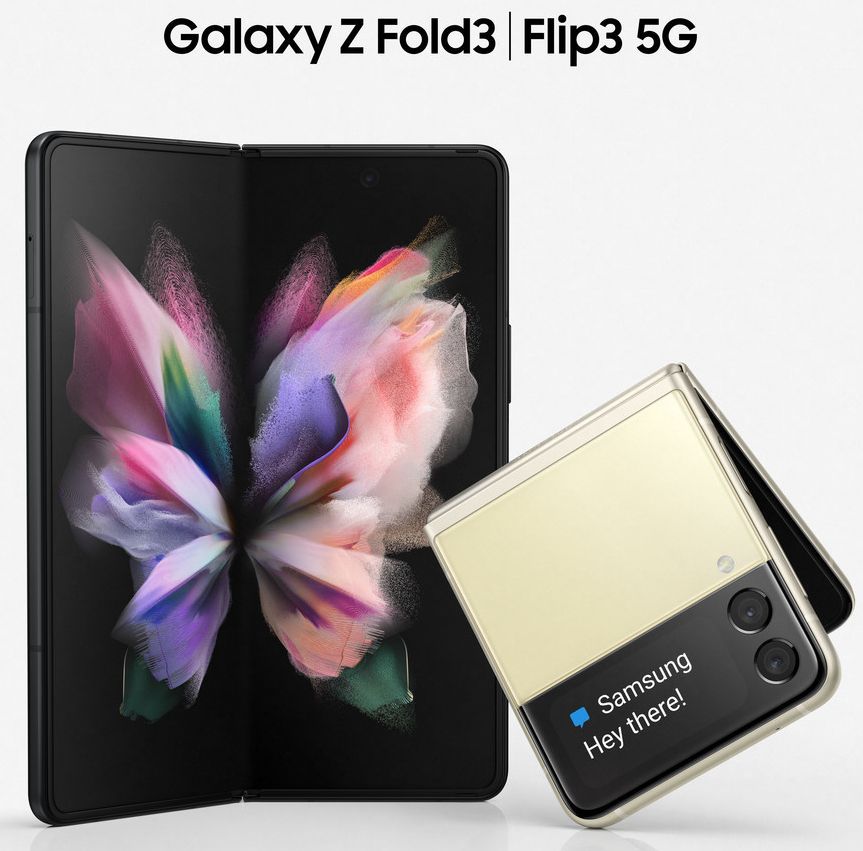
Galaxy Z Fold3 and Galaxy Z Flip3 5G renders by Evan Blass
The Galaxy Z Flip3, which sits next to the Galaxy Z Fold3 in the above render can be seen sporting a dual-tone design. The black portion at the top has the dual-camera setup and the larger secondary display. The design of the Z Flip3 5G matches with the leaked images that had appeared a few weeks ago.
It is speculated that Samsung may hold its next Galaxy Unpacked event on Aug. 3 to announce new foldable devices and smartwatches. The sales of the Z Fold3 and Z Flip3 may begin on Aug. 27. The Galaxy Watch4 and Watch Active4 may go on sale on Aug. 11.
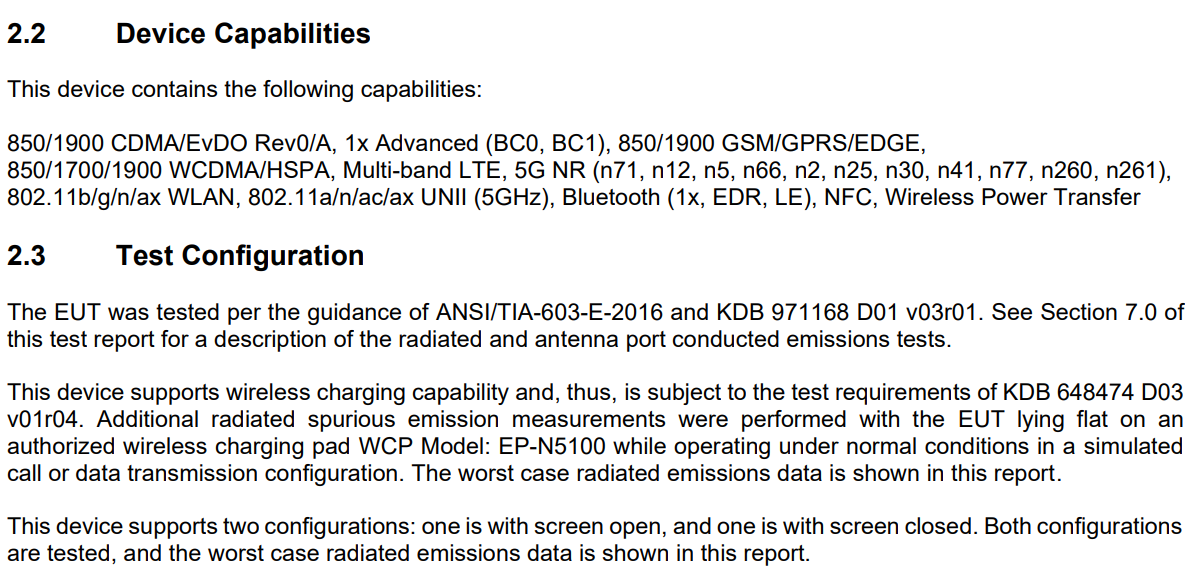
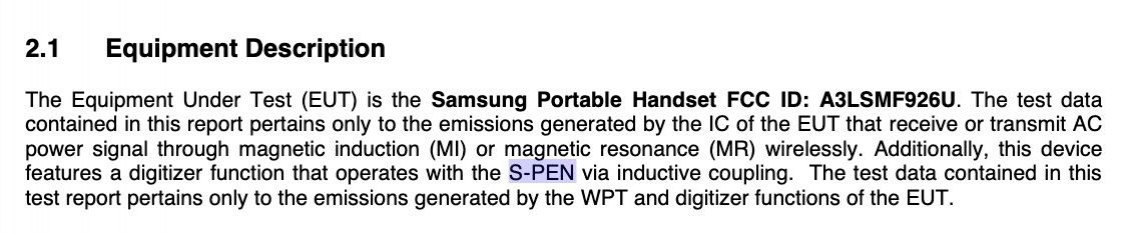
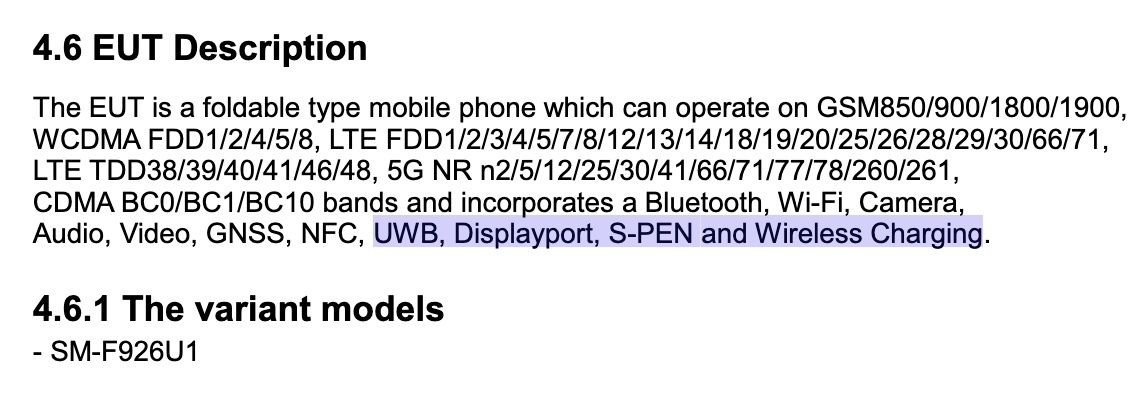
New documents from the United States Federal Communications Commission (FCC) have shown that the Samsung Galaxy Z Fold3 and the Galaxy Z Flip3 have received FCC certification. They are in the final leg of the processes culminating in the release of the two handsets. Thus, we are a few days away from the start of the 2021 Samsung virtual MWC event, although it is not certain whether these smartphones will be announced during the event.
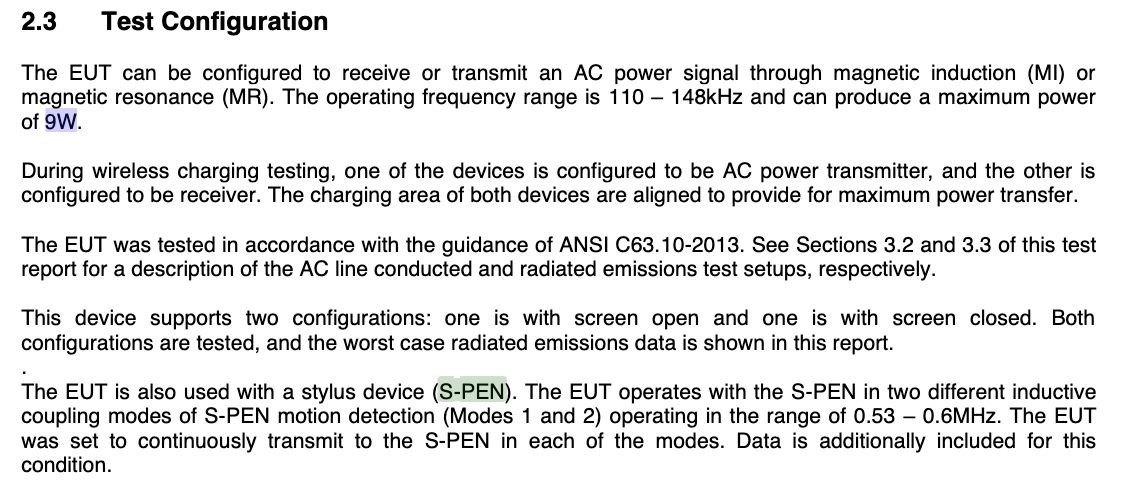
Several speculations and rumors relating to both the Galaxy Z Fold3 and the Z Flip3 devices will be sporting a foldable display. Samsung may soon provide some teasers of the two devices preparatory to their eventual unveiling. For one, the FCC documents confirm that the Z Fold3 will support S pen technology, although there is no built-in slot for the pen. There is also magnetic induction technology present, which makes it possible for the device to be charged wirelessly and charge the stylus.
According to the FCC documents, fast charging support is also available for the Samsung Galaxy Z Fold3, with a wired charging capacity of 25W, while wireless charging could offer 9W. The 4,275 mAh battery of the device is composed of two cells of almost equal capacity). Ultra-Wide Band feature is also supported for the Galaxy Z Fold3, making it possible for it to serve as a connection hub for Samsung’s SmartTag+. Of course, the high-end Z Fold3 has support for 5G technology.
The Galaxy Z Flip3 is believed to be lacking S pen support and UWB, but wireless (9W) charging is available, and it also has 5G support. The wired charging capacity is 15W for the Flip3, with a battery of 3,273 mAh capacity.
Pricing information is still lacking on both the Galaxy Z Fold3 and Z Flip3, although we expect the devices to be priced above their predecessors. As we inch closer to an imminent launch, more details relating to the two devices will be provided when they become available.
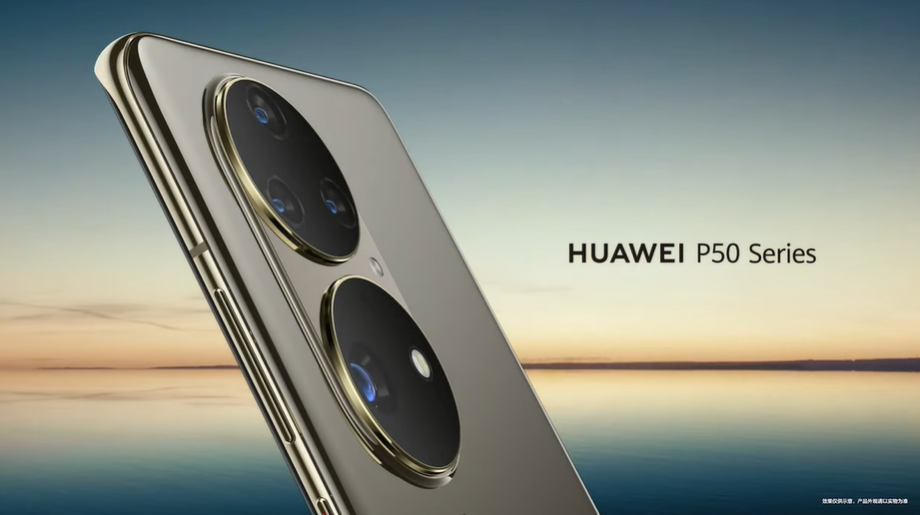
Huawei may announce only two of three models in the Huawei P50 series according to the latest reports. The embattled Chinese phone manufacturer is finding it difficult to launch new products, no thanks to the US ban.
According to the Weibo user @影业君Panda, Huawei may launch the P50 and P50 Pro models first before launching the P50 Pro+. He also mentions that the 4G variants of the smartphone may be announced first before the 5G versions.
Huawei had given us an early look at the Huawei P50 series last month but said it didn’t have a launch date yet. The Huawei P series usually launched in the first quarter of the year but that is not the case this year. Huawei’s troubles have even led it to also delay the Mate series smartphones this year.
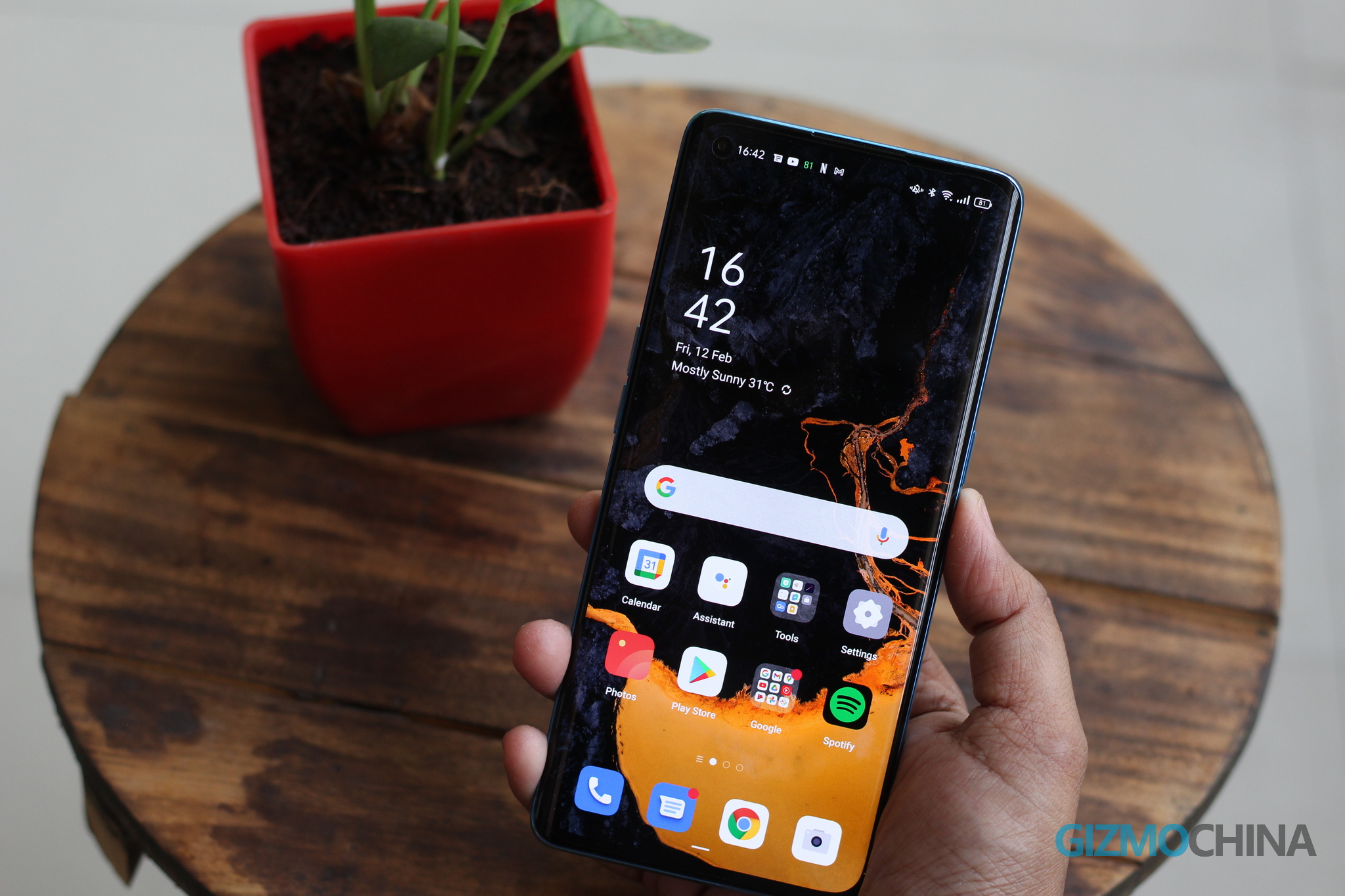
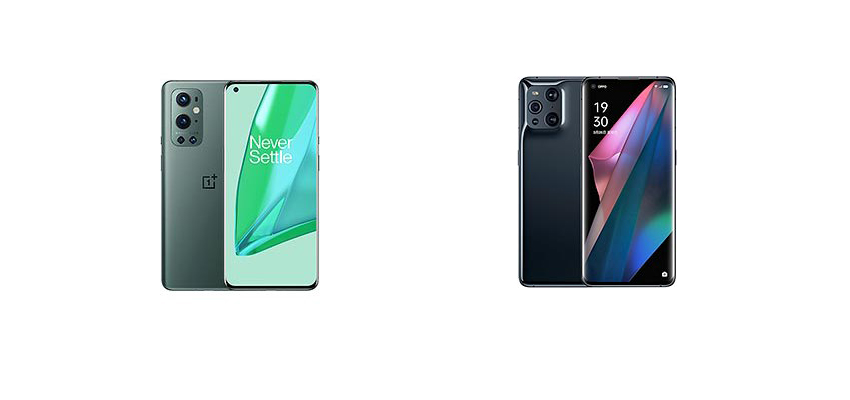
They are often called different twins as they share several things in common and they were released by sister companies. We are talking about the OnePlus 9 Pro and the OPPO Find X3 Pro, respectively the latest most advanced flagships by OnePlus and OPPO. They both come with top-notch specifications, but they are sold in different price ranges. Does it make sense or there is a device that simply comes with a higher value for money? This comparison will highlight the main differences between the OnePlus 9 Pro and Find X3 Pro and try to answer the question.
OnePlus 9 Pro vs OPPO Find X3 Pro
OnePlus 9 Pro
OPPO Find X3 Pro
DIMENSIONS AND WEIGHT
163.2 x 73.6 x 8.7 mm, 197 g
163.6 x 74 x 8.3 mm, 193 g
DISPLAY
6.7 inches, 1440 x 3216p (Quad HD+), LTPO Fluid2 AMOLED
If you are searching for the most original and futuristic design, the OPPO Find X3 Pro is definitely the best choice in the Android world, at least in my opinion. It has a glass back which is entirely curved thanks to a long modeling process involving very high temperatures. The phone is beautiful and it provides a high build quality, as well as the IP68 certification which makes it dustproof and waterproof. It also comes in a special variant with a leather back, but it is for China only. OnePlus 9 Pro still comes with a great design, but definitely less original and suggestive than Find X3 Pro.
Display
The OnePlus 9 Pro and the OPPO Find X3 Pro share exactly the same display. It is an AMOLED panel with the LTPO technology providing an adaptive refresh rate up to 120 Hz. It has the HDR10+ certification, it shows up one billion colors thanks to a real 10-bit color depth and it comes with a high Quad HD+ resolution. Both the phones come with an optical in-display fingerprint reader and a diagonal of 6.7 inches.
Specs & Software
Not only the same display: OnePlus 9 Pro and OPPO Find X3 Pro also share the same chipset: we are referring to the Snapdragon 888 mobile platform which is actually the most advanced SoC by Qualcomm. The Find X3 Pro only comes in a memory configuration with 12 GB of RAM and 256 GB of UFS 3.1 native storage, while with the OnePlus 9 Pro, you can get a more affordable configuration with 8 GB of RAM and 128 GB of storage. Still, the OnePlus 9 Pro can be bought in the 12/256 GB version. Both the OnePlus 9 Pro and the OPPO Find X3 Pro run ColorOS 11 based on Android 11 in China, but in the European market, the OnePlus 9 Pro runs OxygenOS 11 out of the box. OnePlus recently switched to ColorOS 11 for the Chinese market for all of its new devices.
Camera
While the OnePlus 9 Pro offers a better telephoto sensor with a 3.3x optical zoom, OPPO Find X3 Pro is better in all the rest of its camera department. First of all, it has a better main camera: a Sony IMX766 sensor with a 50 MP resolution. The same sensor is used for the ultrawide camera. The OnePlus 9 Pro has that sensor only for ultrawide shots, while the main camera is a 48 MP sensor. The OPPO Find X3 Pro offers an additional microscope camera with 30x optical magnification and 60x hybrid magnification (instead of the useless 2 MP macro camera of the OP9 Pro), as well as a better front camera.
OnePlus 9 Pro and OPPO Find X3 Pro have the same battery capacity: 4500 mAh. The displays and the processors are the same as well, that is why their battery life is similar. The OnePlus 9 Pro offers a faster wireless charging technology with a power of 50W, while the OPPO Find X3 Pro supports reverse wireless charging.
Price
OnePlus 9 Pro has a starting price of €919/$1097 globally, while OPPO Find X3 Pro costs €1149/$1370. The OPPO Find X3 Pro is definitely a better phone and wins this comparison, but the OnePlus 9 Pro has not much to envy compared to its costlier sibling.
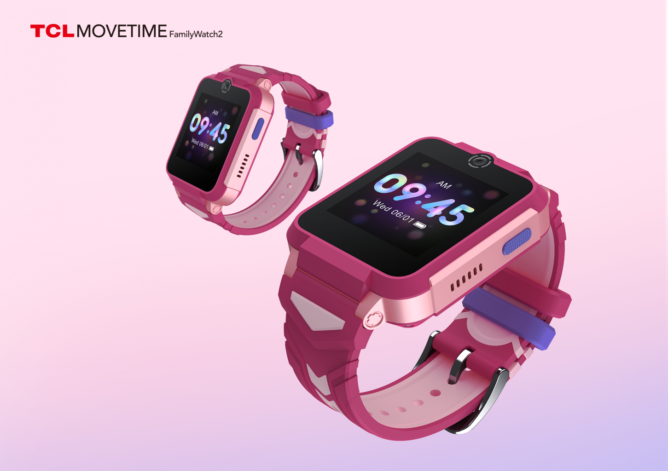
Among the products launched by TCL today is the MOVETIME Family Wach 2. It arrives as the successor to the MOVETIME Family Watch for older citizens that was announced last year. However, this new version is for kids.
The MOVETIME Family Watch 2 has a bigger 1.54-inch screen, though TCL doesn’t say if it is AMOLED like its predecessor’s. It is surrounded by thick bezels and housed in a chunky frame. The smartwatch has a dual-tone pink and rose gold finish with a touch of purple for the button on the side and one of the free loops. The buckle is made of metal and has a silver finish.
TCL says it has developed a dedicated Kids UI for the smartwatch. The camera is also better and the battery capacity has been increased by 40%. There is a nano-SIM card slot for 4G connectivity. Parents will be able to call their kids on the watch either via voice or video. They can also send text messages to the watch.
Safety is one of the key features the smartwatch offers and TCL provides that with real-time geolocation that shows where the child is at all times. It also logs a full location history. Parents can create a safe zone geofence, and when the child leaves this area, they get an alert on their phones. There is also a one-touch SOS button so that kids can reach an emergency contact as fast as possible.
TCL will begin selling the MOVETIME Family Watch 2 in August across Europe for €149. There is no info about availability in other regions.
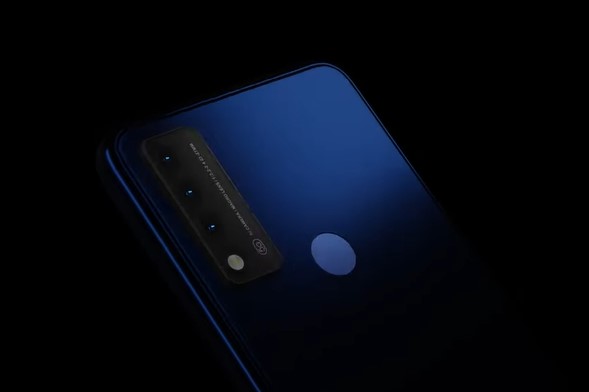
The TCL 20 5G launched back in January as TCL’s most affordable 5G smartphone with a price tag of under €299. Now TCL is planning to announce an even more affordable smartphone this year along with its first 5G tablet.
TCL’s most affordable 5G phone is coming later this year
The info was revealed by Stefan Streit, the Chief Marketing Officer of TCL Communication, in the global product announcement video for MWC 2021. TCL says its mission is to bring 5G to everyone and one of the ways to do so is by getting a 5G smartphone into the hands of users.
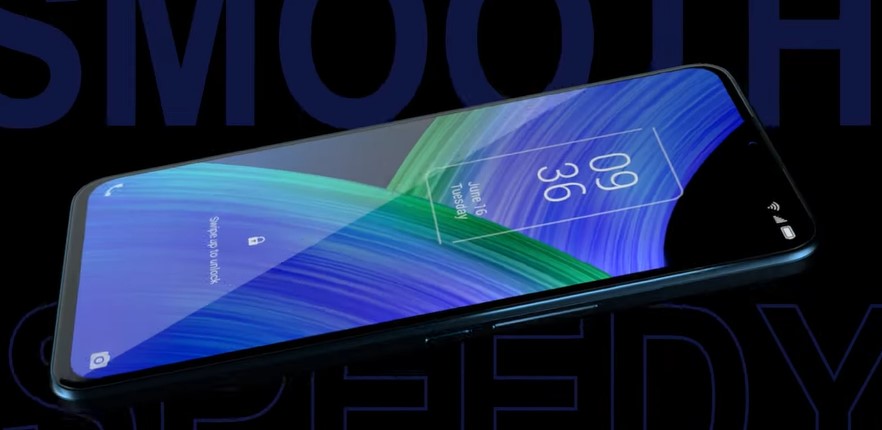
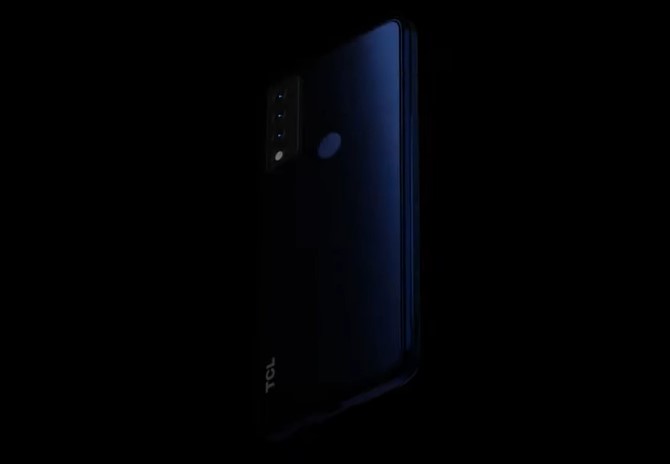
Apart from being its most affordable smartphone yet, the phone will also feature its NXTVISION display technology and have a high-performance refresh rate. A promotional clip of the phone shows it has a waterdrop notch, a headphone jack at the top, triple rear cameras, a rear-mounted fingerprint scanner, and a USB-C port. The phone is shown rocking a dark blue matte paint job. It appears the phone will launch under the TCL 20 series as shown at the end of the clip.
1 of 2
TCL's most affordable 5G phone
TCL's most affordable 5G phone
The TCL 5G smartphone is not the only 5G device to look forward to. TCL has also announced that it will launch a 5G tablet too. Very little was revealed about this product but we can expect it to launch under its TabMax series.
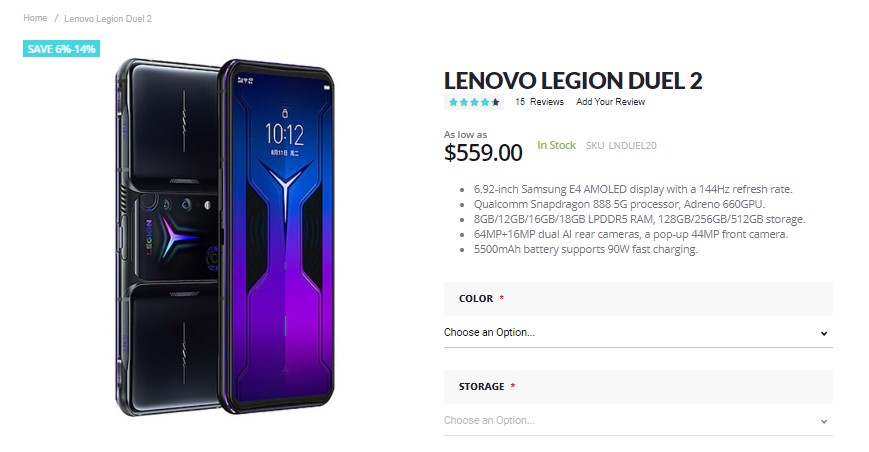
Featuring a bigger battery, faster touch response, and more off-screen triggers than its predecessor, Lenovo’s new Legion Phone Duel 2 phone has been launched a couple of days ago. Being a gaming phone, it carries flagship-level specs with the flagship Qualcomm Snapdragon 888 Mobile Platform at its heart. Days after its release, the device is up on GizTop that too with a huge discount.
The Giztop listing shows the Legion Duel 2 at just $599 for the base variant in Black colour. It’s almost $50 less than the actual price of $649. You can also take the beefy version with about 18GB of RAM and 512GB internal storage. Other storage options include: 16/256GB, 16/512GB, and 18/256GB. You can avail of all these options at a decent discount. In case if we missed it, the White version of the Duel 2 is available too.
As mentioned, the Legion Duel 2 brings gaming-centric features including above-average thermals that are 30% better than Phone Duel 1. And, A smooth, sustained 144Hz refresh rate display coupled with a 720Hz touch sampling rate, which is a substantial improvement from the first Legion Phone’s 240Hz rating. For the unversed, the touch sampling rate is a measure of how fast a screen can detect touches on a screen. Higher the sampling rate more responsive the display to actions or touches. It’ll help in more accurate input while gaming and general navigation overall.
The Duel 2 has a massive 5,500 mAh battery with support of up to 90W fast charging. By all means, the Duel 2 seems to be a good gaming phone and with the $599, the device is much affordable and worthy for the price.
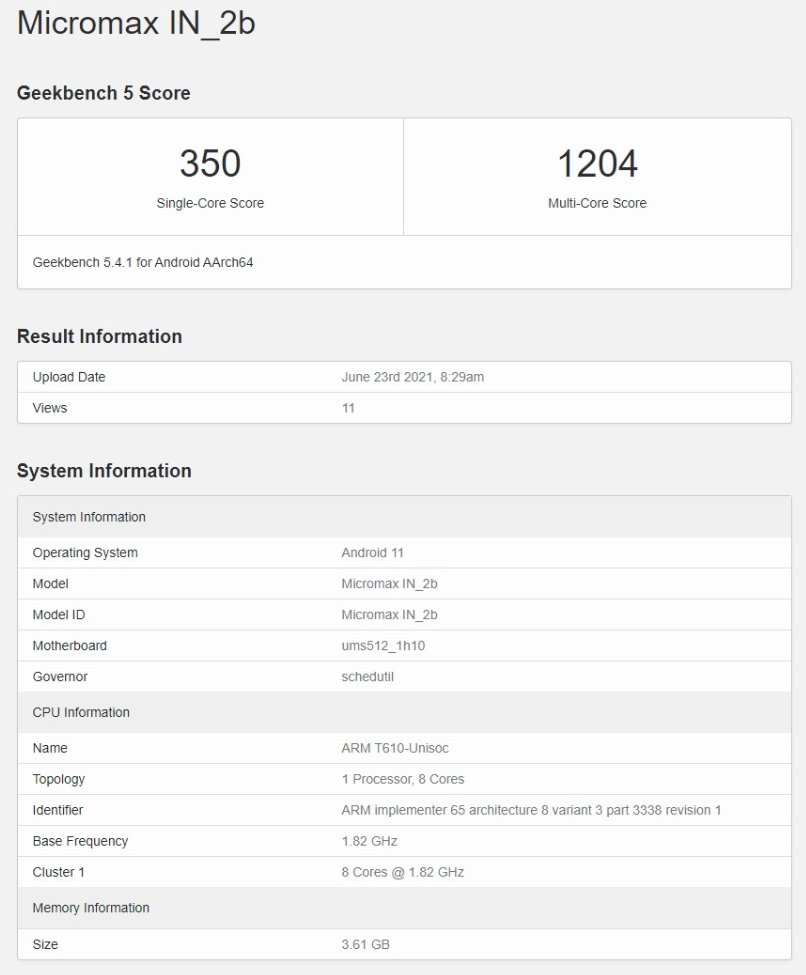
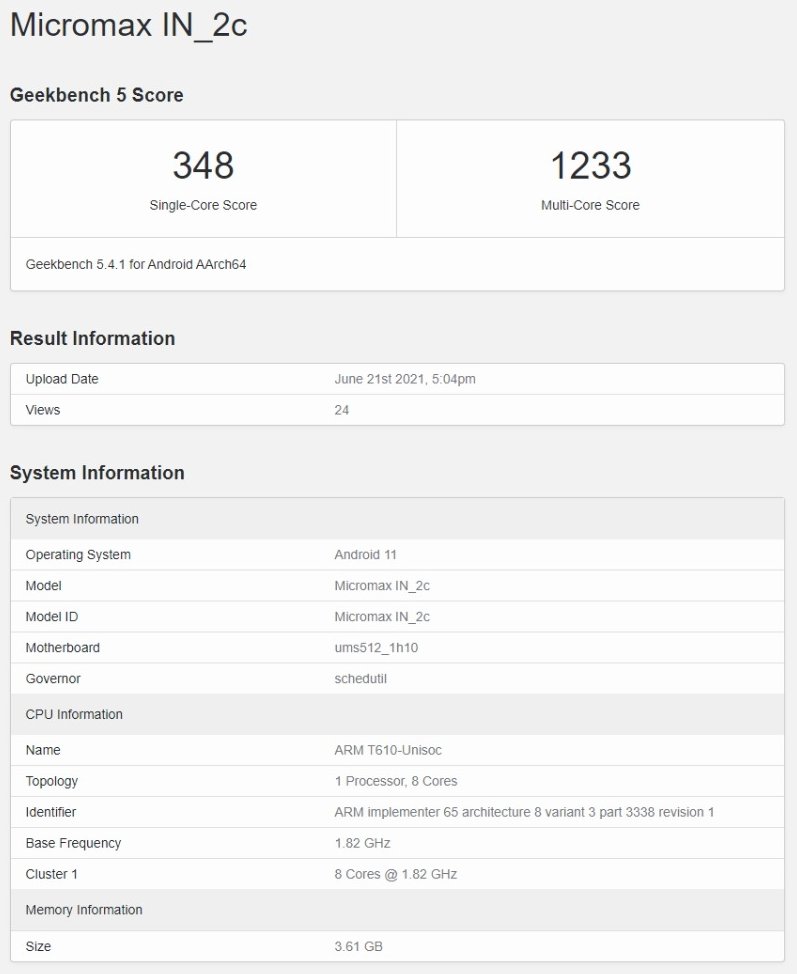
In line with the rollout plans of Micromax to unveil several products in the remaining part of the year, the company may be releasing two models soon. The Micromax ln 2b and Micromax ln 2c have just been listed on Geekbench 5, with some of the features of both devices revealed via the listing.
The two upcoming Micromax models will be powered by the same Unisoc T610 chipset with 4GB of RAM available. Both devices will run on the Android 11 operating system from the box.
The Geekbench single and multiple core test results for the models reveal an impressive performance in comparison with some leading models in the segment. The Micromax ln 2b and ln 2c scored 350 and 248, respectively for the single-core test. The corresponding scores for the multi-core test for both devices were 1204 and 1233, respectively. The Geekbench results indicated that both devices performed below Xiaomi’s Redmi 9 Prime and Samsung Galaxy A32 in both single-core and multi-core tests. However, both the Micromax ln 2b and ln 2c outperformed the Realme C15 on both fronts.
The two possibly upcoming Micromax smartphones could be released soon, although it is known that both models lack 5G support, as the Unisoc chipset only has a 4G modem. The rollout schedule of Micromax could indicate that the company is staging a comeback in the smartphone segment. Some of its earlier models released this year are the Micromax ln 1, ln 1b, and the ln Note 1. The ln 2 series could thus be debuted by the ln 2b and ln 2c anytime soon.
Much information relating to the impending launch will become available moving forward. This would include an official announcement of the launch of the devices and possible pricing information. We also await more specific information regarding the features of the two models.
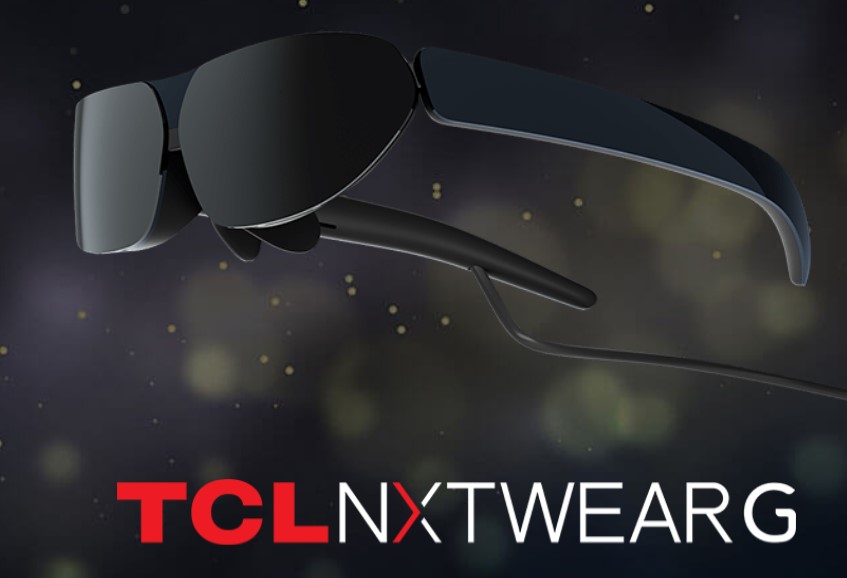
TCL has marked its entrance into the smart glasses space with the launch of the NXTWEAR. The pair of smart glasses which was unveiled during an early MWC 2021 announcement doesn’t have an AI assistant built-in nor is it mixed reality glasses like the Microsoft HoloLens. So how does it work?
The TCL NXTWEAR G works by connecting to your phone or computer or tablet and serving as a display. Think of it as a PlayStation VR headset that connects to your devices. It doesn’t have a built-in battery, so your phone or PC is what powers it.
Each lens of the NXTWEAR G has an FHD Micro OLED panel from Sony and provides an experience similar to watching a 140-inch screen from 4 meters away. TCL says the display follows your motion, allowing you to move freely. There are also stereo speakers integrated into the glasses.
It has a 16:9 aspect ratio, a 47° field of view, and a 60Hz refresh rate. It also has an accelerometer, a gyroscope, compass, and P sensor. The smart glasses work with any smartphone, 2-in-1 notebook, and a computer with a DisplayPort Alternate Mode.
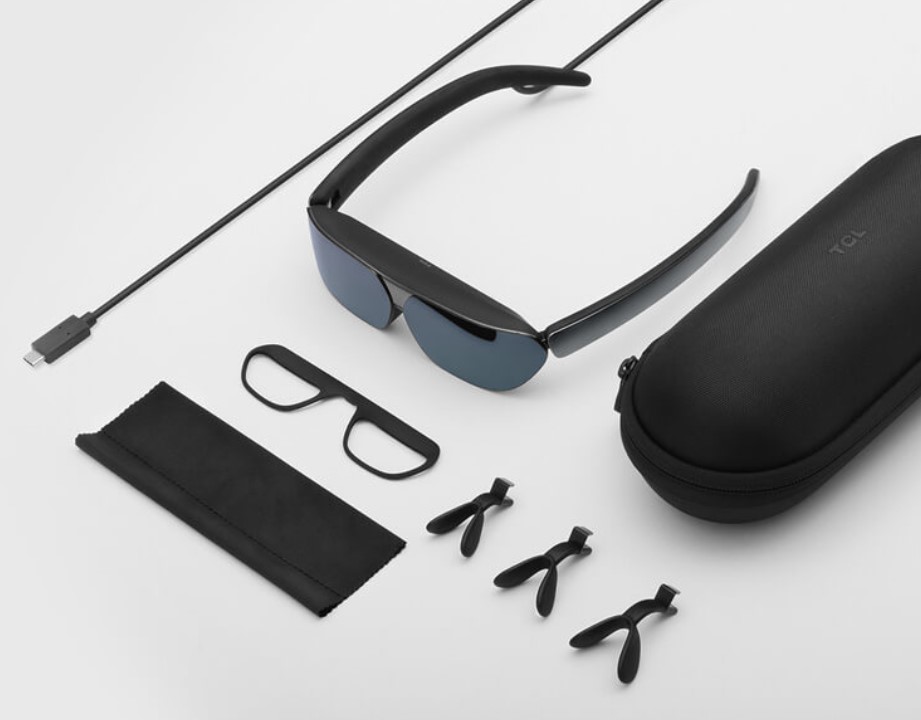
The NXTWEAR G weighs 100 grams and the integrated USB-C cable adds an extra 30 grams. There is no price tag yet but when it ships it will include 3 nose pads, a lens frame for corrective lenses, a cleaning cloth, and a carrying case.
We use cookies on our website to give you the most relevant experience by remembering your preferences and repeat visits. By clicking “Accept”, you consent to the use of ALL the cookies.
This website uses cookies to improve your experience while you navigate through the website. Out of these, the cookies that are categorized as necessary are stored on your browser as they are essential for the working of basic functionalities of the website. We also use third-party cookies that help us analyze and understand how you use this website. These cookies will be stored in your browser only with your consent. You also have the option to opt-out of these cookies. But opting out of some of these cookies may affect your browsing experience.
Necessary cookies are absolutely essential for the website to function properly. This category only includes cookies that ensures basic functionalities and security features of the website. These cookies do not store any personal information.
Any cookies that may not be particularly necessary for the website to function and is used specifically to collect user personal data via analytics, ads, other embedded contents are termed as non-necessary cookies. It is mandatory to procure user consent prior to running these cookies on your website.