Advertisement

HTC Wildfire E3 coming soon with MediaTek Helio P22, HD+ display, and Android 10

HTC was once the world’s largest Android OEM. But now, the company barely releases new smartphones. Even if it does, most of them are exclusive to its home country Taiwan like the newly launched HTC Desire 21 Pro 5G. That said, despite unveiling a new device yesterday, the firm may announce another phone soon in the form of HTC Wildfire E3.

HTC Wildfire E3 Google Play Console

HTC’s Wildfire series of smartphones were one of the popular models in the early Android days. But in the past few years, the company has been using this brand for budget smartphones. The latest entry in this series will be the HTC Wildfire E3, as per a Google Play Console listing.

The listing reveals some key specs of this upcoming HTC budget smartphone along with its front design. First and foremost, this handset will come with a dew-drop notch and some visible bezels around the display.

According to the listing, the phone will sport an HD+ (720 x 1600 pixels) panel. Going by the entry-level MediaTek MT6762d (Helio P22) chipset and 3GB RAM underneath it, the screen should be mostly LCD, rather than OLED. Lastly, this handset will run Android 10 out of the box, which is a bummer for a device releasing in 2021.

That said, the exact launch date of HTC Wildfire E3 is a mystery but since the phone has been already listed on Google Play Console, it should go official anytime soon.


Samsung Galaxy A52 5G variant is coming to India: Report

Samsung will be a lot busier today with the Galaxy S21 flagship smartphone launch happening in a few hours. However, the company hasn’t turned its tide on the successors to the last year’s A-series devices. It is already working on multiple devices like Galaxy A32, A52, and A72 at least as per the reports. Among these, the Galaxy A52 is said to come in both 4G and 5G variants and a report now says it’s already under production in India.

Galaxy A52 5G

According to 91Mobiles’ industry sources, the upcoming Samsung Galaxy A52 has entered mass production at Samsung’s facility in Greater Noida. What’s more interesting is that citing its sources, the report says the Galaxy A52 5G variant will launch in India. While this is in contrast to earlier BIS listings, we just have one question- Why is Samsung opting for 5G?

For this, We can only place the market’s transition as the reason in front of you. The mid-range 5G smartphones are going to boom in India this year starting with launches like the Moto G 5G, Mi 10i, upcoming realme X7. And it will be fair for Samsung to pitch a 5G variant against these rivals to oust the competition.


That said, if the report is true, Galaxy A52 could be the first Galaxy A-series smartphone to carry the 5G support in India i.e, if it launches first ahead of other devices. This is because Samsung only brought the Galaxy A51 4G variant to India and not the 5G. And that was the case for A71, A80 devices.

Anyway, leaks so far say that Galaxy A52 will have a thickness of 8.4mm and feature a 6.5-inch Infinity-O display. It is expected to be powered by the Snapdragon 750G(5G variant)/ Snapdragon 720G (4G variant) paired with 6 / 8 GB RAM. Other probable features include a 64MP quad-camera setup, 15W charging, Android 11, and more.

It is so far rumored to launch before H1 2021 ends and come with a price tag of under $500.


OPPO A93 5G official images and specifications emerge through retailer listing

It was learned yesterday that OPPO will be soon announcing the OPPO A93 5G mid-range phone in China. It was found listed on China Telecom’s website with images and specifications. Today, the phone surfaced on the Chinese retailer site Tmall with official images and specifications.

OPPO A93 5G renders

The Tmall listing of the OPPO A93 5G states that its pre-orders will be carried out starting from tomorrow. The handset is expected to go on sale from Jan. 20. It could be priced at 1,999 Yuan (~$309) or 2,199 Yuan (~$340).

The phone will be available in colors like Elegant Silver, Aurora, and Dazzle Black. The handset can be seen sporting a punch-hole display, a side-mounted fingerprint scanner, and a triple camera system.

OPPO A93 5G specifications

The OPPO A93 5G has a 90Hz refresh rate supporting a display of 6.5 inches. It offers a 1080 x 2400 pixels Full HD+ resolution and a 20:9 aspect ratio. The images that surfaced yesterday showed the device sporting a curved edge display. However, the official images show that it has a flat-screen.

The Snapdragon 480Qh 5G mobile platform will drive the device with 8 GB of RAM. The phone will come with 256 GB of native storage and a microSD card slot. The 5,000mAh battery of the phone will be equipped with 18W rapid charging.

OPPO A93 5G poster

The OPPO A93 5G has a front camera of 8-megapixel and its rear shell has a triple camera system. The latter houses a primary camera of 48-megapixel, a 2-megapixel depth sensor, and a 2-megapixel macro shooter. The Android 11 OS along with ColorOS 11.1 will come preloaded on the smartphone.


itel to launch Rs 7,000 phone on January 15, claims report

According to a new report by 91mobiles that cites information acquired from industry sources, itel will be launching a new smartphone in India with a price tag of Rs 7,000 (~$96). The name of the device is not known yet. However, the publication has shared a render of the mysterious phone to reveal its appearance.

As can be seen in the render, the upcoming itel smartphone features a waterdrop notch display. It has a thick bottom bezel. The tall aspect ratio screen is expected to deliver an HD+ resolution. It is also said to be equipped with a large-sized battery.

The back panel of the phone seems to be made from polycarbonate material. At the top-left corner of the rear shell, it features an AI-powered triple camera system. It is unclear whether the phone features a fingerprint scanner.

itel mysterious phone

Last week, itel revealed to the media that it has gained over 7,000 crore customers in India in the past five years. As it is known, the China-based Transsion Holdings is the owner of phone brands named Tecno, Infinix, and itel.

Mr. Arijeet Talapatra, CEO, TRANSSION India, said in a statement, “Over the last five years, itel has seen robust growth and has successfully secured its position amongst the top three industry leaders in its segment. With the next billions of Indians entering into the fold of connectivity, itel will catalyze this transition enabling the vast majority to reap the benefits of digitalization providing comfort and convenience catering to their needs across entertainment, education, financial inclusion, and business,”

He further added “Our new brand vision “itel hai. Life Sahi Hai.” emphasizes on our commitment to provide a value-driven offering to our customers for a more convenient and better life. We are excited about strengthening our roots in every Indian household with our value plus, new-age technology products at an affordable price range so that every Indian can experience itel’s magical portfolio and have a better standard of living through its phones, televisions, and smart gadgets.”


Amazfit GTR 2e and GTS 2e India launch date is January 19

Back in December, Huami announced the updated versions of the GTR and GTS 2 lineup in China. Carrying the GTR 2e and GTS 2e moniker, the wearables brought improvements to battery life, featured a new Temperature Sensor. After bringing this to markets like the USA, the company is finally bringing it to India.

Amazfit GTS 2e All Colors Featured
Amazfit GTS 2e

In a tweet, Amazfit India has announced that it will be launching the Amazfit GTR 2e and GTS 2e in the country on January 19. A video teaser shared by the company shows the features of GTS 2e like AMOLED display, Heartrate, Blood oxygen Monitoring, and more.

In fact, both the smartwatches feature similar features but a different battery and display i.e, Square-shape on GTS 2e and Round display on GTR 2e. Also, they are identical to the previous versions, GTR 2 and GTS 2 except for the dimensions and above mentioned minor points. Speaking of which, during the China launch, Huami said that GTS 2e will give a 14-day battery life which is also evident in the teaser.


Similarly, GTR 2e will have a claimed battery life of 24-days(Normal) and 45-days(Basic Watch Mode). To compare the older GTS 2 and GTR 2 had a Normal Battery life of 7-days and 14-days respectively. Anyway, the GTR 2e and GTS 2e will also have other features like a microphone, a New Temperature sensor but it won’t have enough internal storage and a Speaker.

Also evident from the teaser that Amazfit will bring all the Obsidian Black, Dark Green, and Roland Purple colors of GTS 2e to India.

That said, both the Smartwatches will have an AMOLED screen( GTS 2e- 1.65-inch, 341 PPI, GTR 2e- 1.39-inch, 326 PPI) with 50+ AOD clock styles(GTS 2e), Heartrate(PPG-sensor), Blood oxygen monitoring(SpO2), GPS, 5ATM water resistance, sleep monitoring, 90 sports modes, 50+ watch faces, and more.

We’ll just have to wait for the official pricing for India which am sure will be out in a few days ahead of the reveal.


Meanwhile, checkout our comparison video below:

LG launches the CineBeam HU810P 4K laser projector to offer a home theater experience

LG has just launched a new high end projector to bring the theatre experience to users’ homes. The new laser projector is the 4K CineBeam HU810P, which aims to provide ‘an authentic movie theater experience.’

LG

The new laser projector arrives amid the Coronavirus pandemic, which still has various theatres and cinema halls remaining closed for an extended and, what appears to be, an indefinite period of time. So, the South Korean tech giant has introduced a new product that acts as a home theatre. This new laser projector can output 2,700 ANSI lumens of light, which can also adjust and adapt to the ambient lighting in its surroundings.

As per the company’s official notes, the LG CineBeam model can also be used in a ‘typically lit’ living room. Notably, the images and videos outputted by the new laser projector offer users a 97 percent DCI-P3 color space and even offer multiple viewing modes that can be chosen. This includes Dark Room Mode and Bright Room Mode. The last mode is the Adaptive Contrast, which also enabled the projector to auto adjust each video frame to ensure a better viewing experience.

LG

LG also adds that the CineBeam supports TruMotion Mode and Real Cinema Mode, which allows users to watch movies the way they were intended to be viewed by tweaking the frame rate to 24Hz. For connectivity, the LG projector supports HDMI 2.1 + eARC and wireless for streaming content from other devices using Bluetooth. It also runs on webOS 5.0 and supports both Screen Share and AirPlay 2. Unfortunately, the company has yet to unveil the pricing and availability of the new projector.


Xiaomi’s 80W wireless charging technology may enter mass production in first half of 2021

When it comes to wireless charging, Xiaomi is continuously offering faster wireless charging solutions on its flagship models. The Xiaomi Mi 10 Ultra that debuted last year in August and the recently unveiled Xiaomi Mi 11 flagship are both equipped with a 50W wireless charging solution. Fresh information suggests that the company may soon launch a flagship phone with 80W wireless charging technology.

Today, reliable tipster Digital Chat Station claimed through a Weibo post that Xiaomi is testing a new flagship smartphone with 80W wireless charging technology. The handset with the new charging solution is said to be in the verification process. He added that its mass production is likely to begin in the first half of this year.

It is unclear which upcoming flagship phone will be equipped with the new wireless charging solution. Xiaomi is expected to announce the Xiaomi Mi 11 Pro flagship phone in February. It remains to be seen whether the 80W wireless charging technology will be available on the Mi 11 Pro or some other handset.

Xiaomi 80W Wireless Charging

The 80W wireless charging technology was showcased by Xiaomi in October last year. A 4,000mAh battery can be fully charged by the 80W wireless charging solution with a dedicated stand in just 18 minutes. It is the world’s fastest wireless charging technology.

To successfully build the 80W wireless charging technology, the specially customized a more efficient wireless charging architecture and chip, and independently designed a composite coil system, using MTW multi-pole fast-charging batteries, dual 6C series batteries, with multi-stage variable current control, and MiFC fast charging.


DJI is building a new team that will work on self driving technology

The popular drone making brand, DJI, is apparently building a new team that will be working on developing self driving or autonomous technologies. The company has put up various job listings and has already begun hiring as well.

DJI

According to a BTTransport report, the Chinese tech giant is hiring engineers from various fields and backgrounds like the auto electronics, autonomous driving, in car software, and automobile industry, as per its recent job posts. People close to the matter added that DJI is planning on selling driver assist technology as well. This includes technology like LiDAR sensors, which is a crucial component of self driving vehicles, and other packaged solutions for autonomous driving functions.

At the moment, the drone maker has yet to publicly announce this move. Although, the company has apparently been working on LiDAR technology and cameras for years now, as per the sources. Notably, the move from DJI arrives as various hardware and software based firms are racing to get a foothold in the automobile industry, especially in regards to autonomous vehicles and their future. Huawei is a great example of this with its HiCar initiatives along with its work in developing Smart Roads in China.

DJI

Currently, DJI dominated the global small drone market with a massive share of 69 percent. Research and analytics based firms recently estimated that the market’s overall value is worth about 8.4 billion US Dollars and is even expected to grow further. For those unaware, the company got placed on the US Commerce Department’s Entity List back in December 2020, for allegedly facilitating human rights abuses in China.


ZMI PurPods TWS earbuds announced in China for 199 Yuan ($30)

Earlier today (14th January 2021), the ZMI officially announced its PurPods true wireless earbuds. The new wireless earphones have been launched in China and will be available for purchase starting tomorrow, January 15.

ZMI

Back in October 2020, ZMI had launched its PurPods Pro TWS earphones. These earbuds featured dual ANC (active noise cancelation) and were priced at 399 Yuan (roughly 61 US Dollars). Now, the Chinese company has launched the base PurPods, which are more affordable than their high end variant but lack the noise cancelling feature. In other words, we can expect the new wireless earphones to arrive with specifications similar to the premium variant.

For those unaware, the ZMI PurPods Pro sports pressure sensitive buttons that enables different controls. The hearables also support Bluetooth 5.2, alongside wireless charging, has IPX4 waterproof rating, and also arrive with the XiaoAI voice assistant built in for voice controls. The earbuds can also last for up to 10 hours on a full charge and up to 32 hour in total along with its charging case, and even has a low latency mode for mobile gamersZMI


Furthermore, the new earbuds also use EQsmart adaptive technology that adjusts the volume according to the sound levels in the users’ surroundings. So for those looking for affordable new truly wireless earbuds, the PurPods from ZMI could also be worth considering. The earbuds will go on sale on 15th January 2021, and are available for a price of just 199 Yuan (roughly 30 US Dollars).


AnTuTu: These were the global best performing Android smartphones in December 2020

Last week,  AnTuTu published a number of reports for the month of  December 2020. Unfortunately, we missed out on the one for the global top 10 best performing flagship and mid-range Android smartphones. Let us take a look at these lists in this article.

AnTuTu Global Top 10 Best Performing Android Smartphones December 2020

Before we begin, we would like to mention that these two lists are based on all the Android smartphones launched u0p until December 2020. But surprisingly, it does not include the Xiaomi Mi 11, which currently tops the AnTuTu chart, as per another report that was published by the firm at around the same time.

Further, the company has only considered the average scores of the highest variant of each device With that being said, let us see which handsets made it to these lists.

Global Top 10 Best Performing Flagship Android Smartphones – AnTuTu December 2020

  • 01) HUAWEI Mate40 Pro
    • Chipset: HiSilicon Kirin 9000
    • Memory: 8GB + 256GB
    • Average Score: 657,784 points

  • 02) iQOO Neo3
    • Chipset: Qualcomm Snapdragon 865
    • Memory: 8GB + 128GB
    • Average Score: 646,016 points
  • 03) ASUS ROG Phone 3
    • Chipset: Qualcomm Snapdragon 865+
    • Memory: 12GB + 128GB
    • Average Score: 630,307 points
  • 04) OPPO Find X2 Pro
    • Chipset: Qualcomm Snapdragon 865
    • Memory: 12GB + 512GB
    • Average Score: 610,749 points
  • 05) Samsung Galaxy Note20 Ultra 5G
    • Chipset: Qualcomm Snapdragon 865+
    • Memory: 12GB + 256GB
    • Average Score: 604,401 points
  • 06) OnePlus 8 Pro
    • Chipset: Qualcomm Snapdragon 865
    • Memory: 12GB + 256GB
    • Average Score: 584,057 points
  • 07) Xiaomi Mi 10T Pro 5G
    • Chipset: Qualcomm Snapdragon 865
    • Memory: 8GB + 256GB
    • Average Score: 581,233 points
  • 08) Black Shark 3
    • Chipset: Qualcomm Snapdragon 865
    • Memory: 8GB + 128GB
    • Average Score: 574,438 points
  • 09) Samsung Galaxy S20 FE 5G
    • Chipset: Qualcomm Snapdragon 865
    • Memory: 6GB + 128GB
    • Average Score: 574,187 points
  • 10) POCO F2 Pro
    • Chipset: Qualcomm Snapdragon 865
    • Memory: 6GB + 128GB
    • Average Score: 572,474 points


Global Top 10 Best Performing Mid-range Android Smartphones – AnTuTu December 2020

  • 01) HONOR 30
    • Chipset: HiSilicon Kirin 985
    • Memory: 8GB + 128GB
    • Average Score: 404,970 points
  • 02) HUAWEI nova 7
    • Chipset: HiSilicon Kirin 985
    • Memory: 8GB + 256GB
    • Average Score: 402,080 points
  • 03) Redmi 10X 5G
    • Chipset: MediaTek Dimensity 820
    • Memory: 6GB + 128GB
    • Average Score: 394,545 points
  • 04) Xiaomi Mi 10T Lite 5G
    • Chipset: Qualcomm Snapdragon 750G
    • Memory: 6GB + 128GB
    • Average Score: 331,796 points
  • 05) Redmi K30 5G
    • Chipset: Qualcomm Snapdragon 765G
    • Memory: 6GB + 128GB
    • Average Score: 325,915 points
  • 06) Xiaomi Mi 10 Lite 5G
    • Chipset: Qualcomm Snapdragon 765G
    • Memory: 6GB + 128GB
    • Average Score: 323,260 points
  • 07) HUAWEI nova 7i
    • Chipset: HiSilicon Kirin 810
    • Memory: 6GB + 128GB
    • Average Score: 313,322 points
  • 08) realme 7
    • Chipset: MediaTek Helio G95
    • Memory: 8GB + 128GB
    • Average Score: 297,910 points
  • 09) Redmi Note 8 Pro
    • Chipset: MediaTek Helio G90T
    • Memory: 6GB + 128GB
    • Average Score: 292,901 points
  • 10) realme 6
    • Chipset: MediaTek Helio G90T
    • Memory: 4GB + 128GB
    • Average Score: 291,109 points

Out of all the phones listed above, it is interesting to know that the Redmi Note 8 Pro that was released almost one and a half years ago, is still one of the best-performing smartphones. 

What are your thoughts on these lists? Let us know in the comment section below.


Apple sued over infringement of wireless communications patents

Apple is facing another lawsuit. This time, the company is being sued over infringement of wireless communications patents through its iPhones and other products that feature cellular connectivity.

Apple iPhone 12

According to an Apple Insider report, the complaint was filed with the U.S. District Court for the Western District of Texas earlier this week. The lawsuit alleges that the Cupertino based giant knowingly infringed on five pieces of intellectual property owned by Delaware-based Neo Wireless, LLC. The patents were for some of the underlying systems that are related to wireless communications, the frequency bands, and other mobile networking technologies.

The lawsuit is technically targetting the way that the iPhones use multiple cellular networks. This includes both 4G LTE and 5G networkings. The complaint states that “To utilize LTE or 4G and NR or 5G networks, the iPhone is manufactured to comply with wireless standards, such as the 3GPP standards, that ensure compatibility of wireless devices and wireless networks.”

Apple

While it is not specifically mentioned, the lawsuit is also targetting the Apple Watch and iPad, as these products are presumed to fall under the claims of the infringement as the company’s other cellular enabled gadgets. At the moment, the complaint is asking for a jury trial and demands that the company pay for the damages, cost and other expenses related to the infringement of the patents. This also includes paying their attorney fees and ongoing royalties as well.


Samsung teases under display selfie camera tech, but its not for smartphones

While many companies have showcased their prototypes of smartphones featuring an under display camera on the front, Samsung had also been rumored to be working on the same technology as well. Now, it seems like the company is gearing up to launch a device with the new camera technology as well.

Recently, Samsung Display posted a video on Weibo, a Chinese microblogging website, that teased its new OLED panels that feature an under display selfie shooter. This video was shared by known leakster Ice Universe on Twitter. However, the OLED panels that house the new camera technology aren’t for smartphones, rather, it appears to be arriving in the company’s upcoming new notebooks first.

Looking at the video shared online, Samsung is using its under display camera technology on the new OLED panels, which allows the laptops to have minimal bezels on all sides and achieve a screen to body ratio of 93 percent. Notably, the OLED panel is also thin, measuring in at just 1mm and weighing just 130 grams. At the moment, Samsung Display has yet to reveal any finer details regarding the new technology. So, it is also unclear which notebook would feature the South Korean tech giant’s “Blade Bezel” screens.

Samsung
ZTE Axon 20 5G Under display camera

Although, what we do know is that the new technology will be seen later this year. Furthermore, rumors have pointed at the Galaxy Z Fold 3 being the first smartphone from the company to feature an under display selfie camera, as per an AndroidCentral report. The device is expected to launch in the second half of this year as well, so we can expect to hear more about the device and it possibly featuring the new technology in the arriving months. So stay tuned for more updates.


Honor MagicBook laptops powered by Intel 11th-Gen processors to launch next week

It’s been a couple of months since Honor separated from Chinese giant Huawei to become an independent brand but that hasn’t stopped the company from lining up and launching new devices one after another.

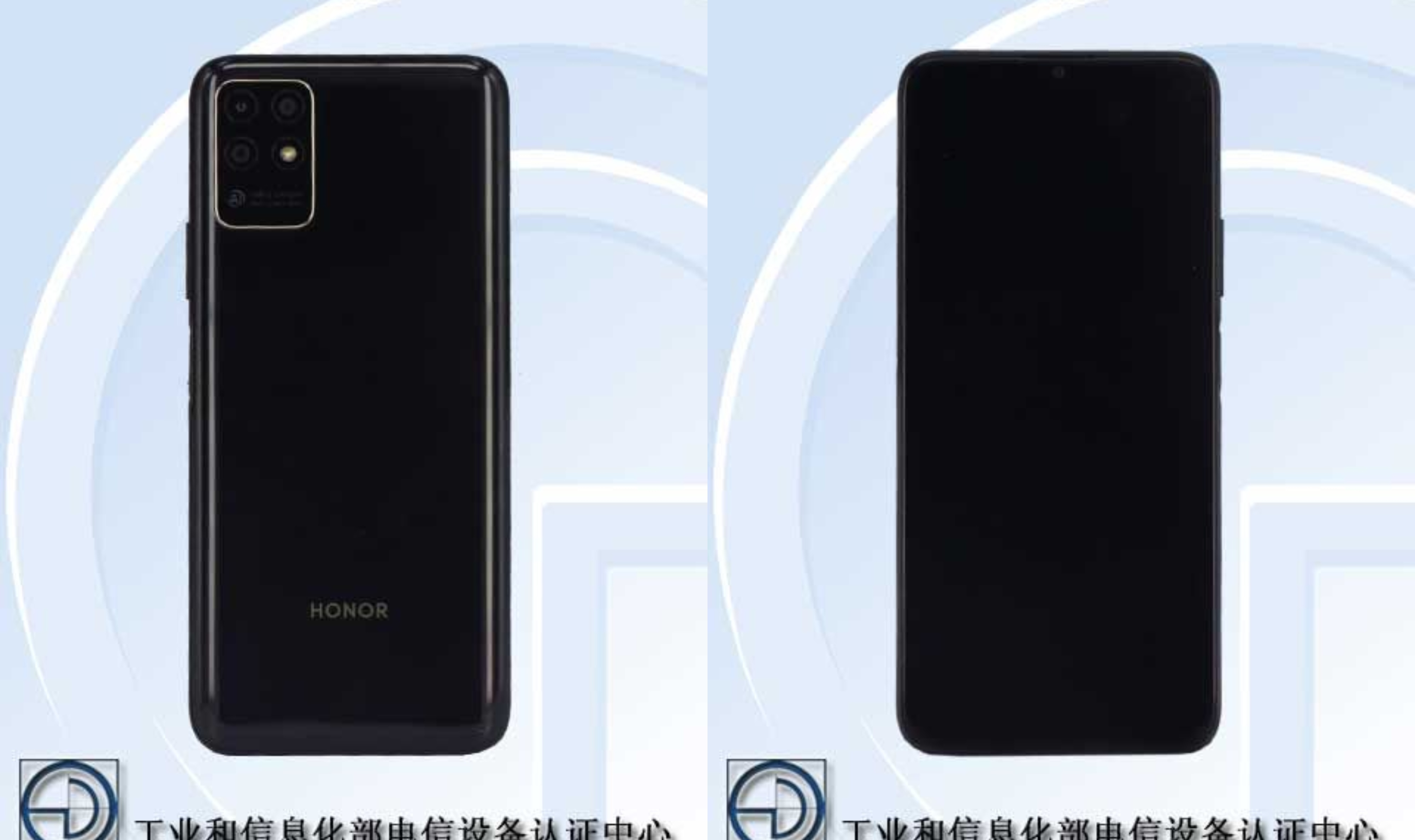
Along with the Honor V40 flagship smartphone launch on 18th January in China, the company will also be launching its new MagicBook series of laptops. The company is expected to launch Honor MagicBook 14 and MagicBook 15.

Honor MagicBook 14/15 2021

While the official launch is still days away, the devices have been listed online by JD.com, revealing the design as well as configuration. However, to know the pricing and availability details, we will have to wait for the official launch.

So far, it’s known that the Honor MagicBook 14 and 15 will come with a display with narrow bezels on the three sides and the screen has passed Rheinland Low Blue Light certification. It will be offered in just one color — Glacier Silver.

Internally, the laptops come powered by the latest Intel 11th generation processors, up to Core i7-1165G7. These processors are manufactured using the 10nm process and support clock speeds up to 4.7GHz.

EDITOR’S PICK: Huawei plans to have more than 300 million devices running its HarmonyOS by the end of 2021

It also has Intel Xe integrated graphics processor, packed with up to 16GB RAM and 512GB SSD. The company will also offer an option of NVIDIA MX450 discrete graphics card for better graphics performance.

It has also been revealed that the devices come with shark-fin high-density and slim fan blade design along with dual heat pipes to ensure that the temperature remains in control and thus, the laptop delivers better performance.

Recently, at the CES 2021, the company had unveiled the Honor MagicBook Pro 2021 that features a 16.1-inch Full HD display. It packs an Intel Core i5-10210U processor, NVIDIA GeForce MX350 GPU, 16GB RAM, and 512GB SSD. The laptop is priced at $1,000 and will soon be available for purchase.


Apple iPhone 12 Pro prototype spotted running nonUI build of iOS 14

An Apple iPhone 12 Pro prototype has recently surfaced online, offering us a first look at the company’s current flagship’s early build. The device arrived in a Pacific Blue variant and even ran on iOS 14 but without the UI.

The images of the iPhone 12 Pro prototype was shared on Twitter by Giulio Zompetti earlier today (14th January 2020). In the picture, we can observe the latest version of SwitchBoard being present, within the nonUI build of iOS 14. For those unaware, the Cupertino based giant uses SwitchBoard as an internal tool that houses various utilities to test a number of features on new iPhones.

We can observe a number of previously seen utilities in the image like Console, USBHost, QRCode, Reliability, along with some new ones like Ness and Astro, as per a 9To5Mac report. Looking at the device itself, it seems like this Apple iPhone 12 Pro prototype arrived with a slightly darker shade of the Pacific Blue color variant, which is available on the iPhone 12 series. Although, this could also just be due to dim lighting in the scene.

Apple

In other words, Apple might have been going for a darker aesthetic for the blue colored version of the iPhone 12 Pro before settling on the current final version, which is available in the markets. Unfortunately, we have no way of confirming this and it is a speculation, so take it with a pinch of salt.


Honor V40’s camera configurations revealed in a new leak

Honor will be announcing the Honor V40 smartphone on Jan. 18 in China. Ahead of the launch, the company is busy revealing some of its key features. Today, it confirmed that the Honor V40 will be sporting a 50-megapixel primary camera. At the same time, a poster of the Honor V40 has surfaced on Weibo to reveal its design, color options, and key specs.

Honor has revealed that the Honor V40 has a 50-megapixel ultra-sensitive main camera. It also mentioned that the phone will be capable at shooting amazing shots in low-light conditions.  According to a Chinese tipster, it could be equipped with a 1/1.5x-inch Sony IMX7XX lens.

Previous reports had claimed that the Honor V40 is equipped with a quad-camera setup. The new poster that is now being circulated on Weibo reveals that the camera setup of the Honor V40 has three cameras, a laser autofocus unit, and an LED flash. So, apart from the 50-megapixel primary shooter, the handset features an 8-megapixel ultrawide lens and a 2-megapixel macro camera.

Honor V40 poster

The Honor V40 can be seen in three colors such as black, blue, and gradient orange in the new poster. It features a curved edge display with a pill-shaped cutout at the upper left corner. The poster also confirms that the Honor V40’s display produces 1.07 billion colors. Recent reports have revealed that it has a 6.72-inch OLED FHD+ display that offers a 120Hz refresh rate and a 300Hz touch sampling rate.

The Honor V40 could be powered by the MediaTek Dimensity 1000+ chipset. The device may come with a 66W fast charging enabled 4,000mAh battery. Some leaks have also claimed that the handset supports wireless charging.


Huawei is developing Smart Roads that interact with driverless cars

While the idea of self driving cars and autonomous vehicles is an easy concept to understand, smart roads are a bit more complicated. The former implies an automobile that can act and move without human interaction, while the latter signifies interconnected technology that supports these driverless cars, which is exactly what Huawei is working on.

Huawei

In the city of Wuxi in the Jiangsu province of China, the company is working on smart roads. The Chinese tech giant is testing the infrastructure behind this concept on a four kilometer stretch of road where a self driving bus runs back and forth, navigating obstacles, accelerating and decelerating, making stops, and other activities based on the information it receives from the smart road systems around it. To put things simply, sensors, cameras, radars, and more embedded in the road, traffic lights, street signs, and other areas help the vehicle navigate the road by relaying key information.

In other words, the smart road ‘talks’ to the autonomous bus. This site was developed and run by Huawei and its partners, and is a part of the country’s first national project for intelligent and connecter vehicles, as per a Bloomberg report. The smart road project is a part of China’s efforts to make its roads safer and help make traffic smoother as well. At the same time, this also offers its local companies like Huawei an opportunity to benefit from supplying the government with the supporting infrastructure.

Huawei

According to Jiang Wangcheng, a president at Huawei’s information and communications technology business, “Autonomous driving is an irresistible trend, but any isolated vehicle alone can’t nail it. The only solution is to get more information from the roads. Sensors, cameras, radars that are embedded into roads, street signs, traffic lights, bus stops.” The self driving bus is dubbed X-Bus and is linked to a transportation-control network, through which a two way form of communication is established to decide every action taken on the smart road. This also means that instead of making a smart car, Huawei is leaning more towards providing communications equipment and software for intelligent solutions for vehicles.


Samsung reportedly increases CMOS image sensor prices by 40%

Samsung is one of the leading image sensor makers for smartphones, giving tough competition to Sony. The South Korean giant is the world’s second-largest company when it comes to supplying CMOS Image Sensors.

However, because of a serious shortage of image sensors in the market, Samsung has reportedly increased pricing by around 40 percent. And Samsung isn’t the only one to do so as other image sensor providers have also increased the pricing by around 20 percent.

Samsung

EDITOR’S PICK: Huawei executive reveals the company’s plan to have more than 300 million devices running HarmonyOS in 2021

The report also adds that Samsung has significantly increased UMC’s 28nm ISP foundry orders to meet the demand. However, the company’s production capacity is in short supply at the foundry.

It is being said that the company is planning to invest in machine equipment and hand it over to United Microelectronics Corporation (aka UMC) for production to ensure higher capacity. The report further adds that the deal between these two companies is currently in the discussion phase.

Recently, it was also reported that Samsung is planning to cut down some of the DRAM production capacity as it wants to ensure that CMOS Image Sensor chips are available in the required quantity for the customers.


Google Pixel 4a 5G users complain about navigation and touch issues

The Google Pixel 4a 5G, which was launched last year along with the Pixel 5 a few months ago, is suffering from touch reliability issues after the company rolled out an update for the smartphone last month.

As per the reports coming from several users, the phone suffers from a range of issues, including taps not registering, which is very frustrating for those users who are using the 3-button navigation feature.

Google Pixel 4a 5G Clearly White
Google Pixel 4a 5G

The issues started appearing after Google rolled out an update with the December security patch. Prior to that update, no such issues were reported by the smartphone’s users after the device was launched.

Users are saying that taps on the screen are not getting registered, especially around the edges, including buttons and UI elements, and thus the user needs to tap multiple times for the function to work.

EDITOR’S PICK: Qualcomm’s CPUs are about to get even more powerful as it plans to acquire NUVIA

It has also been confirmed that the issue is not related to the hardware as finger drags are being consistently recognized. Apart from issues with the three-button navigation system, people are facing problems with the full-screen apps.

The issue was also acknowledged by Google last month and the company had said that a “fix will be included in an upcoming software update.” However, the company has not addressed this issue in the January patch and there has been no information shared by the company regarding this.

In the meantime, the only real fix to this frustrating problem is rolling back the smartphone to the November security patch. Although the process of doing that isn’t easy, it is the only workaround before the company actually fixes the issue with a software update.


ASUS ROG Phone 4’s arrival teased, Q1 launch likely

A couple smartphone brands are gearing up to launch next-generation gaming smartphones. Recently, Black Shark and Nubia started teasing their next gaming phones for the Chinese market. Both phones are likely to break cover as early as February in the country. ASUS is another company that is now gearing up to launch its ROG phone. A teaser released by the brand through its Weibo account reveals that its next gaming phone will offer an upgraded experience.

ASUS has not revealed the name of its next ROG phone in the new teaser. Last month, an ASUS phone with model number ASUS_I005DA was spotted at Geekbench 5. Since the model number of the ROG Phone 3 is ASUS_I003D, it was speculated that the ASUS_I005DA handset could be debuting as the ROG Phone 5.  It is advisable to wait for further reports to know whether the upcoming ROG handset will be called ROG Phone 4 or ROG Phone 5.

ASUS-ROG-Phone-poster-585x1040

‘Coming back to the teaser, the poster suggests that except for the slightly thick chin, it will be sporting slimmer bezels on the other three sides of the display. The ROG Phone 3 offered a screen-to-body ratio of 19.5:9. Hopefully, the successor model will offer a taller aspect ratio. The Geekbench listing of the alleged ROG phone had revealed that it is equipped with the Snapdragon 888 mobile platform and 8 GB of RAM. The phone was found to be running on Android 11 OS.

ASUS ROG Phone 3 Specifications

The ROG Phone 3 came with specs like 6.59-inch FHD+ AMOLED screen, Snapdragon 865+ chipset, 12 GB of LPDDR5 RAM, UFS 3.1 storage, and a 6,000mAh battery with 30W fast charging support. For photography, it featured a 24-megapixel front camera and a 64-megmapixel + 13-megapixel + 5-megpaixel triple camera system.


Xiaomi Mi 11 smartphone disassembled and reassembled into a dragon

A few weeks ago, Xiaomi launched its latest flagship smartphone in its home country China and the device is now available for purchase. Now, just days after the phone being made available in the market, the company has shared an interesting video.

Xiaomi has shared a video on its Weibo account that shows the Mi 11 smartphone being disassembled but then the phone gets reassembled into a mechanical sculpture of a dragon — an iconic symbol in the Chinese culture.

For this process, two Mi 11 phones were used, along with four Leather Edition models for the softer material. The company is also reporting that it took 30 days for the article to complete this disassembling and reassembling process of around 500 parts.

The Xiaomi Mi 11 flagship smartphone features a 6.81-inch AMOLED 2K display that offers 3200 x 1440 pixels screen resolution, 120Hz refresh rate, 480Hz touch sampling rate, and Gorilla Glass Victus protection.

EDITOR’S PICK: Huawei plans to have more than 300 million devices running HarmonyOS by the end of this year

Under the hood, the device is powered by the Qualcomm Snapdragon 888 SoC, making it the world’s first device to have this processor. Along with that, the phone is coupled with up to 12GB of RAM and 256GB of internal storage. It comes with an in-display fingerprint scanner and a heart-rate scanner.

In the camera department, there’s a triple-camera sensor on the back that features a 108MP primary sensor with f/1.85 aperture, a 13MP super wide-angle lens with a 120-degree field of view, and a 5MP telephoto-macro lens. On the front side, the device has a 20MP snapper for taking selfies and video calling.

The smartphone runs the Android 11 operating system out-of-the-box with the MIUI 12 on top, although the company has officially released the MIUI 12.5 custom interface. It is powered by a 4,600mAh battery that supports 55W fast wired charging, 50W fast wireless charging, and 10W reverse wireless charging.