Recent reports have revealed that one of the upcoming Motorola phones could the Moto G Play (2021) smartphone. This phone could be the successor to the Moto G9 Play that went official earlier this year. The Moto G Play (2021) has been spotted at the Google Play Console. The listing has revealed a few key specs of the smartphone.
The Google Play Console listing reveals that the Moto G Play (2021) could be codenamed as “Guama” and its screen supports an HD+ resolution of 720 x 1600 pixels and 280ppi pixel density. The smartphone is preinstalled with Android 10 OS.
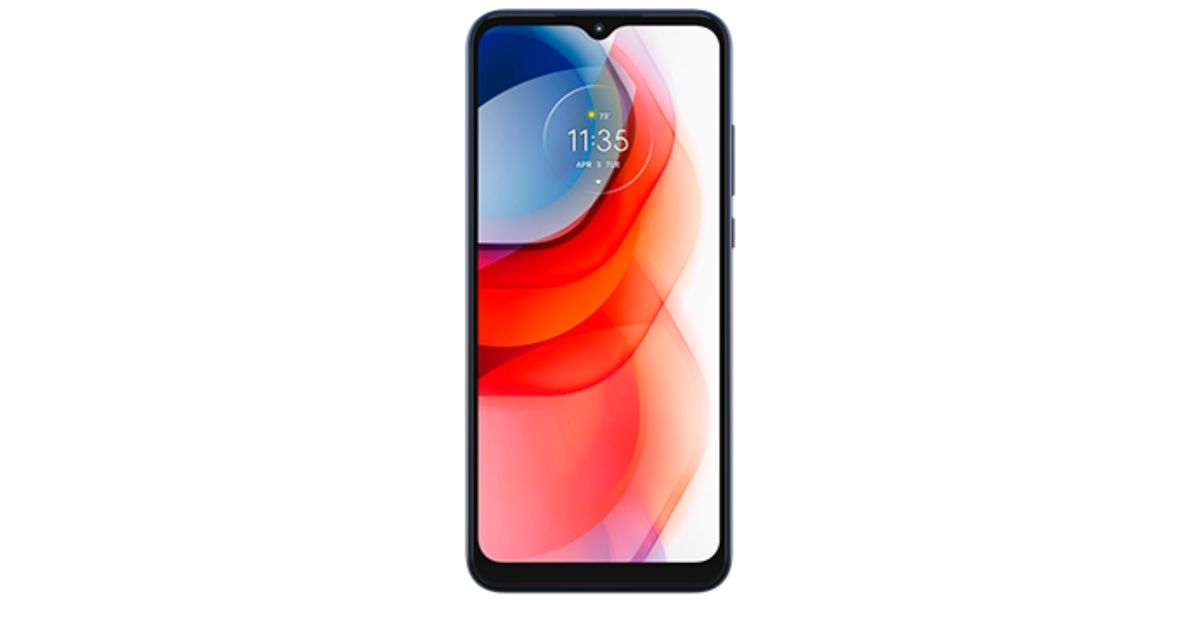
The smartphone is fueled by the SM4250, which is nothing but the Snapdragon 460 chipset. The SoC is coupled with 4 GB of RAM. A frontal image of the smartphone is also available in the listing. It shows that the screen features a waterdrop notch and it has a thick bottom bezel. The right edge of the phone has a volume rocker and a power key. It is unclear whether it is a real or placeholder image.
A month back, the Moto G Play (2021) had surfaced at the Geekbench benchmarking platform. It appears that its processor may have been wrongly identified as the Snapdragon 662 at that time. The Geekbench listing had also revealed that the G Play (2021) has 3 GB of RAM and Android 10 OS.
At the beginning of November, reliable tipster @OnLeaks had shared the CAD renders of the Moto G Play (2021). The renders revealed that the phone has a 6.5-inch display with a punch-hole design. The rear shell of the phone was found to be fitted with a square-shaped camera housing for its triple shooters and an LED flash. A fingerprint scanner was also found to be present on the rear shell of the device. The leak also revealed that the Moto G Play (2021) measures 165.3 x 75.4 x 9.5mm. The tipster had also mentioned that the model number of the device is XT-2117. It was found through a TUV Rheinland certification listing that is packed with a 4,850mAh battery.
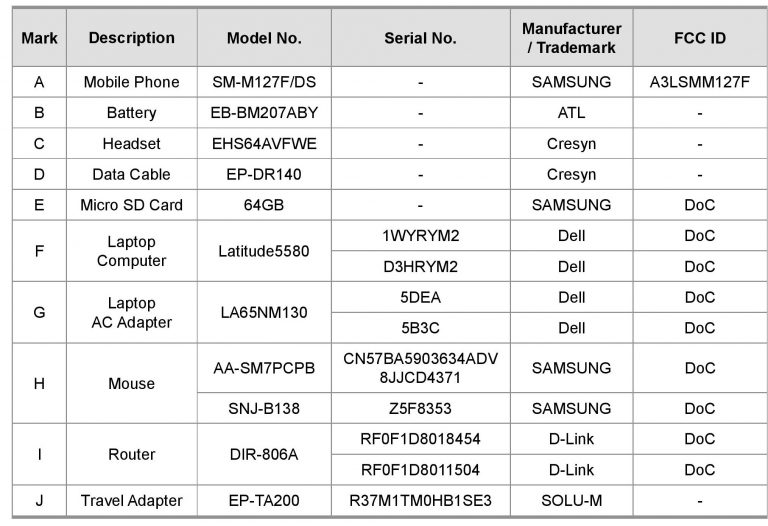
Since last month, the rumor mill has been spilling information about the Galaxy M12 mid-ranger phone by Samsung. Fresh information reveals that the smartphone has bagged certification from the Federal Communications Commission (FCC) in the U.S. The FCC certification has revealed the battery capacity of the Galaxy M12.
A previous report had claimed that the Samsung Galaxy M12 is packed with a huge 7,000mAh battery. However, the FCC listing tells a different story. It has been found that the model number of Galaxy M12’s battery is EB-BM207ABY, which is nothing but a 6,000mAh cell.
Last week, the Galaxy M12 was spotted at the Geekbench benchmarking platform. The listing revealed that it is powered by the Exynos 850 chipset. The listing also revealed that the M12 is equipped with 3 GB of RAM and Android 11 OS.
So far, the Galaxy M12 has bagged approval from the Bureau of Indian Standards (BIS), Bluetooth SIG, and Wi-Fi Alliance. The Galaxy M12’s model number is SM-M127F/DS. It is speculated that it could be rebranded as the Galaxy F12 in some markets. The F12’s model number is SM-F127G.
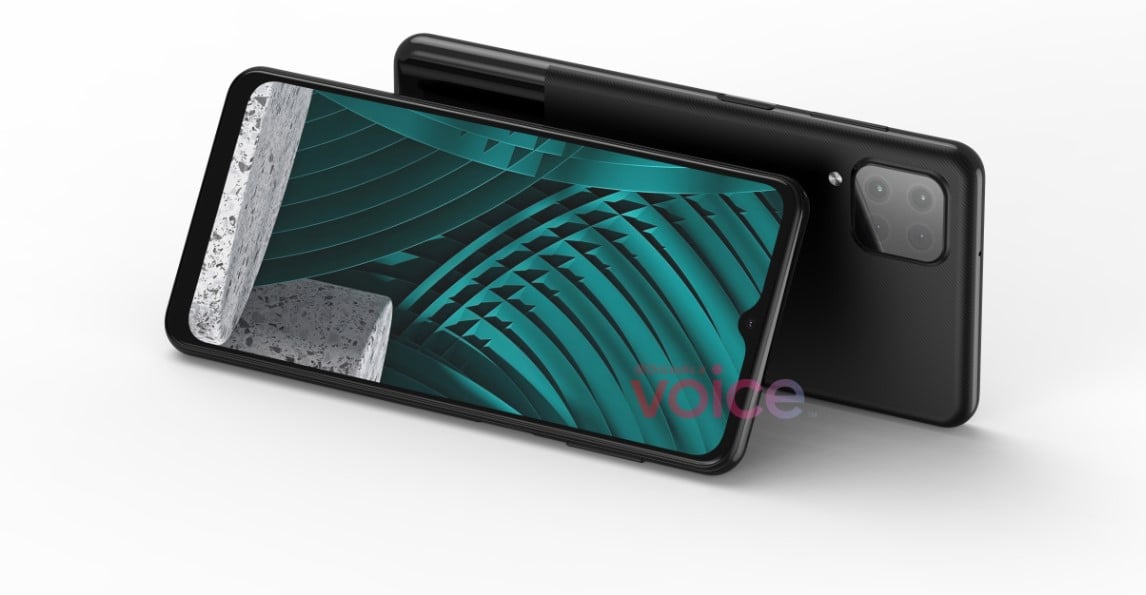
Samsung Galaxy M12 Credit: Steve/Voice
The CAD renders of the Galaxy M12 that had surfaced last month revealed that it measures 163.9 x 75.9 x 8.9mm and it houses a 6.5-inch Infinity-V notch display. The M12’s back panel has a unique dual-textured design. The rear shell of the phone has a square-shaped camera module that houses four lenses. Below the camera housing is an LED flash unit. It has a side-facing fingerprint scanner.
Samsung is yet to confirm the arrival of the Galaxy M12 smartphone. With many of the important certifications in tow, it appears that the M12’s launch may not be far away.
In yet another setback for games developer CD Projekt, its highly anticipated game, Cyberpunk 2077 has moved from one controversy to the other since its arrival last week, as it is being reported that it is unplayable on Sony‘s PlayStation PS4, Xbox One, and Xbox One S consoles. Disappointed gaming fans have therefore accused the developer CD Projekt Red of doing little to provide widely compatible versions of the game, saying that the Cyberpunk 2077 is riddled with unacceptably poor graphics and several game-crashing bugs.
In a swift move to restore confidence, and in response to the outcry, Sony Interactive Entertainment (SIE) has taken the decision to remove Cyberpunk 2077 from the PlayStation Store and has gone further to offer full refunds to those users who purchased the game via its online store.
In a statement, SIE says it strives to maintain excellent customer satisfaction, which standard was breached by the performance of Cyberpunk 2077, hence it is offering a full refund for all gamers who have purchased the game through the PlayStation Store. Sony also said it will be removing Cyberpunk 2077 from PlayStation Store until further notice.
Sony, with this move, also prevents PS4 Pro and PS5 users from further purchasing the game digitally, even though these versions are far more stable.
CD Projekt has tendered its apologies for the stated problems users of Cyberpunk 2077 on PS4 and Xbox One faced and has promised to fix all issues and improve the overall experience.
The developer also stated that all efforts are in place to bring Cyberpunk 2077 back to the PlayStation Store as soon as possible, stressing that all earlier purchased physical and digital copies of the game will continue to receive technical support and updates as part of the improvement strategy for a better user experience for the game.
CD Projekt has also stated that there are no plans to pull out Cyberpunk 2077 from the Xbox digital store.
Lower-midrange smartphones are actually a great segment for those who want to save a lot of money while still getting great performance with daily use. You can actually get very interesting devices for less than €200. The latest one launched in Europe is the Realme 7i bringing all the power of a midrange MediaTek chipset to the low-end segment. But is it the most powerful and versatile handset under €200? There is no better way to understand it than comparing it with the most recent lower-midrange phones from other brands. The most suitable devices for this specs comparison are the OnePlus Nord N100: the first low-end phone released by OnePlus, and the Samsung Galaxy A21s.
Realme 7i vs OnePlus Nord N100 vs Samsung Galaxy A21s
Realme 7i
OnePlus Nord N100
Samsung Galaxy A21s
DIMENSIONS AND WEIGHT
164.1 x 75.5 x 8.9 mm, 188 g
164.9 x 75.1 x 8.5 mm, 188 g
163.7 x 75.3 x 8.9 mm, 192 g
DISPLAY
6.5 inches, 720 x 1600p (HD+), IPS LCD
6.52 inches, 720 x 1600p (HD+), IPS LCD
6.5 inches, 720 x 1600p (HD+), PLS IPS LCD
PROCESSOR
MediaTek Helio G85, octa-core 2 GHz (Snapdragon 662 in Asia)
Realme 7i, OnePlus Nord N100 and Samsung Galaxy A21s sport a very similar design. All come with a punch-hole display, a rectangle-shaped camera module, a plastic unibody design, and a rear-mounted fingerprint reader. There are only marginal differences and what really changes are the color variants. Given that it is thinner and lighter, my favorite one is the OnePlus Nord N100. But the Samsung Galaxy A21s is slightly more compact, so it is a great option too. The Realme 7i has more interesting color variants thanks to its reflective back, and its display is protected by Gorilla Glass 3.
Display
If you expect a great display, you should not go for any of these phones. In each case, you get a below-average LCD panel with an HD+ resolution (720p). We are not saying these panels are bad, but you can find a lot of better displays in the market. Samsung Galaxy A21s is the most disappointing as the OnePlus Nord N100 and Realme 7i come with a 90 Hz refresh rate, while the Galaxy A21s has just 60 Hz. The display of the OnePlus Nord N100 is slightly wider compared to the Realme 7i.
Hardware/Software
The best chipset is the one found on the Samsung Galaxy A21s. It is very powerful for a so affordable phone, and it is very efficient because it is built with an 8 nm production process. The Realme 7i offers great performance as well thanks to its Helio G85 and, in its most expensive configuration, it offers a higher amount of RAM compared to the Samsung Galaxy A21s (8 GB vs 6 GB). Further, the Realme 7i has UFS 2.1 internal storage, while Samsung Galaxy A21s is based on eMMC storage. My choice would actually be the Realme 7i despite the SoC of the Samsung Galaxy A21s is more efficient. All of these devices run Android 10, but we know OnePlus Nord N100 will only get one year of major updates.
Camera
The Realme 7i’s camera department varies depending on the market: in Asia, you get an amazing 64 MP rear camera, while in Europe, it has a 48 MP main camera. In both cases, we are talking about the best rear camera department of this trio. Even the front camera is actually better. The second place goes to the Samsung Galaxy A21s packing a 48 MP quad-camera and a 13 MP selfie camera, while OnePlus Nord N100 is disappointing with its 13 MP rear camera.
Battery
Realme 7i is the battery champion as it packs a bigger 6000 mAh battery. Samsung Galaxy A21s and OnePlus Nord N100 remain amazing battery phones, but they have just 5000 mAh.
Price
OnePlus Nord N100 is priced at €200/$245, Realme 7i costs €170/$208, and Samsung Galaxy A21s is priced less than €200. The winner of the comparison is the Realme 7i due to its great hardware department, very nice cameras, and a bigger battery.
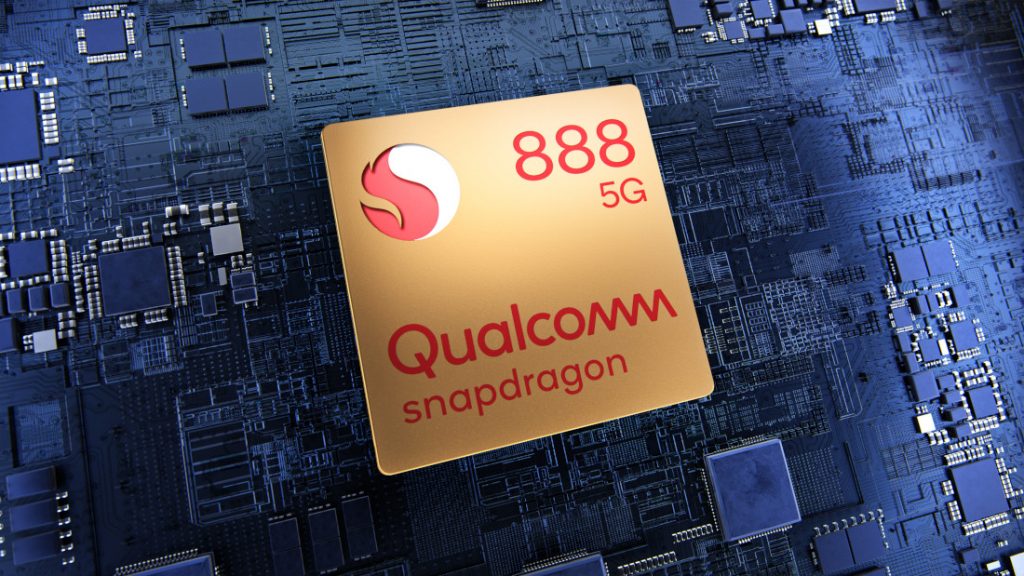
US tech giant and leading chipmaker, Qualcomm has released further details about its latest chipset, the Snapdragon 888 which was announced on December 1 and detailed specifications provided on December 2. Today, the US chipmaker outlined the official benchmarking results for its high-performance chipset.
The initial reviews point in the direction that this latest offering by Qualcomm comes well recommended for high performance. The tests were carried out on a reference device powered by the Snapdragon 888 and conducted up to three times with average scores computed for the various performance metrics.
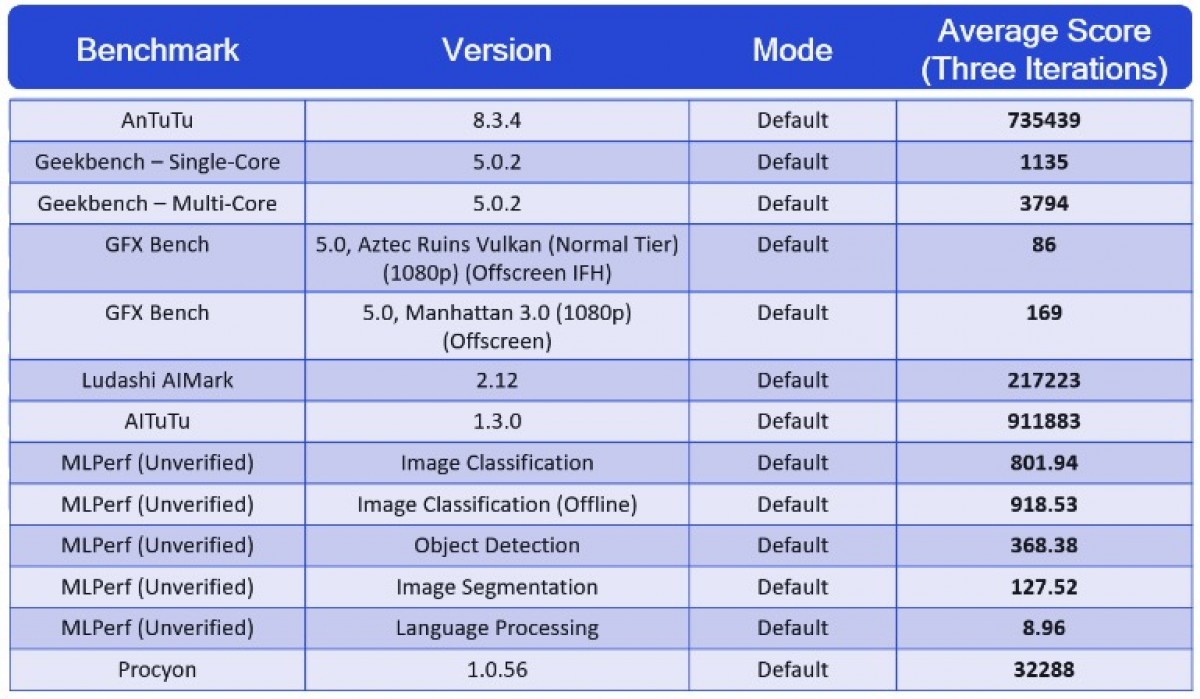
The benchmarks tested by the chipmaker include AnTuTu, GeekBench, GFXBench Aztec Normal and Manhattan 3.0, Ludashi AiMark, AITuTu, MLPerf and UL Procyon.
Starting off with AnTuTu (version 8.3.4) the Snapdragon 888 obtained an average score of 735,439 points which is a milestone score on the platform. The reference device, Huawei’s Mate 40 Pro+ chalked 698,654 points while the highest performing Snapdragon 865 phone so far was Xiaomi’s Mi 10 Ultra with 671,045 points.
The Geekbench (version 5.0.2) tests revealed 1,135 points in the single-core test and 3,794 for the Snapdragon flagship, marginally higher than that of SD 865 at about 900 on the single-core test and 3,400 points in the multi-core test. This result puts the SD 888 ahead by about 20% and 10% in single-core and multi-core performance, respectively compared to its predecessor, the SD 865.
Further details show that the SD 888’s Adreno 660 GPU averaged 86 frames per second on the Aztec Ruins Vulcan test and 169 fps on the Manhattan 3.0 test, both done at a resolution of 1080p offscreen. This result outclasses that of the Snapdragon 865+ whose maximum score was 133fps on Manhattan 3.0 runs.
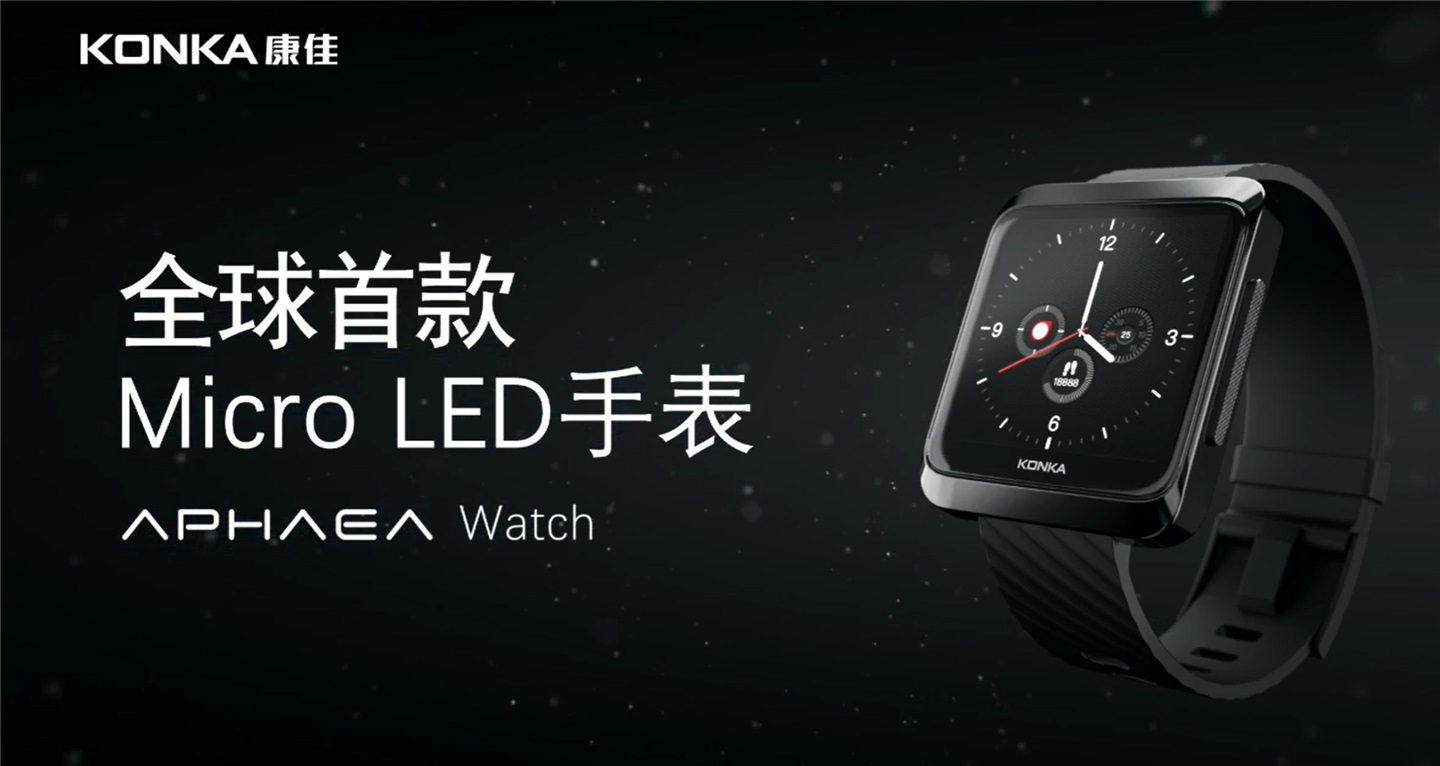
The 2020 Chongqing Micro-LED Industry Innovation Forum and Konka Semiconductor Display Technology and Product Launch Conference was held today in China. At the press conference, Li Hongtao, Vice President of Konka Group and Chairman of Chongqing Institute of Optoelectronics Technology, gave a speech and introduced the layout and achievements of Konka Group in the semiconductor industry. At the end of the conference, Konka released the world’s first Micro-LED watch.
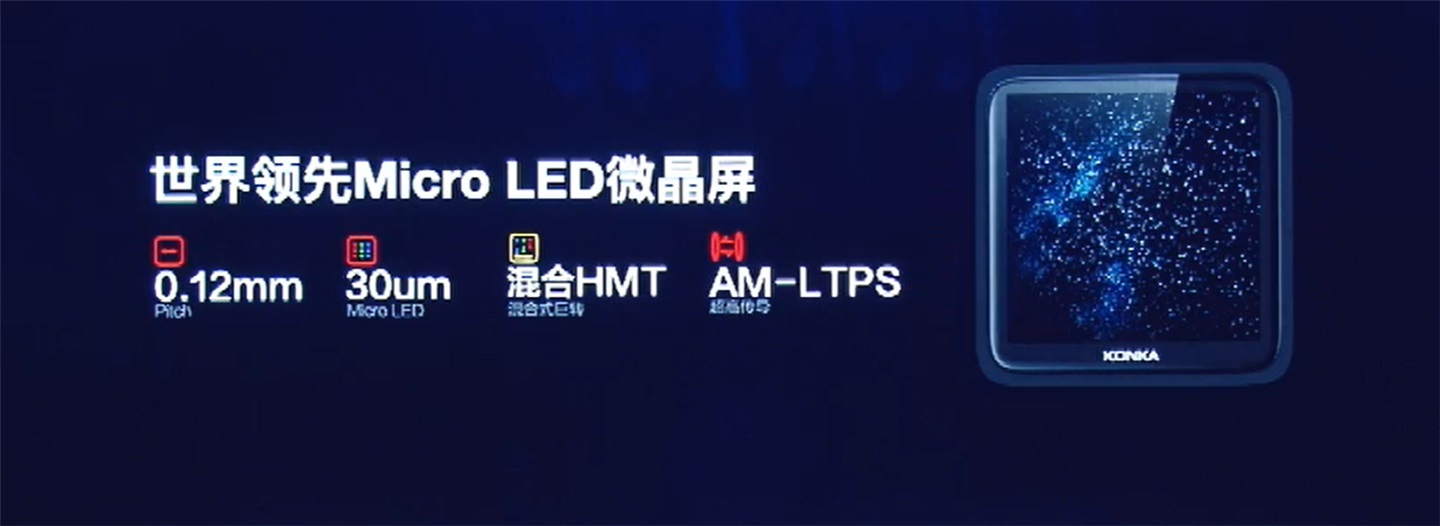
According to details released by the company, the world’s first micro-LED watch uses a 2-inch microcrystalline screen with a glass substrate of only 0.12mm. The company says that its chip size is less than 30um, which is a true microLED product. In addition, its display driver uses the most advanced active low-temperature polysilicon semiconductor display technology, which has a very good display effect.
Furthermore, the screen of this watch can reach a maximum brightness of 1500nit, the color gamut can reach 147% of the DCI-P3 color gamut, and the working temperature can reach-30 to 70 degrees, and the battery life can reach 35 days.
MicroLED uses self-emission backlight just like OLED panels, unlike the traditional LCD displays which require LED backlight modules to emit light through layers from behind to generate images.
Micro LED can achieve effects such as very high contrast, extremely deep blacks, and fast response time just like OLED. However, Micro LED has higher brightness and is more stable than OLED because of its inorganic nature.
A report from 2018 had revealed that Apple was working on using microLED for its smartwatch, AR device, and another unknown product. Although Konka didn’t reveal the manufacturer of the display used on its smartwatch, we suspect BOE. The Chinese display maker started mass producing its microLED panels last year.
Earlier today, Samsung finally confirmed the launch of a new Exynos SoC on January 12. The South Korean giant is expected to unveil the Exynos 2100 flagship SoC in the run-up to the Galaxy S21 series. Alongside the supposed January 14 event, the company will likely unveil the next generation Truly Wireless Earbuds, Galaxy Buds Pro. Amidst a lot of leaks, now, Samsung itself has opened official support pages for the TWS earbuds.
Galaxy Buds Pro render shared by Evan Blass
Samsung has opened two official support pages for a product in the UK, and Germany website. Accordingly, the page shows a model number SM-R190. If you recall, a Bluetooth earbud with the same model number on Indonesia Telecom revealed the “Galaxy Buds Pro” branding. Hence, it’s safe to say that the above page(via MSP) indeed belongs to the upcoming Bluetooth earbuds.
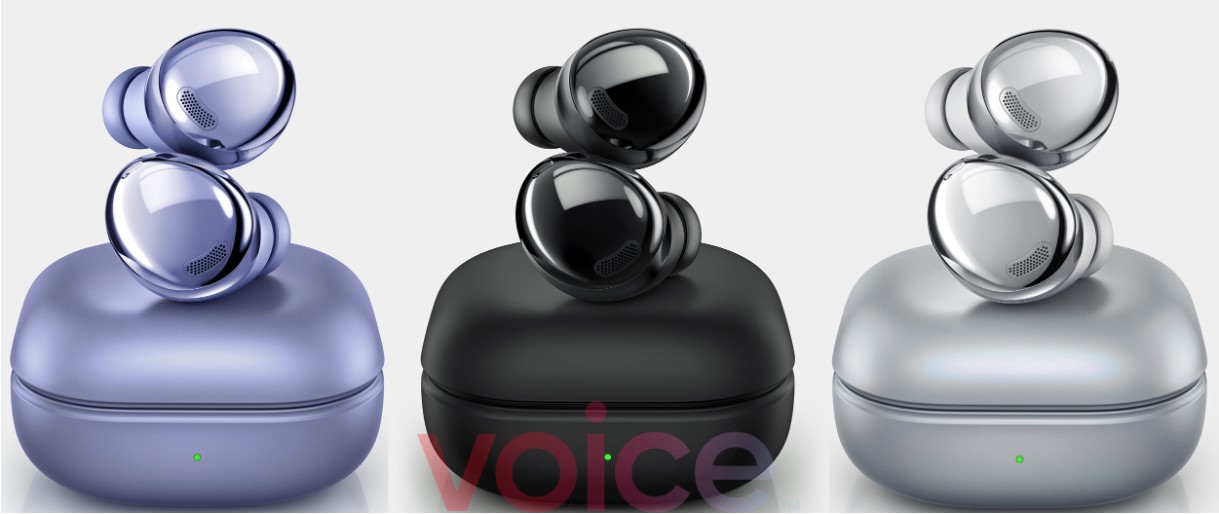
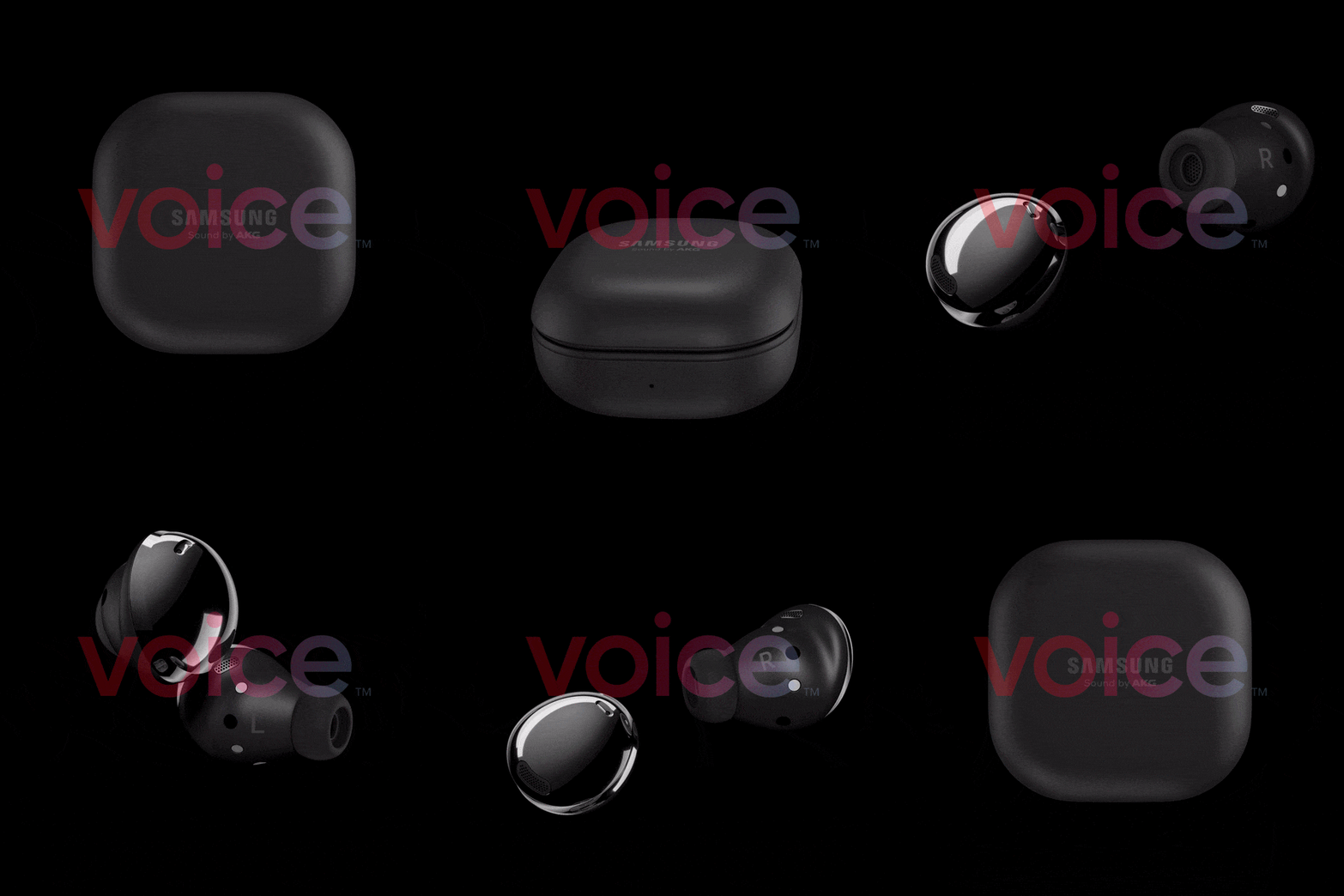
Galaxy Buds Pro – Leaked Design
Moving on, another 360°leak by Evan Blass confirms that Galaxy Buds Pro will come in three color variants- Earlier, he revealed two images of Galaxy Buds Pro in Violet and Phantom Silver colors. Today, he has released a 3D render video in Phantom Black. The video shows the squircle case with a ‘Samsung’ logo and ‘Sound by AKG’ caption.
At the front, there is a dot which could be an LED indicator and at the back is the USB-C charging port. Opening it up reveals the earbuds inside which also have an indicator near them. Talking about the buds, they resemble still images with rounded in-ear design and silicone ear tips.
Credit: Evan Blass
The design is a slight departure from the earlier launched Galaxy Buds+ and Buds Live. A microphone and a grille are visible outside whereas another grille with charging contacts is on the inside.
Galaxy Buds Pro Features(Expected)
Talking about features, an FCC listing reveals that each earbud on the Galaxy Buds Pro will have a 58mAh battery. This is slightly lesser than the Galaxy Buds Live Bluetooth earbuds. That said the large squircle case will have a 472mAh battery courtesy of China’s 3C certification authority.
The earbuds are also expected to come with improved Active Noise Cancellation(ANC), Ambient mode, wireless charging, and more. However, the info regarding the Audio driver unit, supported sound codecs, and price is something we will have to wait till the official launch.
China’s top chipmaker SMIC was already having a rough week following the reported resignation of its CEO. Now its problems are getting much worse. The US government has slammed stricter restrictions on China’s top chipmaker, Semiconductor Manufacturing International Corporation (SMIC) in what looks to be the final moves of Donald Trump”s administration which had been very hard on Chinese interests.
The United States Commerce Department announced on Friday (via) that dozens of Chinese companies, including SMIC, would be added to its Entity List that effectively prevents them from accessing US suppliers and technology.
The decision, according to Commerce Secretary, Wilbur Ross, is to protect American interests by preventing advanced US technology that could be deployed to help build the military of its adversary. SMIC was branded as a perfect illustration of the risks of China using US technology to advance its military capabilities.
SMIC insists that it has no links with the Chinese military and this restriction is bound to create serious problems for the company, which relies heavily on American software, hardware, and other equipment for the complete design and manufacture of its semiconductors. The economic implications are dire for the chipmaker, as sales and growth forecasts have to be reviewed downwards.
US suppliers to SMIC are now bound to apply for a license to sell unique and critical components needed to produce semiconductors at advanced technology nodes — 10 nanometers or below and is aimed at denying such key enabling technology from promoting the Chinese military in any way.
This announcement comes as additional problems for the company, as it was reported this week that its co-CEO Liang Mong Song is stepping down from his position.
SMIC is yet to put out a statement on these issues.
A spokesperson for China’s Ministry of Foreign Affairs, in response to the new restrictions, has accused the US government of using state power to suppress Chinese companies and China will continue to take necessary measures to safeguard the legitimate rights and interests of these companies.
A day after the China launch, OPPO India executive hinted that the Reno5 Pro could come to India soon. While the official confirmation is still awaited, an Indian tipster further hints that the Chinese variant could land unaltered in the country.
Mukul Sharma has posted a tweet asking users to guess the possible chipset on the Reno5 Pro smartphone. He has indirectly confirmed the device is indeed is launching in India soon. Also, the voting on the chipset emphasizing more on the MediaTek Dimensity 1000+ variant hints that OPPO might launch it unchanged from China in India.
So the OPPO Reno5 series has received an amazing response in China😍 Can't wait for it to launch in India. Was wondering as to whether the Indian variant of the OPPO Reno5 Pro will use the same Dimensity 1000+ processor or would there be a change 😉 what do you think?
Anyway, if the device launches with the same SoC, it will be a big jump from the Reno4 Pro. That is, the device will have a huge upgrade in performance and connectivity(5G). In any case, the other regions of the world might get both as 5G and 4G versions.
Precisely, reports say that Reno5 Pro 5G Global variant will have the Snapdragon 765G whereas the Reno5 4G version will retain the SoC of its predecessor, the Reno4 Global variant.
OPPO Reno5 Pro 5G China Specifications
The Reno5 Pro 5G has a 6.55-inch curved OLED 90Hz display with a 2400×1080 pixel resolution. It is powered by MediaTek Dimensity 1000+ SoC and comes paired with 8/12GB RAM, 128/256GB storage.
It shares similar camera specs with the non-Pro variant. Accordingly, the device features a 64MP f/1.7 main lens, 8MP ultra-wide, and two 2MP sensors. Upfront, you get a 32MP selfie shooter.
Other specifications include a 4,350mAh battery with the 65W SuperVOOC 2.0 charging, in-display fingerprint sensor, ColorOS 11 based on Android 11 out of the box, dual-SIM 5G, NFC, GPS for connectivity.
Amazfit India has already confirmed that it will launch the entire GT 2 series of Smartwatch in the country. Accordingly, it announced the GTR 2 starting at ₹12,999($177) a few days back. Today, the company has made the sibling GTS 2 official for the same price.
Amazfit GTS 2 Price, Availability
Amazfit GTS 2 will be available on the official website, and Amazon India at launch. The device will accordingly launch on December 21 in the country. However, starting today, users can pre-order the smartwatch on Amazfit Website from Today(December 18). You can take a look at the pricing below:
Amazfit GTS 2 (Black)- ₹12,999($177).
As mentioned, the pre-order is open only for the Midnight Black variant. However, we can expect the GTS 2 Chinese variant colors like Desert Gold, Urban Gray to debut on December 21(Monday).
That said, the Amazfit website also says deliveries will begin from December 21 and a strap worth ₹1,799($24.47) will be free for those who pre-order the device. Still, the Amazon India webpage just shows a ‘notify me’ button.
Amazfit GTS 2 Specifications and Features
From, the above, we can see that Huami has priced the GTS 2 exactly as the GTR 2. However, we all know that GT’S’ has a square-shaped display whereas GT’R’ watches have a round dial. Additionally, they have has some differences in display, battery but share a lot of similarities as well.
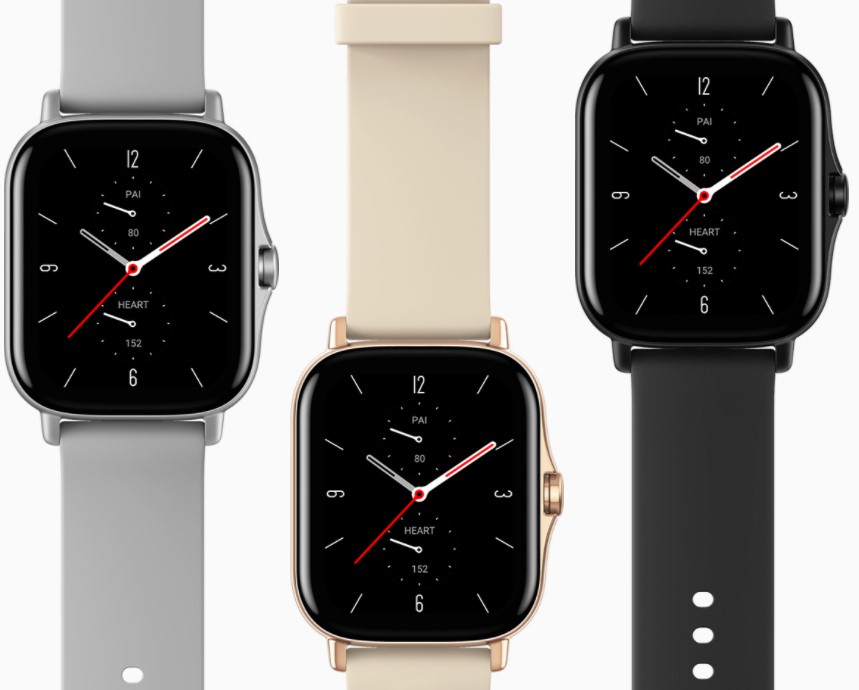
The Amazfit GTS 2 measures 42.8×35.6×9.7mm and weighs 24.7g without the strap. As mentioned above there is a square-display up front, a single crown on the right, and straps made of silicone. Amazfit says the body is made of Aluminum alloy with a 3D curved bezel-less design but the bottom shell is plastic.
Besides, there is a 1.65-inch AMOLED square-display with a resolution of 348×442 pixels. It also has a peak brightness of 450 nits and a 341 PPI. This is a bit bigger than the GTR 2 and also has a similar ODLC coating for scratch resistance. Similarly, the GTS 2 has a smaller 246mAh battery than GTR 2(471mAh) and it should last for 7-days(Typical use) on a single charge via magnetic stand.
For connectivity, we have Bluetooth 5.0, Wi-Fi 2.4GHz, GPS, GLONASS. Other features like self-developed BioTracker™, 2 PPG with blood oxygen monitoring, 24-hr heart rate monitoring, 12 sport modes, PAI health assessment, similar to GTR 2. It also has an offline voice assistant support, sleep tracking, voice calling, 3GB storage, Notifications, and 5ATM water resistance.
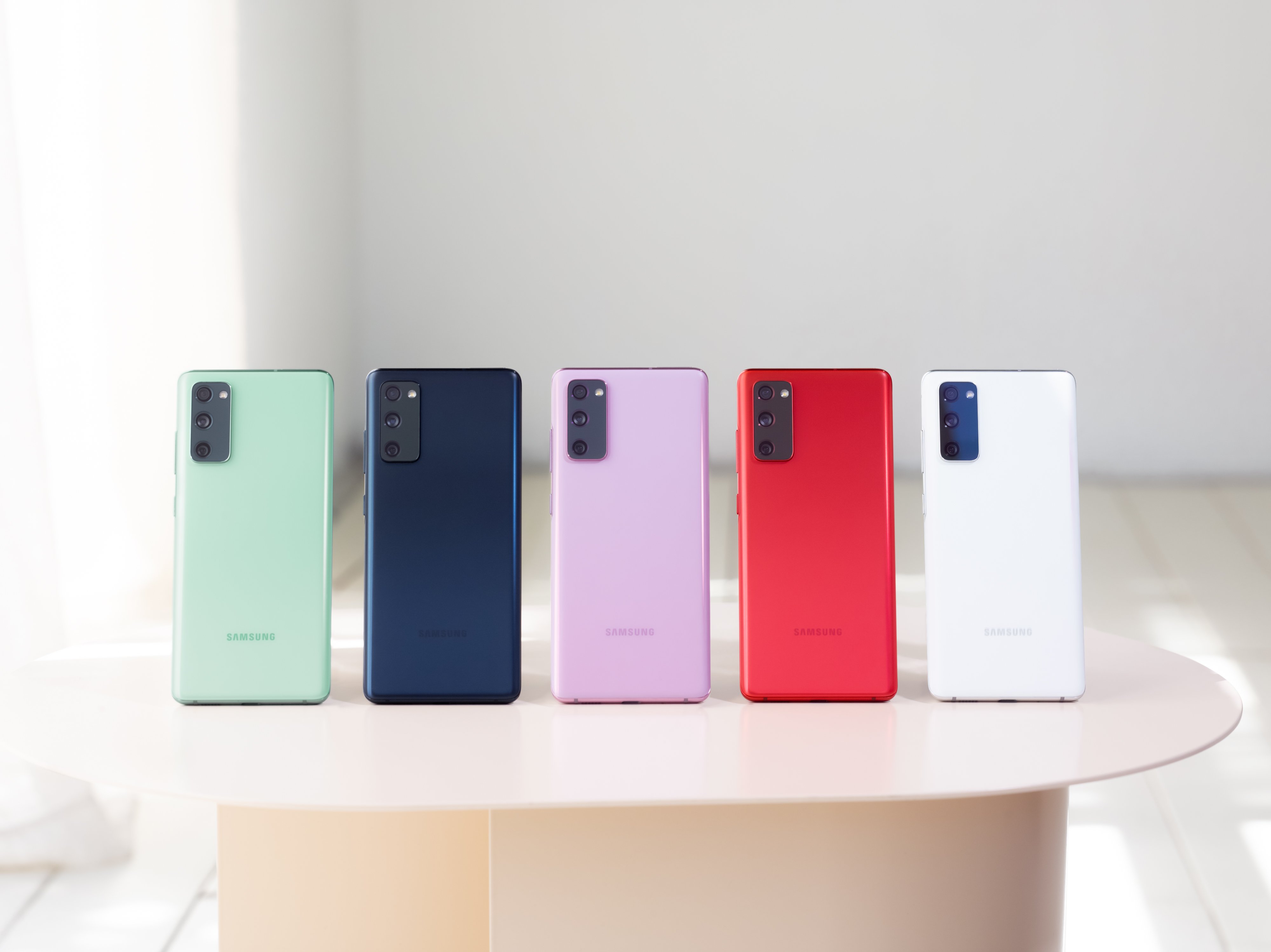
Samsung has started rolling out One UI 3.0 based on Android 11 to its devices earlier this month. As of now, the update is live for Galaxy S20, Galaxy S20+, Galaxy S20 Ultra, Galaxy Note20, and Galaxy Note20 Ultra. The latest smartphone to join this list is the Galaxy S20 FE.
According to SamMobile, the South Korean tech giant has begun to seed One UI 3.0 (Android 11) build for Galaxy S20 FE in Russia. The new update comes with firmware version G780FXXU1BTL1 and December 2020 security patch.
Currently, this build is only available for select users in the country. In order to check whether if you have received it, then head over to Settings > Software update > Download and install. Anyway, if you haven’t got it yet, then do not worry as the update will be hitting your unit once the company extends the availability of the build in the coming days.
Similarly, users in other regions should also start receiving the update very soon. Also, it is worth noting that the world’s largest smartphone maker has released the update for this device before the tipped date.
The Galaxy S20 FE is eligible for three generations of Android updates. Therefore, it will be getting Android 12 and Android 13 in the future.
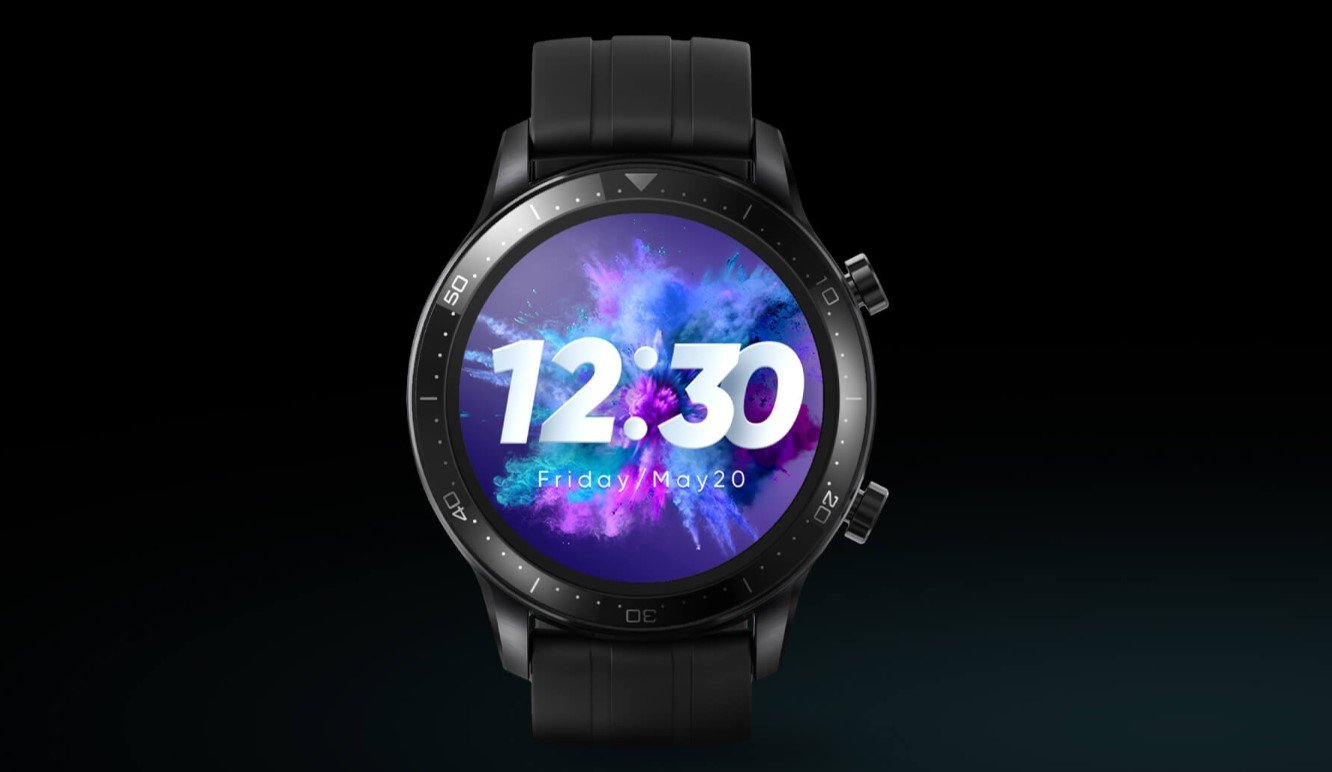
We are inching towards the realme’s December 23 launch event where the company will announce the new wearable products. It will unveil the Watch S, Watch S Pro, and as per the latest hints, a Watch S Master Edition as well. Ahead of this, tipster Mukul Sharma has revealed the entire specifications and features of the Pro version.
Credit: realme
Earlier, an FCC listing of the Watch S Pro revealed few details of the display, battery, SpO2 sensors. However, the realme event page(via Mukul Sharma) reveals the entire features that are coming with the smartwatch. The Watch S Pro is the first ‘Pro’ premium wearable from realme and it looks like the company is leaving no stones unturned.
realme Watch S Pro Specs
Accordingly, the realme Watch S Pro will have a 1.39-inch AMOLED touchscreen with a 454×454 resolution. It will have a peak brightness of 450 nits and a contrast ratio of 100,000:1. That said the presence of AMOLED means you get perks like Always-on Display, vibrant colors, and deeper blacks.
As revealed earlier, the Watch S Pro will have stainless steel over the Aluminum case on the Watch S. The event page also reveals that the watch will come with additional leather straps. Moving on, Mukul Sharma’s leak says that the watch will weigh 63.5g with the strap which will be removable.
The realme Watch S Pro is confirmed to have high-precision Dual-Satellite GPS(GNSS) functionality. It basically means that the receiver end will track more than one radio signal at a time from satellites for accurate, and real-time data. Further, the Watch S Pro will also have other features like 100+ Watch faces, Blood Oxygen(SpO2 sensor) and heart-rate monitor(PPG), 5ATM water resistance(up to 50m), 15 Sport modes.
Some of the modes include Swimming, Cricket, Yoga, Outdoor run and walk, outdoor cycling, Hiking, free workout, and more. Powered by a Dual-Core processor, the Watch will have a 420mAh battery and charge via a Magnetic Charging case. This is higher compared to 390mAh on the non-Pro variant.
Accordingly, realme promises a 14-day battery life in a single charge that should take about 2Hr. Besides, in addition to the Smart Control, Date Display, custom dial features, the Watch S Pro will also have other control modes and features as below:
Music Control
Camera Control
Find my Phone
Weather Forecast
Power Saving/No Disturb mode
12/24Hr Stopwatch
Lift Wrist to Wake
Finally, the realme Watch S Pro will support connectivity with Smartphones running Android 5.0+, and iOS 9.0+ (coming soon in future updates). Let’s wait for the official pricing.
WhatsApp is the most-used cross-platform instant messaging app in the world. With Android and iOS being the only major smartphone operating systems, the app is only available on devices running them, in addition to feature phones powered by KaiOS. That said, every year, the Facebook-owned service announces the end of support for older platforms. As 2020 is about to end, the company has revealed the app will no longer work on certain iPhones and Android smartphones.
According to a report by Entrepreneur (via 91Mobiles), WhatsApp has officially dropped support for devices running Android 4.0.2 and iOS 8. This means if you want to use the application, your smartphone should at least run either Android 4.0.3 Ice Cream Sandwich or iOS 9.
Since most of the smartphones out in the market run the newer versions of the world’s most used operating systems, users need not worry. But for some reason, if they happen to own certain older devices, they will have to upgrade to a newer model.
Having said that, here’s the list of popular smartphones on which WhatsApp will no longer work.
That being said, WhatsApp is currently supported on iPhone 4s (iOS 9), iPhone 5 (iOS 10), iPhone 5s (iOS 12), and all the other newer iPhones that are currently running iOS 14. On the other hand, any Android smartphone running Android 4.0.3 or higher should be able to run the application.
Samsung has finally revealed the launch date of a new Exynos SoC. If the company’s words are anything to go by, the next processor(Tentative: Exynos 2100) will open a new world of Exynos chipsets going forward.
As you can see below, Samsung Exynos(@SamsungExynos)’s tweet says, “A whole new Exynos is coming”. Accordingly, Samsung will announce the new Exynos chipset on January 12, 2021. Now, if you recall, this is just two days before the Galaxy S21’s supposed launch date. The tweet also accompanies the hashtag #Exynos_is_back suggesting a revamp in performance.
Although Samsung hasn’t officially revealed the name of the SoC yet, several reports say that it is the next flagship SoC and carries the Exynos 2100 moniker. It is expected to be built on the new 5nm process just like Qualcomm’s counterpart. Previously, the Exynos 990 SoC was built on the 7nm process and faced a lot of thermal throttling issues.
Moving on, at the heart of the chipset, it will likely host ARM‘s Cortex-X and Cortex-A cores with a 1+3+4 arrangement, unlike the predecessor which had 2+2+4. It will be an Octa-Core chipset and host the in-house Mali-GPUs. You can take a look at the possible combination below:
1xCortex-X1(Clocked at 2.91GHz)- Ultra-High-Performance Core
3xCortex-A78(Clocked at 2.8GHz)-High-Performance Cores
4xCortex-A55(Clocked at 2.4GHz)- Power Efficiency Cores
At least on paper, this is slightly higher in frequency if we compare it to Snapdragon 888 from Qualcomm. Additionally, reports say that the processor will be accompanied by a Mali-G78 GPU replacing the G77 on the Exynos 990.
Specs aside, reports say that Samsung might finally manage to oust the drawbacks and compete with Qualcomm in 2021. While the early benchmarks give positive vibes, we need to wait for real-world tests. In any case, the new SoC will reportedly consume a lesser battery than the Exynos 990 for similar tasks.
Anyway, the flagship SoC will power the upcoming Galaxy S21 series(S21, S21+, S21 Ultra) in Asia, European regions as usual. In fact, Galaxy S21 series powered by Exynos 2100 SoC is already confirmed in India and spotted on European markets. However, we can expect the company to launch the flagship devices with Snapdragon 888 for the USA, China.
Chinese telecom equipment providers Huawei and ZTE being left out of India’s trusted suppliers sources could cause telecom operators in the region to spend 5 to 10 percent more on networking gear from other suppliers.
The Chinese firms being banned in the region would mainly affect local telecom giants like Airtel and Vodafone Idea. Although, the exact increase in gear costs might be a bit lowered considering non Chinese network vendors like Nokia, Samsung, and Ericsson would have less bargaining power in demanding a premium as there are fewer telecom carriers to choose from in the first place.
According to Rohan Dhamija, head (India & Middle East) at Analysys Mason stated that, “If vendor options shrink with the new network security rules, incumbents could face around 5-10% rise in gear purchase costs, which they should be able to easily recover with the next round of price hikes likely soon,” when speaking with ET. Unfortunately, both Vi and Bharti Airtel have yet to respond to any queries or comment on the matter at the moment.
For those unaware, the Indian government recently declared a list of “trusted sources” for acquiring equipment for mobile networking systems and even amends certain telecom licenses as well. This move was seen as one of the first steps to restrict Huawei and ZTE’s role in India’s future telecom development as well as its 5G technology roll out. This also arrives amid growing political tensions between India and China, caused by military clashes in the Indo Chinese borders.
A new filing made by the Cupertino based giant and Broadcom earlier this week, has urged the court to overturn the results of the Caltech WiFi patent trials. As per an AppleInsider report, the brief suggests that the original trial was conducted with “”multiple legal errors.” Back in January 2020, the patent trial ruling had found both Apple and Broadcom guilty of infringing on patents owned by the California Institute of Technology for WiFi. Notably, Apple tried to invalidate the patent back in March, but ultimately failed.
For those unaware, Caltech’s lawyers even argued that a hypothetical licensing deal in 2010 for the chips used in iPhones, iPads, Macs, Apple Watches, and more would have brought in some 1.4 US Dollars per device from Apple and 26 cents each from Broadcom during the trial. When calculated, this figure translates to the jury applying an 838 million US Dollars fine on Apple and 270 million US Dollars on Broadcom.
In the appeal, both companies stated that “These rulings unfairly prejudiced appellants, and greatly hampered their ability to rebut Caltech’s repeated emphasis at trial on the supposed importance of the patents-in-suit, which led to an enormous — and unwarranted — damages award.” Caltech has called both firms conduct as “truly egregious” and even asked the court to raise the payment up to 2.2 billion US Dollars, after taking the lawyers and damages into account.
Vivo is buckling up to launch the Vivo X60 series of Smartphones in China. Although the Chinese giant hasn’t really stood firm on a launch date yet, it could be on December 28. In the run-up to the official reveal, an unboxing video has now joined the train of Vivo X60 Pro leaks.
A YouTube user has uploaded a short unboxing video of the upcoming Vivo X60 Pro. The video opens up to the retail packaging that looks a lot like the Vivo X60’s retail box we saw a few days back. It appears to have a Dark bluish color with a Vivo X60 Pro written on it.
Opening it up reveals the device itself. The device has a Gray rear panel with a rectangular camera layout up top and Vivo branding at the bottom. Speaking of which, the layout, as seen in some of the official renders, has the quad-camera setup. Three of the lenses are arranged like a triangle while the fourth periscope lens sits at the bottom beside the ZEISS logo.
There is an LED flashlight at the tail end(vertically) of the rear camera stack. Turning it up, we see the power and volume buttons to the right, and the curved screen with centered punch-hole upfront. We must admit that Vivo’s curved screens have come a long way(eg. 120-degree curves on Apex 2020). And it looks like the X60 series’s curves feature subtle curves like Samsung‘s devices.
At the bottom, we see that the device has a microphone, USB-C port, speaker grille, and SIM card tray. It’s worth noting that the unit that’s being unboxed here also has a ‘PROFESSIONAL PHOTOGRAPHY’ slogan and a secondary mic at the top.
The next exciting part here is the UI of the device. As the user unlocks it, we are greeted with the new OriginOS. If you recall, the company unveiled the new UI based on Android 11 on November 18. It’s now almost certain that the X60 series will debut with the new UI corroborating with the earlier leak.
Anyway, the X60 series will mostly include two devices- X60, X60 Pro. However, there’s also a possibility of an X60 Pro+ with Snapdragon 888 SoC. Other than that, the rest of the devices will have an AMOLED 120Hz display, Exynos 1080 SoC, triple cameras(X60) with X60 Pro having an additional 8MP periscope lens, 33W fast charging, and more.
Earlier this week, the German cabinet sent legislation to the Bundestag that will allow Chinese telecommunications equipment provider, Huawei, to build 5G networks in the region but only after strict security measures are guaranteed.
According to an AsiaTimesreport, the proposed legislation would make Huawei and telecom equipment providers financially liable for compromised security. This would also give security agencies complete network access to determine the integrity of the network. In other words, Germany is going ahead with Huawei for 5G building but with strict conditions, despite Washington having lobbied Chancellor Angela Merkel’s government to ban the Chinese tech giant outright.
Notably, American media described the newly proposed German law as a “a setback for the outgoing U.S. administration,” as written in the Wall Street Journal. Furthermore, the Merkel government’s decision might have been different if Donald Trump had been re-elected. Copies of these proposed law had leaked in Germany back in November but it seems that this has now been solidified.
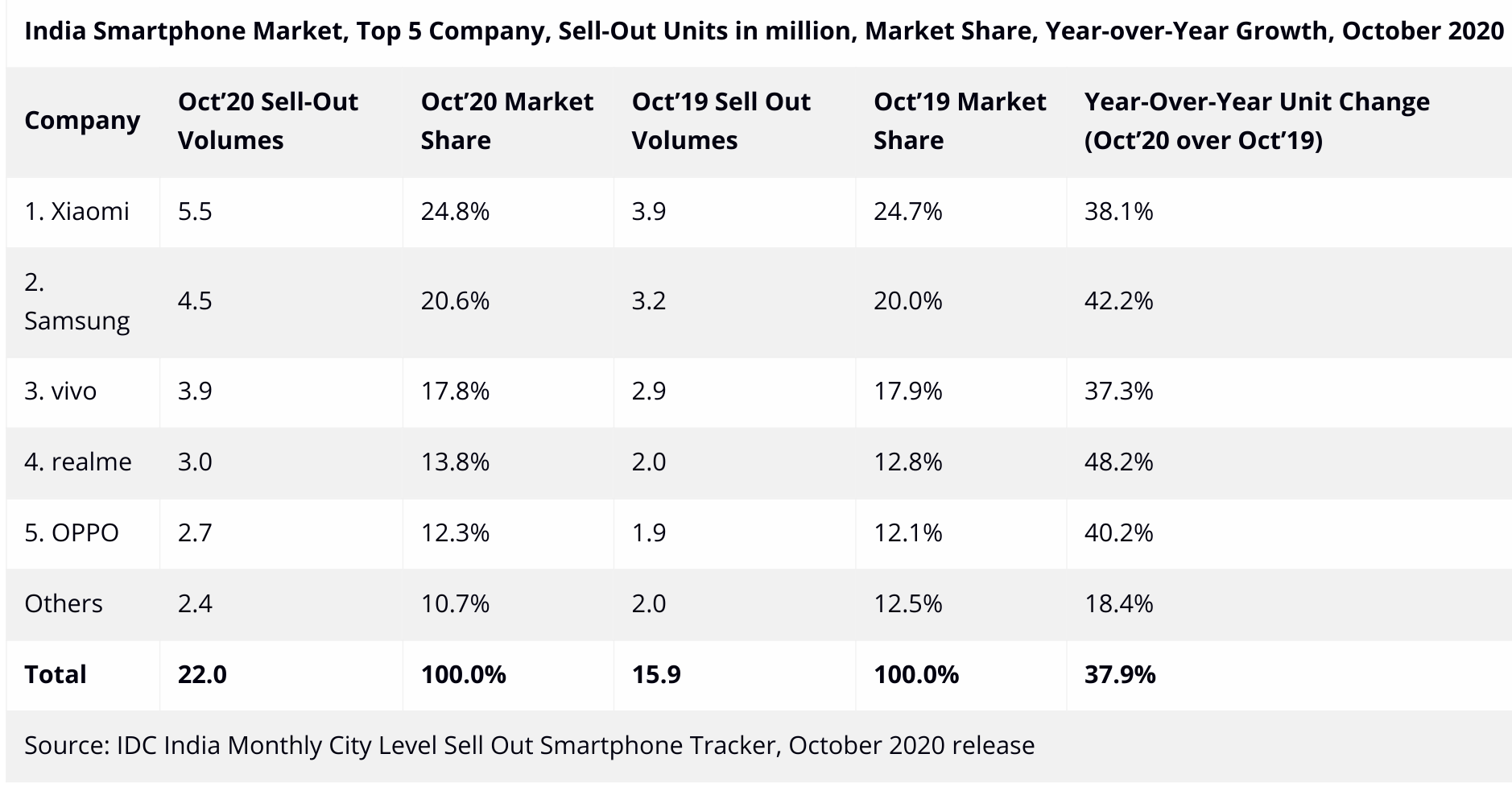
After releasing the report on India Smartphone Market Q3 2020 in early last month, IDC is back again with another report for October 2020. The new report details the growth achieved by OEMs during the pre-Diwali festive season sales in the country. Unsurprisingly, the rankings remained the same with Xiaomi leading the market, followed by Samsung, realme, vivo, and OPPO respectively.
Photo by Rami Al-zayat (Unsplash)
India Smartphone Market October 2020 Shipments
According to the new report by International Data Corporation (IDC), the Indian smartphone market recorded a whopping 42% YoY growth in October 2020 by shipping 21 million units. Above all, it happens to be the highest-ever October shipments and it is only second to the all-time high shipments of 23 million units that took place in September 2020.
Due to the pandemic and great offers, online channels grew 53% YoY and accounted for 51% market share. The offline channels also grew 33% YoY, especially in smaller towns and cities.
The $100-$200 price bracket, which is the hottest segment in India, grew by 60% YoY, and therefore, its market share increased to 58%. Redmi 9, Redmi Note 9, and vivo Y20 were some of the most-shipped handsets. Whereas, the premium segment ($500-$700) was led by iPhone XR, iPhone 11, and OnePlus 8, thanks to exceptional offers.
India Smartphone Market October 2020 Sell-out Units
Taking about sell-out units (finale sale to consumers), a record 22 million units were sold in October 2020 in India, registering more than 38% YoY growth. Approximately 55% of the national demand came from the top 50 cities.
Top-tier cities like New Delhi, Mumbai, Bengaluru, Chennai, and Kolkata grew 50% YoY, and therefore, they accounted for 25% of the entire market. Emerging cities like Jaipur, Gurgaon, Chandigarh, Lucknow, Bhopal, and Coimbatore also grew by ~50% YoY bu the rest of the states (up-country markets) only witnessed an average of ~25% YoY growth due to economic factors.
Online channels accounted for 50% of entire sales by growing 23% YoY. In the top 5 metro cities, it had a 57% share. This happened despite delayed deliveries as supply constraints had impacted offline sales. As for brands, Xiaomi led in 34 of the top 50 cities in the online channel, whereas vivo topped in 44 of the top 50 major cities in the offline channel.
Further, the MOP (Market Operating Price) was $190 in October 2020 and 68% of total sales occurred in the sub-$200 price segment. Almost half of the sales of the $100-$200 price segment happened online, recording 93% YoY growth. Lastly, Xiaomi was the leading brand in the sub-$200 in 30 of the top 50 cities in India.
Whereas, the mid-range segment ($200-$300) accounted for almost a fourth of the smartphones sold in the period. Samsung led this segment in 36 of the major 50 cities. On the other hand, the premium segment ($500+) accounted for only 5% of the total sales in the top 50 cities and less than 1% in the rest of the cities. Apple topped this price bracket in 49 of those top 50 cities. However, it is worth noting that this segment grew 16% YoY.
India Smartphone Market October 2020 5G Sales
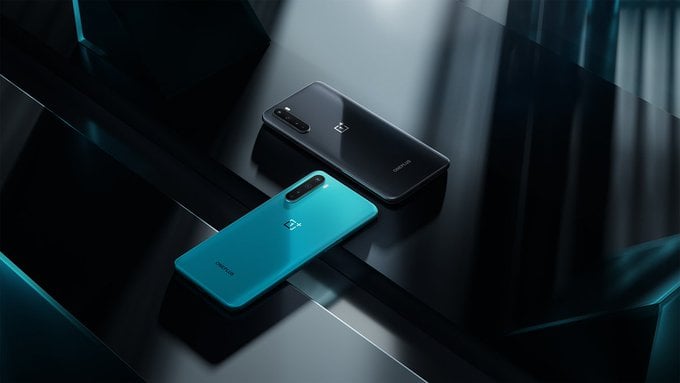
Interestingly, half a million 5G handsets were sold in October 2020 and almost 80% of those sales happened in the top 10 cities of the country. Although the report does not mention the best-sellers, the only phone we could think of is the OnePlus Nord.
OnePlus Nord
Because this device was the top-seller in its segment in Q3 2020 and there was not a single phone cheaper than it with 5G connectivity during the period. The only other 5G handsets were flagships.
And since sales in the premium segment were lower compared to budget and mid-range categories, OnePlus Nord is our strong contender for the best-selling 5G smartphone in India in October 2020. Whereas, the runner-ups could have been the OnePlus 8T, OnePlus 8 series, and the then newly launched Mi 10T series.
Anyway, at the end of the day, consumers cannot make use of the 5G radio present in their devices as the Indian government is yet to allocate spectrum to the carriers.
Xiaomi is gearing up to launch the Mi 11 series in China this month. An exclusive tip given to us suggests that the company will unveil the devices on December 29 in the country. Ahead of the launch, leaks regarding Mi 11 has been floating on the internet frequently. Hence, let’s take a look at the possible specs, and price with whatever info we have so far.
For starters, Mi 11 will be a premium flagship series in 2021 that’s coming after the 10th anniversary of Xiaomi. It will succeed the yesteryear Mi 10 series. Although Xiaomi has confirmed only about the Mi 11 so far, we can expect the company to bring Xiaomi Mi 11, Xiaomi Mi 11 Pro just like 2020. Additionally, a report also rumors about a possible Mi 11 Pro+. Xiaomi’s latest flagship that’s selling in China is the Mi 10 Ultra which launched a few months ago.
Mi 11 Series – The basics
To get basics out of the way, Xiaomi Mi 11 will follow a similar strategy to the predecessor. Accordingly, it will boast a premium design with no-compromise on specs and other features. It will also be the first flagship to launch with Qualcomm’s latest Snapdragon 88 SoC as confirmed by Lei Jun.
From the leaked images so far, we can guess that the device might retain the rear Glass body and sport a metal mid-frame for rigidity. Since the devices are tipped to sport a four-curved screen, expect Xiaomi to place a Gorilla Glass(maybe 6) on top of the screen.
Other expected features include water resistance(P2i/any IP rating), USB-C port, dual-SIM card slot, SA/NSA 5G connectivity, Wi-Fi 6, Bluetooth 5.1, GPS, DDR5 RAM, UFS 3.1 storage, fast charging, camera features like OIS, EIS, 4K video recording, slow-mo, night mode, and more.
Xiaomi Mi 11 Features (Expected)
The standard variant Mi 11 is expected to feature a four-curved screen with a top-left punch-hole display. Thus, it’s gonna look a bit similar to the Mi 10 at least from the front. Although dimensions aren’t known yet, it is likely to sport a FHD+ AMOLED display with a 120Hz refresh rate screen.
This is up from the 90Hz refresh rate on the predecessor. However, we will have to wait for other details like peak brightness, JNCD value, contrast ratio, and more. Under the hood, it will be powered by Qualcomm Snapdragon 888 SoC. Xiaomi is likely to up the storage performance with LPDDR5 RAM and UFS 3.1 instead of 3.0 storage.
Mi 11 Concept Render by Ben Geskin
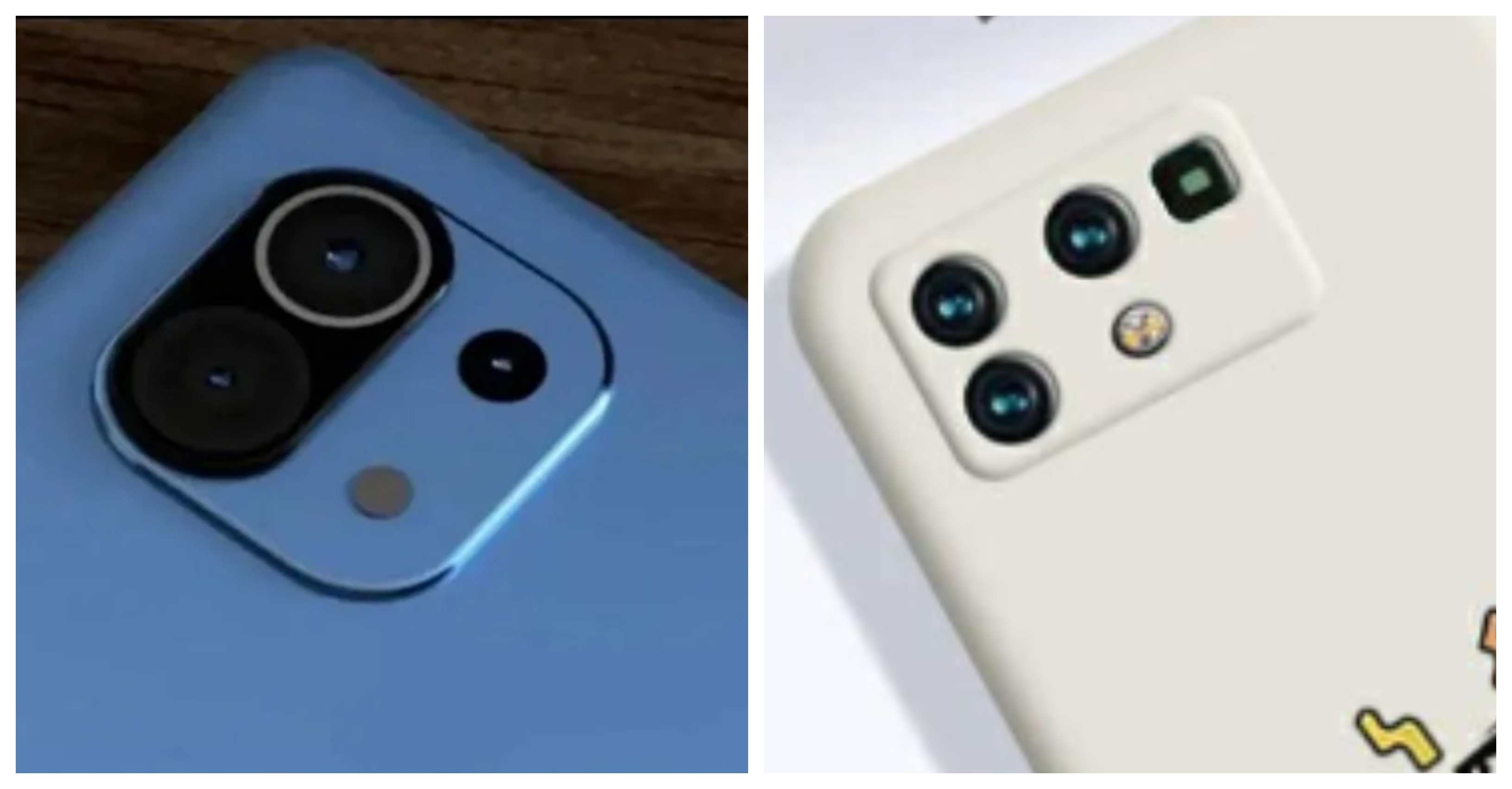
For the optics, the device will have a triple camera setup on the back along with an LED flashlight. This is horizontally stacked inside a squircle housing. As per the concept renders, the layout will also have a Blue Gradient color with a chamfered bump. The triple-camera array will likely have a 108MP main camera, 13MP ultra-wide, and a 5MP macro sensor.
Although few rumors predict the presence of a Telephoto lens, the device will anyway get an upgrade from the 2MP macro on the Mi 10. A 4,780mAh battery will probably back the entire Mi 11 with support for 55W fast charging. For memory variants, we can expect 8/12GB RAM and 128/256/512GB storage. The Mi 11 is expected to start at the same 3,999 yuan($612).
As far as full-fledged renders are concerned, the Mi 11 Pro has been a mystery, to say the least. Although reports predict an identical design throughout the series, a leaked protective casing of the Mi 11 Pro hints at quad-cameras on the Pro.
A different rear layout, if turns true, will be a surprise considering the devices will elsewhere differ very little. Anyhow, the Mi 11 Pro, as per a new tip on Weibo, will feature a 6.76-inch display. It will have a similar four-curved screen with a top-left punch-hole but will sport a QHD+ resolution and 120Hz refresh rate.
1 of 2
Concept by Ben Geskin
Alleged Mi 11 Pro with quad-camera(w/ periscope)
Under the hood, it will feature the same Snapdragon 888 SoC as the Mi 11 and come paired with LPDDR5 RAM and UFS 3.1 storage. As for optics, let’s address the typical scenario first. If Mi 11 Pro were to host the same design as the Mi 11, it will likely have the triple-camera setup. Accordingly, there will be a 48MP OmniVision OV48C sensor, 20MP ultra-wide, 12MP Telephoto with 2x optical zoom.
The main sensor will reportedly capture images at 50MP resolution as well. However, if the device has a revamped layout like the one shown above, it will probably include an additional Periscope lens for higher zoom(maybe 10X or more). A report also shows dual-batteries on the Mi 11 series and suggests that Mi 11 Pro might have a 4,970mAh battery.
This is understandable considering the Pro has a 2K resolution(higher). We can expect other features like the same memory variants, charging from the Mi 11. It is likely to start from 5,299 yuan($811).
The entire series will likely debut with MIUI 12 based on Android 11 out-of-the-box. However, Xiaomi could pull a new MIUI like the 12.5 version as well.
Mysterious Mi 11 Pro+
Apart from the Mi 11, Mi 11 Pro, as mentioned above, a mysterious Mi 11 Pro+ is also rumored to accompany the series at the event. Nothing else has popped up regarding the device leaving us dry with no teaser images. However, the report says it will likely have top-of-the-line specs like a bigger 2K screen and a 120Hz display, Snapdragon 888 SoC, Xiaomi’s 100W charging, and more with premium pricing.
Nevertheless, the Mi 11 series will reportedly go on sale later this month (could be on the launch day). A Xiaomi executive also says that the device will have enough stocks. Let’s wait for the official pricing.
We use cookies on our website to give you the most relevant experience by remembering your preferences and repeat visits. By clicking “Accept”, you consent to the use of ALL the cookies.
This website uses cookies to improve your experience while you navigate through the website. Out of these, the cookies that are categorized as necessary are stored on your browser as they are essential for the working of basic functionalities of the website. We also use third-party cookies that help us analyze and understand how you use this website. These cookies will be stored in your browser only with your consent. You also have the option to opt-out of these cookies. But opting out of some of these cookies may affect your browsing experience.
Necessary cookies are absolutely essential for the website to function properly. This category only includes cookies that ensures basic functionalities and security features of the website. These cookies do not store any personal information.
Any cookies that may not be particularly necessary for the website to function and is used specifically to collect user personal data via analytics, ads, other embedded contents are termed as non-necessary cookies. It is mandatory to procure user consent prior to running these cookies on your website.