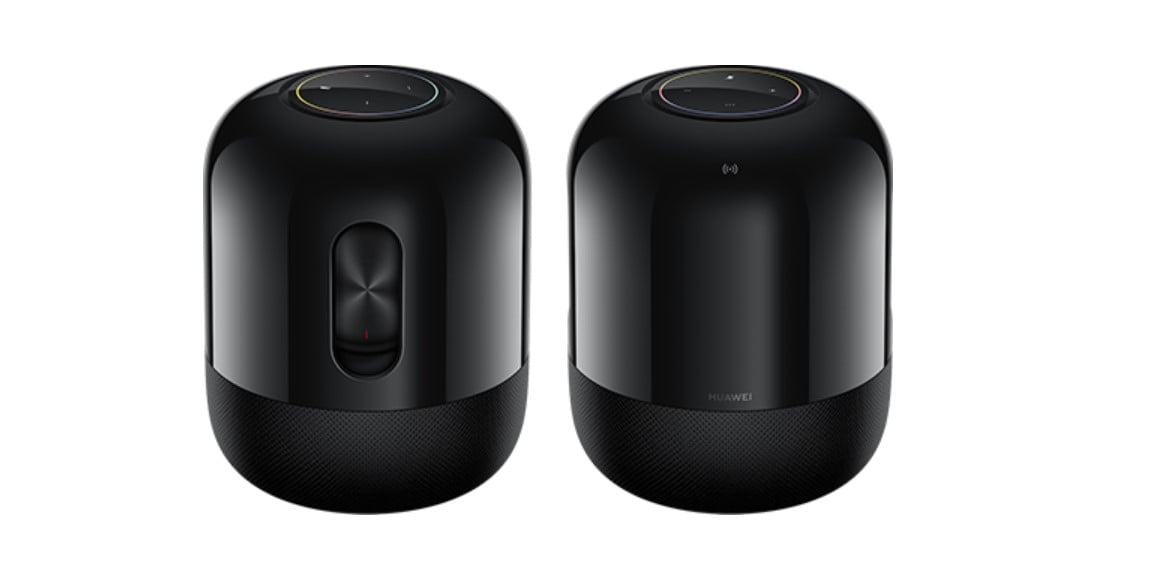
Alongside the Mate40 series, Huawei launched a number of other products including the HUAWEI Sound today(October 22). On paper, it looks like a stripped-down version of the HUAWEI Sound X whilst retaining the Devialet’s acoustic design. Accordingly, the Bluetooth Speaker starts at a lesser price.
Just like the Sound X, the watered-down variant is also co-engineered with ‘DEVIALET‘. For the unaware, it is a French Audio company that makes speakers and amplifiers with Hi-Fi audio. Also, Design-wise, it borrows the design, shape, color, buttons from the Sound X. However, it measures slightly different at 147mm(D)x186.7mm(H), and weighs 2.2kg as opposed to 3.5kg of Sound X. Huawei tags it as smaller, yet powerful speaker.
HUAWEI Sound Specifications
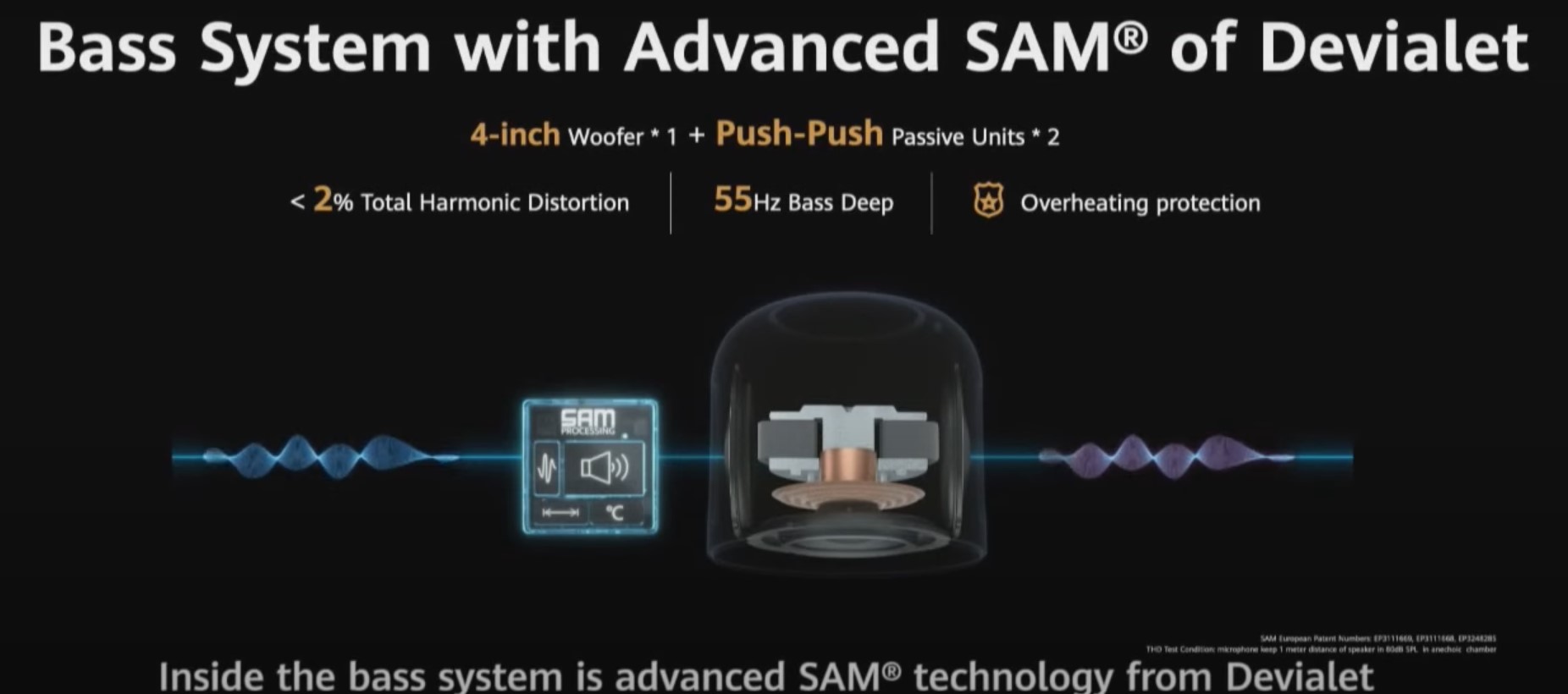
Internally, it has a 4-inch 40W woofer and 3x full-range 5W speakers to work in conjunction with the woofer. Huawei says the speaker incorporates Devialet’s SAM 2.0 technology and a 1-woofer + 2-passive unit structure. Huawei calls them Push-Push units and says they offer 55Hz-40kHz deep bass with features like overheating protection, <2% THD. There is 512MB RAM, and 8GB ROM onboard.
Further, the speaker also supports Hi-Res audio with three full-range evenly placed apart) speakers. Huawei calls it a “Devialet’s SPACETM immersive Technology. This means users can feel 360° surround-sound because the SPACE intelligently classifies sound into direct sound, reflected sound, and ambient noise, via algorithm. And, this is aided by the three speakers resulting in spatial audio. That is, it supports SPACETM 360-degree Soundstage, Vocals, Hi-Fi, and Bass audio. These settings can be altered via Huawei AI Life App.
Other features, and Price
In terms of audio codecs, it supports Bluetooth LDAC codecs with transfer speeds up to 990kbps. Huawei says this is 3x faster than other BT speakers. For connectivity, we have Wi-Fi 802.11ac, Bluetooth 5.0, UPnP(BubbleUPnP, VLC, Hi-Fi cast), NFC, 3.5mm aux-in, connection guide lights, and multi-function keys at the top.
The HUAWEI Sound is priced at€199. This is cheaper than the current retail price of HUAWEI Sound X(€269.99)
Google is known for more than its search engine. One of the most used services by the internet giant is Google Docs. It is a cloud-based word processor that comes free with every Google account. Now, the Android app for this service has hit 1 billion installs on the Play Store.
The Google Docs Android app was released in 2014. This app is not part of the mandatory GMS package and therefore, it took 6 years to reach 1 billion downloads on the Google Play Store.
The application crossed 500 million downloads in October 2018 after 4 years from its launch, however, it achieved to surpass the next 500 million just within 2 years. As Android Police suggests, this could be mostly because people around the world have been working and continuing their education at home since the beginning of 2020.
As Google Docs is a free-to-use service, it is the most preferred word processor. Mostly because of its cloud-based features. Also, there are numerous institutions and enterprises that use Google Workspace (formerly G Suite) which includes Google Docs.
All of these above-mentioned factors could have made people download this app on your Android smartphones, tablets, and Chromebooks.
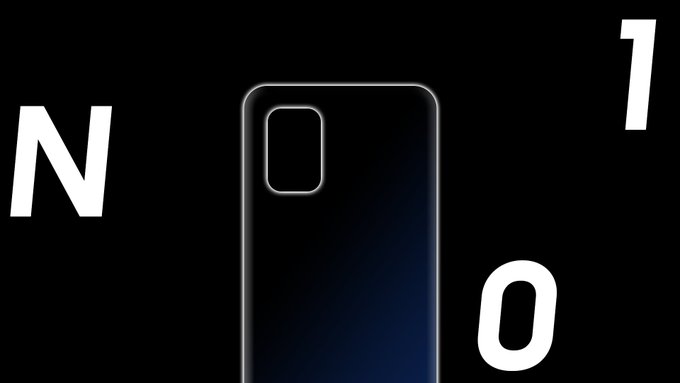
OnePlus Nord N10 5G and N100 are quietly making their way up the radar of leaks despite a silence from the company’s side. The company’s official Instagram handle hasn’t really broken anything apart from a #comingsoon poster. However, Steve from Onleaks is on a mission to bring them to the limelight. His new tip reveals details including the display and battery of the devices.
Nord N10 5G Specifications(Expected)
Jumping right in, according to Steve, OnePlus Nord N10 5G will have a 6.49-inch FHD+ display with a 90Hz refresh rate. Now, he hasn’t revealed if it’s an AMOLED or LCD here. Moving on, he says the device will come in 6GB RAM and 128GB storage. Apart from the known specs, it is said to have a 4,300mAh battery that probably charges via the USB-C port.
However, the most highlight of all is the inclusion of a headphone jack. Now, we aren’t really sure about this one but if it’s true, OnePlus better explains this well as to why they had to bring it back considering it recently launched the budget OnePlus Buds Z.
The device will reportedly feature Qualcomm Snapdragon 690 5G SoC, and boast a 64MP main lens which we already know. Alongside the main lens, an 8MP ultra-wide, two 2MP sensors will reportedly complete the rear squircle layout that leaked earlier.
Nord N100 Specifications(Expected)
Talking about the N100, Steve says the device will be a 4G-only and not 5G. According to him, it will feature a 6.52-inch HD+ LCD display(yes! you heard it right). This is surprising considering we haven’t seen an LCD display smartphone from OnePlus since the OnePlus 3. Further, the device will reportedly sport Qualcomm Snapdragon 460 SoC paired with 4GB RAM and a 64GB storage variant. All these falls in line with the Geekbench score that leaked a device with codename “clover“.
As for the optics, the rear camera will reportedly feature 13MP Primary, and two 2MP macro, and bokeh lenses. Upfront, an 8MP sensor is likely to take the selfies. Steve says the Nord N100 will feature a 5,000mAh battery which is negated by the earlier leaks that said 6,000mAh. Anyway, it will also have USB-C, and headphone jack ports.
While we wonder why OnePlus hasn’t really teased the devices yet, tipster Max J. thinks that the Nord N100 doesn’t exist and says there isn’t any evidence apart from a Geekbench score. Let’s wait and see if the leaks by Steve turn true in the coming days.
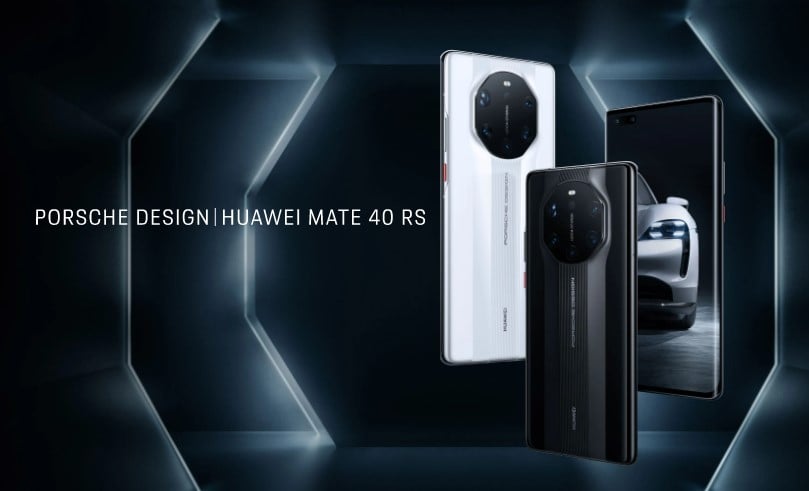
Huawei has partnered with Porsche Design to launch a special edition of the Mate 40. Called the Porsche Design Huawei Mate 40 RS, the phone shares some specs with the Mate 40 Pro series but also differs in its own way.
The Porsche Design Huawei Mate 40 RS has a high-strength nano-tech ceramic back which Huawei says has a “diamond-like shine and a sapphire-like toughness”. The stand out part of the design is the octagonal camera housing, and we won’t be surprised if we see other manufacturers copy the design in the near future. This is ceramic, so what you get is a glossy finish. There is no mention of an oleophobic coating, however, the white variant should be better at hiding smudges.
Porsche Design Huawei Mate 40 RS Specs
The Porsche Design Huawei has a 6.76-inch OLED display with a 90Hz refresh rate. There is a pill-shaped punch hole in the top left corner of the screen that houses a 13MP primary camera and a 3D depth-sensing camera.
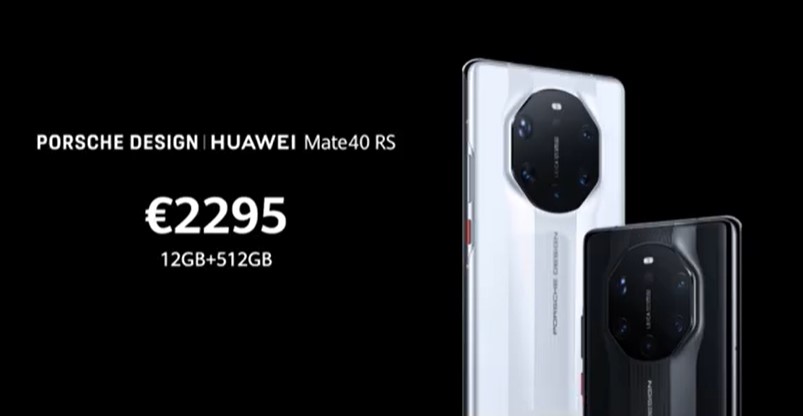
Under the hood is a Kirin 9000 processor with 12GB of RAM and 512GB of storage. It has a 50MP Ultravision main camera, a 20MP ultrawide Cine Camera, a 12MP telephoto camera with 3x optical zoom and OIS, an 8MP SuperZoom Camera that brings 10x optical zoom and also has OIS, and a 3D depth-sensing camera support for autofocus.
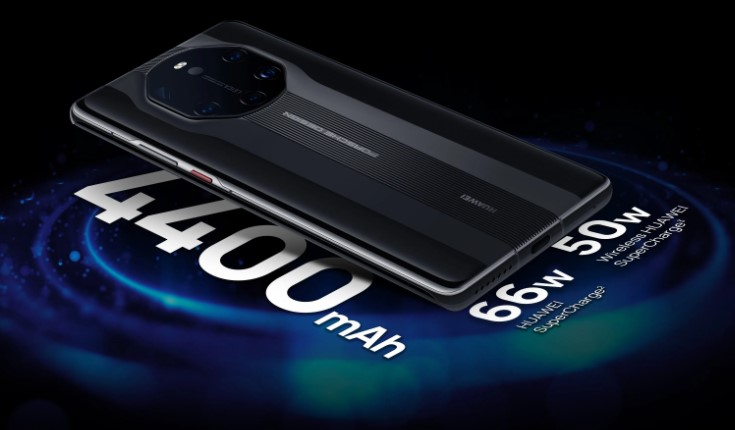
There is a 4400mAh battery inside the phone with support for 66W Wired Huawei SuperCharge and 50W Wireless Huawei SuperCharge. The Porsche Design Huawei Mate 40 RS has stereo speakers, Bluetooth 5.2, NFC, Wi-Fi 6, and a USB 3.1 Type-C port.
The phone runs EMUI 11 based on Android 10 out of the box.
Porsche Design Huawei Mate 40 RS Price
The Porsche Design Huawei Mate 40 RS is priced at €2295. This is quite expensive and will take some serious convincing for buyers to choose this over other phones such as the foldable Galaxy Z Fold 2.
Huawei has officially launched its latest flagship smartphones in the form of the HUAWEI Mate40 series. Like their predecessors, they feature impressive camera hardware. In fact, the HUAWEI Mate40 Pro scored 136 points and 104 points in DXOMARK Camera and Selfie tests claiming the first position from Mi 10 Ultra and HUAWEI P40 Pro respectively.
The newly launched HUAWEI Mate40 Pro brings an upgraded camera setup.
Rear Camera Setup
50 MP Ultra Vision Camera
Wide Angle
1/1.28″ Sensor
23 mm-equivalent
f/1.9 Aperture
20 MP Cine Camera
Ultra-Wide Angle
1/1.54″ Sensor
18mm-equivalent
f/1.8 Aperture
12 MP Telephoto Camera
1/3.56″ Sensor
125mm-equivalent
f/3.4 Aperture
5x Optical Zoom
OIS
Multispectral Color Temperature Sensor
Front Camer Setup
13 MP Ultra Vision Selfie Camera
Wide Angle
1/2.8″ Sensor
18mm-equivalent
f/2.4 Aperture
3D Depth Sensing Camera
ToF Sensor
Some of the pros of the phone’s rear camera setup include wide dynamic range, fast and accurate AF for both photos as well as videos, good depth estimation in bokeh mode, accurate wite balance in videos, and more.
As for cons, the ultra-wide camera offers a narrow field of view, occasional color quantization and ghosting artifacts in videos, variations in sharpness in videos when walking, and more.
If you’re familiar with OnePlus smartphones, you already know that the T series best fits the company’s early philosophy of giving you the best value for an affordable price tag. Compared to the Pro series, T models have cheaper prices but reserve the core experience and performance of a flagship. We are increasingly hearing complaints about the Pro’s expensive price tag, which no longer aligns with the philosophy of Flagship Killer once popularized by OnePlus. So now the Pro models are just flagships instead of flagship killers.
On the contrary, the more affordable T models can be called as flagship killers. But, how about the new OnePlus 8T? Let’s check out in this quick review of the OnePlus 8T.
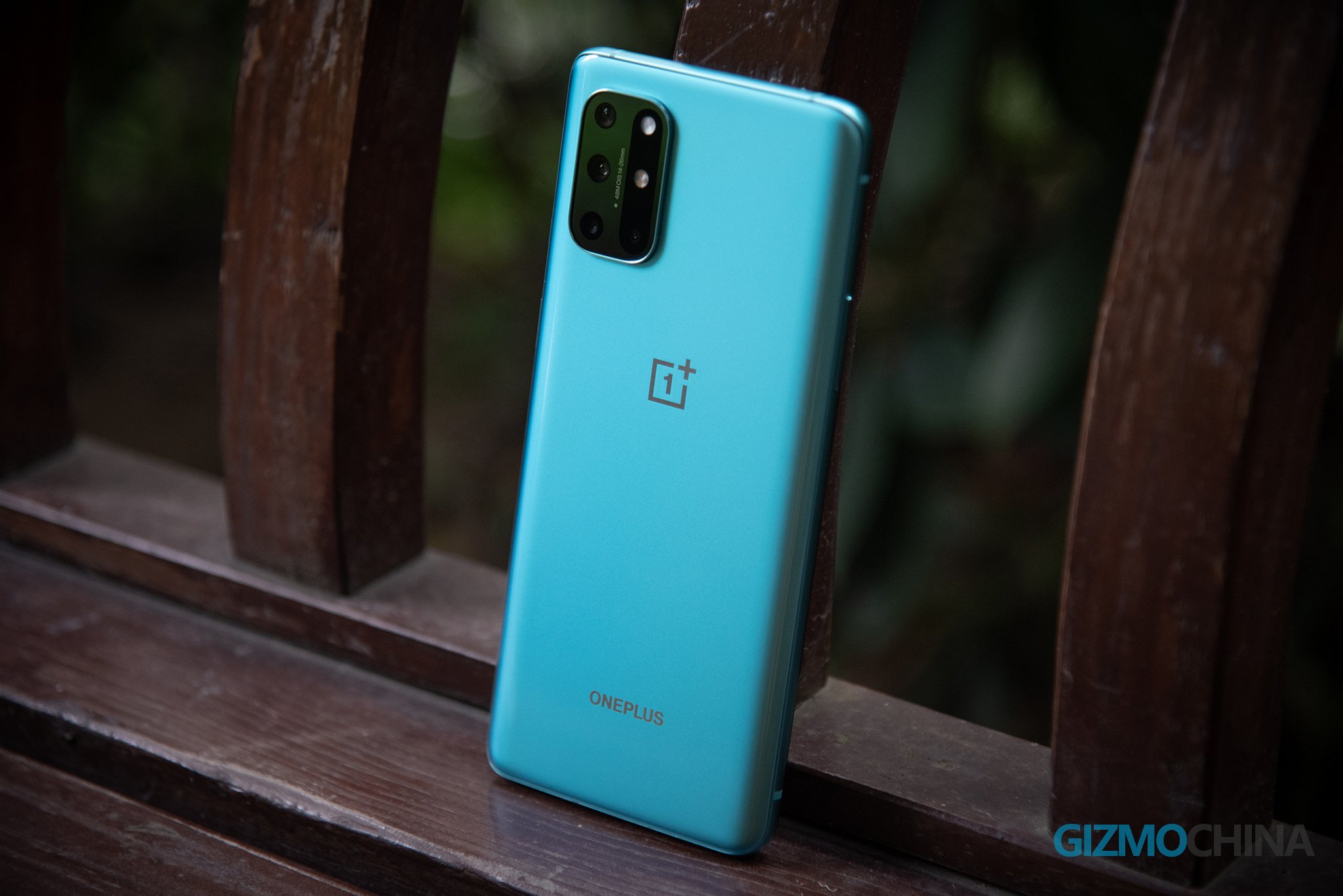
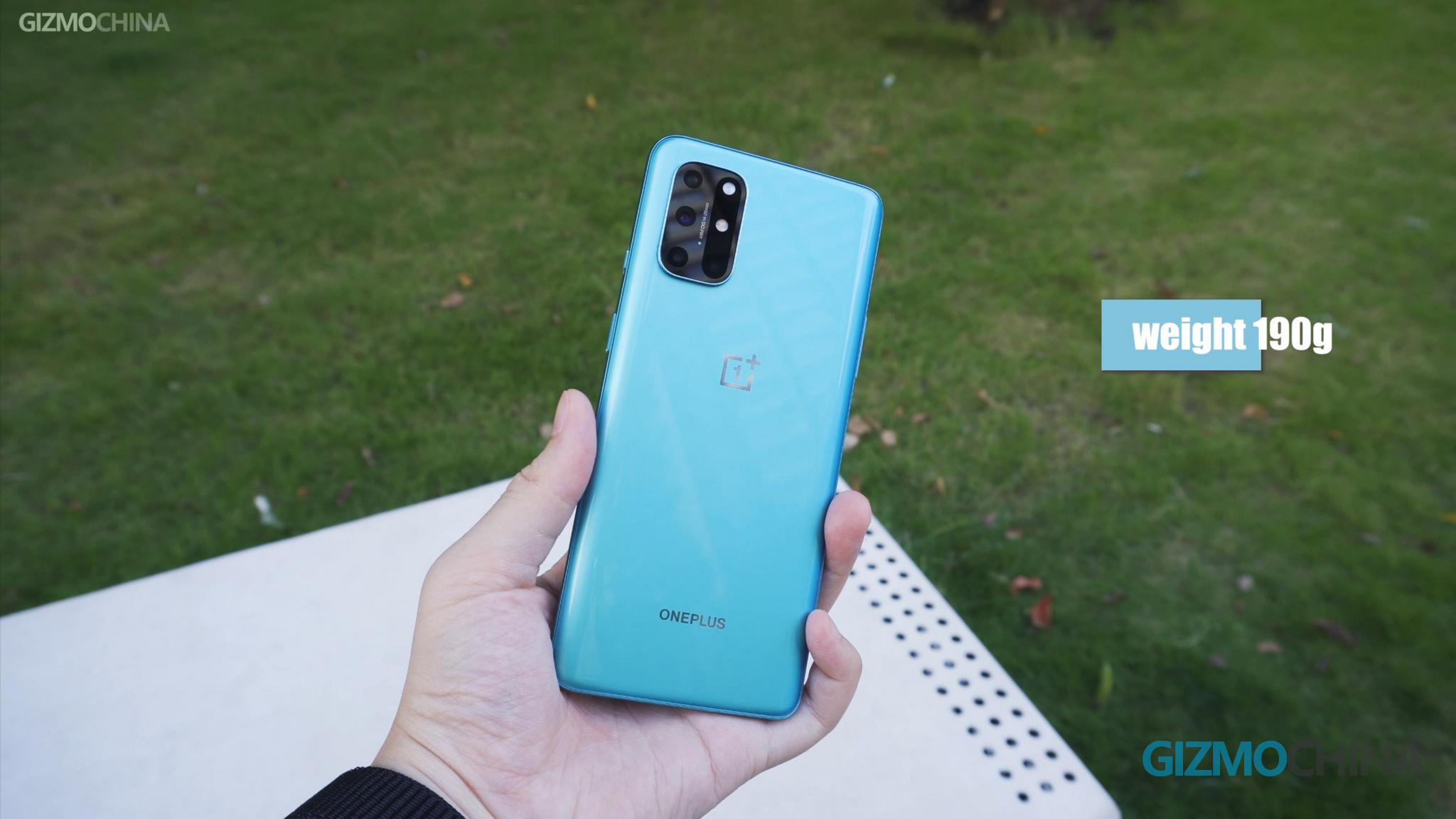
Let’s look at its design first. The OnePlus 8T comes with a different design philosophy than the previous models. The camera setup no longer lies at the top center of the back. Instead, like what we’ve seen on most 2020 flagships, it has been moved to the upper left corner. But to be honest, the design of the camera combination looks a bit ordinary and boring. Nothing really catches my eyes here.
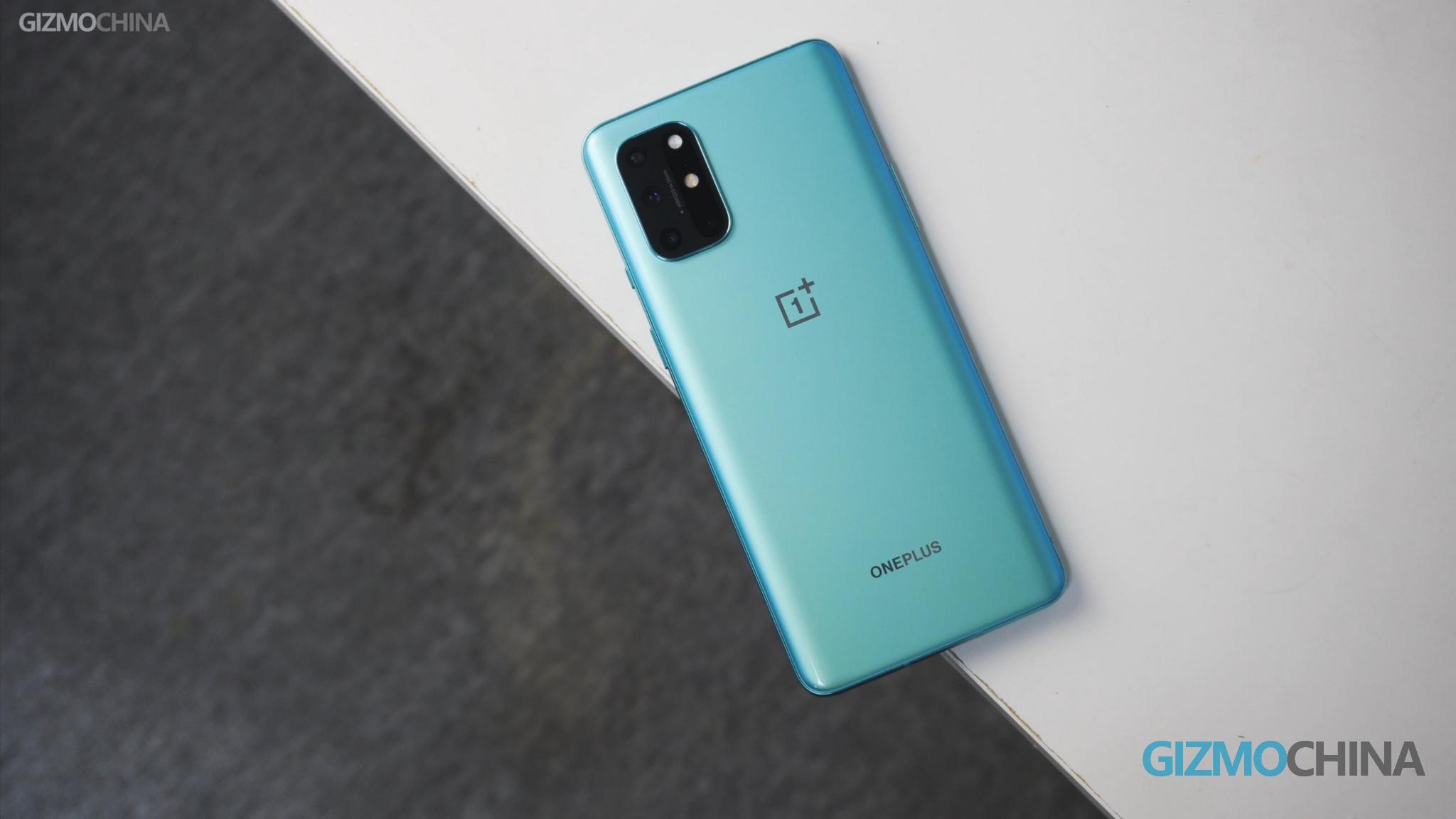
But OnePlus has still used a fantastic glass finish at the back, which does lead to both outstanding visual and holding experience, whether it’s the Aquamarine Green that we have in our hands or the Lunar Silver color. At first glance, what really impressed us is the lightweight and thin body. The weight of around 190g is really unusual for a 2020 flagship smartphone and feels refreshing.
OnePlus 8T Review Display
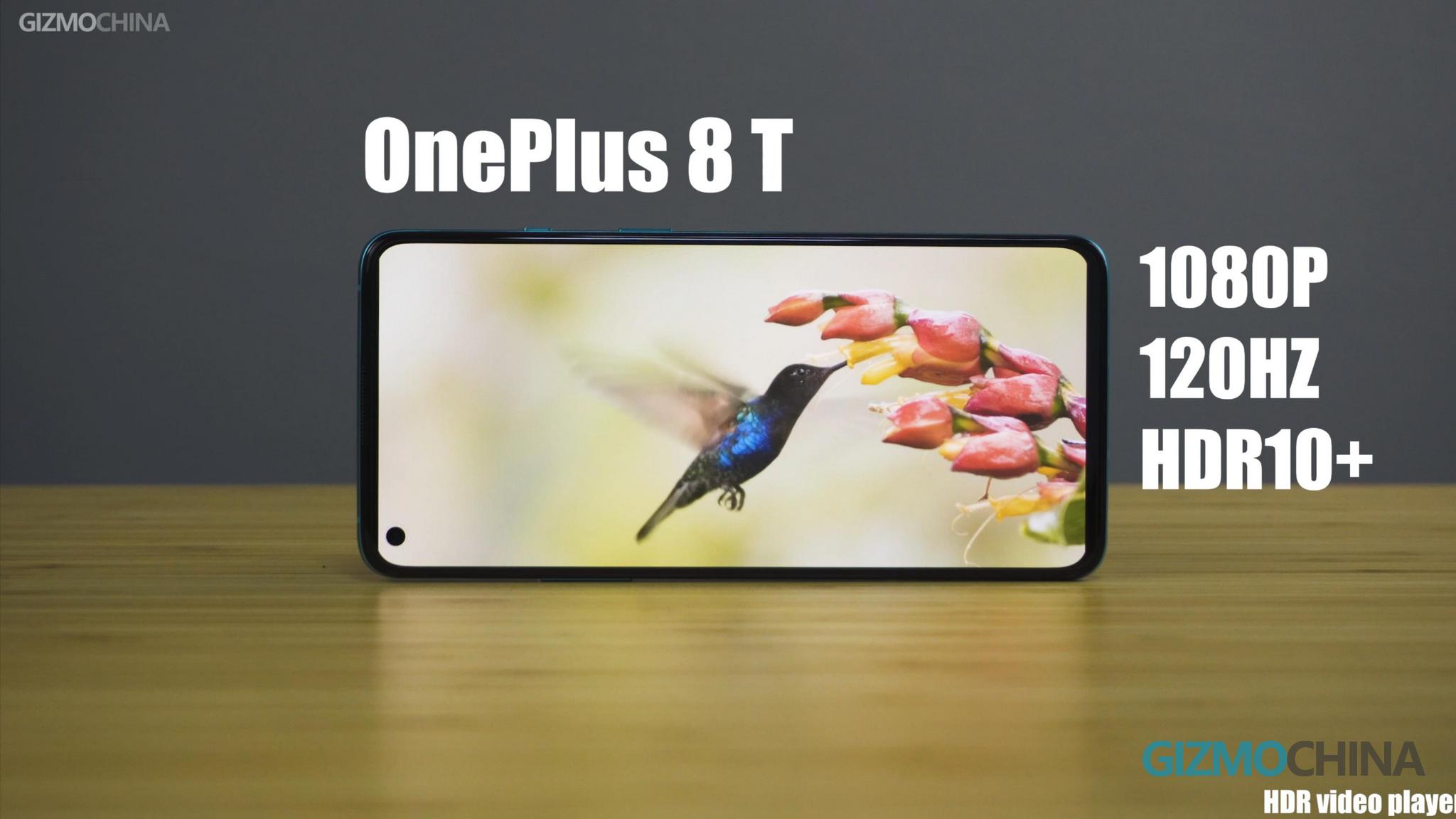
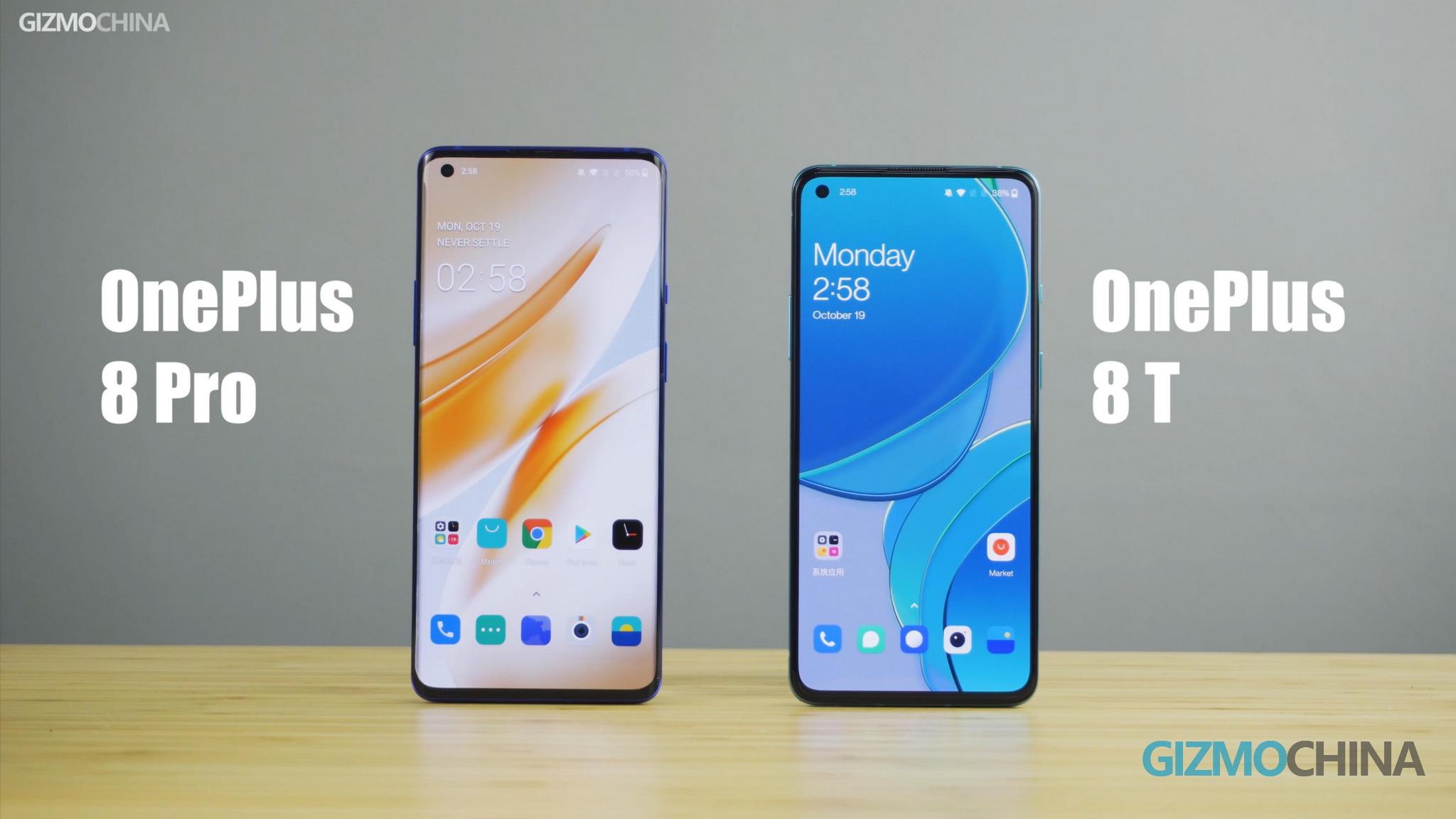
Over the past few years, OnePlus has invested heavily in its display, making it a huge selling point for its flagship models. And from what we can see on the OnePlus 8T, we can indeed experience the high-quality display. So clearly the company’s efforts have paid off and the screen deserves praise. Compared to the 2K display on the OnePlus 8 Pro, the 1080P display of the 8T can be considered as a downgrade. However, it’s still one of the best 1080P smartphone displays in the market. To us, the biggest surprise of the 6.55-inch 1080P Fluid display is neither the 120Hz refresh rate nor the certified HDR10+ support, but the smooth automatic brightness. With the maximum 1100nits and 8192-level adjustable brightness, viewing dynamic contents on this display turned out to be a great experience no matter in indoor low light conditions or bright outdoors.
In addition, unlike the 8 Pro’s curved display, the 8T uses a flat panel, which is definitely a good message for those who were worried about miss touches from curved displays on its predecessor. However, the flat display is not as immersive as the curved screens on the OnePlus 8 and 8 Pro models.
As for the cameras, I think most of you won’t be so excited. From the hardware perspective, the 8T applies a 2019 flagship setup, a common quad-combination led by a Sony IMX586 main-camera sensor. Apart from this, the combination contains a 16MP wide-angle camera, a 5MP Macro camera, and another 2MP Monochrome camera. Unfortunately, there is no telephoto camera on the 8T. Anyway, let’s look at some samples shot from these cameras.
1 of 6
Camera OnePlus 8T (1)
Camera OnePlus 8T Pro (5)
Camera OnePlus 8T (5)
Camera OnePlus 8T Pro (4)
Camera OnePlus 8T (4)
Camera OnePlus 8T Pro (3)
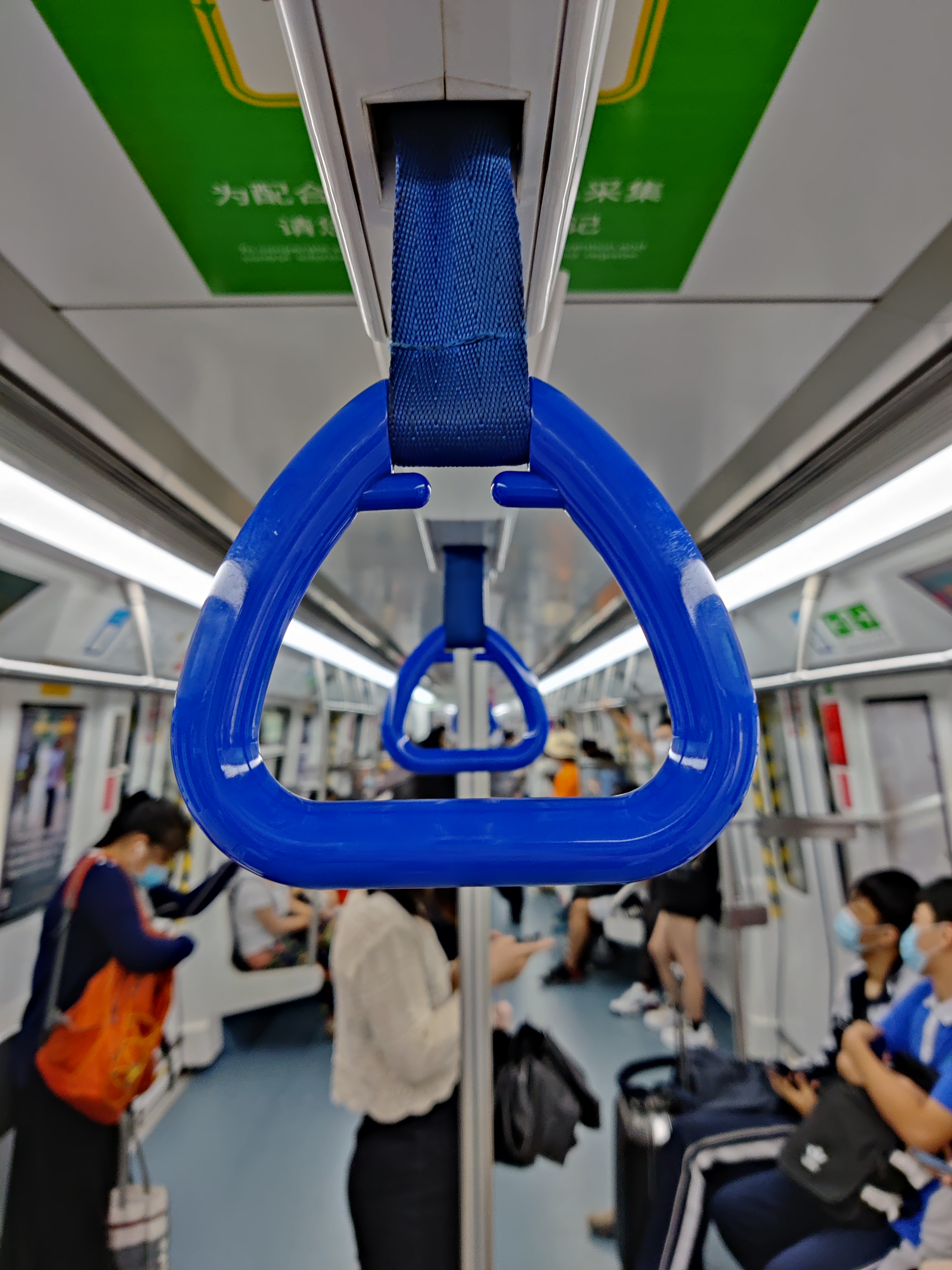
Well, we actually didn’t expect the Sony IMX586 to give us surprises as it has been in the market for almost 2 years. But when we compared the samples shot on the 8T and the 8 Pro, we found that the 8T is much more competitive than what we imagined.
It’s probably because when we compared it to newer flagship sensors, the IMX586 has got mature software optimization and now is able to maintain stable performance under most conditions. Under good lighting, the samples shot on the 8T have no big difference from what we shot on the 8 Pro. From the color contrast to color preference, they shared a close image style and both produced excellent resolution. And the 48MP original resolution of the IMX 586 also allows users to catch more detailed images with the 48MP high-resolution mode.
1 of 4
48MP Camera OnePlus 8T (1)
48MP OnePlus 8T Pro (1)
48MP Camera OnePlus 8T (2)
48MP OnePlus 8T Pro (2)
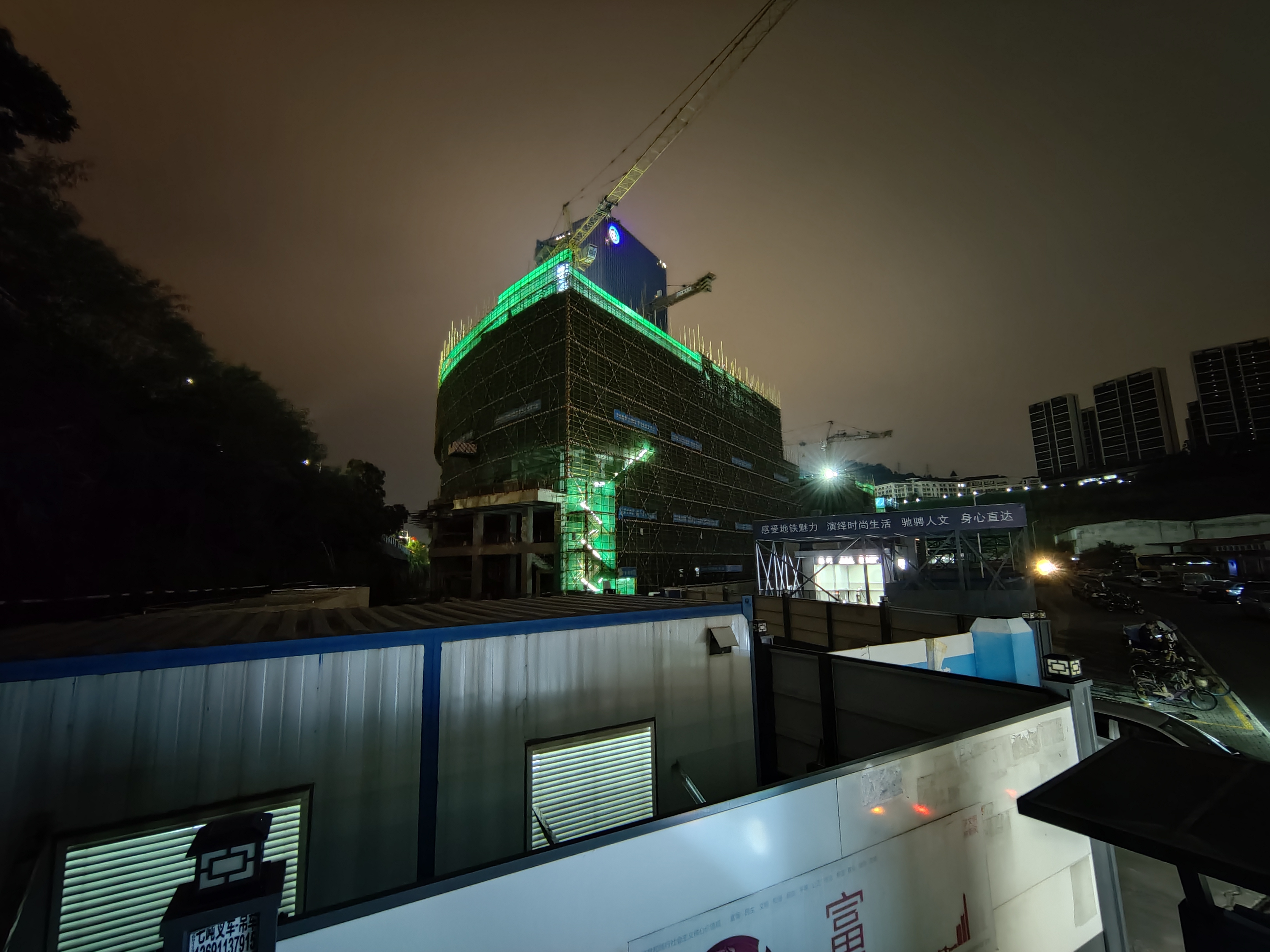
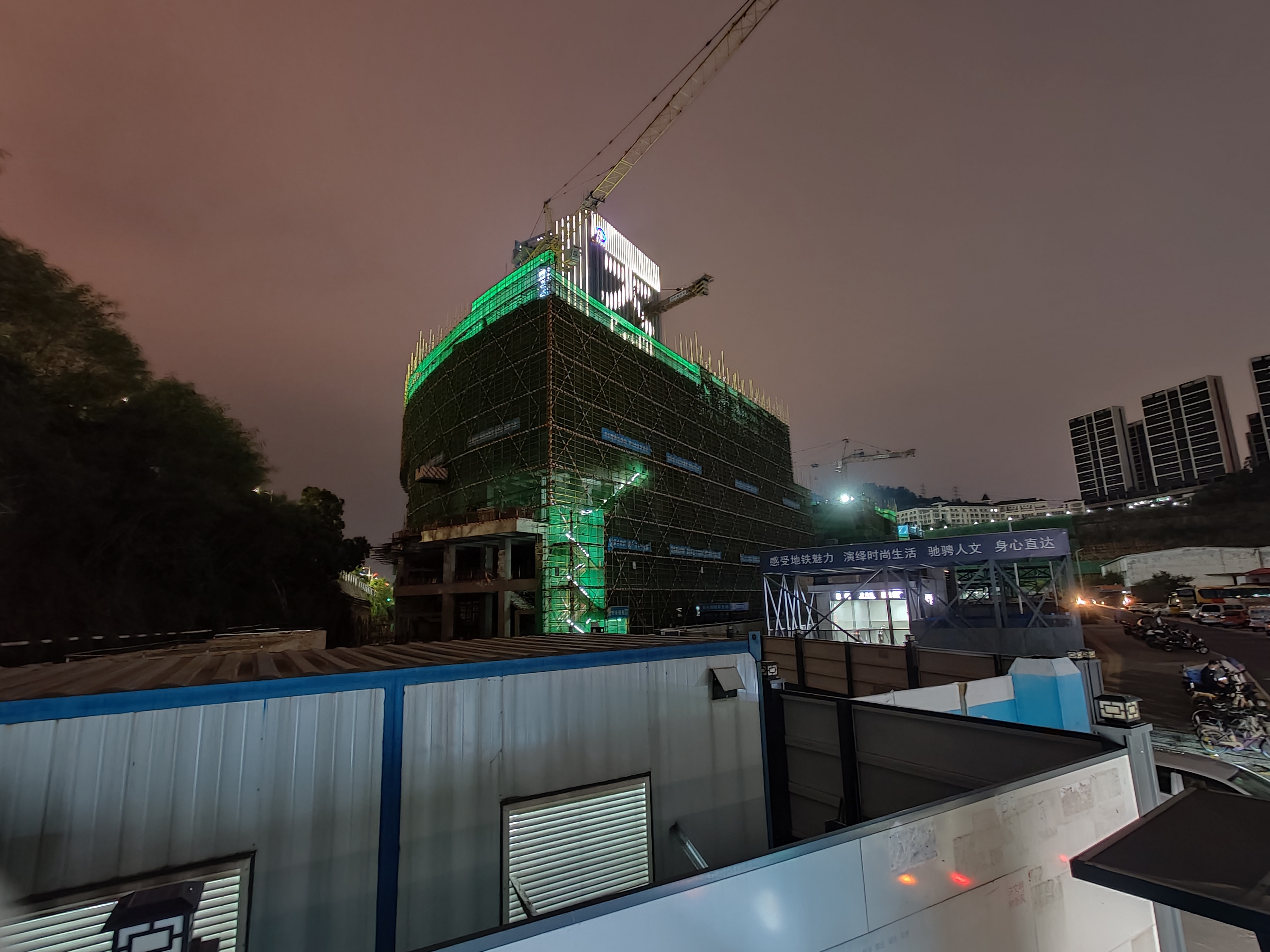
And the true difference appears in their night shooting. Under night scenes, the insufficient noise control of the IMX586 was showing on the 8T. Otherwise, the brightening strategy used by the 8T’s camera is not so smart. It’s more like a process to simply improve the overall image brightness without correcting its exposure.
1 of 6
OnePlus 8T Night Camera (4)
OnePlus 8T Pro Night Camera (1)
OnePlus 8T Night Camera (2)
OnePlus 8T Pro Night Camera (4)
OnePlus 8T Night Camera (1)
OnePlus 8T Pro Night Camera (2)
Now let’s look at its wide-angle camera. As the 48MP IMX 586 sensor is used for the 8 Pro’s wide-angle camera, no doubt it took a huge lead in this round. The 8T’s 16MP wide-angle camera has good color reproduction and good contrast, and also has a slightly wider angle. Otherwise, it couldn’t surprise us over resolution and noise control. When you compare it with the samples shot by the IMX586 on the 8 Pro, which is using a 4-in-1 pixel technology, the samples from the 8T are much noisy.
1 of 12
OnePlus 8T wide angle (3)
OnePlus 8T Pro wide angle (3)
OnePlus 8T wide angle (2)
OnePlus 8T Pro wide angle (2)
OnePlus 8T wide angle (1)
OnePlus 8T Pro wide angle (1)
OnePlus 8T wide angle night (3)
OnePlus 8T Pro wide angle night (1)
OnePlus 8T wide angle night (1)
OnePlus 8T Pro wide angle night (2)
OnePlus 8T wide angle night (2)
OnePlus 8T Pro wide angle night (3)
When we moved to night scenes, the gap was much smaller. But the Pro still has an advantage in overall brightness and clarity. But the 8T is a bit better at extreme brightness control.
Let’s look at the macro samples now. Although the 8T has a dedicated macro lens, the 5MP resolution didn’t show much strength over the image details and pureness. And in low lighting, the noise turned out to be worse.
1 of 2
Macro OnePlus 8T
Macro OnePlus 8T Pro
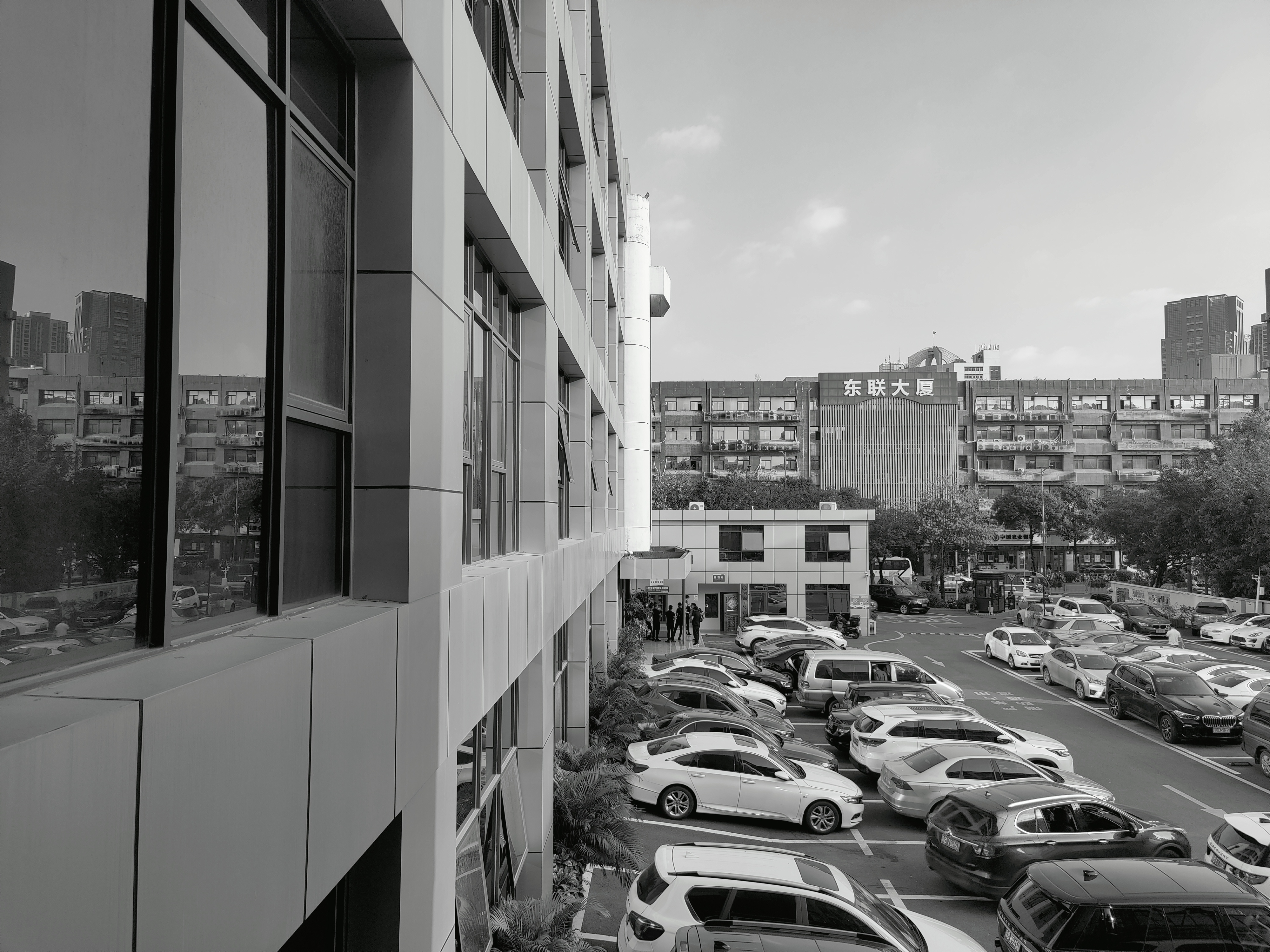
The monochrome camera is mainly used to help record information between black and white in the monochrome filter. We can see that the contrast and gray gradient are pretty good from the samples.
1 of 3
OnePlus 8T Pro Monochrome
OnePlus 8T Monochrome (1)
OnePlus 8T Monochrome (2)
Finally, we shot a few video samples on the 8T, and also on the 8 Pro for reference. Well, it didn’t exceed our expectations. Check our OnePlus 8T review video added on top to see the video sample.
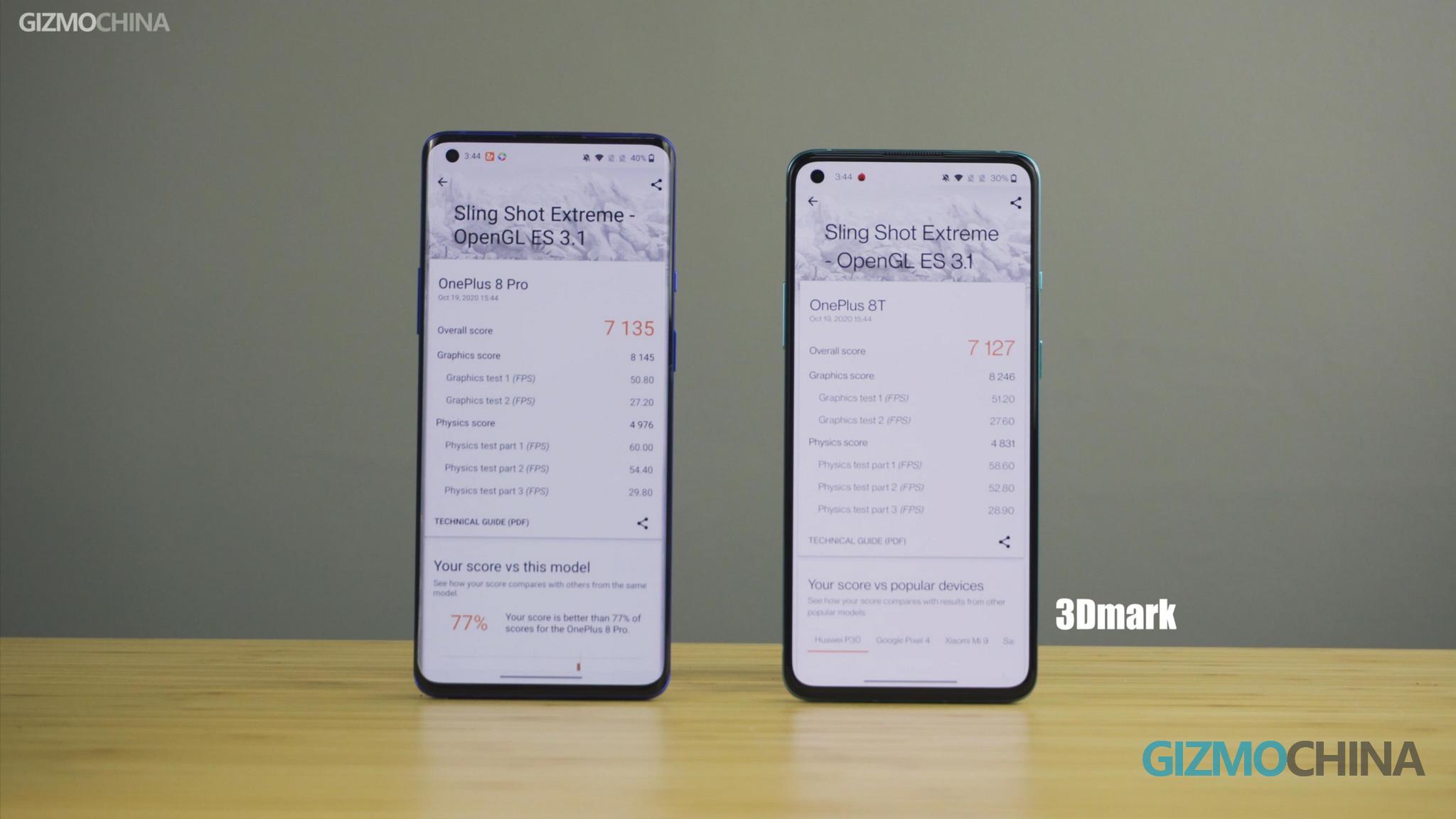
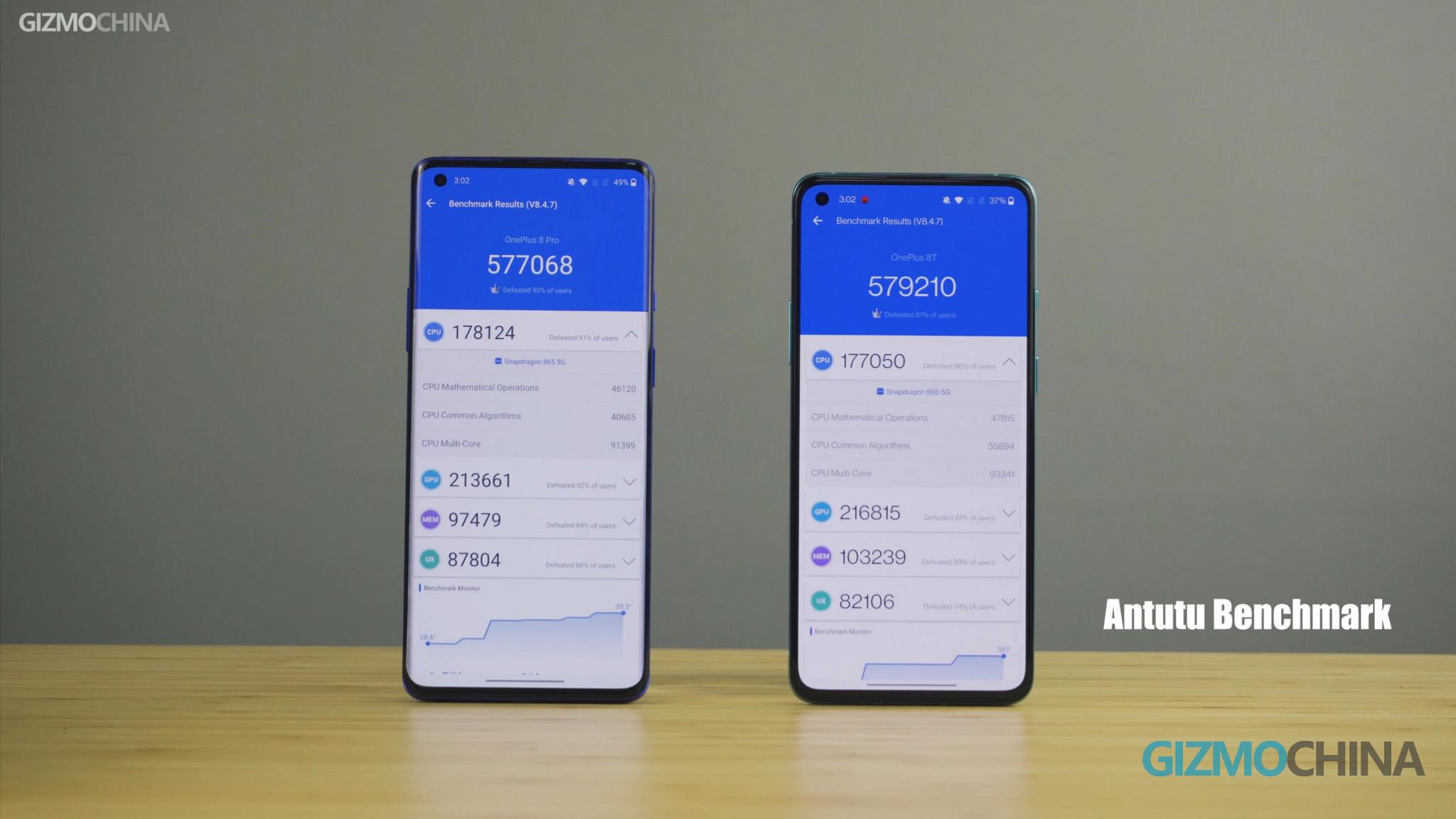
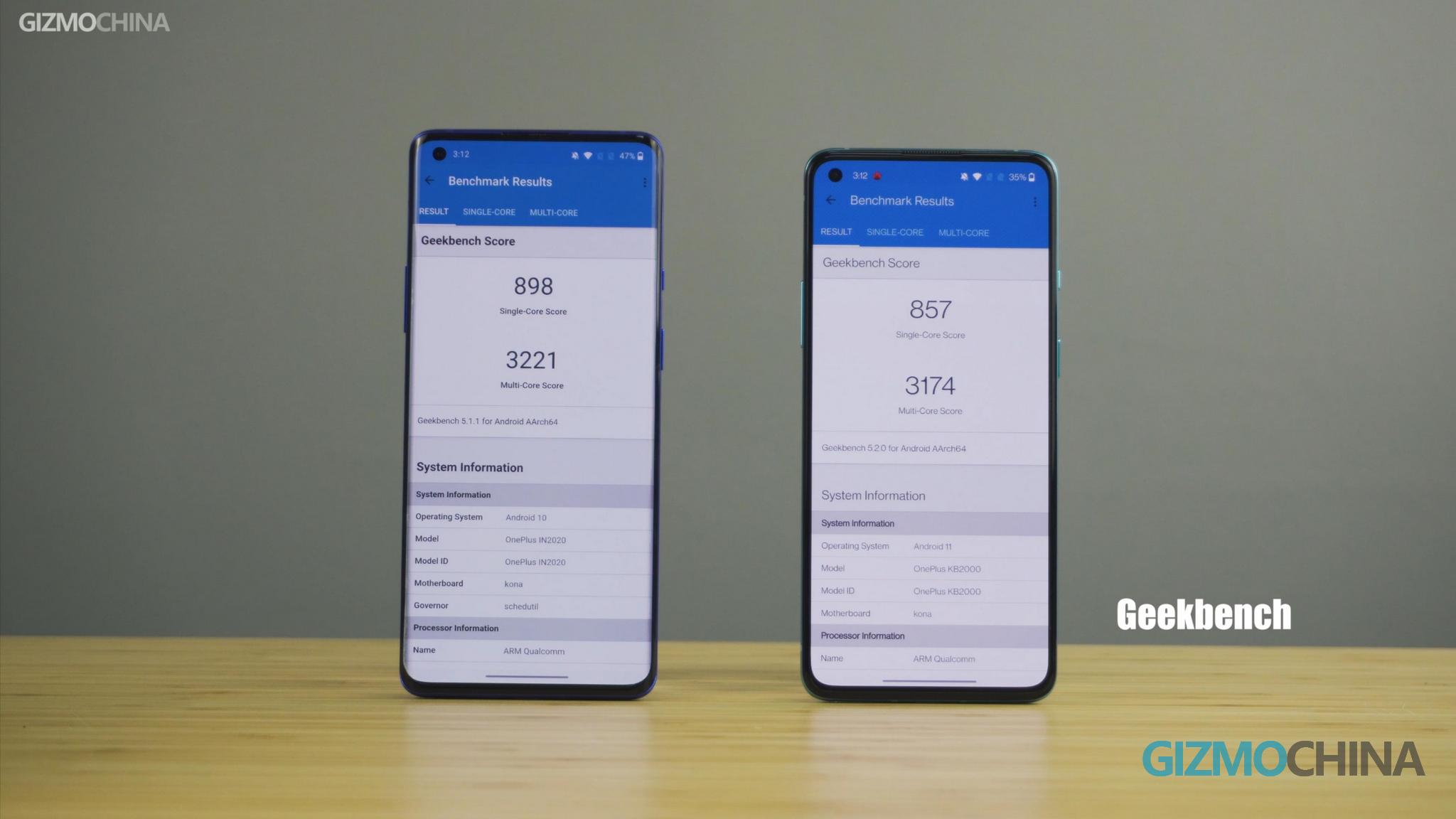
The 8T also equips a snapdragon 865 chipset, which should lead to a very close performance to the 8 Pro. From the results of the benchmarks, we found that there’s really nothing different about the CPU and GPU performance. All the results were so close to each other. But comparing it with all the smartphones running the snapdragon 865, their results were not so outstanding.
1 of 3
Then we moved on to actual gaming.
OnePlus 8T Review: Gaming
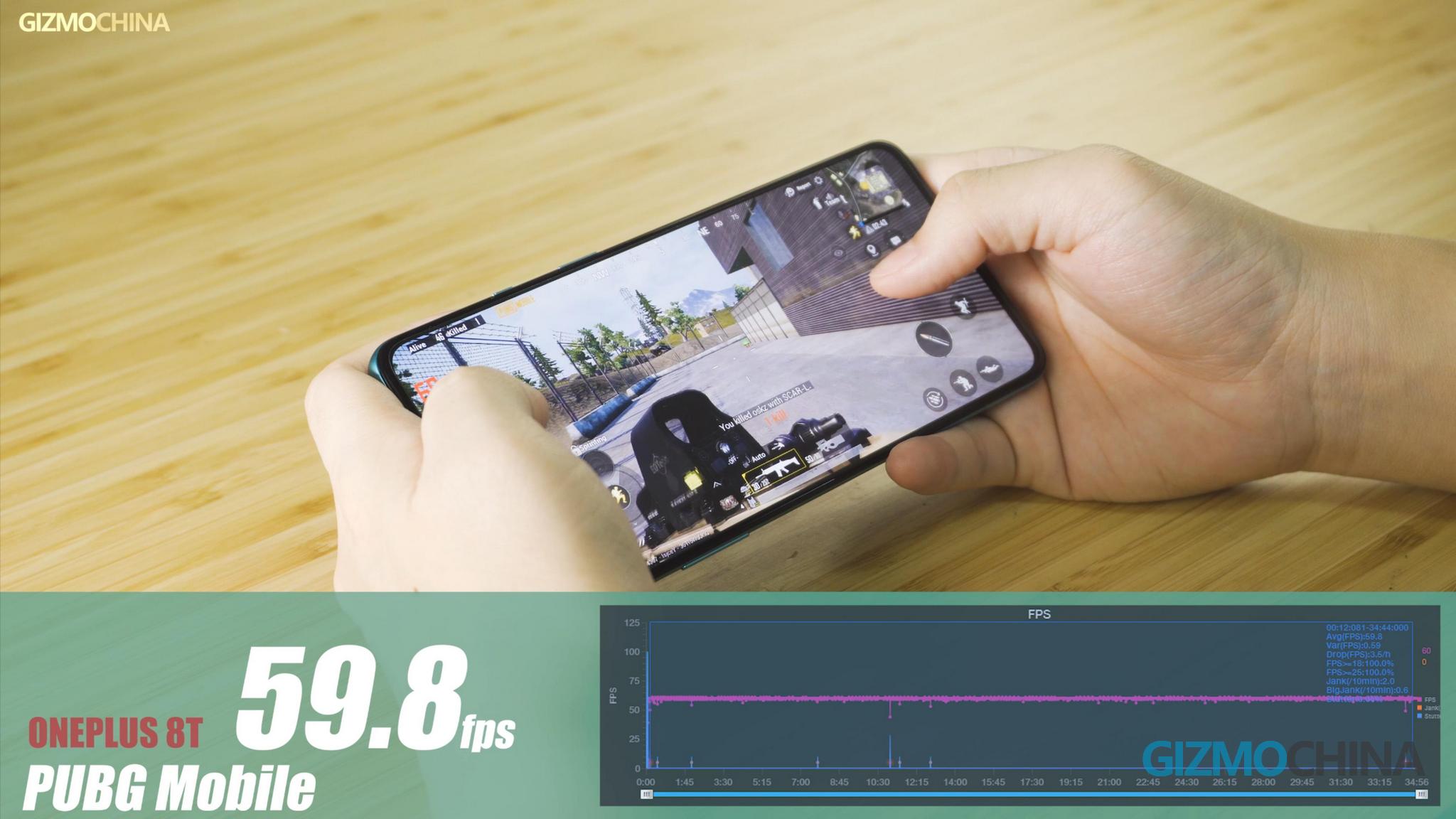
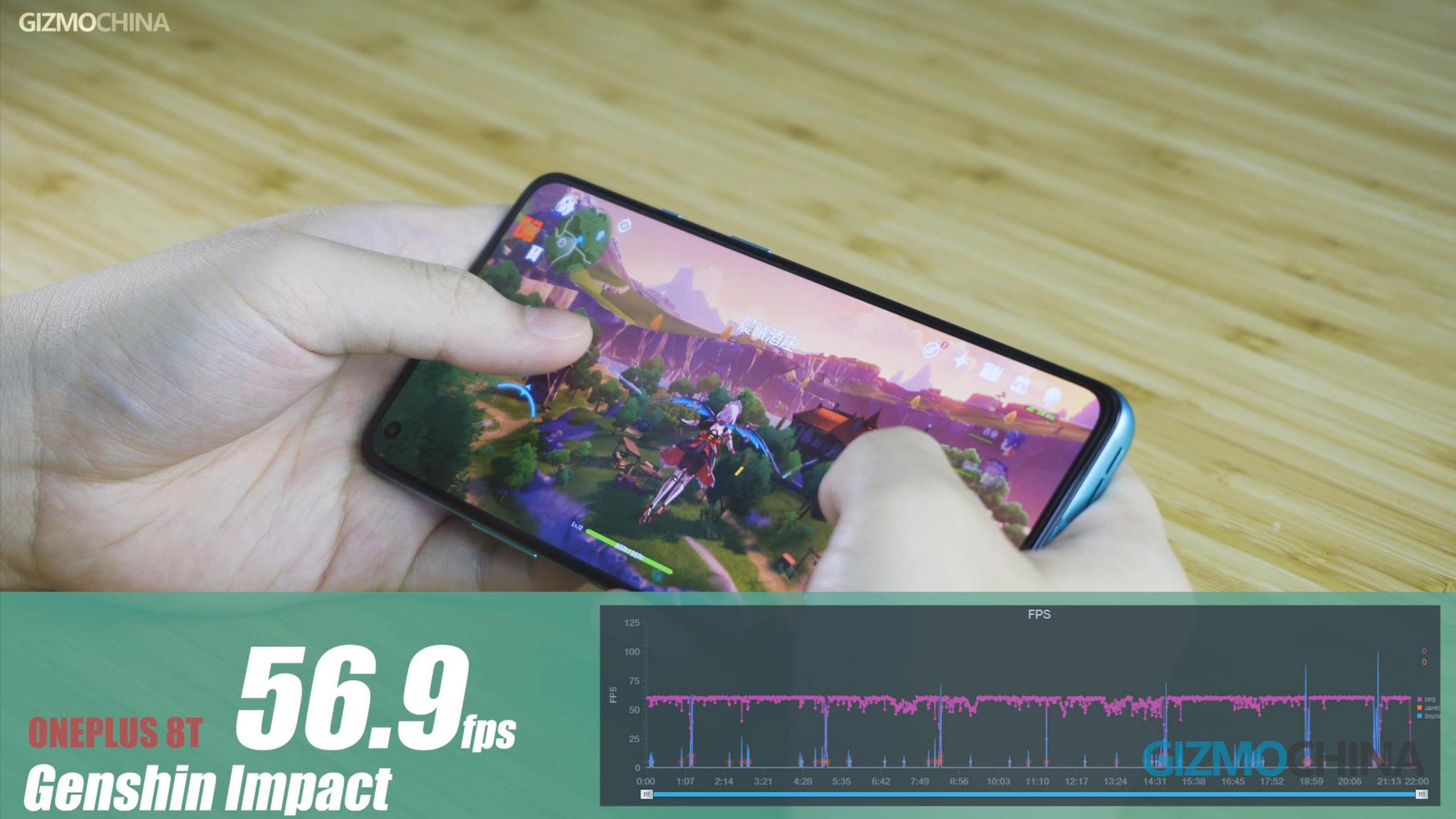
Unfortunately, we didn’t really have access to the best gaming performance of the 865-chipset on the 8T. It seems that for some reason, the software would have a 60-framerate limit in some games. So in PUBG Mobile, although we unlocked a 120Hz mode, the phone could only run it under 60fps without much fluctuation. The next game we played is Genshin Impact, which is a new game run on multiple platforms. For a fluent gaming experience, it extremely requires the high performance of CPU, and the game itself has a framerate lock of 60fps. Under the highest graphics, most of the time the 8T maintained a high-level framerate, but the visual experience got a bit more fluctuated than what we expected.
1 of 2
We then tried several other games and the 8T is still able to give us an excellent gaming experience. After all, the Snapdragon is still one of the best chipsets for Android phones. And surprisingly, it had an excellent cooling effect during our 30mins gaming test, which is quite impressive for such a lightweight phone.
OnePlus8T-full-charging
OnePlus 8T Review: Battery
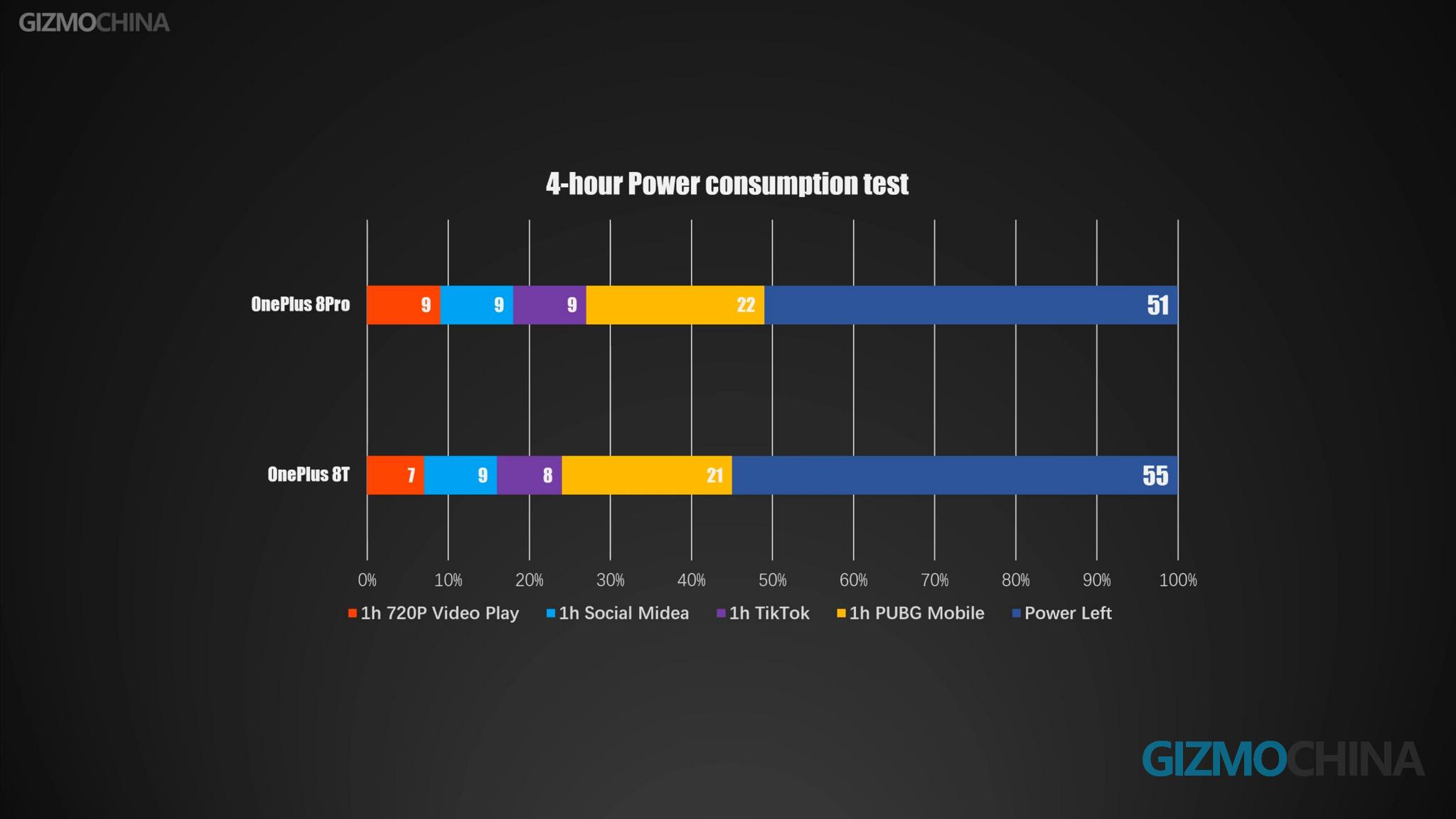
The performance of battery and charging is one of the few upgrades for the 8T. They both equip a 4500mAh battery. And we did a 4-hour power-consumption test between the 8T and the 8 Pro. Starting with full power, we continuously used these two models to play 720P videos for an hour, then used social media apps for another hour, spent another hour on TikTok, and finally played PUBG Mobile for the last hour. Due to the higher display resolution, the OnePlus 8 Pro eventually consumed 4 percent more power than the 8T in the test. After the test, the 8T still had 55% of power left, which is a pretty good battery result for a snapdragon 865 phone, and we have to mention that it also has a 120Hz display.
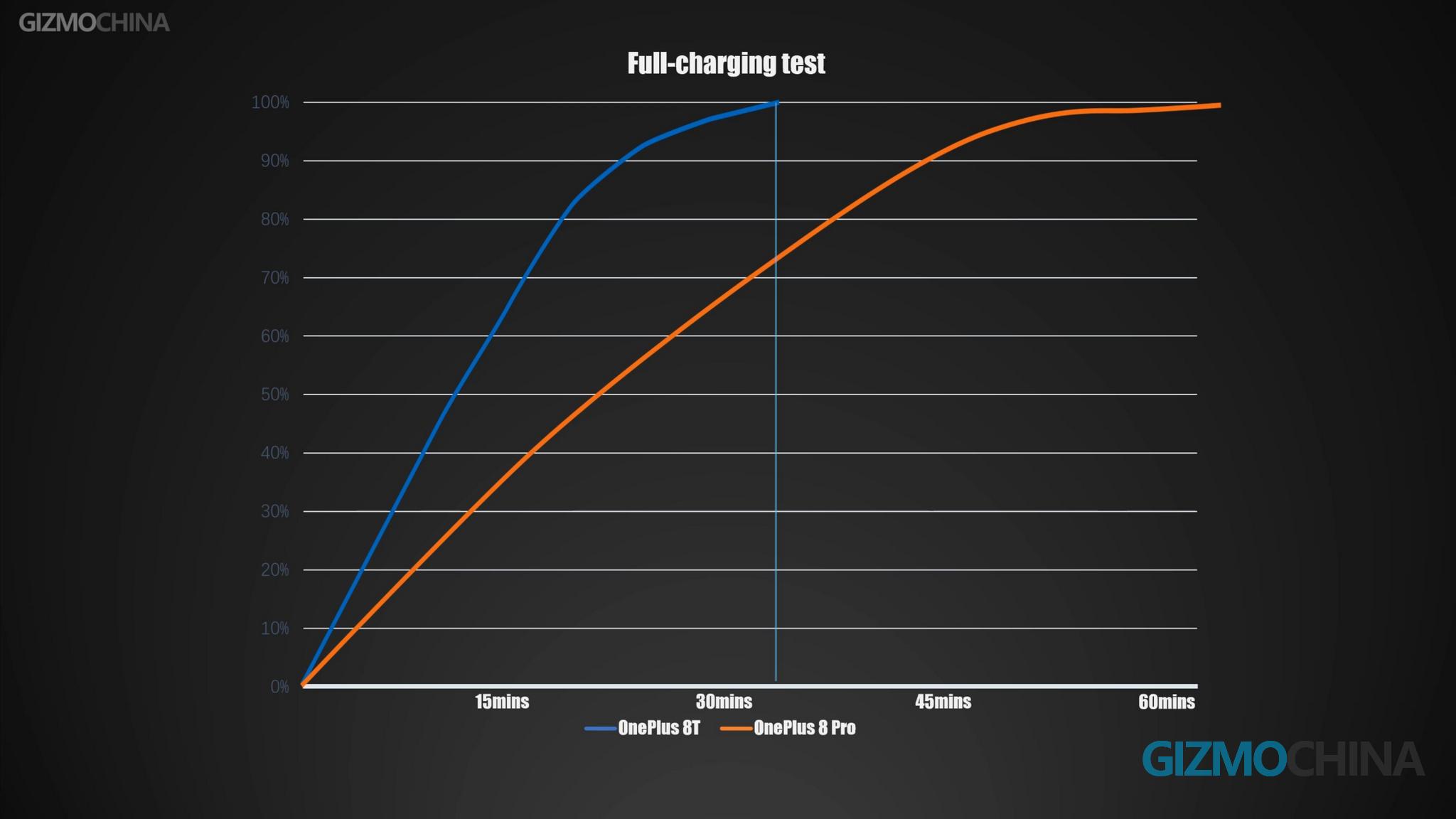
The greatest upgrade should be the 65W fast-charging efficiency. The full-charge test only took us 33mins, which was much faster than the 8 Pro’s 30W charging efficiency. But a disappointing downgrade in the charging department is that there is no wireless charging.
OnePlus 8T
So that’s it. If I had to pick one model which adheres to OnePlus’ core philosophy in 2020, I will pick the OnePlus 8T. It has flagship-level performance, one of the best 1080P displays, upgraded charging efficiency, lighter body design, and good camera performance that went beyond our expectations. And most importantly, it has a reasonable price as a ‘flagship killer’.
The OnePlus 8T is up for grabs for a discounted price of $549. If interested, check it out on Oppomart.
So how do you like the OnePlus 8T? Is it the best 2020 OnePlus Phone For you?
realme has started rolling out a new update for the realme 7 Pro. The October 2020 OTA update for the device brings the latest security patch, improvements in the camera. And fixes some bugs in the system.
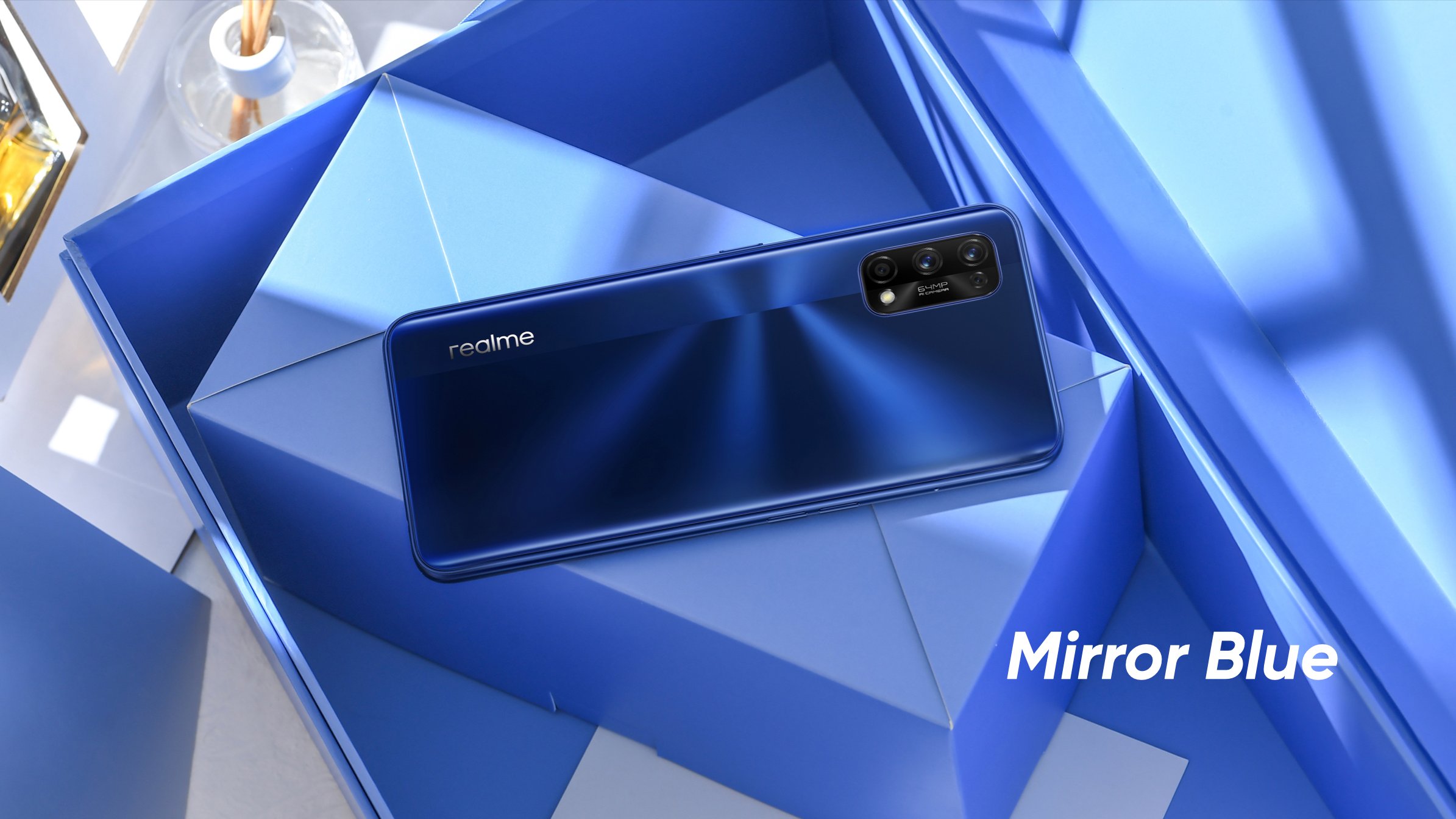
Realme 7 Pro Mirror Blue
The new OTA(Over The Air) update for realme 7 Pro has a firmware Version RMX2170PU_11_A.17. It comes with the latest October 2020 security patch. And a few other improvements for the Camera and System. The changelog for camera optimization is as follows:
Camera
Front camera- Over Exposure
Rear Camera- Color Shifts, Dynamic range of 64M mode.
Additionally, the update also carries fix for the issues like low brightness and fast charging. The changelog for fixing the issues and optimizations is as follows:
System
Minimum brightness on video streaming
Screen dim after unlocking fingerprint outdoors – Fixed
Unable to fast charge in certain scenarios – Fixed
Having said that, realme says the update is a staged rollout. And this means it will be pushed to certain users randomly first before ensuring there are no bugs. Once that’s out of the way, you can expect a wider rollout that should happen in the coming days.
While you wait for the update, you can also try going into the update section inside the settings and check if you are one of the early ones to get the OTA. Also, if you do get it early, don’t forget to report for bugs, if you found any, on the realme’s bug report board.
Huawei has officially launched the Mate 40 series today powered by the Kirin 9000 chipset. The tech giant also unveiled the Kirin 9000E SoC. Huawei has now revealed the Mate 30E Pro 5G, powered by an unannounced Kirin 990E.
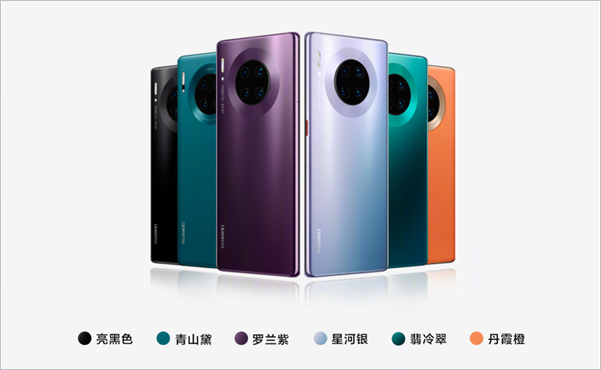
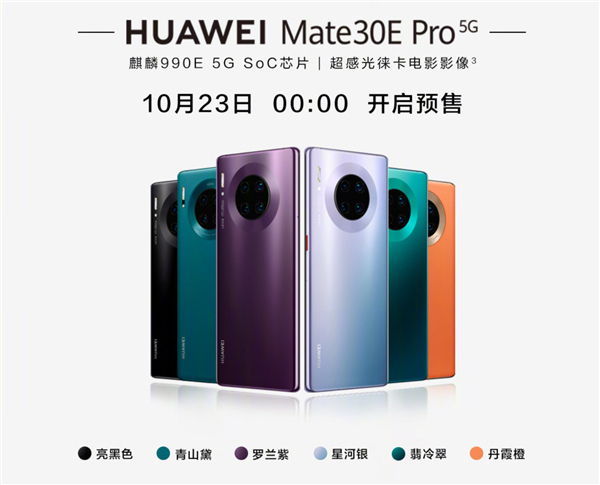
Huawei is yet to reveal many details of the Mate 30E Pro. However, from the limited information, the design of the Mate 30E Pro 5G is exactly the same as that of Mate 30 Pro 5G. It packs an “Oreo ring” shaped Quad-camera setup with the Leica badge. The device is available in six different colour options including bright black, purple, silver, emerald green, and orange.
As stated earlier, the Mate 30E Pro is powered by the Kirin 990E 5G chipset. Details of the processor are yet to be revealed but it is believed to be an underclocked version of the Kirin 990 just the same way the Kirin 9000E chip is a trimmed-down version of the 5nm Kirin 9000. We can’t confirm that since Huawei is yet to release the details of the unannounced chipset. It may as well be the same as the Kirin 9000E.
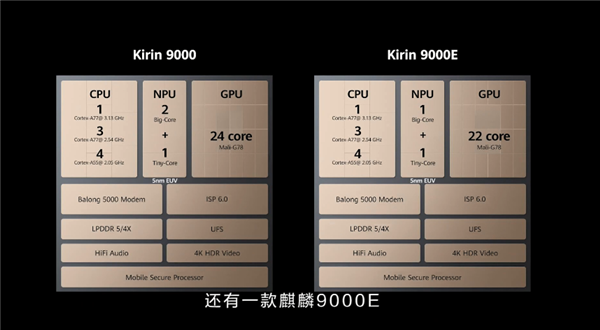
As a reminder, the Kirin 9000E comes with a 22-core Mali-G78 GPU. It adopts an Octa-core design, which includes a Cortex-A77 super core clocked at 3.13GHz, three 2.54GHz Cortex-A77 large cores, and four 2.05GHz Cortex-A55 energy efficiency cores. In terms of NPU, Kirin 9000E has dual cores (one large core and one small core).
The processor also integrates the Balong 5000 5G baseband, ISP 6.0, security module, etc. It supports LPDDR5/4X memory and UFS flash memory, HiFi sound quality, and 4K HDR video.
The Mate 30E Pro will go on presale starting from 0:00 on October 23. The price is yet to be announced
Huawei unveiled the Mate 40 series today at an online event that was live-streamed. The new smartphones are Huawei’s latest flagships and they bring new features including an all-new powerful processor, improved cameras, and faster charging technology.
The Huawei Mate 40 series includes the Mate 40, the Mate 40 Pro, and the Mate 40 Pro+. There is also the Porsche Design Mate 40 RS which is covered in another post.
Mate 40 Series Design and Specs
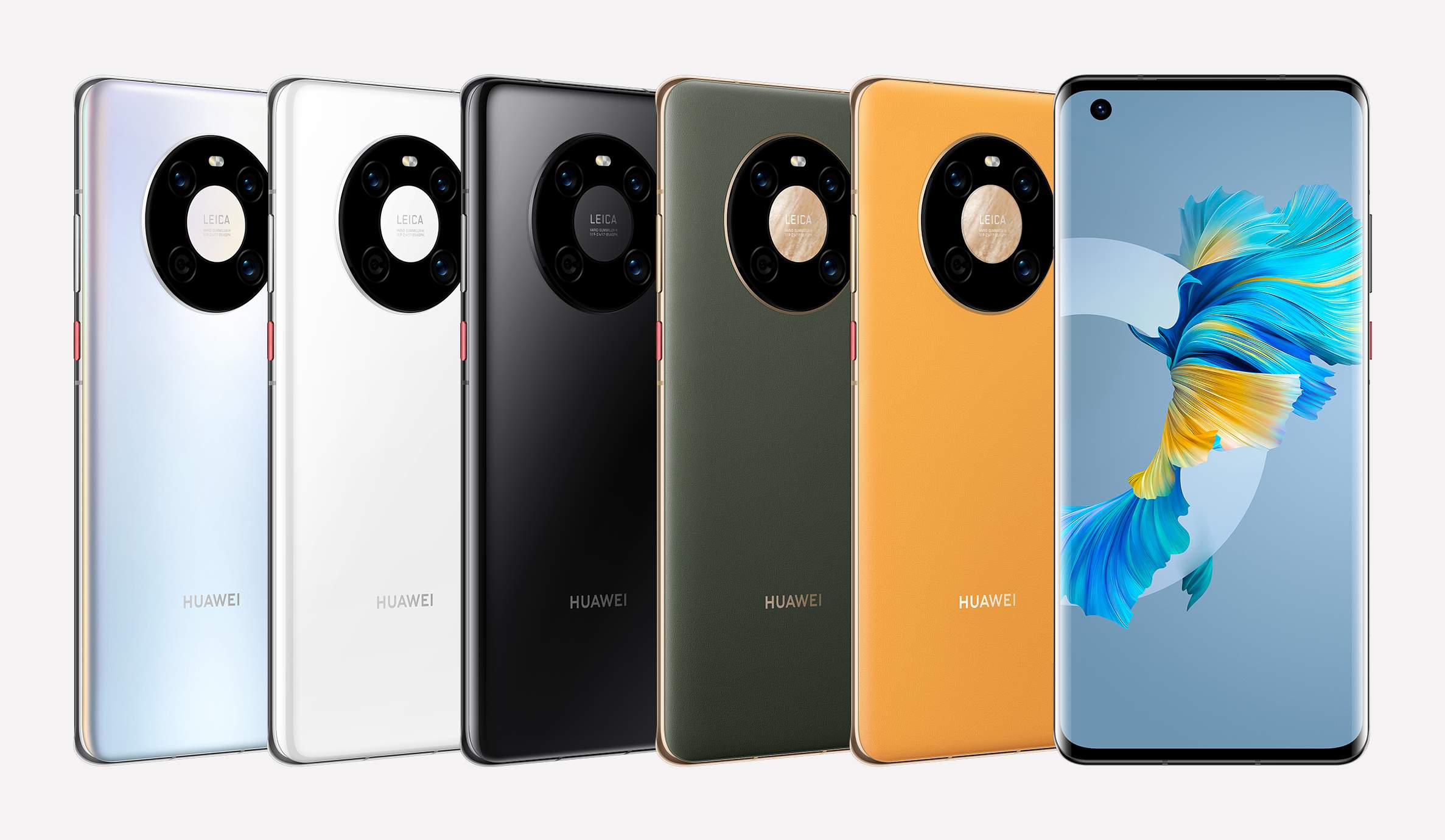
The Mate 40 series ditches the notch for a punch-hole screen. The standard model has a smaller hole as it only has a single front-facing camera while the Pro models have a pill-shaped hole for two cameras.
The Mate 40 has a 6.5-inch Flex OLED panel with a 2376 x 1080 resolution, DCI-P3 HDR, a 90Hz refresh rate and a 240Hz touch sampling rate. The screen also has a 68° curve, 2D face unlock, and an in-display fingerprint scanner.
The Mate 40 Pro and Mate 40 Pro+ both come with a 6.76-inch Flex OLED panel with a 2722 x 1344 resolution, DCI-P3 HDR, 90Hz refresh rate, and 240Hz touch sampling rate. Their screens are more curved (88°) than the standard variant but you still get physical volume control buttons on the side. Huawei has also kept the software volume buttons from the Mate 30 Pro so that users who are left-handed can easily adjust the volume. There is a fingerprint scanner under the screen of both phones too.
Wondering why Huawei didn’t go for a 120Hz refresh rate? It was revealed during the launch that they settled for 90Hz as a result of battery life.
Mate 40 series cameras
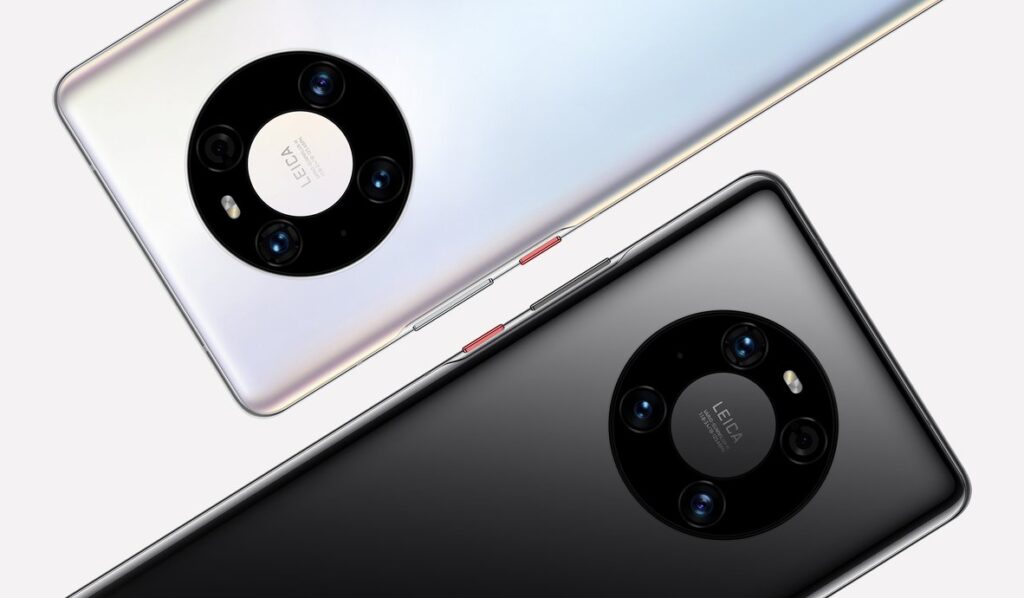
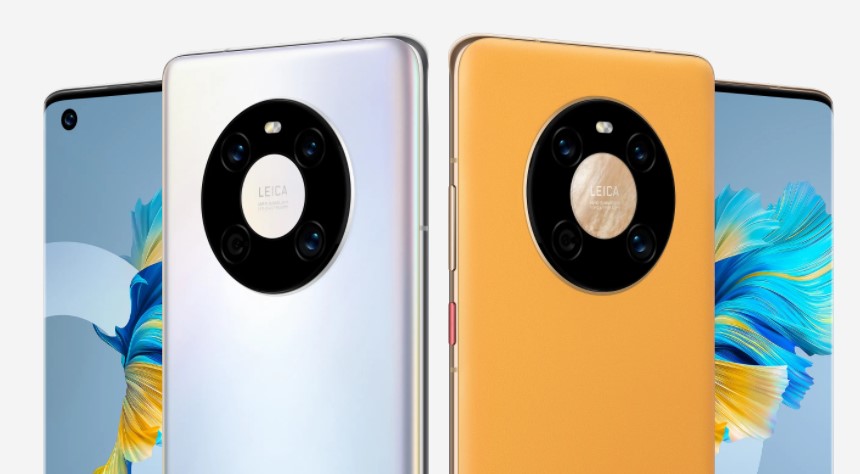
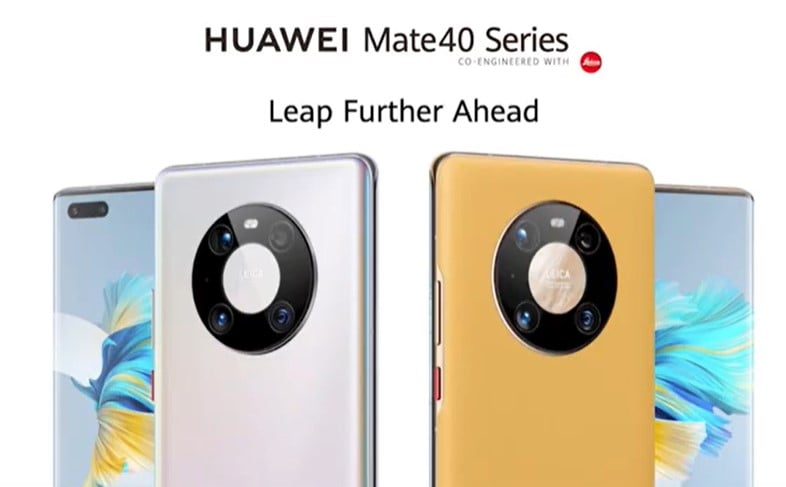
The Mate 40 series features a ring-like camera design, however, the configuration is different across models.
The Mate 40 Pro has a 50MP f/1.9 1/1.28” main camera with OIS. It comes along with a 20MP f/1.8 Cine Camera (ultrawide angle), and a 12MP f/3.4 telephoto camera with OIS and a 125mm periscope lens that brings 5x optical zoom.
The Mate 40 Pro+ has the same 50MP main camera and 20MP ultrawide Cine Camera. However, its 8MP f/4.4 periscope lens offers up to 10x optical zoom. There is also a 12MP f/2.4 telephoto camera with OIS that brings 3x zoom too. Huawei says the Mate 40 Pro+ has a 17x optical zoom range. The phone also has a ToF Camera for depth sensing.
For the front, the Mate 40 Pro models have a 13MP f/2.4 camera and a 3D depth-sensing camera that comes in handy for motion gestures and face unlock. The front cameras also have an ultrawide angle mode. The standard Mate 40 has a single 13MP wide-angle camera.
Kirin 9000 Processor
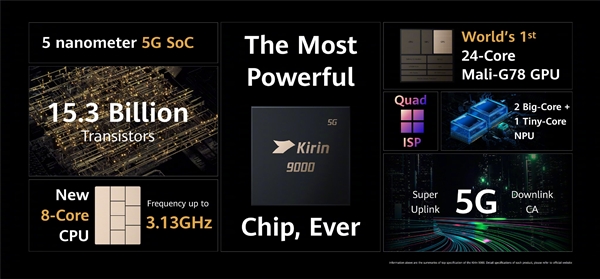
The Mate 40 series comes with a brand new processor called the Kirin 9000. The new HiSilicon processor is a 5nm chipset with a built-in 5G modem and Huawei claims it is the most powerful 5G processor in the world.
According to the Chinese tech giant, the Kirin 9000 has 15.3 billion transistors, 30% more than the Apple Bionic 14 processor has. The new chipset also boasts a faster 8-core CPU, faster GPU, faster NPU, and better power efficiency than Qualcomm’s Snapdragon 865+ processor. Below are the specs of the Kirin 9000 and the slightly-less powerful Kirin 9000E that powers the standard model:
Kirin 9000
5nm EUV
Octa-core CPU in a 1+3+4 configuration – 1x Cortex-A77 clocked at 3.13GHz + 3x Cortex-A77 clocked at 2.54GHz + 4x Cortex-A55 clocked at 2.05GHz
Triple-core NPU – 2 Big cores + 1 Tiny Core
GPU- Mali-G78 24 core GPU
ISP 6.0
Balong 5000
LPDDR5/4X
Kirin 9000E
5nm EUV
Octa-core CPU in a 1+3+4 configuration – 1x Cortex-A77 clocked at 3.13GHz + 3x Cortex-A77 clocked at 2.54GHz + 4x Cortex-A55 clocked at 2.05GHz
Dual-core NPU – 2 Big cores + 1 Tiny Core
GPU- Mali-G78 22 core GPU
ISP 6.0
Balong 5000
LPDDR5/4X
The Mate 40 has a 4200mAh battery with support for 40W wired charging while the Mate 40 Pro and Mate 40 Pro+ have a 4400mAh battery with support for 66W wired SuperCharge and 50W wireless SuperCharge. Surprisingly, the Mate 40 doesn’t have support for wireless charging even though its predecessor, the Mate 30, has support for 27W Wireless SuperCharge.
Other features of the phones are NFC, Wi-Fi 6, Bluetooth 5.2, stereo speakers, dual SIM support, audio jack, dual-frequency GPS, and NavIC support.
Price and Availability
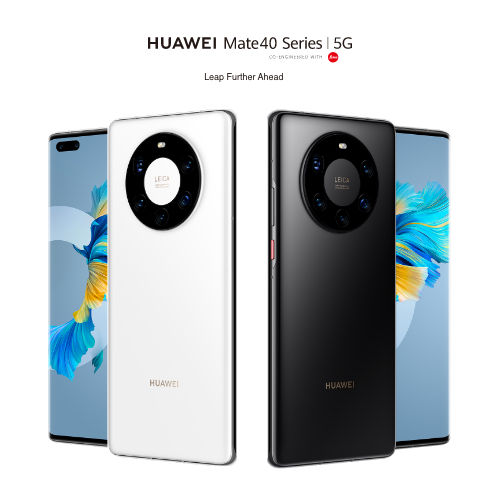
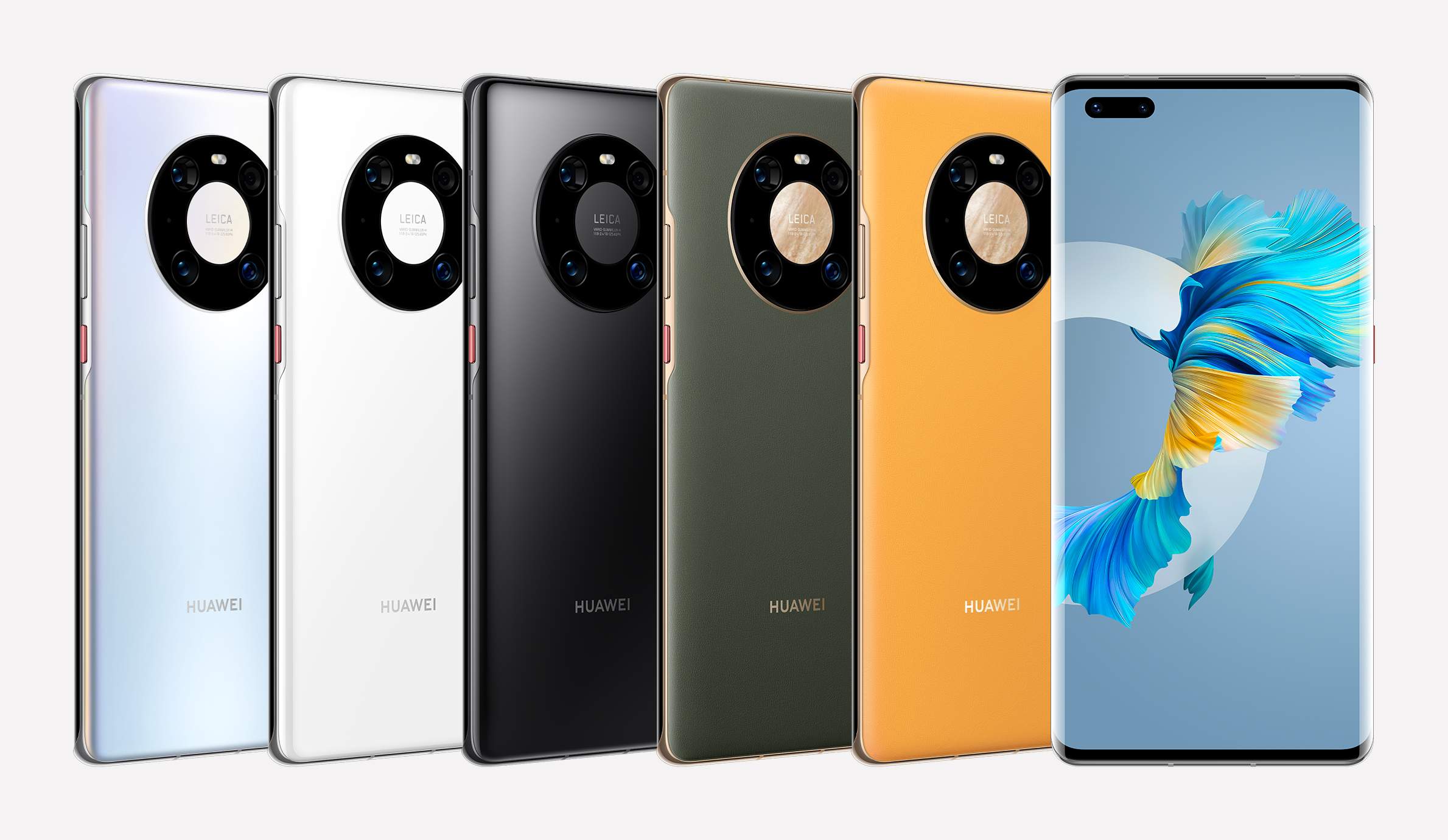
The Mate 40 and Mate 40 Pro will be available in five colors – Black, White, Mystic Silver, Vegan Green, and Vegan Yellow. The Mate 40 Pro+ will be available in Ceramic White and Ceramic Black.
The Mate 40 will sell for €899 and will have 8GB of RAM and 128GB of storage while the Mate 40 Pro will sell for €1199 and will have 8GB of RAM and 256GB of storage. The Mate 40 Pro+ will sell for €1399 and will have 12GB of RAM and 256GB of storage.
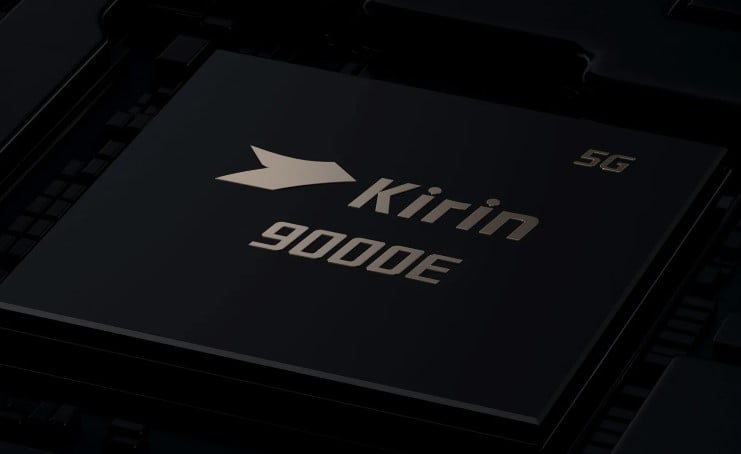
Huawei today officially announced the Mate 40 series and alongside, the Hisilicon Kirin 9000 5G SoC which powers the new flagship models was also unveiled. Huawei equally unveiled the Kirin 9000E, both chipset built on TSMC’s 5nm architecture.
The Kirin 9000 Series is a 5G chip design with the capability to handle intensive computations and multi-tasking operations with ease. The chip is the most sophisticated 5nm 5G SoC available, delivering vastly improved performance and power efficiency over its predecessor. It takes over from the Kirin 990 5G built on a 7nm silicon.
The new processor is said to have more than 15.3 billion transistors, the first processor to break the 15 billion transistors mark. This makes it the densest and most full-featured 5G SoC to date. The powerful processor packs a three-level power efficiency architecture with cores running at clock frequencies of up to 3.13GHz. The CPU part has eight cores, including a 3.13GHz Cortex-A77 large core, three Cortex-A77 medium cores each clocked at 2.54GHz. The SoC also has four Cortex-A55 small cores clocked at 2.04GHz each. The base frequency of the chipset is slightly higher than that of the Snapdragon 865 Plus which is clocked at 3.1GHz. Thus, Kirin 9000 is currently the highest frequency mobile phone processor.
Also integrated into the SoC is a 24-core Mali-G78 GPU, as well as an innovative NPU featuring two big cores and one tiny core, taking on-device AI to a new level. The 24-core Mali-G78 GPU is touted to be the most powerful GPU ever seen on a Huawei device. This delivers advanced graphics performance and is complemented by an amazing audiovisual experience for immersive gaming. The architecture exceeds the Kirin 990’s Mali-G76 in that the number of cores is increased by half and the performance is upgraded by 60% over the Mali-G76.
In terms of 5G, the industry’s first four-network synergy technology can efficiently integrate Wi-Fi 2.4GHz, Wi-Fi 5Ghz, main card 5G, and secondary card 4G, bringing aggregated high network speed, stable low time under changing network conditions, network optimization or concurrent download.
On its part, the Kirin 9000E GPU cores drop to 22. In terms of CPU architecture, both Kirin 9000 and Kirin 9000E adopt 8-core designs, which are a 3.13GHz Cortex-A77 super core, three 2.54GHz Cortex-A77 large cores, and four 2.05GHz Cortex-A55 energy efficiency cores.
In terms of GPU, Kirin 9000E is a 22-core Mali-G78. In terms of NPU, Kirin 9000E has dual cores (large core and one small core). In other respects, the two chipsets seem to be the same, including the integration of Balong 5000 5G baseband, ISP 6.0, security module, etc. In addition, they are all manufactured with 5nm EUV process, support LPDDR5/4X memory and UFS flash memory, support HiFi sound quality, 4K HDR video, etc.
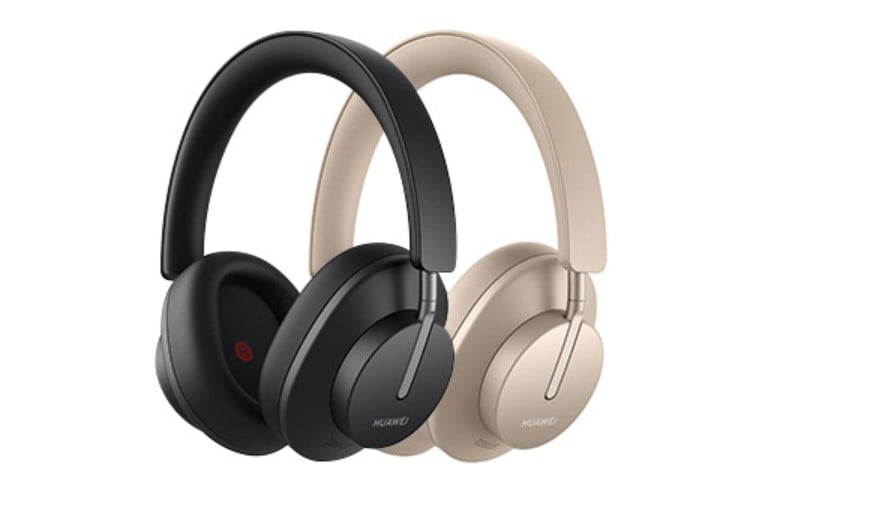
After announcing it almost ten days back, HUAWEI has launched the FreeBuds Studio alongside the Mate40 series today(October 22). The over-the-ear Wireless headphones have Active Noise Cancellation(ANC), touch controls, 24hrs battery life, and is priced at €299.
The new FreeBuds Studio from Huawei will be available in two color options- Gold, and Black. They have oval-shaped ear cups with soft ear paddings. Also, Huawei says the design is minimal, exquisite with a 7mm Stainless Steel arm holding the ear cups. And, they measure 165mmx150mmx81.5mm and weigh about 260 grams.
The first premium wireless headphones from Huawei have a 40mm dynamic driver unit. Huawei says it’s a four-layer diagram driver that has a frequency range of 4Hz-48kHz. Additionally, it also supports a 24bit/96kHz high-resolution audio codec which is the L2HC code for high-fidelity music and file transfer speeds up to 960 kbps.
HUAWEI FreeBuds Studio Features
The highlight of the FreeBuds Studio headphones is the ANC. It says the scenario-based intelligent dynamic ANC can cancel noise up to 40dB. There is a Hear-through mode(Ambient mode) that helps you be aware of what’s happening around. Also, it has a six-mic matrix with three mics on each side which helps in phone calls and cancels out noise. The headphones also have dual-antennas for 360-degree signal coverage without interference.
As for battery life, Huawei says the FreeBuds Studio will give up to 24hrs on a single charge. Also, it has fast charging and a quick 10min juice will give up to 5hrs, and 8hrs with ANC ON, and OFF respectively. There is a 410mAh battery that charges via Type-C and a complete charge takes 60 minutes.
Other features include simultaneous dual-device connection, Bluetooth 5.2, pop-up pair(on Huawei phones with EMUI 10.1+), wear detection, and Capacitance sensor, IMU sensors. The touch controls are on the right ear cup. Double-tap to play/pause mic and answer/end calls, swipe left/right to skip tracks, swipe up/down to control volume.
India’s largest online retailer Flipkart held its biggest sale recently called Big Billion Days. A number of new products like Pixel 4a and Galaxy F41 launched on the occasion of this sale. Above all, some of the popular as well as old devices like LG G8X ThinQ and iPhones were discounted heavily. That said, now as the sale has ended, POCO has officially announced that it sold over a million smartphones during this period.
Earlier this year, POCO was spun-off into an independent brand under the Xiaomi Group. In India, its devices are sold exclusively on Flipkart. The brand currently sells the following five handsets in the country.
POCO X2
POCO X3
POCO M2 Pro
POCO M2
POCO C3
All the above-mentioned smartphones were discounted except for the latest POCO X3. Buyers were also able to avail additional bank discounts.
These phones are highly recommended by media houses even at their launch prices. With discounts, they flew off the shelves that POCO managed to sell above a million (10 lakh) units of them during the Flipkart Big Billion Days sale that ran from October 16-21, as per the brand’s internal data.
Having said that, all the new POCO-branded smartphones launched so far (except POCO X3) are rebadged Redmi devices with slightly better configuration and cheaper price tags. We hope the brand to soon release phones with original design starting next year.
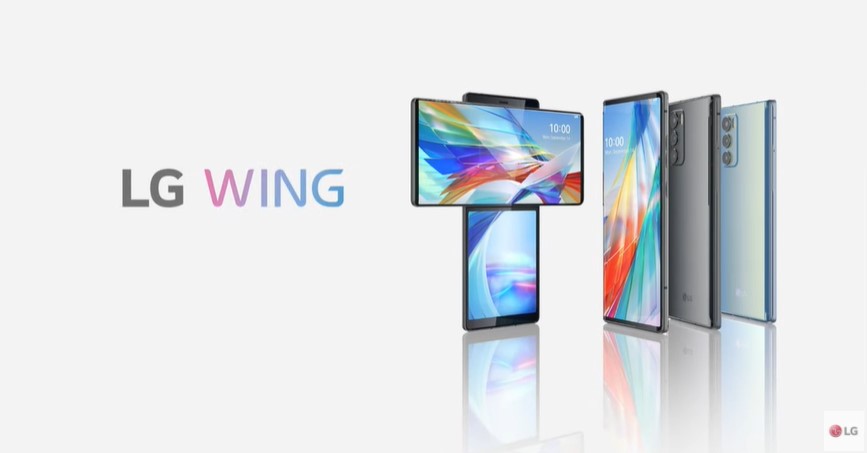
LG has finally set the launch date for its Swivel screen smartphone in India. The company has reportedly sent an invite that hints the launch event of the LG WING smartphone will take place on October 28.
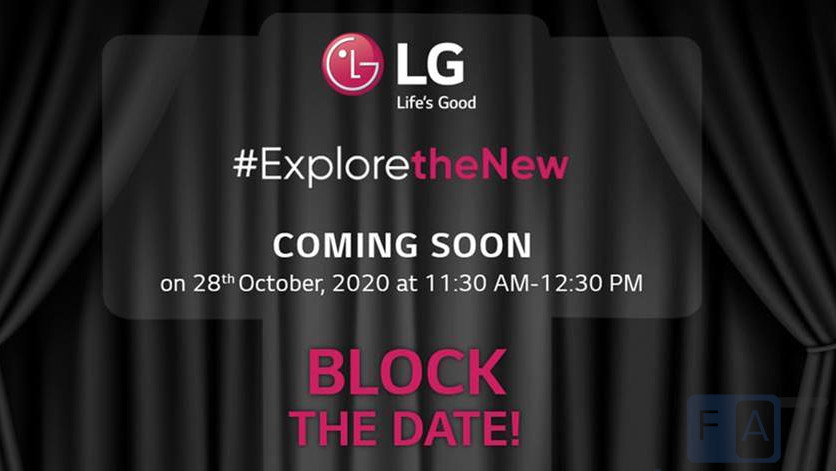
The invite that’s sent to a few of the media shows(via Fonearena) the hashtag, “#ExploretheNew” with LG WING’s design in the background. As per the invite, the launch event will happen on October 28 at 11:30 AM-12:30 PM IST. To assert this, LG India’s official Twitter account has already started teasing the new LG WING with the #LaunchingSoon tag. If we recall, LG first announced the WING smartphone on September 14. It later went on sale in South Korea for 1,098,990 won($940) and in the USA for $999.99. That said, the availability and Price in India is something we will have to wait till the launch event.
For the unware, LG WING is the first smartphone from LG that came out of it’s LG Explorer project. It has a dual-screen, but unlike the LG G8x, both are attached to the same body. A swivel holds the outer screen that rotates clockwise by 90-degrees while the secondary screen is fixed behind. It features a 6.8-inch FHD+ P-OLED rotating display with a resolution of 2460×1080 pixels. The secondary screen is a smaller 3.9-inch and has a resolution of 1240×1080 pixels. Both the screens have 395 and 419 PPI respectively.
Powering the device is Qualcomm Snapdragon 765G 5G SoC. It is paired with 8GB RAM and 128/256GB storage variants. On the back, the LG Wing has an Oppo Reno4-inspired triple-rear camera setup. It features a 64MP f/1.8 primary sensor, a 12MP f/1.9 ultra-wide with 120° FOV, and a 13MP f/1.9 sensor with 117° FOV. Further, there is a 32MP pop-up selfie camera at the front.
Besides, the camera has various features like a Gimbal mode through which users can control the angle of the lens virtually. In addition to this, Other features include a 4,000mAh battery with support for 25W wired and 10W wireless charging, a MicroSD slot for storage expansion up to 2TB.
That said let’s wait and watch if LG overcomes the lackluster pre-orders scenario after launching the device in India.
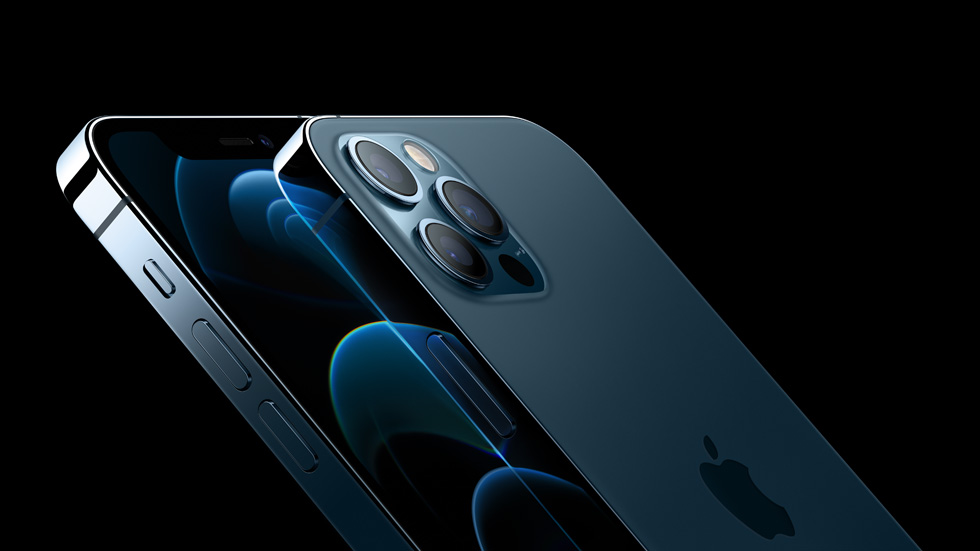
Apple launched the iPhone 12 series almost ten days back. At the event, it promised improved battery life over the last generation as usual. However, reports started arising with details exposing smaller capacity of battery on the models. Now, a teardown in China confirms that iPhone 12 has a smaller battery compared to its predecessor.
This is probably the first teardown of an iPhone 12 series device. And, it is uploaded on YouTube by a channel named “Black MOB”(via PhoneArena). The video opens out to show the boxy design of the Apple iPhone 12 with rounded corners and it’s the Blue color that undergoes the operation this time. First up, the 6.1-inch OLED display seems to be a bit thinner compared to the iPhone 11. This is probably due to the edges of the glass that curve slightly on the predecessor.
iPhone 12: L-shaped SoC and smaller battery
The well-known iPad Pro‘s design has paid-off for a slightly flatter design. Moving on, the rear camera unit inside has a similar shape compared to the 11 but with few layout changes. Also, the motherboard is L-shaped this time and is bigger than the one on iPhone 11. Further teardown shows a smaller speaker unit and a much smaller Taptic engine. It’s surprising how Apple is able to pull-off improvements despite shrinking the size.
Removing the front camera unit along with Face-ID sensors reveals an unchanged unit. Now we get to the important part, the battery. This teardown clearly reveals that iPhone 12 has a 2,815mAh battery. This is a 9.4% lesser capacity than the 3,110mAh on the iPhone 11. A smaller battery is probably to offset the cost that’s already involved due to 5G and match the form factor as well. Speaking of which, it has the Qualcomm X55 5G modem.
Moving on, removing the Lightning port shows it’s attached independently and not integrated with the rest of the board. Finally, the MagSafe Coil is revealed. It is attached to the rear panel. There are magnets arranged circularly to hold the charger in place. The middle space is where the coil meets the charger to inductively charge the battery.
WhatsApp has recently submitted a new update through the Google Play Beta Program. It is for bringing the version up to 2.20.203.3 and brings various improvements and a couple of new features.
Images Via WaBetaInfo
According to a WaBetaInfo report, the company is working for a few months on a couple of new features. This includes Join Missed Calls, which would allow users to quickly join calls in a certain situation. The feature is meant to allow users to join a group missed call if the call is still active with other members. It is still under development and will be available via an update in the future.
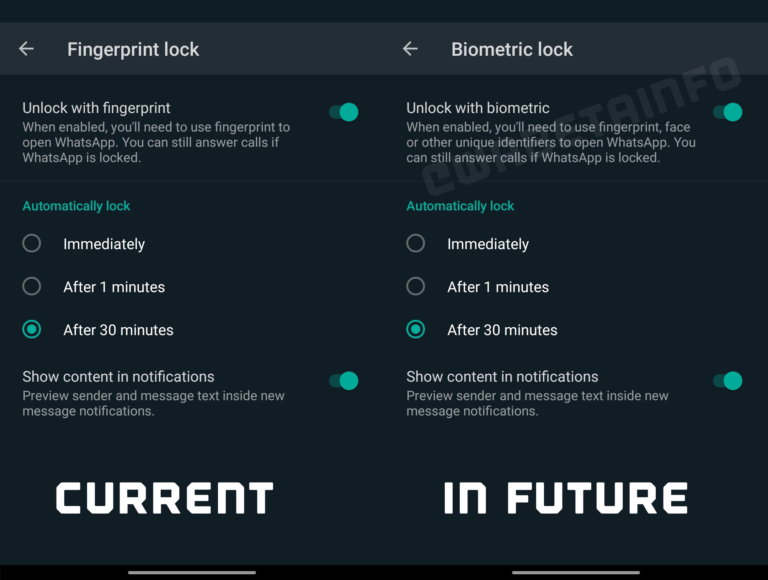
Another new feature is the Biometric Lock, as the name suggests, this new addition will bring biometric security to the popular messaging application. In this, users would be able to use Fingerprint Lock to protect their WhatsApp. This feature will also work with face recognition systems if a fingerprint sensor is not present in one’s device. At the moment, facial and fingerprint based recognition are the only two methods that are supported.
Unfortunately, these features are still under development and it is currently unknown when they will be available for WhatsApp beta users or even the live build. A preview is available right now and WaBetaInfo shared multiple screenshots of this upcoming build as well. So stay tuned for more updates.
Airbnb, the known home rental based firm, has recently hired the former Apple designer Jony Ive and his firm. It is a multi year partnership, which will have the firm design new Airbnb products.
For those unaware, Jony Ive was a close creative collaborator with Apple founder Steve Jobs. Ive has spent nearly three decades with the Cupertino based giant and has to lead the design behind the memorable Apple products like the candy colored iMacs and even helped in the company coming back from its near death in the 1990s and had left Apple back in 2019.
In a recent blog post from Airbnb Chief Executive Brian Chesky, the senior official announced that Jony Ive will also be helping the company’s internal design team. Earlier this week, Airbnb’s Chief Design Officer, Alex Schleifer, would be moving to a more part time role, while the company would look into a permanent replacement, as per a source close to the matter.
Jony Ive and his firm, LoveFrom, will be working with Airbnb in an effort to raise around 3 billion US Dollars in its upcoming initial Publix offering, according to sources. Airbnb is also expected to be one of the largest and most anticipated listings in the US stock market for 2020, which has already been a big year for IPOs.
The Apple iPhone 12 and iPhone 12 Pro will be available for pre-bookings from tomorrow in India. Here are the pricing and cashback offers for customers who wish to purchase the iPhone 12 or iPhone 12 Pro.
iPhone 12 pre-orders in India
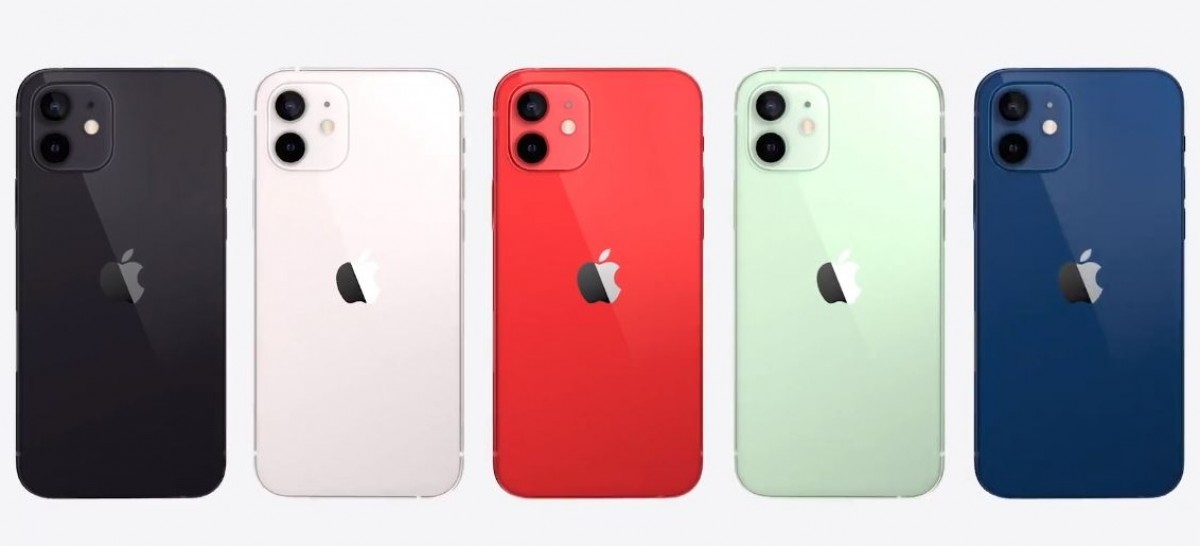
The 64 GB, 128 GB, and 256 GB iPhone 12 variants Rs 79,900 (~$1,084), Rs 84,900 (~$1,152), and Rs 94,900 (~$1,288), respectively. White, Black, Blue, Green, and Red are the color variants of the iPhone 12.
iPhone 12
The Rs 6,000 cashback offer for HDFC Bank credit card users, the three variants can be bought for Rs 73,900 (~$1,003), Rs 78,900 (~$1,071), and Rs 88,900 (~$1,207), respectively.
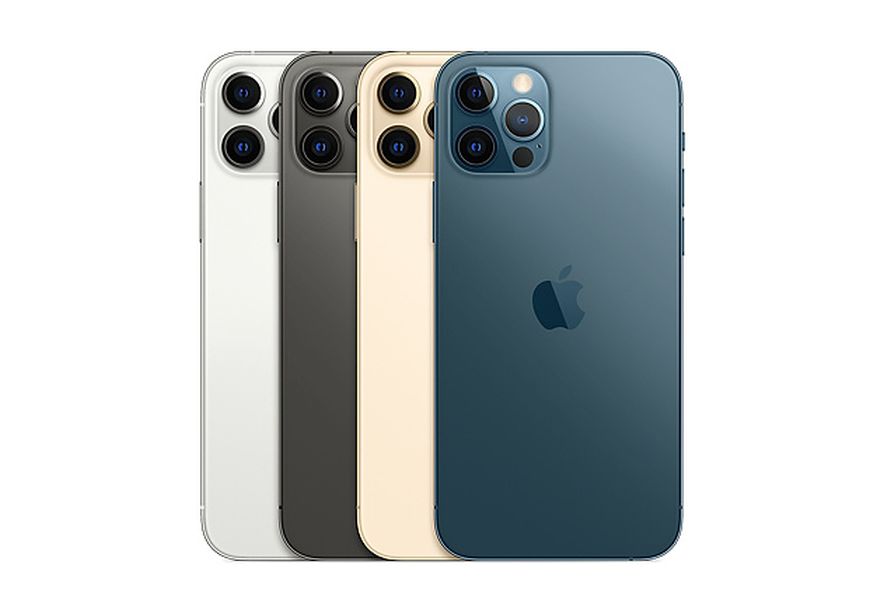
The 128 GB, 256 GB and 512 GB iPhone 12 Pro models are priced at Rs 1,19,900 (~$1,627), Rs 1,29,900 (~1,763), and Rs 1,49,900 (~$2,034), respectively. The handset comes in colors like Graphite, Silver, Gold, and Pacific Blue.
iPhone 12 Pro
The Rs 5,000 cashback offer for HDFC Bank credit card users, the three models can be availed for Rs 1,14,900 (~$1,559), Rs 1,24,900 (~$1,695), and Rs 1,44,900 (~$1,967), respectively.
HDFC debit card owners can get Rs 1,500 cashback on both phones. The offer can be availed through Amazon India, Flipkart, Tata CliQ, and In-store, and it’s valid until Dec. 26. For more details on the offer, readers can visit this link.
iPhone 12 and iPhone 12 Pro specifications
The iPhone 12 and iPhone 12 Pro have common features like 6.1-inch Sper Retina OLED screens, Apple A14 Bionic SoC, 12-megapixel selfie camera, Face ID support, and 2,815mAh battery that supports 20W wired charging and 15W wireless charging.
The iPhone 12 has 4 GB of RAM and it has a 12-megapixel (OIS ready) + 12-megapixel (120-degree ultrawide) dual-camera setup on its back. The iPhone 12 Pro has 6 GB of RAM and a 12-megapixel (OIS assisted) + 12-megapixel (OIS enabled telephoto lens) + 12-megapixel (120-degree ultrawide) triple camera setup on its rear.
Lately, the Samsung group has been patenting a number of designs and utilities for foldable smartphones. That does not mean the company has given up on normal slab handsets. Because its latest trademark related to normal smartphone bezels.
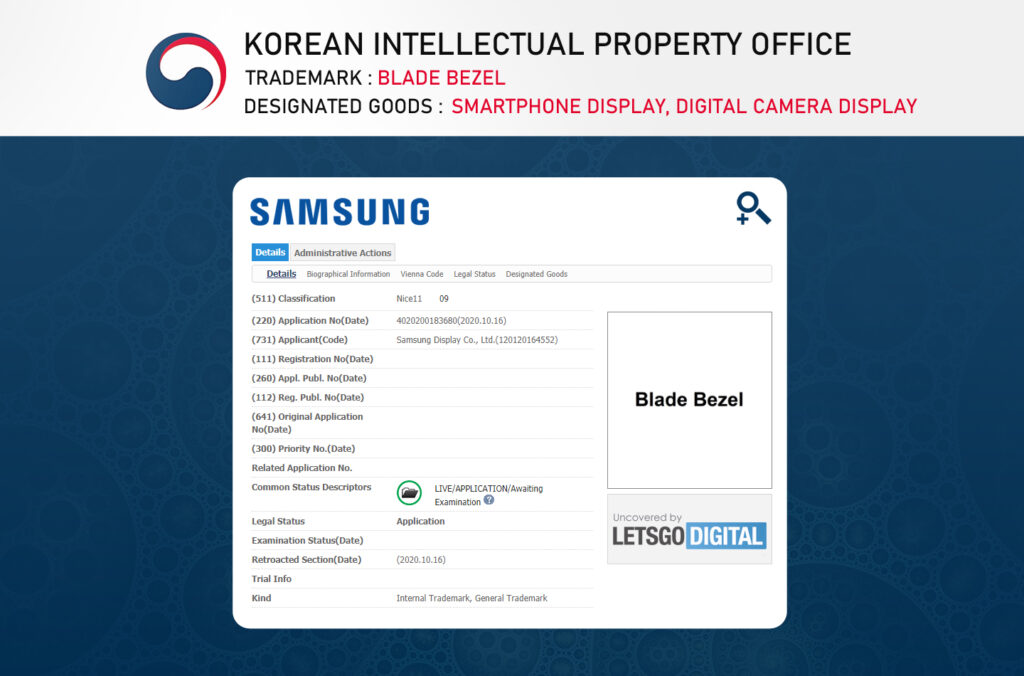
LetsGoDigital is well-known for patent and trademark coverage. The publication has now unearthed a trademark called “Blade Bezel” filed by Samsung Display with the KIPO (Korean Intellectual Property Office) on October 16.
The application for this trademark is categorized as Class 9 meant for large screen display, smartphone display, LCD, LED, OLED, digital camera display, and video screen.
The description suggests that Samsung Display may use the Blade Bezel trademark with a plethora of devices like televisions, monitors, smartphones, and cameras. However, it does not mention the appearance of this kind of bezel.
Going by the word “Blade”, we can assume these bezels to be flat without any curves. So Samsung Display may use this trademark for its flatter slim bezel panels.
Anyway, companies file a wide variety of patents and trademarks but not all of them are used by them. These filings are mostly for securing their original ideas so that no other companies, especially competitors could use them.
Huawei is gearing up to launch the Mate40 series of smartphones today(October 22). Ahead of the event, a lot of leaks have been floating around. And the latest of them all is the inclusion of a new Mate30E Pro. And famous tipster evleaks has leaked the entire press-renders of the series.
Tipster Ishan Agarwal says(via GSMArena), Huawei will launch a new Mate30E Pro along with the Mate40 series today. He says, the new device will be identical to the Mate30 Pro from last year. However, it will have an upgraded Kirin 990E SoC. There’s no info on what’s going to be the difference between Kirin 990 and 990E.
Anyways, This is really interesting as the Mate40 series will have a punch-hole display up front, and a circular camera layout on the rear. Whereas, the Mate30 Pro has an older notch-style display but. The older flagship from 2019 has a 6.53-inch OLED display, Kirin 990 SoC, 4,400mAh battery with 44W HUAWEI SuperCharge. The rear cameras have two 40MP lenses, 8MP Telephoto with 3x optical zoom, and a 3D depth-sensing camera. At the front, it has a 32MP f/2.0 lens and a 3D depth sensor.
Mate40 Pro+ and Porsche Design RS New details
Regarding the Huawei Mate40 Porsche Design RS, Ishan says it will come in three colors- Ceramic White, Ceramic Black, and a new Collectors Edition. Further, he says the device will have Kirin 9000 SoC with 12GB RAM. That said the earlier leak revealed the storage options to be 256 and 512GB.
Anyway, regarding the specs, the Mate40 Pro+ and Porsche Design RS seems to share a lot in common. We already know most of that but Ishan has a few interesting details. He says both the device will have a 90Hz display with a 240Hz touch sampling rate. The Mate40 Pro+ will be 8.8mm thick and weigh 230g while the Porsche Design RS will measure 10.1mm thick and weigh 234g.
Furthermore, he says both the devices will have 66W wired charging and can charge the 4,400mAh battery in just 47 minutes. They will also have a 50W Wireless Charging and 5W Reverse Wireless Charging. Other features include IP68 rating, Stereo Speakers, an IR sensor, and EMUI 11.
For cameras, he lists four main lenses- 50MP F/1.9 SuperSensing Wide lens with OIS, 20MP F/2.4 Movie Camera, a 12MP F/2.4 Telephoto lens with OIS, an 8MP F/4.4 SuperZoom 10X Optical, Upto 100X Digital with OIS, and a 3D Camera. He says RS edition will support 8K recording as well. This is slightly different to earlier leak which said the devices will have two 8MP sensors.
At the front, there are two 13MP SuperSensing F/2.4 and 3D sensor with face unlocking.
Mate40 series Renders
Tipster evleaks has gone a step ahead to reveal the entire press renders of the Mate40 series. Have a look at them below:
Earlier this year, Apple and Qualcomm announced an agreement that put an end to their long standing legal battles across the globe. Now, a new roadmap from the Cupertino based giant reveals their plan on using the American chipmakers 5G modem in its future products.
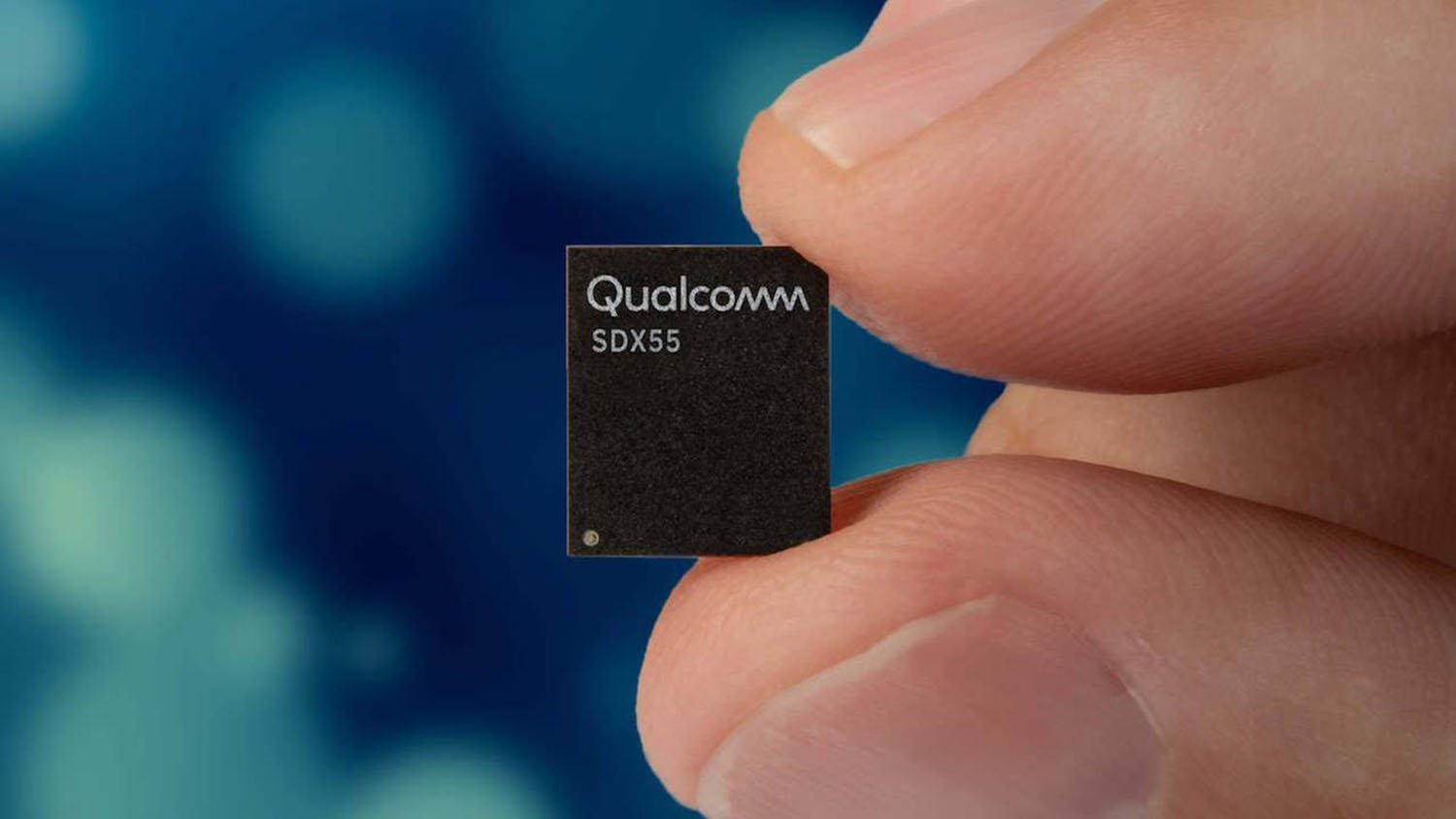
Recently, it was found that the new Apple iPhone 12 series of smartphones feature Qualcomm’s Snapdragon X55 modems, which was discovered in a teardown video. Furthermore, the company’s official roadmap also details the use of Qualcomm models in future products. Notably, Apple is also planning on using the Snapdragon X60 modem between 1st June 2021 and 31st May 2022, which was discovered via an Apple-Qualcomm settlement filing.
Similarly, the iPhone maker is also committed to use the yet o be announced X65 and X70 modems as well in their future products dated between 1st June 2022 and 31st May 2024. These settlement details are over a year old now, however, they went under the radar for quite some time. But it reveals Apple’s plans on its cooperation with Qualcomm.
Snapdragon X55 5G Modem
For those unaware, the Snapdragon X60 is built on a 5nm process and is currently the chipmakers high end 5G modem. It is more energy efficient than the previous generation’s X55 modem, whilst having a smaller size overall as well. Smartphones that feature the X60 will also be able to aggregate data from both mmWave and sub 6GHz at the same time to achieve high speeds with lower latency.
We use cookies on our website to give you the most relevant experience by remembering your preferences and repeat visits. By clicking “Accept”, you consent to the use of ALL the cookies.
This website uses cookies to improve your experience while you navigate through the website. Out of these, the cookies that are categorized as necessary are stored on your browser as they are essential for the working of basic functionalities of the website. We also use third-party cookies that help us analyze and understand how you use this website. These cookies will be stored in your browser only with your consent. You also have the option to opt-out of these cookies. But opting out of some of these cookies may affect your browsing experience.
Necessary cookies are absolutely essential for the website to function properly. This category only includes cookies that ensures basic functionalities and security features of the website. These cookies do not store any personal information.
Any cookies that may not be particularly necessary for the website to function and is used specifically to collect user personal data via analytics, ads, other embedded contents are termed as non-necessary cookies. It is mandatory to procure user consent prior to running these cookies on your website.