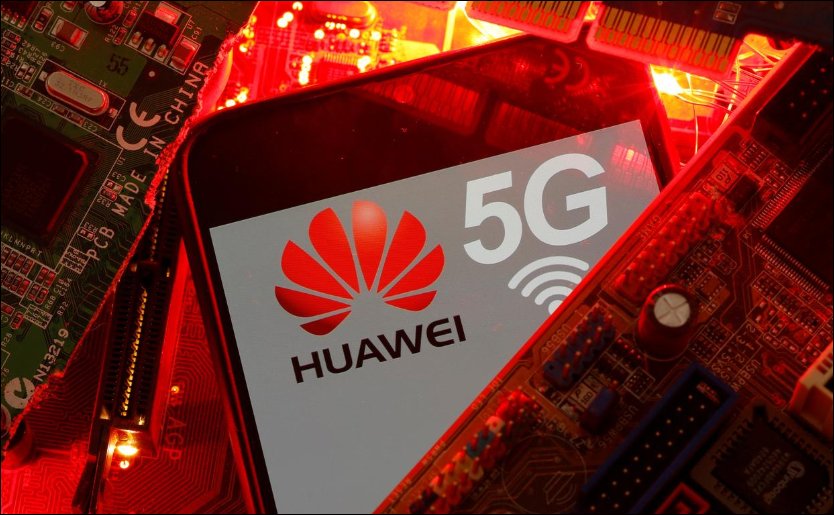
Huawei is currently rolling out EMUI 10.1 to its smartphones and tablets worldwide. But behind the scenes, the company has been working on EMUI 11 for a few months now. The new version of the firm’s mobile software is confirmed to release in Q3 and could be showcased at IFA 2020. Ahead of it, some of its features have been tipped by a leakster.
EMUI (Magic UI for Honor) is the heart of Huawei Android devices – smartphones and tablets. Heavily inspired by Apple’s iOS, the Chinese telecom giant created an ecosystem of its own with features such as HUAWEI Share, HUAWEI Multi-Screen Collaboration, and more.
With the upcoming EMUI 11, the company is reported to lay the foundation for distributed technology. But it will continue to use Android as the base (Android 11 to be exact) with improved HMS (Huawei Mobile Services) and not HarmonyOS as rumored.
Yesterday, 长安数码君 (Changan Digital King) on Weibo revealed more features of EMU 11. According to him, it will come with a revamped AOD (Always-on) in the design department. For productivity, it is said to feature new smart split-screen and “comprehensive translation services”. We are not sure what the tipster means by the latter part.
Anyway, according to a previous report, only HUAWEI Mate40 Pro will ship with EMUI 11, whereas the regular HUAWEI Mate40 will debut with EMUI 10.x (could be EMUI 10.1). However, the company will update its older devices in the coming months like the previous iterations of the software but don’t expect all the devices to get it.
Since Google is reported to officially release Android 11 on September 8, Huawei may also open registrations for Closed Beta at around the same time or later.
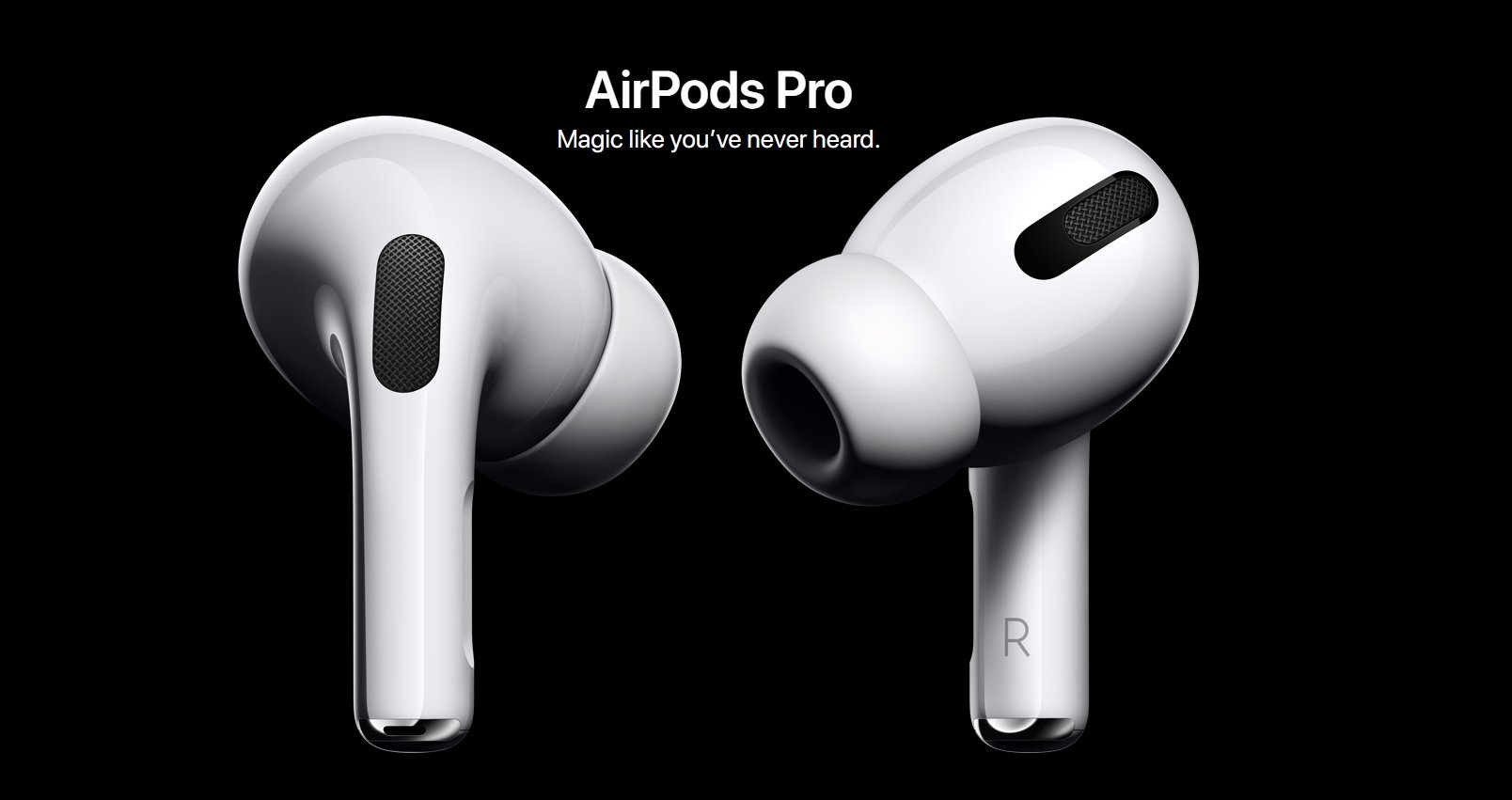
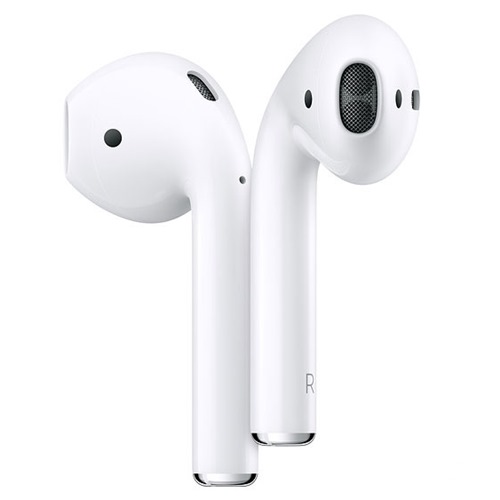
With the Apple iPhone 12 series launch arriving soon, the company is also expected to launch its third generation of its popular truly wireless offering. But despite the AirPods sales growing, the company is still losing out on market share in 2020.
Apple’s AirPods had dominated the truly wireless earbud category when they had first launched. Since then, various other companies have caught on, but the company is still one of the market leaders in this segment, with AirPods alone accounting for nearly half of all sales in 2019. This number is expected to grow to 82 million units this year, but more affordable offerings from Chinese rivals are eating its massive customer base.
According to a Bloombergreport, the Cupertino based giant only holds a market share of 35 percent. It is followed by Xiaomi with 10 percent and Samsung with a 6 percent market share. In various markets, especially ones where Android is more popular due to affordability, Apple loses to budget offerings from various other manufacturers. Notably, the demand for TWS chips is expected to surge due to growing popularity for wireless products, with both Apple and its rivals looking to launch their improved offerings in the market.
Liz Lee, a Counterpoint researcher stated that “The low-to-mid end segment including Chinese brands and U.S. makers such as JLab is taking away share from the premium market. We believe that Samsung can attract more users, especially Android phone users, if it provides a wider selection of TWS devices from mid to high-end with at least two or three variations.”
A new report has suggested that Apple might be working on a new project, which is related to a full fledged search engine. The information arrives after various developers noticed increased activity through Apple’s Applebot in their website logs.
Apple Siri
While the company might be working on its proprietary search engine, it is more likely that the Cupertino based giant is placing a focus on improving the Siri and Spotlight search results. According to a MacRumorsreport, the Applebot had begun showing a noticeable increase in activity. This caused various individuals to take to Twitter to share their thoughts on it as well.
Jon Henshaw, Founder of Coywolf, also posted on his blog after he noticed the Apple web crawler regularly visiting his websites. For those unaware, the Applebot functions similarly to any other web crawler and scans the web to determine how search results would be ranked. This depends on various factors, including user engagement, relevancy, and more. Thus, the increased activity kicked off the new speculation regarding a possible Apple search engine.
At the moment, it seems unlikely that Apple would actually focus on developing a search engine since it promotes itself as a privacy centric brand that runs without any ads. But, examples like DuckDuckGo have shown that such search engines do exist and can operate without ad revenue or data based business models. So, take this report with a pinch of salt for now.
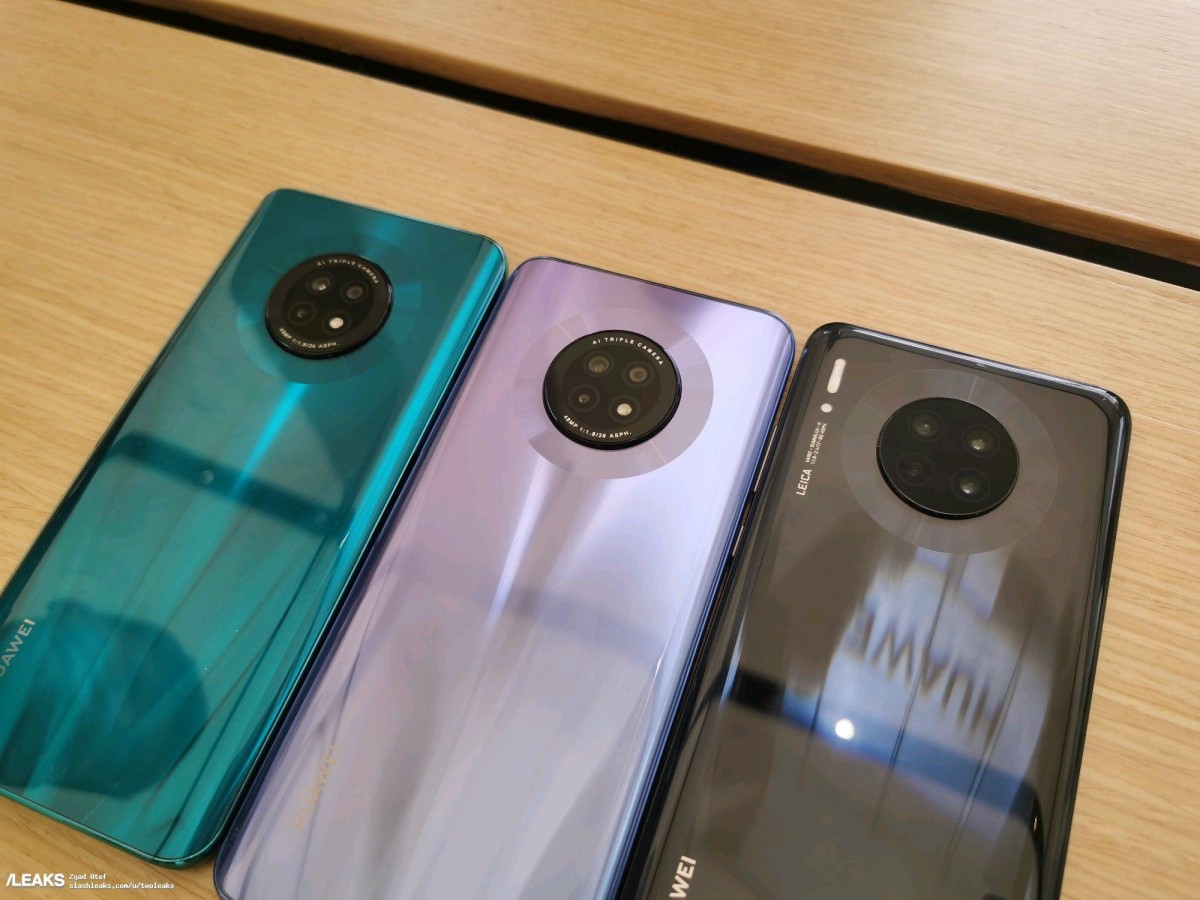
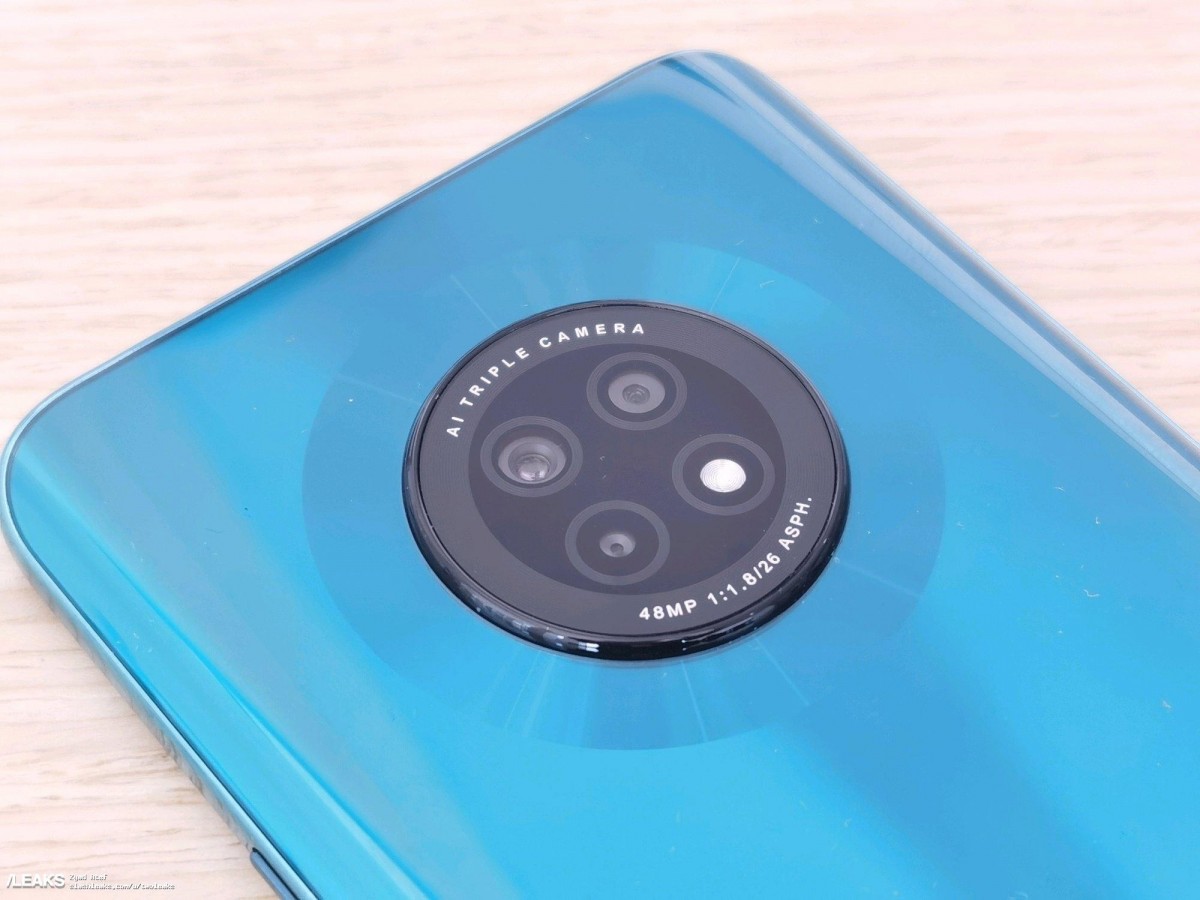
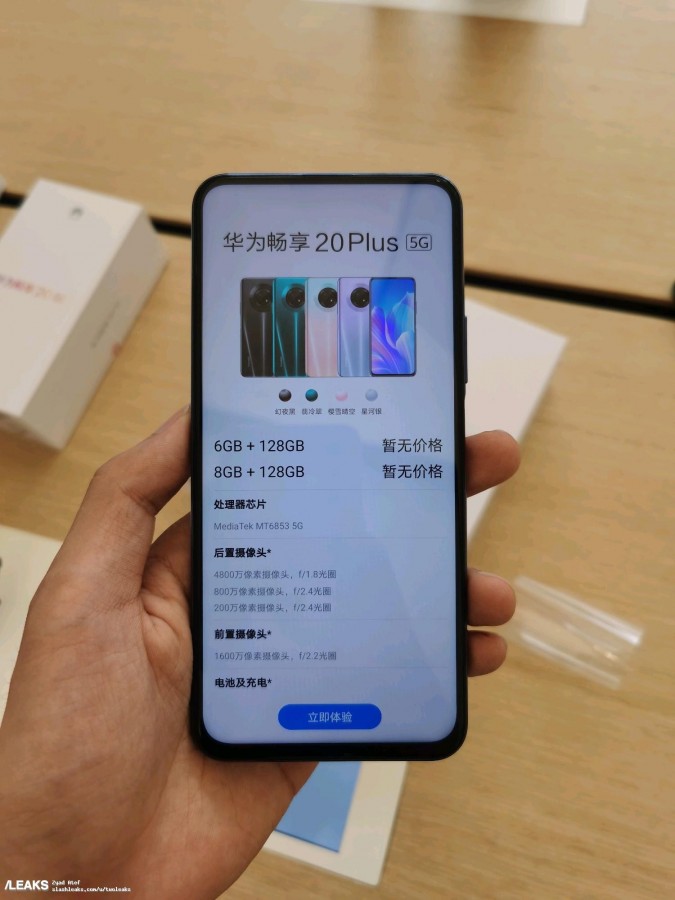
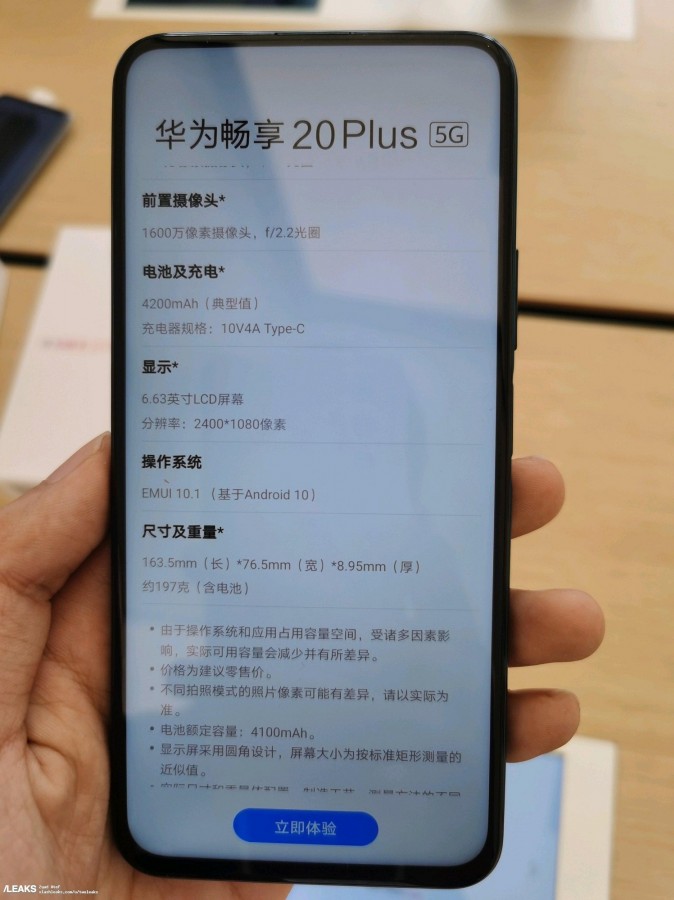
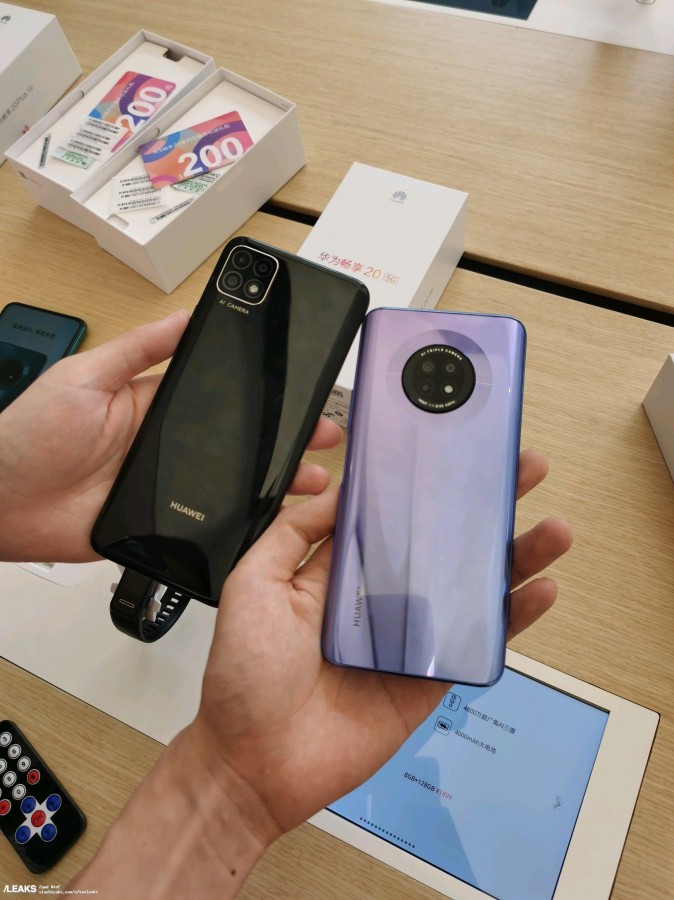
Huawei is expected to launch the Huawei Enjoy 20 and Enjoy 20 Plus budget-friendly 5G phones in early September. Ahead of the launch a couple of new live shots of the Enjoy 20 Plus along with its specifications have appeared.
Enjoy 20 Plus will be arriving in two variants such as 6 GB RAM + 128 GB storage and 8 GB RAM + 128 GB storage. It will come in multiple colors like black, green, gradient white, and gradient blue. The rear-facing round-shaped camera module has an f/1.8 aperture 48-megapixel main camera, an f2.4 aperture 8-megapixel lens, and a 2-megapixel with f/2.4 aperture. It has a pop-up selfie camera of 16-megapixel.
The MediaTek MT6853 SoC is present under the hood of the Enjoy 20 Plus. It has a 4,200mAh battery that supports 40W fast charging through USB-C. It has a 6.63-inch notch-less Full HD+ display that offers a 20:9 aspect ratio. The phone boots to EMUI 10.1 based Android 10 OS. It measures 163.5 x 76.5 x 8.95mm and weighs 197 grams.
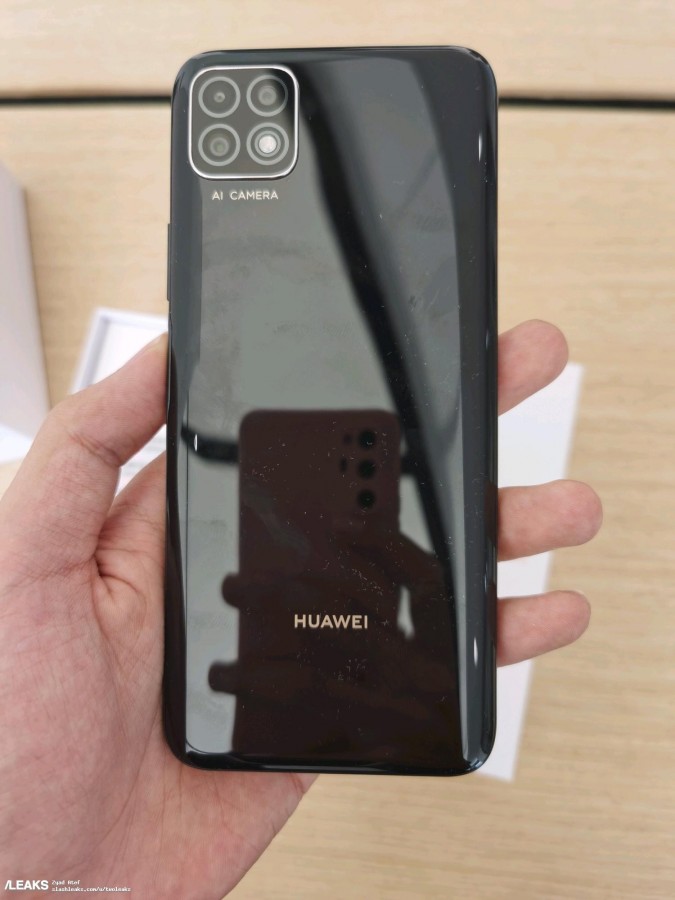
In two shots, a handset with a square-shaped module is shown. It is the Enjoy 20 smartphone. The new leak has no information on the pricing of the Enjoy 20 and Enjoy 20 Plus. It is speculated that the Enjoy 20 could be breaking cover as the cheapest 5G phone from Huawei.
OPPO is one of the most popular and innovative smartphone markers in the world. Starting its operations in China, the company has now expanded to more countries and regions. Lately, the company has been partnering with carriers around the globe to penetrate into new markets. Yesterday, the firm announced a new strategic partnership with Latin America’s América Móvil.
With this new alliance, OPPO handsets will be made available in Mexico and other Latin American (LATAM) markets through Telcel and Claro, the subsidiaries of América Móvil. The Chinese smartphone maker considers these markets to be of greater importance in its global market development.
For those unaware, Samsung and Motorola rule the smartphone market in these regions. Chinese companies like Xiaomi and Huawei lag behind these companies though they are stronger in other markets like India and Europe.
With Huawei losing grounds due to the US ban, OPPO has a great opportunity to snatch its share not only in LATAM but also in Europe and other regions as well. But the competition is stiff from the likes of Xiaomi and other BBK brands – realme, vivo, and OnePlus.
OPPO says that it has partnered with over 80 carriers around the world. With these cooperations, it has managed to enter markets like Europe and Japan. The company plans to form more carrier partnerships in the next 1-2 years to reach more consumers.
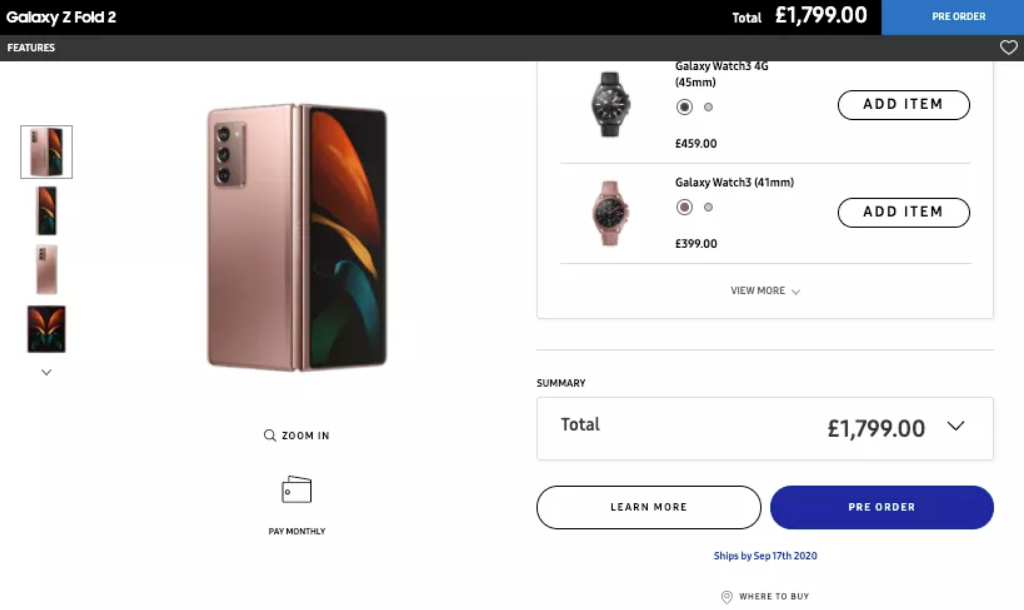
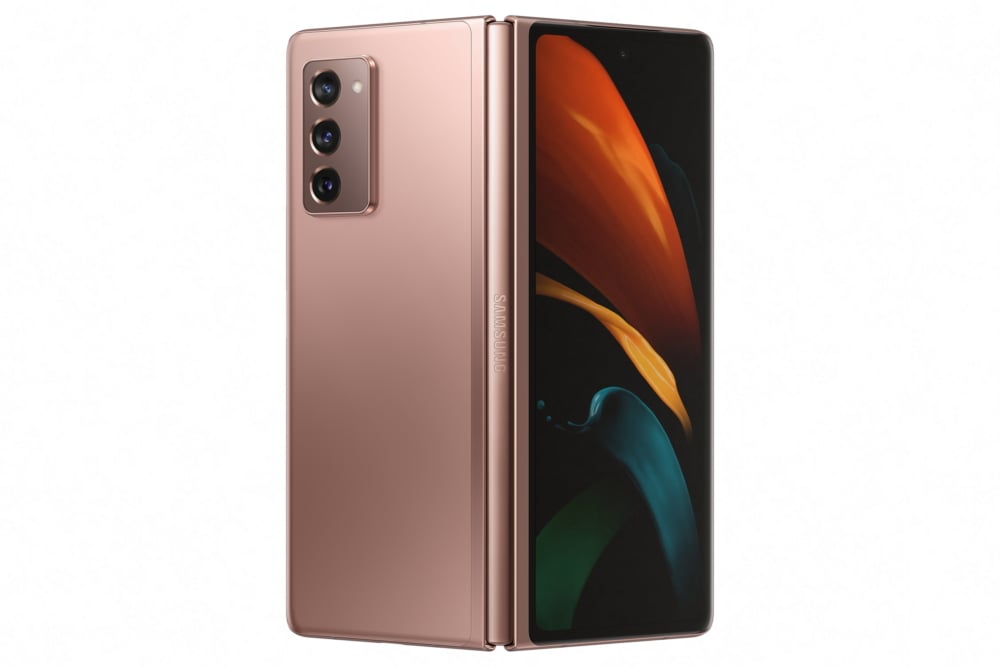
According to the official listing online, the Galaxy Z Fold 2 is priced at 1,799 Pounds (roughly 2,387 US Dollars). This price may seem exorbitant, but it is actually a bit lower than the original price of the first Galaxy Fold, which started at 1,900 Pounds (roughly 2,522 US Dollars). At the moment, the device is listed for pre-orders, with shipping starting from 17th September 2020.
Unfortunately, it is currently unknown if the South Korean tech giant listed the price by mistake, or whether this is the final price. Samsung has yet to comment on the matter, and it also unclear if the September 17th launch will be shared with other markets like the US. For those unaware, the Galaxy Z Fold 2 is the successor to the Galaxy Fold and features various improvements over its predecessor.
Unlike Samsung’s first foldable smartphone, this device features a better display with a more durable ultra thin glass. Furthermore, the improvements are also reflected on the outer secondary screen, which is now a larger 6.2 inch display. We can expect more information to be available on the full reveal on 1st September 2020, so stay tuned as we will be covering the event.
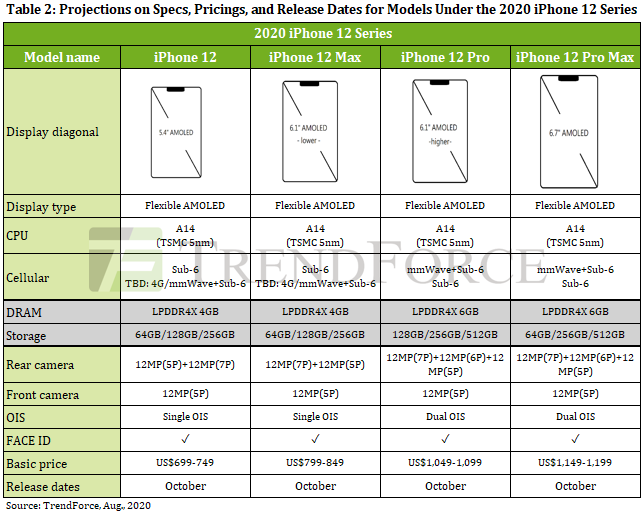
With the iPhone 12 series launch edging closer, new rumors regarding the upcoming Apple flagship have been surfacing online. The latest report arrives from TrendForce, which states that the 2020 lineup will launch without the usual accessories and with a price higher than the iPhone 11 series.
According to the report, the Apple iPhone 12 series will ship without a charger in the box and without wired EarPods. This had previously been reported by analysts in the recent past as well, which suggests that the company might be offering a 20W charger separately. Notably, the TrendForce report also suggests the pricing of the iPhone 12 series as well. This includes:
iPhone 12: Starts between $699 and $749
iPhone 12 Max: Starts between $799 and $849
iPhone 12 Pro: Starts between $1,049 and $1,099
iPhone 12 Pro Max: Starts between $1,149 and $1,199
If the Cupertino based giant does opt for such a pricing strategy, the 2020 flagship will be more expensive than its previous generation. This was expected to a certain degree since the newer generation features 5G networking and other improvements, but Apple had suggested that it is taking steps to lower the costs. So stay tuned for more updates regarding this matter.
For those unaware, the Trump administration further tightened the restrictions on Huawei. The move came to ban the company from using any American made tools or equipment without the supplier acquiring a special license from the US Government. Despite the sanctions being aimed at Huawei, the effects were also felt by the Taiwanese chipmaker, who lost its share value in the market as well.
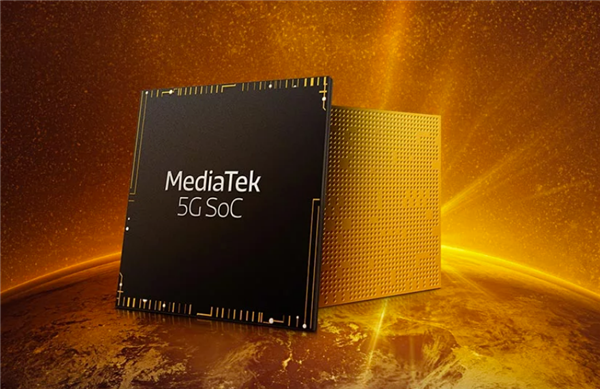
According to a Reutersreport, analysts have stated that MediaTek might be among the worst affected companies from the recent curbs. The company has stated that it will follow the global trade regulations and has also applied for permission to supply Huawei after 15th September 2020. Since Huawei lost TSMC as its primary chip supplier, MediaTek has seen an increase in orders from the Chinese company, so it is clear why the company wouldn’t want to miss out on a major customer.
While it remains to be seen how the US government responds to this, it seems highly unlikely that MediaTek would be granted a special license. In the past, other chipmakers like Qualcomm had also attempted to obtain permission to trade with Huawei. The US has stood firmly against Chinese firms like Huawei and ZTE, with recent trade regulations that have even tested their relationship with their respective suppliers.
Xiaomi officially launches Mi 10 Youth Doraemon Limited Edition commemorating the 50th anniversary of the franchise. This variant of the handset comes in a single 8GB + 256GB storage configuration priced at 2,799 yuan ($407). It is currently up for pre-order and will be available for purchase starting September 1 in China.
The new Mi 10 Youth Doraemon Limited Edition features a blue-colored body similar to the regular “Blueberry Minit” color variant. But additionally, it also sports a giant Doraemon face at the bottom of the rear glass panel.
The phone is shipped in the same color box as the device with an identical giant Doraemon face printed on it. Buyers also get a Doraemon-themed case as well as a figurine (action figure) of the character.
Talking about the handset, it does not differ from the regular variant in terms of specifications. The only dissimilarity is its paint job and it comes with a Doraemon theme out of the box. But anyway, any user can apply that theme on phones running MIUI if Xiaomi makes it available in the MIUI Themes app.
That means we are looking at a mid-range 5G smartphone powered by Qualcomm Snapdragon 765G with OIS-equipped 5x optical zoom lens and Doraemon vibes bringing back childhood memories for some.
Xiaomi is targeting this device for the fans of the franchise and students getting ready for their new school year this September. There’s no official word on international availability and it makes sense as the Mi 10 Youth is still limited to China even after four months from its launch.
Earlier this week, Realme launched the microsite for the upcoming Realme 7 series that includes two phones such as Realme 7 and Realme 7 Pro. The page had carried details on how to place blind orders for the Realme 7 series. The page is now updated with the camera details of the Realme 7 Pro smartphone. Also, popular tipster Mukul Sharma has revealed the full specifications of the Realme 7 and Realme 7 Pro smartphones in his new YouTube video.
The Realme 6 series came with Samsung GW1 64-megapixel sensor. Realme has now confirmed that the successor models will be sporting a new Sony-branded 64-megapixel primary shooter with a 1/1.73-inch sensor size and f/1.8 aperture. The other thing that is mentioned about the Realme 7 series will be powered by the “world’s first processor.”
Realme 7 and Realme 7 Pro specifications (Rumored)
As per leaked information shared by the tipster, the Realme 7 could be the first phone to feature the all-new Helio G95 chipset. It may come with other specs such as a 6.5-inch FHD+ LCD screen with 90Hz refresh rate and Gorilla Glass 3 protection, 5,000mAh battery with 30W Dart Charge technology, 6 GB / 8 GB LPPDR4x RAM, 64 GB / 128 GB of UFS 2.1 storage, and side-facing fingerprint reader.
It has a 64-megapixel Sony IMX682 lens, a 119-degree 8-megapixel ultrawide lens, a 2-megapixel b/w portrait camera, and a 2-megapixel macro lens with 2cm focal length. For selfies, it will have a 16-megapixel front camera.
The Realme 7 Pro will have a 6.4-inch AMOLED FHD+ display with 60Hz refresh rate support, and in-screen fingerprint reader. It will be fueled by Snapdragon 720 chipset and 6 GB / 8 GB of LPDDR4x RAM. The phone will come with 128 GB / 256 GB of UFS 2.1 storage. Its 4,500mAh battery will support 65W SuperDart charging. The Realme 7 Pro may borrow its quad rear cameras from the vanilla model. For selfies, it may sport a 32-megapixel selfie snapper.
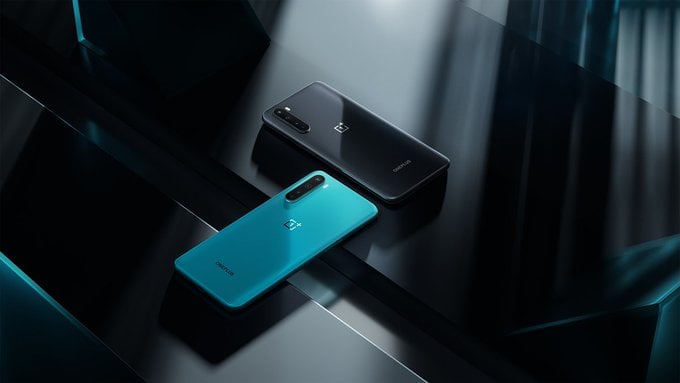
While OnePlus has generally offered great value for money flagship handsets, it finally launched a mid range smartphone, the OnePlus Nord. Now, the company is also looking to enter the budget segment as well with the OnePlus Clover.
The recently launched mid range device, OnePlus Nord
According to a report from AndroidCentral, the Chinese company will soon be launching a new entry level device. The ‘Clover’ will reportedly feature a Qualcomm Snapdragon 460 SoC, alongside a 720p display. It will be priced somewhere around 200 US Dollars and will be powered by a large 6,000mAh battery. The source almost mentioned that the company is launching the budget friendly device globally, with a special focus towards key markets like India.
OnePlus Clover’s display has a resolution of 1560 x 720 px and is a 6.52 inch IPS LCD screen. In terms of memory, the device is said to offer 4GB of RAM and 64GB of internal storage, which will be expandable via a microSD card slot. For security, a fingerprint scanner will be placed on the back and the company will also offer the usual connectivity options.
Despite being a budget device, the company is still offering a triple camera setup on the rear comprising of a 13 megapixel primary lens accompanied with two 2 megapixel lenses as well. Its massive battery capacity that supports 18W fast charging is by far one of its most eye catching feature, and since it is a budget device, a 3.5mm headphone jack will also be present.
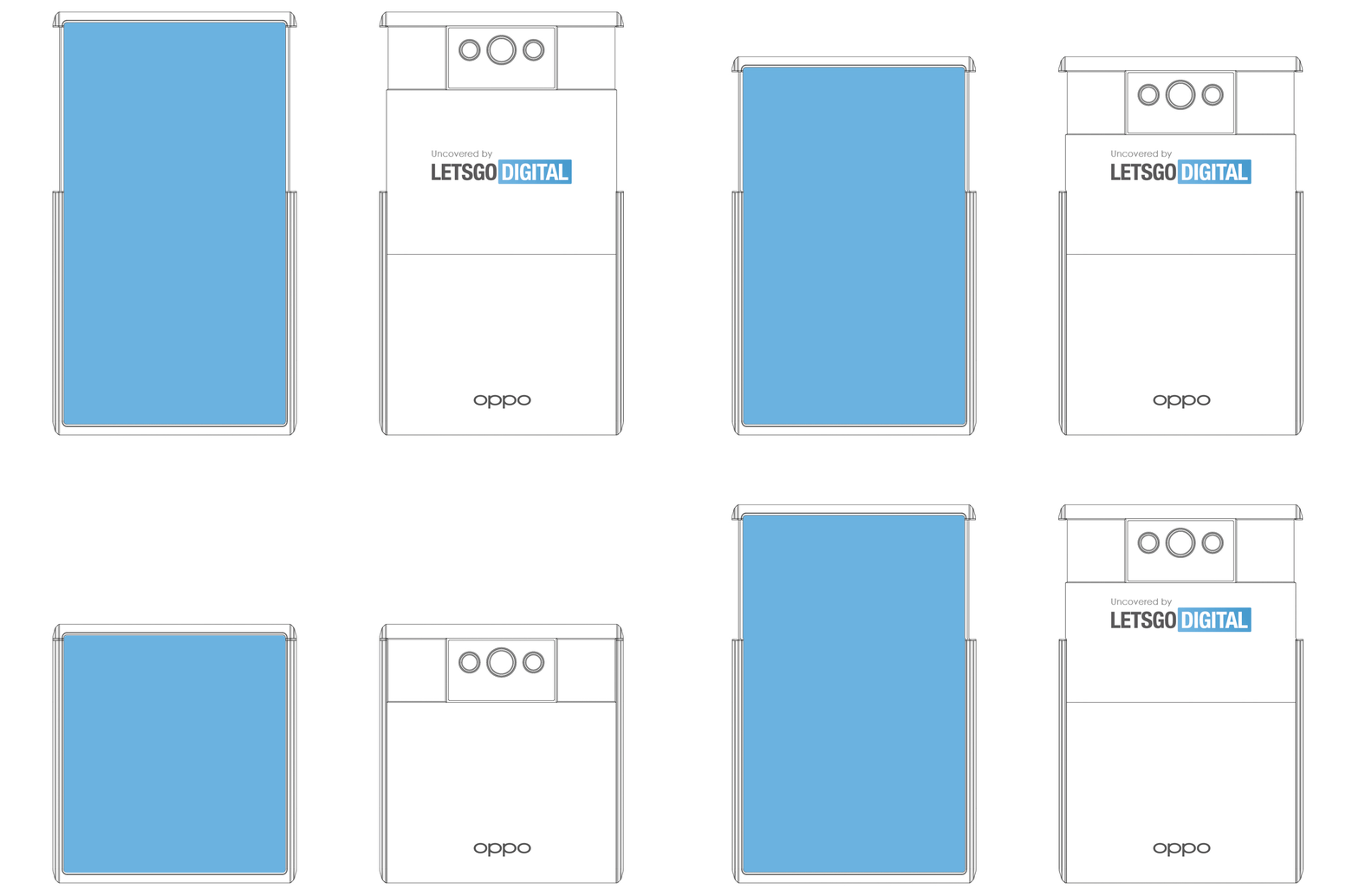
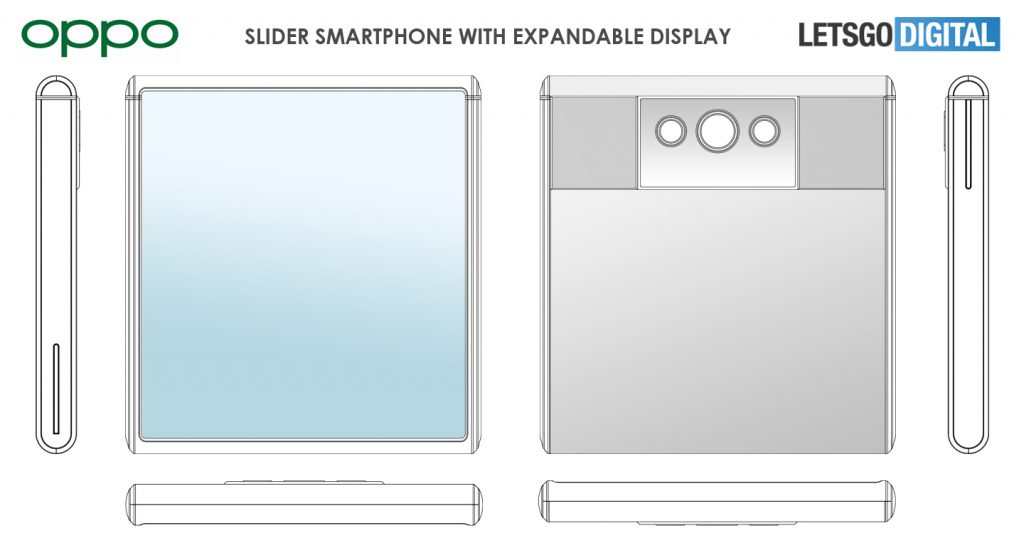
Back in 2019, handsets with a foldable display led to a new race of innovation within the market. Since then, various OEMs have launched their offerings, with recent ones trying to make such devices less bulky and more practical. Now, a recent Oppo patent, spotted by LetsGoDigital, showcases a compact smartphone with a slider mechanism that expands its display.
The Chinese tech giant had filed a design patent with the CNIPA (China National Intellectual Property Administration). The patent consisted of 28 product images and a short description as well. In the images, a futuristic and an extremely compact handset can be observed, which can have its display expanded. When in its compact form factor, the gadget assumes a square like form factor, which would make it easier to carry around or keep in one’s pockets.
But its most interesting aspect is definitely its expandable display, which extends from the notch at the top. From the rear, one can also see the triple camera module also rising along with it. The sides of the device showcase an elongated button, which might serve the purpose of enabling this extending mechanism. While similar smartphones with the expandable display have been seen before, the Oppo patented device has its display extends quite a bit further.
Unfortunately, the finer details regarding this device are currently unknown. Furthermore, it is also unclear whether Oppo will actually develop and launch such a device, or whether the company is just covering all bases. The mechanism through which Oppo achieved the expandable display is also a mystery at the moment, so stayed tuned as we will cover any updates regarding this futuristic smartphone.
While Huawei has been growing its market share in its home country China, the company has witnessed a drop in smartphone shipments in the overseas market after the United States banned the company citing security concerns.
However, the major obstacle for the Chinese giant is the recently tightened restriction that has banned the company from procuring and manufacturing semiconductors using American technology or company.
Huawei Smart Screen V55i
The new restrictions could have an impact on its core telecom equipment business as well. Now, a new development hints that the ban has not only affected the company’s smartphone business but also the Smart TV business.
As per the report, Huawei has reduced the order of its components for the TV production by 30 percent to 40 percent. This is because the company has been unable to secure a sufficient supply of chipsets for Smart TVs.
Huawei and its sub-brand Honor both forayed into the Smart TV market last year. The company has been procuring LCD panels for the TV from BOE Technology and China Star Optoelectronics Technology (CSTO). The report adds that the company has been outsourcing the production of TV sets to a BOE subsidiary.
It is also being reported that the company has slowed down the pace of its orders to handset ODMs in Chian. Now, it remains to be seen how Huawei addresses this issue of semiconductor components which is severely impacting the business.
Apple has settled a class-action lawsuit filed against the company related to Powerbeats 2 headphones. The tech giant has agreed to pay $9.75 million for this settlement, saying that it denies all allegations, reports MacRumors.
There was no ruling by the court as both the parties in the case have agreed to a settlement. Apple says that it is paying the settlement fee to avoid expensive litigation. As a part of the settlement, the $9.75 million will be split between all plaintiffs who submit claim forms (one payment per household) after attorneys’ fees and related costs are paid.
Customers who have purchased new Powerbeats 2 earbuds before August 7, 2020 can make a claim for payment from the settlement. The claims can be submitted online through the settlement website before November 20, 2020.
The settlement amount will be given based on a points system. Authorized claimants who have no proof of purchase receive one point, while those with a valid proof of purchase or warranty repair receive two points. The net settlement amount will then be divided by total points claimed and the individual awards will be calculated from that amount.
Latanya Simmons and Kevin Tobin had filed the initial complaint on behalf of a wide class of device owners in 2017. The lawsuit claimed that the company falsely advertised the product’s robustness, waterproofness, and battery life claims.
The lawsuit claimed breach of express warranty, breach of the Song-Beverly Act, violation of the California Consumers Legal Remedies Act, violation of the Unfair Competition Law, unjust enrichment, common law fraud, and negligence.
The claimants are eligible for a maximum payout of $189, multiplied by the number of valid proofs of purchase. As per the estimates, claimants without proof of purchase will receive $38, while those with proof of purchase or warranty repair will get around $76.
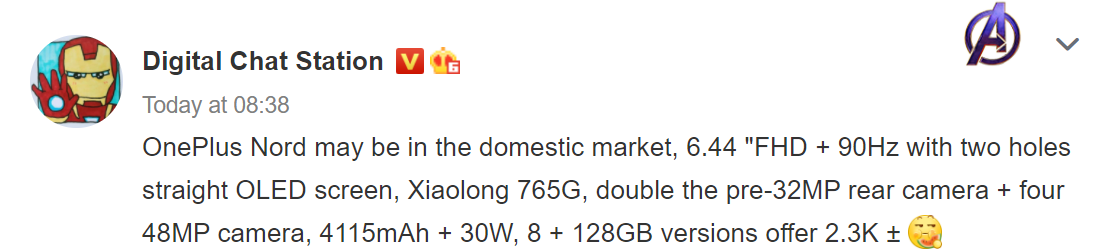
OnePlus recently introduced the budget-friendly OnePlus Nord 5G smartphone. The handset is aimed towards India and Europe. A tipster has leaked the pricing of the OnePlus Nord for China. It appears that China could be the next market to receive the OnePlus Nord.
The OnePlus Nord is the company’s first mid-range phone in recent times. It has received good receptions in the Indian and European markets, and it appears that it may soon go official in the home market. In India, the OnePlus Nord comes in three variants such as 6 GB RAM + 128 GB storage, 8 GB RAM + 128 GB storage, and 8 GB RAM + 256 GB storage. They are priced at Rs. 24,999 (~$340), Rs. 27,999 (~$381), and Rs. 29,999 (~$408), respectively.
Except for the 6 GB RAM base model, the other two variants have been available for purchase in India since the beginning of this month. The 6 GB RAM variant will be available in September in India. The tipster has speculated that the OnePlus Nord could be priced around 2,300 Yuan (~$335) in China.
The OnePlus Nord has a 6.44-inch AMOLED display that produces FHD+ resolution, 20:9 aspect ratio, and 90Hz refresh rate. The Snapdragon 765G processor powers the device. The OxygenOS 10.5 based Android 10 OS runs on the device.
It has a 32-megapixel + 8-megapixel dual front-facing cameras. It rear is fitted with an OIS ready 48-megapixel (Sony IMX586) + 8-megapixel (ultrawide) + 5-megapixel (depth) + 2-megapixel (macro) quad-camera system. The phone is backed by a 4,115mAh battery that supports 30W fast charging. It comes with support for NFC and in-display fingerprint reader.
The on-going development related to the acquisition of TikTok’s U.S. operations from the platform’s parent company ByteDance has been dramatic. While Microsoft has already confirmed that it’s in talks with the company, other companies also started talks for the same, including Oracle.
Now, Walmart has confirmed that it has partnered with Microsoft in an attempt to purchase TikTok in the United States. The company has revealed that it is participating in the negotiations with Microsoft over a potential deal.
Revealing the reason behind Walmart’s interest in purchasing the short-video social media platform, the company said that it has “integrated e-commerce and advertising capabilities in other markets” and could bolster its access to consumers.
In a statement, Walmart said: “We believe a potential relationship with TikTok US in partnership with Microsoft could add this key functionality and provide Walmart with an important way for us to reach and serve omnichannel customers as well as grow our third-party marketplace and advertising businesses. We are confident that a Walmart and Microsoft partnership would meet both the expectations of US TikTok users while satisfying the concerns of US government regulators.”
The development comes just hours after TikTok CEO Kevin Mayers announced his resignation. It is being speculated that his resignation could be because of the acquisition deal getting finalized. In his resignation letter, he said that he expects “a resolution very soon.” Before joining TikTok this year, Mayer was leading Disney‘s streaming division.
Some reports have started making rounds claiming that TikTok could announce the sale of its U.S. operation within a week. It is said that the deal could be worth around $20 billion to $20 billion and the company is considering between Microsoft and Oracle.
TikTok is being forced to sell off its U.S. operations to an American company by the government amid intense political scrutiny because of the platforms’ country of origin. It has also been under fire because of its data collection practices, which the United States claims put its national security at risk.
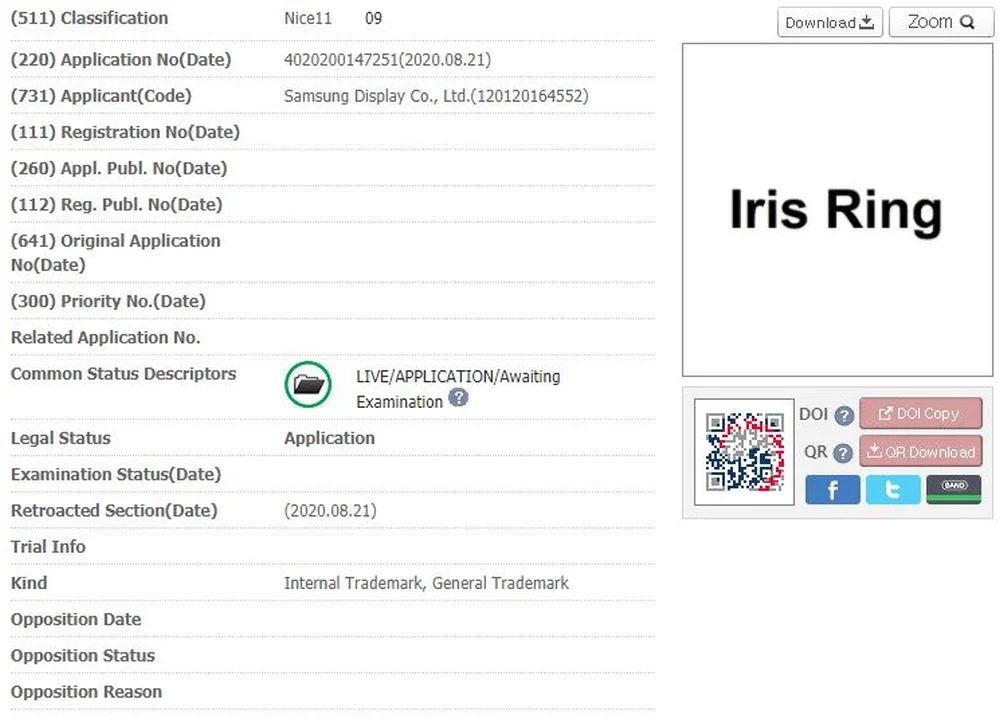
Samsung Display, an arm of Samsung Electronics which makes displays for various devices, has filed a trademark application for an unusual name — Iris Ring. The application was filed in South Korea last week.
While the trademark application doesn’t reveal the potential use-case of this new branding, the company has reportedly confirmed that it for its punch-hole cutout on the displays that houses the front-facing camera sensor.
The South Korean giant has also said that it has received the Hole Area Clarity verification from the Underwriters Laboratories (UL) for no color difference in the areas around the punch-hole cutout on the screen.
Samsung first used the punch-hole cutout for the front-facing camera sensors on the Galaxy S10 series. Currently, the company is calling it Infinity-O branding. It is now yet clear which branding will be used going forward and if the newer Iris Ring is used, it remains to be seen what happens to the Infinity-O branding.
With the new branding for the punch-hole cutout, we can also expect a new display technology from the company for its upcoming premium flagship smartphones. However, it’s just speculation at this time and nothing has been confirmed by the company.
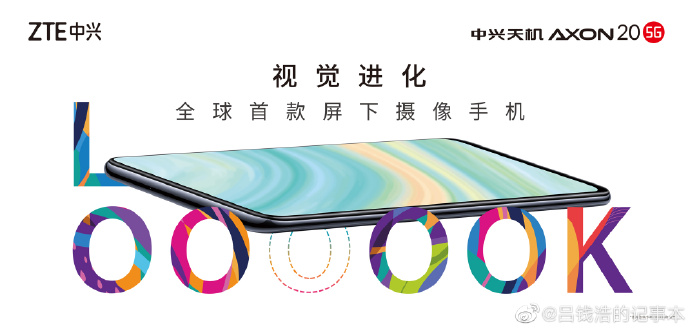
Smartphone manufacturers have been working on under-display camera technology for years, and now it is ready for a commercial launch. ZTE is all set to launch the world’s first in-display camera smartphone in a couple of days.
Now, ahead of the launch, ZTE has confirmed that the upcoming Axon 20 5G smartphone is using third-generation in-display camera sensor technology. As per the report, this was confirmed by ZTE’s executive Lv Qianhao in response to a user’s question on Weibo.
In this technology, only two-thousandth of the entire screen is used for the camera sensor behind the display, which is just about a small square-inch. The company adds that its Research & Development team managed to achieve the desired output after working day and night to fine-tune the technology.
Furthermore, the screen is also divided into seven different layers — cover glass, polarizer, encapsulation glass, cathode, OLED, array, and substrate glass. It has been given an anti-reflective treatment to maximize transparency and suppress optical diffraction.
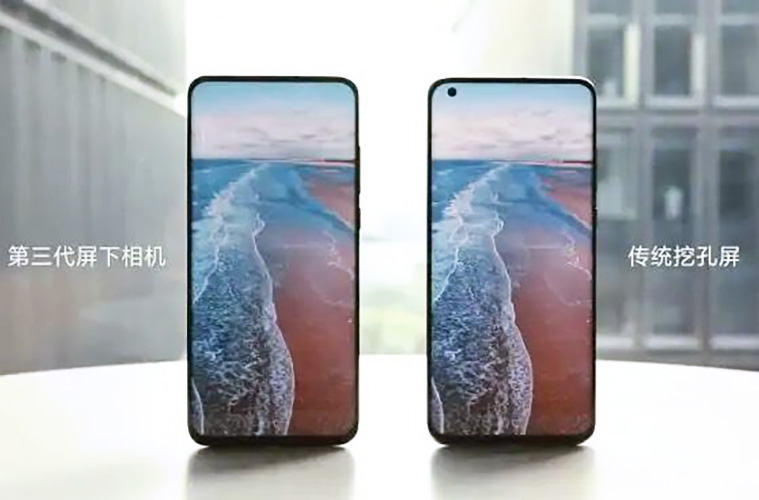
ZTE’s confirmation about using third-generation in-display camera technology comes at a time when Xiaomi has also showcased its own third-gen tech. It revealed the technology showcasing a working prototype and detailed the improvements. It utilizes a self-developed pixel arrangement and achieves light transmittance through the sub-pixel gap area. The company said that the tech is ready for mass-production and will be in the market in 2021.
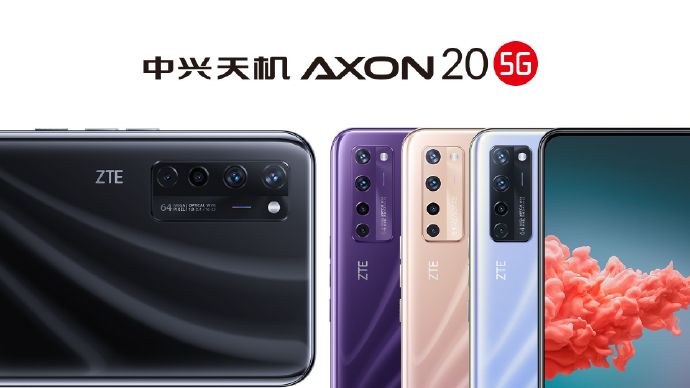
As per the reports, the ZTE Axon 20 5G smartphone features a 6.92-inch OLED display with a screen resolution of 2460 x 1080 pixels without any kind of notch. It is powered by Qualcomm Snapdragon 765G along with up to 12GB of RAM and 256GB of internal storage.
On the back, the device has a quad-camera setup that includes a 64MP primary sensor, an 8MP secondary sensor, and two other 2MP sensors. On the front side, it is equipped with a 32MP snapper for taking selfies and video calling. The device is expected to be available in four color options — Black Hole Gravity, Streamer Sea Salt, Phantom Orange Wind, and Purple Moon. To know more about the phone, it’s pricing and availability details, we will have to wait for the official launch on 1st September, just a couple of days from today.
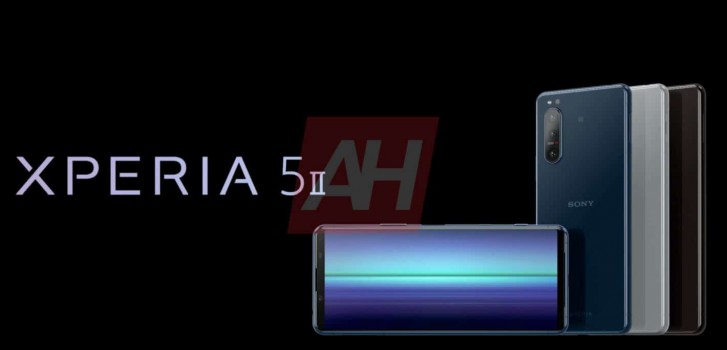
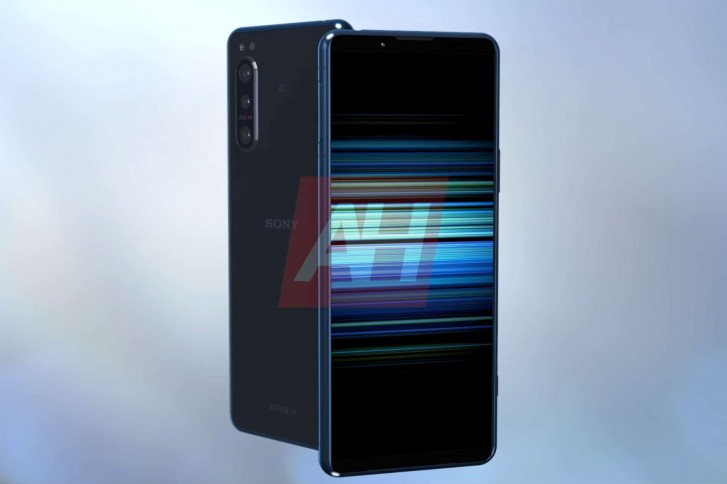
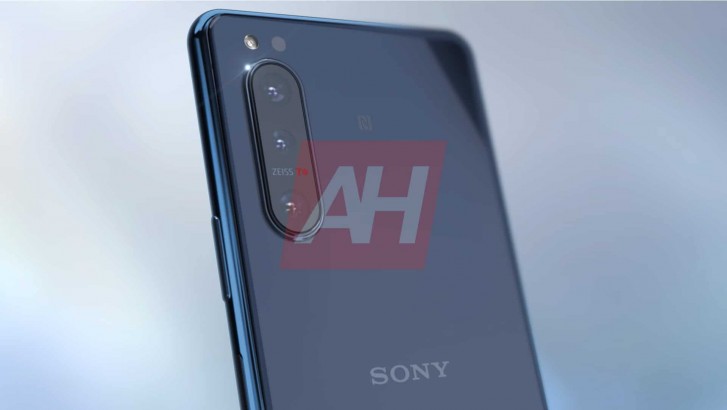
Sony announced the Snapdragon 855 powered Xperia 5 phone in September last year. The handset was announced at the IFA 2019 tech trade show. Earlier this week, a render of the unannounced Xperia 5 II phone was leaked by reliable tipster Evan Blass. Now, Android Headlineshas carried an exclusive report that features new renders of the phone. Moreover, the report also includes the specifications of the device. The publication states that the phone will not be announced at the IFA 2020, but it will go official on Sept. 17.
Sony Xperia 5 II specifications (Unconfirmed)
In terms of appearance, the Sony Xperia 5 II looks identical to its predecessor. The publication has revealed that the Xperia 5 II has a 6.1-inch OLED display with Full HD+ and HDR support. Like the predecessor model, it will also offer an aspect ratio of 21:9. It will be the company’s first smartphone to sport a 120Hz refresh supporting display. The screen will also support the 240Hz touch sampling rate. It will be a compact device as it measures 158 x 68 x 8mm.
The Snapdragon 865 SoC along with 8 GB of RAM will fuel the Xperia 5 II. It will offer users with 128 GB of built-in storage and a microSD card slot. It will house a 4,000mAh battery with USB-C PD rapid charging support.
The rear-facing triple camera system of the Xperia 5 II has an f/1.7 aperture 12-megapixel main camera with a 24mm lens and 82-degrees FOV. It is assisted by an f/2.4 aperture 12-megapixel telephoto snapper with 3x optical zoom support and an f/2.2 aperture 12-megapixel superwide sensor with 124-degree FOV. The Xperia 5 II’s cameras will support OIS, EIS, hybrid OIS/EIS in the video, slow-motion video shooting at 4K HDR, and 120fps 4K HDR video recording.
Sony did not offer a 3.5mm audio jack on the Xperia 5 II. However, it’s coming back on the successor model. It has a side-mounted fingerprint reader. Lastly, the phone will arrive with support for 5G connectivity.
Under screen camera is going to be the next big thing in the smartphone market. Companies are working very hard to perfect in-display cameras because of the tremendous aesthetic upgrade that it brings to smartphones. Without a notch or a punch hole on top, smartphone screens will have no distractions up front, ensuring a true, full screen visual experience.
We already know that ZTE will soon announce the world’s first commercial under screen camera smartphone, the Axon 20 5G. But Xiaomi didn’t want to miss out on the party as it decided to reveal its third generation under screen camera technology today. Not only did the company show off a working prototype with the new in display camera, but it also revealed how the technology was improved to make it as good as a traditional front camera.
The company developed the first generation under screen camera technology last year in June 2019. We also got to see a video of the prototype in action but a closer inspection revealed that the display on top of the camera wasn’t perfect and the pixel density in that area was low.
Xiaomi’s CEO Lei Jun revealed that the second generation version of the under screen camera technology was developed in October 2019. And today, it has announced the third generation version of the tech, which it believes is almost perfect and comparable to a traditional selfie camera shooter.
How does Xiaomi’s Under Screen Camera Work?
In a detailed post, Xiaomi explained how it achieved ‘near perfect’ camera quality in its third generation in-display camera solution. The company revealed that the first two generations managed to make the display above the front camera transparent by sacrificing the pixel density in that area. In fact, the pixel density of the display above the camera was only half as compared to the rest of the OLED panel.
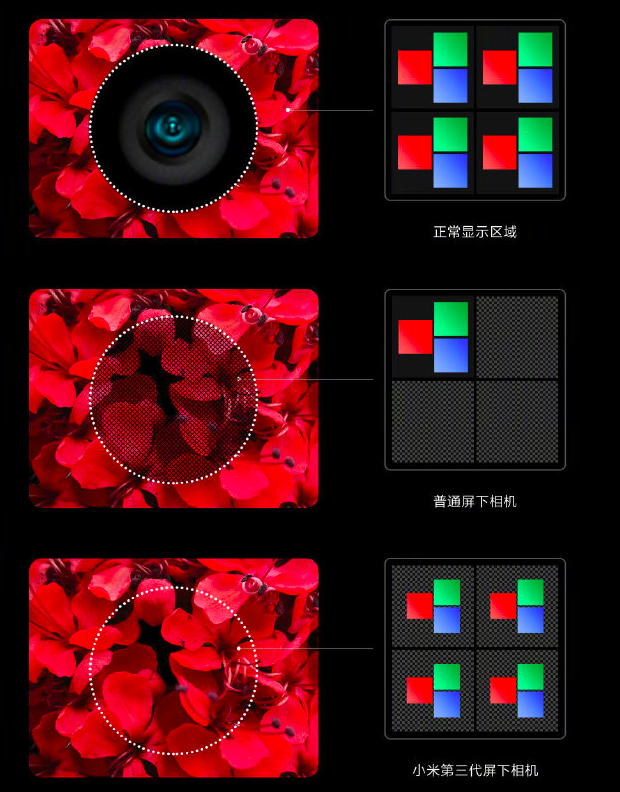
Xiaomi explained that early implementation of in display cameras could only reserve 1 in 4 pixels for the display as the remaining three pixels had to be made transparent for better light transmission by changing its internal structure and material.
Top – Traditional OLED display with 4 RGB subpixels Middle – Early In display camera tech had only 1 RGB subpixel reserved for the display Last – All four RGB pixels are lit up in the third gen technology ensuring high pixel density
However, the third generation solution solves this problem by utilizing a self developed pixel arrangement. The company has managed to achieve light transmittance through the sub-pixel gap area. Also, the company has doubled the number of pixels in both vertical and horizontal arrangement to achieve an overall pixel density similar to the rest of the display. As a result, the display area on top of the under screen camera manages to achieve a similar level of pixel density, color accuracy, color gamut, and brightness as the rest of the OLED panel.
The company has also improved the OLED pixel driving circuit to improve the light transmittance above the camera. Finally, Xiaomi claims that its self developed camera algorithm is capable of delivering the same image quality as traditional selfie shooters making its latest solution ‘almost perfect’.
Xiaomi is has never been shy to show off its upcoming technologies. The company first revealed its prototype under screen camera phone back in June 2019. More than a year later, we have a video of a working prototype using its third generation under screen camera technology.
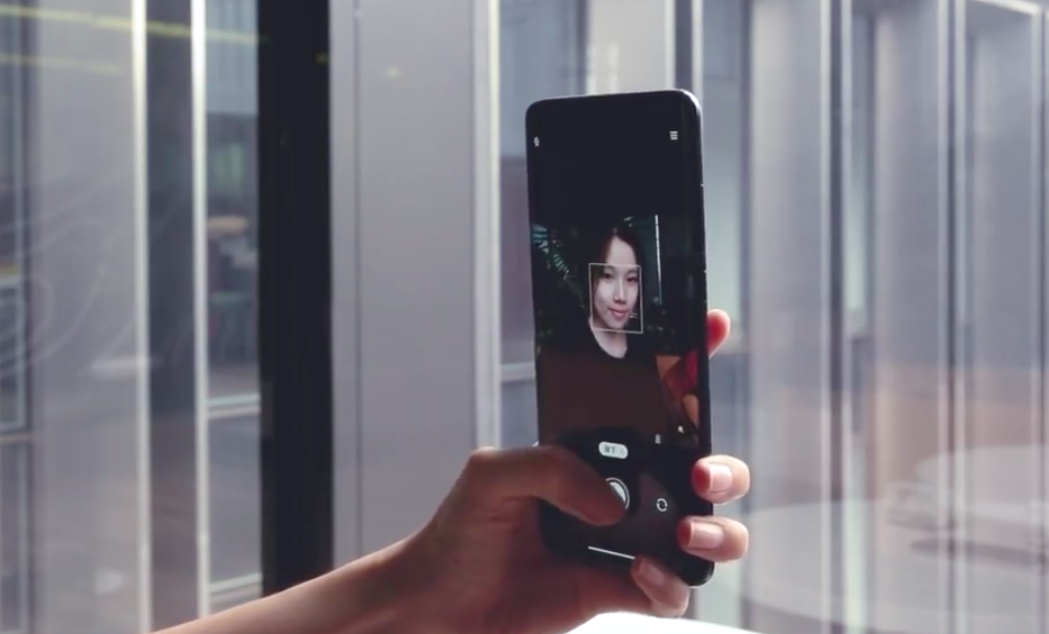
In the video shared by Lei Jun on Weibo, Xiaomi’s under screen camera prototype looks like a modified Mi 10 Ultra. The video compares the prototype with the standard Mi 10 Ultra and the increased pixel density above the camera seems to completely hide the camera below the display.
Xiaomi 3 gen under screen camera selfie
Lei Jun says that the third generation under screen camera solution is ready for mass production and should end up on smartphones by 2021.
We use cookies on our website to give you the most relevant experience by remembering your preferences and repeat visits. By clicking “Accept”, you consent to the use of ALL the cookies.
This website uses cookies to improve your experience while you navigate through the website. Out of these, the cookies that are categorized as necessary are stored on your browser as they are essential for the working of basic functionalities of the website. We also use third-party cookies that help us analyze and understand how you use this website. These cookies will be stored in your browser only with your consent. You also have the option to opt-out of these cookies. But opting out of some of these cookies may affect your browsing experience.
Necessary cookies are absolutely essential for the website to function properly. This category only includes cookies that ensures basic functionalities and security features of the website. These cookies do not store any personal information.
Any cookies that may not be particularly necessary for the website to function and is used specifically to collect user personal data via analytics, ads, other embedded contents are termed as non-necessary cookies. It is mandatory to procure user consent prior to running these cookies on your website.