Advertisement

The best wired earphones you can buy in 2025

Wired headphones may no longer be the default choice for most people, but they aren’t dead yet. In fact, in 2025, they’ve found a loyal fan base that refuses to let them go. 

For many, wired earphones remain the best way to enjoy music, eliminating concerns about Bluetooth pairing, battery life, and wireless interference. You plug them in, press play, and you’re good to go. No lag, no charging case drama, no sudden dropouts on your commute.

So while big brands keep doubling down on wireless, some of the best earphones you can buy in 2025 still come with a cable. Here we’ve rounded up some of the best wired earphones available right now.

1. Sennheiser IE 600

If money is not an issue, the Sennheiser IE 600 is the best wired earphone you can get in 2025. These in-ear monitors deliver near-perfect sound reproduction thanks to Sennheiser’s own 7mm TrueResponse dynamic drivers. The result is a richer and clearer sound for everything you hear, from acoustic instruments to a bass-heavy electronic set.

The earphones are built to last, too. The housings are 3D-printed using aluminum powder, giving them a rugged yet lightweight feel. Unfortunately, the earbud doesn’t have an in-line mic and remote on the cable. It comes in both 3.5mm and 4.4mm connections, though. 

However, at $799, these are firmly in “audiophile luxury” territory. Still, for those chasing the absolute best portable audio experience, the IE 600 is worth every cent.

2. Sennheiser IE 300

If you are not ready to spend $800 on a earphones, the Sennheiser IE 300 (released a year before the IE 600), offers a very similar listening experience at a more “reasonable” price of around $299.

Like its successor, the IE 300 provides impressive detail and a wide soundstage. They’re comfortable, well-designed, and built with the same attention to ergonomics that Sennheiser is known for. Even the cable has been designed to resist tangling, which you’ll appreciate in daily use.

That said, the IE 300 does have a minor weakness in bass response compared to its more expensive sibling. If you’re the type who wants booming lows, you might notice the difference. But for most listeners, the sound is balanced, clear, and far superior to the cheap earbuds bundled with your phone years ago. 

3. Sony IER-EX15C 

The IER-EX15C is a new pair of earbuds from Sony, and they address a major issue for users in 2025. Since the 3.5mm headphone jack is mostly gone, Sony ships the IER-EX15C with a USB-C connector. That makes them instantly compatible with most Android phones, tablets, and even some laptops.

Inside, Sony uses a 5mm dynamic driver to deliver bass and vocals. You also get an inline remote that lets you adjust the volume, skip tracks, mute the mic, or answer calls.

The IER-EX15C comes in four matte colors (white, black, blue, and pink) and includes multiple silicone tips for a better fit. It’s priced at around $30 in the US and about Rs. 2,490 in India. For a brand-new wired option from Sony in 2025, that’s a solid deal.

4. 1More Triple Driver

For under €80, the 1More Triple Driver offers exceptional value. They’re called “Triple Driver” because each earpiece packs three separate drivers, tuned for high-resolution sound. The result is a balanced mix of punchy bass, detailed mids, and crisp highs.

The design feels premium, too. You get aluminum ear cups, a Kevlar-reinforced cable, and silicone ear tips angled at 45 degrees for comfort. The earphones also feature a small inline control box that lets you manage calls, playback, and even voice assistants like Siri or Google Assistant.

5. Sony MDR-EX110APB

Not everyone wants to spend hundreds on earphones, and that’s where the Sony MDR-EX110APB steps in. At under $25, they’re proof that good sound doesn’t always have to be expensive.

These lightweight in-ear headphones are comfortable enough to wear for hours, and their discreet design makes them easy to carry anywhere. The 1.2m cable isn’t the toughest around, but it’s long enough to give you flexibility while using your phone or laptop.

Sound quality is surprisingly good for the price. The bass is stronger than you’d expect, giving tracks a fuller feel. And yes, there’s even a built-in microphone for calls.

If you just need a simple, dependable pair of earphones without breaking the bank, the MDR-EX110APB are the easiest recommendation on this list.

For more daily updates, please visit our News Section.

Don’t miss a thing! Join our Telegram community for instant updates and grab our free daily newsletter for the best tech stories!

Galaxy S26 Edge renders reaffirm striking design shift

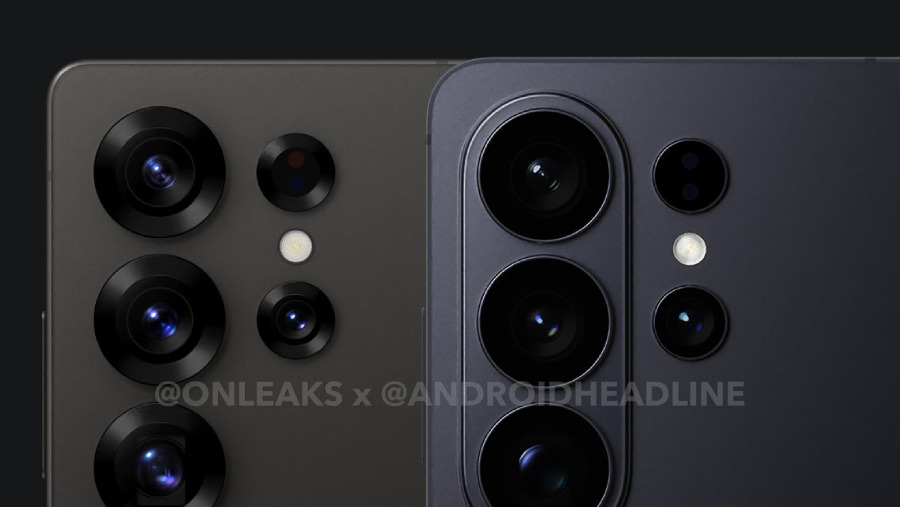
Samsung’s next flagship, the Galaxy S26 Edge, is back in the spotlight thanks to a fresh batch of leaked renders. Shared by reliable leaker OnLeaks in partnership with Android Headlines, the images suggest Samsung is preparing one of its biggest design changes in years.

The renders show the S26 Edge with a wide camera island stretching across the back, holding the dual rear cameras and an LED flash on the far left. It’s a sharp departure from Samsung’s usual minimalist approach, and it happens to look somewhat similar to Apple’s upcoming iPhone 17 Pro models. Phone skin maker dbrand has already teased those designs ahead of Apple’s September 9 event, adding weight to the comparison.

From the front, the S26 Edge keeps things clean with slim, uniform bezels and a centered punch-hole selfie camera. The sides are rounded off more than the S25 Edge, with curves at the rear for a softer feel in the hand. Interestingly, renders of the Ultra model show a similar redesign. Buttons stay on the right, so the layout should still feel familiar to existing Samsung users.

These renders aren’t final, but they match dummy units that have been circulating recently, lending the leak some extra credibility. What’s less clear is why Samsung needs the additional space inside. The Galaxy S25 Edge’s 200MP ISOCELL HP2 comes in at 1/1.3”, while the ISOCELL HP3 is even smaller. Even with an upgraded 50MP ultrawide sensor, as previously rumored, the module would still be much smaller than the main camera and wouldn’t normally require such a large protrusion.

If the renders prove accurate, the S26 Edge could mark a shift in Samsung’s design identity—one that leans closer to Apple’s new style and sets up a fresh round of comparisons between the two tech giants.

Don’t miss a thing! Join our Telegram community for instant updates and grab our free daily newsletter for the best tech stories!

For more daily updates, please visit our News Section.

(Source)

Oppo A6i specifications, launch date revealed

Oppo is preparing to launch a new entry-level 5G phone in China, and a fresh listing on the China Telecom website has spilled nearly everything ahead of time. The device, called the Oppo A6i 5G (model number PKW120), is already confirmed to go official on September 9.

The listing shows the A6i will come in three versions: 6GB/128GB, 8GB/128GB, and 8GB/256GB. Buyers will get to pick between two colors, Midnight Black and Cloudy White, both of which match the straightforward design Oppo has used on other budget models this year. Out of the box, the phone will ship with Android 15 and support 5G, dual SIM, a side-mounted fingerprint reader, and a USB-C port that doubles for audio and charging.

On the front, the A6i carries a 6.67-inch LCD panel with a 720 × 1604 resolution. It’s a flat display with slim bezels and a slightly thicker chin, plus an 8MP selfie camera tucked inside a punch-hole cutout. Flip it around, and you’ll find a 50MP main camera paired with a 2MP secondary sensor inside a rectangular module, alongside a ring-shaped LED flash.

Under the hood, the phone is expected to be powered by the MediaTek Dimensity 6400. Power won’t be much of a concern thanks to a 5,860mAh battery, which also supports 45W fast charging. The device measures 165.71 × 76.24 × 7.99 mm and weighs just under 200 grams.

The company has just revealed teasers confirming the launch for 14:30 local time on September 9, while also giving us a clear look at the design. The images show a flat frame with individual rear camera cutouts, and overall, the phone looks nearly identical to the Oppo A5 launched earlier this year.

Pricing hasn’t been confirmed yet, but given the specs, the A6i 5G looks set to land in Oppo’s affordable mid-range segment. With a large battery, 5G connectivity, and a familiar design, it could be a solid pick for budget-conscious buyers in China.

Don’t miss a thing! Join our Telegram community for instant updates and grab our free daily newsletter for the best tech stories!

For more daily updates, please visit our News Section.

(Source)

Huawei launched a 100W power bank with built-in cable in China

Huawei has added a new accessory to its lineup in China — a sleek 100W power bank that doubles down on speed and portability. The launch came alongside the Mate XTs, FreeBuds 7i, and Mate TV Pro, giving Huawei’s ecosystem a little extra boost.

Officially named the Huawei 100W 12000 all-in-one power bank with built-in cable, the device packs a 12,000mAh battery and is priced at CNY 399 (around $56). It features an integrated USB-C cable plus an additional USB-C port, letting you charge two devices at once. On its own, either port can push out the full 100W — Huawei says that’s enough to charge a Mate 70 or Mate X6 to 85% in about 30 minutes. When two devices are connected, the power is split into either 66W + 40W or 88W + 18W, depending on the demand.

The unit isn’t just about speed. Huawei has built in protections for overheating, overvoltage, and short circuits, with real-time temperature monitoring to keep things safe. Four LEDs on the side show the remaining battery, and users with Huawei phones can also check the status in the companion app.

At 130.6 x 68.4 x 15.7 mm and 237 grams, it’s relatively compact for its class. The power bank will be sold in black and white finishes and has already picked up certifications including China’s 3C, the EU’s CE, and CB for international use — meaning it’s cleared for air travel.

Sales in China start September 26, though Huawei hasn’t shared plans for a global release just yet.

With high-speed charging, a handy built-in cable, and flight-safe clearance, Huawei’s new power bank looks like a well-rounded option for users who need reliable power on the go.

Don’t miss a thing! Join our Telegram community for instant updates and grab our free daily newsletter for the best tech stories!

For more daily updates, please visit our News Section.

(Source)

Galaxy S26 Ultra redesign: shifting away from the ‘Ultra’ design language

The Galaxy S26 Ultra is still months away, but leaks are already painting a picture of what to expect. Reliable tipster UniverseIce has posted new renders of Samsung’s 2026 flagship, showing it side by side with the current model — and it looks like the company is softening the Ultra’s famously boxy design.

Galaxy S25 Ultra (left) vs S26 Ultra (right)

The new numbers aren’t dramatic, but they’re enough to notice. The Galaxy S26 Ultra is said to measure 163.4 mm tall and 77.9 mm wide, just a touch larger than the S25 Ultra’s 162.8 x 77.6 mm frame. The bigger change comes at the corners: instead of sharp edges, the S26 Ultra will curve more noticeably, giving it a rounder profile. UniverseIce even posted a mock-up showing the difference next to last year’s model, and the contrast is clear.

Galaxy S25 Ultra (left) vs S26 Ultra (right)

That subtle shift could have a real impact on how the phone looks and feels to hold. The flatter, squared-off look of past Ultras gave them a distinctive style but wasn’t always the most comfortable in hand. With more rounded corners, the S26 Ultra might strike a better balance between looks and ergonomics.

There’s also talk that Samsung could trim down the thickness this year. On the back, earlier leaks have pointed to a refreshed camera layout, which should help distinguish the S26 Ultra visually from its predecessor.

But here’s the catch: comments under the renders suggest ergonomics isn’t everything. Many users actually prefer the Ultra’s boxy look — one even called the S24 Ultra the ‘best designed so far.’

Taken together, the changes suggest Samsung isn’t overhauling the Ultra formula but rather refining it. A little bigger, a little rounder, and potentially a little slimmer — enough to give the phone a fresh identity without alienating fans of the series’ premium design.

Samsung is expected to announce the Galaxy S26 lineup in January 2026, so we’ll likely be hearing more in the coming months.

Tech enthusiast? Get the latest news first! Follow our Telegram channel and subscribe to our free newsletter for your daily tech fix!

For more daily updates, please visit our News Section.

(Source: 1, 2)

TECNO Slim Launches at IFA 2025: World’s Thinnest Curved-Screen Smartphone

TECNO has officially launched its groundbreaking TECNO Slim series at IFA 2025, setting a new milestone in smartphone design and performance. The lineup includes the TECNO SPARK Slim (4G) with a 5.93mm profile and the TECNO POVA Slim (5G) at 5.95mm, both ranking among the world’s thinnest smartphones with 3D-curved AMOLED displays. Despite their record-breaking slimness, the models pack a 5160mAh battery with 45W fast charging, along with military-grade durability certification, balancing elegance with resilience.

Engineering Breakthrough in Structural Innovation

At under 6mm, TECNO Slim pushes smartphone miniaturization further than ever before. The company has re-engineered eight core modules, including the battery, speaker, SIM slot, and charging connector, achieving unmatched compactness. The device also introduces a 0.45mm single-tab Type-C connector inspired by foldables, reducing bulk. Combined with TECNO’s Honeycomb stacking technology, the phone gains 12% more internal space efficiency, proving that ultra-thin does not mean underpowered.

Strength Meets Slimness

To maintain strength within its ultra-slim body, TECNO uses a 0.36mm aerospace-grade fiberglass back cover that is 300% stronger and 200% tougher than standard composite plates. On the front, Corning Gorilla Glass 7i adds protection against scratches and drops, while IP64-rated water and dust resistance further enhances reliability. Certified Military-Grade Shock Resistant, the TECNO Slim offers toughness within a feather-light form.

Power and Endurance in a Slim Package

Battery life, often a weak point in slim devices, has been revolutionized with TECNO Slim. The 5160mAh high-density lithium cobalt oxide battery achieves extended longevity while staying just 4.04mm thick. Even after 2,000 charge cycles, it retains 80% capacity, delivering over five years of reliable use. Coupled with 45W fast charging, users enjoy up to 28 hours of usage on a single charge. An advanced cooling system with vapor chamber and graphite layers ensures smooth performance under heavy loads.

Advanced Performance and Immersive Displays

The TECNO Slim offers distinct performance solutions: the 4G version with Helio G200 and the 5G model powered by MediaTek Dimensity 6400 5G+, ensuring efficiency and next-gen connectivity. Both feature curved AMOLED displays with 1.5K resolution, 144Hz refresh rate, and up to 4,500 nits peak brightness, delivering sharp, vibrant visuals for gaming, streaming, and outdoor use.

Smarter Interactions and AI Features

The phone introduces a Mood Light design with two circular “eyes” on the back that express emotions with light animations during calls, charging, or notifications. It also comes with TECNO AI features, including real-time translation, AI-powered writing tools, Circle-to-Search, and the Ella AI assistant. Additional features such as multifunctional NFC, HiOS based on Android 15, and FreeLink connectivity enhance everyday usability.

Pioneering a New Era for Ultra-Slim Phones

TECNO Slim is more than a smartphone; it is a redefinition of what slim technology can achieve. Within just half a year of development, TECNO has merged slim design, durability, and class-leading performance, creating a device tailored for both global and emerging markets. By delivering compromise-free design with powerful performance, TECNO Slim sets a new benchmark in the evolution of smartphones, proving that thinner can indeed be stronger.

TECNO Unveils Slim Devices and Expands Laptop Market in Europe at IFA 2025

TECNO used the stage of IFA ShowStoppers 2025 to present some of its most ambitious product launches yet. Under the theme “The Thinnest Power Duo,” the company revealed the global debut of its TECNO Slim smartphone and also highlighted its new MEGABOOK S14 laptop. The presentation marked not only a step forward in slim device innovation but also confirmed TECNO’s expansion of laptops into Spain and France, two of Europe’s fastest-growing tech markets.

Strong Laptop Push in Spain and France

Spain has become the first major European country where TECNO laptops are now widely available. The lineup includes the MEGABOOK K15S, K16S, and the compact MEGA MINI G1 gaming PC. Reviews from Spanish tech outlets such as Xataka, Topes de Gama and Computer Hoy praised the products for their balance of performance, portability and price. The MEGABOOK K16S AMD version has been highlighted as a strong budget-friendly choice, while the K15S stands out for its premium design and durability.

Partnerships have played a major role in this expansion. TECNO has teamed up with MCR, Spain’s largest technology distributor, as well as retail giants MediaMarkt and Carrefour. This allows the laptops to be sold both online and in stores. The company has also announced that the flagship MEGABOOK S14, the lightest 14-inch OLED laptop at only 899 grams, will reach select European markets in the final quarter of 2025.

TECNO Slim Smartphone Leads Innovation

The star of TECNO’s showcase is the new TECNO Slim, a smartphone that claims the title of the world’s slimmest 3D curved device. Measuring only 5.93mm (4G) and 5.95mm (5G), it manages to pack in a 5160mAh battery with 45W fast charging. It also comes with a 144Hz AMOLED display protected by Gorilla Glass Victus 3 and is built to military-grade durability standards. On the software side, the phone integrates AI features such as real-time translation, AI writing tools, and Circle to Search, offering users both style and advanced intelligence.

Tablets and AIoT Products Join the Lineup

TECNO also introduced the MEGAPAD Pro, a 12-inch AI-powered tablet designed for students and professionals. It has a 2K display, Dolby sound, 90Hz refresh rate and a large 10,000mAh battery. AI features like image-based Q&A, smart screen recognition and a shortcut key for the Ella Voice Assistant make it suitable for work and learning.

In addition, TECNO expanded its AIoT ecosystem with new wearables and accessories. These include the TRUE 2 AI TWS earbuds, the Watch GT AI Smart Watch and several smart home and lifestyle gadgets. All of these products aim to create a connected and seamless experience across devices.

Aiming for a Smarter Digital Lifestyle

According to Ye Yuan, Head of TECNO AIoT, the company’s focus in Europe is to deliver products that balance modern design, powerful performance and affordable value. TECNO follows a “Glocalization” strategy, meaning it combines global innovations with features tailored to local needs. 

With its new smartphone, laptops, tablets and AIoT products, TECNO has made it clear that it is ready to compete in Europe’s highly competitive tech market. The company’s entry into Spain and France is not just a regional expansion, but a signal that it is aiming to become a bigger name in global consumer technology.

Lenovo’s ThinkPad X9 Aura Edition gets a Glacial White finish at IFA 2025

Lenovo used IFA 2025 to give its ThinkPad X9 Aura Edition a fresh look. After debuting in Silver at CES and later in Moonlight White over the summer, the slim and stylish laptop is now available in a new Glacial White finish.

Image: The Verge

The hardware hasn’t changed, but the color refresh adds some flair to a model that was designed to break away from the traditional black-and-red ThinkPad aesthetic. The X9 Aura is available in two sizes: a 14-inch version with a WUXGA OLED display (400 nits, HDR 500, 100% DCI-P3) and a 15-inch model with a sharper 2.8K OLED panel (1,100 nits, HDR 600, 100% DCI-P3, 120 Hz VRR). Battery capacity differs as well — 55 Wh on the 14-inch, user-replaceable, versus a larger 80 Wh pack on the 15-inch, which is likely sealed.

Inside, both machines run on Intel’s Core Ultra 7 vPro chip paired with 32 GB of LPDDR5X-8533 RAM, Intel Arc graphics, and a 1 TB SSD. Other features include an 8 MP webcam with IR, Wi-Fi 7, Bluetooth 5.4, and two Thunderbolt 4 ports. The larger 15-inch also adds a USB-A port.

The Glacial White edition will be available from October 2025, priced at €1,619 (about $1,790) for the 14-inch and €1,759 (about $1,945) for the 15-inch.

With its brighter, minimalist design and high-end specs, the X9 Aura Edition is Lenovo’s way of showing that a ThinkPad can be both professional and stylish.

Don’t miss a thing! Join our Telegram community for instant updates and grab our free daily newsletter for the best tech stories!

For more daily updates, please visit our News Section.

Nothing confirms its next product is the Ear (3) earbuds

Nothing has officially teased the launch of its next-generation earbuds, the Ear (3). In a typical Nothing fashion, the company made a succinct post on X (formerly Twitter), simply stating, “Ear (3). Soon.” 

The more interesting detail is in the name. After briefly shifting to a letter-based system with the Ear and Ear (a) in 2024, the company is reverting to numbers with its next earbud. That puts the new model back in line with the Ear (1) and Ear (2), which launched in July 2021 and March 2023, respectively. 

The company explained that user feedback highlighted the importance of this naming approach; as a result, the upcoming model is called the Ear (3). Though it’s technically a fourth-generation product.

Nothing has not shared any details about what the Ear (3) will bring, and there haven’t been leaks yet either. So for now, it’s worth looking back at what the current-generation Ear offers.

The Nothing Ear features a custom 11mm ceramic driver, designed to deliver clearer sound with more pronounced bass. It supports Hi-Res Wireless Audio and comes with up to 45dB of active noise cancellation. 

Nothing Ear

The ANC system is adaptive, adjusting in real time to compensate for sound leakage between the earbud and ear canal. Users can also switch between three noise cancellation levels depending on their environment.

On the connectivity side, the Ear supports Bluetooth 5.4 and dual-device pairing, allowing users to connect to two devices at once. Its battery life is rated at up to 8.5 hours of playback on a single charge, or 9.5 hours with ANC disabled. With the charging case, playback extends to around 40.5 hours.

For more daily updates, please visit our News Section.

Stay ahead in tech! Join our Telegram community and sign up for our daily newsletter of top stories.

Rollme launches NeoView AI Smart Glasses with 8MP camera, ChatGPT & real-time translation

Rollme has launched its latest smart eyewear product, the NeoView AI Smart Glasses, as the successor to the earlier AirView model. The company aims to position the NeoView as a practical and affordable AI-powered accessory for everyday use.

Rollme NeoView AI Smart Glasses

Rollme NeoView AI Smart Glasses Specifications

The NeoView features a built-in 8MP camera that uses a Sony IMX219 sensor. It supports photo interpolation up to 32MP and records 1200p videos with electronic image stabilization.

Rollme claims the camera can capture fast-moving scenes with a 0.5-second shutter and stable footage with minimal shake. These features allow users to record first-person video content and take action shots without requiring bulky gear.

Rollme NeoView AI Smart Glasses

For communication, the NeoView includes dual microphones with noise cancellation. The device supports hands-free Bluetooth calling and can sync photos and videos instantly via Wi-Fi and Bluetooth 5.4. The company says users can share content or take calls easily, even in loud environments.

NeoView features an AI voice assistant compatible with models like ChatGPT and Doubao. Tapping the frame brings up the assistant, enabling voice-based control for tasks, questions, and media playback. It also supports real-time translation in several languages and object recognition, turning the glasses into a smart visual aid in unfamiliar surroundings.

The glasses use directional ultrasonic speakers that provide stereo sound while keeping audio private. The NeoView supports music streaming, voice commands, and app integration through a touch-sensitive area on the frame.

Rollme NeoView AI Smart Glasses

Rollme claims the NeoView offers a standby time of up to 168 hours, with talk time ranging between 3 to 6 hours. The device charges via a magnetic connector and is compatible with Android 6.0 and iOS 10.0 or later.

The NeoView comes in two lens options: clear and tinted, making it suitable for both indoor and outdoor use. It also includes six ergonomic detection points that automatically track wearing status for better battery management and functionality.

Pricing and Availability

The Rollme NeoView AI Smart Glasses are now available worldwide through Rollme’s official store at a price of $79.99.

In related news, we recently reviewed the RayNeo Air 3s Pro, which is super bright, lightweight, and surprisingly immersive – check it out.

For more daily updates, please visit our News Section.

Stay ahead in tech! Join our Telegram community and sign up for our daily newsletter of top stories! 💡

OnePlus Diwali Discounts on Amazon & Official Store

The Diwali heat is on! Tech enthusiasts in India are eagerly awaiting the massive deals and offers of the season. We can already spot some exciting deals on OnePlus devices, running separately on both Amazon India and the official OnePlus online store. These promotions are perfectly timed to kick off the festive shopping. Blending cashback incentives with exciting lucky draw prizes and more.

Amazon Pay x OnePlus Deal

First, the Amazon Pay x OnePlus is up with a prime-exclusive deal literally hard to resist. Potential buyers can enjoy a 5% cashback, capped at ₹10,000, on OnePlus orders exceeding ₹2,999 when paid via Amazon Pay UPI (non-EMI). The offer is valid until October 31, 2025, though we’d recommend grabbing it before the stocks run out, especially during the peak Diwali rush! 

Amazon Pay x OnePlus Deal

Amazon promises to disburse the cashback within 24 hours of shipment. So, if you have made up your mind to grab a sleek OnePlus smartphone or the latest Nord Buds, this is the deal worth consideration. This deal leverages India’s booming UPI ecosystem of whopping 13.9 billion transactions in July 2025 alone (as per NPCI data) to deliver instant rewards.

For more details, you may visit the Amazon Reward page or start the shopping spree directly from the OnePlus Listing in Amazon.

Please Note: When you buy something using the links in our articles, we may earn a small commission at no cost to you.

OnePlus Spin & Win Lucky Draw Campaign

OnePlus Spin & Win Lucky Draw Campaign

Adding to the festive excitement, OnePlus’s official site is also out, hosting a festive lucky draw campaign running from September 4 to September 13, 2025. Open to Red Cable Club members, participants can redeem 10 RedCoins for a spin, with up to three daily chances (an extra for Elite/Maestro members). Prizes include 50, 100, or 500 RedCoins, free devices like the OnePlus Nord 5 or OnePlus 13, and a Handy Fanny Pack, redeemable as coupons. With the campaign active now, it’s the perfect time to engage and win, enhancing the Diwali shopping experience.

With this strategically placed campaign, both Amazon and OnePlus strive to lure customers into purchasing their products or services. At the end of the day, it’s a win-win for Amazon, OnePlus, and us as customers.

Nubia Air is impressively slim at 5.5mm, but has a budget Unisoc chip inside

Nubia has officially launched the Nubia Air, a slim and trim smartphone that measures just 5.9mm thick. It arrives only a day after another Chinese maker, Tecno, announced the Pova Slim 5G. What’s interesting is that both are mid-range devices costing less than $300, despite the effort the brands have put into making such slender bodies.

Nubia Air Specifications 

The Nubia Air carries a 6.78-inch AMOLED display with 1.5K resolution and a smooth 120Hz refresh rate. The screen also reaches an eye-catching 4,500 nits peak brightness and comes protected with Gorilla Glass 7i.

The display feels flagship-level, but Nubia has cut costs on performance. Inside, the phone runs on an entry-level Unisoc T8300 chip, paired with 8GB of RAM (virtually expandable by another 12GB) and 256GB of storage. 

The camera setup on the device includes a 50-megapixel main shooter supported by EIS and joined by two secondary sensors. The front has a 20-megapixel selfie camera. Nubia has also packed in plenty of AI-powered tricks, like AI Super Night, HDR, VLOG mode, Magic Editor, and Magic Eraser, for people who like editing on the go.

What’s surprising is how rugged this thin device claims to be. The Nubia Air has IP68, IP69, and IP69K ratings, meaning it’s protected against dust, water, and even high-pressure sprays. It also includes AI tools for real-time translation during calls, face-to-face conversations, and even AI noise and echo cancellation to improve call clarity.

Powering everything is a 5,000mAh battery, though Nubia hasn’t shared details on charging speeds yet.

Nubia Air Price and Specifications

The Nubia Air is priced at $279 (around Rs. 24,600) for the 8GB + 256GB variant. The sales will begin in Europe this month, followed by Southeast Asia, Latin America, the Middle East, and more regions later this year. Color options include Titanium Black, Streamer Black, and Titanium Desert.

For more daily updates, please visit our News Section.

Stay ahead in tech! Join our Telegram community and sign up for our daily newsletter of top stories.

Snapdragon 8 Elite vs Dimensity 9400e: Benchmarks and specs

Snapdragon 8 Elite vs Dimensity 9400e

Qualcomm announced the Snapdragon 8 Elite last year, featuring Oryon cores for the first time in a mobile chipset. These are high-performance CPU cores that also offer excellent power efficiency. The Snapdragon 8 Elite quickly became favorite among high-end Android devices, but it continued to face fierce competition from MediaTek.

The Dimensity 9400 flagship lineup competes with Qualcomm’s top-tier chipsets, offering impressive performance and efficiency. The lineup recently got its newest member, Dimensity 9400e, which we will be comparing here with the Snapdragon 8 Elite to see how the two chips stack up against each other.

Let’s begin with the spec sheet:

Snapdragon 8 EliteDimensity 9400e
AnnouncedOctober 2024May 2025
Manufacturing3nm (TSMC)4nm (TSMC)
CPU2 x 4.32GHz — Oryon
6 x 3.53GHz — Oryon
1x 3.4 GHz — Cortex-X4
3x 2.85 GHz — Cortex-X4
4x 2 GHz — Cortex-A720
GPUAdreno 830
Ray tacing support
Snapdragon Elite Gaming features
Mali-G720 Immortalis MP12
Ray tracing support
MediaTek Adaptive Gaming Technology 2.0
NPUQualcomm Hexagon NPUMediaTek NPU 790
MemoryLPDDR5X, up to 5.3GHzLPDDR5X, up to 4.2GHz
StorageUFS 4.0UFS 4.0
CameraUp to 320MP single camera
Up to 8K video recording
Limitless real-time semantic segmentation (up to 250 layers)
Up to 320MP single camera
Up to 8K video recordin
Real-time semantic segmentation
ConnectivityDownload speed: 10 Gbps (peak)
Wi-Fi 7 (peak speed: 5.8 Gbps)
Bluetooth 6.0
Download speed: 7 Gbps (peak)
Wi-Fi 7 (peak speed: 7.3 Gbps)
Bluetooth 6.0

Snapdragon 8 Elite vs Dimensity 9400e: Benchmark comparison

Note: The tests were conducted on the Realme GT 7 Pro (Snapdragon 8 Elite) and Realme GT 7 (Dimensity 9400e).

AnTuTu score

Snapdragon 8 Elite vs Dimensity 9400e AnTuTu score

The Snapdragon 8 Elite establishes a clear lead over the Dimensity 9400e on AnTuTu, scoring 2,745,602 against MediaTek’s 2,123,428 — a difference of nearly 29% in overall performance.

Qualcomm’s chip has the edge across all categories. The CPU score is about 15% higher, while the GPU shows a significant 35% boost. The Memory and UX scores also greatly favor the Snapdragon chip.

Here’s a detailed look at the breakdown:

Snapdragon 8 EliteDimensity 9400e
AnTuTu score2,745,6022,123,428
CPU578,305502,983
GPU1,157,741855,871
Memory569,580402,991
UX439,975361,583

Geekbench score

Snapdragon 8 Elite vs Dimensity 9400e Geekbench score

On Geekbench 6, the Snapdragon 8 Elite once again shows a decisive lead over the Dimensity 9400e. It scores 3,122 in single-core and 9,507 in multi-core, while the Dimensity 9400e could only manage 2,208 and 7,310 in single-core and multi-core, respectively.

This translates to 41% better single-core performance and 30% better multi-core performance for the Snapdragon flagship.

Snapdragon 8 EliteDimensity 9400e
Single core3,1222,208
Multi core9,5077,310

In terms of raw performance, the Snapdragon 8 Elite outperforms the Dimensity 9400e. However, it doesn’t provide the complete picture, including details about the manufacturing process, camera, and connectivity. So, let’s dive into the real-world differences to gain more clarity.

Snapdragon 8 Elite vs Dimensity 9400e: Key differences that really matter

Performance and efficiency

Manufacturing:

Both the Snapdragon 8 Elite and Dimensity 9400e use TSMC’s manufacturing facility, yet they bring notable differences. The Snapdragon chip utilizes a newer and more advanced 3nm (N3E) process node, while the Dimensity chip is built using a 4nm node. This results in notable improvements in performance and efficiency for the Snapdragon chip.

CPU:

The CPU brings major changes. For the Snapdragon 8 Elite, Qualcomm didn’t go with ARM’s Cortex CPU, but instead, it developed its own Oryon cores. The 8 Elite features the 2nd-gen Oryon cores, which have higher clock speeds than the Cortex cores inside the Dimensity 9400e.

Here’s what the CPU cluster looks like:

Snapdragon 8 Elite

  • 2 x Oryon (2nd-gen) at 4.32 GHz
  • 6 x Oryon (2nd-gen) at 3.53 GHz

Dimensity 9400e

  • 1 x Cortex-X4 at 3.4 GHz
  • 3 x Cortex-X4 at 2.85 GHz
  • 4 x Cortex-A720 at 2 GHz

The Snapdragon 8 Elite has more powerful CPU cores. Additionally, they operate at higher speeds, providing an extra performance boost.

GPU:

The Snapdragon 8 Elite features an Adreno 830 GPU, which is one of the most powerful and power-efficient GPUs for mobile chipsets. It features a new “sliced architecture,” which has helped the GPU achieve 40% enhanced performance and 40% improved efficiency over its predecessor.

Additionally, the 8 Elite supports hardware ray tracing, Unreal Engine 5.3 with Nanite virtualized geometry, and a full suite of Snapdragon Elite Gaming features for a better gaming experience.

The Dimensity 9400e, on the other hand, features a 12-core Immortalis-G720 GPU, which is capable of smoothly running high-end games. It also supports ray tracing capabilities and features MediaTek Adaptive Gaming Technology (MAGT 2.0), a suite of gaming optimizations.

The bottom line here is that the Snapdragon 8 Elite has a more powerful and power-efficient GPU.

NPU:

The Snapdragon chip features an improved hexagon NPU that delivers 45% better AI performance and 45% better performance per watt than its predecessor. It brings on-device personalization and multimodal support. The NPU also helps improve the photo quality, gaming, connectivity, and other areas on a device.

The Dimensity 9400e has MediaTek NPU 790 with generative AI capabilities and support for popular LLMs, such as Qwen 1.5B, Llama 7B, and Llama 8B, with on-device processing.

Memory and storage:

Both chipsets support fast UFS 4.0 storage and LPDDR5X RAM. However, there’s a slight difference. The RAM speed can go up to 5.3 GHz on the Snapdragon 8 Elite, while the Dimensity chip peaks at 4.2 GHz. This means faster app loading and slightly better performance for the Snapdragon chip.

Camera

Both chipsets support up to 320MP camera sensors and up to 8K video recording. The Snapdragon 8 Elite supports limitless real-time semantic segmentation for photos and videos with up to 250 layers. Additionally, it offers a range of camera features, including Truepic photo capture, Video super resolution, Multi-frame Noise Reduction (MFNR), and Bokeh Engine.

The Dimensity 9400e also supports semantic segmentation that automatically detects various scenes and objects and applies precise optimizations. It also supports AI-powered noise reduction, real-time AI processing for cinematic video capture and photo enhancements, and features triple microphones with high dynamic range and noise reduction.

Connectivity

The Snapdragon 8 Elite is equipped with an X80 5G modem, which offers up to 10 Gbps download speed and up to 3.5 Gbps upload speed. Over a Wi-Fi 7 connection, the maximum speed the chip can hit is 5.8 Gbps.

On the other hand, the Dimensity 9400e offers a maximum download speed of up to 7 Gbps on a 5G connection (sub-6GHz) and up to 7.3 Gbps on a Wi-Fi 7 connection. This means it has a higher speed on a Wi-Fi 7 connection but lower on a 5G connection than the 8 Elite.

Additionally, both chips offer a range of features to further enhance connection speed, power efficiency, and coverage.

Snapdragon 8 Elite vs Dimensity 9400e: Conclusion

The Dimensity 9400e is a capable high-end chipset, boasting impressive performance, strong AI capabilities, and competitive gaming capabilities. Its high-end CPU, powerful Immortalis-G720 GPU, and AI-driven optimizations make it a serious challenger in the premium segment. However, the Snapdragon 8 Elite remains the stronger all-rounder.

The Snapdragon 8 Elite is significantly ahead of the Dimensity 9400e in almost all aspects. Its newer 3nm process, custom Oryon CPU cores, and Adreno 830 GPU with sliced architecture give it a significant edge in both performance and efficiency. The benchmarks also greatly favor it over Dimensity 9400e.

In short, the Dimensity 9400e is an excellent alternative, but if you’re after the absolute best in performance, gaming, and efficiency, the Snapdragon 8 Elite is an absolute no-brainer pick.

HONOR Magic V5 Records Strong Sales in Europe, Outpaces Magic V3 by 75%

HONOR has announced strong first-week sales for its new foldable smartphone, the HONOR Magic V5, across Western Europe. Sales data from all channels show that sales were 75 percent higher compared to the same launch period of its predecessor, the HONOR Magic V3.

Honor Magic V5

The Magic V5 went on sale on August 28 and has quickly gained attention from buyers. E-commerce platforms and retail partners have reported strong growth since its release. In 2024, HONOR became the fastest-growing book-style foldable brand in Europe, with its market share tripling to 34 percent, according to Counterpoint Research.

“The HONOR Magic V5, with industry-leading slimness and revolutionary AI features, is truly a game changer. We are delighted to see that customers across Western Europe are excited to get their hands on our latest foldable smartphone,” said Adam Cao, President of HONOR Western Europe. “This initial sales momentum not only highlights the HONOR Magic V5’s appeal but also signals a strong market appetite for advanced, AI-powered foldable smartphones.”

The Magic V5 (check out our Magic V5 unboxing and hands-on review) is currently the thinnest book-style foldable smartphone available. It combines portability, durability, and performance. The device has IP58 and IP59 ratings for dust and water resistance. Its strength has been recognized with a Guinness World Record for the heaviest weight lifted by a suspended foldable smartphone.

It comes with a 5,820mAh silicon-carbon battery and HONOR’s upgraded AI Falcon Camera System, which includes a 64MP Ultra Sensing Periscope Telephoto lens. The inner display measures 7.95 inches, and the outer screen is 6.43 inches. Both support stylus input. The Multi-Flex mode allows users to run up to three apps at the same time.

Pricing & availability

The HONOR Magic V5 is available in Ivory White, Black, and Dawn Gold. It is sold through honor.com, network operators, and retail partners. In the UK, the device is priced at £1,699.99 for the 16GB + 512GB version. In Europe, it starts at €1,999 for the same configuration.

New Moto G06 Series Brings a Huge 7,000mAh Battery and Vibrant Design to the Budget Segment

Motorola is expanding its budget lineup with the launch of the Moto G06 Power and the Moto G06. The highlight here is the massive 7,000mAh battery on the G06 Power, while the regular G06 offers a still-respectable 5,200mAh pack. Both models feature smooth 120Hz displays and come in bright, eye-catching colors, and more.

Moto G06 Power & Moto G06 Debut

Motorola Edge 60 Neo
Moto G06 Power

The two new budget phones from the brand are nearly identical. Both models sport a tall 6.88-inch LCD panel with an HD+ resolution, a 120Hz refresh rate, 600 nits of peak brightness, and Corning’s Gorilla Glass 3. Under the hood, these are equipped with the MediaTek Helio G81 Ultra SoC, which only supports 4G connectivity. This is paired with up to 8GB of RAM and 256GB of internal storage that can be further expanded by up to 1TB via a microSD card slot.

For photography, you get a 50MP camera on the rear, while the front houses an 8MP selfie shooter. The Moto G06 Power packs a massive 7,000mAh battery pack with 18W wired fast charging, while the standard Moto G06 gets a sizeable 5,200mAh cell with standard 10W charging speed. Other notable features include an IP64 rating for water and dust resistance, NFC, Bluetooth 6, dual band WiFi, a side mounted fingerprint scanner, Android 15 OS, and stereo speakers with Dolby Atmos support.

Motorola Edge 60 Neo
Moto G06

The Moto G06 Power is available in PANTONE Laurel Oak, PANTONE Tapestry, and PANTONE Tendril color options. On the other hand, the Moto G06 gets an additional PANTONE Arabesque variant. Pricing and availability details are still at large, but the first roll out will kick off in the European market with a 129.99 Euros starting price. This release also arrives Motorola’s other announcements, like the Moto Book 60 Pro and Moto Edge 60 Neo.

For more daily updates, please visit our News Section.

Tech enthusiast? Get the latest news first! Follow our Telegram channel and subscribe to our free newsletter for your daily tech fix! ⚡

Check out the first OnePlus 15 camera samples

OnePlus is offering an early look at what its next flagship phone can capture. The company today shared its first batch of camera samples from the upcoming OnePlus 15, following the announcement that it’s ending its partnership with Hasselblad after five years.

The photos were shot at an 85mm focal length with an f/2.8 aperture and are meant to show the phone’s telephoto camera prowess. The OnePlus 15 also benefits from the LUMO imaging system, which Oppo introduced with the Find X8s series earlier this year.

From the samples, you can see vibrant colors, clear separation between subjects and backgrounds, and impressive detail retention, even in challenging lighting conditions.

Of course, camera samples released by companies are always carefully curated, so the real test will come when reviewers get the device in hand. Still, it will be interesting to see what the new partnership brings for OnePlus devices and their users. Also, the images above are compressed, so we suggest that you navigate to the source to see them in original quality.

The telephoto in question is a 50MP lens with 3x optical zoom, and will be accompanied by a 50MP main camera and a 50MP ultrawide lens. Not just the Hasselblad branding, OnePlus is also rumored to move on from its unique round camera module design on the back. It may feature a square module in the upper left corner instead. 

Beyond this

Apart from this, the device is expected to feature a BOE display with 1.5K resolution and a 165Hz refresh rate. It will be one of the first flagships to get the Snapdragon 8 Elite Gen 5 chip, likely paired with up to 12GB of RAM. 

Software-wise, the OnePlus 15 will ship with Android 16 out of the box, as confirmed by Geekbench. Fueling the phone will be a 7000mAh battery that supports both 100W wired and 50W wireless charging.

For more daily updates, please visit our News Section.

Stay ahead in tech! Join our Telegram community and sign up for our daily newsletter of top stories.

Adobe Premiere is coming to your phone: it’s free and it won’t leave a watermark

Adobe is finally putting its video editor into your pocket. The company has announced a mobile version of Premiere, reworked from the ground up for phones and tablets, with a focus on creators who live on TikTok, Instagram, and YouTube. The app launches September 30 on iPhones and iPads, with Android support on the way.

This isn’t just a shrunken-down desktop app. The mobile app has a touch-first interface that makes trimming clips, layering audio, and adding effects much easier on smaller screens. Videos can be cut and exported in up to 4K HDR, which should be more than enough for both casual and professional content.

The real draw is Adobe’s AI toolkit. Users can generate sound effects with a simple text prompt, clean up messy audio, or pull free background tracks from Adobe Stock. There are also one-tap exports for Instagram Reels, TikTok, and YouTube Shorts, meaning creators won’t have to wrestle with settings before posting. And here’s the best part: unlike some free apps, Adobe isn’t slapping watermarks on the finished product.

Premiere Mobile projects also sync with Premiere Pro on desktop, so creators can start an edit on their phone and finish it later on a Mac or PC. That flexibility could give Adobe an edge over many of its rivals.

Apple users can pre-register for the September 30 rollout, while Android users will have to wait a bit longer. Either way, Adobe’s move signals a big bet on mobile-first editing at a time when short-form video dominates. If the app lives up to the promise, it could become a go-to tool for anyone serious about creating on the go.

Don’t miss a thing! Join our Telegram community for instant updates and grab our free daily newsletter for the best tech stories!

For more daily updates, please visit our News Section.

(Source)

Motorola’s Moto Book 60 Pro is Finally Here: Slim Design Meets Powerful Intel Core Ultra Chips

Back in April 2025, Motorola unveiled its first ever laptop with the Moto Book 60. These came with new mid-range Intel chips and gorgeous displays at an affordable price point. Just a few days ago, the company confirmed the arrival of the more powerful Moto Book 60 Pro model, which packs an even faster Intel Core Ultra Series 2 CPUs. After a short wait, this powerful new thin-and-light laptop has finally released in India, so let’s check it out.

Moto Book 60 Pro Launched: Lightweight Laptop with Heavyweight Performance

Lenovo brought its expertise in laptops with the Moto Book 60, which brought a lightweight and premium build. All of this has remained virtually the same with the Moto Book 60 Pro. So you still get the MIL-STD-810H military grade certification, a metallic body, a 1.69cm thick chassis, and a light 1.39 kilogram weight. The vibrant display also makes a return with a 14-inch OLED display with a high 2.8K resolution, 100% DCI-P3 color gamut, 1100 nits of peak brightness, and a 120Hz refresh rate.

Moto Book 60 Pro
Moto Book 60 Pro

Both the design and display were highlights of the Moto Book 60, so no complaints in this regard. But the biggest change comes with the performance. While the Intel Core 5 and Core 7 on the Moto Book 60 sound next-gen, these are older 10nm based chips. Meanwhile, the Moto Book 60 Pro packs the Intel Core Ultra 5 or Core Ultra 7. These processors are not only more powerful, but the 3nm process makes them more power efficient as well. The chip is also paired with up to 32GB of DDR5 RAM and 1TB of SSD M.2 PCIe 4.0 storage.

A sizeable 60Wh battery pack powers this laptop, with 65W USB-C charging support. Other notable features include Dolby Atmos speakers, Bluetooth 5.4, WiFi 7, Windows 11 Home, and a Full HD IR webcam. The Moto Book 60 Core Ultra 5 has a starting price of 64,990 INR, while the Core Ultra 7 starts from 80,990 INR. Motorola’s bright and elegant Pantone Bronze Green and Pantone Wedgewood colors make a return as well.

For more daily updates, please visit our News Section.

Don’t miss a thing! Join our Telegram community for instant updates and grab our free daily newsletter for the best tech stories!

Google Pixel 10 teardown reveals new “pull jacket” battery system

Google’s Pixel 10 may have just launched, but it’s already making headlines for more than its TSMC-made Tensor G5 chip and flashy new software. A teardown from iFixit reveals that the phone is not only powerful but also easier to repair than past models.

The biggest change is a new “pull jacket” battery system. Instead of fiddly pull tabs that often snapped or required alcohol to loosen, Google has added a green strip that slices straight through the adhesive. It makes swapping out a worn battery quicker, cleaner, and less risky — no need to pry the screen off first. For the most common repair a phone needs, that’s a big deal.

Other touches suggest Google is thinking more about serviceability. The internals use fewer screw types, so you don’t need a toolkit full of bits just to get inside. iFixit also pointed out upgrades like the Pixelsnap magnetic ring for Qi2 wireless charging and, of course, the new Tensor G5 chip at the center of it all.

It’s not perfect — things like the cameras and USB-C port aren’t modular, so those repairs won’t be as simple. Even so, iFixit gave the Pixel 10 a provisional repairability score of 6/10, which is a step up from earlier Pixels. Google is also publishing repair manuals for the lineup, a move that could cut down on repair costs and extend device life.

In short: the Pixel 10 isn’t just about performance and AI tricks. By making it easier to fix, Google is signaling it wants its hardware to last longer — a shift that could push the whole industry in a more sustainable direction.

Please Note: When you buy something using the links in our articles, we may earn a small commission at no cost to you.

Stay ahead in tech! Join our Telegram community and sign up for our daily newsletter of top stories!

For more daily updates, please visit our News Section.

Motorola Edge 60 Neo Unveiled: Slim, Affordable & Built Tough

Motorola has officially launched the Edge 60 Neo, as the latest budget model from the brand’s Edge 60 series. This smartphone brings a durable design, capable performance and AI functionality. The Edge 60 Fusion was the most affordable phone in the lineup, and the Edge 60 Neo is the latest budget entry that brings a relatively compact design as well.

Motorola Edge 60 Neo Launched: What does it offer?

With a display size of 6.4 inches, Motorola’s Edge 60 Neo can be considered a relatively compact phone, as most devices are usually around the 6.7-inch mark. It sports a pOLED panel with a 1.5K resolution, LTPO tech for 120Hz variable refresh rate, up to 3000 nits of peak brightness, and Corning Gorilla Glass 7i for protection. Motorola uses the vegan leather material for the back panel once again, adding a MIL-STD 810H certification and IP68 + IP69 rating for water and dust resistance.

Motorola Edge 60 Neo

Under the hood, the Edge 60 Neo is equipped with the MediaTek Dimensity 7400 SoC, which is paired with up to 12Gb of RAM and 256GB of internal storage. A sizeable 5,000mAh battery pack powers this model, which supports 68W wired fast charging and 15W wireless charging. For photography, the rear has a 50MP Sony LYT700C main camera, a 12MP ultra wide angle lens, and a 10MP telephoto shooter with 3x optical zoom. You get a 32MP shooter on the front for selfies and video calls.

Other notable features include a slim and light chassis (8.09mm, 175 grams), Bluetooth 5.4, Wifi 6, stereo speakers with Dolby Atmos, an in-display fingerprint scanner, and Android 15 OS out of the box. Motorola’s Edge 60 Neo arrives in three distinct color options, namely PANTONE Latte, PANTONE Frostbite, PANTONE Poinciana and PANTONE Grisaille colours. It has a starting price tag of 399 Euros for the 8GB + 128GB model, with the global debut starting with Europe.

For more daily updates, please visit our News Section.

Tech enthusiast? Get the latest news first! Follow our Telegram channel and subscribe to our free newsletter for your daily tech fix! ⚡