Nothing is giving back to its earliest supporters in a big way. The company has announced a special promotional offer that lets some of its early adopters get its latest flagship, the Nothing Phone (3), for a steal deal during the upcoming Flipkart Big Billion Day sale. So here’s everything you need to know.
Nothing Phone (3) for just Rs 34,999: But here’s the catch
To recall, the brand unveiled the Nothing Phone (3) as its first true flagship smartphone, with a premium starting price tag of Rs 79,999. This price tag had initially alienated some of the original fans of the Nothing high end phones, since it marked a notable jump in pricing. But now, the company will soon sell the Nothing Phone (3) for just Rs 34,999, which is basically a sizeable Rs 45,000 discount.
Nothing Phone (3)
Keep in mind that this price slash includes bank discounts and exchange offers. For Nothing Phone (1) and Phone (2) owners, exchanging their older devices gets the best deal. So existing Nothing smartphone users will need to enter the IMEI number on either the company’s official website or Flipkart to receive a unique discount code. This is not the only new device that is receiving the discount, as Nothing also plans to make its mid range and budget phones more affordable during the Flipkart Big Billion Day sales.
The Nothing Phone (3a) Pro was initially announced for Rs 29,999, but will sell for around Rs 24,999, while the Nothing Phone (3a) is dropping down to Rs 20,999 from Rs 24,999. Lastly, even the CMF Phone 2 Pro is getting a Rs 4,000 discount for an effective price tag of just Rs 14,999.
Sticking to its promise, Samsung has finally started the rollout of stable One UI 8.0, based on Android 16. This major upgrade brings a host of new features and improvements throughout the software, better AI capabilities, and keeps the device safer and secure.
Let’s see which Galaxy models are getting it, where the update is rolling out, and how you can install this update.
Galaxy S25 models getting the first bite
It was already confirmed that the Galaxy S25 will be the first phone to receive stable One UI 8 update when the rollout begins, and now it’s getting the update. The update is currently available for Galaxy S25, Galaxy S25+, and Galaxy S25 Ultra users in South Korea. It comes with a firmware version BYI3, and the download size varies depending on whether you’re a beta tester or not.
Those already running One UI 8 beta on their Galaxy S25 are receiving a smaller update that weighs around 550MB. That’s because major changes have already been installed into beta devices via beta builds. The latest update changes the beta state to stable and brings minor improvements. For other users, the update weighs around 3.9GB.
The stable One UI 8 update for the Galaxy S25 series is currently rolling out in South Korea, but it shouldn’t be long before users in other regions also start getting the update. You can head over to Settings > Software updates and tap on Download and install to see if it’s available for your device.
What’s the surprise here that is mentioned in the title? Well, it’s the stable update for the Galaxy S25 Edge (more on that below).
Stable One UI 8 update also arrives for Galaxy S25 Edge
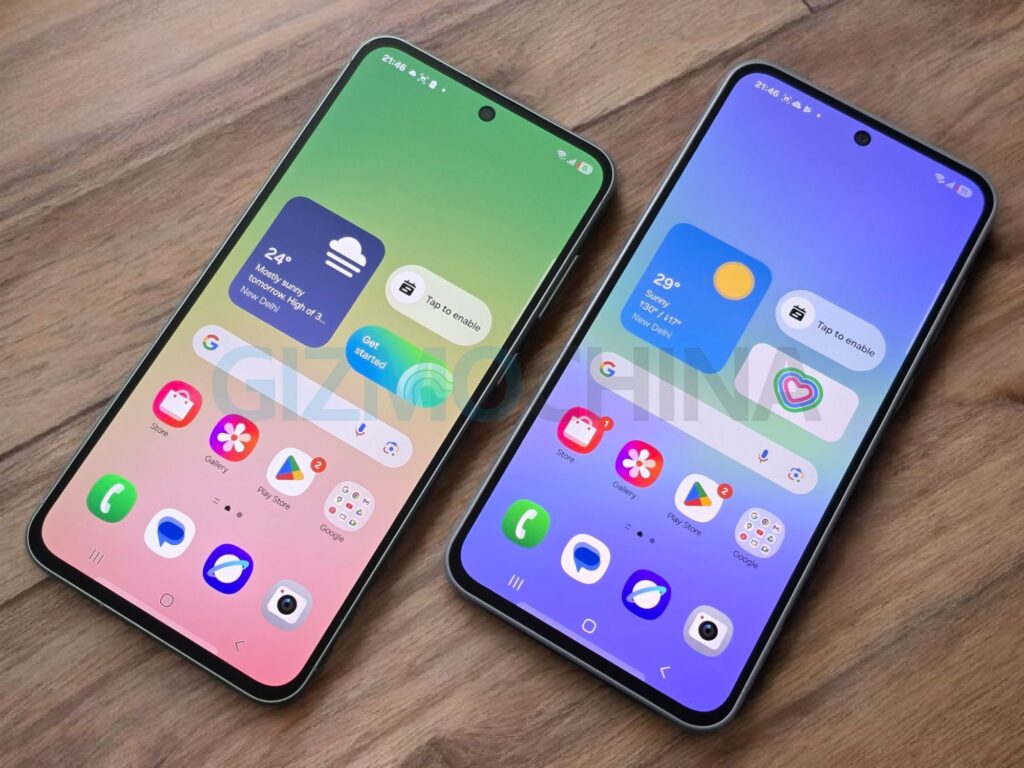
The Galaxy S25 Edge, launched in May, was not a part of the One UI 8 beta program. Hence, we were expecting the stable update to take time once it begins for the regular S25 models, but it turns out the S25 Edge has already started getting the update. It’s currently available in South Korea, with more regions to follow soon.
It appears that Samsung is moving quickly with the One UI 8 rollout. With half of this month still to go, we strongly believe that more Galaxy devices will receive the stable update later this month. That might include the Galaxy S24 series, Galaxy Z Fold 6, and Galaxy Z Flip 6.
Samsung has already confirmed that it will complete the stable rollout of One UI 8.0 to all eligible Galaxy devices before the end of the year, and the latest actions also suggest the same.
If you’re unsure about One UI 8’s eligibility for your Galaxy device, check the complete list here. For the latest updates on One UI 8 rollout, make sure to visit our One UI 8 section regularly, or you can follow us on Telegram for all sorts of tech news.
iPhone 17 Pro Max and Google Pixel 10 Pro represent two of the most advanced smartphones in 2025, offering cutting-edge hardware, refined design, and powerful software experiences. This comparison is important because both devices push innovation in different ways: Apple focuses on ecosystem integration, durability, and spatial video, while Google leans into AI-driven photography, longer software support, and slimmer hardware. Choosing between them depends on whether premium hardware synergy or AI-first features matter more to the user.
Build and Feel: The iPhone 17 Pro Max uses a Ceramic Shield 2 front and back with an aluminum alloy frame, built to survive tougher drops and offering a luxurious feel. Its IP68 resistance extends to 6 meters, showing better durability for underwater use. The Pixel 10 Pro, with Gorilla Glass Victus 2 and an aluminum frame, also feels premium but is less robust, offering water resistance up to 1.5 meters. The iPhone stands out for rugged elegance, while the Pixel appeals with its slimmer, lighter design.
Verdict: The iPhone 17 Pro Max edges ahead in durability, but the Pixel 10 Pro wins for portability.
Display Quality: Apple’s LTPO Super Retina XDR OLED measures 6.9 inches with Dolby Vision and peak brightness of 3000 nits, making it excellent for HDR content and outdoor visibility. Google counters with a 6.3-inch LTPO OLED boasting a sharper pixel density and even higher 3300 nits peak brightness. Both support HDR10, but the Pixel favors detail and sharpness, while the iPhone delivers cinematic consistency with anti-reflective coating.
Verdict: Pixel 10 Pro has sharper visuals and higher brightness, but the iPhone’s larger size and Dolby Vision make it better for immersive media.
Verdict: The iPhone 17 Pro Max emphasizes durability and immersive size, whereas the Pixel 10 Pro offers sharper visuals and a more compact, lightweight build. The better pick depends on whether rugged premium design or portable clarity matters more.
Please Note: When you buy something using the links in our articles, we may earn a small commission at no cost to you.
2. Specifications
Google Pixel 10 Pro
Performance: Apple’s A19 Pro chip, built on a 3nm process, offers raw speed and efficiency with its powerful GPU optimized for gaming and pro video editing. The Pixel 10 Pro uses Google’s Tensor G5, tuned for AI workloads such as live translations, enhanced voice features, and advanced camera processing. While the iPhone is better for sustained high-performance tasks, the Pixel excels at AI-driven features and multitasking with its larger 16GB RAM option.
Verdict: The iPhone 17 Pro Max leads in raw power, while the Pixel 10 Pro is superior for AI and multitasking efficiency.
Battery and Charging: The iPhone offers up to 5088 mAh, supporting a 50% charge in 20 minutes and 25W MagSafe wireless charging. Google equips the Pixel 10 Pro with a 4870 mAh cell, 30W wired charging, and faster wireless at 15W. The Pixel also includes bypass charging, reducing battery wear. Apple’s MagSafe ecosystem adds accessories but charges more slowly.
Verdict: Pixel 10 Pro provides more practical charging with bypass support, though the iPhone 17 Pro Max has a slightly larger battery and better accessory integration.
Verdict: iPhone 17 Pro Max dominates in raw performance and ecosystem optimization, but the Pixel 10 Pro’s charging efficiency and AI-oriented Tensor G5 give it the edge for long-term smart usability.
3. Camera
Google Pixel 10 Pro
Main and Secondary Lenses: The iPhone 17 Pro Max features three 48MP lenses with advanced stabilization, including a 4x optical zoom and LiDAR scanner for depth mapping. Its strength lies in ProRes RAW and spatial video, ideal for professionals. The Pixel 10 Pro includes a 50MP wide, 48MP periscope with 5x zoom, and 48MP ultrawide with advanced AI tools like Zoom Enhance and Best Take. While Apple’s hardware shines in cinematic use, Google’s AI-driven imaging provides superior everyday versatility.
Verdict: iPhone 17 Pro Max is better for professional creators, while Pixel 10 Pro is better for casual and AI-boosted photography.
Selfie Camera: Apple equips an 18MP PDAF selfie lens with 3D depth sensors, Dolby Vision, and ProRes RAW, aimed at creators and AR use. Google offers a higher-resolution 42MP ultrawide front camera with PDAF, excellent for group selfies and sharper detail. Apple’s 3D sensors improve Face ID and AR depth, while Pixel focuses on clarity and wide framing.
Verdict: Pixel 10 Pro wins for detail and versatility, while iPhone 17 Pro Max is superior for secure biometrics and professional-grade video.
Verdict: iPhone 17 Pro Max favors professionals with advanced stabilization, ProRes support, and LiDAR, while the Pixel 10 Pro leverages AI and high-resolution selfies for better everyday user-friendly results.
4. Pricing
Google Pixel 10 Pro
iPhone 17 Pro Max starts at around $1200, while the Google Pixel 10 Pro begins at $1000. With similar premium hardware and unique strengths, Google offers more value for the money, especially for users seeking AI-first features and higher RAM at a lower entry cost. The iPhone justifies its higher price with a stronger ecosystem, higher storage tiers up to 2TB, and professional-grade video features.
Verdict: Pixel 10 Pro is the better value, but iPhone 17 Pro Max is worth the premium for professionals in Apple’s ecosystem.
5. Conclusion
iPhone 17 Pro Max
The iPhone 17 Pro Max stands out with spatial video recording, LiDAR depth sensing, ProRes RAW editing, and tight ecosystem integration with Macs and iPads. The Pixel 10 Pro brings Circle to Search, skin temperature sensing, advanced AI features like Best Take, and longer guaranteed Android updates. Each phone pushes innovation in different directions: Apple toward professional creative workflows, Google toward AI-powered usability and health features.
Verdict: Users invested in Apple’s ecosystem or professional creators will find the iPhone 17 Pro Max a superior choice. However, the Google Pixel 10 Pro is the smarter buy for those who want cutting-edge AI tools, versatile cameras, and better pricing.
Ultimately, the iPhone is the professional powerhouse, while the Pixel is the intelligent all-rounder. For most users, the Google Pixel 10 Pro is the better choice because it delivers flagship performance, superior AI features, and versatile cameras at a lower price.
Oppo has officially launched its F31 series in India, introducing the F31, F31 Pro, and F31 Pro+. The new lineup blends flagship-grade durability with mid-range affordability. You even get an absolutely massive battery pack on all three models, along with smooth OLED displays. So here’s everything you need to know.
Oppo F31 Series: Design & Display
All three models arrive with distinct designs. But some aspects of the design are uniform across the lineup, which includes an IP66 + IP68 + IP69 rating for high end water and dust resistance along with a MIL-STD-810H certification for improved durability and what Oppo calls the 360° Armour Body. Under the hood, the Oppo F31 series houses a large vapor chamber for better heat dissipation.
Oppo F31 Pro
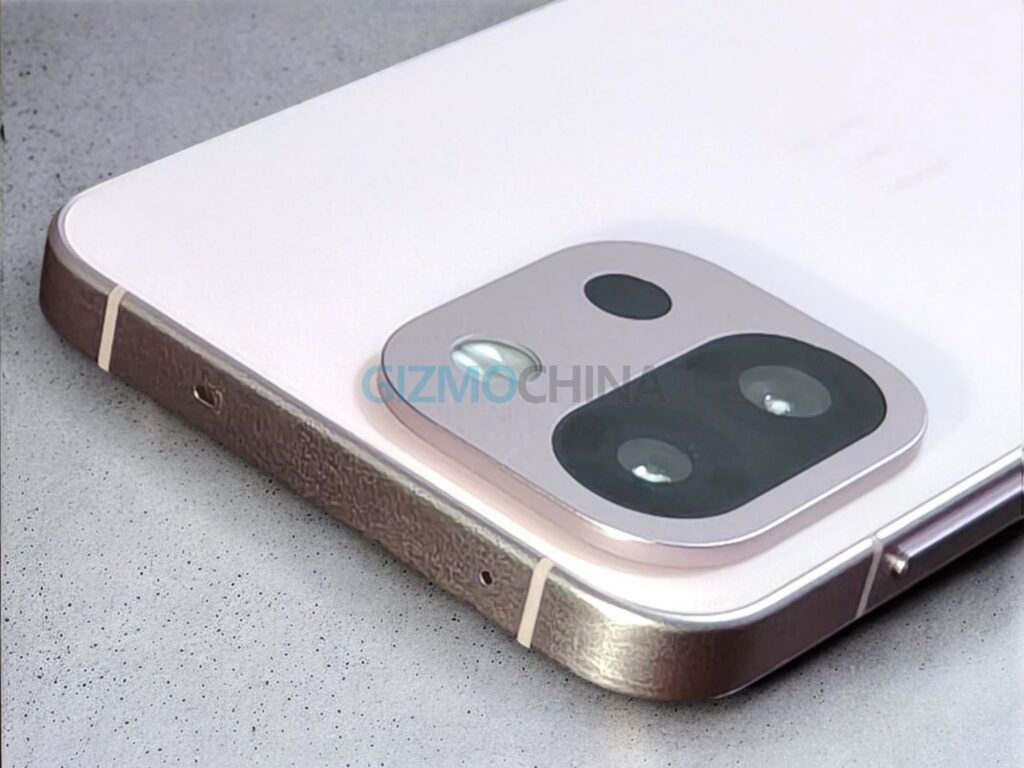
Each model is thinner than the next, so the Oppo F31 is the thickest but still measures a respectable 8mm (185 grams). Meanwhile, the Oppo F31 Pro measures 7.96mm with a 190 gram weight, while the Oppo F31 Pro is an impressive 7.7mm thin and 195 grams. The F31 has a rounded square camera module on the top left corner in the back, while the F31 Pro has a center aligned squarish camera module. Sticking out is the F31 Pro+ has a circular camera island.
Moving to the front, both the Oppo F31 and F31 Pro sport a 6.57-inch OLED display with an FHD+ resolution, a 120Hz refresh rate, up to 1400 nits of peak brightness, 100% DCI-P3 color gamut, and up to 2160Hz PWM dimming. On the other hand, the Oppo F31 Pro+ features a tall 6.8-inch OLED panel with an FHD+ resolution, a 120Hz refresh rate, a higher 1600 nits of peak brightness, 100% DCI-P3 color gamut, and up to 2160Hz PWM dimming.
Specifications & Features
Oppo’s latest F31 lineup is powered by mid range MediaTek processors. The base model is equipped with the Dimensity 6300 Energy chip, while the F31 Pro has the Dimensity 7300 Energy SoC. Qualcomm’s SNapdragon 7 Gen 3 powers the top end F31 Pro. The entire series couples these chips with up to 12GB of RAM and 256GB of internal storage. The new Oppo F31, F31 Pro, and F31 Pro+ run on the Android 15 OS based ColorOS 15 custom skin out of the box. An impressively huge 7,000mAh battery pack powers these devices, which also supports 80W wired fast charging.
Oppo F31
Other notable features include an in-display fingerprint scanner, infrared sensor, Hi-Res audio, Bluetooth 5.4, WiFi 6, dual SIM Support, and stereo speakers. Even the rear camera setup is basically identical on all three models. So you get a 50MP main camera and a 2MP depth sensor. On the front, the Oppo F31 houses a 16MP camera for selfies and video calls. The higher end F31 Pro and F31 Pro+ feature a 32MP selfie shooter.
Oppo launched the F31 lineup with various useful features like 4K underwater photography, bypass charging for gaming enthusiasts, and various AI powered tools, like AI VoiceScribe, AI Assistant for Notes, AI for summarizing, and other usual AI features (AI Call Assistant).
Pricing and Availability
Oppo just unveiled the F31 series in multiple storage and color variants. So here are all the details:
Lastly, the Oppo F31 Pro+ also arrives in three color options, which include Gemstone Blue, Himalayan White, and Festive Pink.
Oppo F31 Pro+
Oppo will kick off first sales for the F31 Pro models on 19th September 2025, with the vanilla F31 arriving on September 27. These budget phones will sell via Amazon India, Flipkart, the brand’s official website, and various offline retail stores. The company is offering a 10% instant bank discount and an exchange bonus of up to Rs 3500.
So the rumors were right. Qualcomm is renaming its next flagship chip to the Snapdragon 8 Elite Gen 5.
By logic, the follow-up to the Snapdragon 8 Elite should’ve been called the 8 Elite 2, but Qualcomm is framing this as a more logical step in its branding. And the reasoning is about what you’d expect.
According to the company, “Since we adopted a new single-digit naming system and visual identity, the Snapdragon 8 Elite Gen 5 represents the fifth generation of the Snapdragon 8 series flagship mobile platform. By using the ‘fifth generation’ designation, we not only reinforce the platform’s leadership but also simplify consumers’ understanding of our product roadmap.”
The math checks out. The four previous flagships were the Snapdragon 8 Gen 1, 8 Gen 2, 8 Gen 3, and the 8 Elite (which Qualcomm now counts as the fourth entry).
On the technical side, the Snapdragon 8 Elite Gen 5 is expected to bring Qualcomm’s second-generation custom Oryon CPU cores. That includes two prime cores clocked at 4.61GHz and six performance cores at 3.63GHz. For graphics, it’s paired with an Adreno 840 GPU running at 1.2GHz.
The chip reportedly scores between 4.20 and 4.40 million points on AnTuTu v11. Qualcomm will officially unveil the Snapdragon 8 Elite Gen 5 at its Snapdragon Summit on September 22nd.
Xiaomi isn’t wasting any time. Right after Qualcomm’s announcement, the company confirmed it will launch its new flagship phones powered by the chip later this month. The device will also mark a rebrand for the company’s lineup, shifting from the Xiaomi 16 series to the Xiaomi 17 series.
For more daily updates, please visit our News Section.
We all know Xiaomi will be the first to launch a flagship with the Snapdragon 8 Elite Gen 5. For a while, it was expected to be the Xiaomi 16 series, but the company has confirmed a slight change in plans.
Xiaomi is launching the Xiaomi 17 series instead. The confirmation comes from Xiaomi China, which announced that the lineup will include three new flagships: the Xiaomi 17, Xiaomi 17 Pro, and Xiaomi 17 Pro Max.
And if you guessed the move was to go head-to-head with Apple’s iPhone 17 series, you’d be right—the company itself says so.
Xiaomi also confirmed that the vanilla model won’t see a price increase, meaning the Xiaomi 17 will start at CNY 4,499 for the 12GB/256GB version.
The 17 Pro, meanwhile, is confirmed to be a compact flagship, just like we have been hearing in rumors. The Xiaomi 17 Pro Max is being described as the company’s “most powerful flagship in Xiaomi’s history” when it comes to top-end technology and imaging.
What we know so far
The Xiaomi 17 and 17 Pro are expected to feature 6.3-inch displays with ultra-thin bezels, while the larger Pro Max could stretch to 6.8 inches. All three will use OLED panels with 2K resolution.
Powering the trio is the Snapdragon 8 Elite. According to reports, the base Xiaomi 17 will include a 7,000mAh battery, while the Pro Max could climb as high as 7,500mAh. Even the compact 17 Pro is said to pack a sizable 6,300mAh cell with wireless charging support.
On the camera side, the Xiaomi 17 Pro and Pro Max are rumored to upgrade to a SmartSens 590 50-megapixel main sensor, a 50-megapixel ultra-wide, and a 50-megapixel periscope telephoto with macro support. Up front, all three models are expected to carry a 50-megapixel selfie camera with autofocus.
For more daily updates, please visit our News Section.
Oppo refreshes its Reno series twice a year. The Reno 14 series debuted back in May, and it looks like the Reno 15 series is set to arrive in late November or December. Now, thanks to tipster Digital Chat Station, we’re getting our first look at what Oppo has planned.
According to the leak, the Reno 15 family will again be split into three models. The names aren’t confirmed, but based on the details, we can expect a standard Reno 15, a Reno 15 Pro, and a new top-end Reno 15 Pro+. The Pro+ would be the first of its kind in the Reno lineup.
Oppo Reno 15 Series Specifications (Expected)
Each phone features a slightly different screen size, but all maintain a sharp 1.5K resolution. The regular Reno 15 reportedly features a 6.59-inch LTPS panel, while the Pro drops down to 6.31 inches with the same LTPS technology, and the Pro+ stretches out to 6.78 inches, utilizing LTPO for smoother refresh rates and improved power efficiency.
All models also reportedly share a few design touches. The three phones are said to have a 2.5D straight screen, a metal frame, and the same one-piece cold-carved glass design carried over from the Reno 14 series.
As for cameras, both the Reno 15 Pro and Pro+ are expected to pack a massive 200-megapixel main sensor, while all three models will include a 50-megapixel periscope telephoto lens for zoom shots.
Of course, there’s still plenty we don’t know, including processors, charging speeds, and pricing. More details are likely to leak as the launch gets closer.
The official debut is expected before the end of 2025, so we won’t have to wait too long to see how much of this leak actually makes it into the final devices.
For more daily updates, please visit our News Section.
In a smartphone world obsessed with sleek design, Apple’s new iPhone Air and Samsung’s Galaxy S25 Edge represent the pinnacle of ultra-thin engineering. Both devices are impossibly slim, featherlight, and pack pro-grade performance.
But after looking past the spec sheet gloss and into real-world utility, it’s clear that Samsung’s Galaxy S25 Edge edges ahead. Not just by a fraction of a millimeter, but by delivering more substance inside that skinny shell.
Thin and Light, but Functionally Different
At 5.64mm, the iPhone Air is technically slimmer than the Galaxy S25 Edge’s 5.8mm profile. That’s a hairline difference that vanishes the moment you actually pick them up.
Weight-wise, they’re essentially identical too: 165g for the iPhone Air compared to 163g for the S25 Edge. Both feel like futuristic slivers of glass and metal. But here’s where things diverge. Samsung doesn’t compromise as much to stay slim.
While Apple’s minimalist approach sacrifices an ultra-wide camera and offers only one rear shooter, Samsung fits in a 200MP main sensor and a 12MP ultra-wide camera with autofocus and macro capability. All of that in a chassis that’s just 0.15mm thicker. That’s not just better optics. It’s better use of space.
Please Note: When you buy something using the links in our articles, we may earn a small commission at no cost to you.
Performance
The iPhone Air’s new A19 Pro chip, paired with Apple’s N1 and C1X wireless and modem chips, makes it incredibly power-efficient and consistent over time. Apple’s performance usually stays smooth for years, and the 8GB RAM doesn’t feel like a limitation thanks to tight software optimization. The A19 Pro can easily keep up with the best chips Android has to offer, including the Snapdragon 8 Elite.
But where Samsung wins is software versatility. With 12GB of RAM, the Galaxy S25 Edge has more overhead for multitasking and AI tasks. And more importantly, it brings in Google’s mature AI suite, including Circle to Search, Call Transcript, Live Translate, and more. These features are already deeply embedded across One UI 7. Apple Intelligence is only just rolling out properly with iOS 26. Despite both chips being capable of running on-device AI, Samsung’s deeper and more complete AI integration gives it the upper hand in actual user experience. The performance edge still goes to Edge.
Cameras: Numbers Don’t Lie
Apple nails the front camera. The new 18MP Center Stage selfie sensor is brilliant. Not just for its wider field of view and AI-based framing but also for the ability to shoot in landscape or portrait while holding the phone vertically. It’s one of the best selfie experiences on any phone right now, period.
But on the rear, Samsung wins by volume and versatility. The 200MP main sensor with 2x optical-quality zoom outguns Apple’s 48MP Fusion camera. The addition of an ultra-wide lens with autofocus gives Samsung the flexibility Apple’s single rear camera setup lacks.
The iPhone Air may deliver better consistency and lifelike colors thanks to its new Photonic Engine, but it simply doesn’t offer the same framing options or sensor variety.
Display and Durability
Both phones boast bright, vivid OLED displays with up to 120Hz adaptive refresh rates. But Apple takes the crown for brightness. The iPhone Air hits an insane 3000 nits peak outdoors, offering slightly better visibility under harsh sunlight compared to Samsung’s already excellent QHD+ AMOLED.
On the durability front, it’s a draw. Apple’s new Ceramic Shield 2 on both front and back is more scratch and crack-resistant than ever. Samsung counters with Gorilla Glass Ceramic 2, which also brings excellent shatter resistance. Both devices use titanium frames and meet IP68 water and dust resistance. For such thin phones, durability has clearly been prioritized on both sides.
Battery, Charging, and Value
Apple fits a slim battery that still delivers up to 27 hours of video playback. Samsung packs in a 3900mAh cell and backs it with 25W wired charging, wireless charging, and Wireless PowerShare. Apple counters with 20W wired charging and 20W MagSafe wireless, but no reverse wireless support.
Even if the iPhone Air lasts long enough in real-world use thanks to its tighter integration, Samsung’s faster charging and more versatile power options are a clear win for users on the move.
Verdict
Let’s talk numbers. The iPhone Air starts at $999 for 8GB/256GB and goes up to $1400 for the 1TB variant. The Galaxy S25 Edge starts at $1099 for the 12GB/256GB model and $1219 for 512GB. So yes, the iPhone Air is technically cheaper at the entry point. But it also offers less RAM, fewer cameras, and weaker charging.
When you weigh the total package, camera hardware, Google AI features, display resolution, and faster charging, the Galaxy S25 Edge emerges as the better buy. You’re getting more tech, better software integration, and a more versatile imaging setup. All while still holding a phone that’s practically the same size and weight.
The iPhone Air is an impressive step forward for Apple’s design team, and it redefines what an ultra-thin iPhone can be. But Samsung’s S25 Edge doesn’t just look futuristic. It acts like it too. And that’s what makes it the real winner in this slim showdown.
For more daily updates, please visit our News Section.
Xiaomi looks set to expand its tablet lineup with a new compact model for international markets. According to recent reports, the company plans to rebrand the Redmi K Pad, which launched in China earlier this year, as the Xiaomi Pad Mini for global release.
While Xiaomi hasn’t confirmed a date, leaks suggest the tablet could arrive later this month, possibly sharing the stage with the upcoming Xiaomi 15T series on September 24.
The Pad Mini is expected to keep the same hardware as the Redmi K Pad. That means an 8.8-inch LCD display with 2.5K resolution and a smooth 165Hz refresh rate, MediaTek’s Dimensity 9400+ chipset, and a 7,500mAh battery with support for 67W fast charging. Its all-metal body, 13MP rear camera, and 8MP front camera point to a well-rounded device that balances portability and performance. On the software side, it should run HyperOS 2 based on Android 15.
Competition in the compact tablet market is heating up. The Xiaomi Pad Mini will likely go up against the likes of Apple’s iPad Mini and RedMagic’s Astra tablet, though Xiaomi could have an edge on pricing. It may lack extras like a SIM slot or OLED display, but its combination of high-end internals and a lower price point could make it appealing to students, gamers, and anyone looking for a powerful yet portable tablet.
If the launch timeline holds, we won’t have to wait long to see how Xiaomi positions the Pad Mini in the global market.
Garmin has started pushing out a new beta update for its Instinct smartwatch lineup, bringing a handful of bug fixes aimed at improving reliability. The update, version 10.36, covers the Instinct 3 AMOLED, Instinct 3 Solar, and Instinct E models and is available now through the Garmin Connect app or Garmin Express.
The update follows the stable 10.30 build released in August and takes aim at several frustrating issues. One major fix applies to all models, correcting a problem with the Broadcast Heart Rate feature that failed to work properly when triggered with a hot key. That should make sharing heart rate data during workouts more seamless.
For the Instinct 3 Solar and AMOLED versions, Garmin has fixed a strobe light bug that left the flashlight running even after exiting an activity. Meanwhile, Instinct 3 Solar and Instinct E users get a fix for Connect IQ data fields, which now show up correctly in glances. A temperature display issue in the weather glance has also been addressed.
Runners using the Instinct 3 Solar will welcome a fix for a crash that occurred when pairing with Garmin’s Running Dynamics Pod. This should make setup smoother and more reliable.
While the update doesn’t add new features, it’s a welcome round of polish. By ironing out glitches in heart rate sharing, lighting, and activity sensors, Garmin is keeping its Instinct line dependable for outdoor and fitness-focused users. The beta build is live now, with a wider rollout expected after testing wraps up.
Apple just unveiled the iPhone 17 series with cutting edge specs and features. The new iPhone 17 debuted with the Apple A19, while the iPhone 17 Pro models and Air packed the Apple A19 Pro chip. Both chips power the brand’s latest flagship phones, bringing impressive performance and AI upgrades. So here’s a quick breakdown explaining the two chips and even their key differences.
1. Apple A19 & A19 Pro: Configuration, Process, & Architecture
Apple A19 Pro
Both chips are built on TSMC’s 3nm (N3P) node, bringing efficiency and performance improvements over older generations. The Apple A19 and Apple A19 Pro feature the same 6 core CPU configuration that includes 2 performance cores and 4 efficiency cores. The powerful performance cores have a 4.26GHz clock speed. In other words, the duo are practically the same in terms of CPU architecture and power efficiency.
However, one of the big differences is with the GPU. The base Apple A19 features a 5 core GPU, while the A19 Pro arrives with a 6 core GPU. Although, the iPhone 17 Air gets a cut down 5 core GPU on its A19 Pro chip, similar to the base A19. So the iPhone 17 Pro and iPhone 17 Pro Max are better for gaming or graphically intensive apps. Although, you do get hardware accelerated ray tracing on both chips.
2. Performance Difference
Apple A19
Thanks to the all new vapor chamber cooling system, the Cupertino based giant can push the Apple A19 Pro chips harder for various workloads. But the difference is marginal at best, with some benchmarks showcasing single digit percentage difference. However, the biggest upgrade in performance is for sustained workloads. This advanced thermal management solution is critical for enabling the chipset to run at peak performance for extended periods, such as during intense gaming sessions or when editing high-resolution video.
It is worth noting that the Apple A19 is paired with 8GB of LPDDR5X RAM, while the A19 Pro gets a higher 12GB LPDDR5X memory. You get a higher 6MB L2 cache on the A19 Pro, compared to the 4MB L2 cache on the vanilla variant. Certain features are also exclusive to the Pro models. This includes the ProRes RAW format, which is hardware limited on the A19 Pro in the iPhone 17 Pro and iPhone 17 Pro Max models. Among the new upgrades, Apple is even getting an improved ISP for better image processing.
3. AI Upgrades
A key focus on the new A19 and A19 Pro chips is the AI upgrades. Apple’s latest iPhones now supports on-device artificial intelligence, which is thanks to an updated 16 core Neural Engine. This powers intelligent features within the iOS 26 software, such as real time photo enhancements, live translations, predictive text, and more, which are processed directly on the device for increased speed and privacy.
4. Connectivity
Apple C1X and N1 chip
For wireless connectivity, it includes a new Apple-designed N1 wireless networking chip that enables support for the A19 series chips. So you get WiFi 7, Bluetooth 6, and a Snapdragon 5G modem. Similarly, the A19 Pro also supports top tier WiFi 7 and Bluetooth 6. The iPhone 17 Pros get the Qualcomm modem for 5G connectivity, but the iPhone Air gets Apple’s in-house C1X 5G modem. This proprietary chip offers improved power efficiency, but it is limited to the sub 6GHz bands.
For more daily updates, please visit our News Section.
Xiaomi is preparing to roll out a major software update that will bring the latest generation of Android to its HyperOS custom skin. The company’s new HyperOS 3 was just announced with only a small batch of smartphones being eligible for the beta testing. Now, Xiaomi is testing the update on even more models, so here’s what you need to know.
Over 80 Xiaomi Phones Are Now Testing the HyperOS 3
According to the XiaomiTime report, the Chinese tech giant is testing the HyperOS 3 on more than 80 models. So here’s a list of all the eligible phones:
Xiaomi Phones
Xiaomi 13
Xiaomi 13 Pro
Xiaomi 13 Ultra
Xiaomi 13T
Xiaomi 13T Pro
Xiaomi 14
Xiaomi 14 Civi
Xiaomi 14 Pro
Xiaomi 14 Ultra
Xiaomi 14T
Xiaomi 14T Pro
Xiaomi 15
Xiaomi 15 Pro
Xiaomi 15 Ultra
Xiaomi 15S Pro
Xiaomi Civi 5 Pro
Xiaomi Civi 4 Pro
Xiaomi MIX Flip
Xiaomi MIX Flip 2
Xiaomi MIX Fold 4
Xiaomi Mix Fold 3
Xiaomi Pad 6S Pro 12.4
Xiaomi Pad 7
Xiaomi Pad 7 Pro
Xiaomi Pad 7 Ultra
Xiaomi Pad 7S Pro 12.5
Redmi Phones
Redmi 15
Redmi K Pad
Redmi K80
Redmi K80 Pro
Redmi K80 Ultra
Redmi Note 15
Redmi Note 15 Pro
Redmi Pad 2
Redmi Pad 2 4G
Redmi Turbo 4
Redmi Turbo 4 Pro
Redmi 13
Redmi 13 5G
Redmi 13X
Redmi 14C
Redmi 14R 5G
Redmi A3 Pro
Redmi A4
Redmi K60 Ultra
Redmi K70
Redmi K70 Pro
Redmi K70 Ultra
Redmi K70E
Redmi Note 13 Pro
Redmi Note 13 Pro 4G
Redmi Note 13 Pro+
Redmi Note 13R
Redmi Note 14
Redmi Note 14 4G
Redmi Note 14 Pro
Redmi Note 14 Pro 4G
Redmi Note 14 Pro+
Redmi Pad Pro 5G
Redmi Pad SE 4G
Redmi Pad SE 8.7 Wi-Fi
Redmi Turbo 3
POCO Phones
POCO C75
POCO C75 5G
POCO F6
POCO F6 Pro
POCO F7
POCO F7 Pro
POCO F7 Ultra
POCO M6
POCO M6 Plus 5G
POCO M6 Pro 4G
POCO M7 4G
POCO M7 5G
POCO M7 Plus
POCO M7 Pro 5G
POCO X6 5G
POCO X6 Pro
POCO X7
POCO X7 Pro
Xiaomi HyperOS 3
A bunch of these phones were already receiving the beta update, but more models are now being tested by the brand. This list includes both smartphones and tablets. These are also across various price points, including entry level, budget, mid range, and flagship phones.
Based on what we know so far, the HyperOS 3 update will be debuting on the new Xiaomi 15T series on 24th September 2025. Apart from bringing the latest Android 16 OS iteration, Xiaomi device owners are also getting various visual upgrades and UI refinements. One of the biggest new feature is the Xiaomi Super Island, which is clearly inspired by Apple’s Dynamic Island. This would allow for small window multitasking, up to three active islands, and more.
You also get some new vivid color palettes along with a liquid glass like design on the search bar and settings menu. Xiaomi is working to bridge the ecosystem gaps, allowing Apple users to run Android apps seamlessly on macOS. Xiaomi phones could even unlock Apple products via Touch ID, share files, and sync notifications. Privacy and security are another big focus, since they add two-factor authentication login, enhanced data protection, and better control over app permissions. You can also click hereto check out the 5 biggest upgrades on HyperOS 3.
For more daily updates, please visit our News Section.
Laptop power banks with 20,000mAh capacity are becoming increasingly popular as more brands introduce models that share a similar design, featuring tall cylindrical bodies, rounded edges, and a front display.
Thunderobot’s new V20 Pro fits this trend in China, now available on JD.com for an incredible price of just 289 yuan ($40). It packs a 20,000mAh battery, a built-in USB-C cable, and a 2C + 1A port configuration, targeting users who need reliable, high-power charging for multiple devices, including laptops.
Thunderobot V20 Pro Specifications
The power bank supports a total output of up to 165W. It can charge two laptops simultaneously and supports 100W fast charging via PPS. Thunderobot includes a 60cm retractable USB-C cable, which users can extend or shorten depending on their needs. The built-in cable and USB-C port both support 100W output, while the USB-A port supports up to 30W.
The V20 Pro also supports 65W self-charging input, allowing users to recharge the power bank quickly before travel or meetings. It features a vibrant TFT color screen on the front. The screen displays real-time information such as remaining battery, current power output, and charging status. It also supports an always-on mode for continuous updates.
Thunderobot uses AI-powered temperature control to manage heat during high-wattage charging. The power bank has an aluminum alloy chassis for efficient heat dissipation. Internally, it uses automotive-grade 21700 lithium cells. These cells support over 5,000 charge cycles and retain more than 80% of their original capacity.
The device includes multiple safety protections, such as over-voltage, over-current, short-circuit, and temperature control systems. It carries official 3C certification. The V20 Pro also supports a low-current mode for charging accessories like smartwatches and Bluetooth earbuds.
In terms of design, the power bank features a minimalist look with a deep-space grey aluminum body. It measures 156.05 × 52.8 × 40.8 mm and weighs approximately 517 grams.
Baseus has introduced the PicoGo II series, featuring compact GaN chargers and Qi2.2 magnetic accessories, and upgraded its PicoGo 10K power bank with Qi2.2 charging.
For more daily updates, please visit ourNews Section.
Xiaomi‘s new Pad 8 Pro has just surfaced on Geekbench, and the early benchmark listing confirms some seriously powerful specs. The tablet is a flagship model that will debut with Qualcomm’s latest and greatest mobile chip, along with a sizeable RAM capacity.
Xiaomi Pad 8 Pro Spotted in Early Benchmarks
The Chinese tech giant’s new premium tablet surfaced in the popular benchmarking platform carrying the 25091RP04C model number. Looking at its CPU scores, the Xiaomi Pad 8 Pro received a score of 2967 points in the single core test, while it achieved 9485 points in the multi core test. This tablet achieved such a high score thanks to the Snapdragon 8 Elite SoC. Furthermore, Xiaomi’s flagship tablet also offers 16GB of RAM on at least one variant.
Xiaomi Pad 7s Pro
Apart from this, the only other notable specification revealed on the GeekBench listing was the Android 16 OS. The Xiaomi Pad 8 Pro will likely run the next gen HyperOS 3 custom skin on top of this OS. Unfortunately, this was all the information revealed on the platform. Just last month, both the Xiaomi Pad 8 and Xiaomi Pad 8 Pro surfaced on the 3C certification in China. This hinted at its imminent launch in China and even confirmed support for 67W wired fast charging.
The battery might also have a large capacity of around 10,000mAh. While the display specs are still unknown, a leak from back in July revealed that it may feature an LCD screen once again. So there is no upgrade to OLED in sight. To recall, the Xiaomi Pad 7 Pro had debuted with an 11.2-inch IPS LCD screen with a 144Hz refresh rate.
For more daily updates, please visit our News Section.
Lenovo is adding a handy new accessory to its Legion Go lineup—one that aims to solve a couple of everyday annoyances for handheld gamers. The company has quietly introduced the Legion Go 65W 12,800mAh Power Bank, designed to work with the Legion Go, the slimmer Legion Go S, and the newly launched Legion Go 2.
Spotted on Lenovo’s product page, the $79.99 power bank doesn’t just offer extra juice. It doubles as a kickstand, a particularly big deal for the Legion Go S, which lacks a built-in stand unlike its siblings. The design is straightforward: an iron plate sticks to the back of the handheld, the bank snaps on magnetically, and a detachable USB-C cable plugs into the top port. The result—charging on the go, plus a device that can finally prop itself up on a desk.
With a 12,800mAh capacity and up to 65W output, the accessory should comfortably keep sessions running longer, while safety features such as overvoltage and temperature protection add peace of mind. Four arrow-shaped LEDs on the front show remaining charge at a glance. The power bank itself charges at 45W.
The tradeoff? Weight. At around 400 grams, the power bank adds noticeable heft, especially when paired with the Legion Go S, which already tips the scales at 740 grams. Still, for those who value longer battery life and hands-free gaming, the extra bulk might be worth it.
Lenovo hasn’t confirmed availability yet, only noting that the accessory is “coming soon.” When it does land, though, it could quickly become a must-have add-on for Legion Go S owners—and a useful alternative stand option for regular Go and future Go 2 users as well.
It hasn’t even been a full week since the iPhone 17 lineup went on sale, and leaks about Apple’s next flagship are already surfacing. According to a new report from Chinese leaker Setsuna Digital, the iPhone 18 series, due in 2026, could see a smaller Dynamic Island but may still miss out on one of the most anticipated design upgrades.
The leak claims that Apple is working to shrink the Dynamic Island cutout, which currently houses Face ID sensors and the front camera. Instead of eliminating it altogether, Apple may be preparing a more compact version. That would mean no under-display Face ID or camera just yet, despite long-running rumors pointing in that direction.
This lines up with chatter about Apple’s 2026 plans, which could bring other changes to the lineup, and even Apple’s first foldable device. But under-display technology may not arrive until the iPhone 19 or perhaps a special anniversary edition in 2027.
Setsuna Digital does have some credibility, having leaked the iPhone 17’s vapor chamber cooling system correctly, though their track record isn’t flawless. As always, these kinds of early leaks should be taken with a dose of skepticism.
If accurate, the iPhone 18 will represent more of a refinement than a redesign. Apple seems to be taking its time on the transition to a truly all-screen iPhone, while rivals like Samsung continue to push harder into foldables. For now, the smaller Dynamic Island looks like the next step in Apple’s slow march toward a cleaner front display.
Lenovo has announced the Legion R9000P 2025 Ultimate Edition, a high-end gaming laptop designed to deliver flagship-class performance. The new model sits above the standard R9000P 2025 and features AMD’s Ryzen 9 9955HX3D processor paired with Nvidia’s RTX 5080 laptop GPU.
Lenovo Legion R9000P 2025 Specifications
The Ryzen 9 9955HX3D is based on AMD’s Zen 5 architecture and is built on a 4nm process. It features 16 cores and 32 threads, with a maximum single-core boost of up to 5.4GHz. The processor includes 144MB of cache and supports 125W sustained power draw.
Lenovo equips this model with Nvidia’s GeForce RTX 5080 GPU, which runs at a full 175W and includes 16GB of GDDR7 memory on a 256-bit bus. The GPU uses the Blackwell architecture and supports real-time ray tracing, DLSS 4, and up to 1334 TOPS of AI compute.
Lenovo uses its second-generation Qiankun Ultra cooling system to handle the combined 275W performance output. The system includes upgraded Falcon 2.0 fans, a custom vapor chamber, and dedicated cooling for memory and SSDs.
The laptop features a 16-inch OLED display with a resolution of 2560 × 1600, a refresh rate of 240Hz, and a response time of 0.08ms. The screen supports Dolby Vision, DisplayHDR True Black 1000 certification, Nvidia G-Sync, and AMD FreeSync Premium. It also reaches up to 1100 nits peak brightness and covers 100% of the DCI-P3 color gamut with a Delta E of less than 1.
Lenovo includes 32GB of DDR5-5600 memory and a 1TB PCIe 5.0 SSD, with support for dual M.2 expansion. The laptop offers Wi-Fi 7 with 320MHz bandwidth, a 2.5GbE Ethernet port, USB-C with DisplayPort 2.1 and 140W charging, HDMI 2.1, USB-A ports, and a 3.5mm audio jack.
The R9000P Ultimate Edition comes with a TrueStrike 2.0 keyboard that features per-key RGB lighting, a large touchpad, and a four-speaker audio setup powered by Nahimic. Lenovo has also added AI-powered features such as Legion AI Tuning, DeepSeek R1 integration, and the Tianxi personal assistant. These features assist with system optimization, translation, and content summarization.
Pricing and Availability
Lenovo offers the Ultimate Edition in two color variants. The black model is priced at 21,999 yuan (approx. $3,080), while the white version costs 22,499 yuan (approx. $3,150).
For those seeking a more affordable option, the lower-tier configuration with Ryzen 9 9955HX and RTX 5070 Ti is available at 15,999 yuan (approx. $2,240) in black and 16,499 yuan (approx. $2,310) in white. These are now up for sale on JD.com.
In related news, Lenovo has recently expanded its ThinkPad Smart Dock lineup with new models featuring Thunderbolt 5, Thunderbolt 4 Gen 2, and USB4 support. The company has also introduced the ThinkVision P40WD-40 monitor, equipped with an IPS Black panel, Thunderbolt 4 connectivity, and 140W power delivery.
For more daily updates, please visit ourNews Section.
Xiaomi looks set to shrink its latest smartwatch for the global market. According to a leak from Roland Quandt, the Watch S4 41mm—a smaller companion to the 47mm version already sold in China—is tipped to debut on September 24, the same day Xiaomi unveils its new 15T and 15T Pro smartphones.
The Watch S4 series was first shown at MWC 2025 with the larger 47mm model. A few months later, Xiaomi added the 41mm edition in China, offering a more compact design for those who find the original too bulky. While the Chinese version recently received a refresh with the Xring T1 chipset, it’s not yet clear if that update will carry over to international models.
The global 41mm model is expected to feature a 1.32-inch AMOLED display, a 320mAh battery, and support for HyperOS 3, Xiaomi’s latest software platform. Health and fitness tracking is still at the core, with heart rate, SpO2, sleep monitoring, and several workout modes included. Notifications, music controls, and interchangeable straps round out the package.
Pricing has been tipped at around €159.99 (roughly $188) in the Eurozone, which would make it competitive with Samsung’s Galaxy Watch FE. The design remains fairly premium, thanks to a stainless steel case, though Xiaomi hasn’t confirmed which finishes or strap options will be available outside China.
If the leak holds true, the smaller Watch S4 will give Xiaomi’s smartwatch range a more versatile lineup, appealing to users who want a lighter, more discreet option without losing core features. With the September 24 event just around the corner, we won’t have long to see where it lands in Xiaomi’s growing wearable ecosystem.
Honor is preparing to expand its tablet lineup with the upcoming MagicPad 3 Pro. But this tablet won’t be alone as the brand as is apparently working on a new compact tablet as well. The Magic 3 Pro could debut soon, with the MagicPad Mini following soon after.
Honor MagicPad 3 Pro Coming Soon along with a Rumored MagicPad Mini
The company has teased that it is planning on launching a MagicPad 3 Pro in the Chinese market soon. Honor’s new high end tablet was seen at an event in the brand’s home market. This will likely be a large tablet similar to the previously unveiled MagicPad 3. To recall, the MagicPad 3 arrives with a tall 13.3-inch LCD display with a 3.2K resolution, Snapdragon 8 Gen 3, and a massive 12,450mAh battery. All of these hefty specs were packed in a slim 5.79mm body.
Honor MagicPad 3
So we can expect the MagicPad 3 Pro to offer either a larger display or an OLED panel (with high resolution). The chipset may be a more powerful Snapdragon 8 Elite, although finer details are still at large. Based on the recent sighting, it could be released sometime before the end of this year.
On the other hand, known tipster Digital Chat Station claimed that a new compact tablet is also in the works. This model could be dubbed the MagicPad Mini and will likely take on other smaller tablets like the Redmi K Pad, Red Magic Astra, Huawei MatePad Mini, and the Apple iPad Mini. Unfortunately, there is no official word on this model but the tipster believes it could debut in both cellular and WiFi only variants. The exact size and specs are still unknown, although, Honor could be eyeing an early 2026 release.
For more daily updates, please visit our News Section.
After introducing the 2025 Moto G06 Series, Motorola is gearing up for the 2026 Moto G lineup, which will feature the Moto G 2026 and Moto G Play 2026. Leaked official renders and full specifications, shared by AndroidHeadlines, confirm the design and hardware details of both devices.
Design
The Moto G 2026 and Moto G Play 2026 share nearly identical designs. Both have flat displays with a centered hole-punch camera. The bezels are uneven, with a thicker bottom bezel. Their frames are flat but curve slightly toward the front and back. All buttons are placed on the right side, with the power button below the separated volume keys. The SIM card tray sits on the left. At the bottom, both include a USB Type-C port and a 3.5mm headphone jack.
On the back, each phone has a raised camera island covered in eco leather that matches the back panel. The finish provides extra grip. The Moto G 2026 will be available in PANTONE Cattleya Orchid, while the Moto G Play 2026 comes in PANTONE Tapestry.
Moto G 2026 specifications
The Moto G 2026 has a 6.7-inch HD+ display with a 120Hz adaptive refresh rate that switches between 60Hz and 120Hz. Peak brightness reaches 1,000 nits. The display is protected by Gorilla Glass 3.
The rear setup includes a 50MP Quad Pixel main camera and a dedicated Macro Vision camera. A 32MP front camera handles selfies. Quad Pixel technology is designed to improve low-light performance. Camera modes include Hyperlapse, Timelapse, Slow motion, Auto Smile Capture, Dual Capture, Night Vision, Portrait, Face Retouch, Gesture Selfie, and Photo Booth.
The phone is powered by the MediaTek Dimensity 6300 chipset. It has 4GB of RAM with a RAM Boost feature for virtual memory expansion. Storage is 128GB UFS 2.2 and can be expanded with a microSD card. The battery has a 5,200mAh capacity with 30W TurboPower charging. Motorola claims up to two days of use per charge.
Other features include Dolby Atmos support, Hi-Res Audio, a water-repellent build, and Android 16 pre-installed. Software features include Google Gemini, Circle to Search, Family Space, Moto Unplugged, Moto Secure, ThinkShield, and Face Unlock.
Moto G Play 2026 specifications
The Moto G Play 2026 also features a 6.7-inch HD+ display with a 120Hz adaptive refresh rate and 1,000 nits peak brightness. Gorilla Glass 3 protects the screen.
The same MediaTek Dimensity 6300 processor powers this model, paired with 4GB of RAM and RAM Boost support. Storage is 64GB UFS 2.2, expandable with a microSD card.
The rear camera is a 32MP Quad Pixel sensor, while the front camera is 8MP. The phone supports the same camera features as the Moto G 2026.
It has a 5,200mAh battery with slower 18W TurboPower charging. Other features include stereo speakers with Dolby Atmos, Hi-Res Audio, water repellency, Android 16, Bluetooth 5.3, and the same set of Motorola software additions.
For more daily updates, please visit our News Section.
We use cookies on our website to give you the most relevant experience by remembering your preferences and repeat visits. By clicking “Accept”, you consent to the use of ALL the cookies.
This website uses cookies to improve your experience while you navigate through the website. Out of these, the cookies that are categorized as necessary are stored on your browser as they are essential for the working of basic functionalities of the website. We also use third-party cookies that help us analyze and understand how you use this website. These cookies will be stored in your browser only with your consent. You also have the option to opt-out of these cookies. But opting out of some of these cookies may affect your browsing experience.
Necessary cookies are absolutely essential for the website to function properly. This category only includes cookies that ensures basic functionalities and security features of the website. These cookies do not store any personal information.
Any cookies that may not be particularly necessary for the website to function and is used specifically to collect user personal data via analytics, ads, other embedded contents are termed as non-necessary cookies. It is mandatory to procure user consent prior to running these cookies on your website.