[Update] The Lava Play Ultra 5G has now launched in India with a starting price of Rs. 14,999. It features a 120Hz FHD+ AMOLED screen, a Dimensity 7300 processor, and a 5000mAh battery. The original article continues…
Lava is preparing to launch the Play Ultra 5G later today (August 20). This will follow the recent launch of the Blaze AMOLED 2 5G. The upcoming device is expected to target budget gamers, and its key specifications, along with the possible price range, have now been tipped.
According to tipster @Gadgetsdata, the Lava Play Ultra 5G will run on the MediaTek Dimensity 7300 chipset. It is expected to feature UFS 3.1 storage for faster performance. The phone is also tipped to come with a 120Hz flat AMOLED display. On the camera side, it is said to include a 64MP main sensor on the back. The device may also keep the 3.5mm headphone jack, which is useful for wired gaming headsets.
The tipster mentioned that the Play Ultra 5G could be priced between ₹15,000 and ₹20,000. At this price point, Lava is aiming to provide solid gaming performance while keeping the phone affordable.
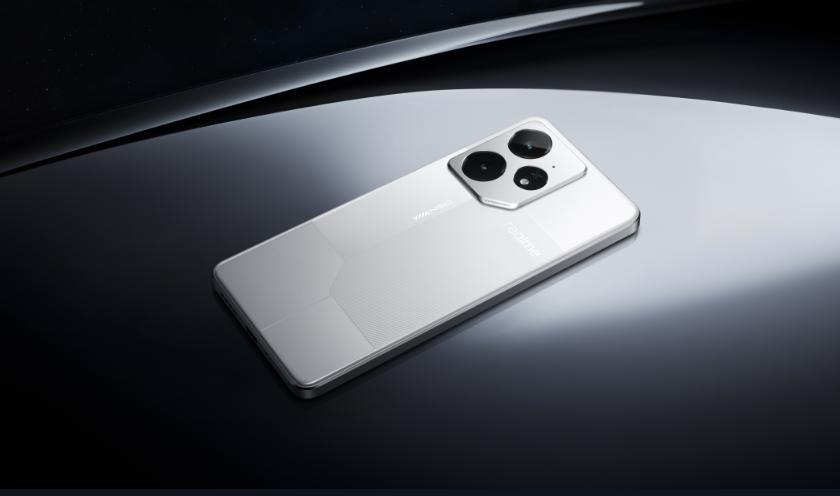
Design details have also surfaced online. The phone will likely have a flat frame with a squircle-shaped rear camera module in the top left corner. The module is expected to include two sensors and an LED flash with a silver accent around it. Live images showed Black and White color options.
The Lava Play Ultra 5G will be available for purchase on Amazon after its launch. The company has confirmed that the smartphone will debut today (August 20) at 8 PM, with the launch event streamed live on YouTube. Final details on specifications and pricing are expected to be revealed during the event.
For more daily updates, please visit our News Section.
HMD has just announced a smartphone that is built for kids. To protect children from harmful adult content, the brand has built the world’s first smartphone of its kind. So here’s how it works and everything you need to know.
Meet HMD Fuse: The Kid-Safe Phone with HarmBlock+
HMD Fuse
One of the big highlights of the HMD Fuse is the new HarmBlock+. This is a feature built to prevent children from filming or sending nude content. But that’s not all, it also brings protection from harmful online adult content by blocking children from seeing or saving sexual images or even nudes. It even extends to content taken from livestreams. Back in 2024, HMD and Xplora announced their partnership to work on addiction free smartphones.
This time around, HMD worked with SafeToNet for this feature, which can keep children safer online with OS level parental controls and AI powered blocking tech. The HMD Fuse sports a 6.56-inch display with an HD+ resolution, a 90Hz refresh rate, and 600 nits of peak brightness. Under the hood, it is equipped with the Snapdragon 4 Gen 2 SoC, which is paired with 6GB of RAM and 128GB of internal storage.
A sizeable 5,000mAh battery pack powers HMD Fuse, which supports 33W wired fast charging. For photography, the rear has a 108MP dual camera setup, while the front houses a 50MP selfie shooter with autofocus. Other notable features include Android 15 OS, Bluetooth 5.1, a 3.5mm headphone jack, a side mounted fingerprint scanner, and an IP54 rating for water and dust resistance. HMD just announced the HarmBlock+ in the UK exclusively with Vodafone for £33 a month.
For more daily updates, please visit our News Section.
Inbase Technologies has introduced two new speakers, the Boom Party 210 and Boom Party 110, in its party speaker lineup. Both models deliver 100W of output and offer up to 8 hours of playback on a single charge, aimed at indoor and outdoor music use during the festive season.
The Boom Party 210 and Boom Party 110 feature a trolley-style design with wheels and a pull handle for portability. They come with two wireless karaoke microphones, a dedicated guitar input, and a remote control for managing functions at a distance. The speakers also include LED Sense Lights that synchronize with the beats of the music to add a visual element to the audio experience.
Each speaker is equipped with karaoke mode, allowing users to adjust the microphone volume and effects. The dedicated guitar port supports standard guitar plug-ins and provides bass, echo, and volume controls. Connectivity options include Bluetooth, AUX, USB, SD card, and FM radio, giving users multiple ways to play music. Playback runs for up to 8 hours, and the battery takes between 6 and 8 hours for a full recharge.
The Boom Party series also comes with EQ modes that are pre-tuned to adjust sound output depending on the setting. Stereo sound with a focus on strong bass ensures distortion-free audio, making the speakers suitable for parties and events.
Please Note: When you buy something using the links in our articles, we may earn a small commission at no cost to you.
Pricing & availability
The Boom Party 210 and Boom Party 110 are both priced at ₹9,499 as part of the introductory offer. They are available for purchase through Amazon.in, Flipkart, the Inbase official website, and major offline retail outlets across India.
For more daily updates, please visit our News Section.
Chinese AI company DeepSeek has released version 3.1 of its flagship large language model, expanding the context window to 128,000 tokens and increasing the parameter count to 685 billion. The update was announced quietly through the company’s WeChat user group on August 19, without any posts on its official social media channels.
What’s New?
The most significant change in DeepSeek V3.1 is the increased context length, which now allows the model to handle inputs equivalent to a 300 to 400-page book. This improvement enables better performance in long-form content generation, technical document analysis, and extended multi-turn conversations. The official group confirmed the expanded context was already supported internally in the previous V3 version, but has now been formally enabled across all interfaces.
Photo Credit: Reuters
Mixture-of-Experts and Benchmark Scores
DeepSeek V3.1 continues to use a Mixture-of-Experts (MoE) architecture, with only 37 billion parameters activated per token. The model supports multiple precision formats, including BF16, FP8, and F32, providing more flexibility for different deployment environments. Developers can access the model via API or download it from Hugging Face under the MIT open-source license.
The upgraded model performed well in early third-party benchmarks. It scored 71.6% on the Aider coding test, placing it above Claude Opus 4 and making it one of the strongest open-source coding models currently available. DeepSeek V3.1 also showed improved performance in math and logic tasks. However, some users noted no clear gains in reasoning compared to the earlier R1-0528 model.
Shift in Strategy
DeepSeek has removed all references to the R1 model from its chatbot interface, signaling a shift toward a single hybrid model architecture. The company appears to have integrated its reasoning capabilities into V3.1, instead of maintaining a separate reasoning model.
The training cost for V3.1 has not been disclosed. However, according to previous reports, the original V3 model was trained on 2.788 million GPU hours using Nvidia H800 chips, at an estimated cost of $5.6 million. That model formed the base for the current version, which likely shares similar infrastructure with additional refinements.
Confusion Around the Delayed R2 Model
There had been widespread anticipation that DeepSeek’s next major release would be the long-awaited R2 model, designed to advance reasoning capabilities. Instead, V3.1 appeared as the company’s next step. According to a recent Financial Times report, the R2 model’s release has been delayed due to persistent technical issues involving Huawei’s Ascend AI chips.
DeepSeek was reportedly urged to use Ascend hardware to reduce reliance on Nvidia, aligning with China’s national strategy for AI self-sufficiency. Despite support from Huawei engineers, training on Ascend failed due to compatibility and performance issues. The company then switched to using Nvidia GPUs for training while retaining Ascend for inference. This hybrid setup introduced further complications and delays. In addition, the extended time spent on data labeling slowed down development. DeepSeek founder Liang Wenfeng reportedly expressed frustration with the slow progress.
Meanwhile, competitors such as Alibaba’s Qwen3 have moved ahead by deploying similar algorithms with more efficient execution. The episode has underscored the limitations of China’s domestic chip infrastructure and the challenges faced by startups attempting to meet political and technical demands simultaneously.
DeepSeek has not ruled out the launch of R2. However, whenever the model does arrive, its performance will face intense scrutiny. Until then, V3.1 stands as the company’s current flagship, serving both reasoning and non-reasoning workloads in a unified framework.
For more daily updates, please visit ourNews Section.
Sony is bringing a taste of its premium audio lineup with the launch of the Inzone H9 II gaming headset. Borrowing the same drivers from the flagship WH-1000XM6 headphones, the H9 II promises immersive, high-quality sound in a more affordable package.
Sony Inzone H9 II Brings Premium WH-1000XM6 Audio to Gamers
As per official notes, the Inzone H9 II borrows its audio drivers from Sony’s best, the WH-1000XM6. This is one of the biggest upgrades over its predecessor. But apart from this, you also get a lighter body, virtual 7.1 surround sound support, and Sony 360 Reality Audio. The Inzone H9 II features ANC (Active Noise Cancellation) along with a transparency mode as well. While you can use this with an AUX cable, you get both Bluetooth and 2.4GHz with a USB-C dongle.
So it is compatible with Nintendo Switch 2, smartphones, PCs, and Xbox Series X as well. On wireless operation, Sony promises up to 30 hours of battery life. Notably, the company has added special sound profiles for games like Valorant and Apex Legends. These were built in partnership with Fnatic and have a 349 US Dollar price tag, making it more affordable than the flagship WH-1000XM6.
For more daily updates, please visit our News Section.
Realme has launched the Realme P4 5G in India along with the P4 Pro 5G. Like the Pro variant, the brand has packed the P4 5G with a massive battery, along with a powerful processor and a bright AMOLED display.
Realme P4 5G specs
The Realme P4 5G features a 6.77-inch Full HD+ HyperGlow AMOLED display with a 144Hz refresh rate, HDR10+, peak brightness of 4500 nits, and 3840Hz PWM dimming with hardware-level blue light reduction.
It is powered by the MediaTek Dimensity 7400 Ultra 5G processor paired with a Pixelworks visual chip for better graphics and frame stability. It comes with up to 12GB RAM, expandable to 14GB with virtual RAM, and UFS 3.1 storage. The phone uses a 7000mm² AirFlow VC Cooling System to control heat during long gaming sessions or 4K video recording.
The rear camera setup includes a 50MP OV50D40 main sensor with f/1.8 aperture and an 8MP ultra-wide camera with f/2.2 aperture. The front has a 16MP Sony IMX480 camera with f/2.4 aperture. Both front and rear cameras support up to 4K 30fps video recording. AI features like AI Landscape are included.
The phone runs Android 15 with realme UI 6.0 and will get 3 Android OS updates and 4 years of security updates. The 7000mAh Titan Battery supports 80W fast charging, reaching 50% in 25 minutes. Realme claims up to 11 hours of BGMI gameplay. It also supports AI Smart Charging, Bypass Charging for gaming, and reverse charging.
Other features include an in-display fingerprint sensor, infrared sensor, stereo speakers, USB Type-C audio, and IP65 + IP66 dust and splash resistance. Connectivity options include 5G SA/NSA, Dual 4G VoLTE, Wi-Fi 6, Bluetooth 5.2, GPS/GLONASS/Beidou, and USB Type-C. The phone measures 163.34×75.88×7.58mm, weighs 185g, and has a Metal Heart design with exposed screws. Color options are Steel Grey, Engine Blue, and Forge Red.
Pricing and availability
6GB + 128GB: ₹14,999 (NEP)
8GB + 128GB: ₹15,999 (with ₹2,500 bank offer and ₹1,000 exchange)
8GB + 256GB: ₹17,999 (NEP)
The Early Bird Sale is on 20 August from 6 PM to 10 PM. The first sale starts on 25 August at 12 Noon on Flipkart, realme.com, and retail stores.
For more daily updates, please visit our News Section.
ASUS has introduced a brand-new monitor tailored for creative professionals, bringing together a mix of sharp visuals, smooth performance, and professional-grade color accuracy. The model is the ASUS ProArt Display PA278QV Gen 2, so here’s everything that it offers.
ASUS Brings ProArt 2K 120Hz Calman-Verified Monitor for Creative Pros
The Taiwanese tech giant recently unveiled a powerful new mini PC and some Snapdragon powered laptops. Now, its bringing the ASUS ProArt Display with a tall 27-inch IPS panel that is built for creative professionals. The monitor has a 95 percent DCI-PC color gamut, with a Delta E < 2 color deviation. It has also received Calman vertification along with a TUV Eye Care certification.
ASUS ProArt Display PA278QGV Gen 2
There is even a built-in ambient light sensor that can adjust the colors on the screen based on the ambient lighting as well. ASUS’s new ProArt PA278QV Gen 2 has a 2K resolution (2560 x 1440) and a 48Hz-120Hz variable refresh rate. This model houses a USB hub with USB Type-A ports, HDMI 2.0, and DisplayPort 1.4. It even packs built in speakers for audio, an adjustable height, and VESA compatible mount.
While you do get a high refresh rate on the ASUS ProArt PA278QV Gen 2 display, ASUS isn’t targeting gamers with the monitor. It is primarily built for creative workloads with the focus on color reproduction and color accuracy. This model is currently available for purchase on Amazon for 249 US Dollars. In related news, ASUS is also gearing up to announce the Vivobook S14 and Vivobook 14 thin and light laptops that are powered by new Ryzen AI CPUs.
For more daily updates, please visit our News Section.
Baidu is making some bold claims about its latest AI creation. At Baidu AI Day Open Day, the Chinese search and cloud computing giant unveiled GenFlow 2.0, which it’s billing as “the world’s first all-platform general-purpose intelligent agent.” The system promises to solve one of AI’s most persistent problems: actually completing complex, multi-step tasks without making users wait around or deliver disappointing results.
100 agents, three minutes, bold promises
The pitch is compelling, if ambitious. GenFlow 2.0 can supposedly orchestrate more than 100 specialized AI agents working in parallel, completing over five complex tasks simultaneously within a three-minute window. Baidu claims the system is 10 times faster than competing platforms, delivering what it calls “minute-level output” with processes that humans can interrupt and modify as needed.
Unlike many AI agent platforms that require invitation codes or put users in queues, GenFlow 2.0 is immediately available to anyone through Baidu Wenku’s web and mobile platforms. This accessibility could be crucial for adoption, especially as users grow frustrated with AI tools that promise the world but gate access behind waitlists and beta programs.
The technical complexity behind the curtain
The technical architecture behind GenFlow 2.0 sounds appropriately complex for its ambitious goals. Baidu has built a proprietary Multi-Agent engine paired with an optimized context management system designed to create what the company calls an “information ecosystem for the model.” The platform uses dynamic hybrid inference and multi-mode intelligent scheduling to handle complex workflows, while incorporating both public knowledge and private user data to enhance results.
Perhaps more importantly for real-world usage, GenFlow 2.0 includes systems for multimodal data understanding, both short and long-term memory, and multi-level risk controls. The platform also supports the Model Control Protocol (MCP), which should allow third-party services to integrate more easily with Baidu’s ecosystem.
Honor partnership brings agents to your phone
The most interesting partnership announcement involves Honor. Honor has become one of the first hardware partners to join Baidu’s MCP ecosystem, natively integrating GenFlow 2.0 into its YOYO smart assistant. This integration could give Honor’s MagicOS users system-level AI agent capabilities, allowing them to access their Baidu Netdisk files, search through documents, generate presentations, and perform other complex tasks through voice commands or touch interfaces.
The scale of Baidu’s content ecosystem provides a significant advantage here. Baidu Wenku hosts over 1.4 billion pieces of professional content and serves 97 million monthly active AI users, while Baidu Netdisk claims more than 1 billion total users, including 200 million monthly actives and 80 million AI users. This massive content repository could give GenFlow 2.0’s agents a substantial knowledge base to work with.
The reality check on AI agent promises
This launch builds on Baidu’s previous “Cangzhou OS,” which the company described as the world’s first content-centric operating system and formed the foundation for the original GenFlow platform. That system already supported multimodal input and output, multi-agent coordination, and MCP compatibility.
The real test will be whether GenFlow 2.0 can deliver on its promises in daily use. AI agents have consistently struggled with reliability, accuracy, and the ability to handle complex, ambiguous instructions. If Baidu has cracked the code on fast, reliable multi-agent coordination, it could represent a significant leap forward for practical AI applications. But given the industry’s track record of overpromising and underdelivering on AI agents, users should probably manage their expectations while remaining cautiously optimistic.
Realme has officially launched its latest budget-friendly powerhouse, the Realme P4 Pro. It brings a smooth OLED display, high-end water and dust resistance, a capable chipset, and a stylish new design that seems inspired by the upcoming iPhone 17 Pro. So here’s what you need to know.
What Does the Realme Budget Phone Offer?
Looking at the Realme P4 Pro, the image sensors on the rear of a long rectangular camera module appear quite similar to the leaked images of the iPhone 17 Pros. The Chinese brand’s new budget phone has a slim 7.68mm body that weighs just 189 grams. This makes it relatively thin and light, but you still get a durable IP68 + IP69 rating for water and dust resistance. On the front, the Realme P4 Pro sports a tall 6.8-inch OLED display with a 1.5K resolution, a 144Hz refresh rate, 100% DCI-P3 color gamut, up to 4608Hz PWM dimming, DC dimming, Corning Gorilla Glass 7i, and up to 6500 nits of peak brightness.
Realme P4 Pro
Under the hood, it is equipped with the Snapdragon 7 Gen 4, which is paired with up to 12GB of LPDDR4X RAM and 256GB UFS 3.1 storage. A massive 7,000mAh battery pack powers this model with support for 80W wired fast charging. For optics, the rear has a 50MP (Main) + 8MP (Ultra Wide), while the front houses a 50MP selfie shooter. You also get various AI powered tools like the AI Hyper Clarity, AI Hyper Motion, and more.
Other notable features include an IR blaster, an in-display fingerprint scanner, stereo speakers, dual SIM support (nano + nano), Bluetooth 5.4, and WiFi 6. The Realme P4 Pro arrives in multiple color options, namely Birch Wood, Dark Oak Wood, and Midnight Ivy. It has a starting price tag of Rs 24,999 for the 8GB + 128GB storage option. On the other hand, the 8GB + 256GB and 12GB + 256GB variants costs Rs 26,999 and Rs 28,999, respectively. As a part of its introductory launch offer, you also get a Rs 5000 discount that includes bank discounts and exchange offers.
For more daily updates, please visit our News Section.
Xiaomi has been working on HyperOS 3, based on Android 16, which is almost ready for a beta release later this month. The stable build will follow soon thereafter. This is said to be a significant upgrade for Xiaomi devices, bringing a host of new features, visual elements, new customizations, and enhancements.
The HyperOS 3 update will be released for a range of Xiaomi, Redmi, and Poco phones and tablets; however, some popular models are missing from the list. Folks at Xiaomi Time have prepared a list of those devices. You may want to have a look at it to check if yours is included.
Popular Xiaomi phones that won’t be upgraded to HyperOS 3
Xiaomi 11 series
The entire Xiaomi 11 series (including the Xiaomi 11 Lite 5G NE) is no longer eligible for major upgrades, including the HyperOS 3.
Redmi Note 12 series
The popular mid-range series, Redmi Note 12, is also excluded from the HyperOS 3 rollout.
Redmi K50 series (partial)
The popular K50 gaming series is also not eligible for HyperOS 3 upgrade, with the exception being the Redmi K50 Ultra.
Poco M5, X5 series
The mid-range performance-focused Poco M5 series and Poco X5 series models are also not getting the HyperOS 3 update.
If you have any of the aforementioned Xiaomi, Redmi, or Poco phones, the device is unlikely to receive the HyperOS 3 update.
When will Xiaomi start rolling out HyperOS 3 update?
The company hasn’t announced a release date for HyperOS 3 yet. However, according to recent reports, it has already stopped working on HyperOS 2 and is working on the next iteration, HyperOS 3.
According to a reliable Chinese tipster, Digital Chat Station, Xiaomi will start HyperOS 3 beta testing sometime in August. The beta testing typically lasts a few weeks, after which users may start receiving the stable HyperOS 3 update, based on Android 16. We expect the stable rollout to begin around October. That’s a guess, by the way. Hopefully, we’ll have an official confirmation very soon.
In October, Oppo is expected to unveil the Find X9 and X9 Pro flagship phones. One of the major changes on the Pro variant is that several reports have claimed the dual 50-megapixel cameras seen on the Find X8 Pro will be replaced by a single 200-megapixel periscope camera. A new report by SmartPrix has now shared detailed information about the camera specifications, clearing all doubts well before the launch.
Oppo Find X9 Pro camera specifications
Oppo Find X9 Pro mock render
According to the publication, the Oppo Find X9 Pro will feature the recently announced Sony LYT-828 50-megapixel camera as the primary sensor with a size of 1/1.28-inch. It comes with a 23mm focal length and an f/1.8 aperture. To recall, the Find X8 Pro used a Sony LYT-808 50-megapixel primary camera with a 1/1.4-inch sensor size and an f/1.6 aperture.
For ultra-wide shots, the Find X9 Pro will feature a 50-megapixel Samsung JN5 lens with autofocus support. This marks an upgrade from the X8 Pro, which had a 50-megapixel Samsung JN1 camera for ultra-wide photography.
The dual 50-megapixel telephoto cameras will be replaced by a single 200-megapixel Samsung HP5 camera sensor with OIS support and 3x optical zoom. It has a 1/1.56-inch sensor size and a 70mm focal length. The Find X9 Pro could be the world’s first phone to feature this sensor.
The Find X9 Pro’s selfie camera is also expected to receive an upgrade. While its predecessor had a fixed-focus 32-megapixel Sony IMX615 lens, the upcoming model is tipped to feature a 50-megapixel Samsung JN5 camera with autofocus.
For more daily updates,please visit ourNews Section.
Several Chinese smartphone brands are gearing up to launch new flagship phones in China. Nubia is also expected to unveil the Red Magic 11 gaming phone, which may debut in October or November this year. Reliable tipster Digital Chat Station has released a Weibo post to reveal a key detail about the Red Magic 11.
Red Magic 11 to arrive with IP68 rating
Red Magic 11 series leak
Nubia has been offering built-in cooling fans on its Red Magic series phones for many years. However, when it comes to IP rating, it has only been at the IP54 level, as seen on the Red Magic 10 series, which includes models such as the Magic 10 Pro, 10 Pro+, 10 Air, 10S Pro, and 10S Pro+. However, DCS’ leak reveals that the Red Magic 11 will offer top-notch dust and water resistance.
According to the tipster, the upcoming Red Magic 11 will feature an upgraded cooling fan. Therefore, it will be the first time in the industry that a smartphone with a built-in fan also carries an IP68 rating for dust and water resistance.
The leaker also hinted at another major feature that remains under wraps for now. The device is said to be powered by the Snapdragon 8 Elite 2 (SM8850), positioning it as a high-performance flagship. At present, there is no clarity about the other specs of the device.
While there is no information about how many devices are included in the Red Magic 11 lineup, it is likely that the brand may launch two models: the Red Magic 11 Pro and Red Magic 11 Pro+. It is advisable to wait for further reports to know more about the series.
For more daily updates, please visit ourNews Section.
Redmi has officially confirmed that the Redmi Note 15 Pro+ will debut with the all-new Snapdragon 7s Gen 4 chipset. Alongside the processor, the company has already revealed details about the phone’s display, battery capacity, and charging speed. Now, Redmi has also shared the camera specifications, accompanied by official camera samples to highlight its flagship-level imaging capabilities.
Redmi Note 15 Pro+ camera details confirmed
Redmi Note 15 Pro+ camera specs
The Redmi Note 15 Pro+ is officially confirmed to feature an OIS-assisted OmniVision Light Fusion 800 (OV50E) primary camera, which is a 50-megapixel sensor. To recall, last year’s Note 14 Pro+ featured a 200-megapixel camera.
The camera setup of the Redmi Note 15 Pro+ also includes an ultra-wide lens and a 2.5x telephoto camera. As can be seen, the brand has also shared the camera samples of the device.
Redmi Note 15 Pro+ specifications
Redmi has already confirmed that the Redmi Note 15 Pro+ has a 6.83-inch quad-curved AMOLED panel that offers a 1.5K resolution and a 120Hz refresh rate. Under the hood, the device has the Snapdragon 7s Gen 4 chip, up to 16GB of RAM, and a 7,000mAh battery with 90W charging and 18W reverse charging.
The Redmi Note 15 Pro+ will run on HyperOS 2.0-based Android 15. Likely, the device will offer up to 512GB of storage. It will come with other features such as flagship-grade 1115 symmetrical dual speakers and an IP68/69-rated chassis. The topmost variant may come with satellite connectivity support.
For those who don’t know, the Note 15 series is scheduled to launch tomorrow (Aug. 21) in China.
Qualcomm has announced a new addition to its 7-series chipset lineup. Compared to the Snapdragon 7s Gen 3 from last year, the newly announced Snapdragon 7s Gen 4 brings incremental performance gains and some noteworthy gaming features. The company has not yet disclosed which device will debut this chip but reports already suggest a major smartphone launch around the corner.
Snapdragon 7s Gen 4: Key specifications and performance
Snapdragon 7s Gen 4
The Snapdragon 7s Gen 4 succeeds the 7s Gen 3 with the same 1+3+4 Kryo CPU design built on the 4nm process. The Prime Cortex-A720 core now runs at 2.7GHz, slightly higher than last year’s 2.5GHz, while the three Cortex-A720 cores at 2.4GHz and four Cortex-A520 cores at 1.8GHz remain unchanged.
Qualcomm estimates a 7% performance gain in CPU tasks. The upgraded Adreno GPU is also rated to deliver a 7% uplift, while features such as Snapdragon Game Super Resolution and Adaptive Performance Engine 3.0 enhance visuals and manage load for smoother gaming.
Snapdragon 7s Gen 4
Display support has been widened to include ultra-wide panels with up to 2,900 x 1,300 resolution at 144Hz refresh rate, which could appeal to gaming phones and handheld devices. The chipset also supports up to 200-megapixel cameras and 4K video recording at 30 fps with HDR10 and HDR10+ formats.
The updated Hexagon NPU brings support for models such as Llama 1B and Qwen 1B, enabling real-time translation and improved AI-driven tasks. Connectivity includes sub-6GHz 5G, Wi-Fi 6E, Bluetooth 5.4 and aptX Lossless audio. Storage support is capped at UFS 3.1 with LPDDR5 RAM.
RedmI Note 15 Pro+ to feature the Snapdragon 7s Gen 4 chip
Redmi will unveil the Redmi Note 15 Pro series on Aug. 21 in China. It has been officially confirmed that the Note 15 Pro+ will come equipped with the Snapdragon 7s Gen 4.
For more daily updates, please visit our News Section.
The Vivo V60 arrives as a feature-packed device that blends sleek design, powerful internals, and advanced camera capabilities into one premium smartphone. Positioned in the upper mid-range, it offers features that aim to rival flagships – from ZEISS optics to a large 6,500mAh battery. Let us take a closer look at what the Vivo V60 has to offer.
5Verdict
Vivo V60
Vivo V60
The Vivo V60 is a device that does not compromise on cameras. From its ZEISS-backed imaging setup to its stylish design and slim profile, it delivers one of the best photography experiences in this segment. Add to that a huge 6,500mAh battery, IP68/69 rating, and solid AI features, and you have a device that balances practicality with creativity.
That said, performance-focused users may feel let down by the use of older RAM and storage standards. At this price, competitors like the Realme GT 7 (Dimensity 9400e) and OnePlus 13R (Snapdragon 8 Gen 3) deliver faster performance but cannot match the photographic versatility of the V60. Vivo seems to have struck a middle ground, appealing more to those who prioritise cameras over raw processing power.
The Vivo V60 is available in three striking colours – Auspicious Gold, Moonlit Blue, and Mist Grey – across four configurations:
If your primary focus is photography and you want a slim, well-designed phone with long battery life and long software support, the Vivo V60 is an excellent option worth considering.
For more daily updates, please visit our News Section.
As the smartphone industry charges toward fall 2025, the camera wars are heating up in a big way. Whether you’re a pro photographer or a casual shooter, these five upcoming smartphones, spanning Apple, Google, Vivo, and Xiaomi, are gearing up to redefine what mobile photography can do. Based on confirmed specs, leaks, and credible tipsters, here’s a detailed look at the most camera-centric phones set to debut in the coming weeks and months.
Apple is preparing to introduce its most significant front camera upgrade in years. All iPhone 17 models are expected to feature a new 24MP selfie camera, doubling the resolution found on the iPhone 16 series. This will improve image clarity and provide more flexibility when cropping.
The Pro Max model will stand out with a 48MP Wide, 48MP Ultra Wide, and 48MP Tetraprism Telephoto camera. This would make it the first iPhone to include three 48MP sensors and could also introduce native 8K video recording. Apple may also add support for dual video recording and a mechanical aperture system on the Pro models, giving users control over depth of field in photos.
The Pro Max could include an upgraded 8x optical zoom lens, a step up from the current 5x zoom on the iPhone 16 Pro Max. The Pro models will remain the only iPhones with a dedicated telephoto lens, while the standard iPhone 17 and 17 Air will not include any optical zoom.
2. Google Pixel 10 Pro and Pixel 10 Pro XL
Google is expected to continue using the same camera configuration as last year on the Pixel 10 Pro series. Both the Pixel 10 Pro and Pro XL will include a 50MP main sensor, a 48MP ultra-wide lens, and a 48MP 5x telephoto lens. The front camera will use a 42MP sensor.
This year, both the ultra-wide and telephoto cameras will support macro photography. The ultra-wide sensor can focus as close as 2cm, while the telephoto can deliver brighter macro images with a minimum focusing distance of around 10cm.
The Pro XL will include a 5,200mAh battery and faster 39W wired charging. The standard Pro model will come with a slightly smaller 4,870mAh battery and 29W charging. Both devices will use Google’s new Tensor G5 processor and will run Android 16 out of the box.
3. Xiaomi 16 Pro
Xiaomi plans to upgrade the front-facing camera on the 16 Pro to a new 50MP sensor. The new camera will include autofocus, a wide field of view, and support for 4K at 60fps. This is a major improvement over the 32MP sensor used since the Xiaomi 13 series.
The rear camera setup will include a 50MP 1/1.3-inch primary sensor. The Pro model is expected to benefit from improved Leica image tuning and a ToF sensor to enhance portrait photography and depth accuracy.
The 16 Pro will run on Qualcomm’s Snapdragon 8 Elite 2 chipset and could launch in late September.
4. Vivo X300 Pro
Vivo is preparing the X300 Pro with one of the most powerful camera systems in any upcoming smartphone. The device is expected to feature a 50MP Sony LYT-828 main sensor, a 50MP ultra-wide camera, and a 200MP periscope telephoto lens with a 1/1.4-inch sensor.
The main sensor will support Hybrid Frame HDR and a dynamic range exceeding 100dB. The periscope camera is expected to include new lens coating technology to reduce flare. Vivo may also offer high-quality in-sensor zoom modes at 35mm and 50mm crop lengths.
The X300 Pro will launch with the MediaTek Dimensity 9500 chipset and could be the first phone to ship with that chip. Vivo is expected to unveil the X300 Pro by October.
For more daily updates, please visit ourNews Section.
HMD Global is preparing a refresh of its entry-level phones, but the upcoming HMD Vibe2 may raise eyebrows for the wrong reasons. Listings spotted on e-commerce sites and the EPREL database reveal the phone’s specs — and they suggest a downgrade compared to the original HMD Vibe.
HMD Vibe 2
Vibe2 specs and changes
The Vibe2 is powered by the Unisoc T606 4G, paired with a 6.75-inch HD+ LCD (90Hz), 5,000mAh battery with 10W charging, and 256GB storage with microSD support. It runs Android 15 and includes a 50MP main camera, two token 0.08MP auxiliary sensors, and a 5MP selfie camera. Unlike its predecessor, which had a punch-hole display, the Vibe2 moves back to a water-drop notch design.
On paper, performance also takes a hit: the Unisoc T606 trails the Snapdragon 680 used in the first Vibe across Geekbench, 3DMark, and AnTuTu benchmarks. Check the benchmark scores below.
Other features reportedly include IP52 splash resistance, a side-mounted fingerprint scanner, and a 3.5mm headphone jack. The phone is expected to sell in Australia for AUD 288 (~$187), with colors in Light Titanium and Dark Grey. The EPREL database also points to three additional models — the HMD Fuse, Pulse2, and Pulse2 Pro.
The Vibe2 may be pitched as an affordable 4G phone, but the cuts in performance and design make it look more like “one step forward, three steps back.” Buyers may find better value in rivals, or even the original Vibe if it’s still available.
Samsung has moved quickly to fix an unusual issue affecting the Galaxy S25 Ultra’s Space Zoom shots of the Moon. Some users had noticed that images taken in Beta 4 of One UI 8 gave the lunar surface a strange purple tint.
One UI 8 Beta 5 rolls out with the fix
The bug appeared in late July with One UI 8 Beta 4, turning Moon photos purple at zoom levels from 10x all the way to the Ultra’s signature 100x Space Zoom. The issue wasn’t present in Beta 3 and was traced back to a processing error in Samsung’s zoom algorithms.
After complaints surfaced on Samsung’s community forums, a moderator confirmed the bug and promised a fix. That has now arrived with One UI 8 Beta 5 (firmware ZYH6), which is reportedly rolling out in regions including India, Germany, the UK, and the US. The update, weighing in at around 1.78GB, not only restores natural colors to lunar photos but also brings the August 2025 security patch, stability improvements across nine system functions, and fixes for issues like Wi-Fi hotspot drops and S Pen Air Command glitches.
Galaxy S25 Ultra with S Pen
Lunar photography has been a headline feature of the Galaxy S Ultra line from the very beginning, which made the ‘purple Moon’ bug more than just a curiosity. Samsung’s quick turnaround shows it’s listening closely to feedback from beta testers. With the stable One UI 8 release expected in September, the latest beta ensures users can keep enjoying the phone’s Space Zoom feature without any surprises.
Samsung may be preparing a major upgrade for its next flagship, the Galaxy S26 Ultra, with a new display feature designed to protect user privacy. According to a report out of Korea, the device is expected to introduce “Flex Magic Pixel”, an OLED technology that uses AI to control viewing angles and obscure sensitive information from prying eyes.
AI-powered privacy on the display itself
Flex Magic Pixel, first shown at MWC 2024 and later at K-Display 2025, has now reportedly entered mass production. The technology can limit side visibility when certain apps are in use—such as banking or messaging apps—without sacrificing screen brightness or image quality. Unlike traditional privacy screen protectors, which often affect the viewing experience, Samsung’s approach is built directly into the panel.
For example, if someone is trying to glance over your shoulder, the content would appear obscured to them, while you still see the contents clearly. The feature is said to be exclusive to the Ultra model at launch but could expand to the Galaxy Z Fold8 and Z Flip8 later in 2026.
Reports also point to a revised naming scheme for the Galaxy S26 lineup: S26 Pro, S26 Edge (or possibly S26 Air), and S26 Ultra, replacing this year’s Galaxy S25, S25 Plus, and S25 Ultra.
The S26 Pro is expected to use Samsung’s 2nm Exynos 2600 chipset, while the Edge and Ultra are being tested with Qualcomm’s Snapdragon 8 Elite 2. If Samsung does keep the new Flex Magic Pixel display feature exclusive to the Ultra, it would further widen the gap between the top-tier model and its more affordable siblings.
Google is gearing up for a big reveal on August 20 in Brooklyn, where the company will mark ten generations of Pixel phones with what’s shaping up to be one of its most ambitious events yet. In India, the livestream will start at 10:30 pm on YouTube.
The Pixel 10 lineup is all but confirmed, but a tease from host Jimmy Fallon has sparked talk of surprise announcements that haven’t leaked. Beyond the star power, the focus will be on the Pixel 10, Pixel 10 Pro, Pixel 10 Pro XL, and the new Pixel 10 Pro Fold.
Leaks suggest the phones will debut Google’s Tensor G5 chip, along with upgraded cameras — including a 50MP main sensor and 10x optical zoom on the Fold — and AI features such as Gemini Live. Google will also bring new wearables, with the Pixel Watch 4 (now in 45mm and running Wear OS 6) and fresh earbuds like the Pixel Buds 2a and a new “Moonstone” finish for the Buds Pro 2.
Fallon teases “secret products”
Despite how much has already surfaced, Fallon added fuel to the hype with a YouTube Short teasing that “secret products” will be shown. That’s left fans wondering if Google will hint at new AI-driven accessories or even revisit its long-rumored smart glasses project (“Project Martha”).
Pricing leaks suggest the Pixel 10 will start at $799, while the Fold will cost around $1,799, putting them head-to-head with Apple’s upcoming iPhone 17 and Samsung’s Galaxy Z Fold7.
For Google, this event is not just about new devices — it’s a celebration of ten years of Pixel, with the possibility of a few curveballs that could steal the show.
We use cookies on our website to give you the most relevant experience by remembering your preferences and repeat visits. By clicking “Accept”, you consent to the use of ALL the cookies.
This website uses cookies to improve your experience while you navigate through the website. Out of these, the cookies that are categorized as necessary are stored on your browser as they are essential for the working of basic functionalities of the website. We also use third-party cookies that help us analyze and understand how you use this website. These cookies will be stored in your browser only with your consent. You also have the option to opt-out of these cookies. But opting out of some of these cookies may affect your browsing experience.
Necessary cookies are absolutely essential for the website to function properly. This category only includes cookies that ensures basic functionalities and security features of the website. These cookies do not store any personal information.
Any cookies that may not be particularly necessary for the website to function and is used specifically to collect user personal data via analytics, ads, other embedded contents are termed as non-necessary cookies. It is mandatory to procure user consent prior to running these cookies on your website.