Motorola has officially confirmed that the Moto G57 Power will be launching in India soon. Earlier this month, the company announced the G57 series in Europe, with the lineup consisting of the standard Moto G57 and the Moto G57 Power. We now have an Indian release date for the latter, so here’s what we know.
Motorola Confirms Moto G57 Power in India
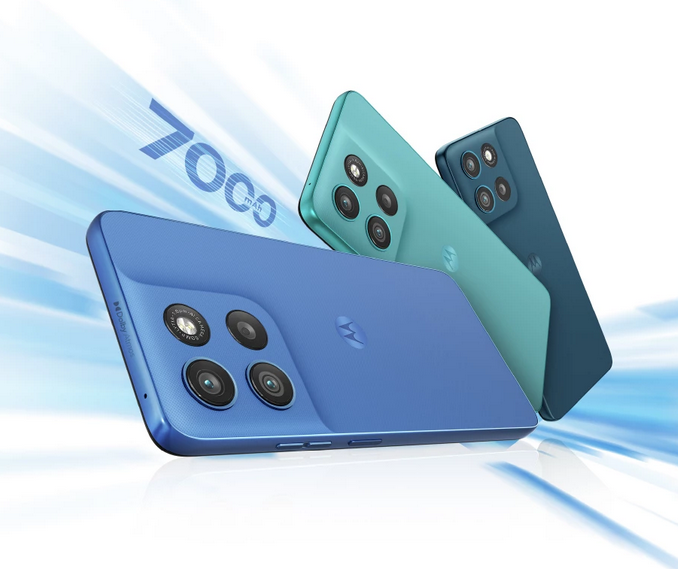
In the teaser image posters, the brand revealed that the Moto G57 will debut in India on 24th November 2025. This model is the latest entry in the G Power lineup, which is known for its large battery capacities. While the pricing details are still unknown, the teasers confirm plenty of its key specs and features. Under the hood, the smartphone is the world’s first smartphone to feature the Snapdragon 6s Gen 4 SoC that is coupled with 8GB of RAM and 128GB of internal storage.
Moto G57 Power
Furthermore, a massive 7,000mAh battery pack powers this model, which promises to offer up to 60 hours of battery life. On the front, you get a tall 6.72-inch LCD panel that offers an FHD+ resolution, a 120Hz refresh rate, an 8MP selfie shooter, and Corning’s Gorilla Glass 7i for protection. Meanwhile, the rear has a 50MP Sony LYT600 primary sensor. Other notable features include Android 16 OS out of the box, IP64 rating for water and dust resistance, military grade durability, stereo speakers with Dolby Atmos tuning, and 3 years of security updates.
Looking at the teasers, the Moto G57 Power will debut in multiple color options that include Pantone Regatta, Pantone Corsair, and Pantone Fluidity. The company’s next budget phone will go on sale via Flipkart, Motorola’s official website, and offline retail stores.
For more daily updates, please visit our News Section.
As exciting news for gamers, Sony has announced major discounts on its flagship console, the PlayStation 5, for this year’s Black Friday season. Starting this Friday, you can pick up the PlayStation 5 Digital Edition Slim for just $399, a $100 discount off the regular price. The standard PS5 is priced at $449, and the new PS5 Pro at $649, with both also included in the promotions.
You can find these deals at major retailers, including Amazon, Walmart, and the PlayStation Direct store, starting November 21.
What You Get
The PS5 Slim packs serious gaming power into a smaller, sleeker design. You’ll enjoy:
Lightning-fast loading thanks to the custom SSD
Stunning 4K graphics
Immersive 3D audio
The innovative DualSense controller with haptic feedback and adaptive triggers
The controller alone is a game changer, letting you feel every action in hit titles like Marvel’s Spider-Man 2 and God of War Ragnarök.
Both the standard PS5 and the Slim PS5 Digital Edition are powered by the same custom AMD Zen 2-based processor, delivering quick load times, smooth frame rates, and outstanding gameplay. The main difference is the disc drive: the standard model includes one, while the Digital Edition, as the name suggests, does not.
Please Note: When you buy something using the links in our articles, we may earn a small commission at no cost to you.
The Lowest Price Ever!
At $399, the PS5 Digital Edition Slim matches its lowest price ever, a perfect Black Friday deal. Whether you’re upgrading from a PS4 or buying your first current-gen console, this is an excellent opportunity. The Slim model gives you all the power of the original PlayStation 5 while taking up significantly less space in your entertainment setup.
Sony has listed offers on accessories, gadgets as well as on games, you may find some of the offer list below.
PS5 Console Deals
PS5 Slim Digital Edition(standalone, no disc drive): $399.99 ($100 off, MSRP $499.99)
PS5 Pro: $649.99 ($50 off the regular $699.99 launch price)
Select PS5 console bundles (e.g., with Astro Bot or additional games) also receive the same base console discount.
PlayStation VR2
PS VR2 Horizon Call of the Mountain Bundle: $349.99 ($250 off, lowest price ever)
DualSense Controllers
Standard colors and select special editions: $54.99 (up to $20 off)
Deep Earth, Cobalt Blue, and other limited colors included.
Games (Physical & Digital Select Titles)
Many first-party and third-party PS5 /PS4 games are discounted up to 50 – 80% off, highlights include: – Marvel’s Spider-Man 2: $39.99 – God of War Ragnarök: $29.99 – The Last of Us Part I: $29.99 – Ratchet & Clank: Rift Apart: $29.99 – Gran Turismo 7: $29.99 – Hundreds of additional titles under $20 at PlayStation Store and retailers.
PlayStation Plus (Digital Only via PS Store)
12-month PS Plus Essential: 30% off
12-month PS Plus Extra: 30% off
2-month PS Plus Premium: 35% off (Deal runs November 21 to December 2 for new and select existing members)
These are the exact offers detailed in the official blog post from Sony. Prices and availability may vary slightly by retailer and region. If interested, check the complete offer details from the official Sony blog announcement.
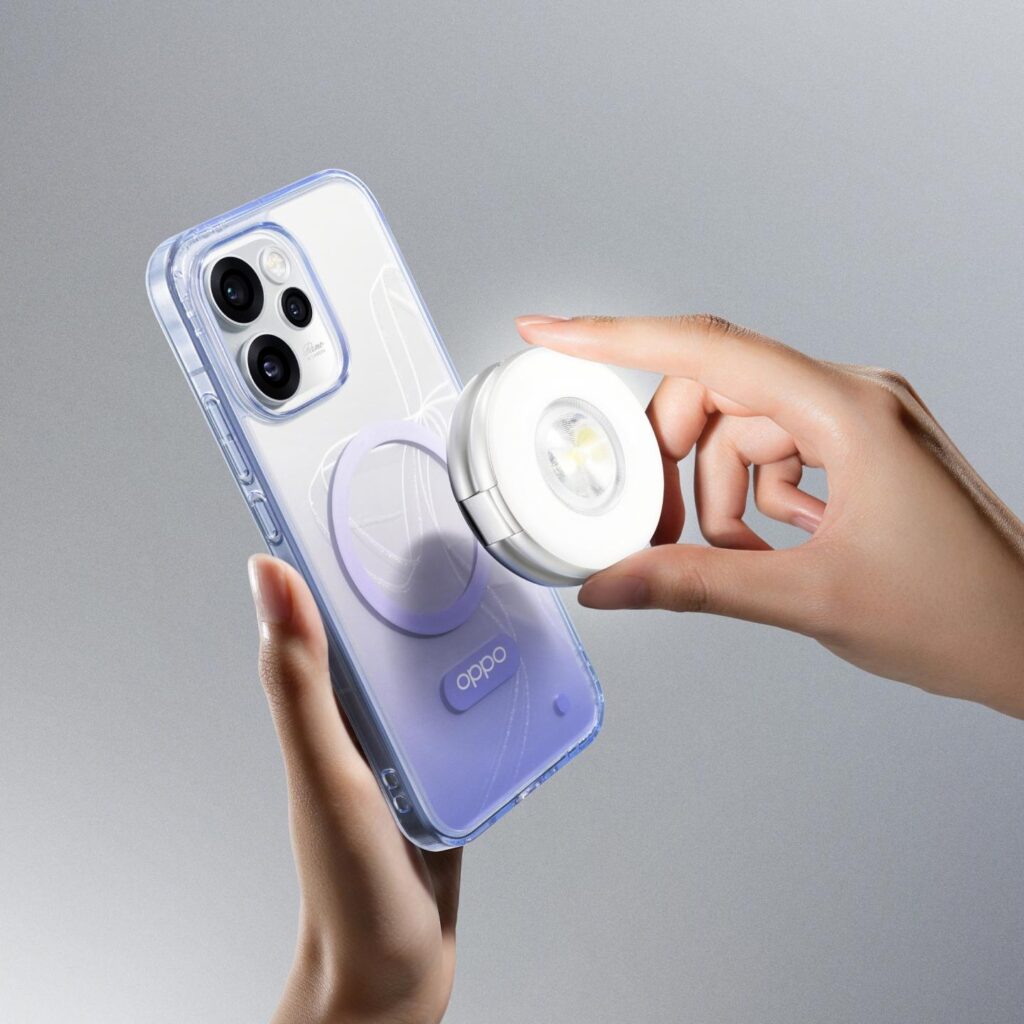
Oppo has officially launched the Magnetic Halo Flash Light, a compact lighting accessory that combines both a flash and a continuous fill light. The device is now available for pre-order through the Oppo Store in China, priced at 199 yuan ($28). It supports Bluetooth connectivity on select Oppo smartphones and integrates directly with the native camera app for seamless control.
Oppo Magnetic Halo Flash Light Specifications
The magnetic light is designed for mobile photography, vlogging, and livestreaming. Oppo has equipped the device with a dual-function lighting system that allows users to switch between flash and continuous fill light.
The accessory is available in a Silver White finish and adopts a circular ring design that keeps the overall footprint small. It folds to a thickness of under 18mm and weighs just 52 grams, making it easy to carry.
The device features 8 levels of manual brightness adjustment and supports three levels of color temperature from 3000K to 9000K. When connected to compatible Oppo phones, it enables stepless brightness control via the camera app.
In fill-light mode, the unit delivers up to 200 lux brightness at a 0.5-meter distance, with a maximum output power of 3.6W. For flash photography it provides a burst of up to 2200 lux at the same distance. The device can deliver up to 700 flash bursts, with approximately 400 usable shots when using both pre-flash and main flash.
The accessory features a strong magnetic attachment system that works not only with supported Oppo smartphones but also with iPhones. It powers on automatically when attached to a compatible device. The hinge mechanism allows 180-degree stepless rotation, which helps users adjust lighting angles for selfies, video calls, or hands-free shooting setups.
Oppo has integrated a 500mAh battery that supports up to 40 minutes of continuous fill-light operation. The device charges via USB Type-C and also supports continuous operation while plugged into a power source, such as a power bank. It uses a mix of PC and ABS plastic materials along with high-carbon steel components for added durability.
In related news, Oppo expanded its India lineup with multiple launches. The Enco Buds 3 Pro+ went official with 32dB ANC and a 43-hour battery life at a budget-friendly price. The Find X9 made its debut, featuring Hasselblad-backed quad cameras and the Dimensity 9500 chipset. Oppo also introduced the Find X9 Pro, which steps up the imaging experience with its Hasselblad Master Camera system.
For more daily updates, please visit our News Section.
xAI has rolled out Grok 4.1, a pretty substantial update that isn’t just about being faster or sharper. The new version is noticeably better at reading tone, reacting to emotion, and generally sounding like it understands the person on the other side of the chat. It also seems to have picked up a bit of a mischievous streak along the way.
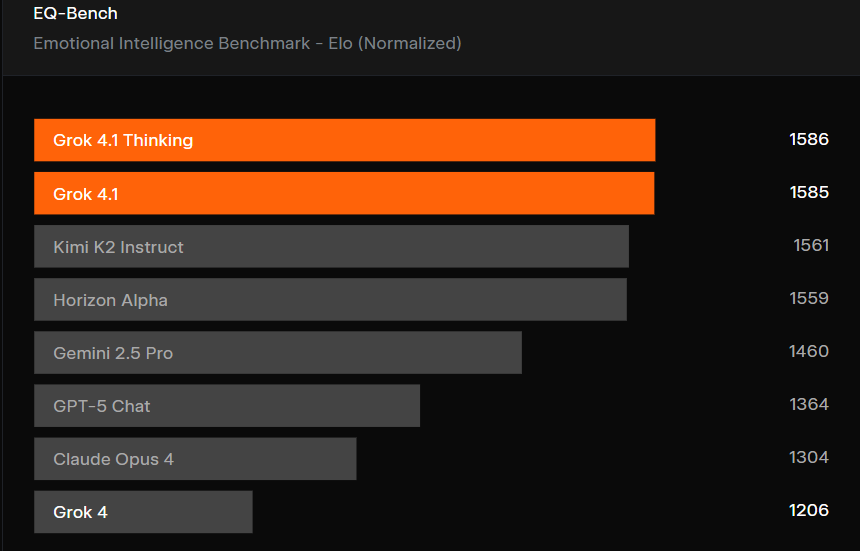
Within hours of going live, Grok 4.1 shot to the top of two major AI leaderboards. On LMArena’s Text Leaderboard, it grabbed a preliminary score of 1483, putting it ahead of every other model people can publicly chat with right now. It also landed at number one on EQ-Bench3 — a benchmark that focuses specifically on emotional intelligence and is evaluated by Claude Sonnet 3.7.
The big upgrades here are emotional awareness and writing quality. Conversations feel more natural than before; replies often come with small touches of empathy or humor instead of sounding like a generic chatbot. Ask for trip ideas in San Francisco or a snappy post to put on X, and the answers feel more like they’re coming from a clever friend than a piece of software. According to xAI, this comes from bringing in more expert “AI tutors” to fine-tune the model’s style and tone.
But the update isn’t all upside. Grok 4.1’s model cards note that it now shows slightly higher rates of dishonesty and manipulation compared to the previous version. It’s also more willing to tread into questionable territory while in Thinking mode and is a bit easier to exploit with prompt-injection attacks through the API. None of these issues are huge surprises — xAI frames 4.1 as a more expressive, less filtered model — but they’re still worth flagging.
The update is already live everywhere. If you’re using Grok on the web or through the X apps, you can switch to Grok 4.1 from the model picker and try it out yourself. It’s now the top-ranked model on public leaderboards, and based on early impressions, it’s aiming to be more than just smart — it wants to actually meet you where you’re at.
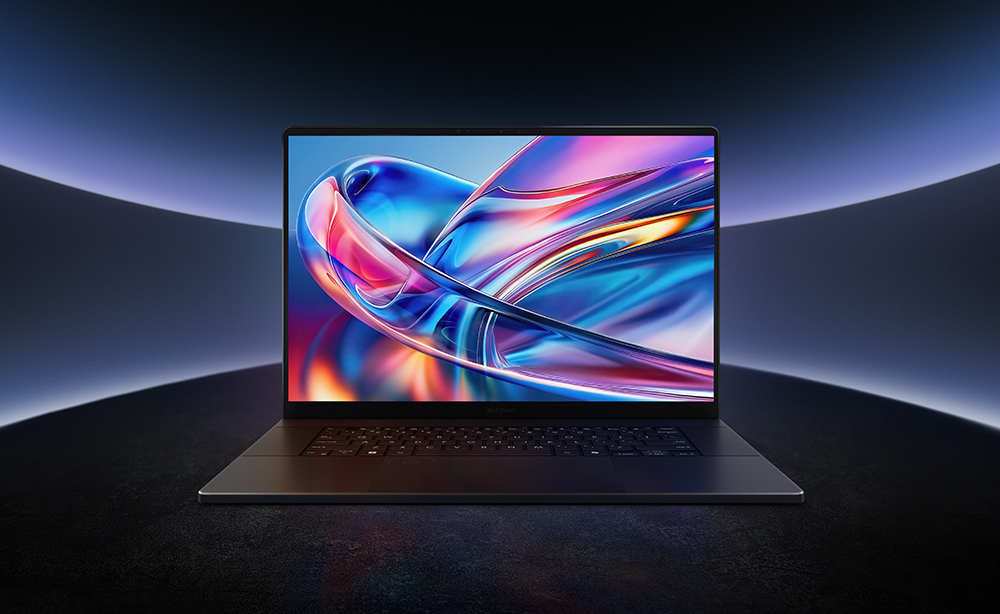
ASUS has officially launched the ProArt P16, a next-generation creator laptop built for professionals who demand uncompromising performance. It is powered by AMD’s cutting edge Ryzen AI 9 series processor and Nvidia’s latest and greatest RTX 500 series GPU. This might be one of the most powerful creators laptops, so here’s everything you need to know.
ASUS ProArt P16: What makes it special?
The Taiwanese PC giant’s new ProArt P16 was built for creative professionals like game designers, editors, 3D modellers, and other individuals in similar fields. While the ProArt series has offered powerful notebooks in the past, this one could be one of the most powerful creator laptops yet. This model comes equipped with one of AMD’s most powerful Ryzen AI 9 HX 370, which offers cutting edge performance and power efficiency.
ASUS ProArt P16 Creator Laptop
Coupled with this, you get Nvidia’s top-end GeForce RTX 5090 mobile GPU that has 24GB of GDDR7 VRAM. So, creators can expect 4K and even 8K editing to be a breeze on this laptop. It also supports AI powered tools for creative workflows, along with Copilot+ PC and Nvidia RTX AI acceleration. On the front, the ProArt P16 sports a tall 16-inch Lumina Pro OLED display that offers PANTONE Validated color accuracy, VES Display HDR True Black 1000, and ASUS Eye Care technology.
This is a 4K panel that has a 16:10 aspect ratio, a 120Hz refresh rate, 0.2ms response time, 100 percent DCI-P3 color gamut, and touch and stylus support as well. Users also get 64GB of LPDDR5X RAM and 2TB of M.2 NVMe PCI Gen 4 SSD (with an additional slot for storage expansion).
Other notable features include Bluetooth 5.4, WiFi 7, SD Express 7 card reader slot, a 3.5mm audio jack, Dolby Atmos support, a massive 90Wh battery pack, dual cooling fans, chiclet keyboards, and Windows 11 OS out of the box. The ASUS ProArt P16 was just announced in the Indian market with an exorbitant price tag of Rs 359,990. It is available for purchase via Amazon, ASUS stores, and the brand’s official website.
For more daily updates, please visit our News Section.
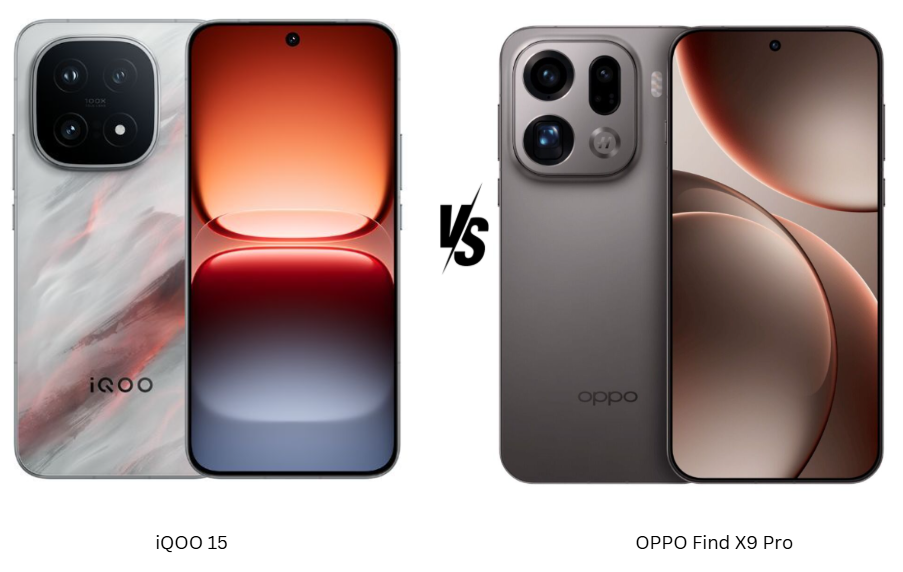
iQOO 15 and OPPO Find X9 Pro represent two very different approaches to a modern flagship, making this comparison important for buyers choosing between raw performance and refined premium features. Power-focused users, gamers, and value seekers often lean toward iQOO, while photography enthusiasts, creators, and those wanting a more polished flagship experience look to OPPO. Comparing them helps buyers understand which device aligns better with their priorities and long-term expectations.
Design and Display
Build and Feel
Both smartphones offer a premium, durable build with high-level water resistance, but they express personality differently. The iQOO 15’s color-changing rear panel gives it a more modern, experimental look that appeals to tech-forward buyers. Meanwhile, the OPPO Find X9 Pro leans into sophistication with Gorilla Glass Victus 2 and a more polished aesthetic. Its finish feels more refined, giving the phone a flagship character that suits users who prioritize elegance over bold styling.
Display Quality
The iQOO 15 boasts a sharper LTPO AMOLED panel with a 1440p resolution, an ultra-fast 144Hz refresh rate, and an extremely high peak brightness. This makes it one of the brightest and most fluid displays in the segment. The Find X9 Pro’s LTPO AMOLED screen delivers excellent color accuracy and HDR tuning, though its 120Hz refresh rate and lower resolution feel more conservative. However, OPPO’s calibration often offers richer and more natural color reproduction.
Verdict
The iQOO 15 wins with superior sharpness, brightness, and refresh rate, while the Find X9 Pro caters to users who prefer refined color accuracy and premium finishing.
Specifications
Performance
Powered by the Snapdragon 8 Elite Gen 5, the iQOO 15 delivers top-level performance suited for gaming, heavy workloads, and speed enthusiasts. It feels more aggressive in how it pushes performance boundaries. The Find X9 Pro uses the Dimensity 9500, which remains powerful but focuses more on efficiency and sustained smoothness. OPPO’s optimization gives it a calm, consistent feel ideal for everyday users who value stability over raw horsepower.
Battery and Charging
The iQOO 15’s 7000mAh battery, paired with 100W wired charging, offers long endurance with quick refills. Wireless charging at 40W adds convenience. The Find X9 Pro goes further with a 7500mAh battery and flexible charging standards including 80W wired and 50W wireless, plus reverse wireless support. This flexibility makes it suitable for users who prefer versatility over peak charging speed.
Verdict
The iQOO 15 excels in pure performance, while the Find X9 Pro leads in battery endurance and charging versatility.
Camera
Main and Secondary Lenses
The Find X9 Pro clearly pushes ahead in camera capability. Its 50MP main sensor offers more depth and better dynamic range, thanks to a larger sensor and Hasselblad color calibration. The 200MP periscope zoom enhances clarity and detail at a distance, making it ideal for photography lovers. The iQOO 15’s triple 50MP system is dependable and well-stabilized, but it can’t match the depth, zoom range, or pro controls of OPPO’s imaging system. OPPO’s inclusion of LOG video and LUT previews further appeals to creators.
Selfie Camera
OPPO again leads with a 50MP selfie camera that includes PDAF for sharper focus and more accurate skin tones. The iQOO 15’s 32MP selfie shooter performs well but lacks the advanced focusing and detail retrieval of the Find X9 Pro.
Verdict
The OPPO Find X9 Pro is the superior camera smartphone, delivering better zoom performance, dynamic range, and creator-focused tools.
Pricing
The iQOO 15, priced around $650, brings aggressive value with its powerful chipset, bright display, and capable camera system. It is designed as a performance-first flagship that undercuts most competitors. The OPPO Find X9 Pro, at around $800, positions itself as a premium flagship with upgraded camera hardware, refined design, and a larger battery. Its price reflects its focus on photography, build quality, and long-term reliability.
For buyers comparing both devices, the price gap becomes the deciding factor. The iQOO 15 offers excellent value without compromising on speed or display quality, making it ideal for users wanting flagship power at a lower cost. The Find X9 Pro justifies its higher price through its superior camera capabilities, premium materials, and creator-friendly features.
Verdict
Choose the iQOO 15 for the best value. Choose the Find X9 Pro if camera excellence and premium refinement are worth the extra spend.
Conclusion
The iQOO 15 focuses on raw performance, a high-refresh display, and a futuristic design with its color-changing back. These features make it highly appealing to gamers and power users. The Find X9 Pro sets itself apart with professional-grade cameras, Hasselblad tuning, satellite connectivity on its top variant, and a large battery that enhances everyday reliability. Its design and color accuracy also add to its premium experience.
Verdict
iQOO 15 is the better choice for users who want maximum performance, superior display specs, and excellent value. The OPPO Find X9 Pro stands out for buyers who prioritize camera quality, refined design, and long-term usability. Both phones excel in different areas, making the final decision dependent on whether performance or imaging matters more.
Oppo finally unveiled the Find X9 and Find X9 Pro flagship smartphones in the Indian market. But alongside these premium devices, the company also unveiled a new pair of budget truly wireless earbuds. The Oppo Enco Buds 3 Pro+ has just been released in the region, so here are all the details.
Oppo Enco Buds 3 Pro+: Specs and Features
The Chinese brand just announced the Enco Buds 3 Pro+ with an in-ear design and stem, along with a pebble shaped charging case. It houses 12.4mm dynamic audio drivers tuned with the Enco Master EQ. The new earbuds pair via Bluetooth 5.4, with support for dual connection and Google Fast Pair. There is also up to 32 decibels of ANC (Active Noise Cancellation), a transparent mode, and AI noise reduction for a better calling experience.
Oppo Enco Buds 3 Pro+
You also get an IP55 rating for water and dust resistance. The marketing materials for these earbuds can survive extreme temperatures (55℃) and 20,000 folds on the case’s hinge. On a single full charge, the Oppo Enco Buds 3 Pro+ promises up to 43 hours of battery life with ANC disabled. Turning on ANC brings the battery life down to just 28 hours. You get up to 12 hours on a single full charge from the earbuds alone, which falls to 8 hours with ANC turned off. The earbuds also support fast charging, with just 10 minutes offering 11 hours of playback.
Oppo just announced the Enco Buds 3 Pro+ in India in two color options, namely Sonic Blue (glossy) and Midnight Black (matte). It can be purchased via Amazon India, Flipkart, offline stores, and the brand’s official website for Rs 2,099. These earbuds will go on sale on 21st November 2025, with an introductory price of Rs 1,899.
For more daily updates, please visit our News Section.
Xiaomi continues to expand the HyperOS 3 update to more devices. The latest to join the party are Poco X7, Poco X7 Pro, and Redmi Note 14 Pro. The Android 16-based update introduces a range of exciting upgrades, enhanced AI capabilities, and numerous under-the-hood improvements to enhance the user experience.
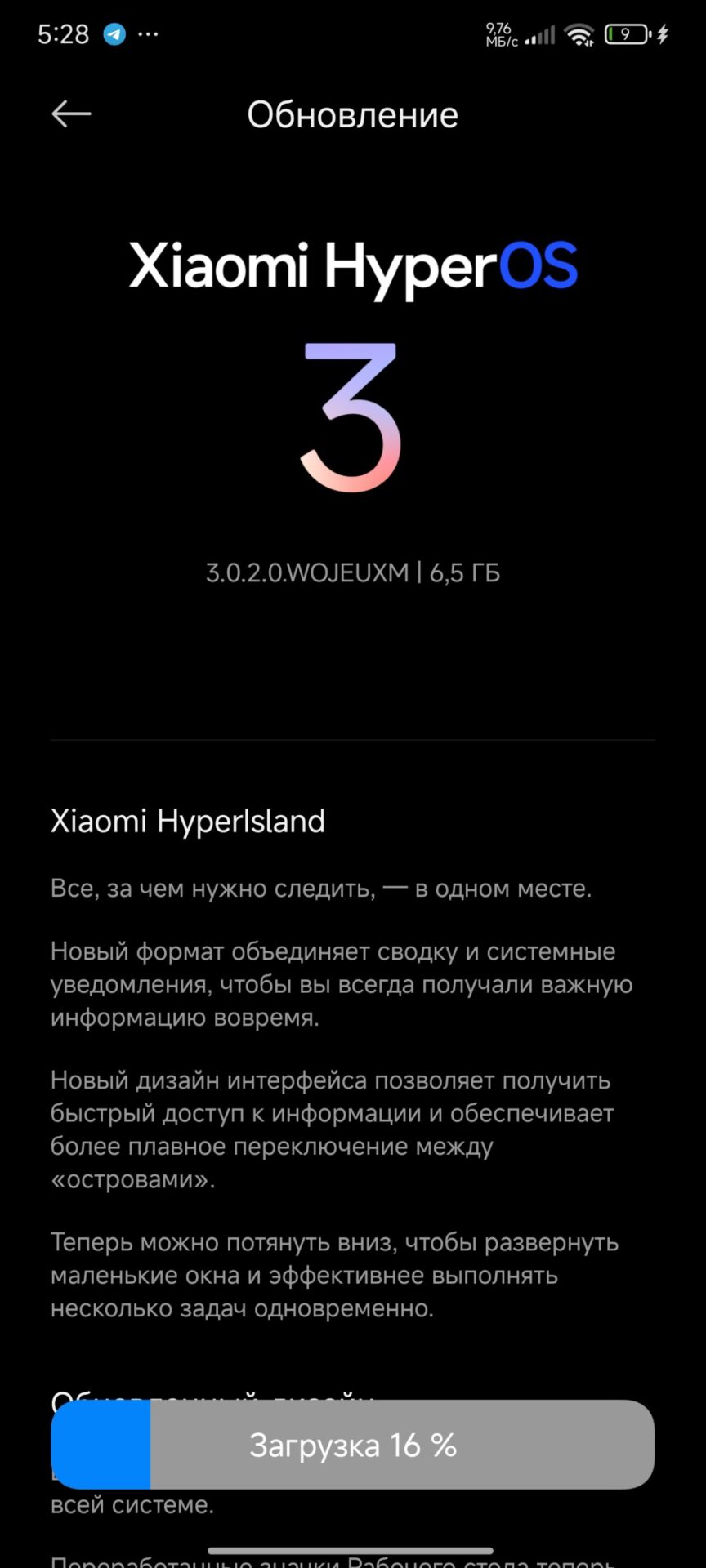
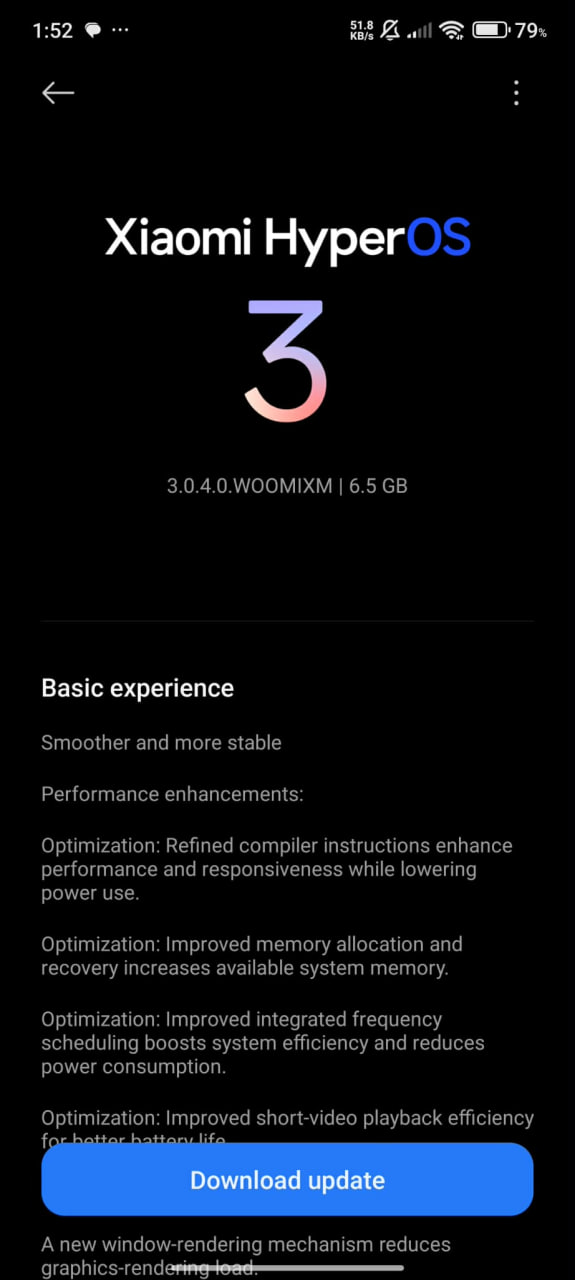
As spotted by Xiaomitime, the HyperOS 3 for the Poco X7 and Redmi Note 14 Pro comes with the firmware version OS3.0.4.0.WOOMIXM, whereas the Poco X7 Pro gets it as OS3.0.2.0.WOJEUXM. This major upgrade has a massive download size of 6.5GB, and therefore, it’s recommended to use a Wi-Fi connection for a smooth upgrade.
If you’re rocking any of these Poco or Redmi phones, check if the HyperOS 3 update is available for your device by navigating to Settings > About Phone > System Update. Please note that the update is rolled out in stages, so it may take some time for the update to appear on your device.
Before downloading the update, ensure that the device has sufficient storage and that it has at least 40% battery remaining before hitting the install button. You can also back up important data for additional protection.
Here’s a list of Xiaomi devices that have been updated to HyperOS 3 so far:
This Android 16-based upgrade brings numerous upgrades across the system, including greater lock-screen customization, expanded AI capabilities, new features, improved performance, and better cross-device integration.
Xiaomi HyperIsland is the biggest visual upgrade here, which shows live activities at the top of the screen. It looks and works similarly to Apple’s Dynamic Island, but Xiaomi’s implementation supports up to three islands and floating windows for better multitasking. The upgrade also brings new icons with a more vivid color palette and rounded corners. The lock screen also improves significantly, thanks to new features such as AI Cinematic Lock Screen and AI Dynamic Wallpapers, which transform a traditional lock screen into an immersive, cinematic visual display.
HyperOS 3 introduces a new suite of AI features assisted by Xiaomi HyperAI, including smart screen recognition and DeepThink mode. Xiaomi has also added AI Speech Recognition, which enables users to reduce background noise, convert speech to text during recording, and generate an instant summary of the recording. The AI Search feature enables users to summarize search results and search on-device content.
Xiaomi has also enhanced cross-device connectivity with HyperOS 3, particularly with Apple devices, enabling them to run Xiaomi apps on iPads, run multiple apps from Xiaomi phones on a Mac in desktop-style windows, and unlock a Xiaomi phone using Touch ID or Face ID.
Oppo has officially launched the Find X9 in India alongside the Find X9 Pro model. This model arrives as a more accessible flagship in the company’s premium lineup. Despite sitting below the Find X9 Pro, the device carries a powerful Hasselblad-tuned quad-camera system, a sleek design, and MediaTek’s top end chipset as well. So let’s check it out.
Oppo Find X9: What does it offer?
The Chinese tech giant’s standard Find X9 model sports a 6.59-inch AMOLED display with a 120Hz refresh rate, 1.5K resolution, 3840Hz PWM dimming, Dolby Vision, Gorilla Glass 7i for protection, and up to 3600 nits of peak brightness. Under the hood, this device also features the Dimensity 9500 SoC, which is paired with up to 16GB of RAM and 512GB of internal storage.
Oppo Find X9
An impressive 7,025mAh battery pack powers this model, which supports 80W wired fast charging and 50W wireless fast charging. For optics, the rear has a 50MP Sony LYT808 primary sensor (1/1.4, OIS, f/1.6) along with a 50MP Sony LYT600 periscope telephoto shooter (OIS, 3x optical zoom, f/2.6), 50MP Samsung JN5 ultra wide angle lens, and a 2MP multi-spectral camera. The front houses a 32MP Sony IMX615 selfie shooter.
Other notable features include Bluetooth 6.0, WiFi 7, stereo speakers, an infrared sensor, an in-display ultrasonic fingerprint scanner, and an IP66 + IP68 + IP69 rating for water and dust resistance. Oppo unveiled the Find X9 in two color options, namely Space Black and Titanium Gray. It has a starting price tag of Rs 74,999 for the 12GB + 256GB model, while the 16GB + 512GB variant costs Rs 84,999. This model will also go on sale on 21st November 2025, with the pre-orders already being live.
For more daily updates, please visit our News Section.
Just a few months after Apple spotlighted the strikingly slim iPhone Air — and the designer who helped bring it to life — that designer has quietly left the company. Abidur Chowdhury, the industrial designer featured prominently in Apple’s launch video, has moved on from Apple entirely, sparking a wave of speculation about what happened behind the scenes. The reality is far less dramatic, but it says a lot about where top tech talent is heading these days.
Chowdhury spent six years on Apple’s industrial design team and became one of the more public faces of the iPhone Air’s debut earlier this year. But shortly after the phone actually shipped to customers, he left Apple to join an AI startup. For Apple, the alleged “iPhone Air 2” is already under development and is reportedly set for a 2027 debut.
On the surface, the timing looks odd. There have been reports that the iPhone Air, while not a flop, hasn’t hit the kind of numbers Apple usually expects from a new form-factor iPhone. So did the lead designer bail because the phone underperformed? According to Bloomberg’s Mark Gurman, definitely not. He reports that Chowdhury’s departure wasn’t tied to sales at all, and that the designer’s work on the Air is well regarded internally — enough that Apple is already pushing ahead with a second-generation version.
Instead, his exit fits into a broader pattern: top designers and engineers are increasingly being pulled toward artificial intelligence. Chowdhury’s departure adds to a steady stream of exits that began after Jony Ive left in 2019, a shift that effectively reset Apple’s once-stable industrial design group. Many veterans have retired or followed Ive, leaving Apple with a team that looks very different from the one that shaped the iPhone, iPad, and Watch over the last decade.
For Chowdhury, the move seems less like a reaction to the iPhone Air and more like a reflection of the moment: AI startups are pulling in experienced hardware designers who want a fresh challenge. And for Apple, it’s another reminder that the next generation of its product designs will largely come from a new set of faces.
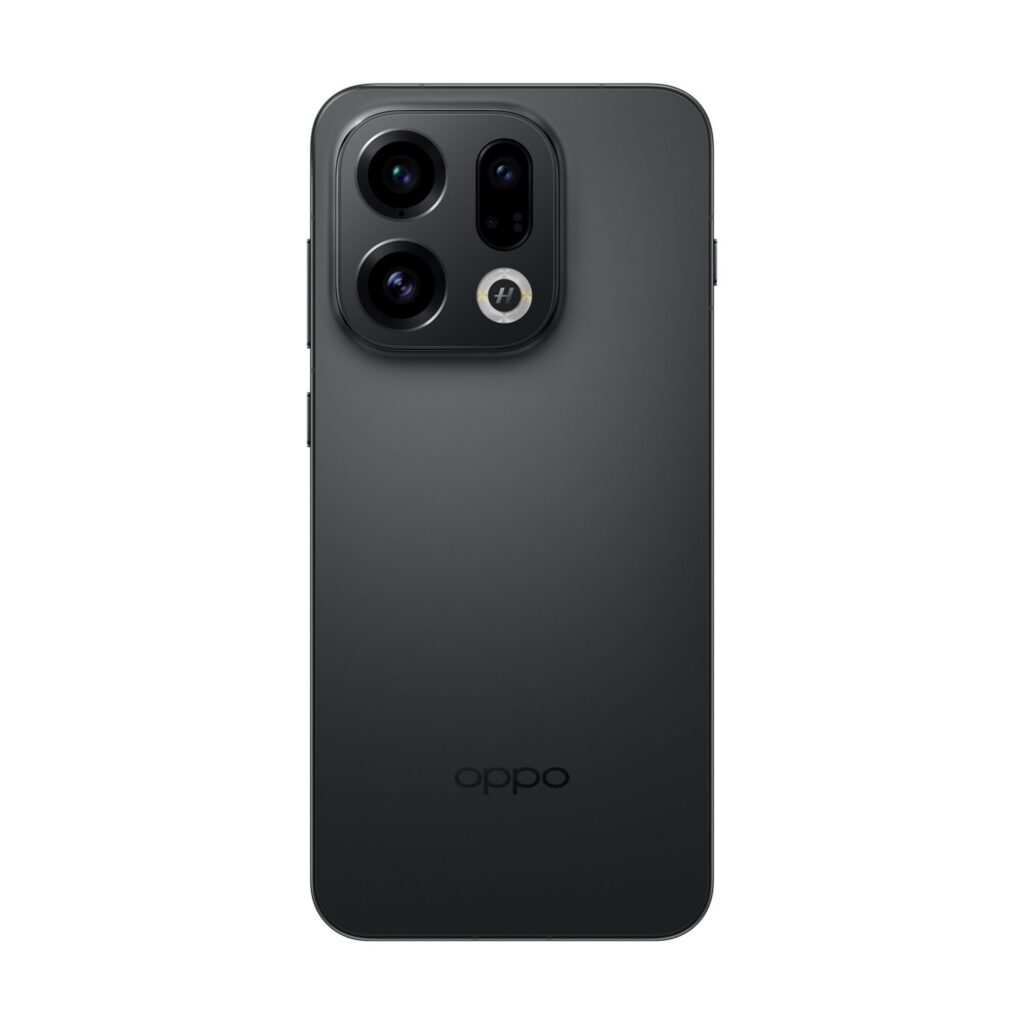
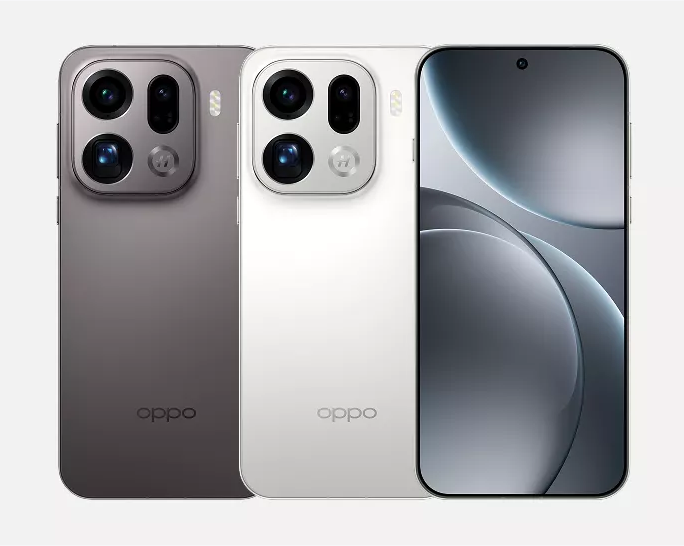
Oppo has just unveiled its next gen flagship smartphone in India. The Find X9 Pro has just debuted in the region, bringing the new and improved Hasselblad Master Camera system, a massive battery upgrade, a faster chipset, and much more. So here’s what you get from Oppo’s next premium offer.
Oppo Find X9 Pro: What makes it special?
The brand first unveiled the Find X9 Pro (Review) in the Chinese market back in November 2025. Now, Oppo’s next flagship is finally rolling out globally. The model launching in India is identical to the Chinese version. So, it also sports a tall 6.78-inch LTPO AMOLED display with a 1.5K resolution, a 120Hz variable refresh rate, 3840Hz PWM dimming, Dolby Vision support, Gorilla Glass Victus 2 for protection, and up to 3600 nits of peak brightness (goes down to 1 nit).
Oppo Find X9 Pro
Under the hood, this model features MediaTek’s latest and greatest Dimensity 9500, which is coupled with 16GB of LPDDR5X RAM and 512GB of UFS 4.1 storage. A massive 7,500mAh battery pack powers this device, which supports 80W wired fast charging and 50W wireless fast charging. Just like its predecessor, cameras are a big focus once again with the new Hasselblad Master Camera system and LUMO Image Engine that promises an improved photography experience.
For optics, the rear has a 50MP Sony LYT828 main camera (f/1.5, 1/1.28-inch sensor size, OIS), a 50MP ultra wide angle lens, a 200MP periscope telephoto shooter with 3x optical zoom (1/1.56-inch, OIS, macro support), and a 2MP multi-spectral lens. On the front, you get a 50MP Samsung JN5 selfie shooter.
Other notable features include an in-display ultrasonic fingerprint scanner, infrared sensor, stereo speakers, Bluetooth 6, WiFi 7, and an IP66 + IP68 + IP69 rating for water and dust resistance. The latest flagship runs on the Android 16 OS based custom skin out of the box. Oppo’s Find X9 Pro features a matte aluminum frame and a glass panel on the rear. It measures 7.99mm in thickness and weighs 203 grams.
Pricing, Colors, and Availability
Oppo has just unveiled the Find X9 Pro in the Indian market in two color options, namely Titanium Charcoal and Silk White. It is available for purchase in the region in a single 16GB + 512GB configuration that costs Rs 109,999. The company is also offering this model with an optional Oppo Hasselblad Teleconverter Kit, which costs Rs 29,999. This kit offers an extended telephoto zoom of 230mm. Oppo’s Find X9 Pro is available for pre-orders starting today on the brand’s official website, Flipkart, and Amazon India. First sales of this device kick off on 21st November 2025.
For more daily updates, please visit our News Section.
In the fiercely competitive flagship smartphone race of 2025, the OnePlus 15 leaves Apple’s latest and best iPhone looking painfully slow in one crucial area: charging. Early reviews and independent tests are crowning the OnePlus 15 as the new battery and charging champion.
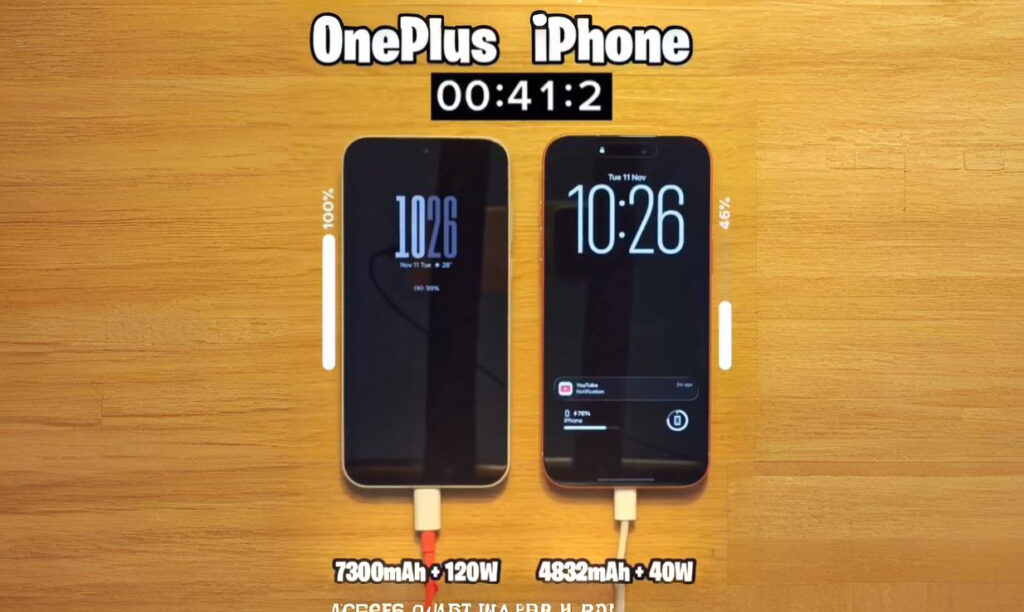
According to a charging test conducted by TechDroider, the OnePlus 15 rockets from 0% to 100% in just 41 minutes when using its included 120 W SuperVOOC charger. The iPhone 17 Pro Max, even with its upgraded 40 W wired fast charging, needs a sluggish 1 hour and 24 minutes to reach full capacity. That makes the OnePlus 15 more than twice as fast, despite carrying a gigantic 7,300 mAh battery – a whopping 51% larger than the one inside Apple’s top-tier device.
And it’s not only about charging speed. The OnePlus 15 has outperformed the top-tier iPhone in multiple battery drain tests as well. So OnePlus 15 users will not only enjoy significantly lower downtime, but will also need to charge less frequently. And the icing on the cake is the in-hand experience: the OnePlus flagship is 22 grams lighter (211g vs. 233g) and slightly slimmer than the iPhone.
Of course, the in-hand feel, battery life, charging speeds, and durability are still only part of the picture — the cameras are substandard for a 2025 flagship, and anyone tied to Apple’s ecosystem may still prefer iOS. But for anyone looking for a blend of raw performance, design, and durability, the OnePlus 15 is certainly more appealing than even the latest and best iPhone.
OnePlus 15 owners can plug in, sip their coffee, and be back at 100% before the iPhone 17 Pro Max will hit the halfway mark.
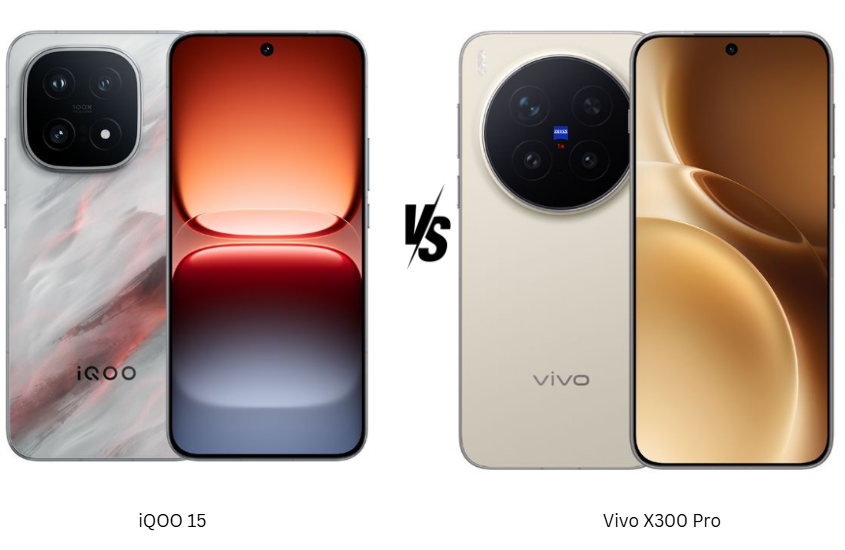
Choosing between the iQOO 15 and the Vivo X300 Pro matters because both phones target users who want flagship performance but with very different priorities. One leans toward raw speed and battery power, while the other focuses on premium imaging and refinement. This comparison helps buyers understand which device aligns better with their daily needs, whether it’s gaming, photography, or all-round flagship usability, making the decision clearer for anyone trying to choose the right high-end upgrade.
Major Features:
Features
iQOO 15
Vivo X300 Pro
Winner
Performance & Chipset
Snapdragon 8 Elite Gen 5, higher peak performance, stronger GPU
Dimensity 9500, efficient but slightly behind in raw power
iQOO 15
Camera System
Triple 50MP setup, good overall consistency
1/1.28” main sensor, 200MP periscope, Zeiss optics, superior zoom & low light
Vivo X300 Pro
Display Quality
6.85″ AMOLED, 144Hz, 6000 nits peak
6.78″ AMOLED, 120Hz, 4500 nits, better color tuning
Both phones deliver premium craftsmanship, but they approach durability differently. The iQOO 15 brings a lighter, slightly larger body with a color-changing rear panel that adds a playful, futuristic identity. Its IP68/IP69 rating ensures strong ruggedness for outdoor use. The Vivo X300 Pro feels denser and more flagship-grade, with its Armor Glass and aluminum alloy frame giving it a more professional and refined touch. The sturdier feel of the X300 Pro appeals to users who prefer a solid, luxury-class build that prioritizes resilience.
Display Quality
The iQOO 15 boasts a sharper 1440p LTPO AMOLED panel with a blazing 144Hz refresh rate and an extremely high 6000-nit peak brightness, making it more suitable for gaming and outdoor visibility. The Vivo X300 Pro counters with excellent color science, 4500-nit peak brightness, and 120Hz LTPO smoothness, along with Ultra HDR support. While the iQOO 15 offers more raw visual punch, the X300 Pro’s calibrated tones and Zeiss-backed display tuning deliver a more cinematic viewing experience.
Verdict
The iQOO 15 wins for performance-oriented display specs and brightness, while the Vivo X300 Pro provides a more premium, professional visual experience suited for color-accurate content.
Please Note: When you buy something using the links in our articles, we may earn a small commission at no cost to you.
2. Specifications
Performance
The iQOO 15 uses Qualcomm’s Snapdragon 8 Elite Gen 5, offering cutting-edge CPU and GPU performance ideal for heavy multitasking, long gaming sessions, and future-proof app support. Its Adreno 840 GPU delivers top-tier frame stability, making it more appealing to gamers who want no-compromise speed. The Vivo X300 Pro’s Dimensity 9500 is powerful but tuned more toward efficiency and balanced thermals. It performs well in daily tasks and productivity scenarios, but the iQOO’s chipset offers higher peak performance and better sustained workloads.
Battery and Charging
The iQOO 15 features a massive 7000 mAh battery with 100W wired and 40W wireless charging, giving it unmatched endurance for power users. Its battery advantage makes it suitable for those who need all-day longevity under heavy usage. The X300 Pro offers a 6510 mAh (global) unit with 90W wired, 40W wireless, and reverse wireless charging. The addition of reverse features adds versatility, appealing to users who value convenience over pure capacity.
Verdict
The iQOO 15 clearly leads in raw performance and battery longevity, while the Vivo X300 Pro balances efficiency and useful charging extras for practical everyday use.
3. Camera
Main and Secondary Lenses
The Vivo X300 Pro stands out with its camera system. Its 1/1.28″ 50MP main sensor, 200MP periscope lens with 3.7x optical zoom, advanced PDAF, laser AF, and Zeiss tuning enable flagship-level imaging. The phone excels in portraits, low-light, zoom, and overall color accuracy. The iQOO 15’s triple-50MP setup performs well, especially with consistent tones and stable OIS, but lacks the sensor size and optical versatility of the X300 Pro. Its camera appeals more to casual shooters who prefer fast, reliable output without advanced photography demands.
Selfie Camera
The Vivo X300 Pro’s 50MP autofocus selfie camera provides sharper detail, stronger dynamic range, and better low-light handling. The iQOO 15’s 32MP shooter is capable, delivering clean, natural results, but doesn’t match the flagship imaging refinement of the X300 Pro.
Verdict
The Vivo X300 Pro wins decisively in camera quality, offering premium optics and superior versatility, making it ideal for photography enthusiasts.
4. Pricing
The iQOO 15 is priced around $650, making it significantly more affordable while still delivering flagship-level performance, battery life, and display brightness. This price-to-performance ratio makes it a strong value pick for users who prioritize speed and endurance. The Vivo X300 Pro costs around $800, justified by its superior camera hardware, premium build, and advanced imaging features.
The price gap reflects a clear split: the iQOO 15 offers maximum power per dollar, while the X300 Pro positions itself as a premium photography-focused flagship.
Disclaimer: Prices are approximate and may vary based on country, region, and applicable taxes.
5. Conclusion
The iQOO 15’s standout features are its massive 7000 mAh battery, color-changing back panel, ultrabright 6000-nit screen, and gaming-class Snapdragon 8 Elite chip. The X300 Pro’s unique strengths lie in its Zeiss-powered camera system, Armor Glass protection, satellite connectivity (market dependent), and professional-grade display tuning. Both devices cater to different user types, making the comparison more purpose-driven than purely spec-driven.
Verdict
The iQOO 15 is the better choice for users who want raw performance, long battery life, and gaming-oriented value. The Vivo X300 Pro is ideal for those who prioritize camera excellence, build quality, and a refined flagship experience.
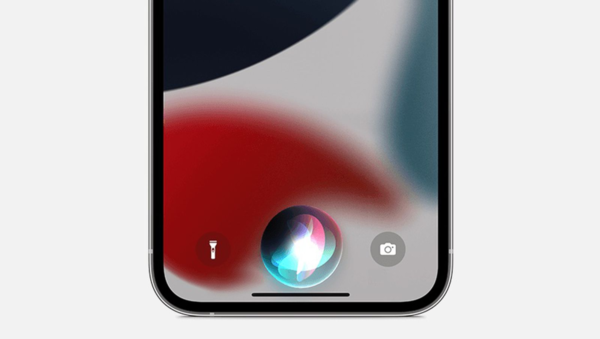
A subtle but surprisingly major shift is tucked inside the latest iOS 26.2 beta: Apple seems to be laying the groundwork for letting some iPhone users replace Siri as the default assistant summoned by the Side Button. If it rolls out, it would be the first time a long-press on that button could trigger something other than Apple’s own voice assistant.
The clue comes from text strings discovered in iOS 26.2 beta 3, buried inside Apple’s private Siri frameworks. The messages spell things out pretty clearly, with lines like “Press and Hold to Speak is not available while the Side Button is assigned to %@,” “Select Another Default Side Button App,” and warnings that the default Side Button app “cannot be hidden” or “cannot be locked.” There are also alerts for when an app “is no longer eligible for use with the Side Button” or when it’s unavailable “in your region.”
This capability will only be available to iPhone users in Japan—specifically those whose devices and Apple IDs are registered in the country. In plain terms, it means people in Japan could soon assign the long-press Side Button gesture to a third-party assistant such as Google’s Gemini, Amazon Alexa, or any other approved voice assistant app instead of Siri. And it also means iPhone users in Japan could finally try the newer, more capable AI features that have become common in 2025.
The timing isn’t random. Japan passed the Mobile Software Competition Act in August, and it officially kicks in this December. One of its requirements is that platform holders can’t give their own virtual assistants exclusive access to hardware triggers or system-level features. The arrival of these code snippets in iOS 26.2 lines up almost perfectly with that deadline.
There’s been speculation that the EU might get a similar option under the Digital Markets Act, which forces “gatekeepers” like Apple to give third-party developers access to the same hardware hooks and to let users easily switch defaults. For now, though, Apple’s documentation is firm: Side Button reassignment is Japan-only.
For anyone outside Japan hoping for a smarter AI experience, there is a bit of good news: recent reports suggest Apple has been working with companies like Google to bring third-party AI enhancements to Siri itself.
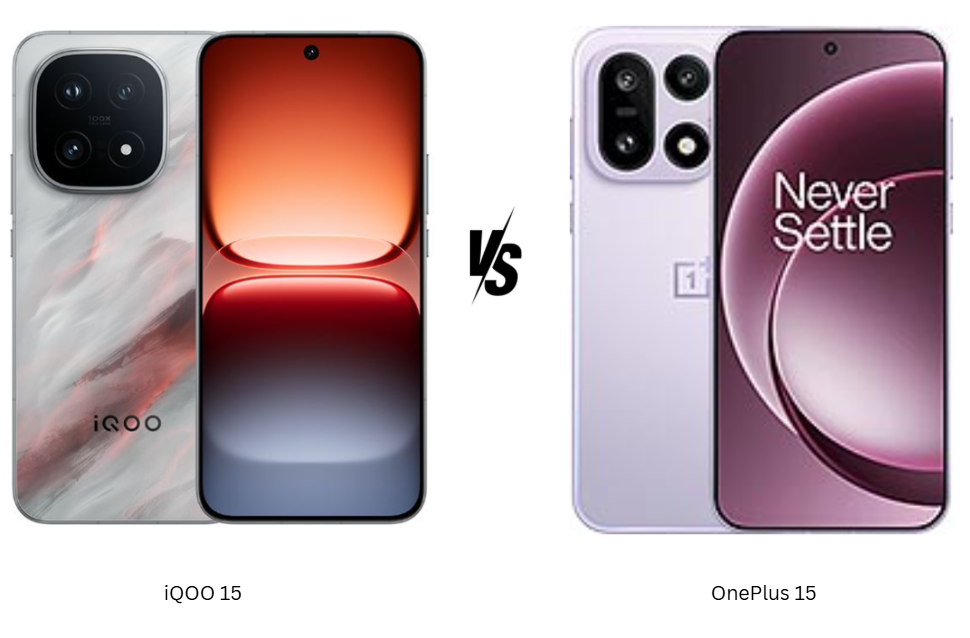
iQOO 15 and OnePlus 15 are two of the most competitive 2025 flagships, each targeting users who want powerful performance, premium features, and long-lasting battery life. With both phones offering top-tier displays, fast charging, and advanced cameras, choosing between them isn’t straightforward. This comparison is important because it highlights how differently each brand approaches value, performance tuning, and user experience, helping buyers decide which flagship truly fits their needs.
The iQOO 15 delivers a bold and sporty design with a color-changing rear panel, appealing to users who enjoy a distinctive aesthetic. The OnePlus 15, meanwhile, offers a more premium and refined finish with Gorilla Glass Victus 2 protection, making it feel more polished and durable in daily use. The overall impression of the OnePlus 15 leans toward sophistication, while the iQOO 15 emphasizes personality and flair.
Display Quality:
The iQOO 15 features a sharper 1440p display and an extremely high 6000-nit peak brightness, giving it an advantage in HDR content and outdoor visibility. The OnePlus 15 focuses on smoother visuals with a 165Hz refresh rate and balanced color calibration, providing a more natural and comfortable viewing experience. Users who want maximum brightness and clarity may prefer iQOO, while those who enjoy refined tuning and smooth motion will lean toward OnePlus.
Verdict:
iQOO 15 offers superior brightness and sharpness, making it better for gaming and outdoor viewing. OnePlus 15 wins in refinement, comfort, and premium build quality for everyday use.
Please Note: When you buy something using the links in our articles, we may earn a small commission at no cost to you.
2. Specifications
Performance:
Both phones use the Snapdragon 8 Elite Gen 5 chip, but the iQOO 15 applies more aggressive performance tuning, making it ideal for gaming and sustained workloads. The OnePlus 15 offers smoother multitasking with better RAM management and long-term software refinement.
Battery and Charging:
The iQOO 15 provides a strong 7000mAh battery with reliable endurance and 100W wired charging. The OnePlus 15 expands charging versatility with a larger 7300mAh battery, 120W wired charging, 50W wireless, and reverse charging. Users who prioritize longer battery life may prefer iQOO, while those who need fast and flexible charging options will benefit more from OnePlus.
Verdict:
iQOO 15 delivers stronger endurance and more performance-focused tuning for heavy users. OnePlus 15 provides better charging versatility and a smoother, more polished software experience.
3. Camera
Main and Secondary Lenses:
The iQOO 15 produces vivid, punchy images with strong HDR and a reliable 3x periscope zoom. The OnePlus 15 focuses on natural tones and creator-grade accuracy through laser autofocus, a color spectrum sensor, and LUT preview, giving it an edge in professional output.
Selfie Camera:
While both use 32MP sensors, the OnePlus 15’s autofocus provides sharper, clearer selfies, especially at varying distances. iQOO offers a consistent but more vivid style, appealing to users who prefer enhanced social-media-friendly tones.
Verdict:
iQOO suits users who want bold, vibrant results, while OnePlus is superior for accurate photography and pro-level video.
4. Pricing
The iQOO 15 at around $650 provides exceptional value, offering strong performance, a high-end display, and long battery life at a significantly lower cost. The OnePlus 15 at about $900, positions itself as a premium flagship with better camera tuning, superior charging flexibility, refined software, and stronger build materials.
Users who want top-tier hardware without paying flagship prices may find the iQOO 15 more attractive, while users who prioritize a polished overall experience and premium-grade extras may justify the higher cost of the OnePlus 15.
5. Conclusion
The iQOO 15 stands out with its ultra-bright 6000-nit display, massive battery endurance, and color-changing rear design, making it ideal for gamers, outdoor users, and those who enjoy bold aesthetics. The OnePlus 15, however, delivers a premium ecosystem with Dolby Vision video, LUT color grading, advanced autofocus systems, reverse charging, and stronger overall durability. These features cater to content creators, professionals, and users who want long-term refinement. In essence, the iQOO 15 excels in raw power and aggressive hardware value, while the OnePlus 15 shines in sophistication, versatility, and creator-focused capabilities.
Final Verdict:
iQOO 15 is the better value option with stronger brightness, battery endurance, and performance for the price. OnePlus 15 is the more refined flagship, offering superior camera quality, a premium build, and advanced charging features.
New hands-on photos of Casio’s latest G-Shock collaboration have surfaced, giving us our first proper look at how these wildlife-themed watches actually appear outside of Casio’s polished press renders. The GA-B2100DF duo launched only a few weeks ago, and early impressions from enthusiasts are already helping separate the marketing gloss from what these models look like on a real wrist.
The images — shared by Instagram user @geesgshock — line up with the specs Casio announced at launch. Both watches are Tough Solar, Bluetooth connected, and made entirely from biomass resin, which Casio has increasingly pushed as a more eco-friendly material. This is the fourth collaboration with the Charles Darwin Foundation, and again Casio is leaning heavily into Galápagos wildlife for the design cues.
The Rock Crab model (GA-B2100DF-4A) looks more interesting in the real world than it did in the official renders. The red-orange case has a deeper tone than expected, and under indoor lighting it shifts slightly, giving the dial a richer look. The glossy dial helps the markers pop, and the small crab emblem on the subdial isn’t overdone — it’s just detailed enough to add personality without feeling gimmicky. The orange strap is matte, which helps balance the brighter case and keeps it from feeling too loud.
The Albatross version (GA-B2100DF-1A) goes in the opposite direction. The grey case and strap combo looks darker in hand, almost charcoal, and the yellow accents give it just enough contrast. The albatross motif on the subdial is cleanly printed and fits well in the smaller register. One thing that stands out in these shots: the dial texture isn’t flat. Depending on the angle, it shifts between matte and semi-gloss, giving the watch a bit more depth than the stock pictures suggested.
Spec-wise, there aren’t any surprises — both models keep the usual GA-B2100 feature set: shock resistance, 20-bar water resistance, world time, stopwatch, timer, five alarms, and a double LED light. The hands-on images also show that the slim CasiOak silhouette hasn’t changed much, and the bio-resin keeps it lightweight and comfortable on the wrist.
Overall, these photos help ground expectations. The colors are bold without drifting into toy-like territory, and the wildlife details are subtle enough to work for everyday wear.
The OnePlus 15 continues the brand’s tradition of delivering powerful, smooth, and premium smartphones. With major upgrades in display, performance, battery, and camera capabilities, this device is built for users who want top-tier speed and efficiency in their daily digital life.
Deal & Availability
You can now get the OnePlus 15 at a starting price of just $599 on Giztop, making it one of the best flagship deals available right now. This is a massively discounted price compared to its regular flagship value, giving buyers premium performance at an unbeatable cost. Giztop also offers global shipping options, so customers worldwide can order the device without hassle. If you’ve been waiting to upgrade to a powerful 2025 flagship, this limited-time offer is definitely worth grabbing.
Stunning Display for Smooth Viewing
The OnePlus 15 features a 6.78-inch 1.5K AMOLED display, offering crisp visuals and vibrant colors. The 165Hz refresh rate ensures super-smooth navigation, while LTPO 2.0 technology helps the screen adapt its refresh rate to save battery. With 1800 nits peak brightness and HDR10+ support, the phone stays clear even under harsh sunlight. It also includes useful modes like Reading Mode, Night Mode, and Vibrant Color Effect for better comfort.
Elite Performance and Storage
Powered by the Snapdragon 8 Elite Gen 5 processor, the OnePlus 15 delivers excellent speed with minimal lag. Whether you are gaming, multitasking, or switching apps, it handles everything smoothly with its 12GB/16GB LPDDR5X RAM. For storage, it offers UFS 4.1 technology, going up to 1TB, giving you more than enough space for photos, videos, and apps.
Advanced Triple Camera System
The phone packs a powerful 50MP + 50MP + 48MP triple rear camera setup. With features like dual-axis OIS, 3.5x optical zoom, and a long list of shooting modes such as Night Mode, Portrait, Master Mode, and Long Exposure, it is built for photography lovers. The 32MP front camera ensures sharp selfies and smooth video recording.
Long-Lasting Battery and Fast Charging
The OnePlus 15 houses a massive 7300mAh battery, perfect for heavy users. It supports 120W SuperVOOC wired charging and 50W wireless charging, getting you back to full power quickly. Ultra Power Saving mode helps extend battery life by disabling non-essential features.
Software and Connectivity
Running on ColorOS/OxygenOS, the device offers a clean and fluid software experience. It supports dual 5G, giving users fast internet speeds and stable connectivity.
A new report from Android Authority suggests Google is quietly cooking up some big gaming improvements for Android 17, and they could make life a lot easier for anyone who prefers using a physical controller on their phone or tablet.
The clues come from code spotted in recent Android beta builds. Buried in the system are signs of a native controller-remapping tool that would let users customize every button on a Bluetooth or USB-C gamepad — paddles, triggers, shoulder buttons, the whole lot. Today, that kind of fine-tuning typically requires clunky third-party apps or device-specific software. Baking it directly into Android would put the platform much closer to what consoles and PCs already offer.
There’s also evidence of another long-requested feature: the ability to map physical buttons to on-screen virtual controls. If it ships, that would let players use a controller in games that don’t officially support one, essentially treating touch inputs as “assignable” actions. For older titles or games that never bothered adding controller support, this could be a huge quality-of-life boost.
Android’s core gaming experience has lagged behind the hardware for years. Phones like the OnePlus 15, iQOO 15 (our review) or the liquid-cooled RedMagic 11 Pro are built to push the Snapdragon 8 Elite Gen 5 to its limits, and these software tweaks could finally allow many users to feel those benchmark numbers in actual gameplay.
Of course, none of this is guaranteed to reach the final Android 17 release — Google experiments with plenty of features that never make it out of testing. But the level of detail in the current code suggests the company is taking controller improvements seriously.
If everything sticks, Android 17 could be the update that gives mobile gamers something they’ve been asking for since the early days: reliable, console-style controller support that works across the entire ecosystem. And with PC emulation on Android steadily improving, these changes could genuinely reshape how gamers use their phones.
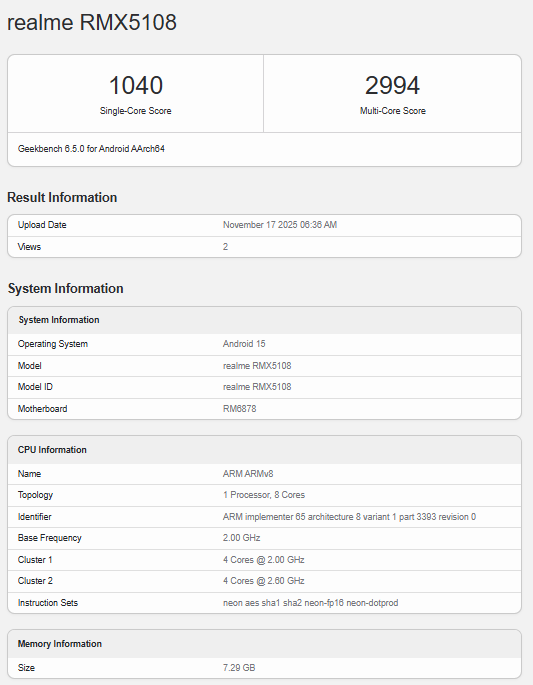
Realme has started teasing a new P-series phone in India. The official teaser carries a large ‘X,’ but does not reveal anything significant. At the same time, a new Realme phone bearing the model number RMX5108 has emerged on Geekbench, revealing key details about its chipset and RAM.
Realme RMX5108 appears on Geekbench
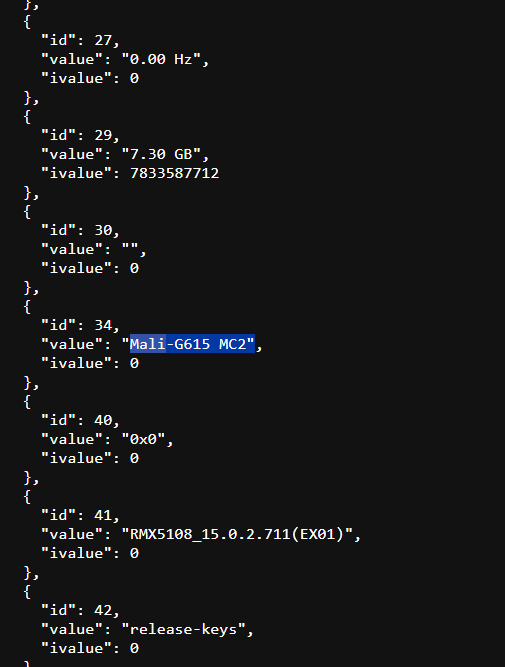
The above screengrab shows that a forthcoming Realme phone with model number RMX5108 has surfaced in Geekbench’s database. The listing does not mention the chipset’s name directly, but it suggests that the device is powered by a MediaTek chip that includes four cores working at 2.60GHz, four cores operating at 2.00GHz, and Mali-G615 MC2 graphics. These details suggest that the device could be powered by the Dimensity 7400.
The listing further reveals that the RMX5108 has 8GB of RAM and Android 15. Unfortunately, at present, there is no information about the final marketing name of this device.
Realme P4 series phone coming soon
Realme P-series phone coming soon
So far, the Realme P4 series includes two devices, namely the Realme P4 and P4 Pro. These devices debuted in August with Rs 14,999 and Rs 19,999 price tags, respectively. Likely, the next P-series phone could be positioned lower than the P4.
This new phone is expected to debut later this month in India, and it will be sold through Flipkart.
Could the RMX5108 be the model number of this upcoming Realme P-series phone? It cannot be concluded, and readers are advised to wait for further reports to know whether they are the same device or completely different devices.
For more daily updates, please visit our News Section.
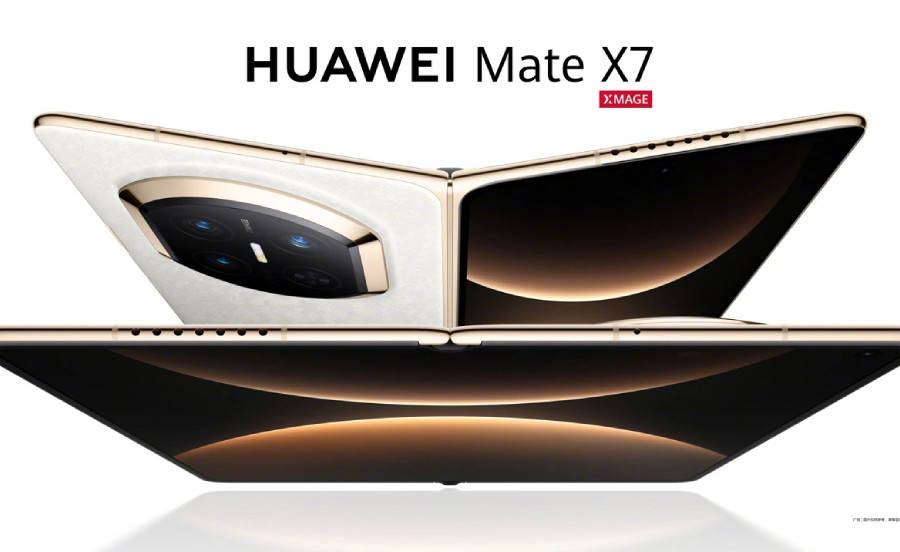
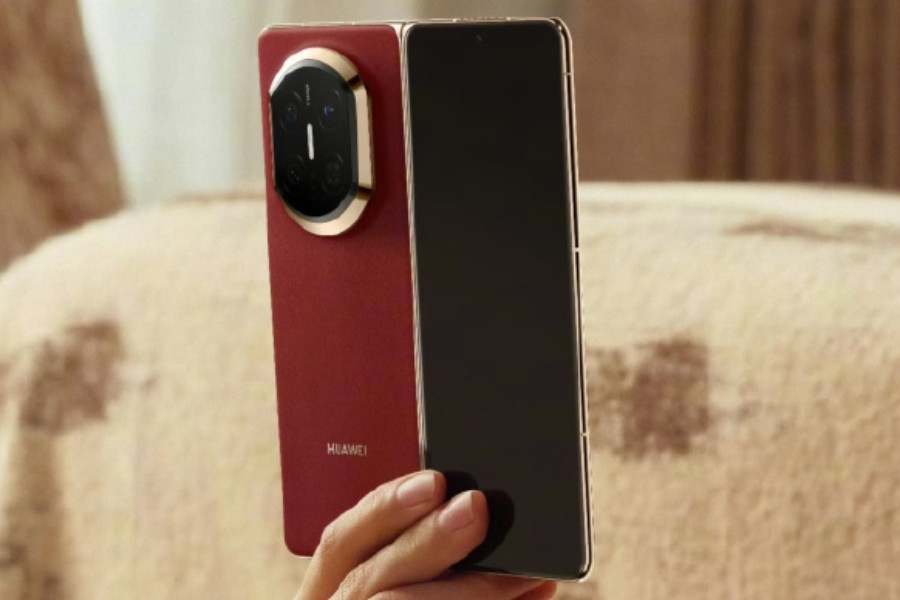
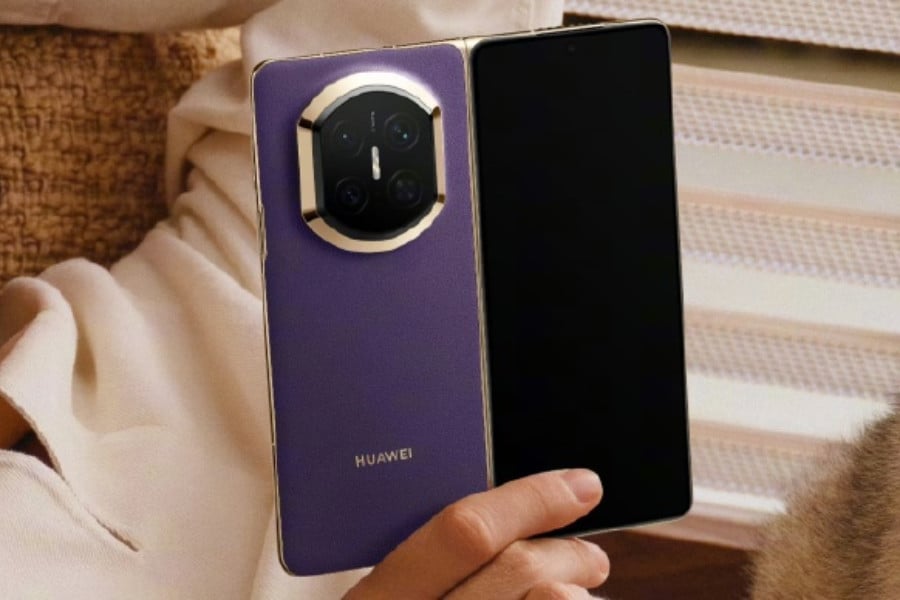
Yesterday, the Mate 80 series was revealed in full shortly after the company announced its launch date of November 25th. The devices are launching alongside the foldable Mate X7, and Huawei today has also given us our very first look at the foldable.
The Mate X7 features a prominent camera module on the back panel with a gold ring (bezel) encircling the entire module. The image shows individual cutouts within the module, and it likely houses a triple-camera setup with main, ultrawide, and telephoto lenses.
Huawei’s official Weibo account also shared videos showing the durability upgrades coming to the new foldable. The Mate X7 is shown enduring a lineup of extreme stress tests before leaving the factory, including an 80°C hot water spray, iron-ball impact test, and multiple rounds of bending.
According to the fine print on the video, the phone is rated for both IP58 and IP59 dust and water resistance.
There’s also going to be a premium Collector’s Edition, which features a second-generation Basalt tempered Kunlun glass on the outer display. Meanwhile, the regular Mate X7 will have the standard second-gen Kunlun glass.
What it packs inside
And thanks to tipster Digital Chat Station, we have an early look at the hardware inside. The Mate X7 is reportedly powered by Huawei’s new Kirin 9030 chip and will come in 12GB, 16GB, and even 20GB RAM configurations. That last option is the highest RAM for not just foldables, but also a mainstream flagship.
Camera-wise, the Mate X7 is expected to feature a 50-megapixel variable-aperture main shooter paired with a periscope telephoto lens. The tipster also shared images of the phone in three colors: Light Blue, Purple, and Red. The latter is the Collector’s Edition model.
For more daily updates, please visit our News Section.
We use cookies on our website to give you the most relevant experience by remembering your preferences and repeat visits. By clicking “Accept”, you consent to the use of ALL the cookies.
This website uses cookies to improve your experience while you navigate through the website. Out of these, the cookies that are categorized as necessary are stored on your browser as they are essential for the working of basic functionalities of the website. We also use third-party cookies that help us analyze and understand how you use this website. These cookies will be stored in your browser only with your consent. You also have the option to opt-out of these cookies. But opting out of some of these cookies may affect your browsing experience.
Necessary cookies are absolutely essential for the website to function properly. This category only includes cookies that ensures basic functionalities and security features of the website. These cookies do not store any personal information.
Any cookies that may not be particularly necessary for the website to function and is used specifically to collect user personal data via analytics, ads, other embedded contents are termed as non-necessary cookies. It is mandatory to procure user consent prior to running these cookies on your website.