Xiaomi Mi 9T was released quite some time ago and I’ve been using it for more than 1 month.
The Mi 9T has a great combination of premium design and good specs that include a Snapdragon 730 CPU, 6GB of RAM, 64/128GB of internal storage. Unfortunately, there is no microSD card slot for cheap storage expansion which is one of the flaws of this phone.
I like its design, build, display and many other features. The phone runs on the MIUI 10.3 Global ROM that is loaded with features and customization options but thanks to great optimization by Xiaomi, the phone feels smooth and fast on a daily basis.
The display is one of our favorite features of the Xiaomi Mi 9T. It’s good to see AMOLED panels even on budget/midrange phones like this and we can’t wait to see what manufacturers have in their pipeline moving forward.
Even though the Xiaomi Mi 9T is a really nice and powerful phone, it also has a few shortcomings you need to know before buying. Check out the video review to learn more.
Those who go for inexpensive FPV racing drones usually end up comprising on quality to avoid emptying their pockets.
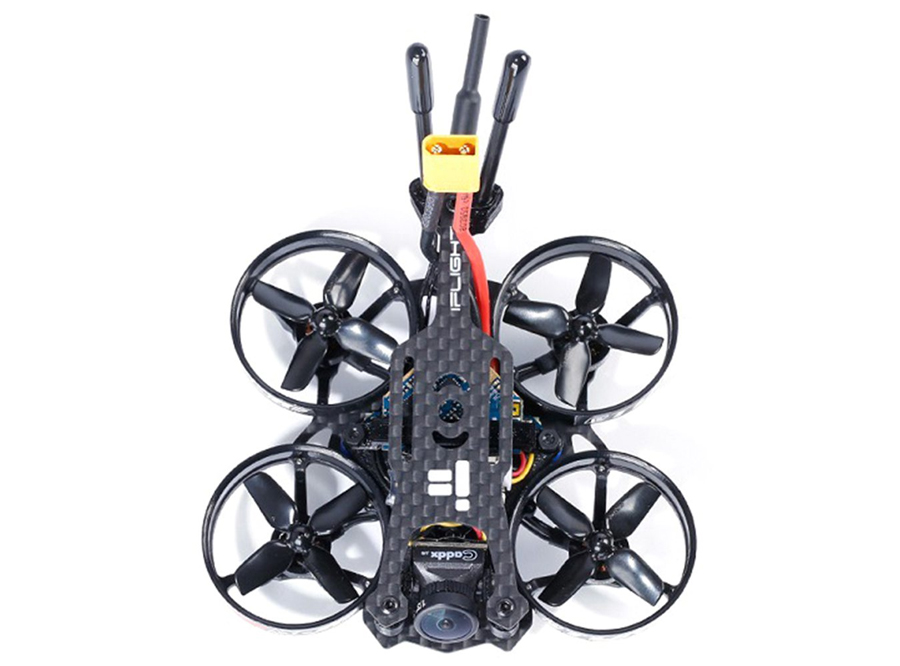
It is no secret that feature-laden FPV racing drones aren’t easy on the pocketbook. Much to the relief of cost-conscious drone enthusiasts, GeekBuying is bent on changing that by offering the amazing iFLIGHT TurboBee 66R 2S Cinewhoop FPV racing drone for a lowered price.
The aforesaid discount is currently available on two versions of the iFLIGHT TurboBee 66R 2S Cinewhoop FPV Racing Drone, including one that comes with a Frsky XM+ Receiver and the other that has a Frsky R-XSR Receiver. We will even show how you can save more money at checkout.
Backed by an iFlight BeeMotor 0802 12000KV 1-2S, the TurboBee 66R with XM+ Receiver would normally set you back a pretty penny on both online, as well as offline stores. GeekBuying is now doling out a noteworthy 37 percent discount to reduce the retail price of the drone to just $122.99.
Without this noteworthy discount, the TurboBee 66R would set you back $194.99. Aside from grabbing this great discount, GeekBuying users can apply coupon code 3LPNWXXU for an extra $6 off.
You can get your tech greedy hands on the iFLIGHT TurboBee 66R 2S Cinewhoop FPV Racing Drone – Frsky XM+ Receiver for a considerably lowered price of $116.99 after using the coupon code, which is likely to expire soon. Note that the promo was also on the verge of wrapping up at the time of writing.
You can visit this link to avail the discount and take advantage of the coupon before it expires.
Usually carrying a steep $211.99 price tag, this TurboBee 66R version uses a Frsky R-XSR Receiver. It might interest those who have restlessly been waiting to buy this model that GeekBuying is now offering it for a lowered price of just $129.99.
As if that weren’t enough, you can extend this 39 percent discount by applying coupon code 3LPNUQH8, which helps you grab an extra $4 off.
In other words, you can bring the original asking price of the iFLIGHT TurboBee 66R 2S Cinewhoop FPV Racing Drone with Frsky R-XSR receiver further down to $125.99 before clicking the ‘Place your Order’ button.
You can head straight to this link to avail the discount. Note that the promo will come to an end soon and the aforesaid coupon will also lapse shortly.
Following in the footsteps of leading handset manufacturers, more and more mobile phone manufacturing companies are now adopting triple-camera setups for their flagships.
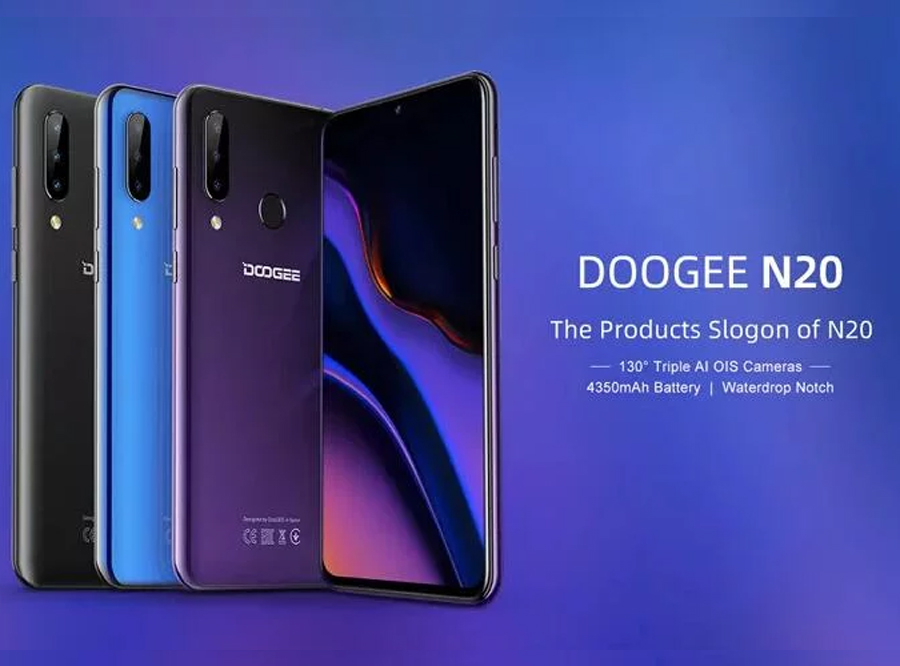
The latest brand to join the triple camera setup bandwagon is DOOGEE. The brand, known for offering high-performance products recently announced the presale kick-off of the DOOGEE N20, it new mid-range flagship.
Marketed as the ‘ultimate triple-camera flagship killer,’ the DOOGEE N20 can now be yours for a lowered price. Banggood has teamed up with DOOGEE to launch the Banggood DOOGEE N20 Phone Promotion, wherein the Chinese online store will be offering the recently unveiled phone for an unbeatable price.
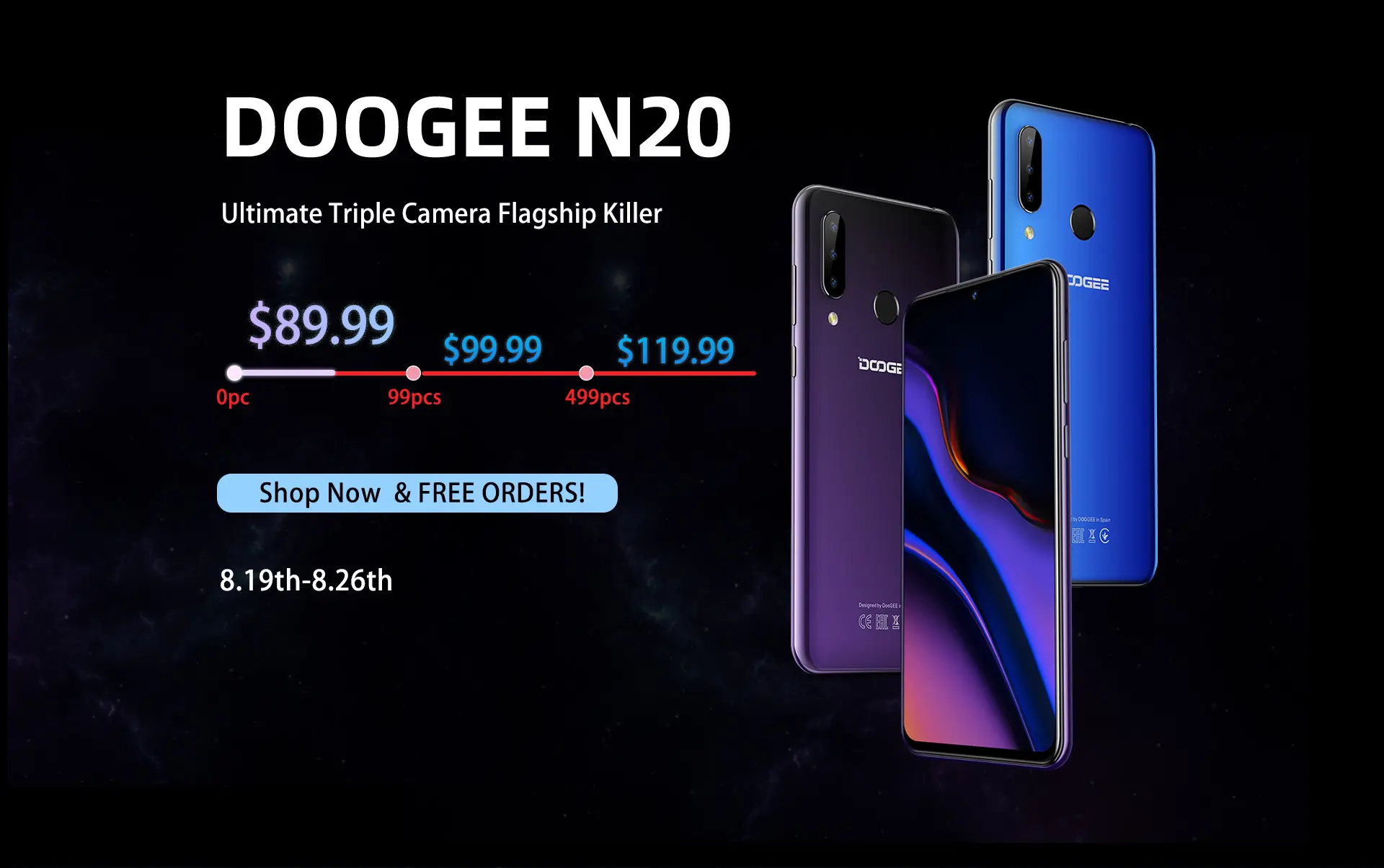
Equipped with 4GB RAM+64GB ROM, the DOOGEE N20 would normally set you back a pretty penny, but Banggood is giving loyal users to get their hands on the first 99 pieces for a lowered price of just $89.99. The rest of the 499 pieces will carry a $99.99 price tag, while the remaining units will sell for $119.99.
The DOOGEE N20 comes in three eye-catching color options including black, blue and purple. You can choose between the EU version, RU version and Other Area version based on your location.
It is worth mentioning here that the 4GB RAM+64GB ROM DOOGEE N20 variant carries a $158.59 price tag without the aforesaid discounts. Moreover, those who end up shelling out more than $19.99 on the activity page will qualify for free shipping.
The Banggood DOOGEE N20 Phone Promotion, which was launched on August 19th also offers a chance to get the DOOGEE N20 for free. To take advantage of this offer, all you need to do is to buy the handset. Banggood will randomly select one customer to win one piece per day until August 23rd.
Lucky customer who wins the DOOGEE N20 will be notified via email once the promotion comes to an end. Note that there are five free orders in total. The activity page features a video showing how you can win giveaways.
Here are the top reasons you should consider buying the DOOGEE N20:
6.3 Inch FHD+ Waterdrop Display with 2280 x 1080 pixel resolution
Face ID + fingerprint sensor
Triple rear camera setup comprising 16MP+8MP+ 8MP sensors
4GB RAM/64GB ROM
MediaTek Helio P23 processor
4350mAh big battery with 10W fast charging
Android 9.0 Pie
You can head straight to the promotion page by following this link. Note that the promo is slated to end on August 26th.
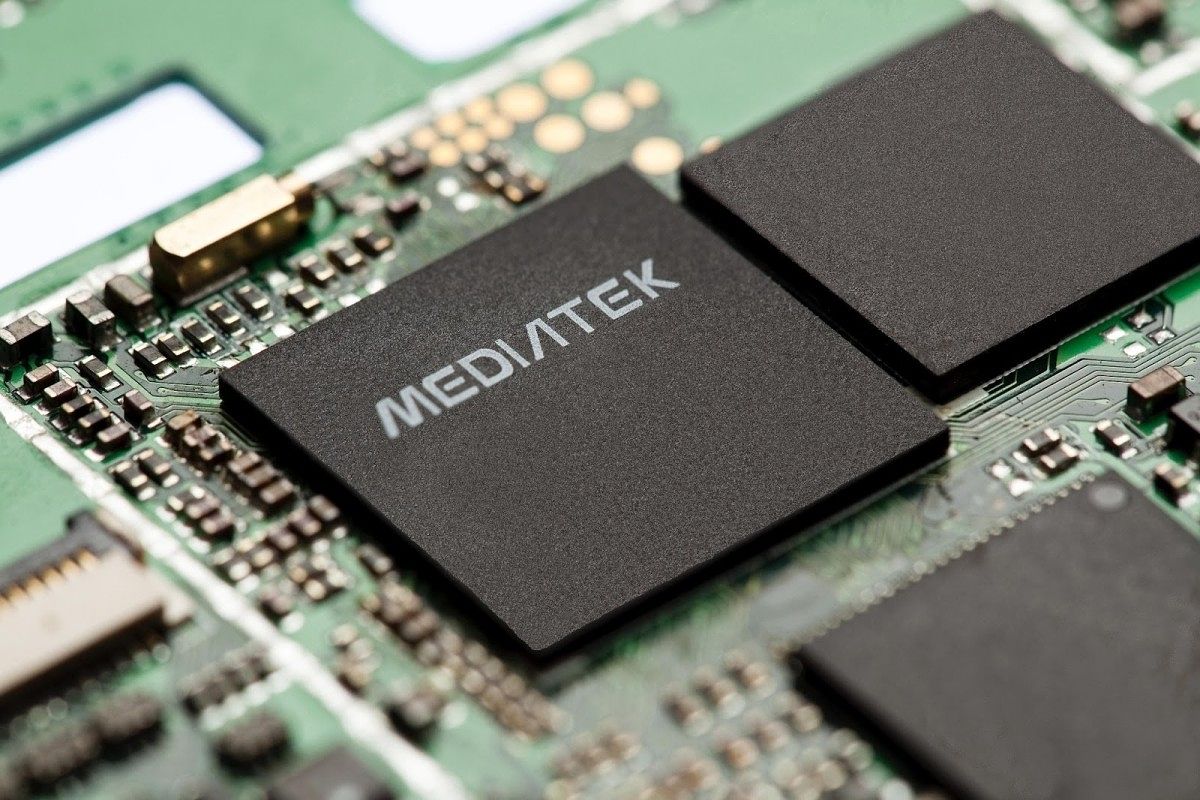
Taiwanese fabless semiconductor manufacturer MediaTek has disclosed that it plans to increase investment in research and development (R&D) as well as brand awareness. This is in a bid to be in a good position to compete as more Chinese smartphone OEMs venture into manufacturing their own chipset.
In an interview granted in Shenzhen on Wednesday, the company’s president, Joe Chen stated, “MediaTek needs to stay ahead and offer the best technology even if this phase reverses.”
Guess the Taiwanese company isn’t taking any chances this time around. It could be recalled that MediaTek used to compete with US chip giant Qualcomm in the chip market, including flagship chipsets. Bt that as changed as the company lost out completely to Qualcomm in the high-end market. It later shifted its focus to the midrange and budget chip market and that paid off. The company chipset is used on smartphones as well as home appliances such as TVs. Its smartphone chip business generates about a third of overall group revenue, with most of its sales coming from Android phone makers, especially those in China.
In recent times, the trade war with e US has led to China’s President Xi Jinping calling for greater self-sufficiency in strategic industries such as semiconductors. Already, Xiaomi has its own chipset, the Surge S1. OPPO, currently ranked as the second-largest smartphone vendor in China has started to develop its own chips, according to several Chinese media reports, citing unidentified sources. That has not been confirmed by OPPO. Huawei has already attained self-reliance status with its Kirin chipsets.
MediaTek is also working seriously to get its 5G chipset up and running as a way to re-enter the high-end market. “We’ve never given up on the high-end market and are striving to develop all the necessary technologies to stay competitive,” said Yenchi Lee, senior director of product marketing for MediaTek’s wireless business, in a telephone interview on Tuesday. MediaTek’s 5G chipset is expected to be rolled out in the first quarter of 2020. The good thing about it is that it aims to help vendors bring down the retail price of 5G phones below 2,000 yuan (US$283) in the second half next year.
A few days after going on presale, the first hands-on video of Ulefone T2 has appeared online. The video is showing some exceptional capabilities of the device. Before buying, it is necessary to look at the hands-on video to evaluate the actual performance and look of the device. Let’s see how thin bezel device fares in the real-world scenarios.
Ulefone has prepared a beautifully crafted device flaunting its thin bezels. The company has added a 6.7-inch ultra-large SHARP notch display with the resolution of 1080 x 2280 pixels and 98% NTSC ultra-wide color gamut. The bright and colorful display allows users to enjoy the broader viewing experience. In connectivity, it comes with a GPS, Bluetooth 4.2, WiFi, OTG, and VoLTE support. The 3D glass back cover, and the gradient colors make the device look elegant and attractive.
It is powered with MTK Helio P70 AI chipset which can efficiently handle high-resource using apps and games. It is coupled with 6GB RAM and 128GB Internal Storage to aid multitasking without any issue. It can simultaneously execute operations like playing an online game, listening to music, browsing social media, and sending messages on WhatsApp.
In optics, the device hosts a dual-camera module with a pair of 16-megapixel + 8-megapixel rear sensors. The Helio P70 SoC helps the device to capture beautiful pictures with its high-resolution depth engine. On the front, there’s an 8MP front camera for stunning selfies and video calling. It runs on Android 9.0 Pie with the smarter, faster, and smoother user interface.
The users need not worry about the battery backup, as its 4200 mAh battery is sufficient for a full day of extensive use. The NFC capable device offers the ability to use Google Pay, and it also comes with a Hi-Fi audio chip and global frequency bands.
The device is already on presale from the past few days, and if you’re interested then do book it before August 28 for $269.99 $300. Ulefone is offering a $30 discount for users who buy it on the presale from Banggood. Ulefone T2 is available on presale in two different color options of Glacier Blue and Bordeaux Red. The company is giving an extra gift bag along with a phone case and protective film.
Surprisingly, users can also enter the giveaway to win the Ulefone T2 for free. You can know more about the giveaway by visiting the official website.
The upcoming Redmi Note 8 Pro is expected to be the first phone to feature the latest MediaTek Helio G90T chipset. Ahead of the launch on August 29, what is listed as the AnTuTu score of the Redmi Note 8 Pro has appeared online.
The device is said to have raked in a total score of 281,033 points on AnTuTu. This is way higher than the 222,282 points score of the Helio G90 chipset which had earlier leaked. What makes this unbelievable is that it is compared with a second screenshot said to be the Kirin 810-powered Honor 9X AnTuTu score given as 303,744 points. This is in contrast to the AnTuTu score of the Kirin 810 given as 237437 points. However, this looks genuine and is similar to an earlier leak which tipped the Kirin 810 score to be 301419 points and 283,333 points for the Redmi Note 8 Pro. If this is true, the Helio G90T looks like an impressive SoC for a mid-range phone. It is noteworthy that the score is way higher than that of the Snapdragon 710.
The Helio G90T is built on the 12nm FinFET node design. It features two Cortex-A76 cores clocked at 2.05 GHz and six Cortex-A55 cores clocked at 2GHz, in an octa-core arrangement. It includes ARM Mali G76 graphic processing unit clocked at 800MHz and having support for 21:9 aspect ratio display, 90Hz refresh rate, HDR10 standard, up to 10 GB of LPDDR4X RAM and UFS 2.1 storage.
The Helio G90 series of chipsets support HyperEngine for improved connectivity between a smartphone and a cellular network. There is Dual Wi-Fi connection support that allows the phone to connect to two Wi-Fi networks at the same time. Its other features include Call and Data Concurrency, Resource Management Engine and a Picture Quality Engine.
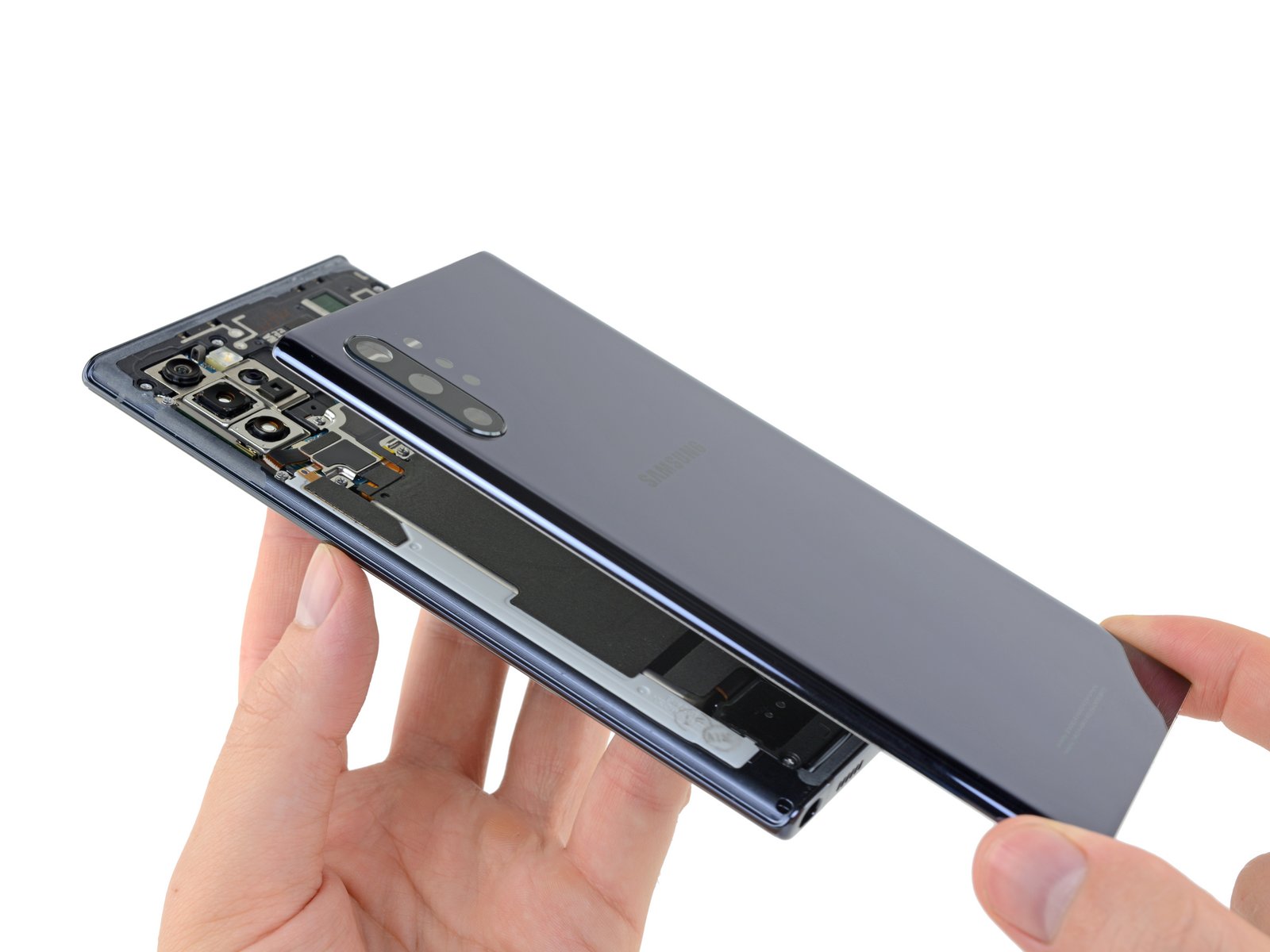
Samsung’s Galaxy Note lineup never really fared well for its repairability. Last year’s Galaxy Note 9 got a poor score of just four out of 10 in iFixit’s repairability score. However, according to the latest teardown by iFixit, the new Galaxy Note 10+ 5G takes its internals to a whole new level. It’s the worse of the lot, scoring only three out of ten for its repairability.
Source: iFixit
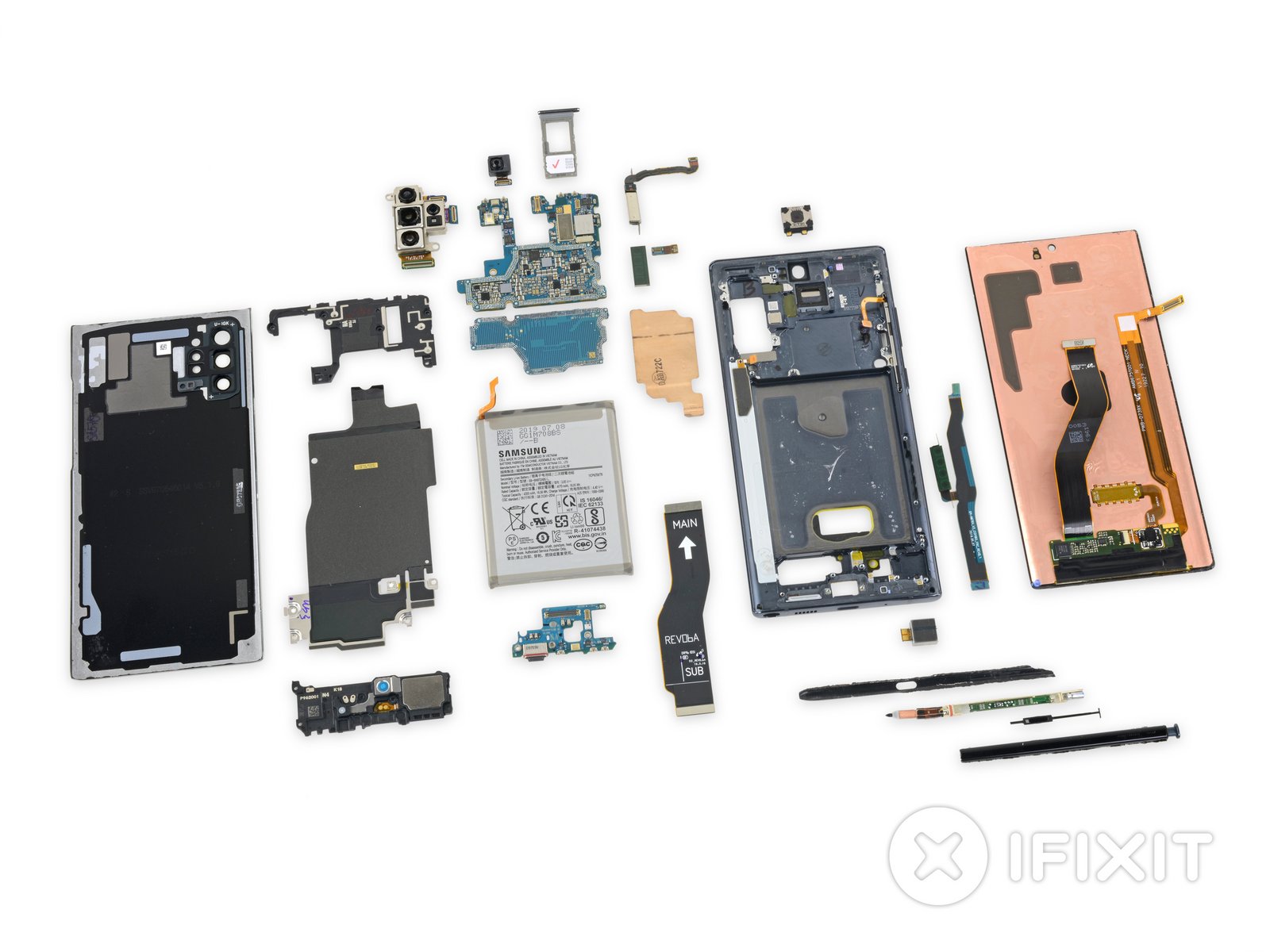
Why the low score you ask? Well, everything seems to be glued down inside the phone, right from the back cover to the battery, which is now wider than before. The biggest change inside the new Note 10+ 5G is the use of a stacked motherboard (similar to Apple) in order to save space. But this makes for a trickier mother and daughterboard connection which forced Samsung to use “annoying interconnect cables” (as iFixit puts it) which further block access to the battery.
Another notable change inside was the use of the square-ish vibration motor instead of the regular circular one found on its predecessors. iFixit notes that this should result in better haptics on the new model. You’ll also find three mmWave antenna modules inside for 5G, two on each side of the phone and one facing the screen.
Source: iFixit
But what gave this phone the worst repairability score is the mess you have to go through for something as simple as replacing its beautiful display. iFixit says that the Note 10+ 5G will either require a complete teardown or you’ll have to replace half the phone just to change its 6.8-inch screen! That’s too much of a hassle and it practically kills any possibility of doing it yourself.
In short, the Galaxy Note 10+ 5G is an amazing smartphone as long as you don’t break it.
Vivo’s product manager Li Xiang has been busy teasing the upcoming Vivo NEX 3 flagship. The NEX lineup has been special so far featuring interesting models such as the dual-screen Vivo NEX 2 or the original Vivo NEX which featured the world’s first pop up camera! The new NEX 3 is going to retain the same level of interest as its predecessors because it comes with a curved display with a very high screen to body ratio and what’s being called as the ‘waterfall screen’. And now, Vivo seems to be ready for the official announcement of the phone on Monday.
Vivo NEX 3 sketch
Earlier today, Vivo’s official NEX series Weibo account posted the following: ‘See you next Monday’. If that wasn’t enough of an indication for us to mark the day, Vivo’s own profile forwarded the same post and said ‘Ok, see you next week’. Given the timing of these posts, it’s being said that the company will announce the launch event for the NEX 3 on Monday. Ideally, it should be around mid-September but we’ll have to wait for an official date till next week.
The Vivo NEX 3 is confirmed to feature a high screen-to-body ratio with a waterfall display that’s curved on both sides. We can see bezels on the top as well as the bottom of the phone, so it’s not going to be a 100% bezel-less display as previously reported. Also, the image of the phone shows no notches or cut out cameras on the screen which could hint that it features a pop-up camera just like the first NEX series model. There are rumors about an in-display camera too but that’s highly unlikely. Even OPPO confirmed earlier that it hasn’t perfected this technology yet.
The NEX 3 is expected to feature the new Snapdragon 855 Plus processor with 5G support. The rear camera setup will be housed in a circular housing. The phone will also come with a headphone jack unlike other flagships in the market today.
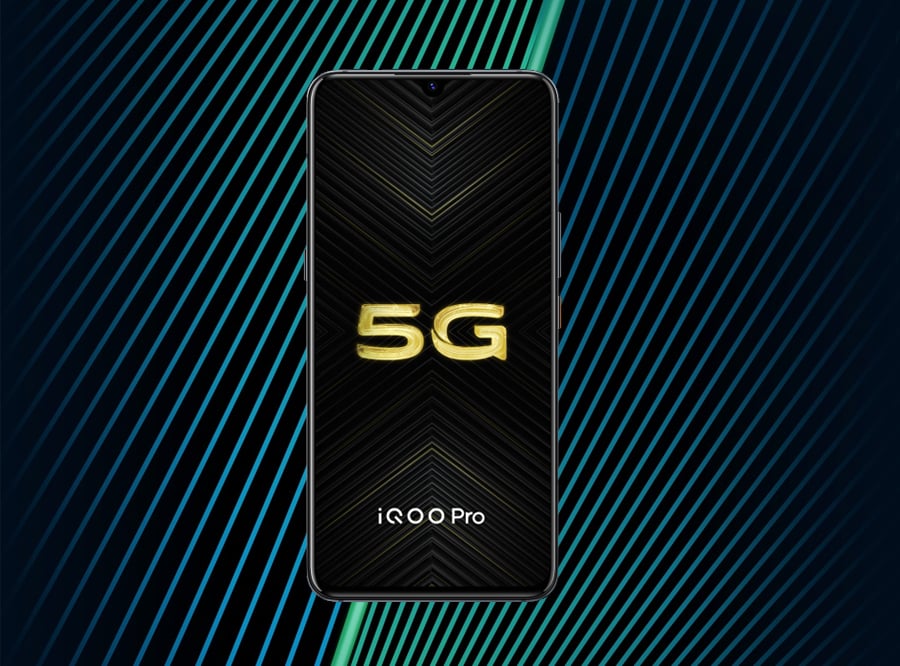
Vivo‘s iQOO Pro 5G smartphone was launched on August 22 alongside a 4G variant. The phone is the first 5G mobile phone from Vivo’s sub-brand and features the latest Snapdragon 855 Plus processor. It also comes with a fairly cheap price tag of ¥3198 (~$452) for the 8GB + 128GB variant.
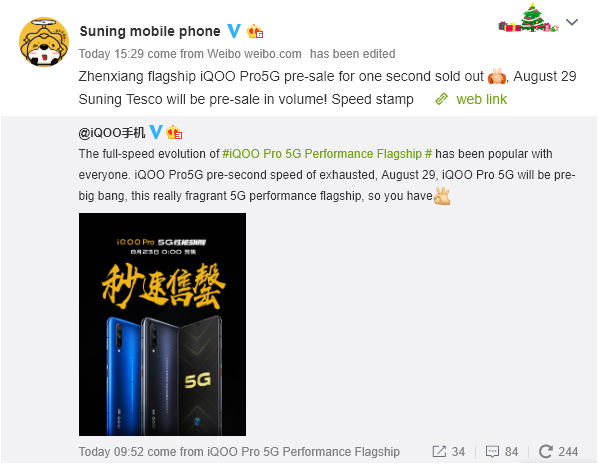
The design, hardware and pricing of the iQOO Pro set it up to be a highly sought after model. The 4G version was opened for pre-orders on Suning Tesco on the same day and is billed to go on sale on August 29. While the presale for the 5G version opened today with the 5G version scheduled to go on sale on September 2. Suning mobile phone has come out to announce that the pre-order exercise was done and dusted in just 1 second! iQOO also confirmed this but we can’t figure out how that could happen. It is possible, though, that the company was only open to accepting pre-orders based on the number of units expected for the first batch of sales. As usual, the number of pre-orders wasn’t revealed. So, it is safe to accept this as one of the regular marketing gimmicks. Make no mistake, though, the iQOO Pro 5G will be a hot-selling phone.
The iQOO Pro features a 6.41-inch Super AMOLED display with FHD+ resolution of 2340×1080 pixels. The phone also has a 12GB RAM+256GB storage variant. There is a Sony IMX582 48MP primary camera on the back along with a 13MP 120° ultrawide angle camera and a 2.0MP depth sensor. While at the front there is a 12MP sensor. The phone comes with features like AI Scene 2.0, 2.5CM macro photography and AI Portrait.
The iQOO Pro equally packs a 4500mAh battery under the hood with support for Vivo’s 44W Super FlashCharge technology. The phone runs Monster UI based on Android 9 out of the box. There is also the Jovi Assistant with IoT on board too, NFC with Vivo Pay, and the new Turbo Network Acceleration technology that allows you to connect to two Wi-FI connections at the same time (2.4GHz + 5GHz). The iQOO Pro also has an audio jack along with a dedicated audio chip for Hi-Res audio.
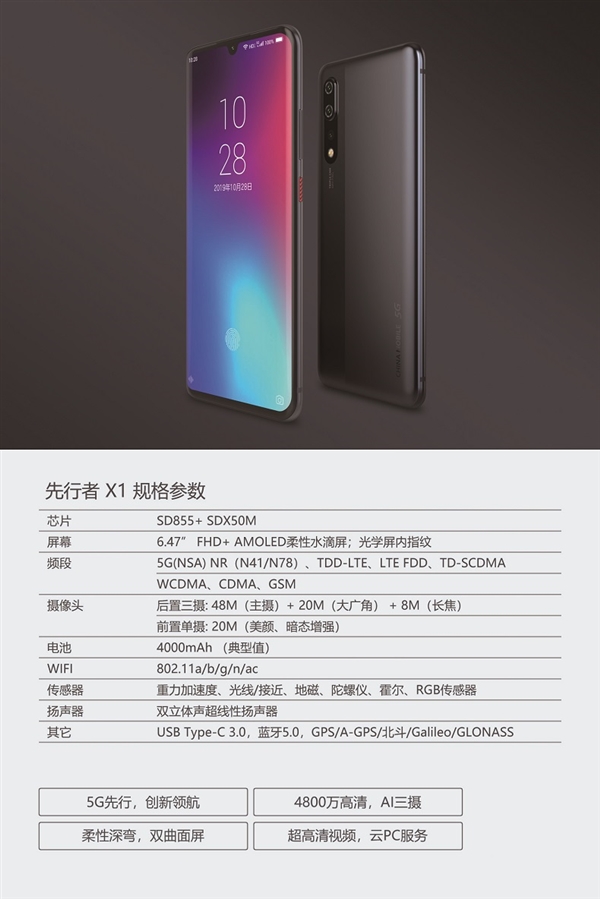
A recent report by Strategy Analytics says China is key to the growth of the 5G market in 2020. Chinese OEMs are rapidly keying into the 5G drive and a good number of 5G phones have actually gone official in China. China Mobile has joined the train with the launch of the Pioneer X1, its first 5G phone. The phone is presently available to pre-order on Jingdong and Tmall for a staggering 4988 yuan ($704).
China Mobile Pioneer X1 is powered by a Qualcomm Snapdragon 855 chipset which means it packs the Snapdragon X50 modem. The phone packs a 6.47-inch AMOLED display with a waterdrop notch. The display supports FHD+ resolution and also houses an on-screen fingerprint scanner. Housed inside the waterdrop notch is a powerful 20MP camera.
At the rear, the Pioneer X1 features a triple camera setup comprising of a 48MP f/1.8 main camera, a 20MP wide-angle lens and an 8MP telephoto lens. The flagship model comes with just 6GB of RAM and 128GB of internal storage.
It gets its power from a non-removable 4000mAh battery. The phone comes with 802.11ac Wi-Fi, dual stereo super linear speakers, and USB Type-C 3.0 interface. The phone equally packs a 3.5mm audio jack and NFC.
Xiaomi is expected to take the wraps off the Redmi Note 8 alongside the Note 8 Pro on August 29. Ahead of the launch, several promotional materials about the models have been hitting the internet, revealing the design and key specifications. The latest is a couple of camera samples shot on the Redmi Note 8 Pro.
The Redmi Note 8 Pro will have as its biggest highlight, the 64MP camera sensor at the rear. The sensor was recently announced by Samsung. Realme already demoed the technology but it seems the Redmi Note 8 Pro will be the first device to launch with the camera.
The pictures were shared by Lu Weibing, the brand manager of Redmi. One of the pictures is actually a large three-meter-tall poster of the Redmi Note 8 Pro camera sample which was mounted in front of Xiaomi’s Beijing HQ. That image may not be a true representation of the actual quality of the camera output. However, a second sample also appeared which is a view of the Beijing skyline. Although the sample is impressive, it is not the best we have seen from Xiaomi.
The Redmi Note 8 Pro is expected to feature a Tetracell sensor which produces 16MP images with 4-to-1 pixel binning. The device is said to have 25x zoom capability and will be powered by a MediaTek Helio G90T chipset. This will be yet another first for the Redmi Note 8 Pro.
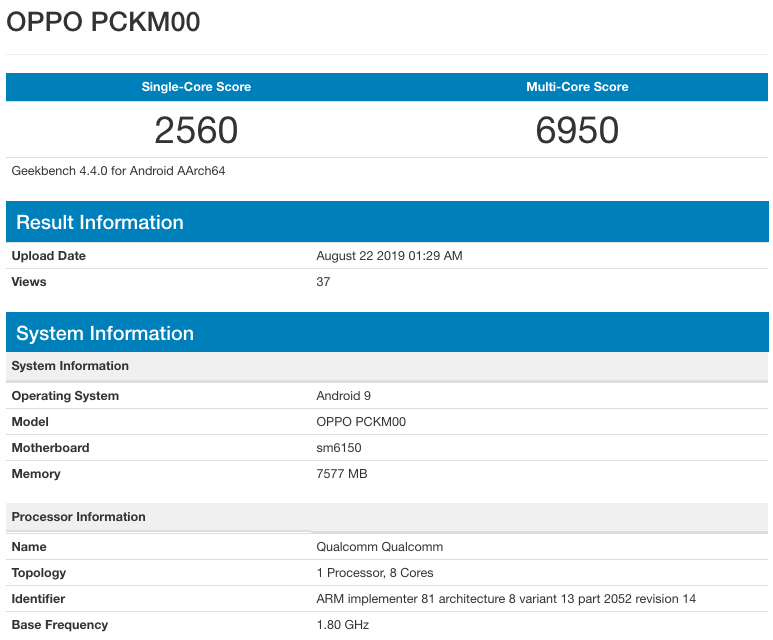
A new Oppo smartphone carrying model number Oppo PCKM00 has appeared on benchmarking platform Geekbench. While the phone’s name is not yet known, it is believed to be a part of the upcoming Oppo Reno2 series.
In the benchmark test, the smartphone has scored 2,500 points in the single-core test and 7,000 points in the multi-core test. As for the specifications, the phone packs 8GB of RAM and is powered by the SM6150 octa-core chipset, which most likely is Snapdragon 665. The phone will run Android 9 Pie operating system with its own ColorOS 6 on top.
Recently, the company confirmed some of the key specifications of the upcoming Oppo Reno2 smartphone. It reveals that the phone will feature a 6.55-inch Full HD+ AMOLED Panoramic display with a 20:9 aspect ratio and 93.1 percent screen-to-body ratio. It will also come with an under-display fingerprint sensor for added security.
The phone’s front panel will be protected by a layer of Gorilla Glass 6, while the back panel will be protected by Corning Gorilla Glass 5. Under the hood, the device will be powered by the Snapdragon 730G octa-core processor.
The phone will pack 8GB of RAM and will come with 256GB of internal storage. Focusing on the gaming side, the company will be offering anti-cheat extensions, 25 percent better graphic processing, HDR10 Gaming support, and Game Assistant, among others.
The company has also revealed that the device will be powered by a 4,000mAh battery which will come with 20W VOOC 3.0 fast-charging support and USB Type-C port for connectivity. Other features announced by the company include Frame Boost 2.0, Touch Boost 2.0, and Link Boost.
Oppo Reno2 will have quad-camera setup on the back and on the front side, it will continue to offer shark-fin design for the pop-up mechanism. It could feature Samsung‘s 48MP primary sensor paired with a 13MP telephoto sensor with 2x optical zoom, an 8MP ultrawide sensor, and a 2MP depth sensor at back and a 16 MP snapper upfront.
The company has already announced a launch event on 28th August in India where the company will be launching its Oppo Reno2 series smartphones. To know for sure which devices are getting launched, we’ll have to wait for a few more days.
UPDATETechmesto has shared the following live shots of the Nokia 7.2:
1 of 2
Original story continues..
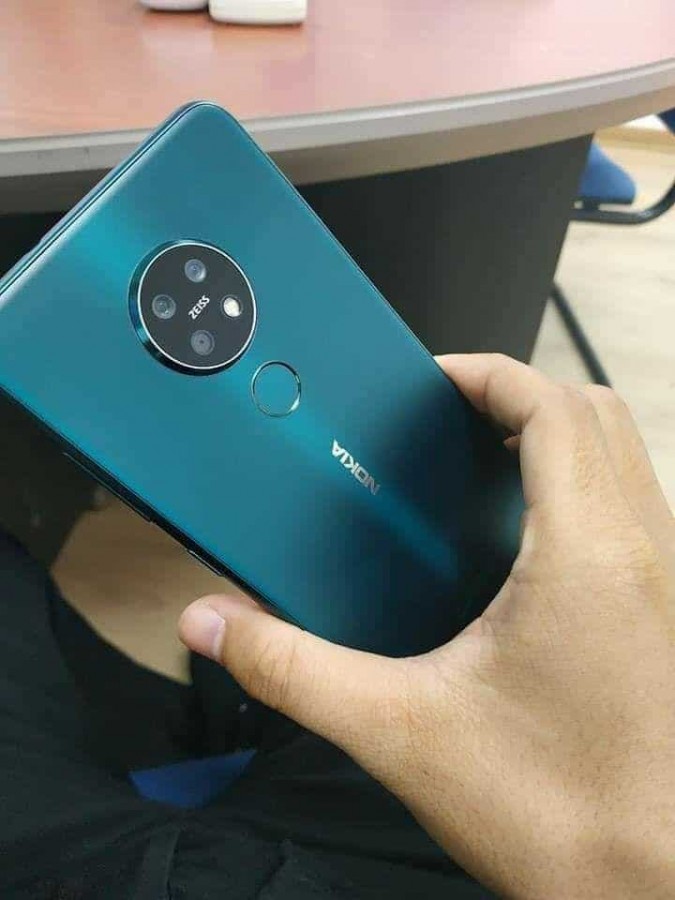
HMD Global will be present at the IFA 2019 to unleash its new smartphones on Sept. 5. Speculations are rife that the Nokia 7.2 is one of the smartphones that is expected to debut at IFA 2019. Fresh leaks shared by Nokia Power User has revealed the pricing and color variants of the smartphone.
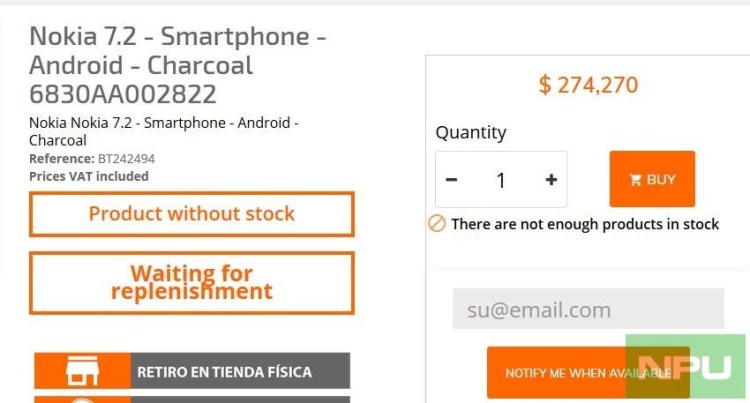
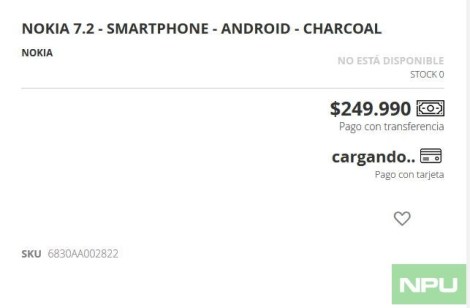
Details that have surfaced through a distributor database has revealed that the upcoming Nokia 7.2 that has a model number of TA-1196 will be releasing in three color options such as Charcoal Black, Ice Blue and Forest Green. The publication has further revealed that Nokia 7.2’s retailer listings in China have revealed its pricing. One retailer has listed it with $274 while the other has listed it for $249. One should not that the pricing of the Nokia 7.2 will be different in other regions. Hopefully, newer leaks may reveal the accurate pricing of the phone.
Rumors have revealed that the Nokia 7.2 will be featuring a 6.3-inch display with waterdrop notch. It will carry support for full HD+ resolution. The Snapdragon 710 or 660 chipset could be present under the hood of the device. It may arrive in two models such as 4 GB RAM + 64 GB storage and 6 GB RAM + 128 GB storage.
The rear side of the Nokia 7.2 is expected to house a round-shaped camera module with three camera lenses. It is expected to include a 48-megapixel ZEISS optics lens and a wide-angle lens with 120-degree field-of-view. The handset could be backed by a 3,500mAh that carries support for 18W fast charging.
HMD Global is also expected to unleash Nokia 6.2 and Nokia 5.2 phones at the IFA 2019 keynote It is speculated that the Nokia 6.2 could be an inferior version of the Nokia 7.2. The Finnish firm may also debut some features phones at the event.
UPDATE: Huawei has confirmed an event for the new Kirin 990 on September 6 at IFA, Berlin.
Last week, Neowin had reported that the upcoming Mate X will feature the new Kirin 990 processor. This essentially revealed the naming of the new processor. And today, Yanming Wang, president of Huawei CEE, Northern Europe, and Canada, confirmed to Techradar that the new flagship-grade processor from Huawei is indeed called as the Kirin 990.
Yanming also confirmed that the Kirin 990 will be built on a 7nm process and will be more power-efficient than its predecessor. He adds that the new chipset will power flagship smartphones from the brand in 2020 and comes with support for all mainstream 5G bands. However, he failed to confirm whether the chip will support mmWave frequencies that are currently being used in the US. We’ll know soon as the chip is said to launch at IFA 2019 in Germany early next month.
It is also confirmed that the Huawei Mate X will feature this new processor and will come soon. However, according to earlier reports, the phone was said to be delayed to November instead of the earlier predicted September release. So it remains to be seen when the new foldable will actually make it to the market.
Another question that Yanming failed to answer was whether Honor’s 5G smartphone will feature the Kirin 990. There have been reports that MediaTek is working to strike a deal with Huawei for its cheaper 5G phone models. Honor could a very good candidate for MediaTek’s 5G chipsets, so some of its cheaper 5G flagships may not feature Kirin 990 after all.
The pinnacle of AI hardware is flexible, high-performance chips for training machine learning. Until now, there haven’t been many big players in the game, with the biggest of the bunch being Nvidia, Intel, Google and Qualcomm. Now however, it looks like Huawei is looking throw their hat in the ring with their new Ascend 910 chip and Mindspore AI framework.
Huawei’s Ascend 910 high-end AI chip is built for servers, bidding to grow its share of the booming cloud services market. Companies using AI applications require huge amounts of data to train smart algorithms, which can take several days or weeks. The Ascend 910 delivers 256 TeraFLOPS for half-precision floating point (FP16) operations and 512 TeraOPS for integer precision calculations (INT8), while having a max power consumption of 310W.
Huawei claims that its chip can process more data in a faster amount of time than its competitors and help train networks in a matter of minutes. In fact, according to Huawei’s rotating chairman Eric Xu, “Ascend 910 performs much better than we expected. It has more computing power than any other AI processor in the world.”
On top of that, Huawei also launched MindSpore in Shenzhen on Friday, an AI computing framework that supports the development of AI applications. MindSpore has 20 percent fewer lines of core code than leading frameworks on the market in a typical neural network for natural language processing (NLP).
Mindspore is designed to work in tandem with Ascend 910, making it two times faster at training AI models than other mainstream training cards using TensorFlow. The Chinese company aims to offer a portfolio of AI products to meet the different needs of businesses and consumers. Huawei’s Xu said MindSpore will go open source in the first quarter of 2020 as part of the company strategy to drive broader AI adoption and help developers.
“Huawei’s AI strategy is to invest in basic research and talent development, build a full-stack, all-scenario AI portfolio, and foster an open global ecosystem,” Xu said, when talking about the company’s AI strategy in October 2018. The company has been striving to build a complete ecosystem, which no company in the world could do independently until now.
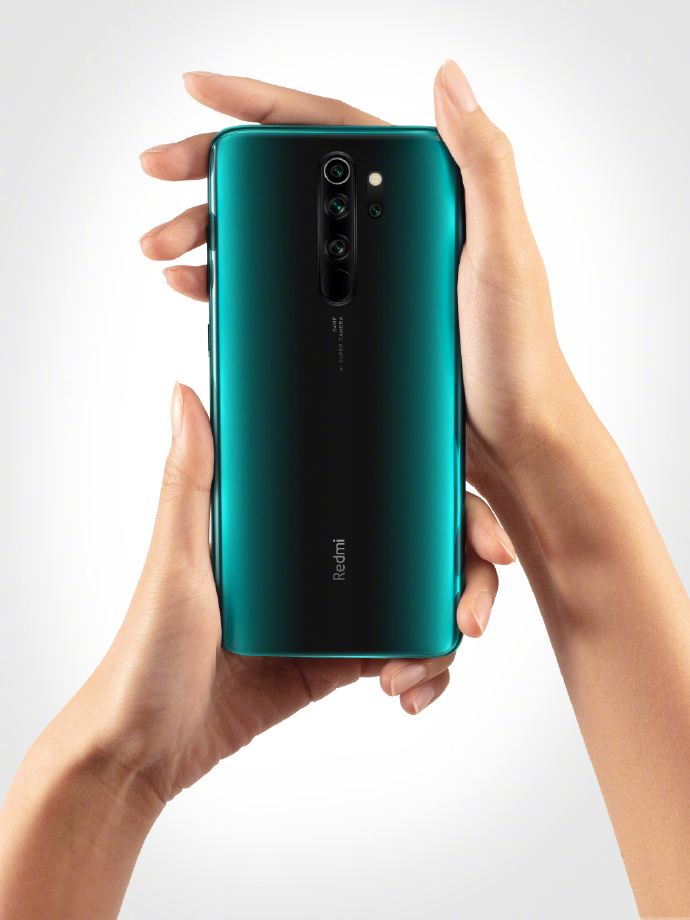
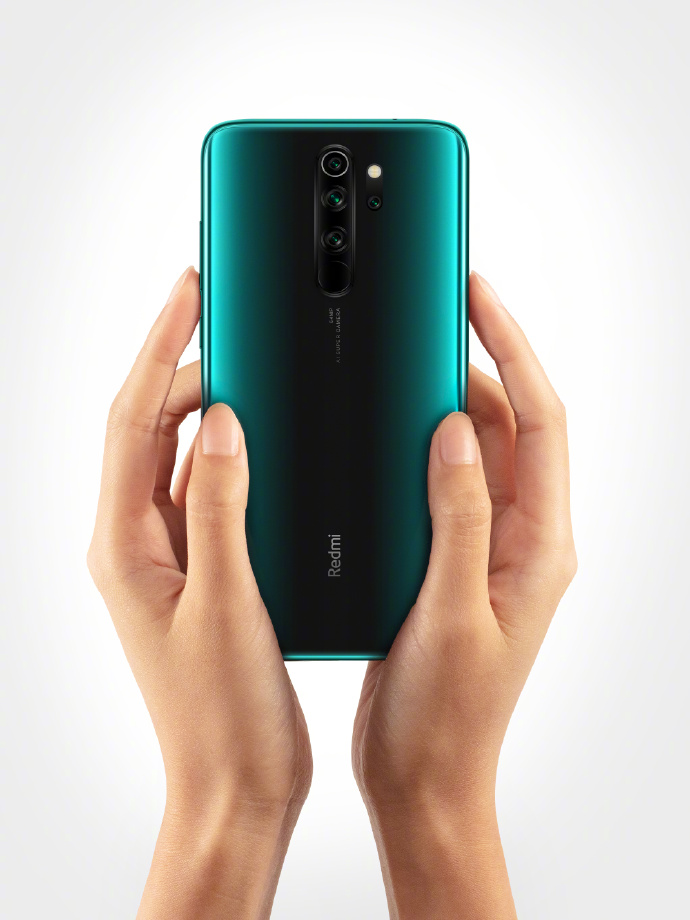
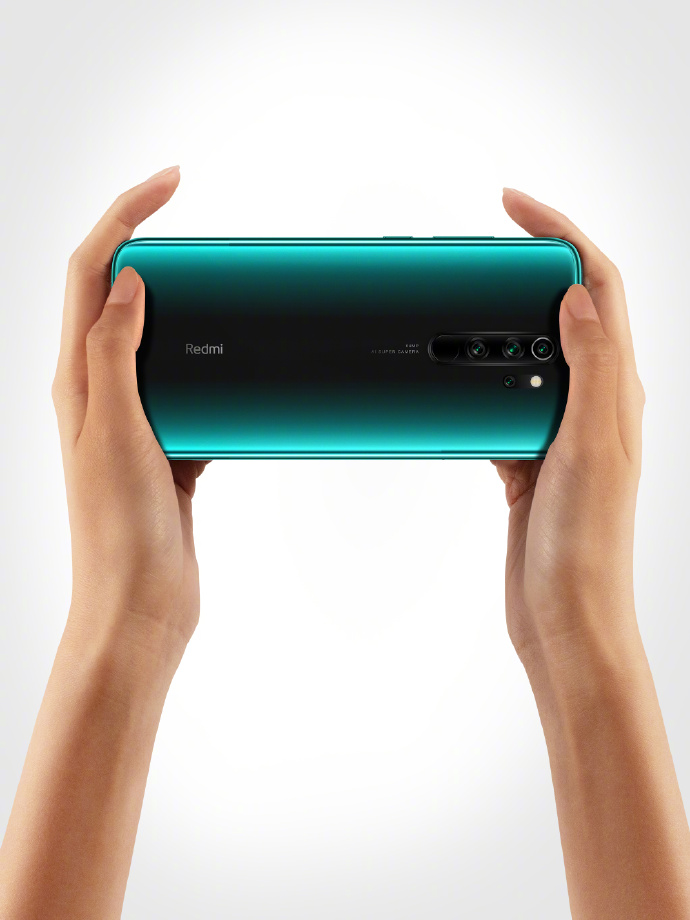
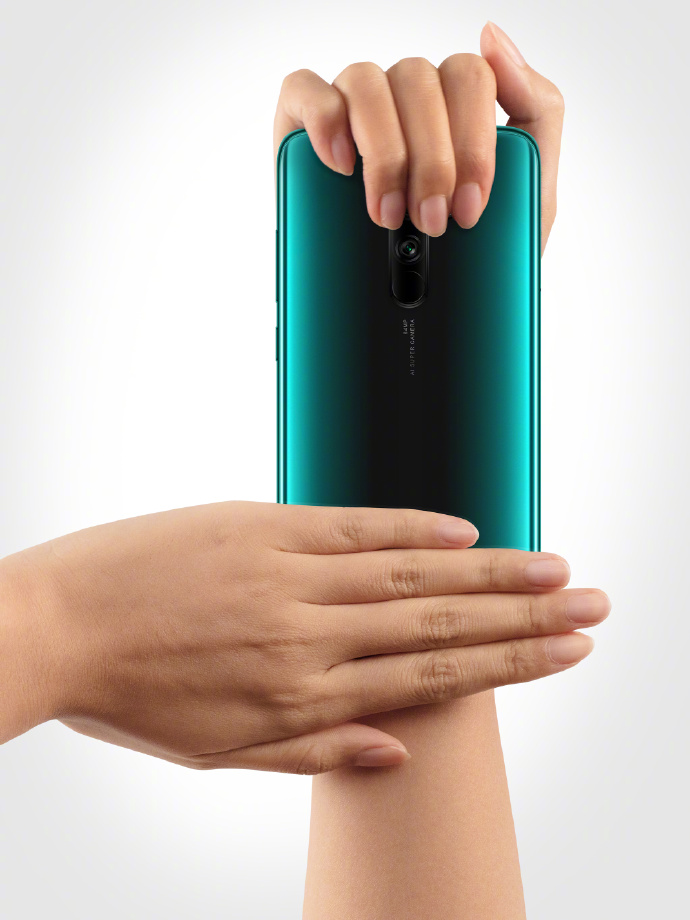
We had previously caught a glimpse of the Redmi Note 8 Pro in its beautiful green color variant. However, today, Redmi has just shown off the new device in high-quality official renders. The Redmi Note 7 Pro‘s flagship was its blue color variant but for its successor, the brand has chosen a special emerald green color. Honestly, it looks quite different and gives the phone a premium vibe.
Given that the hand positions vary in each picture, it’s as if Redmi is trying to tell us something from these images. Unfortunately, we weren’t able to decipher the code. If you do figure it out, let us know in the comments down below!
These renders also serve the purpose of showing you that the phone’s signal will be strong in any position. The company has optimized the antenna placement to ensure strong connectivity in any grip position.
The Redmi Note 8 Pro shouldn’t be too wide and should be comfortable to hold. Like previously teased, the phone will feature a quad-camera setup at the back with one of the sensors being the new 64MP Samsung GW1. We can also confirm that the fingerprint sensor will be located at the back.
While the phone may have a tall profile, it most definitely won’t be lightweight. This is because Redmi has confirmed that the Note 8 Pro will feature a large 4500mAh battery on board. Redmi’s GM Lu Weibing adds that since the Redmi Note 8 Pro comes with the Helio G90T gaming processor which is built using a 12nm process, its power consumption is higher than other 7nm processors. To solve this issue, the company decided to add an even bigger battery on the new device. He also confirmed that the phone will come with a charger faster than 10W. This was likely his way of making fun of the Honor 9X which features a slow 10W charger.
Did we mention that the phone comes with liquid cooling too? Yes! The Redmi Note 8 Pro will come with copper pipe liquid cooling which the brand says reduces the phone’s temperature by 4-6°C. So it should be able to use Helio G90T’s full potential for gaming. The company’s teasers have confirmed that gaming is a priority feature for the device as even the antennas are placed considering a user’s gaming position to ensure the best connectivity.
Redmi Note 8’s antenna placement is optimized for your gaming stance
Overall, if the new Redmi Note 8 Pro is priced close its predecessor’s pricing, we are looking at a new champion in this segment. However, with liquid cooling and Helio G90T onboard it’s quite possible that this new generation model will be priced higher than the RN7Pro.
Recent reports have revealed Vivo India is gearing up to launch a new Z-series in the country. It is speculated that it could be aggressively phone like the Vivo Z1 Pro that was announced in July. A fresh leak by Smart Prix reveals that the rumored Vivo phone will be debuting in the first week of the coming as Vivo Z1X.
According to the new leak, the Vivo Z1X could be pitched as an improved version of the Vivo Z1 Pro. It claims one of the major highlights of the phone will be that it will come equipped with 48-megapixel triple camera setup. It is speculated that the triple camera system of the Vivo Z1X phone could be equipped with Samsung ISOCELL Bright GM1 48-megapixel primary lens. Probably, it could be the rebranded version of the Vivo Z5 smartphone that was unveiled this year in China in the previous month.
As far as other two sensors of the triple camera system of Z1X, it will be featuring an 8-megapixel f/2.2 aperture ultrawide lens and a 2-megapixel depth sensor like the Vivo Z1 Pro. It was revealed yesterday that the phone could be featuring an AMOLED display that will come embedded with an in-screen fingerprint scanner.
If the Vivo Z1X is to go official in the first week of the next month, Vivo India will soon start teasing on the features of the phone through its social platforms. Even though minimum specs of the Vivo Z1X, it does appear that the company will position it higher than the Vivo Z1 Pro. On a side note, the Vivo Z1X seems to be the Indian version of the Snapdragon 712 chipset powered Vivo Z5 that was made official in July this year in the home market.
The Z-series of smartphones are expected to target online sales. The rumors of the Vivo Z1X is a clear indication that the company is now efforts to increase the sales of its devices through online channels. The Vivo Z1 Pro is currently available in three variants in India such as 4 GB RAM + 64 GB storage, 6 GB RAM + 64 GB storage and 6 GB RAM + 128 GB storage. They are respectively priced at Rs. 14,990 (~$210), Rs. 16,990 (~$238) and Rs. 18,990 (~$266). The Vivo Z1X is rumored to cost around Rs. 20,000 in India.
Vivo Z5 Specifications
The Vivo Z5 has a full HD+ 6.38-inch AMOLED panel with waterdrop notch. It has a front camera of 32-megapixel and a rear-mounted 48-megapixel + 8-megapixel + 5-megapixel triple camera setup. The Snapdragon 712 chipset and 4,500mAh battery are present under the hood of the device. It supports 22.5W fast charging through USB-C. The FunTouch OS 9 based Android 9 Pie OS runs on the device.
Much to the delight of its huge fanbase, Vivo launched not one, but two iQOO Pro versions earlier this month. Aside from the one that supports 4G LTE connectivity, the Chinese technology company also unveiled the iQOO Pro with 5G support.
Three storage options including 8GB RAM+128GB ROM, 8GB RAM+256GB ROM, and 12GB RAM+128GB ROM of the Vivo iQOO Pro 5G model have gone up for pre-order on Giztop. Before we check out the price tags each variant carry, it is worth noting that the estimated delivery of the phone is set for early of September.
The 8GB RAM+128GB ROM Vivo iQOO Pro 5G variant will set you back $699, while the slightly larger variant that ships with 8GB of RAM and offers 256GB of internal storage capacity carries a $749 price tag on Giztop.
Equipped with a whopping 12GB of RAM, this mammoth variant offers a hearty 128GB of onboard storage capacity for you to save your favorite videos, photos, music, and other multimedia content. This version understandably carries a steep $799 price tag. Note that all three models are available only in black color option.
The recently unveiled Vivo iQOO Pro 5G is crammed with awe-inspiring features and top-end specifications. It features an extra-large 6.41-inch Super AMOLED FHD+ display and has an in-screen fingerprint sensor to restrict unpermitted access of your data stored on the phone.
This amazing phone is powered by 7nm Qualcomm Snapdragon 855 Plus Octa-core processor, and it packs a highly competent Adreno 640 graphics processing unit for unparalleled user experience. On the optics front, the Vivo iQOO Pro 5G has 48MP+13MP+2MP rear-mounted cameras and a 12MP front snapper for selfies.
Moreover, the dual-SIM phone runs Funtouch OS 9 based on Android 9.0 Pie. It draws its juices from a robust 4500mAh battery that supports 44W fast charge. It also comes with Jovi voice assistant, NFC and a myriad of other useful functions.
You can visit this link to check out more details about the Vivo iQOO Pro 5G smartphone and place your order through Giztop.
Mosquitos can transmit some very dangerous diseases when they bite humans to consume their blood. Moreover, getting rid of these highly annoying insects isn’t child’s play.
Thankfully, there’s no dearth of products that can kill mosquitos without causing any sort of serious damage to you and your loved ones. On the downside, these products aren’t easy on the pocketbook.
We have listed the top 3 highly efficient mosquito killers that you can buy without burning a hole in your pocket.
Xiaomi Mosquito Repellent Killer Smart Version
The Xiaomi Mosquito Repellent Killer Smart Version can be efficiently controlled using the Mijia APP. You can connect the device to your smartphone via Bluetooth and set the time switch through the APP.
Aside from that, you can check the amount of remaining mosquito repellent tablet, as well as the remaining power of the mosquito repellent. Backed by two AA batteries, the Xiaomi Mosquito Repellent Killer Smart Version does not need to be plugged in and can be placed anywhere in the house.
You can buy the white color version of the mosquito repellent from Gearbest for $17.99. If you end up spending over $60, you can get $2 off. Likewise, if your cart value exceeds $120, you’d qualify for a $5 discount by using a coupon code.
You can follow this link to check out more details about the Xiaomi Mosquito Repellent Killer Smart Version and take advantage of the discounts before the coupons expire.
This noiseless mosquito killer lamp from Utorch is non-toxic. It uses phototaxis of the mosquito along with a special light that adopts a human body stimulated design to cause a greater temptation to the mosquito without harming the human body.
The Utorch Photocatalytic Mosquito Killer Lamp would normally set you back $19.99, but Gearbest is giving you a chance to buy it for a lowered price of just $12.99. This 35 percent discount will be valid for the white color version of the product.
With over 180 pieces sold at the time of writing, this promo is slated to end in just five days. You can visit this link to avail the discount.
Living up to its reputation for offering China’s best electronic items at unbeatable prices, Gearbest is now doling out a noteworthy 41 percent off on the UTORCH 2-in-1 Mosquito Killer Camping Light, which normally sells for $18.69. As a result, you can now buy it for a lowered price of just $10.99.
An absolute steal at this price, the UTORCH 2-in-1 Mosquito Killer Camping Light offers two brightness modes including strong and weak, allowing you to choose the brightness you want. Aside from consuming low energy, this light is soft and doesn’t hurt your eyes.
This ultraviolet mosquito killer produces a UV wavelength of 360 – 400 NM which attract insects without harming the human body. Moreover, it has a hook design that allows you to easily place it anywhere you want.
You can follow this link to grab the discount, which is currently available for the yellow color version of the mosquito killer camping light. Ninety-one pieces were already sold out at the time of writing, and the promo will end in nine days.
Motorola One Action is the latest Motorola phone to go official in India. The announcement of the phone has come soon after its global launch that was held in Brazil earlier this month. The main highlight of the phone is that it is equipped with an Action Camera feature through which users can shoot landscape shots and videos by holding it vertically.
Motorola One Action Specifications and Features
The Motorola One Action that comes with a polycarbonate body with a glossy feel has 160.1 x 71.2 x 9.2mm dimensions and it weighs 172 grams. The handset is equipped with an LTPS IPS LCD screen of 6.3 inches. It has a punch-hole at its top-left corner, and it carries support for a tall aspect ratio of 21:9 for cinematic viewing experience.. The handset supports full HD+ resolution 1080 x 2520 pixels.
The Samsung Exynos 9609 SoC which is an under clocked edition of Exynos 9610 powers the Motorola One Action. The device has 4 GB of RAM onboard and it is equipped with a native storage of 128 GB. The handset will be treated with Android 10 and Android 11 updates in future as it is an Android One phone loaded with stock version of Android 9 Pie OS.
For shooting selfies, the Motorola One Action offers users with an f/1.8 aperture 12-megapixel selfie snapper with a pixel size of 1.2micron. There is a vertical triple camera system on the backside of the phone. It features a main lens of 12-megapixel with f/1.8 aperture, a 16-megapixel Action Camera with 117-degree field-of-view and a 5-megapixel depth camera. The Action Camera is equipped with enhanced video stabilization feature.
The Motorola One Action has a 3,500mAh battery that supports only 10W charging. The ‘M’ logon the rear shell of the phone is integrated with a fingerprint sensor. The connectivity features of the One Action include dual-SIM support, 4G VoLTE, Wi-Fi 802.11ac, Bluetooth 5.0, NFC, GPS, USB-C and 3.5mm headphone jack.
Motorola One Action Price and Availability
Denim Blue and Pearl White are the two color editions of the Motorola One Action for India. It has arrived with a price tag of Rs. 13,999. The smartphone will be exclusively available for purchase through Flipkart starting from Aug. 30 at 12PM.
We use cookies on our website to give you the most relevant experience by remembering your preferences and repeat visits. By clicking “Accept”, you consent to the use of ALL the cookies.
This website uses cookies to improve your experience while you navigate through the website. Out of these, the cookies that are categorized as necessary are stored on your browser as they are essential for the working of basic functionalities of the website. We also use third-party cookies that help us analyze and understand how you use this website. These cookies will be stored in your browser only with your consent. You also have the option to opt-out of these cookies. But opting out of some of these cookies may affect your browsing experience.
Necessary cookies are absolutely essential for the website to function properly. This category only includes cookies that ensures basic functionalities and security features of the website. These cookies do not store any personal information.
Any cookies that may not be particularly necessary for the website to function and is used specifically to collect user personal data via analytics, ads, other embedded contents are termed as non-necessary cookies. It is mandatory to procure user consent prior to running these cookies on your website.