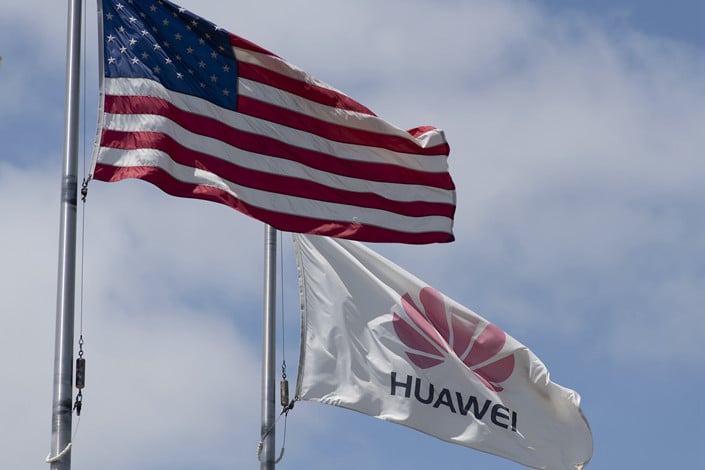
Huawei‘s image continues to come into question repeatedly as it bothers on whether the Chinese giant can be trusted or not. Bloomberg has released a report which claimed that Vodafone Italy confirmed it found “hidden backdoors” in Huawei hardware that might have enabled the Chinese company to access clients’ home systems.
THe US government has been at the helm of efforts to stop the use of Huawei technology globally
The vulnerabilities were found sometime between 2009 and 2011 in Huawei’s home internet routers, as well as its equipment used in parts of Vodafone’s network infrastructure. There was no proof of users information being compromised. Bloomberg reports that both the switch and system vulnerabilities kept on existing past 2012, and furthermore existed in the organization’s systems in the UK, Germany, Spain, and Portugal. Sources state that Vodafone kept on utilizing the hardware since it was less expensive than the challenge and the expenses to evacuate it.
In a statement given to Bloomberg, Vodafone recognized the vulnerabilities but challenged the timetable, saying they were settled in 2011 and 2012. Huawei says it was educated regarding the vulnerabilities in 2011 and 2012, and that they were fixed at the time.
The disclosures come as Huawei’s job in future 5G systems is under exceptional investigation worldwide over fears that its hardware could be abused to help in China’s knowledge endeavours. Numerous nations are at present investigating Huawei’s security protocols, as governments choose which parts of their 5G systems to allot to the Chinese tech giant. The US is moving to boycott the utilization of Huawei gears and is campaigning for its allies to do likewise. In the interim, the UK has apparently settled on a fundamental choice to permit the utilization of Huawei’s gear in non-core aspects of its systems, yet is experiencing pressure from US authorities to boycott it totally.
In an official statement, Huawei labelled Bloomberg’s report “misleading” and said that the story “refers to a maintenance and diagnostic function, common across the industry, as well as vulnerabilities, which were corrected over seven years ago.” It added that “there is absolutely no truth in the suggestion that Huawei conceals backdoors in its equipment.”
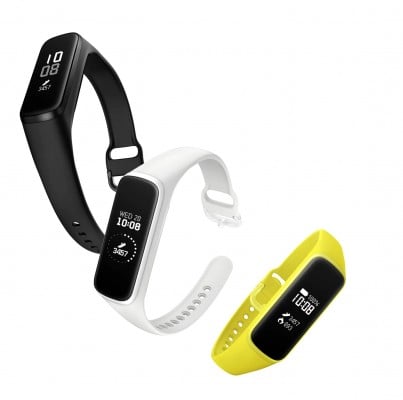
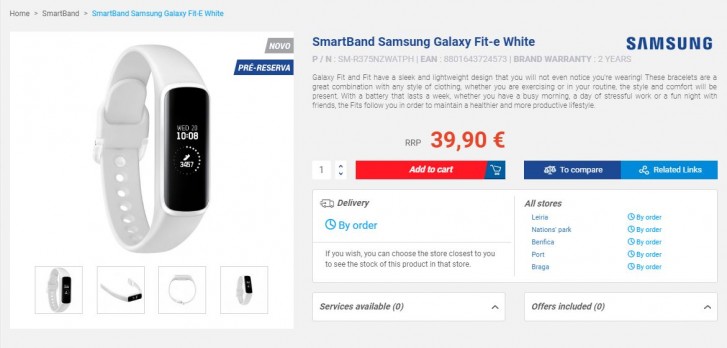
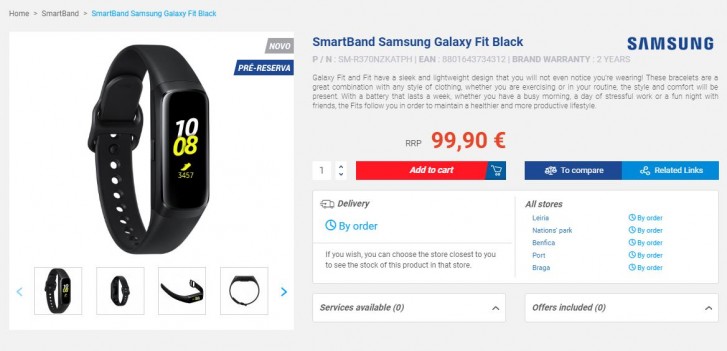
Samsung has been working on a fitness tracker designed for fans who don’t need the full user experience smartwatch offers but at the same time want a fitness tracker for basic parameters like heart rate, pulse etc. The device dubbed Galaxy Fit-e was spotted last week on Samsung Albania’s site. The device has again reappeared on the company’s Portugal website where the Galaxy Fit-e and Galaxy Fit are open for pre-booking.
The website also gives us an insight into some of the key specs of the Galaxy Fit models. According to the details available, the Fit-e will feature a 0.74-inch monochrome PMOLED display. It will run on the Cortex M0 processor with only 128KB of RAM and 4MB of internal storage. The fitness tracker only supports incoming notifications without the option to respond. In addition, the Galaxy Fit-e features automatic motion detection, sleep analysis and heart rate tracking.
The battery cell is 70 mAh and Samsung claims that it is sufficient for 10 days of utilization on a solitary charge. The band weighs only 15 grams and features MIL-STD-810G durability and Bluetooth 5.0 support.
The more costly Galaxy Fit will pack a 0.95-inch full-screen AMOLED display. It will be powered by a Cortex M33F SoC with 2MB RAM and 32MB of storage. Among the features onboard include notification interactions, automatic motion detection as well as sleep, stress, and heart-rate tracking thanks to its accelerometer, gyroscope and heart rate sensors. The device will pack a 120 mAh battery which will last as long as 7 days of autonomous use. The tracker weighs 23 grams and features the same MIL-STD-810G ruggedness and Bluetooth 5.0 support as the cheaper Fit-e.
The two models will get their interface from the new Realtime OS. As for the pricing, the Galaxy Fit-e starts at €40/$45 while the regular Gear Fit will set buyers back €100/$110. The Gear Fit-e will come in White, Black, and Yellow while the Gear Fit will be available in Black and Silver only. The two fitness trackers are expected to arrive in more markets soon.
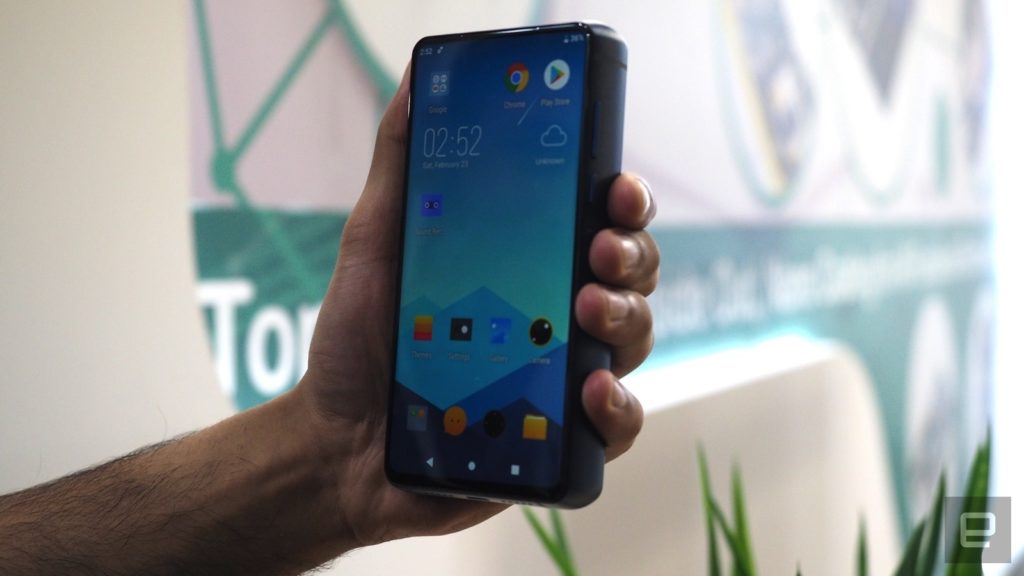
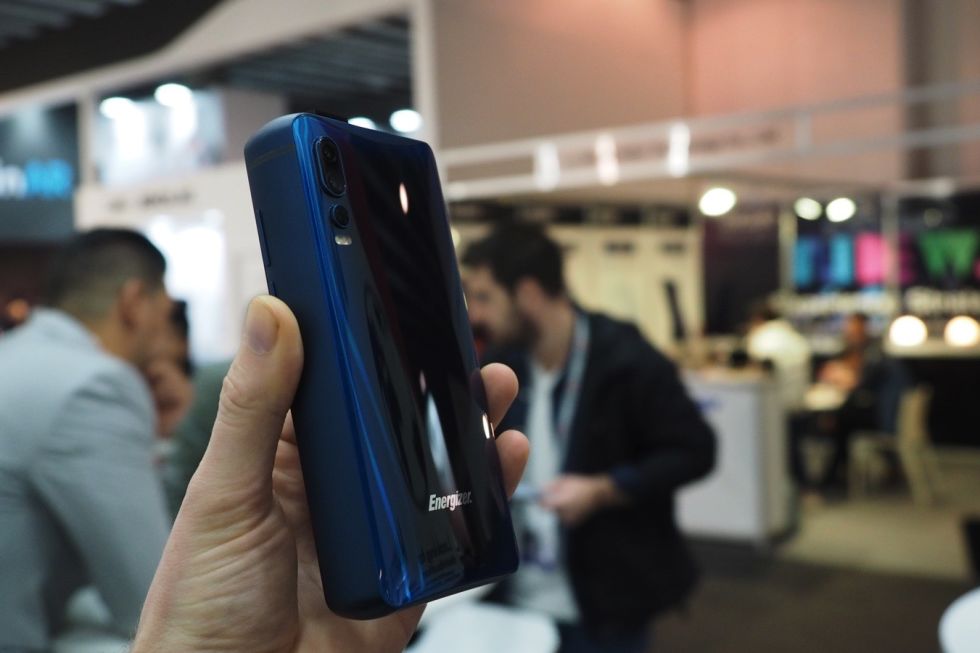
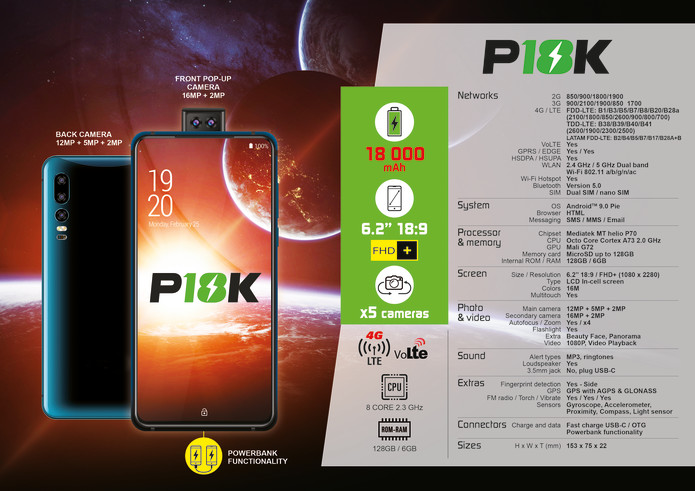
The recent Mobile World Congress 2019 saw a lot of new gadgets get unveiled. Among them was the Energizer Max Power 18K also known as P18K which was spectacular because of the 18,000 mAh battery it packs. The big battery came with a price and that was the size of the phone.
The company didn’t reveal many details about the model but it later launched for crowdfunding on IndieGoGo. The producer Avenir Telecom set a $1.2 million objective, however, just 11 backers showed interest in the phone, raising only $15,005 before the campaign came to an end. Obviously, the company overestimated the social media attention it courted when the P18K was unveiled at MWC. No doubt, the big battery onboard was attractive but then no one wants to move around with a weighty phone.
Avenir Telecom said it will continue working towards improving structure and thickness of the phone as it acknowledged that “there is a rising interest for smartphones with incredible battery life, which can also be used as power banks”.
The P18K comes with a size that is almost three times that of an iPhone in terms of thickness. It is 18mm thick compared to 7.7mm on the iPhone X. Despite the thickness, the device still has a protrusion on the rear camera. The device comes with a USB Type C port and can charge from zero to full in just 8 hours. That’s an overnight charge but we believe the battery won’t be needing to be recharged so often. The device will likely also support OTG function. The device also presents with a bezel-less display and dual pop-up camera. The phone is powered by an Helio P70 chipset combined with 6 GB RAM and 128 GB storage. The 18,000 mAh control cell is said to have 18W quick charging and USB-PD 2.0.
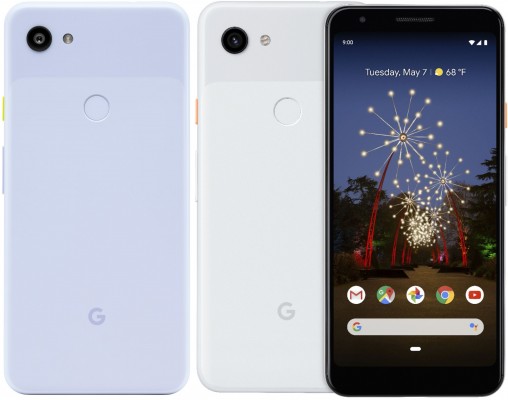
It is certainly beyond doubt at the moment that Google will soon launch the much-anticipated Pixel 3a and Pixel 3a XL at the organization’s 2019 I/O event holding on May 7. We’ve seen essentially everything there is about these new gadgets going from cases to pricing and as of late, observed the two models spring up on Geekbench itemizing the key specs.
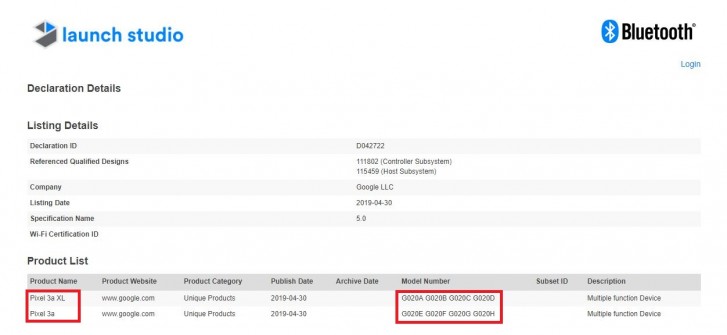
Today, the Pixel 3a and 3a XL got their Bluetooth certifications as we inch nearer to the launch date. An aggregate of eight variations went through SIG – four for the Pixel 3a and another four for its bigger sibling the Pixel 3a XL. Alongside the model numbers, we likewise discovered that the two mobile phones will highlight Bluetooth 5.0 and will keep running on Android Pie from the go.
However, neither of those is news. Previous leaks showed the Pixel 3a will pack a 5.6-inch FHD+ screen combined with a mid-range Snapdragon 670 and 4GB RAM. The bigger Pixel 3a XL will feature a 6-inch FHD+ display with the slightly improved Snapdragon 710 chipset paired with 4GB RAM. Both phones will come with 64GB internal storage. The 3a packs an 8MP selfie camera and a solitary 12MP main sensor around the back. Regarding the estimated pricing, the 3a is said to go for $500/€450 while the 3a XL should start at $600/€530.The two phones will come in White, Black, and Purple with accents on the power buttons.
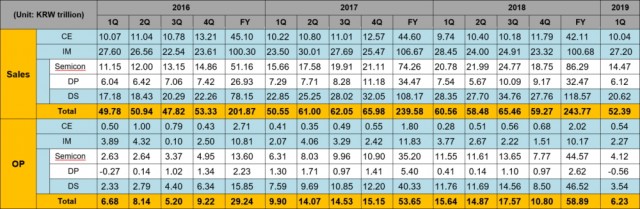
Samsung today released its Q1 2019 financial result and just as anticipated back in late March, the performance is dismal. The report detailed a combined sales of KRW52.4 trillion, which is 13% lower on a yearly premise. The decrease in profit is significantly more prominent. The company raked in just KRW6.23 trillion, down 60% when compared to the profit generated during the same period last year.
Samsung expressed in its public statement the fundamental explanation behind the poor result and identified a weak order for its memory chip. Be that as it may, the Samsung Galaxy S10 sales are “strong”, with a declared quarterly increase in revenue despite a decrease in smartphone sales globally. The revenue from the Galaxy S10 sales is mainly due to an increase in the price of the model. Samsung’s phone shipments were limited due to a reorganization of the mid-range and low-end segments.
The tech giant has assured that it will “strengthen its product lineup through innovations and continued reorganization of its product offerings”. These reorganizations gave us the Galaxy S10 5G and the Galaxy A80 with a rotating camera.
Since the demand for OLED panels is declining, while the LCD business is remaining at a similar dimension, Samsung expects increased interest for premium television panels like UHD, 8K and ultra-HD televisions. The company also plans to continue to expand its execution of 5G commercialization abroad. Samsung will continue providing 5G hardware to South Korea and the US.
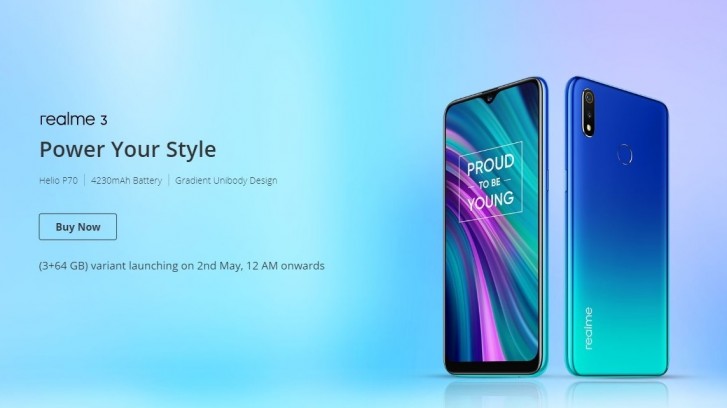
OPPO’s Realme brand is surely getting it right in India. Apart from the affordable pricing of its smartphones, they are always available to buy. Also, Realme seems to feel the pulse of fans by releasing variants that are likely going to be hot-selling ones. The Realme 3 was launched in March and went on its first sale a couple of days later. The device was a hot-selling one with over 500,000 units sold in just three weeks. Realme has now rejigged the Reame 3 lineup with the addition of a 3GB AM+64GB storage variant.
The Realme 3 was launched in two variants – 3GB RAM + 32GB storage and 4GB RAM + 64GB storage. This third variant will launch in India on May 2 and will be on sale from 12 AM onwards local time. Realme didn’t disclose the sales channel but we expect the device to be sold through Flipkart and Realme online store. The price wasn’t also revealed but looking at the prices of 3GB/32GB and 4GB/64GB models, this variant will likely sell for around Rs. 10,000 ($143).
The announcement of a new variant is coming just days after Realme 3 Pro was announced with a new 4GB+64GB variant. Earlier on, the Realme U1 got a similar 3GB+64GB variant with an Rs. 10,999 ($157) price tag.
The OnePlus 7 and OnePlus 7 Pro will not be the only products that will be unveiled at the OnePlus event on May 14. We should also see some new accessories. The good thing is we don’t have to wait that long to know what these accessories are thanks to a new leak.
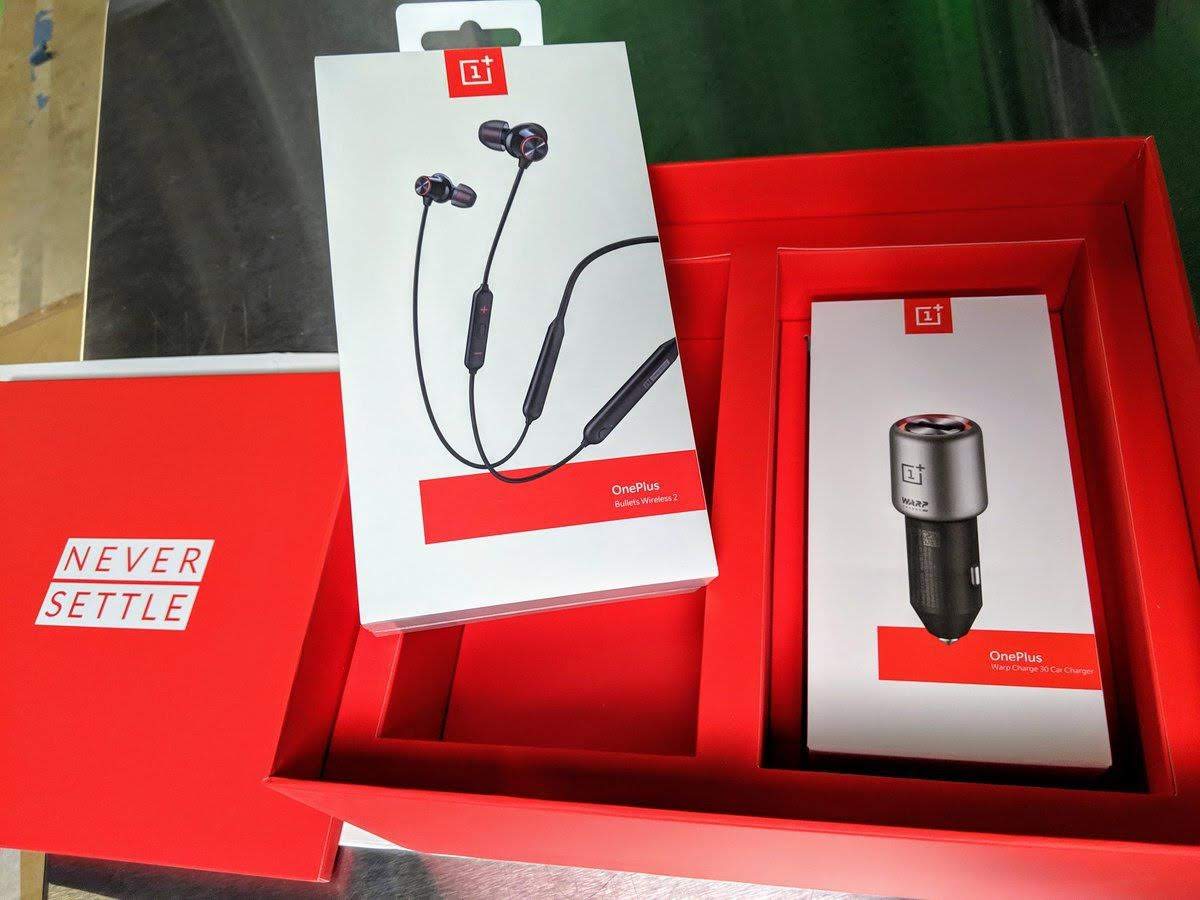
The source of the leak is said to be YouTuber LinusTechTips, and it appears he got a special package from OnePlus ahead of the official release. He shared pictures of the contents of the package, in a now-deleted tweet, which include the OnePlus Bullets Wireless 2 Headphones and the Warp Charge 30 car charger.
The OnePlus Bullets Wireless 2 in-ear headphones have a similar design to the original Bullets Wireless save for the earbuds which have been redesigned. The headphones sit on your neck and there is a remote control attached to the left side. The headphones are expected to sound better and maybe even have improved battery life. There are also live images of the headphones which were posted on the OnePlus forum.
There is also the Warp Charge 30 Car Charger. OnePlus announced a new fast-charging technology when it launched the OnePlus 6T McLaren Edition last year. Called Warp Charge 30, it charges the phone at 30W. The OnePlus 7 Pro will also support the same fast charging technology. With the car charger, owners will be able to get the same fast charging speed in their cars as they do when using the Warp 30 Wall Charger.
Xiaomi is working hard to bring the new Redmi Snapdragon 855 device by May or June. Multiple teasers from Lu Weibing, Redmi’s general manager already revealed a lot about the device. According to the recent conversation by Lu Weibing on Weibo, it appears Redmi may drop on-screen fingerprint sensor from the device. It is obvious that the company will shed some features to make it budget friendly.
Lu Weibing dubiously replied that the on-screen fingerprint sensor is very expensive when asked about the presence of a rear fingerprint sensor on the upcoming flagship device by a user on Weibo. He kind-of affirmed the absence of on-screen fingerprint sensor on the new device.
The on-screen fingerprint sensors are the norm for every flagship device. Many Chinese smartphone makers like Oppo, Vivo, Huawei and even OnePlus facilitated the users with an on-screen fingerprint. However, it has started appearing on some affordable devices too. Oppo K1 recently launched as the most budget-friendly device sporting the in-screen fingerprint sensor in India.
Recent reports suggest Redmi SD855 will carry a pop-up camera module embracing a 32-megapixel sensor. On the rear side, there will be a triple camera module equipped with 48-megapixel primary camera + 8-megapixel + 13-megapixel. Moreover, there will be a 3.5 mm audio jack and NFC for safe, secure and quick payment transfers.
The cheapest Snapdragon 855 device is likely to launch anytime soon. Some reports cite that the same phone will launch as Redmi Pro 2 or Poco F2. We expect some more information to surface before its actual launch. Although, the company started preparing abundant stocks of the phone to meet the demand.
Android Go was built for devices with 1GB of RAM or less but there is no written rule that says a phone with more RAM can’t run Android Go. The Wiko Y80 might just be the first of such devices.
The full specs and price of the Wiko Y80 were revealed in a tweet by Roland Quandt. The phone has a 5.99-inch HD+ IPS display. There is no notch and the bezels are fairly thick. The Wiko Y80 is powered by the Unisoc SC9863A (Unisoc was formerly known as Spreadtrum), the same chip inside the Alcatel 1s. The SoC is a 28nm Cortex-A55 octa-core chipset clocked at 1.6GHz with a PowerVR IMG8322 GPU. There is 16GB or 32GB of storage.
The Wiko Y80 has dual rear cameras – a 13MP primary sensor and a 2MP depth sensor. There is a 5MP sensor in front for selfies. The cameras are arranged vertically with an LED flash below the setup. Unfortunately, there is no fingerprint scanner. The phone packs a 4,000mAh battery and runs Android Pie (Go Edition).
Wiko Y80 – 5,99in HD+ IPS LCD, 2/16/32 GB, Unisoc SC9863A 1,6 GHz Octacore, 13+2MP, 5 MP FFC, 4000mAh. Runs Android Go 9.0 (with 2 GB RAM!). Has metal frame, plastic rear. Starts at 99 Euro. Is all over retail, still no official announcement. pic.twitter.com/WYoKGnrdrK
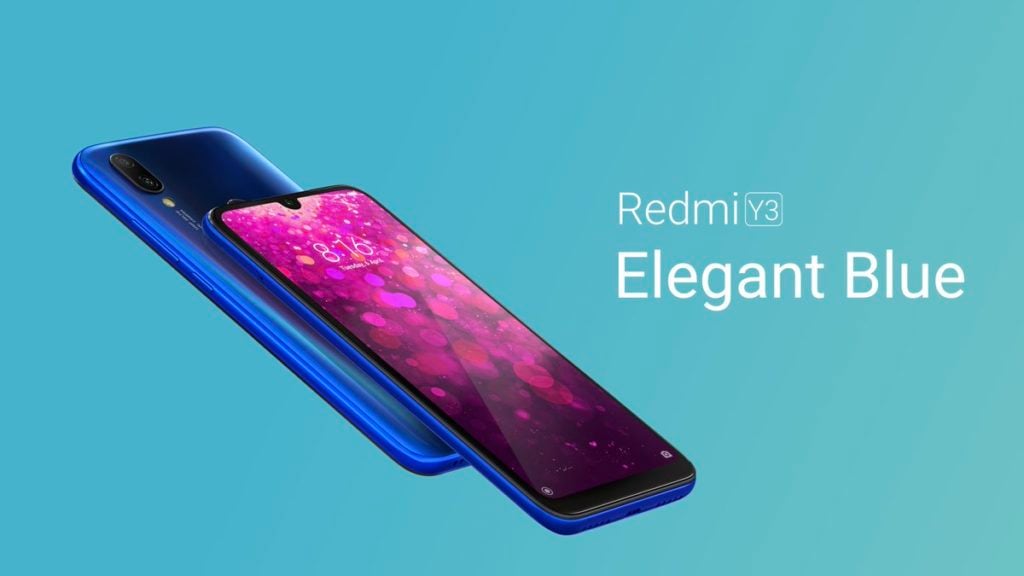
Xiaomi unwrapped the Redmi Y3 in India last week and went on its first sale today. The flash sale took place simultaneously on Mi.com and Amazon India at noon local time. The flash sale only lasted for a minute before all available units were sold out.
Xiaomi India’s CEO Manu Kuma Jain who disclosed this didn’t mention the number of units made available. The Redmi Y3 flash sale is coming a day after the Realme 3 Pro went on its first sale with fans snagging over 170,000 units. We’d prefer Xiaomi mention the number of units that were sold during the flash sale so as to rule out the possibility of such news being just hype. Amazon.in has announced that the next flash sale for the Redmi Y3 will be on May 3.
The Redmi Y3 has almost similar specs with the Redmi 7 except for a more powerful 32MP selfie camera. It packs a similar 12MP+2MP dual camera setup at the rear as the Redmi 7. The device packs a Snapdragon 632 SoC under the hood paired with 3/4GB RAM and runs Android Pie with MIUI 10 atop. It sports a 6.26-inch HD+ notched display and ships with a 4,000 mAh battery that fuels the entire package. The device comes in Prime Black, Bold Red, and Elegant Blue colors. The Y3 is priced at Rs9,999 ($143) for the 3GB+32GB variant and Rs. 11,999 ($172) for the 4GB+64GB model.
The Meizu 16s is still fresh out of the oven and the Meizu 17 is already in the news. An image shared online from a 5G event reveals key details about Meizu’s next flagship.
The image shows Meizu’s stand at the event which has the Meizu 16s on display, but there is also an “artwork” on the wall that reads “Meet the new 5G era, Meizu 17 is coming”.
This is the first “official” confirmation of the name of Meizu’s next flagship. It is also proof that the device will support 5G. Meizu already said at the beginning of the year it wasn’t jumping on the 5G train. Now, we know it will do so next year.
There are reports that the Meizu 17 will be based on the Meizu Zero hole-less phone which launched this year. The phone failed to reach its crowdfunding goal so it didn’t make it out of concept but that doesn’t mean Meizu has abandoned the design. It may modify the design and use it for the Meizu 17 next year.
Xiaomi, which is currently the world’s fourth largest smartphone manufacturer, has time and again said that it’s an internet company and not a hardware company. Now, moving a step forward in that direction, Xiaomi is embracing AI technology and is transforming into an AI-driven company.
In efforts of that, the company has announced that it will set up a technical committee that will comprise 19 members and Cui Baoqiu, the company’s recently promoted vice-president, will be the chairman of that committee.
Further, it has been revealed that the committee will be responsible for technical strategy, collaboration with governments and universities, recruiting and encouraging tech talent and building an engineer culture in the company.
As per the report, in an internal meeting of the company, Lei Jun, founder and CEO of Xiaomi told that “exceptional and innovative” engineers will be rewarded “millions” of yuan in cash. He also said that Xiaomi plans to set up two research and development (R&D) centers in Nanjing and Wuhan with tens of thousands of researchers and engineers.
This will be in addition to the company’s existing Research & Development center in Beijing, where the company also has its headquarters. The formation of this committee comes after the company announced three AI-related departments in February — New AI, Big Data, and Cloud Computing.
Xiaomi had recently said that it would invest at least $1.5 billion on AI and smart devices over the next five years. The company’s R&D spending surged 83 percent to 5.8 billion yuan ($860 million) in 2018.
However, Xiaomi’s spending is still lower than gaming and social media giant Tencent’s $3.4 billion in R&D expenses, and the $15 billion to $20 billion annual spending that telecom equipment giant Huawei has pledged to maintain.
The development comes at a time when Xiaomi is facing a slowing domestic smartphone market. The company saw its sales shrunk by more than 34 percent in its home country over the fourth quarter ended last December. On the other hand, its rival — Huawei, keeps on growing despite being a target of several allegations and criticism over security risks.
Xiaomi has launched a portable desktop fan with an affordable 99 yuan ($14) price tag. The fan which isn’t a Xiaomi branded product is being sold on Mi Home.
The portable fan adopts a minimalistic design. The body is made of ABS+PC material with the toughness to withstand pressure and fall. The body is prayed using Skin spray technology giving it a feel of the skin. It comes in three colour options; black, white, and pink. The fan also comes with three adjustable speeds and packs a battery that can last up to 12 hours. That’s like a whole day of freshness on a hot summer afternoon.
Further, the portable desktop fan has three-speed levels which can be adjusted as desired. The head can also rotate up to 60° automatically while manual adjustment will only see the head turn by 27°. Internally, the Desktop fan uses a brushless copper core motor, which is only 522g in size. The built-in battery capacity is 4000mAh. At full power, the first gear can continue to supply air for 12 hours. That means at full blast, the battery time will be less than 12 hours. In addition, the fan support USB charging mode using a Type-C port and can be connected to a desktop PC, notebook, powerbank etc. The front grill is also removable, making it easy to clean the fan.
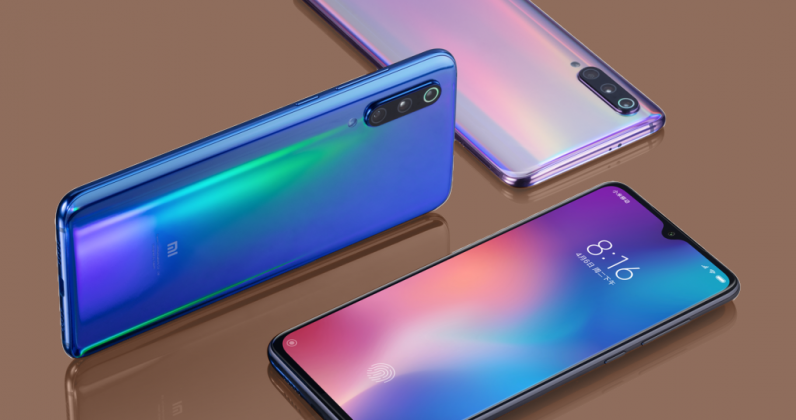
DC dimming is gradually gaining popularity in the smartphone industry especially as there is a shift to AMOLED displays. Always striving to be at the forefront of emerging trends, Xiaomi earlier disclosed that it would implement DC dimming on the Mi 9 before May 1. The company has kept to its promise as the Mi 9 has gotten an update that ushers DC dimming on the device.
Zhang Guoquan, director of Xiaomi’s mobile phone system software department announced the new DC dimming on the Mi 9 Development version only. He hinted that the stable version will become available on other MIUI versions after May 1, all things being equal. The DC dimming mode will be turned on under low brightness. He also disclosed that the new DC dimming feature would be included on all its OLED display-packing phones. Xiaomi’s hasn’t got a whole lot of them, just the Mi 9, Mi Mix 3, Redmi Pro, Mi 8 Pro and a few more. So the rollout may not get delayed for too long.
With the rise of LED technology, DC dimming control has been gaining a lot of attention as a more effective way of controlling the light output of an LED fixture. The technology uses a DC voltage between 0 and 10 to control the light output of the LED fixture. As the voltage goes up or down, the corresponding 0-10V dimmable driver matches the light output of the fixture to increase or decrease up to a certain percentage. DC dimming is one of the simplest and most popular dynamic lighting controls used in offices, retail spaces, and homes but the feature is just gaining traction in smartphones. Apart from the Mi 9, OPPO’s latest Reno also comes with DC dimming. However, we must point out that those of the Mi 9 and Reno are not hardware DC dimming but a software pattern to reduce the low-brightness strobe. Xiaomi is reportedly still developing a new pure hardware DC dimming. In the future, Xiaomi Mi 9 will also switch to this new solution, which will bring users no visual fatigue at low brightness.
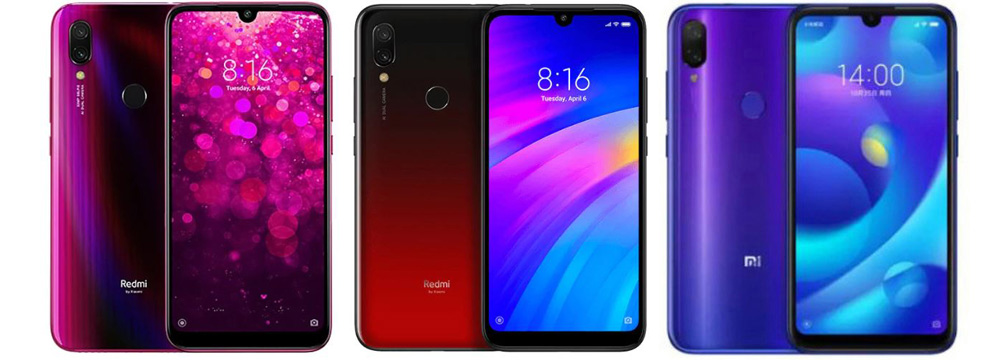
Xiaomi launched a lot of affordable smartphones in the last months, and they specifically target a lot of potential customers. There are phones focused on battery life, price, cameras, and much more. Recently, the company’s sub-brand Redmi split from Xiaomi and launched the Redmi 7 and the Redmi Y3, very affordable handsets with well-balanced specs. Here we will compare these devices alongside the Xiaomi Mi Play, that is a recent entry-level phone from the mother company. Given that they come with a very similar price, a lot of people are wondering which one to choose. With this specs comparison, we will try to clear your ideas about them.
Xiaomi Redmi Y3 vs Xiaomi Redmi 7 vs Xiaomi Mi Play
Despite their very affordable price tag, Redmi Y3, Redmi Y7, and Xiaomi Mi Play come with a stunning design. As you can see from the image, they come with reflective back covers and very narrow bezels around the display, thanks to the waterdrop notch. And they even have a pretty nice build quality. I personally prefer the Redmi Y3 due to its more rounded design and elegant design, but also because it is splash resistant. On the other hand, someone may prefer the Xiaomi Mi Play due to its glass back and more compact dimensions.
Display
If you want a very nice display, at least for an entry-level handset, then go for the Xiaomi Mi Play. While the Redmi Y3 and the Redmi 7 have a low-end HD panel, the Xiaomi Mi Play is equipped with a Full HD+ screen, so it provides a higher level of detail. On the other hand, it is a smaller display, so not the best for productivity, but it is easier to use with one hand. Both Redmi Y3 and Redmi 7 have a bigger 6.26-inch IPS display.
Specs & Software
While Xiaomi Mi Play has a more detailed display, I define Redmi Y3 and Redmi 7 more reliable when it comes to performance. The Helio P35 found on the Mi Play looks more powerful than the Snapdragon 632, but it has to manage a Full HD+ display and a smaller battery. So, in the long term, you will definitely get a more constant result with the Redmi Y3 and Redmi 7 based on the Snapdragon 632 platform. However, this depends on the scenario and you may get different results with certain usages such as gaming and multi-tasking. Another advantage of the Redmi Y3 and Redmi 7 (which come with the same hardware department in their most expensive variants) is the presence of a micro SD dedicated slot, while on the Xiaomi Mi Play you get a shared micro SD slot, so you will have to decide what to use between dual SIM and micro SD.
Camera
Redmi Y3 wins the overall camera comparison. It has exactly the same rear cameras as the Redmi 7, but it comes with a way better selfie camera. The snapper has a huge 32 MP resolution, so selfies are much more detailed and accurate compared to the standard 8 MP cameras on the Redmi 7 and Xiaomi Mi Play. Also, note that on Redmi Y3 and Redmi 7 you can record 1080p videos at 60 fps.
Battery
Redmi Y3 and Redmi 7’s batteries are simply huge if we consider their other components. With a large 4000 mAh capacity, they have to power efficient HD displays and a very efficient Snapdragon 632 chipset. Thanks to the big capacity and the efficient components, they last even more than two days on a single charge, and they can be charged pretty quickly with their 10W fast charging technology. Xiaomi Mi Play has a standard 3000 mAh and even a less efficient Full HD+ display, so battery life is definitely not its strongest point.
Price
Redmi Y3 (3/32 GB) carries a €130/$145 starting price tag just like Redmi 7 (2/16GB), but the price of the Redmi Y3 is referred to the Indian market, while the one of Redmi 7 refers to the global one. For the Xiaomi Mi Play, you’d have to spend €170/$190 (4/64 GB). Judging from the overall specifications, Redmi Y3 is the best choice due to its big battery and better camera department.
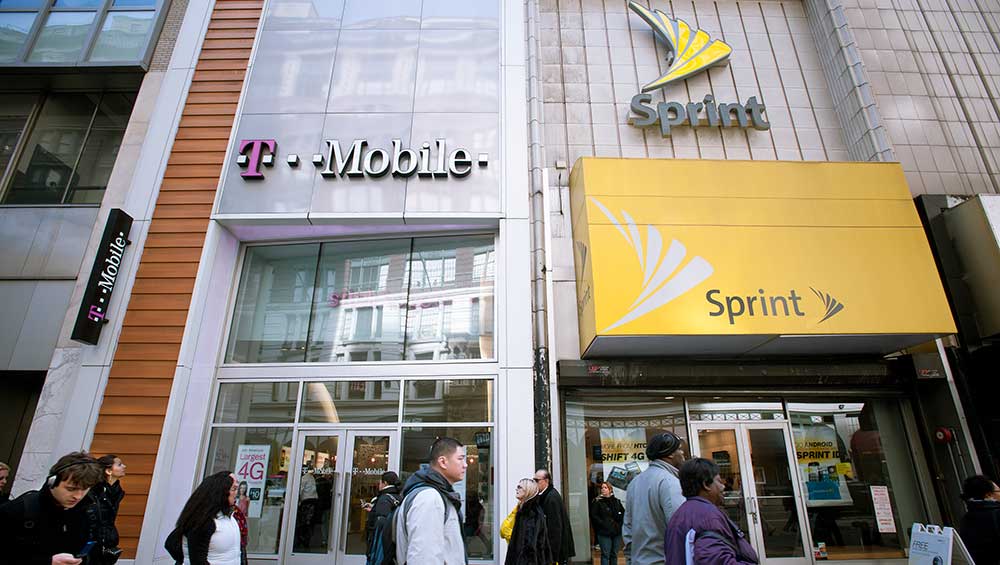
It’s been a year since US carriers T-Mobile and Sprint agreed to a merger but the merger is yet to pull through. The announcement clocked one year on April 29 but the deal is reportedly still facing several hurdles in the U.S. Earlier on, there were reports that the merger’s approval by the US authority may be hinged on the two parent companies Deutsche Telekom AG (T-Mobile’s parent company) and SoftBank Group Corp (Sprint’s parent company) ditching Huawei’s technology globally. While that may have been agreed upon, there were later reports that the deal may still get blocked by some US states.
Reuters reports that T-Mobile has filed an extension with the US Securities and Exchange Commission to a new July 29 deadline for the merger. The deal is presently being reviewed by the US Antitrust Division which is reviewing an argument made by T-Mobile and Sprint, one that says the two merged companies will be able to roll out a “better” and “faster” 5G network in a timelier manner. This seems to be the last stretch of the entire process. Both telecoms giants have put in a lot of efforts to prove that the US government that the merger is a good idea. The company has also countered arguments against the merger, basically centred on fears that the merger will cut thousands of jobs when Sprint stores have to close, and that the merger would inevitably raise the carrier’s prices. T-Mobile has given its word that it will keep rates the same for a certain time after the merger but that isn’t enough for the opposing group.
T-Mobile initially offered $26.5 billion to acquire Sprint and all its market presence. This would make the company a major challenger to AT&T and Verizon’s dominance in the United States. The deal will potentially see the new conglomerate controlling over 30% of the US wireless market, with an even higher share in some states. For now, there is still no certainty that the deal would sail through.
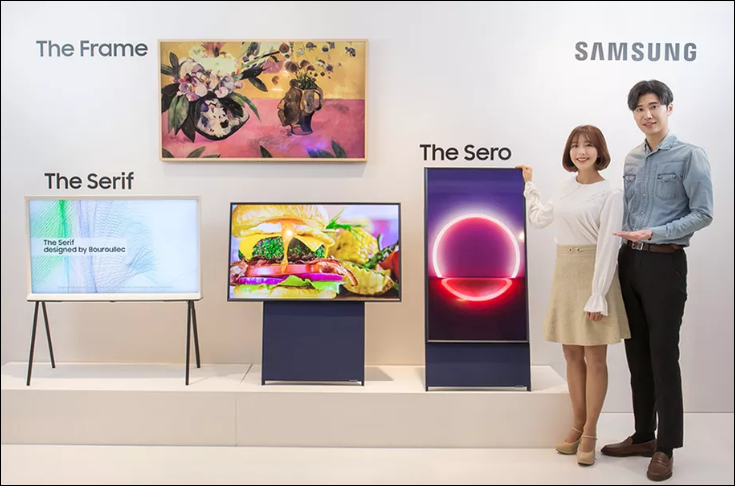
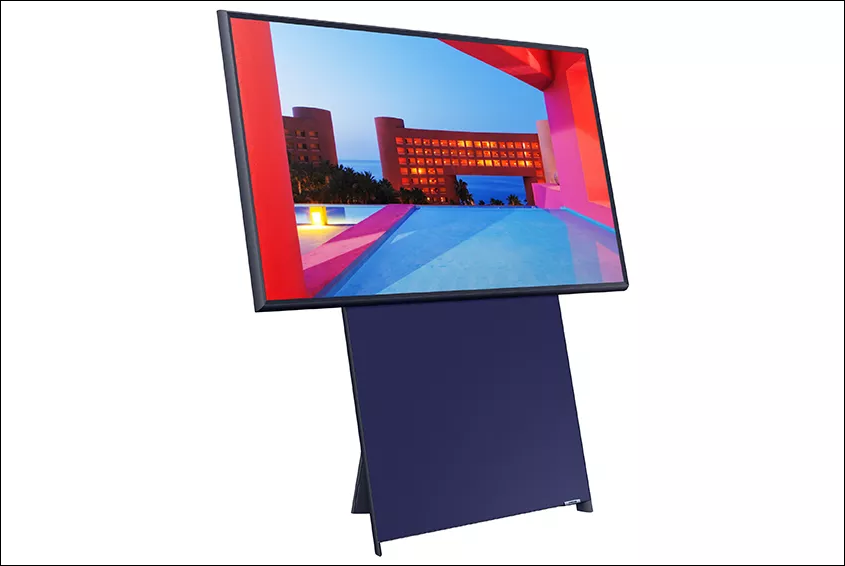
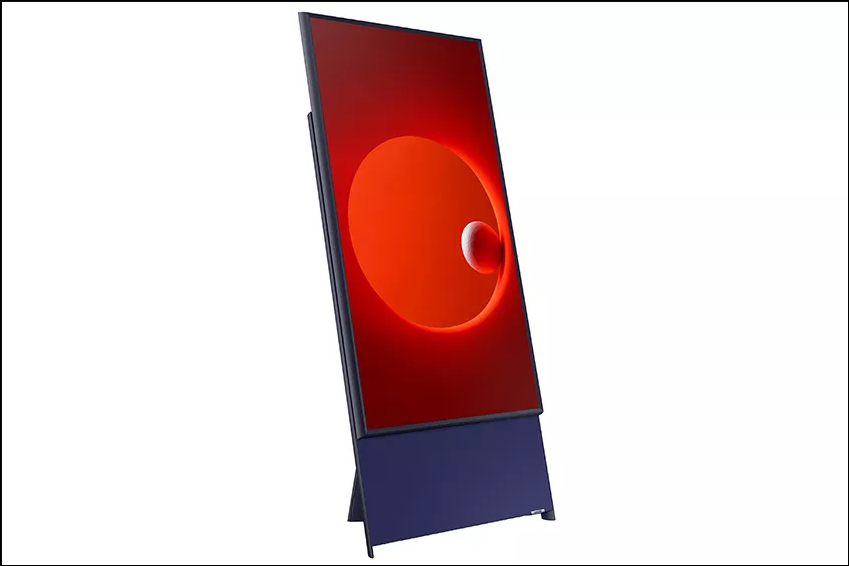
Samsung continues to maintain its lead in innovation in the smart TV industry with topnotch products in the face of stiff competition from the likes of LG. We won’t forget so quickly products like The Frame and other modular and innovative TV products. The company has now announced a new smartTV dubbed the Sero. Samsung’s the Sero is a 43-inch TV designed with Millennials in mind. The TV is designed in such a way as to be used in the vertical orientation as well as horizontally. This is perhaps to leverage on our addiction to smartphones.
Samsung acknowledged that most of the contents used on mobile phones are design to work well in the vertical screen orientation. Thu, the TV aims to encourage young people to project more of their mobile apps and other stuff onto the TV. However, if you wish to explore the 43-inch screen size for say gaming or watching a movie, you can as well change the TV to the horizontal direction.
The Sero comes with 4.1-channel, 60W speakers along with an integrated navy stand and a minimalist rear design. Samsung expects the TV will function both as a music streaming hub and a handsome piece of furniture. The TV can serve as a phone enlarger or huge digital photo frame or music visualizer when not being used as a conventional TV. The smartTV gets even smarter with the integration of Samsung’s Bixby voice assistant.
The Sero is expected to go on sale in Samsung’s home country of South Korea at the end of May for 1.89m KRW (around $1,600). Samsung isn’t sure if the TV will perform well, so it is still labelled as a concept. As such, a global rollout might not be in the pipeline anytime soon.
Samsung Electronics posted a massive 60% drop in operating profit in its Q1 2019 financial report. Global weak demand led to such a huge loss for Samsung Electronics. Whereas, Samsung’s mobile department managed to close the quarter in green with an operating profit of 6.2 trillion won ($5.4 billion). Although, it is less than last year’s total profit of 15.64 trillion won ($13.4 billion) and quarterly revenue of 52.4 trillion won ($44.9 billion). In Q1 2018, it reaped 83.3 million shipments bagging 21% of the global smartphone market.
Samsung Galaxy S10 majorly derives the rise in Q1 2019 shipments. The company’s push to increase mid-range sales also led to better results, but it struggled in profitability on a Year-on-Year basis. It saw a decline in China for the fifth consecutive quarter.
“In the premium segment, the company will strengthen its leadership through the new Galaxy Note as well as its innovative products such as 5G and foldable smartphones,” Samsung said.
Samsung aims to fully recover from declined sales by bulging its portfolio with innovative products. Devices such as Galaxy S10 5G, Galaxy A80 and other upcoming mid-range devices are expected to improve the sales in Q2 2019. Whereas, for the second half of this year, Samsung has lined up all new Galaxy A series, Galaxy Note 10 among other devices.
On the other hand, Samsung is eyeing on improvement in its Semiconductor business. The company expects the chipsets demand to improve over the last quarter, especially for mobile devices.
“The Semiconductor business saw a drop in memory chip prices as inventory adjustments continued at data centre companies, while demand for high-density memory for mobile phones increased thanks to new flagship smartphones,” said the South Korean giant.
Huawei is giving Samsung a fierce competition in terms of sale and annual growth. The Chinese smartphone maker grew 33% last year, constituting 53.2 million shipments in the previous three months. Apple is at third place with a total market share of 12%.
Just a few weeks after announcing it would work on getting Fortnite support on the Redmi Note 7 Pro, Redmi is rolling out an update to the device that brings support for the popular video game.
Manu Kumar Jain posted a tweet informing owners of the Redmi Note 7 Pro that a new update rolling out to the phone brings Fortnite support. The update arrives as MIUI 10.2.10.0.
The update is less than 300MB in size and users can head to the Fortnite site to download the game when they are done updating. The update has been reported to also fix an issue with the speaker and brings support for 4K video recording.
Redmi Note 7 Pro users actually have Realme to thank for getting support for Fortnite. Before the Realme 3 Pro launched, Realme’s CEO, Madhav Sheth had shared a tweet revealing the device will be able to play the game out of the box. In the same breath, he mocked another device, which we know is the Redmi Note 7 Pro, for not supporting the game. That prompted the head of Xiaomi India to work on getting the Snapdragon 675 whitelisted by Epic Games.
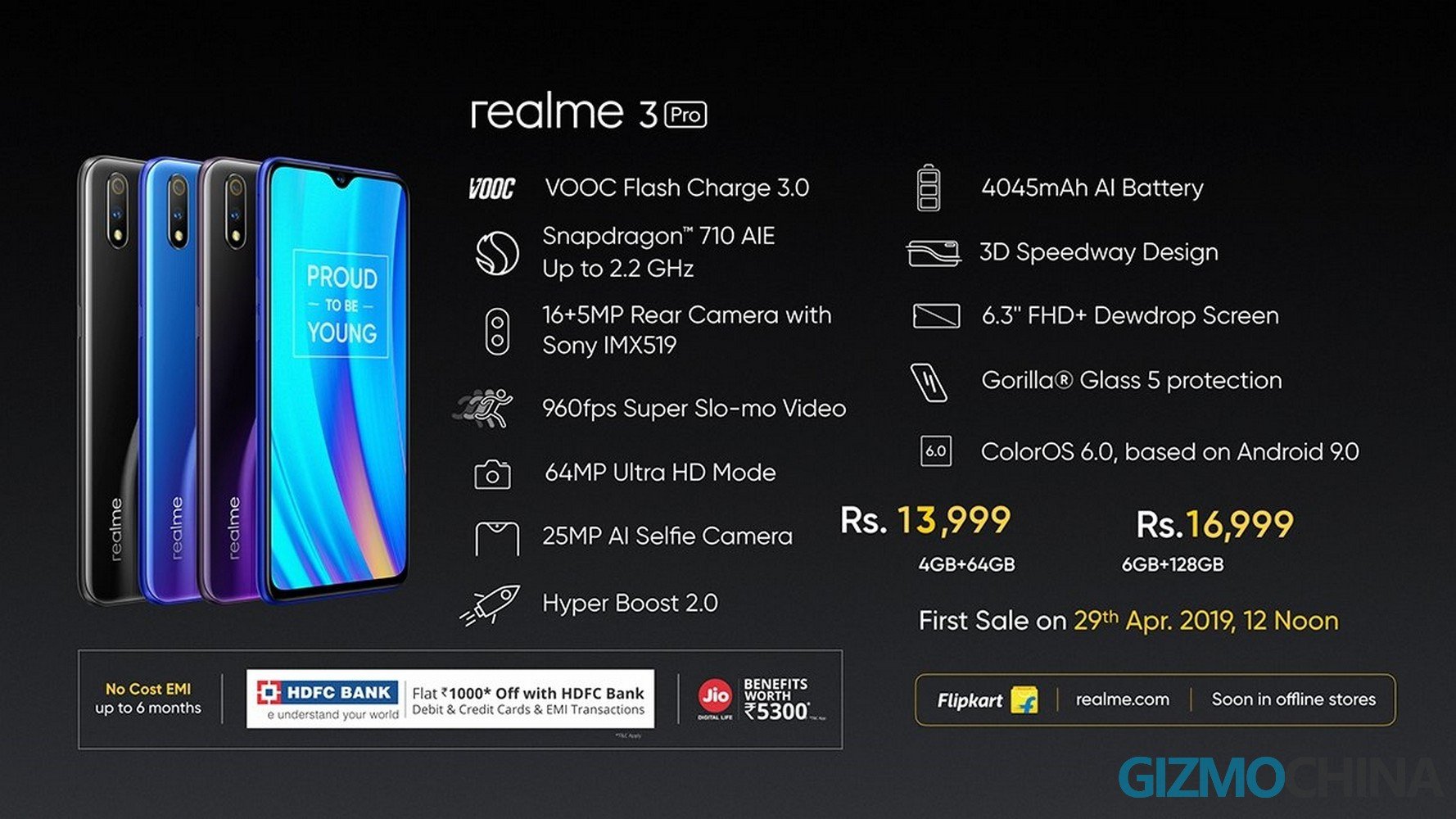
Recently, Realme launched its new Realme 3 Pro smartphone. What makes the budget phone worth your money is the fluid performance, thanks to its Snapdragon 710 SoC and a really long-lasting 4,045mAh battery.
Here’s the pricing of the two variants of the Realme 3 Pro:
On April 22nd, OPPO’s independent sub-brand Realme officially released the Realme 3 Pro in India, which directly targets the Xiaomi sub-brand Redmi’s latest model Redmi Note 7 Pro.
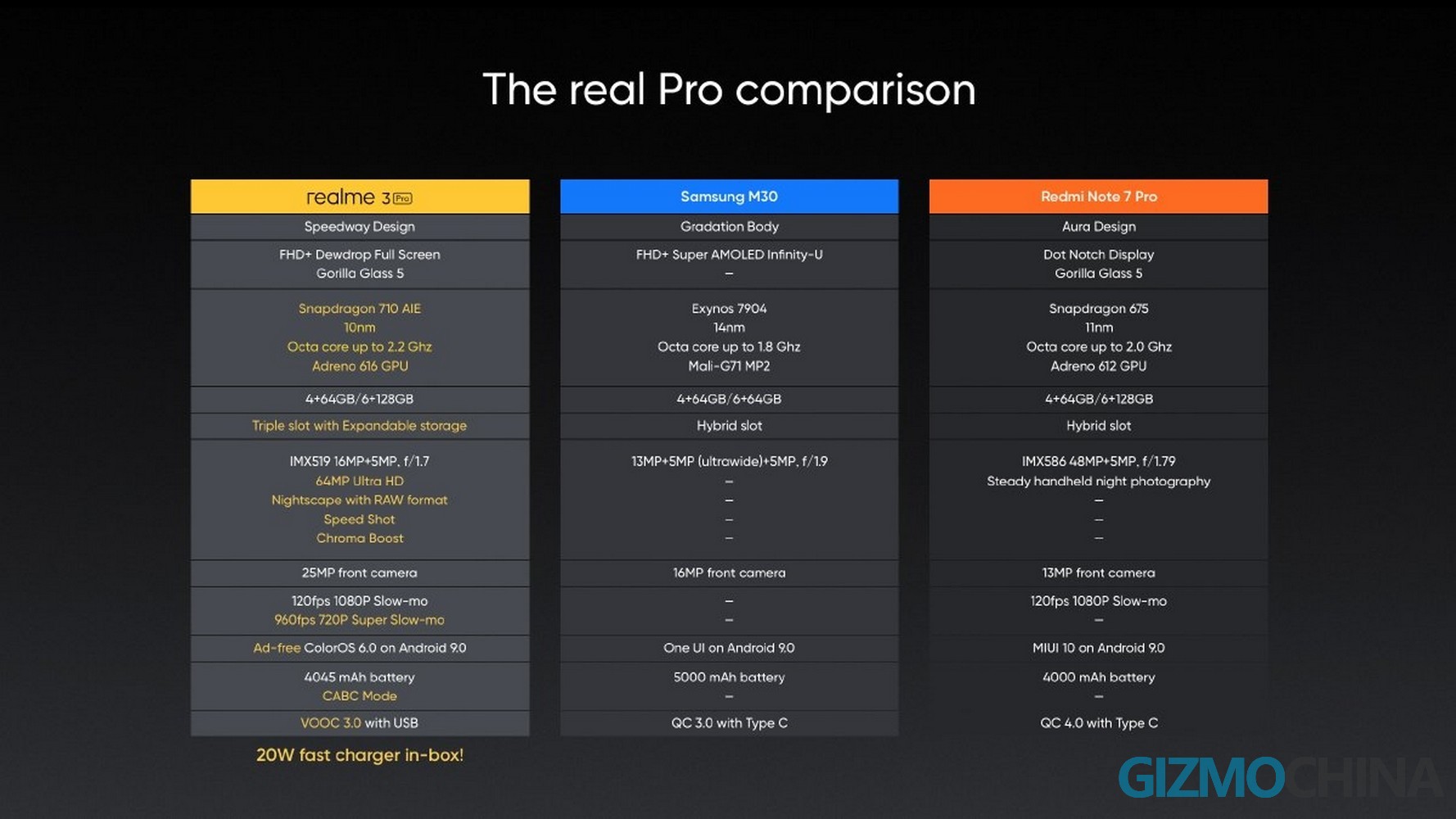
For those who are living on a tight budget, value for money always comes first when they consider buying a smartphone. In case of the Realme 3 Pro, it has significant upgrades compared to its predecessor and monster-like hardware among its peers, which includes the Redmi Note 7 Pro. But still, is it really worth your hard-earned money? Let’s find out.
DESIGN
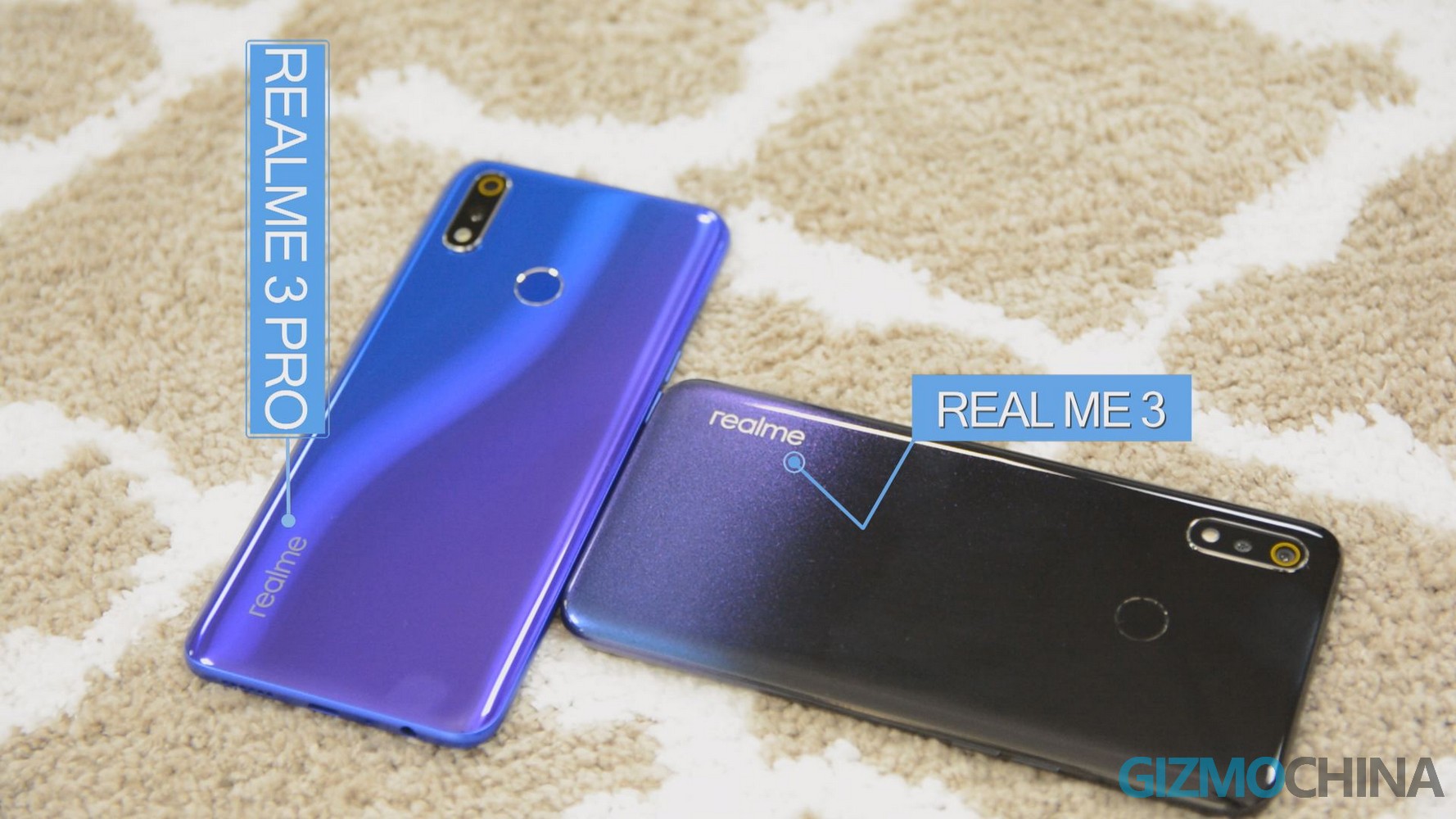
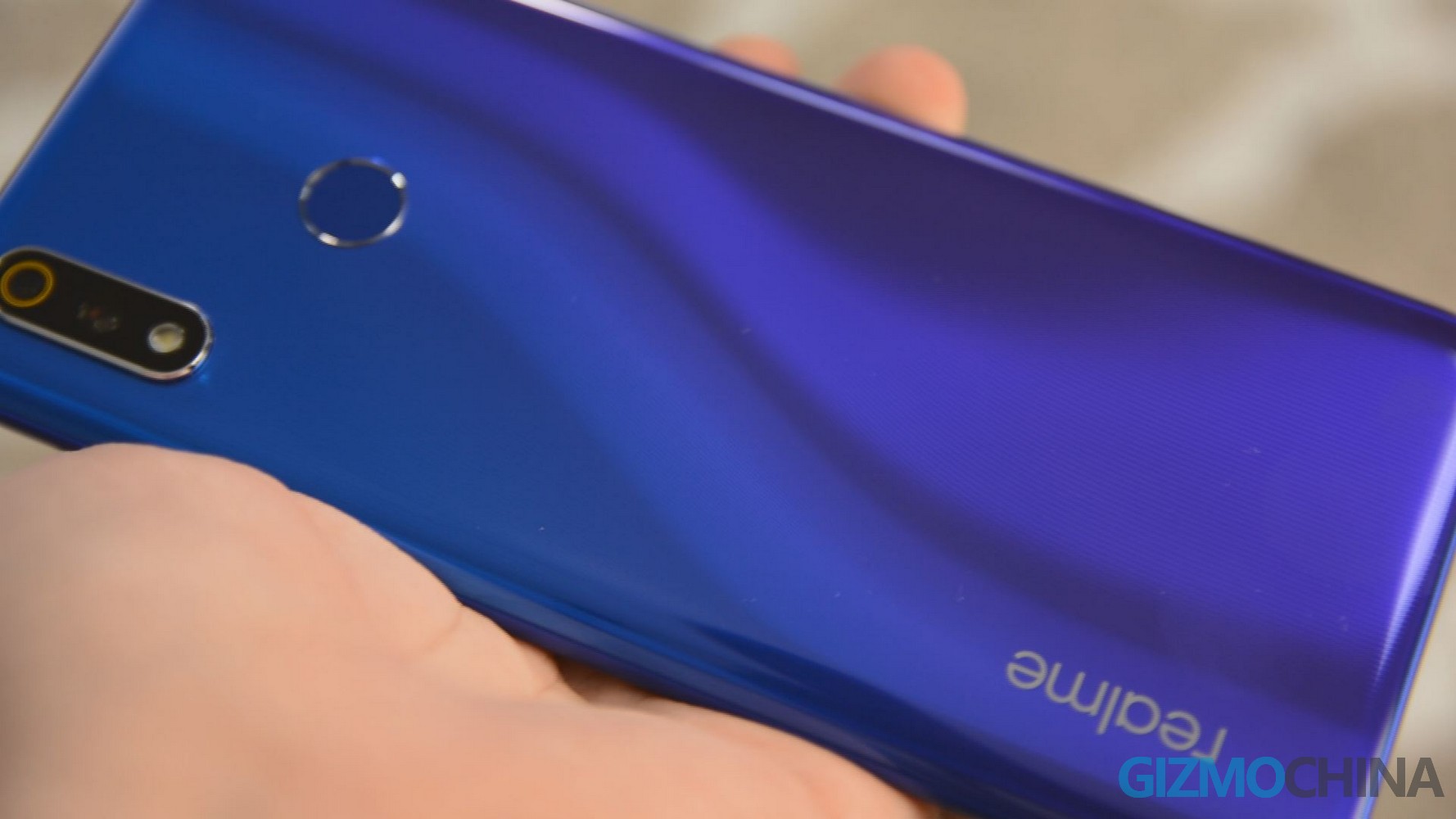
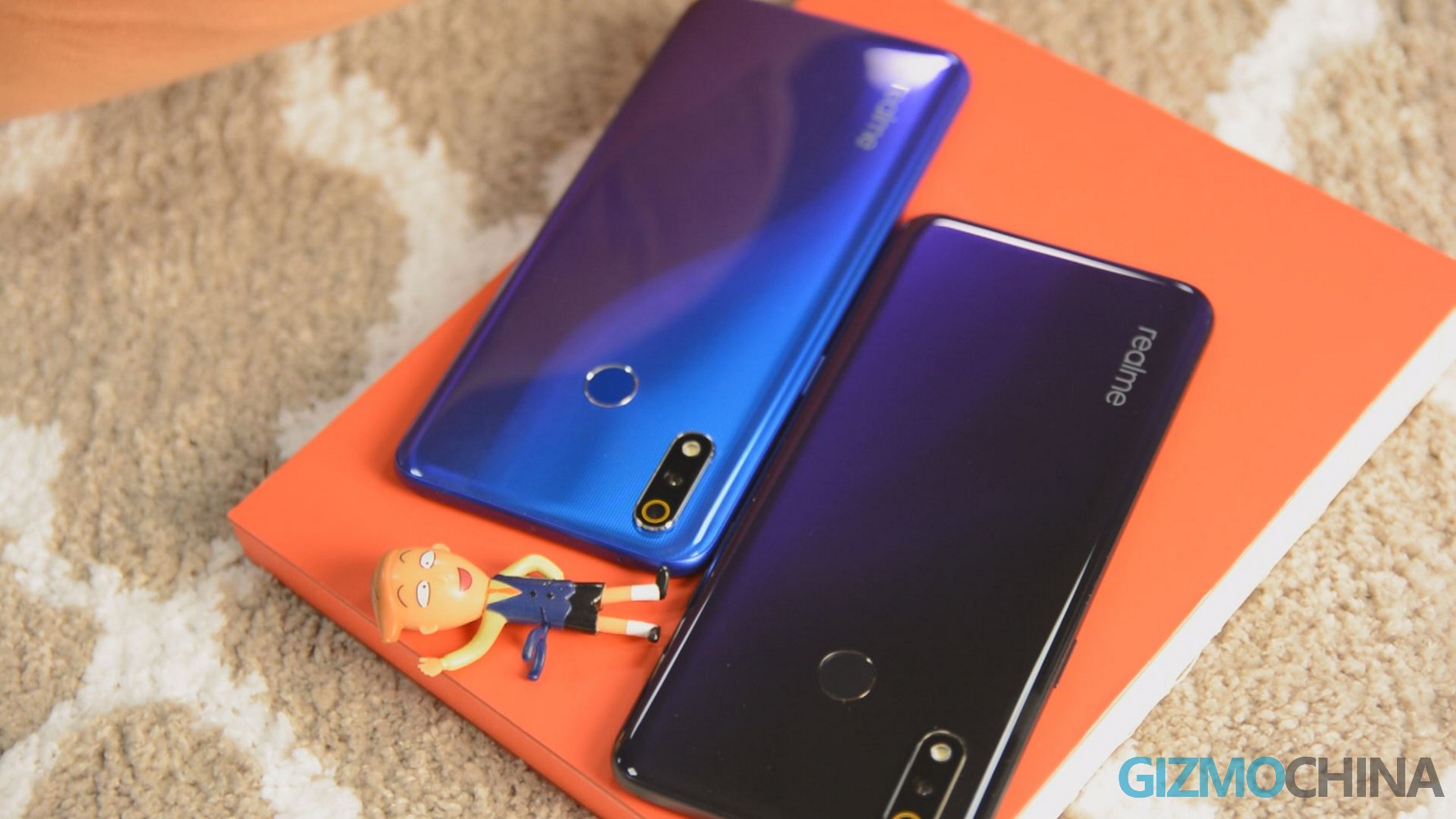
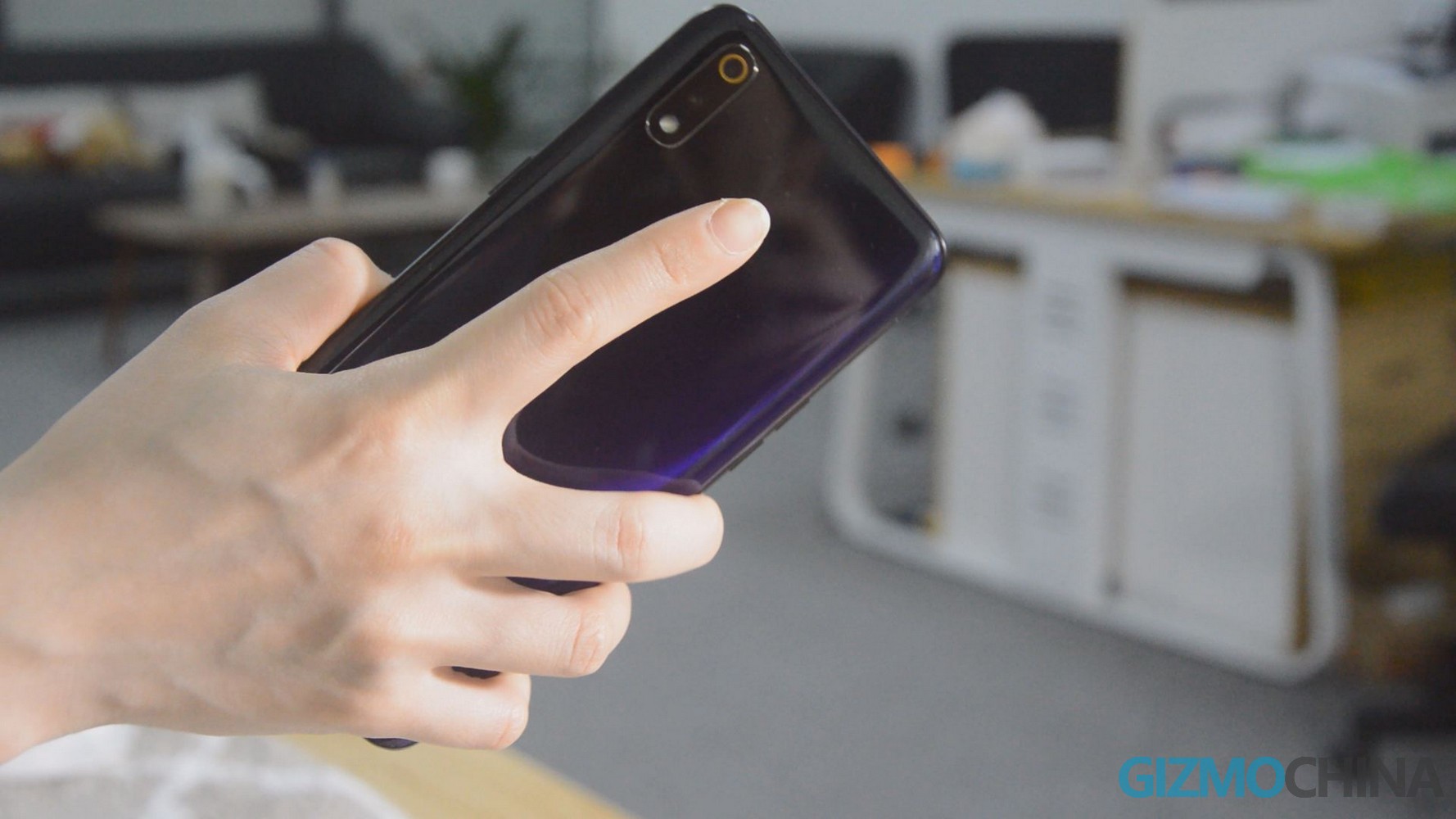
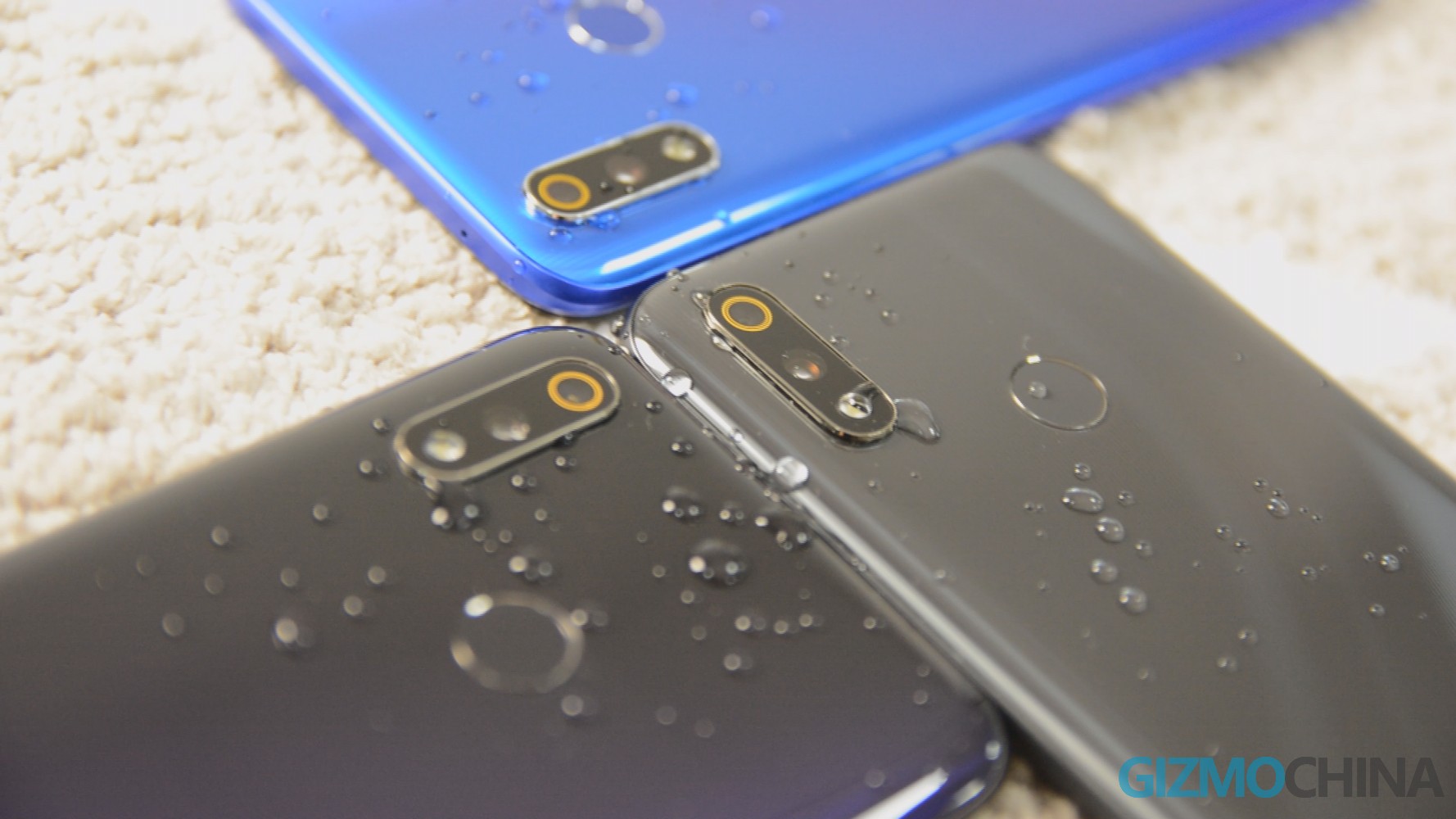
Compared to the Realme 3, the newest ‘Pro’ version continues to use a plastic shell. However, thanks to the special color edition, the body has a unique glass finish. Speaking of colors, the Pro keeps surprising us—the previous model had a horizontal gradient. But the new model changes the color gradient in an ‘S’ shaped design.
Sadly we find it is rather slippery when holding with one hand and easily attracts fingerprints. So a protective case is highly recommended.
DISPLAY
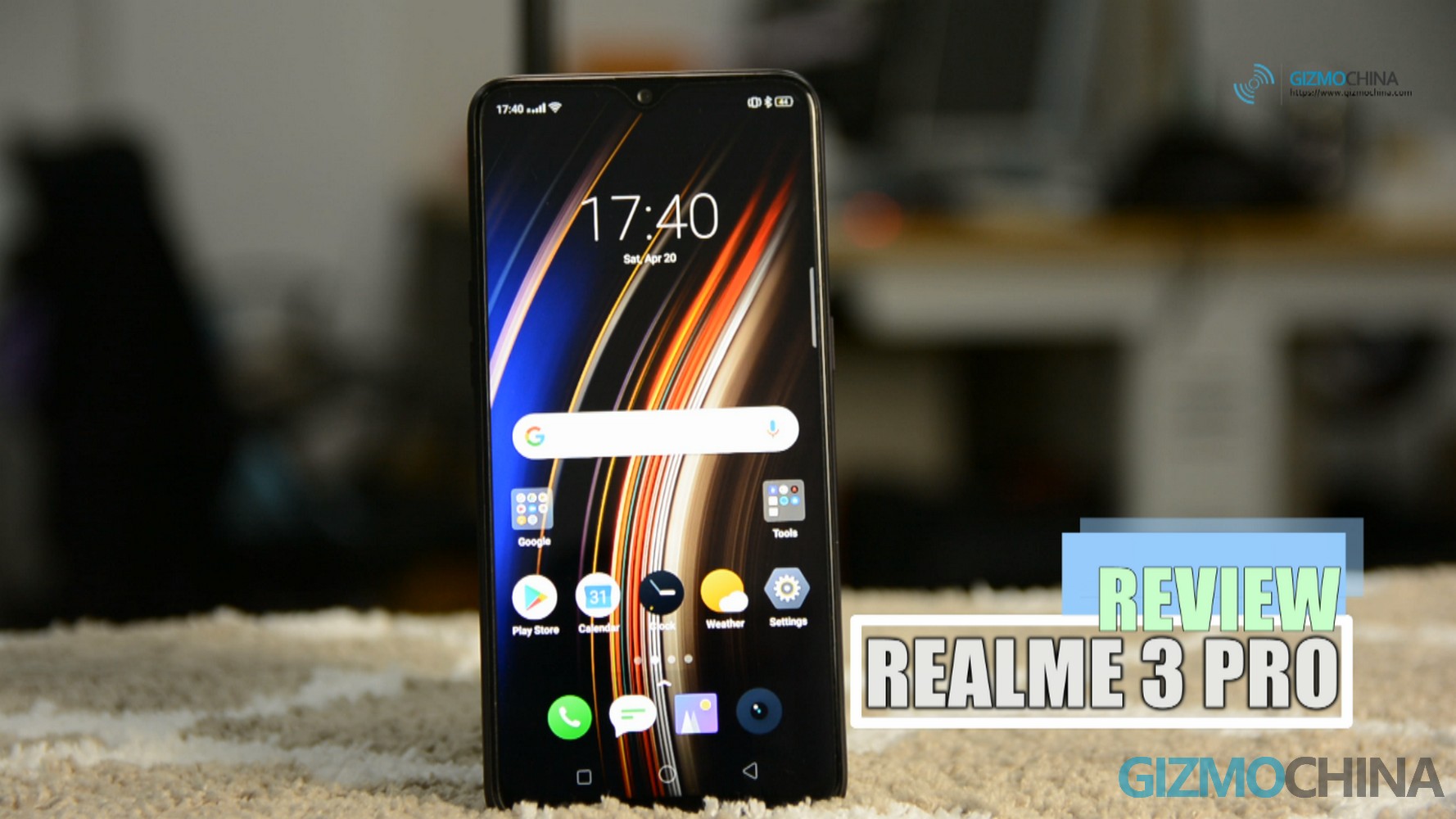
The screen is made up of a 6.3 inch LCD with a 19 by 9 aspect ratio and, as expected, 1080p resolution. Still, the Pro version adopts a water drop style notch. The front camera, light sensor, distance sensor, and earpiece are all embedded in it.
Also, the ‘Pro’ version upgrades the PPI to 410, which means you hardly notice any pixelization or blurriness in the screen while reading texts.
Sadly we cannot adjust the color space to sRGB or P3 but we do have a choice between cooler or warmer color temperature.
Thanks to the 90.8% screen-to-body ratio, the phone provides an immersive experience while viewing images and watching videos.
SPEAKER
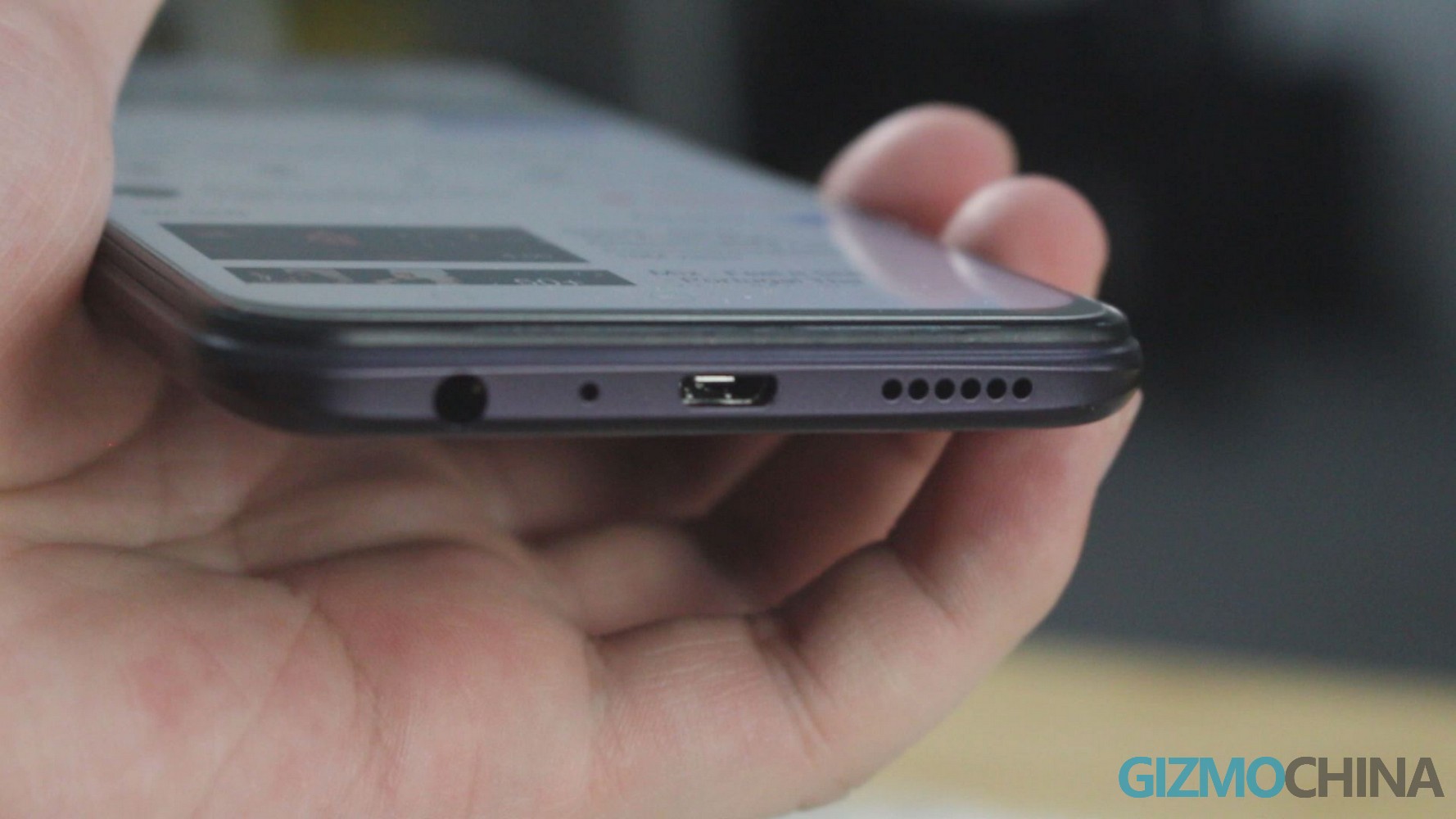
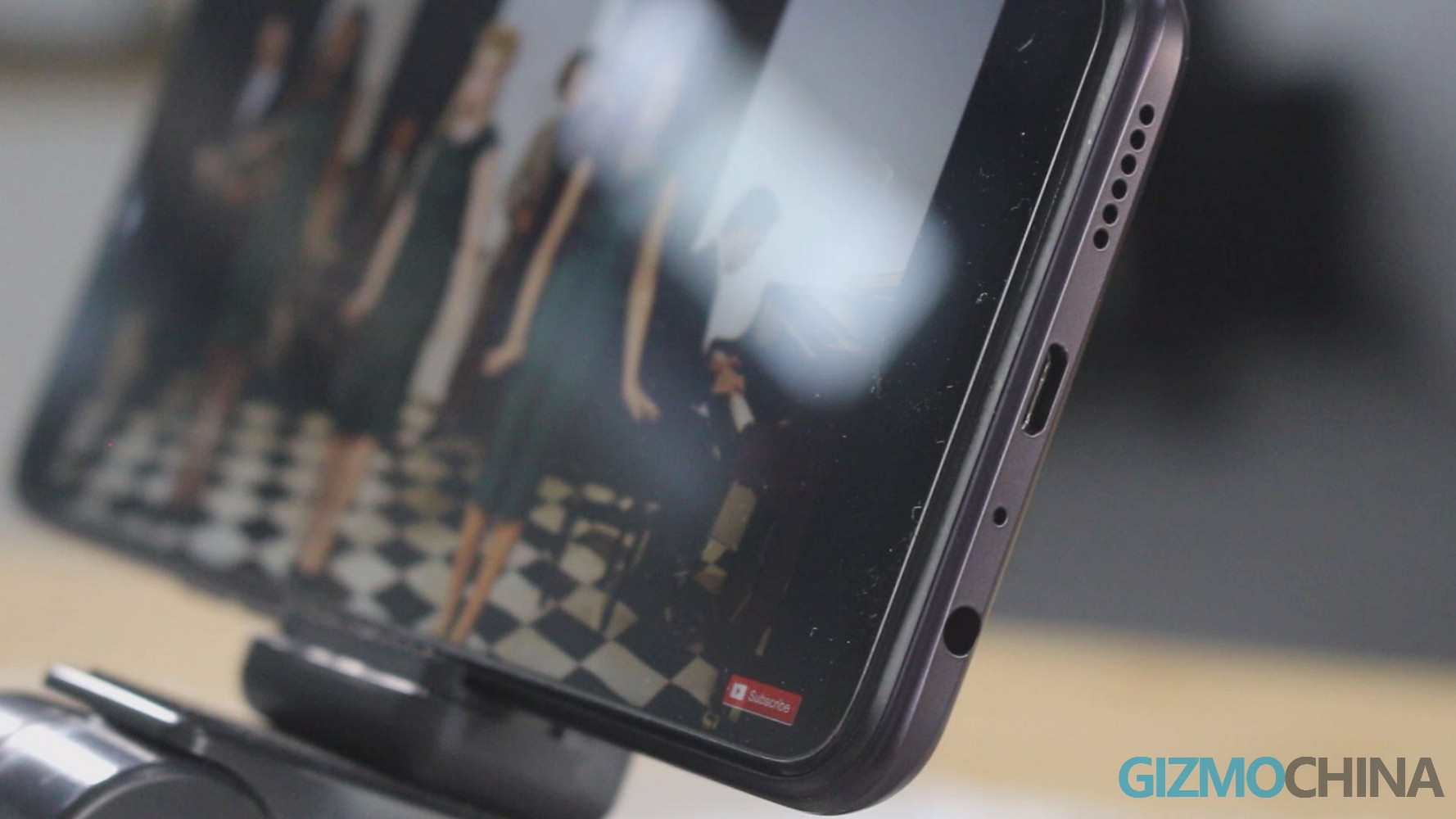
As for the audio, the Realme 3 Pro comes with a single speaker on the bottom right side. And we can find a 3.5mm headphone jack on the left. This is a really friendly feature for gamers who are constantly hooked in playing games even when the phone is being charged.
You can’t complain much about a budget device’s speaker quality, however, the Realme 3 Pro actually does a decent job when playing music. The performance on the high and low frequency is average but far from ideal. However, the vocals are surprisingly clear and satisfying.
UNLOCK SYSTEM
Still no in-screen fingerprint sensor, but let’s try the fingerprint scanner mounted on the back. You hardly feel any delay and the accuracy is also great. Besides, the face ID is also available on this Pro model. But due to the lack of 3D face unlock system, I can simply unlock it by using one of my selfies.
OPERATING SYSTEM
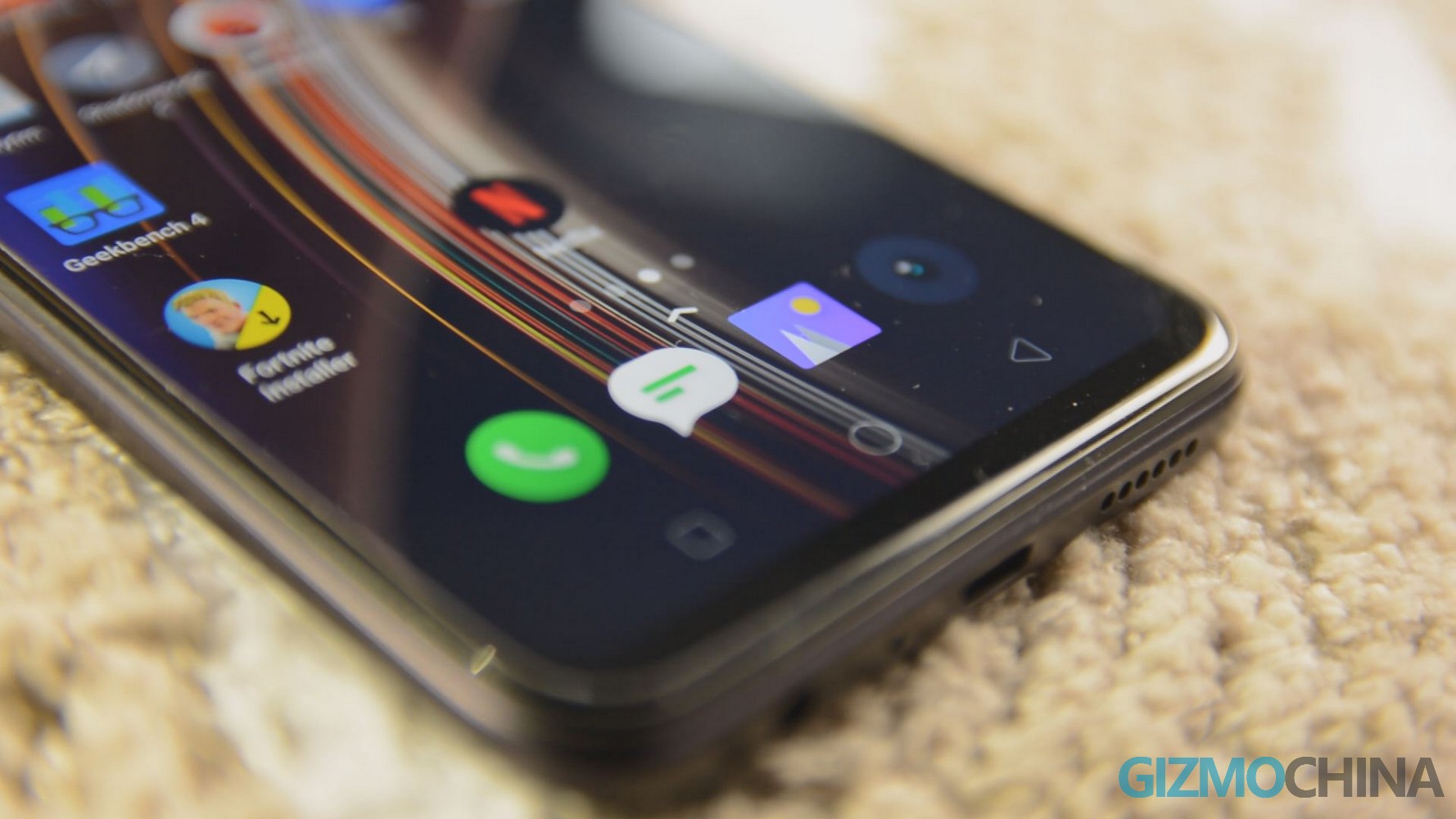
There are not many visible upgrades in this department as compared to the Realme 3. They are both powered by the latest ColorOS 6.0 system over Android 9. Compared to the Redmi Note 7 Pro, Realme’s UI adds space in between different aspects of the UI, instead of dividing lines. This gives the UI a cleaner look.
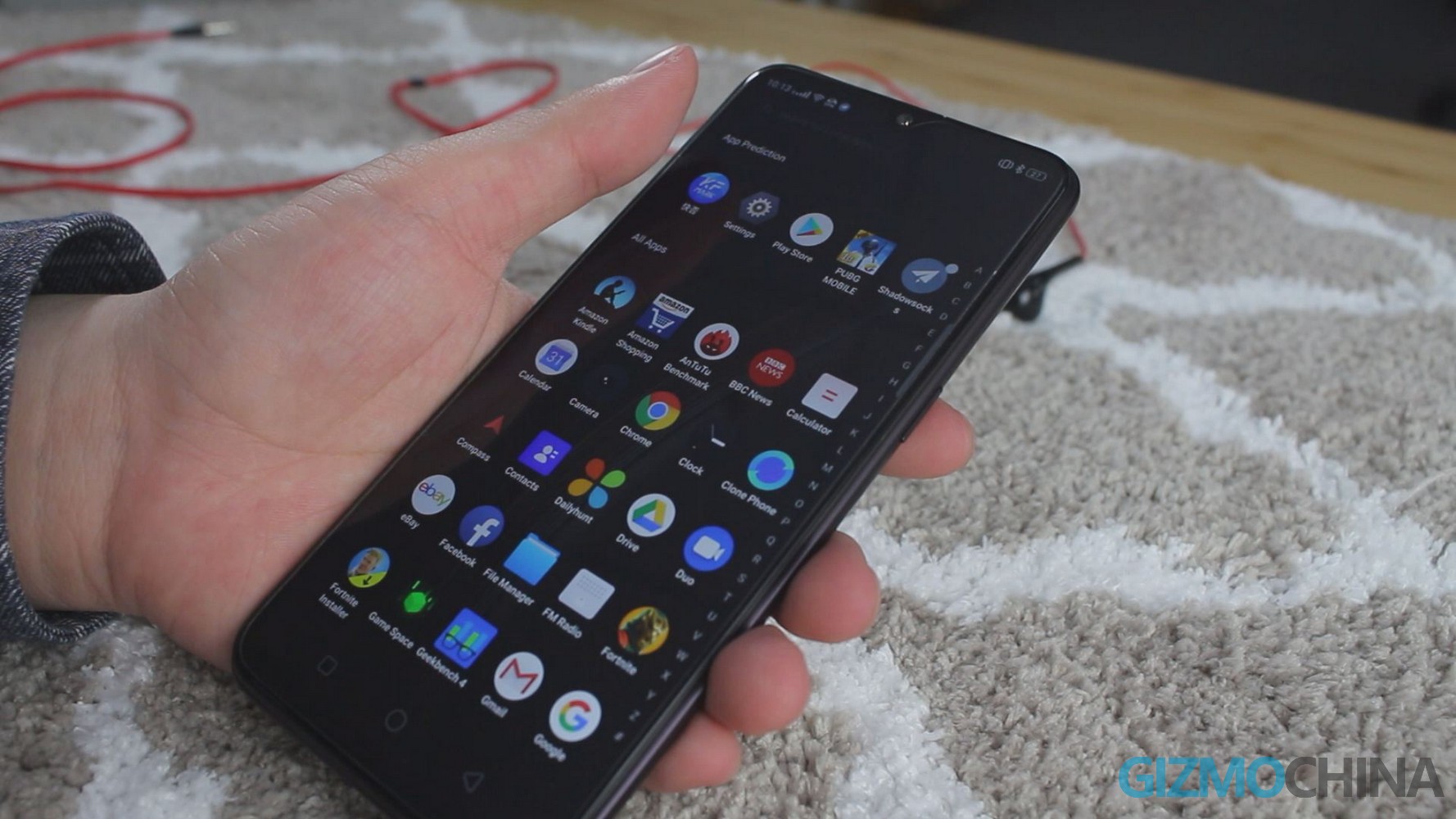
Moreover, you will notice that all your apps have been stored in a drawer, which reminds me of a very vintage style. It is like the interface that used to exist in ancient Nokia phones.
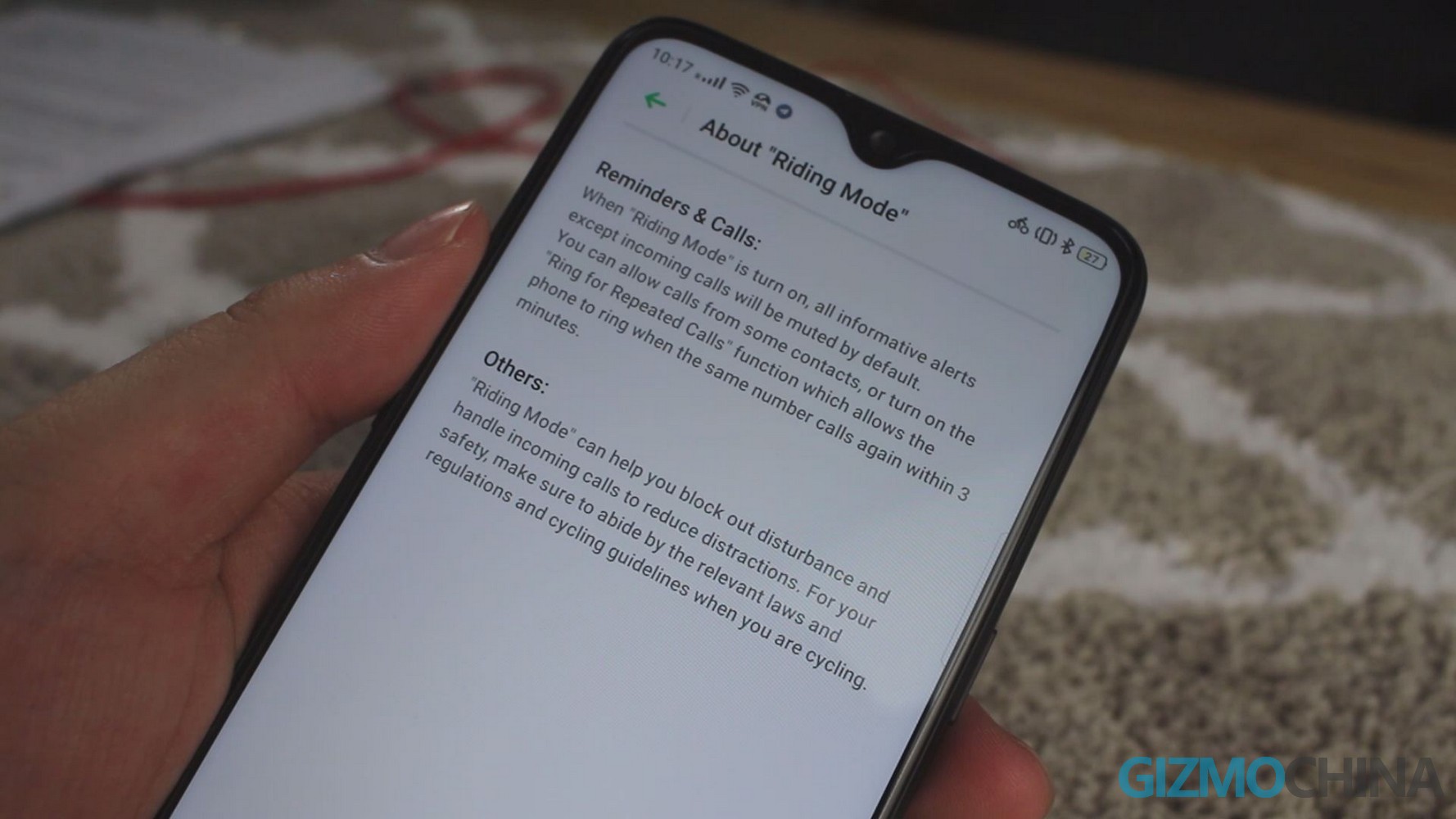
What is worth mentioning is that we found a specially designed mode for motorcyclists. During the ride, all notifications are muted and auto-replied with SMS. The incoming calls are displayed in larger fonts. Considering motorcycles play an important role in India, this kind of localization can efficiently avoid accidents.
HARDWARE DEPARTMENTS
Finally, we have got a Qualcomm chip in a budget phone. Equipped with Snapdragon 710 processor, the Realme 3 Pro performs quite impressively both in CPU and GPU departments.
All the apps respond immediately. Instead of closing the background apps, Realme 3 Pro freezes them. So you hardly notice stutters or lags when switching apps.
What makes the phone worth your money? My answer is its outstanding GPU. The Adreno 616 GPU guarantees real visual sense and more efficient and advanced 3D image rendering, which gives me a very fluent and pleasant gaming experience the whole time.
BATTERY LIFE
This is where I find the Realme 3 Pro comes in really handy. Featuring a 4045 mAh battery, there will be no battery anxiety even before you go to bed.
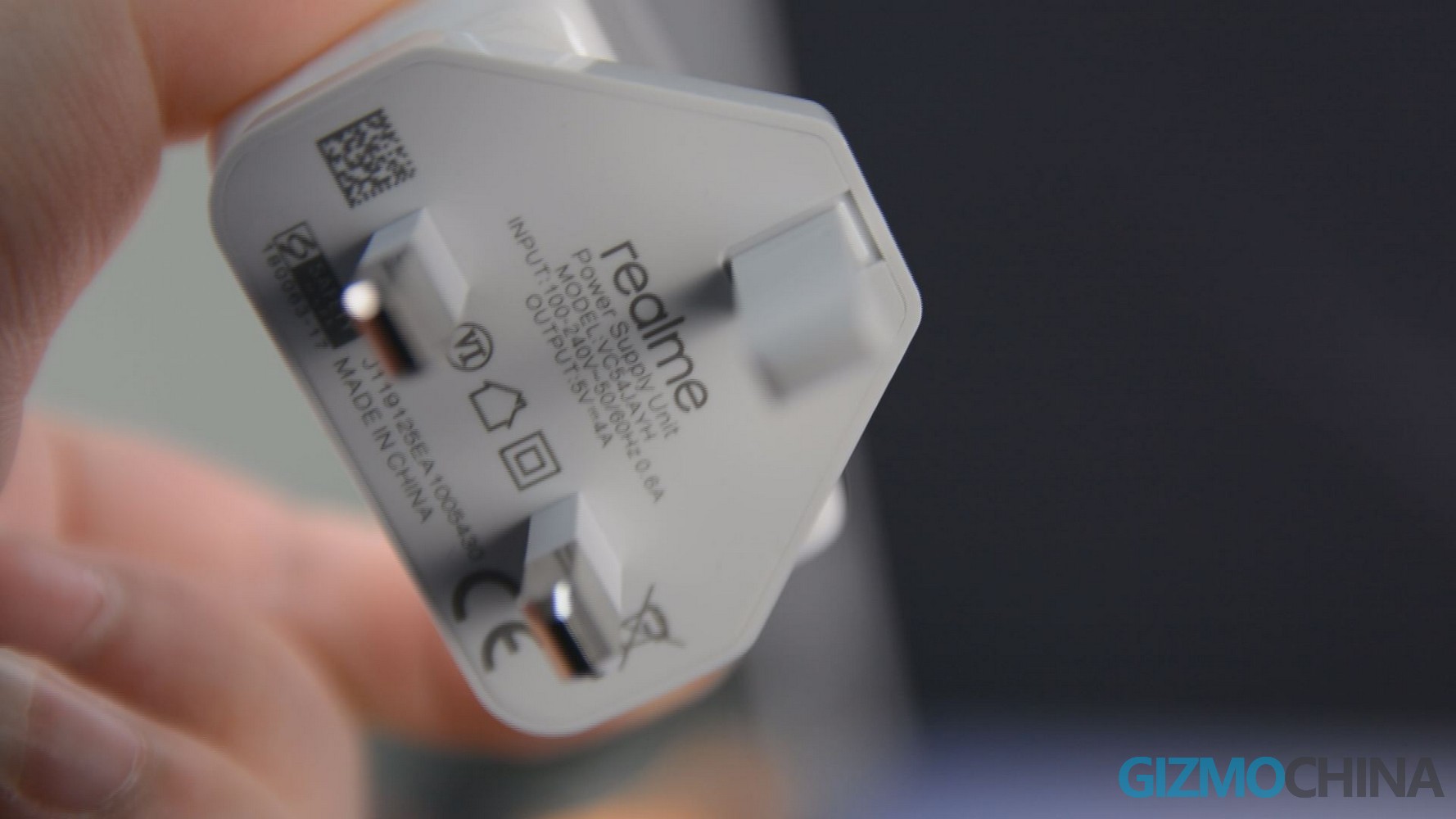
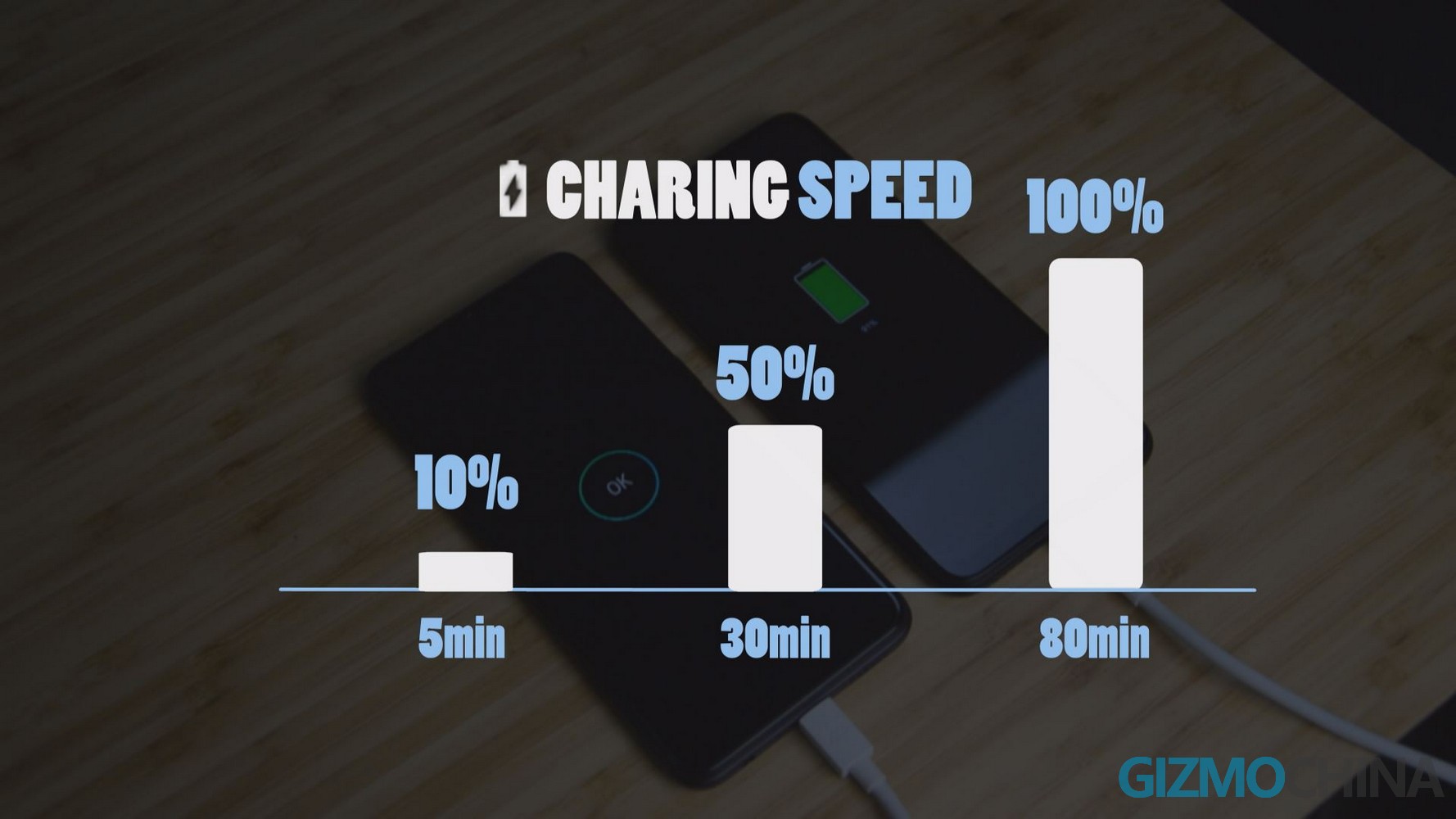
And with the help of the VOOC flash charge technology and the 20W charging brick, the phone charges from 0% to 10% in just 5 minutes, nearly 50% after half an hour, and fully charged in 80 minutes.
CAMERAS
The Realme 3 Pro has a 16MP primary camera with AI scene recognition and auto face detection. The aperture of the lens is larger than before—from 1.8 in the realme 3 to 1.7 in the Pro version. There is also a secondary 5MP camera as a depth sensor that completes the dual camera setup. But no zoom or wide-angle lens are to be found.
In good lighting conditions, photos turn out to be impressive—great balance between bright parts and dark parts. The color is accurate enough with good contrast. But once you zoom in a bit, the amount of details in the picture go down.
The dynamic range is just about average but luckily I found a solution to this, the chroma boost mode makes it up. You can enable it from the viewfinder, it efficiently improves the dynamic range by stacking multiple images and AI algorithm. Certain colors now are richer and brighter but the saturation sometimes is so strong that the pictures don’t look very real.
Chroma Boost Mode Off
Chroma Boost Mode On
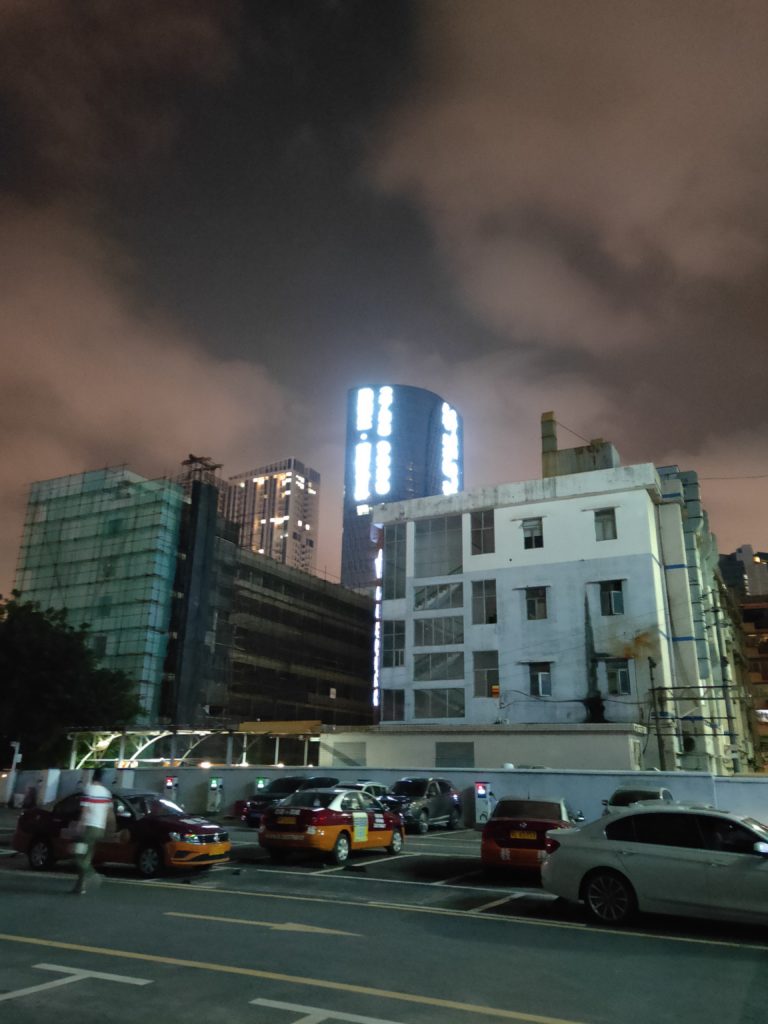
When shooting at night, we can still notice the overexposed highlights and high noise level. Images get better when we enable the HDR or the chroma boost mode but it’s far from perfect.
The upgraded nightscape mode does better than the last generation. You can definitely notice the improvements when you enable it. Thanks to the anti-shake and multi-frame synergy, the images here have more details, a balance of optimum exposure and well-controlled noise.
Nightscape Mode Enabled
The biggest improvement in the camera department of the Realme 3 pro is its amazing selfie camera. A huge jump from 13MP to 25MP and f/2.0. I really like it for its pleasant soft colors and enough sharpness at the same time.
Turning on the portrait mode, we find some issues around the shoulder area of the person, as it often gets mixed with the background. It seems that the algorithm needs some improvements.
Overall, if you are looking for a budget phone which comes with a fantastic industry design, decent display, and great CPU and GPU performances, this is definitely your primary choice. Especially if you spend most of your leisure time on your cell phone, the large 4000mAh+ battery gets rid of many of your possible worries.
However, I feel the camera department could use some improvement. This doesn’t mean it’s not good, as for the given price the Realme 3 Pro does have some impressive features like chroma boost mode and nightscape mode.
It’s worth mentioning that the Realme series has made a lot of efforts in introducing features relevant to its target markets like India. This proves that the company is determined to win a larger market share as well as provide better services, especially in the Asian region.
We use cookies on our website to give you the most relevant experience by remembering your preferences and repeat visits. By clicking “Accept”, you consent to the use of ALL the cookies.
This website uses cookies to improve your experience while you navigate through the website. Out of these, the cookies that are categorized as necessary are stored on your browser as they are essential for the working of basic functionalities of the website. We also use third-party cookies that help us analyze and understand how you use this website. These cookies will be stored in your browser only with your consent. You also have the option to opt-out of these cookies. But opting out of some of these cookies may affect your browsing experience.
Necessary cookies are absolutely essential for the website to function properly. This category only includes cookies that ensures basic functionalities and security features of the website. These cookies do not store any personal information.
Any cookies that may not be particularly necessary for the website to function and is used specifically to collect user personal data via analytics, ads, other embedded contents are termed as non-necessary cookies. It is mandatory to procure user consent prior to running these cookies on your website.