The Huawei Enjoy 9e is an upcoming smartphone scheduled to launch on March 25 alongside the Enjoy 9S and the MediaPad M5 Youth Edition 2019. A few days ago, Huawei released a teaser poster that revealed some of the phone’s specs and partial design, more specs have leaked along with official renders.
[envira-gallery id=”242384″]
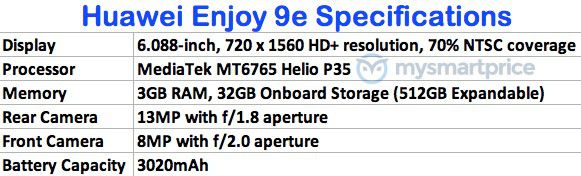
The Huawei Enjoy 9e will come with a 6.08-inch HD+ display with a Dewdrop notch and a slightly thick lower bezel. The official renders reveal it will come in three colors – Sapphire Blue, Midnight Black, and a brown leatherback variant similar to the Huawei Y6 Pro (2019). Actually, both the Enjoy 9e and Y6 Pro (2019) share a near-identical design and even some specs.
The phone is powered by MediaTek’s 12nm Helio P35 SoC which debuted on the Xiaomi Mi Play. The chipset is paired with 3GB of RAM and 32GB/64GB of storage which can be expanded to up to 512GB via a MicroSD card slot. It has a 13MP f/1.8 rear camera and an 8MP f/2.0 front-facing camera.
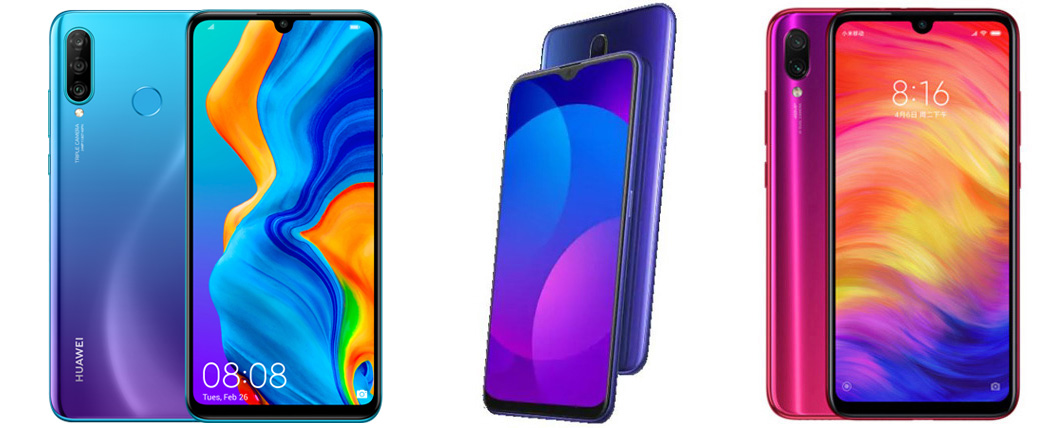
Huawei Nova 4e debuted in China and in a few days it will launch in the global market under the Huawei P30 Lite moniker. That is why it will probably be the Huawei’s midrange phone that will catalyze most of the attention in this first half of 2019. Just like the Redmi 7 Pro by Xiaomi which comes with upper-midrange specifications at a very affordable price. Alongside these handsets, another device with an excellent quality-price ratio launched in the Chinese market recently is the Oppo F11 that comes with impressive cameras and long battery life. In this comparison, you will learn which of these three devices should be the most satisfying.
Huawei Nova 4e vs Oppo F11 vs Xiaomi Redmi Note 7 Pro
Triple 24 + 8 + 2 MP f/1.8 and f/2.4
32 MP f/2.0 front camera
Dual 48 + 5 MP f/1.8 and f/2.4
16 MP f/2.0 front camera
Dual 48 + 5 MP f/1.7 and f/2.4
13 MP front camera
BATTERY
3340 mAh, fast charging 18W
4000 mAh, fast charging with VOOC 3.0
4000 mAh, Fast Charging with Quick Charge 4
ADDITIONAL FEATURES
Hybrid Dual SIM slot
Dual SIM slot
Hybrid Dual SIM slot
Design
I personally think that Huawei P30 Lite is the most attractive phone when it comes to aesthetics. It sports an elegant glass back and it is also the thinnest device of this comparison, as well as the most compact one thanks to its smaller display. We even got very narrow bezels around the display and a small dewdrop notch. Right after, there is the Redmi Note 7 Pro with a catchy gradient back made of glass and protected by Gorilla Glass 5. It comes with thicker bezels, but it has a very nice build quality and it is water resistant, according to the company. Even though it has a very high screen-to-body ratio, Oppo F11 takes the last place due to its less attractive plastic body.
Display
All of these phones come with an LCD display, but Oppo F11 offers something more. It comes with the advanced LTPS technology as well as a bigger size that makes it more suitable for productivity, multimedia, and gaming. The resolution is exactly the same and the color reproduction is similar as well, so you will not notice important differences between these panels. You may need to know that Huawei Nova 4e and Xiaomi Redmi Note 7 Pro have a slightly smaller U-shaped notch instead of a V-shaped one like the Oppo F11.
Specs & Software
If you want to get the best performance with the fastest and smoothest device, go for the Redmi Note 7 Pro without thinking twice. Its Snapdragon 675 chipset is a very powerful beast and it comes with a pretty nice GPU that performs well even in demanding gaming scenarios. If you do not like the Redmi Note 7 Pro, then go for the Oppo F11 as it still comes with an upper-midrange SoC and it offers a longer battery life. In terms of performance, Huawei Nova 4e is more or less like the Oppo F11. In each case, you get a highly customized user interface based on Android 9 Pie.
Camera
It is hard to establish which camera is the best as the camera performances of these devices vary depending on the scenario. Huawei Nova 4e is definitely the most interesting one because it comes with a triple camera including an ultrawide sensor and a stunning 32 MP selfie camera. However, the rear department of the Redmi Note 7 Pro and the Oppo F11 is still pretty good as it includes a 48 MP main camera which provides a very high level of detail and good photos even in low light conditions. The rear cameras of the Redmi Note 7 Pro are slightly superior to the ones on the Oppo F11 but I would go for the Huawei Nova 4e due to its ultrawide sensor and good stabilization.
Battery
Huawei Nova 4e loses this comparison due to its smaller 3340 mAh battery, while it is a hard fight between Redmi Note 7 Pro and Oppo F11. The former is better on more scenarios thanks to its very efficient 11 nm chipset, a smaller display, and outstanding software optimization, but the differences in battery life are not so noticeable compared to the Oppo F11.
Price
You can get the Redmi Note 7 Pro for just €200 in China, while Huawei Nova 4e and Oppo F11 cost about €270. Overall, Redmi Note 7 Pro wins the comparison thanks to its higher value for money, big battery, and very performing hardware department.
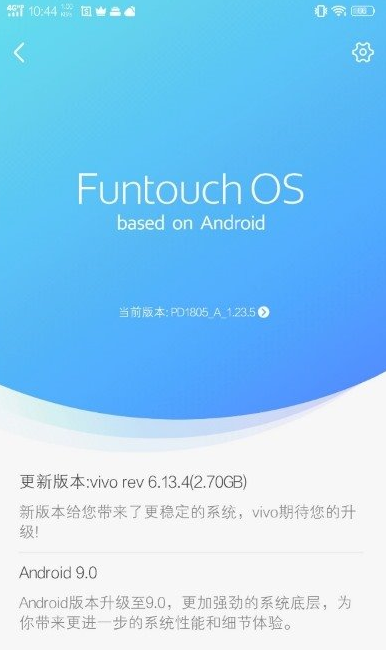
When Vivo’s first pop-up camera phone, the NEX S launched last year, it ran Android 8.1 Oreo out of the box which was actually the latest stable version of Android then. Android Pie has been out now for more than six months but Vivo is just rolling out the update to the 2018 flagship.
The update which is 2.7GB in size brings a ton of new features and a new user interface. Below are some of the new features:
Jovi Smart Scene – the Jovi AI assistant will provide useful suggestions and recommendations depending on where you are. So if you are driving or at work, the assistant will be able to tell and provide suggestions and bring up reminders related to your current location.
Jovi Voice Assistant – the Jovi AI assistant now supports voice commands. Just say the action word followed by your command.
Game Box – a game mode where you are not interrupted by notifications and calls. There is also a performance mode that improves the speed and performance of supported games.
iHousekeeper – an improved system and storage cleaning function.
Camera optimization – photo quality has been improved.
File Sharing – new interface, supports cross-platform sharing including the transfer of files from iPhones, and the transfer of web pages.
Simultaneous connection to two Bluetooth devices: You will be able to connect to two audio devices at once and set one of the devices for call audio output but ringtone will be played from both phones.
The Vivo NEX was the first phone to have a pop-up selfie camera. The feature is now available on other phones like the Vivo V15 Pro, the OPPO F11 Pro, the Vivo X27 and the X27 Pro.
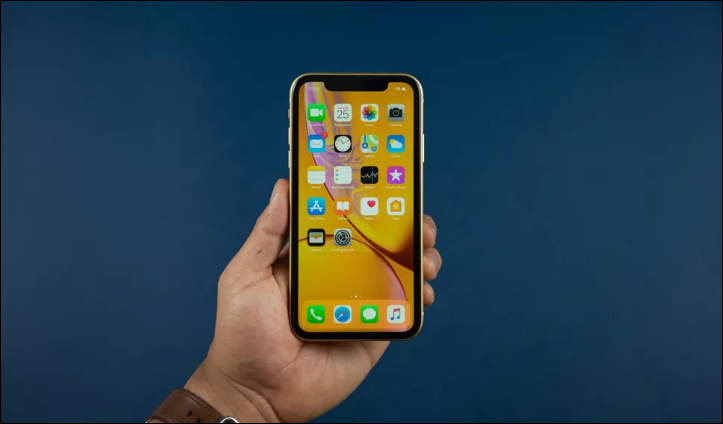
Apple is struggling to maintain its smartphone market over the past year in China. Many local companies including Huawei and Xiaomi are giving stiff competition to the Cupertino giant. There are many reports citing reasons behind such a decline, but no one confirmed the actual numbers. Thanks to a new report from Reuters highlighting the extent of how many Chinese are moving away from Apple.
The report cites that Apple’s share in the Chinese market tumbled from 81.2 percent to 54.6 percent in the past year. Majorly, the products falling under $500-$800 categories are worst hit with the increasing competition from local brands. While referring to the iPhone X line, Neil Shah research director at Counterpoint said: “Most Chinese smartphone buyers are not ready to shell out beyond $1,000 for a phone, and This left a gap in the below-$800 segment which Chinese vendors grabbed with both hands.”
Chinese are also missing some key features on Apple devices, it constitutes either a single or a dual rear camera while its competitors like Huawei are flocking their devices with new innovations. These days Chinese consumer look for multiple cameras, and other premium features at an affordable price.
Huawei market share improved a lot in China, jumped from 26.6 percent from 8.8 percent within a year. Huawei P20 Pro and Mate 20 are the main attractions among smartphone users in China. Even confirmed by smartphone reseller He Fan, CEO of Huishoubao, said, “Huawei’s cameras have become noticeably better than Apple’s in that they suit the tastes of Chinese consumers more.”
Apple’s poor sales are not only limited to China but worldwide, many factories are running at half-capacity from past sometime. To overcome this situation, Apple needs to develop cheap phones, maintaining the same build quality and better specifications. More innovative features will also ensure Apple to earn back its share in China.
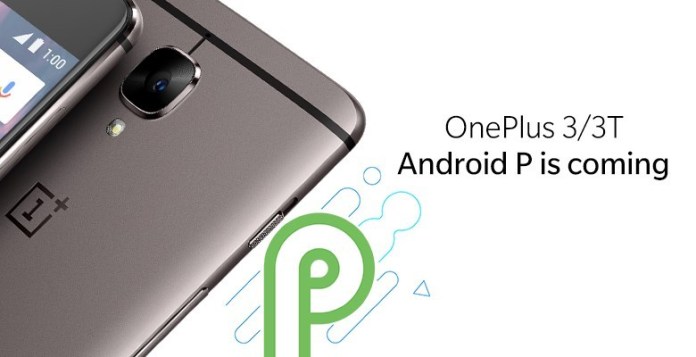
OnePlus always remain ahead in providing the latest upgrades on its devices. After rolling out Android Pie update on OnePlus 5 and 5T last year, now the company is dishing out the upgrade for OnePlus 3/3T. As promised, the company is starting a closed beta program for the OnePlus 3/3T. OnePlus is looking for new beta testers to begin the process of an impending rollout. Interested users need to hurry as only a few seats are available until today.
According to the post by Manu J, Global Product Operations Manager for OnePlus, the closed beta registrations for three years old device begins. He stated, “We have been hard at work baking that sweet pie, to ensure it tastes delicious we’d like to invite some of you to taste it first and make sure it’s ready to serve it to the rest of the community.”
OnePlus 3 and 3T has already received two major upgrades. First, just a month after its launch Android Nougat was rolled out and later followed by Android Oreo at the end of 2017. Interestingly, it would be the third significant OS upgrade for the device.
OnePlus CEO, Pete Lau recently confirmed users about the delay regarding Android Pie update, after an uproar by its users. A couple of days ago, OnePlus commenced the Android Pie Beta testing based on Hydrogen OS in China. OnePlus has drastically improved support for old devices after the OnePlus 2. From now, its the matter of some few days before the commencement of Android Pie stable update on OnePlus 3 and 3T.
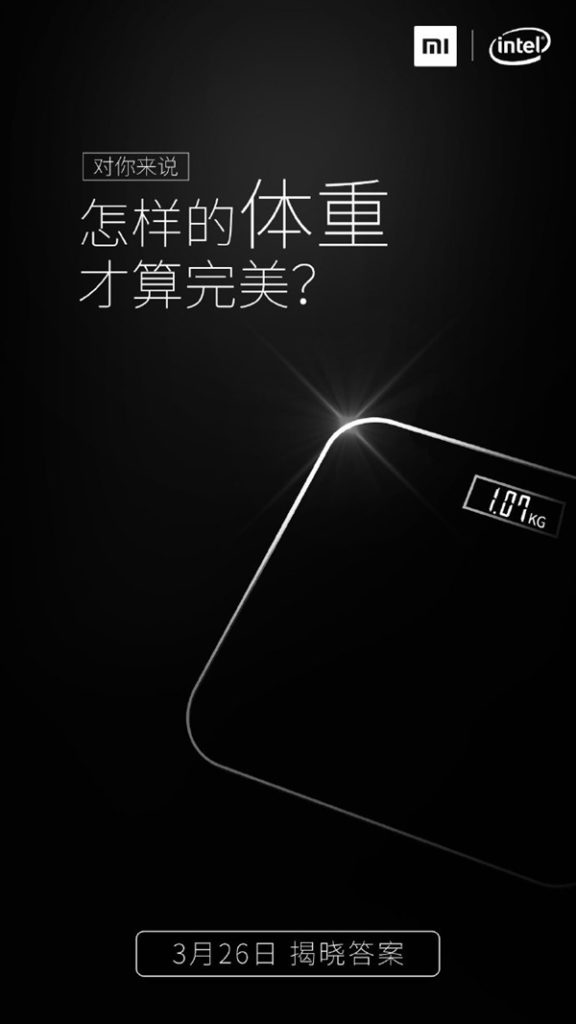
Xiaomi’s new Mi Notebook is launching on March 26th in China. It will be lighter than the Macbook Air weighing over 1.07Kg. After entering the Notebook market with Mi Notebook Air in 2016, Xiaomi unveiled various new editions carrying upgraded hardware and features. Similarly, a new Xiaomi Mi Notebook is making its way this month, reveals a new teaser on its official Weibo Handle.
Xiaomi is advertising its thinness and lightweight as the main selling points. Comparatively, it is lighter than Apple MacBook Air which weighs 1.25kg, and 1.3kg Huawei MateBook 12.
Xiaomi is selling different sized Mi NoteBooks with a different set of features via its official Mi Store in China. Last year, they introduced 15.6-inch and 13.3-inch Notebooks featuring Intel i3/i5/i7 chipsets. The Chinese electronics maker’s products always share similarities with Apple devices.
Xiaomi will also upgrade its core specifications along with its lightweight and portability features. Only limited information regarding its specs and pricing is available. As always, new Mi Notebook will drive its design language from predecessors and Apple’s Macbook. We expect some more information to reveal via official teasers and renders ahead of its launch. Xiaomi scheduled the launch for Mi Notebook Air on March 26th.
A few days ago, there were reports that HMD Global was sending user data to China. The affected model is the Nokia 7 Plus and the issue was reported to affect several units of the phone sold in Norway. Yesterday, HMD Global released an official statement to clear the air on the matter.
According to the Finnish company which manufactures its phones in China via FIH Mobile, the Foxconn subsidiary, the Nokia 7 Plus didn’t share personal data with any third party. What the phones did send to a third party server in China is actually device activation data. However, this shouldn’t have happened in the first place.
Apparently, a certain batch of Nokia 7 Plus meant for countries outside China had the device activation client for China mistakenly installed on them, instead of that of the right country variant. HMD Global says the issue was fixed in February and almost all owners of the Nokia 7 Plus from the affected batch have installed the fix.
Below is an infographic that explains the data collected from users :
Nokia 7 Plus devices that already have the fix installed have build number “00WW_3_39B_SP03” or “00WW_3_22C_SP05”. You can check the build number by going to Settings > System > About Phone > and then scroll down to “Build Number”.
HMD Global says only devices sold in China have their data stored in China while the user activation data and user experience data (for those who opt-in for the latter) of the global variants are stored on their (HMD Global) servers in Singapore which is provided by Amazon Web Services.
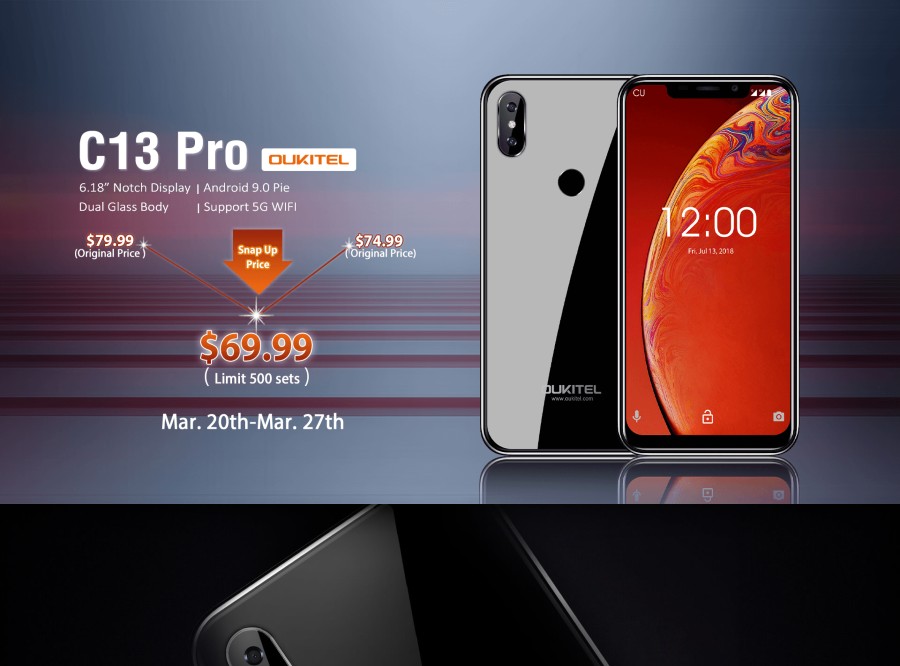
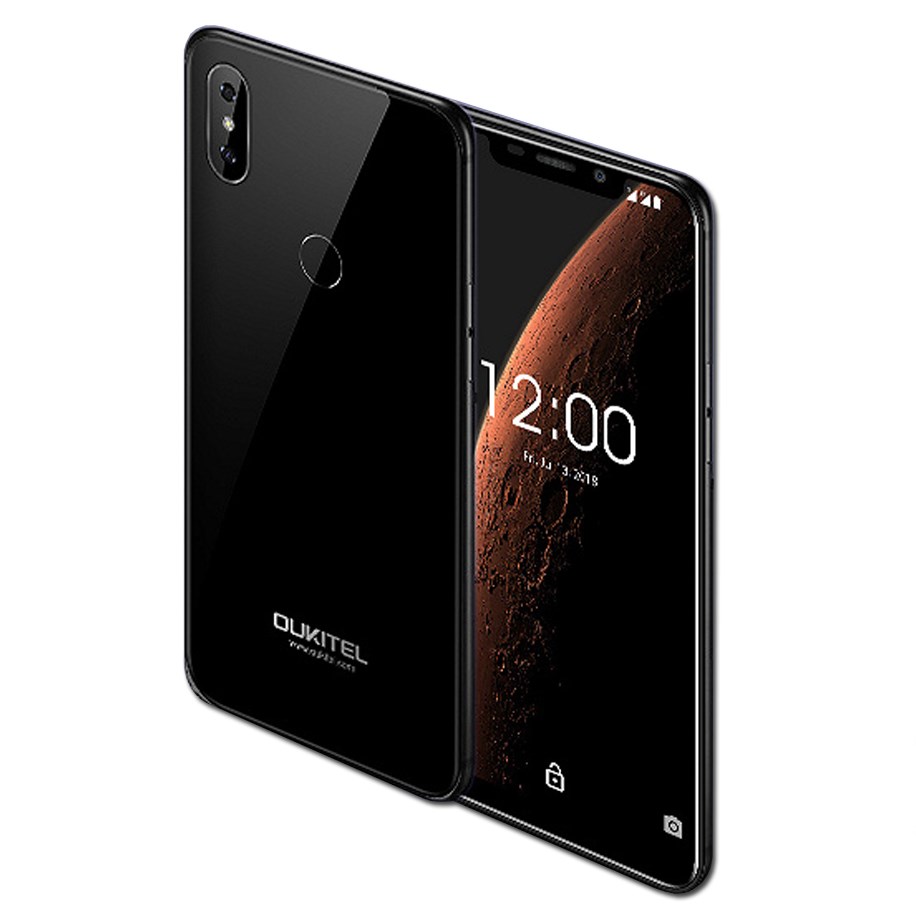
OUKITEL took the wraps off the C13 Pro in early March alongside the iPhone XR style. As expected, the phone became an instant hit among smartphone lovers looking for a top-end handset that doesn’t compromise on quality.
Much to the delight of OUKITEL fans, the international brand that focuses on making smartphones has now teamed-up with Banggood to offer its well-received C13 Pro at unbelievably lowered prices.
As part of its recently kicked-off flash, the Chinese online store is offering first 499 lucky consumers a chance to buy the OUKITEL branded smartphone for just $69.99. This is a significant 36 percent reduction in the device’s original asking price of $109.99. Those who miss out the aforesaid opportunity will be able to get their hands on the next 999 pieces of the C13 Pro by shelling out $74.99. Once the available pieces are sold out, the remaining 1499 pieces will go up for pre-order bearing a $79.99 price tag.
An absolute steal at this price, the OUKITEL C13 Pro boasts an impressive array of features. You can check out them out below:
6.18 Inch FW+ LCD IPS display with 480 x 996 pixels resolution
You can follow this link to check out the full specification and avail the discount, which will be valid for both the black and gold color versions of the C13 Pro smartphone. Note that the promo is slated to end on March 27th.
UMIDIGI announced the hotly-anticipated S3 Pro smartphone in December last year. It boasts an impressive array of features and top-end specifications that enhance the overall user experience with the phone.
If you have been waiting with bated breath to get your hands on the well-received smartphone at a lowered price, we got good news for you. The popular Chinese phone manufacturer has teamed up with leading online stores to offer the S3 Pro at lowest prices.
UMIDIGI S3 Pro 4G Smartphone on CooliCool
The European Union and Non-European Union Version of the UMI S3 PRO 4G smartphone have gone up for sale bearing significantly lowered prices on CooliCool.
Designed for those living in EU-28 countries, the European Union Version of the S3 Pro would normally set you back $369.99, but you can now get it for just $279.99 on CooliCool, which is touted as one of Asia’s online commercial corporations.
Those living outside EU-28 countries can go for the Non-European Union Version of the S3 Pro smartphone that normally sells for $369.99 but is currently available for only $279.99 on CooliCool.
It is worth noting that the UMIDIGI S3 Pro comes only in the black color version for both the European Union as well as the Non-European Union versions.
You can follow this link to visit the promotion page and grab the discount before the promo ends on March 25th.
Gearbest is doling out a noteworthy 30 percent discount on the black-tinted EU Version of the S3 Pro phablet that would normally set you back $397.63. As a result, the well-received version of the phablet can be yours if you are willing to shell out just $279.99.
The other version of the S3 Pro phablet which is designed for users living outside EU-28 countries usually carries a $397.63 price tag, but thanks to a 30 percent discount you can now buy it for only $279.99 on Gearbest. On the downside, there were only 93 pieces of the EU Version and 97 pieces of the Other Version remaining at the time of writing. You can follow this link to avail the discount before the promo wraps up in four days.
Known for offering the best bang for your buck, Banggood is now giving its loyal users to avail a 30 percent discount on both the European Union and the Non-European Union versions of the S3 Pro.
While the aforesaid versions usually retail for $399.99, Banggood users can pre-order them for just $279.99. This promotion sale which kicked off on March 18th is slated to end on Monday, March 25th.
You can head straight to this link and avail the discount before the promo comes to an end. Note that the expected processing time is on April 15th.
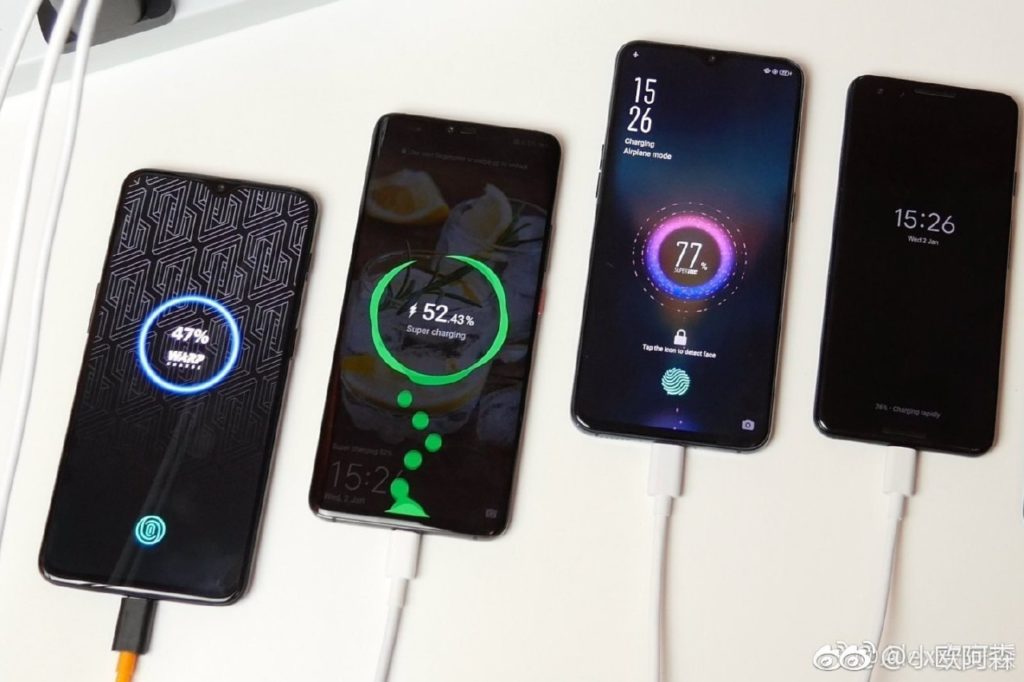
OPPO‘s SuperVOOC fast charging technology is unarguably the fastest quick charge technology for smartphones presently. While OPPO is launching car chargers with the supersonic SuperVOOC feature, the company has disclosed that the technology will not be on the upcoming OPPO Reno. Instead, the Reno will have the latest VOOC 3.0 technology.
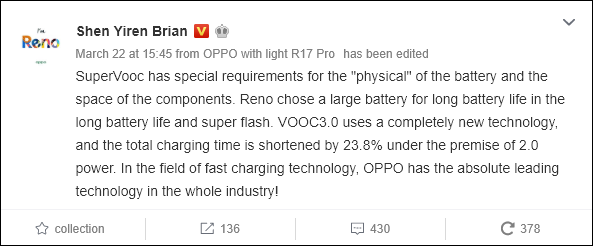
The OPPO’s VP confirmed this on Friday in a Weibo post, offering some reasons why the Reno cannot have SuperVOOC technology. According to him, SuperVOOC has specific requirements regarding the physical size of the battery and space of the phone’s components. Reno doesn’t seem to meet those requirements instead, it comes with big battery capacity and the size may be too thin which would make the components to be compacted. The fast charging technology will be powered by VOOC 3.0. Bryan Shen revealed that the new VOOC 3.0 uses a completely new technology which brings the total charging time to 23.8% faster than the current VOOC 2.0. The VOOC fast charging technology is based on a low voltage pulse algorithm and customized super battery developed by the company. The charging technology churns out 20W of power just like OnePlus’s Dash Charge and lets you recharge your phone from 0 – 75% in 30 minutes.
OPPO’s flight to the limelight in the smartphone industry was perhaps propelled by the VOOC flash charge technology that it used on its smartphones. The company took the bar higher when it introduced the Super VOOC Flash Charge technology at the Mobile World Congress (MWC) 2016. The technology only found its way to the Find X Lamborghini edition that was launched last year. Notably, the Find X Lamborghini edition packs a 3,400mAh battery whereas the Reno is said to have a 4064mAh battery under its hood. Super VOOC can charge a 2500mAh battery in just 15 minutes or up to 45% in just 5 minutes. That is super fast and so, the company may have played safe by not using the technology on the Reno since it is not suited for big batteries. We expect the VOOC 3.0 to offer a fast charging performance that is almost on par with SuperVOOC, though.
Huawei is currently the world’s second largest smartphone manufacturer but, unlike its main rivals of the Android market (Samsung and Xiaomi), it still hasn’t entered the TV market. According to a report from a Chinese media, the company has finally decided to launch its first TV. It seems that a supply chain executive confirmed that the Chinese giant will officially announce its first TV line-up next month.
According to the source, the new products will not just be simple TVs, but they will be a sort of home hubs with special social and gaming features. And in the era of cloud gaming and smart TVs, this would be perfect. But the upcoming TVs will not focus only on software-related features: according to the report, they will be equipped with dual cameras. The cameras included on the frame will be used for video chats and streaming.
Huawei TVs are said to come in variants with 55 and 65-inch diagonals and the display is expected to be manufactured by BOE and Shenzhen China Star Optoelectronics. They are rumored to come under the Huawei AI Window moniker. It seems that the most important smartphones manufacturers understood how important TVs are in the hi-tech world nowadays, and they want to aim at conquering the TV market too. Indeed, even OnePlus is planning the launch of a TV.
Chinese internet giant Tencent is known for its range of popular games such as Playerunknown’s Battlegrounds (PUBG) game. The mobile game has become a popular one in India such that it was even banned recently. One lucrative aspect of online games is in-app purchases. In order to leverage the popularity of its mobile games, Tencent is reportedly planning to enter the Indian market soon with its WeChat Pay payment platform.
According to tech blog Entrackr, Tencent execs met with India’s National Payment Corporation of India (NPCI) a couple of weeks back to discuss obtaining a license for the payment service. The Chinese tech giant plans to launch the service as early as May or June this year.
WeChat Pay is based on the Unified Payments Interface (UPI) which has a lot of participants in India. WeChat Pay will have to contend with outfits such as GooglePay, PayTm, BHIM, PhonePe and Mi Pay. With the monthly UPI transaction volumes consistently surpassing Rs. 1 trillion ($14.49 billion) in December, January, and February according to NCPI’s website, Tencent may be heading for a lucrative market. Also, the popularity of its range of gaming apps may provide it with the avenue to break into the market.
Nubia is about to launch its next gaming phone: the Nubia Red Magic 3. The phone will be officially unveiled in April and it will soon become one of the best rivals to the new Black Shark 2 by Xiaomi. A few weeks ahead of the launch, Nubia’s CEO Ni Fei started giving hints about the specifications of the upcoming gaming phone. The latest one regards its cooling system: according to Ni Fei, the phone will boast a hybrid cooling system which will combine liquid cooling, air cooling, and a turbofan.
The phone will be able to adjust the intensity of the fan depending on the weight of the tasks and the phone’s temperature. That is how Nubia Red Magic 2 should minimize heating issues. Given that it will be a gaming phone, it is expected to be equipped with the best Qualcomm’s chipset: we are talking about the Snapdragon 855 which will be paired with up to 12 GB of RAM just like the recently-unveiled Black Shark 2. We know that there will be a 4D vibration system that will deliver a more advanced haptic feedback during gaming sessions, and the battery capacity will start with a 5, so we expect at least 5000 mAh.
The former ZTE’s sub-brand also teased that Nubia Red Magic 3 will come with a higher refresh rate than most gaming PCs, so there could be a display with a 120 Hz refresh rate. The latest gaming phone of the company is the Red Magic Mars and it recently hit the European market. It is equipped with a Snapdragon 845 chipset, up to 10 GB of RAM and up to 256 GB of internal storage. Its display has a 6-inch size and a Full HD+ resolution, while the battery has a capacity of 3800 mAh.
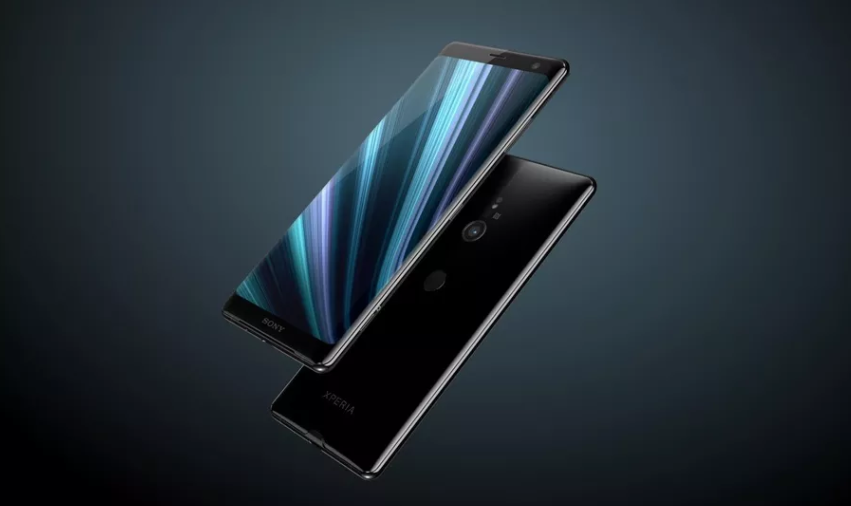
It turns out, the camera department of the Sony Xperia XZ3 is disappointing. Well, it is surprising to hear such a thing from a manufacturer that produces most of the high-end camera modules for smartphones. But that is what reviewers at DxOMark think about one of the last Sony’s flagships. The phone has been tested and reviewed by DxOMark team who gave a detailed opinion about its camera performance, as well as a poor total score of just 79 points. The phone barely appears in the top 50 best camera phones that you can find in the home page of the website, and DxOMark considers it even worse than midrange devices such as the iPhone 7 and the Asus Zenfone 5.
The Sony Xperia XZ3 scored 76 points in the photo department and 85 in the video department, which led to a total score of 79 points. Among its most important qualities, there are good image textures, pleasant colors and great exposure for the photos. On the other hand, from what DxOMark shows, the camera is terrible in low light conditions: it has much slower autofocus which takes up to half a second to work properly, and the saturation is too high.
That results in a lower level of detail and a worse white balance. Sony Xperia XZ3 is not a top-end device even in good light conditions due to a limited dynamic range. There is not even a built-in bokeh mode, and the situation got even worse when DxOMark noticed some artifacts in photos. When it comes to videos, the situation gets a little better due to the image quality and the nice electronic stabilization, but the dynamic range and the autofocus with low light conditions are still disappointing.
Sony Xperia XZ3 comes with a single rear camera boasting a 19 MP resolution and an f/2.0 aperture, as well as a laser autofocus mechanism and electronic stabilization. It can record videos in 4K up to 30 fps with HDR and 1080p up to 960 fps with the super slow motion mode. The device is equipped with a Snapdragon 845 chipset paired with up to 6 GB of RAM and 64 GB of internal storage. It is also the first Sony device to come with a P-OLED display which is HDR-compliant and boasts a QHD+ resolution. The score of 79 points obtained by Sony Xperia XZ3 places it right above the Xperia XA2 Ultra. For more info, you can read the full review from DxOMark at this link.
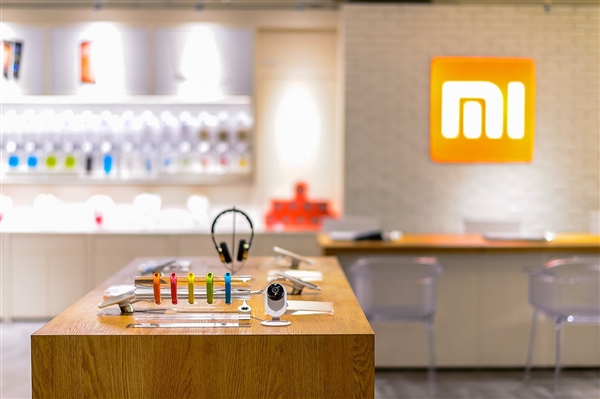
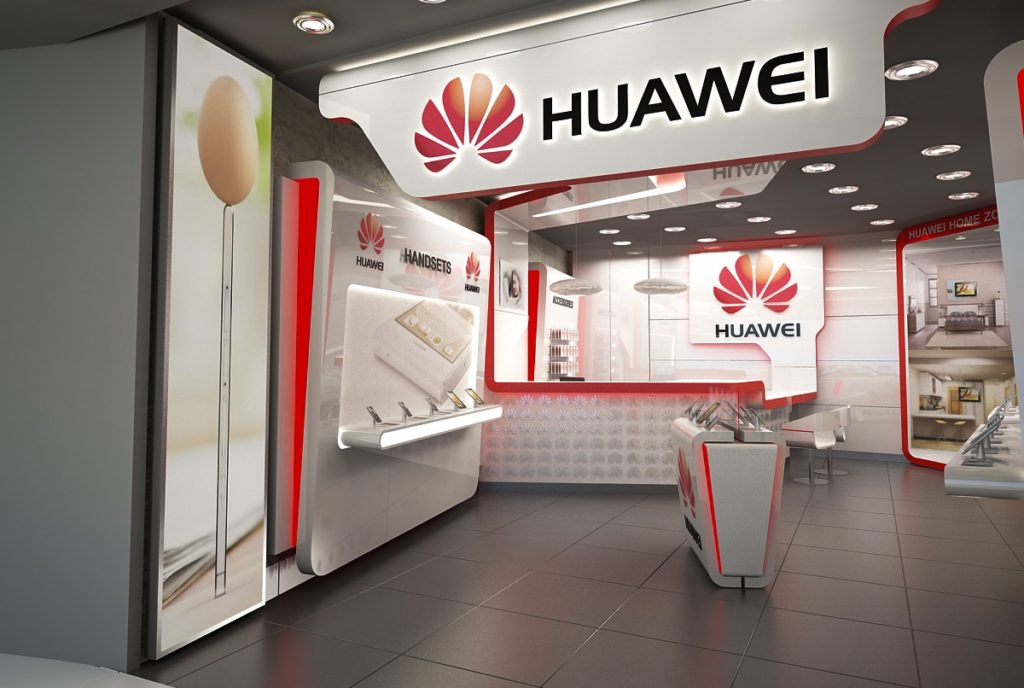
Xiaomi has continued to unravel its plans to expand its product offering globally and one continent it targets is Europe. Xiaomi has a growing presence in several countries in Europe and one of them is Russia. Since it made its debut in Russia in 2017 the company has grown to become one of the top 5 smartphone vendors in the country. There are indications that Xiaomi is planning to expand its presence in Russia According to Kommersant, Xiaomi and Huawei are planning to expand their network of retail stores in Russia.
Kommersant cited sources in the communications market who hinted that Xiaomi plans to open about 100 stores this year while Huawei plans to open 30 stores this 2019. The report says Huawei plans to grow its stores from 150 to 200. The Chinese market leader is said to be scouting for partners and is already in talks with Inventive Retail Group. Huawei presently has six stores in Russia, four located in Moscow and one each in Ufa and Novosibirsk. On the other hand, Xiaomi has 30 Mi stores spread across different cities and also 29 “islands” in shopping centres. Xiaomi has stores in Moscow, St. Petersburg, Vladivostok, Samara, Tomsk, Khabarovsk and Nizhny Novgorod.
A report by GS Analytical Center in 2018 showed that Huawei is ranked second in smartphone shipments after Samsung while Xiaomi ranks fifth after Apple and Nokia.
Vivo recently launched the Vivo V15 smartphone in Thailand, which is the watered-down model of the Vivo V15 Pro smartphone. While the V15 Pro has already been launched in India, the standard V15 hadn’t made it to the country.
Today, the company has officially launched the Vivo V15 in India. The smartphone is priced at Rs. 23,990 which roughly converts to $347. It will be available for pre-orders from 25th March and will start shipping from 1st April.
It comes in three color options — Royal Blue, Frozen Black, and Glamour Red. The phone will be available for purchase through various online stores as well as through offline channels.
The smartphone features a larger 6.53-inch Full HD+ display with 1080 x 2340 pixels screen resolution, 2.5D curved glass, and Gorilla Glass 5 protection on top. Just like the Pro model, it doesn’t have a notch and a punch hole but comes with a pop-up mechanism for housing the front-facing camera.
Under the hood, the device is powered by MediaTek Helio P70 octa-core processor, along with 6 GB of RAM and 64 GB of internal storage. This is different from a Thailand variant which comes with 128 GB of storage. There’s also a microSD card slot allowing users to further expand the phone’s storage capacity up to 256 GB.
In the camera department, the smartphone comes with a 32 MP f/2.0 pop-up selfie camera. On the back side, it features a triple camera setup, consisting of a 12MP with f/1.78 aperture + 8 MP having f/2.2 aperture + 5 MP sensor with f/2.4 aperture.
There are also a lots of camera modes and features including super wide-angle mode, AR stickers, body shape adjustment, and scene recognition. The device also comes with a rear-mounted fingerprint scanner. Connectivity options on the device include Dual 4G VoLTE, WiFi 802.11 ac dual-band, Bluetooth 4.2, GPS/GLONASS, and Micro USB Port.
Coming to the software, the device runs Android 9 Pie operating system out-of-the-box with the company’s own FunTouch OS 9. The handset is powered by a 4,000mAh battery and comes with Dual Engine fast charging support.
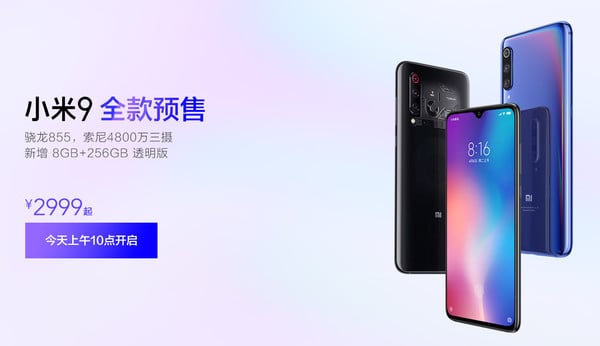
Xiaomi has today announced a new version of the Mi 9 TransparentEdition. The new version comes with 8GB of storage and 256GB of storage and has a slightly cheaper price tag than the original model. The Mi 9 Transparent edition was initially announced with 12GB RAM and 256GB storage. This 8GB RAM version is 300 yuan cheaper, priced at 3699 yuan ($550).
The mi 9 Transparent version with 8GB RAM and 256GB storage is presently on pre-sale with shipping billed to commence in a distant 3 weeks instead of the 7 days shipment Xiaomi was implementing. At the moment, pre-orders are no longer accepted as visitors complain of getting the “out of stock” message when they attempt to pre-order it online. Offline pre-sale is said to be ongoing successfully via Mi Home stores in China.
The Mi 9 Transparent Edition is Xiaomi’s first phone with 12GB of RAM. This new 8GB RAM variant expands the available options buyers have to choose from. Xiaomi may even expand the variants further to include 6GB RAM or more storage options like 128GB. But the company has to deal with making the device available first. Even though the Mi 9 Transparent edition shares the same 6.39-inch AMOLED display with the regular Mi 9, it has a different design at the back, thanks to its see-through glass. Also, its 48MP rear camera has an f/1.47 aperture and a 7P lens.
Meitu, a China-based smartphone manufacturer, which started its operations in the year 2008, recently released its full year earnings report for 2018. The company reported that it generated revenue of 2.792 billion yuan, registering decline of 37.8 percent year-on-year.
The decline in the company’s total revenue is primarily due to the decline in the smartphone business. The company’s smart hardware revenue for the year 2018 was 1.843 billion yuan, registering decline of 50.7 percent year-on-year.
Along with reporting its financials, the company revealed that it will be completely shutting down its smartphones business in the mid-2019. Now, the development, production, and sales will be handled by Xiaomi — another China-based smartphone manufacturer. In return, Meitu will be getting a cut of the smartphone share.
In November last year, Meitu had announced a strategic partnership with Xiaomi Group under which it exclusively licenses its brand, imaging technology and second-level domain name of its mobile phones to Xiaomi. The imaging technologies include MTface face technology, MTsegment image segmentation, MTbeauty beauty, MTmakeup beauty technology, MTrestore image restoration, MTenhance image enhancement, MTpose limb detection, etc.
While the company had started its business in the year 2008, it officially entered the hardware market in Beijing and released the Mito mobile phone. Since then, the company has roped in several celebrities to endorse its products but due to the fierce competition in the smartphone market, it has become difficult for Meitu to survive.
According to a report from China Electronic Equipment Technology Development and Utilization Association and environmental protection organisation, the smartphone recycling rate is less than 2% in China. People are not recycling their electronic products, claims the ‘China Waste Electronics Products Circular Economy Report’.
In contrast with gold mining, the report cites that electronics product mining is more economical. On average, every ton of used smartphones carries 270 grams of gold rather than 10 grams in primary gold mining. The cost of extracting gold from electronic boards is 20%-65% lower, and the quality of the gold content is higher than the native gold mining.
Smartphone recycling is a profitable sector and impacts positively on the environment. The report predicts that China can garner 130 billion Yuan if they improve the recycling rate to 85% by 2030. It will save 30 billion kWh of energy compared to mining raw ore, and carbon emissions will also reduce by ten thousand tons. This much carbon emission is equivalent to 26,000 Boeing 747-400 round trips from Beijing to New York.
Improved recycling rate will lead to a self-sustainable smartphone market and will accelerate the circular economy model. It is only possible if producers, brands, governments and other parties start investing and adopt an ecological model.
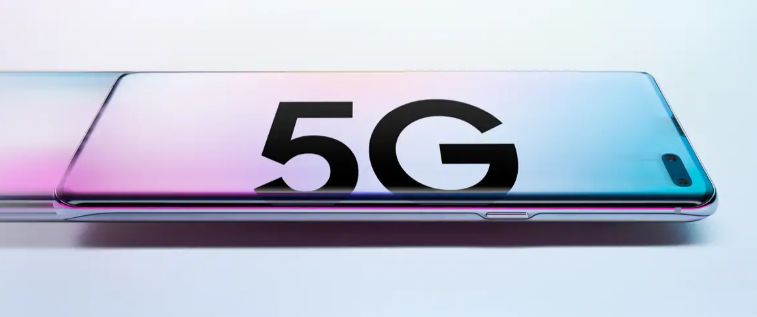
Samsung launched its Galaxy S10 series last month at an Unpacked event in San Francisco. Among newly launched devices, there was the Galaxy S10 5G, slated for launch in spring exclusively on Verizon, AT&T, Sprint and T-Mobile. Progressively, Samsung on Thursday shared it will launch Galaxy S10 5G in South Korea in the first week of April, without any pre-order programme. According to Yonhap news agency, the 5G device will be on sale from April 5 via three major network carriers in the country.
Samsung Galaxy S10 5G will cost around 1.5 million won (~$1332), according to industry sources. Earlier this week, the Galaxy S10’s 5G model passed signal verification test at National Radio Research Agency in South Korea.
The handset will be sold globally via various network carriers – it will be exclusive to Verizon in the US and O2 in the UK. Verizon is launching its 5G network from April 11, O2 will begin from Edinburg, London, and Cardiff later this year. Although, Samsung’s schedule to launch Galaxy S10 5G in the US & UK is still unknown.
Additionally, Samsung Galaxy S10 5G has a 6.7-inch Dynamic AMOLED display with 1440 x 3040 pixels resolution. It will feature Snapdragon 855 chipset in the US and Exynos 9829 worldwide. Other features include a 4200 mAh battery, 8GB RAM, 256 GB Internal, Android 9.0 Pie and in-display fingerprint sensor. A quad camera setup on the rear consists of a 12 MP telephoto lens, 12 MP Dual Pixel AF, 12 MP ultra-wide camera, and a 3D depth sensor. A 10 MP f/1.9 camera will be present on the front side.
We use cookies on our website to give you the most relevant experience by remembering your preferences and repeat visits. By clicking “Accept”, you consent to the use of ALL the cookies.
This website uses cookies to improve your experience while you navigate through the website. Out of these, the cookies that are categorized as necessary are stored on your browser as they are essential for the working of basic functionalities of the website. We also use third-party cookies that help us analyze and understand how you use this website. These cookies will be stored in your browser only with your consent. You also have the option to opt-out of these cookies. But opting out of some of these cookies may affect your browsing experience.
Necessary cookies are absolutely essential for the website to function properly. This category only includes cookies that ensures basic functionalities and security features of the website. These cookies do not store any personal information.
Any cookies that may not be particularly necessary for the website to function and is used specifically to collect user personal data via analytics, ads, other embedded contents are termed as non-necessary cookies. It is mandatory to procure user consent prior to running these cookies on your website.


 Those who miss out the aforesaid opportunity will be able to get their hands on the next 999 pieces of the C13 Pro by shelling out $74.99. Once the available pieces are sold out, the remaining 1499 pieces will go up for pre-order bearing a $79.99 price tag.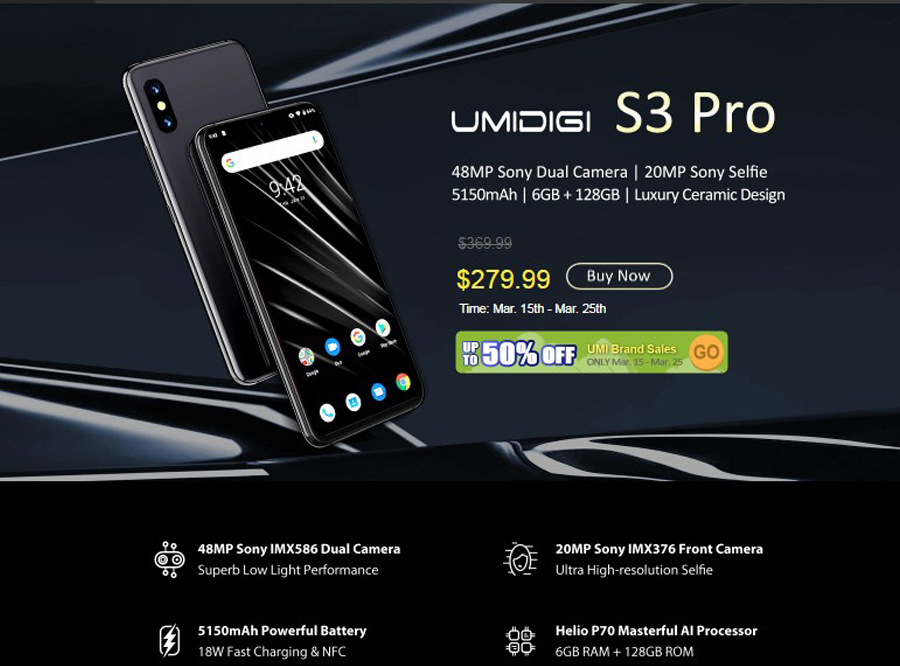
 On the downside, there were only 93 pieces of the EU Version and 97 pieces of the Other Version remaining at the time of writing. You can follow