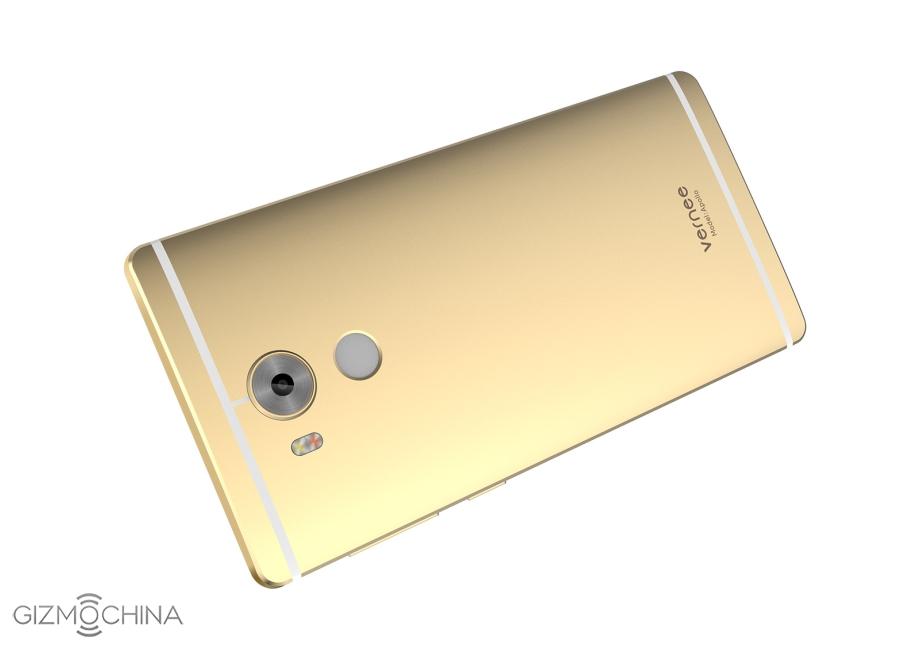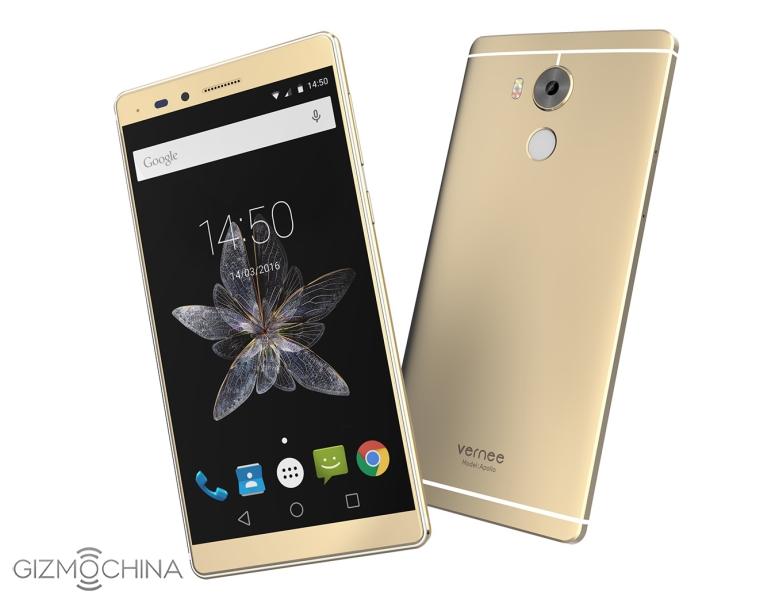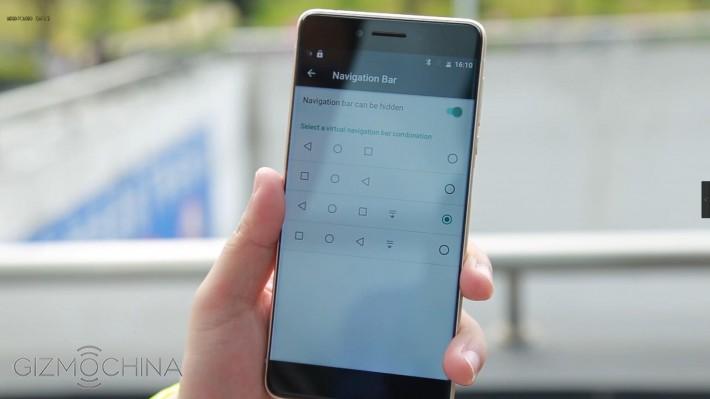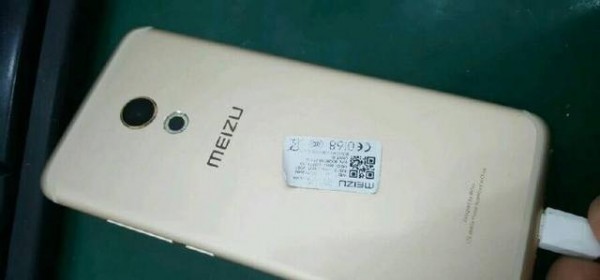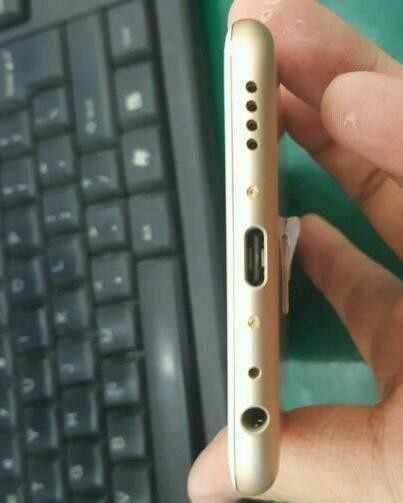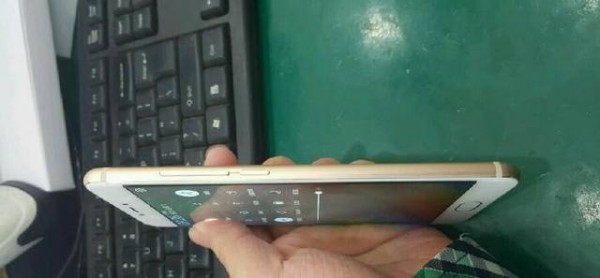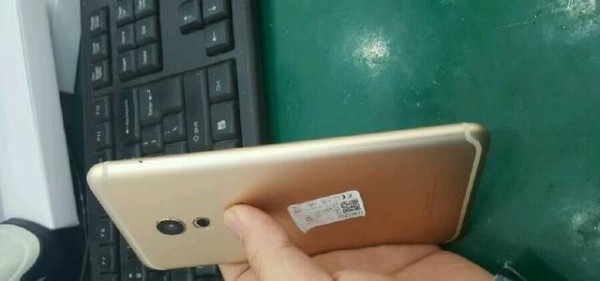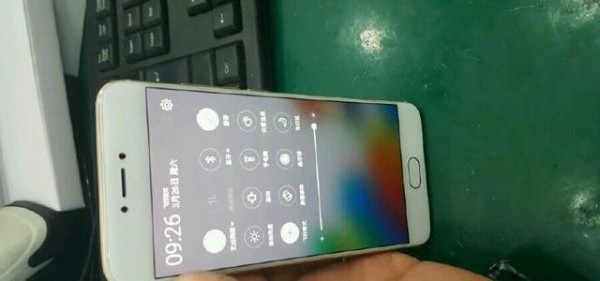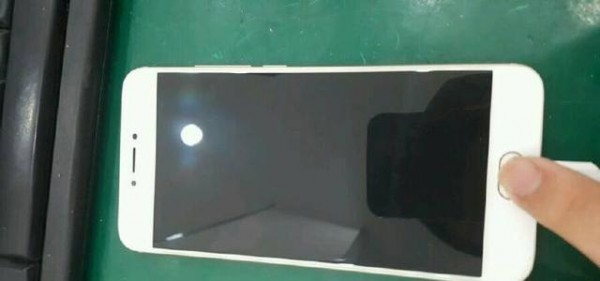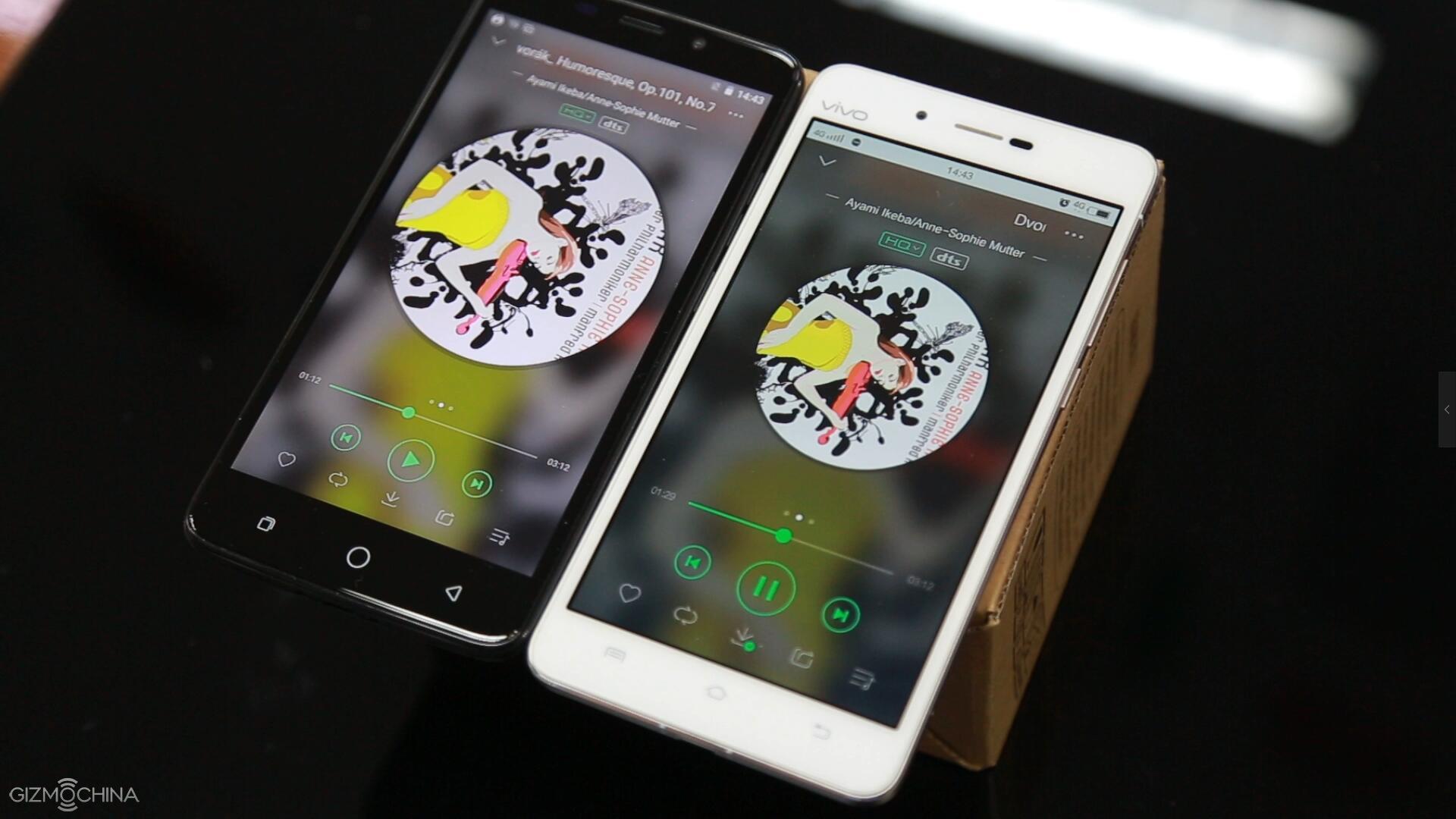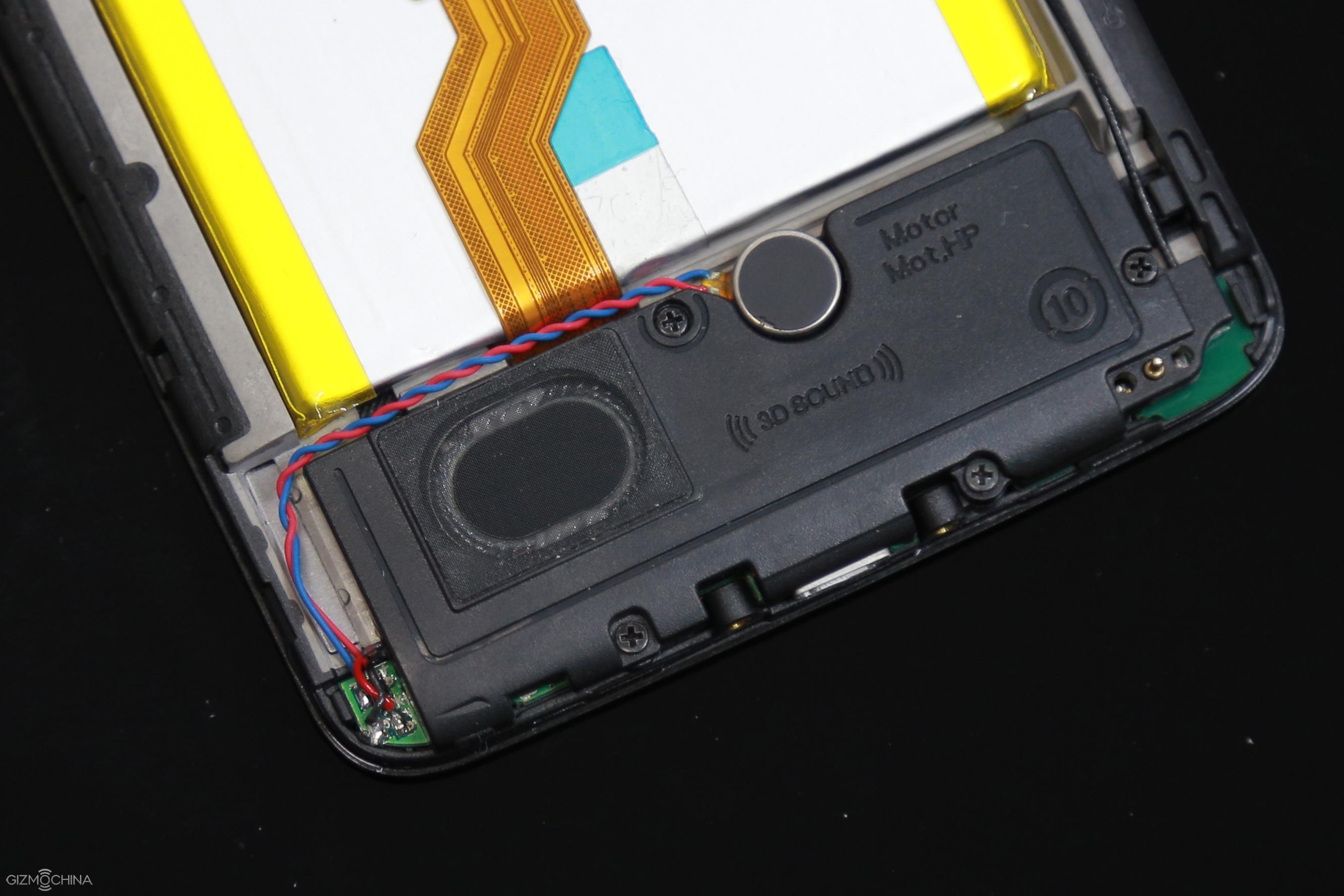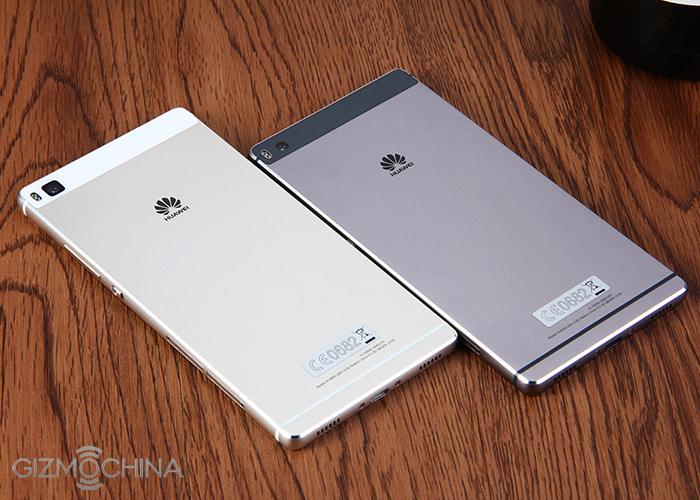
V5 is ZTE’s new smartphone sub-brand after Nubia. ZTE’s Senior VP said ZTE V5 will be the first phone of V5 series. It will have dual 4G LTE and Nubia UI, and will be released at October. But there were rumors said ZTE V5 will be integraded with Android L and has hardware optical image stabilization (OIS) like iPhone6.
Oneplus had just released their headphone silver bullet,and they announced they will have a new product launch event be hosted in Beijing along with JBL. Oneplus didn’t reveal it would be a headphone or speaker, and we can seldom see JBL had formed alliance with any other brands since JBL had been created. But what we’ve got is they are going to show their face together to their fans all over the world. Could it be that Oneplus and JBL had already formed a partnership? Are they going to work like HTC and Bteats?
Nicai will soon release an Android smartphone that is a clone of the Apple iPhone 6 called the Nicai Super 6. As of now, it has been confirmed that two versions will be released: a standard version with lower specs and a high-end version. It has been announced that the standard version would cost 999 RMB and would come out after the holidays.
Like the iPhone 6, the Nicai Super 6 sports a 4.7-inch screen. You can see how alike both phones look in the pictures below although the latter is a bit thicker, measuring 7.5mm. The camera is also a bit more pointed like in the iPhone 6. Both are available in white, gold, and other colors.
Although it is unlikely that the Nicai Super 6 will even be 1/5th the price of the iPhone 6, its specs are nothing to go crazy over. It has the 1.3GHz MTK MT6572 dual-core chip, 512M RAM, 4G ROM (supports 32G expansion card), a 4.7-inch IPS screen with qHD resolution, a 13mp/5mp dual-camera, 1600mAh battery, and support for TD-SCDMA and GSM networks (Nano SIM), as well as the usual sensors. Its OS is Android but its camera interface resembles the iOS’.
Meizu has finally announced the official date for the launch of Meizu MX4 pro, and it turns out that we will not be seeing it this month. This morning, analyst, Sun Changxu, announced that Meizu has changed the launch date for the MX4 Pro for unknown reasons. Now, Meizu’s senior VP, Li Nan, confirmed in his Weibo account that the Meizu MX4 Pro will see its launch this November. He also said that its CPU and fingerprint sensor will not be as bad as the phones out right now and that he will explain at the launch.
Previous reports have said that the MX4 Pro has a 5.4-inch 2560 x 1536 resolution screen, Samsung’s Exynos 5430, support for Hi-Fi, and a fingerprint sensor. They also said that it would cost 2499 RMB (407.32 USD). However, these were later denied by Li Nan who said that “the specs are too powerful, the price is too cheap, and the release date is too early.” Sun Changxu later revealed more accurate information regarding its specs such as that it will use a fingerprint sensor from Huiding Inc.
The Lenovo S860, which first went on sale early this year, is one of Lenovo’s star products with its long-lasting 4000mAh battery. Its 5.5-inch OGS screen is much bigger than its predecessor, the P780, and has HD resolution. It also sports an 8mp camera and runs on the 1.3GHz MTK6582 quad-core chip. It also has 1GB RAM. It has a unibody design with no cracks or holes making it the first Chinese smartphone to do so. Furthermore, this phone is very affordable. Almost a year after its release, its price has gone down from 1999 RMB (325.62 USD) to about 900 RMB (146.60 USD).
It looks like ZOPO is challenging Meizu as it recently posted photos comparing the MX4 with its upcoming high-end version of the Zopo MiniHei 3 in terms of memory, screen, and all kinds of hardware. Looking at the photos, it seems that the Mini Hei 3 high-end version (model number: ZP999) is better than the MX4 when it comes to hardware. It includes a 5.5-inch OGS screen with FHD resolution, a built-in 5mp front-facing camera, and 3GB RAM (as compared to the MX4’s 1GB 2GB RAM). It also scored more than 50000 at the Antutu benchmark test.
Other specifications have already been confirmed. It will use the MT6595 octa-core LTE chipset and have 32GB ROM. It will also sport a 14mp rear-facing camera and support 4G internet. It will also have support for dual-SIM cards and its design will remain the same, meaning that it will still be powered by a 2700mAh battery and use the kitkat-customized Mini Hei Ku UI. The Mini Hei 3 high-end version is set to come out in October.
The Kirin 920 is HiSilicon’s newest smartphone SOC and has scored 38000 in the Antutu benchmark test.
Here is our tear-down HiSilicon’s latest chipset.
The chip is enclosed in a glass case, so I decided to just use a saw to get it out.
The CPU is made of quad-core Cortex A15 and uses a 2M L2 cache. It is 20mm2. The green parts are four A15 cores. The yellow one is the L1 cache. The purple part is the 2MB L2 cache. (Of course, these are not their real colors)
The section with the quad-core Cortex-A7. The yellow part is the L1 cache while the purple part is the 512KB L2 cache.
Its GPU is the Mali T628 (624) MP4. You can see four cores there. The orange parts are the register set and cache.
Its baseband is an LTE modem from Balong.
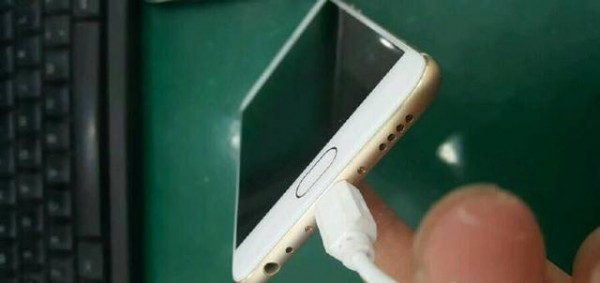
Overall, the Kirin 920 is a 28nm processor. The size of this processor is roughly the same the S800. Its CPU’s size is also close to the 4A15. The Mali GPU, though, is larger than the Adreno and PVR 5 series, and is smaller than Apple’s PVR GR6430.
Of course, just because there’s a direct relationship between the size of the chipset and capital does not mean that the smaller it is, the weaker the performance is.
In recent years, ONDA had launched a series of highly-cost effective tablet devices. These products are not bad at all. Today, we will review the ONDA V101W quad-core tablet.
The V101W is ONDA’s third Windows 8 tablet.
It sports a 10.1-inch IPS display screen with a 1280 x 800 resolution and dual-camera with auto-focus. Its OS is the Windows 8.1 and its processor is the Intel Z3735 quad-core 64-bit chipset (1.83GHz). It also has 32GB eMMC ROM and 2GB DDR3L RAM. It is powered by an 8200mAh battery. It is safe to say that this is a powerful tablet.
Appearance:
The front looks simple yet elegant. It has the classic “Windows” touchkey at the bottom of the screen. The front camera is located above the screen and has 2mp. Beside it is the power light which glows when the device is turned on. Considering the fact that this tablet is mainly for business purposes, the screen resolution is pretty good and the camera specs should be enough to take daily photos.
The rear case feels nice and comfortable. At the top is the rear-camera which slightly points out. It has 5mp and uses an OV lens. It also supports auto-focus and there are speakers on both sides.
On the right side are the ports: 2.5mm DC charger port, Micro USB port, Micro SD slot, Mini HDMI video receptor, 2.5mm earphone jack, and microphone.
At the top side of the tablet are the volume, power, and reset buttons, as well as the charging light. At first, I did not think plastic buttons was a good idea but after a while, I thought they fit perfectly.
Windows OS: Powerful and easy to use
Actually, I have not had a lot of experience with a Windows 8 tablet, so when I first got this, I carefully studied how to use it. Overall, it is pretty similar to the computers most of us use but with a few differences. After all, it is a tablet with a touch screen.
Standby interface
The Standby interface is split into many small blocks. Users can directly access the files they want. At the same time, swiping backwards gives you access to things such as news and the App store.
News block
Weather block
You can scroll to each block by swiping up and down or left and right.
When you tap the desktop icon, we enter the Windows desktop interface that we are all familiar with, but since it’s a tablet, we cannot use a mouse or keyboard.
In the photo we can see that ONDA included a touch keyboard icon on the lower right corner of the desktop.
Lightly sliding your finger at the right side of the screen opens the settings bar.
Furthermore, sliding your finger left to right can swap two Apps that are open. Other features are just as what you would expect from Windows. It’s just that since you do not have a keyboard and mouse, you would have to hold your finger on the screen to do a right click.
In summary, the ONDA V101W’s operating system is very handy since it’s Windows 8 except that you have to use it by touchscreen. Once users learn how to use a touchscreen, it should be as easy as using a regular computer.
Performance
As mentioned before, the ONDA V101W quad-core tablet runs on the Windows 8.1 OS, uses the Intel Atom Z7375D quad-core chipset, has 2GB RAM and 32GB ROM (memory card-supported, up to 128GB), and sports a 10.1-inch IPS screen with 12800 x 800 resolution and 2mp/5mp dual-camera. These specifications are pretty standard. First, let’s look at its benchmark scores.
In the popular Dalushi benchmark test, its overall score was high. Its display card got 1764 while its processor got 47081.
PCMark test
Cinebench
Browser test
Even though benchmark scores do not mean everything, they can reflect several things about the device such as its performance. Since the V101W is mainly a work-related device, it has a lot of office-related programs such as the Microsoft Office 365 Individual Version.
Microsoft Word, Excel, and Powerpoint all work well without any problems.
As a business-related tablet, videos and photo settings are essential. The cameras’ resolutions are not bad. They’re not great, but they are ok. There is no flash.
Conclusion: Overall, the ONDA V101w is a nice tablet whether you are working or just want to watch movies or play games Besides its high specs, all the programs are neatly organized. You cannot miss such a cost-effective product.
The world’s most popular and ever growing custom ROM Cyanogenmod can now be ported to Android One devices. Though Android One offers a pure Android experience, the adaption of CyanogenMod v11 proffers a sharp twist and more customisation analogously with stock Android.
Developer varun.chitre15, an India-based member of the XDA developer forums, managed to port a custom recovery to each of the three Android One models, and gain root access to them. Thanks to him for making it possible indeed.
If you are an owner of Android One device and interested in porting the ROM , these steps has to be followed :
When the average Joe prepares to buy a cellphone, he either cannot afford a flagship phone or believes that a phone that costs around 200 USD may not be good enough. In other words, choosing a cellphone is like deciding what to eat for lunch and dinner. How do you choose the best cellphone for yourself? Actually, there are some pretty good choices among phones right now in the 500 USD range. There are so many phones out there with great specifications and good-looking appearance. If you are looking for a phone that costs around 500 USD, then your best choices are either the Huawei Mate 7 or the Samsung Galaxy Note 3.
As Huawei’s big-screen hit of the year, the Mate 7’s specs make it one of the best flagship phones this year. Although the Note 3 international version was last year’s flagship phone, a year after its launch, the price has already gone down to 500 USD. It uses the Samsung Exynos 5 Octa 5420 ocat-core processor, and, like the Mate 7, has 3GB. As you can see, it’s not so easy choosing between them.
Appearance
The Samsung Note 3 sports a 5.7-inch Super AMOLED screen with a 1080p resolution. The Mate 7 continues to use its predecessor’s big screen and also a 1080p resolution with a few changes. Now, it is made of space-level/aluminium alloy.
The Huawei Mate 7’s black screen looks better than most big screen phones right now because the black frame and metal edge go so well together that it almost looks like it has a very thin chassis. As for the Note 3, Samsung added a metal frame on the edge making it wider than the Mate 7’s screen.
As for the camera, the Huawei Mate 7 sports a 5mp front-facing camera which is better than the Samsung Note 3’s 2mp front-acing camera.
Both phones sport a 13mp rear-facing camera from Sony.
The Huawei Mate 7 is the company’s first smartphone to have a fingerprint sensor which was provided by US-based Authen Tec like the iPhone 5s. Actually, you can even say that Huawei took it one step further, with its fingerprint sensor even surpassing the iPhone 5’s.
Samsung is not as fortunate as the Note 3 does not have a fingerprint sensor.
The Huawei Mate 7 supports dual-SIM cards which is the best choice for a unibody phone like this. Unfortunately, you need a tool to open the SIM dish. The Note 3, on the other hand, has a detachable rear case which is very convenient, especially for those who regularly change SIM cards.
3.55mm earphone jack
Regarding data transmission, the Samsung Note 3 has a USB 3.0 port. This port is also supports USB 2.0 connection. After testing both phones, the Note 3’s data transmission speed is faster than the Mate 7’s.
The Mate 7’s body is made of aluminum while the top and bottom ends are made of plastic to help the antennas to handle signals better. It has a more comfortable texture than the Note 3’s rear case. However, the Note 3’s rear case is detachable and the battery is replaceable. A lot of people may not like the fact that it is made of plastic but the only company of making a plastic chassis like this is Samsung.
The Mate 7 has an NFC sensor near the camera.
The Note 3 has support for wireless charging but it should be compatible with a rear case that has this function.
Regarding thickness, the Huawei Mate 7’s is 7.9mm while the Note 3’s is 8.3mm, but because the Huawei Mate 7’s rear case is made of metal, it is a bit heavier than the Note 3.
OS Performance
The Samsung Note 3’s lock interface and desktop
The Huawei Mate 7’s lock interface and desktop
The Samsung Note 3’s notification bar and shortcut icons
The Huawei Mate 7’s notification bar and shortcut icons
Samsung Note 3’s settings interface and OS information
Huawei Mate 7’s settings interface and OS information
Huawei Mate 7’s video compatibility test results. The checks mean that they are supported. The last column shows video results. Most are normal while some do not have sound and images.
Samsung Note 3’s video compatibility test results. It does not have as much formats that work normally as the Mate 7’s.
It’s more comforting using the Mate 7’s Android 4.4.4-based EMUI 3.0 but the Note 3’s OS (also based on the Android 4.4.4) also offers a good drawing and writing experience with the S-Pen.
Screen performance
The Huawei Mate 7 sports a 6-inch 1080p LCD resolution with JDI and Gorilla Glass while the Samsung Note 3 international version sports a 5.7-inch 1080p screed with Super AMOLED and Gorilla glass.
The left bar represents the Huawei Mate 7 while the right bar represents the Samsung Note 3.
Blue
Red
Green
White
Black
Greyness test
The colors are more beautiful in the Note 3 because of its Super Amoled glass but look a bit more bluish. The colors are more accurate however in the Mate 7’s LCD screen. In a purely black environment, Super Amoled is unbelievable because the screen does not let out light, and becomes simpler and cruder, while light leaks out in the Mate 7’s screen.
Endurance
When it comes to endurance, it’s a tie because the Mate 7’s battery is bigger than the Note 3’s. The Mate 7 has already caught up to Samsung when it comes to hardware and power management.
Looking at the daytime photos, it’s hard to tell which phone takes better pictures. Same goes for purity and color. The way both phones take night photos is another story. The Mate 7 does a good job maintaining small details in the photo as well as preventing noise.
Conclusion
As Huawei’ s flagship phone of the year, the Mate 7 is an excellent phone in all fronts, but as the third generation flagship phone of Samsung’s Galaxy Note series, the Note 3 is also great. Both phones have their pros and cons. Which would you rather buy?
Recently, there are some rumors from the Internet, said that Meizu MX4 Pro would featuring a 5.4-inch 2560×1536 resolution display, with Samsung’s Exynos 5430 Processor, 13MP front-facing camera and 20MP rear camera, Hi Fi sound effects, finger scanner embedded in rectangle home button. The smartphone may cost 2,499 CNY (about $408) in China, will be launched on October 28th.
But in this afternoon, Linan, the senior VP of Meizu, pointed out that they are all fake news on his Weibo. He said that the release time is too early for MX4 Pro, customers cannot even buy a smartphone in market with higher specs and low price. Actually, we don’t want our customers put too more expectations in every aspects for MX4 Pro. He didn’t give any specific details for its specification, price and release time. However, we could predict that MX4 Pro may be with a 1920 x 1152 resolution display, it probably has a front facing camera lower than 13MP, the price maybe a little bit higher than 2,499 CNY (about $408). It’s been reported that MX4 Pro would be launched in the end of October or the early of November, but according to Linan, October 28th is too early for the launch of MX4 Pro, then it would be released in November.
The Samsung Galaxy Note 4 is Samsung’s flagship phone of the year and went on sale on September for over 5000 RMB (813.39 USD). But just what is it made of? What secrets lie behind the design of this phone? Find out in this tear down.
Unlike its predecessors, the Note 4’ sports a metal chassis and can emit antenna signals through a hole in the phone. The chassis has been combined with the middle case.
The speakers and 3.5mm earphone jack are located at the top of the middle chassis.
Inside the phone are the L shaped motherboard and base motherboard. Both boards are connected using a circuit board and IPEX connector.
At the bottom are the micro-USB port, dual-microphone receiver, and antenna port. Of course, this is also where the fingerprint-recognition-supported Home button is located.
Samsung has said that the Note 4 sports the newest fingerprint scanner available.
The top includes the vibrator and receiver. The location of the processor in the magnalium-aluminium chassis is also covered by thermal barrier coating.
Most of the Note 4’s chips are on the L-shaped motherboard. All of them neatly and firmly held. Overall, it has a pretty nice design.
Here is a close-up of the Note 4’s 16mp rear-facing and front facing cameras. The latter comes with a light sensor and infrared sensor.
The Note 4’s 16mp camera is the first camera to use Sony’s IMX240 camera sensor and contains a built-in OIS.
Samsung is one of the few manufacturers that still use ISP. In the case of the Note 4, it uses the Winband Q32F.
The Chinese release supports dual-micro SD, but the SIM and SD slots are not located in the motherboard but in blocks.
The Samsung Note 4 uses Qualcomm’s Snapdragon 805 processor and its corresponding SOC, marking it the Snapdragon 805’s Chinese debut. In the photo is Qualcomm’s new WCD9330 sound chip.
The SIMG 8620 MHL chip is a more advanced version of the S5’s SIMG 8420. It can support 2K video resolution.
The Qualcomm MDM9225M baseband does not have support for CDMA networks.
A close-up of the Skyworks 77597 radio frequency chip.
Close-up of the Snapdragon WTR1625L radio frequency chip.
The WACOM W9012 touch screen pad chip which has support for the 2048 sensor.
The ATMEL ATSAMG53 is based on the ARM Cortex M4 and consumes less power.
Samsung’s 3GB RAM chip and Qualcomm APQ8084 enclosed chip. The latter is actually said to be the Snapdragon 805.
Here is the the Qualcomm PMA808X power management chip.
A close-up of the Qualcomm QFE110 mobile ET chip.
A close-up of the Spreadtrum SC6500ES chip.
A close-up of the Avago’s signal amplifier chips.
That’s it. The entire family bows in gratitude for your patience in reading this tear-down. What do you think?
When speaking of smartwatch, everybody will think of the the first round Android Wear smartwatch MOTO 360. But now the first round smartwatch in China is inWatch π. With its traditional design of wrist watch, inWatch π is also the first smartwatch which will extend its battery lifetime to six months.
It was planned to ship its products on today (September 30th), but its producer Yingqu Technology published an apology yesterday, said that new products have to delay its shipment till on October 10th because of the client issue. But its engineering machine has been leaked, now let’s take a look to unveil its face.
A few days ago, the specs of the upcoming Meizu MX4 Pro were leaked online. Supposedly, it sports a 5.4-inch 2560 x 1536 display screen, uses a smart octa-core chip from Samsung (Exynos 5430), and has support for Hi-Fi audio. It is also supposed to have a fingerprint scanner on the front, the first cellphone to do so in China, and cost 2499 RMB (406.53 USD).
It turns out that this was all a lie as Meizu vice-CEO Li Nan denied these reports saying that the specs are too powerful, the price is too cheap, and that the release date is too soon.
Now, new information was released by an analyst, @孙昌旭, that seems to be more accurate. Both the price and specs are said to be more reasonable and Li Nan has yet to deny them.
Furthemore, @孙昌旭 said that the Meizu MX4 would use a 5-mode baseband (GSM, TD-SCDMA, WCDMA, TD-LTE, LTE FDD) from Marvell and that it would sport a sapphire fingerprint sensor created by Shenzhen Huiding Co.
With build-in chip Yamaha YSS205, VIVO X5 is maximized its sound effect massively. Now let’s look at below functions of the legend chip Yamaha YSS205.
1. Real time sound-back-to-ear
When you are singing, your sound will be back to the earphone, the singer can adjust his/her status by their own sounds so that it can prevent the singer singing out of tune. As we can see in many concerns, singers would have a pair of earphone which is fitted in their ears. Actually, iPhone also has this function which is achieved by apps, and it would be delay when dealing with up-tempo songs, while VIVO X5 has solved this problem perfectly with build-in YAMAHA YSS205, you could almost ignore the time lag.
2. The reverberation sound effect
We know that the voice of amateur singers are a litter bit dull, so the sound effect of reverberation is very important for them. If you want the sound effect just like that you are in KTV, YAMAHA YSS205 could help you to achieve that effect. Though we can make it by visual functions of some softwares, but only VIVO X5 can integrate it by YAMAHA hardware. Therefore, its sounds are more clear and better.
When we are still enjoying our national holidays, the Ubuntu team ( @ubuntu ) has released its latest news about Meizu MX4 Pro. I believe that many people could guess what it is. Yes, Meizu is going to release its new product with Ubuntu Touch OS.
We have been heard many news about the cooperation of Meizu and Ubuntu since it released the last flagship product Meizu MX4, but after that both of them don’t have any moves. In fact, I am still can not confirm the reality of the source from Weibo. But the hardware parameters of leaked Meizu MX4 Pro could be truthful.
The Koobee Max 3 comes with a 5.5-inch screen with a 1920 x 1080 resolution, with very clear graphics and no grain whatsoever. It also has a built-in MediaTek MT6592 octa-core chipset with a frequency of 1.7GHz, as well as 2GB RAM and 16GB ROM. This processor was made using 28nm architecture and uses an octa-core ARM Cortex-A7 CPU. The Max 3 also has support for TD-LTE, FDD-LTE, TD-SCDMA, WCDMA, and GSM networks. As a matter of fact, you can see the word “TD-LTE” at the back. Take note that you can only access FDD-LTE and WCDMA networks in Hong Kong, Taiwan, Macau, and abroad.
We have found several special pictures in the instruction book of Meizu MX4, which will probably be the coming released model Meizu MX4 Pro. As the pictures shown, the model is using square-shaped home button instead of circle-shaped as usual. The top of the model is equipped with sensor and front-facing camera, it seems that this model has two more holes than Meizu MX4.
Meizu had claimed earlier that MX4 Pro will featuring a fingerprint scanner. Generally speaking, the fingerprint scanner will probably be integrated in the home button just like the design of Sangsung Galaxy 5 and iPhone 5S. We can’t deny the design influence of Meizu M8, Meizu M9 and Samgsung 9100.
We use cookies on our website to give you the most relevant experience by remembering your preferences and repeat visits. By clicking “Accept”, you consent to the use of ALL the cookies.
This website uses cookies to improve your experience while you navigate through the website. Out of these, the cookies that are categorized as necessary are stored on your browser as they are essential for the working of basic functionalities of the website. We also use third-party cookies that help us analyze and understand how you use this website. These cookies will be stored in your browser only with your consent. You also have the option to opt-out of these cookies. But opting out of some of these cookies may affect your browsing experience.
Necessary cookies are absolutely essential for the website to function properly. This category only includes cookies that ensures basic functionalities and security features of the website. These cookies do not store any personal information.
Any cookies that may not be particularly necessary for the website to function and is used specifically to collect user personal data via analytics, ads, other embedded contents are termed as non-necessary cookies. It is mandatory to procure user consent prior to running these cookies on your website.