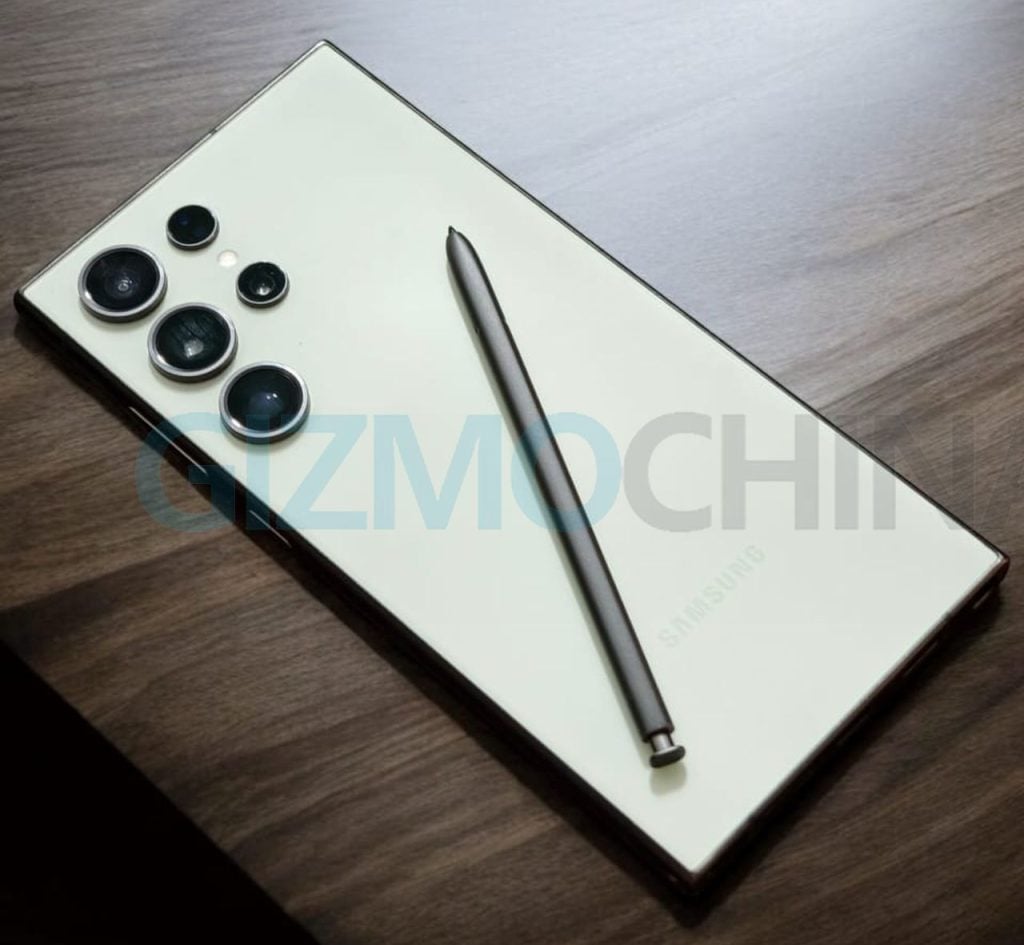
Samsung’s Galaxy S25 Ultra, which debuted with a notable upgrade to a 50MP ultrawide camera, is encountering unexpected challenges. This new lens, offering enhanced detail over the 12MP ultrawide cameras of previous flagships, has been reported to shake and vibrate on some units, raising concerns among potential buyers.
Reports on community forum date back to February, and Samsung’s yet to respond
The issue has surfaced across social media platforms like Reddit and X, as well as Samsung’s Community Forum, with users noting that the ultrawide (0.6x) camera exhibits violent shaking and stuttering noises, rendering it unusable. In fact, reports on the community forum date back to as early as March 1st.
Some owners trace the issue to a recent software update, though the exact cause remains unclear. Unlike typical camera shake linked to optical image stabilization (OIS)—which the S25 Ultra’s ultrawide lacks—experts suggest the autofocus mechanism may be at fault, given the lack of OIS mechanism.
The complaint doesn’t appear widespread, though, with only a fraction of the millions of Galaxy S25 series units sold globally affected. This suggests it might be a manufacturing defect rather than a universal flaw. Some users who visited authorized service centers reported the issue was diagnosed as hardware-related and resolved free of charge under warranty.
The problem affects both photos and videos
But there’s a bit of friction in the process. As one user noted on the community platform, affected devices must be sent to the company for a diagnostic test—meant to confirm whether it’s a manufacturing defect. This essentially means the user will need to arrange for a temporary handset.
Videos shared by affected users highlight the severity, showing the camera struggling to stabilize. While Samsung has yet to publicly acknowledge the issue or propose a fix, the company’s response at service centers offers hope. A software patch could potentially mitigate the problem if it’s update-related, though hardware replacements may be needed for defective units.
When Circuit House Technologies first announced its Lumio Vision 7 and Lumio Vision 9 series of smart TVs, they didn’t just promise crisp visuals or rich audio like most brands. They boldly claim they’ve built the fastest smart TVs on the market. The company recently had a media briefing showcasing these TVs in action, and a friend from Lumio helped me get a review unit of the Vision 7. So, is the Vision 7 really as fast as advertised, or is this just another case of a marketing stunt? Read on to find out.
Design & Remote
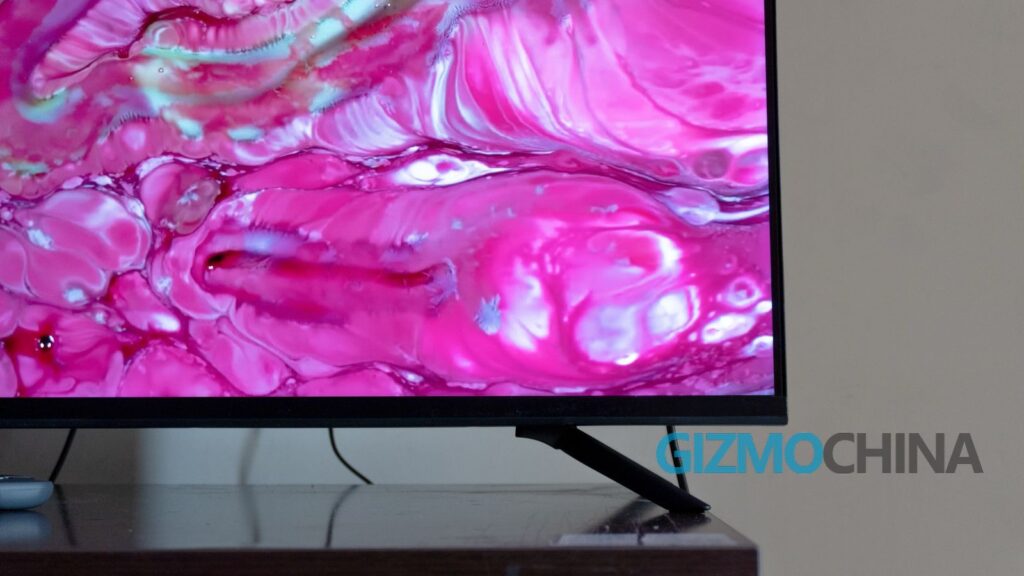
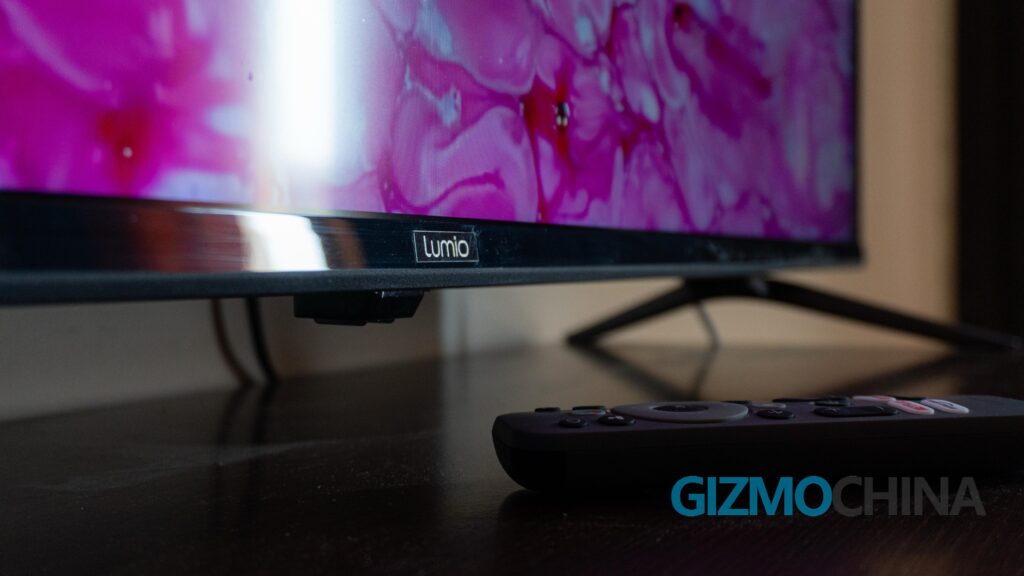
Before diving into how fast it may or may not be, let’s first look at its design. In the modern household, where gadgets and tech are scattered in almost every room, the smart TV often takes up the most visual real estate. That’s why the minimalist design of the Lumio Vision 7 helps it maintain a surprisingly low profile.
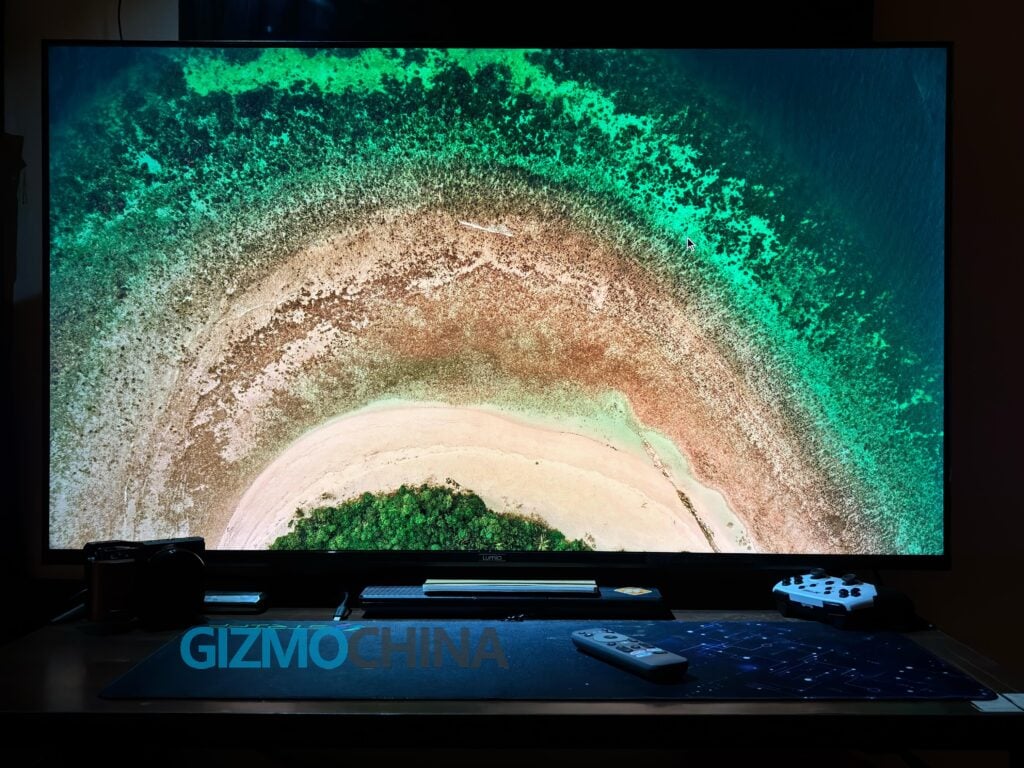
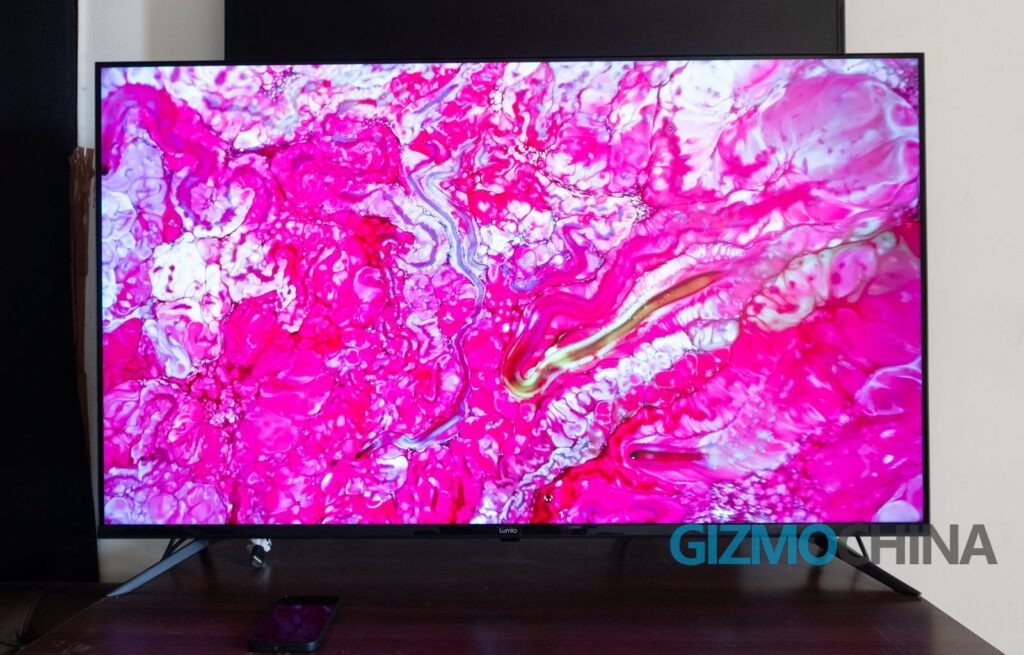
Of course, you can’t completely ignore a 55-inch slab—but once it’s on, the slim bezels around the QLED panel make it feel more like a digital canvas. This is especially true when the TV displays photos from your gallery or digital artwork. The Vision 7 is built using a metallic frame and back panel, blending plastic for other areas like the speaker cover. Buyers can either mount it on a wall or use the stand. It is worth noting that you only get the stand and its necessary screws and not the wall mounts in the box.
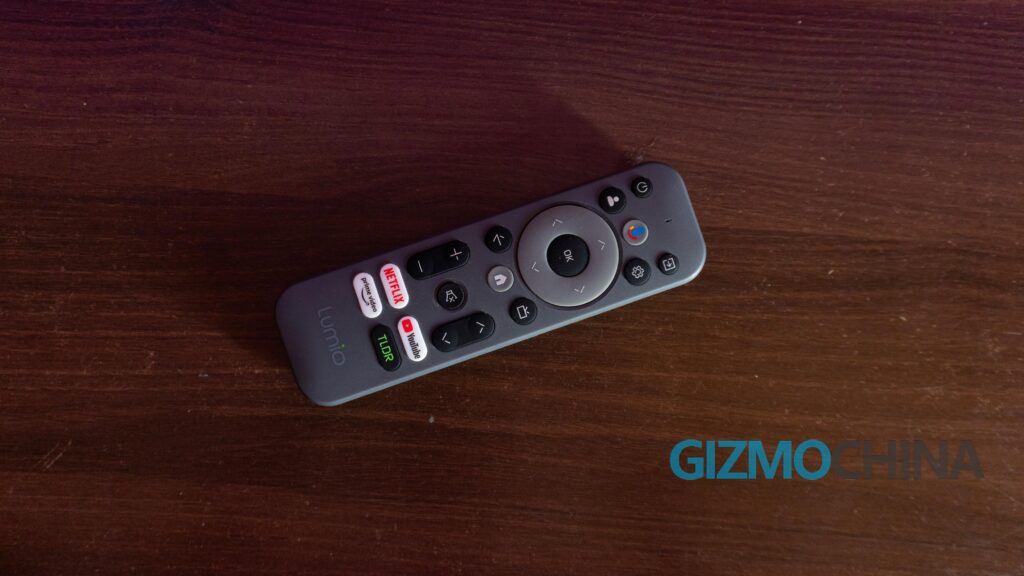
The Lumio Vision 7 is paired with the Minion remote, and honestly, it’s just right. With a refreshing gray plastic body and black textured rubber buttons, the remote manage to feel both premium and lightweight. It covers all the essentials as well like the directional keys, volume rockers, voice control, OTT hotkeys, a dedicated TLDR button, and, importantly, a much-appreciated mute button.
Connectivity
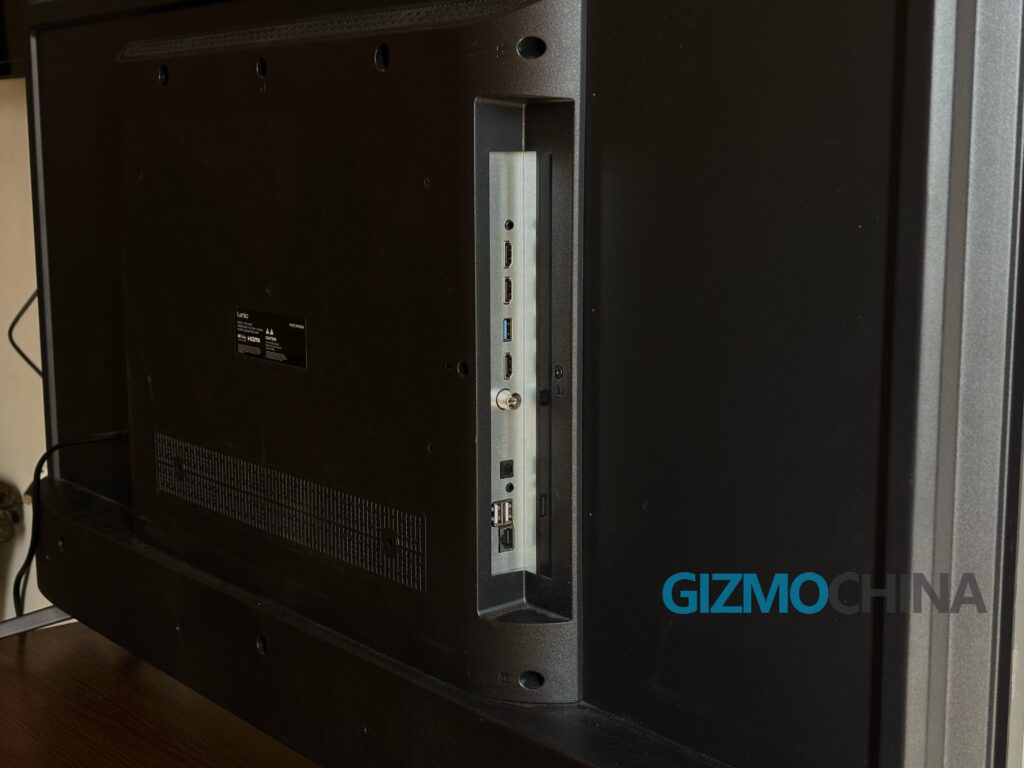
Lumio offers a healthy selection of ports on the Vision 7. You get three HDMI 2.1 ports (maxes out at 4K@60fps), including one with eARC support, making it easy to pair with soundbars for improved audio. There’s also one USB 3.1, two USB 2.0 ports, an Ethernet (RJ45) port, an AV mini input, and an optical port for additional connectivity. The Vision 7 also supports dual-band WiFi (2.4GHz/5GHz) and Bluetooth 5.0. Despite my router being in a different room, the TV managed to maintain a strong and stable connection throughout testing.
Display & Audio
Getting the specs out of the way first, the Lumio Vision 7 unit I received was the 55-inch model featuring 4K resolution, a Blue LED backlight, 60Hz refresh rate, 114% DCI-P3 color gamut, and support for HDR formats like HLG, Dolby Vision, and HDR10. Complementing all of this is Lumio’s proprietary “DOPE” display engine. QLED TVs are more affordable than ever, and here’s why this one stands out from the crowd:
The QLED panel on the Vision 7 provides good color reproduction and sharp picture quality. Watching movies and videos in UHD resolution is genuinely a treat. The TV provides solid viewing angles (except at extreme sides), and both SDR and HDR content look vibrant. Lumio claims 114 percent DCI-P3 color gamut coverage and a peak brightness of 400 nits. The Blue LED backlight brings out warmer tones while color tuning is straightforward through the settings.
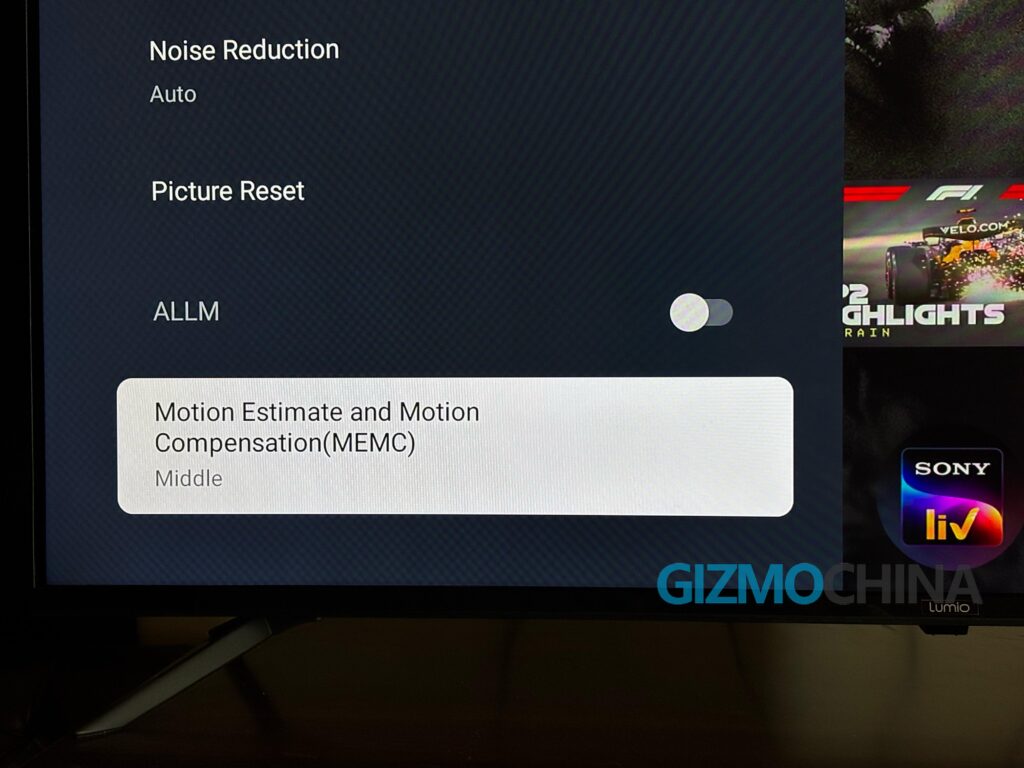
Unfortunately, you’re not getting true blacks—something to be expected given its sub-Rs 40,000 price tag and lack of MiniLED that is found on the Vision 9. Still, the 400-nit brightness performs above average in this segment, ensuring a clear and consistent experience even in a well-lit room during the day. On the feature front, you get ALLM, MEMC, and Dynamic Brightness. I already have a love-hate relationship with MEMC, and having it enabled by default—and turned back on automatically every time the TV starts was frustrating.
But like with most modern TVs, this is just something you learn to live with. Hopefully, Lumio can change this with a future update. MEMC was intended to make watching sports smoother, but being on by default leads to a worse experience when consuming other media like movies. On the gaming side, a 55-inch 4K screen is one of the best ways to enjoy AAA single-player titles. I tested it with The Last of Us Part II, and the cinematic gameplay felt immersive, with no noticeable input lag. That said, I wouldn’t recommend it for competitive esports titles like Counter-Strike 2.
During the initial media briefing, Lumio also highlighted the Vision 7’s audio system—and not without reason. After my Bluetooth speaker suddenly gave out, I relied entirely on the Vision 7’s built-in speakers and was pleasantly surprised. It features a DGS Audio setup with two tweeters and two full-range drivers, delivering a total output of 30W.
While it’s not the loudest in its class, the audio quality was genuinely enjoyable. The sound profile leans toward clarity, with nicely balanced mids and highs. Bass isn’t particularly punchy, but the speaker box offers enough volume for a richer overall range. Plus, you get Dolby Atmos support which is a nice touch. It’s no substitute for a dedicated soundbar or home theater setup, but for this price, it’s easily one of the better audio packages. I mostly kept the volume between 30 to 40 percent which I found to be the sweet spot.
Performance & UI
The smart TV segment is crowded with competition, especially under the Rs 40,000 price mark which makes standing out hard for any single model. Instead of relying on gimmicks or flashy features, Lumio has chosen a more thoughtful route: refining the core experience to match pricier rivals. During the development of the Vision 7, the brand studied reviews of competing TVs and found a common pain point, which is performance.
Many budget smart TVs tend to be sluggish, either right out of the box or over time. Lumio, however, claims that the Vision 7 has been built to avoid such slowdowns and is capable of outperforming the competition. At the official demo, the focus was on the impressive boot-up speeds and app load times, which was mirrored in my own experience over the last two weeks.
That speed is largely thanks to what Lumio calls the BOSS processor—a quad-core CPU paired with 3GB of DDR4 RAM and 16GB of internal storage. Compared to the typical 2GB/8GB setup found in this segment, this is a notable upgrade, giving the system more breathing room and ensuring smoother performance. Together, these internals deliver what is easily one of the smoothest UI experiences I’ve seen in this price range.
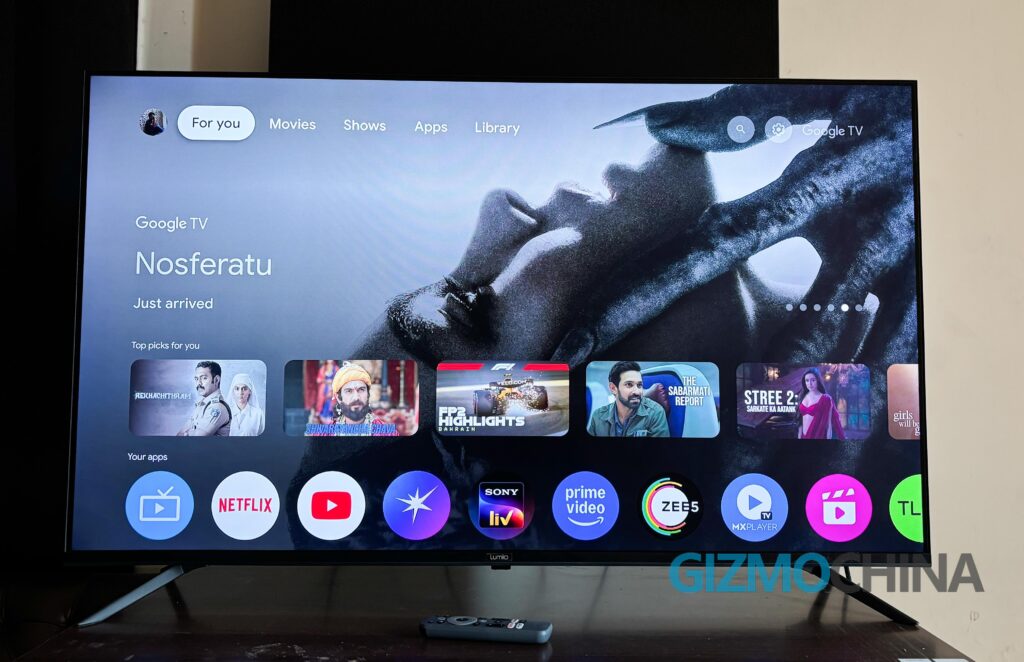
The Vision 7 runs Google TV out of the box. While I wasn’t initially a fan of this UI, the performance here made me reconsider. App switching, loading times, and overall navigation were snappy and responsive. This is what a true “smart” experience should feel like even on a budget. You also get access to all major streaming platforms and can download other media apps via the Play Store.
Verdict
The Vision 7 comes in three sizes: 43, 50, and 55 inches. The top-end 55-inch model, which I reviewed, is priced at Rs 39,999. For the price, you’re getting a responsive, well-built 4K smart TV with great visuals, smooth performance, and competent speakers. It checks all the boxes and delivers a premium experience without the premium price tag.
Please Note: When you buy something using the links in our articles, we may earn a small commission at no cost to you.
If you’re hesitant about buying from a relatively new brand, Lumio is trying to build consumer confidence. It boasts a network of over 300 service centers across 19,000+ pincodes in India. Plus, every Vision TV comes with 2 years of comprehensive warranty coverage and a year of extended support for those customers who pre-order. For those in the market for a new smart TV, the Lumio Vision 7 is definitely worth checking out.
For more daily updates, please visit our News Section.
The Snapdragon 8 Gen 3 is a flagship chipset known for its excellent performance and power efficiency. Announced in October 2023, it features an octa-core CPU with a peak clock speed of 3.3GHz and the powerful Adreno 750 GPU, which delivers an immersive gaming experience even in demanding titles.
On the other hand, the Snapdragon 8+ Gen 1, released in May 2022, was also introduced as a flagship chip. But over time, it has trickled down to mid-range phones, offering buyers strong performance at a more affordable price.
It’s no surprise that the Snapdragon 8 Gen 3 delivers better performance, but how big is the gap? We compared both chips across several benchmark platforms to find out. You’ll also find key differences listed below to help you decide which chipset better suits your needs.
Snapdragon 8 Gen 3 vs 8+ Gen 1: Benchmark scores
[Note: The tests were conducted on the Xiaomi 14 Ultra (powered by Snapdragon 8 Gen 3) and Poco F5 Pro (powered by Snapdragon 8+ Gen 1).]
AnTuTu comparison
AnTuTu evaluates a device’s overall performance by running a series of tests across multiple components, including CPU, GPU, memory, and UX (user experience). The overall score represents the combined strength of these individual tests.
SD 8 Gen 3
SD 8+ Gen 1
AnTuTu score
1,937,417
1,301,426
CPU
419,604
339,745
GPU
829,698
482,109
Memory
382,043
237,702
UX
306,072
241,869
The Snapdragon 8 Gen 3 outperforms the 8+ Gen 1 by 49% in the overall AnTuTu score. The GPU performance is particularly impressive with a 72% lead, while the CPU is around 23% faster.
Geekbench comparison
Geekbench measures how well a processor handles various workloads by performing real-world and synthetic tests, such as image processing, machine learning, and file compression.
SD 8 Gen 3
SD 8+ Gen 1
Single core
2,185
1,732
Multi core
6,735
4,361
The 8 Gen 3 delivers 26% better single-core and 55% better multi-core performance, making it a more capable chip for demanding apps and multitasking.
3DMark scores
It’s a popular gaming benchmarking tool that evaluates a device’s graphics performance and thermal stability under prolonged heavy workloads.
SD 8 Gen 3
SD 8+ Gen 1
Wild Life Unlimited
16,991
8,294
Wild Life Extreme
4,937
2,121
Wild Life Extreme Unlimited
4,690
2,079
In all 3DMark tests, the Snapdragon 8 Gen 3 outshines the 8 Plus Gen 1 by a wide margin, making it a better choice for gamers.
Snapdragon 8 Gen 3 vs 8+ Gen 1: Key Differences
CPU
Both chips are manufactured using TSMC’s 4nm process, but their core structures differ. For instance, the Snapdragon 8 Gen 3 has one large core, five mid-cores, and two small cores, whereas the 8+ Gen 1 has one large score, three mid-cores, and four small cores.
Snapdragon 8 Gen 3:
One large core (1 x 3.3GHz — Cortex-X4)
Five mid cores (3 x 3.15GHz — Cortex-A720, 2 x 2.96GHz — Cortex-A720)
Two small cores (2 x 2.27GHz — Cortex-A520)
Snapdragon 8+ Gen 1:
One large core (1 x 3.2GHz — Cortex-X2)
Three mid cores (3 x 2.75GHz — Cortex-A710)
Four small cores (4 x 2GHz — Cortex-A510)
The 8 Gen 3 not only has a higher clock speed but also uses newer and more efficient CPU cores that offer better performance per watt. For example, the Cortex-X4 in 8 Gen 3 can achieve the same level of performance as the Cortex-X2 at a lower power consumption. This is also true for other cores.
GPU
Snapdragon 8 Gen 3: Adreno 750
Snapdragon 8+ Gen 1: Adreno 730
Though both GPUs share the Adreno 700 series architecture, the 8 Gen 3 has higher FLOPS and shading units, making it suitable for demanding games and graphics-intensive applications.
Additionally, the 8 Gen 3 supports advanced features like real-time ray tracing and Unreal Engine 5.2 MetaHumans, offering a more immersive gaming experience. While the 8+ Gen 1 lacks these features, it still offers a competitive gaming performance.
Camera
Both chips support up to 200MP cameras and 108MP with Zero Shutter Lag (ZSL). However, the 8 Gen 3 goes a step further by bringing in ZSL support for dual 64+36MP and triple 36MP setups.
One of the key camera differences is the real-time semantic segmentation (up to 12 layers) on Snapdragon 8 Gen 3 for improved object recognition and enhanced photography effects.
Connectivity
The Snapdragon 8 Gen 3 and 8+ Gen 1 feature advanced connectivity features, but the former offers significantly better speed, Wi-Fi capability, and a newer Bluetooth standard.
The 8 Gen 3 provides better wireless speed, lower latency, and improved power-saving technology.
Snapdragon 8 Gen 3 vs 8+ Gen 1: Conclusion
The Snapdragon 8 Gen 3 is a major upgrade, offering better CPU, GPU, camera, and connectivity features. It’s the clear winner in terms of performance and future-proofing. However, the Snapdragon 8+ Gen 1 is still a solid choice for budget-conscious users who want flagship-like performance without spending top dollar.
SD 8 Gen 3
SD 7+ Gen 3
Announced
October 2023
May 2022
Process node
4nm
4nm
Manufacturer
TSMC
TSMC
CPU
1 x 3.3 GHz — Cortex-X4 3 x 3.15 GHz — Cortex-A720 2 x 2.96 GHz — Cortex-A720 2 x 2.27GHz — Cortex-A520
1 x 3.2 GHz — Cortex-X2 3 x 2.75 GHz — Cortex-A710 4 x 2 GHz — Cortex-A510
GPU
Adreno 750 GPU Support for Unreal Engine 5.2 Lumen Global illumination Ray tracing support Snapdragon Elite Gaming features
Adreno 730 GPU Snapdragon Elite Gaming features
NPU
Qualcomm Hexagon NPU
Qualcomm Hexagon NPU
Memory
LPDDR5x — 4.8GHz
LPDDR5 — 4.2GHz
Camera
Qualcomm Spectra Cognitive Triple 18-bit ISP Real-time semantic segmentation (max 12 layers) Up to 200MP single camera Up to 108MP single camera at 30fps with zero shutter lag Up to 64MP+36MP dual camera at 30fps with zero shutter lag Up to 36MP triple camera at 30fps with zero shutter lag Up to 8K/30fps video recording
Qualcomm Spectra Triple 18-bit ISP Up to 200MP single camera Up to 108MP single camera at 30fps with zero shutter lag Up to 8K/30fps video recording
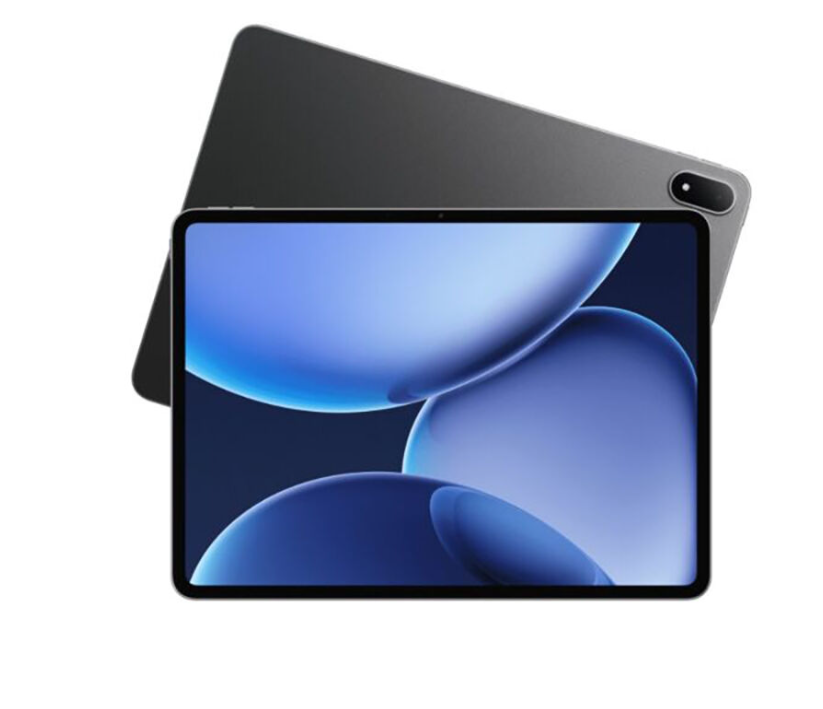
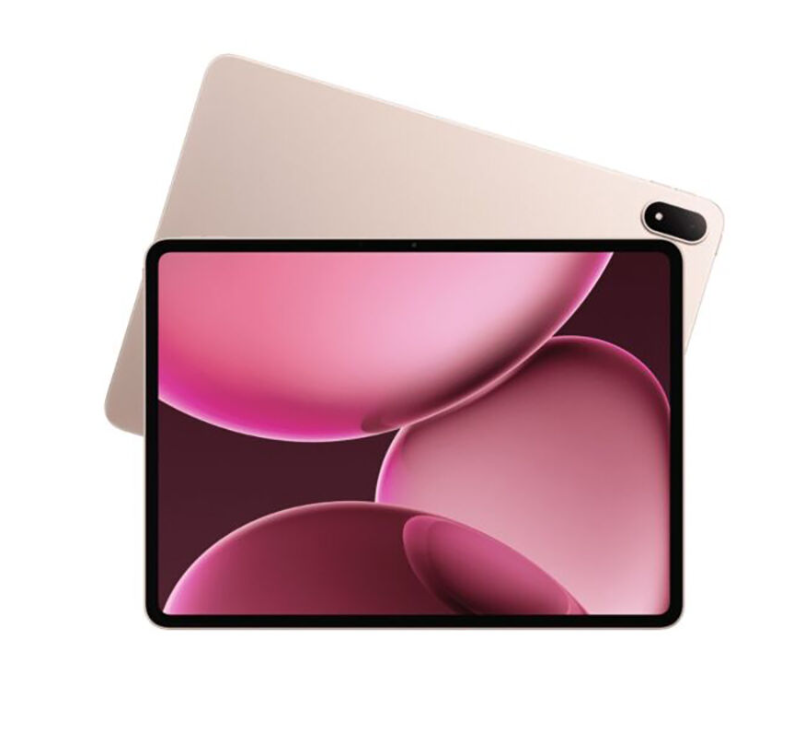
OPPO Pad 4 Pro is a high-performance Android tablet designed for users who want a smooth experience for both work and play. It comes packed with modern features, a sleek design, and strong hardware to handle daily tasks, entertainment, and even heavy multitasking with ease. Whether you’re using it for study, office work, watching movies, or gaming, the OPPO Pad 4 Pro offers an impressive balance of power and style.
Price and Availability:
OPPO Pad 4 Pro is now available for purchase on Giztop with a starting price of $549. It comes in three stylish color options, Grey, Gold, and Silver, allowing users to choose a finish that matches their personal style. With its premium features and competitive pricing, the OPPO Pad 4 Pro offers great value for anyone seeking a powerful and versatile tablet.
13.2-inch Display for Clear and Smooth Viewing
One of the best parts of the OPPO Pad 4 Pro is its 13.2-inch IPS LCD display. The screen delivers a crisp resolution of 3392 x 2400 pixels and supports 10-bit colors, which makes every image, video, or game look bright and sharp. It also offers a 144Hz refresh rate, meaning the tablet feels smooth and fast when you’re scrolling through apps, and websites, or playing action-packed games. With an 89% screen-to-body ratio, you get a wide and immersive viewing experience.
Snapdragon 8 Elite Processor for Smooth Performance
At the heart of the OPPO Pad 4 Pro is the powerful Snapdragon 8 Elite Octa-core processor. This advanced chipset helps the tablet run multiple apps smoothly without slowing down. Whether you’re switching between social media, video calls, or editing files, the performance stays steady. Alongside the chip, the tablet offers flexible RAM options of 8GB, 12GB, or 16GB and fast UFS 4.0 storage choices of 256GB or 512GB.
Long-lasting Battery with Fast Charging
For those who are always on the move, the OPPO Pad 4 Pro is built to last. It carries a massive 12140mAh battery, which gives you hours of video playback and work time. When the battery runs low, the 67W SuperVOOC fast charger can power it back up in no time, so you won’t have to wait long before using it again.
13MP & 8MPCamera for Work and Play
The tablet features an 8MP wide-angle front camera, perfect for video meetings and selfies, while the 13MP rear camera lets you capture clear photos and documents. These cameras are useful for both work and fun, making the tablet a well-rounded device for students and professionals alike.
Better Sound and Connectivity
The OPPO Pad 4 Pro also comes with four Dolby Atmos speakers, which create rich, high-quality sound for movies and games. Bluetooth 5.4 ensures quick and stable wireless connections and dual-band WiFi keeps your internet smooth whether you’re using 2.4GHz or 5GHz networks. For long hours of work or play, its advanced graphite and silicone cooling system helps manage heat and maintain top performance.
Loaded with Smart Features
The OPPO Pad 4 Pro runs on ColorOS 15 based on Android 15, which is modern and user-friendly. Handy tools like four-finger pinch, two-finger split-screen, and cross-device collaboration make multitasking easy and smooth. Whether you’re working across devices or organizing multiple apps on one screen, the tablet is built to boost your productivity.
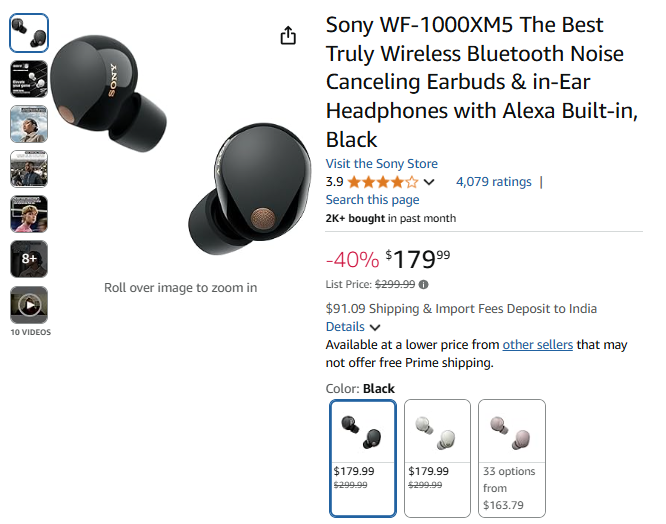
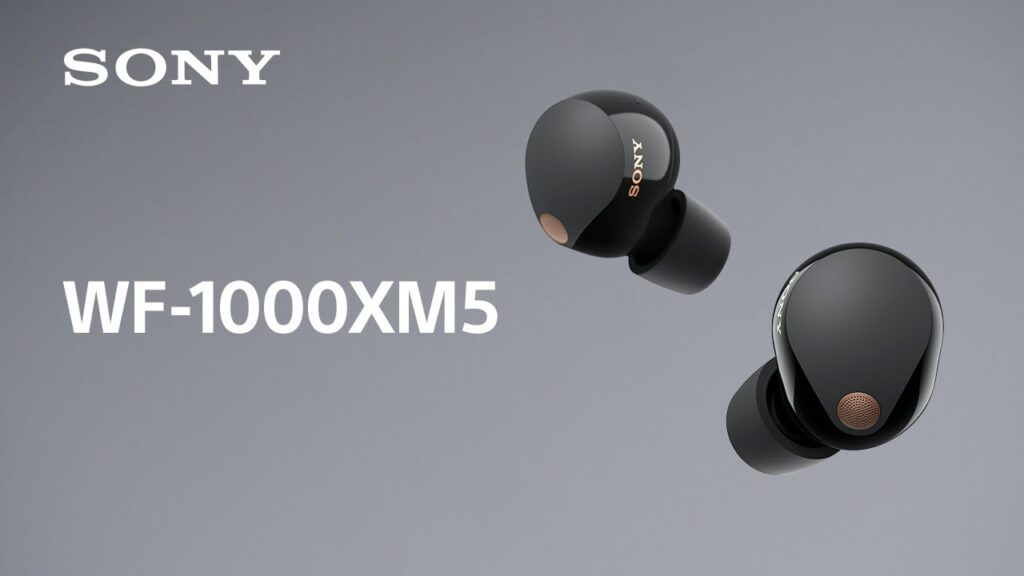
The Sony WF-1000XM5 TWS earbuds have dropped to their lowest price ever, now available on Amazon for $179.99. This is a hefty 40% off the original $299.99 MSRP. This significant discount highlights a rare opportunity to snag one of the top-rated models for active noise cancellation (ANC) and audio performance.
WF-1000XM5 earbuds stand out for their advanced features
The ANC system of the WF-1000XM5 uses triple microphones per earbud and the Sony HD Noise Cancelling Processor QN2e to block ambient noise effectively. This is further enhanced by Adaptive Sound Control that uses AI to optimize sound based on surroundings.
Bone conduction sensors and Precise Voice Pickup technology ensure clear call quality by isolating voices from background noise. The 8.4mm drivers deliver a wide frequency response of 20 Hz to 40 kHz with Hi-Res Audio via LDAC, while DSEE Extreme upscales lower-quality files for richer sound. These earbuds were certified for 360 Reality Audio with head tracking and can create an immersive 3D sound experience.
Image: Sony
For convenience, it offers touch-free controls, including head gestures for playback and settings adjustments, alongside Google and Alexa integration. The Speak-to-Chat feature pauses music when you talk, and auto-play can be scheduled.
Despite these strengths, some users note less bass compared to competitors and a challenging fit due to the earbuds’ size. Battery life is up to 8 hours per charge, which extends to 24 hours with the case. A quick 3-minute charge gives you 60 minutes of playback—handy when you’re in a rush. The Qi-compatible case supports wireless charging, adding versatility.
This $120 discount, effective as of April 14, 2025, makes the WF-1000XM5 a compelling option for audio enthusiasts. Act fast—such deals may not last long!
OnePlus is preparing to launch the 13T later this month. The company has yet to formally unveil the device, but a new high-quality render of the phone has surfaced on the Chinese platform Weibo courtesy of tipster Digital Chat Station.
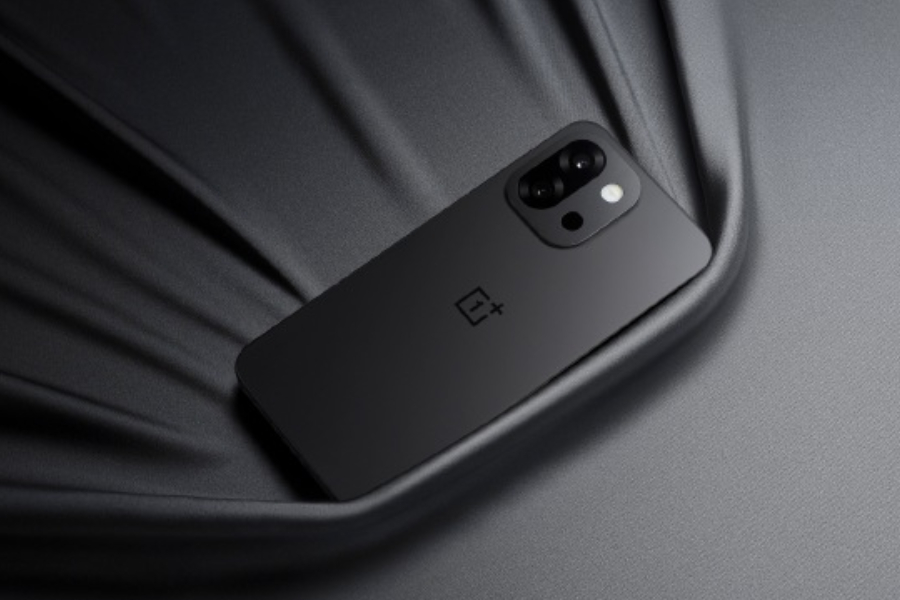
The image shows the phone in a black finish the company is reportedly calling “Cloud Ink Black.” Unlike its sibling, the OnePlus 13T adopts flat, squared-off edges and a redesigned rear camera layout.
OnePlus 13T to come in three color options
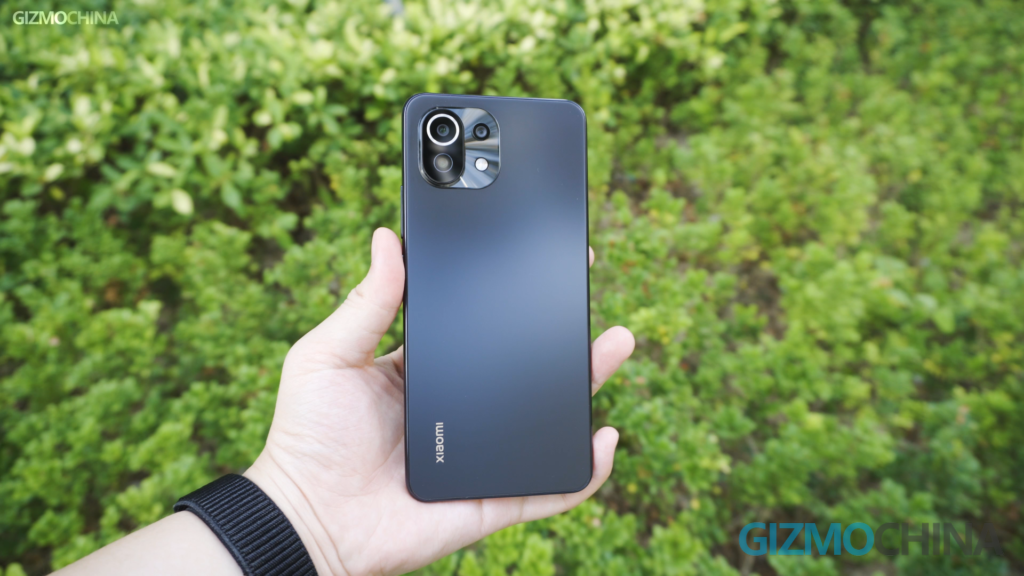
The new camera bump takes on a squircle shape and houses two lenses and an LED flash. It’s a more minimal look, though still distinct from the symmetrical, circular modules used in previous models. If anything, the design has more resemblance to Xiaomi’s Mi 11 Lite from 2021 than a OnePlus phone.
Xiaomi Mi 11 Lite
The tipster also claims the device will be offered in two other colors: Morning Mist Gray and Heartbeat Pink; the latter of which briefly appeared in a recent video leak.
OnePlus 13T in Heartbeat Pink
According to early specs, the 13T will feature a 6.3-inch flat display with a 1.5K resolution. This places it in the smaller, more pocketable category of flagship phones. Despite its relatively compact size, it’s rumored to house a big 6,200mAh battery with support for 80W fast charging.
Camera-wise, the phone is expected to come with a 50MP main sensor and a 50MP 2x telephoto lens. Under the hood, the device is confirmed to be powered by the Snapdragon 8 Elite chipset. OnePlus is also reportedly swapping its familiar alert slider for a new “smart button” on the 13T.
For now, the OnePlus 13T is confirmed to launch only in China. There’s no word on whether it will make its way to international markets yet.
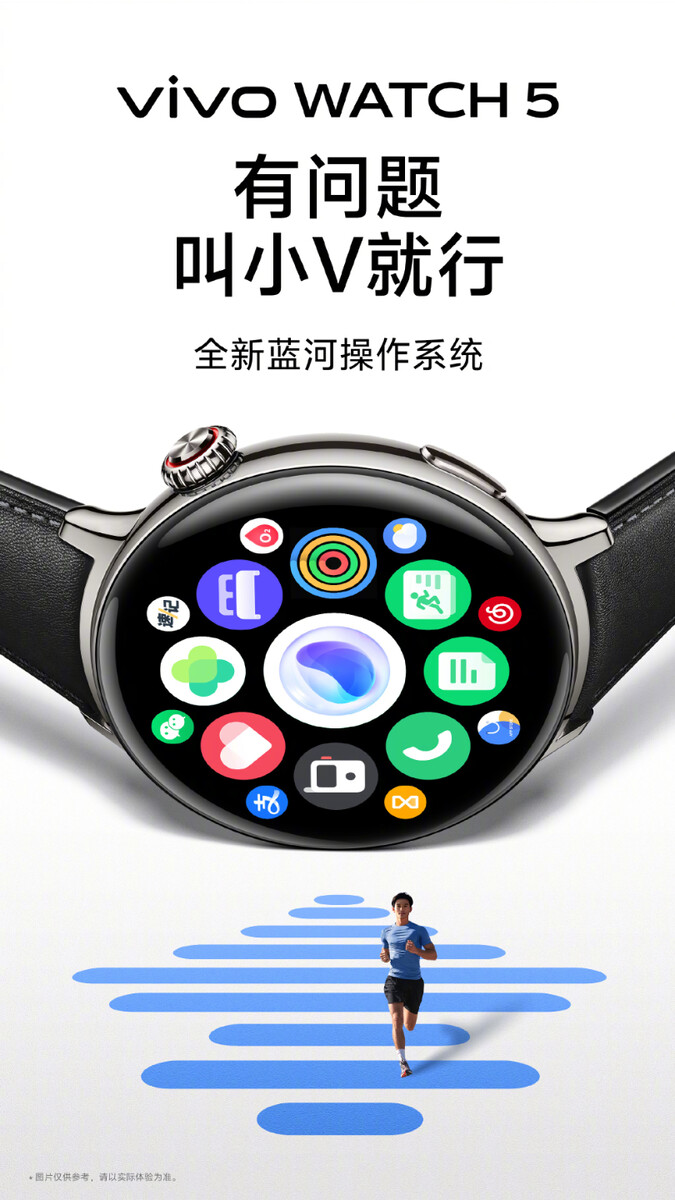
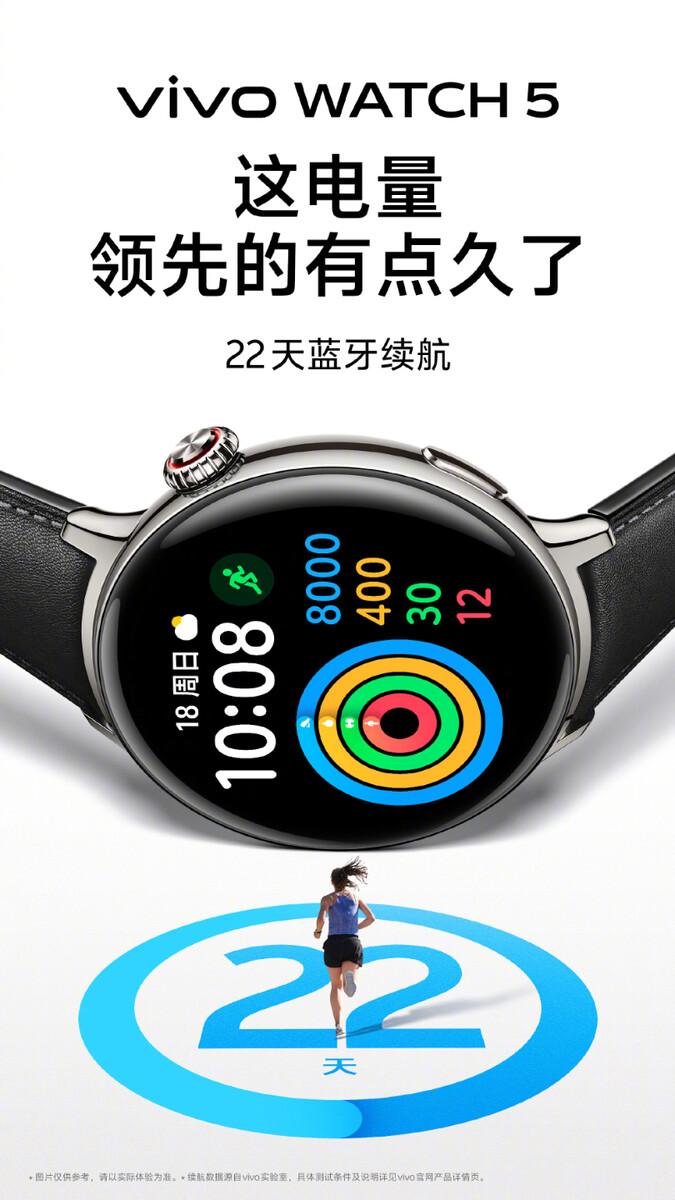
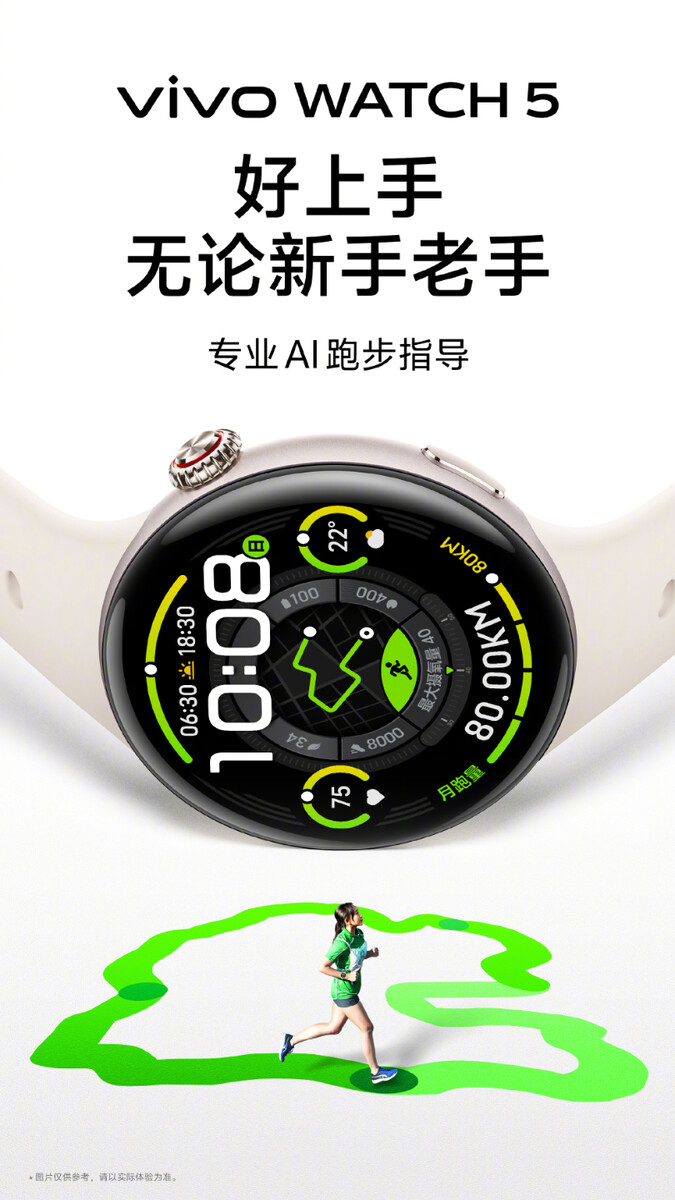
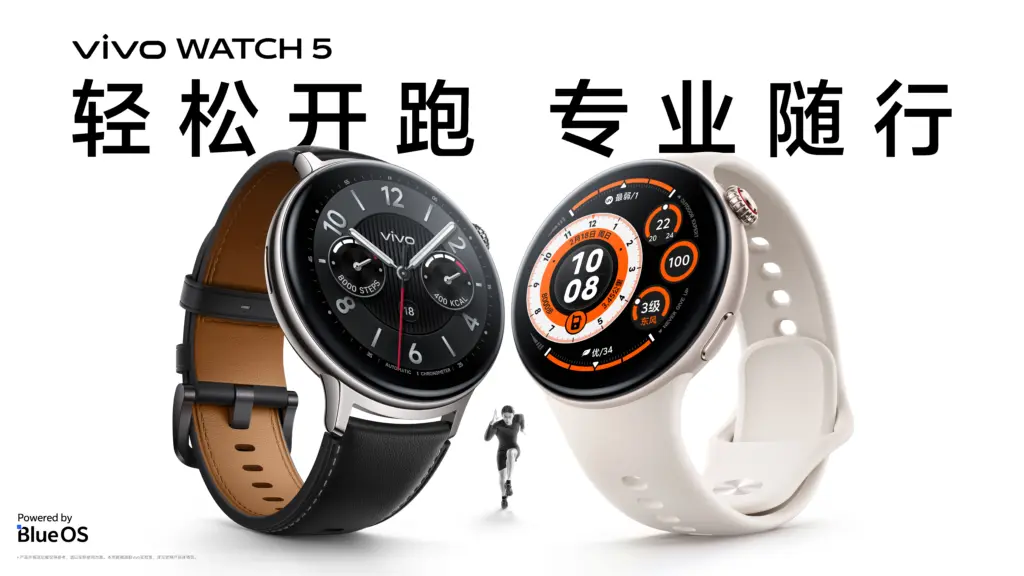
Vivo will launch the Watch 5 on April 21, alongside the X200 Ultra, X200s, Pad 5 Pro, and other devices. Ahead of the event, Vivo has shared key updates that show how the Watch 5 improves on the Watch 3.
Vivo Watch 5 features
The Watch 5 is rated for 22 days of battery life, up from 16 days on the Watch 3. This jump is due to Vivo’s switch from Wear OS to its own Blue River operating system, which uses less power.
Vivo is also focusing on health tracking. The Watch 5 will feature a 30-second rapid risk assessment for arrhythmia and other heart health checks. It also supports blood pressure monitoring, making it more useful for everyday health tracking.
In addition, the Watch 5 will include AI-based running guidance. While details on this feature are limited, it’s likely designed to help users improve their running with real-time tips or analysis. You can check out the features of its predecessor, the Vivo Watch 3, to get a better idea of what to expect from the successor.
The Vivo Watch 3 features a 1.43-inch AMOLED display with 466 x 466 resolution, a rotating crown, and runs on BlueOS. It offers advanced health tracking with 8-channel heart rate and 16-channel SpO2 monitoring, stress and sleep tracking, and over 100 sports modes. Connectivity features include Bluetooth calling, music control, NFC access, and motion gestures. The watch weighs 36g and provides up to 16 days of battery life in Bluetooth mode.
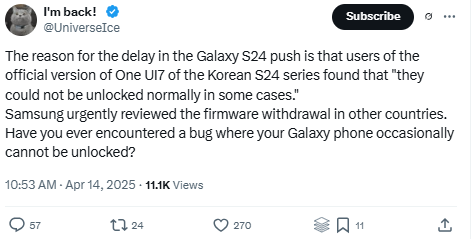
Samsung has hit the brakes on the global rollout of its highly anticipated One UI 7 update, based on Android 15, just days after its launch. Initially released for the Galaxy S24 series, Galaxy Z Fold 6, and Galaxy Z Flip 6 starting April 7, the update’s expansion has now been halted after the discovery of a major bug. It has left users waiting again as the company works to fix the issue and resume the rollout.
The bug prevents the user from unlocking the device
The suspension was first flagged by prominent leaker Ice Universe, with further discussions emerging on Samsung’s Korean forums over the weekend. The update, which began rolling out internationally on April 7 and reached the US on April 10, appears to have encountered issues, prompting Samsung to halt the rollout.
If you haven’t received the update yet, this unexpected stop could explain the delay. Samsung has not officially confirmed the halt or detailed the bug as of writing. Early reports suggested the problem was tied to Exynos 2400-powered Galaxy S24 models, with firmware even pulled from OTA servers. But more recent insights indicate the issue extends to Snapdragon-powered S24 variants in the US and beyond.
The nature of the “serious bug” remains unclear, fueling speculation and concern among users. This development raises worries about the ripple effect on the One UI 7 rollout for older devices like the Galaxy S23 series, potentially pushing back their update schedules.
Samsung’s silence adds to the uncertainty, as the company typically moves swiftly to address such issues. Galaxy users eager to experience the new features and performance boosts of One UI 7 will need to exercise patience while Samsung works to resolve the problem. We’re waiting for an official statement, as this pause could reshape the timeline for one of Samsung’s biggest software updates this year.
The United States is preparing to roll out separate tariffs on imports of smartphones, computers, semiconductors, and related components within the next one to two months, according to US Commerce Secretary Howard Lutnick. As reported by ABC News on April 13, 2025, this move signals a strategic pivot to increase domestic manufacturing.
Consumer electronics imports will now fall under a “special focus type of tariff”
“We need to have semiconductors, chips, and flat panels made in America. We can’t be reliant on Southeast Asia for all the things that operate for us,” Lutnick stated. This follows President Donald Trump’s April 11 decision to exempt smartphones, laptops, and other electronics from reciprocal tariffs imposed on April 2, dubbed “Liberation Day.”
The US Customs and Border Protection notice, effective from April 5, covered products like hard drives and memory chips. Not to mention, it offers relief to importers like Apple and Samsung. In the latest revelation, Lutnick clarified that these items will now fall under a “special focus type of tariff” set to take effect soon, despite their exclusion from reciprocal duties. Apple shifted its inventory from India and China to the US to during the last week of March to dodge Trump’s tariff deadline.
The policy shift aims to address national security concerns, with Lutnick asserting that negotiations with other countries are off the table. “These are things that are national security that we need to be made in America,” he said. This comes amid warnings from experts that “Made in America” iPhones could skyrocket to $3,500, reflecting potential cost hikes as production relocates. Trump’s administration seeks to cushion consumers and support US firms while pushing for self-sufficiency, though the rapid policy reversal raises questions about supply chain stability.
As the tariffs approach, the focus on domestic chip and electronics manufacturing could reshape global trade dynamics.
Nvidia’s Blackwell GPU series is facing renewed scrutiny after an RTX 5070 owner reported a melted power cable. While these incidents remain rare, they highlight potential design flaws that could impact the RTX 50 series, including less power-hungry cards.
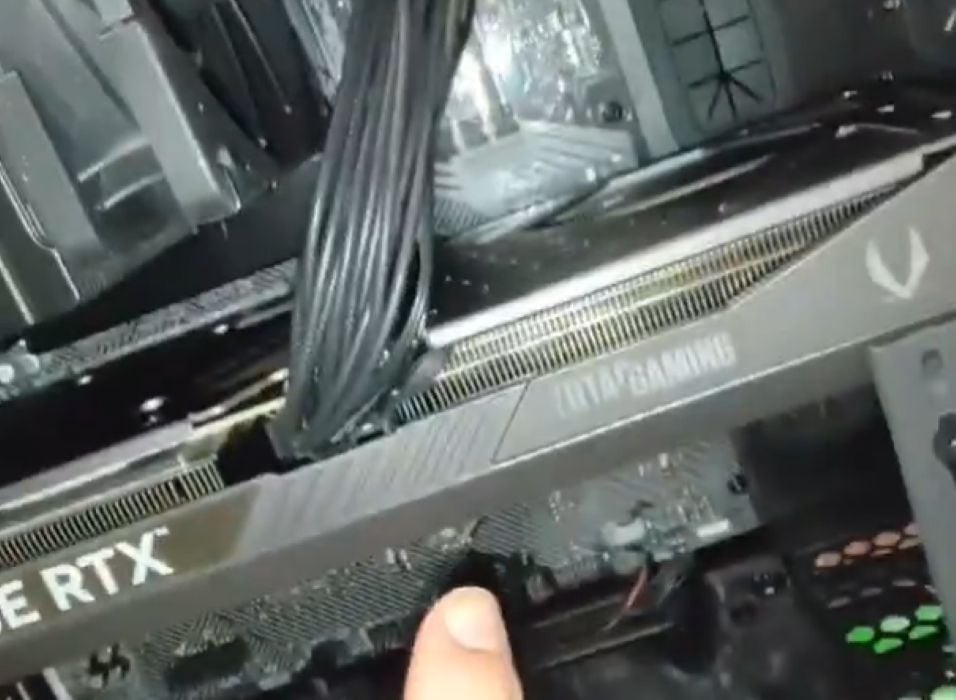
The latest case, documented by X user ere9w, involved a Zotac RTX 5070 paired with a 750-watt Seasonic PSU in a new gaming rig. Moments after powering on, smoke emerged, revealing a melted cable rather than the GPU’s 12V-2×6 connector.
The user noticed a damaged pin on the GPU’s power connector
In response to the similar issues with the RTX 4090 series, Nvidia initially blamed improper seating before endorsing the revised 12V-2×6 configuration. While inspecting the GPU, Ere9w noticed a damaged pin on the GPU’s power connector. Judging from the difficulty of misaligning the two parts, many users suggested it was a manufacturing defect. The user also insisted on proper installation.
This incident echoes findings from overclocker Der8auer, who analyzed an RTX 5090 with a melted connector and cable. Using thermal imaging, he identified uneven current distribution, with some wires carrying excess load. The 12V-2×6 design lacks a mechanism to monitor pin-specific power draw, leading to poor load balancing and overheating. This flaw now appears to affect the RTX 5070 and 5080, not just the power-hungry 5090. It raises questions about the series’ reliability.
Nvidia’s silence (as of writing) leaves gamers wary, especially with the high cost of these GPUs. While the RTX 40 series prompted a connector fix, the RTX 50 series’ issues suggest unresolved challenges in Blackwell’s architecture. Users investing in these cards—priced upwards of $500—face risks of damage, potentially voiding warranties if deemed user error. Until Nvidia addresses this, the melted cable reports could dampen enthusiasm for the otherwise promising RTX 50 lineup.
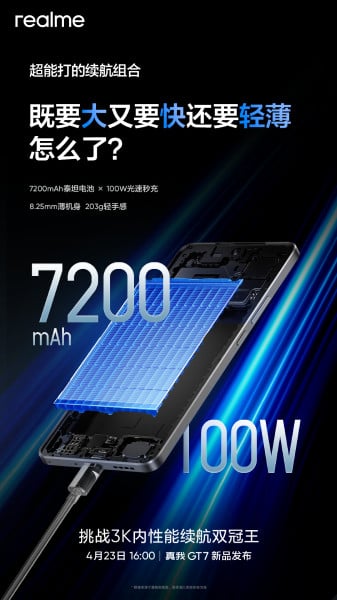
Realme’s next flagship phone, the GT 7, is set to launch in China on April 23, and it’s bringing some notable upgrades. Most importantly, it has a significantly larger battery. The company today confirmed that the device will feature a 7200mAh cell, which makes it one of the highest-capacity batteries in a flagship this year.
Despite the added battery heft, Realme says the phone will remain relatively slim at 8.25mm and weigh 203 grams. For context, its predecessor, the GT 6 packs a 5500mAh battery while still measuring thick at 8.6mm. The new battery will support 100W wired charging which should keep downtime to a minimum.
What else can you expect?
Alongside the bump in power, Realme is also introducing what it claims is an industry-first thermal design. The GT 7 will use a new “graphene fiberglass fusion” back panel that reportedly offers six times the thermal conductivity of standard glass. While that sounds promising, it remains to be seen how much of a difference it makes in day-to-day performance or sustained gaming sessions.
The company hasn’t officially revealed much else, but leaks have filled in a few gaps. The GT 7 is expected to feature a flat 144Hz display made by BOE, with slim bezels and an ultrasonic fingerprint sensor under the screen. It’s also said to carry an IP69 rating for water resistance and use a plastic middle frame.
Powering it all will be MediaTek’s new 3nm Dimensity 9400+ chip. The SoC might also show up in competing flagships like the Redmi K80 Ultra and the OnePlus Ace 5s Pro.
The GT 6 launched at a starting price of 2799 yuan ($386) in China. But it has a sub-flagship Snapdragon 8s Gen 3 chip. The Dimensity 9400+ on GT 7 Pro is a step up in terms of performance and manufacturing process; so a price increase wouldn’t be surprising. But we still hope the price to stay below 3000 yuan.
For more daily updates, please visit our News Section.
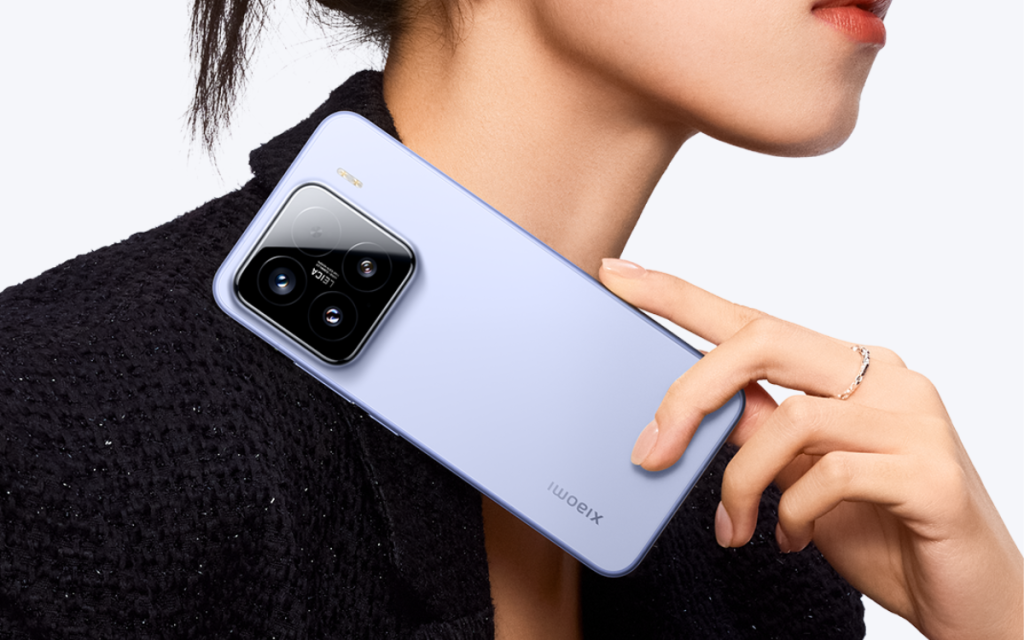
Xiaomi is expected to shake up the flagship smartphone market with the Xiaomi 16, set to launch by the end of 2025. A recent leak suggests this device will feature the Snapdragon 8 Elite 2/Dimensity 9500 chip, paired with a staggering 7,000mAh battery. If true, it will be a significant upgrade over the Xiaomi 15’s 5,400 mAh cell. Judging from the number, it’s evident that the cell is based on the high-density silicon-carbon battery technology.
This leap could redefine endurance in premium phones, especially because it will be paired with the efficiency gains of a more efficient next-generation flagship chipset. For context, the Snapdragon 8 Elite‘s efficiency gain is the biggest contributing factor behind the battery life improvement of the Galaxy S25 Ultra, which packs the exact same battery capacity as its predecessor.
Xiaomi 16 may not be a compact flagship
The current Xiaomi 15 (our review) is positioned as a compact flagship with a 6.36-inch display and solid battery life. But the successor might push boundaries further. A prior report hinted at a larger display, lending weight to the idea of a bigger battery fitting the frame.
OnePlus confirmed a 6,200mAh battery for its upcoming 6.3-inch compact flagship—OnePlus 13T—proving that large batteries can coexist with compact designs. The Xiaomi 16’s rumored 7,000mAh capacity might seem ambitious, but even a slightly lower figure would still mark a notable improvement in battery life over the predecessor.
Nonetheless, this battery leak should be taken with caution—leak accuracy varies, and manufacturing challenges also exist. If true, the Xiaomi 16 could set a new standard for battery life.
Garden ponds are having a moment in 2025. As backyard water features surge in popularity, there’s a growing demand for solutions that blend aesthetics with eco-conscious design. Enter the latest wave of pond care innovation—think wildlife-friendly setups, smart filtration, and low-maintenance beauty.
Leading the charge is POPOSOAP, a brand rolling out its 2025 upgrade with a focus on sustainable, nature-first pond systems. This shift aligns with broader garden pond trends: homeowners want ponds that look good and do good—supporting local ecosystems while requiring less upkeep. Its less about flashy gimmicks and more about creating balanced, functional spaces where wildlife and water thrive together.
How is POPOSOAP driving the Modern Pond Boom?
Two big factors stand out in 2025 garden ponds: sustainability and wildlife preservation.
Ponds aren’t just decorative anymore—they’re habitats. Birds, amphibians, and aquatic plants need clean, oxygenated water, and today’s pond tech is stepping up to deliver. Advanced filtration systems cut through debris and pollutants, while aerators boost oxygen for fish and beneficial bacteria.
Add in features like cascading waterfalls or fountains, and you’ve got circulation that’s both practical and beautiful.
Take POPOSOAP’s lineup as an example. Their offerings—like energy-efficient fountains and pondless waterfalls—cater to this demand, blending form and function. The idea? Make pond care accessible without sacrificing environmental responsibility. Think recyclable materials, reduced packaging, and systems that work smarter, not harder.
Here are some of the offerings from the brand’s lineup.
Fountains: Beyond the visual pop, they keep water moving—key for clarity and health.
Filters: Modern designs tackle debris and toxins, leaving water pristine.
Aerators: Oxygen is life. These quietly support fish and plants year-round.
Waterfalls: A dual win—great to look at, and they help with circulation.
Pondless Options: Love the sound of water but not the upkeep? These are a game-changer.
POPOSOAP leans into this with extras like smart controls and subtle lighting, proving you don’t need to choose between tech and nature. It’s about enhancing the experience without overwhelming the ecosystem.
Commitment to Wildlife and Environmental Sustainability
A pond isn’t just a water feature—it’s a lifeline. Clean water supports everything from backyard wildlife habitat like frogs in winter to birds in summer, and sustainable pond filtration is the backbone. Biological and mechanical methods work together to keep things natural, cutting the need for harsh chemicals. Brands like POPOSOAP double down here, pushing for eco-friendly production and wildlife-first designs. Its eco-friendly approach includes using recyclable materials, minimizing packaging waste, and reducing carbon emissions in production and distribution.
The result? Backyard oases that feel effortless and look alive.
The Future of Garden Ponds with POPOSOAP
Ponds are evolving, and 2025 is shaping up as a tipping point. Whether you’re a DIY enthusiast or just dreaming of a nature nook, the tools are there—smart, sustainable, and stunning.
POPOSOAP’s “Forever Homes for Every Creature” ethos captures it well: ponds should work for you and the planet. Curious to dig deeper? Check out their latest at poposoapsolar.com or peek at their Amazon shop here. For tips and inspiration, their Instagram (@poposoapsolar) is worth a follow.
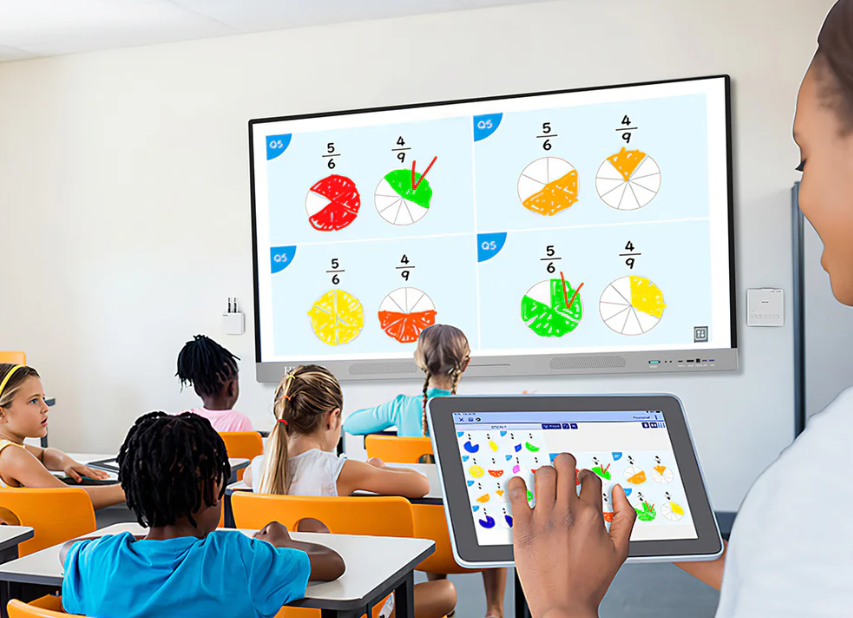
Meetings and lectures used to mean static slides or scribbled notes—functional but hardly inspiring. Now, smart whiteboards are flipping the script. These interactive displays are turning passive sessions into dynamic hubs for ideas, whether you are teaching a class or presenting a project. HKMLC is among the players pushing this shift, rolling out all-in-one boards that pack serious tech into sleek, user-friendly packages.
Why the hype? It’s simple: today’s digital world demands tools that keep up. Educators need engagement; businesses need efficiency. Smart whiteboards deliver both, and the latest models—like the HKMLC smart whiteboard—are raising the bar with sharp visuals, seamless integration, and a focus on real-time collaboration.
The Role of Smart Whiteboards in Modern Education and Business
Traditional setups like projectors or dry-erase boards can’t match the interactivity of modern displays. With touchscreens, screen-sharing, and built-in audio-visual gear, these products make brainstorming or teaching feel alive. Students dive in with hands-on tasks; teams edit plans on the fly. The result? More participation, less downtime.
The tech behind this is evolving fast. Take displays that adjust brightness on their own, up to 500 nits, to stay crisp in any room. Or infrared touch tech with pinpoint precision, turning stylus swipes into something as natural as writing on paper. Add compatibility with Zoom, Teams, and even older VGA systems, and you’ve got a tool that bridges yesterday and tomorrow.
For educators, this means more student engagement and participation; for businesses, it results in faster decision-making and improved productivity.
What Sets HKMLC Smart Whiteboards Apart
Not all smart whiteboards are created equal. Here’s what’s trending in 2025:
Visuals: 4K UHD screens with adaptive brightness for any light.
Touch: Multi-point sensitivity—think 20 simultaneous inputs—for group use.
Connectivity: WIFI 6, Bluetooth, and casting software to link any device.
All-in-One Design: Cameras, mics, and speakers baked in, cutting clutter.
Power: Beefy RAM and SSDs to handle multitasking without lag.
HKMLC’s lineup nails this mix. The HKMLC Smart boards blend high-end hardware (up to 8GB RAM, 128GB SSD) with extras like dual Android-Windows switching, making them versatile enough for a classroom or a C-suite.
Real-World Solutions to Everyday Challenges
The best tech isn’t just cool—it fixes headaches. Smart whiteboards streamline setup with one-touch startups and intuitive UIs—no IT degree required. They pack six tools (projector, PC, TV, audio, whiteboard, and kiosk) into one unit, saving space and sanity. Remote teams get a near-in-person vibe with 4K video and smart mics that cut noise, while multi-device support keeps everyone in sync.
HKMLC’s Eshare Pro software, for instance, makes casting a breeze—no dongles needed.
Budget vs. Premium: What’s the Difference?
Size and features dictate the price of a smart board. A 55-inch board with Android 11 and basic specs (4GB RAM, 32GB SSD) lands around $1,500—solid for smaller setups. Step up to an 8GB RAM, 128GB SSD model with Android 12 for $1,800, and you’ve got more juice for heavy use.
The HKMLC product line includes a variety of models catering to different needs. The Essential 55 offers basic functionality at $1,589, ideal for budget-conscious users seeking solid performance with Android 11.0 and a 4GB RAM/32GB SSD configuration. The Elite 55 steps up with Android 12.0, 8GB RAM, and 128GB SSD for $1,799, giving it more muscle for multitasking and app support.
For a better display size and additional features, the Essential Vision 55 includes a 48MP camera, making it ideal for virtual training and remote classrooms. It’s priced at $1,899. At the top end are the Elite Dual 75 and Elite Vision 75. The former supports dual systems (Android + Windows), and the latter combines full hardware power with a 48MP camera, both priced just over $3,000. These large-format models are best suited for enterprise boardrooms or large classrooms needing premium performance and top-tier collaboration tools.
Real Impact from Real Users
Educators and professionals alike have praised HKMLC’s smart whiteboards for transforming the way they work. One user noted how remote learning sessions became more interactive and enjoyable, thanks to the board’s responsive multi-touch and sharp visuals.
A project manager from a tech firm shared how team brainstorming became significantly more efficient, eliminating back-and-forth emails and unclear notes. “It’s like having the entire team in the same room,” one reviewer commented. These endorsements reflect the whiteboard’s ability to enhance clarity, engagement, and workflow efficiency.
The Future of Smart Whiteboard Technology
The future of smart whiteboard technology is exciting. For example, imagine AI that transcribes meetings or responds to gestures. Brands like HKMLC are already teasing upgrades like voice recognition and smarter imaging, aiming to make boards less like screens and more like collaborators. As hybrid work and learning stick around, these innovations could redefine “being present.”
For now, tools like HKMLC’s lineup hit the sweet spot—powerful, practical, and ready to roll. Want to see more? Check out smart boards at hkmlc.com.
If you want to see a smartboard in action, check out the video below.
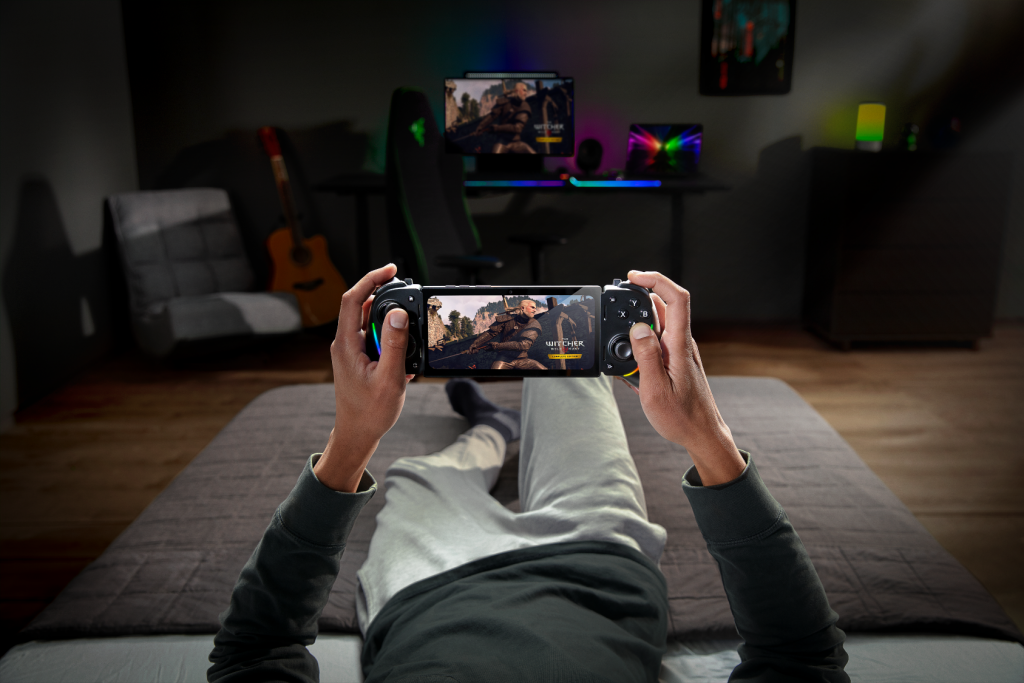
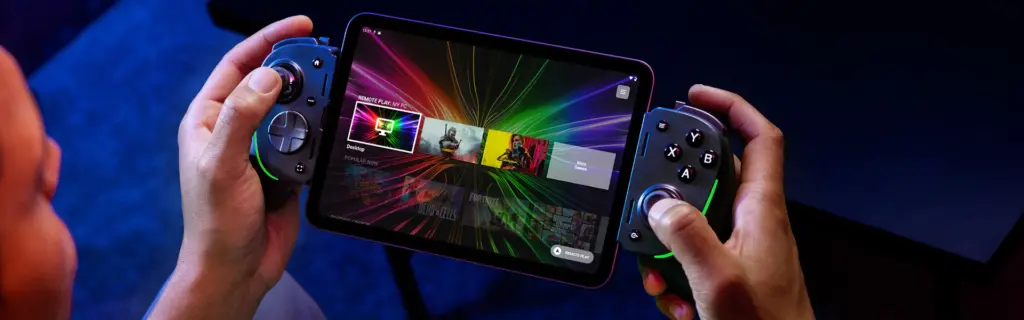
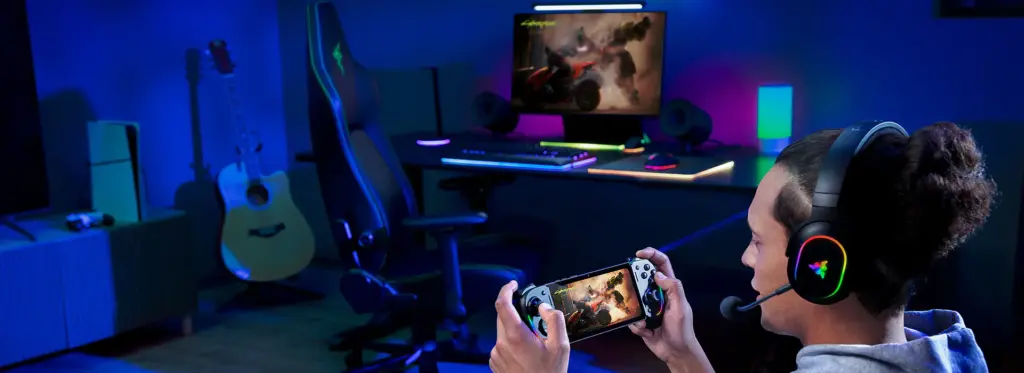
Razer has officially launched PC Remote Play, a platform that lets you stream PC games to your phone, tablet, or Windows handheld. First shown in beta at CES 2025, the tool is now available with new features and a cleaner interface through the Razer Cortex app on PC.
With PC Remote Play, you can stream games from platforms like Steam, Epic Games, and PC Game Pass. It works on devices running iOS 18, Android 14 or newer, and Windows 11.
The app supports full-screen visuals with no black bars and automatically adjusts to your device’s resolution and refresh rate. It also uses the AV1 video codec to improve image quality and reduce lag.
You can use Razer Kishi and any other controller that works with iOS or Android. On iPads, you can also use a keyboard, mouse, or trackpad for different play styles.
The Razer Nexus app lets you browse your PC games, launch them, customize controls, update your controller, and record or share gameplay — all from your phone or tablet.
If you’re using a Razer Kishi Ultra on Android, you also get Sensa HD Haptics for in-game vibrations that match what’s happening on screen — like gunfire or engine rumbles.
Here’s how to get started:
Download Razer Nexus and Razer PC Remote Play on your mobile device.
On your PC, enable Remote Play in Razer Cortex.
Sign in with your Razer ID — your PC and mobile device will connect automatically.
Connect a compatible controller to play.
Razer PC Remote Play is now available on the App Store and Google Play. Visit Razer.com for more info.
For more daily updates, please visit our News Section.
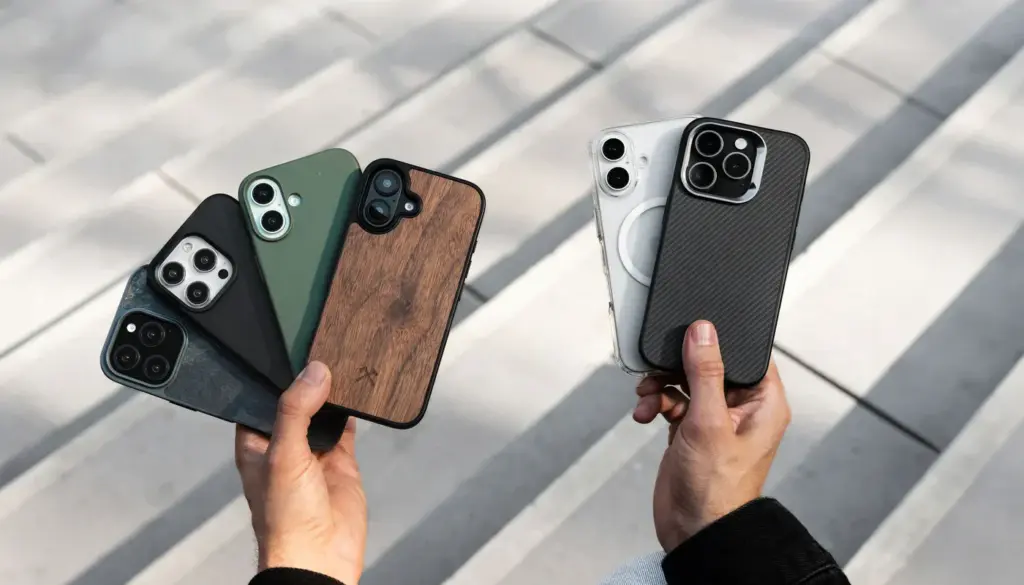
It’s 2025, and smartphones have never been more powerful—or more fragile. They’re thinner, lighter, and wrapped in glass on both sides. That’s great for aesthetics, not so great when your $1,200 slab of tech takes a dive off the counter. So, here’s the truth: as uncool as it might sound to purists, you need a case for your smartphone. Yes, even if it’s a titanium iPhone or a Gorilla Glass Victus 2-equipped flagship. Here’s why.
1. Modern phones are built to look durable, not be durable
Smartphones are like sports cars: beautiful, fast, and extremely expensive to fix. Today’s devices are often constructed with premium materials—glass backs, aluminum frames, even ceramic panels—but none of them are immune to impact. Drop your phone once without a case, and you’ll be lucky if you only end up with a scratch. Drop it twice, and you might be looking at a trip to the service center, and possibly a hefty repair bill that could’ve been avoided with an insurance.
Even companies that boast “military-grade durability” tend to bury asterisks in the fine print. Real-world durability is about more than just lab tests; it’s about the unpredictability of human hands. And gravity.
2. You don’t have AppleCare for life
Sure, AppleCare+ or Samsung Care+ might ease the pain of a cracked screen, but they aren’t free. Most plans come with monthly fees and a deductible. Break your phone once or twice, and the repair costs can easily rival the price of a midrange smartphone. And if you’re outside of the support window or bought a device from a brand that doesn’t offer extended warranty care? That’s on you.
Cases are cheaper. Much cheaper. A decent $25–$40 case could save you hundreds in repairs down the line. That’s not even a trade-off—it’s just common sense.
3. Today’s cases aren’t bulky and ugly anymore
Forget the days of those brick-sized OtterBox clunkers—unless you’re intentionally buying something built for a demolition site. Case design has evolved, and there’s something for everyone now. Sleek, minimal silicone cases that feel like second skin. Clear cases that show off your phone’s back without compromising protection. MagSafe-compatible cases that still let you use your wireless chargers and accessories.
And yes, there are rugged options too. If you’re climbing mountains or working construction, there’s a case that’s practically armor. But for most of us, the sweet spot is something that adds grip, absorbs shock, and still slides into a pocket without friction burns.
4. Accidents aren’t a matter of if, but when
Let’s be honest: you’re going to drop your phone. Maybe not today, maybe not tomorrow, but someday your phone will tumble out of your hand, your lap, or your hoodie pocket. It might land on concrete, tile, or the worst of all—gravel. That’s when the case earns its keep.
It’s not just about drops, either. Cases protect from scratches, smudges, camera lens scuffs, and all the little wear-and-tear that comes from everyday use. And if your phone has a protruding camera bump (which, let’s face it, most do now), a case helps keep it flush and safe from abrasion.
5. So why risk it?
Buying a phone case is like wearing a helmet on a bike ride—you hope you won’t need it, but you’ll be glad you have it when you do. It’s one of the most sensible accessories you can get for your phone. It doesn’t have to be expensive, and it doesn’t have to ruin your aesthetic. But it does need to be there—because real life doesn’t care how much you spent on your phone. And neither does the pavement.
Now, if you’re someone who really doesn’t want to slap a case on your phone, we get it. In fact, you should check out this article, where we break down why you actually might not need a case after all.
For more daily updates, please visit ourNews Section.
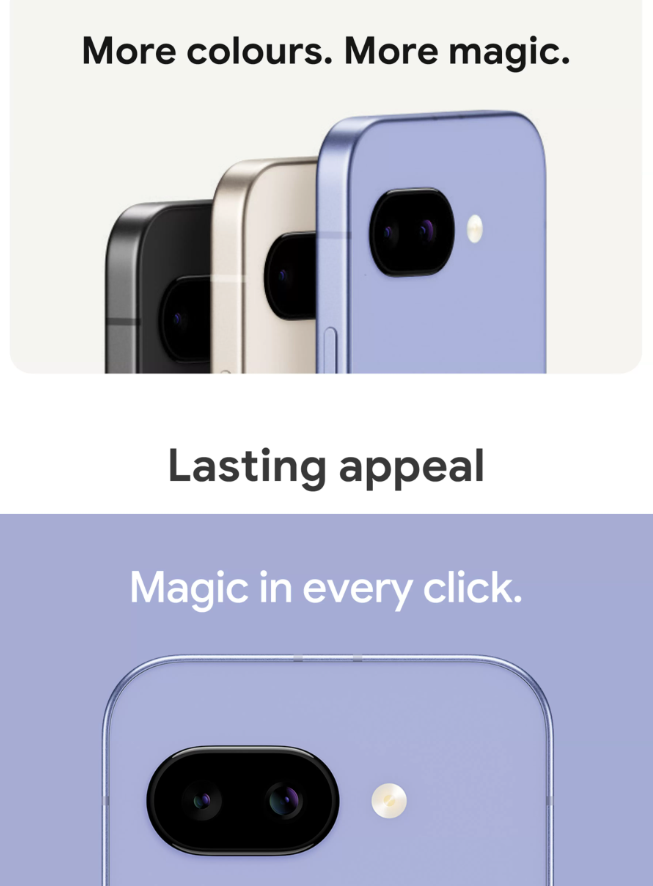
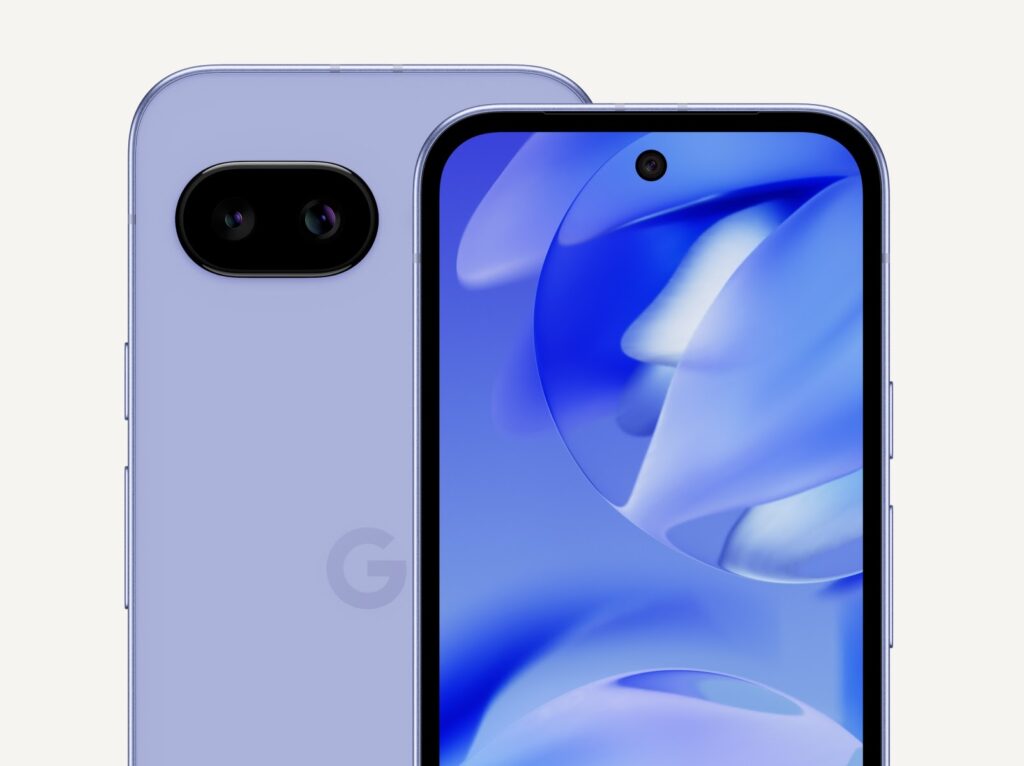
Google unveiled the Pixel 9a smartphone last month on the global stage. The phone has already started selling in the US and several other countries including Canada, Germany, France, and Italy. Starting April 16, it will also be available in India. The device will be available from 12 PM onwards as a Flipkart-exclusive product. Flipkart has already started advertising the phone. It will come in a single 8GB RAM and 256GB storage variant, priced at ₹49,999, with three color options: Porcelain, Iris, and Obsidian.
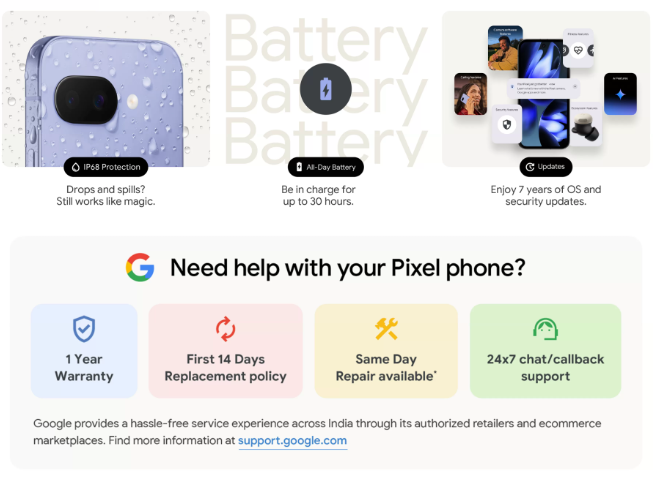
The Pixel 9a features IP68 water and dust resistance, up to 30 hours of battery life, and 7 years of OS and security updates. It is powered by Google’s AI assistant Gemini, with features integrated across Google apps. Gemini supports two-way natural conversations and AI image generation.
Key camera features include “Add Me,” “Macro Focus,” and “Best Take.” The Magic Editor tool allows users to crop, reframe, or expand images with AI. These tools are aimed at enhancing mobile photography with minimal manual input.
Buyers in India will get a 1-year warranty, a 14-day replacement policy, and same-day repair availability in select cities. Google is also offering 24/7 customer support through chat and callback.
The Pixel 9a includes a 6.3-inch OLED display with a 120Hz refresh rate and FHD+ resolution. It uses the Google Tensor G4 chipset paired with the Titan M2 security chip. The phone runs Android 15 out of the box and comes with 7 years of guaranteed OS updates. For cameras, it has a dual rear setup with a 48MP main sensor and a 48MP ultra-wide lens, along with a 13MP front-facing camera. The device is powered by a 5,100mAh battery that supports 23W wired fast charging and 7.5W wireless charging.
For more daily updates, please visit our News Section.
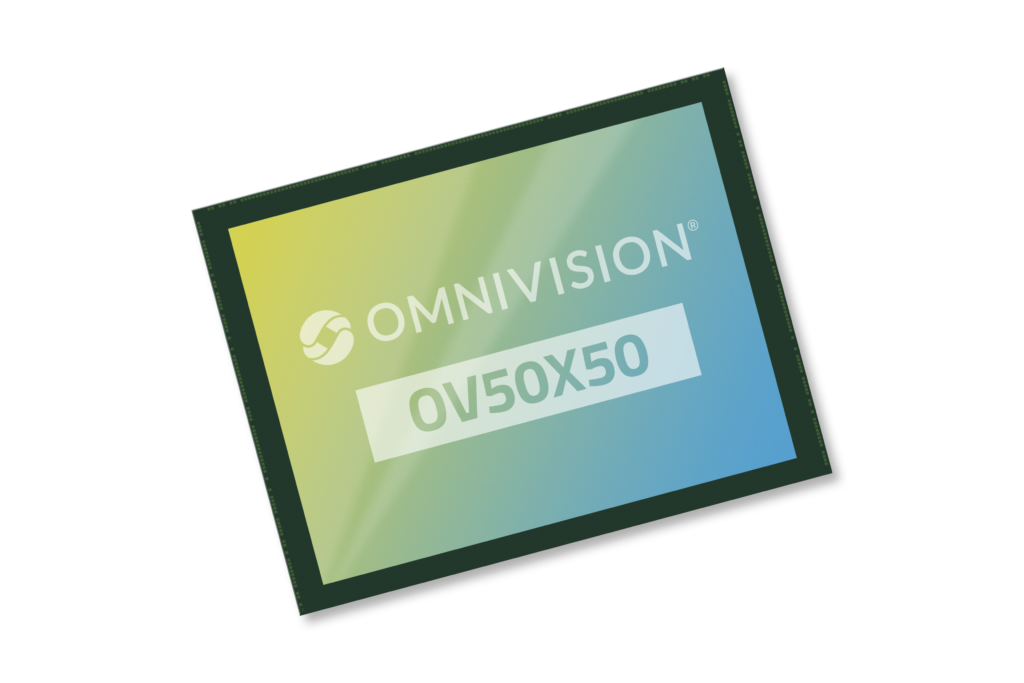
OMNIVISION released the OV50X, a 50MP CMOS image sensor targeting flagship smartphones. The sensor boasts a 1.6-micron pixel size within a 1-inch optical format, achieving approximately 110 dB single-exposure HDR, the highest in the mobile sector.
As per OMINVISION’s press release, the OV50X sensor is optimized for high-end devices, and facilitates 4-cell binning, producing 12.5MP output at 180 fps, and 60 fps with three-channel HDR. 8K video capture, dual analog gain (DAG) HDR, and on-sensor crop zoom are supported.
Its TheiaCel technology enables high dynamic range without multi-exposure, enhancing real-time preview and video quality. 100% quad phase detection (QPD) coverage ensures rapid, precise autofocus. PureCel®Plus‑S stacked-die technology improves low-light performance.
OMNIVISION positions the OV50X for users demanding professional-grade smartphone imaging. Takuritsu Li, OMNIVISION’s marketing manager, emphasized the sensor’s ability to deliver superior capture in challenging lighting conditions.
Sampling is currently underway, with mass production scheduled for Q3 2025. The OV50X is designed for smartphone manufacturers seeking to elevate image and video quality in premium devices.
In other news, Sony is developing 100MP and 200MP smartphone sensors. The 100MP sensor is expected to be widely adopted by Chinese brands using Snapdragon 8 Gen 4 (Elite 2) or Dimensity 9500 chips. Sony’s 200MP sensor, reportedly larger than Samsung’s, could also see adoption across Chinese flagships, potentially improving detail and overall image quality.
OnePlus has already rolled out its Android 16 Beta 2 update for the OnePlus 13 ahead of any non-Pixel device. Aimed primarily at developers for app testing, this preview build also unveils exciting new features, including a revamped battery charging limit option that puts more control in your hands.
An enhanced charging limit feature to help you conserve the battery
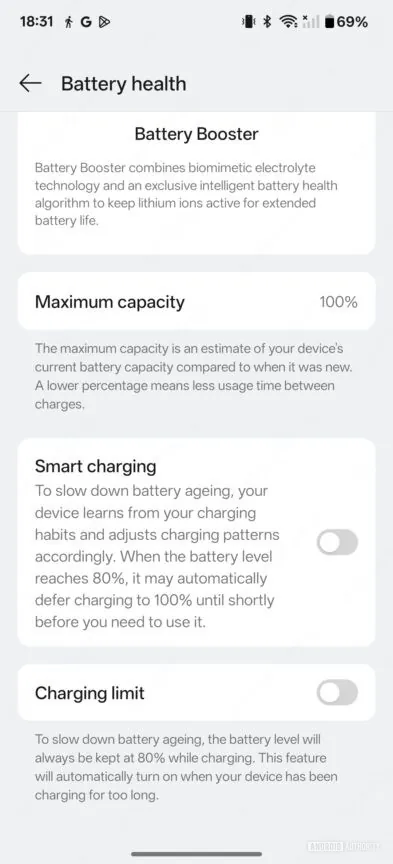
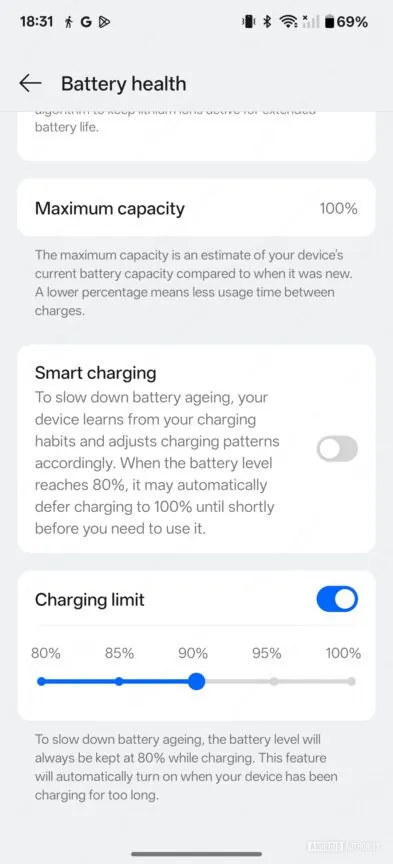
Spotted by the unofficial OnePlus System Apps Telegram channel, the Android 16 Beta 2—still labeled as Oxygen OS 15 in settings—enhances the existing 80% charging limit feature. Previously, on Oxygen OS 15 (based on Android 15), users could only toggle a fixed 80% cap under Settings > Battery > Battery Health.
Now, the Android 16 beta 2 update allows customization, letting you set the limit anywhere from 80% to 100% in 5% increments. This flexibility is a welcome shift, catering to diverse usage needs. The four adjustable levels—80%, 85%, 90%, and 95%—offer a tailored balance between battery longevity and daily convenience.
For those unfamiliar, charging behavior is one of the key factors that determine a battery’s lifespan. Batteries tend to degrade faster when they’re frequently drained to 0% or kept at 100% for extended periods. While you can’t just power off and stop using your phone when it’s nearing 0%, you can stop charging—or limit the charge through software—if you’re at home or at least close to a wall socket.
For some, the default 80% limit feels restrictive, especially if they don’t plan to keep the phone for years or have budgeted for a battery replacement. This customization addresses that, giving power users more freedom. As this is a developer build, expect refinements before the stable release. Nonetheless, it’s a promising glimpse of what’s about to arrive with the stable update.
For those waiting, the stable version of Android 16 is expected to launch by the end of June 2025. More Android OEMs are expected to roll out the update in the coming weeks, and we expect to see a similar charging limit feature on more devices. After all, this isn’t a feature that barely adds value—it’s one that helps you use the device for much longer.
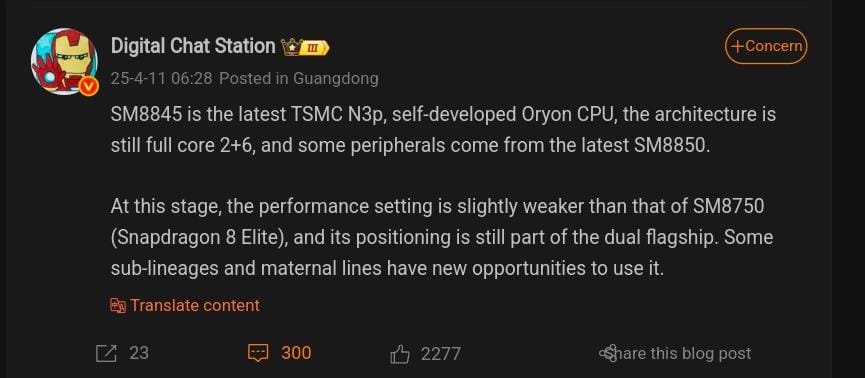
Qualcomm may be gearing up to shake up the smartphone chipset market with a new addition: the SM8845. Positioned between the Snapdragon 8s Gen 4 and the upcoming Snapdragon 8 Elite, this mid-tier flagship processor could bring near-top-tier performance to budget-friendly performance-centric phones.
The new chip is slightly less capable than the 8 Elite, yet it has some similarities with the 8 Elite 2
The rumor stems from a report by Digital Chat Station, which suggests Qualcomm is developing the SM8845 to bridge the gap in its 2025 lineup. This follows the company’s recent rebranding shift—ditching the expected Snapdragon 8 Gen 4 for the Snapdragon 8 Elite, possibly due to similarities with its X Elite laptop chips. The Snapdragon 8s Gen 3, lacking Oryon CPU cores, was left behind, while the 8 Elite powers flagships like the OnePlus 13 or the Galaxy S25 Ultra. Now, the Snapdragon 8s Gen 4, featuring ARM Cortex-X4 and Cortex-A720 cores, targets mid-range devices. Notably, it leaves room for another chipset that sits just below the 8 Elite.
The SM8845, distinct from the SM8550 (Snapdragon 8 Gen 2), SM8735 (8s Gen 4), and SM8850 (8 Elite 2), is said to use TSMC’s N3P 3nm process with Oryon CPU cores. This setup includes two prime cores and six performance cores (similar to the 8 Elite), promising solid performance and efficiency—though not quite matching the 8 Elite’s peak.
When this new chip will debut? Well, a specific date remains under wraps for now, with a potential autumn release alongside the 8 Elite 2. Details like GPU specs are also unknown as of now.
This decision to fill the gap between the current ‘S’ branded chips and the top-of-the-line flagship chip expands access to high-end features for sub-brands, challenging the notion that flagship performance is exclusive to premium devices. However, with limited info and no official confirmation, skepticism lingers—after all, leaks can overpromise. If true, the SM8845 could redefine value in the Android ecosystem by late 2025.
We use cookies on our website to give you the most relevant experience by remembering your preferences and repeat visits. By clicking “Accept”, you consent to the use of ALL the cookies.
This website uses cookies to improve your experience while you navigate through the website. Out of these, the cookies that are categorized as necessary are stored on your browser as they are essential for the working of basic functionalities of the website. We also use third-party cookies that help us analyze and understand how you use this website. These cookies will be stored in your browser only with your consent. You also have the option to opt-out of these cookies. But opting out of some of these cookies may affect your browsing experience.
Necessary cookies are absolutely essential for the website to function properly. This category only includes cookies that ensures basic functionalities and security features of the website. These cookies do not store any personal information.
Any cookies that may not be particularly necessary for the website to function and is used specifically to collect user personal data via analytics, ads, other embedded contents are termed as non-necessary cookies. It is mandatory to procure user consent prior to running these cookies on your website.