Advertisement

Xiaomi exposes competitors, selling ¥3,000 products for ¥20,000—Here’s how they’re breaking the cycle

Xiaomi, the tech giant known for its smartphones and smart devices, is making significant strides in the white goods market. The company’s recent financial report revealed impressive growth in air conditioner, refrigerator, and washing machine shipments.

Xiaomi Air Conditioner

Xiaomi’s Transparent Tactics

Lu Weibing, Xiaomi’s Group partner and president, attributed this success to the company’s innovative approach and commitment to consumer value. He highlighted that Xiaomi’s air conditioners, in particular, have been a major driver of growth, with shipments exceeding 1.7 million units in Q3 2024, a year-on-year increase of over 55%.

One of the key factors behind Xiaomi’s success in the air conditioner market is its focus on cost-efficiency and transparency. Lu revealed that Xiaomi’s air conditioners operate on slim profit margins of just over 10%, significantly lower than the industry average of 30-40%. This aggressive pricing strategy is made possible by Xiaomi’s efficient operations and direct-to-consumer model.

In contrast, Lu criticized traditional home appliance manufacturers for overpricing their products. He pointed out that some air conditioners, which cost only 3,000 yuan ($413) to produce, are sold at exorbitant prices of 20,000 yuan ($2,759). Xiaomi’s approach, he argued, aims to break down information asymmetry and provide consumers with genuine value.

To further enhance its service offerings, Xiaomi has streamlined its air conditioner service processes. The company has integrated disassembly, delivery, and installation into a single operation, making it more convenient for customers. This innovative approach sets Xiaomi apart from its competitors and improves overall customer satisfaction.

Lu also expressed disappointment with the lack of innovation in the traditional home appliance industry. He criticized the practice of selling the same product under multiple brand names and at varying prices, which he believes is unfair to consumers.

As per a previous report, Xiaomi is now holding the third-largest market share at 11.82%, a 4.31% increase year-over-year. This puts Xiaomi closer to industry leaders Gree (24.04% share, down 3.01%) and Midea (25.01%), as it capitalizes on affordability with an average price of 2,281 yuan ($318). Meanwhile, Gree faces challenges, including a 15.84% revenue drop in Q3. Xiaomi’s momentum, driven by strong IoT integration and features like AI enhancements, could shift its air conditioner sales to outpace its TVs by 2026.

If you’ve made it this far, you should also check out the top Xiaomi gadgets of 2024.

ASUS ROG Phone 9 vs ROG Phone 9 Pro: What’s the difference?

ASUS has just announced the ROG Phone 9 series. The latest lineup of flagship gaming smartphones include the base ROG Phone 9 and the higher end ROG Phone 9 Pro models. While these offer similar specs and performance, there are a number of differences between the two versions. So here’s everything different between the two ROG Phones.

Asus Rog Phone 9 Series
ASUS ROG Phone 9 and ROG Phone 9 Pro

1. ASUS ROG Phone 9 vs ROG Phone 9 Pro: The Mini LEDs

When you place the two ROG Phones 9 phones against one another, you can immediately tell the difference in design. The ROG Phone 9 has a familiar design with the ROG brand logo at the back. However, the ROG Phone 9 Pro has a special spark. On the rear panel, it houses 648 programmable mini LEDs. This allows users to not only customize their smartphone’s aesthetic with unique animations. This can even interact with games for a more unique experience. ASUS has basically doubled the number of LEDs, even introducing retro games on the AniMe Vision display.

2. More Storage, More RAM

The company unveiled the ROG Phone 9 series with Qualcomm’s brand new Snapdragon 8 Elite SoCm, which promises 45% faster CPU performance, 40% improved GPU capabilities, and a significantly enhanced NPU for AI-driven tasks. This chipset is paired with up to 16GB of LPDDR5X RAM and 512GB of UFS 4.0 storage on the ROG Phone 9.

Meanwhile, the ROG Phone 9 Pro is released with up to 24GB of LPDDR5X RAM and up to 1TB of UFS 4.0 storage. The storage configuration is definitely overkill, but it ensures future proofing for next gen mobile games, multitasking, and heavy applications.

3. The Telephoto Camera

ASUS features capable images sensors on the ROG Phone 9 series, despite these models being gaming smartphones. The ROG Phone 9 and ROG Phone 9 Pro features a 50MP primary camera (Sony LYTIA 700 sensor) along with a 13MP ultra wide angle lens. But while the vanilla version has 5MP marco shooter, the more expensive ROG Phone 9 Pro has a 32MP telephoto shooter with 3x optical zoom. For selfies and video calls, the flagship gaming phone lineup houses a 32MP sensor.

4. Pricing

Another major difference between the ROG Phones is the pricing. The ASUS ROG Phone 9 starts from 999.99 US Dollars and is available in two color options, namely Storm White and Phantom Black. On the other hand, the ROG Phone 9 Pro costs slightly higher, with a starting price tag of 1,199.99 US Dollars. However, this device is only available in a lone Phantom Black.

Galaxy Z Flip FE: What to Expect from Samsung’s Budget-Friendly Flip Phone

Rumors have hinted at Samsung working on an affordable foldable smartphone. This model would feature a flip phone design and could be dubbed the Galaxy Z Flip FE. While there is no official word regarding this budget foldable phone, we have already covered various leaks and rumors regarding the Galaxy Z Flip FE. So here’s everything you can expect.

Samsung W25 Flip and Galaxy Z Flip 6-
Samsung W25 Flip (left) and Galaxy Z Flip 6 (right)

1. Samsung Galaxy Z Flip FE: Design & Display

So far, the Galaxy Z Flip FE hasn’t surfaced in any renders or image leaks. But a report from back in April 2024 confirmed its dimensions. The South Korean tech giant’s Galaxy Z Flip FE will apparently measure 84.9 x 71.9 x 15.9–171.mm in the folded state and 165.2 x 71.9 x 6.9mm in the unfolded state. Samsung unveiled the Galaxy Z Flip 6 recently, so we can expect the Z Flip FE to offer a similar design and display.

To recall, the Galaxy Z Flip 6 sports a tall 6.7-inch primary LTPO AMOLED display with a 120Hz refresh rate, while the cover panel is a 3.4-inch Super AMOLED panel with a 60Hz refresh rate. Considering how the Galaxy Z Flip FE is planned to be a more affordable option, the company might make some changes with its design elements and display.

2. Specifications

In one of the first reports of the Galaxy Z Flip FE, the brand was expected to equip the Galaxy Z Fold FE and Z Flip FE with the Snapdragon 7s Gen 2 chip. But a new leak from earlier this month claimed that the budget flip phone packs the Exynos 2400 SoC. This is the same chipset that is rumored to power the Galaxy S24 as well. Notably, Ross Young, CEO of DSCC, stated that the budget flip phone might be called the Galaxy Z Flip 7 FE.

If this is true, then we can expect its feature set to be more in line with the Galaxy Z Flip 7, which will launch next year. Unfortunately, there is no information regarding the battery pack, camera setup, charging speeds, storage configurations, or other finer details.

3. Launch Timeline

The company is expected to launch the clamshell folding FE phone next year. It is unclear if Samsung plans to release the Galaxy Z Flip FE alongside the Galaxy Z Flip 7 and Galaxy Z Fold 7 or announce it after the next gen foldable smartphones drop. The pricing details are still unknown but we can expect the Galaxy Z Flip FE to cost under $900. So stick around for more updates.

7 things that could make the Apple iPhone Flip amazing

Foldable phones have become a significant trend in the smartphone industry, with brands like Samsung, Motorola, and Huawei making strides in perfecting this innovative design. While Apple is yet to step into the foldable market, the possibility of an iPhone flip phone has sparked much speculation and excitement among fans. Though there are limited rumours about Apple working on a horizontally foldable device, a vertically folding flip-style iPhone could align well with Apple’s design ethos and appeal to users looking for a blend of nostalgia and cutting-edge technology. Here’s a wishlist of features we’d love to see in an Apple Flip phone.

iPhone Flip concept image
iPhone Flip concept image | Source: YouTube / adrstudiomgmt

1. Durable yet sleek design

Apple is renowned for its premium build quality, and a flip iPhone would need to meet or exceed those standards. A foldable phone demands a robust hinge mechanism, and Apple could use materials like titanium or ceramic to ensure durability without compromising on aesthetics. The device should also maintain the minimalist design Apple is famous for, with sleek edges and a seamless folding experience.

Additionally, a foldable screen made of ultra-thin glass (UTG) with enhanced scratch resistance would be ideal, giving users confidence in the phone’s longevity. Waterproofing would also be a welcome addition, ensuring the device remains functional in real-world conditions.

2. A larger, high-resolution cover display

Modern flip phones like the Samsung Galaxy Z Flip 6, Xiaomi Mix Flip, and Motorola Razr 50 Ultra have raised the bar with their external displays. Apple could take this a step further by introducing a larger, Super Retina XDR external screen with full functionality. Users should be able to check notifications, use widgets, respond to messages, and even run apps on the cover display.

Integrating the dynamic island into the external screen could be another unique touch, offering an intuitive way to access calls, alerts, and other key functions.

3. Foldable Retina display with ProMotion

The internal foldable display is arguably the star of any flip phone. Apple could incorporate a foldable version of its Retina display with ProMotion technology, supporting a 120Hz refresh rate for smooth scrolling and animations. The display would benefit from HDR10 and Dolby Vision for an immersive viewing experience, making it ideal for streaming and gaming.

To address the crease issue seen in current foldable devices, Apple might leverage advanced hinge technology and a more flexible OLED material, ensuring a near-invisible crease that enhances usability and aesthetics.

4. Enhanced battery life

One of the major concerns with foldable phones is battery life, as the dual displays often drain power quickly. Apple’s mastery of hardware-software optimisation could result in a foldable iPhone with impressive battery performance. A dual-cell battery system, combined with an energy-efficient A-series chip, could provide all-day battery life, even with heavy usage.

Fast charging and MagSafe compatibility should also be included, giving users flexibility in how they power their device.

5. Pro-level cameras with innovative features

Apple’s expertise in mobile photography could shine in a flip iPhone. The device should feature a dual or triple-camera setup with larger sensors for improved low-light performance. The ability to use the external display as a viewfinder could revolutionise selfies and vlogging.

Apple could also incorporate exclusive features like Cinematic Mode and Action Mode into the flip iPhone, further solidifying its position as a leader in smartphone photography.

6. Seamless software experience

Foldable phones often require software that adapts to multiple screen sizes and orientations. iOS is already celebrated for its fluidity, and a foldable iPhone would benefit from an optimised version of the operating system. Apple could enhance multitasking capabilities, enabling users to run two or more apps side by side on the foldable screen.

Features like customisable widgets for the external display and gesture-based navigation could add to the overall experience, making the device both functional and fun to use.

7. Competitive pricing and longevity

Foldable phones are often criticised for their high price tags, and Apple’s products are no stranger to premium pricing. However, if Apple could offer a foldable iPhone at a price point competitive with the Galaxy Z Flip 6, it would make the device more accessible.

Launch timeframe

So, when will Apple launch the iPhone Flip? According to a report by The Information from July, the device may debut as early as 2026.

While the idea of a flip iPhone remains speculative, Apple has a unique opportunity to redefine the foldable phone market. By combining its signature design expertise with innovative features like a ProMotion display, advanced cameras, and seamless software integration, a foldable iPhone could become a game-changer. With the industry leaning towards foldable technology, an Apple flip phone could cater to users seeking a blend of practicality, nostalgia, and innovation. Until then, we can only imagine what Apple’s entry into the foldable arena might look like—and hope it exceeds our expectations.

Oppo Find X8 series launches tomorrow globally, India pricing may start at Rs 65,000 (~$770)

Oppo will hold a global launch for the Find X8 series tomorrow in Bali, Indonesia. As far as India is concerned, the event will kick off at 10:30am (local time). For those sitting at home, they can watch the livestream using the following the link. The Find X8 and X8 Pro will the first phones outside of China to feature the Dimensity 9400 chip. Apart from featuring a top-notch chip, the X8 duo packs some stellar specs. Here’s a look at the Find X8 series’ key details that the brand has confirmed before its official announcement. 

Dimensity 9400

OPPO Find X8 Pro
OPPO Find X8 Pro

At the heart of the Find X8 Series lies the MediaTek Dimensity 9400 chipset, built on TSMC’s advanced 3nm process. It includes a Cortex-X925 core that works at 3.62GHz. According to MediaTek, the new chip 35 percent faster performance and 40 percent better power efficiency than its predecessor. For gaming, the chip features the Immortalis-G925 GPU, which brings ray tracing support and realistic visuals. The chipset’s NPU enhances AI features, enabling lightning-fast large language model performance and efficient multitasking. Its capabilities extend to advanced imaging, with features like AI-powered zoom, HDR video, and 4K recording consuming significantly less power.

Find X8 series: Key details

The Find X8 series emphasises a sophisticated design language with impressive ergonomics. The Pro variant features quad-curved glass and aluminium frame, while the standard model opts for flat sides and contoured edges for comfort. Both devices boast ultra-thin bezels, measuring 1.45mm on the Pro and 1.9mm on the standard version, delivering an immersive edge-to-edge viewing experience.

The Pro model’s Pearl White finish features a multi-layered celluloid texture, creating a distinct appearance for each unit. Frosted AG glass in Space Black resists fingerprints, while the Star Grey variant on the standard model offers a subtle metallic sheen.

With dimensions of just 8.2mm and a weight of 215 grams, the Find X8 Pro maintains a sleek profile. Meanwhile, the standard variant is 7.98mm thick and weighs 193 grams, making it compact and pocket-friendly. The Cosmos Ring Camera Design on the rear features Hasselblad branding and incorporates innovative engineering to reduce the camera bump.

Despite their slim design, the Find X8 Pro packs a 5,910mAh battery, while a 5,630mAh battery fuels the standard version. Oppo has utilised Silicon Carbide battery technology, which delivers higher energy density in a smaller form factor, ensuring longer battery life without adding bulk. Both models support fast charging with 80W SuperVOOC wired and 50W AirVOOC wireless charging, along with reverse charging functionality. The X8 duo will be the first phones to come preloaded with ColorOS 15.

The Find X8 has a flat OLED panel, whereas the Pro variant is equipped with a micro-quad-curved glass.  Oppo has fortified the Find X8 Series with Gorilla Glass 7i for superior scratch and drop resistance. The devices also feature the Armour Shield Design with 304 stainless steel reinforcement, providing excellent structural integrity. Their IP68 and IP69 certifications make them dustproof, water-resistant up to 1.5m for 30 minutes, and resistant to high-pressure water jets.

Oppo Find X8 series price in India

According to tipster Yogesh Brar, the Find X8 will be priced between Rs 65,000 (~$770) and Rs 70,000 (~$830) in India. On the other hand, the Find X8 Pro will be priced at around Rs 90,000 (~$1,065). A recent report revealed that the X8 Pro will be priced at 1,199 euros.

New OnePlus Pad Pro Model Tipped with Taller 13-inch 3K+ Display

The OnePlus Pad Pro (Review) was first unveiled in China earlier this year, but it seems like a new variant of this high end tablet might be launching soon. A fresh leak has hinted at a new OnePlus Pad Pro version with a taller screen and a few other changes. So let’s check it out.

OnePlus Pad Pro Refresh?

The latest details arrive from a Weibo post by ‘WHYLAB’, who claims that the OnePlus Pad Pro is getting a new size variant. So this model is not a successor, but rather, a bigger model. To recall, the OnePlus Pad Pro was first announced with a 12.1-inch display with a 144Hz refresh rate, 3K resolution (3200 x 2120 pixels), and a 7:5 aspect ratio. It now appears that a new OnePlus Pad Pro will soon launch with a taller 13-inch LCD panel that will offer a higher 3840×2400 resolution (3K+), a 144Hz refresh rate, 240Hz touch sampling rate, and 600 nits of peak brightness.

OnePlus Pad Pro

While the size and resolution are getting a bump, the overall brightness is apparently getting a downgrade from 900 nits on the original OnePlus Pad Pro to 600 nits on this new 13-inch version. If this is true, then OnePlus would be offering tall tablets that could rival tall screen devices offered by Apple and Samsung. This includes models like an iPad Air, iPad Pro (13-inch), and Galaxy Tab S10 Ultra (14.6-inch). Unfortunately, WHYLAB did not reveal any other finer details regarding this tablet.

The Weibo post doesn’t reveal any key details like specs and features. So it seems likely that the internal hardware might remain the same between the two models. In other words, this is likely a minor refresh or a new size variant. Based on the OnePlus Pad Pro launch, we know that this tablet is equipped with Qualcomm’s SNapdragon 8 Gen 3 SoC. A massive 9,510mAh battery pack powers this device, which supports 67W wired fast charging. There is a 13-megapixel camera on the rear and an 8-megapixel selfie shooter on the front. This is all the information we have at the moment, so stay tuned for more updates.

Galaxy S25 Ultra could cost over $100 more than S24 Ultra: Here’s why

Samsung‘s upcoming Galaxy S25 Ultra is shaping up to be an exciting flagship, with rumors of new features and hardware improvements. However, a recent leak suggests the device may come with a price increase, raising concerns about its affordability compared to rivals like Apple and Google.

Tipster claims “at least” $110 increase in bill of materials

A Weibo leaker, Setsuna Digital, claims the Galaxy S25 Ultra’s bill of materials (BoM) is at least $110 higher than that of the Galaxy S24 Ultra. If Samsung passes this cost increase entirely to consumers, the S25 Ultra’s price could jump from $1,299.99 to over $1,400 in some markets.

This potential price tag positions the S25 Ultra as one of the most expensive mainstream flagships on the market, surpassing competitors like the iPhone 16 Pro Max ($1,199) and the Google Pixel 9 Pro XL ($1,099). While the Ultra line has always been premium, a price hike for the second consecutive year could make it a tougher sell, even for loyal Samsung fans.

Here are some of the added costs

One major factor is the new Snapdragon 8 Elite chip, which reportedly costs 25-30% more than its predecessor. With an estimated price of around $200 per unit, the processor alone significantly impacts the overall manufacturing costs.

Additionally, the S25 Ultra is rumored to feature a new M14 display panel, designed to address the ‘grainy display’ issue seen in previous models while delivering higher brightness. However, reports also suggest Samsung may stick with the current M13 panel to cut costs, leaving this upgrade uncertain.

Galaxy-S25-Ultra-render-3

Another potential cost driver is the introduction of a 50MP ultrawide camera, which would replace the 12MP sensor used in earlier models. Upgrading the camera hardware would not only enhance the phone’s photography capabilities but also contribute to the increased BoM.

 [beehiiv_newsletter]

Nonetheless, there will be significant additions in the S25 Ultra as well. Alongside new software features and animations, the phone could also offer frame interpolation tech for 120fps gaming.

(Via)

iQOO 13 promises 5 years of software support, camera details and key specifications revealed

The iQOO 13, set for launch on Dec. 3 in India, is poised to redefine smartphone innovation with its exceptional performance, advanced camera features, striking design, and immersive display technologies. The iQOO 13 will compete with the Realme GT 7 Pro, as both phones are powered by the Snapdragon 8 Elite chipset. Ahead of the launch, the company has confirmed the key details of the iQOO 13.

iQOO 13 key details confirmed

According to the brand, the Snapdragon 8 Elite-powered iQOO 13 can achieve an impressive AnTuTu score exceeding 3 million. This cutting-edge chipset is complemented by the Supercomputing Chip Q2, offering 2K Game Super Resolution and 144 FPS game frame interpolation, making it a powerhouse for gaming enthusiasts. The phone’s 7000mm² VC Cooling System ensures efficient temperature management during intense usage.

The iQOO 13 debuts the world’s first BOE Q10 Ultra Eyecare Display, featuring a 144Hz LTPO panel and a 2K resolution. The smartphone will arrive with long-term software support. The smartphone will receive OS upgrades to Android 16, 17, and 19, along with five years of security updates. The phone packs a 6,000mAh battery and measures just 8.13mm in thickness. The device will have support for 120W rapid charging.

Camera enthusiasts will appreciate the iQOO 13’s impressive setup, which includes a 50-megapixel Sony IMX921 main sensor, a 50-megapixel Sony 100mm portrait lens with 4x lossless zoom, a 50-megapixel ultrawide lens, and a 32-megapixel front camera capable of shooting 4K videos at 60FPS. These features guarantee an exceptional photography and videography experience. A unique Monster Halo lighting effect, which provides dynamic alerts for calls, messages, and charging, adds a touch of flair to the device.

The iQOO 13 will offer an IP68/69-rated dust- and water-resistant chassis, and it will be available in two distinct colors: Nardo Grey, inspired by Italy’s Nardo Ring, and the Legend edition, featuring BMW’s iconic Red, Black, and Blue tri-color stripe on a matte white back.

Redmi A4 5G Debuts in India: Snapdragon 4s Gen 2, Big Battery, Tall 120Hz display at just Rs 8499

Xiaomi has just launched the Redmi A4 5G in the Indian market. The new device is a budget friendly smartphone, which arrives with some capable specs and features. So here’s everything you need to know regarding its hardware, pricing, availability, and more.

Redmi A4 5G: Specs and Features

The Redmi A4 5G was just announced with a tall 6.88-inch LCD panel with a 120Hz refresh rate, HD+ resolution, 20:9 aspect ratio, and up to 600 nits of peak brightness. Under the hood, the new budget phone is equipped with the Snapdragon 4s Gen 2. This processor is paired with 4GB of RAM and either 64GB or 128GB of internal storage. Users can even expand the storage by up to 1TB with a microSD card slot.

Redmi A4 5G
Redmi A4 5G

A large 5,160mAh battery pack powers this device, which supports 18W wired fast charging. On the rear, the Redmi A4 5G has a 50-megapixel primary camera along with a secondary sensor. For selfies and video calls, you get a 5-megapixel camera. While this model weighs a hefty 212.35 grams, it measures a slim 8.22mm in thickness. Other notable features include Dual SIM support, side mounted fingerprint scanner, a 3.5mm headphone jack, FM Radio, and Android 14 OS based Xiaomi HyperOS custom skin out of the box.

Pricing and Availability

The Redmi A4 5G arrives in two color options, namely Starry Black and Sparkle Purple. It is available in two storage configurations as well. The starting option with 4GB + 64GB costs 8,499 INR, while the 4GB + 128GB variant has a 9,499 INR price tag. So both models target the sub-10K INR price segment. Xiaomi will kick off the sales of the Redmi A4 5G in India on 27th November 2024. It will be available for purchase on the brand’s official website and Amazon India.

Xgimi Horizon S Max Review: The Brightest 4K Projector You’ll Ever Need?

When I first heard about the Xgimi Horizon S Max, it sounded like a well-rounded solution for anyone looking to bring a cinema-like experience into their home. With features like IMAX Enhanced certification, Dual Light 2.0 technology, and Android TV 11, it had a lot going for it on paper. Over the last couple of weeks, I’ve had the chance to use this projector extensively, testing its performance in different settings. Here’s my take on what it offers, how it performs, and whether it’s worth the price.

Xgimi Horizon S Max Review

1. What’s in the Box?

Before diving into the full review, let’s take a quick look at what’s included in the box. The Xgimi Horizon S Max comes neatly packaged with everything you need to get started. Here’s what you’ll find inside:

  • Xgimi Horizon S Max Projector
  • Power Brick with Detachable Cable
  • Remote Control
  • Two AAA batteries
  • Quick Start Guide

2. Design and Build Quality

Xgimi-Horizon-S-Max-Review

The Horizon S Max stands out for its refined design and robust build quality, seamlessly blending aesthetics with functionality. The overall structure is thoughtfully engineered to fit effortlessly into a variety of environments, from living rooms to dedicated home theaters.

The Horizon S Max features a sturdy, high-grade plastic body with a leather-like texture and a unique beige tone, offering a sophisticated and modern look. Weighing 4.81 kg, it feels well-built with no weak points or creaks. Its rounded edges and curved corners add a softer, more approachable aesthetic, blending elegance and practicality.

The front of the projector is covered by a fabric grille, housing the Harman Kardon speakers. This fabric not only enhances the projector’s appearance but also serves to protect the speakers from dust and accidental bumps. Behind the fabric, a motorized sliding panel automatically opens to reveal the lens when the projector powers on. The panel operates smoothly, but the lack of a manual override could be concerning if the mechanism ever jams.

Xgimi Horizon S Max Review

The projector also comes with a built-in gimbal stand. This stand eliminates the need for additional mounting brackets or external stands, simplifying setup. It offers a 135° vertical tilt and 360° horizontal rotation, enabling users to adjust the projector to almost any angle.

It can be projected on a wall, screen, or ceiling, the adjustment mechanism feels solid and provides enough resistance to hold the projector steady once positioned. The stand’s base incorporates a turntable mechanism, enabling smooth and precise rotation, which is particularly useful for fine-tuning image alignment.

The Horizon S Max features a minimalist port layout on the back, with just one HDMI (eARC) port, two USB-A ports, and a power input. This clean design facilitates cable management but also reveals a key limitation: the lack of multiple HDMI ports.

Xgimi Horizon S Max Review

The lens system of the Horizon S Max is recessed slightly into the body, providing protection against accidental scratches. The motorized sliding cover not only shields the lens when the projector is off but also adds a layer of sophistication to the design. The sliding motion is smooth and quiet, though the absence of a manual control option could be problematic if the motor fails.

The projector features sensors such as the CMOS and 3D ToF module, which power the ISA 5.0 system to enable automatic keystone correction, autofocus, and obstacle avoidance. These sensors are discreetly positioned on the front left side and are revealed when the sliding cover opens.

The Horizon S Max also features effective cooling with ventilation grilles at the back and bottom, ensuring efficient airflow. The cooling fan operates quietly, with its noise masked by the built-in speakers.

Xgimi Horizon S Max Review

The power brick is large and heavy, similar in size to those found with gaming laptops. While this design shifts some of the weight away from the projector, it demands thoughtful placement. It is best positioned behind furniture or mounted near the projector if installed on the ceiling. The cables connecting the projector to the power brick and other devices are long enough to offer flexibility.

The projector comes bundled with a remote featuring a stylish black and silver dual-tone design. The build quality of the remote is solid, and the buttons provide excellent tactile feedback.

3. Features

Let’s talk about the top features of this projector. The Horizon S Max features Dual Light 2.0 technology, combining laser and LED light sources to deliver 3100 ISO lumens of brightness. This allows it to produce vibrant visuals even in well-lit environments, making it ideal for daytime viewing, gaming, and presentations. It also features enhanced color accuracy and contrast, ensuring a rich and immersive experience for movies and detailed content.

It comes with IMAX Enhanced and Dolby Vision certifications, enabling users to enjoy a cinematic experience at home. The IMAX mode expands the aspect ratio to 1.9:1, making it perfect for blockbuster movies, while Dolby Vision enhances brightness and color for stunning HDR content. These features make it a versatile option for high-quality streaming or physical media playback.

The projector is equipped with Intelligent Screen Adaption (ISA) 5.0, which includes auto keystone correction, autofocus, and intelligent obstacle avoidance. These features ensure quick and hassle-free setup by automatically adjusting the image to fit screens or walls. It also equips a wall color adaptation feature that adjusts the projected image’s color balance to match non-white walls, making it suitable for spaces without dedicated projection screens.

It sports 21:9 ultra-wide aspect ratio support, providing an expansive field of view for widescreen movies and gaming. Additionally, it comes with Harman Kardon dual 12W speakers that deliver rich audio supported by Dolby Audio and DTS-HD.

Software-wise the projector features Android TV 11, providing access to thousands of apps through the Google Play Store. This makes it suitable for streaming, casual gaming, and productivity tasks. It also comes with Google Assistant integration, enabling hands-free control for searching content, managing apps, and adjusting settings via voice commands.

The Horizon S Max features a 1000000:1 dynamic contrast ratio as well, ensuring vivid highlights and deep blacks, ideal for movies, presentations, and gaming. It also comes with low blue light certification, reducing eye strain for extended use during long movie marathons or gaming sessions. Additionally, it equips dual-band Wi-Fi and Bluetooth 5.1 for stable streaming and seamless pairing with external devices like speakers or controllers.

4. Setting Up the Horizon S Max

Xgimi-Horizon-S-Max-Review

Setting up the projector is straightforward, thanks to the built-in stand and advanced ISA features. The projector automatically adjusts focus and keystone upon powering on. However, enabling all ISA features like obstacle avoidance and screen alignment, requires navigating the settings menu, as they aren’t active by default.

The flexible stand simplifies placement, accommodating various viewing angles. During my tests, I placed the projector on a table and projected it onto a wall with yellow paint. The wall color adaptation worked reasonably well, although sometimes required manual fine-tuning.

The projector boots into Android TV 11 quickly, and the initial setup process is typical of any Android TV device, involving Wi-Fi configuration and Google account login. Unfortunately, it lacks the support of Netflix, which means you’ll need an external device or workaround for streaming.

I don’t understand why Xgimi chose Android TV, especially when their latest portable projectors already feature Google TV. Having Google TV would have provided a much better experience. Most people prefer watching Netflix, and since a majority of users likely have a subscription, its absence is highly frustrating.

5. Image and Sound Quality

Xgimi-Horizon-S-Max-Review

The projector offers impressive performance in both image and sound quality, making it an excellent choice for home entertainment enthusiasts. It boasts 3100 ISO lumens of brightness, ensuring crisp and vibrant visuals even in well-lit environments.

In a completely dark room, I find the 5-6 brightness level settings ideal, as the projector is incredibly bright. However, in larger rooms, the extra brightness can be a significant advantage.

The projector supports 4K resolution, delivering sharp and detailed visuals, particularly at the center of the screen, with minimal color distortion toward the edges. It features a 10-level brightness control, with an additional “10+” setting for maximum brightness. It also includes a contrast enhancement option, which improves the depth of dark scenes and the vibrancy of brighter ones when activated.

Another standout feature is its wall color adaptation, which adjusts the image based on the color of the wall. While this feature works well, the results can vary depending on the wall color, occasionally resulting in cooler or warmer tones. In such cases, manual adjustments may be necessary to achieve optimal image quality.

Xgimi Horizon S Max Review

As mentioned earlier, the projector features Dual Light 2.0 technology, which combines laser and LED light sources for enhanced performance. It also boasts 110% BT.2020 color gamut coverage and a ΔE<1 color accuracy, delivering exceptional visual fidelity. I tested it with various content, including movies, videos, and casual gaming, and the color accuracy truly stands out. Additionally, the projector supports a 21:9 ultra-wide screen mode, making it perfect for enjoying widescreen movies, though its utility is limited by the availability of content supporting this aspect ratio.

The sound performance from the built-in Harman Kardon dual 12W speakers is outstanding, providing clear audio for small to medium-sized rooms. However, in larger spaces, it may lack the depth and power.

And of course, you can pair it with any external audio device to enhance sound performance. However, the lack of an optical audio port limits compatibility with older sound systems. Bluetooth and the HDMI eARC port are the main options for connecting external audio, though Bluetooth may introduce a slight audio lag.

6. Performance

Xgimi-Horizon-S-Max-Review

The S Max delivers commendable performance with only a few minor drawbacks to consider. As previously mentioned, the S Max delivers outstanding imaging performance, handling up to 4K HDR content with sharp details, vibrant colors, and deep contrasts. It provides a TV-like experience, particularly excelling with animated movies and HDR content, offering rich colors and crisp visuals.

The projector features MEMC (Motion Estimation, Motion Compensation) technology, which smooths out fast-moving scenes, making it ideal for sports, action movies, or gaming. However, MEMC introduces the “soap opera effect,” which may not appeal to users who prefer a more natural cinematic look. Fortunately, this can be disabled in settings or adjusted depending on user preferences.

The keystone correction, autofocus, and obstacle avoidance functions work seamlessly, ensuring quick and accurate image alignment. These features make setup and repositioning incredibly convenient, as the projector adjusts itself to fit the screen or wall perfectly. For users who prefer more control, all these settings can also be manually fine-tuned, allowing for customized adjustments based on specific requirements.

Gaming performance on the S Max is impressive for casual gamers. It features a Game Mode with two options: low-latency and ultra-low latency. The ultra-low latency mode reduces input lag to less than 20ms, providing a responsive experience for most games. However, enabling ultra-low latency disables features like keystone correction, requiring accurate manual placement of the projector for optimal performance.

Heat management is another area where the S Max performs well. During extended viewing sessions, the projector remains cool, with the fan operating quietly in the background. The efficient thermal design ensures that performance is consistent, even during marathon movie nights or gaming sessions.

Xgimi Horizon S Max Review

The software experience is powered by Android TV 11, which provides access to a wide range of apps via the Google Play Store. While it generally functions well, the limited 2GB RAM can sometimes cause lag when navigating menus or switching between apps. This lag becomes noticeable when using resource-intensive apps or after prolonged usage, which detracts slightly from the otherwise smooth experience.

On the brighter side, the included remote works flawlessly, offering precise and responsive control without any connection issues. However, the lack of backlit buttons makes it less convenient to use in dark environments, a missed opportunity for such a premium device.

The S Max’s port selection feels limited for its price range, with only one HDMI (eARC) port and two USB-A ports, which may require users with multiple devices to rely on an external HDMI switch. The lack of an optical audio output and Ethernet port further restricts connectivity, making it less suitable for advanced home theater setups. Xgimi should prioritize expanding port options in future updates, as functionality and versatility outweigh the benefits of a minimal design, especially at this price point.

7. Final Thoughts

The Xgimi Horizon S Max is exceptional when it comes to image quality, brightness, and sound. If these features are your priority, then you can definitely go for it without hesitation. The built-in stand and ISA features make setup incredibly easy, adding to the overall convenience. However, it does lack Netflix support, which is a notable drawback. While you can work around this by using external devices, it’s a glaring omission for such a premium model. So, if you’re a heavy Netflix user, this projector may not be the right fit for you.

But for those who prioritize top-tier image quality and sound, the Horizon S Max is a solid choice. I would say “its strengths outweigh its shortcomings, making it a worthwhile investment.”

8. Pricing and Availability

The Xgimi Horizon S Max is priced at $1,899, positioning it firmly in the premium projector segment. It became available for purchase through major retailers like Amazon and Xgimi’s official website.

This Black Friday and Cyber Monday, Xgimi is offering exclusive deals on the Horizon S Max, featuring valuable bundles such as a $79.99 TV Stick 4K and a $159 flexible stand. The sale will run from November 21 to December 2, offering great savings.

We also recently reviewed Xgimi’s portable projector, the MoGo 3 Pro, which features Google TV and Netflix support. You can read the full review here.

Honor 300 confirmed to feature a compact flat screen

Honor has officially confirmed that its upcoming Honor 300 series will feature a flat-screen design, dispelling doubts about the phone’s design and appearance. It contrasts with the curved displays that have become more popular in recent years.

This announcement was made by Jiang Hairong, the CMO of Honor Terminal Co., Ltd., in response to inquiries from Chinese netizens. The Honor 300 series is expected to be a budget-friendly lineup, catering to users seeking compact and affordable smartphones without compromising on essential features.

The company also mentioned that the Honor 300 series will boast an ultra-thin, small straight screen, making it one of the thinnest phones in its class. This design choice reflects a preference for simplicity and practicality, which should appeal to users who prefer a more traditional, compact smartphone form factor.

What we know so far

The Honor 300 series is shaping up to be a solid performer, offering a range of configurations to suit different user needs. The base model, the Honor 300, will come with a Snapdragon 7 series processor, providing a good balance between performance and efficiency for everyday tasks. It will also support 100W fast wired charging.

The Honor 300 Pro takes things up a notch with a much more capable Snapdragon 8 Gen 3 processor, ensuring flagship-level performance for gaming, multitasking, and demanding applications. This model will feature a large 1.5K quad-curved screen, ensuring a more immersive viewing experience.

Honor-200
Honor 200

In addition to the impressive wired charging speed, the 300 Pro will also support wireless charging, adding a layer of convenience. The Pro model is expected to come with a 50MP triple-camera setup on the rear, including a 50MP vertical telephoto lens, and a dual 50MP front-facing camera, which will appeal to photography enthusiasts.

The Honor 300 Pro+ model features the same Snapdragon 8 Gen3 processor, a 1.5K display, and 100W wired and wireless charging. However, it will include a 50MP periscope camera for enhanced zooming capability, rounding out its premium feature set.

All three models in the Honor 300 series are expected to include ultrasonic under-screen fingerprint sensors, a rare feature in this price range, which offers a faster and more reliable unlocking experience.

All models have already been added to China’s MIIT (Ministry of Industry and Information Technology) database, indicating that the release is imminent.

(Source)

Upcoming OnePlus compact phone to feature Snapdragon 8 Elite, 6.31-inch OLED screen

Recent reports have revealed that Oppo is working on the Find X8 Mini, a compact flagship phone for the Chinese market. A recent leak by tipster Digital Chat Station has also indicated that Oppo’s sibling brand OnePlus is developing a compact flagship phone for China. Will these phones cannibalize each other’s sales? DCS believes there won’t be a clash, as there will be one major difference between the two phones.

OnePlus’ compact phone to feature Snapdragon 8 Elite

DCS leaks details about OnePlus’ upcoming compact phone

According to the tipster, the forthcoming compact phone from OnePlus will feature a 6.31-inch flat OLED panel with a 1.5K resolution and will be powered by the Snapdragon 8 Elite chipset. There is no clarity on whether it will be part of the number series, which includes the OnePlus 13 or the Ace lineup. Speaking of the Ace series, the brand is expected to unveil the Ace 5 and Ace 5 Pro equipped with the Snapdragon 8 Gen 3 and Snapdragon 8 Elite, respectively, in December of this year.

OnePlus compact phone’s launch timeframe

When a Weibo user asked DCS whether OnePlus’ compact phone would clash with the Find X8 Mini, DCS responded that there wouldn’t be any conflict as the two phones would have different chipsets. At present, there is no information about the Find X8 Mini’s chipset. If the OnePlus compact phone arrives with the Snapdragon 8 Elite, the Find X8 Mini could be equipped with the Dimensity 9400 like the Find X8 and X8 Pro.

The OnePlus compact phone is expected to debut in the second quarter of 2025 in China. As far as the Find X8 Mini is concerned, it may break cover with the Find X8 Ultra, which is expected to launch in the first quarter of 2025 in the home market.

Comparing Xiaomi 15 and Xiaomi 14: Which is Better?

Xiaomi continues to push boundaries with its flagship series, offering cutting-edge technology and premium designs. The Xiaomi 15 builds on the foundation laid by the Xiaomi 14, bringing improvements in performance, display quality, and battery life. Both devices cater to tech enthusiasts, but they differ in subtle yet significant ways that can influence buying decisions. This comparison explores how the Xiaomi 15 and Xiaomi 14 stack up against each other, highlighting the upgrades and unique features that set them apart. Whether you prioritize innovation or value, this guide will help you choose the perfect fit.

1. Design and Display

Xiaomi 15
Xiaomi 15

The Xiaomi 15 introduces a slightly more refined design with a glass front and aluminum alloy frame, maintaining its premium build quality while offering shatterproof glass for added durability. Both devices share a similar 6.36-inch LTPO OLED display with 120Hz refresh rates, but the Xiaomi 15 delivers a peak brightness of 3200 nits compared to 3000 nits on the Xiaomi 14, making it better suited for outdoor visibility. Additionally, while the Xiaomi 14 uses Gorilla Glass Victus, the Xiaomi 15 opts for shatterproof glass that promises enhanced toughness.

Both phones have excellent build quality and IP68 certification, but the Xiaomi 15 slightly edges out with its sleeker glass technology and superior display brightness. These improvements make it a better choice for users prioritizing display clarity and outdoor usability.

2. Specifications

Xiaomi 14
Xiaomi 14

The Xiaomi 15 offers notable upgrades in performance with the Snapdragon 8 Elite chipset, featuring higher clock speeds and a more efficient 3nm process compared to the Snapdragon 8 Gen 3’s 4nm process in the Xiaomi 14. This makes the Xiaomi 15 a powerhouse for demanding tasks like gaming and multitasking. Memory configurations are generous on both devices, but the Xiaomi 15 has a slight edge with faster processing speeds.

The Xiaomi 15 also comes with a larger 5400mAh battery (versus 4610mAh in the Xiaomi 14), ensuring longer usage. Charging capabilities remain consistent at 90W wired and 50W wireless for both phones. However, the slightly larger battery in the Xiaomi 15 provides an edge for power users.

3. Camera

Xiaomi 15
Xiaomi 15

Both devices feature a triple 50 MP camera setup with Leica lenses. However, the Xiaomi 15 improves on telephoto capabilities, reducing chromatic aberration with better optics, although the Xiaomi 14’s 3.2x optical zoom offers more range compared to the Xiaomi 15’s 3x zoom. The ultrawide and main cameras remain similar, with excellent sharpness and color accuracy.

Video capabilities are nearly identical, with support for 8K HDR recording and advanced features like 10-bit Dolby Vision HDR. Selfie cameras are unchanged at 32 MP, delivering sharp, vibrant photos. While the upgrades in the Xiaomi 15’s telephoto lens are incremental, users seeking slightly better performance in general optics might lean towards it.

4. Pricing

The Xiaomi 15 is priced at around €590, which is notably more affordable than the Xiaomi 14’s €715 price tag. Considering the performance, display, and battery life improvements, the Xiaomi 15 offers better value for money. However, the Xiaomi 14 remains a premium option with a slightly better zoom capability and similar build quality. For budget-conscious buyers who value cutting-edge features, the Xiaomi 15 is the superior choice.

5. Conclusion

Xiaomi 15 Xiaomi 14

The Xiaomi 15 debuts with Android 15 and HyperOS 2, ensuring better futureproofing and performance over the Xiaomi 14’s Android 14 upgradeable system. The Snapdragon 8 Elite in the Xiaomi 15 also marks a leap in processing efficiency, complemented by the new 5400mAh silicon-carbon battery for longer endurance.

Unique features like shatterproof glass and upgraded brightness on the Xiaomi 15 give it a functional advantage. However, the Xiaomi 14’s slightly superior zoom capability and the broader availability of colors provide subtle reasons for users to consider it.

Xiaomi 15 emerges as a better all-rounder with more modern upgrades, while the Xiaomi 14 appeals to niche preferences in zoom and design.

Realme GT 7 Pro: The Most Affordable Phone with Snapdragon 8 Elite

Realme GT 7 Pro is setting new benchmarks in the smartphone world by offering flagship-grade performance at an affordable price. Packed with cutting-edge technology, it promises to deliver an exceptional experience for users who prioritize performance, camera quality, and battery life. You can now get the phone for a starting price of $565 only at Giztop.

Stunning Display for Immersive Viewing

The Realme GT 7 Pro features a 6.78-inch Samsung Eco² OLED display with vibrant colors and sharp details. It supports a 120Hz refresh rate and a jaw-dropping 2600Hz touch sampling rate, ensuring ultra-smooth scrolling and responsiveness. With a peak brightness of 6000 nits and 2160Hz PWM dimming, the display remains sharp and easy on the eyes, even in bright sunlight.

Flagship-Grade Snapdragon 8 Elite

Under the hood, the Realme GT 7 Pro is powered by the Snapdragon 8 Elite octa-core processor, paired with up to 16GB LPDDR5X RAM. This combination ensures blazing-fast performance whether you’re gaming, multitasking, or streaming. The dedicated GT Mode 3.0 enhances gaming by providing superior image quality, dynamic sound effects, and faster load times.

Exceptional Camera Setup

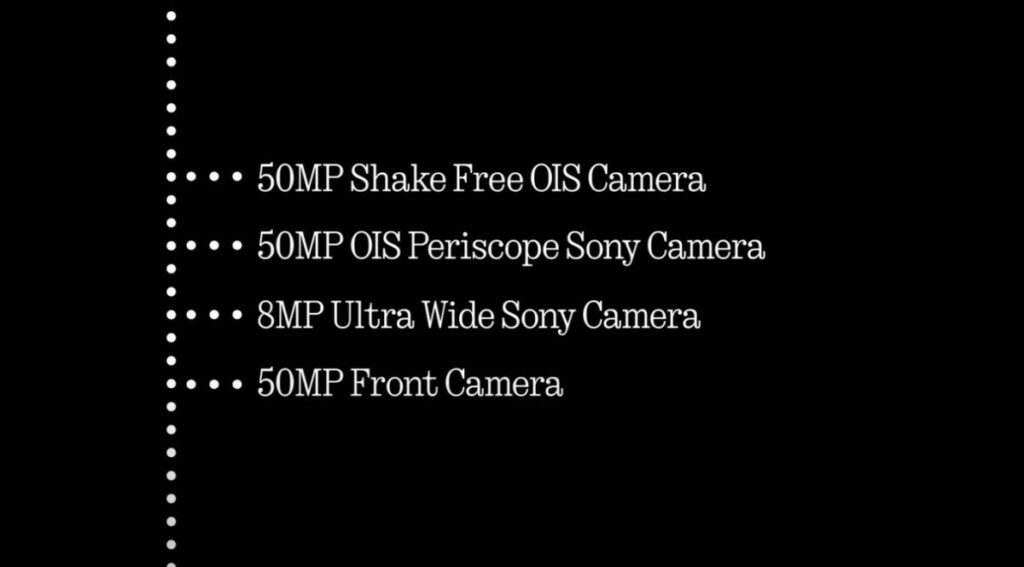
The phone’s camera system is designed for versatility and quality. Its triple rear camera setup includes a 50MP Sony IMX906 primary sensor with optical image stabilization (OIS), a 50MP periscope telephoto lens with 3x optical zoom, and an 8MP ultra-wide-angle lens with a 122-degree field of view. The 16MP front-facing camera ensures crisp selfies and smooth video calls.

Long-Lasting Battery with Super-Fast Charging

A massive 6500mAh battery powers the Realme GT 7 Pro, giving you all-day usage without worry. When you need to recharge, the 120W Supervooc charging technology gets you back to full power in no time.

Cutting-Edge Cooling and Audio

For gamers and heavy users, the Realme GT 7 Pro comes equipped with advanced 3D Tempered VC Cooling technology. The aerospace-grade cooling gel and graphene layers ensure the phone stays cool even during extended gaming sessions. Additionally, dual stereo speakers with Dolby Atmos support deliver an immersive audio experience.

Enhanced Features for Everyday Use

The Realme GT 7 Pro runs on Realme UI 6.0, based on Android 15, providing a clean and intuitive user experience. It also offers an under-display fingerprint sensor for quick and secure access. Storage options range from 256GB to 1TB, using UFS 4.0 technology for lightning-fast read and write speeds.

Key Specs:

  • Display: 6.78-inch Samsung Eco² OLED, 120Hz refresh rate
  • Processor: Qualcomm Snapdragon 8 Elite
  • RAM & Storage: Up to 16GB LPDDR5X RAM; 256GB/512GB/1TB UFS 4.0
  • Cameras: 50MP+50MP+8MP rear, 16MP front
  • Battery: 6500mAh, 120W Supervooc charging
  • OS: Realme UI 6.0 based on Android 15
  • Special Features: 3D Tempered VC Cooling, GT Mode 3.0, Dolby Atmos

The Realme GT 7 Pro strikes the perfect balance between premium features and affordability, making it an excellent choice for tech enthusiasts and gamers alike.

Does the ROG Phone 9 Series Live Up to the Hype for Hardcore Gamers?

The Asus ROG Phone 9 series marks yet another leap forward in the evolution of gaming smartphones, melding cutting-edge technology with a gamer-centric design to deliver a truly exceptional mobile gaming experience. From its robust hardware to its innovative cooling systems and unique auxiliary display features, every aspect of the ROG Phone 9 and ROG Phone 9 Pro has been crafted to meet the demands of serious gamers. Let’s dive deep to explore the features that make these smartphones special.

Asus Rog Phone 9 Series

1. Unmatched Display and Design

The ROG Phone 9 series boasts a 6.78-inch Full HD+ AMOLED HDR display with a variable refresh rate ranging from 1 to 120 Hz, peaking at 185 Hz via Game Genie for select games. This makes it one of the most versatile and high-refresh-rate displays on the market, suitable for both high-intensity gaming and daily tasks. The display also comes with a peak brightness of 2500 nits and coverage of 107.37% DCI-P3 color space ensuring vivid, true-to-life colors under any lighting condition.

Design-wise, the series includes an auxiliary display on the back called AniMe Vision, with the ROG Phone 9 Pro featuring 648 programmable mini-LEDs. This not only allows users to customize their phone’s aesthetic with unique animations but also interacts with gaming environments for an immersive experience. This year, Asus has enhanced this feature by doubling the number of LEDs and introducing retro games playable directly on the AniMe Vision display, blending nostalgia with modern technology.

2. Unparalleled Performance

At the heart of the ROG Phone 9 series is the Snapdragon 8 Elite chipset, a 3nm powerhouse offering 45% faster CPU performance, 40% improved GPU capabilities, and a significantly enhanced NPU for AI-driven tasks.

Paired with up to 24GB of LPDDR5X RAM and 1TB of UFS 4.0 storage on the Pro model, these phones deliver lightning-fast processing, making them ideal for gaming, multitasking, and heavy applications.

This performance boost isn’t just on paper. Asus has incorporated Qualcomm Seamless technology for seamless connectivity with Snapdragon-powered PCs, ensuring an integrated ecosystem for gamers and professionals alike.

3. Upgraded Cooling Technology

Thermal management is critical in gaming phones to maintain performance over extended sessions. The ROG Phone 9 series improves upon its predecessors by integrating a 57% larger graphite sheet and a redesigned AeroActive Cooler X Pro, which now includes a 12.5% larger fan and more thermal compound. This setup provides a 29% increase in cooling efficiency, ensuring the Snapdragon 8 Elite chip performs at peak efficiency without thermal throttling.

The series also includes the innovative ROG Phone Chill Case (optional), a pioneering accessory with an integrated liquid cooling system that utilizes Composite Vapor Chamber technology to lower phone temperatures by up to 17%. This ensures sustained peak performance during long gaming sessions. Made from PC and PMMC materials, it delivers thermal efficiency comparable to copper while preserving 5G and Wi-Fi connectivity.

4. Enhanced Audio Experience

Asus takes the audio experience seriously, especially for gaming where directional sound can provide a competitive edge. The ROG Phone 9 series features a dual-speaker system that leverages the in-box AeroCase or optional Chill Case’s new ‘Audio Redirection’ technology to channel sound from the bottom-firing speaker to the front, enhancing the stereo effect. Additionally, the AeroActive Cooler X Pro accessory includes a subwoofer, enhancing the audio with 2.1-channel sound, perfect for both gaming and media consumption.

The series also features Dirac Virtuo technology, Qualcomm aptX Lossless, and Hi-Res Audio certifications, which collectively deliver an immersive sound experience. Additionally, it includes a 3.5mm headphone jack, a feature often omitted in modern flagship smartphones.

5. Great Cameras

While primarily a gaming phone, the ROG Phone 9 series doesn’t compromise on photography. Both models feature a 50MP main camera with Sony’s LYTIA 700 sensor and a 6-axis Hybrid Gimbal Stabilizer offering ±5° correction for shake-free videos and crisp images. The 13MP ultra-wide camera adds versatility, while the Pro model includes a 32MP telephoto lens with 3x optical zoom and OIS for detailed shots.

Both phones also feature a 32MP front camera with an RGBW sensor that improves low-light performance, making it excellent for selfies. It is further enhanced with AI-powered capabilities such as AI Night Vision, AI Panning, and AI Portrait Video.

6. Battery Life and Charging

The ROG Phone 9 series features a 5800mAh dual-cell battery that provides extensive power for gaming, streaming, and daily activities. It comes with 65W HyperCharge technology for rapid wired charging and supports 15W for wireless, achieving a full charge in just 46 minutes. Asus ensures longevity, promising that the battery retains over 80% capacity after 1,000 cycles.

7. AI Features

The series leverages advanced AI technology to elevate the user experience across gaming, photography, and productivity. It features X Capture 2.0, which automatically records significant gaming moments, and it comes with AI Grabber 2.0, enhancing gameplay through text translation and tips gathering. It equips users with AI Noise Cancellation for clear communication and sports X Sense 3.0 for automated game management.

For photographers, it features AI Night Vision for superior low-light photography, comes with AI Object Sense to optimize image components, and equips the camera with AI Panning for capturing dynamic scenes. It also sports AI Portrait Video, adding cinematic quality to videos.

In terms of productivity, it features AI Transcript for real-time meeting transcriptions, comes with AI Call Translator for overcoming language barriers, and equips professionals with seamless tools like AI Semantic Search for efficient data retrieval. Additionally, it sports AI Wallpaper to personalize the device’s theme dynamically and Circle to Search for instant content access.

8. Console-Like Controls

The ROG Phone 9 enhances gaming experiences with its upgraded AirTrigger system, featuring controls like Dual Action, Gyroscope Aiming, and Press and Lift, offering unparalleled precision. It comes equipped with the AeroActive Cooler X Pro, which adds two physical shoulder buttons, transforming the phone into a handheld gaming console.

Additionally, it sports the ROG Tessen mobile controller (optional), providing an extra layer of control and making it a versatile choice for playing FPS, MOBA, and action-adventure games with ease and accuracy.

9. Conclusion

Asus ROG Phone 9 series sets a new benchmark in mobile gaming with its unparalleled performance, innovative cooling, and gamer-centric features. Whether you’re an avid gamer or a professional seeking top-tier specifications, the ROG Phone 9 and ROG Phone 9 Pro deliver on all fronts, making them a standout choice in 2024.

The ROG Phone 9 series faces strong competition from the Red Magic 10 Pro series. Are the Red Magic 10 Pro smartphones the best gaming devices on the market? Here’s a comparison to understand how the Asus ROG Phone 9 stands apart from the Red Magic 10 Pro.

Vivo X200S key specifications leak reveals Dimensity 9400 Plus, ultrasonic fingerprint sensor

In October, Vivo launched three models: the Vivo X200, Vivo X200 Pro, and Vivo X200 Pro Mini in China. All three phones feature the Dimensity 9400 chipset. The brand is expected to unveil the Vivo X200 Ultra equipped with the Snapdragon 8 Elite in the second quarter of 2025. A new development reveals that the brand also be working on the Vivo X200S series for the Chinese market.

Vivo X200S in works

Vivo X200S leak

In the above leak, tipster Digital Chat Station is seen talking about a forthcoming “S” branded phone powered by a Dimensity chip. The emoji used in the Weibo post makes it certain that DCS could be talking about the Vivo X200S. It may feature the Dimensity 9400 Plus chip, which could be nothing but an overclocked version of the recently announced Dimensity 9400.

Probably, the Vivo X200S will break cover after a gap of six months from the Vivo X200, which went official last month (October) in China. Therefore, it appears that the X200S may debut in April or May 2025. Probably, it may go official alongside the X200 Ultra, which is expected to debut in the same period. At present, there is no clarity on whether the brand plans to launch “S” versions of the Vivo X200 Pro Mini and X200 Pro.

Vivo X200S specifications (rumored)

Vivo X200S leak

According to the tipster, the Vivo X200S will feature a 1.5K resolution LTPS OLED large flat screen. This suggests hat the screen size could be larger than the 6.67-inch display available on the X200.

The X200S’ rear-facing triple camera setup may include a 50-megapixel primary camera and a periscope telephoto camera. The phone will also offer a high-capacity silicon battery, advanced dust and water resistance, and possibly an ultrasonic fingerprint sensor.

To sum up, as compared to the X200, the X200S will only feature a new chip and some minor enhancements. 

Vivo S20/S20 Pro design key specs official ahead of November 28 launch

Vivo has officially confirmed the design and key features of its upcoming S20 series, set to launch on November 28. Jia Jingdong, the vice president of the Vivo brand, revealed the details via a Weibo post, offering a sneak peek at the design and specs of the highly anticipated devices. The company official has given consumers an early look at what they can expect from the Vivo S20 and S20 Pro models.

vivo S20 series design: slick and refined

The Vivo S20 series brings a fresh, refined design compared to its predecessor, the Vivo S19 series. Both the standard S20 and the S20 Pro come with a flat back panel and a flat middle-frame design, maintaining the signature pill-shaped camera island. The ring light around the camera is now much larger, becoming a more prominent design element.

One of the standout features of the new S20 series is its “Eye-pleasing Eye Protection Screen,” a BOE Q10 display, designed to minimize eye strain for users. The display on both models reportedly measures 6.7″, and offers a 1.5K resolution for a sharp and immersive viewing experience.

According to Weibo tipster Digital Chat Station, the base S20 features a flat display, while the S20 Pro is expected to come with a micro-quad curved display for added visual appeal.

Impressive battery life and thin design

The Vivo S20 is also confirmed to impress with its massive 6,500mAh battery. Despite the large battery, the phone manages to maintain a slim profile at just 7.19mm in thickness and a lightweight design weighing only 180g. On the other hand, the S20 Pro, which features more advanced camera technology, is expected to pack a slightly smaller 5,800mAh battery and be 7.55mm thick, likely due to the space occupied by the 3x periscope camera module.

The official confirms Dimensity 9300+ for the S20 Pro, while according to previous rumors, the base model uses the Snapdragon 7 Gen 3 chip.

Vivo has already begun pre-reservations for the S20 series in China. Those who reserve the phones early have a chance to win a gift worth NT$278, with 2,500 lucky participants receiving prizes such as a 44W charger and a one-year extended warranty.

(Source)

Oppo Reno 13 Geekbench listing spotted, reveals same chip as Reno 13 Pro

On Nov. 25, Oppo will announce the Reno 13 and Reno 13 Pro smartphones in China. These devices will replace the Reno 12 and Reno 12 Pro, which came equipped with the Dimensity 8250 and the Dimensity 9200 Plus, respectively. Recently, the Reno 13 Pro was spotted with a Dimensity 8-series chipset in Geekbench’s database. Now, the standard model has also appeared on the same benchmarking platform to reveal its chipset.

Oppo Reno 13 Geekbench

The above screenshots show two upcoming Oppo phones with model numbers PKM110 and PKK110. These are the model numbers for the Chinese editions of the Reno 13 and Reno 13 Pro, respectively. A recent report revealed that their global editions have the model numbers CPH2689 and CPH2697, respectively.

The Reno 13 Pro appeared in Geekbench’s database in the previous week. The listing reveals that the Dimensity 8300 SoC powers the Reno 13 Pro. The same chipset also powers the Reno 13.

There have been reports that the Reno 13 series will feature the all-new Dimensity 8350 SoC. This new chip may have the same CPU and GPU as the D8300, along with some other tweaks. The Reno 13 and Reno 13 Pro have appeared with 12 GB and 16 GB of RAM on Geekbench. Both devices have appeared with the Android 15 OS.

Oppo has already confirmed that the Reno 13 and 13 Pro will be available in versions, such as 12GB+256GB, 12GB+512GB, 16GB+512GB, and 16GB+1TB. The standard model will also come in a 16GB+256GB edition. The Reno 13 duo will be sold in Midnight Black and Butterfly Purple colors. The standard and Pro will also come in distinguishing shades, such as Galaxy Blue and Starlight Pink, respectively.

Galaxy S25 Slim complete camera specs revealed: New 200MP sensor and Samsung’s ALoP lens tech for slimmer form factor

Samsung‘s Galaxy S25 series is already shaping up to be a highly anticipated release, and recent leaks suggest that a new “Slim” model could join the lineup. This model, expected to feature a unique camera configuration, aims to balance top-tier performance with a sleeker design.

Galaxy S25 Slim concept render

A previous report by the prominent leaker Ice Universe suggested that this new model would feature an “Ultra” camera, which was expected to include a 200MP main camera. However, the tipster didn’t share any further details about the camera system. A new leak from X user @Saaaanjjjuuu has now detailed all three sensors that the rumored Galaxy S25 Slim could feature.

Camera specifications of the Galaxy S25 Slim

The Galaxy S25 Slim is rumored to feature a 200MP primary camera, powered by Samsung’s yet-to-be-announced Isocell HP5 sensor. This sensor measures 1/1.56″, making it smaller than the 1/1.3″ Isocell HP2 sensor used in the Galaxy S24 Ultra. This compact size aligns with Samsung’s push for a slimmer design, as it reduces the camera module’s protrusion and potentially contributes to a thinner overall device profile.

Complementing the main sensor, the Slim model is expected to include two 1/2.76″ Isocell JN5 sensors, used for ultrawide and 3.5x telephoto purposes. The telephoto lens stands out with its higher resolution (50MP vs 10MP of the current 3x telephoto), and slightly longer zoom. With a 50MP resolution, this telephoto setup also promises sharper digital zoom capabilities, similar to what we have seen with the Galaxy S24 Ultra’s 50MP 5x telephoto lens and the Oppo Find X8 Pro’s 6x telephoto lens.

S25 Slim could debut Samsung’s ALoP lens technology

Samsung’s new ALoP (Advanced Lens on Plastic) technology reportedly plays a crucial role in the Slim model’s design. This innovation minimizes the thickness of the camera assembly without compromising on optical performance. Additionally, AI-powered enhancements are expected to improve clarity and detail, particularly in zoomed shots, building upon the capabilities introduced with the Galaxy S24 series.

The combination of a 200MP primary sensor, the 50MP 3.5x telephoto lens, and cutting-edge AI is likely to offer a substantial improvement over the Galaxy S24 and S24 Plus.

The Galaxy S25 series is rumored to debut in January 2025, with the Slim model possibly arriving later in the year.

(Source)

Why Microsoft’s New Windows 365 Link Could Replace Traditional PCs?

Microsoft has introduced the Windows 365 Link, its first-ever desktop PC designed exclusively to connect users to Windows in the cloud. Priced at $349, the device will go on sale in April 2025 and is targeted at enterprise customers.

Windows 365 Link with two monitors

1. Features

Windows-365-Link-front-side

The Windows 365 Link features a sleek and portable design, measuring just 120x120x30 mm and weighing under a pound. This compact form factor makes it ideal for hot-desking and shared workspaces. It comes with a fanless build for silent operation and an elegant puck-like chassis that can sit on a desk or mount behind a monitor. The device boots in seconds and wakes instantly from sleep.

It equips an Intel processor alongside 8GB of RAM and 64GB of onboard storage. While the storage is minimal, the device relies entirely on cloud computing, eliminating the need for local applications or data. It supports dual 4K monitors, making it a suitable choice for modern office setups requiring high-resolution displays.

Windows 365 Link back side

The device sports a versatile array of ports, including three USB-A 3.2 ports, one USB-C 3.2 port, an Ethernet jack, an audio jack, and both HDMI and DisplayPort for connecting to external displays. It supports Wi-Fi 6E and Bluetooth 5.3, ensuring fast and reliable wireless connections. This robust connectivity makes the Windows 365 Link adaptable for various office configurations and peripherals.

2. Cloud-First Functionality

The Windows 365 Link features a stripped-down operating system, optimized to stream Windows 11 from the cloud via the Windows 365 platform. It comes with automatic background updates, which install during off-hours to ensure minimal disruption. The system enforces strict security protocols, including application controls that cannot be disabled, providing businesses with a secure computing environment.

The device does not store user data locally, ensuring that all activities are tied directly to the cloud. It supports local processing for applications like Microsoft Teams and Webex, delivering high-fidelity video conferencing experiences.

Microsoft has announced that the Windows 365 Link will support advanced Copilot+ features, including Windows Recall, Click To Do, and AI in Search, through cloud updates in 2024. These features enhance productivity by integrating AI-powered tools directly into the Windows 11 experience.

The device is tailored for businesses, with easy management via Microsoft Intune. Organizations can remotely configure, update, or wipe devices, streamlining IT operations. It is particularly suited for hot-desking environments, allowing multiple users to access their personalized Cloud PCs on shared workstations.

3. Rethinking Desktop Computing

The Windows 365 Link shifts the paradigm of traditional desktop PCs by focusing on cloud integration over hardware power. It eliminates the need for high-end local hardware, instead offering a gateway to scalable, on-demand computing. This approach not only reduces maintenance costs but also emphasizes flexibility and cost-efficiency for enterprises.

Although designed for business use, the device hints at future possibilities for consumers. With refinements and consumer-oriented pricing, the Windows 365 Link could become an affordable, maintenance-free computing solution for students, home offices, and casual users.

4. Pricing and Availability

The Windows 365 Link will be available in select markets, including the US, Canada, UK, and Germany, starting in April 2025 for $349. However, this price excludes the required Windows 365 subscription, which enterprises must purchase separately. A preview program is already open for organizations looking to test the device.

If you have made it this far, then you can also read this article on the top 10 Xiaomi gadgets of 2024 that you shouldn’t miss.