Advertisement

Samsung reveals the reason why Exynos has struggled to compete with Qualcomm and Apple all these years

Samsung‘s chip development for its upcoming Galaxy S25 series is facing challenges, as new industry reports reveal that South Korea’s 52-hour workweek cap is limiting the company’s ability to meet key deadlines. According to a recent report, Samsung has encountered production setbacks in the development of the Exynos 2500.

Originally, Samsung planned to introduce its next-generation Exynos 2500 processor globally. However, the tech giant has opted to power the Galaxy S25 Ultra with Qualcomm’s Snapdragon 8 Elite worldwide, indicating that Exynos development hasn’t met the required performance standards for its 2025 flagship devices.

Samsung Exynos Chipset

The 52-hour workweek regulation, which includes a cap of 12 hours of overtime, has been pointed to by Samsung as a core constraint on its Exynos development team. With these limitations, Samsung engineers are reportedly forced to halt work even during critical development phases, resulting in unfinished tasks.

This cap has led some employees to work unpaid overtime to stay on top of demanding schedules, according to sources in The Chosun Daily. The publication also reported that Samsung’s management has discussed these restrictions with lawmakers in South Korea to seek a possible exemption, as they consider the effect on competitiveness.

But this workweek isn’t exclusive to South Korea!

Interestingly, similar workweek laws also exist in other tech manufacturing hubs. Taiwan’s TSMC, a leading Samsung competitor, adheres to a workweek limit of 48 hours (40 regular hours plus 36 hours of overtime monthly).

Critics also note that other South Korean companies, such as SK Hynix, remain competitive under similar restrictions, though Samsung’s scope extends beyond memory chips to custom semiconductor designs and client-specific foundry work.

In comparison, Companies like Qualcomm and Apple, based in the United States, face no legally mandated workweek caps. This could have allowed these companies to push for extended working hours when necessary, albeit with much larger development teams than Samsung’s.

What does it mean for the S25 series?

Unlike the Galaxy S25 Ultra, sources suggest that the Galaxy S25 and Galaxy S25+ models might adopt the Exynos 2500 or the Dimensity 9400 chip. This is because the cost of the Snapdragon 8 Elite is nearly $200, reportedly much higher than Samsung’s budget for the base and Plus models. That said, it would be interesting to see how the other two models perform as compared to the Ultra model.

(Source)

Redmi Turbo 4 will release after K80 series in December

Xiaomi has a packed schedule for the rest of this year and early next. While the Xiaomi 15 just launched last month, Xiaomi is gearing up to release the Redmi K80 and K80 Pro in November. Following that, December will see the release of another Redmi phone, the Turbo 4, according to a fresh new leak.

Words for it come from the tipster Smart Pikachu, who revealed that the  Turbo 4 will arrive with a 1.5K resolution display in December. Redmi introduced its first Turbo model, the Turbo 3, in April, so it seems the brand is sticking to its pattern of releasing two smartphones from this series each year.

What we know so far

In an exclusive leak from August, we revealed that the Redmi Turbo 4 carries the model number 2412DRT0AC, with the suffix “C” indicating its China variant. Globally, it will launch under the name Poco F7, which has the model numbers 2412DPC0AG for the global and 2412DPC0AI for the Indian variant.

Currently, details on the Turbo 4’s specs remain limited. Besides the 1.5K resolution display, rumors suggest it will have a plastic frame. As a rebranded model, the Poco F7 is expected to share these specifications.

Redmi Turbo 3

No information is available yet on the chipset powering the Redmi Turbo 4 / Poco F7. It’s uncertain if these devices will feature the Snapdragon 8s Gen 4, as the previous model used the Snapdragon 8s Gen 3.

A previous leak also suggests that the Turbo 4 will have a very large battery, though does not specify the exact size. The Turbo 3 has a 5,000mAh battery with 90W fast charging, so the Turbo 4 / F7 will likely include at least a 5,500mAh battery.

(Source)

iQOO Neo 10 design revealed via leaked schematic, 120W fast charging officially confirmed

While Vivo is prepping up the Vivo S20 series for the Chinese market, iQOO is gearing up to unveil the Neo 10 series of smartphones. Reliable leaker Digital Chat Station has been consistently spilling details about the next-generation Neo 10 models. A recent Weibo post by DCS has revealed the design of the Neo 10 series through a leaked schematic. Additionally, the iQOO Product Manager has confirmed the fast-charging capabilities of the entire series.

iQOO Neo 10 series design, fast charging capabilities

The leaked schematic reveals that the design of the upcoming iQOO Neo 10 series is quite similar to the Neo 9 series from last year, with minimal changes. It features a flat display with a smaller punch-hole for the front camera, narrower bezels, and uniform widths on the top, left, and right sides, making it one of the slimmest in the industry.

On the rear, the camera module has undergone a minor redesign, now featuring a more pronounced texture for a premium feel, enhancing the overall aesthetic while maintaining the familiar build of the Neo 9 series.

The other image in this post is the official poster that the iQOO Product Manager has released. It reveals that the entire series will support 120W rapid charging. The lineup is expected to include the Neo 10 and Neo 10 Pro, and possibly an entry-level third model.

The poster claims that the Neo 10 series is one of the thinnest and lightest performance-driven flagships. According to DCS’ leak, the Neo 10 series will weigh approximately the same as its predecessor. To recall, the Neo 9 series measures around 190 grams to 196 grams.

According to reports, the Snapdragon 8 Gen 3 and Dimensity 9400 chipsets power the iQOO Neo 10 and Neo 10 Pro, respectively. Both devices are also said to feature a 6.78-inch 1.5K 144Hz OLED screen and a 6,100mAh battery.

Nubia Z70 Ultra Display Specifications announced: Packed with Industry Firsts!

The Nubia Z70 Ultra will debut on November 21. Following the launch of the Red Magic 10 series, which comes with the new Snapdragon 8 Elite processor, the company has now revealed the Z70 Ultra’s impressive screen specifications. This new device is set to offer an immersive visual experience through a display that combines many industry firsts with a high screen-to-body ratio.

Stunning display features

The Z70 Ultra will feature a 6.85-inch screen with a groundbreaking 95.3% screen-to-body ratio, one of the highest ratios in the smartphone industry. For context, Samsung’s latest and best, the Galaxy S24 Ultra, offers a screen-to-body ratio of ~88.5%.

Complementing this large, nearly bezel-less screen is a refresh rate of 144Hz, ensuring smooth animations and transitions—ideal for both gaming and daily use. Additionally, the display boasts an ultra-high global peak brightness of 2000 nits, which will provide excellent visibility, even in direct sunlight. For context, the recently launched iQOO 13 reportedly achieves a global peak brightness of 1800 nits.

Other notable features include an industry-leading pixel density of 430 PPI for the small display in front of the under-display selfie camera for improved clarity in images. The front camera’s under-screen technology is further supported by Nubia’s proprietary AI transparent algorithm 7.0, which will help the camera maintain clarity while remaining hidden beneath the display.

The phone offers an impressively narrow black border of just 1.25mm, enhancing the immersive quality of the display.

New Nebula AIOS and enhanced camera capabilities

Apart from the display, Nubia has announced that the Z70 Ultra will be the first device to come with its Nebula AIOS. This AI-powered system includes unique features like AI voice ticket booking and AI-driven expression control for photos, as well as smart image search and one-sentence text and social media publishing—all designed to streamline user interaction and enhance productivity.

In terms of photography, Nubia promises cutting-edge imaging capabilities. The device will feature a 35mm main camera that aims to set new standards for mobile photography. Complementing the primary sensor is expected a 64MP 3.2x periscope telephoto lens that uses “advanced telephoto technology”. It should yield much improved than the Z60 Ultra. Sample images from the Z70 Ultra indicate a strong focus on capturing sharp, vibrant photos with rich detail.

Performance expectations with Snapdragon 8 Elite

The Z70 Ultra will be powered by Qualcomm’s Snapdragon 8 Elite chipset, a recent release that uses an all-big-cores architecture to enhance both performance and efficiency. Compared to the previous generation, the Snapdragon 8 Elite offers up to 45% more CPU performance and a 40% boost in GPU power, enabling smoother multitasking and gaming experiences.

The CPU is also designed to be 44% more power efficient, a feature that could provide extended battery life despite the power demands of a high-refresh-rate display and advanced AI features.

(Source)

Vivo S20 Pro specifications leak reveals four 50MP cameras, including periscope telephoto lens, Dimensity 9300+, more

Vivo is expected to unveil the Vivo S20 series of sub-flagship phones in China by the end of this month (November). Recently, Chinese certification platforms approved two new Vivo smartphones bearing model numbers V2429A and V2430A. Speculations suggest that these are nothing but the upcoming Vivo S20 and S20 Pro smartphones. Today, tipster Digital Chat Station released a Weibo post to leak the key specifications of the device. The leak reveals that the S20 Pro will be the company’s first S-series phone to feature a periscope telephoto camera.

Vivo S20 Pro specifications (rumored)

As can be seen, DCS has leaked the specifications of an upcoming Vivo phone, which is evident by the emoji that he used in the Weibo post. Likely, he has spilled the details of the S20 Pro. According to the leak, the device will feature a 6.7-inch OLED LTPS screen with a micro-quad-curved design. The screen will offer a 1.5K resolution of 2800 x 1260 pixels and possibly a 120Hz refresh rate.

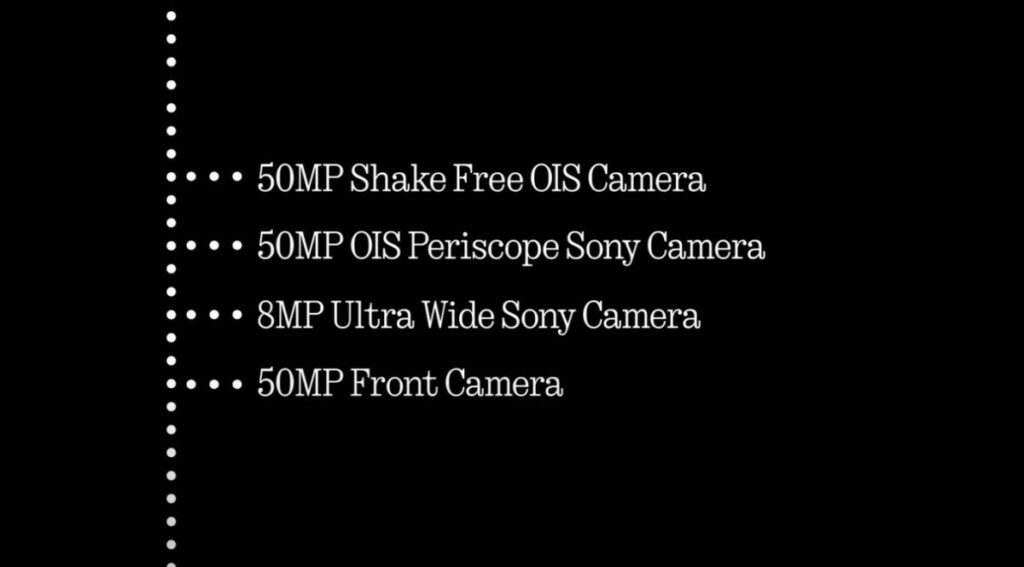
The Vivo S20 Pro will feature a 50-megapixel camera on its front. The back panel of the device will feature an OIS-50-megapixel Sony IMX921 primary camera, a 50-megapixel ultra-wide lens, and a 50-megapixel IMX882 periscope telephoto camera with 3x optical zoom.

Under the hood, the S20 Pro will feature the Dimensity 9300 Plusv chipset and a 5,500mAh battery with 90W fast charging support. An optical-type in-screen fingerprint sensor will also be a feature of the device. Like the S20, the S20 Pro is expected to sport a thin and lightweight design.

In comparison, the Vivo S20 is expected to feature the Snapdragon 7 Gen 3 chip, up to 16 GB of RAM, up to 1 TB of storage, and a 6,500mAh battery with 90W fast charging. It is likely to feature the same screen as the Pro model. For photography, it will have a 50-megapixel front camera and a 50-megapixel + 8-megapixel dual-camera system on the back. It will measure 7.19mm in thickness and weigh 185.5 grams.

ASUS ROG Phone 9 spotted on Wireless Power Consortium: Here’s what’s revealed

Asus is set to release the ROG Phone 9 globally on November 19, 2024. The ROG Phone 9, already featured on Geekbench ML, showcases the latest Qualcomm Snapdragon 8 Elite processor and 24GB RAM. Thanks to its appearance on the Wireless Power Consortium website, more details have now surfaced. Here’s a closer look at what the Asus ROG Phone 9 has in store for gaming enthusiasts.

Asus-ROG-Phone-9-Renders-2

Certified for Wireless Power

The listing on the Wireless Power Consortium’s database, showing the code number “AI2501,” highlights that the ROG Phone 9 has passed necessary safety standards, bringing it one step closer to launch.

According to the listing, the maximum load power is “15.0”, which suggests support for 15W wireless charging. Given that its predecessor, the ROG Phone 8, featured a 5,500mAh battery with 65W wired charging, we can expect similar specifications or minor enhancements.

Specifications to expect: design, display, camera, and performance

According to previous rumors, it receives a slight design refresh: Asus has replaced the RGB ROG logo with a light-up ROG text logo, setting the ROG Phone 9 apart visually from previous models. This device has also recently received SDPPI and TKDN certifications in Indonesia, which signals an imminent release in that region as well.

The ROG Phone 9 is expected to feature a 6.78-inch Samsung LTPO AMOLED display, capable of FHD+ resolution. Known for a high refresh rate, the display can adapt from 1 Hz to 120 Hz and reach up to 185 Hz in Game Genie mode for enhanced gaming. Additionally, it could hit a peak brightness of 2,500 nits, offering excellent visibility even in bright environments.

Camera-wise, the ROG Phone 9 will likely carry a 50 MP Sony Lyt-700 main sensor, a 13 MP ultra-wide camera, and a 5 MP macro lens. For enhanced visuals, the Pro version is rumored to replace the macro lens with a 32 MP telephoto sensor. The front camera is set to feature a 32 MP sensor, suitable for high-quality selfies and video calls.

For durability, the phone’s screen is expected to come with Corning Gorilla Glass Victus protection, ensuring higher resilience against scratches and impacts. While the waterproof certification hasn’t been confirmed, the ROG Phone 8’s IP68 rating suggests that the ROG Phone 9 may follow suit.

Powered by Qualcomm’s Snapdragon 8 Elite, the ROG Phone 9 promises significant efficiency and performance gains over the previous Snapdragon 8 Gen 3 chip. With an all-big-cores design, the Snapdragon 8 Elite offers a whopping 45% higher i=single and multi-core performance, paired with 30% higher GPU performance.

(Via)

Honor 300 Pro+ RAM, storage configurations, satellite connectivity support revealed

Later this month, Honor reportedly plans to unveil the Honor 300 series of smartphones in China. The 3C authority in China recently certified the various models belonging to the 300 lineup. All the models have been added to the country’s MIIT authority database in a new development. One of the models has been to be equipped with support for satellite connectivity. Simultaneously, tipster Digital Chat Station revealed some details about the Honor 300.

Honor 300 series MIIT certified

As can be seen above, the Honor 300 series variants, such as AMP-AN00, AMP-AN10, AMG-AN00, and AMM-AN10, have emerged in CMIIT’s database. Among these, the AMM-AN10 is equipped with support messaging via Beiduo satellite connectivity, a crucial function that enables emergency communication in areas without network coverage. This feature can be a lifesaver in critical situations. This suggests that it could be the Honor 300 Pro+, the topmost model in the series. The MIIT certification also reveals that the Honor 300 Pro+ will be available in two configurations: 12GB+256GB and 12GB+512GB.

A new Weibo post by tipster Digital Chat Station reveals the upcoming 300 series, featuring the groundbreaking ultrasonic under-display fingerprint sensor. Regrettably, the leaker did not disclose any additional details about the 300 series in the latest leak.

Honor 300 series specifications (rumored)

Reports have revealed that the Honor 300 will have a flat OLED panel, whereas the 300 Pro and 300 Pro+ may feature an OLED panel with a micro-quad-curved design. All three phones are expected to support 1.5K resolution and a 120Hz refresh rate. Although there is no information about their battery capacities, all three models are expected to support 100W wired charging. The Pro variants may also offer wireless charging support.

The Honor 300 might have the Snapdragon 7 Gen 3 chip, while the Pro models might have the more potent Snapdragon 8 Gen 3. The standard model might feature a single 50-megapixel front-facing camera, while the Pro versions might feature a 50-megapixel dual selfie camera setup.

There’s no information about the Honor 300’s rear camera setup. Both the Pro models are likely to feature a 50-megapixel triple camera setup. The Pro+ could have a periscope telephoto camera, while the Pro model’s setup might include a telephoto camera.

Xiaomi 15 Ultra’s internal design revealed in latest leak

The Xiaomi 15 Ultra is set to be Xiaomi‘s top camera smartphone for photography enthusiasts next year. It will feature a quad-camera setup, including a 50MP main sensor with a 23mm focal length and f/1.6 aperture, a 50MP ISOCELL JN5 sensor for ultrawide shots, a 50MP periscope lens with 3x zoom, and a robust 200MP sensor with 4.3x optical zoom and a 100mm focal length.

Earlier renders leaked last month revealed a prominent camera bulge to accommodate these lenses, but a new image circulating on Weibo now gives a clearer view of the impressive scale of these camera sensors within the Xiaomi 15 Ultra.

The long lens at the top of the camera module is the 200MP, 100mm periscope lens. Below it sits the secondary IMX858 telephoto sensor, while the main and ultrawide cameras are aligned to its left and right, respectively.

The phone also features a notably thick middle frame, along with a visible wireless charging coil, confirming its support for wireless charging.

Xiaomi 15 Ultra Specifications

The Xiaomi 15 Ultra is also rumored to feature a 6.7-inch, 120Hz LTPO OLED display with micro-curved edges. The display will also house an ultrasonic in-display fingerprint sensor for convenient and secure unlocking.

The 15 Ultra is said to come in three material finishes — plain leather, fiberglass, or ceramic, offering a variety of options to suit different preferences and styles.

Under the hood, the phone will likely use the latest Snapdragon 8 Elite chipset for powerful performance. It may also pack a 6,000mAh battery with support for 90W wired and 80W wireless charging. On the software side, it’s expected to run Xiaomi’s HyperOS 2.0, based on Android 15.

The Xiaomi 15 Ultra may debut in China in early 2025, with a global launch possibly following at Mobile World Congress (MWC) 2025.

(Source)

Here’s why Tecno Pop 9 5G is a unique budget smartphone

It has been 2 years since the rollout of 5G in India. But there are still no entry-level smartphones supporting the tech.

Thankfully, that’s about to change in the coming quarters. The first step is to bring down the price below ₹10,000, which has already happened about two months back.

For the uninitiated, we are talking about Tecno Pop 9 5G. This ₹9,499 smartphone has laid the foundation for affordable 5G handsets in India.

However, it will soon be overshadowed by the upcoming Redmi A4 5G, which might even cost less. Because Xiaomi is a larger company with more reach than Tecno.

But we cannot deny several unique factors of Tecno Pop 9 5G as an affordable 5G smartphone. Let’s discuss them in this article.

Tecno Pop 9 5G

1. One of the best chips in its segment

The Tecno Pop 9 5G comes powered by a MediaTek Dimensity 6300 SoC. This chipset is usually found inside sub ₹15,000 smartphones.

The Pop 9 is currently the only handset to house this silicon in its segment. The chips found in other similarly priced phones are mostly limited to 4G and less powerful.

Dimensity 6300 is good enough for years to come for a budget 5G smartphone. It has an octa-core CPU comprising 2 x ARM Cortex-A76 cores clocked at 2.4GHz and 4 x ARM Cortex-A55 cores at 2GHz. While the graphics are handled by ARM Mali-G57 MC2 GPU.

The storage is ample at 128GB on the higher variant of the phone, which costs just ₹500 more than the base 64GB variant.

2. The only phone in its segment to feature NFC

The Tecno Pop 9 5G has one feature that no other smartphone in its price segment offers. The feature in question is NFC.

Thanks to this wireless tech, users can make contactless payments through apps like GPay. It can be also used for transit cards in supported cities.

NFC is mostly limited to flagships and select mid-rangers in India. So this is a welcome change, and hopefully, more OEMs include it in their newer models with rising credit card adoption in the country.

3. Unique-looking phone in its segment

Most smartphones on the market now look the same. They have a circular camera module and a flat frame.

The Tecno Pop 9 5G is different in this regard, and therefore, it stands out. It has a squircle camera island and the sensors are aligned vertically with an LED flashlight to their right.

This camera deco is nearly identical to the one found on the Xiaomi Mi 11 series. Hence, the design is not new but it is smart of Tecno to use an older one to differentiate from others.

Additionally, the product ships with two skins to customize if needed. This is something you don’t get with any phone in any price category, at least from known brands.

4. A good package

Even without including the previously discussed factors, the Tecno Pop 9 5G is a good deal for under ₹10,000. But those features make it more appealing.

Talking about other stuff, it sports a 6.6-inch centered puch-hole HD+ 120Hz display (LCD). The screen is complemented by Dolby Atmos-supported dual stereo speakers.

There’s a 48MP rear camera and an 8MP front-facing shooter. The handset comes with a side-mounted fingerprint sensor for security and it is IP54-rated for splash resistance.

Finally, it houses a 5,000mAh battery and supports 18W charging.

Samsung Galaxy A36 camera specs revealed: could offer improved selfies

Soon after the Galaxy S25 series, Samsung is expected to release its next generation of mid-range devices, the Galaxy A36 and A56, likely within the first quarter of 2025. This follows the release pattern we saw earlier this year, when Samsung launched the Galaxy A35 and Galaxy A55 in March, shortly after the Galaxy S24 series debuted in mid-January. A recent report from GalaxyClub now reveals the first camera specifications for the Galaxy A36, hinting at improvements and changes that will interest Samsung fans.

Samsung-Galaxy-A36-design-render-3
Galaxy A36 render

Camera specifications of the Galaxy A36

The Galaxy A36 is expected to feature a 50-megapixel main rear camera, similar to what the current Galaxy A35 offers. However, the most notable upgrade is on the front of the device, where Samsung has reportedly equipped the Galaxy A36 with a 12-megapixel selfie camera, replacing the previous 13-megapixel one. While this might seem a slight downgrade, the source notes that the sensor could be a “clear improvement compared to the old 13 MP sensor that Samsung used for the previous A3x devices”.

Interestingly, Samsung appears to be differentiating between the A36 and the A56, as the 12-megapixel front camera on the A36 is not expected to be the same as the 12-megapixel sensor on the A56. This decision keeps a quality distinction between the two models, maintaining the A56 as the slightly more premium option in the Galaxy A lineup.

As for the macro and ultrawide cameras, specific details remain unknown. However, it’s expected that Samsung will keep these lenses consistent with last year’s model, which is a 5-megapixel macro and an 8-megapixel ultrawide camera. This incremental approach would align with Samsung’s pattern of upgrading one or two camera components each year.

Other expected features and design changes

In addition to camera specs, unofficial images of the Galaxy A36 have leaked, suggesting a possible design change. The A36 may feature a more defined camera island, instead of individual lenses protruding directly from the back, giving it a more cohesive look.

Furthermore, the Galaxy A36 has made several appearances on Geekbench, indicating it will be powered by a Qualcomm processor—likely the Snapdragon 6 Gen 3 or 7s Gen 2. The benchmarked models have shown 6 GB of RAM and are expected to run Android 15, bringing performance optimizations and the latest software experience. While pricing details are still unknown, it’s expected to be in the range of previous models, likely between €350 and €400, keeping it competitive within the mid-range market.

(Source)

Nothing OS 3.0 Open Beta 2 Now Available for Phone (2a) with new features & improvements

Nothing has released the second Nothing OS 3.0 open beta update for its Nothing Phone (2a). This update brings a host of new features and improvements, including shared widgets, enhanced quick settings, and optimized camera performance.

Nothing OS 3

Shared Widgets: A New Way to Connect

One of the most significant additions in this update is the shared widgets feature. This innovative feature allows users to share widgets with friends and family. Currently, only photo widgets can be shared, but Nothing is working on expanding this functionality to other widgets in the future. Here’s the complete changelog:

Nothing OS 3.0 Open Beta 2 Changelog

Shared Widgets

Use widgets to link up with friends and family. See another person’s widgets displayed on your home screen and interact with each other through reactions. A new way to stay connected.

Quick Settings improvements

Refined the animations in Quick Settings, including swipe animations, Bluetooth tile transitions, and tile resizing. Improved the user experience when interacting with the ring tile within the Quick Settings Widget.

Smart Drawer enhancements

Enhanced app categorization accuracy. New apps may take a short while to be properly categorized. Introduced auto-sort, allowing your apps and folders to organize themselves based on your usage habits.

Camera enhancements

Improved stability when switching camera modes. Upgraded HDR algorithm for better stability and enhanced photo quality. Optimized Portrait Mode. Enhanced brightness when using Ultra HDR Mode.

Visual and performance updates

AI-powered selection and prioritization of your frequently used apps, keeping them at your fingertips for a smoother and more efficient experience. PUBG now supports a high refresh rate of 90 fps for smoother gameplay. Added an onboarding guide for first-time Pop-up view users. Other general bug fixes and performance improvements.

How to Install the Update

To install the Nothing OS 3.0 Open Beta 2 update, make sure your Phone (2a) is running Nothing OS 3.0. If not, you can download and install the update manually. Once installed, navigate to Settings > System > System updates to check for the latest update.

(Source)

Comparing Xiaomi 15 Pro and Xiaomi 14 Pro: Which is better?

The Xiaomi 15 Pro is the newest, upgraded version of the Xiaomi 14 Pro, designed to improve performance, display quality, and camera capabilities even further. This comparison highlights the key enhancements in design, power, and features, providing insight into whether the Xiaomi 15 Pro’s advancements make it a worthwhile upgrade over its predecessor.

1. Design and Display

Xiaomi 15 and Xiaomi 14
Xiaomi 15 Pro

The Xiaomi 15 Pro and Xiaomi 14 Pro feature similar design dimensions and build quality, each with a 6.73-inch LTPO AMOLED display offering vibrant visuals with Dolby Vision and HDR10+ support. The Xiaomi 15 Pro has a slight edge in brightness with a peak of 3200 nits, while the Xiaomi 14 Pro maxes out at 3000 nits. Both maintain the same 1440 x 3200 resolution and 20:9 aspect ratio, ensuring sharp, detailed visuals. Notably, the Xiaomi 15 Pro offers shatterproof glass protection (2024 gen) for enhanced durability.

In terms of aesthetics, the Xiaomi 15 Pro leans slightly lighter than the Xiaomi 14 Pro, and both are IP68-rated for water and dust resistance, making them equally suitable for rugged environments. Given the added brightness and improved glass protection, the Xiaomi 15 Pro is the better choice for those seeking both resilience and superior outdoor readability.

2. Specifications

Xiaomi 15 and Xiaomi 14
Xiaomi 14 Pro

Powered by the newer Qualcomm Snapdragon 8 Elite (3 nm), the Xiaomi 15 Pro outperforms the Xiaomi 14 Pro’s Snapdragon 8 Gen 3 (4 nm) in processing power and efficiency. This upgrade provides faster multitasking and smoother gaming, making the Xiaomi 15 Pro ideal for power users. Storage options are identical, with choices ranging from 256GB to 1TB and up to 16GB of RAM, but the 15 Pro runs on HyperOS 2 based on Android 15, compared to the 14 Pro’s Android 14-based HyperOS, delivering a more refined software experience.

Battery-wise, the Xiaomi 15 Pro boasts a larger 6100mAh Si/C battery with 90W wired charging, whereas the 14 Pro offers a smaller 4880mAh battery with faster 120W charging. While the 14 Pro charges quicker, the 15 Pro’s bigger battery provides extended usage, making it the superior choice for users who prioritize longevity over charging speed.

3. Camera

Xiaomi 15 Pro
Xiaomi 15 Pro

Both models feature a triple 50 MP rear camera setup, but the Xiaomi 15 Pro takes a leap forward with a 5x periscope telephoto lens, compared to the 14 Pro’s 3.2x telephoto lens. This allows for greater zoom capabilities and clearer long-range shots. The primary 50 MP sensor on both models includes dual-pixel PDAF and OIS, ensuring excellent image stability and low-light performance. Additionally, both cameras are equipped with Leica lenses, dual-LED flash, and HDR capabilities, providing versatility for different lighting conditions.

In video, both devices support 8K recording and offer advanced features like 10-bit Dolby Vision HDR. However, the Xiaomi 15 Pro’s enhanced zoom and software tweaks make it a preferred choice for photography enthusiasts who want to capture distant subjects with clarity. Additionally, Xiaomi 15 Pro also has AI-enhanced editing features.

4. Pricing

The Xiaomi 15 Pro is priced around 690 EUR, slightly higher than the 650 EUR Xiaomi 14 Pro. This slight increase reflects the upgrades in processor, battery capacity, and camera capabilities. While both models offer excellent value, the 15 Pro’s improvements justify the price increase for those looking for peak performance and longevity.

In terms of value for money, the Xiaomi 14 Pro remains a solid choice for users who don’t require the latest enhancements. However, the Xiaomi 15 Pro provides extra features worth the investment for those prioritizing the latest in camera, performance, and battery life. Also, know the future maintenance and repair costs for Xiaomi 15 series.

5. Conclusion

Xiaomi 15 Pro introduces several standout features over the Xiaomi 14 Pro, including shatterproof glass protection, a larger battery, and a more powerful Snapdragon 8 Elite chipset. Another unique addition is both models’ two-way satellite communication capability, though Xiaomi 15 Pro’s updated HyperOS 2 provides a smoother, more advanced user experience.

With its superior display brightness, increased zoom capabilities, and enhanced battery life, the Xiaomi 15 Pro is a more versatile choice, offering meaningful upgrades for those who appreciate cutting-edge technology. The 15 Pro’s refinements make it the better option for users looking to future-proof their device with top-tier hardware and added durability.

G-SHOCK GM-S2110 Watch with Stainless Steel build arrives in the US

Casio has introduced the new G-SHOCK GMS2110-7A6 and GMS2110-7A9 to the American market. These watches combine G-Shock’s durability with a refined design and sustainable materials.

A Classic Design with a Modern Update

The GM-S2110 retains G-SHOCK’s signature octagonal shape but now includes a metal bezel made out of stainless steel for a more sophisticated look. The watch is available in two color options—a classic silver with a white band and a unique purple with a beige band.

Durable, Comfortable, and Sustainable

Built to be impact- and water-resistant, the GM-S2110 can handle daily wear and outdoor activities while its compact size ensures comfort across a range of wrist sizes. It’s a dependable option for anyone seeking a reliable and comfortable watch. The GM-S2110’s band is crafted from bio-based resin, a material derived from renewable sources, as part of Casio’s commitment to reducing its environmental impact.

Key Functional Features

Alongside its durability and style, the GM-S2110 includes useful features such as a stopwatch with 1/100-second measurements for up to 60 minutes and a 1-second. The stopwatch also has modes such as elapsed, split, and 1st-2nd place times.

Additional features include five daily alarms, an hourly time signal, and a Super Illuminator double LED light system with selectable illumination durations (1.5 or 3 seconds) and afterglow for both the face and digital display. Its LED light shines bright white, ensuring readability in low-light conditions. The full auto-calendar is pre-programmed through the year 2099. The watch measures 45.9 × 40.5 × 11 mm and weighs just 56 grams.

Pricing and Availability

The GM-S2110 series, with models GMS2110-7A6 and GMS2110-7A9, is now available in the U.S. for $180, in line with G-SHOCK’s standard pricing for rugged, feature-rich watches. It launched earlier in the EU, where it’s priced at €179.

In related news, Casio will release its Shiba Inu-inspired G-Shock watch collection in the U.S. this November, following a successful launch in Japan in September. The collection pays tribute to the iconic Shiba Inu breed, admired for its loyalty and distinct look.

(via)

Red Magic unveils two new power banks with up to 20000mAh battery & 165W fast charging

Red Magic introduced two new power banks at the Red Magic 10 Pro series event in China: the Dao Peak Power Stick and the compact Dao Peak Energy Cube. Both models offer key features aimed at enhancing portable charging solutions.

Specifications

The Dao Peak Power Stick sports a cyber-transparent aesthetic crafted with aviation-grade aluminum alloy for a durable yet modern look. It equips a small display screen, offering real-time information on charging status, and features dual-port blind insertion, making it easier to charge multiple devices without worrying about port orientation.

Redmagic Dao Peak Power Stick

This device comes with a 20000mAh automotive-grade cell with a 72Wh capacity, providing up to 1,500 charge cycles with high energy density and safety. It comes with a versatile 3-port design, equipping two Type-C ports that support PD3.1 dual-way 140W plug-and-play and one USB-A port, allowing high-power, flexible charging across devices.

The power bank supports 165W fast charging for compatible Red Magic models (10 Pro+, 8Pro+, 8SPro+, 9Pro+, and 9SPro+). It is also compatible with multiple fast-charging protocols, including PD3.0, and QC3.0, ensuring seamless compatibility across a variety of devices. Additionally, it comes with AI intelligent recognition to adjust the output for optimized charging based on the device.

In addition to the high-capacity power stick, Red Magic also introduced the Dao Peak Energy Cube which is a compact 65W charging solution with a versatile three-in-one design, functioning as a charger, power bank, and data cable. It also features a cyber-inspired transparent design.

Redmagic Dao Peak Energy Cube

The product features dual USB-C ports, a foldable plug, a 5000mAh battery, and a 19cm Type-C cable. Powered by GaN technology, it also supports an AI recognition system and various fast-charging protocols, including PD3.0, QC3.0, and PPS, ensuring quick and efficient charging across compatible devices. It retains over 80% battery capacity after 1,000 cycles, making it ideal for both travel and everyday use.

Pricing and Availability

The Red Magic Dao Peak Energy Cube is priced at 279 Yuan ($38) and is now available for pre-order, with shipping commencing on November 20. The Dao Peak Power Stick is priced at 999 Yuan ($138) and is scheduled for release in December.

If you’re from India and considering buying an iPhone, here are some reasons you might want to think twice.

iQOO 13 will pack a smaller battery in India

iQOO is bringing its recently launched iQOO 13 smartphone to India but with a slight twist. Slated for a December 3rd release, the Indian variant will pack the same powerful Snapdragon 8 Elite chipset found in the Chinese model, but with a slightly reduced battery capacity.  

This detail comes courtesy of iQOO’s Indian website, where the promo page for the iQOO 13 reveals a 6,000mAh battery for the Indian market. This is a minor downgrade compared to the 6,150mAh battery found in the Chinese version. The charging speed, however, will remain the same at 120W across both regions. 

Beyond the battery tweak, the Indian iQOO 13 will likely mirror its Chinese counterpart. 

Rest is the same

The phone boasts a large and immersive 6.82-inch 144Hz LTPO AMOLED display with a 1,440p resolution and 4500 nits brightness.

Alongside Snapdragon 8 Elite, you will get options of up to 16GB of RAM and a whopping 1TB of storage. And software-wise, the iQOO 13 will run on Android 15-based Funtouch OS 15 for the global version.

iQOO 13 Nardo Grey

Its rear camera system will include a 50MP main sensor (1/1.49″ Sony IMX921) with an f/1.88 aperture, OIS, and LED flash; a 50MP ultra-wide lens offering a 150° field of view with an f/2.0 aperture; and a 50MP telephoto lens with a 119.4° field of view, f/1.85 aperture, IMX816 sensor, and up to 4x lossless zoom with OIS. For selfies, it sports a 32MP front camera with an f/2.45 aperture. 

Durability is addressed with an IP69 rating while color options for the Indian market will be limited to Legend and Nardo Grey. The device also features an in-display ultrasonic fingerprint sensor, 5G connectivity, Wi-Fi 6E, Bluetooth 5.3, GPS, NFC, and USB Type-C.

Why the iPhone 15 Is Still Worth Buying Despite the iPhone 16 Launch

Apple’s latest flagship, the iPhone 16, has already hit the global market. The new premium iPhone brings new features and performance upgrades along with changes in design. The overall package was better than the upgrades the iPhone 15 offered over the iPhone 14. However, this doesn’t mean that last year’s model is obsolete. The iPhone 15 still seems like a great deal right now. So read on to find out why.

Apple iPhone 15
Apple iPhone 15

1. Price Drops

One of the biggest advantages of buying an iPhone 15 right now is the more accessible price. Every year, Cupertino based giant slash the prices of its last gen base iPhone after the announcement of the newer models. This is an official price drop, while retailers typically offer the iPhone with even more attractive discounts during the festive sales. So despite being a premium device, the iPhone 15 offers a better value for money.

To recall, the iPhone 15 debuted with the same price tag as the iPhone 16 on launch, which is 799 US Dollars. But it is officially listed for just 699 US Dollars. So buyers are getting a flat 100 US Dollar price drop, along with multiple discounts during sales events. This makes it accessible in markets like India as well.

2. Comparable Performance and Features

While the iPhone 16 does come with some new features, the upgrades don’t justify a higher price for most users. Both the iPhone 16 and iPhone 15 also share plenty of specifications as well. This includes the same 6.1-inch Super Retina XDR display, the 48MP + 12MP rear cameras, and Dynamic Island.

The only major changes include a dedicated physical camera button, Apple’s A18 Bionic chipset, and a slightly bigger battery pack. There are also changes in design, but the iPhone 16 isn’t a massive improvement so you’re not really missing out on much here.

3. Strong Software Support & Proven Design

Buying newer smartphones typically means that they will receive software support for longer. This is true here as well, but Apple has a great reputation for long term support on their iPhones. In other words, investing in 2023’s iPhone 15 guarantees iOS updates for many years to come.

The iPhone 15 also carries Apple’s refined design philosophy. It has already gone through the initial release phase, which means most of its software bugs have been ironed out. Even hardware issues have been addressed and any other problems with the iPhone 15 have been well documented. Back in October 2024, we covered reports of the iPhone 16 series facing severe battery drain, which was eventually fixed. But these kinds of issues aren’t uncommon.

Philips Introduces ProPix Projectors: High Brightness and Quiet Operation for Businesses and Schools

Philips, in collaboration with Screeneo Innovation SA, is introducing its new ProPix series of projectors. The ProPix 850 and 650 models offer excellent brightness, low noise levels, and easy setup, making them a practical solution for those seeking professional-grade projection at a reasonable price.

Philips ProPix 850

UHP Lamp Technology for Modern Workspaces

The ProPix projectors feature Philips’ Ultra High Performance (UHP) lamp technology, an innovation that has been in use since 1994. UHP technology is known for its durability and efficiency, helping the ProPix projectors deliver clear, vibrant visuals while maintaining compact designs and preventing overheating.

Designed for Different Environments

The ProPix 650 features a WXGA (1280×800 px) resolution with a 2,000:1 contrast ratio, while the ProPix 850 offers a 1080p (1920×1080 px) resolution and a 1,600:1 contrast ratio. Both models are built to deliver bright and clear visuals across different lighting conditions, boasting 4000 ANSI lumens to perform well in both dark and well-lit spaces. Additionally, the ProPix projectors are designed for quiet operation, with an Eco Mode noise level of 29 dBA, making them some of the quietest in their category.

Flexible and Easy to Set Up

These projectors provide flexible installation options, featuring a 1.49:1 throw ratio and manual focus, making it easy to adjust for different room sizes and screen needs.

Connectivity for Modern Devices

The ProPix projectors offer a range of connectivity options, including HDMI, VGA, RS232, and USB ports, ensuring compatibility with a variety of devices. This makes it easy to connect laptops, tablets, and other media sources without any hassle.

Long Lamp Life and Support

The UHP lamp in the ProPix projectors can last up to 10,000 hours in Eco Mode, which reduces the need for frequent replacements and lowers long-term maintenance costs. Both models come with a two-year warranty and access to Philips’ professional support.

Pricing and Availability

The ProPix 850 will be available in December 2024 for £599, while the ProPix 650 will follow in January 2025, priced at £449.

(via)

Red Magic 10 Pro and 10 Pro+ launched with Snapdragon 8 Elite, 144Hz OLED display, 7050mAh battery & more

As expected, Red Magic has officially unveiled its new flagship gaming smartphones, the Red Magic 10 Pro and 10 Pro+ in the Chinese market. Let’s check out the specs of these devices.

RedMagic 10 Pro Plus

1. Red Magic 10 Pro Series Specifications

RedMagic-10-Pro-Plus

The Red Magic 10 Pro series features a 6.85-inch 1.5K OLED Wukong display co-developed with BOE, providing a 2688×1216 resolution, and a 95.3% screen-to-body ratio on a hole-free, full-screen design.

It supports up to 144Hz refresh rate and a touch sampling rate of 960Hz for smooth gameplay. The display reaches a peak brightness of 2000 nits, covers 100% DCI-P3 color gamut, and offers 10-bit color depth. Additionally, it includes DC dimming and 2592Hz PWM dimming for eye comfort.

Under the hood, the Red Magic 10 Pro and 10 Pro+ are powered by the latest Snapdragon 8 Elite SoC. This octa-core processor is combined with the Adreno 830 GPU, LPDDR5X Ultra RAM, and UFS 4.0 Pro storage which delivers top-of-the-line performance. To further optimize performance, Red Magic has developed the Red Core R3 gaming chip, which supports 2K + 120FPS super-resolution and super-frame concurrency, compatible with over 200 games.

The Red Magic 10 Pro series runs on Red Magic’s AI OS 10.0, based on Android 15. The software is tailored for gaming, offering features that enhance responsiveness and reduce input lag, optimizing the gaming experience.

The camera setup includes a 50MP OmniVision OV50E40 primary sensor with an f/1.88 aperture and OIS, along with a 50MP ultra-wide lens with a 120-degree field of view, and a 2MP macro sensor for close-up shots. On the front, it comes with a 16MP under-display OmniVision camera which promises better selfies and video quality through AI under-screen camera technology.

In terms of power, the 10 Pro+ features a 7050mAh Bull Demon King silicon-carbon battery, supporting 120W fast charging, allowing it to reach 50% in just 11 minutes and a full charge in 30 minutes. The standard 10 Pro model comes with a slightly smaller 6500mAh battery and 80W fast charging.

The device features high-performance additions like 520Hz gaming shoulder keys, X-axis linear motors, DTS ULTRA stereo speakers, and NFC for access cards and smart car keys. It retains a 3.5mm audio jack, a rare inclusion in flagships.

The Red Magic 10 Pro series optimizes gaming performance with composite liquid metal cooling offering 80W/mK thermal conductivity and a new ‘Hot Wheels’ centrifugal fan, boosting cooling efficiency by 13x. It includes a 12,000mm² 3D ice-step VC area, complemented by graphene, high-conductivity copper foil, and aerospace-grade materials for consistent high-performance gaming.

2. Pricing & Availability

The Red Magic 10 Pro and 10 Pro+ come in multiple colors along with a special edition.

Red Magic 10 Pro

Dark Knight, Day Warrior

  • 12GB + 256GB: 4,999 yuan ($693)
  • 12GB + 512GB: 5,499 yuan ($762)

Deuterium Front Transparent Dark Night, Deuterium Front Transparent Silver Wing

  • 12GB + 256GB: 5,299 yuan ($735)
  • 12GB + 512GB: 5,799 yuan ($804)

Red Magic 10 Pro+

Dark Knight, Day Warrior

  • 16GB + 512GB: 5,999 yuan ($832)

Deuterium Front Transparent Dark Night, Deuterium Front Transparent Silver Wing

  • 16GB + 512GB: 6,299 yuan ($873)

Dark Knight

  • 24GB + 1TB: 7,499 yuan ($1,040)

Red Magic also launched the X Golden Saga Limited Edition, priced at 9,699 yuan ($1,315) for the 24GB + 1TB version, featuring industry-first innovations like a gold VC cooling chamber, gold & silver air duct, and carbon fiber cooling. It includes a sapphire glass back, gold-plated details, and exclusive brand privileges.

Both models are available for order in China starting today, with an official release on November 18. The international release is expected in December.

If you’re thinking about buying a new flagship smartphone, check out this article to find the best times to make your purchase.

Xiaomi HyperOS 2 update: Eligible devices and rollout timeline

HyperOS 2 eligible devices and rollout timeline

HyperOS 2 is a big step forward, bringing an array of powerful new features and enhancements for a great software experience. It brings three key innovations: HyperCore, HyperConnect, and HyperAI, along with a bunch of AI and non-AI features, such as an AI-powered lock screen, a new desktop layout, a 3D real-time weather system, dynamic effects across screens, and more.

The latest HyperOS software has plenty to offer, leaving Xioami users eager to experience it. However, not every Xiaomi device is in luck. The HyperOS 2 update will roll out to select Xiaomi, Redmi, and Poco devices which we’ve outlined below, along with the official release timeline.

Xiaomi HyperOS 2 eligible devices

These devices are officially confirmed to receive HyperOS 2 update:

[Xiaomi]

  • Xiaomi 14
  • Xiaomi 14 Ultra
  • Xiaomi 14T
  • Xiaomi 13
  • Xiaomi 13 Pro
  • Xiaomi 13 Ultra
  • Xiaomi 13 Lite
  • Xiaomi 13T
  • Xiaomi 13T Pro
  • Xiaomi 12
  • Xiaomi 12 Pro
  • Xiaomi 12T
  • Xiaomi 12T Pro
  • Xiaomi Mi 11
  • Xiaomi Mi 11 Ultra
  • Xiaomi 11 Lite 5G NE
  • Xiaomi MIX Flip
  • Xiaomi Pad 6
  • Xiaomi Pad 6S Pro 12.4
  • Xiaomi Smart Band 9 Pro

[Redmi]

  • Redmi Note 13
  • Redmi Note 13 5G
  • Redmi Note 13 Pro
  • Redmi Note 13 Pro 5G
  • Redmi Note 13 Pro+ 5G
  • Redmi Note 12
  • Redmi Note 12 5G
  • Redmi Note 12S
  • Redmi Note 12 Pro 5G
  • Redmi Note 12 Pro+ 5G
  • Redmi K50i
  • Redmi 13
  • Redmi 13C
  • Redmi 13C 5G
  • Redmi 12
  • Redmi 12 5G
  • Redmi Pad Pro
  • Redmi Pad Pro 5G
  • Redmi Pad SE
  • Redmi Pad SE 8.7 4G
  • Redmi Pad SE 8.7

[Poco]

  • Poco F6
  • Poco F6 Pro
  • Poco F5
  • Poco F5 Pro
  • Poco X6
  • Poco X6 Pro
  • Poco X5 Pro 5G
  • Poco X4 GT
  • Poco F4 GT
  • Poco M6
  • Poco M6 Pro
  • Poco C75
  • Poco C65
  • Poco Pad

Also Read: Top 5 features of HyperOS 2 you should know

Xiaomi’s HyperOS 2 rollout plan

Xiaomi will rollout HyperOS 2 update to the eligible devices in batches. These are the first set of devices that will start to get the update in November 2024:

  • Xiaomi MIX Flip
  • Xiaomi 14T Pro
  • Xiaomi 14T
  • Xiaomi 14 Ultra
  • Xiaomi 14
  • Xiaomi 13T Pro
  • Xiaomi Pad 6S Pro 12.4
  • Xiaomi Smart Band 9 Pro
  • Redmi Note 13 Pro+ 5G
  • Redmi Note 13 Pro 5G
  • Redmi Note 13 Pro
  • Redmi Note 13 5G
  • Redmi Note 13
  • Poco F6 Pro
  • Poco X6 Pro
  • Poco X6
  • Poco M6 Pro

Xiaomi promises to release HyperOS 2 update for these devices starting December 2024:

  • Xiaomi 13 Ultra
  • Xiaomi 13 Pro
  • Xiaomi 13
  • Xiaomi 13T
  • Xiaomi 13 Lite
  • Xiaomi 12T Pro
  • Xiaomi 12T
  • Xiaomi 12 Pro
  • Xiaomi 12
  • Xiaomi Mi 11 Ultra
  • Xiaomi Mi 11
  • Xiaomi 11 Lite 5G NE
  • Xiaomi Pad 6
  • Redmi K50i
  • Redmi 13
  • Redmi 13C
  • Redmi 13C 5G
  • Redmi Note 12 Pro+ 5G
  • Redmi Note 12 Pro 5G
  • Redmi Note 12
  • Redmi Note 12 5G
  • Redmi Note 12S
  • Redmi 12 5G
  • Redmi 12
  • Redmi Pad Pro 5G
  • Redmi Pad Pro
  • Redmi Pad SE 8.7 4G
  • Redmi Pad SE 8.7
  • Redmi Pad SE
  • Poco F6
  • Poco M6
  • Poco F5 Pro
  • Poco C75
  • Poco C65
  • Poco X5 Pro 5G
  • Poco F5
  • Poco X4 GT
  • Poco F4 GT
  • Poco Pad

Which Xiaomi device do you have? And what are your expectations for HyperOS 2? Share your thoughts in the comments below.

Thinking of Buying an iPhone in India? Here’s Why You Should Reconsider

Apple’s iPhones are one of the most popular smartphone series across the globe. These models are known for their hefty price tags, premium design, capable cameras, and much more. But if you’re thinking of buying an iPhone in India, you might want to think twice. Here’s every reason that you might want to consider an iPhone purchase.

iPhone 16 series camera control button-
iPhone 16 series

1. The Apple Tax in India: High Pricing

Apple is perhaps infamous for exorbitant pricing for some of its products. While the iPhone isn’t the only expensive premium phone in the market, it still carries a hefty price tag. In the US, the base iPhone 16 was announced for a starting price tag of 799 US Dollars. This is around 150 US Dollars cheaper than its Indian launch price. In India, the same configuration sells for Rs 79,900 INR.

This is largely due to import duties, taxes, and Apple’s own pricing strategy. So it already becomes less attractive to Indian buyers who traditionally look for value in expensive purchases and flagship Android devices can offer better or similar specs for a lower price tag.

2. Expensive Repairs and Lack of AppleCare+

The costly purchase is also followed by an equally expensive repair bill. Fixing your iPhone in India is notorious for being expensive. Apple’s authorized centers often charge a premium for out of warranty repairs, making it costly for even minor issues. Furthermore, AppleCare+ in the region isn’t as widespread or affordable as it is in other regions. For those unaware, it is basically a service that lets you extend a warranty and get accidental damage protection. So iPhone owners have to be extra careful to avoid these hefty charges.

3. Restricted Features and Services

One aspect which is a little more frustrating than the pricing is the lack of certain iPhone features and services in India. A great example of this is Apple Pay, which is a popular mobile payment service in the US. It is still not fully supported in India. My colleague Sudarshan (who owns an iPhone 15) put this point across well in his tweet saying “Lockdown of NFC is a crime in regions where Apple Pay doesn’t exist. What’s the point of paying for the hardware when you can’t use it?”

With contactless payments, UPI, and digital wallets like Google Pay becoming more widely adopted, it is a shame that Apple Pay integration is still sorely lacking. He also stated that the iPhone makes more sense if you’re planning on entering the Apple ecosystem. Once again, you’ll find yourself spending more to buy stuff like MacBooks or Apple Watches for this complete experience.

4. Better Alternatives from Android

The Indian smartphone market is absolutely dominated by Android devices. Unlike Apple’s iPhones, these Android smartphones are available in multiple price segments, making them more accessible. Brands like Samsung, Xiaomi, OnePlus, and others are great examples of this as they provide both flagship and budget smartphones.

For a similar price point, one can easily find Android phones with a faster charging rate, higher resolution displays, more customization, and even better cameras. iPhone does offer a polished user experience and strong software support, but Android are better value for money for budget-conscious Indian consumers. The iPhone 16 and iPhone 16 Plus still have a 60Hz refresh rate is inexcusable and Apple’s iPhones are generations behind in terms of charging.