Advertisement

Vivo iQOO 13: Ultra-Fast Charging and Pro-Level Display for Power Users

Vivo iQOO 13 is designed to deliver high performance for everyday tasks, gaming, and productivity. Powered by Qualcomm’s latest Snapdragon 8 Elite processor and Vivo’s self-developed Q2 gaming chip, the iQOO 13 packs advanced features, cutting-edge technology, and an attractive design.

Stunning Display for a Captivating Viewing Experience

The iQOO 13 features a large 6.82-inch 8T LTPO flat display, developed using BOE’s advanced Q10 luminous material. With an impressive 3168×1440 resolution, it supports a smooth 144Hz refresh rate and a rapid 300Hz touch sampling rate, perfect for gaming and fast-paced activities. The screen also boasts a peak brightness of up to 4500 nits, making it easy to view in bright sunlight. For smoother visuals, it incorporates 2592Hz PWM dimming, ensuring comfort even during extended usage.

Power-Packed Performance with Snapdragon 8 Elite and Vivo’s Q2 Chip

At the heart of the iQOO 13 is the Qualcomm Snapdragon 8 Elite processor, a 4nm chipset with a powerful octa-core CPU clocking up to 4.32GHz. Paired with up to 16GB of LPDDR5X Ultra RAM, the iQOO 13 can handle demanding tasks and multitasking with ease. The Vivo Q2 gaming chip, specially designed for gaming enthusiasts, ensures smooth performance and enhances in-game experiences by managing graphics and performance seamlessly.

Massive Storage and Robust Battery Life

Storage won’t be an issue with the iQOO 13, offering up to 1TB of UFS 4.1 storage for all your apps, photos, and files. The phone’s large 6150mAh battery supports 120W FlashCharge technology, which can charge the device from empty to full in just 19 minutes. This ultra-fast charging is perfect for users who are constantly on the go.

Camera System for Stunning Photos and Videos

The iQOO 13 comes equipped with a triple rear camera system that includes three 50MP lenses. The primary 50MP sensor with optical image stabilization (OIS) ensures clear shots even in low light, while the 50MP ultra-wide-angle lens captures a broader field of view. There’s also a 50MP telephoto portrait lens with f/1.85 aperture for detailed close-ups. On the front, a 32MP camera ensures sharp selfies and video calls.

Advanced Security with Ultrasonic Fingerprint Sensor

For security, the iQOO 13 uses an ultrasonic 3D wide-area fingerprint sensor, which unlocks the device in just 0.2 seconds. It provides an extra layer of protection and quick access, requiring only one entry to set up.

Connectivity and Gaming Features

Supporting 5G and WiFi 7, the latest wireless standards, iQOO 13 provides fast connectivity. It also includes dual-frequency GPS, an IR blaster, HPUE, and 4×4 MIMO, ensuring a strong connection wherever you are. Gamers will enjoy the dual X-axis motors, upgraded 4D vibration, and dual pressure-sensitive buttons that enhance control for a more immersive experience.

Operating System and Software

Running on Android 15 with Vivo’s custom OriginOS 5.0, the iQOO 13 delivers a clean and user-friendly experience. OriginOS 5.0 introduces full-screen gestures for seamless navigation, enhancing the phone’s overall functionality and productivity.

Key Specs:

  • Processor: Qualcomm Snapdragon 8 Elite, Vivo Q2 gaming chip
  • RAM: 12GB/16GB LPDDR5X
  • Storage: 256GB/512GB/1TB UFS 4.1
  • Display: 6.82-inch LTPO, 3168×1440 resolution, 144Hz refresh rate, 4500 nits peak brightness
  • Rear Cameras: 50MP (primary) + 50MP (ultra-wide) + 50MP (telephoto)
  • Front Camera: 32MP
  • Battery: 6150mAh, 120W FlashCharge
  • Security: Ultrasonic 3D wide-area fingerprint sensor
  • Connectivity: 5G, WiFi 7, NFC, IR blaster, dual-frequency GPS

Price and Availability

Vivo iQOO 13 is available at $699.00, providing excellent value for a high-performance smartphone with premium features. It can be purchased through Giztop, making it accessible to customers worldwide.

Get the Best 2024 Black Friday Deals on LONGER Laser Engravers

This holiday season, creative professionals, hobbyists, and small businesses have an exciting opportunity to upgrade their tools with LONGER’s exclusive Black Friday and Cyber Monday deals. From the beginner-friendly RAY5 20W to the powerful Laser B1 40W, LONGER’s top-quality laser engravers offer unmatched discounts for a limited time. Read on to discover the best deals, model highlights, and how you can win a FREE RAY5 10W laser engraver.

Unbeatable Savings: Up to 64% Off + Special Offers

With savings reaching up to 64%, LONGER’s 2024 Black Friday sale offers one of the best opportunities to acquire high-performance laser engraving and cutting equipment at unbeatable prices.

  • Discounts up to $1560 on select laser engravers.
  • The option to add a 500×500 honeycomb panel for only $0.01 with a purchase of the B1 30W Basic model.
  • 30% off all accessories, perfect for enhancing existing projects or exploring new creative avenues.

Additionally, every order placed on Black Friday will enter a raffle to win a FREE LONGER RAY5 10W laser engraver. This exciting opportunity means you can expand your toolset simply by participating in the event!

Featured Models and Best Deals

LONGER Laser B1 30W & 40W

The LONGER Laser B1 series, available in 30W and 40W versions, is ideal for creators and small businesses tackling larger projects. This model stands out for its high speed and capability to handle tough materials like plywood and metal, making it perfect for scaling up business ventures. Shoppers can save up to $1560 on the 40W and up to $1160 on the 30W model, making it the best choice for professional-grade engraving and cutting needs.

LONGER RAY5 20W – Perfect for Beginners

The LONGER RAY5 20W laser engraver is designed for beginners and hobbyists looking to enter laser engraving. With discounts up to $980, the RAY5 starts at just $449.99, offering great value for those who want to explore intricate designs on wood, leather, and acrylic. This model combines accessibility with quality performance, making it a popular choice for new creators.

LONGER Nano Pro 12W – Precision and Versatility

For professionals requiring precision, the LONGER Nano Pro 12W is a compact and portable engraver with powerful capabilities. This model is ideal for detailed work on ceramics, glass, and other fine materials. Starting at $699.99 and offering up to 52% off, the Nano Pro 12W is a versatile tool for anyone prioritizing precision in their creative projects.

Limited-Time Offers – Don’t Miss Out!

LONGER’s 2024 Black Friday deals offer an exceptional chance to elevate your creative projects or business capabilities with top-tier laser engraving technology. With massive savings, exclusive deals on accessories, and a chance to win a free engraver, this sale is an opportunity too good to pass up. Visit Longer3d.com to browse the full range of offers and secure your laser engraver before the deals expire.

Limited-edition G-SHOCK Carbon-Metal Watch launched with “Storm Chaser” Aesthetic

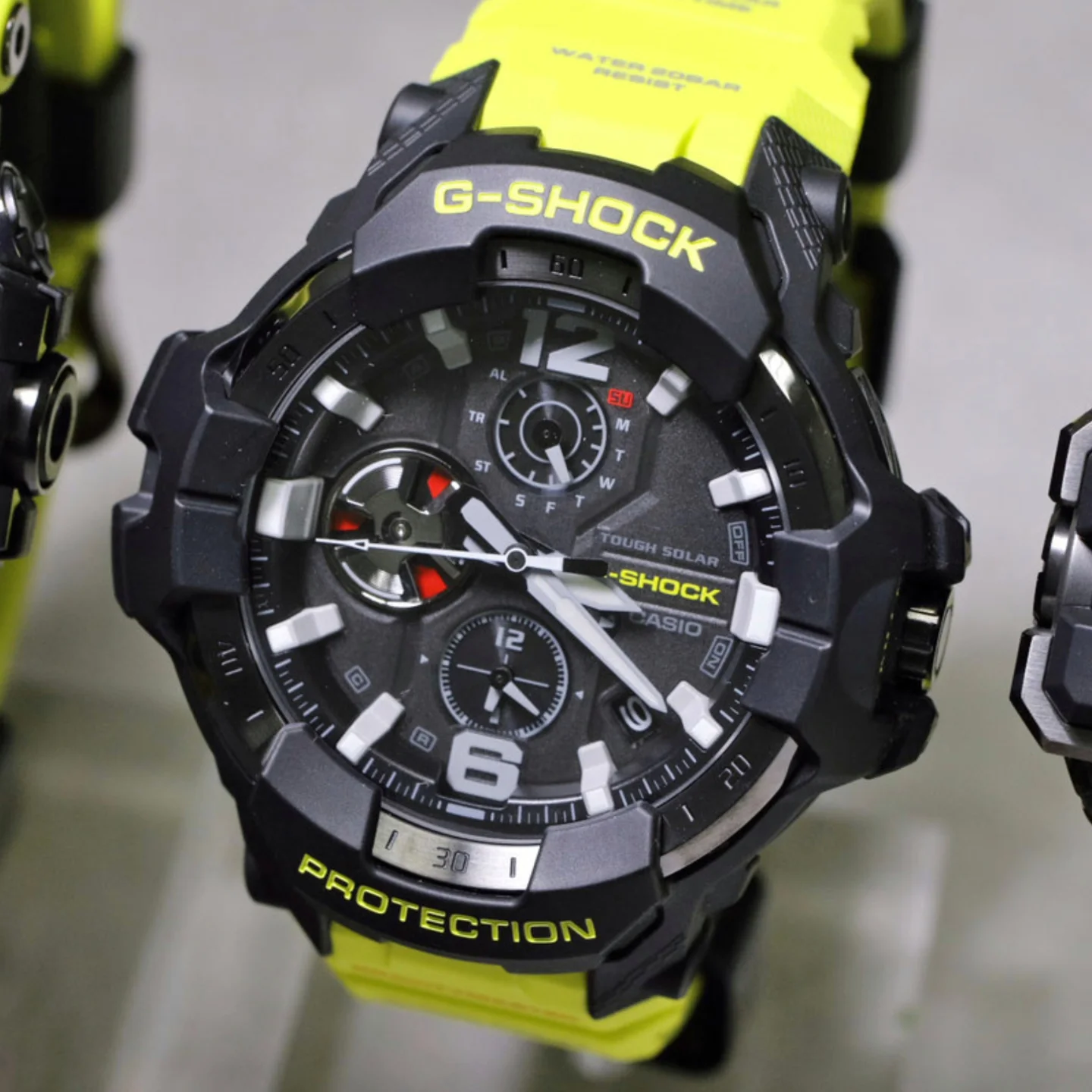
Casio has added the limited-edition MTG-B2000YST-1AER to its G-SHOCK lineup, expanding the MT-G series with a watch that balances durability and style. Built with carbon and metal, this model is designed to withstand shocks, centrifugal forces, and vibrations.

The G-Shock MTG-B2000 Special Storm Chaser case is inspired by the work of storm chasers who face extreme weather to gather important data. Built for durability and style, this watch includes a rainbow IP bezel, a multi-layered carbon frame, and a mixed-color resin band that echoes the colors of a stormy sky.

Casio G-SHOCK MTG-B2000YST-1AER

The bezel’s color scheme, with a blend of blue IP and silver IP, reflects a storm’s changing skies. Made from layered carbon and glass fiber, the bezel has a design resembling lightning streaks, and a phosphorescent layer that glows in the dark to suggest flashes of lightning. The soft urethane band, with dark resin shades, is reminiscent of supercell clouds and intense weather patterns.

The MTG-B2000YST-1AER includes scratch-resistant sapphire crystal glass with an anti-reflective coating for clear visibility. Its 200-meter water resistance makes it suitable for various water-based activities. The watch also offers practical features like a battery level indicator, a countdown timer, and a 24-hour stopwatch. The watch is quite lightweight, weighing just 104 grams.

The MTG-B2000YST-1AER harnesses solar energy to reduce the need for battery replacements. It also has Bluetooth connectivity that allows users to link the watch to the CASIO WATCHES app, providing automatic time updates, world time display, and other additional features.

Pricing & availability

Currently listed on Casio’s UK website for £1,299.00 (about $1,670), the watch’s US pricing is expected to be around $1,450, though availability in the US is yet to be confirmed.

In related news, Casio will launch its Shiba Inu-inspired G-Shock watch collection in the U.S. in November, following its successful debut in Japan in September. This collection honors the iconic Shiba Inu breed, celebrated for its loyalty and unique appearance.

(via)

Huawei files patent for a new solid-state battery tech

Huawei is set to make a significant advancement in energy storage with its latest development in solid-state battery technology. The tech giant has recently unveiled a patent for a sulfide-based solid electrolyte, a crucial component for next-generation lithium-ion batteries.

Image: Shutterstock

Huawei’s sulfide-based battery patent boosts lifespan, safety

This innovative technology addresses a long-standing challenge in the battery industry: the degradation of liquid electrolytes. By replacing these liquid components with solid electrolytes, Huawei aims to significantly enhance the lifespan, safety, and performance of batteries, particularly for applications like electric vehicles (EVs) and energy storage systems.

The patented sulfide-based solid electrolyte exhibits exceptional properties, including high energy density, rapid charging and discharging capabilities, and excellent low-temperature performance. Moreover, it offers enhanced safety by mitigating the risk of thermal runaway, a common concern with traditional lithium-ion batteries.

This advancement aligns with the global push for sustainable energy solutions and the increasing demand for high-performance batteries. By overcoming the limitations of current battery technologies, Huawei’s solid-state battery innovation has the potential to accelerate the adoption of electric vehicles and renewable energy sources.

As the world transitions towards a more sustainable future, breakthroughs like Huawei’s solid-state battery technology are essential. By addressing the limitations of traditional batteries, this innovation could pave the way for a new era of energy storage solutions.

In the smartphone market, battery innovation is also a hot topic. At this year’s Mobile World Congress, the spotlight was on developing faster-charging, longer-lasting batteries for smartphones.

Companies are exploring materials like lithium-sulfur and graphene to extend battery life. This year most top smartphone companies are using silicon-carbon batteries which offer higher energy density, faster charging, and longer lifespan compared to traditional lithium-ion batteries.

Meanwhile, a Chinese startup revealed a nuclear battery with the potential to power a smartphone for up to 50 years. The EU has also introduced new standards aimed at encouraging more sustainable and recyclable batteries.

(Via)

iOS 18.2 has a new “Battery Intelligence” feature: Here’s why its a nice addition

Apple has rolled out the iOS 18.2 beta 2 update for developers, bringing a new battery-focused feature known as “Battery Intelligence”. While still in its testing stages, this feature is expected to make it easier for users to manage their device’s charging process by displaying the estimated time remaining to fully charge the iPhone.

Inside the “Battery Intelligence” feature

According to a report by 9to5Mac, the “Battery Intelligence” feature found in the iOS 18.2 beta 2 is designed to calculate the time required to complete an iPhone’s charge based on the device’s energy intake.

This feature takes into account both the charging rate and user-selected battery level settings. Though currently disabled in the beta, its framework suggests Apple is laying the groundwork for an enhancement that could eventually offer users a more intuitive view of their battery’s charging status.

Although, this feature isn’t entirely new in Apple’s ecosystem. A similar feature on macOS for MacBook users shows an estimated time to reach a full charge when plugged in, a convenience iPhones lack. By integrating this feature on iOS, Apple is likely to improve the charging experience, particularly for users who need a quick estimate for managing their daily device use.

iOS 18’s other battery health features

iOS 18 already introduced several improvements aimed at battery preservation. Users now have the option to limit maximum charge levels to 80%, 85%, 90%, or 95% to reduce battery wear over time, a practice many other brands are adopting. This feature is especially beneficial for users who charge their phones overnight—a factor known to degrade battery lifespan.

Additionally, iOS 18 allows users to see when their device has been charged with a slower charger, offering more transparency about charging methods and how they affect the charging time.

Apart from Battery Intelligence, iOS 18.2 is set to bring several AI-driven enhancements across the system. These include ChatGPT integration in Siri, which could expand Siri’s capabilities for natural language understanding and complex query handling. Features like Genmoji and Image Playground add more creativity options, while Image Wand and Visual Intelligence are designed to enhance photo editing and recognition capabilities.

What the upcoming charging feature means for iPhone users

For iPhone users, Battery Intelligence could be a valuable tool for battery management, particularly for those with limited time to charge their devices. The estimated time display may encourage smarter charging habits, helping users avoid scenarios where they unexpectedly run out of battery. By understanding how long a full charge will take, users can plan their usage more effectively, reducing instances of low battery at critical moments.

iOS 18.2 is expected to be released to the public next month.

(Source)

DOOGEE Released Brand New Phones In Global Sources HK ft. Interview

DOOGEE in Global Sources Hong Kong Show 2024

On 18th-31st October 2024, DOOGEE brought a lot of new products to the Global Sources Hong Kong Show. Gizmochina was invited there to check out those products, and we interviewed Joyce, the marketing manager of DOOGEE. Here is the video of the tour and the interview. And if you want to read about those products, there are also pictures and short summaries about them down below.

About DOOGEE

DOOGEE is a globally leading rugged smartphone brand established in March 2013. The brand adheres to the core philosophy of “QUALITY, EXPERIENCE,” DOOGEE’s belief is to design a permanently waterproof and indestructible phone. Currently, DOOGEE’s rugged smartphones are working their way down that journey. Most of them possess IP68 or IP69K water & dust resistance, and even MIL-STD-810G certifications, capable of withstanding any weather conditions, impacts, rain, dust, sand, as well as erosion from oil and water.

DOOGEE has developed multiple product lines, including a variety of smartphones with unique features and designs. For instance, DOOGEE DK10 is a flagship outdoor photography phone created in cooperation with Morpho, while DOOGEE T30 Max aims to inspire creativity and maximize productivity. Additionally, DOOGEE has launched several phones such as Spunk, Blade10 Pro, V Max Plus, T30SE, and N55 Pro, covering various fields from party speakers to ultra-thin rugged smartphones.

DOOGEE is also known for its durability, large battery capacity, and unique design elements. Its products are often affordable for most users. DOOGEE is also recognized for its innovation and unique features, such as night vision cameras, thermal imaging cameras, and laser rangefinders. Although DOOGEE may not match some giant brands in terms of performance and cameras, it holds a niche in the smartphone market’s specific segments.

DOOGEE V40 & V40 Pro’s Debut

DOOGEE released its V40 Pro series new rugged phones on Global Sources Hong Kong Show, featuring robust specifications tailored for gaming enthusiasts. The V40 Pro comes with a 6.78-inch FHD+ resolution 120Hz screen, MediaTek Dimensity 7300 CPU, and an impressive 8680mAh battery, ensuring ample power for an extended gaming session. The device also boasts a quad-camera setup on the back with a 200MP main camera, positioning it as a higher-spec option compared to the DOOGEE V40. For more details on the series, please check out the specs we listed down below.

Gizmochina Review team is also doing a comparison between the Standard and the Pro model. If you are interested in the new rugged series, please stay tuned and subscribe to the Gizmochina YouTube channel.

There’re some specs below of the star phones from DOOGEE showcased at the exhibition.

DOOGEE V40 Pro

DOOGEE V40 Pro is inspired by the popularity of E-sports, and that’s why there are some features that just like the gaming phones right now. Here are some specs of it.

  • Dimension: 183.7 mm*83.9mm*16.3mm
  • Weight: 536g
  • Color: Black / Gray
  • OS: Android 14
  • CPU: Dimensity 7300, 4m Octa Core / 2.5GHZ
  • GPU: Arm Mail-G615 GPU
  • Battery: 8680mAh/ Type-C port / 33W Charger
  • Memory: 36GB RAM (16GB + 20GB RAM) +512GB ROM
  • External Storage: T-Flash Card up to 2TB
  • Rear Camera: Morpho Al Quad Camera(200MP+20MP+8MP +8MP)
  • Front Camera: 32MP Ultra HD front camera
  • Display: 6.78″FHD + 120Hz IPS Notch-less Punch Display
  • Unlock: Face and Fingerprint Unlock
  • SIM Card: Support 2 SIM Cards+1 TF Card

DOOGEE S200

Another one that caught our attention on the Show was the DOOGEE S200. This model has a mecha-style appearance and a watch-face screen at the back, which not only makes it unique looking, but also adds more functionalities to it. Here are some specs of it.

  • Dimension: 179.5×82.5×16mm
  • Weight: 364g
  • Color: Silver / Dark grey
  • OS: Android 14
  • CPU: Dimensity 7050 Octa Core 2.6GHz 6mm
  • GPU: Arm Mali-G68 MC4
  • Battery: 10100mAh Large battery/33W
  • Memory: 32GB RAM (12GB+20GB RAM) +256 ROM
  • External Storage: T -Flash Card up to 2 TB
  • Rear Camera: Morpho® Al Triple camera (100MP+20MP+2MP)
  • Front Camera: 20MP Front Camera

DOOGEE Fire 6 Power

  • Support flashlight function / Dual light flashlight · 15500mAh Large battery / 18W high power reverse charging
  • Android 14
  • 50MP AI main camera
  • 2MP Macro camera
  • 8MP Front Camera
  • 20GB RAM (8GB + Up to12GB Extended RAM) / DDR4X
  • 256GB ROM / UFS
  • Unisoc T606 Octa Core 1.6GHz 12nm
  • 6.56” HD+ IPS Notch-less Punch Display / 90Hz · Side Fingerprint Recognition
  • Support face unlock
  • NFC Supports Google Pay
  • Leather back cover design
  • Triple Card Slot (Support 2 SIM Cards + 1 TF Card)

For more reviews about the DOOGEE products, please stay tuned to Gizmochina Review and the YouTube Channel.

Logitech G Launches PRO Series Gear with Advanced Features for Gamers and Esports Pros in India

Logitech G has unveiled its latest PRO Series gaming gear in India, designed to boost performance for esports athletes and competitive gamers. The new lineup features the PRO X SUPERLIGHT 2 DEX and PRO 2 LIGHTSPEED gaming mice, along with the PRO X TKL RAPID gaming keyboard.

PRO X SUPERLIGHT 2 DEX

Logitech PRO X SUPERLIGHT 2 DEX

The PRO X SUPERLIGHT 2 DEX is designed with a right-handed, asymmetrical form, suited to FPS gamers who play titles like Counter-Strike and Valorant. It uses LIGHTSPEED Wireless technology with an 8KHz polling rate, providing fast response times. The HERO 2 sensor ensures accurate tracking, and LIGHTFORCE switches offer consistent clicks with low power usage. Built with sustainability in mind, the mouse includes 55% post-consumer recycled ABS plastic.

PRO 2 LIGHTSPEED

Logitech PRO 2 LIGHTSPEED

Building on the original PRO Wireless mouse, the PRO 2 LIGHTSPEED features an ambidextrous design with enhanced components. It incorporates LIGHTSPEED Wireless and the HERO 2 sensor for high performance, accommodating various grip styles and suitable for multiple gaming genres.

PRO X TKL RAPID

Logitech PRO X TKL RAPID

Logitech G’s first magnetic analog keyboard, the PRO X TKL RAPID, includes adjustable actuation points and rapid trigger functionality for quick, precise inputs. It allows for on-the-fly adjustments without requiring software. The keyboard is also designed with sustainability in mind, featuring post-consumer recycled aluminum and plastic.

Pricing and Availability

  • PRO X SUPERLIGHT 2 DEX: Available in pink, black, and white for Rs. 17,995, with a limited-time Amazon price of Rs. 15,995.
  • PRO 2 LIGHTSPEED: Available in graphite for Rs. 13,995.
  • PRO X TKL RAPID: Available in black and white for Rs. 18,995, with availability beginning in December 2024.

In related news, Logitech has launched the M196 wireless Bluetooth mouse in India as a budget-friendly option, priced at Rs 1,125 (around $14). The compact mouse features Bluetooth Low Energy technology with a 10-meter range, 1000 DPI optical tracking, and a 2D scroll wheel for precise control. Powered by a single AA battery, it offers up to 12 months of use.

Xiaomi 15 and Vivo X200 Pro Mini: Different Names, Same Compact Flagship Formula

Vivo and Xiaomi recently unveiled their latest flagship smartphone series in China. While the Xiaomi 15 serves as the base model, it shares striking similarities with Vivo’s X200 Pro Mini. Despite their different branding, both the Xiaomi 15 and Vivo X200 Pro Mini offer the same compact flagship formula. So here are all the similarities between these two premium devices.

1. Xiaomi 15 and Vivo X200 Pro Mini: The Same Size

X200 Pro Mini

Continuing the legacy of the Xiaomi 14, the vanilla Xiaomi 15 retains a compact 6.36-inch flat LTPO OLED display with a 120Hz refresh rate, 1.5K resolution, 3200 nits of peak brightness, DC dimming, and minimal bezels. Compared to most flagship phones, this is a noticeably smaller form factor.

On the other hand, the base Vivo X200 still has a taller 6.67-inch screen. However, the Vivo X200 Pro Mini features a smaller 6.31-inch LTPO AMOLED display with a 1.5K resolution, HDR10+, a 120Hz refresh rate, and 4500 nits of peak brightness. It’s clear that Vivo wants to target the compact flagship segment with this new model.

2. Cutting Edge Hardware

Xiaomi 15
Xiaomi 15

The Xiaomi 15 series and the Vivo X200 series feature the latest flagship grade processors from Qualcomm and MediaTek respectively. The former is equipped with the Snapdragon 8 Elite SoC, which is paired with 16GB of RAM and 1TB of internal storage.

Meanwhile, the latter features the new Dimensity 9400 chipset that is coupled with 16GB of RAM and 1TB of internal storage. It is not just the processors that are getting updated, with battery tech also seeing improvements in both models.

Despite their smaller form factor, the Vivo X200 Pro packs a large 5,700mAh battery pack that supports 90W wired fast charging and 30W wireless fast charging. The Xiaomi 15 has a slightly smaller 5,400mAh cell that also supports 90W wired fast charging. However, the wireless fast charging rate is 50W.

3. Three 50MP Cameras

Xiaomi 15 camera--
Xiaomi 15 camera setup

Another aspect of the two small flagship phones are their camera systems. Both models feature three 50MP image sensors for their primary camera, ultra wide angle lens, and a periscope telephoto shooter that offers 3x optical zoom. While these are similar setups, the image sensors are different in both models. The Vivo X200 Pro Mini also arrives with Zeiss branded lenses, while the Xiaomi 15 boasts Leica optics. For selfies and video calls, the Xiaomi 15 and Vivo X200 Pro Mini houses a 32MP shooter.

4. Conclusion

The Xiaomi 15 and Vivo X200 Pro Mini deliver a premium experience in a compact flagship form. With similar triple 50MP camera setups, high-end processors, and similar screens, both models bring top-tier performance in a smaller form factor. Xiaomi’s Leica partnership and Qualcomm chipset contrast with Vivo’s Zeiss lenses and MediaTek processor, offering users two compelling choices in the compact flagship market without compromising on quality or innovation.

Exynos 2500 faces significant production setbacks

While the Galaxy S25 Ultra is likely to feature Qualcomm’s Snapdragon 8 Elite chip, Samsung’s plans for the base Galaxy S25 and S25+ models remain unclear. Initially, the Exynos 2500 chip was expected to power some regional variants, but recent reports suggest that production issues with Samsung’s 3nm process may force a shift to alternative processors like MediaTek’s Dimensity 9400.

Production challenges for Exynos 2500

According to a report from Korean media outlet NewsWay, Samsung’s 3nm process yield has fallen below expectations, with a reported yield rate of less than 20%. This low output rate has discouraged Samsung from moving forward with large-scale production of the Exynos 2500 chip, which was initially slated for certain regional versions of the Galaxy S25 series.

Samsung Exynos Chipset

The Exynos 2500’s production setbacks could have far-reaching implications. Samsung’s foundry division, already facing substantial financial challenges, could incur significant losses due to this issue, with estimates suggesting losses of up to 1 trillion won in the third quarter of this year alone.

Samsung has traditionally aimed to balance its reliance on third-party chipmakers like Qualcomm by producing its own Exynos processors, but low yields in its 3nm process may prompt a shift toward a more externally sourced chipset strategy.

The low yield rate is not just a challenge for Samsung’s System LSI division (responsible for Exynos chip design) but also impacts other customers dependent on Samsung’s foundries.

This situation has increased speculation about alternative processors, with industry insiders suggesting that Samsung might replace the Exynos 2500 with MediaTek’s Dimensity 9400 for the Galaxy S25 and S25+ in specific regions.

In fact, the Dimensity 9400 features performance improvements, power efficiency gains, and advanced AI capabilities that could make it a practical choice for Samsung.

Geekbench appearance of Galaxy S25+

While Samsung is testing the European version of the Galaxy S25+ model with Exynos 2500, this could be a part of an internal evaluation process rather than a final decision. Benchmark scores for the Exynos 2500 also hint at significantly lower performance capability than the Snapdragon flagship. This disparity also raises questions about whether the Exynos 2500 can meet the high-performance expectations associated with Samsung’s flagship lineup.

Ultimately, the final chipset selections may depend on how quickly Samsung can resolve its 3nm yield issues. In the meantime, Qualcomm’s Snapdragon 8 Elite remains the primary candidate for the Galaxy S25 Ultra, while MediaTek’s Dimensity 9400 could see an adoption in Samsung’s lineup as a replacement to the Exynos 2500 for the S25 and S25+.

(Via)
Why Flip Phones are better than Apple’s iPhones

Over the last couple of years, foldable smartphones have become the new breed of ultra premium devices. These often bring cutting edge hardware with a flexible display for a unique form factor. Flip phones are the most popular in the foldable segments. Brands like Samsung are pushing the boundaries with models such as the Galaxy Z Flip 6. From unique design to camera flexibility, here’s why flip phones are a better alternative to Apple’s iPhones.

Samsuing Galaxy Z Fold 6, Flip 6, iPhone 16 Pro, 16 Pro Max
Samsung Galaxy Z Fold 6, Galaxy Z Flip 6, and iPhone 16 Pro series

1. Compact, Pocket-Friendly Design

One of the standout features of foldable flip phones like the Galaxy Z Flip 6 is their compact design. Flip phones can simply fold in half, which makes them ultra-portable and pocket-friendly. Unlike the standard iPhone, which takes up considerable space, the flip phone design allows for easy storage without sacrificing screen size. iPhones, especially the Pro Max or Plus model, are also known for their width as well as tall screens.

So for users who value both screen real estate and portability, foldables provide the best of both worlds. It is this simple carry-and-go design that has made portability one of Flip phones major selling points. Brands like Infinix with their Zero Flip model are even blending fashion aesthetics into their designs.

Please Note: When you buy something using the links in our articles, we may earn a small commission at no cost to you.

2. Camera Flexibility

There’s a major difference in the camera quality of the front and rear cameras. The image sensors on the back carry the bulk of the photography prowess and a flip phone can take full advantage of this. Every flip phone like the Motorola Razr 50 comes with a secondary cover display on the back.

This serves many purposes, but one of its key advantages is taking selfie pictures from the rear camera. It acts as a quick viewfinder, allowing for high-quality images from the rear camera even when the device is closed. That’s not all, the unique design also enables users to set it up without a stand or tripod. So users can simply place the device and take pictures, which is perfect for content creators.

3. Dual Displays

Samsung’s Galaxy Z Flip 6, Motorola’s Razr 50 series, and more are all popular clamshell folding phones that are leading the flip phone market. As with its design, the dual displays on these devices are a unique selling point. You get a tall primary screen, which can be folded, along with an external screen. This cover display serves as a quick access point for essential tasks without opening the device. Users can check notifications, respond to texts, take selfies, or control music, all without unfolding the phone.

4. Conclusion

iPhones still excel in performance and software integration with the Apple ecosystem being immensely popular. However, the dual display, compact design, and flexible camera options make foldable phones a compelling alternative. While iPhones still remain a good and safe choice for many, flip phones are becoming more practical and exciting, bringing in cutting edge smartphone technology.

Kirin 9100 chip revealed to use a 6nm node and Cortex-X1 core

Huawei is expected to launch the Mate 70 series smartphones later this month, likely powered by the new Kirin 9100 chip. Although we don’t know much about this SoC, a Telegram user named @spektykles may have leaked some key information about it. 

Notebookcheck recently discovered a Telegram post featuring a screenshot from the Device Info HW app, likely taken from an upcoming Mate 70 series device. This screenshot appears to reveal the official specifications of the Kirin 9100 chip.

Kirin 9100 still has ARM v8 cores

The chip is shown to have codenamed HiSilicon Baltimore and features an 8-core CPU setup. It includes a single high-performance Cortex-X1 core clocked at 2.67 GHz, likely for handling demanding tasks, along with three Cortex-A78 cores at 2.32 GHz for a balance of power and efficiency in daily use. Completing the CPU are four energy-efficient Cortex-A55 cores clocked at 2.02 GHz.

However, due to ongoing US sanctions against Huawei, the Kirin 9100 is restricted to cores based on the older Arm v8 architecture. In contrast, competing chips like MediaTek’s Dimensity 9400 utilize the latest Arm v9 cores.

The leak also suggests that the Kirin 9100 will rely on Huawei’s in-house Maleoon 910 GPU, likely carried over from the Kirin 9010. Although this GPU isn’t the most advanced, it should still deliver solid performance for everyday tasks and casual gaming.

Moreover, the report mentions that the production of the Kirin 9100 will reportedly utilize SMIC’s N+3 node, a 6nm process. Though this doesn’t match the previously rumored 5nm fabrication, it should offer slightly better efficiency than the 7nm process used for the Kirin 9000S in the Mate 60.

The performance of Kirin 9100 is expected to fall between the Snapdragon 8 Gen 2 and 8+ Gen 1. While there are no specific benchmarks to confirm this, an earlier leak suggested an approximate AnTuTu score of around 1.1 million.

Nothing OS 3.0 Beta Now Available for Phone (2) with Android 15 Features

Nothing has rolled out the Android 15-based Nothing OS 3.0 open beta update for the Nothing Phone (2). This follows the beta release for the Phone (2a) last month, with a stable release for both phones expected in December.

Nothing OS 3.0 Open Beta 1

Before You Update:

This is a beta version, meaning it’s still under development. It might contain bugs and could potentially affect your data. Backing up your phone before updating is highly recommended.

Nothing OS 3.0 update Changelog

Use widgets to link up with friends and family. See another person’s widgets displayed on your home screen and interact with each other through reactions. A new way to stay connected.

Lock screen

  • New lock screen customisation page. Access by long-pressing the lock screen.
  • Upgraded clock faces. Choose your favourite style.
  • Expanded widget space, allowing you to place more widgets on your lock screen.

Smart Drawer

  • Added AI-powered Smart Drawer feature to automatically categorise your apps into folders for better organisation and easy access.
  • For ultimate convenience, you can pin your favourite apps to the top of the app drawer. No scrolling required.

Quick Settings

  • Reconsidered Quick Settings design with an optimised editing experience.
  • Enhanced widget library design.
  • Updated visuals in Settings including better Network & Internet and Bluetooth options.

Camera improvements

  • Faster camera launch speed under the Camera Widget.
  • Reduced HDR scene processing time.
  • Optimised portrait effects by fine-tuning blur intensity based on face size.
  • Boosted camera performance in low-light environments.
  • Improved zoom slider display.

Enhanced pop-up view

  • Movable pop-up view for cleaner and more productive multi-tasking.
  • Easily resize the pop-up view by dragging the bottom corners.
  • Pin the pop-up view on the screen edge for quick access.
  • View information without leaving your current app. Simply swipe down on incoming notifications to enter the pop-up view. Enable via Settings > System > Pop-up view.

Other improvements

  • AI-powered selection and prioritisation of your frequently used apps, keeping them at your fingertips for a more efficient experience.
  • Added support for auto-archive function to automatically free up storage space without removing apps or data from your device.
  • Partial screen sharing for more efficient and secure screen recording. Record just an app window rather than the entire screen.
  • Updated setup wizard to version 3.0 for the smoothest introduction to Nothing OS.
  • Enabled predictive back animations for apps that have opted in.
  • New fingerprint animation with signature dot matrix styling.
  • New charging animation with signature dot matrix styling.

(Source)

Honor 300 Series Nears China Debut: 4 Models Clear 3C Certification

Honor is gearing up to launch the new Honor 300 series in China soon. The Honor 200 arrived in India following its Chinese release earlier this year. And now, a fresh certification sighting hints that the successor might be right around the corner.

Honor 300 Series Visits 3C

The Honor 300 lineup was spotted on the 3C database in four distinct variants (Via 91Mobiles). It was seen with four model numbers, namely AMP-AN00, AMP-AN10, AMM-AN00, and AMG-AN00. These were listed alongside the HN-200500C07, HN-200500C08, and HN-200500C09 charging adapter model numbers, which confirm support for at least 100W wired fast charging. Unfortunately, the exact moniker of the Honor 300 series phones is still unclear and the 3C certification does not reveal any other key details like specifications or design.

To recall, the Honor 200 lineup was also unveiled in four variants. This included the Honor 200, Honor 200 Pro, Honor 200 Lite, and Honor 200 Smart. So we can expect an Honor 300, Honor 300 Pro, Honor 300 Lite, and Honor 300 Smart as well this time around. Back in August 2024, the Honor 300 Pro model had its render leaked showcasing a unique back design. The rear had an oddly elongated camera module, while the front featured a curved edge display.

Honor 300 series

While the Honor 200 launched with a tall 6.7-inch display, new rumors have hinted that the Honor 300 could be a new budget compact smartphone. The report had hinted at the base model rivalling the Galaxy S25 or iPhone 16. But since we’re not completely sure about the names of the 300 series. Honor might unveil a new mini model. Although, this is just speculation at the moment, so take this news with a pinch of salt for now and stick around for more updates.

Honor X9c launches globally as Honor’s toughest phone; packs a massive 6600mAh battery yet weighs below 200g

Honor has released the Honor X9c, a mid-range smartphone designed to withstand the rigors of daily life, succeeding the X9b launched last October.

The X9c is powered by the Snapdragon 6 Gen 1 (4 nm) chipset and boasts a large 6,600mAh battery—an 800mAh increase from its predecessor, the X9b. Marketed as Honor’s toughest phone, the X9c includes numerous durability features, such as improved drop and scratch resistance, making it an appealing option for users prioritizing resilience alongside capable specifications.

1. Build and durability:

Honor has significantly focused on durability for the X9c, highlighting its improved build quality. Rated for a drop resistance of 2 meters (6.6 feet), the phone has successfully passed SGS’ Comprehensive Reliability test, and it’s claimed to withstand up to 3,000 rubs with steel wool without noticeable damage.

The device is IP65M rated, providing comprehensive protection from water jets. Honor does offer other IP69-rated models, but the unique combination of durability features makes the X9c its toughest phone yet, ideal for those needing enhanced ruggedness.

2. Display:

The Honor X9c features a 6.78-inch curved OLED display with a resolution of 1224 x 2700 pixels, supporting a 10-bit color depth with an effective 8+2 bit rendering. It reaches a peak brightness of up to 4,000 nits, making it highly visible even in direct sunlight. The screen includes a 3,840Hz PWM dimming feature, which reduces screen flicker and provides a smoother viewing experience.

3. Performance and battery:

At its core, the Honor X9c is powered by Qualcomm’s Snapdragon 6 Gen 1, the same chipset as the X9b, ensuring capable mid-range performance suitable for everyday tasks. Available memory configurations include 8GB or 12GB of RAM paired with storage options up to 512GB.

One of the standout features of the X9c is its upgraded 6,600mAh battery, a notable increase from the X9b’s 5,800mAh. With 66W fast charging support, the battery is capable of lasting for up to 26 hours of online video playback.

4. Camera:

The X9c includes a robust 108MP main camera with a 1/1.67-inch sensor, f/1.75 aperture, and Optical Image Stabilization (OIS). This camera can bin pixels in a 9-to-1 ratio for improved low-light performance and offers a 3x lossless zoom using in-sensor technology.

Alongside the main sensor, the X9c features a 5MP ultra-wide camera with an f/2.2 aperture and a 16MP front camera with 1080p video recording. While similar in some aspects to the X9b’s camera setup, the X9c enhances user experience with an upgraded display that supports higher brightness and improved durability.

5. Software experience:

The Honor X9c ships with MagicOS 8.0 based on Android 14, which brings many of the company’s latest features and optimizations, including “Magic Capsule” and “Magic Portal”.

For connectivity, the phone supports Wi-Fi 5, Bluetooth 5.1, NFC, and has GPS positioning via Galileo, GLONASS, and BeiDou. However, it lacks a 3.5mm audio jack, though it includes stereo speakers with a 300% volume boost to compensate.

6. Pricing and availability

The Honor X9c is available globally, including in regions like Malaysia and Singapore. In Malaysia, the 12GB/256GB variant is priced at MYR 1,500 (about $345), while the 12GB/512GB model goes for MYR 1,700. Singaporean consumers can pre-order the device with shipping set for the upcoming week, priced at SGD 450 (around $340) for the 12GB/256GB variant.

(Source)

Red Magic 10 Ultra with Snapdragon 8 Elite and a Fan Outperforms Apple M2

Red Magic’s next gen gaming flagship might be one of the most powerful smartphones ever. The Red Magic 10 Ultra recently surfaced on a benchmark, with its performance outclassing even the Apple M2. So here’s everything we know so far.

Red Magic 10 Ultra GeekBench: Is Snapdragon 8 Elite with a Fan the winning formula?

Red Magic 10 Ultra
Red Magic 10 Ultra

Red Magic 10 Ultra was spotted on the GeekBench platform (Via NotebookCheck), being equipped with the Snapdragon 8 Elite SoC. The upcoming gaming smartphone managed to score 3229 points in the single core test and 10,300 points in the multi core test. Notably, this is higher than some of the other Snapdragon 8 Elite powered smartphones like the Realme GT 7 Pro (3011 single core and 9143 multi core points).

But the most impressive feat of the Red Magic 10 Ultra is that it managed to outperform the Apple M2, which scored 2,599 and 10,089 points respectively. The higher performance is likely thanks to improved cooling on the Red Magic 10 Ultra. This new smartphone packs a dedicated cooling fan that brings a noticeable difference in performance. The air cooling helps the phone sustain performance under load, so mobile gaming enthusiasts may have a better gaming experience.

Red Magic 10 Ultra

Based on what we know so far, the Red Magic 10 series will launch with a true full screen experience on the front thanks to an under display camera. It sports an OLED display from BOE, which supports a 144Hz refresh rate and 1.5K resolution. The panel is dubbed the Wuking Screen, which will even arrive on the Nubia Z70 Ultra. The model may have a 7-inch display and be powered by a massive 7,050mAh battery pack, and 120W wired fast charging support. Nubia is set to unveil the Red Magic 10 Ultra in China on 13th November 2024.

Vivo S20 and S20 Pro display, camera, and processor detail leaks along with launch timeframe

Vivo seems set to launch the S20 series in China soon, as devices from the lineup have started appearing on certification sites. A new leak has now revealed a possible launch timeframe along with some key specs for the Vivo S20 line.

Weibo tipster Smart Pikachu reports that the Vivo S20 series may debut by the end of this month. The series will likely go head-to-head with the Oppo Reno 13 series, which is also expected to launch in November.

Vivo S20 Series Specifications

For specs, the Vivo S20 will reportedly have a slim design while housing a sizable 6,500mAh battery. It will have a flat OLED display with a 1.5K resolution on the front and is expected to include a dual-camera setup on the back.

Meanwhile, the S20 Pro is rumored to come with a curved-edge screen and a triple rear camera system, including a telephoto lens.

For processing power, the leak suggests that the Vivo S20 will likely run on a Snapdragon 7 series processor, with other reports suggesting it as the Snapdragon 7 Gen 3. Meanwhile, the S20 Pro is expected to be powered by the Dimensity 9300.

A Vivo device with model number V2429A has also appeared on the TENAA and 3C certification. Though not officially confirmed, this device is likely the Vivo S20 based on its listed specifications.

The phone features a 6.67-inch AMOLED display with a resolution of 2800 x 1260 pixels, up to 16 GB of RAM, and up to 1 TB of storage. 

It includes a large 6,500mAh battery, as mentioned in the leak, with 90W fast charging, a 50-megapixel front camera, and a 50-megapixel + 8-megapixel dual rear camera setup. 

Additional features include an IR blaster and an in-screen fingerprint sensor. The device measures 160.35 x 74.18 x 7.19mm and weighs 185.5 grams.

Xiaomi Smart Band 9 Active Set for November 18 Launch in Europe with an Affordable Price Tag

Xiaomi is set to add a new device to its wearable lineup: the Smart Band 9 Active, an affordable fitness tracker that recently received certification from the Eurasian Economic Commission (EEC), signaling its upcoming global release. Ahead of the official launch, Amazon France has already listed the device along with some key details like its specifications, pricing, and a likely launch date.

Xiaomi Smart Band 9 Active

As per the Amazon listing, the Xiaomi Smart Band 9 Active, carrying the model number M2435B1, is scheduled to hit European markets on November 18th, priced at €29.99. It boasts a 1.47-inch AMOLED display capable of reaching 450 nits peak brightness, ensuring excellent visibility even under direct sunlight. With 5ATM water resistance, the Smart Band 9 Active is suitable for swimming and other water-based activities.

Xiaomi Smart Band 9 Active
Xiaomi Smart Band 9 Active Amazon France listing

Xiaomi promises up to 14 days of battery life on a single charge, providing ample endurance for extended usage. The Smart Band 9 Active is packed with essential fitness tracking features. It includes continuous heart rate monitoring, sleep tracking, stress monitoring, and a variety of sports modes to cater to different fitness preferences. The device is expected to come in three color options: Black, White, and Pink, with the possibility of more colors being introduced at launch.

In other news, Xiaomi has started rolling out the stable Android 15 update for its Xiaomi 14 smartphone in global and EEA regions, featuring the HyperOS 1.1 overlay instead of the new HyperOS 2, which is yet to launch globally. The update is currently available for selecting Mi Pilot users for early testing and feedback.

(Source, via)
Google Pixel 9 Pro’s materials reportedly cost around $400, lower than Pixel 8 Pro’s

A recent report from Nikkei suggests that Google has managed to produce its latest flagship, the Pixel 9 Pro, at a lower cost compared to previous generations despite improvements in several aspects across hardware and software.

The Pixel 9 Pro’s Bill of Materials (BOM) is estimated to be around $406, an approximate 11% drop from the Pixel 8 Pro‘s BOM cost. This reduction primarily reflects cost savings on the display and camera components, key areas where manufacturers can often optimize to make high-end devices more affordable for consumers.

Cost breakdown: How Google reduced Pixel 9 Pro’s BOM

According to a detailed component analysis, the Pixel 9 Pro’s BOM is distributed across essential parts like the Tensor G4 processor, display, and camera. The display, manufactured by Samsung, is now priced at $75, while the camera system costs $61. These prices are notably lower than in previous Pixel models.

Google-Pixel-9-Pro-Fold-Teardown

In contrast, the custom-designed Tensor G4 chipset, which powers the Pixel 9 Pro, reportedly costs Google around $80. This is slightly more than what the company allocated for its processor in past iterations, indicating a small increase to enable more processing power and efficiency.

Comparison with iPhone 16 Pro’s BOM cost

Apple reportedly spends around $568 to manufacture the iPhone 16 Pro, a device known for its high-quality build and premium pricing. The breakdown for Apple includes $110 for the same Samsung M14 display, $91 for its advanced camera components, and $135 for the A18 Pro chipset. The iPhone’s higher BOM is partly due to Apple’s reliance on more expensive parts to differentiate its high-performance devices in the premium smartphone market.

iPhone 16 Pro vs Xiaomi 14 Pro

Google’s Pixel devices, while often surpassing Apple’s best in imaging performance, most of the credit goes to the software processing, while the company focuses on cost-effective component selection while emphasizing features like AI-driven software enhancements. That said, the company invests significantly in software (including AI) to make the most of the hardware, which isn’t included in the BOM cost.

The costs of processors are also central to the BOM equation, as they impact both performance and energy efficiency. The Pixel 9 Pro’s Tensor G4, though priced competitively at $80, may not match the raw power of Apple’s $135 A18 Pro chipset or the Snapdragon 8 Elite, which costs close to $200. This pricing gap highlights differences in each company’s approach to chipset design and the real-world performance expectations for their flagship devices.

Despite the lower BOM for the Pixel 9 Pro, Google’s decision to save on materials like the display and camera does not necessarily mean a compromise on quality. The Pixel series continues to be known for its excellent photography and integration with Google’s AI software, making it competitive in terms of user experience without inflating costs.

Future implications: potential BOM increase for Tensor G5

While the current Tensor G4 has maintained affordability, rumors suggest that Google’s upcoming Tensor G5 processor will be produced using TSMC’s 3nm node. This fabrication shift from Samsung Foundry’s 4nm process is expected to yield improvements in performance and efficiency. However, the change is also likely to drive up production costs due to the increased expense associated with advanced semiconductor nodes.

If this cost increase occurs, it could have pricing implications for future Pixel devices. Although more expensive, the 3nm Tensor G5 could bring crucial optimizations, addressing some long-standing issues that Pixel users have faced with previous Tensor processors, such as heat management and battery life.

(Source)

Xiaomi HyperOS 2: Top 5 Features You Need to Know Before Global Launch

Xiaomi’s new operating system, HyperOS 2, is a significant leap forward in building an AI-powered ecosystem. Debuted alongside the Xiaomi 15 series, HyperOS 2 redefines device connectivity and user experience with three core technologies: HyperCore, HyperConnect, and HyperAI. Let’s delve into the top five standout features that make HyperOS 2 a game-changer in the industry.

HyperOS 2

1. HyperCore

At the heart of HyperOS 2 is HyperCore, a new in-house kernel that Xiaomi designed to push performance limits. With over 25,000 optimization scenarios, HyperCore reduces CPU idle time by 19%, lowers memory latency, and enhances graphics. HyperCore’s microarchitecture scheduler breaks down task cycles directly at the chip level, ensuring smoother operation and faster response times.

Xiaomi has further introduced dynamic memory and Storage 2.0, reducing app launch delays by up to 54.9% on smartphones and 15% on tablets. For gamers, HyperCore reduces power consumption and frame drops by over 13%, creating a fluid gaming experience.

These optimizations translate to an ultra-smooth user experience across devices, with faster load times, minimized lags, and improved stability even in resource-intensive applications.

2. HyperConnect

HyperOS 2 takes cross-device connectivity to the next level with HyperConnect, enabling real-time interactions and streamlined data transfer across the Xiaomi ecosystem.

It features HomeScreen+, allowing users to transfer apps and data between Xiaomi phones and tablets effortlessly, even enabling them to run as native apps on tablets. It also sports dual-camera streaming, letting Xiaomi tablets and phones share their cameras simultaneously, perfect for activities like vlogging, conferencing, or multi-angle video recording.

For users in China, it includes Apple device compatibility via Xiaomi Interconnectivity Services, enabling seamless sharing of files, photos, and documents like Keynote and Pages between Apple and Xiaomi devices. This cross-platform connectivity is being adopted by other OEMs too, as seen with Oppo’s recent addition of an AirDrop-like function in ColorOS 15.

3. HyperAI

HyperAI introduces some of the most transformative and user-focused AI tools Xiaomi has ever launched. It features AI-powered lock screens that adapt to user preferences, displaying movie-poster-style visuals directly on the home screen.

It also sports AI Anti-Fraud protection, capable of identifying scam calls and detecting face-swapped videos, prioritizing user security. Additionally, HyperAI enhances the user experience with real-time AI-generated content (AIGC), animating static wallpapers to bring cityscapes and nature scenes to life for a cinematic lock screen effect.

HyperAI integrates with Mi Canvas on tablets, offering an “AI Art” function that lets users convert sketches into vibrant, colorful paintings. It also includes global AI writing tools for quick text generation, summarization, and error correction, simplifying content creation, note-taking, and email writing.

For added productivity, it comes with AI sound recognition, enabling voice-to-text transcription that creates accurate summaries from calls, meetings, and recordings while distinguishing between speakers in team settings. For video calls, HyperOS 2 incorporates gesture-based effects, adding a personalized touch and making conversations more interactive. It also includes global AI translation for real-time interpretation during meetings and calls, making cross-language communication effortless.

4. Enhanced Visual Experience

HyperOS 2 comes with a redesigned desktop featuring customizable widgets, smooth transitions, and an upgraded layout for a visually engaging experience. It sports dynamic effects with fluid animations, enhancing navigation through notifications and the control center. Additionally, it features a 3D weather system that mirrors real atmospheric conditions, making daily updates more immersive and interactive.

5. Enhanced Security Framework

In an era where data privacy is paramount, Xiaomi has embedded robust security measures within HyperOS 2. The system’s end-to-end encryption safeguards data on both cloud and endpoint devices, ensuring confidential information remains protected. Furthermore, HyperOS 2 implements Xiaomi’s Trusted Execution Environment (TEE), which provides hardware-level encryption for critical operations. This not only ensures safe data handling but also enhances protection against potential cyber threats.

Additionally, HyperOS 2 gives users control over their personal information. With the Xiao Ai personal assistant, users can securely store and manage data, including viewing or deleting memory data. This added control and transparency empower users to manage their digital footprint within Xiaomi’s ecosystem, fostering a sense of security and trust.

6. Conclusion

HyperOS 2 is a transformative upgrade that strengthens Xiaomi’s ecosystem, allowing its devices to compete closely with major players like Apple and Samsung. With improvements in performance, connectivity, AI personalization, visuals, and security, HyperOS 2 supports Xiaomi’s goal of building a smarter, more connected experience for users.

As HyperOS 2 rolls out across Xiaomi’s product lineup, users can look forward to a refined and intelligent experience that enhances daily interactions with their devices.

Global Vivo X200, X200 Pro certified by India’s BIS, Thailand’s NBTC, launch imminent

On Oct. 14, Vivo announced the Vivo X200, X200 Pro, and X200 Pro Mini in China. These debuted as the world’s first smartphones powered by the Dimensity 9400 SoC. The X200 and X200 Pro have received multiple certifications in other countries, indicating the X200 series’ global launch is close at hand. Now, both devices have also received approval from Thailand’s NBTC certification platform.

Vivo X200, X200 Pro bags multiple certifications

Vivo X200, X200 Pro Bluetooth SIG certified

Thus far, Europe’s ECC, Malaysia’s SIRIM, and Indonesia’s TKDN and SDPPI certification platforms have certified the global versions of the Vivo X200 and X200 Pro, bearing the model numbers V2415 and V2413, respectively. Taiwan’s NCC platform has also approved the Pro model.

Vivo X200 (V2415), Vivo X200 (V2413) approved by India’s BIS

The above images show that both devices have received certification from Bluetooth SIG, India’s BIS authority, and Thailand’s NBTC platform. These certifications are a positive hint the X200 series will debut soon in the global market. Unfortunately, the X200 Pro Mini hasn’t received any global certification, indicating that the compact phone may remain exclusive to the Chinese market.

Last month, 91mobiles reported that Vivo India will announce the X200 and X200 Pro in India by the end of November or early December. This indicates that Vivo India may start teasing the arrival of the X200 series in the coming days.

The Vivo X200 and X200 Pro will be the first Vivo phones to come preinstalled with Android 15. Both phones are expected to face competition from the Oppo Find X8 and Find X8 Pro, which are also equipped with the Dimensity 9400 SoC. While Vivo has not yet confirmed the global launch timeline for the X200 series, Oppo has already confirmed the Find X8’s announcement in multiple markets this month.