Advertisement

Samsung’s Budget Flagship Galaxy S24 FE gets the October 2024 Update ahead of One UI 7

Samsung is finally pushing the first update of the Galaxy S24 FE globally. A couple of days ago, the brand’s latest budget flagship phone received its first ever update but this was limited to only the European and African regions. This update has since rolled out in India, and now, even the USA. So here’s what we know so far.

Samsung Galaxy S24 FE October 2024 Update

The South Korean tech giant’s Galaxy S24 FE update is rolling out on Verizon’s network in the US. Although, the software upgrade is set to come on other carriers and unlocked variants soon. Just like last time, the update is bundled with the October 2024 security patch and carries the firmware version S721USQS2AXI5. This is a minor update so there’s no major new features or changes arriving with this software upgrade.

Samsung Galaxy S24 FE

However, Samsung is probably gearing for something much larger soon. As we near the end of the year, the release of the next generation Android 15 OS is right around the corner. The company’s upcoming 2025 flagships, the Galaxy S25 series, are expected to debut with this new version of Android. Samsung offers its devices with its One UI custom skin, and the next iteration is the One UI 7.0. This major update will be arriving on the Galaxy S24 series, namely the Galaxy S24, Galaxy S24+, and Galaxy S24 Ultra, along with the latest Fan Edition model.

So the October 2024 update arrives just ahead of the One UI 7.0 update for the Galaxy S24 FE. This would also be the budget flagship phone’s first major OS update. To recall, Samsung has promised to offer seven years of firmware updates on the Galaxy S24 FE. To check if you’ve received the update, head to Settings then go to Software Update and hit Download and Install.

Realme P1 Speed 5G with Dimensity 7300 Energy Set to Launch in India on October 15th

Realme has officially announced that it is planning on launching a new P1 series smartphone in India. The new model in question will be dubbed the Realme P1 Speed 5G and it will feature a brand new 5G chipset from MediaTek. So here are all the details.

Realme P1 Speed 5G: When does it drop in India?

In an official teaser, the Chinese brand confirmed that the Realme P1 SPeed 5G will launch in India on 15th October 2024. So, the new P series smartphone will be arriving in the region next week. This announcement comes after the company announced the Realme P1 and Realme P1 Pro in India earlier this year. We also get a first look at the Realme P1 Speed 5G in the teaser. It seems to feature the same ultra slim design as the other variants in the P1 lineup with a larger circular camera module on the rear.

Realme P1 Speed 5G
Realme P1 Speed 5G

Specifications

Unfortunately, Realme has yet to reveal the full specs of the upcoming P1 Speed 5G. Although its latest teaser did confirm some of its key features. One of its main specs is the MediaTek Dimensity 7300 Energy, which appears to be a new variant of the Dimensity 7300. This processor is paired with up to 26GB of RAM and 256GB of internal storage. The RAM likely isn’t 26GB and would likely include virtual RAM expansion.

On the front, it sports an OLED display that will offer 92.65 percent screen to body ratio and a 120Hz refresh rate. Realme is marketing this smartphone to gamers, which is evident with the GT Mode, TUV SUD Lag fre emobile Gaming certification, promise for 90fps gaming support, and a large 6050mm² cooling area from its stainless steel VC. A massive 5,000mAh battery pack powers the Realme P1 Energy 5G, which supports 45W wired fast charging. It will go on sale in India via Flipkart, so stay tuned for more updates.

Oppo Find X8 brings innovative display features to reduce eye strain

Oppo is set to launch its Dimensity 9400-powered 2024 flagship lineup—the Find X8 series—on October 24. Following a series of leaks, the company has now stepped in and begun gradually revealing bits of information. Oppo’s Zhou Yibao previously revealed that the standard model weighs less than 200 grams and is around 7mm thick. In the latest Weibo post, he talks about the eye protection features of the Find X8 series devices.

To begin with, the Oppo Find X8 series is claimed to be the first to obtain the Rheinland Intelligent Eye Protection 4.0 certification.

AMOLED displays typically use PWM (Pulse Width Modulation) dimming to adjust brightness. In simple terms, this means the brightness is controlled by rapidly turning the pixels on and off. This causes a flickering effect, which becomes more noticeable at lower brightness levels and in turn, leads to eye strain for some people.

Steps taken to ensure eye comfort:

According to the company official, Oppo has addressed this issue with their upcoming flagships by integrating a new “light-out eye protection” technology alongside conventional hardware-level low blue light emission solutions.

There’s also another solution to the eye strain problem – increase the PWM frequency. The upcoming flagships support a PWM frequency of up to 3840Hz. You may have already seen videos showing black bars moving across the display, the width of which increases as the brightness is reduced. Yibao claims that the black bar width on the Find X8 has reduced to only 1/6th of its predecessor, thanks to the higher PWM frequency.

Alongside fixing the flickering issue, Find X8 series devices can also adjust the color temperature of its surrounding environment, offering a more natural visual experience. This is especially beneficial for warmer lighting conditions as the color adjustment feature automatically reduces the blue light emission.

According to lab test results, these solutions help reduce eye fatigue by up to 75%, which is no doubt a big claim. We will need to see how much of a difference is made when it comes to real-life usage.

The standard model packs a 1.5K flat display with symmetrical bezels on the front along with a 5700mAh battery that supports 80W fast charging.

(Source)

Huawei’s comeback: 5 features Samsung can take from the Huawei Mate XT Ultimate

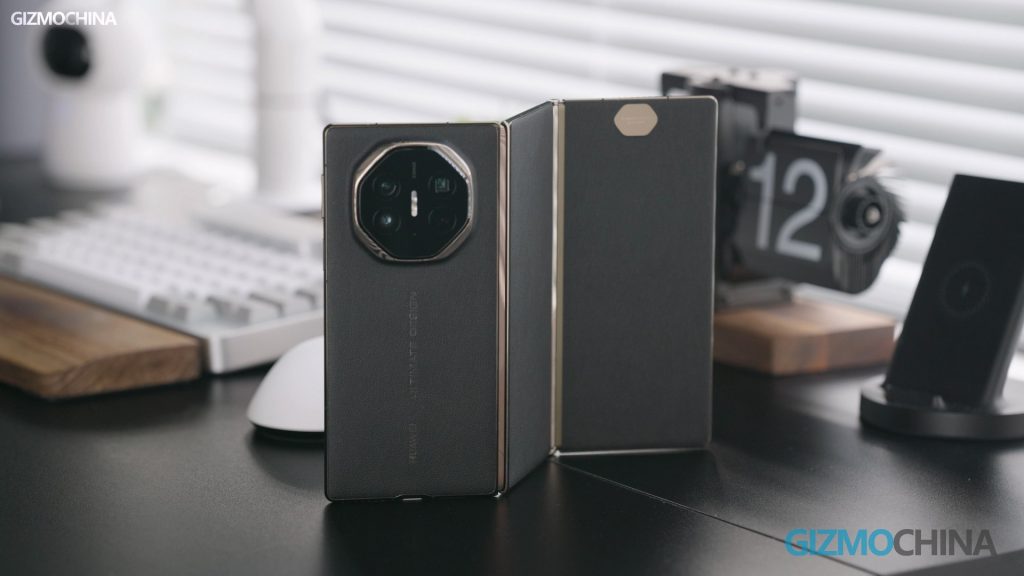
Recently, Samsung issued a rare apology after announcing that it expected to post just $6.78 billion in operating profit for the most recent quarter. This rare admission of faltering performance has led the company to look for ways to bounce back, including the potential venture into new technologies like a tri-foldable phone to take on competitors like Huawei. Huawei’s recent unveiling of the world’s first tri-foldable phone – the Mate XT Ultimate has sent ripples through the tech community, showcasing a blend of cutting-edge features and refined technology. Currently, the Mate XT is only available in China, but the brand has confirmed that it will be released in the global market soon.

As Samsung continues to lead in the foldable smartphone market, there are valuable lessons and features it can integrate from Huawei’s latest marvel. Here are five standout features of the Huawei Mate XT Ultimate that Samsung could adopt to further enhance its smartphone lineup.

Huawei Mate XT
Huawei Mate XT

1. Advanced foldable display technology

The Huawei Mate XT Ultimate redefines foldable technology with its seamless and durable display. One of its key innovations is the advanced hinge mechanism, which ensures a smoother folding experience and greater longevity. Unlike some competitors, Huawei’s foldable screen shows minimal creasing, providing a more consistent and immersive viewing experience.

Samsung, a pioneer in the foldable phone market with its Galaxy Z series, could benefit from refining its hinge technology and display durability. While Samsung’s foldable displays are impressive, integrating a more robust hinge system and reducing screen creases would enhance user satisfaction and device longevity. Adopting Huawei’s advancements could solidify Samsung’s position as a leader in foldable smartphones.

2. Bigger battery with faster charging support

Battery life remains a crucial factor for smartphone users, and the Mate XT Ultimate excels with its high-capacity battery and advanced fast-charging technology. Huawei’s device packs a massive 5,600mAh battery that supports 66W wired fast charging and 50W wireless fast charging, ensuring that users spend less time tethered to a charger and more time enjoying their device.

Samsung’s Galaxy Z-series foldables that have launched in recent years have only offered a 4,400mAh battery with 25W wired and 15W wireless charging speeds. Next year’s Galaxy Z Fold 7 should see a battery size increase to stay competitive, and the same is expected from the company’s first tri-foldable phone.

3. Versatile camera system

The Huawei Mate XT Ultimate features a triple-camera setup with Leica optics, including a 50-megapixel main sensor, 12-megapixel ultra-wide sensor, and a12-megapixel periscope telephoto lens. The camera setup may not be the best, but still promises a good photography experience.

Samsung’s cameras are already highly regarded, but integrating elements from Huawei’s camera system could elevate their capabilities further. None of the foldable phones released by Samsung feature a periscope telephoto camera, which offers a higher optical zoom. So, the brand should consider this lens on its first tri-foldable offering. Additionally, leveraging advanced optics and computational photography techniques could enhance low-light performance, dynamic range, and overall image quality. Additionally, incorporating a more diverse lens selection would provide Samsung users with a broader range of photographic options.

4. Software optimization

Huawei has developed its HarmonyOS specifically for its foldable devices. This allows for seamless multitasking across different screen configurations and optimizes app layouts for the unique form factor. While Samsung has made efforts to optimize its One UI for foldables, it could further enhance the user experience by drawing inspiration from HarmonyOS’s approach to multitasking and app compatibility.

5. Seamless ecosystem integration

Huawei’s Mate XT Ultimate excels in ecosystem integration, providing seamless connectivity and interoperability with other Huawei devices, such as laptops, tablets, and wearables. This integration allows users to easily share files, sync notifications, and extend their workflow across multiple devices without interruption.

Samsung has made strides in creating a connected ecosystem with its Galaxy series, but there is room for improvement. Enhancing seamless integration between Samsung smartphones, tablets, laptops, and wearables could create a more cohesive and user-friendly experience. Adopting Huawei’s approach to ecosystem connectivity would strengthen Samsung’s appeal to users seeking a unified digital experience.

By incorporating some of the Mate XT Ultimate’s key features and embracing a spirit of innovation, Samsung can further enhance its foldable phone offerings and solidify its position as a leader in this rapidly evolving market. The future of foldable phones is bright, and both Huawei and Samsung are poised to play a significant role in shaping it.

Samsung Galaxy A16 5G’s Indian variant to feature Dimensity chip, six years of OS upgrades

Samsung recently released the Galaxy A16 5G for European markets. The Exynos 1330-powered device is available for 249 euros. The company has confirmed that the A16 will also debut in India. However, a Dimensity chip will replace the in-house Exynos SoC in the A16.

Samsung Galaxy A16 5G to be powered by Dimensity chip

Samsung Galaxy A16 5G

Samsung is yet to confirm the Dimensity chip that will power the Galaxy A16 5G’s Indian variant. However, according to reports, it will feature the Dimensity 6300 SoC. The device’s other notable feature is the provision of six years of OS upgrades and security updates for A16 5G users.

The South Korean tech giant has also confirmed that the Galaxy A16 5G heading to India will come with a Knox Vault chipset for securing essential data, such as PINs and passwords. Other features include a Super AMOLED screen, and a triple camera setup equipped with an ultra-wide lens. It will be sold in shades like Gold, Light Green, and Blue Black in India.

Samsung is yet to confirm the India launch date for the Galaxy A16 5G. Since the brand has begun teasing the device, we anticipate its official launch this month.

Samsung Galaxy A16 5G specifications

The European edition of the Galaxy A16 5G features a 6.7-inch AMOLED FHD+ 90Hz screen with a peak brightness of 800 nits, 4 GB of RAM, 128 GB of storage, a microSD card slot, a 5,000mAh battery with 25W rapid charging, a side-facing fingerprint scanner, and One UI 6-based Android 14. It has a 13-megapixel front camera, and a 50-megapixel + 5-megapixel (ultra-wide) + 2-megapixel (macro) triple camera unit on the back.

Oppo Find X8 series to launch on October 24, Dimensity 9400 chip confirmed

Oppo has officially announced that its Find X8 series of flagship smartphones will be launched on Oct. 24 in China. The brand has also confirmed that the series will be powered by the all-new Dimensity 9400 SoC. which utilizes TSMC’s second-generation 3nm process technology.

Find X8 series launch date confirmed

Oppo-Find-X8-series-Dimensity-9400
Oppo Find X8 series is launching on October 24 in China

The Find X8 series will include multiple models, such as the Oppo Find X8, Find X8 Pro, and Find X8 Pro Satellite Communication Version. The lineup also includes the Find X8 Ultra, which is expected to feature the Snapdragon 8 Elite chipset. The Ultra model is likely to launch in January 2025.

Leaked images have revealed that the Find X8 series will continue to sport a round camera module on the back. The Pro model is expected to feature a quad-camera setup equipped with dual periscope telephoto cameras, whereas the standard model will have a triple camera setup featuring a single periscope lens. The series is also expected to feature an iPhone 16-series like Camera Control button.

The Find X8 series will have a micro-quad-curved OLED display on the front. The entire lineup is confirmed to support 50W magnetic wireless charging and run on ColorOS 15-based Android 15. Like the Reno 12 series, the Find X8 models are also expected to support an off-network communication feature dubbed BeaconLink.

Dimensity 9400

The Dimensity 9400 processor features a second-generation all-big-core CPU architecture, including a high-performance Cortex-X925 core clocked at 3.62GHz, three Cortex-X4 cores, and four Cortex-A720 cores. This configuration boosts single-core performance by 35% and multi-core performance by 28% compared to the previous generation.

Additionally, the processor adopts a PC-level Armv9 architecture with doubled cache capacity and is the first to support 10.7Gbps LPDDR5X memory, enhancing both speed and efficiency. These improvements result in a 40% reduction in power consumption under similar performance conditions, providing users with prolonged battery life alongside high performance. The Find X8 Pro Satellite Edition equipped with the Dimensity 9400 was recently spotted with an impressive score of 2,880,0558 on AnTuTu benchmarks.

The global launch of the Find X8 series seems imminent, as the Find X8 and X8 Pro have also been certified in countries like India, Indonesia, and Thailand.

Xiaomi Smart Band 9 or Fitbit Charge 6? Find Out Which is the Best Fit for You!

Both Xiaomi Smart Band 9 and Fitbit Charge 6 are fitness trackers aiming to help users achieve their health and wellness goals. However, they cater to slightly different needs with distinct features and price points. Let’s delve deeper into their specifications to see which one might be the better fit for you.

Fitbit Charge 6

1. Display and Design

The Xiaomi Smart Band 9 takes the cake when it comes to display size. Its 1.62-inch AMOLED display boasts a peak brightness of 1200 nits, making it easily readable even in bright sunlight. The Fitbit Charge 6, on the other hand, utilizes a smaller color touchscreen with an always-on display feature. Both offer a wide range of watch faces for personalization, but the Smart Band 9 boasts over 200 official options and unlimited third-party support compared to the Charge 6’s unspecified number.

For design, the Smart Band 9 features a sleek, lightweight body (15.8g) with aluminium alloy frame and TPU strap available in various colors. The Charge 6 also utilizes an aluminum casing and a silicone band. Both trackers are water-resistant up to 5 ATM, allowing them to withstand swimming and shallow dives.

Buy Xiaomi Smart Band 9

2. Battery Life

The Xiaomi Smart Band 9 boasts a massive advantage in battery life. Xiaomi claims it can last up to 21 days on a single charge, whereas the Fitbit Charge 6 only manages up to 7 days. This makes the Smart Band 9 ideal for those who prefer not to worry about frequent charging.

3. Fitness Tracking

Both trackers offer a wide array of fitness-tracking features. The Smart Band 9 boasts over 150 workout modes, including professional courses for running and boxing. It also tracks continuous heart rate, blood oxygen saturation (SpO2), sleep, and even female health. The Charge 6 offers slightly fewer workout modes (over 40) but includes built-in GPS, which eliminates the need to carry your phone during outdoor workouts.

The Charge 6 shines in advanced heart rate tracking, thanks to sensors and algorithms borrowed from Google’s Pixel Watch. It promises up to 60% better accuracy during high-intensity workouts. Additionally, the Charge 6 offers an ECG app for monitoring atrial fibrillation and EDA scans for stress management, features absent from the Smart Band 9.

4. Smart Features

Both trackers offer basic smart features like notifications, music control, and weather updates. However, the Charge 6 integrates seamlessly with gym equipment and fitness apps, allowing users to view real-time heart rate data. It also features Google Wallet payments and controls for YouTube Music (with a premium subscription) and Google Maps. The Smart Band 9 offers a more basic set of smart features.

5. Price

The Xiaomi Smart Band 9 is a clear winner in terms of affordability. It retails for around $44, significantly cheaper than the Fitbit Charge 6’s $159.95 price tag.

6. Conclusion

The Xiaomi Smart Band 9 excels with its large, bright display, impressive battery life, and wide range of workout modes, all at a budget-friendly price. However, it lacks advanced health tracking features and smart functionality compared to the Fitbit Charge 6.

The Charge 6 caters to users who prioritize accurate heart rate monitoring, built-in GPS, stress management tools, and deeper integration with fitness apps and gym equipment. Ultimately, the choice depends on your needs and budget. If affordability and a large display are key, the Smart Band 9 shines. If advanced health tracking, built-in GPS, and deeper smart features are your priorities, the Charge 6 is the better option.

Honor X60, X60 Pro, Tablet GT Pro RAM, storage, color options officially revealed

Honor recently confirmed that it will announce the Honor X60 series of smartphones on Oct. 16in China. Ahead of the launch, the company has added the Honor X60 and X60 Pro for pre-orders on its official online store. The website also lists the Honor Tablet GT Pro, an upcoming tablet, for pre-order. These official listings have revealed the RAM, storage, and color options of the X60 series and Tablet GT Pro.

Honor X60, Honor X60 Pro configurations, color options

The Honor X60 and X60 Pro will be available in four configurations, such as 8GB+128GB, 8GB+256GB, 12GB+256GB, and 12GB+512GB. The X60 will come in color options, such as Elegant Black, Haihuqing, and Moon Shadow White (shown above). On the other hand, the X60 Pro will arrive in shades, such as Basalt Gray, Burning Orange, Sky Blue, and Elegant Black.

Only the Honor X60 Pro’s 12GB+512GB variant will arrive with support for China Mobile Beidou satellite SMS communication. Therefore, it will be the world’s first non-flagship phone to support satellite connectivity.

The specifications of the Honor X60 Pro are under wraps, but a recent report revealed a lot of details about the X60. The standard model is expected to feature a 6.8-inch FHD+ 120Hz AMOLED screen, a Dimensity 7025h chip, 12 GB of virtual RAM, a 5,800mAh battery with 35W charging, MagicOS 8.0-based Android 14, a 108-megapixel primary camera, and an 8-megapixel front camera.

Honor Tablet GT Pro configurations, color options

The Honor Tablet GT Pro is now available for pre-order, revealing its 12.3-inch screen and exclusive support for Wi-Fi connectivity, with no cellular version offered. While the complete specifications remain undisclosed, the listing confirms several configurations: 8GB+128GB, 8GB+256GB, 12GB+256GB, and 16GB+512GB. The tablet will be available in three colors: Star Black, Moon Shadow White, and GT Blue.

The Honor Tablet GT Pro might be a rebranded or slightly modified version of the MagicPad 2, which launched in July 2024. To recall, the MagicPad 2 features a 12.3-inch OLED display and is available only in a Wi-Fi version.

Honor X60 design and color options are now official

The Honor X60 series is officially confirmed to launch on October 16, 2024. Now the company has revealed the complete design of the much-anticipated device in the latest teaser. The company has already confirmed that this phone supports satellite connectivity.

A closer inspection of the image reveals slightly slimmer top and side bezels. A previously leaked hands-on image reveals a similar chin to the Honor X50. However, it can also be an early prototype that does not carry the final design. So we cannot comment on the thickness of the chin yet.

Moving on, the official image shows a similarly curved display, middle frame, and back plate. The three holes on the top of the frame likely indicate a secondary speaker, while the absence of antenna lines suggests that the frame is still made of plastic.

Honor X60 offers the ‘Smart Capsule’ feature

However, the pill-shaped design on the top of the display suggests a software feature similar to Apple’s Dynamic Island. The feature will likely be called ‘Smart Capsule’, which is already available in the Honor X60i that was launched in July this year. Significant in context, reports about vivo’s upcoming OriginOS 5 skin also hint at a more refined visual feature based on Apple’s concept.

The Honor X60 reportedly comes with a higher drop resistance than its predecessor while also focusing on battery life. Although the teaser doesn’t reveal the exact battery capacity, previous rumors suggest it could pack a 5800mAh battery with support for 35W charging.

Honor X60 series reportedly includes a total of three models – Honor X60, X60 Pro, and X60 GT. The latter two could include a faster 66W charging support.

In terms of performance, Honor X60 packs the Dimensity 7025 chipset, which includes 2×2.5 GHz Cortex-A78 and 6×2.0 GHz Cortex-A55 cores. Referring to the Honor X50 series, the X60 Pro and X60 GT will likely include more capable chipsets. For context, both the X50 Pro and GT packs the Snapdragon 8+ Gen 1 chip, while the base model is powered by Snapdragon 6 Gen 1.

As for the cameras, the phone includes a 108MP main sensor with an aperture of f/1.75.

MediaTek Dimensity 9400 launched: A leap in AI and gaming performance

MediaTek has unveiled its latest flagship chipset, the Dimensity 9400, designed to deliver unprecedented performance and efficiency for next-generation smartphones. This new chipset represents a significant leap from its predecessor, the Dimensity 9300, with enhancements across CPU performance, AI capabilities, and gaming features.

Dimensity 9400 launched
Dimensity 9400

Advanced CPU Design and Efficiency

The Dimensity 9400 incorporates MediaTek’s second-generation All Big Core design. It integrates a powerful Arm Cortex-X925 core running at over 3.62GHz, combined with three Cortex-X4 cores and four Cortex-A720 cores. This configuration offers 35% faster single-core and 28% faster multi-core performance compared to the Dimensity 9300. Built on TSMC’s second-generation 3nm process, the Dimensity 9400 is up to 40% more power-efficient, significantly extending battery life.

Enhanced AI Capabilities

Dimensity 9400 configuration

One of the standout features of the Dimensity 9400 is its 8th Generation NPU, which introduces several industry firsts in generative AI performance. It is the first mobile chipset to support on-device LoRA training and high-quality on-device video generation. MediaTek’s new Dimensity Agentic AI Engine (DAE) transforms traditional AI applications into sophisticated agentic AI applications, offering up to 80% faster large language model (LLM) prompt performance while being up to 35% more power-efficient.

Exceptional Gaming Performance

The Dimensity 9400 promises an immersive gaming experience with its 12-core Arm Immortalis-G925 GPU, which delivers up to 40% faster ray tracing performance compared to its predecessor. It also supports opacity micromaps (OMM) for realistic visual effects and offers a 41% peak performance boost with up to 44% power savings. Additionally, the HyperEngine technology co-developed with Arm provides super resolution and impressive picture quality.

Advanced Camera and Multimedia Features

The Dimensity 9400 is equipped with the MediaTek Imagiq 1090, which supports HDR video recording throughout the entire zoom range. The chipset’s Smooth Zoom technology enables easy capture of moving subjects and reduces power consumption by up to 14% during 4K60 video capture. It supports a maximum camera sensor of 320MP and 8K60 video capture.

Connectivity and Additional Features

The chipset includes a refreshed 3GPP Release-17 5G modem with 4CC-CA, offering up to 7Gbps sub-6GHz performance. It also features a new 4nm Wi-Fi/Bluetooth combo chip with 7.3Gbps data rates and Wi-Fi 7 tri-band MLO support. MediaTek Xtra RangeTM 3.0 enhances Wi-Fi coverage by up to 30 meters. The chipset supports 5G/4G Dual SIM Dual Active and tri-fold smartphones, allowing manufacturers to design innovative form factors.

Availability

The first smartphones powered by the MediaTek Dimensity 9400 will hit the market in Q4 2024. The Vivo X200, X200 Pro, and X200 Pro Mini, debuting on Oct. 14 in China, will be the world’s first Dimensity 9400 phones. The Find X8 series, scheduled to break cover on Oct. 24 in China, will also feature the D9400 chip.

Casio Launches Two New G-Shock Full Metal Watches, Including a 50th Anniversary Edition

Casio is set to introduce two new models to its popular G-Shock Full Metal collection this October: the GM-B2100SD-1A and GMC-B2100ZE-1A.

G-SHOCK GM-B2100SD-1A features

The GM-B2100SD-1A, a refined version of the 2022 GM-B2100D-1A, offers improved readability with a darker grey background and silver watch hands and hour markers. This seemingly minor design tweak could make a significant difference in user experience, especially for those who rely on their watches for quick and easy time checks in a variety of lighting conditions.

This model features a hybrid analog and digital display, Bluetooth connectivity, and solar charging. The Bluetooth functionality allows the watch to sync with smartphones for automatic time adjustments, reminders, and a phone finder tool, making it more than just a standard timepiece. Casio’s solar charging system provides up to seven months of battery life, ensuring the watch remains functional for extended periods without frequent charging.

Pricing & availability

The GM-B2100SD-1A is currently available for pre-order in Japan at JP¥84,700 (~$572). Global availability and pricing have not yet been confirmed.

G-SHOCK GMC-B2100ZE-1A features

In celebration of Casio’s 50th anniversary, the GMC-B2100ZE-1A boasts a black ion-plated stainless steel bezel with gold accents and a gold ion-plated link in the stainless steel band. This unique design combination blends sophistication with the ruggedness for which G-Shock is known.

Casio GM-B2100SD-1A

While the GMC-B2100ZE-1A is similar in features to other GMC-B2100 models, such as Bluetooth connectivity and solar charging, its aesthetic sets it apart. Apart from the gold accents, the model will also benefit from Casio’s usual smart features, including automatic time adjustments and phone control via the Casio Watches app.

Pricing & availability

The GMC-B2100ZE-1A is expected to be priced significantly higher than the GM-B2100SD-1A, with early rumors suggesting a US retail price of around $930. However, the official release date and pricing outside of Japan have yet to be confirmed.

(Source: 1, 2, via 1, 2)

iQOO 13 design is finally official

We have already come across several leaks and rumors about the next iQOO flagship – iQOO 13. As we are nearing the launch date, now the company has also stepped up and taken things into its own hands. A company exec previously revealed that the phone uses the self-developed Supercomputing Chip Q2 alongside the Snapdragon 8 Gen 4. The latest teaser shows iQOO 13 in official image with flat sides and a tiny cutout for the selfie camera.

In comparison, the iQOO 12 has a much larger camera cutout on the front and a slightly thicker chin. That said, iQOO finally seems to offer a completely symmetrical bezel.

Confirming previous rumors, the company exec notes that the phone boasts a 2K OLED display protected with a metal middle frame.

iQOO will launch the device in China on December 9 with OriginOS 5. It follows the October 14 launch of the vivo X200 series devices.

Notably, the global version of iQOO 13 has already been spotted on the IMEI database, suggesting a Q4 2024 or early Q1 2025 release in the global market.

Specifications (rumored):

To power the Snapdragon 8 Gen 4 chip, the phone reportedly packs a massive 6100mAh battery and supports 100W PPS and PD charging. Despite the large capacity, the phone measures only 8.1mm (same as the iQOO 12) thanks to the silicon-anode battery technology.

For those unfamiliar, USB PD is a universal charging protocol and it means users will still get fast charging speeds without the specific adopter the company offers in the box.

In terms of cameras, it packs three 50MP cameras on the back – Sony IMX921 as main sensor, Samsung ISOCELL JN1 as ultrawide, and IMX826 for 2x telephoto.

The phone also reportedly upgrades to a new display panel that is 10% more power efficient than the QOO 12’s, along with an improved IP68 rating (up from IP64 on its predecessor) for flagship-grade ingress protection. In terms of configuration, it could offer up to 16GB of RAM and 1TB of storage.

(Source)

Flash Sale: Bose QuietComfort Headphones get $150 Off this Prime Day Sale in the US and Canada

Amazon Prime Day Sale has some exciting deals in the US and Canada. There are some deals worth considering where users can save a lot. Especially these Bose QuietComfort Headphones, which are retailing for $199 on Amazon US and $269 on Amazon Canada, amounting to around $150 off. The discount is not only limited to the Bose QuietComfort Headphones; it applies to almost every headphone and earbud from Bose. Below are more details:

Bose QuietComfort Headphones Deal in the US and Canada

The discount is applicable for limited stocks, and interested folks might head over to Amazon to grab the remaining units. The Bose QuietComfort Bluetooth Headphones usually retail for around $479, and the limited-time price has brought it down to $269 on Amazon Canada. Meanwhile, in the US it is up for grabs at $199, down from $199.

Discounts on other Bose Headphones:

The discount is not limited to a single Bose Headphone, it is applicable across its whole fleet of audio devices. You may check Amazon US or Amazon Canada, or you may head off to the official Bose website.

Product NameDiscounted PriceOriginal Price
Bose SoundLink Max Portable Speaker$299.00$399.00
Bose QuietComfort Earbuds$179.00$179.00
Bose Ultra Earbuds$249.00$299.00
Bose QuietComfort Ultra Headphones$329.00$429.00

Bose QuietComfort Headphones Features and Specifications

Well known for their remarkable ability to block out background noise, the Bose QuietComfort headphones are ideal for traveling or concentrated listening. Their comfortable over-ear design and thick ear cushions make them comfortable to use for extended periods. It offers up to 24 hours of listening on a single charge.

In terms of technology, the Bose QuietComfort Headphones are Bluetooth 5.3 compliant and include 35mm drivers for excellent audio performance. They work with AAC, SBC, and AptX Adaptive codecs. With up to 24 hours of wireless listening, the battery life is remarkable, and USB-C charging provides a handy method of charging. The headphones also have a transparency mode that allows you to hear your surroundings and adjustable active noise cancellation. It weighs about 260 grams.

Apple plans to launch AirTag 2 in H1 2025 featuring an upgraded chip for improved tracking

According to Mark Gurman from Bloomberg, Apple is set to release an updated AirTag in the first half of 2025. This will mark the first major revision to Apple’s tracking device since its introduction in 2021.

Apple Airtag

Enhanced Tracking Technology with Improved Accuracy

Gurman indicates that the new model will come with a more advanced chip, likely the second-generation ultra-wideband (UWB) chip, which was recently seen in the iPhone 15. This updated technology is expected to enhance the accuracy of the AirTag’s location tracking.

The original AirTag features Apple’s U1 chip, which utilizes UWB technology along with Bluetooth to connect with Apple’s Find My network, enabling users to locate their devices with precision. Its stainless-steel body is compact and lightweight, offering IP67 water and dust resistance, which provides some protection from the elements.

The device also has a small built-in speaker, which helps users find their AirTag by emitting sound when activated through the Find My app. The back cover is removable, allowing users to replace the battery when needed.

Using the Find My app, the AirTag can be tracked on a map. Additionally, the app provides more detailed guidance with sound, haptic feedback, and visual directions using ARKit, accelerometer, and gyroscope capabilities.

In cases where an AirTag is misplaced, it can be put into Lost Mode, which notifies the user when it’s located or comes within range. If another person finds the AirTag, they can tap it with an NFC-enabled device, displaying the owner’s contact information if provided.

Apple has integrated privacy features into the AirTag to prevent unwanted tracking. For instance, the Bluetooth signal identifiers used by the AirTag rotate frequently to avoid tracking by unauthorized parties, and communication within the Find My network is encrypted end-to-end.

The upcoming AirTag is also rumored to integrate with Apple’s Vision Pro headset, though specific details on this feature remain unclear. Analyst Ming-Chi Kuo mentioned last year that AirTag’s production had been delayed until 2025 but confirmed that both he and Gurman expect a release next year. As of now, there are no indications of any design changes.

(Source)

Acer Predator Z57 Dual UHD Gaming Monitor Arrives in Europe & the UK: Pricing Details Inside

Acer has finally brought its massive Predator Z57 gaming monitor to European and UK markets, but it’s coming with a hefty price tag. After initially announcing a price reduction for the US market, Acer has opted to maintain a higher price point for European consumers.

Acer Predator Z57

Acer Predator Z57 pricing

In the US, Acer has recently lowered the price of the Predator Z57 to $1,699.99. In contrast, European and UK consumers will have to pay €2,499.90 and £2,199.99, respectively.

Acer Predator Z57 monitor features

The Predator Z57 is Acer’s flagship gaming monitor, featuring a 57-inch curved display with Dual UHD (7680×2160) resolution and a 120Hz refresh rate. Its 2304-zone MiniLED technology delivers superior picture quality and brightness. With a 32:9 aspect ratio and a 1000R curvature, it offers an immersive viewing experience.

The monitor reaches a peak brightness of 1000 nits and is VESA DisplayHDR 1000 certified, ensuring vibrant colors and deep contrasts. It also covers 98% of the DCI-P3 color gamut for high-fidelity visuals.

For connectivity, it includes two HDMI 2.1 ports and a DisplayPort 1.4, making it compatible with the latest gaming consoles. Additionally, the sleek design integrates dual 10W speakers.

In other news, Sony has launched two new INZONE Gaming Monitors, the M10S and M9 II, aimed at e-sports and AAA gaming. The M10S features a 27-inch, 1440p OLED display with a 480Hz refresh rate and a 0.03ms response time. It will serve as the official monitor for the Apex Legends Global Series. Meanwhile, the M9 II is a 4K monitor with a 160Hz refresh rate and a 1ms response time, utilizing backlight scanning technology to reduce motion blur and offering full-array local dimming for improved contrast.

(via)

Honor X7c 4G Leak: Full Specs and Renders Unveiled Ahead of Launch

Honor, the well-known Chinese smartphone brand, is preparing to launch a new budget-friendly device. Tentatively named the Honor X7c 4G, the phone has been spotted on certification websites, suggesting that its release may be just around the corner.

Honor X7c 4G

Ahead of the launch, 91mobiles has shared a report revealing the complete spec sheet and renders of the device. The leaked details suggest that the Honor X7c 4G will come with a solid set of features for its price. It is expected to feature a large 6.77-inch IPS display with a 120Hz refresh rate. The device will be powered by a Qualcomm Snapdragon 685 chipset, paired with 8GB of RAM and 256GB of internal storage, providing sufficient performance for daily use.

In terms of optics, the Honor X7c 4G will feature a dual-camera setup on the back, consisting of a 108MP primary sensor and a 2MP secondary sensor. For selfies, there will be an 8MP front-facing camera. Powering the device will be a 5,200mAh battery with support for 35W fast charging, ensuring long-lasting usage.

The smartphone will run Android 14 with MagicOS 8.0 out of the box, offering a modern and feature-rich user interface. Additional features include a side-mounted fingerprint sensor, dual nano SIM support, a microSD card slot, NFC, Bluetooth 5.0, Wi-Fi 5, USB Type-C, and a 3.5mm audio jack. With these leaked specs and designs, the Honor X7c 4G seems like a promising addition to the budget smartphone market.

In other news, Honor has announced the launch of the Honor X60 series on October 16, expected to include at least three models with 35W and 66W fast charging. The series will feature dual-curved displays, high durability, and long battery life. The X60 series is expected to offer a 6.8-inch AMOLED display, Dimensity 7025 chip, 12 GB RAM, 256 GB storage, and a 5,800mAh battery. It will feature a 108MP main camera and run on MagicOS 8-based Android 14.

(Source)

Can the Nintendo Switch 2 Outperform the Steam Deck?

Nintendo’s Switch is one of the best selling gaming consoles of all times, and the best selling gaming handheld as well. But despite its popularity, a lot of the newer handhelds are more capable in terms of hardware and performance. So let’s see if the Nintendo Switch 2 can rival next-gen rivals, namely the Steam Deck.

1. Nintendo Switch 2 vs Steam Deck: Design & Display

Nintendo Switch OLED

Nintendo innovated the gaming handheld formula with its removable Joy-Con controllers. So even the original Switch had a lot more versatility than the Steam Deck. Meaning, the successor, Switch 2, will likely offer a similar design. However, rumors have also hinted at the Switch 2 offering a new analog stick design. The shoulder buttons might be getting a new scroll functionality on its shoulder pad. The Steam Deck supports a dock like the Switch but lacks any detachable functionality.

On the display front, the Steam Deck sports a 7-inch LCD panel, while the Steam Deck OLED offers a 7.4-inch HDR OLED screen with a 1280 x 800 resolution and 1,000 nits of peak brightness. It also offers up to 90Hz refresh rate. Similar to the Steam Deck, the Switch also has an LCD and OLED variants. But the Nintendo Switch 2 is rumored to sport a taller 8-inch panel. Nintendo might release it with an LCD screen, while OLED options could drop later on like its predecessor. The screen may also receive 1080p resolution bump.

2. Switch 2 may be as powerful as the PS4

Samsung Display provides Steam Deck with OLED screens
Steam Deck OLED

The Switch series of consoles were launched with an Nvidia Tegra X1 chipset. This chip is quite underpowered compared to the other handheld consoles in the market. The Steam Deck is powered by a custom AMD APU, which is based on a 6nm process. This is paired with 16GB of LPDDR5 RAM and 1TB of NVMe SSD storage. So in terms of performance, Nintendo’s original Switch can’t compare to the Steam Deck.

But leaks have hinted at the Switch 2 getting a major upgrade in terms of gaming performance. A new chipset may pack the portable gaming console along with 12GB of RAM and upgraded storage. One of the earliest performance leaks regarding the Switch 2 hinted that the console might be as powerful as the PS4 and Xbox One. If this is true, the Nintendo Switch 2 could be one of the best handheld consoles in terms of performance as well. It is worth noting that this is still an unconfirmed report.

3. Nintendo’s Impressive Games Library

Clearly hardware wasn’t what made the Switch so popular but also the impressive lineup of titles gamers get access to thanks to the console. From Mario to the Legend of Zelda, there isn’t a shortage of legendary games franchises that Nintendo offers. In comparison, Steam Deck isn’t an exclusive platform like the Switch. Rather you get various games that are optimized on Steam for the Valve’s console. So the Nintendo Switch 2 would get you access to next gen titles from these iconic series.

Xiaomi Mijia No-Fog Humidifier 3 (800) goes on sale with 800mL/h humidification, smart display & more

Xiaomi recently launched the Mijia No-Fog Humidifier 3 (800) in the Chinese market. The product is now available for an introductory price of 699 Yuan ($99). This compact model offers an 800mL/h humidification rate, ideal for improving indoor air quality in larger spaces like living rooms, and provides quiet, consistent comfort during dry seasons.

Xiaomi Mijia No-Fog Humidifier 3

Xiaomi Mijia No-Fog Humidifier 3 (800) Specifications:

The Mijia No-Fog Humidifier 3 (800) features a 6-liter silver-ion water tank and an intelligent ambient display for easy monitoring of humidity and water levels. Its top-fill design allows convenient refilling from above, while the UV hydrophobic coating prevents watermarks. The silver-ion technology enhances safety by minimizing bacterial growth, promoting a healthier humidification process.

The humidifier operates quietly at 32 dB(A), ideal for bedroom use, and includes a sleep mode that dims the display and reduces humidification to 280mL/h for a peaceful night. Its 6-liter tank provides up to 18 hours of continuous operation, effectively humidifying a room overnight.

The Mijia humidifier features a smart ambient screen displaying real-time humidity and water levels with an intuitive ring-lit design. It also includes Xiaomi’s HyperOS Connect, enabling remote control through the Mijia app and integration with other smart home devices like air conditioners and heaters. This connectivity allows users to maintain an ideal indoor environment conveniently from their smartphone.

The humidifier offers 800mL/h natural evaporation without mist or residue, allowing for safe use with tap water. Its suspended design keeps the 3D antibacterial filter fully immersed for maximum humidification efficiency. The high-molecular fiber mesh filter, with a 99% antibacterial rate, purifies air while adding moisture, reducing dust and allergens. It’s easy to clean by hand or machine, with weekly cleaning recommended at water temperatures below 40°C for long-lasting performance.

Cleaning and maintaining the humidifier is equally simple due to its open water tank and detachable water pump impeller. Regular cleaning prevents scaling and helps the humidifier operate at peak performance, while features like the low-water auto shut-off reminder add to the device’s safety and convenience.

Earlier today, Mijia also launched a new 6L Electric Hot Pot with 2000W power and smart cooking features.

Should you buy Samsung budget smartphone?

Samsung is the only Android brand that operates at all price segments worldwide. Though the company is known for its premium S and Z series of devices, most of its sales come from inexpensive models.

This puts the firm in a unique position. It not only competes in the premium range with Apple but also with all Chinese brands across mid-range and budget categories.

In the premium range, the devices from Samsung can take on Apple in terms of both raw specs and features. However, this cannot be said for the company’s products in other price segments.

Samsung smartphones neither have the best specs nor offer the latest technologies in the budget range. On the other hand, Chinese OEMs cater to wider audiences with different types of devices.

Thus, Samsung phones pale in comparison, especially in Asia and Africa where Chinese brands have an enormous presence.

So the question arises whether you should consider buying Samsung budget smartphone. Let’s find out in this article.

Samsung Galaxy A16
Samsung Galaxy A16

1. Specs Aren’t Everything

Superior hardware is better, however, it is not meant for everyone. Because not everyone wants a powerful chip or bigger cameras.

Every person is different and so are their preferences. So you need to first ask yourself what you need in a smartphone.

For some people, especially the middle-aged and old, user experience matters the most. Samsung excels in this department.

One UI software from Samsung is more user-friendly. The software design transcends cultures and is easily adaptable across countries. The minimal hardware design further enhances the likeability among the masses.

On top of these, Samsung is a well-known brand among the masses due to its appliances background. Its presence can be found in the nooks and corners of most countries.

Thus, the availability and after-sales service are easily accessible compared to other Android brands.

Please Note: When you buy something using the links in our articles, we may earn a small commission at no cost to you.
2. Durability and Longer Support

Samsung now offers dust and water resistance ratings for most of its phones. Only the entry-level and some budget handsets lack them.

Whereas long software support is common for its entire product portfolio. Samsung guarantees 4 years of OS updates and 5 years of security updates even for its entry-level phones.

In fact, the company just extended its support duration for budget smartphones to 6 years of OS updates with the announcement of Galaxy A16. For premium models, this number stands at 7. So that’s just one less year of updates for less expensive products.

With consumers now sticking to their handsets for a longer period of time, extended software support makes a difference. 

3. Availability of Accessories

As Samsung is a leading smartphone brand, you can easily find the accessories for its handsets across all stores. Cases and screen protectors of newly released Samsung phones arrive at stores just in time.

Even accessories for older devices are readily available compared to other brands. The same can be said for spare parts. Thus, Samsung handsets can be cared for hassle-free for years.

It’s not just availability, you also get access to a wide variety of accessories for phones spread across all price segments.

4. Who Shouldn’t Buy Samsung Budget Smartphones?

Samsung handsets are as boring as Apple iPhones, especially in the budget range. They are not known for providing the latest technologies and beefier hardware.

Instead, they work as household appliances, which everyone is used to. They are not the best but do the job.

On the other hand, Chinese brands offer a lot for the same price. You also get a ton of options, like phones excelling in one particular category, like performance and camera to name a couple. There’s a phone for every type of consumer.

So if you want more from your phone, Samsung is not an option. You may look elsewhere.

As mentioned earlier, Samsung budget smartphones are well-suited for elders.

HUAWEI WATCH Ultimate Review: The Smartest Luxury Watch

HUAWEI Watch Ultimate

The HUAWEI WATCH Ultimate is actually not a new watch, we wrote a REVIEW article for it a year ago. So why are we putting out another video about it now? There are two reasons. One is because there is this new colorway and has added some new features. The second reason is that this watch deserves a real review video, the article doesn’t show all the good things about it, especially about the looks, only in a video we can show the luxurious design.

Design

Unlike Apple and Samsung, the HUAWEI WATCH Ultimate doesn’t look quite like a smartwatch. Obviously, HUAWEI chose to make the Ultimate look more like a traditional luxury watch. Do these two colorways remind you of certain luxury watches? To me, the blue one looks like a Rolex Submariner, and the new green model looks more like a GMT-Master II.

Don’t get it? That’s okay, I don’t know much about luxury watches either. The only thing you need to know is that those are all very famous, and very expensive. The green and white monobloc two-color bezel is a very classic design and one of the reasons that make this watch look prestigious.

So how HUAWEI made the smartwatch so premium, I think it’s because the materials are very special. The case is made of zirconium-based Liquid Metal, which is 4.5 times stronger than stainless steel, with 17% less weight. The Bezel is made of Nano-microcrystalline ceramics, and even the extra metal strap that comes free in the box is made of titanium.

Yes, there are three included straps in the box. The rubber strap is better for sports. HUAWEI was kind enough to give divers an extended strap. You know, the normal strap just isn’t long enough to be wrapped around a wetsuit. This long strap proves that HUAWEI is really thinking about its users. The titanium strap is suitable for attending formal occasions. The most special thing is still this textile strap. Can you see that? It’s harder, but as comfortable as the soft ones.

The Watch Face collection is also a great advantage of HUAWEI watches. Because there are lots of watches sold, many designers are keen on designing all kinds of watch faces for HUAWEI watches. For those who like playing golf, you must buy this new green version, because these four new watch faces are just for you.
All in all, the HUAWEI WATCH Ultimate is a watch that is a perfect blend of high-tech and fine watchmaking. For you Billionaires out there, who want to have a luxury watch that also monitors your health, then only the HUAWEI WATCH Ultimate can fulfill your needs.
Health detection

When you see a watch with three crowns, you should know that it must have a lot of features. Let’s explore the functions of each crown as we go through what the Ultimate has to offer. The crown we’re most familiar with is the one in the upper right corner, which takes care of zoom, scroll, and back.

Double click on it takes you to multitasking, just like a smartphone, and you can always go back to the previous interface. I really like this feature, it makes operating the watch a lot more efficient.

The crown in the lower right corner is a customizable button, which by default turns on exercise mode. The second function is that it can act as an electrode, feeding heart rate data to the ECG. ECG is much better at detecting your HEART RHYTHM problems than a normal heart rate detection, which is used to determine if there are any heart problems, for example, heart attack.

I did get a premature beat detected a couple of times while wearing the watch, and then it gave some medical advice as well. If you do try to improve your habits, go to bed earlier, and relax more, then I think this feature does what it’s supposed to do.

Another thing is that the sleep apnea detection feature recently added to the Apple Watch has long been available on the HUAWEI WATCH Ultimate. And there’s also body temperature detection, which makes you the first one to know if you have a fever. Things like SpO2 detection, sleep detection, and heart rate detection are of course there as well. Apart from the fall detection, I didn’t find any missing features.

Expedition Mode

One of the main selling points of the HUAWEI WATCH Ultimate is hidden in the third crown. Click on it and Expedition Mode will be turned on. This mode uses dual-band five-system GNSS, which allows you to get more accurate positioning. You can also use Offline Maps if you go to places where there is no GPS signal. If you ever go on a remote path, continuous location markings and Route Back navigation will get you back on track. Its task is simple, to record expedition data and keep you safe.

Dive & Golf Mode

The HUAWEI WATCH Ultimate has two very specialized modes: dive and golf. Since these two modes are the only sports modes that can be found on the Grid, it means that they are one of the main selling points of this watch. In the Diving mode, there are so many specialized options that you can choose from, as well as provide science-based no-fly time suggestions.

HUAWEI WATCH Ultimate is the first smartwatch to offer a 100-meter scuba diving mode, and the three crowns are also designed to make it easier for divers to operate the watch underwater.

The Golf Mode can record a myriad of golf swing data, including swing speed, swing tempo, backswing time, and downswing time. Tap on the watch screen to see how far away you are from any position on the map and its distance to the green. You can also get your last shot distance, plays-like distance, and data-driven tips on where to aim and which club to use. You can even download over 15,000 maps of the golf course, so you can feel more confident about your next shot.

To be honest, I’m not very familiar with either sport, but I’ve been to the HUAWEI Health Lab. When I saw how they capture data and use them in their algorithms, I knew for sure that they wouldn’t screw up with the sports detection algorithms. Those of you who have bought this watch in the future can also share your experience in the comments section, for other viewers to use as a reference.

Battery & Charging

Among all the smartwatches with “Ultra” or “Ultimate” in their name, HUAWEI is definitely the one with the longest battery life. I wore it all the time for a week, turned on everything I could, including the AOD, and sleep mode was on when I was in bed every night. It didn’t need charging until day six. Believe me, long battery life is a huge advantage for a smartwatch.

The Ultimate has wireless charging as well, and you can charge it on a charging pad that supports the Qi protocol. Of course, the fastest way to charge it is with its proprietary charger, and a full charge in an hour is pretty fast. I also tested its compatibility with iOS devices. Other than not being able to download third-party apps, all the other features work fine.

After watching this video, you guys should know more about the HUAWEI WATCH Ultimate. This is HUAWEI’s most powerful and luxurious smartwatch at the moment. Here I’ll summarize its advantages for you guys again: the premium watch look, professional diving and golf modes, lots of super-detailed health detection, and super-long battery life. If you are fed up with the boring appearance design of smartwatches, then HUAWEI WATCH Ultimate will be your best choice.