To celebrate the upcoming India’s Republic Day, Xiaomi and its sub-brands is offering extravagant deals on smartphones, tablets, and other smart accessories. The sale is live on Amazon India and the company’s official website. There are some exclusive deals with the ICICI Bank cards, along with an additional Rs 1000 coupon discount. Let’s dive in for more details:
Xiaomi India has listed the best deals on its smartphones, tablets, and other smart products for the Republic Day Sale. The discounted items include products like Redmi 13 5G, Redmi Pad Pro, Redmi Buds 6, Redmi Note 14 Series, Xiaomi Handheld Garment Steamer, and others.
Xiaomi Republic Day offers:
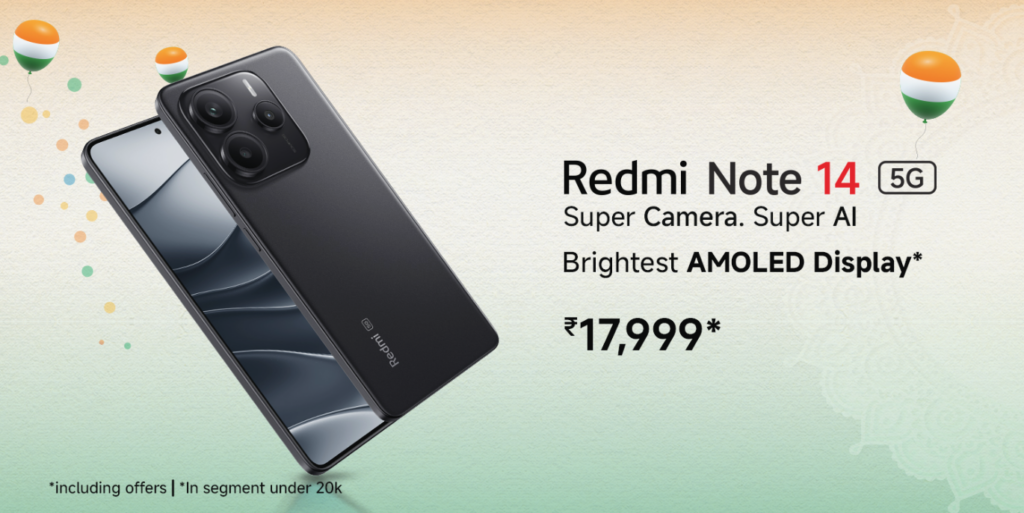
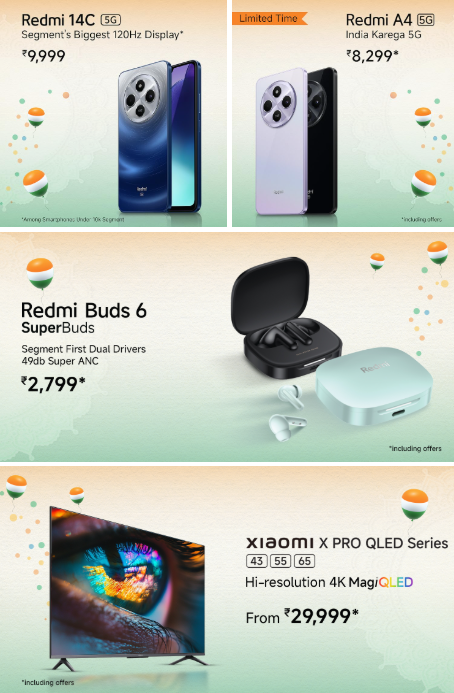
Redmi 13 5G, originally priced at ₹13,999, is now available for just ₹11,999, while the Redmi A4 5G starts at ₹8,299. The Redmi Pad Pro has been discounted from ₹21,999 to ₹19,999, and the Xiaomi PowerBank 4i 20KmAh is now ₹1,899, down from ₹2,199.
Meanwhile, Audio enthusiasts can grab the Redmi Buds 6 at ₹2,799, while entertainment seekers can enjoy the Xiaomi X Pro QLED Smart TV starting at ₹29,999 (originally ₹34,999) and the Xiaomi Smart TV X 55-inch (2024 edition) for ₹34,999. Smart home enthusiasts will love the Xiaomi Robot Vacuum Cleaner X10, now ₹24,999, a significant drop from ₹34,999.
Additionally, smartphones like the Redmi Note 14 Pro and Note 14 Pro+ are available at ₹23,999 and ₹29,999, respectively, while the Redmi Note 14 is now ₹17,999. Other notable deals include the Xiaomi Pad 7 at ₹26,999, the Xiaomi Handheld Garment Steamer at ₹1,999, and the Redmi Watch 5 Active at ₹2,499.
Moto G Power lineup has dominated the budget smartphone segment with its exceptional value-for-money offering. The Moto G Power (2024) has been very successful, and now the 2025 edition is here with some nice upgrades.
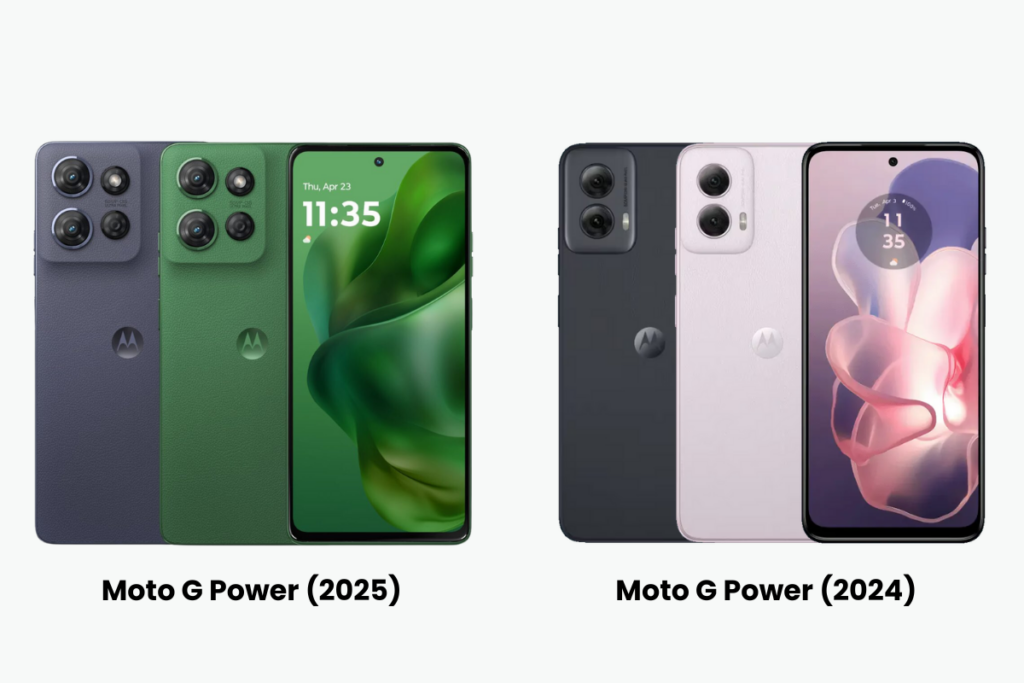
The camera module now takes more space on the back, though the number of sensors is still the same — two on the back and one on the front. The Moto G Power (2025) looks a lot similar to the Edge 50 models that makes it look not-so-cheap, if not premium.
Motorola’s Leaf Green shade is the latest addition to its collection of striking color choices, though it also comes in a Slate Gray option. While design is subjective, the new color option looks far better to me than the standard whites, blacks, and silvers we’ve seen from other brands.
The 2025 model is 0.6mm smaller and 0.2mm thicker, while the width has gone up by 0.5mm. These minor differences will likely go unnoticed if you upgrade from the 2024 model. The rest of the spec sheet is largely similar to its predecessor except for stronger durability and protection.
The latest Moto G Power 5G rocks MIL-STD-810H military-grade certification that ensures protection in challenging conditions, such as free fall (nearly four feet), temperatures from -4°F to 140°F, and high humidity levels. It also features both IP68 and IP69 ratings for protection against dust and water (water jets also), which is only seen on premium smartphones. The 2024 model misses all of these, which makes the newer model a more reliable partner outdoors.
The IPS LCD screen is now slightly bigger at 6.8 inches (vs. 6.7 inches on the 2024 model). It still refreshes at 120Hz, which is already great. However, the notable addition is a Corning Gorilla Glass 5 protection. There’s no display protection on the 2024 model. Motorola has indeed worked on bettering the protection and durability aspects, which was lacking before.
While the display has got some nice upgrades, the performance hasn’t. The 2025 edition is powered by a MediaTek Dimensity 6300 processor, while the 2024 edition has a slightly more powerful Dimensity 7020 chip. The two chips don’t bring significant performance differences, though. So, you will still have a smooth experience with everyday tasks such as texting, browsing the internet, or scrolling social media.
The Moto G Power (2025) still comes with 8GB LPDDR4X RAM and 128GB UFS 2.2 storage, with a dedicated microSD slot for additional storage.
Motorola says it has worked to improve the camera output. However, the newer model shares the same hardware with its 2024 model — a 50MP primary camera and an 8MP ultrawide camera. There are only software upgrades powered by AI, such as Shot Optimization, Google Lens integration, Google Photos auto enhancement, and Auto Night Vision. The selfie camera is still 16MP.
If there’s one notable downside to the Moto G Power (2025), it’s the software. Last year, we saw the brand promising five Android upgrades to some models, but the Moto G Power is out of luck. It is still capped at two OS updates and three years of bi-monthly patches. Thankfully, it ships with Android 15 out of the box.
The battery is still 5,000mAh with support for 30W wired. The device also supports 15W wireless charging, which is a missing part from budget phones. The 2025 model supports Bluetooth 5.3, Wi-Fi 5, and NFC, just like its 2024 counterpart.
Moto G Power (2025) vs Moto G Power (2024): Conclusion
The 2025 edition looks premium as it resembles the Edge 50 from the rear side, and the striking Leaf Green color on top makes it a great-looking budget phone. Motorola has focused on making the newer model more durable and tougher to survive challenging conditions by adding IP68, IP69, and MIL-STD-810H military-grade certification. The device also has Corning Gorilla Glass 5 for additional protection.
There’s a new Dimensity 6300 chipset as well. The camera hardware is unchanged, though there are several AI features promising better outputs. The rest of the spec sheet is the same as the 2024 model.
Moto G Power (2025)
Moto G Power (2025)
Design
166.6 x 77.1 x 8.7 mm 208g IP68 + IP69 MIL-STD 810H durability
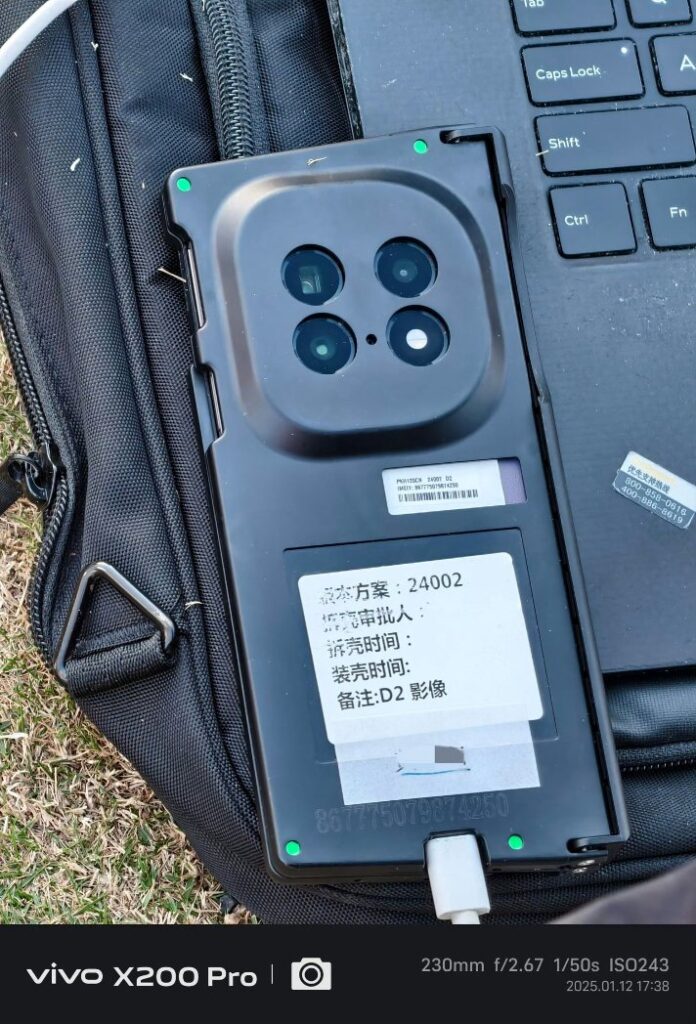
The much-awaited Oppo Find N5 foldable phone is set to go official next month (February) in China. The device will offer several improvements over the Find N3, which debuted in 2023. While the company has started teasing the arrival of the N5 in China, it has yet to reveal its full design. A leaked image now circulating on Chinese social media provides a first look at the rear design of the phone. However, while it offers a glimpse of the camera arrangement, the complete look remains a mystery as the device is still enclosed in a confidential case.
Oppo Find N5 appears in confidentiality case
Oppo Find N5 appears in a confidentiality case
The above image showcases the Find N5 in a confidentiality case. Nevertheless, the device seems to feature a round camera module like the recent Find series phones. It houses three cameras, a hole for a microphone, and an LED flash.
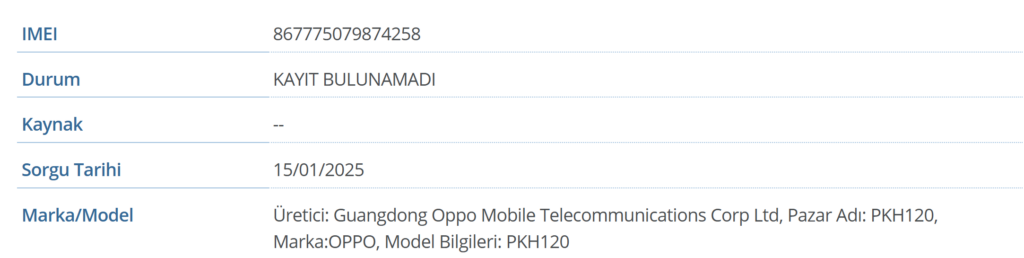
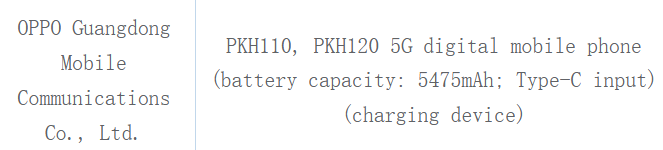
The IMEI number 867775079874260 mentioned on the phone’s back leads to the “PKH120” model number in the IMEI database, which was previously spotted in China’s UFCS database. The listing revealed that the PKH120 has a 5,475mAh battery (rated value), which indicates that its typical value could be around 5,600mAh.
Oppo PKH110 / PKH120 in UFCS database
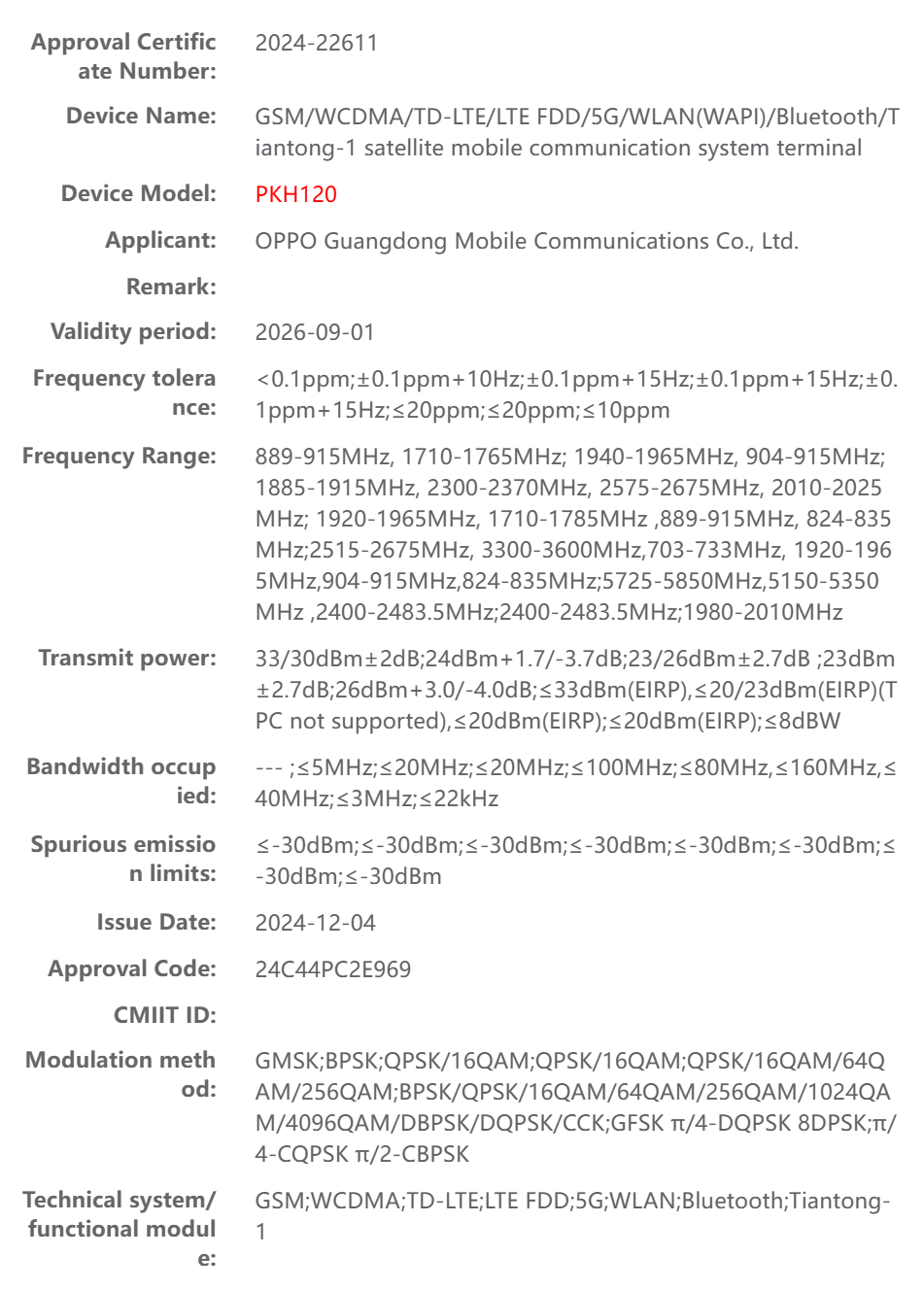
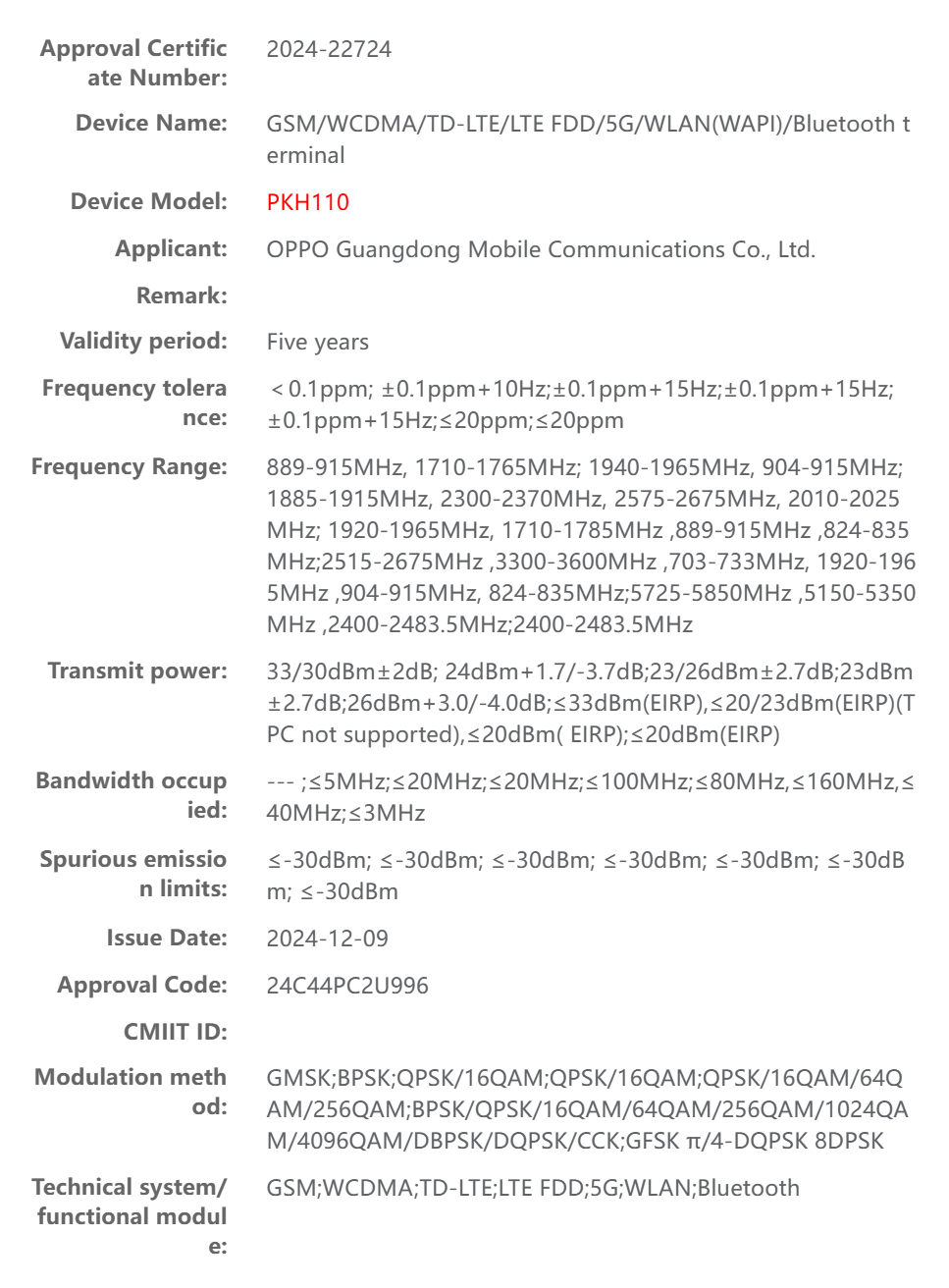
The PKH120 model was previously thought to be the Find X8 Mini, but it now appears that it is the Find N5 foldable phone. The radio certification of this device has revealed that it will arrive with support for satellite connectivity. The PKH110 is the other variant of the phone that lacks support for satellite connectivity.
The Find N3 featured a 4,805mAh battery and measured 5.8mm in its unfolded state and 11.7mm when folded. Despite packing a larger battery of approximately 5,600mAh, the Find N5 is expected to become the world’s thinnest foldable phone, with a thickness of just around 4mm when unfolded and less than 9mm in the folded state. Another major highlight of the N5 is that it will be the world’s first foldable phone to feature the Snapdragon 8 Elite chipset.
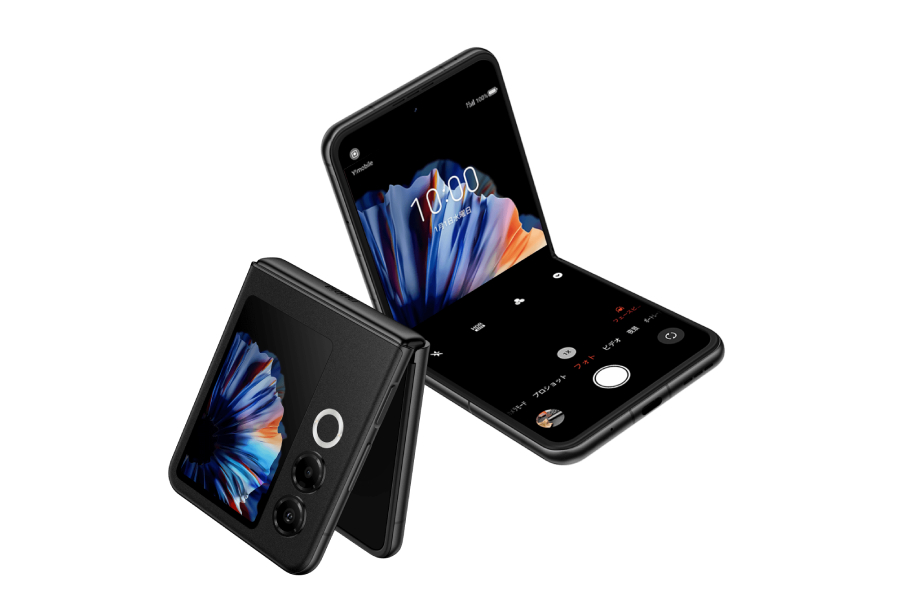
Nubia has officially launched its second foldable phone, the Flip 2, in Japan. The first generation was launched in April last year, so this is an earlier-than-expected refresh, but the device brings some notable upgrades over its predecessor.
Let’s unpack what this new foldable has to offer.
Nubia Flip 2 Specifications
The biggest change in this new model is the cover screen. The company replaced the round screen from the original Flip with a more conventional rectangular one. It features a 3-inch display with a resolution of 422 x 682 pixels, allowing quick access to frequently used apps and notifications without unfolding the phone.
The main screen is still a 6.9-inch OLED panel with a 120Hz refresh rate and Full HD+ resolution. Tucked away on top is a 32MP front-facing camera for selfies and video calls. Whereas, the Flip 2 has a dual-camera system on the rear. The main sensor comes in at 50MP, and there’s also a 2MP depth sensor for adding a bit of background blur to your portrait photos.
Under the hood, the foldable is powered by the MediaTek Dimensity D7300X processor, which is paired with 6GB of RAM and 128GB of storage. While it likely won’t win any Speed Demons awards, this combination should provide smooth performance for most everyday tasks.
Unfortunately, the phone still runs on Android 14, and there’s no mention of the update policy on its website. Keeping the phone juiced up is a 4300mAh battery, which is paired with fast charging that can get you back to 100% in just 55 minutes.
Durability is another area where the Flip 2 seems to hold its own. The phone boasts IPX2 water resistance and IP4X dust resistance, meaning it can handle light splashes and dust without issue. Additionally, face recognition and fingerprint recognition are included for added security.
Price and Availability
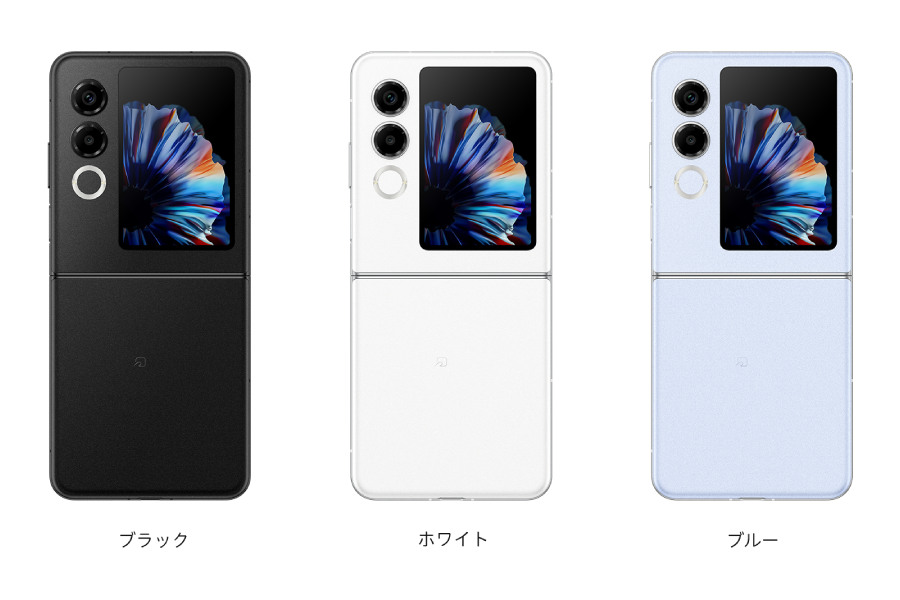
The Nubia Flip 2 is priced at ¥64,080 (roughly $406 USD) in Japan for the sole 6/128GB variant. It is available in Black, White, and Blue shades.
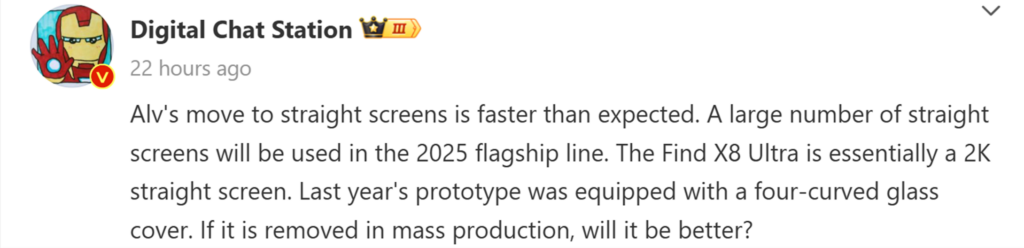
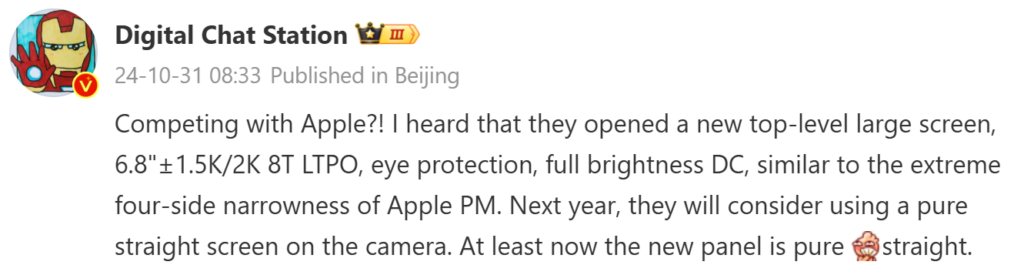
After the upcoming Chinese Spring Festival, Oppo will announce the Oppo Find N5 foldable phone and the Oppo Watch X2 in February. In March, the brand is expected to announce the Find X8 Ultra and the Find X8 Mini. There have been reports that the Ultra model will have the same display as the OnePlus 13. However, a new leak, courtesy of reliable leaker Digital Chat Station, reveals that it will have a completely flat display instead of the micro-quad-curved screen available on the OP13. The same leak reveals also gives a hint about the display design of the Find X9 series.
Oppo Find X9 series to adopt completely flat displays
The tipster claims that while the Find X8 Ultra’s prototype featured a micro-quad curved screen, the final edition will come with a completely flat screen supporting 2K resolution. This shift in display design, from a micro-quad curved screen to a completely flat screen, is expected to extend to the next-generation flagship phones arriving by the end of 2025.
In the leak, DCS suggests that Oppo plans to directly compete with Apple by featuring completely flat displays with ultra-thin bezels on its upcoming camera-focused flagships, likely the Oppo Find X9 series.
The leak mentions that the Find X9 series will feature 6.8-inch OLED panels, with the standard model possibly supporting a 1.5K resolution, while the Ultra edition could offer a 2K resolution. Both models are expected to include an 8T LTPO panel with eye-care technology and a high-brightness DC dimming feature, similar to Apple’s display technology.
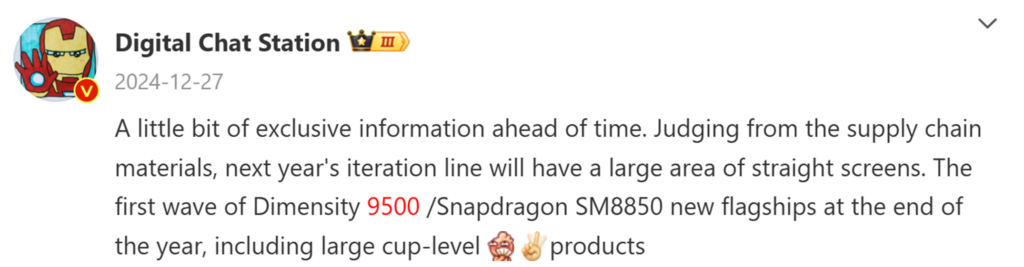
The tipster previously claimed that the first wave of flagship phones expected to launch by the end of this year in China, equipped with the Dimensity 9500 and Snapdragon 8 Elite 2 (SM8850) chipsets, will feature flat display panels. This suggests that flagship phones beyond the Find X9 series will also adopt completely flat displays.
It remains to be seen whether other flagship phones, such as Vivo X300 series, Realme GT 8 Pro, and OnePlus 14, anticipated to launch by the end of 2025, will also sport flat displays.
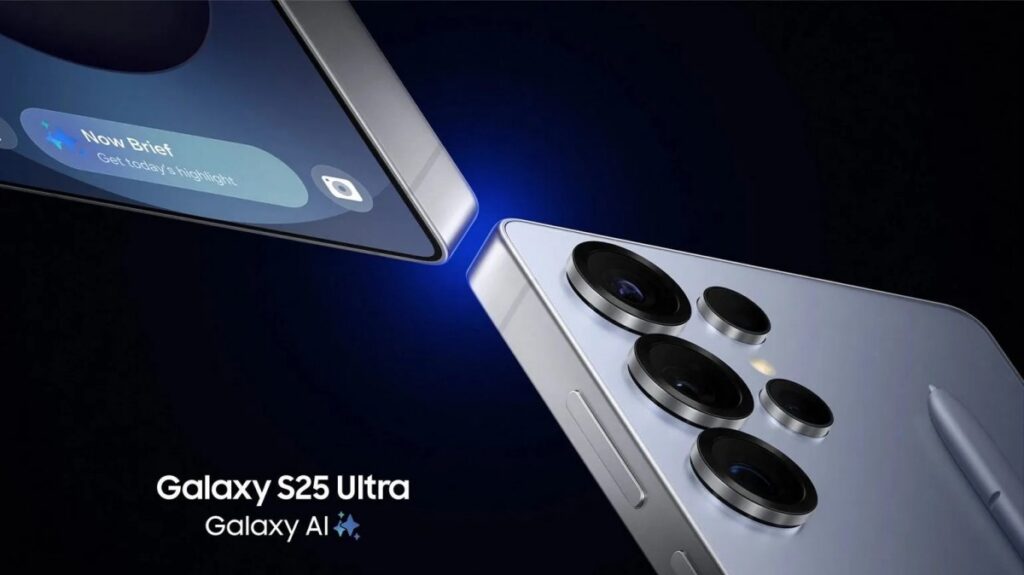
We are only a week away from the official unveiling of the Galaxy S25 series and those who have been following the leaks already have an idea of how the phones are going to look like. In the latest news, renowned tipster Evan Blass has shared what appear to be promotional images for the upcoming flagship lineup.
A sneak peek at the promo images of the Galaxy S25 series
The leak includes two images, the first one of which includes the Galaxy S25 and S25+. The Ultra model appears in its own dedicated poster. Among the first things in these leaked images that have caught my attention is how much emphasis Samsung is placing on “Galaxy AI”.
Samsung‘s new Bixby, powered by the latest large language models, promises to transform how users interact with their phones. Apple‘s entry into AI in its iPhone 16 is incomplete, but it seems that Samsung is going to set a new benchmark for AI integration, hence taking the lead in the market.
The promo image confirms the redesign of the Galaxy S25 Ultra – a departure from the sharper edges of its predecessors. The top model is shown off in a new blue color, which, according to previous rumors, could be called Titanium Silver Blue. On the other hand, the other poster reveals a navy color option for the other two models.
Deeper integration of AI features
The focus on AI could make the Galaxy S25 series a game-changer in the smartphone market. Samsung’s AI-centric approach is set to outpace competitors like Oppo, vivo, and OnePlus, who have only just started incorporating some basic AI features.
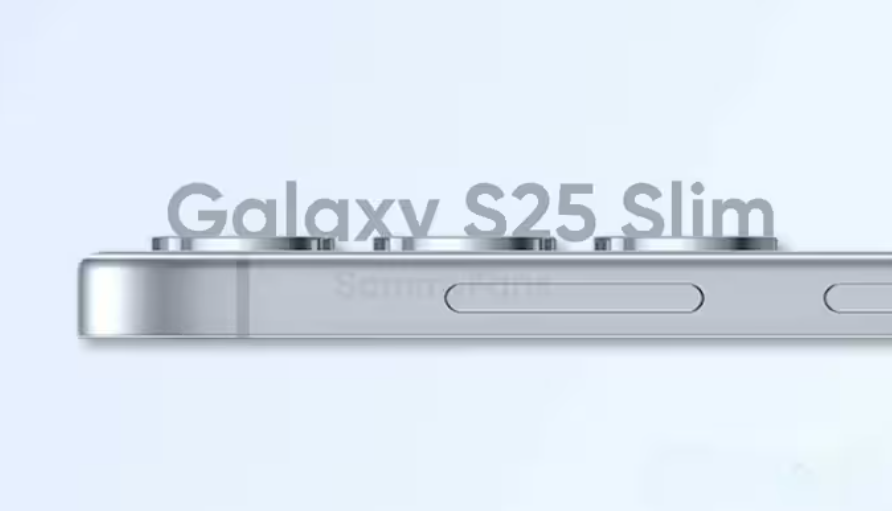
For those wary of overhyped AI marketing, waiting for the Galaxy S25 Slim—another rumored addition to the lineup—might be a wise choice. It is currently unclear whether Samsung will introduce the new model at the Unpacked event. According to a recent leak Samsung could launch the Galaxy S25 Slim in May 2025.
All three models of the S25 series are expected to run on the Snapdragon 8 Elite chipset. It promises a noticeable jump in performance as compared to the predecessors. You can learn more about the performance improvement of the Snapdragon 8 Elite over Snapdragon 8 Gen 3 here.
Flying Flea, the electric motorcycle brand from Royal Enfield, is making strides in the EV sector by partnering with Qualcomm Technologies to enhance its upcoming bikes with advanced connected features. The collaboration brings the Snapdragon QWM2290 SoC and Snapdragon Car-to-Cloud Platform to Flying Flea motorcycles, promising riders an intuitive, connected, and highly customisable experience.
Technology-driven innovation in electric bikes
Flying Flea
At the core of this partnership is the Snapdragon QWM2290 SoC, a chip tailored for two-wheelers, designed to deliver real-time connectivity and seamless communication. The chip powers an in-house operating system that runs the vehicle control unit, managing everything from diagnostics to interactive TFT displays. Riders can benefit from features like advanced navigation, voice assistance, and ride mode customisation, ensuring the bike adapts to different terrains and preferences.
The motorcycles will also allow riders to use their smartphones as smart keys, adding a layer of convenience. Connectivity options, including 4G, Bluetooth, and Wi-Fi, ensure that riders remain connected on and off the bike, enhancing safety and overall usability.
In-house development and forward-looking design
Flying Flea
Flying Flea is focusing on ground-up innovation with a dedicated team of over 200 engineers in India and the UK. The brand has developed proprietary technologies for its motor, battery, and software systems while filing over 28 patents for these advancements. The first models, FF-C6 and FF-S6, are expected to feature a mix of classic styling and modern functionality, aiming for a 2026 launch. Flying Flea’s manufacturing facility at Vallam Vadagal, Tamil Nadu, India, has been equipped to produce these advanced electric motorcycles, underlining its commitment to redefining two-wheeler mobility.
A new Oppo phone with the model number PKQ110 has received approval from China’s TENAA certification platform. The listed specifications suggest that it is a mid-range device. Meanwhile, tipster Experience More has shared live images of the phone and claimed that it will launch under the name Oppo A5.
Oppo has previously launched two phones under the Oppo A5 moniker. In 2018, Oppo introduced the first phone, followed by another in 2020. If the tipster’s claim is accurate, the upcoming PKQ110 will also carry the same name. To avoid confusion with the earlier models, it would be more appropriate to refer to the new device as the Oppo A5 (2025).
Oppo A5 (2025) specifications (rumored)
Oppo A5 (2025)Oppo A5 (2025)
As per the TENAA listing, the Oppo A5 (2025) measures 161.57 x 74.47 x 7.65mm and weighs around 185 grams. The real-life images of the phone reveal a flat AMOLED panel with an integrated fingerprint sensor. The 6.7-inch screen offers an FHD+ resolution and 10-bit colors.
An unknown 2.2GHz chip powers the Oppo A5 (2025). It is speculated that this chipset could be the Snapdragon 6 Gen 1. The handset is expected to arrive with 8 GB / 12 GB of RAM and 256 GB / 512 GB of storage. There is no support for external storage on the device.
On the back, the A5 has a squircle camera module featuring a 50-megapixel + 2-megapixel dual-camera system and an LED flash. For selfies, it has an 8-megapixel front-facing camera. The device is expected to run on Android 15 overlaid with ColorOS 15.
The Oppo A5 (2025)’s battery has a rated value of 6,330mAh. This indicates that its typical value could be around 6,500mAh. Lastly, the device is expected to support 45W fast charging.
Redmi launched the Turbo 4 as an upper mid-range smartphone powered by the new Dimensity 8400 Ultra processor. The device will soon be joined by a Pro model, which we have been hearing a lot about recently.
A fresh leak today from a reliable tipster reveals more details about the battery specs of the smartphone, and it appears to come with a shockingly large battery.
Redmi Turbo 4 battery
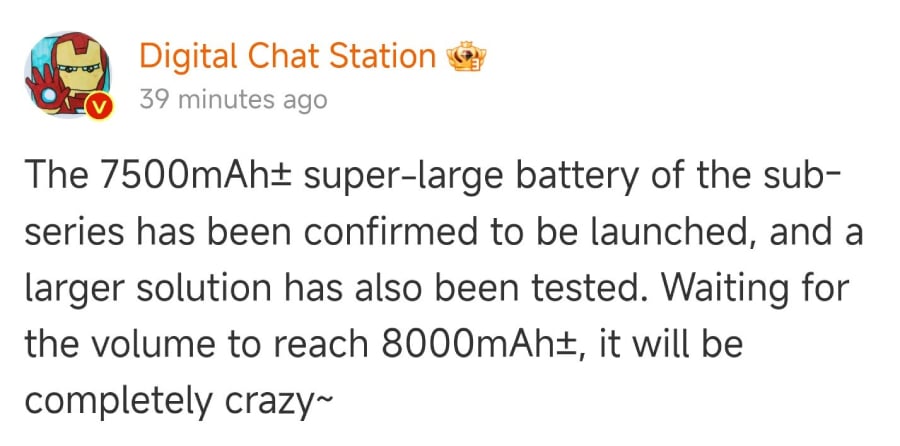
According to Digital Chat Station, the Redmi Turbo 4 Pro is now confirmed to feature a 7500mAh battery. To note, the non-Pro model also boasts a sizable 6550mAh battery.
Interestingly, the tipster claims that Xiaomi is also internally testing a smartphone with an 8000mAh battery. After the trend of mind-boggling charging speeds, it seems the focus is now shifting toward equipping smartphones with larger batteries.
This is all thanks to the new silicon-carbon anode batteries, which offer much higher energy density compared to the traditional carbon anode batteries used by manufacturers so far. As a result, slim devices can now house significantly larger battery capacities.
The tipster does not mention charging specifications in the post but notes in the comments that the Turbo 4 Pro will not support wireless charging. A previous report from late December suggested the phone will have 90W wired charging.
Beyond this
Apart from the battery, the Turbo 4 Pro will feature a flagship-level Snapdragon 8s Elite chipset. Instead of Oryon cores, it will use a more traditional CPU architecture, with a Cortex-X4 prime core and A720 efficiency cores, offering performance similar to the Snapdragon 8 Gen 3.
The phone is also expected to include a 1.5K flat AMOLED display, a metal frame, and a glass back.
Globally, the Turbo 4 Pro may launch as the Poco F7 as its predecessor is a rebranded version of the Redmi Turbo 3.
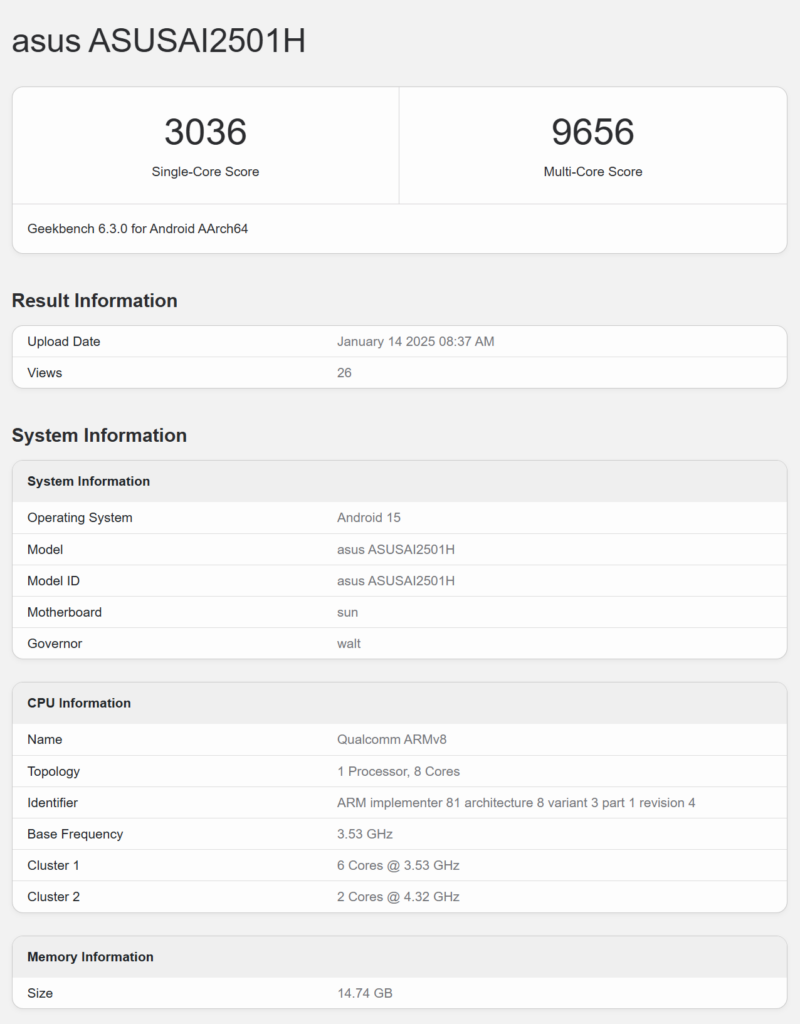
Asus will unveil its next flagship phone, the Zenfone 12 Ultra, on Feb. 6 globally. While the company has confirmed the launch, it is yet to reveal its design or key specifications. A new Asus phone bearing the ASUSAI2501H model number has emerged in Geekbench’s database. This device could be the upcoming Zenfone 12 Ultra.
Asus Zenfone 12 Ultra Geekbench listing
Asus Zenfone 12 Ultra’s Geekbench listing
The Zenfone 12 Ultra’s Geekbench listing reveals that the Snapdragon 8 Elite chipset powers it. While the chipset’s name is not explicitly mentioned, the CPU and GPU details in the source code confirm that it features Qualcomm’s latest flagship processor.
The Geekbench listing further reveals that the device has 16 GB of RAM and Android 15. The device has scored 3036 and 9656 points in the single-core and multi-core tests, respectively.
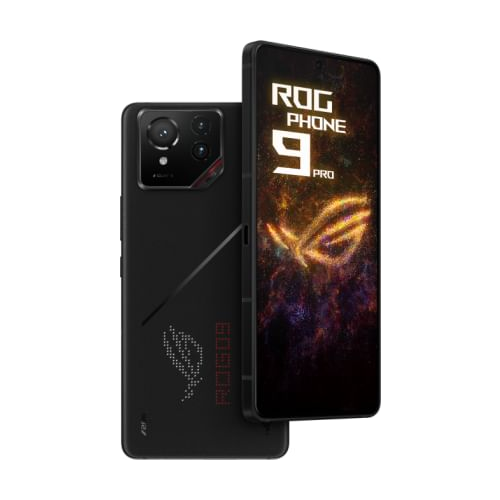
Zenfone 12 Ultra could be similar to the ROG Phone 9 Pro
To recall, the Zenfone 11 Ultra and ROG Phone 8 Pro were nearly identical phones, with the ROG model offering additional gaming-focused features. Therefore, it is likely that the Zenfone 12 Ultra could be identical to the ROG Phone 9 Pro, which debuted a couple of months ago.
Therefore, the Zenfone 12 Ultra is expected to feature a 6.78-inch AMOLED FHD+ 165Hz screen, a Snapdragon 8 Elite chipset, LPDDR5x RAM, UFS 4.0 storage, and a 5,800mAh battery with 65W wired and 15W wireless charging. It may feature a 32-megapixel front camera and a 50-megapixel + 32-megapixel + 13-megapixel ultra-wide lens.
The ROG Phone 9 Pro, which packs these specs, offers additional features, such as a 24GB+1TB variant, pressure-sensitive gaming triggers, and an additional USB-C port. The Zenfone 12 Ultra is likely to max out at 16 GB RAM and 512 GB storage.
Realme has offered a glimpse of the RMX5020 smartphone through the FCC certification website. Even though the company is yet to make any official announcement, this listing may give us a clue about the phone’s design, specs, and features. According to this, the Realme device is expected to be an affordable offering with proper hardware at a reasonable price tag.
RMX5020 spotted on FCC
The Realme RMX5020 is confirmed to be a 4G-only smartphone that supports 15 4G bands with nine enabled for use. It will also carry dual-band WiFi and NFC for further connectivity improvements.
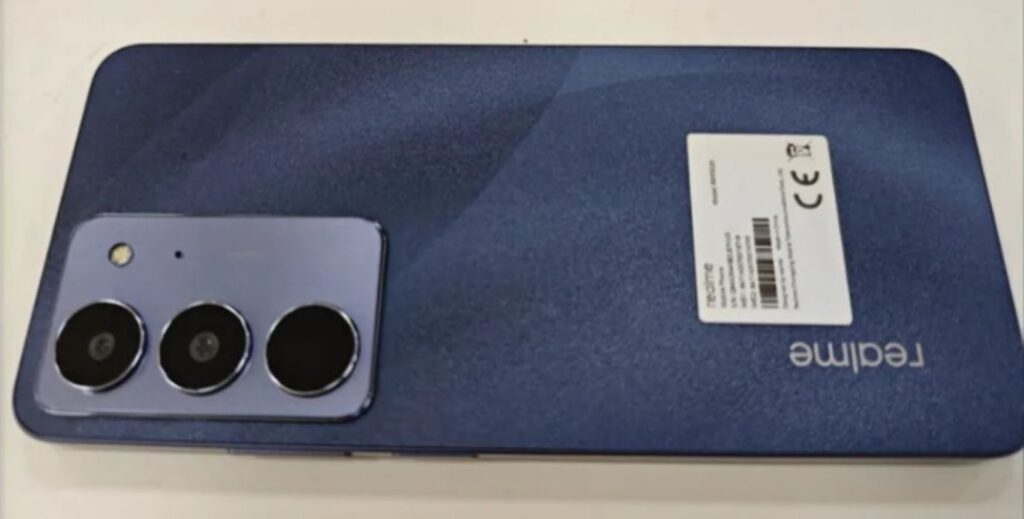
RMX5020 live image
One of the most distinguishing specifications is the phone’s 5180mAh battery, which promises users a long time on the device. The device will also support 45W SuperVOOC fast charging, as per its TUV Rheinland certification. On the software front, the phone runs Realme UI 6.0 out of the box, which is based on Android 15.
Live images from the FCC listing reveal the phone’s sleek design. It features flat edges and a sparkling back panel with a dual-camera setup. These design elements indicate that Realme is targeting users who prioritize aesthetics along with functionality.
What else to expect?
The NBD listing says that the RMX5020 will feature a 6.67-inch display, which is quite suitable for media consumption. It will come with 128GB of internal storage and 6GB of RAM, so it can handle casual multitasking and light gaming.
In terms of dimensions, the phone measures 165.69 x 76.22 x 7.99 mm, offering a slim profile despite its large battery. Its sparkling finish on the back adds a modern and youthful touch to its appearance. A downside of RMX5020 is that it lacks 5G connectivity.
Even though 5G has been here for a while, many people still rarely experience it due to its limited availability and reliable connections being restricted to major cities. Realme likely sees this as an opportunity to reduce costs by using a 4G chip, making the phone more competitively priced.
People looking for a 5G-enabled device may consider Realme 14x 5G, which is currently available in India for around ₹15,000. Check out the details here.
Poco recently launched the Poco X7 Pro Iron Man Edition, marking a global collaboration with Marvel that brings the iconic superhero elements of Iron Man to one of its newer devices.
This limited-edition smartphone builds on the standard Poco X7 Pro specifications while incorporating a design and user experience tailored to Marvel fans worldwide.
The X7 Pro Iron Man Edition features a design inspired by Iron Man’s iconic armor, with a rear panel incorporating elements like the signature arc reactor and a red, black, and gold color scheme.
It comes with a red-colored power button, adding to its distinct aesthetic. To enhance the experience, the phone comes with a custom transparent case displaying Tony Stark’s signature, allowing the design to stay visible while protected.
This edition also features a custom user interface that matches the phone’s overall theme. From wallpapers to app icons, the UI reflects Iron Man’s futuristic and high-tech vibe.
Furthermore, the phone comes in exclusive packaging that includes red-colored charging cables and a uniquely designed SIM ejector tool, making the unboxing experience memorable for collectors and fans.
2. Poco X7 Pro Iron Man Edition Specs
The Iron Man Edition retains the powerful specifications of the standard POCO X7 Pro. It features a 6.67-inch 120Hz LTPS OLED display with up to 3200 nits of peak brightness, offering a vibrant and immersive viewing experience.
The phone is powered by the MediaTek Dimensity 8400-Ultra SoC, paired with 12GB of LPDDR5X RAM and 512GB of UFS 4.0 storage, ensuring seamless performance and ample storage for demanding users.
It also includes a robust 6550mAh battery with 90W fast charging, capable of fully charging the device in just 45 minutes. The dual-camera system on the rear comprises a 50MP Sony LTY-600 primary sensor with optical image stabilization and an 8MP ultra-wide lens, while the 20MP front-facing camera caters to high-quality selfies and video calls.
3. Pricing and Availability
The X7 Pro Iron Man Edition is priced at $399 for the 12GB + 512GB variant. However, an early bird price of $369 is available for a limited time.
The phone is available in select global markets starting January 9, 2025, with limited units in circulation. While Poco has not announced an India launch for this edition, its exclusivity and Marvel branding are likely to make it a sought-after collector’s item.
In related news, Motorola has launched the Moto G Power 2025 and Moto G 2025, featuring MediaTek Dimensity 6300 chipsets, 120Hz FHD+ displays, and 5000mAh batteries. These devices are priced at $299.99 and $199.99, respectively, with availability starting January 30, 2025.
Nothing, the innovative tech company led by Carl Pei, has been quite silent since July 2023 when it unveiled the Phone (2). Tipster Evan Blass however leaked an internal email recently that was from the company’s CEO to its employees. The email reveals the company’s plans for 2025, which includes two unreleased smartphones – the Nothing Phone (3) and another codenamed “landmark”.
Nothing’s vision for 2025
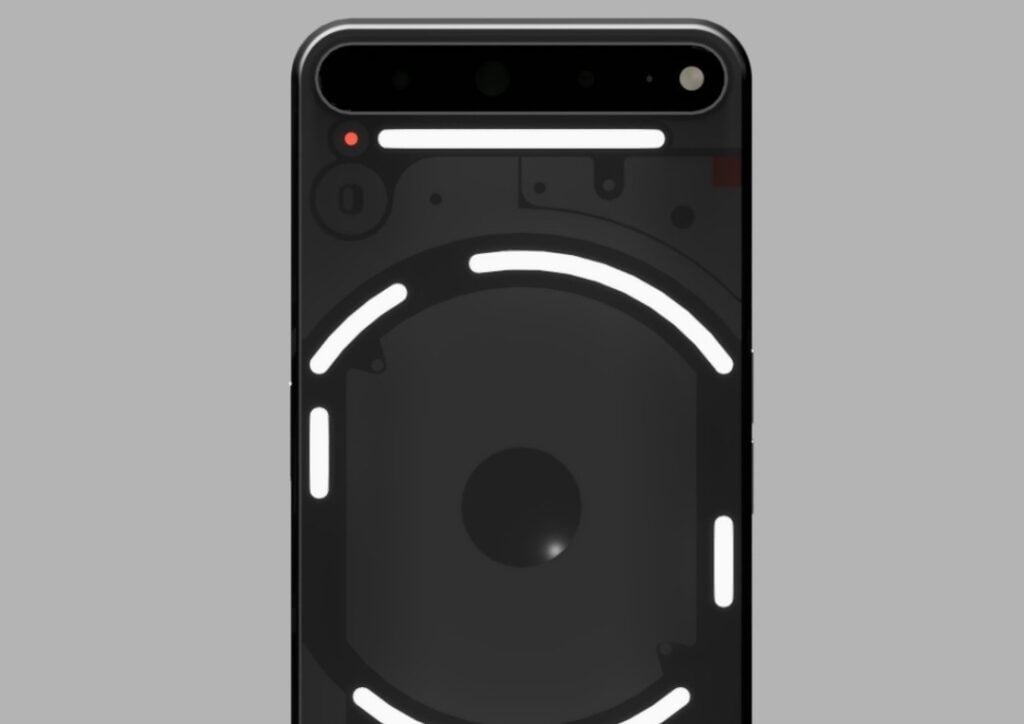
The internal email confirms the development and upcoming launch of the Nothing Phone (3), which promises to bring “breakthrough innovations in the user interface.” According to the CEO, the Phone (3) will mark the brand’s first major step toward integrating AI into its ecosystem, which he talked about in an interview last year.
Nothing Phone 3 concept render
“2025 will be by far our biggest year yet,” noted Pei in his email. “We’re aiming at redefining the user experience of personal computing devices – creating technology that knows you, makes your life easier, and is present where you are,” he added.
But that’s not all. There is also an indication of a “landmark” smartphone that is set to launch in Q1 2025. Speculations were that it would be an affordable smartphone, or a CMF product.
In addition to the Phone (3), reports claimed that Nothing had more than one device in development. A Phone model number NT04 has shown up on the BIS listing that seems to go live in India soon. According to UL Demko certification, the battery pack for this will be 4,290 mAh, much smaller than those of the 5,000mAh cell types found inside the Phone (2a) and Phone (2a) Plus.
As for the Nothing Phone (3), its said to include a telephoto camera. The Snapdragon 7s Gen 3 SoC with eSIM support is expected in both devices, and the price may continue to be around Rs 30,000 just like their previous models.
With the focus on integrating AI, innovative designs, and user-centric features, Nothing is preparing to make 2025 a year of innovation.
Samsung is reportedly gearing up to launch its highly anticipated Galaxy S25 Slim in May 2025. According to tipster Instant Digital, the launch may coincide with China’s 618 Shopping Festival, offering a strategic market entry during the high-demand period. Adding to the excitement, the Galaxy S25 Ultra will likely be available for pre-orders immediately after the official event, with deliveries starting post-Lunar New Year.
The Galaxy S25 Slim recently surfaced on GeekBench, showcasing impressive hardware capabilities. Listed under the model number “SM-937U,” the device achieved an impressive single-core score of 3005 and a multi-core score of 6945. It will be powered by the Snapdragon 8 Elite for Galaxy chipset and 12GB RAM, running One UI 7 on Android 15, debuting with the S25 series.
The Galaxy S25 Slim will offer a thinner, lighter alternative to the S25 series, featuring a 6.7-inch Dynamic AMOLED 2x display with a 120Hz refresh rate. It is rumored to include Samsung’s ALoP camera technology with a 200MP HP5 primary sensor, 50MP JN5 3.5x telephoto lens, 50MP JN5 ultra-wide camera, and 12MP front camera.
Despite its ultra-slim 6.6mm profile, making it thinner than both the S25 and S25 Plus, the Galaxy S25 Slim could house a 4700mAh to 5000mAh battery. Rumors suggest it might be teased during this month’s Galaxy Unpacked event, following Samsung’s approach with the Galaxy Ring last year.
Talking about the Galaxy S25 series, which is set to launch on January 22, includes the Galaxy S25, S25+, and S25 Ultra. The S25 and S25+ are equipped with the Snapdragon 8 Elite chipset, 12GB+ RAM, triple rear cameras, and 120Hz displays ranging from 6.36 to 6.7 inches.
The flagship S25 Ultra features a 6.9-inch LTPO AMOLED display, a 200MP quad-camera system, a titanium build, and a 5,000mAh battery supporting 45W wired and Qi2 wireless charging.
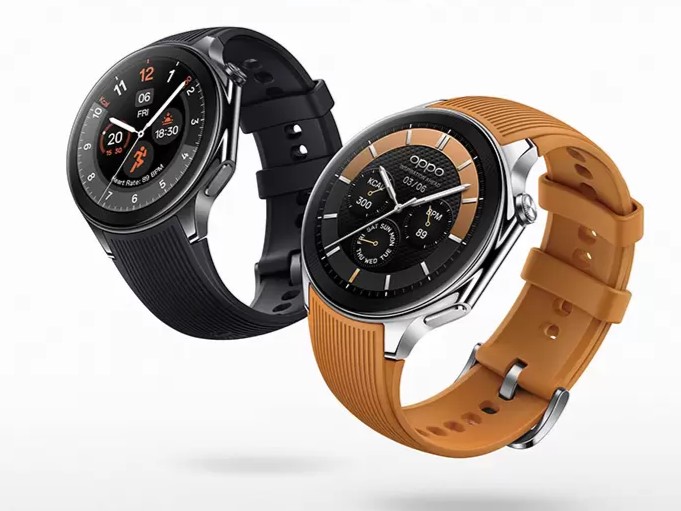
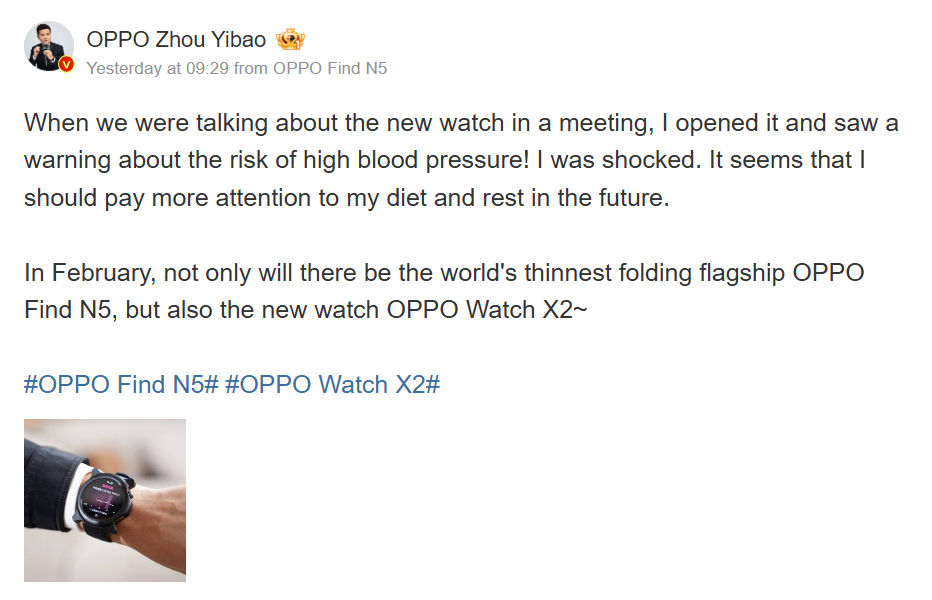
OPPO has confirmed that the new OPPO Watch X2 will be released in February, alongside the Find N5 foldable smartphone. Zhou Yibao, head of the OPPO Find series, shared that the smartwatch will include blood pressure monitoring, a feature designed to support proactive health management.
OPPO Watch X
The OPPO Watch X2 will have a round dial with two buttons on the right—a crown and a multi-function button. While detailed design elements are still under wraps due to a black confidentiality case, the images reveal a classic circular design.
The Watch X2 with model number “OWW251,” recently passed 3C certification and appeared on the Telecommunications Equipment Terminal Network. It supports eSIM functionality through an independent eUICC chip and works with China Unicom and China Mobile. With a 631mAh or 648mAh battery and 10W fast charging, it promises longer use without frequent charging.
It runs on OPPO’s ColorOS system and includes a range of health features such as ECG monitoring, a 60-second health check, wrist temperature measurement, and exercise tracking. Other practical additions include GPS, NFC, and waterproofing designed for durability in various conditions.
As mentioned in the beginning, the standout feature is the blood pressure monitoring, which will be able to alert its wearers whenever it detects abnormal blood pressure. This will put in in competition with other premium smartwatches from brands like Apple and Samsung.
Additionally, OPPO’s sister brand OnePlus is developing the OnePlus Watch 3, which will include ECG functionality to detect atrial fibrillation, frequent PVCs, and irregular heart rates. It’s possible that the OnePlus Watch 3 might be a rebranded version of the OPPO Watch X2, meaning both models could share nearly identical features.
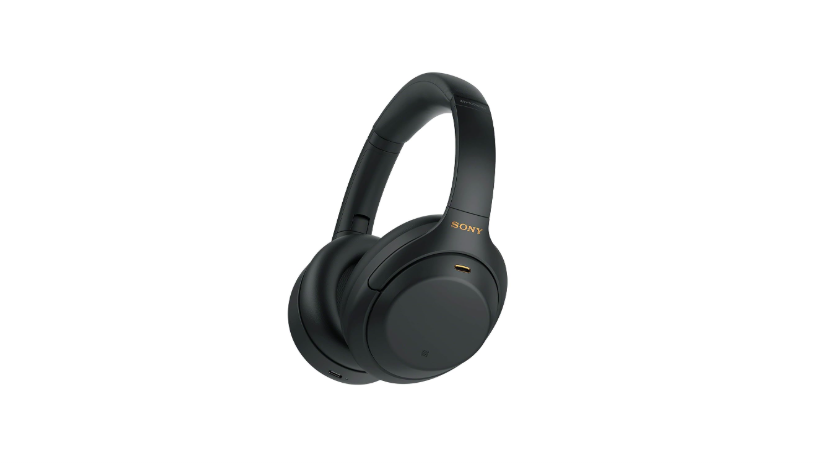
Sony’s WH-1000XM4 is once again on sale and this time it has bragged the lowest price since its launch in India. Interested users can grab the premium sound headphones at the exciting price of Rs 16,488 with an over Rs 3000 discount. Sony’s once flagship headphones are still relevant and it is a brag at this price range.
It is actually retailing for the price of Rs 19,988, and with the bank and coupon discounts, it is available for the price of Rs 16,488.
Packed with the industry’s leading Active Noise Cancellation, the Sony WH-1000XM4 offers an immersive and comfortable sound experience. It supports popular voice assistants like Google Assistant, Siri, and Alexa offering some automation and hands-free access. Further, it offers a Quick Attention Mode that enables flawless conversations. Sony WH-1000XM4 has smart features like touch sensor controls, Speak-to-Chat, and personalized sound settings through the Sony Headphones Connect app, allowing you to adjust the audio to your preferences.
In addition to its premium sound and comfort, the WH-1000XM4 boasts impressive battery life, providing up to 30 hours of playback on a full charge. With Bluetooth 5.0, and multi-device connectivity, these headphones keep you connected effortlessly. Built with durability in mind, they feature a foldable design and a sleek matte finish for easy portability. Whether you’re traveling, working, or relaxing, the Sony WH-1000XM4 provides an unbeatable combination of sound quality, comfort, and smart functionality.
Casio Japan has introduced the Fine Metallic Series, a new addition to its G-Shock lineup. The series includes the square GM-5600 and octagonal GM-2100 models, blending stainless-steel bezels with silicone bands for a mix of durability and comfort.
Design and Materials
The stainless-steel bezels are polished using forging, cutting, and polishing techniques, with a combination of mirror and hairline finishes to create a balanced texture. The bands, made from silicone and reinforced with a urethane sheet, are designed for flexibility and resistance to abrasion. Gold or silver coatings on the urethane back complement the metallic bezels.
Features
The series includes standard G-Shock features:
Shock Resistance: Protects against impact.
20-Bar Water Resistance: Suitable for water use.
Super Illuminator: Bright LED light for visibility.
GM-5600: Illuminates the LCD.
GM-2100: Illuminates both the dial and LCD.
Practicality and Use
The combination of stainless steel and silicone materials makes these models versatile, suitable for various settings. The silicone band ensures comfort, while the metallic bezel adds durability.
Models and Pricing
The series offers four models in silver and gold finishes:
The GM-5600 retains its traditional digital display, while the GM-2100 features a hybrid analog-digital design. The Fine Metallic Series is currently available only in Japan, with no confirmed international release.
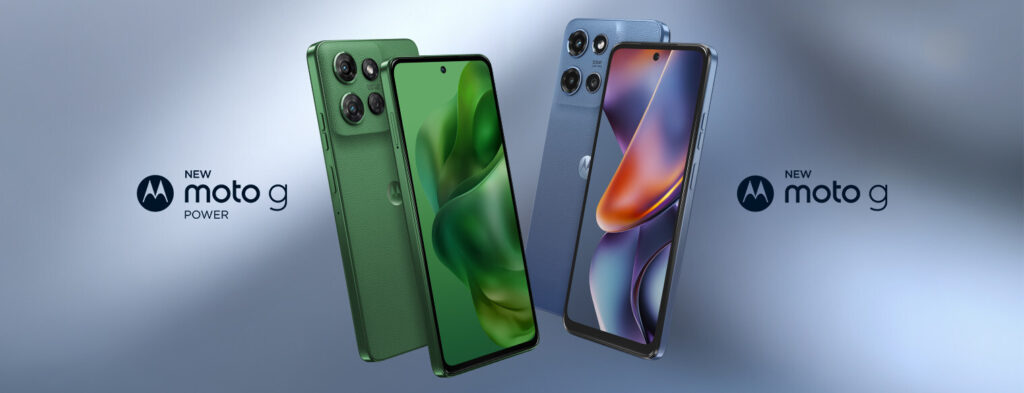
Motorola has started 2025 with the launch of two new budget-friendly smartphones, the Moto G Power 2025 and Moto G 2025. These devices offer impressive features designed for users seeking affordability without compromising on quality. Let’s check out the specifications of these devices.
Specifications
The Moto G Power 2025 features a 6.8-inch FHD+ LCD display with a 120Hz refresh rate, 1,000 nits peak brightness, and Gorilla Glass 5 protection, ensuring durability and vibrant visuals. The Moto G 2025 offers a slightly smaller 6.7-inch FHD+ LCD with the same refresh rate and brightness but uses Gorilla Glass 3 for protection.
Under the hood, both smartphones are powered by the MediaTek Dimensity 6300 chipset. The Moto G Power comes with 8GB of RAM, while the Moto G offers 4GB or 6GB options. Both devices run on Android 15, which includes features like audio sharing, enhanced accessibility, and improved security settings.
The Moto G Power 2025 features a triple-camera system with a 50MP main sensor, 8MP ultra-wide lens, and 16MP selfie camera, enhanced by OIS and Quad Pixel technology for sharper images. Meanwhile, the Moto G 2025 sports a 50MP main sensor and a 2MP macro lens, alongside a 16MP selfie camera, offering solid photography options for its price point.
Both devices also house a 5000mAh battery. The Moto G Power 2025 supports 30W TurboPower wired charging and 15W wireless charging, while the Moto G 2025 offers only 30W wired charging.
The Moto G Power 2025 stands out with MIL-STD-810H certification and IP68/IP69 water and dust resistance, making it one of the most durable budget phones on the market. It can withstand extreme conditions, including falls, humidity, and water immersion.
The Moto G 2025, while less rugged, offers IP52 water resistance and a vegan leather back like its sibling. Both phones come with Dolby Atmos support, Hi-Res Audio, and Bass Boost technology for an immersive audio experience.
Pricing and Availability
The Moto G 2025 will be available starting January 30, 2025, at $199.99. It comes in two colors: Forest Gray and Sapphire Blue. The Moto G Power 2025, priced at $299.99, will launch on February 6, 2025, and is available in Slate Gray and Leaf Green.
Both models will be sold universally unlocked through Motorola’s online store, Amazon, and Best Buy. They will also roll out to major U.S. carriers, including T-Mobile, Verizon, AT&T, and others, in the coming months. Canadian availability begins on May 2, 2025, via motorola.ca and select carriers.
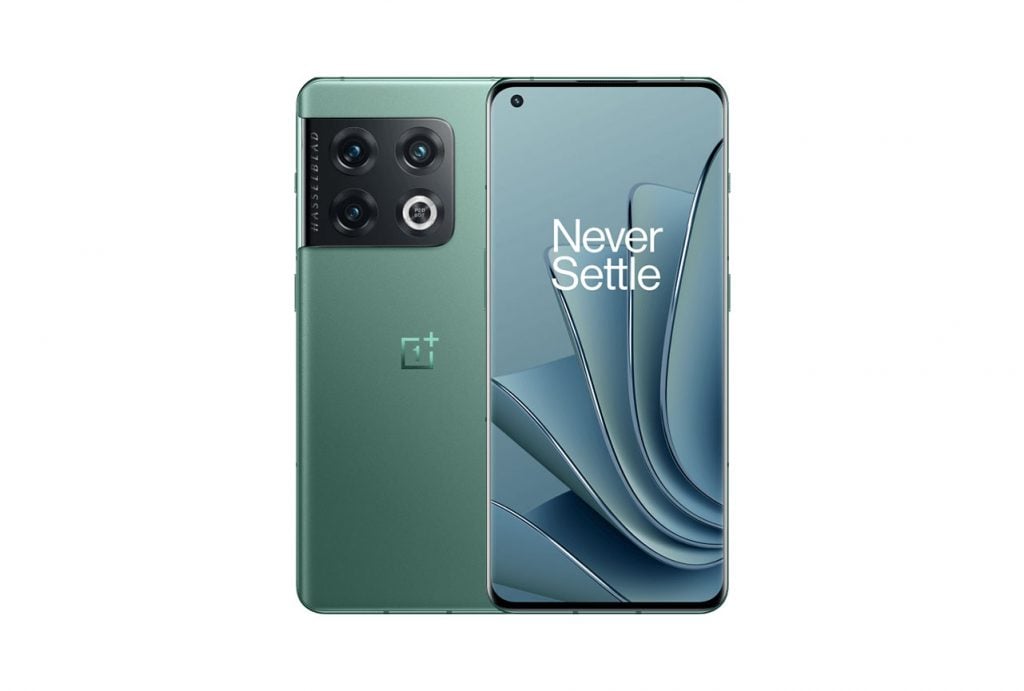
OnePlus has started the rollout of OxygenOS 15 for the OnePlus 10 Pro 5G in India (version NE2211_15.0.0.401(EX01)). The update introduces a variety of improvements focused on usability, customization, and system performance. That said, it is worth mentioning that the update does not come with AI features, that are present in the OxygenOS 15 versions of more recent OnePlus flagships.
Key Features:
Ultra Animation Effects The parallel rendering architecture improves multi-app switching under heavy use. Animations for widgets, folders, and other components are more fluid, while system-wide scrolling is now consistent across third-party apps.
Luminous Rendering Effects Rounded corner designs have been standardized to create a more uniform appearance.
Flux Themes Customizable settings for Always-On Display, Lock screen, and Home screen are now available. Flux themes enable smooth transitions, with additional options for wallpapers and clock styles.
Live Alerts Live Alerts now display information more clearly, with interactive capsules that can expand into cards. Users can swipe between activities and see updates like torch status directly on the alerts. Layout improvements include better Spotify integration and a fix for overlapping icons.
Photo Editing A reversible editing feature allows users to apply previous settings to new edits, while filters used during capture can be modified later.
Multitasking Updates Split View windows are now resizable, and new Floating Window gestures provide improved control over app views. Notifications and Quick Settings have been redesigned with separate swiping gestures for better navigation.
OnePlus Share File sharing with iOS devices is now supported, including live photo transfers.
Battery and Charging The new “Charging limit” feature caps charging at 80% to protect battery health, along with reminders for long charging periods.
Privacy Features Private Safe now organizes files into categories, and hidden apps are accessible via a new Home screen folder.
We have also included the detailed official changelog below for readers eager to know the nitty-gritty of this update.
OnePlus 10 Pro 5G OxygenOS 15 Changelog
Ultra animation effects
Introduces the industry’s first parallel rendering architecture, offering parallel response and unified rendering to elevate multi-app switching to a new level. Even under extreme usage conditions, the display remains consistently smooth and seamless, ensuring unwavering stability.
Adds parallel animation for a wider range of scenarios, including widgets, components, folders and more, ensuring smooth animations even when frequently interrupted.
Adds system-level swiping curve coverage for third-party apps, including WebView interfaces, ensuring a consistent scrolling experience throughout the system.
Luminous rendering effects
Optimises the rounded corner design by standardising its specifications and extending the application of a continuous curvature.
Flux themes
Introduces new flux themes with a huge collection of high-quality themes. Customise them with system wallpapers and photos for your unique touch.
Introduces customisation for Always-On Display, the Lock screen and the Home screen. Always-On Display supports flux and classic modes. The Lock screen supports clock colour blending, blurred wallpapers, AI depth effects, AI auto-fills and more. The Home screen supports blurred wallpapers and more.
Introduces flux themes with one-take transition animations, enabling seamless and smooth transitions between Always-On Display, Lock screen and Home screen, significantly enhancing visual continuity.
Live Alerts
Adds a new Live Alerts design that is focused on the visualisation of information, offering better information display efficiency. Live Alerts is also positioned in the centre, creating a more balanced display.
Optimises the way you interact with Live Alerts capsules – just tap a capsule and see it expand into a card. You can quickly switch between multiple live activities simply by swiping left or right on the capsules in the status bar, making it more efficient to view information.
Introduces a new Live Alerts animation system featuring elastic design, seamless expansion and dynamic real-time blur to enhance the visuals of cards.
Now you can see the status of the torch on Live Alerts.
Fixes a display issue with existing icons on the status bar when a Live Alerts capsule is displayed. Improves the layout of Spotify on Live Alerts and adds smart recommendations.
Photo editing
Introduces globally reversible photo editing capability that remembers the settings for your previous edits so they can be applied to subsequent edits, keeping the creative flow uninterrupted.
Improves integration between Camera and filters, so filters that are applied to photos when taken can be edited, changed and removed later in Photos.
Floating Window and Split View
Introduces new Floating Window gestures: pulling down a notification banner to bring up a floating window, pulling down a floating window for full screen display, swiping up to close a floating window and swiping to a side to hide a floating window.
Now you can drag a floating window to change it to full screen.
Introduces resizable Split View windows. Simply drag the divider to resize the window not fully displayed for a larger display area. You can also achieve this by tapping the window.
Notifications & Quick Settings
Adds the Split mode for the notification drawer and Quick Settings. Swipe down from the upper-left to open the notification drawer, swipe down from the upper-right for Quick Settings and swipe left or right to switch between them.
Redesigns Quick Settings with an optimised layout that offers more appealing and consistent visuals and more refined and rich animations.
OnePlus Share
The new file transfer capability with iOS devices, easily connecting and sharing files through OnePlus Share.
Now you can easily share live photos with nearby iOS devices.
Battery & charging
Introduces “Charging limit” to stop charging at 80% to extend battery lifespan and slow down degradation.
Introduces battery protection reminder to turn on Charging limit when your device is connected to a charger for too long.
More
Introduces exclusive OxygenOS Always-On Displays and Lock screen clock styles.
Introduces the new Home screen clock widget that can be resized to your preference.
Plants a “1+” easter egg in Calculator to be displayed when punching in “1+=” as a show of OnePlus’ “Never Settle” philosophy.
Introduces more wallpapers to bring the unique style of OnePlus to your phone.
Introduces exclusive OxygenOS app icon styles.
Now you can swipe up to the left to quickly enable Split View when an app is displayed in full screen.
Now you can migrate live photos from iOS devices with Clone Phone.
Retouch appearance in video calls now supports more apps.
Boarding passes can now be recognised in Photos and added to Google Wallet.
Optimises the style and visuals of the Notes widgets on the Home screen for a more attractive and practical experience.
Apps in large folders can now be displayed in 3 × 3 grids.
Optimizes the widgets of Clock on the Home screen.
Optimizes the widgets of Notes on the Home screen.
Optimises your multitasking experience by navigating you to the last used app once you enter the recent tasks view, making app switching more convenient.
Optimises the Drawer mode by retaining the Home screen app layout when you enter Drawer mode for the first time.
Privacy protection
Improves Private Safe with the new categorised browsing features for images, videos and documents, making it easier to manage private data.
Introduces a new Home screen entry for hidden apps. You can tap the Hidden apps folder on the Home screen and verify your privacy password to see the apps.
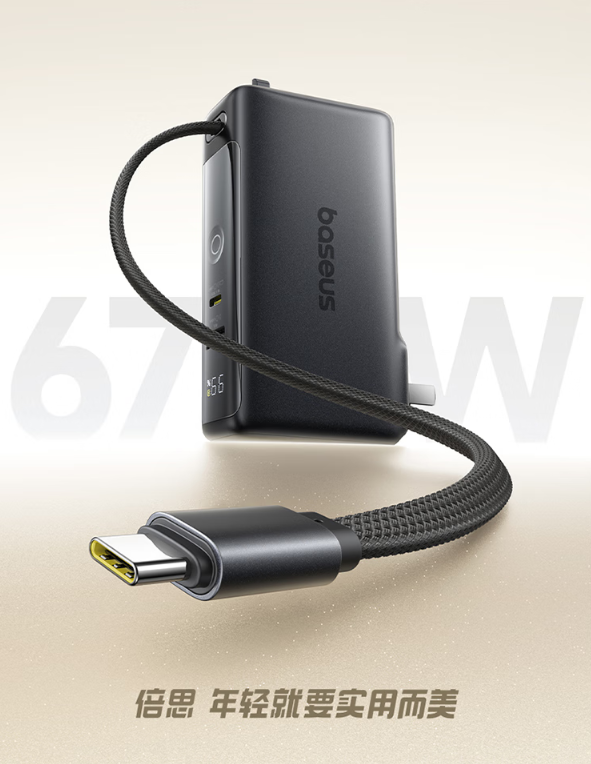
Baseus has launched a new 2-in-1 power bank and charger with a built-in cable called “Nomos NT11” in the Chinese market. The power bank is priced at 269 yuan ($36) and is now listed on JD.com. It will officially go on sale tomorrow. Let’s check out its key specs.
Baseus Nomos NT11 Specifications
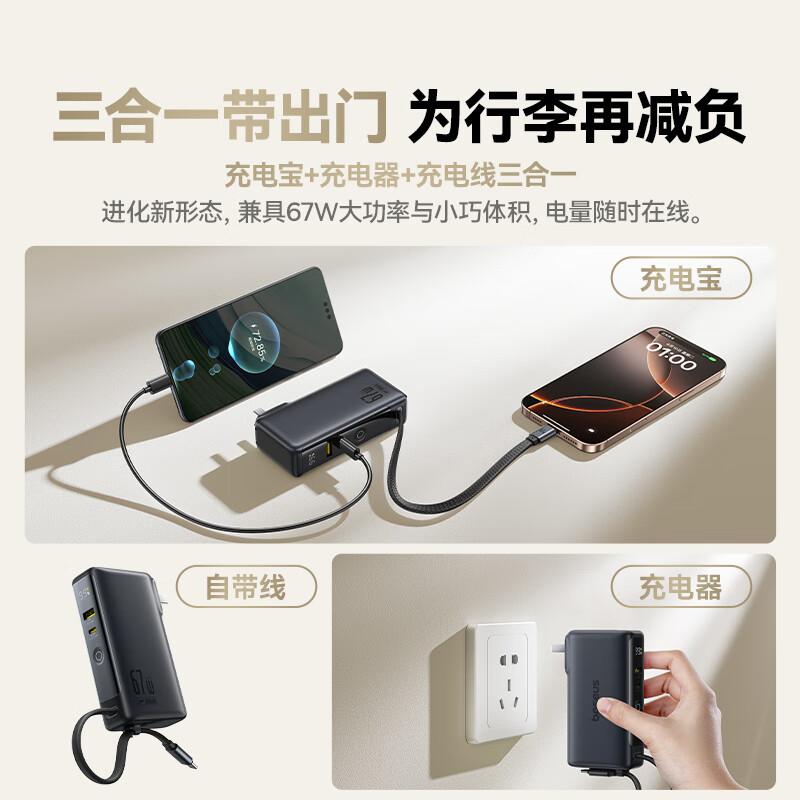
Actually, Baseus Nomos NT11 is a versatile 3-in-1 device that functions as a power bank, charger, and charging cable. It features a compact and portable design, weighing only 294g, and is comparable in size to a pack of handkerchiefs, making it easy to carry during travel.
It comes equipped with a 10000mAh high-energy-density lithium-ion battery, providing enough power to last an entire day. The power bank can charge an iPhone 16 up to 1.6 times and a Huawei Mate 60 up to 1.2 times on a single charge. It comes with an LED semi-transparent display on the front that shows the remaining power with precision, offering better control over usage.
The device sports 67W fast charging, powered by an Apple-certified PI chip and GaN 6.0, ensuring safe and efficient charging for a variety of devices. It supports multiple fast-charging protocols, including PD3.0, PPS, and QC3.0, making it compatible with over 1000 devices such as iPhones, Android smartphones, laptops, and headphones.
For heat management, it is equipped with an advanced three-layer temperature control system using AI algorithms, high-performance chips, and a copper foil heat dissipation mechanism to maintain low temperatures even during high-power charging. Additionally, its aerospace-grade aerogel insulation material improves heat resistance and safety.
It supports multiple output modes: a USB-C output of 67W, a USB-A output of 22.5W, and combined outputs for charging three devices simultaneously. It also features a foldable AC plug design that allows the power bank to double as a wall charger, making it suitable for travel or use at home.
The Baseus Nomos NT11 comes in Star Black, Ocean Blue, and Nebula Purple finishes, featuring a premium UV matte body with pearl spray accents for enhanced durability and aesthetics.
In related news, check out our comprehensive roundup article to know all about the upcoming Samsung Galaxy S25 series launching on January 22.
We use cookies on our website to give you the most relevant experience by remembering your preferences and repeat visits. By clicking “Accept”, you consent to the use of ALL the cookies.
This website uses cookies to improve your experience while you navigate through the website. Out of these, the cookies that are categorized as necessary are stored on your browser as they are essential for the working of basic functionalities of the website. We also use third-party cookies that help us analyze and understand how you use this website. These cookies will be stored in your browser only with your consent. You also have the option to opt-out of these cookies. But opting out of some of these cookies may affect your browsing experience.
Necessary cookies are absolutely essential for the website to function properly. This category only includes cookies that ensures basic functionalities and security features of the website. These cookies do not store any personal information.
Any cookies that may not be particularly necessary for the website to function and is used specifically to collect user personal data via analytics, ads, other embedded contents are termed as non-necessary cookies. It is mandatory to procure user consent prior to running these cookies on your website.