Advertisement

Samsung to outsource 67 million smartphones from Chinese ODMs in 2024

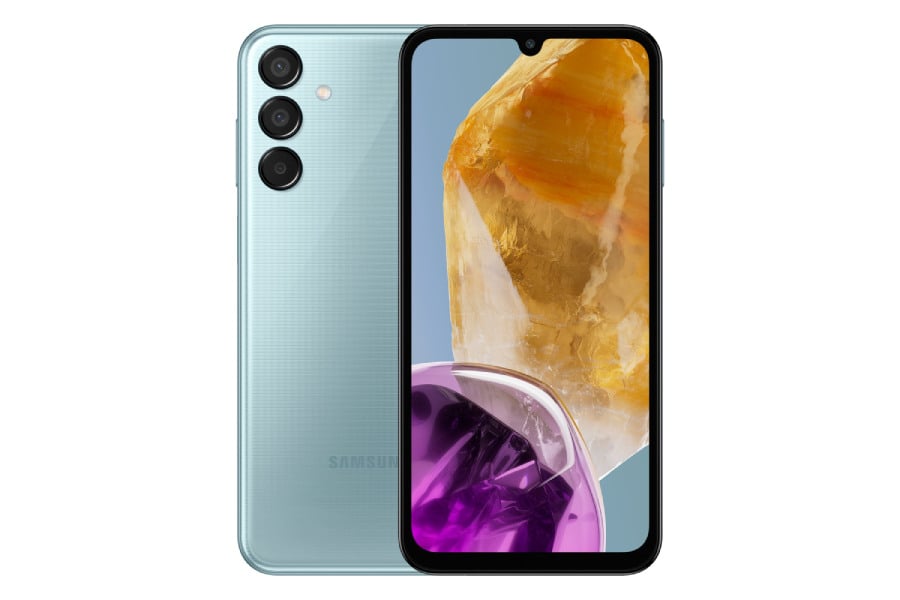
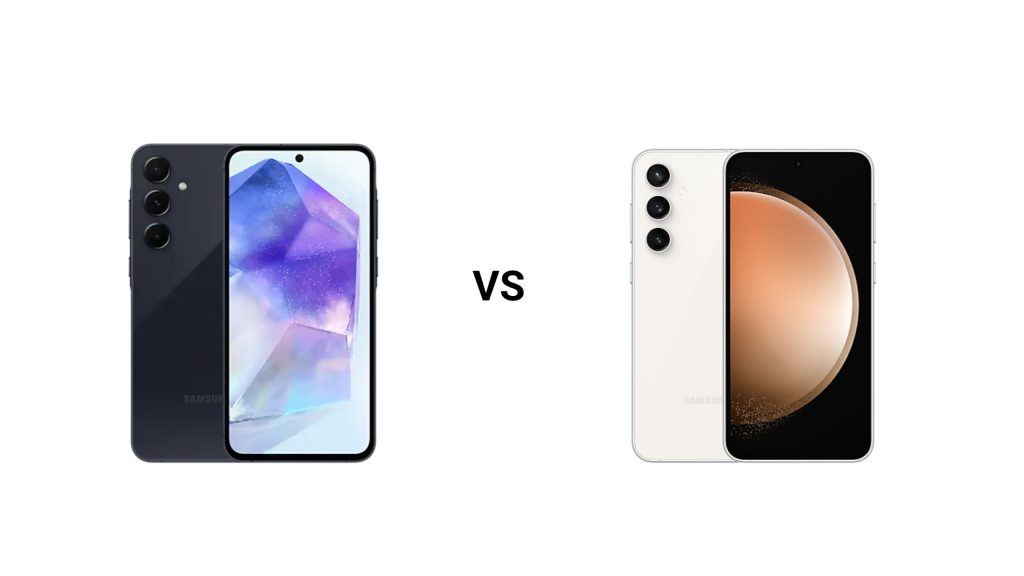
Samsung‘s reliance on outsourced production for its budget phone segment seems to be growing. According to The Elec, the South Korean tech giant is projected to produce 67 million smartphones in 2024 through Chinese ODMs (original design manufacturers) and JDMs (joint device manufacturers). 

That’s a significant jump from 44 million units in 2023 and makes up a substantial 25% of Samsung’s overall smartphone production target of 270 million units this year.

The report further indicates that Vietnam will play a role in Samsung’s outsourcing strategy, with an estimated 28 million units expected to be produced in Vietnamese factories. 

Samsung is believed to be outsourcing so heavily to reduce costs that will allow it to offer more competitive pricing for its budget phone lines.

Samsung’s foray into outsourced production for affordable phones began in 2019. The approach does give the brand an advantage with low production and R&D costs, but it raises concerns about quality compromises outsourcing a product might bring. 

ODM partners to increase their profit margins might cut corners on materials or components that may impact the overall user experience. A case in point is the Samsung Galaxy A03s believed to be an outsourced phone. 

While it received some praise for its battery life and usability improvements, it also faced criticism for its cheap build quality and sluggish performance.

Despite these potential drawbacks, Samsung’s strategy seems to be resonating with consumers. The company held the distinction of being the only Android manufacturer with phones listed among the top 10 best-sellers in both 2022 and 2023. 

So the cost-effective approach achieved through outsourcing is delivering budget-friendly Android devices that find a market.

Moving forward, it will be interesting to see how Samsung manages the balancing act between affordability and quality control in its outsourced phones. 

The company will need to ensure its ODM partners maintain sufficient standards while delivering competitive pricing for budget-conscious consumers.

Related:

AOC launches Q24G4E gaming monitor with 2K 180Hz Fast IPS panel, 1ms response & more

AOC, a renowned name in the monitor industry, has launched its latest offering: the Q24G4E 23.8-inch gaming monitor in the Chinese market. This comes after the recent launch of the 24G10E gaming monitor.

AOC Q24G4E Monitor

The monitor is now available for purchase on JD.com and boasts impressive features aimed at gamers and professionals alike, all for an attractive price of 999 yuan ($140). Let’s check out its key specs.

AOC Q24G4E Monitor Specifications:

The Q24G4E features a 23.8-inch Fast IPS panel with a resolution of 2560×1440 (2K), providing sharp and clear images. This monitor supports an impressive refresh rate of 180Hz, which ensures exceptionally smooth motion in fast-paced scenes, an essential feature for competitive gaming and fluid video playback.

The panel boasts a rapid 1ms response time (GTG), minimizing ghosting and blurring. It can achieve a brightness level of up to 350 nits and offers a static contrast ratio of 1000:1, ensuring vivid colors and deep blacks.

In terms of color accuracy, the monitor covers 122% of the sRGB and 96% of the DCI-P3 color gamuts, indicating a broad and accurate color spectrum suitable for various professional applications. The monitor also supports HDR 10, which allows it to display a wider range of colors and greater contrast ratios.

In terms of connectivity, the monitor includes 1 HDMI 2.0 port, 1 DP1.4 port, and a 3.5mm audio port. The monitor stand does not support adjustment, but the monitor itself supports VESA 100x100mm wall mounting.

The monitor is equipped with technologies such as AI Smart Quality Control Engine, MBR Sync, and Adaptive Sync, which help reduce motion blur and synchronize the frame rate between the monitor and graphics cards, respectively. These features are crucial for preventing screen tearing and stuttering.

AOC has emphasized user comfort and health by incorporating low blue light and flicker-free technologies, which help reduce eye strain during long sessions. The monitor comes calibrated from the factory, ensuring professional color accuracy right out of the box with a Delta E<2 across the sRGB spectrum.

RELATED:

AMD to rebrand upcoming Ryzen CPUs with “Ryzen AI 300” moniker to one-up Intel’s 200-series processors

A fresh new leak suggests AMD might be overhauling its mobile processor branding strategy. 

According to reputable leaker Golden Pig on the Bilibili forums, AMD is allegedly ditching its existing Ryzen nomenclature for its next-generation Zen 5 mobile processors. The new branding is rumored to be “Ryzen AI” followed by a 300-series number. 

The news comes after an earlier Asus leak hinted at the possibility of a 100-series numbering scheme for the first Ryzen AI processors. However, Golden Pig’s report suggests AMD has opted to skip ahead to the 300-series to one-up Intel’s rumored “inferior” 200-series numbering for their next-generation Lunar Lake/Arrow Lake processors.

It’s also possible AMD wants to highlight the inclusion of a Neural Processing Unit (NPU) in these chips, a key component for Microsoft’s new Copilot+ AI PCs.

AMD’s history of mirroring competitor branding strategies, particularly in the motherboard space, lends some credence to this rumor. The company’s alleged adoption of the B650 chipset name reportedly forced Intel to use B660 for their competing chipset to avoid confusion.

If true, the “Ryzen AI” branding would likely include AMD’s entire mobile processor lineup featuring their XDNA NPU technology. That will include Strix Point, the codename for AMD’s next-generation mainstream Ryzen mobile processors succeeding the Ryzen 8040 series. 

Strix Point is expected to feature Zen 5 CPU architecture, RDNA 3.5 graphics, and an XDNA2 NPU with around 30 TOPS of performance. Strix Halo, the codename for AMD’s high-performance mobile APU designed to compete with the likes of Apple’s M3/M4 processors, could also fall under the “Ryzen AI” umbrella.

Related:

Xiaomi launches Mijia Smart Waist Massager with dual-function lumbar support and dual-sided heating

Xiaomi has unveiled a new massage device, the Mijia Smart Waist Massager, designed to target lumbar pain and fatigue. The massager boasts several features, including dual-function lumbar support and massage, dual-sided heating, and Mi Home App connectivity, all at a price tag of 499 yuan (roughly $70).

Reservations can be made on Xiaomi Youpin from May 25th at 00:00 until May 27th at 09:59 (Chinese time). The pre-sale period runs from May 27th at 10:00 until May 31st at 19:59 (Chinese time).

Xiaomi Mijia Smart Waist Massager Specifications:

The Mijia massager is equipped with a unique double-sided heating feature, which allows users to adjust the temperature on both sides independently. This function is beneficial for different scenarios such as massaging, leaning, or warming the belly. The device also features three levels of temperature adjustment, catering to various comfort preferences.

The smart massager includes 20 built-in massage balls designed to deliver a three-dimensional massage covering a large area of the waist muscles. These massage heads are arranged at varying heights to simulate the effect of finger pressure, alternating between light and heavy pressures.

This rhythmic massage helps alleviate pain, relieve stiffness, and reduce fatigue. The device supports forward and reverse-speed massages, which are combined with different speeds to simulate manual massage techniques.

The Mijia Smart Waist Massager is designed with comfort in mind. It utilizes memory foam that offers firm support during massages, and the curved lumbar support surface is comfortable to use even without the massage function activated.

For smart features, the Waist Massager integrates NFC for quick pairing with the Mi Home App on smartphones. It comes with 10 pre-set modes, including relaxation, gentle, decompression, waist support heating, nap, and vitality. Users can also create and add three self-developed modes which can be used offline.

In terms of specifications, the product model is MJYBAMY01YMYY, with a rated input of 5V=2A. It has a battery capacity of 2400mAh and takes approximately 3.5 hours to charge fully. The dimensions of the device are 345×281×122mm, and it weighs around 1.45kg.

RELATED:

Snapdragon X Elite muscles out Apple M2 in multi-core test but M2 still wins in single-core performance

Microsoft recently debuted its new Surface Laptop featuring ARM-based Snapdragon SoCs. These laptops are currently available for pre-order, with shipping starting in July. That means there’s still some time before we can see the real-life performance of the new chipset.

However, hardware enthusiast HXL recently shared benchmarks for the new Surface Laptop powered by the Snapdragon X Elite processor and it shows the processor might hold its own against Apple’s M2 chip. 

The benchmark ran was CPU-Z on a Surface Laptop 7 with the Snapdragon X Elite X1E-78-100 SoC. Since the CPU-Z isn’t available on MacBooks, HXL booted a virtual Windows 11 to run the benchmark.

Note that virtual machines can introduce performance overhead, potentially hindering the M2’s score. So take this data with a pinch of salt. 

The Surface Laptop 7 scored a significantly higher multi-threaded score (7,923.5 points) compared to the M2 in the virtual machine (3,822.3 points), while the M2 held a slight edge in single-threaded performance (749.5 points vs 686.0 points).

Snapdragon X Elite is claimed to outperform current offerings from Intel and AMD. However, this is the first real-world comparison we’ve seen for Apple silicon. 

It shows that Snapdragon X Elite laptops could be a viable alternative for users who prefer thin-and-light designs and extended battery life, while still offering a choice between Windows and macOS.

Qualcomm is also bringing official Linux support for the Snapdragon X processors which will certainly appeal to those who prefer open-source operating systems. 

The benchmark shows that the X Elite could be a strong competitor against Apple’s well-regarded M-series chipset. However, we’ll need to see more data to fully understand how it compares.

Related:

Motorola Razr 50 leaks in full before official launch

Motorola is expected to launch its new flip-phones in the Razr 50 series soon. There will be two models in the line, a top-tier Razr 50 Ultra and Razr 50, the latter of which has now been revealed in full, courtesy of its appearance on China’s TENAA certification. 

The listing reveals that unlike its predecessor, the Razr 40, the Razr 50 will sport a cover display measuring 3.6 inches in size with a 1056 x 1066 pixels resolution. It will be an OLED panel with 10-bit color depth.  

Motorola Razr 50 TENAA certification

The inside will house a 6.9-inch OLED display with a Full HD+ (1080 x 2640 pixels) resolution and a 120Hz refresh rate. TENAA says the phone will be powered by an octa-core chip clocked at 2.5GHz. 

Based on previous leaks, it is expected to be the yet-to-be-announced MediaTek Dimensity 7300X. It will be paired with up to 16GB of RAM and up to 1TB of storage. 

As for the cameras, the phone will have a dual-camera setup on the cover display with a primary sensor of 50MP and a secondary sensor of 13MP. The inner display will likely house a 32MP front-facing camera for selfies.

Keeping all this powered will be a dual-cell battery with a combined capacity of 3949mAh, likely to be marketed as 4200mAh. Charging will come at 33W, per 3C certification.

The Razr 50 will be quite lightweight at around 188 grams and will measure 171.3 x 73.9 x 7.2mm. The TENAA listing also confirms the presence of standard sensors like a gravity sensor, distance sensor, light sensor, fingerprint recognition, and face recognition.

Related:

ViewSonic launched this 27″ 4K monitor that also serves as a 65W fast charger

ViewSonic launched a 44.5″ curved ultra-wide monitor for gamers & multitaskers with a 165Hz refresh rate last month. Now the company has launched a smaller 27″ 4K monitor with a 60Hz refresh rate, but for less than one-third of the price.
ViewSonic VA2779-4K-HDU

The new 27″ monitor comes with the model number “VA2779-4K-HDU” and is currently available on JD.com for 1,499 Yuan (nearly $210). So, let’s see what’s special about this monitor and if it’s worth the price.

ViewSonic VA2779-4K-HDU specs and features:

The monitor offers an IPS panel with a resolution of 3840 x 2160, thin bezels on three sides, and a wide viewing angle of 178°.

The display goes up to 400 nits in peak brightness and supports DisplayHDR 400, which is the minimum specification required for displaying HDR content. A monitor with a higher tear certification will have better HDR output.

It can display 1.07 billion colors and does it accurately with a 99% sRGB rating and also a blue light filter for eye protection.

A specialty of this monitor is the full-featured Type-C port, which offers 65W PD charging for your supported devices such as laptops, smartphones, and tablets, alongside high-speed data transmission to support the video-out feature. It lets your workflow run a bit smoother.

This monitor also offers you deeper integration with Apple‘s MacOS. Other than that, it offers the following ports:

  • 2 x HDMI 2.0
  • DP1.2
  • Audio port

Notably, you will need to purchase the HDMI and Type-C cable separately.

Related:

The classic iPod had a Tetris game all this time, but we never knew about it

The YouTube channel Apple Demo recently found a rare prototype of the third-generation iPod with an unreleased game called Stacker. It’s a game similar to Tetris, but it never made it to the final version released to the public.

Apart from Stacker, the engineering sample of the iPod also has other unreleased titles like Block0 and Klondike, as reported by Engadget.

iPod Tetris game

The back of the prototype has a “DVT” (Design Validation Testing) label etched on it suggesting the device could be in the mid-development stages, according to Apple Demo. Additionally, there are two songs and a playlist named “Battery Test” likely for the testing of battery life. 

The iPod Apple Demo got their hands on was non-functional at first but they managed to revive it by translating its internal hard drive into a functional second-generation iPod.

Out of the games available, the folks at Apple Demo only showed Stacker in action. And as mentioned earlier, it’s a Tetris knock-off. 

The channel even contacted Tony Fadell, the former Senior Vice President of Apple’s iPod division, to understand why Stacker didn’t make it to the final product. Fadell’s response, however, offered little insight.

He simply mentioned in 2022 that “we added games with later software release,” leaving the specific reason for Stacker’s exclusion a mystery.

Years later, Apple did release a licensed Tetris game for the “Classic” iPod models, allowing users to purchase additional titles through the iTunes Store.

Stacker uses the iPod’s click wheel for basic gameplay. Users could move the falling blocks left and right, while the center button dropped them instantly. 

Mirroring Tetris, the goal was to score points by completing and clearing lines of bricks, avoiding a pile-up that would reach the top of the screen.

Although the uncovered game wasn’t entirely polished – there’s a bug where a rotated brick overlapped another and got stuck – it still operated as intended.

Related:

Google to source Tensor G5 chips from TSMC, leaked documents reveal

We’ve been hearing rumors that Google will itself design the Tensor G5 chip for the Pixel 10 and 10 Pro. Unlike previous Tensor chips, which have relied on Samsung’s expertise and Foundry since its debut, G5 is said to make a switch to TSMC for its fabrication process. 

Now, the publication Android Authority has got its hands on the shipping manifest for a sample Tensor G5 chip imported into India, confirming that Google is switching to TSMC.

The document reveals several details about the chip, including Google’s part number (G313-09488-00), the product categories (Integrated Circuit, System on a Chip), and that it is a new product.

It also confirms that TSMC is the manufacturer of the SoC. The speculation that this is the Tensor G5 SoC is supported by the component’s codename, LGA, which stands for “Laguna Beach,” believed to be the codename for the fifth-generation Tensor chipset.

Another sign that TSMC is making the Tensor G5 can be seen on the document where InFO POP is listed as the packaging technology used on the chipset. InFO POP technology is exclusive to TSMC.

Additionally, the document confirms the chip passed a system-level test (SLT) simulating basic functionalities. It also mentions 16GB of POP (package-on-package) RAM, potentially hinting at similar memory options for the upcoming Pixel 10 series.

Considering this leak, if you’re planning to upgrade to a Pixel phone this year (Pixel 9 series), you might want to wait for the Pixel 10 in 2025. The Pixel 10 is likely to feature a more powerful and customized chip designed by Google, offering optimized performance for the Pixel 10 line.

Related:

Anbernic RG Cube officially unveiled with key specs confirmed

The much-awaited Anbernic RG Cube gaming handheld has now been officially unveiled. The new Anbernic retro gaming handheld has been the subject of leaks in recent weeks. Anbernic also released the first official promo video of the RG Cube, thus confirming the earlier leaked specs of the handheld.

Anbernic RG Cube

The official announcement of the Anbernic RG Cube reflects its similarities with the Powkiddy RGB30 but retains some hardware from the RG556. The upcoming Anbernic gaming handheld could turn out as one of the most powerful in its class. It is powered by a Unisoc Tiger T820 chipset and runs on Android 13.

The Anbernic RG Cube will be available in Radiant Purple, Beige White, and Grey color options. It is equipped with 8GB of LPDDR4X RAM, and the Unisoc Tiger T820 chipset has a Mali-G57MP4 GPU clocked at 50MHz and ARM Cortex-A55/ A76 CPU cores in two clusters of four cores each. Anbernic has also confirmed that the model will have 128GB of UFS 2.2 flash storage in addition to its 8GB of RAM. The Anbernic RG Cube’s storage can be expanded by up to 2TB via microSD cards.

The RG Cube has a 3.95-inch IPS display with a resolution of 720 x 720 pixels. It is a touchscreen and features full OCA lamination. Connectivity options for the Anbernic RG Cube are Bluetooth 5.0 and WiFi 802.11 ac. The new Anbernic retro gaming handheld will be equipped with a 5,200mAh battery that lasts up to 7 hours of usage.

Going by the trajectory of the leaks and official specifications, pricing and release details for the RG Cube will be available shortly.

RELATED:

AOC launches an affordable 23.8″ FHD 180Hz gaming monitor with Fast-IPS panel, 1ms response & more

AOC has launched a new gaming monitor, the 24G10E, featuring a 23.8-inch Fast-IPS panel in the Chinese market. The monitor is now available for purchase on JD.com for a starting price of 699 yuan (around $98). Let’s check out its key specs.

AOC 24G10E Monitor

AOC 24G10E Monitor Specifications:

This monitor boasts a 1920×1080 resolution Fast-IPS panel with a high refresh rate of 180Hz. The monitor supports 1ms response time along with Adaptive Sync which ensures minimal motion blur and ghosting during fast-paced scenes.

The 24G10E supports 10-bit color depth (8-bit + FRC), providing a rich and vibrant color display. It covers 110% of the DCI-P3 color gamut and 130% of the sRGB color gamut, ensuring accurate and vivid color reproduction. The monitor has a brightness level of 300 nits.

Additionally, the monitor features HDR10, which expands the dynamic range between dark and bright areas, enhancing the visual details and realism in games and videos. The professional-grade color accuracy, with an average ΔE<2, makes it suitable for both gaming and graphic design.

For connectivity, the AOC 24G10E includes two HDMI ports, one DisplayPort (DP), and a 3.5mm audio port. The monitor stand is height adjustable, allowing users to set it to their preferred viewing position for ergonomic comfort.

The AOC 24G10E also includes features to reduce eye strain, such as a blue light filter and flicker-free technology. These features make it comfortable for long gaming sessions and daily use, protecting the eyes from harmful blue light and reducing flickering that can cause eye fatigue.

The monitor features several gaming-oriented features such as Low Input Lag, a blue light filter to reduce eye strain during long gaming sessions, and G-Menu adjustment software for customizing various display settings. It also includes several FPS-specific features like dark field control and an auxiliary crosshair overlay.

The monitor’s design is both functional and stylish, featuring red decorative strips and a space grey triangular stand with a round cable management hole for a clean and organized setup.

RELATED:

1MORE Fit SE Open Earbuds S31 launched with lightweight design & AI-powered noise cancellation

1MORE has refreshed its Fit SE Open Earbuds line with the launch of the S31, offering comfort for extended wear. New “gravity-balanced” ear hooks with a snug, silicone coating ensure a comfortable fit, though the internal support wire uses steel instead of titanium.

These open-ear earbuds boast large 14.2mm drivers, promising rich and detailed sound. The earbuds also have cutting-edge bass enhancement algorithms to provide punchy bass without compromising sound quality.

They also come with a 4-mic AI-powered noise cancellation setup and have a 30-hour battery life with a 2-hour charge time (for the case). The earbuds take 90 minutes to fully charge. The S31 comes in at a mere 8.2 grams per bud, while the case weighs around 63 grams, making for a total weight of 80 grams. The earbuds also offer IPX5 water resistance, which can protect it from sweat and accidental splashes.

Pricing & availability

To celebrate the launch, 1MORE offers a 15% discount on the S31, bringing the price down to $42.50, exclusively on their website. Currently, only white is available.

RELATED:

Rapoo unveils VT3 PRO MAX & VT3 Pro gaming mice with Custom PixArt Sensor & 8K Polling Rate

Rapoo has teamed up with Pixar to launch a new line of high-performance gaming mice. The star of the show is the VT3 PRO MAX, featuring a custom-designed PixArt 3950 Ultimate optical engine with an adjustable lift-off distance, native 30,000 DPI, and independent X/Y axis sensitivity. It also boasts a low-power Realtek chip for wired and wireless (future update) connectivity at an 8K reporting rate.

Rapoo VT3 series gaming mouse

A more affordable option, the VT3 Pro, will come equipped with the tried-and-true PixArt 3398 sensor. Both mice are designed for right-handed users with medium-sized hands.

Rapoo VT3 series gaming mouse

Specific launch dates and pricing are yet to be revealed, but Rapoo’s previous VT1 PRO/Air MAX mice with the same PixArt 3950 sensor started at 299 yuan (around $45 USD).

In related news, Keychron has recently unveiled its M2 4K Wireless Mouse with PixArt PAW3395 sensor and a high polling rate of 4000Hz. At 408 yuan (around $60 USD), this mouse is also a good choice for gamers as well as professionals.

RELATED:

Gmail on Android will Get Google Gemini Integration Soon, App Code Reveals Hidden Button

Gmail on Android might soon get a smarter upgrade with the rumored integration of Google‘s Gemini AI. This news comes from reliable sources who combed through the app’s code, uncovering a hidden Gemini button.

Gemini still might miss crucial information due to misinterpretations

Tapping this button could unleash a wave of helpful AI functionalities within Gmail. Imagine having Gemini summarize lengthy emails, highlighting key points, or even crafting draft replies for you. This feature aligns with functionalities already available to paying Google Workspace users.

Gmail

While summarizing existing content is AI’s forte, it’s important to remember that AI isn’t flawless. There’s always a chance, however small, that Gemini might miss crucial information due to misinterpretations.

For truly mission-critical emails, a human touch remains irreplaceable. Unlike AI, we understand the context and nuances of our email exchanges, going beyond the analysis of word probabilities.

RELATED:

(Via)

Apple Patents Interactive “Digital Stone” Device for Augmented Reality and Beyond

Apple fans, the future might hold some interactive pebbles! The US Trademark and Patent Office has unveiled a new Apple patent for a “digital stone” designed to work with the Vision Pro headset.

The patent also suggests the possibility of location tracking and tactile feedback

This digital stone could be a small, handheld device, roughly the size of a pebble or coin. It might sport a touch-sensitive display for interaction and visual information, along with built-in microphones for voice control and speakers for audio feedback. The patent also suggests the possibility of location tracking and even tactile feedback through vibrations.

Apple

The functionalities of this digital stone seem quite versatile. Imagine using it as a voice-activated butler to control your smart home or access various applications. It could potentially transform into a remote control for your speakers, lights, or even kitchen appliances. The patent hints at its potential as an anchor or marker within augmented reality or virtual reality experiences. Even more intriguing, this device could connect and interact with various electronics like headphones, speakers, smartphones, laptops, and more.

While the full range of features remains unclear, the patent hints at a highly versatile tool that could revolutionize the way we interact with technology in the future.

RELATED:

(Via)

Keychron launches B1 Pro ultra-thin wireless keyboard with 1200-hour battery life

Keychron has unveiled the B1 Pro, an ultra-thin wireless keyboard boasting an impressive 1200-hour battery life and a feature set designed for both productivity and portability. The keyboard is priced at $39.99 and it is up for sale now.

Keychron B1 Pro Keyboard

Keychron B1 Pro Keyboard Specifications:

The B1 Pro features a 75% layout that includes 77 keys, with 12 multimedia keys. The keyboard deviates from Keychron’s usual mechanical keyboard offerings, opting for scissor-switch keys similar to those found on laptops.

This design keeps the profile remarkably thin, with a front height of just 5.2mm and a maximum height of 14.5mm. The keyboard also boasts a lightweight build at 425g, making it ideal for those who need a keyboard for travel or mobile use.

Despite its slim profile, the B1 Pro doesn’t skimp on performance. It features a 1000Hz polling rate on the 2.4GHz wireless connection, ensuring smooth and responsive typing. It also offers Bluetooth 5.2 connectivity for seamless multi-device pairing.

Keychron highlights the B1 Pro’s incredible battery life, rated for up to 1200 hours on a single charge. This translates to roughly 8 months of use with 5 hours of daily typing, eliminating the need for frequent charging.

Keychron B1 Pro Keyboard

The B1 Pro caters to a wide range of users with its multi-platform compatibility. It offers a Mac layout while remaining compatible with Windows and Linux. It even features the same multimedia and function key functions as Apple keyboards, providing a familiar experience for Mac users with the added benefit of enhanced tactile feedback from the scissor-switch keys.

In terms of customization, the keyboard supports ZMK firmware, allowing users to program keys, macros, and shortcuts directly through a web interface. This eliminates the need for complex software installations and provides a user-friendly way to tailor the keyboard to your specific needs.

The B1 Pro comes equipped with concave keycaps designed for improved typing accuracy and comfort, a dedicated emoji shortcut key, and a protective silicone keycap cover for added durability. For those who prioritize ergonomics, the B1 Pro’s 3.2-degree tilt angle and ultra-thin profile offer a comfortable typing experience, minimizing wrist strain even during extended use.

RELATED:

Lenovo’s Lecoo launches new 27″ 2K 360Hz monitor with Fast-IPS screen, 1ms response & more

Lenovo‘s sub-brand Lecoo has unveiled a new gaming monitor, the K2739GQL, in the Chinese market boasting a 27-inch display with a staggering 360Hz refresh rate. While the specific release date remains under wraps, the monitor is already listed on JD.com with a price tag of 4999 yuan (roughly $703).

Lenovo Lecoo K2739GQL Monitor

Lenovo Lecoo K2739GQL Monitor Specifications:

The K2739GQL features a Fast-IPS panel with 2560×1440 resolution. It features a super high 360Hz refresh rate and a 1ms response time, ensuring minimal input lag and blur-free visuals during fast-paced games. It offers a brightness of 400 nits and a static contrast ratio of 1000:1. The panel boasts a wide viewing angle of 178 degrees, making it comfortable to view from almost any position.

The monitor supports a 10-bit color depth, which enhances the display of over a billion colors, providing vibrant and accurate color reproduction. The color gamut coverage is extensive, with 134.44% of the sRGB spectrum and 101.21% of the DCI-P3 spectrum, ensuring vivid and true-to-life colors.

The monitor supports both Adaptive Sync and G-Sync, technologies that help prevent screen tearing. It also supports HDR400, which enhances the display’s dynamic range, offering richer brightness and color detail, which is particularly beneficial in visually demanding games and media.

In terms of eye protection, the K2739GQL is equipped with Lenovo’s proprietary hardware low blue light technology and DC dimming without flicker. This feature effectively reduces harmful blue light emissions and prevents flickering, contributing to reduced eye strain during prolonged usage.

The K2739GQL is equipped with a variety of connectivity options, including two HDMI 2.1 ports, one DP 1.4 port, two USB-A 3.0 ports, one USB-B 3.0 port, and a 3.5mm audio jack. This allows you to connect your gaming PC, consoles, and other peripherals with ease.

The monitor also comes with a full-featured ergonomic stand that allows for tilt, height, swivel, and pivot adjustments. Additionally, it’s also VESA wall-mountable.

Physically, the monitor measures 619.0mm in length, 367.5mm in height, and 50.4mm in width. It weighs 5.8 kg net and 6.9 kg gross.

RELATED:

Tipster shows Galaxy Z Fold 6’s external screen with symmetrical bezels

Samsung‘s second Unpacked event of 2024 is expected to take place in July in Paris, just ahead of the Olympics. The event is likely to see the launch of the Galaxy Z Flip 6, Z Fold 6, and new Galaxy Watch and Galaxy Buds models. 

Leaks surrounding the Galaxy Z Fold 6 suggests that the device will have a wider outer display than its predecessor. This has been seemingly confirmed by a leak from industry insider IceUniverse

The tipster recently shared the image of a part of the external screen of the Z Fold 6 on X (formerly). While it doesn’t show the device in full, it reveals symmetrical bezels on the outer display. 

Samsung is reportedly increasing the screen ratio of the outer display for better usability when the phone is unfolded. However, this wider display won’t quite match the dimensions of the Pixel Fold or OnePlus Open, according to rumors.

Additionally, in reply to an X user, IceUniverse has clarified that there will likely be only one model of the Z Fold 6 this year. The Z Fold 6 Ultra might take more time to arrive.

There are also rumors of an affordable Galaxy Z Fold FE variant, and a fresh rumor suggests a slim Galaxy Z Fold is in the works as well. However, these leaks seem unlikely to be true, as it would be challenging for Samsung to work and differentiate three additional Fold models.

We will keep you in the loop if any new details about the Galaxy Z Fold 6 or any other upcoming Samsung foldable surface.

Related:

Vivo S19 and S19 Pro display, processor, camera specs detailed in new leak

Vivo is gearing up to launch its latest S series smartphones, the S19 and S19 Pro on May 30. While official details are still under wraps, a recent leak by insider Digital Chat Station (DCS) has shed light on the key specifications of both phones ahead of launch.

Vivo S19

Starting with vanilla S19, it will feature a 6.78-inch flat OLED panel with 1.5K resolution and a peak brightness of 4500 nits. Powering the device will be a Qualcomm Snapdragon 7 Gen 3 processor which is backed by a hefty 6000mAh battery with support for 80W fast charging.

Vivo S19 Specifications

The S19’s camera system opts for a simpler setup with a 50MP GNJ 1/1.56-inch main sensor with OIS for improved low-light performance. It’s accompanied by an 8MP ultra-wide sensor and a “soft light ring” which is a dedicated flash for better close-up shots.

Other standard features of the device include infrared sensors, NFC for contactless payments, and IP64 dust and water resistance.

Vivo S19 Pro

The S19 Pro will also have the same display size and resolution as the standard model but with a curved panel. It will focus on performance with the flagship MediaTek Dimensity 9200+ processor.

VIvo S19 Pro Specifications

The S19 Pro will have a slightly smaller 5500mAh battery but will maintain the 80W fast charging support. Its camera system will include a 50MP Sony IMX921 sensor with OIS, an 8MP ultra-wide sensor, and a 50MP IMX816 sensor with OIS for telephoto capabilities. 

The telephoto lens is said to support 50x digital zoom and the S19 Pro will also feature a soft light ring on the back.

For durability, the S19 Pro will have superior IP68 and IP69 ratings, making it resistant to water submersion, high-pressure, and high-temperature water jets.

Related:

Redmi A3x smartphone with Unisoc T603, 90Hz display launched

Redmi has officially launched the Redmi A3x in international markets, starting with Pakistan. The smartphone offers a similar design to the Redmi A3, however, it replaces the MediaTek Helio G36 processor with a Unisoc T603.

Redmi A3x

Specs & features:

Design-wise, the Redmi A3x showcases a glass back with a circular camera setup, accented with a golden ring on the Black and Green models, and a silver ring on the White model.

On the front, it has a 6.71-inch IPS LCD HD+ display with a 90Hz refresh rate and includes DC Dimming technology to reduce eye strain. Both the front and back of the device are protected by Corning Gorilla Glass 3. As mentioned above, it features a Unisoc T603 processor under the hood, paired with 3GB RAM and 64GB storage, which is expandable up to 1TB using a MicroSD card.

For optics, it features an 8MP dual AI camera with an auxiliary lens and a 5MP front-facing camera. Software-wise, it comes with an Android 14-based operating system. It is equipped with a 5000 mAh battery that supports 15W fast charging. It also features a side-mounted fingerprint sensor for security and a 3.5mm audio jack.

Pricing & availability

The Redmi A3x 3GB RAM + 64GB storage variant has a price tag of PKR 18,999, which converts to around $68. The model is expected to launch soon in India and the UAE as well.

RELATED:

(Source, via)