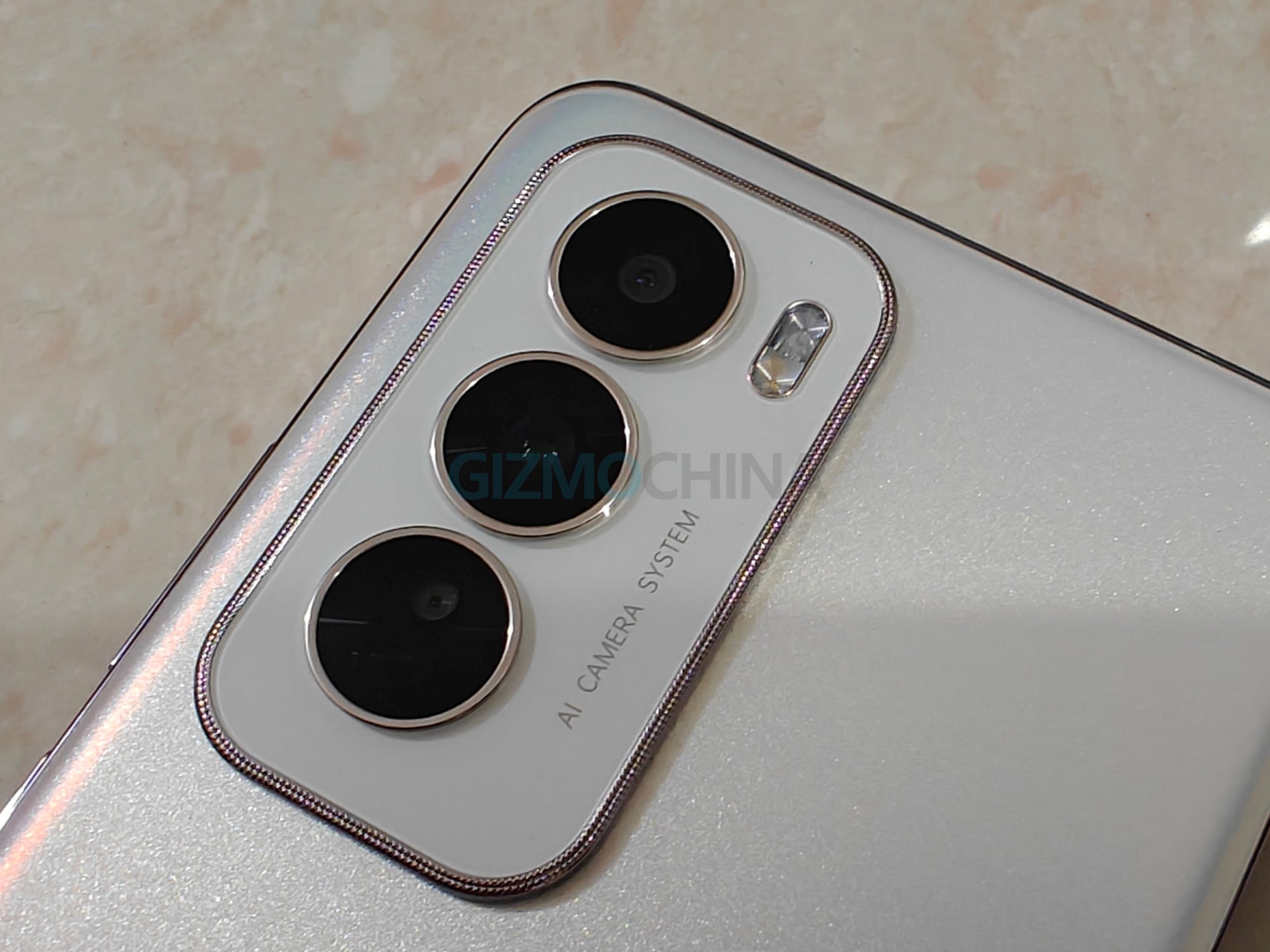
The Panasonic LUMIX S9 camera has been unveiled. It is the smallest and lightest mirrorless camera in the LUMIX S series. It is a camera that allows the professional to explore and enhance his creative potential. The petite LUMIX S9 weighs just 403 grams and comes with a flexible shooting setup – thanks to its free-flip screen. Apart from being compact, the LUMIX S9 has a stylish design and comes in several color variants.
The LUMIX S9 is equipped with a 24.2MP full-frame CMOS sensor with support for dual native ISO, 6K OpenGate, and 4K 60p output. It offers approximately 1.5x crop functionality. The camera allows the user to easily generate high-quality original photos and videos that can be shared as-is without editing them on a PC.
It features 5-axis body stabilization and phase focus functions. These features help to significantly reduce camera blur due to shaking when shooting handheld. This allows the user to shoot stably in various scenarios. The camera body has a new LUT dedicated button for quickly utilizing the real-time LUT filter function. There are several LUT filters to choose from in the camera.
Pricing & Availability
The color options available for the LUMIX S9 camera are Extraordinary Deep Red, Deep Olive Green, Textured Black, Mechanical Gray Silver, and Quiet Night Blue. The Panasonic LUMIX S9 full-frame mirrorless camera is currently selling in China for 10,999 yuan ($1,520).
There are no global availability details yet for the model but it is expected to subsequently berth in a sprinkling of overseas markets. The fact that the LUMIX S9 is the smallest and lightest in LUMIX S lineup, coupled with its impressive features, could spur demand for the camera.
Chinese chipmaker Semiconductor Manufacturing International Corporation (SMIC) has secured the number three position in the global foundry market, based on sales figures for the first quarter of 2024. The achievement comes despite ongoing trade restrictions imposed by the US government.

According to a report by tech research firm Counterpoint, SMIC captured 6% of global chip foundry revenue in Q1. That places them behind industry leader Taiwan Semiconductor Manufacturing Company (TSMC) with a dominant 62% market share, and South Korea’s Samsung Electronics at 13%.
SMIC’s growth can be attributed to its strategic shift towards focusing on its domestic client base like Huawei. The company’s financial results show that for the first quarter, 82% of its $1.75 billion revenue came from mainland clients. That’s a steady rise compared to 75.5% in Q1 2023 and 80% in Q4 2023.
The growth for SMIC isn’t without any hurdles. A teardown of Huawei’s Mate 60 Pro 5G smartphone last year revealed that the phone has an advanced Kirin 9000s processor allegedly manufactured by SMIC.
It sparked concerns in Washington, prompting calls for an investigation into how such a chip could be produced in China given existing US restrictions.
Both SMIC and Huawei have remained tight-lipped on the matter, while the processor itself became a symbol of China’s defiance against US sanctions on social media.
The broader foundry market, as reported by Counterpoint, experienced a 5% decline in revenue for Q1. This slowdown is attributed to a sluggish recovery in demand for non-AI semiconductors used in smartphones, IoT devices, and automotive applications.
On the other hand, the demand for AI chips continues to surge. Counterpoint analyst Adam Chang highlights a rise in capital expenditure by cloud service providers and enterprises, further solidifying the trend. This robust demand for AI chips is expected to extend through 2025, contrasting with the sluggishness in other sectors.
Nvidia, a leading player in the AI chip market, exemplifies this trend. Their latest financial report reveals a staggering 400% increase in revenue from the sale of graphics processing units (GPUs) to data centers in the quarter ending April 28th, 2024.
Xiaomi refreshes its RedmiNote line of smartphones every year. Following the launch of the Redmi Note 13 phones in September 2023, it’s no surprise that the company is already working on its successor, the Redmi Note 14 series.
We now have some early details about these upcoming smartphones. According to a leak by tipster Digital Chat Station on Weibo, a Chinese social media platform, the focus for the Redmi Note 14 series might be on camera capabilities and a sleek design.
Digital Chat Station suggests that one phone in the lineup will feature a high-resolution 1.5K AMOLED display with a high refresh rate. And it will be powered by the Qualcomm SM7635 chip, commercially known as the Snapdragon 7s Gen 3.
Although the tipster didn’t explicitly name the device, based on specifications, it could be the Redmi Note 14 Pro which will be the successor to the Snapdragon 7s Gen 2-powered Redmi Note 13 Pro. The leak also hints at a long-lasting battery likely with a capacity of 5000mAh or even higher.
While the official launch date remains unclear, considering Xiaomi’s past release strategies, the Redmi Note 14 Pro along with another model in the series could see a Chinese launch sometime in fall 2024. Global markets might have to wait until early 2025 for these devices.
It’s important to remember that this is just a leak, and Xiaomi has not confirmed any details about the Redmi Note 14 series. We’ll have to wait for official announcements or further leaks to get a clearer picture of the upcoming smartphones.
Those eager to get their hands on the Samsung Galaxy Ring on launch day might need to take an extra step according to a recent leak.
Tipster Evan Blass on his latest SubStack post shared an image that appears to be from Samsung‘s online ordering page for the Galaxy Ring. It reveals a two-tiered purchase process for the fitness ring.
As you might know, the Galaxy Ring is expected to be available in nine sizes. However, if you’re unsure about the perfect fit for your finger, Samsung might send you a sizing kit before finalizing your order as per the leaked material.
The kit presumably includes sample rings in standard US sizes, allowing you to determine which one fits your finger best. The leak though doesn’t clarify whether the Galaxy Ring is designed for specific fingers like the ring finger, or if it can be worn comfortably on other fingers too.
Once you’ve determined your ideal size, you’ll need to confirm it on the order page before receiving an email confirmation and shipment of the Galaxy Ring.
For those who already know their ring size, the process seems more straightforward. You can apparently bypass the entire sizing step and directly order your preferred size without needing the kit.
So if you’re preparing to purchase the Ring, early preparation could be key for a smooth launch day purchase. Samsung hasn’t revealed the launch date of Galaxy Ring yet but it is expected to launch during the Unpacked event which is rumored on July 10.
E-commerce giant Flipkart, owned by Walmart in India, is set to receive a fresh injection of capital with Google joining the investment party. Google is expected to invest nearly US$350 million (around RMB 2.54 billion) in Flipkart, acquiring a minority stake. This investment is part of a larger funding round led by Walmart. However, the deal awaits regulatory approval and finalization of terms between both companies.
Walmart already invested $600 million last year in the company
Looking beyond the investment itself, Google will also provide cloud services to Flipkart. This cloud partnership will strengthen Flipkart’s digital infrastructure and fuel its expansion plans. Flipkart sees this collaboration as a strategic move to “scale its business and modernize” its operations.
Reports indicate that this investment is part of Flipkart’s nearly $1 billion funding round launched in 2023. Walmart has already played a leading role, investing $600 million last year.
Currently, Flipkart holds a dominant position in the Indian e-commerce market, with competitors like Amazon and Meesho lagging behind. Google’s investment highlights its commitment to the Indian market, following its previous pledge of $10 billion (around RMB 72.5 billion) in Indian companies back in 2020. This commitment is further solidified by Google’s prior investments in Jio Platforms ($4.5 billion) and Airtel ($1 billion).
Acer has launched a sustainable home entertainment powerhouse with its new eco-friendly Vero projectors, the Acer Vero HL6810 and HL6810ATV. Users can experience crystal-clear images and vibrant colors with the projector’s 4K UHD resolution (3840 x 2160) and a powerful 4,000 ANSI lumen laser/LED hybrid light source. A 50,000:1 dynamic contrast ratio and 105% Rec. 709 color gamut coverage ensure deep contrasts and true-to-life colors, while HDR10/HLG compatibility delivers exceptional detail and brightness with preset modes for various content. Sports fans will love the special Football mode that optimizes visuals for an immersive and realistic viewing experience.
The projector also has Blu-ray 3D support
Access popular streaming services like Netflix and YouTube directly on the projector with the embedded Android TV dongle, eliminating the need for external devices. Voice-activated controls via remote or smartphone offer a convenient way to navigate the interface.
A 1.3x zoom allows for easy image adjustments in various spaces, while HV keystone and 4 corner correction ensure a perfect picture every time. The projector boasts IP5X dust protection for peace of mind, and Acer BlueLight Shield technology reduces eye strain during extended viewing sessions. Connect external speakers or amplifiers via the HDMI 2.0 (audio return) port to create a complete home theater experience. Blu-ray 3D support lets you enjoy 3D movies from the comfort of your couch.
The projectors utilize a highly efficient laser/LED hybrid light source, consuming up to 48% less power than traditional lamp-based models. This translates to a longer lifespan (up to 30,000 hours) and lower total cost of ownership. Power-saving modes and instant-on-off features further reduce energy consumption. Acer’s commitment to sustainability goes beyond energy efficiency. The projector’s light source is mercury-free, the chassis is made from post-consumer recycled plastic, and the fully recyclable paper packaging minimizes the projector’s environmental impact.
The Acer Vero HL6810ATV will be available in EMEA in June, starting at EUR 1,699. The Acer Vero HL6810 will be available in EMEA in August, starting at EUR 1,599. (Pricing and availability may vary by region.)
According to teasers and leaks, the phone will be a rebranded Galaxy C55, which was released recently in China. The device will share most of its core specs with the Galaxy M55.
The handset will come with a vegan leather back, a 6.7-inch 120Hz AMOLED display, a Qualcomm Snapdragon 7 Gen 1 chip, a 50MP main camera, a 50MP selfie camera, a 5,000mAh battery, and 45W charging support.
2. Honor 200 Series
The Honor 200 series is scheduled to launch in China on May 27 (Monday). The lineup will include two devices, namely Honor 200 and Honor 200 Pro.
The vanilla model will arrive with a 6.7-inch quad-curved OLED display, a Qualcomm Snapdragon 7 Gen 3 Enhanced Version chipset, a 50MP Sony IMX906 primary camera, a 5,200mAh battery, and 100W wired charging support.
Whereas the pro variant will come with a Qualcomm Snapdragon 8s Gen 3 SoC, a 6.78-inch quad-curved OLED display, 50MP OmniVision OV50H rear camera, a 5,200mAh battery, and 100W wired as well as 66W wireless charging support.
3. Realme Narzo N65 5G
The Realme Narzo N65 5G is set to launch in India on May 28 (Tuesday). It will be announced at 12 PM IST.
As per teasers, the product seems like a rebranded Realme C65 5G. It will feature a flat frame and circular camera module.
The phone is expected to arrive with a MediaTek Dimensity 6300 SoC, a 6.67-inch HD+ 120Hz display (LCD), a 50MP rear camera, an 8MP selfie camera, a 5,000mAh battery, and 15W charging support.
4. Vivo S19 Series
The Vivo S19 series will be unveiled on May 30 (Thursday) in China. The lineup will consist of Vvio S19 and Vivo S19 Pro.
The Vivo S19 Pro is said to come with a MediaTek Dimensity 9200 Plus chipset, a 6.78-inch curved OLED display, a 50MP Sony IMX921 main camera, an IP69 rating, a 5,500mAh battery, and 80W wired charging support.
On the other hand, the Vivo S19 will arrive with a Qualcomm Snapdragon 7 Gen 3 SoC, a 6.78-inch flat OLED display, a 50MP rear camera, a 6,000mAh battery, and 80W wired charging support.
Motorola is gearing up to launch a new mid-range smartphone in the global market called the Moto G85 5G. Earlier this month, the device was spotted on Geekbench as well as a European retail site revealing some of its key details and pricing. Now, Tooljunction has leaked renders of the device.
The renders reveal that the Moto G85 has a curved-edge display with thin top and bottom bezels. In contrast, its predecessor, the Moto G84 has a flat display. The sides of the G85 are also curved with the back featuring a dual-camera setup on a uni-body style camera bump. It also has a flash module on the back. Additionally, the camera bump has 50MP + OIS written on it, which confirms that it will have a 50MP primary camera with optical image stabilization.
Moving over to specifications, previous reports indicate that the Moto G85 will come with an unannounced Qualcomm processor that has the Adreno 619 GPU. The Adreno 619 GPU is present in the Snapdragon 695 and Snapdragon 480. Geekbench has revealed that this new processor has a base clock speed of 2.02GHz and a peak clock speed of 2.30GHz. We expect this processor to be the Snapdragon 4 Gen 3.
The device will have an 8GB RAM model, as well as a 12GB RAM model with 256GB storage, which is expected to cost €300. More details are expected to be revealed soon, so stay tuned.
The POCO F6 and POCO F6 Pro were just unveiled in the global market. While they are a part of the same series, these are also rebranded versions of different Redmi models (Redmi Turbo 3 & Redmi K70 Pro respectively), which launched in China. So how are they different from one another? Let’s find out.
1. POCO F6 vs POCO F6 Pro: Different Flagship Chips
The POCO F6 was announced in India with a Snapdragon 8s Gen 3 chipset. This is one of the latest high-end chips from Qualcomm and was built for affordable flagship devices. On the other hand, the POCO F6 Pro is equipped with the Snapdragon 8 Gen 2 SoC. While the latter is a year older, it should offer similar performance (at least on paper). Although, the users will be hard-pressed to notice any difference between the two.
2. Design & Display
The Chinese brand unveiled the base model with a sleek flat design on the rear with three rings for the camera sensors. Meanwhile, the Pro variant houses a large camera island for the three image sensors. This is one area where you can see that the devices were originally from different series from Redmi.
Moving to the front, both models sport a 6.67-inch OLED display integrated with a fingerprint scanner and a 120Hz refresh rate. The POCO F6 offers a 1.5K resolution and 2,400 nits of peak brightness and the F6 Pro comes with a higher 2K resolution and an impressive 4,000 nits of peak brightness. It is a flat panel on the F6 duo with Gorilla Glass Victus protection.
3. Cameras: Dual vs Triple
A noticeable difference between the two is the rear camera setup. The vanilla F6 offers a 50-megapixel primary and an 8-megapixel ultra wide angle lens. Its more expensive sibling offers three image sensors at the back, which consist of a 50-megapixel main, a 12-megapixel ultra wide angle, and a 2-megapixel macro sensor. For videos calls and selfies, the front houses a 20-megapixel shooter on the F6 and a 16-megapixel camera on the F6 Pro.
4. Storage Option & Charging Speeds
The POCO F6 offers up to 12GB of RAM and 512GB of internal storage as its top variant. But the F6 Pro maxes out with 16GB of RAM and 1TB of internal storage. These differences are also present in the charging rates as well. While both models are powered by a large 5,000mAh battery pack, the F6 maxes out at 90W wired charging whereas the Pro variant offers 120W wired fast charging.
5. Pricing & Availability
POCO has announced the F6 series globally, but both models aren’t universally available in every region. For example, the POCO F6 Pro skipped the Indian market. Looking at their pricing, the POCO F6 starts from 379 US Dollars, while the POCO F6 Pro starts from 499 US Dollars. The former comes in Titanium Glow, Classic Black, and Everland Green colors, and the latter is available in simple Black and White options.
Samsung’s Galaxy Unpacked event is rumoured to take place in early July. As usual, the South Korean brand is expected to unveil the next-generation foldable phones, smartwatches, hearables, and the much-awaited Galaxy Ring. Now, we have got a first look at the Samsung Galaxy Watch 7 Ultra in leaked renders shared by reliable tipster Steve Hemmerstoffer (aka onleaks). It is expected to be the top-most model in the Watch 7 series.
Samsung Galaxy Watch 7 Ultra leaked renders
The first thing that anybody would notice is the unique but also confusing design on the Samsung Galaxy Watch 7 Ultra. It’s hard to know if the dial is square or circle. It feels like a circle on the top of a squarish base. Samsung could be differentiating the Watch 7 Ultra from other models in the lineup with this new design that is away from the traditional all-circular design.
The Galaxy Watch 7 Ultra will feature the iconic glossy rotating bezels with grooves instead of numbers. On the right side of the smartwatch, there are two physical buttons that are found on previous Galaxy Watches. However, there is also an additional crown-like button between the two. This could be similar to the Action button on the Apple Watch Ultra. The other side of the Watch 7 Ultra has larger cutouts for speaker grilles.
The Samsung Galaxy Watch 7 Ultra has wider straps and the fitting mechanism seems to be different. There are a lot of sensors in circular and square shapes on the back of the wearable device. It is confirmed to retain the temperature sensor. The upcoming Watch 7 series is rumoured to come with blood sugar monitoring.
The Samsung Galaxy Watch 7 Ultra will have the same 1.5-inch display as the Watch 6 Classic. The circular screen means that the company won’t have to rework the UI on the upcoming offering which would have been the case if it was a square dial. Dimension-wise, the Galaxy Watch 7 Ultra measures 47 x 47.4 x 16.4 mm which is larger than the Watch 6 Classic. It’s no doubt that the smartwatch will be bulkier.
Samsung seems to be taking on the Apple Watch Ultra with the Galaxy Watch 7 Ultra. We will learn more in less than two month’s time.
Honor is gearing up to unveil the Honor 200 series in China soon. But it appears that this isn’t the only smartphone lineup in the plans. A fresh leak has claimed that the Honor X60 series is also in the works, with some of its features being revealed. So let’s have a look.
Honor X60 Series Tipped
Honor X50 Pro
The news arrives from known tipster Digital Chat Station who shared the information of Weibo. As the name suggest, the X60 series is the successor to the X50 lineup. The latter included models like the X50, X50i, X50i+, X50 Pro, and X50 GT. In other words, there are likely multiple variants of the Honor X60 as well. The tipster also shared some key design details of the upcoming devices.
Reportedly, the smartphone will feature a quad curved display on the front. This is usually present in high-end devices, so the X60 would likely continue to be positioned as an affordable flagship phone, like its predecessor. Furthermore, Digital Chat Station claimed that the Honor X60 series will be powered by a large battery pack and offer “super” drop resistance. The brand has released devices with anti-drop features in the recent past, so this isn’t something new.
Unfortunately, this is all the information we have at the moment as DCS didn’t share any finer details like its specs, pricing, or launch date. But we can expect more details to surface soon via leaks and teasers. So stay tuned for more as we will be providing updates when more information is available regarding this matter.
Chinese tech powerhouse Xiaomi has reported adjusted net profits of 6.5 billion yuan ($897.6 million) for the first quarter of 2024. The company announced its unaudited consolidated financial results for January to March 2024 with double-digit Year-on-Year growth for two consecutive quarters.
Xiaomi is mainly focused on consumer electronics and smart manufacturing, with smartphones and hardware connected by its core IoT platform. The Xiaomi Group’s total revenue increased by 27% YoY to 75.5 billion yuan ($10.42 billion). The adjusted net profit increased by 100.8% to 6.5 billion yuan ($897.6 million). The report also indicated that Xiaomi incurred about 2.3 billion yuan ($317.6 million) in expenses in the development of the brand’s smart electric vehicle.
Xiaomi’s gross profit margin reached 22.3% which was an increase of 2.8% YoY. The profitability of the core businesses of Xiaomi is at the heart of its impressive financial performance in Q1 2024. The results show that Xiaomi’s premiumization strategy paid off with the rising ASP of smartphones. Xiaomi’s global smartphone shipments increased by 33.7% YoY during the period (40.6 million units shipped). Smartphone revenue achieved the fourth consecutive quarterly growth and reached 46.5 billion yuan ($6.42 billion). Xiaomi also maintained its top-three position as a leading smartphone brand globally.
The business margin of Xiaomi’s Internet of Things (IoT) was very impressive, hitting a record high. Smart large home appliances showed strong momentum within the period ending on March 31, 2024. Revenue from IoT and lifestyle products increased by a record 21% YoY to 20.4 billion yuan ($2.82 billion). Furthermore, solid internet services growth continues to spur the brand’s global expansion plans. Xiaomi also sees improvement in its EV business strategy as it plans to scale up production to 100,000 units per year.
Overall, the outlook remains very promising for Xiaomi. It is expected that the same impressive performance is expected for the subsequent quarters of 2024.
The Creality Falcon2 Pro 60W is a product that redefines what users can expect from such devices. As the industry’s first 60W integrated machine, the Falcon2 Pro offers unparalleled cutting power, intelligent features, and a high level of safety and precision that make it stand out in a crowded field.
Exclusive DEAL:
The Creality Falcon2 Pro 60W laser engraver and cutter is now available with a 15% discount on the official Creality Falcon Store during the initial sales period from May 24, 2024, to June 15, 2024. The first 200 units are up for grabs, with special gifts for early buyers: the first 100 orders receive a gift worth $199, and orders 101-200 get a gift worth $50. Additionally, one lucky customer who purchases during this period will win a free order. This offer is available across various regional stores including the US, EU, UK, CA, and AU.
60W Laser Power: The Mightiest Cutting Ability
The Falcon2 Pro 60W boasts a powerful 60W laser module, making it the most formidable laser engraver and cutter available. This high-performance laser can effortlessly cut through a variety of materials, including 3mm metal, 22mm basswood board, and 30mm acrylic in a single pass. This exceptional cutting capability not only expands the range of materials you can work with but also opens up new creative possibilities, allowing you to explore more ambitious projects.
Intelligent 3-Level Adjustment Beam
One of the standout features of the Falcon2 Pro 60W is its intelligent 3-level adjustment beam. This patented technology allows users to switch between 22W, 40W, and 60W power levels with a simple click. This flexibility means you can tailor the machine’s performance to suit different tasks, whether you’re working on fine engravings or large-scale cutting projects. This versatility makes the Falcon2 Pro a true multi-functional tool that can handle a wide range of applications with ease.
Built-in Camera for Auto-positioning
Precision is paramount in laser engraving and cutting, and the Falcon2 Pro excels in this area thanks to its built-in camera for auto-positioning. The high-precision camera, combined with advanced image algorithms, ensures perfect positioning of the material every time. This feature is particularly beneficial for detailed work, allowing for meticulous accuracy even in complex designs. The camera covers the entire 400x400mm workspace, enabling efficient batch processing and significantly increasing productivity.
Super-Higher Working Efficiency
The combination of the powerful 60W laser and intelligent features like the built-in camera results in super-higher working efficiency. The optimized cooling system and control algorithms minimize power loss and maximize cutting speed. For instance, cutting efficiency for the same thickness of basswood is 300% higher with the 60W laser compared to a 22W laser, reducing a 1.5-day task to just one day. This increased efficiency not only saves time but also boosts your business potential by allowing for faster turnaround times.
Achieve Precise Engraving for Photos
Included with the Falcon2 Pro is a bonus 1.6W laser module, perfect for achieving precise engravings on a variety of materials. This module excels at detailed work, such as photo-engravings, making it ideal for creating personalized gifts and preserving cherished memories. It can handle materials ranging from wood and leather to acrylic and precious metals, offering a wide range of creative possibilities.
Integrated Machine with High Protection
Safety is a critical consideration in any laser engraving and cutting machine, and the Falcon2 Pro takes this seriously. As a fully enclosed machine with Class-1 safety certification, it ensures there is no laser leakage, providing a safe working environment without the need for protective goggles. The fire-resistant design and high transparency cover further enhance safety, making it suitable for home use and small studios alike.
Air Assist for Better Work Results
The Falcon2 Pro is equipped with an air assist system, which significantly improves the quality of cuts and engravings. By directing a stream of air onto the cutting area, it helps to clear away debris and smoke, resulting in cleaner edges and more precise results. This feature is particularly useful for intricate designs and detailed work, ensuring that your finished projects are of the highest quality.
User-friendly Design
Thoughtful design touches make the Falcon2 Pro easy and convenient to use. The metal drawer design provides a handy storage space for creative debris, making clean-up quick and efficient. The push-pull cover is perfect for small spaces, allowing for better placement and ease of use. Additionally, built-in features like the fan and light strip enhance the overall user experience, making it a pleasure to work with.
Applications and Creative Possibilities
The versatility and power of the Falcon2 Pro make it suitable for a wide range of applications, from business services and customization to home decoration and festive projects.
Business Services and Customization
For businesses offering customization services, the Falcon2 Pro is a game-changer. Its ability to handle batch processing efficiently makes it ideal for producing customized products in large quantities. Whether you’re creating personalized gifts, promotional items, or bespoke products, the Falcon2 Pro can help you meet your client’s needs with precision and speed. Its high-efficiency and intelligent features make it a valuable asset for any business looking to expand its offerings and increase profitability.
Home and Festive Decoration
The Falcon2 Pro is also perfect for home and festive decoration projects. Its powerful 60W laser can handle large-scale decorations, such as cutting intricate designs for holiday ornaments or creating custom home decor pieces. The intelligent beam adjustment allows you to switch to lower power levels for more delicate work, such as engraving personalized messages or detailed designs. This flexibility makes it easy to create beautiful, customized decorations that add a personal touch to your home.
Personalized Gifts and Handmade DIY
For hobbyists and DIY enthusiasts, the Falcon2 Pro opens up a world of creative possibilities. The bonus 1.6W laser module is perfect for detailed engraving, allowing you to create unique, personalized gifts for friends and family. From engraving names and dates on wooden plaques to creating custom jewelry pieces, the Falcon2 Pro enables you to bring your creative visions to life. Its user-friendly design and safety features make it accessible for beginners and experienced users alike.
Retail and Customer Support
The Creality Falcon2 Pro 60W is available for purchase through Creality’s official website and authorized retailers. Creality provides comprehensive customer support, including detailed tutorials, troubleshooting guides, and responsive customer service to ensure that users can get the most out of their Falcon2 Pro.
The Creality Falcon2 Pro 60W is a revolutionary product that sets a new standard in the laser engraving and cutting industry. Its powerful 60W laser, intelligent features, and high level of safety and precision make it a versatile and reliable tool for a wide range of applications. Whether you’re a business owner looking to expand your services, a hobbyist exploring new creative possibilities, or someone in need of personalized gifts and decorations, the Falcon2 Pro is the perfect solution.
Back in April 2024, Motorola announced the brand-new Moto G04s smartphone model in the European market. The device is an entry-level smartphone, and now, it appears that the G04s is arriving in India as well. So here’s everything we know so far.
Moto G04s to launch in India next week
As per official notes, the Moto G04s will launch be launching in the region on 30th May 2024. Furthermore, this device will be sold exclusively through Flipkart, a popular e-retailer in India. A Flipkart microsite has also gone live, teasing the launch of the upcoming Motorola budget phone. To recall, the G04s was announced in Europe with a 6.56-inch IPS LCD panel that offers an HD+ resolution, a 90Hz refresh rate, Corning Gorilla Glass 3, and a center align punch hole cutout.
Moto G04s
Under the hood, it is equipped with the UNISOC T606 processor, which is paired with 4GB of RAM and 64GB of internal storage. Users can expand storage via a microSD card slot. This device offers virtuam RAM expansion of up to 8GB RAM as well. For optics, the rear features a 50-megapixel camera, while the front packs a 5-megapixel selfie shooter. It runs on the Android 14 OS based MyUX out of the box.
A large 5,000mAh battery pack powers this device, which supports 15W wired fast charging. The Moto G04s was announced in four shades, which include Concord Black, Sea Green, Satin Blue, and Sunrise Orange. Motorola is expected to launch the device in India for under 10,000 INR, so stay tuned for more updates.
The X100 Ultra, Vivo’s most powerful phone so far, also comes at the latest time among all flagship phone brands. In a few months, Snapdragon 8 Gen 4 will be released soon, and by then the phones with 8 Gen 3 will be outdated to some extent. What made Vivo so confident to do it this way? We tried and tested its power, especially the camera capacity. Now I’m sure that the phone is powerful enough to please almost everyone.
Here’s an enticing deal for tech enthusiasts: Get VIVO X100 Ultra at a special presale price of $100 off! Simply use the coupon code “GX100” to avail of this discount. This offer is only valid until May 29th, 2024.
WHERE TO BUY
Buy vivo X100 Ultra onGEEKWILLS with $100 off code: GX100
Telephoto Camera
Like the Pro version, the X100 Ultra is housing triple lenses with different focal lengths, which is different from the four focal lengths used by Xiaomi and OPPO. What’s different from the Pro is that the sensors of the three cameras have various upgrades respectively. In particular, the telephoto camera is the best telephoto camera available on a phone and it is also the X100 Ultra’s main selling point.
Although the focal length has been shifted from 100mm to 85mm, it’s actually a good adjustment for this phone. Because the zoom between 23mm and 100mm on the Pro version is digitally cropped, the range is so wide that the drop in image quality is more noticeable. Now the X100 Ultra’s 85mm telephoto camera will fix that a bit.
So how great is this telephoto camera? The answer is superb, so good that I’m willing to give it the title of world’s best. 200MP HP9 with the In-sensor-zoom feature, plus Vivo’s AI algorithms will make you become a sniper without a problem. Can you believe this is a 600mm or 26x zoomed-in photo? You must know that it only has a 3.7x optical zoom (check it out in the review video).
The over-sharpening is also not very noticeable like before. As you can see, the pet’s fur is presented naturally. The sensor area is bigger, and you no longer need the main camera to crop the image when there is insufficient lighting at night.
All in all, I am very satisfied with this camera. But of course, nothing is perfect. For example, the unstable white balance issue is still there without been fixed. But other than that, it’s hard to pick any other flaws with this camera.
Macro mode
It’s no surprise that a telephoto camera can take macro photos, but what happens when the macro function catches up with the best telephoto phone camera in the world? It’s getting me addicted.
The ultra-high pixel count and large sensor bring high image quality like never before. I’ve never seen such great macro photos shot on a smartphone. It has driven me a lot to take a photo of any subject in macro mode that is close to me.
Take a look at this photo with two flies in it, can you see them? Let’s take a closer look at it in macro mode.
I apologize for interrupting their sweet time, but, hey, look at the image quality. You can even see the hairs on the legs. This is unbelievable! The other bug doesn’t seem to have found its mate yet, staying there thinking about its life. This is the X100 Ultra, a phone that can shoot insect documentaries.
The only thing I would complain about is the shallow depth of field, sometimes I don’t want to blur out the background, but there’s nothing I can do about it, this is physics after all. Fortunately, shallow depth of field is a good thing most of the time, so it’s not a big deal. Being both a telescope and a microscope, no one should disagree with me when I say it’s the world’s number one telephoto camera for smartphones now, right?
Color Mode
The X100 Ultra still has three color modes: Vivid is characterized by bright and vivid colors, Textured is characterized by low exposure, high contrast, and noticeable vignetting, and ZEISS Natural is closer to Vivid, but with lower contrast and a cooler white balance.
Each of the three modes has its own use scenario: if recording daily life, such as taking photos of food and portraits, the Vivid mode is the best.
If you want to create your own photography, or shoot neon lights at night, try using Textured mode. Because Vivid’s HDR effect is too strong, it doesn’t look as good as Textured mode’s.
When the first two modes don’t work well, it’s time for ZEISS Natural mode to take over, most of the time it takes decent photos easily. It actually has a fourth color mode tucked away somewhere else. What it is and where it is, we’ll show you later.
Main Camera
Let’s talk about the main camera. In terms of image quality, there is no significant difference between the main camera of the Ultra and the Pro. I mean the Pro’s main camera is already at the top of its game, the Ultra doesn’t surprise us much. Or maybe the telephoto cameras have surprised us so much that it seems like the main camera is less of an improvement.
Compared to taking photos, the main camera will be a bigger improvement in video recording. Instead of using the same physical variable aperture design as HUAWEI and Xiaomi, the X100 Ultra has added a gimbal-like anti-shake structure. So the stability of the footage will be improved a lot, and obviously, it’s much better than any other Android phone when recording at night.
For video samples, check out the video at the beginning of the article.
All cameras can be switched in Dolby Vision mode at will, whether they’re recording or not, which is something other Android phones can’t do. The ultra wide-angle camera is a bit less competent than the other two cameras though. It’s the only one that can’t record 4K 120fps video specs. I also found a problem that I’m not sure if it’s a bug or not: its 4K 60fps preview is without EIS and looks very shaky. But when you go to the albums, you’ll see that the footage is actually very stable. It’s quite strange that I’ve never seen before.
For video samples, check out the video at the beginning of the article.
Ultra-wide Camera
The ultra-wide camera is the most common of the three. Although the hardware has been upgraded, the improvement in image quality is not very significant. We won’t go into too much detail, but you’ll see how great it is when you look at the sample photos.
Portraits
Portraits have always been a strength of Vivo’s phone. Skin tones are accurate and there are various beauty effects as well. The X100 Ultra’s selfie camera has been enhanced quite a lot. In addition to having autofocus, there’s also 4K 60fps video recording. This should be good news for Vloggers.
AI is also used in portrait mode, such as the AI Visual feature. It converts your portraits to be like you took them in four different seasons. Though you can find out it doesn’t convert perfectly by zooming in. We use it for fun anyway, so don’t take it too seriously.
Camera experience
Vivo has also put a lot of effort into the camera experience this time. For example, it puts several commonly-used focal lengths in the same button. Sometimes it’s hard to use the dial to adjust to the focal length I want, and it’s really easier and faster to tap to switch.
Another example is that to emphasize the X100 Ultra’s status as a photography flagship, Vivo has designed a new mode for it: the Humanistic Street Photography Camera Mode. Simply put, it’s another Pro mode, but more retro.
In this mode, you can easily adjust various parameters and use various presets. It also has the DISP mode of the Pro cameras, it even allows you to customize the style of the shutter button. There’s a new color mode here, black and white mode. Just like the name says, it enables you to take black-and-white photos. I don’t know why ultra-wide cameras aren’t allowed to use this mode, which really confuses me.
One interesting point is that the default color style for this mode is Textured and HDR is off by default. It’s clear that Vivo wanted this modern and powerful camera phone to turn into a retro camera, making it possible to take highly stylized photos. If you buy that camera grip, then this is the most powerful “old camera” ever.
Here’s an old problem that hasn’t been fixed yet. I really wish Vivo would let me choose the metering preference. Every time the X100 Ultra detects a face, it raises exposure, which sometimes makes me so mad.
Display
The display upgrade on the X100 Ultra is not huge. Although the resolution has been improved, the panel has been replaced with Samsung’s E7 material. Peak brightness hasn’t improved though, and the PWM dimming has gone from 2160Hz on the Pro version to 1440Hz. viewing angles have gotten worse too.
Actually, I can live with all these, what I can’t live with is the fact that its screen form factor is still the same as it was a few years ago. You know, a lot of phones these days have straight screens or curved screens with four equal-width bezels. They’re all very pretty and functional. The X100 Ultra just looks very outdated in front of them. Vivo didn’t put much thought into the screen.
Performance
Similarly, since Qualcomm hasn’t released Snapdragon 8 Gen 4 yet, the X100 Ultra’s processor has to be Snapdragon 8 Gen 3. Just… We’ve tested thousands of 8 Gen 3 phones now, and the X100 Ultra just isn’t anything special. It’s good, and it’s in line with the performance we’d expect from a photography flagship phone. After all, you wouldn’t expect this kind of phone to still have a very aggressive strategy over performance, right?
Design, Battery & Charging
The X100 Ultra keeps the design of the X100 family. There aren’t too many noticeable changes other than the camera module being bigger once again. There’s only one thing I can say about the X100 Ultra’s design: what’s going on with the fake camera? Putting the Zeiss logo here would look better to me.
Just kiddingLooks good
There are only three colorways for the Ultra version, and all of them are much more subtle than the Pro version. Especially the Titanium color we have here, the glass back looks metallic and is my favorite of the three colorways. Otherwise you can actually still think of it as the X100 Pro with satellite communication.
The weight is slightly increased but acceptable. The bad news is that: the charging power is lower, both wired and wireless. And that wireless charging coil has moved down because the camera module is too big, so not all wireless charging docks fit it well. The good news is that the semi-solid state battery gives the X100 Ultra a little more battery capacity, and it won’t shut down automatically and should perform well in cold conditions. And the high-power PPS charging is still here, with great charging compatibility.
All in all, most of the X100 Ultra’s features are similar to the Pro version, which is great, but nothing more.
Summarize
The Vivo X100 Ultra is a good phone, but not good enough. It has one of the top camera systems in the world, but unfortunately, it was released too late. Since this year’s Snapdragon 8 Gen 4’s will be released earlier than last year’s 8 Gen 3’s, right away you’ll be able to buy an 8 Gen 4 phone.
I don’t know how many more people will buy an 8 Gen 3 phone for that camera at that time. But if you just don’t care what happens in the future, you just want a phone that takes the best pictures right now, then the X100 Ultra does give you what you want.
WHERE TO BUY
Buy vivo X100 Ultra onGEEKWILLS with $100 off code: GX100
Honor Magic 6 Pro is apparently arriving in the Indian market soon. The flagship device was teased by an HTech executive, while a known tipster shared more details regarding its launch timeline. So here’s everything you need to know.
Honor Magic 6 Pro India Launch Near
Madhav Sheth, CEO of HTech, shared a tweet where he showed all the users that have been asking for the Magic 6 Pro to arrive in India. He further added that the Honor Magic series will “exceed Indian consumer’s expectations in reality.” Sheth said this in regards to the Vivo X Fold 3 Pro teaser that claimed it is the slimmest foldable phone in India. Meanwhile, tipster Paras Guglani stated that the Magic 6 Pro could debut in India by the middle of July 2024.
Guglani previously claimed that Honor is starting manufacturing products in India to lower the cost and aggressive pricing. However, the Magic 6 Pro won’t be cheap. During MWC 2024, the high-end device was announced for an exorbitant price tag of 2,699 Euros for its top-end 12GB + 512GB model. To recall, the Magic 6 Pro sports a 6.8-inch OLED display that offers a 120Hz refresh rate, DCI P3 color gamut, 4320Hz PWM Dimming, LTPO, HDR10+, Dolby Vision, and up to 5000 nits of peak brightness.
Confidence or Naiveté? Honor Magic series will exceed Indian consumers' expectations in reality. pic.twitter.com/CYcBylUG71
Under the hood, it is equipped with the Snapdragon 8 Gen 3 SoC. For optics, you get a triple camera setup with two 50-megapixel shooters and a 180-megapixel telephoto sensor. You also get a 50-megapixel camera for selfies and video calls. A large 5,600mAh battery pack powers this device, which supports 80W wired fast charging and 66W wireless fast charging.
The BenQ X500i is a 4K HDR 4LED short-throw home cinema projector aimed squarely at gamers and home theatre enthusiasts. It promises to deliver stunning visuals, immersive audio, and a hassle-free user experience. Sharing many features with BenQ’s flagship X3100i, it offers a compelling value proposition by delivering most of its high-end counterpart’s performance. However, there are some compromises that the company has made, and it is essential to understand where the X500i shines and where it falls short.
Design and Build Quality
BenQ X500i
The X500i sports a sleek, modern design with a white finish that should blend well into most home environments. Its compact size and short-throw capability make it easy to place on a coffee table or shelf, projecting a large image without requiring a lot of space. The build quality feels solid, and the included remote control is well-designed and responsive. It measures 366 x 118 x 244mm and weighs only 3.6kg.
Gaming Performance
The X500i excels in gaming, boasting short lag times that match or exceed those of its competitors. It supports 1440p resolution at up to 120Hz, a popular choice for gaming. One of the standout features of the X500i is its low input lag, which is crucial for gamers. With a response time as low as 4ms in 1080p@240Hz mode, the projector offers a smooth and responsive gaming experience, even with fast-paced action games.
Three predefined game modes—RPG, FPS, and SPG—tailor the visual and audio experience to different game genres. These modes adjust both image and sound settings to enhance the gaming experience. For instance, FPS mode tweaks HDR settings for better clarity in dark areas and focuses audio on positional accuracy, while RPG mode boosts cinematic visuals and bass levels. The Auto Game Mode automatically detects when you’re playing a game and switches to the appropriate settings for optimal performance.
Video and Audio Quality
BenQ X500i movie
The X500i’s 2,200 ANSI lumens are sufficient for dark or low-light environments, but it may struggle a bit in brighter rooms. In a dark room, it produces vibrant colors, good contrast, and impressive shadow detail, particularly in HDR10 mode after some adjustments to brightness and contrast settings. The projector also features BenQ’s CinematicColor technology, which is designed to reproduce accurate colors that match the filmmaker’s intent.
Audio is another strength, with two 5-watt treVolo speakers delivering high-quality sound. The projector’s MAXXAudio dynamic enhancement and BenQ’s proprietary algorithms ensure immersive audio that can fill a large room. While it lacks support for Dolby Atmos, the X500i’s built-in audio is surprisingly rich and detailed. For a more immersive experience, the projector supports up to 7.1 Dolby Atmos sound via an eARC port, allowing the connection of a soundbar.
While the X500i is optimized for gaming, it also performs well for movie watching, albeit with some limitations. It lacks support for Dolby Vision and HLG, and the default settings for 4K HDR content can be disappointing without adjustment. However, in Cinema mode, it offers good color accuracy and contrast, making it suitable for a variety of content.
Features and User Experience
BenQ X500i with remote and dongleBenQ X500iBenQ X500i’s remoteBenQ X500i
The BenQ X500i 4K gaming projector features a versatile throw ratio of 0.69 to 0.83 and a 1.2x zoom ratio, allowing for flexible placement and large image projection from short distances. It has a built-in Android TV interface, giving you access to a vast library of apps and streaming services. The projector’s short-throw capability is another significant advantage. It allows you to project a large image from a short distance, making it ideal for smaller rooms or apartments. The digital zoom feature lets you adjust the image size without moving the projector, adding to its flexibility.
It includes two HDMI 2.0b ports with HDCP2.2 support, one USB Type A 2.0 port for power supply, reading, and firmware upgrades, and a USB Type C port with DisplayPort capabilities and Power Delivery output of 5V/1A. Additional connectivity options include an RS232 input (DB-9 pin), Bluetooth 5.0, and Wi-Fi supporting 802.11 a/b/g/n/ac (2.4G/5G). For wireless projection, the projector supports AirPlay and Google Cast, enhancing its compatibility with various devices and streaming options.
Setting up the X500i is a breeze. The projector’s user interface is intuitive and easy to navigate. It comes with an HDMI Android dongle that needs to be installed behind a panel on the projector. This process requires removing a small screw, plugging in the dongle, and replacing the panel. Once set up, the projector boots up to the Google TV interface, allowing you to log in with your Google account and access your favorite apps via Wi-Fi and Bluetooth. The projector’s fan noise is noticeable but not overly distracting. In a quiet room, you’ll hear it, but it shouldn’t be an issue during movies or games.
Conclusion
The BenQ X500i is a versatile and capable 4K HDR projector that excels in gaming and home theatre applications. Its bright, colorful image, low input lag, and flexible features make it a solid choice for anyone looking to upgrade their home entertainment setup. While it’s on the pricier side, its performance and features make it a compelling option for those willing to invest in top-tier quality. If you’re in the market for a high-quality 4K projector and willing to make the investment, the X500i should be at the top of your list.
Realme unveiled the Realme GT 6T after taking a two-year hiatus from GT series phones in the Indian market. At the launch, the brand claimed that the letter “T” in the moniker of the device indicates top performer. Hence, it is a performance-driven phone offering some great specs with a starting price of Rs 30,999. I have used the phone for a couple of days, and here’s what I think of it.
Realme GT 6T is India’s first phone featuring the Snapdragon 7+ Gen 3 chipset. The chip inherits architectures and cores from the Snapdragon 8 Gen 3 chipset. The inclusion of the chip allows it to deliver powerful performance suitable for gaming and resource-intensive tasks.
The phone ships with up to 8GB/12GB of LPDDR5x RAM and 128GB (UFS 3.1) / 256 GB (UFS 4.0) / 512GB (UFS 4.0) storage. It offers one of the best battery size and charging combinations by packing a 5,500mAh battery with 120W fast charging support. With my limited use, the phone could easily last for 1.5 days of nominal use. It took me around 35 minutes to achieve a full charge using the in-box 120W SuperVOOC charger
For an enhanced gaming experience, the phone features dual speakers, which offer a good immersive output, and an x-axis linear motor for haptics. To keep the internals cool, the Realme GT 6T features a dual-layer vapor cooling structure encompassing a surface area of 10,014mm².
2. Unmatched Display
Realme GT 6T
The 6.78-inch OLED screen produces a peak brightness of 6,000 nits, making it easily visible even in direct sunlight. The 8T LTPO panels support a 1.5K resolution and a 1Hz-120Hz refresh rate, ideal for gaming and media consumption. For precise touch response while gaming, the display supports a 2500Hz instantaneous touch sampling rate. No other phone in its price range offers such a marvellous screen.
3. Decent Cameras
2x zoomPortraitPortrait selfie
The Realme GT 6T has an OIS-enabled 50-megapixel Sony LYT-600 main camera on the back, which is joined by an 8-megapixel ultra-wide lens. The 32-megapixel front-facing camera offers above-average performance. Since it is performance-driven, photography is not the major strength of the device. Nevertheless, it does manage to produce some good shots.
4. Software Support and Flagship-like Features
Realme GT 6T
While the company seems to be experimenting with providing fewer preloaded apps as it did on Realme Narzo 70 Pro 5G, the GT 6T continues its usual affair with plenty of them. Thankfully, the phone comes with longer software support of three years of Android OS upgrades and four years of security updates. The phone comes preloaded with the Realme UI 5.0-based Android 14.
Features like dual-frequency GPS, NFC, and IR blaster are some good additions to the device.
5. Durability
Realme GT 6T
In terms of design, the Realme GT 6T offers a curved-edge OLED screen on the front. Its frame and its dual-tone rear panel are made out of plastic. The shiny portion on the phone’s back attracts fingerprint marks. Nevertheless, the phone promises good durability as it features Gorilla Glass Victus 2 protection for the screen and an IP65 rating for dust and water resistance. The phone comes in two shades: Fluid Silver and Razor Green.
Overall Impressions
The Realme GT 6T has made a strong first impression. Its performance, display, and charging speeds are simply outstanding for a mid-range device. If Realme can deliver on its camera promises, the GT 6T could be a serious contender for the best mid-range smartphone of the year. I’m excited to spend more time with this phone and put it through its paces in a full review. If you are thinking about this phone, now could be the ideal time as buyers can benefit from the initial offers.
6. Realme GT 6T Price in India
The Realme GT 6T has arrived in India in four options: 8GB+128GB, 8GB+256GB, 12GB+256GB, and 12GB+512GB. The variants are priced at Rs 30,999, Rs 32,999, Rs 35,999, and Rs 39,999, respectively. With Rs 4,000 bank cashback and Rs 2,000 exchange bonus, the GT 6T can be bought for as low as Rs 24,999.
The Realme GT 6T will go on sale on May 29. It will be sold via Realme India’s website and Amazon.
Disclaimer: These are my initial impressions based on limited use. A full review will provide a more comprehensive assessment of the Realme GT 6T’s features and performance
HMD Global previously released the entry-level repairability-focused Pulse series with three different models in Europe, all of which use the 12nm Unisoc T606 chipset. Now the company has launched a more affordable phone called the HMD Aura in Australia.
HMD Aura key specs and features:
HMD Aura comes with a 6.56″ 900 x 1600 resolution IPS LCD display on the front with similar bezels as the Pulse Pro. However, it comes with a water drop notch instead of a punch-hole-style cutout for the front camera. The phone offers a wider display than most in the market (16:9 as compared to 20:9).
The Aura is available in two different colors – Glacier Green and Indigo Black, which you can see in the images above.
The phone uses the 28nm Unisoc SC9863A1 (also used by the Nokia C31) chipset. For those interested in benchmarking, it scores around 160 in single-core and 725 in multi-core in the GeekBench 6 CPU test.
It comes with 4GB RAM and 64GB storage. The 4GB RAM should be enough for regular web browsing, video streaming, and similar tasks.
HMD Aura equips a 5000mAh battery and supports 10W charging through a USB-C port. This phone also offers a 3.5mm headphone jack.
You get a 13MP main camera on the back with an auxiliary lens (like for depth mapping, which you shouldn’t care about) and a 5MP selfie camera on the front.
For security, the phone offers a back-mounted fingerprint scanner below the flash module. The phone comes with Android 13 out of the box.
Pricing and availability:
The HMD Aura is priced at AUD 180 (~$118) in the country. For reference, the HMD Pulse (4GB+128GB) is available for AUD 230 (~$150).
The Xiaomi Router BE5000 2.5G WiFi 7 is redefining affordability in the realm of high-speed internet. As one of the most budget-friendly WiFi 7 routers on the market, it comes packed with features designed to meet the increasing demands of modern households and tech enthusiasts. You can now buy Xiaomi Router BE5000 2.5G WiFi 7 for a discounted price of $49 only at GeekWills.
The Xiaomi Router BE5000 leverages the latest WiFi 7 technology, also known as IEEE 802.11be, which serves as the successor to WiFi 6. This advancement ensures that all your devices operate at optimal speeds, making activities like 4K and 8K streaming, immersive AR/VR gaming, and large file downloads more efficient and seamless. With a combined wireless speed of up to 5.011Mbps, this router is built to handle the bandwidth requirements of today’s digital world.
MLO Dual-Channel Integration for Stability
One of the standout features of the BE5000 is its Multi-Link Operation (MLO) Dual-Channel Integration. This technology allows a single device to connect to both the 2.4GHz and 5GHz bands simultaneously. By transmitting data in parallel through two links, it significantly reduces the impact of environmental interference, ensuring a more stable and reliable connection. This is particularly beneficial in environments with numerous connected devices or potential sources of interference.
High-Speed Network Ports
The router is equipped with one 2.5 Gbps WAN/LAN port and three 1 Gbps WAN/LAN ports. These ports facilitate high-speed data transmission, ensuring that all connected devices benefit from the fastest possible internet speeds. This setup is ideal for users who need reliable, high-speed connections for activities such as online gaming, video conferencing, and streaming.
Maximized Coverage with Beamforming
To ensure comprehensive coverage, the Xiaomi Router BE5000 features five external antennas and Beamforming technology. This combination enhances the router’s ability to deliver stronger, more reliable connections with less interference. Whether you’re in a large home or an apartment with multiple rooms, this router provides the coverage you need to stay connected everywhere.
High Performance Dual Wireless Chip
At the heart of the BE5000 is a high-performance 6nm dual wireless chip. This chip ensures fast and stable performance, supporting up to 128 devices online simultaneously. This capability is particularly useful for smart homes with numerous connected devices, from smartphones and tablets to smart appliances and security systems.
Mesh Networking Support
For those with larger homes or more complex network requirements, the Xiaomi Router BE5000 supports Mesh networking. You can connect up to 10 Xiaomi or Redmi routers in a Mesh network, creating a scalable solution that provides seamless coverage throughout your home. This ensures that every corner of your space enjoys consistent, high-speed internet access.
Seamless IoT Connectivity
Designed with smart homes in mind, the BE5000 offers one-click networking for Xiaomi smart home devices. It also doubles as a home security hub, providing robust network protection and management. The router offers real-time feedback on network risks via the Mijia App, helping to prevent cyber-attacks and protect your privacy. Additionally, it includes features for parental control, allowing you to manage and filter the content accessible to family members, ensuring a safe online environment for children.
Xiaomi Router BE5000 combines affordability with advanced features, making it an excellent choice for anyone seeking high-speed, reliable internet connectivity. Whether for streaming, gaming, or managing a smart home, this router delivers performance and value in one sleek package.
We use cookies on our website to give you the most relevant experience by remembering your preferences and repeat visits. By clicking “Accept”, you consent to the use of ALL the cookies.
This website uses cookies to improve your experience while you navigate through the website. Out of these, the cookies that are categorized as necessary are stored on your browser as they are essential for the working of basic functionalities of the website. We also use third-party cookies that help us analyze and understand how you use this website. These cookies will be stored in your browser only with your consent. You also have the option to opt-out of these cookies. But opting out of some of these cookies may affect your browsing experience.
Necessary cookies are absolutely essential for the website to function properly. This category only includes cookies that ensures basic functionalities and security features of the website. These cookies do not store any personal information.
Any cookies that may not be particularly necessary for the website to function and is used specifically to collect user personal data via analytics, ads, other embedded contents are termed as non-necessary cookies. It is mandatory to procure user consent prior to running these cookies on your website.