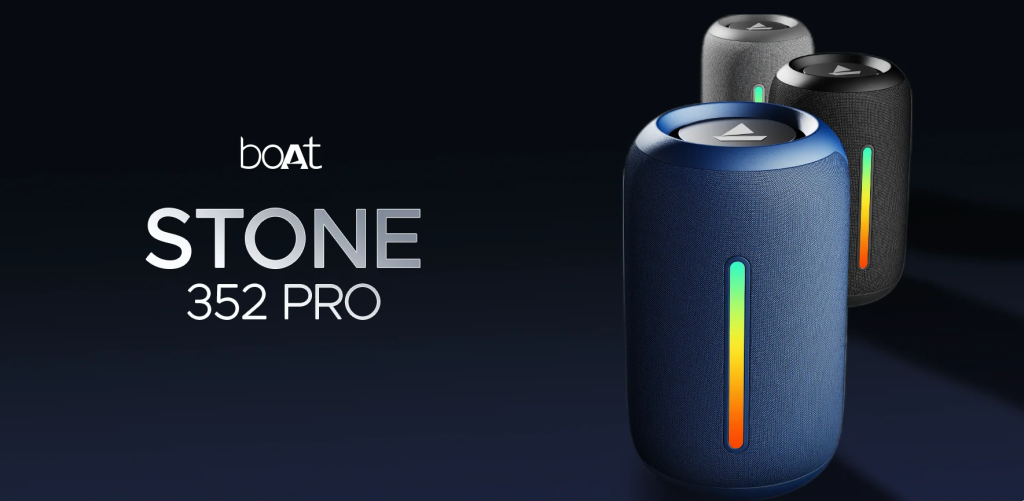
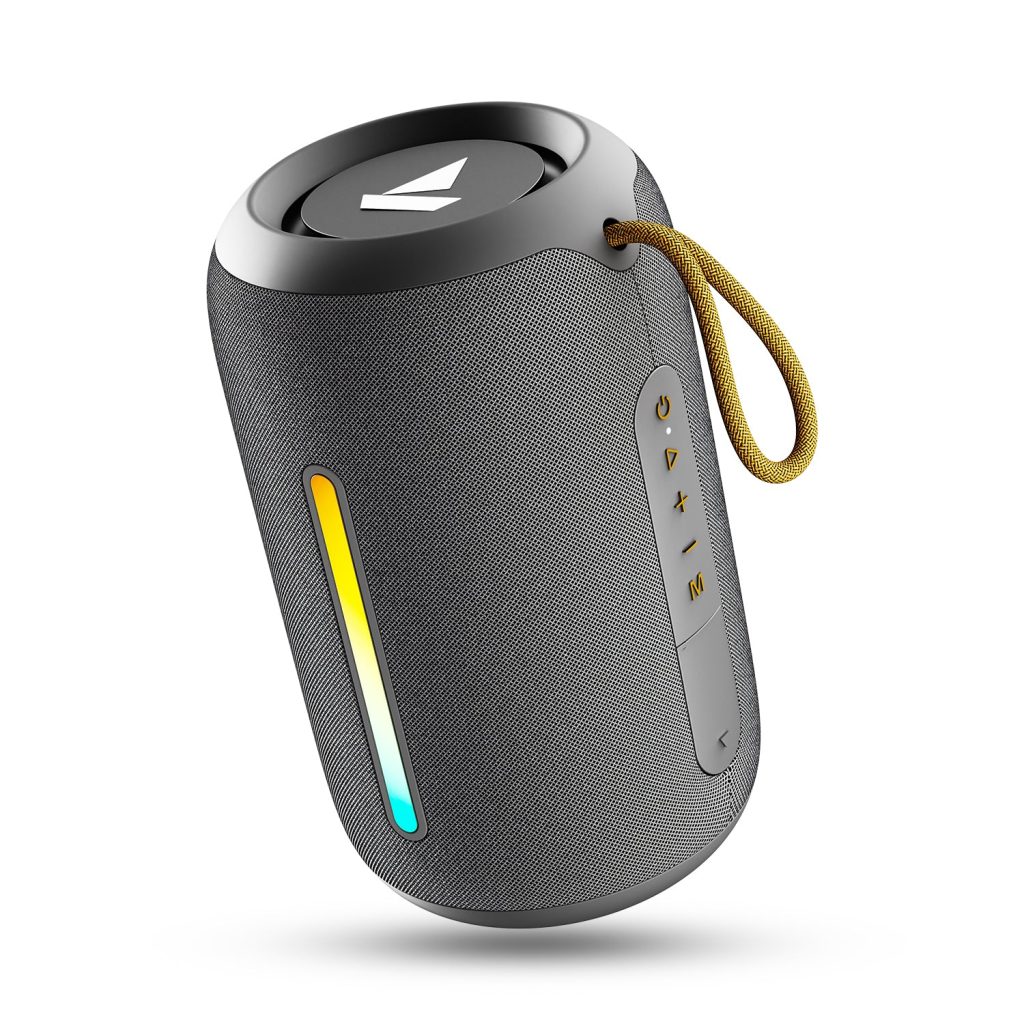
boAt has released the Stone 352 Pro, the newest addition to their Stone series of Bluetooth speakers. Weighing 600 grams, this compact and lightweight speaker is designed for group gatherings.
The Stone 352 Pro features a 14W RMS output with boAt’s Signature Sound technology for balanced audio and deep bass. It also includes dynamic RGB lights that change color to enhance the party atmosphere.
For connectivity, the speaker offers Bluetooth 5.3, TWS (True Wireless Stereo) functionality for pairing two speakers, and multiple ports including USB, AUX, and a TF card slot. It has a built-in microphone for hands-free calls.
The Stone 352 Pro is IPX5 splash-resistant, making it suitable for outdoor use. It provides up to 12 hours of playtime on a single charge and uses a Type-C charging interface.
Pricing & availability
Available in three colors: Raging Black, Groovy Grey, and Vibing Blue, the Stone 352 Pro is currently priced at Rs. 1,999 on Amazon.in, exclusive to Prime members.
In related news, boAt has also recently launched the Stone Lumos speaker features a unique design with a carry handle and a dedicated LED projection module, offering 7 dynamic lighting modes. The speaker delivers 60W audio with boAt Signature Sound.
Powered by an 800mAh battery, it provides up to 9 hours of playtime. It also includes a built-in microphone for hands-free calls and an IPX4 rating for water and splash resistance, making it suitable for outdoor use. Connectivity options include Bluetooth 5.3, AUX, and USB ports, and it supports TWS pairing for stereo sound. The speaker is compatible with the boAt Hearables App.
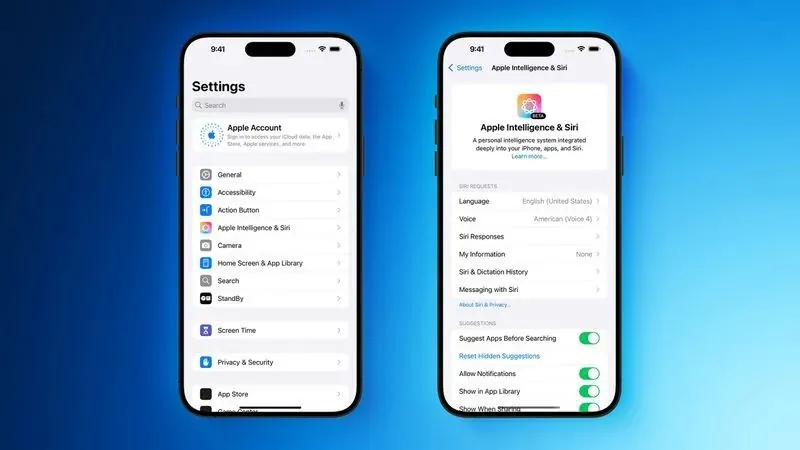
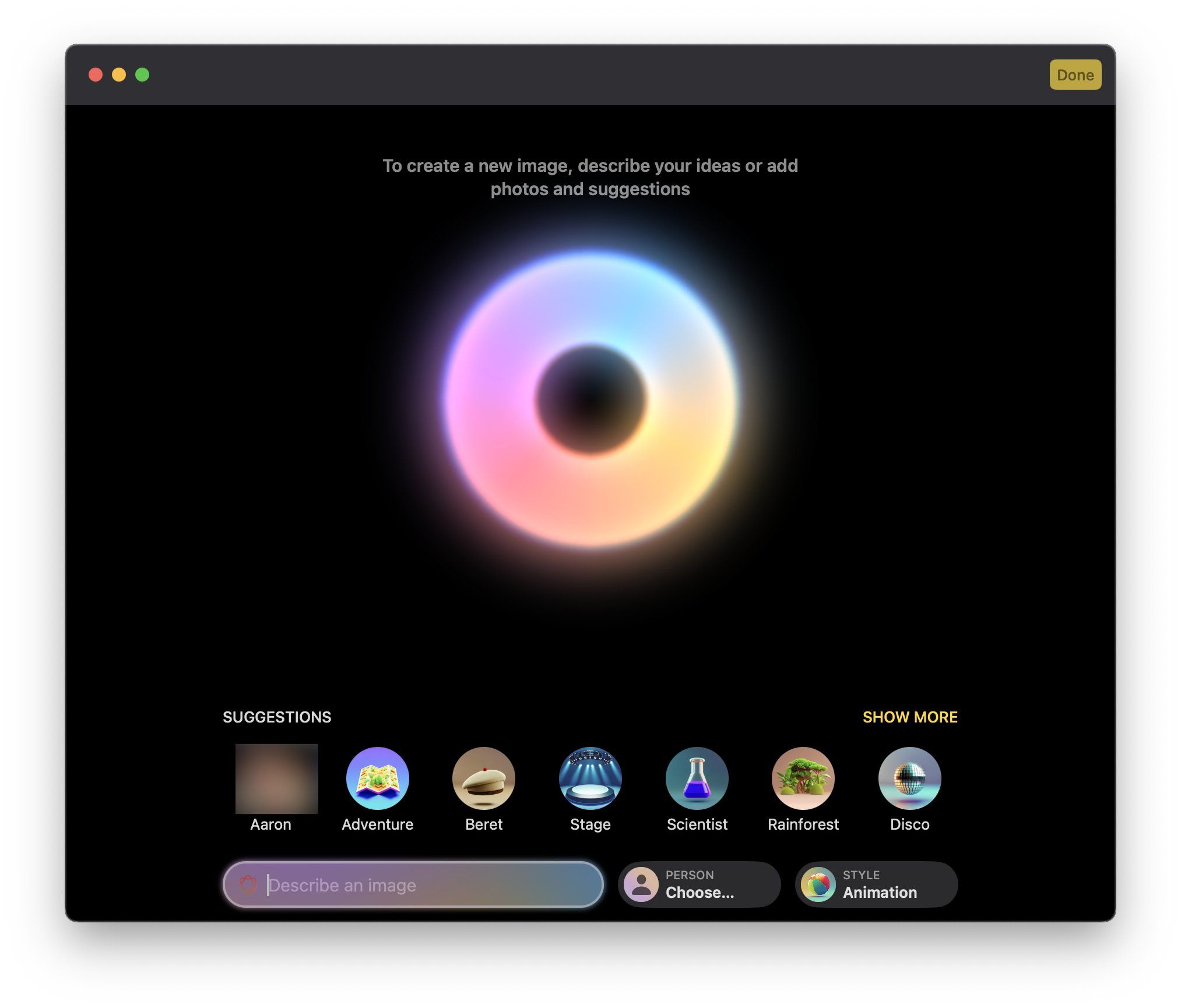
Apple‘s latest beta software update hints at exciting features coming soon. The iOS 18 Beta 3 simulator reveals an Apple Intelligence settings menu (currently inactive), suggesting integration of a powerful AI suite. macOS 15 Beta 3 introduces “Image Playground,” a tool that lets users generate images based on descriptions with selectable themes, clothing, and locations. Users can choose between animation, illustration, or sketch styles.
New features, like the upgraded Siri and ChatGPT, won’t be available until 2025
Apple announced Apple Intelligence at WWDC 2024. This AI suite will offer on-device and cloud-based language models. A public beta for iOS 18, iPadOS 18, and macOS Sequoia is planned for this fall, but full features and wider device support will arrive next year. While free, Apple Intelligence requires an A17 Pro chip or M-series chip, limiting access to iPhone 15 Pro models and the upcoming iPhone 16 series – devices with the latest processing power for AI tasks.
We know that some features, like the upgraded Siri assistant and ChatGPT integration, won’t be available until next year. The good news is that the initial version of Apple Intelligence will still offer functionalities like notification prioritization, webpage summarization, writing tools, image generation, and Genmoji – features that many users will be eager to try.
Realme is offering a discount on the NARZO 70 5G smartphone. The phone was launched earlier this year for Rs. 15,999 but with the current offer, you can get it for Rs. 13,999.
Realme Narzo 70 5G discount details:
The Realme Narzo 70 5G 6GB RAM + 128GB storage model is currently with a Rs 2,000 coupon discount on Amazon India, knocking its price down to Rs. 13,999. The 8GB + 128GB model has the same offer, reducing its price to Rs. 14,999.
This is a discount of Rs. 2000 and is valid till midnight, July 11th. Additionally, you can avail 3 months no cost EMI if you purchase the phone from realme.com or Amazon.in.
Realme Narzo 70 5G specs:
The Realme NARZO 70 5G comes with a 6.7-inch Full HD+ AMOLED screen, offering a resolution of 2400 × 1080 pixels, a 120Hz refresh rate, and a peak brightness of up to 2000 nits. The display also supports rainwater smart touch.
Under the hood, the device features a MediaTek Dimensity 7050 processor, paired with up to 8GB of LPDDR4X RAM, and 128GB of UFS 3.1 storage, expandable via a microSD card.
The NARZO 70 5G has a 50MP main camera with an f/1.8 aperture and a 2MP depth sensor with an f/2.4 aperture, accompanied by an LED flash. The front-facing camera is a 16MP shooter with an f/2.45 aperture.
Additional features include an in-display fingerprint sensor, a 3.5mm audio jack, and stereo speakers. The phone is dust and splash-resistant with an IP54 rating. The device has a 5000mAh battery that supports 45W SuperVOOC fast charging. Connectivity options include 5G SA/NSA, dual 4G VoLTE, Wi-Fi 6 (2.4GHz and 5GHz), Bluetooth 5.2, dual-frequency GPS/GLONASS/Beidou, and a USB Type-C port.
In related news, Realme is also offering similar discounts on the Narzo 70 Pro 5G models.
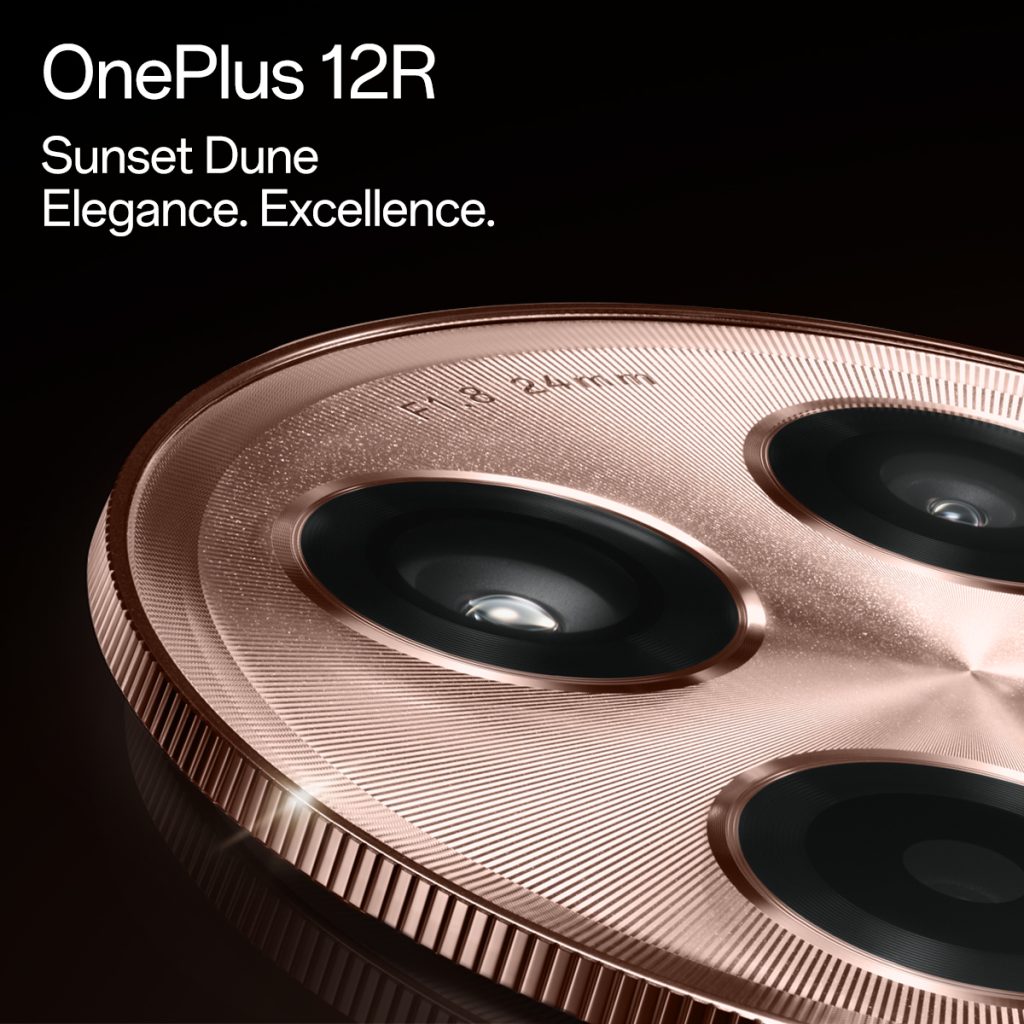
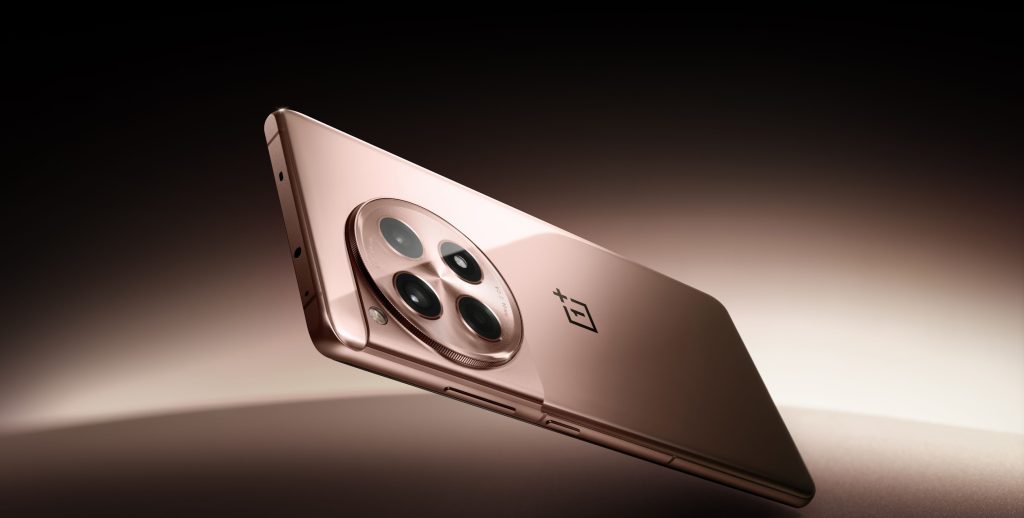
Earlier today, OnePlus India announced a new color option for its OnePlus 12R smartphone called “Sunset Dune”. The announcement came with a teaser image showing a rose gold camera island.
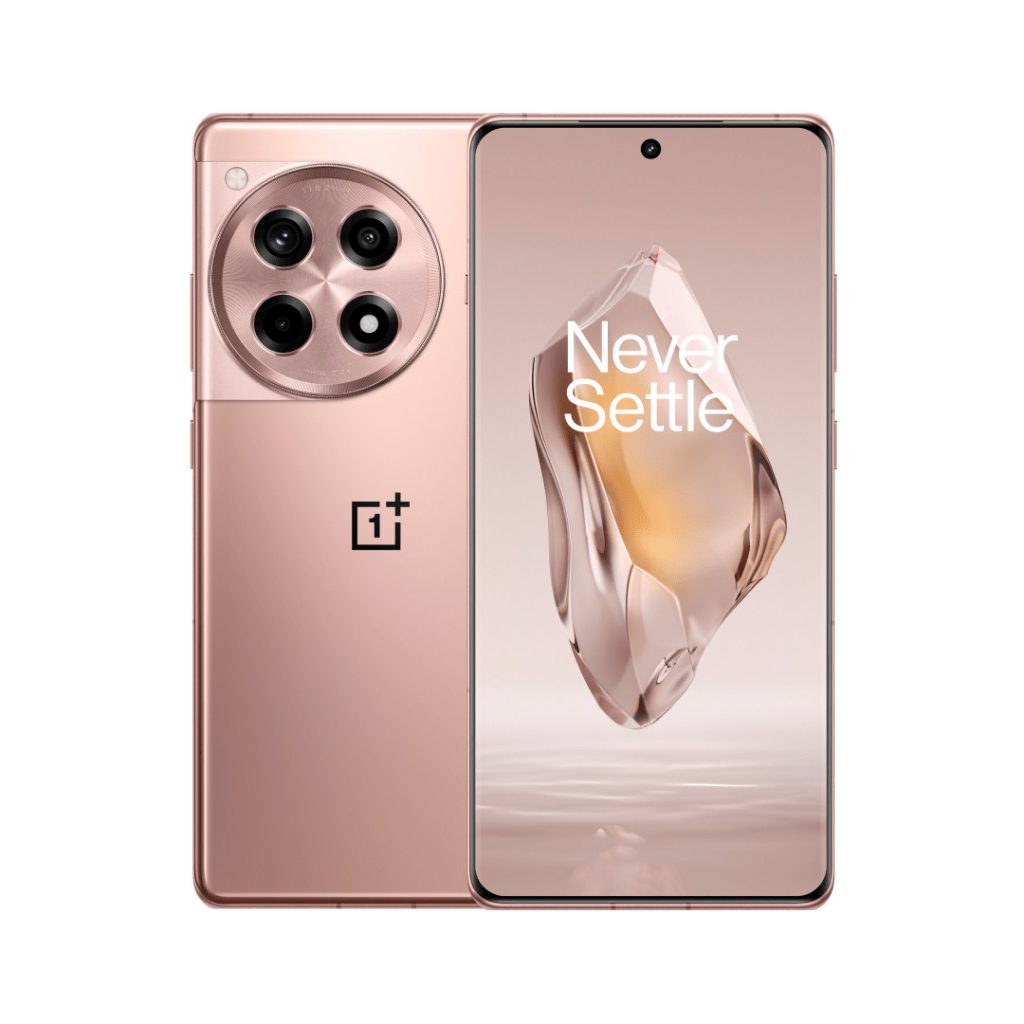
That said, we have a good idea of the new model’s appearance. The OnePlus 12R is essentially a rebranded OnePlus Ace 3, which already features a rose gold color variant in China known as Mingsha Gold (translated as Dune Gold). Therefore, it’s evident that OnePlus will launch the same color as Sunset Dune for the 12R in India.
OnePlus Ace 3 Mingsha Gold
The exact launch date of this color variant has not been revealed yet, however, we can expect it to debut in the coming weeks. Specs-wise, there won’t be any changes.
OnePlus 12R specs:
The OnePlus 12R will feature a 6.78-inch 1.5K AMOLED display with a refresh rate of up to 120Hz and Corning Gorilla Glass Victus 2 protection. Under the hood, the device is powered by a Snapdragon 8 Gen 2 SoC, offering up to 16GB of LPDDR5X RAM and up to 256GB of storage. It also has a 9140mm² Dual Cryo velocity VC cooling system to control the thermals.
OnePlus Ace 3 Mingsha Gold
In terms of photography, the OnePlus 12R is equipped with a 50 MP main camera featuring a Sony IMX890 sensor, an 8MP ultra-wide camera, and a 2MP macro camera. The front camera is a 16MP shooter. The device runs on OxygenOS 14, based on Android 14. It also includes a three-stage alert slider that has been repositioned to the left side of the handset.
The phone is powered by a 5500 mAh battery that supports 100W SuperVOOC fast charging. Additionally, it incorporates a SUPERVOOC S power management chip and proprietary Battery Health Engine technology.
In related news, OnePlus is also gearing up to launch the OnePlus Nord 4 on July 16 in the global market. While the device’s specs are impressive, what makes this device somewhat unique is its all-metal body.
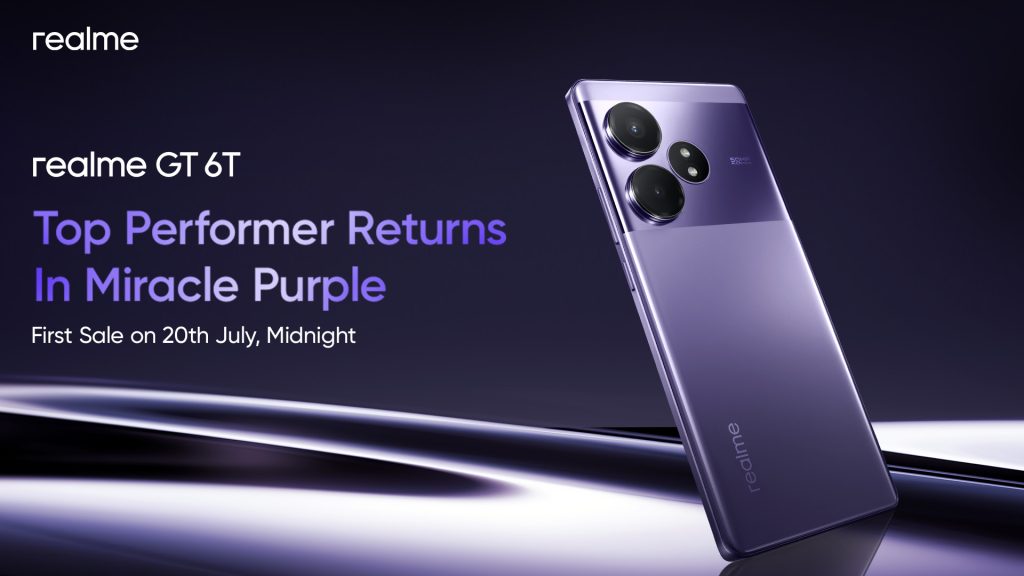
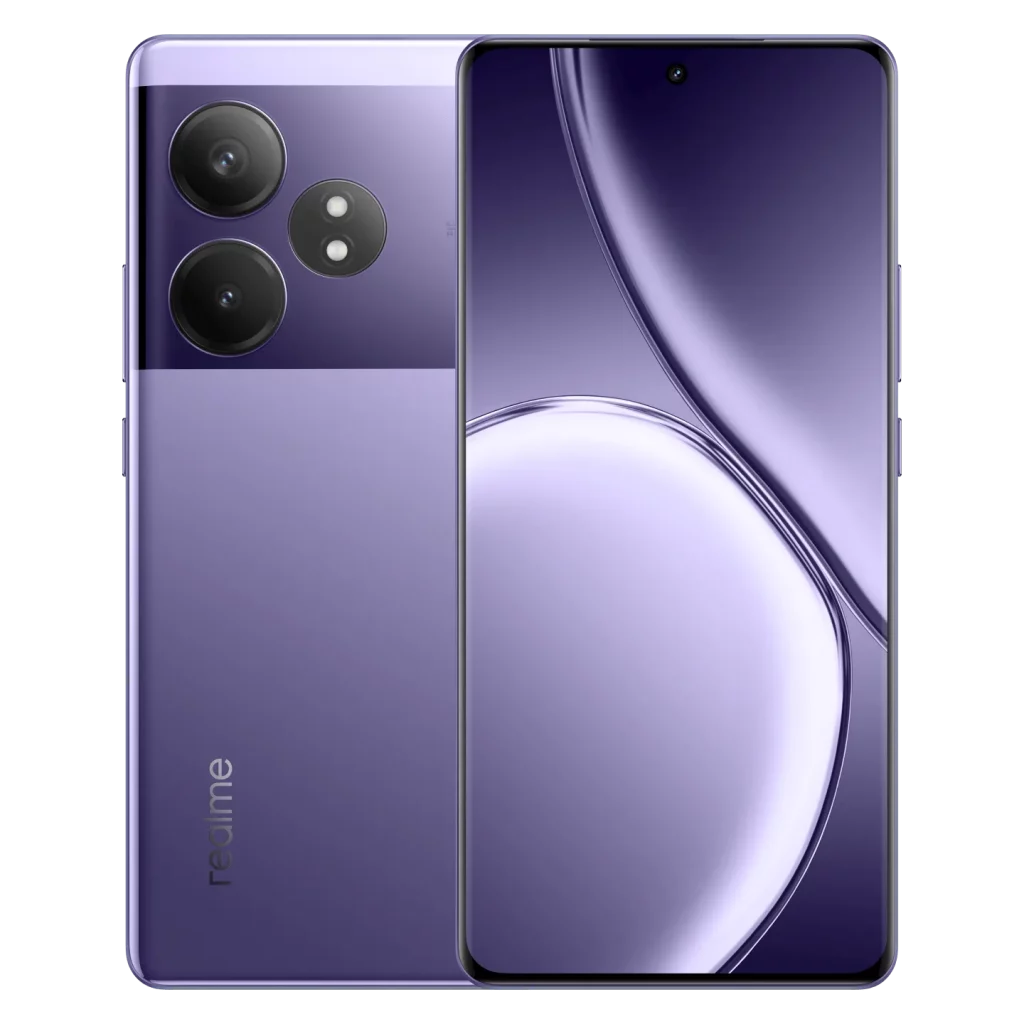
In May, the Realme GT 6T launched without the vibrant purple hue of its Chinese counterpart, the Realme GT Neo 6 SE. However, this changes in July as Realme introduces the “Miracle Purple” color option to the Indian market.
Aside from the new aesthetic, there are no upgrades. The Miracle Purple variant will be available in two configurations: 8GB+256GB priced at Rs 32,999 and 12GB+256GB priced at Rs 35,999. This differs from the existing Fluid Silver and Razor Green options, which also offer 128GB and 512GB storage variants.
Sales for the Miracle Purple GT 6T commence on July 20th on Realme India’s official website. Availability on other platforms, such as Amazon, is still unconfirmed. Additionally, the Realme Buds Air 6 will receive a new color option in India starting July 15th, with details yet to be disclosed.
Realme GT 6T specs:
The GT 6T has a 6.78-inch 8T LTPO AMOLED display with a variable 120Hz refresh rate, Full HD+ resolution, and a peak brightness of 6,000 nits. It runs on the Qualcomm Snapdragon 7+ Gen 3 SoC and is powered by a 5,500mAh battery that supports 120W wired fast charging. The device uses Realme UI, based on Android 14.
For cameras, the GT 6T includes a 50-megapixel Sony LYT600 main camera and an 8-megapixel ultra-wide angle lens on the back. The front camera is a 32-megapixel shooter for selfies and video calls. Other features include Bluetooth 5.4, WiFi 6, dual SIM 5G support, and a 9-layer ice-cooling vapor chamber for heat dissipation.
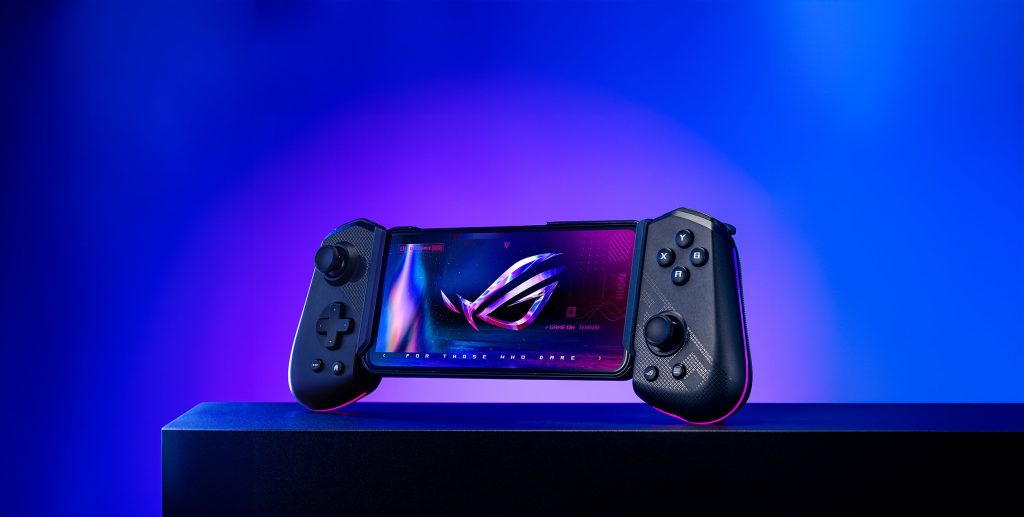
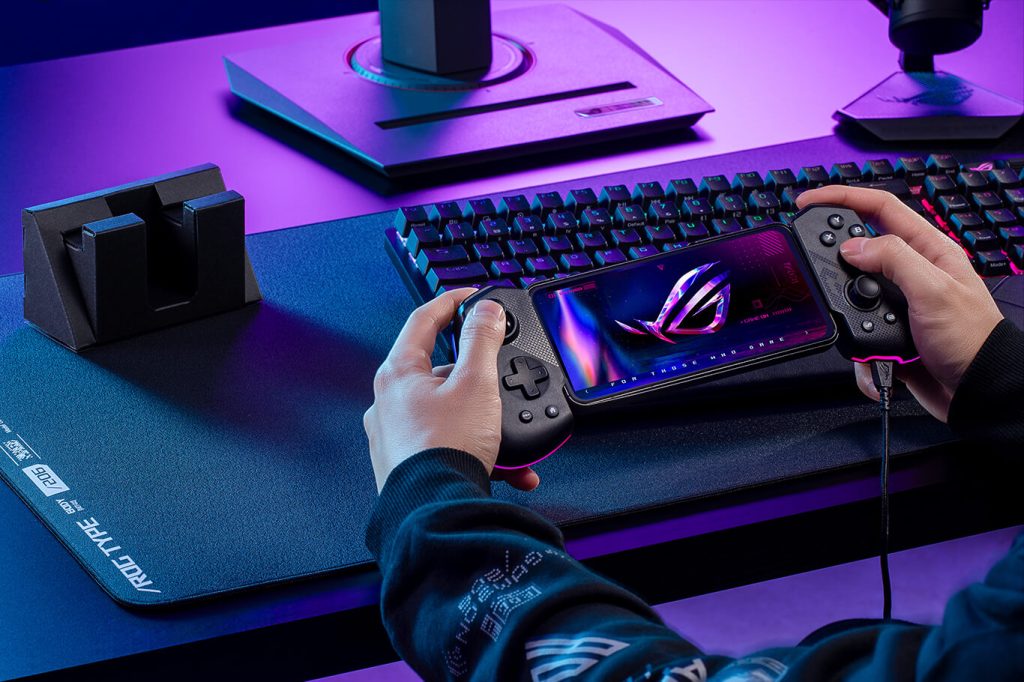
Asus announced the ROG Tessen mobile controller back in May featuring a unique foldable design, RGB lighting effects, and compatibility with most Android phones. Now this controller is available in China at a price of 599 yuan (roughly $82). Let’s check out its key specs.
ROG Tessen Mobile Controller Specifications:
The ROG Tessen Feng boasts a foldable design. Unlike bulky traditional controllers, the controller folds neatly, transforming into a compact package that effortlessly slips into your bag or pocket.
The gaming controller utilizes rubber support pads that adjust to various phone case thicknesses (between 7mm and 14.5mm), ensuring a secure fit for most Android phones on the market. It also features 18W fast pass-through charging, allowing you to play and charge your phone simultaneously.
The ROG Tessen features console-grade joysticks with a 22-degree range of motion and an 18mm-tall right stick for precise control. It also boasts mechanical micro-switches for the D-pad and face buttons, delivering a tactile and responsive gaming experience.
For added functionality, the controller includes two aluminum rear paddles that can be programmed on the fly using the ROG Button or within the Armoury Crate app. These paddles can be assigned complex in-game commands for an advantage.
The controller also features Asus Aura RGB lighting with seven preset effects, creating a customizable and visually immersive gaming environment. Additionally, the ROG Tessen features a 500 Hz polling rate for its wired USB Type-C connection.
For further customization, users can leverage the Armoury Crate app to remap buttons, configure lighting effects, and program custom functions including screen capture and gameplay recording.
Asus has incorporated eco-friendly practices into the ROG Tessen’s design. The packaging is constructed from eco-friendly materials, and a portion can be repurposed into a stand for the controller.
Microsoft continues to work on Windows 11, making improvements to the latest version of the popular operating system. While this generally means good news for us users, it isn’t always the case. For example, Microsoft’s latest Windows 11 update adds new advertisements to your PC. Here ate the details…
Microsoft Inserts Ads in Latest Windows 11 Update – How to Turn Them Off
Windows is one of the most popular operating systems of all time. However, it’s hard to say that Microsoft is making as much money from this OS, which is used on billions of devices, as it wants.
Although the company generates billions of dollars in revenue each year, there’s always room for more. This is where Microsoft’s cunning plan comes into play: showing advertisements.
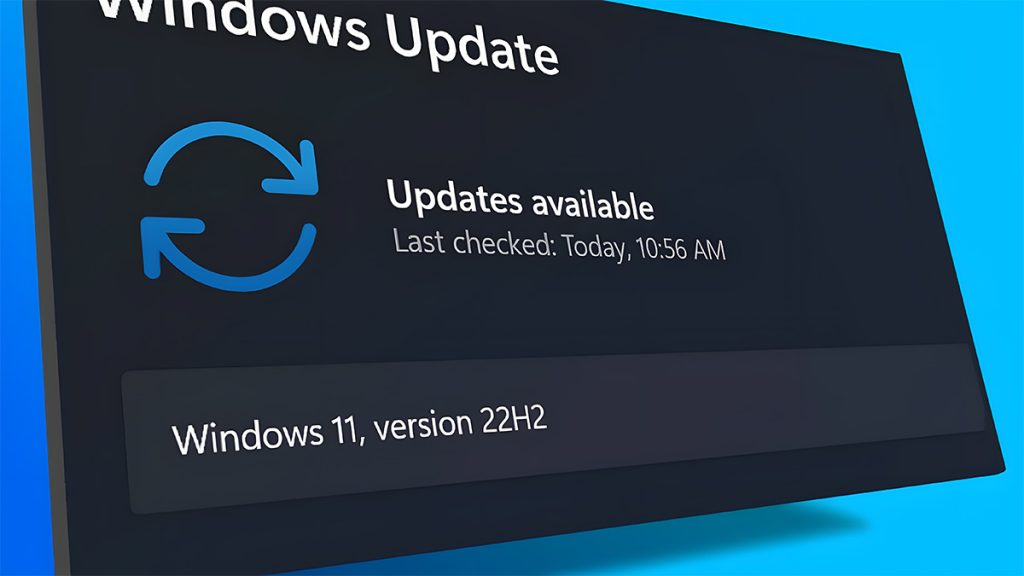
It has been known for some time that the company wanted to add ads to various parts of the operating system. Now, in line with this plan, the tech giant has just released its new update for Windows 11 version 23H2 and Windows 11 version 22H2, which adds advertisements to your PC.
The update causes Windows 11 users to see advertisements in the Start menu and Settings section. These ads, often consisting of app promotions, are mostly categorized under “recommendations.”
However, don’t worry; during the beta phase, a way to disable this was added to Windows and is likely available in this version as well. To do this, simply ensure you are using the most up-to-date version and follow these steps:
Open Settings: Press the Windows key and select Settings.
Personalization: Go to Personalization.
Start: Click on Start.
Toggle Off: Turn off “Show recommendations for tips, app promotions, and more.”
Samsung has launched a bunch of new products on the Galaxy Unpacked event including the sixth generation Galaxy foldables, Galaxy Buds 3 series, and the Galaxy Watch 7 series.
The Galaxy Watch 7 series comes includes two models – the Galaxy Watch 7 and the much anticipated Galaxy Watch Ultra. While this article discusses the Ultra model, you can check out the standard Galaxy Watch 7 here.
Galaxy Watch 7 Ultra comes with a squarish design
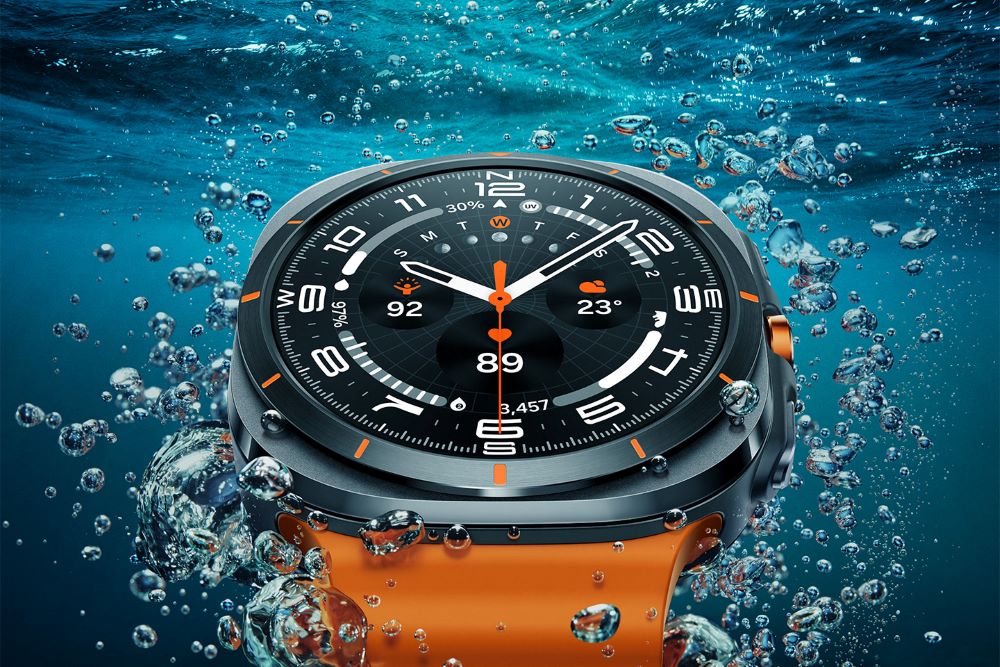
The Galaxy Watch Ultra smartwatch adopts a new design and a titanium body (Titanium Grade 4), which can withstand high temperatures of -2055°C and 10ATM water pressure. It passes MIL-STD 810H testing and has an optional easy-to-drain water sports strap. In addition, long pressing the shortcut button for 5 seconds activates a powerful 86-decibel siren that can reach up to 180 meters. You can get a better idea of the design from the image below.
Image: Samsung
Specifications and features:
The watch comes with a 47mm dial and equips a 1.5-inch (37.3mm) 480×480 Super AMOLED, always on display. It will be available in three colors – titanium rock gray, titanium platinum silver, and titanium porcelain white.
This watch also equips the same 3nm Exynos W1000 penta-core chipset that powers the Galaxy Watch 7. According to the company, this new chipset is significantly more capable and power efficient as compared to the dual-core Exynos W930 chip that powers the Galaxy Watch 6. The Exynos W1000 chipset is paired with 2GB memory + 32GB storage. The watch equips a 590mAh battery to power the system.
When the power saving mode is disabled, the Galaxy Watch Ultra offers a battery life of up to 80 hours. At night, the Galaxy Watch Ultra’s display automatically switches to a gentle night mode.
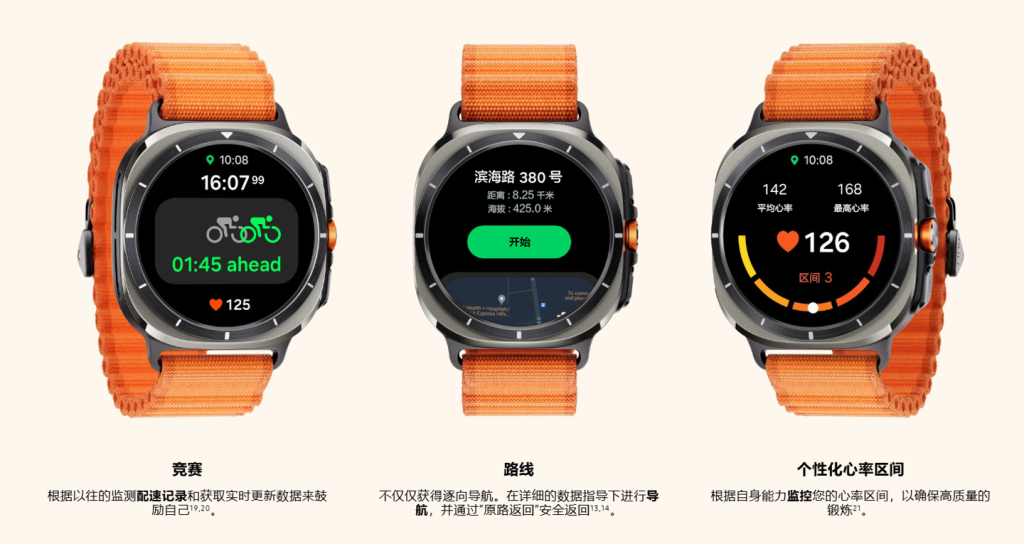
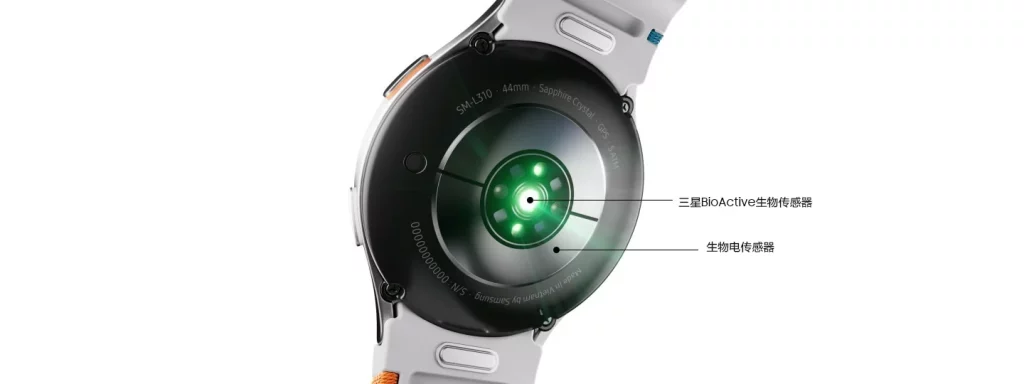
Just like the regular Galaxy Watch 7, this Ultra model also comes with the Samsung BioActive Sensor (Optical Bio-signal sensor+ Electrical Heart Signal + Bioelectrical Impedance Analysis), Temperature Sensor, Accelerometer, Barometer, Gyro Sensor, Geomagnetic Sensor, and Light Sensor. These sensors enable a bunch of health-tracking features. For example, you can track multi-course workouts for a triathlon from swimming to cycling to running with the new Multi-sports tile. The new Functional Threshold Power (FTP) for cycling measures maximum cycling power in just four (4) minutes with AI-powered FTP metrics.
Pricing and availability:
The Galaxy Watch Ultra is currently available for pre-order in select regions through the company’s official website. The Ultra model comes with WiFi + 4G LTE connectivity and is currently priced at $649 (₹ 59,999). The company says that the watch will become generally available for sale starting from 25 July 2024.
The Moonside MagLight battery pack is an impressive MagSafe power bank with a powerful ring light. The power bank can supercharge your smartphone while also lending itself to support your photography efforts. It is hyped as one of the most innovative products around.
There has been a steady rise in smartphone photography due to its less-expensive outlook and wide opportunities for advertisement for various products. The smartphone camera is a small-scale entrepreneur’s critical tool, coupled with the internet, for reaching a wider audience. The importance of proper illumination during your photo sessions cannot be overemphasized. A well-illuminated photo is a good marketing tool. The Moonshine MagLight battery pack is a MagSafe accessory that features an in-built ring light for selfies or other photos. The smartphone flash does not provide the best illumination for photos, hence the new ring light is a great addition to the amateur photographer’s repertoire.
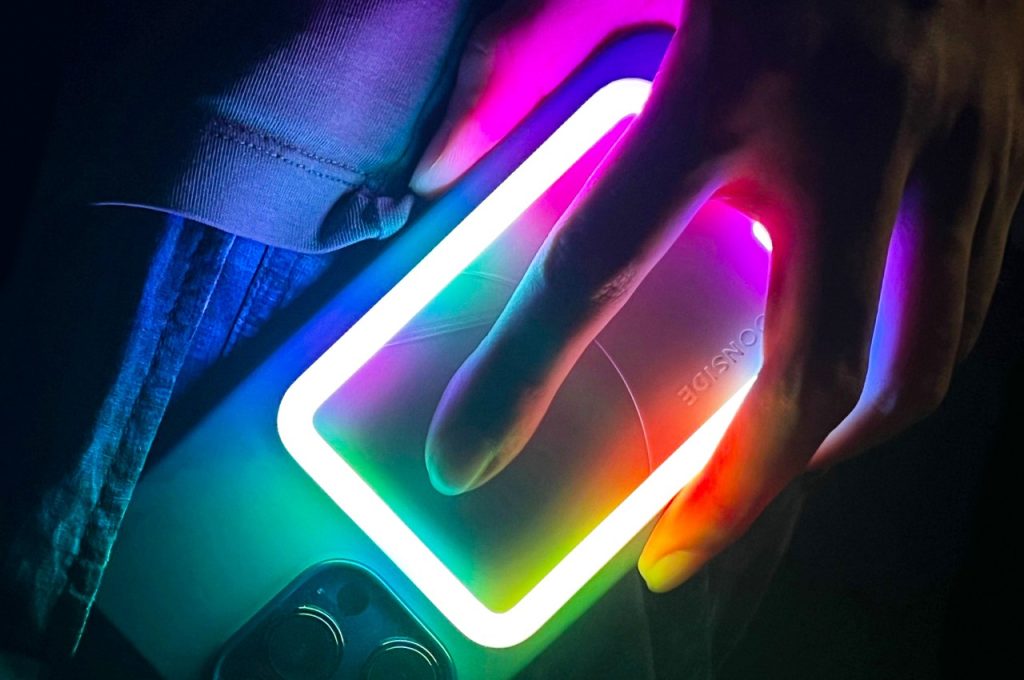
The Moonside MagLight is touted as the world’s first MagSafe power bank with a built-in RGB light strip that can be remotely customized. It has a 4,000mAh battery which provides juice for your phone and powers the light’s dynamic red strips. The strips can be used with either the primary or selfie camera of your smartphone, providing the needed natural illumination. The MagLight comes with magnetic stickers that can transform an Android smartphone to be MagSafe-compliant.
Moonside has a decent collection of lighting products and the MagLight seems to be a major highlight of the collection. The brand is prominent in the indoor ambient light segment, with the Moonside Lighthouse a very popular bedside light. The Moonside MagLight battery pack comes in a portable design and has 67 LED lights for all-round lighting. The lights deliver a maximum brightness of 660 lumens and this can be used in several innovative ways.
The Moonside MagLight battery pack is a product that is worth considering. The product can be purchased directly from the Moonside online shop. It is currently priced at the equivalent of $78. Customers can also buy the creative bundle for around $103.
As scheduled, Samsung released a bunch of products in the second Galaxy Unpacked hosted in Paris, including the Galaxy Z Fold 6, Z Flip 6, Galaxy Buds 3 series, and the Galaxy Watch 7 series. The Galaxy Watch 7 series includes two models – the Galaxy Watch 7 and Galaxy Watch Ultra.
Galaxy Watch 7 packs an advanced AI algorithm for sleep analysis
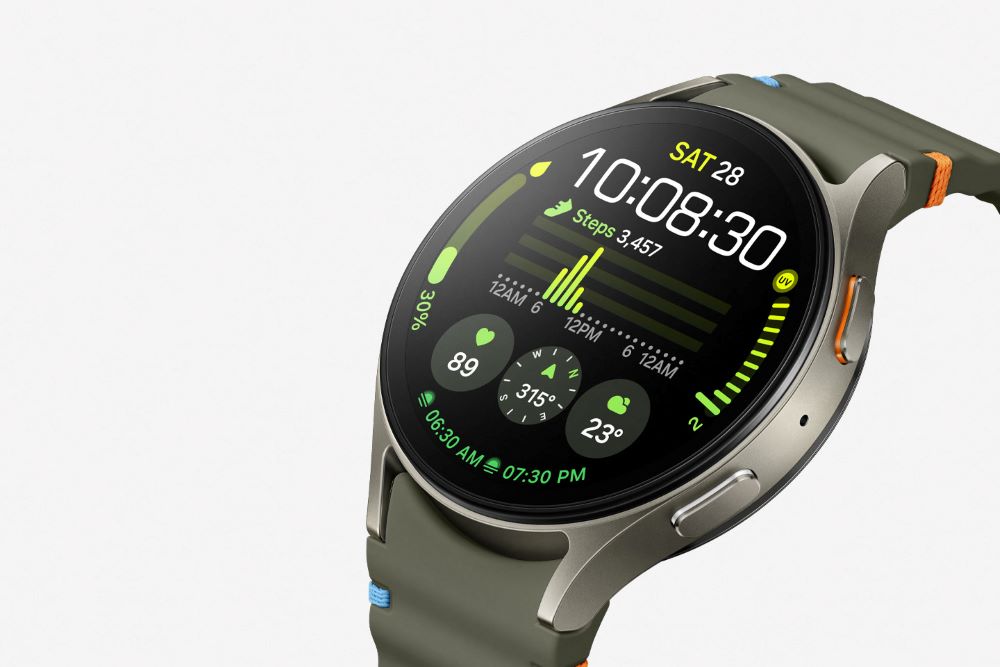
Galaxy Watch7 is reportedly designed to help you gain a holistic understanding of yourself. The fitness tracking feature of the watch allows users to plan complete exercise activities through warm-up and rest sessions, or refer to previous performance records to stay motivated. You can now track over 100 workouts and build routines by combining various exercises with Workout Routine to achieve your goals.
The watch equips advanced AI algorithms for sleep analysis. It also offers a De Novo FDA-authorised Sleep Apnea feature to provide a simple, proactive tool to check potential signs of sleep apnea.
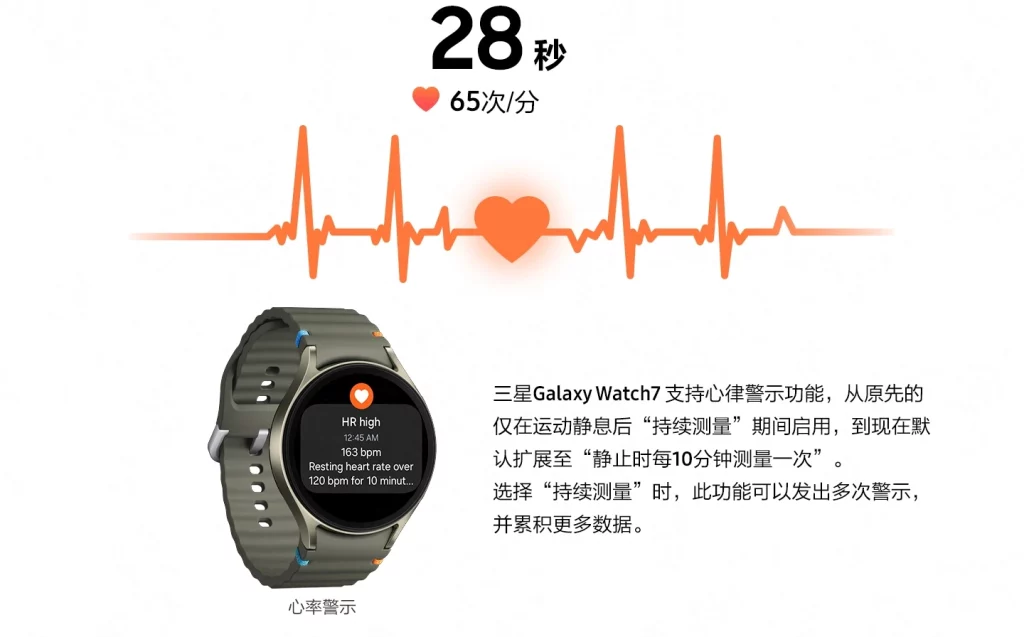
Galaxy Watch 7 offers health tracking features such as heart rate warning, ECG, body composition measurement, menstrual cycle tracking, and fall detection.
Another notable feature of the Galaxy Watch 7 (powered by Galaxy AI) is the energy score feature. It enables users to better understand their productivity level and schedule tasks accordingly. The watch also supports the voice-to-text feature, which can generate summaries instantly.
The Galaxy Watch 7 comes in both Bluetooth and LTE versions. The Bluetooth version comes in two different sizes – 40mm and 44mm. The LTE version comes with a 44mm dial. The Galaxy Watch 7 is available in three different colors – Yunling Green, Phantom Silver and Cloud White.
As revealed earlier, the Galaxy Watch 7 is equipped with a new 3nm penta-core processor, which offers improved performance and power efficiency. The series is also enhanced with Samsung BioActive biosensors and Galaxy AI. The enhanced Samsung BioActive biosensor is equipped with 13 LED lights to accurately monitor health data such as heart rate and sleep patterns. The watch is also equipped with L1 + L5 dual-frequency GPS.
The 40mm and 44mm size options come with different battery capacities. While the first one equips a 300mAh battery, the second one packs a larger 425mAh capacity.
Pricing and availability:
The watches are currently available for pre-order on the company’s official website. You can have a look at the prices below.
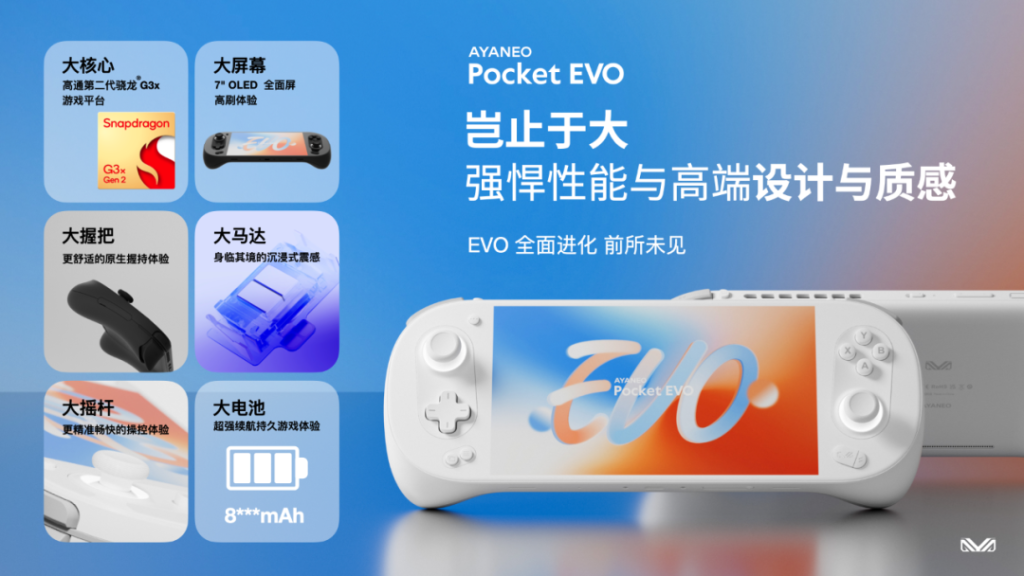
The AYANEO Pocket EVO Androidhandheld game console has been announced, and as per the specs released, it builds upon the design language of the AYANEO 2 and 2S, offering a slim body (exact thickness unknown) and lightweight construction (around 400 grams, estimated). It boasts a 7-inch 1080p OLED display with a smooth 120Hz refresh rate and a borderless full-screen design for immersive gameplay.
The handheld will also have an 8000mAh+ battery
Under the hood, the Pocket EVO packs the powerful QualcommSnapdragon G3x Gen 2 processor, kept cool by a 15W active cooling system. For precise control, it introduces itself as the “industry’s first Android handheld equipped with a large Hall joystick” and utilizes a diagonal button layout. Gamers can expect a familiar and satisfying rumble thanks to the inclusion of an HD vibration motor on par with the Nintendo Switch and ROG Ally. Powering through extended gaming sessions is a large battery exceeding 8000mAh.
On the software side, the Pocket EVO comes pre-installed with the AYAHome desktop launcher and AYASpace management software. This software suite empowers users with customization options like performance mode adjustments, device camouflage for discretion, game library management optimization, and button mapping fine-tuning for a personalized gaming experience.
At its recent Galaxy product launch event in Paris, Samsung unveiled a roadmap for its highly anticipated XR project but stopped short of revealing the actual headset. While the event showcased new products like the Galaxy Ring, Watch Ultra, and foldable phones, the XR headset remained shrouded in mystery.
The new XR headset will likely compete with the Apple Vision Pro
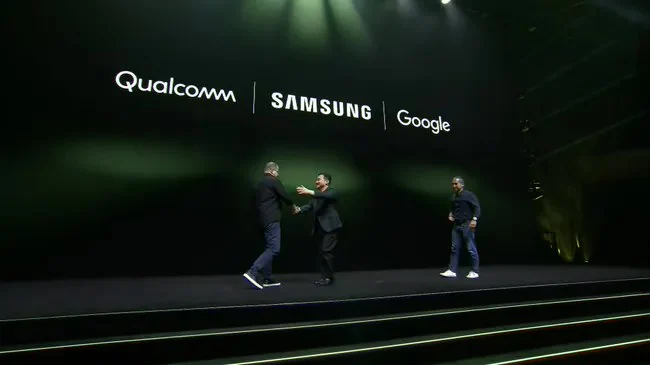
However, Samsung did provide a promising update. TM Roh, president of Samsung’s mobile division, announced the upcoming release of “a brand new XR platform later this year” – a surprise considering earlier reports suggested a launch in the first half of 2025.
This news was echoed by Rick Osterloh, Google‘s senior vice president, who spoke of their close collaboration with Samsung and Qualcomm on “the next generation of devices” and an “exciting new era in mobile computing.”
Samsung first announced this mixed reality project over a year ago, emphasizing deep integration with mobile phones. In a pre-event interview, Patrick Chomet, Samsung’s executive vice president, highlighted the importance of user comfort, optical quality, and artificial intelligence in developing this technology. Chomet believes AI will be a key factor in making XR truly user-friendly.
Reports suggest Samsung’s XR headset will compete directly with Apple’s Vision Pro. It aims to bridge the gap between VR and AR by offering mixed reality experiences with high-resolution displays, all at a more accessible price point.
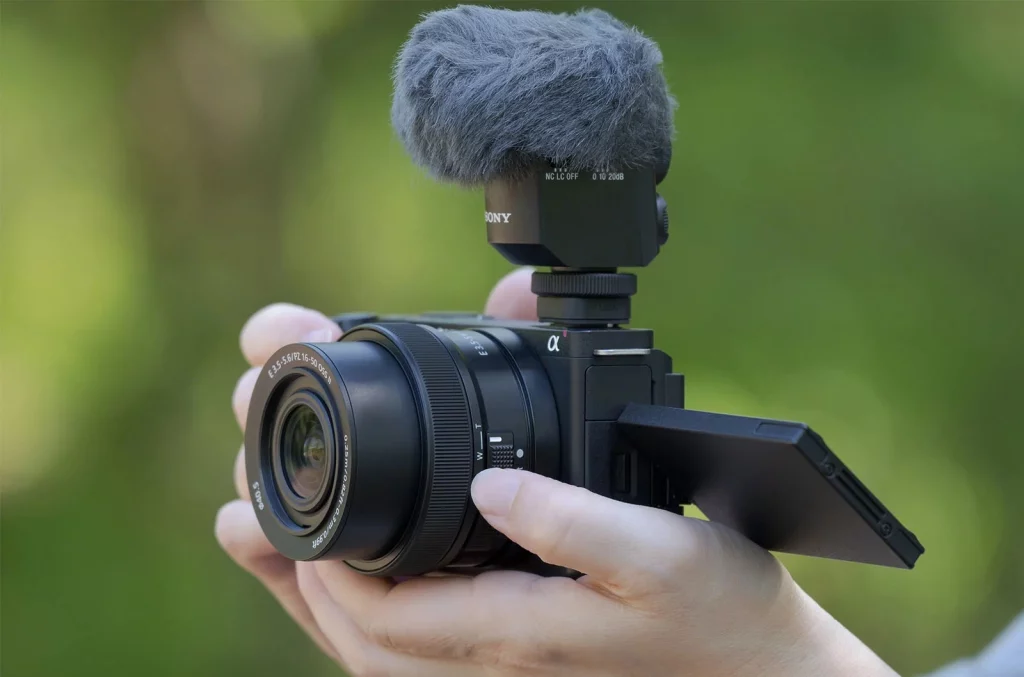
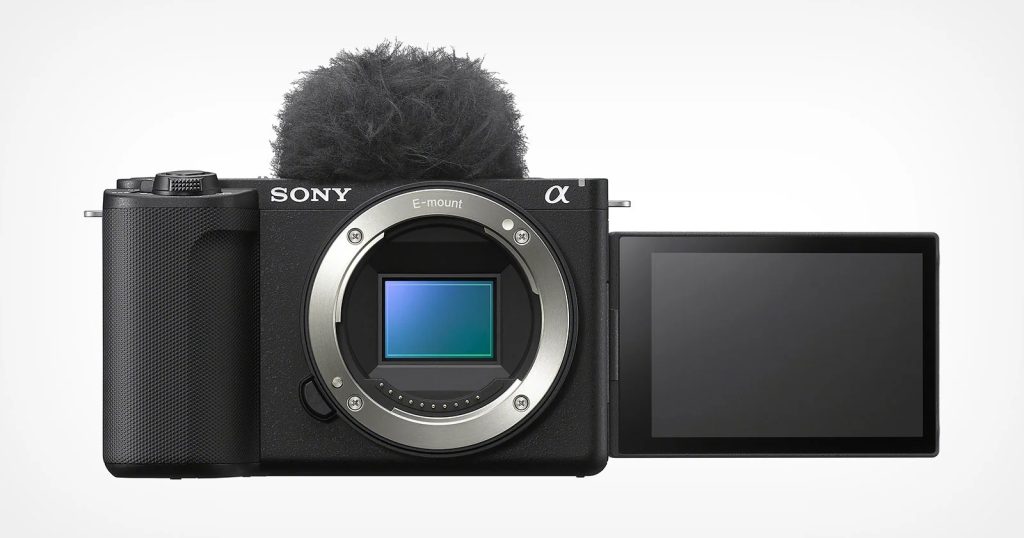
Sony has unveiled the next generation of their APS-C format mirrorless Vlog camera, the ZV-E10 II, for the overseas market. This camera is priced at US$999 (approximately 7,275 Yuan) and is expected to hit Chinese shelves on July 12th.
The camera weighs merely 377 grams and has a battery capacity of 2280mAh
The ZV-E10 II boasts a 26-megapixel back-illuminated sensor for capturing high-quality images and excellent low-light performance. Power is provided by the NP-FZ100 battery with a capacity of 2280mAh. The camera itself is compact and lightweight, measuring just 121 x 68 x 54mm and weighing in at 377 grams.
While the ZV-E10 II forgoes a mechanical shutter, AI chip, and in-body image stabilization, it offers several video-centric features. This includes enhanced video stabilization with a 1.5x crop, autofocus with human and animal recognition, and support for 10-bit 4:2:2 color recording for professional-grade editing.
In terms of video resolution, the ZV-E10 II allows for 1.1x cropped 4K footage at 60fps with oversampling from 5.6K, or uncropped 4K at 30fps. You can also leverage built-in LUTs (Look Up Tables) for customized color grading.
Reputed tipster Digital Chat Station today revealed some information about the upcoming ColorOS 15. According to him, the update will offer improved system animations.
ColorOS 15 could offer another feature similar to Apple’s Live Photos
The update will also reportedly bring a feature similar to Apple‘s Live Photos. For those unfamiliar, the feature in iPhone allows users to record what happens 1.5 seconds before and 1.5 seconds after taking a picture. This could be really helpful when capturing a fast-moving subject like a bird flying in the sky.
The tipster also noted in a separate Weibo post that devices with ColorOS 15 will get the ability to transfer files with Apple devices through a feature similar to AirDrop. AirDrop is a feature developed by Apple that allows its users to wirelessly send photos, videos, documents, and more easily to other Apple devices. However, to use this connectivity feature of ColorOS 15, users will need to install an app on their Apple devices. Unfortunately, we currently don’t have more information about the app.
But which models will get the feature first? Well, Ma Xin, Director of User Experience and Solutions for OPPO ColorOS, previously revealed some information about the feature. According to him, multiple models may get this feature with the next ColorOS 15 update for internal public testing. You can check out the list of devices eligible for the AirDrop-like feature below.
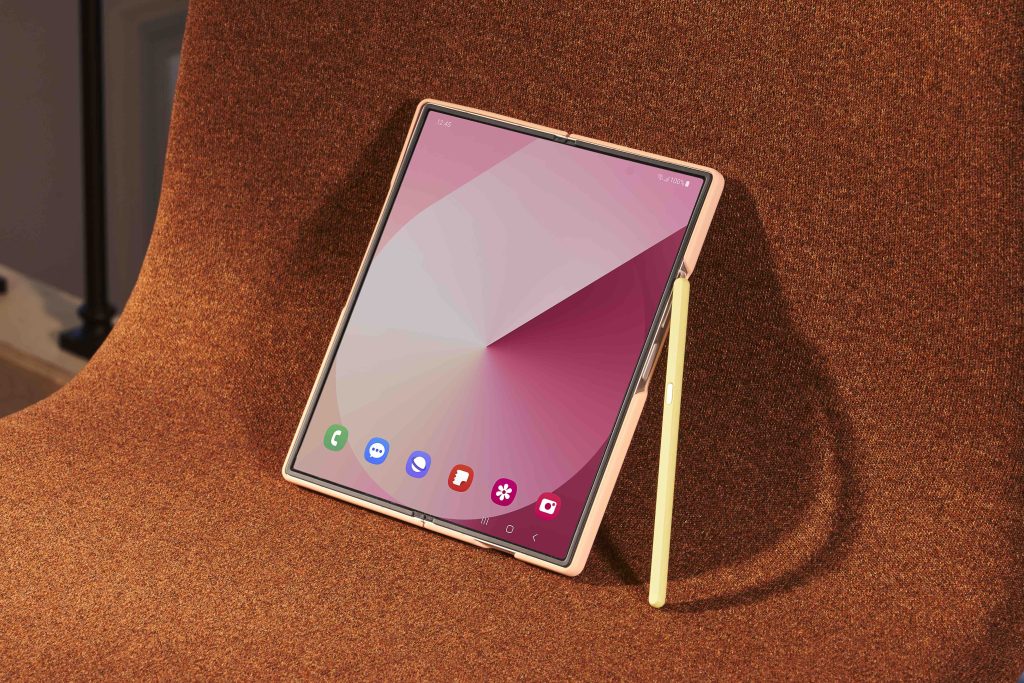
Samsung just unveiled the Galaxy Z Fold 6, the latest iteration of its flagship foldable phone. This new generation promises a series of refinements over its predecessors, the Z Fold 5, Z Fold 4, and Z Fold 3, making it a more compelling option for users seeking a powerful and versatile foldable device. Let’s delve into the key upgrades that the Z Fold 6 brings to the table.
All the Fold phones boast large foldable main displays and secondary cover displays. The Z Fold 6 maintains the 7.6-inch size of its predecessors but boasts the highest resolution (2160 x 1856 pixels) and a wider 20.9:18 aspect ratio. This translates to a potentially more immersive viewing experience for content consumption or multitasking.
Brightness is a significant improvement on the Fold 6, reaching a staggering 2600 nits compared to the Fold 5’s 1750 nits and Fold 4’s even lower 1250 nits. Both the Fold 5 and Fold 6 utilize the latest Dynamic AMOLED 2X technology with 120Hz adaptive refresh rates, ensuring smooth visuals and responsiveness.
The cover displays have seen a minor size increase across generations. The Fold 3 and Fold 4 have a 6.2-inch HD+ display, while the Fold 5 and Fold 6 bump it up to a 6.3-inch HD+ display. All the cover displays offer 120Hz refresh rates, making for a seamless transition between the unfolded and folded states. The Fold 6 boasts the brightest cover display at 2600 nits, matching the main screen’s peak brightness.
2. Performance and Software
The Galaxy Z Fold series has always packed the latest and greatest processors. The Fold 3 uses the Snapdragon 888, while the Fold 4 upgrades to the Snapdragon 8+ Gen 1. The Fold 5 and Fold 6 take it a step further with the Snapdragon 8 Gen 3 for Galaxy, potentially offering even better performance and efficiency. All phones come with 12GB of RAM (Fold 6 comes with LPDDR5X), ensuring smooth multitasking capabilities.
On the software front, the Fold 3 launched with Android 11 and One UI 3.1, while the Fold 4 comes with Android 12L and One UI 4.1.1. The Fold 5 upgrades to Android 13 with One UI 5.1.1, and the Fold 6 continues the trend with the latest Android 14 and One UI 6.1.1.
With each generation, Samsung promises extended software support, with the Fold 6 offering the most up-to-date software and the longest update commitment (seven generations of OS upgrades and seven years of security updates).
Samsung has also placed a strong emphasis on AI features with the Z Fold6. The phone integrates Galaxy AI with functionalities like Note Assist, PDF overlay translation in Notes, Circle to Search, Interpreter, Live Translate, AI-powered Pro Visual Engine, Photo Assist, and Portrait Studio. These features aim to enhance productivity, communication, and content creation, making the Z Fold 6 a more versatile tool.
3. Design and Durability
All the Z Fold phones share a similar foldable design with a hinge mechanism that allows the main display to fold inwards. Samsung has continuously refined the hinge across generations, with the Fold 6 boasting a dual-rail hinge structure for improved durability and a reduced crease on the main display. The Fold 6 is also the thinnest and lightest of the bunch at 12.1mm unfolded and 239 grams, making it slightly more comfortable to carry and use when folded.
Material choices have also seen improvements. The Fold 3 and Fold 4 use Armor Aluminum frames and Corning Gorilla Glass Victus+ protection. The Fold 5 introduces a wider variety of recycled materials, and the Fold 6 continues this trend while adopting the even more durable Corning Gorilla Glass Victus 2 for both the cover display and rear glass.
Both the Fold 5 and Fold 6 boast an IP48 water resistance rating, a slight improvement over the IPX8 rating of the Fold 3 and Fold 4. While water resistance is a plus, it’s important to remember that these phones are not completely waterproof.
4. Cameras
Unlike the significant display and performance upgrades, the camera system in the Z Fold 6 remains largely unchanged from the Z Fold5. It features a 50MP primary sensor, a 12MP ultra-wide sensor, and a 10MP telephoto sensor with 3x optical zoom and 30x space zoom.
This setup is still capable of capturing high-quality photos and videos, but it might not be as exciting for users who were hoping for a camera upgrade. All phones boast a 10MP front-facing camera and a hidden 4MP under-display camera on the main screen for video calls while unfolded.
5. Battery Life
The Z Fold 6 retains the 4400mAh battery of its predecessors. While not necessarily a bad thing, some users might have hoped for a larger capacity to accommodate the power-hungry processor and large displays. The phone supports 25W wired charging, 15W wireless charging, and 4.5W reverse wireless charging, offering users convenient charging options.
6. Pricing
The Galaxy Z Fold series has consistently commanded a premium price tag. The Fold 3 started at $1799.99, followed by the Fold 4 and Fold 5 at the same price point. The Fold 6 follows a similar pricing structure, starting at $1899.99 for the base 256GB model.
7. Conclusion
The Galaxy Z Fold 6 represents the latest iteration in Samsung’s foldable phone technology. It boasts improvements across the board, including a brighter and potentially more immersive display, a more powerful processor, the latest software, and a slightly more durable and comfortable design. While the camera system remains largely unchanged, the Fold 6 offers a more refined user experience thanks to the improved hinge design and a potentially better under-display camera.
Choosing the right Fold phone depends on your needs and budget. If you prioritize the absolute latest technology and the most durable design, then the Fold 6 is the clear choice. However, if you’re on a tighter budget and the improvements on the Fold 6 don’t seem significant enough, the Fold 5 might be a more practical option. The Fold 4 and Fold 3 offer even more attractive price points for those who are willing to sacrifice some of the latest features.
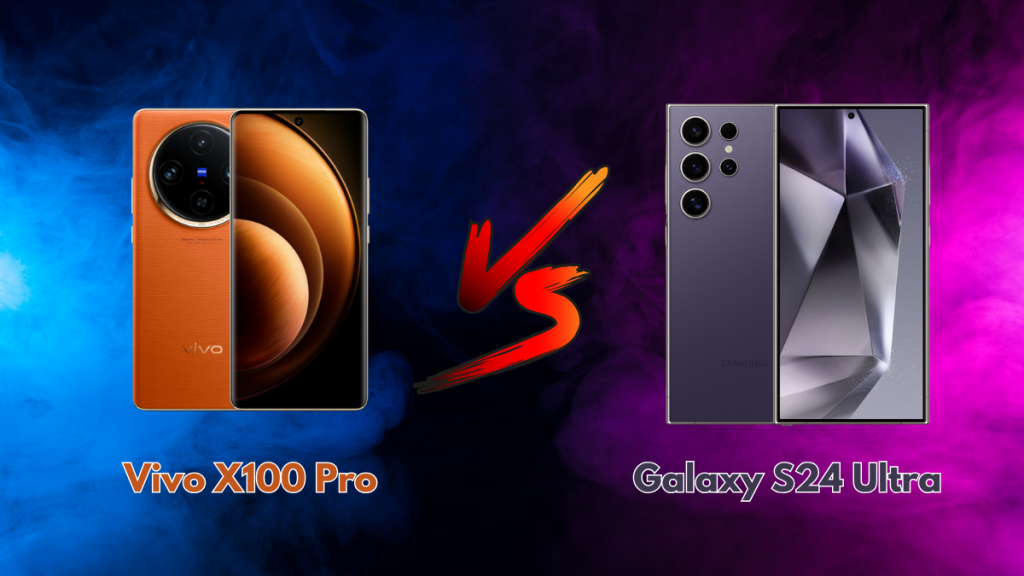
The Vivo X100 Pro and Samsung Galaxy S24 Ultra are among the best flagship smartphones available in the market right now. Both have powerful chipsets, excellent cameras, and great displays.
While both are high-end flagship smartphones, they are not the right fit for everyone. In this post, we’ll compare the Vivo X100 Pro and Galaxy S24 Ultra to help you find the right choice that matches your needs.
Vivo X100 Pro vs Galaxy S24 Ultra: Spec Sheet
Vivo X100 Pro
Galaxy S24 Ultra
Release Date
Nov 2023
Jan 2024
Body
164.05 x 75.28 x 8.91 mm (Startrail Blue, Asteroid Black) 164.05 x 75.28 x 9.05 mm (Sunset Orange) 225 g (Startrail Blue, Asteroid Black) 221 g (Sunset Orange)
5,400 mAh 100W Wired 50W Wireless Reverse wired support
5,000 mAh 45W wired 15W wireless 4.5W reverse wireless
OS
Android 14, Funtouch OS 14 (international), OriginOS 4 9 (China)
Android 14, One UI 6.1.1
Connectivity
5G/4G/3G/2G Wi-Fi 7 NFC Bluetooth 5.4 USB-C 3.2 Gen 1
5G/4G/3G/2G Wi-Fi 7 NFC Bluetooth 5.3 USB-C 3.2 Gen 1
Vivo X100 Pro vs Galaxy S24 Ultra: Benchmarks
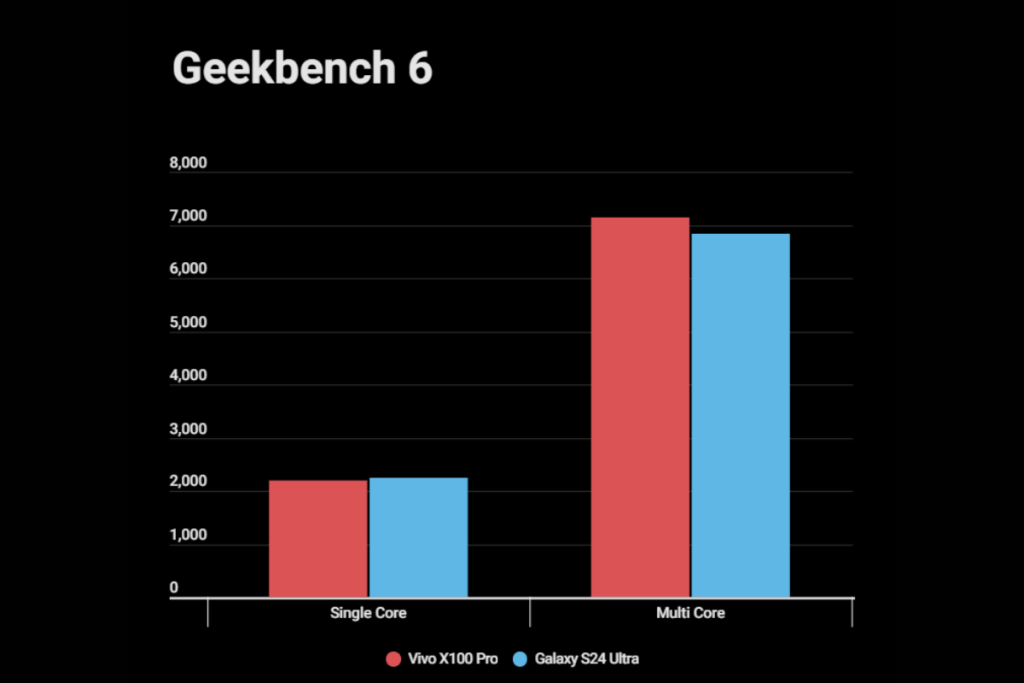
Geekbench 6
Vivo X100 Pro
Galaxy S24 Ultra
Single Core
2194
2244
Multi Core
7141
6834
The Geekbench test measures the CPU capabilities of smartphones, which has given similar single-core and multi-core scores to the Vivo X100 Pro and Samsung Galaxy S24 Ultra. It suggests that both smartphones deliver nearly similar CPU performance.
AnTuTu 10
Vivo X100 Pro
Galaxy S24 Ultra
CPU
470494
437464
GPU
777221
650004
Memory
378357
360619
UX
336000
298648
Total Score
1962072
1746735
On the AnTuTu benchmark (version 10), the Vivo X100 Pro is clearly ahead of the Galaxy S24 Ultra in all tests. Notably, there’s a big difference in the GPU scores on AnTuTu, but in reality, the story is different (more on that in the performance section below).
Vivo X100 Pro vs Galaxy S24 Ultra: Design
Both smartphones have a premium design, but the Vivo X100 Pro has a curved display, whereas the Galaxy S24 Ultra has a flat one. It can really impact your purchase decision, hence choose what you like.
The Vivo smartphone is slightly taller than the Galaxy S24 Ultra but is more lightweight. That means the Galaxy phone is a slightly compact phone with a boxy design and a couple of grams heavier than the Vivo phone.
You’ll quickly notice a massive camera module on the back of the Vivo X100 Pro, whereas the Galaxy S24 Ultra opts for a minimalist design.
Vivo X100 Pro vs Galaxy S24 Ultra: Display
The Samsung Galaxy S24 Ultra’s display is slightly bigger than that of the Vivo X100 Pro. Both have LTPO AMOLED screens with 120Hz refresh rate. This means the screen can automatically switch between refresh rates to offer better smoothness while saving power.
The Vivo phone has a 1260 x 2800 pixels resolution, whereas the Galaxy S24 Ultra has a 1440 x 2130 px resolution. The latter has more pixels per inch, resulting in better clarity.
Vivo X100 Pro offers better screen visibility outdoors, but the Galaxy S24 Ultra isn’t bad either outdoors. Most importantly, the Vivo X100 Pro has a curved display, whereas Samsung goes with a flat display for the Galaxy S24 Ultra.
Vivo X100 Pro vs Galaxy S24 Ultra: Performance
The Vivo phone is powered by a Dimensity 9300 chipset — MediaTek’s most powerful smartphone SoC. On the other hand, we have the Galaxy S24 Ultra with a Snapdragon 8 Gen 3 chip, which is the most powerful Qualcomm chip for smartphones.
So, both devices use the best of the best chips from two of the biggest chip companies. But which one has got more power to fulfill your processing needs?
Well, there isn’t a clear-cut answer. Both are high-performance flagship smartphone chips with comparable CPU performance. But, when it comes to a long gaming session, the Snapdragon 8 Gen 3 retains the performance while offering higher FPS. You can see the Snapdragon 8 Gen 3 vs Dimensity 9300 comparison for more details.
So, if you’re much into gaming, getting a Snapdragon 8 Gen 3-powered device makes much more sense than choosing one with a Dimensity 9300 chip. This doesn’t make the Dimensity chip a bad choice for high-end phones. It can easily handle your day-to-day performance needs.
Vivo X100 Pro vs Galaxy S24 Ultra: Cameras
The giant rear camera module on the back of the Vivo X100 Pro has three sensors, each 50MP. The primary one is a 1/0.98″ sensor with optical image stabilization (OIS) and f/1.75 aperture. There’s also a periscope telephoto lens with OIS and f/2.0 aperture. And finally an ultrawide lens with 119-degree field-of-view and f/2.0 aperture.
The Galaxy S24 Ultra has a quad camera setup on the back. It includes a 200MP primary camera (with OIS), a 10MP telephoto lens (with OIS and 3x optical zoom), a 50MP periscope telephoto lens (with OIS and 5x optical zoom), and lastly a 12MP ultrawide lens with 120-degree field-of-view.
Both smartphones can record up to 8K videos with their rear cameras. However, the Vivo phone can only record up to 1080p with its 32MP selfie camera, while the Galaxy S24 Ultra can record 4K videos with its 12MP selfie camera.
The Samsung phone takes slightly more detailed selfie videos, whereas the stability is comparable on both. The Galaxy S24 Ultra also takes clearer videos with better stabilization with its primary camera (1X). At 4.3x optical zoom on Vivo and 5x optical zoom on Samsung, both take good stable videos with better colors and detail.
Samsung does a better job at video recording but it’s not the same story with photos. Vivo wins the normal shots (photos) as it has better background blur, colors, and shades. Even macro photos look better on Vivo with better background blur and details, but Samsung captures slightly better colors.
Samsung has a lot of noise in 10x and 20x photos, while Vivo X100 Pro takes comparably good shots, though not the best. The Galaxy S24 Ultra wins the ultra-wide photo category by bringing in more details, clarity, colors, and a wider field of view.
Vivo X100 Pro has clearly outperformed the Galaxy S24 Ultra in low-light photos. Compared to the S24 Ultra, the X100 Pro has more details, clarity, and sharpness. In low-light zoom shots, Samsung captures lots of noise, whereas the Vivo X100 Pro does a very good job.
Vivo X100 Pro vs Galaxy S24 Ultra: Battery
The Vivo X100 Pro ships with a 5,400 mAh battery. It supports 100W wired fast charging that can fill up the battery by up to 50% in just 14 minutes. The device also supports 50W wireless charging.
The Samsung Galaxy S24 Ultra has a 5,000 mAh battery and supports 45W fast charging. It supports 15W wireless as well as reverse wireless charging.
Vivo X100 Pro vs Galaxy S24 Ultra: Software
You’d want your phone to have the latest software for as long as possible. Hence, it is crucial to know how many years of updates the brand is offering.
Vivo X100 Pro and Galaxy S24 Ultra ships with Android 14 out of the box. For Vivo X100 Pro, the brand has promised three years of Android updates and four years of security updates. The Galaxy S24 Ultra is promised to get seven years of Android and security updates, which is the best on any Android smartphone.
Vivo X100 Pro vs Galaxy S24 Ultra: Connectivity
Both smartphones have all the necessary connectivity features such as Wi-Fi 7, NFC, 5G, and Bluetooth (5.4 on X100 Pro, 5.3 on S24 Ultra). Notably, the Galaxy S24 Ultra lacks NavIC.
The Snapdragon 8 Gen 3 inside the Galaxy S24 Ultra has an X75 5G modem that supports up to 10Gbps download speed, whereas the 5G modem of the Dimensity 9300 supports a maximum download speed of 7Gbps.
Vivo X100 Pro vs Galaxy S24 Ultra: Which Is Better?
If you have read all the sections above, you might have already chosen the right fit for you. However, if you are still unclear, let me quickly help you with that.
Both have great displays and high-performance chips. However, the Snapdragon 8 Gen 3 (inside the Galaxy S24 Ultra) offers better gaming performance. As for the cameras, the Galaxy S24 Ultra does a better job at video recording, while Vivo takes better photos. Even the macro, low-light, and zoom photos are better on Vivo X100 Pro. Samsung does a good job at portraits with front and rear cameras. Notably, the Vivo X100 Pro doesn’t offer 4K recording with the selfie camera.
Both smartphones have excellent connectivity features. You can expect slightly better battery backup on the Vivo X100 Pro, and refill it quickly with the 100W wired charging.
Now, choose the right one based on your priorities.
Xiaomi has launched a new refrigerator, the Mijia Refrigerator Fresh Storage Cross 436L. This model boasts a sleek, ultra-thin design measuring only 60cm deep, perfect for modern kitchens with limited space.
Despite its compact footprint, the refrigerator offers a generous 436L capacity, divided into a 257L refrigeration zone, a 154L freezing zone, and a dedicated 25L compartment ideal for baby food and other delicate items.
The Mijia Refrigerator Fresh Storage Cross 436L achieves its ultra-thin profile through innovative technologies. The refrigerator utilizes a bottom heat dissipation system, eliminating the need for vents on the sides or back, allowing for a seamless fit with cabinets.
Additionally, the hinge design enables the door to open a full 90 degrees even when positioned close to a wall, maximizing space utilization without sacrificing functionality.
Xiaomi prioritizes food preservation with the Fresh Storage Cross 436L. The refrigerator employs a 360-degree air cooling circulation system that ensures consistent cooling throughout the interior, preventing frost buildup and the need for manual defrosting.
Furthermore, the refrigerator boasts a rapid freezing function capable of reaching temperatures low enough to lock in the freshness of ingredients and preserve their nutritional value.
The smart refrigerator seamlessly integrates with Xiaomi’s smart home ecosystem. Users can connect the refrigerator to the Mi Home App to remotely control temperature settings and select modes. Additionally, the refrigerator is compatible with HyperOS Connect and the Xiao Ai voice assistant.
Xiaomi equips the Fresh Storage Cross 436L with an Ag+ ion antibacterial deodorization module. This technology boasts a 99.99% antibacterial rate, effectively eliminating odors and creating a clean environment for food storage. The refrigerator also features a removable door seal for easy cleaning, preventing mold, and ensuring optimal hygiene.
The refrigerator prioritizes energy savings with a first-level energy efficiency rating. This translates to low energy consumption of around 0.84 kWh per day, making it an environmentally friendly and cost-effective choice. Furthermore, the refrigerator operates at a quiet level of 35dB, ensuring peaceful operation without disturbing your sleep.
Availability and Pricing
The MIjia Refrigerator Fresh Storage Cross 436L is available for pre-order in China starting July 10th at a starting price of 2499 yuan (approximately $343).
Earlier in January this year, Samsung surprised the consumer tech industry with the introduction of its first-ever smart ring. Since then, plenty of details about the Samsung Galaxy Ring have been revealed through some confirmations as well as leaks and rumors. The South Korean brand’s wearable device is set to shake up the smart rings segment. Now, the wait is officially over as the Galaxy Ring has debuted officially today at the Unpacked event alongside the Z Fold 6, Z Flip 6, and Watch 7 series.
Samsung Galaxy Ring specifications and features
The Samsung Galaxy Ring boasts a titanium grade 5 finish. It has a concave design with the sides tapering into the middle. The ring is IP68-certified dust and water-resistant. It is also waterproof up to 100 meters making it suitable for swimming. The wearable device is lightweight with the smallest variant measuring 7.0 x 2.6mm and weighing just 2.3 grams. It is offered in nine sizes ranging from size 5 to 13. The South Korean brand is providing a free sizing kit with each order before confirming on a final choice.
Coming to health and fitness, the Samsung Galaxy Ring is equipped with an optical heart-rate PPG sensor that provides vital data like abnormal heart rates in real-time along with additional information like beats per minute and respiratory rate. There is also a skin temperature sensor and menstrual cycle tracking onboard for accurate measurement results. The smart ring is capable of tracking sleep patterns with capabilities like snoring analysis, movement during sleep, sleep latency etc. The wearable device packs support for various exercise activities along with support for auto workout detection for some modes. It alerts users when they have been inactive for a long time. Another nifty feature of the Galaxy Ring is an AI-enabled Energy Score that measures your physical and mental condition based on various sleep parameters.
The Samsung Galaxy Ring also packs a gesture feature. You can control your smartphone’s camera shutter or dismiss an alarm with a double pinch. This is similar to the Apple Watch’s double tap. The smart ring is compatible with Samsung Find and has built-in LED lights that flash when misplaced. The wearable device is claimed to last up to 7 days. It comes in a transparent charging case that also features LED lights to indicate status.
The Samsung Galaxy Ring carries a price tag of $399 and is up for pre-orders starting today. It will ship from July 24 and will be available in Titanium Black, Titanium Gold, and Titanium Silver colors.
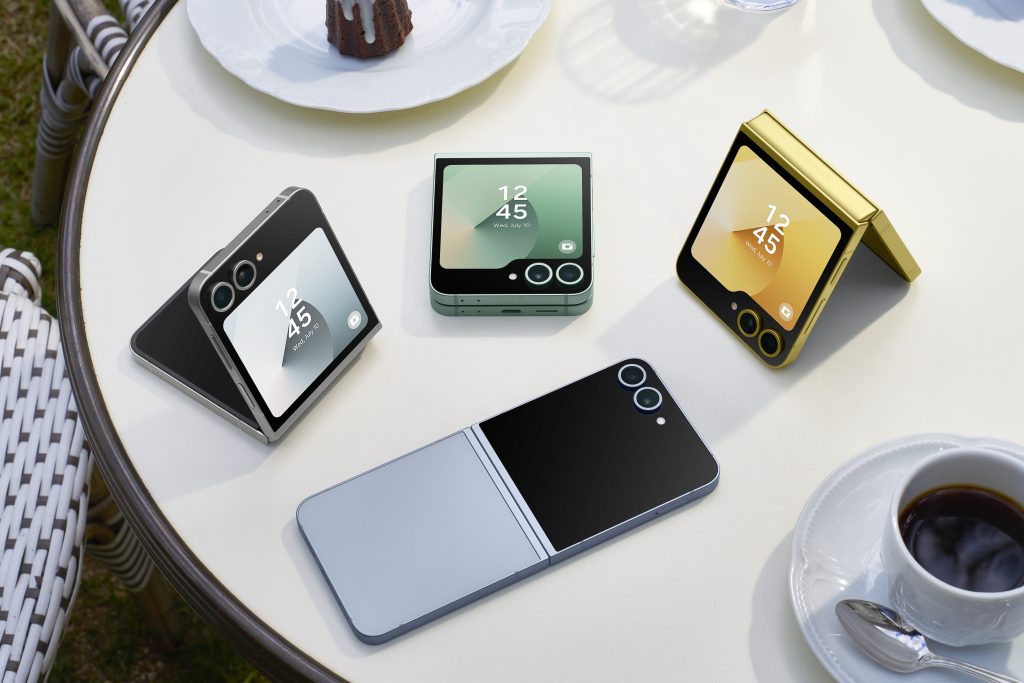
The Samsung Galaxy Z Flip 6 is officially launched alongside the Z Fold 6. The clamshell foldable smartphone does not pack any major changes except for some hardware upgrades. Hence, it seems that the South Korean brand has just refreshed last year’s model with new internals underneath and also AI features onboard. Regardless, the latest-generation clamshell foldable phone competes against the likes of the Motorola Razr 50 series, and more in the market.
Samsung Galaxy Z Flip 6 specs
The Samsung Galaxy Z Flip 6’s main Dynamic AMOLED screen measures 6.7 inches and bears an FHD+ resolution along with a 120Hz refresh rate. The outer cover AMOLED screen is 3.4 inches and has a 720 x 748 pixels resolution and a 60Hz refresh rate. Samsung has kept the same folder-icon-like design of the secondary screen. It offers AI-assisted functions like suggested replies without having to unfold the device.
The Samsung Galaxy Z Flip 6 has a side-mounted fingerprint scanner embedded in the power button. Similar to the Z Fold 6, the clamshell phone also comes with a dual rail hinge structure, Armor Aluminum, and Gorilla Glass Victus 2 making it highly durable. The device is IP48 dust and water-resistant.
In the photography department, the Samsung Galaxy Z Flip 6 comes with upgraded cameras compared to its predecessor. It now has a 50MP main sensor with f/1.8 and OIS paired with a 12MP ultra-wide-angle lens. The selfie snapper remains unchanged at 10MP.
Internally, the Galaxy Z Flip 6 is powered by a Snapdragon 8 Gen 3 processor along with ray tracing onboard. It packs up to 12GB RAM and 512GB storage. This is the first time the clamshell offering is equipped with a vapor chamber for heat dissipation. The device is backed by a 4,000mAh battery cell with support for 25W charging. The Z Flip 6 also runs on OneUI 6.1-based Android 14 and is guaranteed to receive software support for 7 years.
Samsung Galaxy Z Flip 6 pricing
The Samsung Galaxy Z Flip 6 comes in Silver Shadow, Yellow, Blue and Mint colors. It costs $1,099 for the 12GB + 256GB and $1,219 for the 12GB + 512GB variants . The device will go on sale from July 24 with pre-orders beginning from today.
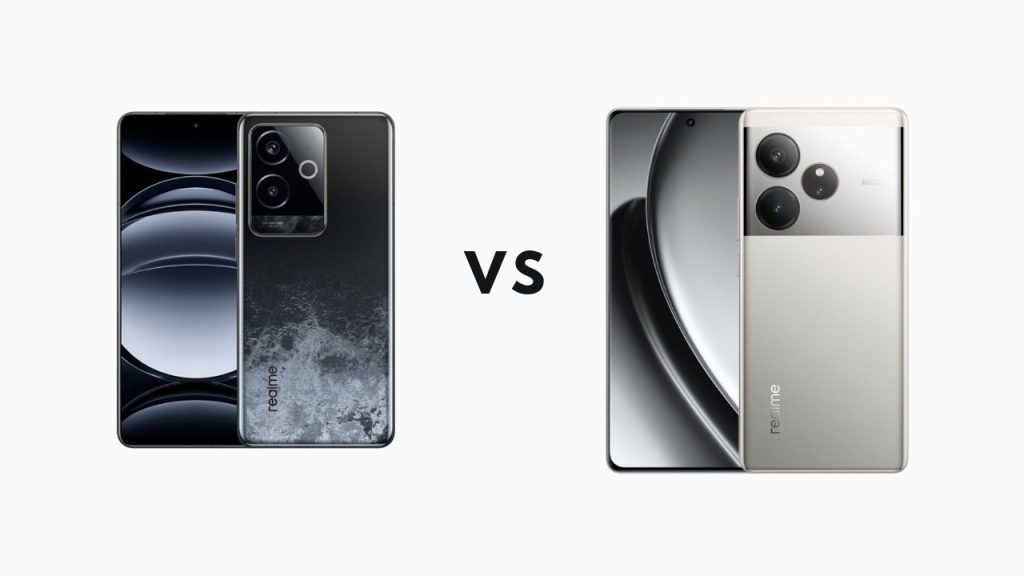
Just yesterday, Realme finally announced the Realme GT 6 in China after days of teasers. It arrived as the latest flagship smartphone model from the brand but carries the same moniker as another device from Realme that was released for the global market. So what’s the difference between the Chinese and Global variants? Is the Realme GT 6 (China) better than the Realme GT (Global)?
There are plenty of differences between the two versions of the Realme GT 6. One of the most notable ones is the chipset that powers the device. In the global market, the Realme GT 6 is equipped with the Qualcomm Snapdragon 8s Gen 3 SoC.
This processor is often seen in the affordable flagship or flagship killer category. On the other hand, the Realme GT 6 in China was launched with the Snapdragon 8 Gen 3, which is the most powerful chip from Qualcomm. Most ultra premium Android flagship phones feature this chip. The Chinese version has a larger 5,800mAh battery pack, and the global model gets a 5,500mAh cell. Both of these support 120W wired fast charging.
2. Same Name, Different Bodies
The Chinese brand released the Realme GT 6 in the global market with a sleek design that offers a mirror finish on the camera module. It packs a plastic frame and plastic rear panel. These materials were likely to cut costs and make it more affordable.
However, the Chinese model has an aerospace grade aluminum middle frame and glass back. The dual tone design returns but with a raised camera module. An IP65 rating is offered on both variants for water and dust resistance. You get a Corning Gorilla Glass Victus 2 in the GT 6 (Global) while the GT 6 (China) offers Crystal Armor glass.
The differences are obvious from the rear, although, the front are practically identical. Both versions sport a tall 6.78-inch LTPO AMOLED display with FHD+ resolution, a 120Hz refresh rate, HDR, 1 billion colors, and 6000 nits of peak brightness. It is worth mentioning that the Chinese GT 6 has a BOE S1+ AMOLED Pro XDR panel.
3. Camera
Looking at the duo, you can immediately tell that the Realme GT 6 in China only has two image sensors on the back, compared to the three on the global version. The Chinese variant features a 50MP Sony IMX890 sensor with OIS and an 8MP ultra wide angle lens on the back and the front houses a 16MP selfie shooter.
For the global markets, the Realme GT 6 has a 50MP Sony LYT-808 sensor with OIS, an 8MP IMX355 112° ultra-wide camera, and a 50MP Samsung JN5 telephoto camera. You also get a 32MP Sony IMX615 sensor for selfies and video calls. So while the Realme GT 6 in China packs higher end primary sensor, the global model is more versatile.
4. Pricing
Realme officially unveiled the GT 6 in the global market with a starting price tag of 600 Euros (roughly 650 US Dollars) in Europe and 40,999 INR in India (roughly 490 US Dollars). In China, you get the Realme GT 6 for a starting price of 2,799 Yuan (roughly 385 US Dollars). This makes it a great deal in the brand’s home market.
We use cookies on our website to give you the most relevant experience by remembering your preferences and repeat visits. By clicking “Accept”, you consent to the use of ALL the cookies.
This website uses cookies to improve your experience while you navigate through the website. Out of these, the cookies that are categorized as necessary are stored on your browser as they are essential for the working of basic functionalities of the website. We also use third-party cookies that help us analyze and understand how you use this website. These cookies will be stored in your browser only with your consent. You also have the option to opt-out of these cookies. But opting out of some of these cookies may affect your browsing experience.
Necessary cookies are absolutely essential for the website to function properly. This category only includes cookies that ensures basic functionalities and security features of the website. These cookies do not store any personal information.
Any cookies that may not be particularly necessary for the website to function and is used specifically to collect user personal data via analytics, ads, other embedded contents are termed as non-necessary cookies. It is mandatory to procure user consent prior to running these cookies on your website.