Oppo is preparing for a busy launch period in China later this month. The company has been teasing its upcoming Find X10 series, while a few more products are also expected to join the lineup. One of them could be the Enco X4, which has now appeared in a new leak revealing some of its key features.
Oppo Enco X4 could bring flagship-level upgrades
Reliable tipster Digital Chat Station has shared details about the Oppo Enco X4, describing the upcoming earbuds as a premium model with an in-ear design. The leaked images show a compact charging case and earbuds with a refined design, suggesting that Oppo is making changes to both the appearance and overall build quality compared with the previous generation.
The Enco X4 is also expected to deliver improvements in sound quality and active noise cancellation. While the leak does not provide specific technical details about the drivers or ANC system, the claimed upgrades could make the earbuds a more capable option for users looking for better audio and stronger noise isolation.
Another notable addition is AI real-time translation. The leaked screenshots show the feature working between English and Simplified Chinese, with spoken conversations converted into translated text in real time. Users can start a conversation through the earbuds and view the translated exchanges on a connected device, making the feature useful when communicating across different languages.
The screenshots indicate that the translation mode includes language controls for both speakers, along with playback buttons for listening to translated sentences. Oppo appears to be positioning this as a practical communication tool rather than simply another AI feature, although the supported languages and availability outside China remain unclear.
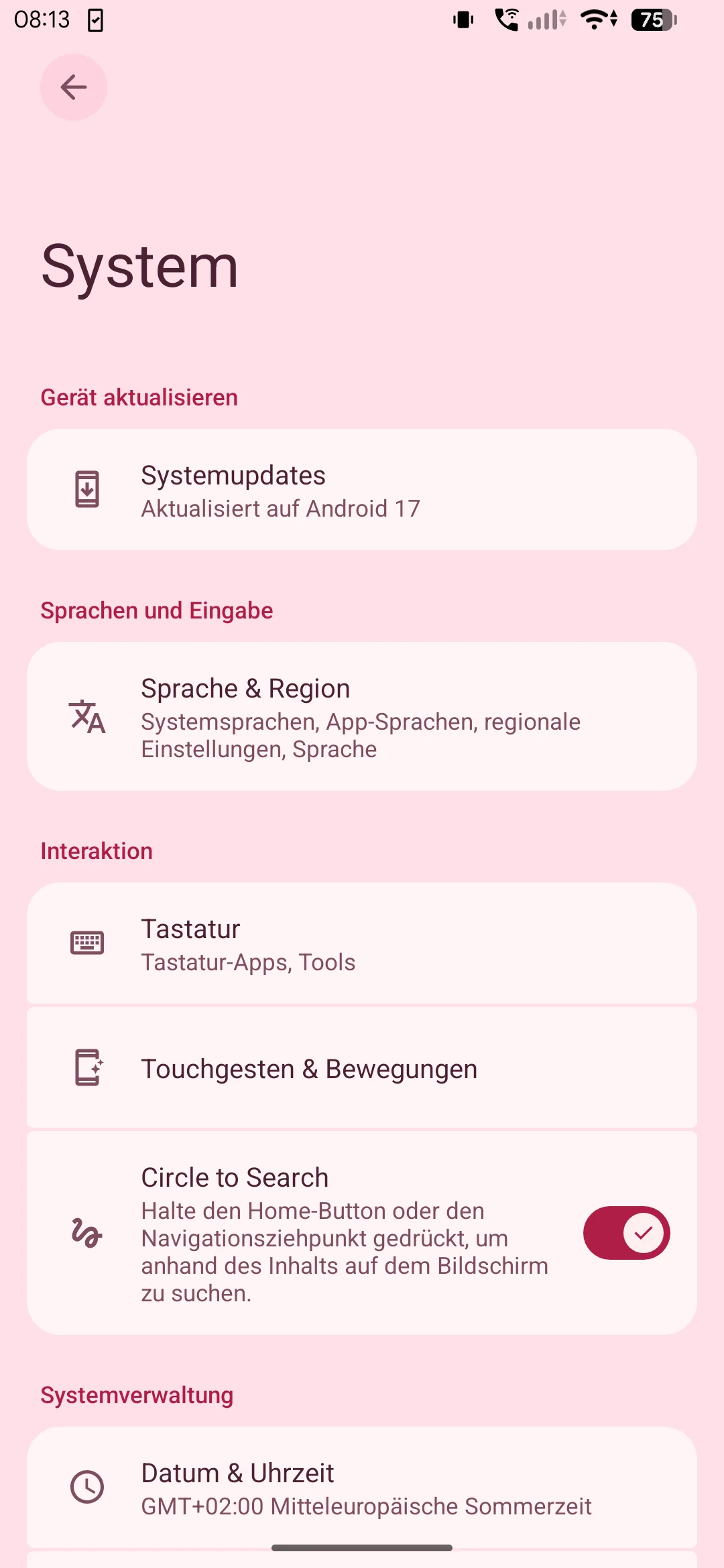
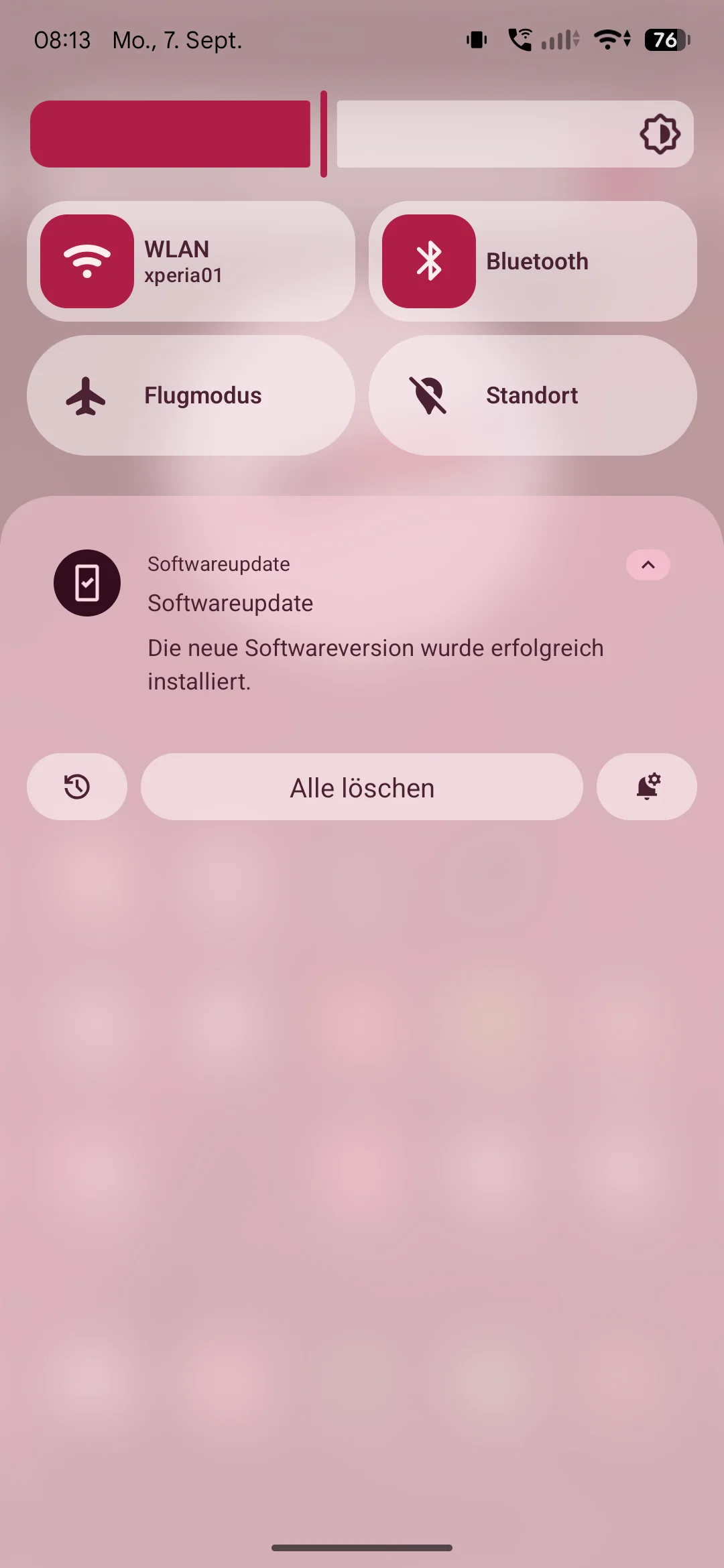
Sony has quietly begun rolling out the Android 17 update, starting with the Xperia 1 VIII. The company has also published a post detailing the changes and new features in Android 17, along with the complete list of eligible devices.
The Android 17 update for the Xperia 1 VIII is tagged with the firmware version 73.1.A.2.61 and has a download size of about 1.2GB. The initial rollout is limited to Europe, but it shouldn’t be long before it expands to more regions.
Users can head to the Settings app and open the Software Update section to manually check for available updates. Note that rollout happens in batches, and so the availability may depend on your region.
The Android 17 update introduces a new Desktop mode on Sony phones and an updated Quick Settings panel that lets you resize and rearrange tiles. Larger tiles can now feature short descriptions.
Sony has updated the “Wallpapers & style” feature with new wallpapers and new clock designs. You can now customize the shape and size of icons for a more personalized experience. Screen recording has also been upgraded to allow users to record the entire screen or just a single app. It also enables recording a device and a microphone audio at the same time.
Now comes the exclusive part for the Sony Xperia 1 VIII: the AI Camera Assistant in Photo mode lets you register up to three custom looks with custom names. You can save your favorite color tones and settings as custom looks and quickly switch to them.
Xiaomi’s first IFA booth: 3,300 square metres and more than 380 products.
IFA 2026 wrapped up in Berlin on September 8 and this edition felt a bit different. Chinese companies made up nearly half of the 1,900-plus exhibitors, Xiaomi showed up with its first-ever IFA booth, Samsung left the Messe floor for the first time in 35 years and humanoid robots walked a catwalk. Also, AMD opened the show with a keynote about “personal AI” running on your own hardware,, instead of the cloud.
Underneath the keynotes, there was a lot of real hardware with real prices. We have gone through everything announced during Media Days and the IFA show itself, and picked the 15 products that will matter after the halls empty out.
This will give you a quick idea as to the notable launches from the event this year.
Prices are as announced; and where a brand only gave a UK or US figure, that is what we list.
1. Xiaomi 18 Fold
Xiaomi 18 Fold
The headline phone of IFA was not launched in Berlin, but it was shown there for the first time outside China. The Xiaomi 18 Fold adopts the short, wide “passport” shape that Samsung introduced with the Galaxy Z Fold 8,, with a 5.38-inch cover screen and a 7.58inch inner panel. It is also the first flagship phone running Xiaomi’s own XRing O3 chipset, the first mobile processor to clear five million points on AnTuTu.
XRing O3, LPDDR6 memory (CXMT)
6,000mAh stacked battery
China launch: September 7, from around 10,999 yuan (~$1,640)
Global availability: not announced yet
Xiaomi confirmed at IFA that Europe is a priority market but gave no date for the 18 Fold outside China. That is the one thing we would have liked to hear.
2. Xiaomi Mijia comes to Europe (and Xiaomi’s cars are next)
Mijia’s European debut at IFA 2026
Xiaomi’s 3,300-square-metre booth was the biggest standalone overseas showcase the company has ever done with more than 380 products on display. The message was that Mijia, its smart-home and appliance brand, is now a European brand too: 2,000-plus SKUs across 130-plus categories, including a triple-tub washing machine, an air conditioner that uses millimetre-wave radar to detect people, and a fridge with Cryo Fresh long-term storage.
On the same day, Xiaomi Auto signed memoranda with eight of Germany’s largest dealer groups, including Emil Frey, Penske-Jacobs, LUEG and Hahn, for a 2027 launch of the SU7 saloon and YU7 SUV.
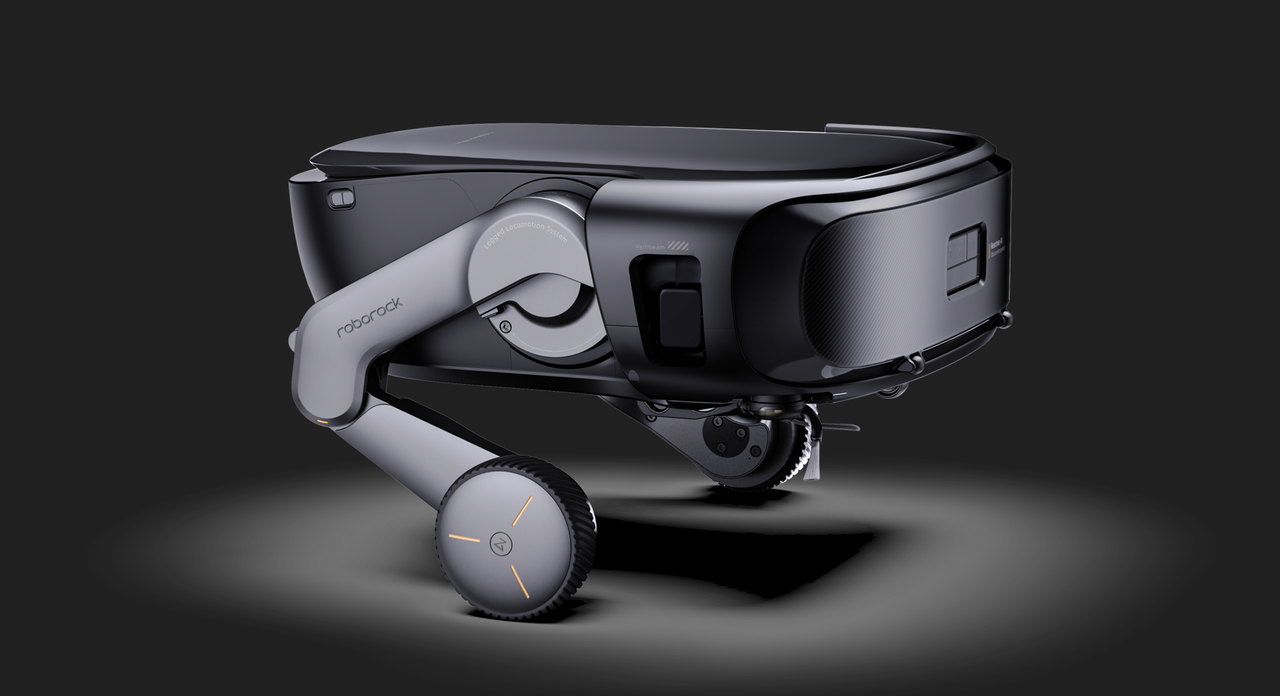
Roborock brought the largest robot-cleaning lineup of the show, but the one people queued for was the Saros Rover, which was first shown at CES 2026. It has wheel-legs that extend to lift the robot over thresholds and, in the demo, up individual stair steps. Roborock has not given a price or a date, so treat it as a 2027 product.
The models you can actually buy are the Saros 20 Flow Complete (36,000Pa, a self-cleaning roller mop with 16 water outlets, arriving around November) and the Saros 20 Neo, which swaps the roller for dual spinning pads and a retractable LiDAR that drops its height to 7.95cm. In the US the Neo is sold as the Qrevo Edge 3 Pro at $1,500 (Amazon link). Roborock also showed the F25 Ultra Steam Gen 2 wet-dry vacuum, the RockAqua P1 pool cleaner and the RockNeo Q2 wire-free mower.
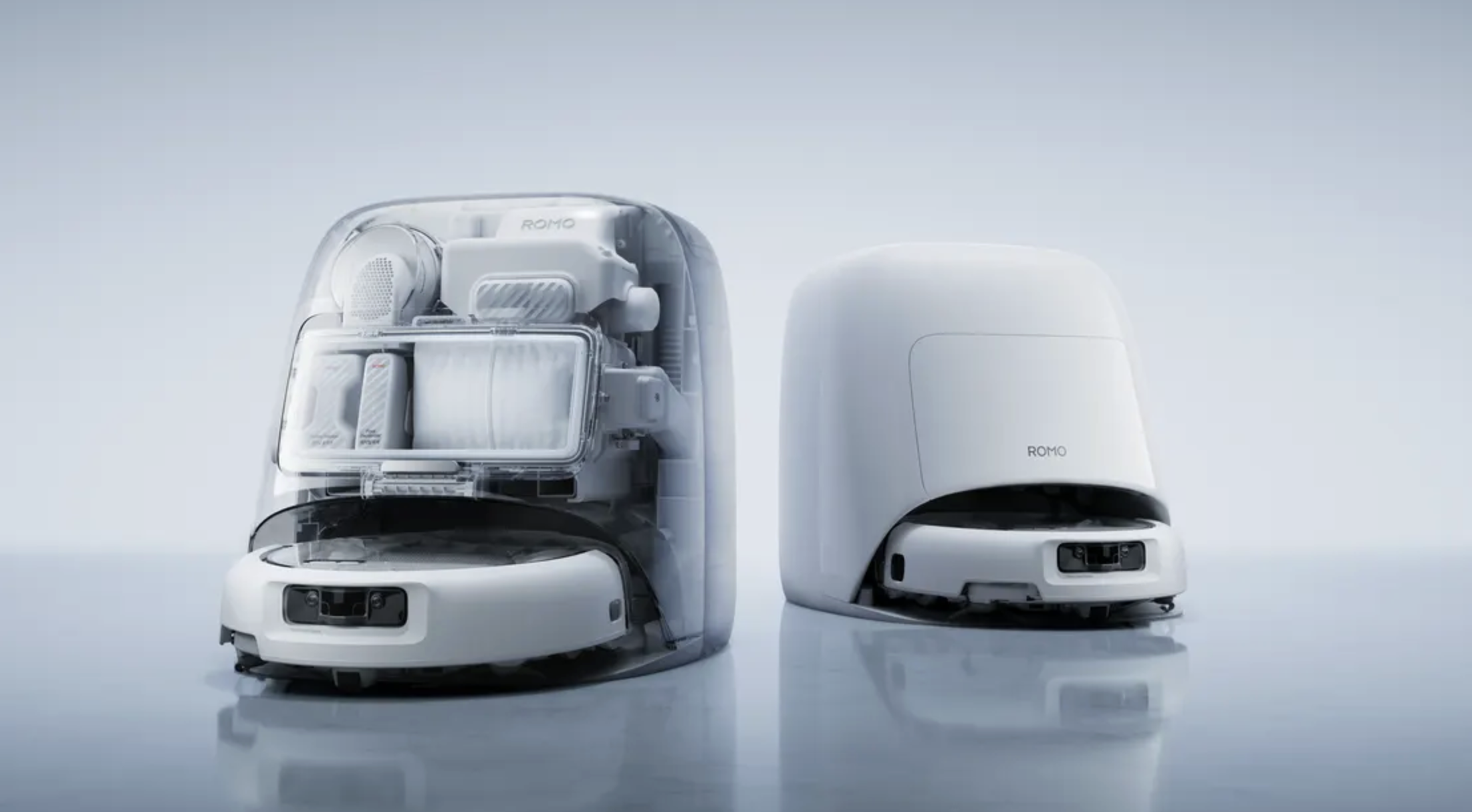
DJI’s second-generation robot vacuums launched in China in May; IFA was their European debut. The Romo 2 series pushes suction to 36,000Pa (up from 25,000Pa), adds robotic legs that clear obstacles up to 8.5cm, and keeps DJI’s transparent design. The privacy story is the interesting part: in-app switch cuts the cameras entirely.
Dreame’s answer to the roller-mop arms race adds steam. The Aqua20 pre-treats stains with 180°C steam from four outlets, then follows with a fresh-water roller mop, backed by 40,000Pa suction, a ProLeap chassis that climbs 10cm thresholds, and obstacle recognition for 320 object types.
It picked up an IFA Innovation Award in the smart home category. Pricing is £1,299 in the UK and €1,499 in Germany, Austria, Spain and Portugal, where it goes on sale September 21. Dreame also expanded into wet-dry vacuums (T12 Pro to T16 Pro Steam, £279 to £569), an all-wheel-drive lawn mower, and the LEAPTIC Cube, a 56g 8K action camera from £349.
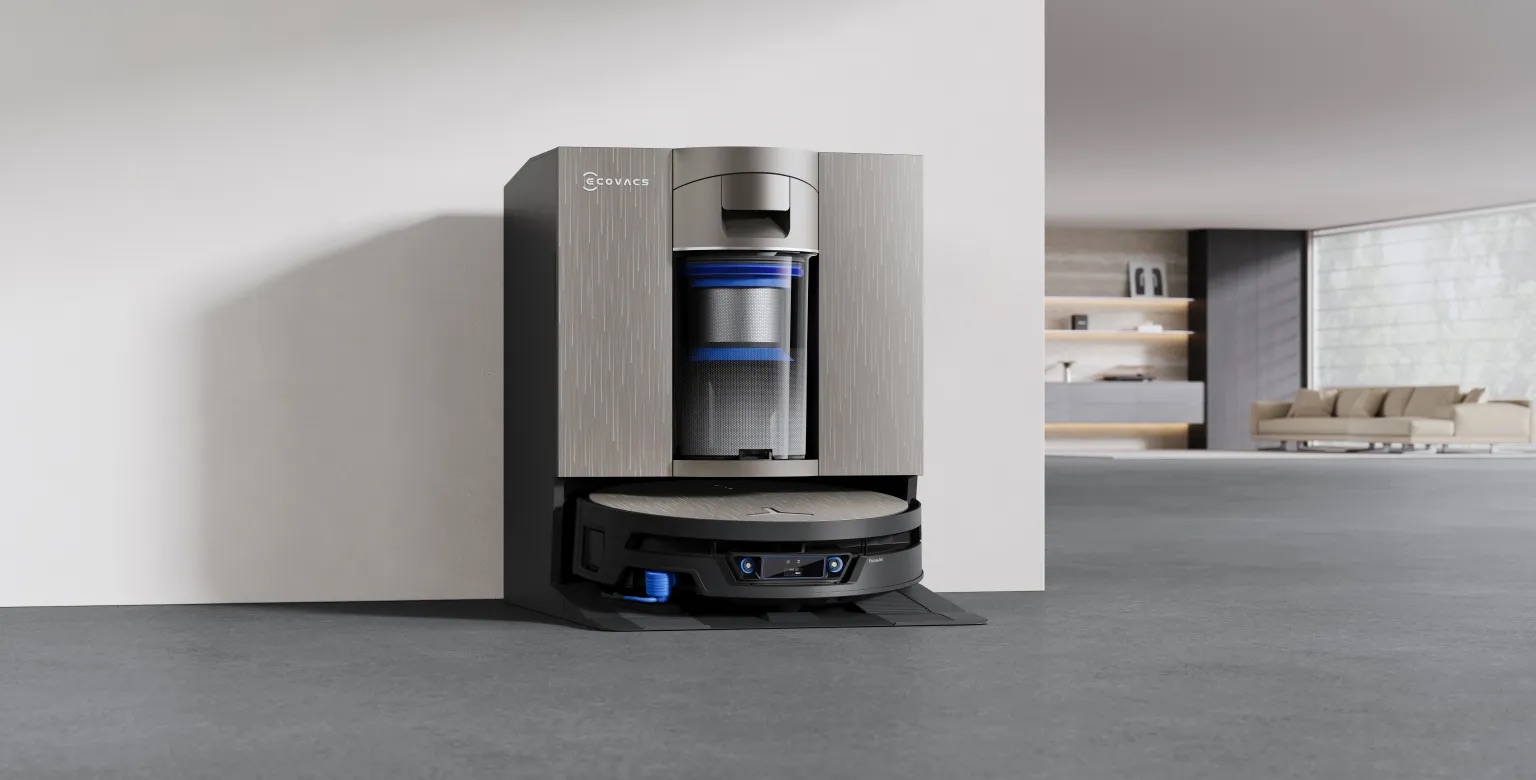
6. Ecovacs Deebot X12S OmniCyclone
Ecovacs went after the one thing every self-emptying dock still needs: bags. The X12S OmniCyclone uses a bagless cyclone dock, 27,000Pa suction, an OZMO Roller 3.0 mop and the YIKO 3.0 voice assistant. It costs £1,199 and goes on sale September 9.. alongside the cheaper T90 Max Pro Omni (£549, 40,000Pa) and the Winbot W2S Pro window robot (£529). The T90S Pro Omni (£699) follows on September 24.
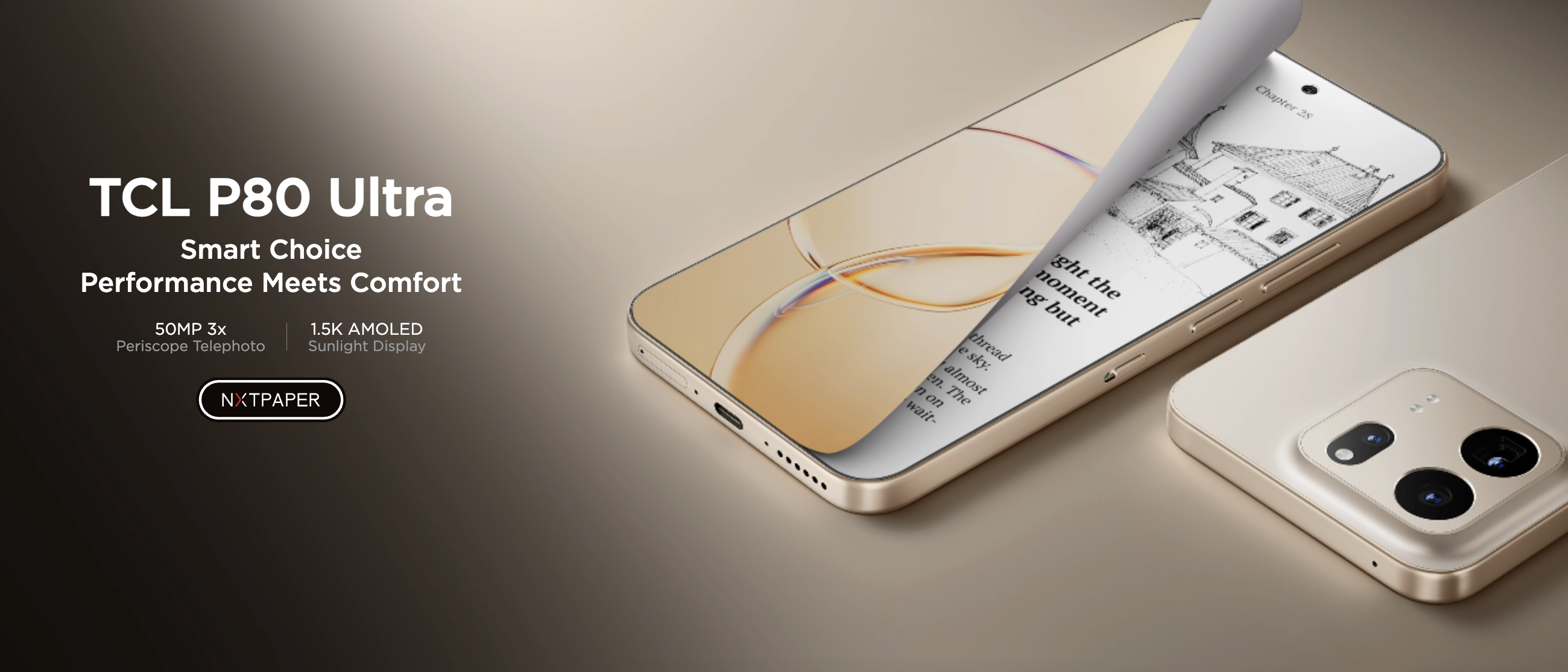
7. TCL P80 Ultra NXTPAPER
TCL has put its NXTPAPER anti-glare, low-blue-light treatment on an AMOLED panel for the first time. The P80 Ultra has a 6.83-inch display with a “Max Ink” mode that trns the phone into something close to an e-reader. It costs £480, on sale from September 4. The P80 Pro sits below it, and TCL also showed the Tab A1 tablets (from $229).
8. Tecno’s zero bezel concept phone
At ShowStoppers, Tecno showed a working phone with a true 0mm display border. The trick is an inverted rear display assembly, so the panel’s driver electronics sit behind the screen rather than along an edge. It is a concept, not a product, but it is the first working demo of the idea. Tecno also brought the MEGABOOK T15 360 Pro convertible and the CAMON Slim.
9. TCL X11L and Hisense’s filter-free LCD
TCL X11L SQD-Mini LED
Two Chinese TV makers, two different bets.
TCL’s flagship X11L uses SQD-Mini LED with 20,736 dimming zones and a claimed 10,000 nits peak, with the C8L (Bang & Olufsen audio) and the 144Hz gaming C7L below it. Hisense pushed RGB MiniLED into more sizes and prices with the UR8 and UR9 (65-inch UR8 around $1,999 in the US), and showed Field Sequential Display, an LCD architecture that drops the colour filter and flashes red, green and blue sub-frames in sequence. Hisense also picked up a UEFA EURO 2028 partnership.
10. Lenovo IdeaPad Vibe and the $699 laptop war
Dell 14S, one of the $699 MacBook Neo rivals at IFA
Apple’s $599 MacBook Neo has turned the budget laptop into a fight, and IFA was the first round. Lenovo’s IdeaPad Vibe comes in 14- and 15-inch sizes, seven Pantone colours with swappable keycaps, and a choice of Snapdragon X or AMD Ryzen AI 400 chips, from $699 (€799) in October. Dell’s 14S undercuts it at $699, or $599 with a student discount, and Acer’s Swift Blade 14 weighs 799g. Samsung’s Galaxy Book 6 starts at $799 with a 25-hour battery claim.
Asus ProArt P16, P14 and the GR1X mini PC (Image: Asus)
The other end of the laptop market got its own new platform. Nvidia’s RTX Spark pairs a Grace CPU with a Blackwell RTX GPU and up to 128GB of unified memory, enough to run a 120-billion-parameter model locally. Asus was first out with the ProArt P16, P14 and GR1X mini PC; Lenovo followed with the Yoga Pro 9n and the Yoga 9n 2-in-1, and Acer showed a small-form-factor RTX Spark desktop. None of them have prices yet.
12. Lenovo’s fanless AeroBlade and rollable Project Swan
Lenovo Project AeroBlade
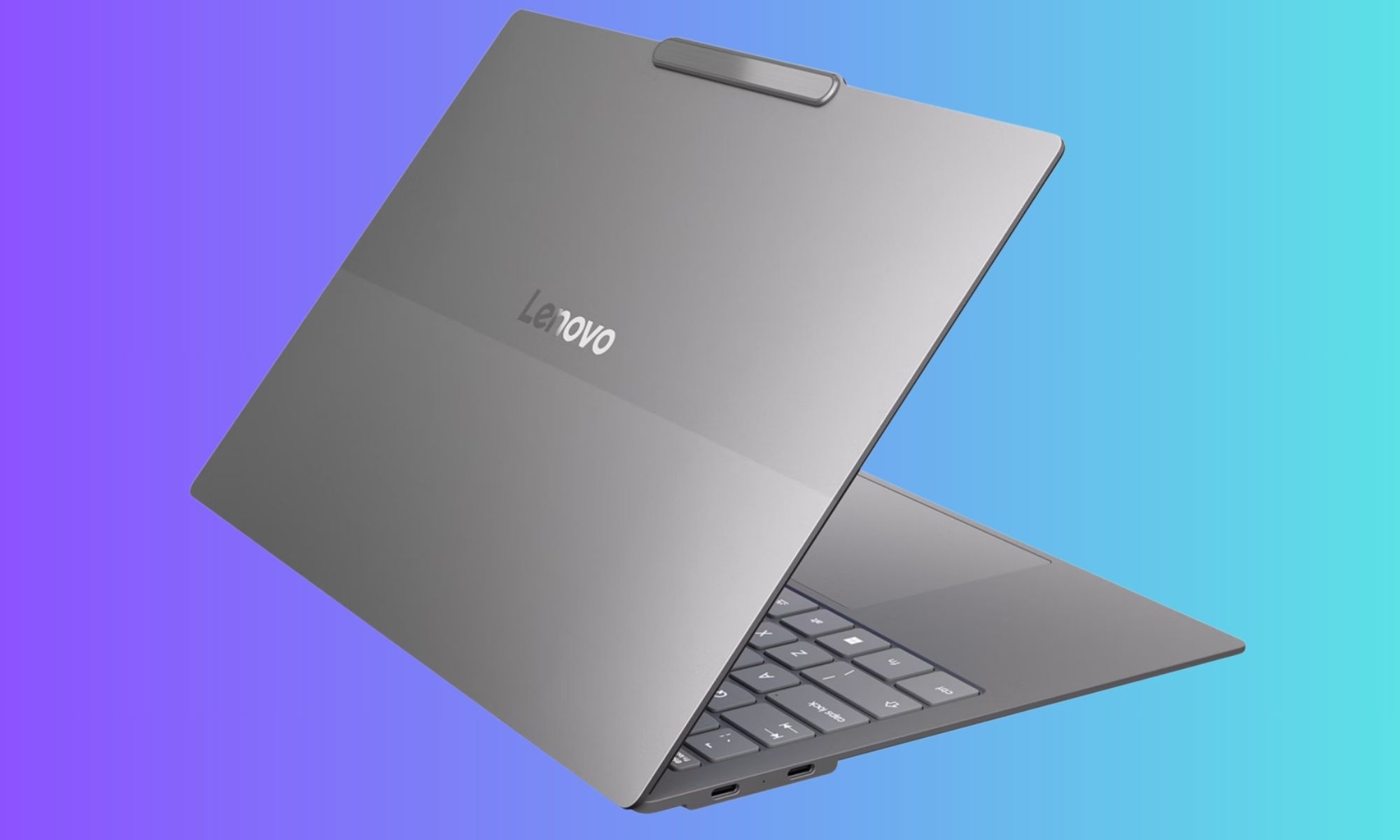
Lenovo’s concepts were the best in the show. Project AeroBlade is a 14-inch ThinkBook under 830g and under 10mm thick, cooled by Frore’s AirJet solid-state chips instead of a fan. Project Swan is a 14-inch laptop whose screen rolls out to a 17-inch 16:9 panel. Neither is a product yet; Lenovo hinted at 2027 for AeroBlade.
Huawei was not on the IFA exhibitor list, but its September 2 global launch landed in the middle of Media Days. It is 4.7mm thick, weighs 454g, and uses a matte-coated OLED panel. European pricing starts at €799.
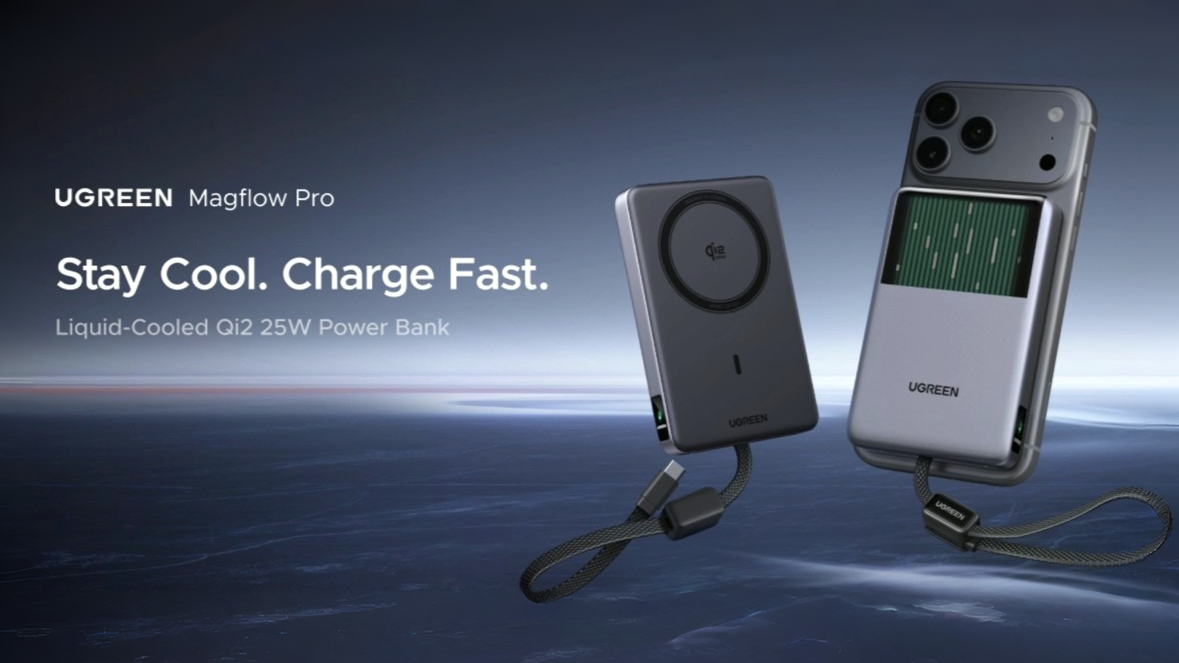
The accessory of the show is a power bank with a liquid-cooling loop. The MagFlow Pro is a 10,000mAh Qi2.2 bank that charges wirelessly at 25W and wired at 45W, and Ugreen says the cooling keeps phones up to 10°C cooler while charging. It costs £109.99 / $149.99 and is on sale now. Anker’s counter was the MagGo 2 Pro (Qi2.2, display, fan) and the Nano Universal Charger, a 100W travel charger with plugs for 200-plus regions.
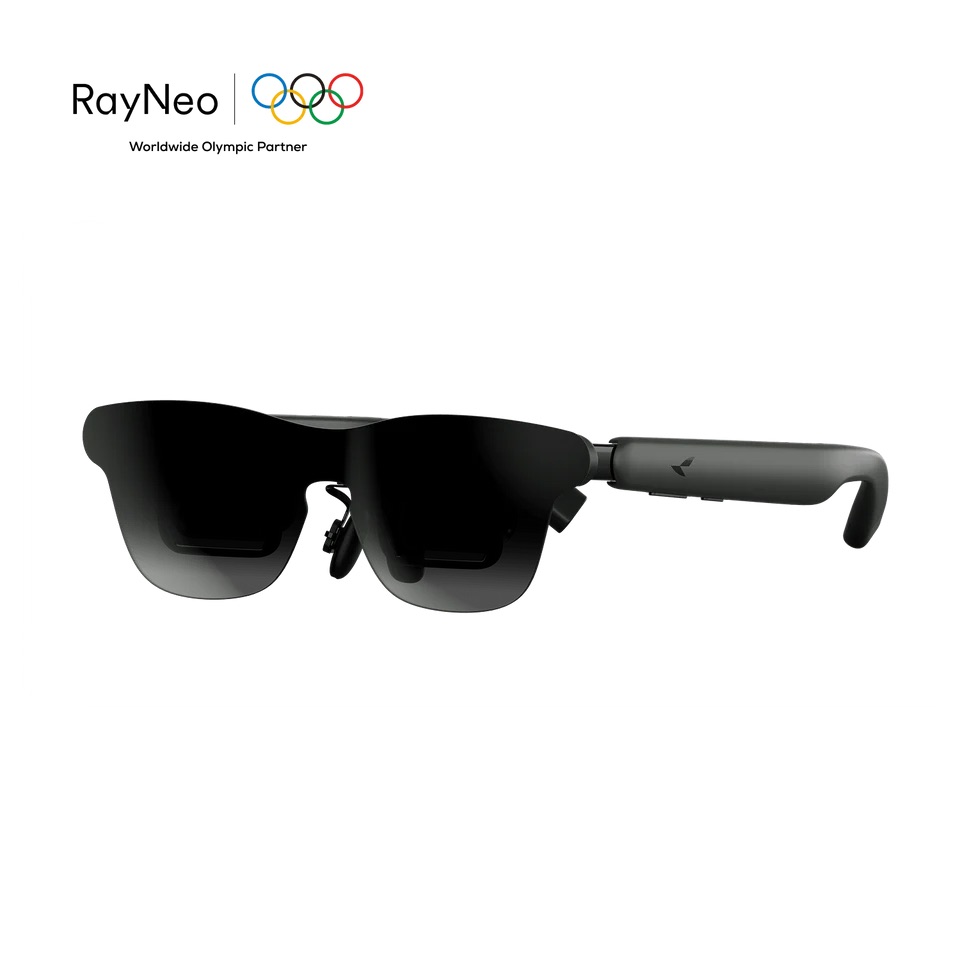
TCL’s RayNeo brought two pairs of glasses and both were named IFA Innovation Award honorees. The GT Max is the first AR glasses with Dolby Vision playback, aimed at a virtual 307-inch screen. The RayNeo iO is a 33g pair of AI glasses with a heads-up display and no camera. The GT series starts at $329 and rolls out to 40 countries from September 4.
Xreal used the show to confirm its Android XR headset, Aura, will ship before the end of 2026, and Rokid and iFlytek both had display glasses on the floor.
Honourable mentions
Moto Watch Ultra: Motorola’s first flagship Wear OS watch, with LTE, dual-band GPS and Polar fitness tracking, £369 from September 18. Read more
Anker MindBase: a local AI home hub with a 64GB SSD and two drive bays that sits alongside HomeKit, Alexa and Google Home. Anker also announced that eufy, soundcore and SOLIX will fold into the Anker brand.
Acer’s first Googlebook: teased at Acer’s IFA showcase ahead of Google’s September 15 event, where eight Googlebooks from five brands are expected.
Dyson CameraJet: a $499 toothbrush with an AI camera that aims a water jet between your teeth. Read more
Robots on the Runway: Unitree, AgiBot, EngineAI and eight other companies walked, danced and back-flipped humanoids on the Creator Stage. Nothing to buy yet, but it is where IFA is heading.
What was missing
Samsung moved its showcase to a venue eight kilometres from the Messe and launched the Galaxy S26 FE on its own schedule. Honor, which owned IFA in 2024 and 2025, had no launch this year; its Robot Phone went global on August 12 (our first impressions of the robot phone here). OnePlus pulled out of Europe in July. Garmin skipped again.
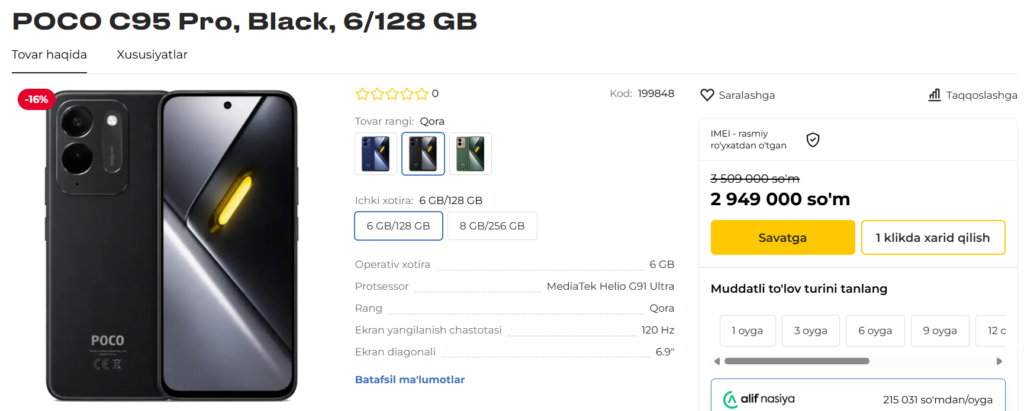
Poco appears to be preparing another budget smartphone for the market. The Poco C95 Pro has now surfaced on an online retailer in Uzbekistan, revealing its design, specifications, and pricing ahead of any official announcement. The listing also gives us an early look at its available memory configurations and color options.
Poco C95 Pro pricing
The Poco C95 Pro has been listed on Beemarket in Uzbekistan with two configurations. The 6GB RAM + 128GB storage model is priced at 2,949,000 UZS, which is roughly $250, while the 8GB + 256GB version costs 3,429,000 UZS, or around $290. Both variants are listed in Black, Blue and Green color options.
The Poco C95 Pro is listed with a 6.9-inch LCD display offering a 1600 x 720-pixel resolution and a 120Hz refresh rate. The MediaTek Helio G91 Ultra chipset-powered device is listed with either 6GB or 8GB of RAM and 128GB or 256GB of internal storage.
Photography is handled by a 50-megapixel rear camera, while an 8-megapixel sensor sits on the front for selfies and video calls. The phone packs a large 7,500mAh battery with support for 45W fast charging. Other features listed include NFC, Wi-Fi, Bluetooth, dual SIM support, a side-mounted fingerprint scanner, face unlock and IP64 protection.
The phone is also listed as running HyperOS 3 based on Android 16. To sum up, the device is just a rebranded version of the Redmi 17 4G.
As this is a premature retail listing, Poco has yet to officially confirm the C95 Pro, so some specifications, pricing or availability details could change before launch.
Vivo recently unveiled two versions of the Vivo V80 Lite in different markets. While Pakistan and Bangladesh received the V80 Lite as a rebranded version of the Vivo S2, Malaysia got a different model with a 10,000mAh battery. Now, a new report from SmartPrix reveals that the brand is also working on the Vivo V80.
According to the report, the Vivo V80 is expected to launch in India during the first week of October. The phone is being positioned around photography and content creation, with Vivo reportedly bringing some camera features from its higher-end X series to the V series.
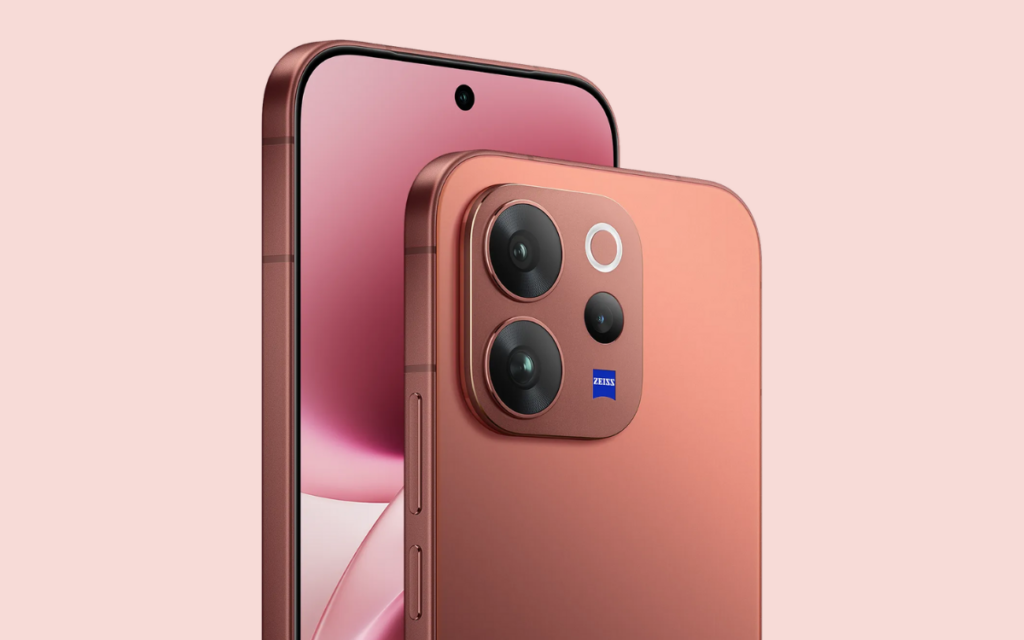
The Vivo V80 could feature a 50-megapixel ZEISS Night Telephoto camera with 3X optical zoom. It is also tipped to introduce 10X zoom in Portrait mode, allowing users to capture portraits from farther away while maintaining the framing associated with telephoto photography. This could mark the first time Vivo brings 10X portrait zoom to its V series.
Video recording is also expected to receive a notable upgrade through a 4K cinematic video mode. The feature could allow users to blur the background while recording and apply colour grading directly through the camera app. Three movie styles are reportedly planned: Modern Movie, Vibrant and Pastel. These options appear aimed at giving users a more cinematic look without requiring additional editing.
Vivo’s V80 lineup is also expected to include the Vivo V80 FE, although there is currently no clarity on when that model will make its debut.
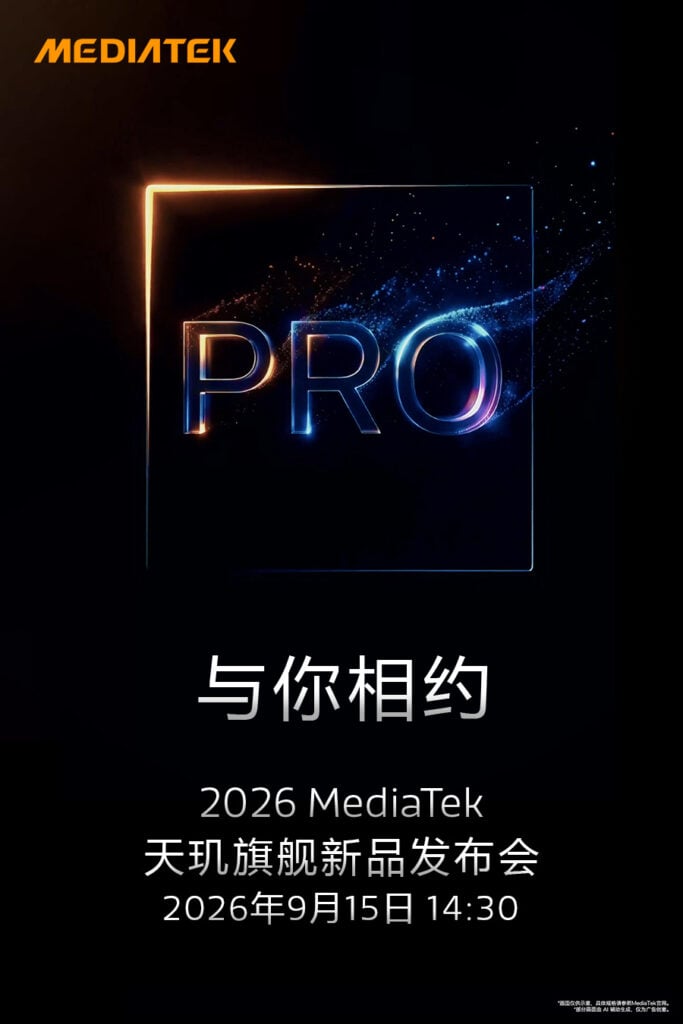
MediaTek is preparing to reveal a new flagship chipset that could power several upcoming premium smartphones. The company has now confirmed when it will unveil the next Dimensity flagship platform. Its latest teaser also hints at major improvements across efficiency, gaming and video recording.
Dimensity flagship chip gets Pro treatment
MediaTek Dimensity 9600 Pro is launching on September 15
MediaTek has announced that its new flagship chip will be unveiled on Sept. 15 at 2:30 PM (local time) in China. The company is teasing its first Pro-branded processor in the flagship Dimensity family, with the announcement pointing to improvements in both hardware and software.
The upcoming chipset is expected to be the Dimensity 9600 Pro, which could become MediaTek’s first 2nm smartphone processor. Earlier information suggests it will use TSMC’s second-generation 2nm N2P process, while the standard Dimensity 9600 is expected to retain a 3nm process and serve as an enhanced version of the Dimensity 9500. The 2nm process is reportedly capable of delivering higher performance at the same power consumption while reducing power requirements at comparable performance levels.
Gaming is another major focus, with MediaTek teasing AI-assisted GPU rendering, an upgraded StarSpeed Engine and hardware-accelerated ray tracing. The company is also promising improvements for mobile video recording, including support for 4K slow-motion footage at 240fps and additional tools aimed at content creators.
Dimensity 9600 Pro performance and expected phones
The Dimensity 9600 Pro is expected to feature an eight-core CPU configuration comprising two cores clocked at 4.55GHz, three at 4.35GHz and three at 3.10GHz. Graphics processing could be handled by the Mali-G2-Ultra-NX MC12 GPU. Early Geekbench results reportedly show the chipset crossing 4,000 points in single-core testing and 13,000 points in multi-core testing on the Vivo X500 Pro Max.
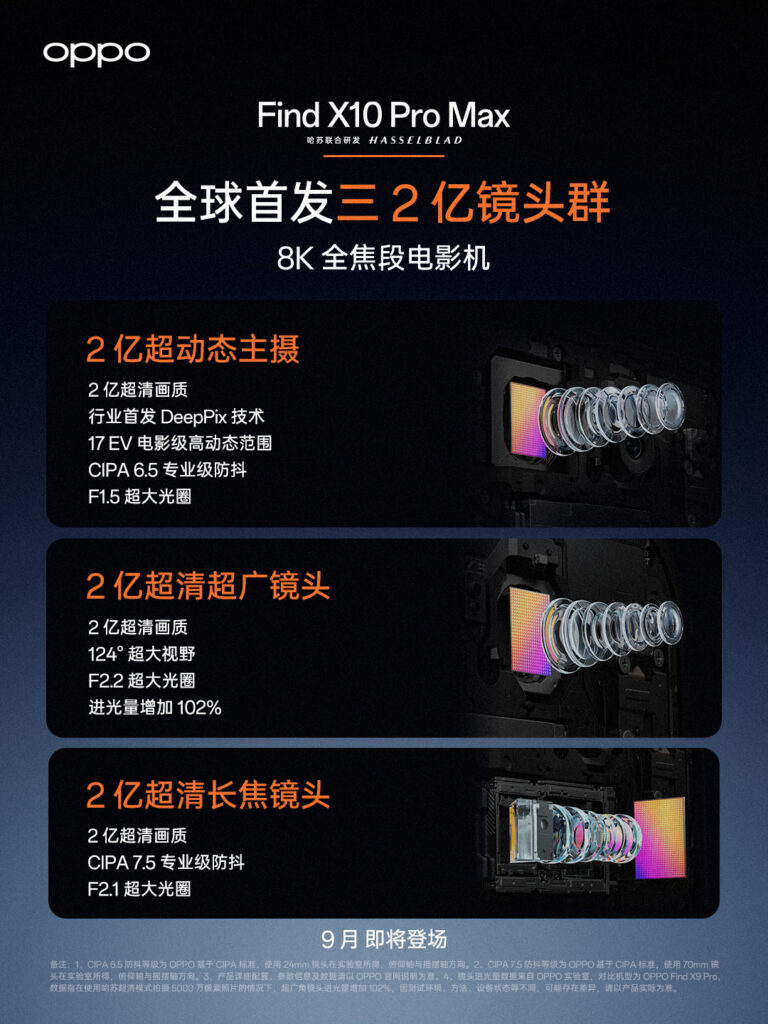
Recently, Oppo confirmed that the Find X10 and Find X10 Pro Max will debut this month. The launch is expected to take place roughly a week after the Vivo X500 series event scheduled for Sept. 21. The Pro Max model is already confirmed to feature a triple 200-megapixel rear camera system, and now the brand has released a new Weibo post to share additional details about the hardware behind those sensors.
Oppo Find X10 Pro Max camera setup detailed
Oppo Find X10 Pro Max camera detailed
According to the brand, the Find X10 Pro Max will feature a 200-megapixel primary camera based on Samsung’s 1/1.3-inch ISOCELL HPC sensor. The main camera is said to have an f/1.5 aperture, CIPA 6.5-level image stabilization, and support for up to 17EV dynamic range. These specifications suggest a strong focus on low-light photography and high-contrast scenes.
The ultra-wide camera is also expected to use a 200-megapixel sensor. It reportedly features an f/2.2 aperture and a 124-degree field of view, which could help capture wider landscapes and group shots without sacrificing image detail. Oppo appears to be treating the ultra-wide camera as more than a secondary sensor by equipping it with flagship-grade hardware.
The third 200-megapixel camera is said to be a periscope telephoto unit with an f/2.1 aperture and CIPA 7.5-level stabilization. The leak also points to 10cm telephoto macro support, allowing users to capture close-up subjects while maintaining optical zoom capabilities.
Oppo Find X10 Pro Max leaked images
As previous reports, the Find X10 Pro Max will feature a 50-megapixel front-facing camera with autofocus support. In addition to the three 200-megapixel rear cameras, a 3-megapixel multispectral sensor is also expected to assist with colour accuracy.
The Find X10 Pro Max may feature a 6.78-inch LTPO OLED display offering a 2K resolution and a 144Hz refresh rate. The device is also tipped to arrive with MediaTek’s upcoming 2nm Dimensity 9600 Pro chipset, ColorOS 17 based on Android 17,
Vivo has just confirmed that the Vivo X500 series will be unveiled on Sept. 21 in China. And now, its sub-brand iQOO has revealed that the iQOO 16 and iQOO Pad Ultra will also debut this month. While the launch date has not been confirmed yet, it appears that these devices may go official by the end of the month. Ahead of the launch, the brand has revealed what to expect from the iQOO 16 and Pad Ultra.
The above poster gives a glimpse of the new camera module of the iQOO 16, which is placed on the left. According to the brand, it will feature a new in-house gaming chip and a next-generation Monster Super Engine designed to extract more performance from Qualcomm’s top-tier flagship platform. The combination is claimed to enable console-like ray tracing effects and improved visual quality during demanding games.
iQOO says it has worked with Samsung Display on a high-end panel aimed at delivering both sharp visuals and smooth motion, addressing the usual compromise between resolution and refresh rate. The phone will also adopt a futuristic design that moves away from conventional performance-focused styling. iQOO says the standard iQOO 16 will deliver product capabilities that go beyond what would normally be expected from a Pro Max-class device.
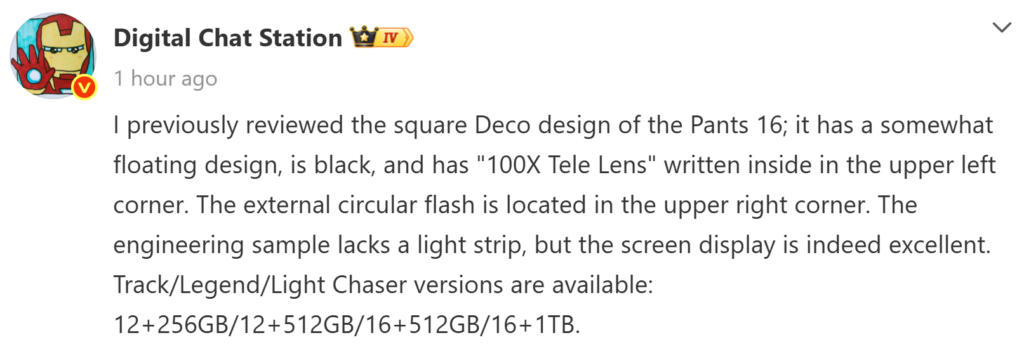
Coming back to the design, tipster DCS says that the iQOO 16 will feature a square camera deco with a floating-style design. The black module sits in the top-left corner and is marked “100X Tele Lens”, while a circular external flash is placed on the top-right. The engineering unit reportedly lacks an LED light strip, while the display quality is said to be impressive. The phone is expected in 12GB+256GB, 12GB+512GB, 16GB+512GB and 16GB+1TB configurations.
iQOO Pad Ultra targets hardcore gamers
In the above image, it appears that the camera module shown on the right belongs to the Pad Ultra. It seems to have a single camera with a ring LED flash.
The iQOO Pad Ultra takes a different route by attempting to create a more portable gaming device rather than simply being another large tablet. It is expected to combine a top-tier next-generation flagship processor with a compact body, multi-finger touch response and support for demanding AAA games across devices.
A full-area cooling system is also planned to help manage sustained gaming workloads, while the compact form factor is designed to make the tablet easier to carry and handle. iQOO describes it as a new gaming form rather than an incremental tablet upgrade, with the company aiming to bridge the gap between smartphones, tablets and PCs.
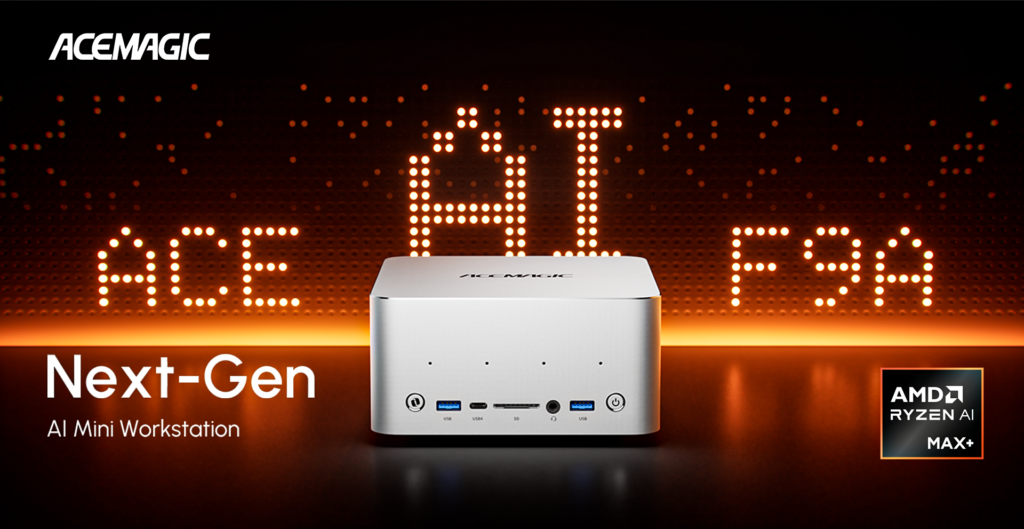
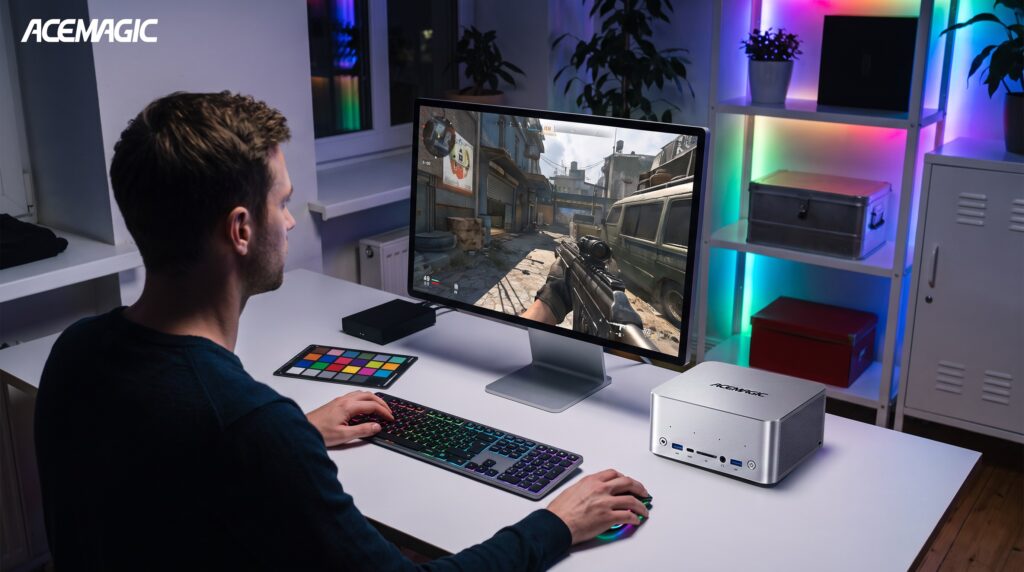
Acemagic brought a new mini PC to IFA 2026 in Berlin this week. It is called the F9A AI mini workstation, and it runs on AMD’s new Ryzen AI Max+ Pro 495 processor. The company previously unveiled a version of this mini PC featuring the Ryzen AI Max+ 395 back in July, but this new configuration raises the memory and processing limits for people who need to run heavy workloads locally.
The Pro 495 model supports up to 192GB of LPDDR5X-8533 unified memory. Because the CPU, integrated graphics, and neural processing unit (NPU) all share this same memory pool, you can assign up to 160GB of it directly as VRAM. Having this much VRAM in a small computer is highly practical for developers who want to run large language models on their own hardware.
Usually, running models of this size requires renting cloud servers or building large desktop rigs with multiple discrete graphics cards. Acemagic says the system can run the 284-billion parameter DeepSeek V4 Flash model directly on the device.
Inside the 2-liter case, which measures 158.5 x 158.5 x 81.5 mm, the Ryzen AI Max+ Pro 495 uses a 16-core, 32-thread Zen 5 CPU. It has a base clock of 3.1 GHz and a boost clock of 5.2 GHz.
Graphics are handled by an integrated Radeon 8065S with 40 compute units. For dedicated AI tasks, there is an XDNA 2 NPU that reaches 55 TOPS. Altogether, the system provides 131 TOPS of total compute performance.
The port selection includes an OCuLink interface (PCIe 4.0 x4). This allows you to plug in an external desktop graphics card with a faster, more direct connection than typical USB ports offer. The mini PC also has two 40Gbps USB4 ports, two 2.5GbE Ethernet jacks, an HDMI 2.1 port, and a DisplayPort 2.1 connection.
It connects to wireless networks via Wi-Fi 7 and supports Bluetooth 5.4. For storage, there is a single M.2 2280 PCIe 4.0 slot that fits NVMe drives up to 4TB.
Acemagic is opening pre-sales for the July-announced Ryzen AI Max+ 395 model on its website starting September 10. The newer PRO 495 version is currently listed on the company’s store page, but there is no official release date or pricing available yet.
For more daily updates, please visit our News Section.
Timex has expanded its ongoing Peanuts collaboration with a new watch called the Peanuts x Timex Weekender Astronomy. The 40mm model is priced at $189 and is currently available for pre-order through Timex’s US website.
The watch, carrying the model number TW2Y84900, is built around the standard Weekender chassis but features a distinct celestial theme. The dial is a deep blue and displays a graphic of Snoopy set against a night sky pattern. For timekeeping, Timex has opted for full Arabic numerals, a magnified date window, and hands with luminescent in-fill for visibility in low-light conditions.
Like many of the company’s watches, this model includes the proprietary Indiglo backlight feature. Pressing the crown illuminates the entire dial, making it readable in the dark without relying solely on the luminescent hands.
Regarding the hardware, the Weekender Astronomy features a 40mm case made from low-lead brass with a polished, silver-tone finish. It measures 9.5mm thick and has a lug-to-lug distance of 48.5mm.
The watch face is protected by a mineral crystal, which provides standard resistance against everyday scratches. Internally, it relies on a standard quartz analog movement powered by a CR2016 battery. The total weight of the watch is 57.03 grams.
The watch comes paired with a 20mm blue slip-thru leather strap that fastens with a standard buckle. According to the sizing specifications, the band is designed to fit wrist circumferences ranging from 150mm to 205mm (5.9 to 8.1 inches).
For durability, the watch is rated for 50 meters of water resistance. This specification means it can withstand splashes and light swimming, but Timex advises against using it for snorkeling or poolside diving.
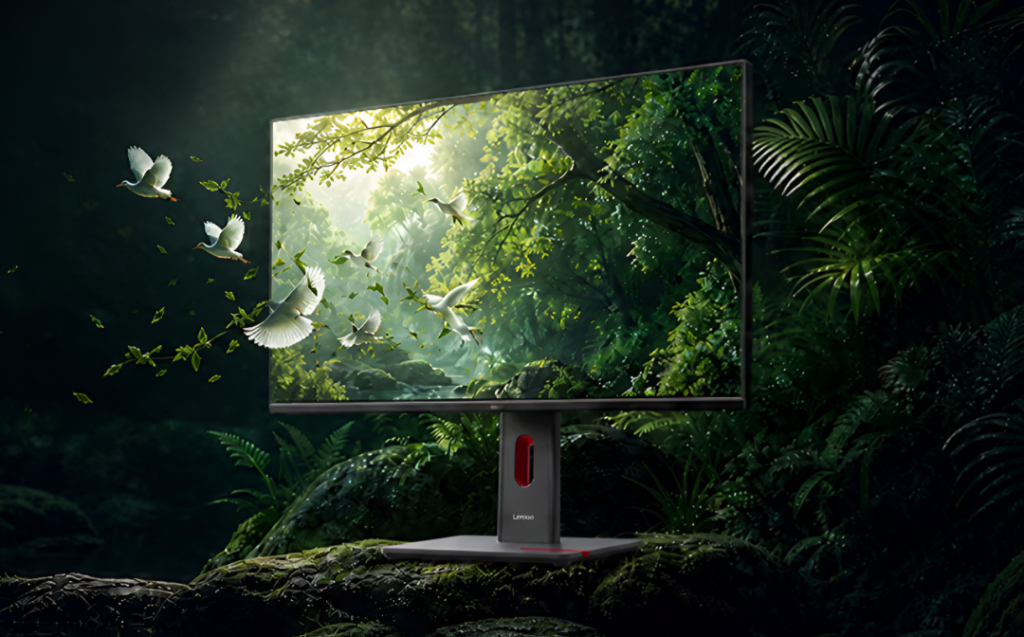
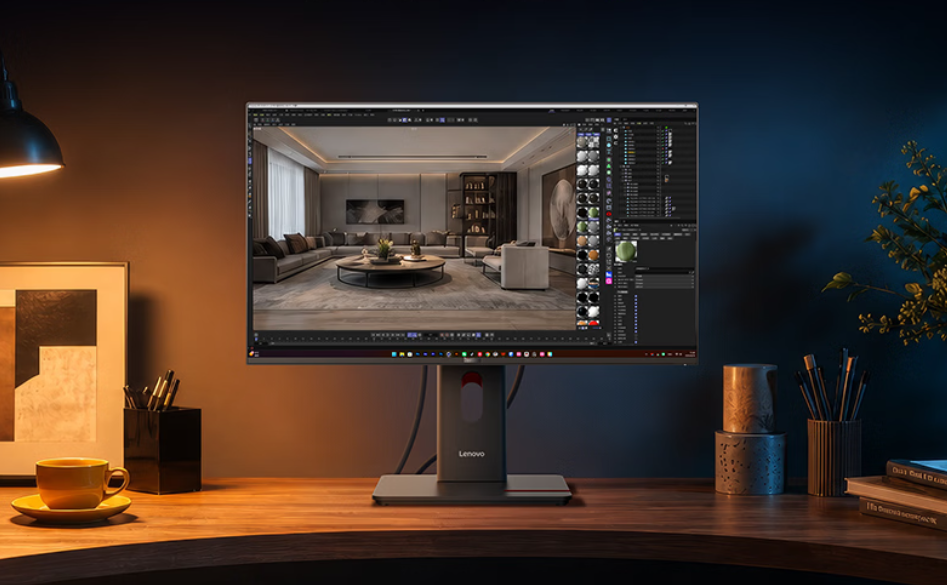
Lenovo has released the ThinkVision P27UD-40, a new 27-inch monitor designed for professionals and creators. It is currently available in China for 3,999 yuan (roughly $596).
The monitor is built around a 27-inch IPS panel with a standard 3840 x 2160 resolution. Instead of the standard 60Hz refresh rate typical for office monitors, Lenovo included a variable refresh rate that scales from 24Hz up to 120Hz.
The display adjusts this rate based on on-screen content, allowing for smoother scrolling and interface animations while dropping to lower rates for static documents to conserve power. The panel provides a typical brightness of 350 nits, a 1,500:1 contrast ratio, and a 4ms gray-to-gray response time in its extreme mode.
For color accuracy, the P27UD-40 uses an 8-bit + FRC panel to support 10-bit color. It covers 99% of the sRGB and BT.709 gamuts, along with 98% of the DCI-P3 color space. Lenovo factory calibrates each unit to a Delta E of less than 2 and includes the calibration reports in the box.
The monitor also features hardware-level low blue light technology, backed by TÜV Rheinland and Eyesafe certifications. It reduces potentially harmful blue light by around 35% while maintaining the display’s color accuracy.
The I/O and connectivity options are a primary focus of the P27UD-40. It connects via a Thunderbolt 4 upstream port that supports 40Gbps of bandwidth and up to 140W of Power Delivery using the PD 3.1 EPR standard. This allows it to charge higher-performance 15-inch and 16-inch laptops under load while transmitting video over a single cable. It also comes with a second Thunderbolt 4 output for daisy-chaining an additional monitor.
The rest of the port selection includes one HDMI 2.1 port, DisplayPort 1.4 inputs and outputs, and a built-in USB hub. The hub features four USB-A 5Gbps ports, a USB-C port with 15W charging, and a USB-B upstream port. For wired networking, there is a 2.5GbE Ethernet jack that supports enterprise IT standards like Intel vPro, PXE, and Wake-on-LAN.
To manage multiple devices, the monitor includes hardware KVM and eKVM switches, letting users control two connected computers with a single keyboard and mouse.
It also supports Picture-in-Picture (PiP) and Picture-by-Picture (PbP) modes. The included stand allows for 155mm of height adjustment, tilt, swivel, and a 90-degree pivot for vertical use, and the monitor supports standard 100 x 100mm VESA mounting.
Not every chip update comes with big fanfare or a completely new design. Sometimes the most useful changes are the practical ones that keep an established platform going when supply conditions shift. MediaTek has just done exactly that with a refreshed 4G processor aimed at cost-sensitive markets.
The company has listed the Helio G99+ on its official website. At its core, this is still the original Helio G99, the same proven 6nm TSMC design that launched years ago, with one key upgrade: memory support has moved from LPDDR4X (up to 4266 Mbps) to LPDDR5X (up to 5500 Mbps).
Everything else stays familiar. The CPU is still two Arm Cortex-A76 cores at 2.2 GHz plus six Cortex-A55 cores at 2.0 GHz, the Mali-G57 MC2 GPU is unchanged, and features like UFS 2.2 storage, up to 108MP camera support, and the Cat-13 4G modem with dual VoLTE all carry over.
Helio 4G chips mainly serve markets where keeping costs low matters more than chasing top performance. Lately, major DRAM makers have been shifting capacity toward higher-value products like HBM, LPDDR5X, and DDR5. Older production lines for LPDDR4X are being shut down or converted, which has tightened supply and pushed prices up.
By adding LPDDR5X support, the G99+ gives phone makers more flexibility. Smartphone makers can pick the memory that currently makes the most sense on price and availability, helping keep the overall bill of materials as low as possible without having to redesign the whole phone around a new chip.
This isn’t MediaTek’s first small update to the G99 family. Earlier versions like the G100 and G200 brought modest camera or GPU tweaks while keeping the same basic architecture. The G99+ follows the same practical approach: it’s responding to a broader industry memory shift rather than trying to win benchmark charts. For companies building affordable 4G phones in price-sensitive regions, being able to adapt to whatever DRAM is available without losing the established G99 software and hardware ecosystem is a real advantage.
In short, the Helio G99+ isn’t a big performance jump. It’s more of a supply-chain safeguard. By updating memory support on a mature, efficient platform, MediaTek is helping make sure cost-effective 4G phones can keep shipping smoothly even as older memory technologies phase out.
Xiaomi has expanded its automotive lineup with the launch of the Skynomad N90 Max, a large extended-range electric SUV, alongside a specialized variant called the Explorer Edition. The standard seven-seat model is priced at 269,900 yuan ($40,215), while the Explorer Edition, which features a built-in pop-up roof and underfloor heating, costs 299,900 yuan ($44,685).
Xiaomi Skynomad N90 Max Specifications
The Explorer Edition is the more unusual of the two configurations. Rather than relying on an aftermarket rooftop tent, Xiaomi integrated an electric pop-up roof directly into the vehicle’s body. When closed, the module adds 100mm to the SUV’s overall height, allowing the vehicle to maintain a drag coefficient of 0.245.
When the vehicle is parked, the roof can be raised to create a two-level interior with a maximum standing height of 2.29 meters. The upper loft area measures roughly two square meters, supports up to 200kg, and includes its own climate control, lighting, and charging ports.
To accommodate this setup, the Explorer Edition uses a five-seat layout instead of the standard model’s seven seats. The second row features a 40:60 split bench that folds flat into a 1.87-meter by 1.24-meter bed via an electric mechanism, without requiring users to remove the seats. The cabin floor is lined with wood-grain aluminum and incorporates an underfloor heating system that can reach up to 38°C.
Both versions of the SUV are built on the same extended-range powertrain. The setup includes a dual-motor all-wheel-drive system generating 310kW, a 76kWh ternary lithium battery, and a 60-liter fuel tank. According to Xiaomi, the standard model achieves a CLTC-rated pure-electric range of 464km and a combined range of 1,705km. The Explorer Edition sees a slight decrease to a 1,688km combined range. Both models accelerate from 0 to 100km/h in 5.9 seconds and utilize a chassis equipped with air springs and continuously variable dampers.
Inside the cabin, the vehicle runs on Xiaomi’s HyperOS, which can manage up to six displays, including a head-up display, a central screen, and rear entertainment monitors. The interior also includes a 9-liter compressor refrigerator and a 25-speaker audio system.
For driver assistance, the SUV is equipped with Xiaomi’s HAD system. The sensor suite utilizes both a front-facing LiDAR and a rear-facing solid-state LiDAR, which the company states is designed to improve parking assistance and detect low obstacles behind the vehicle.
Availability
Xiaomi is currently taking orders for both the standard Skynomad N90 Max and the Explorer Edition. Deliveries are expected to begin between November and December 2026. The series comes in seven colors: Burgundy, Distant Mountain Green, Butterfly Valley Blue, Volcanic Gray, Cool Khaki, Pearl White, and Obsidian Black.
In related news, Xiaomi has also launched the Skynomad N70 EREV SUV with up to 505km of pure-electric range and a modular five-seat cabin
For more daily updates, please visit our News Section.
Xiaomi has officially unveiled its second vehicle, the Skynomad N70. Positioned as a mid-to-large five-seat extended-range electric vehicle (EREV), the SUV enters a highly competitive Chinese market with a heavy emphasis on battery capacity and modular interior space.
Xiaomi Skynomad N70 Specs and Pricing
The N70 is available in two configurations: the Pro and the Max. The base N70 Pro, priced at 209,900 yuan ($31,275), features a single-motor, front-wheel-drive powertrain producing 210kW, backed by a 52kWh lithium iron phosphate (LFP) battery. It delivers 351 km of pure-electric range on the CLTC cycle.
The higher-end N70 Max, priced at 239,900 yuan ($35,745), shifts to a dual-motor all-wheel-drive setup with 310kW of output and a larger 76kWh ternary lithium battery. This pushes the pure-electric range to 505 km, an unusually high figure for an EREV, which typically relies on smaller batteries supplemented by a gas generator.
Both models use a 1.5-liter turbocharged engine as a range extender, bringing the total combined range to over 1,350 km. Xiaomi says that fast charging can add up to 310 km of range to the Max in 15 minutes.
Inside, Xiaomi is focusing on flexible cabin configurations. Built on the company’s Kunlun architecture, the N70 features a completely flat floor and a five-rail system that allows the second-row seats to slide back, creating up to 1,410mm of rear passenger legroom. The standard trunk capacity is 1,203 liters, expandable to 2,425 liters with the seats folded.
The vehicle’s tech stack is powered by Qualcomm’s third-generation Snapdragon 8 mobile platform running HyperOS. The dashboard layout includes a 16.1-inch 3K central display, an 8.88-inch instrument cluster, and a 20-inch head-up display. Rear passengers have access to a 21.4-inch entertainment screen, and the cabin includes a built-in 9-liter compressor refrigerator capable of cooling and heating.
For driver assistance, both trims come standard with Xiaomi HAD, powered by Nvidia’s Thor-U processor. The sensor suite includes a front-facing LiDAR unit, 4D millimeter-wave radar, and 11 high-definition cameras. Xiaomi is including the ADAS software free for life, which supports voice-controlled driving, automatic lane changes, and parking-space-level navigation in underground garages.
Availability
Deliveries for the Skynomad N70 are scheduled to begin between October and November 2026. These are available in six colors: Distant Mountain Green, Butterfly Valley Blue, Cool Khaki, Volcanic Gray, Pearl White, and Obsidian Black.
Alongside the Skynomad N70, Xiaomi has also launched the Pad 9 Pro Max with the in-house XRING O3 chip and a 13.3-inch 144Hz display, as well as the Xiaomi 18 Fold with a mid-fold design and the same XRING O3 chipset.
For more daily updates, please visit our News Section.
Walking the halls of IFA 2026 in Berlin this week, you can feel a quiet but clear shift happening. The world’s oldest major consumer electronics show looks different from even a few years ago, and the question some people are starting to ask is whether it’s becoming “too Chinese.” The answer from the top is pretty straightforward and pragmatic.
This year’s show runs from September 4 to 8 at Messe Berlin. It’s the 102nd edition, with nearly 2,000 brands and around 220,000 visitors expected. IFA has always been a good barometer for home appliances, consumer tech, AI, smart homes, and newer areas like robotics.
This time, Chinese companies make up nearly half of all exhibitors, roughly 930 from the mainland alone, plus more from Hong Kong. That’s a clear high point. By floor space the share is a bit lower, at 38%, according to IFA CEO Leif Lindner.
Lindner has been pretty direct about the growing Chinese presence. He says IFA isn’t concerned about where innovation comes from and is simply reflecting the realities of the market. He also points out that the event’s partnership with Chinese companies goes back about 20 years and has grown gradually rather than suddenly.
Xiaomi is making its formal international debut with a big presence, Dreame has expanded its booth, and familiar names like Hisense, TCL, and Anker are taking up prominent spots. Chinese humanoid-robot and embodied-intelligence companies have been especially popular.
Lindner sees the robotics surge as a wake-up call for Europe. Technologies that once felt like distant science fiction are now getting close to practical and affordable use within the next two or three years, potentially helping with household chores and family care. He believes one of the most important things now is making people more aware of the possibilities these technologies could bring in the future.
He also puts the current moment in context. Six years ago, a lot of the breakthroughs were coming from South Korea. Twenty years before that, the wave started in Japan. If the next major wave comes from Malaysia, he says, that would be fine too. IFA’s mission, he emphasizes, is “Innovation For All,” bringing the best global ideas to Berlin.
From IFA’s perspective, it’s less about where these companies come from and more about the technology and ideas they are bringing to the show.
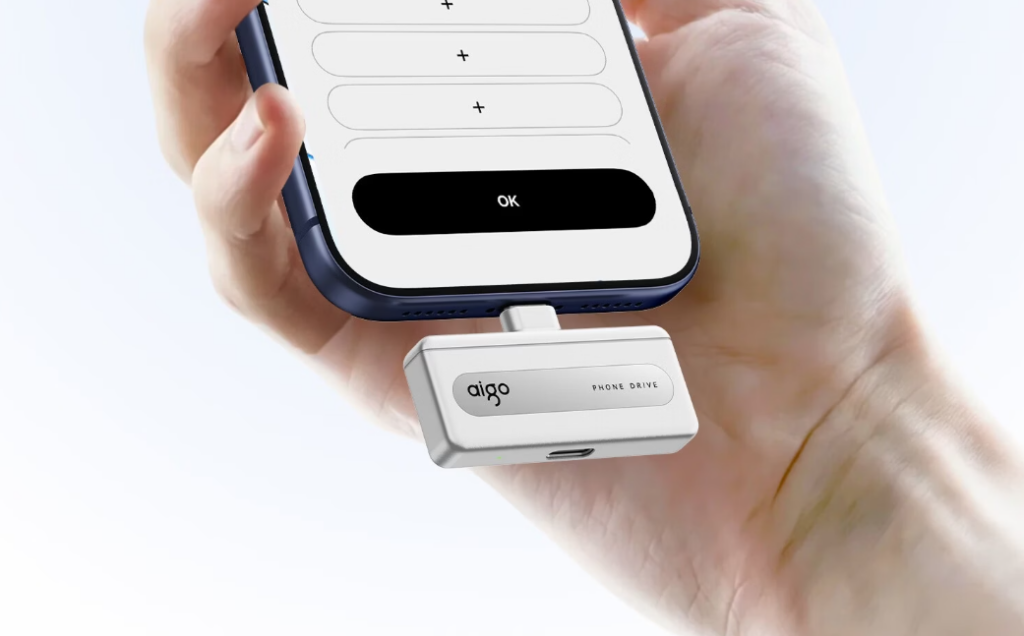
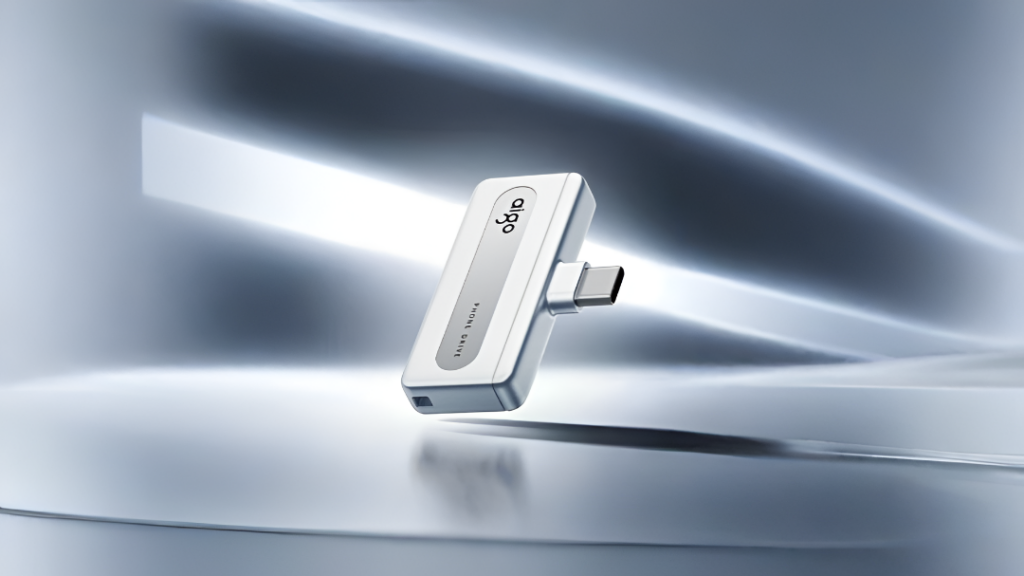
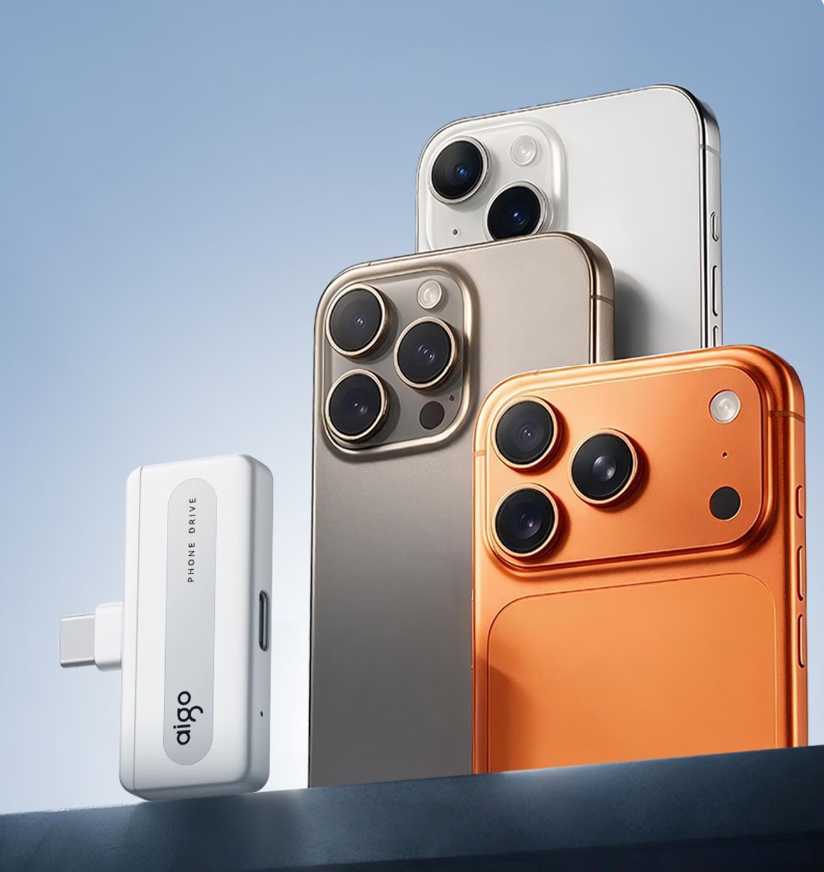
Aigo has released the PL10 in China, a new flash drive built for iPhone and iPad users who want to move files off their devices without relying on cloud storage or cables. The drive is currently listed on JD.com.
The PL10 uses a T-shaped aluminum body that plugs directly into the bottom of your phone or tablet. It features two connectors: a Lightning connector on one side for Apple devices and a USB-C connector on the other for connecting to laptops, newer iPads, and other compatible hardware. The drive uses the USB 3.2 standard and carries Apple’s MFi certification. It supports iPhones ranging from the iPhone X series up to the current iPhone 17 lineup.
The drive features a physical write-protection switch that lets you switch between writable and read-only modes. When set to read-only mode, you can still open and view stored files, but they cannot be edited, overwritten, or deleted. This adds an extra layer of protection against accidental changes or data loss when you connect the drive to another device.
To manage files on an iPhone, you need to install the Aigo Link app. The software is limited to iOS and iPadOS, with no support for Android or HarmonyOS. Through the app, you can back up uncompressed photos, videos, and Live Photos from local storage or iCloud. There is one limitation to keep in mind during backups: the app needs to remain open on the screen. Locking your phone or switching to another app may interrupt the process.
The app also includes a custom camera interface that lets you record media directly to the drive, helping conserve your phone’s local storage. It supports RAW photos and includes a picture-in-picture mode that records 1080p video from the front and rear cameras simultaneously.
For standard video, the app supports up to 4K at 60fps on the iPhone 17 series, while iPhone 16 and older models are limited to 4K at 30fps. The drive can also handle ProRes Log and HDR files, although depending on your iPhone model, you may need to record these through Apple’s native Camera app instead. Additionally, the Aigo Link app supports Face ID and Touch ID, allowing you to protect specific files with biometric authentication.
The PL10 is available in three storage capacities: 128GB for 399 yuan ($59), 256GB for 599 yuan ($89), and 512GB for 999 yuan ($149). These are now listed on JD.com in China.
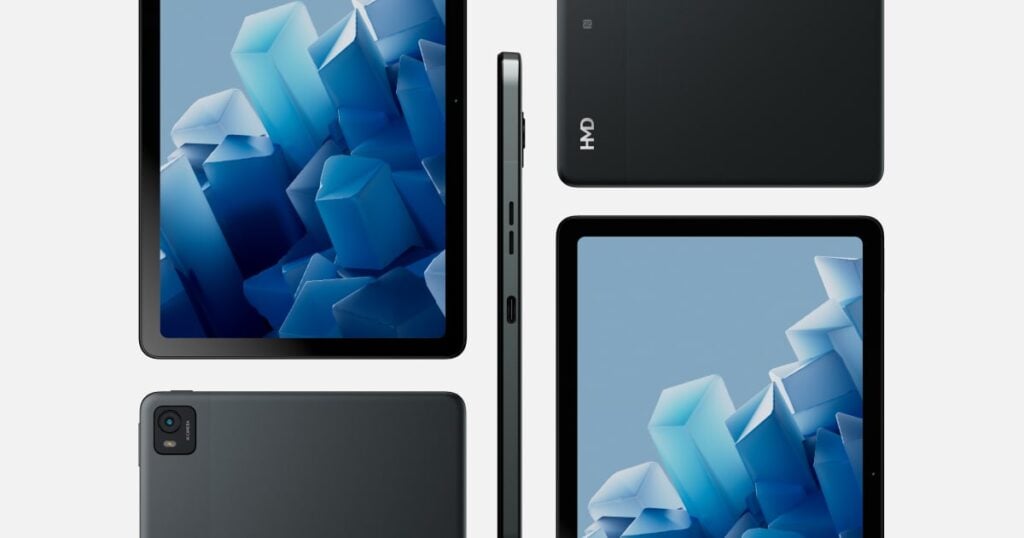
A new leak has given us a first look at an upcoming tablet aimed squarely at kids and their parents. It’s being developed under the Xplora brand with HMD. The focus seems to be on durability rather than raw performance. This expands the companies’ existing work on kid-friendly devices into the tablet space.
From the details that have emerged, the Xplora Go Pad has a compact 8.7″ IPS LCD screen. Resolution and refresh rate haven’t been shared yet. Inside is the Qualcomm Snapdragon 685, a 6 nm chip with four Cortex-A73 performance cores and four Cortex-A53 efficiency cores. It includes a 4G modem, so the tablet can do cellular as well as Wi-Fi. Charging is capped at 18 W, though the battery size is still unknown. Memory and storage options also haven’t been confirmed.
Durability and parental controls seem to be the main priorities. The tablet is said to have an IP65 rating for dust and water resistance and can handle drops from up to 100 cm. On the software side, it comes with a full set of parental tools: web detection, education-focused AI features, and harmful-content blocking. Parents should be able to manage internet and social media access, approved contacts, screen time limits, and location tracking.
This continues the partnership between HMD and Norwegian company Xplora, which previously worked together on the Fusion X1 smartphone. That phone was all about extensive parental controls, and the Go Pad takes the same approach but puts it on a larger screen better suited for learning and supervised media use.
Pricing, availability, and a complete spec sheet still aren’t available, and neither HMD nor Xplora has officially commented on the leak. Even so, the mix of rugged build, cellular connectivity, and strong parental management tools suggests the Go Pad is being positioned as a practical, safer option for families who want more oversight of their kids’ screen time. More details should surface closer to an official announcement.
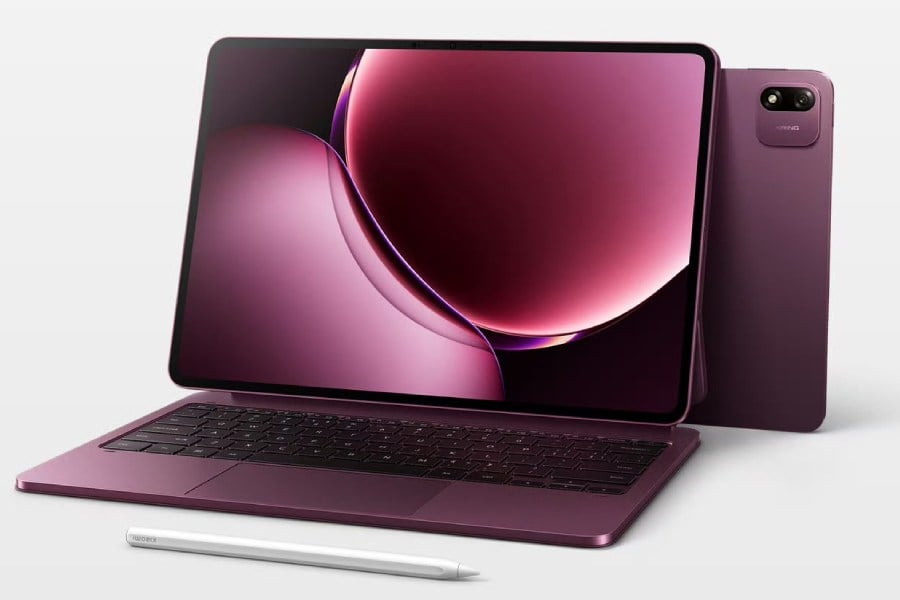
Xiaomi has officially launched the Pad 9 Pro Max at its autumn flagship event. The new tablet comes with the Xring O3 chip, a 13.3-inch display, and a starting price of 4,799 yuan (~ $715). The top-of-the-line 16GB+1TB Soft Light Screen version costs 7,899 yuan (~ $1176).
The Soft Light model uses a nano-textured display to reduce glare. Meanwhile, the standard version has a glossy 13.3-inch LCD with a 3408 x 2272 resolution, a 3:2 aspect ratio, and a 144Hz refresh rate. The tablet has a peak brightness of up to 1,000 nits and a ΔE of around 0.47.
The Xiaomi Pad 9 Pro Max is the first tablet to use the Xring O3 chip. Xiaomi introduced the chip last month alongside the Xring O100 and D100.
The Xring O3 features a 10-core CPU with two C1-Ultra cores clocked at 4.35GHz, four C1-Premium cores at 3.68GHz, and four C1-Pro cores at 3.15GHz. It is paired with a 16-core Mali-G2-Ultra GPU. Early Geekbench tests of the tablet have already passed 14,000 points in multi-core testing. Xiaomi also says the combined CPU and GPU performance is now close to Apple’s M5 desktop chip.
The 16GB+1TB model also gets CXMT’s LPDDR6 memory that clocks at up to 10,667Mbps.
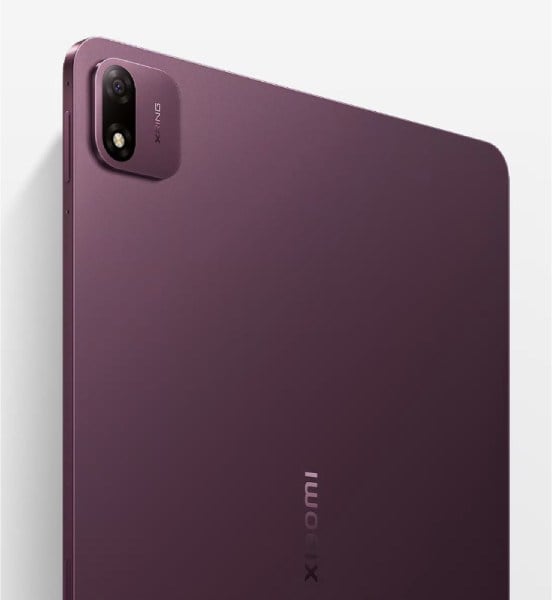
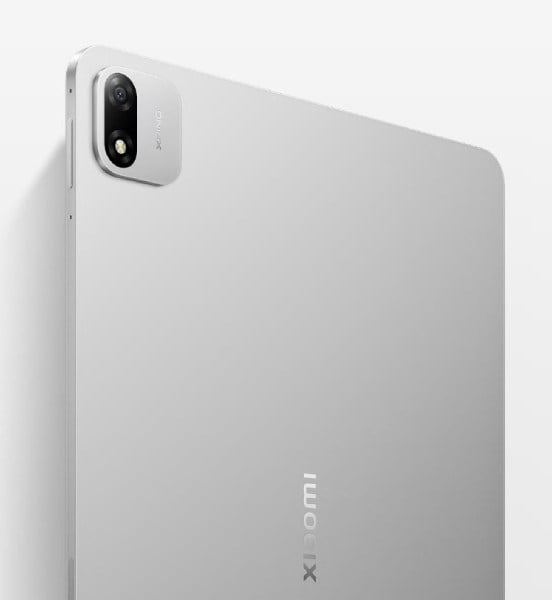
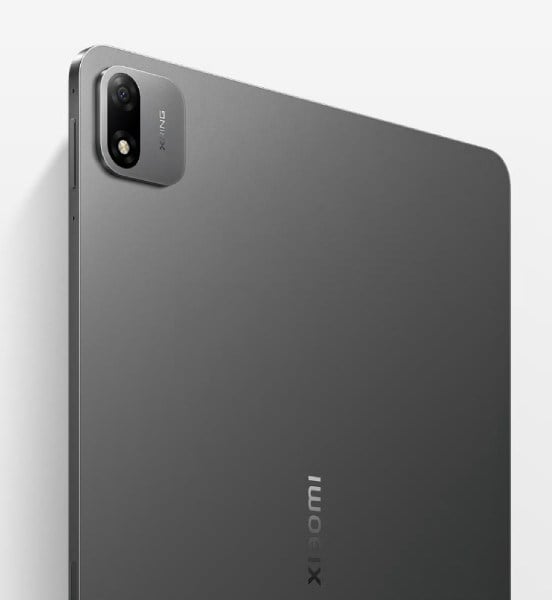
The tablet weighs 645 grams and is just 5.67mm thick. It has a metal unibody design, a racetrack-style camera module, and XRING branding on the back. Keeping the lights on is a large 12,000mAh battery with support for 120W wired charging. The tablet also features six microphones, eight speakers, a 32MP front camera, and a 50MP rear camera.
On the software side, HyperOS 4 lets users run up to six apps at the same time using split-screen layouts. The USB-C port also supports DP-in, allowing the tablet to work as an external monitor for a PC or gaming handheld.
Xiaomi also launched its other Xring O3-powered device, the Xiaomi 18 Fold, on the same day. Pre-orders for both devices are now open in China.
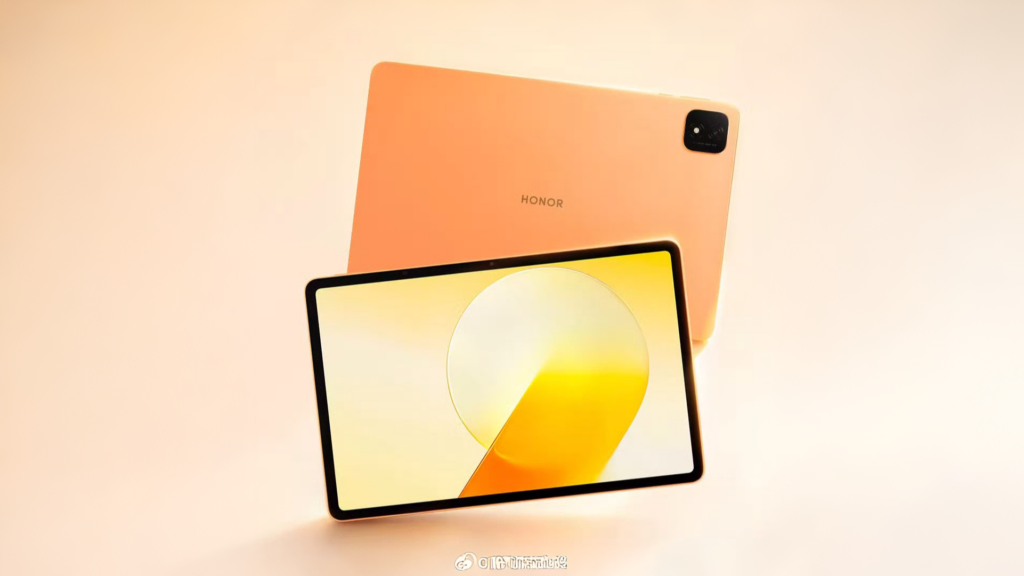
Honor’s latest tablet is heading to China with some notable hardware changes compared to the international model. Weibo tipster @睿哥玩数码 has shared details showing a more cost-optimized setup for the domestic market, while still keeping the big battery and high-refresh screen. Pre-orders for the Chinese version are already open.
According to the leak, the Chinese variant of the MagicPad 4 has a 12.1-inch 3K LCD panel running at 165Hz. There’s an optional soft-light (matte) screen available, and it supports the Magic-Pencil 4S stylus. Inside sits the Qualcomm Snapdragon 8s Gen 4, paired with a 10,100mAh battery, a six-speaker system tuned for spatial audio, and an optional Bluetooth keyboard.
The overseas version, by comparison, uses a slightly larger 12.3″ 3K 165Hz OLED panel and the higher-end Snapdragon 8 Gen 5 chip, while keeping the same 10,100mAh battery. Global reviews have already praised the international model for its ultra-thin 4.8mm body, strong media performance, and solid productivity features under MagicOS. The Chinese version seems tuned for a different price-to-performance balance, but still holds onto the large battery and high refresh rate.
Pre-orders are live on the official Honor Mall. People who reserve one get some bonuses too. Exact pricing and specifications haven’t been added to the listing yet.
Even with the changes, the Chinese MagicPad 4 still offers a modern high-refresh screen, stylus support, solid battery life, and spatial audio, making it a practical all-rounder for media, note-taking, and lighter productivity work. We’ll need official pricing and launch details to see exactly how it stacks up against the competition.
While Xiaomi unveiled the much-anticipated Xiaomi 18 Fold in China, Vivov also held its Creator Festival in Yantai, China, today. The event focused on the company’s latest imaging technologies and offered a detailed look at what is coming with the Vivo X500 series. The company also confirmed that the new flagship lineup will officially launch in China on September 21.
The Vivo X500 series will officially launch on September 21 in China. The company has confirmed that the X500 Pro series will be the first to feature the new BluePrint LightGuard 900 sensor globally. This senor could be based on the Sony LYT-910, which was announced earlier this year. Combined with Vivo’s ultra-high dynamic range technology, the sensor can deliver up to 17EV of dynamic range.
The X500 Pro series will also support 4K recording at 240fps for slow-motion footage and 4K 120fps HDR video. Vivo is bringing VCS 4.0 technology to the lineup, which is designed to improve image quality in low-light conditions. The main and periscope telephoto cameras will also support CIPA 7-level stabilization for improved handheld photography and video recording.
The standard Vivo X500 is expected to feature a 1/1.28-inch LYTIA-828 main sensor, a LYTIA-610 telephoto camera, and a 50-megapixel ultrawide camera. The X500 Pro will also feature the LYTIA-610 telephoto camera, while the X500 Pro Max is expected to step up to a 200-megapixel HP0 telephoto sensor alongside a 50-megapixel main camera and 50-megapixel ultrawide camera.
Vivo is also introducing a new AI photography assistant that can analyse scenes through an intelligent imaging interface and recommend suitable camera features, compositions and poses. The series will additionally offer an album-based AI editing feature that can apply customized color adjustments based on the scene in a photo.
For video recording, the X500 series will support 10-bit 4:2:2 encoding and the ACES colour system. The Pro series is also set to offer 4K 120fps 10-bit Log video recording, while Vivo has teased 8K native Live output and AI-assisted video features.
We use cookies on our website to give you the most relevant experience by remembering your preferences and repeat visits. By clicking “Accept”, you consent to the use of ALL the cookies.
This website uses cookies to improve your experience while you navigate through the website. Out of these, the cookies that are categorized as necessary are stored on your browser as they are essential for the working of basic functionalities of the website. We also use third-party cookies that help us analyze and understand how you use this website. These cookies will be stored in your browser only with your consent. You also have the option to opt-out of these cookies. But opting out of some of these cookies may affect your browsing experience.
Necessary cookies are absolutely essential for the website to function properly. This category only includes cookies that ensures basic functionalities and security features of the website. These cookies do not store any personal information.
Any cookies that may not be particularly necessary for the website to function and is used specifically to collect user personal data via analytics, ads, other embedded contents are termed as non-necessary cookies. It is mandatory to procure user consent prior to running these cookies on your website.






 Roborock brought the largest robot-cleaning lineup of the show, but the one people queued for was the Saros Rover, which was first shown at CES 2026. It has wheel-legs that extend to lift the robot over thresholds and, in the demo, up individual stair steps. Roborock has not given a price or a date, so treat it as a 2027 product.